Frankie Miller – I Can’t Change It

This is the kind of song and artist I like posting. I call it New Old music because not everyone has heard of Frankie Miller, unlike Neil Young and other artists. The song just sticks with me with its haunting and melancholy melody. The guy has a voice that is about as strong as you can get. There are certain voices that don’t just sing a song, they bleed it. Frankie Miller had one of those voices. You could park it next to Rod Stewart, Steve Marriott, and Joe Cocker, and no one would flinch. 

I was watching Life On Mars when this song came on in an emotional scene. I’d never heard of it before. I never heard of Frankie Miller, but what a singer. He wrote this song when he was just 12 years old. Ray Charles also ended up recording it. Charles did his usual fantastic job on it, but I like Frankie’s stark arrangement. I can’t say enough about his voice. In some of his other songs, he reminds me of Bob Seger with an even a little stronger voice if that is possible. He wrote Ain’t Got No Money which Seger covered.

The best way I can describe this song is that it doesn’t need a big chorus or a clever twist. It just tells the truth. And in doing so, it becomes one of those tracks you return to when the world’s too loud and you need something real. Much like why I keep returning to Ronnie Lane and others. This one doesn’t have a wasted note. No overplaying. Just a slow, steady build that wraps around you.

This was on his 1973 debut album Once In A Blue Moon. In 1994, while he was forming a band with Joe Walsh, he had a brain aneurysm. He has fought back but sadly had to retire. If you don’t know much about him, he is worth looking up.

I can’t find a live version but check out this show.

I Can’t Change It

My friends can’t find some things I say
Must be the way I say those things
My friends can’t find some things I do
Must be the way I do those things
I can’t change it
But I’m trying to do right

I used to steal I used to fall
Was I wrong I can’t recall
I stole in love but all in all
Was I wrong I don’t recall
I can’t change it
But I’m trying to do right

Is it bad to look inside yourself and decide to go
To someone who can show the way complete
Are you glad to lose the doubts you thought would never go
When them inside hallucinations had you beat

My own true love has gone away
What can I say she left that day
The moon still shines a different way
What can I say
She left that day
I can’t change it but I’m waiting patiently

Jeff Healey – Angel Eyes

I wrote this a while back, but Deke sent me another song that was incredible on guitar. So I canceled this one for that weekend and came back to this today. This was my introduction to Jeff Healey, as it was to many people. 

When I think of this song, I think of a dark, smoky bar because we were playing as a house band, and this was on the jukebox. We would listen to it between sets. The way Canadian Jeff Healy played guitar was very interesting. Healy was of course, blind, and he was given a guitar, and no one taught him how to play it. Jeff Healey was a Canadian who started to play guitar when he was 3. He could bend the notes to a limit that normal guitar players normally don’t. His solos were just as interesting as the songs themselves.

In 1989, Jeff Healey came out with this song that peaked at #5 in the Billboard 100, #86 in the UK, and #16 in Canada. The song was written by John Hiatt and Fred Koller. It helped bring Healey into the mainstream and broadened his audience.

He formed The Jeff Healey Band in 1985 with Joe Rockman and Tom Stephen. The band gained recognition in Toronto’s blues scene before being discovered by Stevie Ray Vaughan and Albert Collins. They were signed to Arista Records, and they released their 1988 debut album, See the Light. This song came from that album. He would release 5 albums with The Jeff Healey Band and also played with the Jazz Wizards. 

Healey was adopted and raised in Toronto, where he developed a passion for music. He was blind from early childhood due to retinoblastoma and had a great career until his passing in 2008.

Angel Eyes

Girl, you’re looking fine tonight
And every guy has got you in his sight
What you’re doing with a clown like me
Is surely one of life’s little mysteries

So tonight I’ll ask the stars above
“How did I ever win your love?”
What did I do?
What did I say
To turn your angel eyes my way?

Well, I’m the guy who never learned to dance
Never even got one second glance
Across a crowded room was close enough
I could look but I could never touch

So tonight I’ll ask, the stars above
“How did I ever win your love?”
What did I do?
What did I say
To turn your angel eyes my way?

Don’t anyone wake me
If it’s just a dream
‘Cause she’s the best thing
Ever happened to me

All you fellows
You can look all you like
But this girl you see
She’s leavin’ here with me tonight

There’s just one more thing that I need to know
If this is love why does it scare me so?
It must be somethin’ only you can see
‘Cause girl I feel it when you look at me

So tonight I’ll ask the stars above
“How did I ever win your love?”
What did I do?
What did I say,
To turn your angel eyes my way? 
Hey, hey, hey, yeah, awww

Creation – Making Time

Thank you, Dave, for this Turntable Talk. I wrote this for his series about songs with Time in the title, in the song, or about time. I like trying out new songs on the weekend, and this is a great example of mid-sixties British Rock. If you dig the Who and Kinks…you should like this one. 

Here’s a 1966  track that hits you like a kaleidoscopic brick through a plate-glass window. This is a band that I so wish would have done more things. Their lead guitarist, Eddie Phillips, was asked by Pete Townshend to join the Who as their second guitarist. They are one of those bands that slipped through the cracks.

They were formed in 1966 from a band called The Mark Four.  The Creation was from Chesthunt, 12 miles north of central London. They formed in 1963 as the Mark Four and went through different names until 1966 when they became the Creation. The Creation was sharper, weirder, and wilder than most of their peers. They had the raw power chords and the feedback fury of early Hendrix, and the pop art mindset of a band who not only wanted to be heard, they needed to be seen as well. The lead singer, Kenny Pickett, would spray paint a canvas, and someone from the road crew would set it a fire during the set…during the song Painter Man

This song was released in 1966. They patterned themselves after The Who and The Kinks. It had the sonic sound of The Who, the garage grit of The Kinks, and the art-school sound with later groups like The Jam to Blur. But what really made it jump off the grooves? That guitar solo really helped out. Long before Jimmy Page, Eddie Phillips, the guitar player, used a bow. Making Time was the first rock song to feature the guitar being played with a bow. Shel Talmy produced the group that also produced The Who and The Kinks.

The band broke up in 1967-1968 with some different members. The guitar player Eddie Phillips and singer Kenny Pickett started to write songs in the seventies after leaving the business for a while. They wrote Teacher, Teacher for Rockpile.  They regrouped in the 1980s and are still out there touring. 

I’ve been talking about the Who and Kinks…a member from each band played with The Creation along with a Rolling Stone. Mick Avory, the drummer for the Kinks played with the reformed band from the mid-1980s to 1993. Doug Sandom, who was replaced by Keith Moon in the Who, played with them off and on until he died in 2019. Ronnie Wood played with them in 1968 (right before they broke up) as a vocalist and guitar player. 

They only released 3 studio albums. One in 1966 called We Are Paintermen. One in 1987 called Psychedelic Rose and another one in 1996 called Power Surge. This song peaked at #49 on the UK Charts in 1966. 

Making Time

Making time
Shooting lines
For people to believe in
Things you say
Gone in a day
Everybody leavin’
Everybody leavin’

Why do we have to carry on?
Always singing the same old song
Same old song
The same old song

Tellin’ lies
Closing your eyes
Making more excuses
Pullin’ the wool
Actin’ the fool
People have their uses

Why do we have to carry on?
Always singing the same old song
Same old song
The same old song

Lookin’ for
An open door
Never taking chances
Take your pick
Makes you sick
Seekin’ new advances

Why do we have to carry on?
Always singing the same old song
Same old song
The same old song

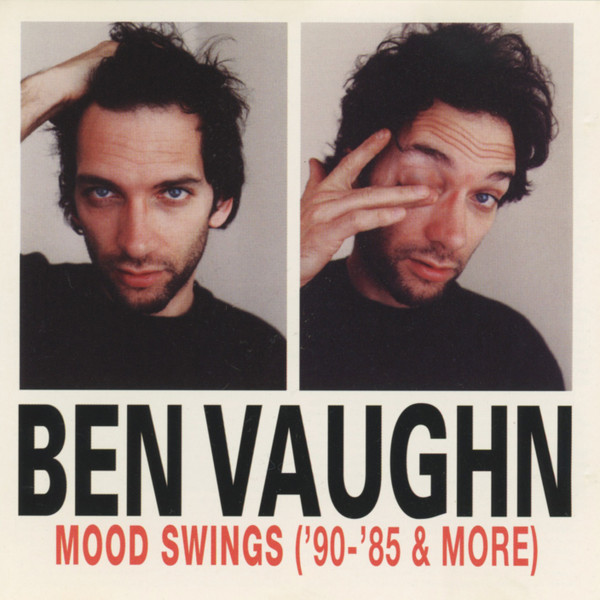
Ben Vaughn – Shingaling with Me

This song has been in my head for a week now and won’t get out and thats a good thing. The feel of this sounds like it crawled out of the back seat of a 1963 Rambler. It really fits in with The Swingin’ Medallions, Doug Sahm’s 60s style of music, with a tiny bit of a tame Lou Reed thrown in. You can also hear a little of Springsteen in his music at times.

I’m far from an expert on Ben Vaughn, but he shouldn’t be so unknown. Big Star is more well-known than this man. His music is instantly catchy and likable. The song I covered a few years ago, “Too Sensitve for This World,” has hit written all over it. I’m surprised no one has covered that one. Well, I double checked and someone has! Deer Tick…now that is a name that…no I won’t say it. 

Vaughn is from New Jersey. He got his start in the late ’70s, playing in punk and new wave bands before forming The Ben Vaughn Combo in 1983. The Combo was everything great about mid-’60s rock and roll, reimagined with a little punk energy. The band was together for five years, releasing two albums and touring the U.S. several times.  They received rave reviews in Rolling Stone and People magazine and video airplay on MTV.

This track comes from Mood Swings, the 1992 album that put Vaughn on the map as a Jersey jangle-pop garage guy with a deep record collection. It’s a compilation album that contains his best songs from 1985 to 1990. This song was originally on his 1987 album Beautiful Thing.

Vaughn started a solo career in 1988 and has released over 17 albums. He is very versatile… he plays Rock, blues, jazz, folk, soul, R & B, country, Power Pop, Bossa Nova, movie soundtracks, easy listening, and more, all with Vaughn’s musical slant.

His older albums are not on Spotify, but here is a YouTube playlist that covers a lot of this album. It really doesn’t matter because his songs are just plain out good.

I blogged about Vaughn a while back with this great song.

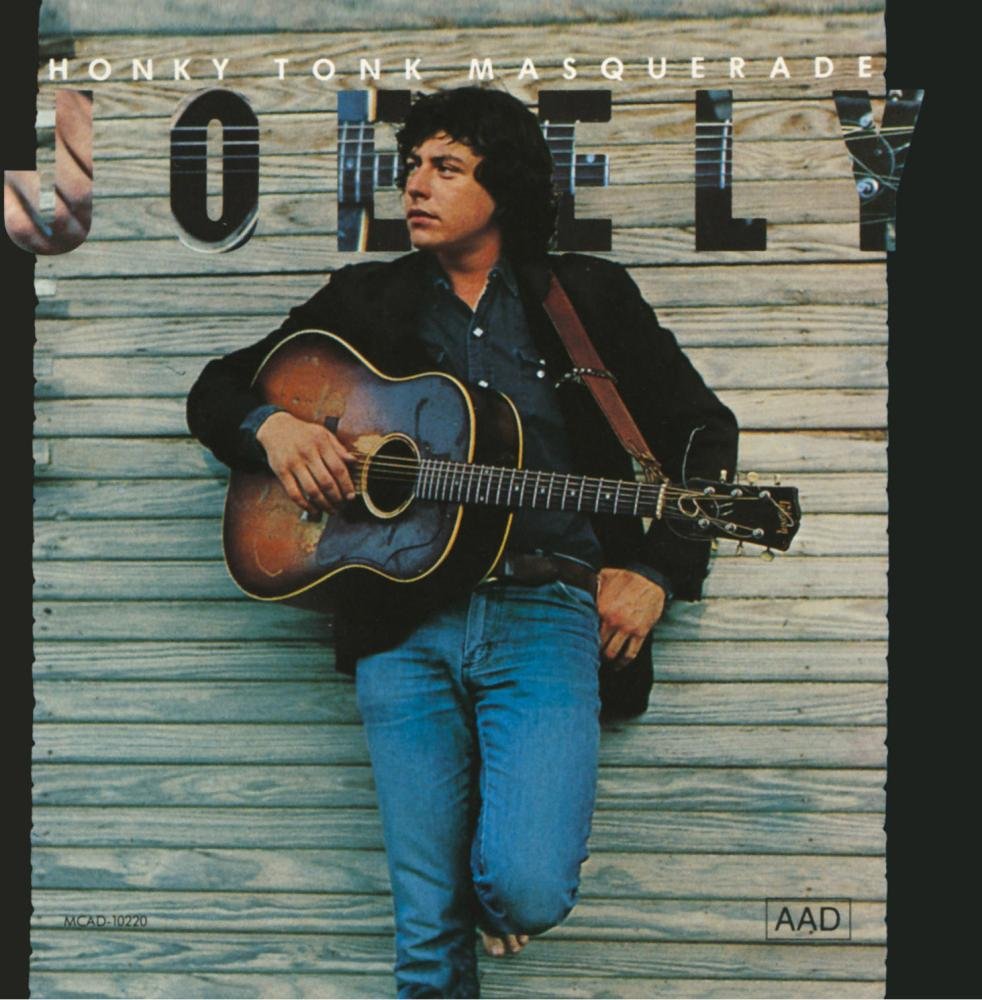
Joe Ely – Boxcars

I keep going back to the Texas songwriters whenever possible. Joe Ely was the first, other than Townes Van Zandt, who placed me on that road. I think all of them were born with an acoustic guitar, wit, pen, with paper in hand. So many of them write wonderful melodies and lyrics that any songwriter would drool over. Boxcars captures everything great about Texas songwriting in one cold, mournful ride.

Ely was born in Amarillo in 1947 and raised in Lubbock, Buddy Holly’s hometown and a surprisingly fertile ground for musicians. Ely came of age surrounded by dust storms, flat horizons, and rock ‘n’ roll. By the late ‘60s, he was friends with a couple of brilliant kids named Butch Hancock and Jimmie Dale Gilmore. Together, they formed The Flatlanders, a band that barely made a dent at the time but later became a blueprint for alt-country and Americana.

This song was written by Butch Hancock, a close friend and collaborator of Joe Ely. This was on his second solo album called Honky Tonk Masquerade released in 1978. The album is in the book  1001 Albums You Must Hear Before You Die and was 40 on Rolling Stone’s 50 Essential Albums of the ’70s list. Ely’s first album was released in 1977. He met The Clash the following year in London and both liked each other. They both toured together a bit after that. Ely sang backups on the Clash hit Should I Stay or Should I Go.

He was also involved with a personal favorite pickup band with John Mellencamp called The Buzzin Cousins. He is revered in the music business and by fans alike. He also played in the Los Super Seven. Thanks, halffastcyclingclub, for pointing them out to me a while back. I still need to write one up. 

His voice in this one is golden. It’s in Ely’s delivery, equal parts resigned and reverent, like he’s singing about someone he knew once, or maybe used to be.

Boxcars

Well, I gave all my money to the banker this monthNow, I got no more money to spendShe smiled when she saw me comin’ through that doorWhen I left she said, “Come back again”

I watched them lonesome boxcar wheelsTurnin’ down the tracks out of townAnd it’s on that lonesome railroad trackI’m gonna lay my burden down

I was raised on a farm the first years of my lifeLife was pretty good they sayI’ll probably live to be some ripe ol’ ageIf death’ll just stay out of my way

This world can take my money and timeBut it sure can’t take my soulAnd I’m goin’ down to the railroad tracksWatch them lonesome boxcars roll

There’s some big ol’ Buicks by the Baptist churchCadillacs at the Church of ChristI parked my camel by an ol’ haystackI’ll be lookin’ for that needle all night

There ain’t gonna be no radial tiresTurnin’ down the streets of goldI’m goin’ down to the railroad tracksAnd watch them lonesome boxcars roll

Now, if you ever heard the whistle on a fast freight trainBeatin’ out a beautiful tuneIf you ever seen the cold blue railroad tracksShinin’ by the light of the moon

If you ever felt the locomotive shake the groundI know you don’t have to be toldWhy I’m goin’ down to the railroad tracksAnd watch them lonesome boxcars roll

Yeah, I’m goin’ down to the railroad tracksAnd watch them lonesome boxcars roll

Ace Frehley – New York Groove

Only in the glittery excess of the late ’70s could a band decide to put out four solo albums on the same day and somehow convince the world it made perfect sense. On September 18, 1978, KISS pulled off one of rock’s most over-the-top stunts: four albums, one from each member, all branded as official KISS releases, all with matching cover art and posters you could piece together. This song had to be at least somewhat inspired by Bo Diddley’s Bo Diddley which was in turn inspired by Hush Little Baby

I’ve always liked this song from Ace Frehley’s KISS solo album. It peaked at #13 on the Billboard 100, #25 in Canada, and #24 in New Zealand in 1978. The song was written by Russ Ballard and was a UK chart hit for an English band named Hello. The track kicks in with that foot-stomp and hand-clap rhythm, more glam rock than hard rock, and right away it’s clear: this is not a KISS song. It’s got more in common with T. Rex than with Detroit Rock City.

Everything here is built around that simple, addictive beat, a four-on-the-floor thump with congas and claps riding shotgun. Over the top floats Frehley’s talk-sung vocal that is delivered with confidence. Ace was perfect for this song because he doesn’t have a huge vocal range. On Ace’s songs, he doesn’t sound like he is trying to make a hit…just a good song. I also like his guitar playing in general. It’s very Keith Richards like along with his tone. 

New York Groove is Ace Frehley’s very own personal anthem. The track is as synonymous with the ex-Kiss member as his silver suit and his smokin’ Les Paul. The egos in KISS were huge; Gene and Paul provoked Ace, even offering help (assuming that Ace would not be able to). However, Ace surprised them both. The best-selling solo album of the 4, in addition to being preferred by most fans and critics. 

Ace Frehley: “A lot of people think I wrote New York Groove. It’s not a myth that I’ve perpetuated, but that’s the way it is. I wish I would’ve wrote the song, though. I would’ve made a lot more cash out of it, ha-ha-hargh!”

Original Version by Hello

New York Groove

Many years since I was here,
On the street I was passin’ my time away
To the left and to the right,
Buildings towering to the sky
It’s outta sight in the dead of night

Here I am, and in this city, with a fistful of dollars
And baby, you’d better believe

I’m back, back in the New York groove
Back in the New York groove, in the New York groove

In the back of my Cadillac
A wicked lady, sittin’ by my side, sayin’ ‘Where are we?’
Stop at Third and Forty-three, exit to the night
It’s gonna be ecstacy, this place was meant for me

Feels so good tonight, who cares about tomorrow
So baby, you’d better believe

I’m back, back in the New York groove
Back in the New York groove, in the New York groove
I’m back, back in the New York groove

Jam – That’s Entertainment 

I learned about these guys from a friend’s brother, who introduced me to Big Star, The Clash, and The Dead. They had export albums that no one else I knew had at the time. There was no Spotify…you had to work for it. You had to hunt songs and albums down. It made it that much better when you heard them. 

I wrote this for another Jam song a while back and it holds true: Sometimes people say…oh this or that band was just too British. I never found a fault in that and wanted more British bands.  But…if ever a band could be considered “too British” this may very well be the band. But I want more…

This is one of those rare songs that doesn’t just describe life, it feels like life. Weller wrote it in a single night after stumbling home drunk (“Coming home pissed from the pub”), acoustic guitar in hand. And you can tell, the lyrics have that bleary, late-night poetry, where ordinary objects take on greater significance. A “policeman’s baton,” “a smash of glass,” “a freezing cold flat”  these aren’t metaphors, they’re scene-setting. There are strong Ray Davies vibes going on in this, with working-class life. 

He’s not glorifying his world; he’s documenting it. And in doing so, he’s creating a kind of working-class poem, a collage of British life with all the glamor scratched off. This is why I love the Kinks, the Who, and other bands that deal with everyday life. I would include Squeeze in there as well. 

They formed in 1973 and released their first album in 1977. Their members included guitarist Paul Weller, bassist Bruce Foxton, and drummer Rick Butler. Paul Weller is the best known out of the band, but they were all great musicians. Being a bass player…I’ve noticed a lot of Foxton’s bass playing is terrific.

The song was released in 1981 and peaked at #21 on the UK Charts and #34 in New Zealand. The song was on the album Sound Affects, which peaked at #2 on the UK Charts, #72 on the Billboard 200, #39 in Canada, and #2 in New Zealand. 

Paul Weller: “It was just everything that was around me y’know. My little flat in Pimlico did have damp on the walls and it was f–king freezing. I was doing a fanzine called December Child and Paul Drew wrote a poem called ‘That’s Entertainment.’ It wasn’t close to my song, but it kind of inspired me to write this anyway. I wrote to him saying, Look is it all right if I nick a bit of your idea, man? And he said, It’s fine, yeah.”

Thats Entertainment

A police car and a screaming sirenA pneumatic drill and ripped up concreteA baby wailing and stray dog howlingThe screech of brakes and lamp light blinking

That’s entertainmentThat’s entertainment

A smash of glass and a rumble of bootsAn electric train and a ripped up phone boothPaint splattered walls and the cry of a tomcatLights going out and a kick in the balls

I say, that’s entertainmentThat’s entertainment

Days of speed and slow time MondaysPissing down with rain on a boring WednesdayWatching the news and not eating your teaA freezing cold flat and damp on the walls

I say that’s entertainmentThat’s entertainment

Waking up at 6 a.m. on a cool warm morningOpening the windows and breathing in petrolAn amateur band rehearsing in a nearby yardWatching the telly and thinking about your holidays

That’s entertainmentThat’s entertainment

Waking up from bad dreams and smoking cigarettesCuddling a warm girl and smelling stale perfumeA hot summer’s day and sticky black tarmacFeeding ducks in the park and wishing you were far away

That’s entertainmentThat’s entertainment

Two lovers kissing amongst the scream of midnightTwo lovers missing the tranquility of solitudeGetting a cab and travelling on busesReading the graffiti about slashed seat affairs

I say that’s entertainmentThat’s entertainment

Masters of Reality – She Got Me (When She Got Her Dress On)

Chris Goss was a musician who produced Queens of the Stone Age and Kyuss. He is from  New York, and loved Cream, The Beatles, and Black Sabbath, not a bad trio if you’re planning to warp some minds. He started in Syracuse in the early 1980s. Goss, who had been around the local music scene, wasn’t trying to follow trends; he was trying to mash his obsessions together into something new. Sabbath’s doomy riffs, filtered through a kind of psychedelic Beatlesque sound, with a sprinkle of blues on top.

This song was on their 1992 album Sunrise on the Sufferbus, which had a drummer who was quite well known for greatness. Ginger Baker played drums on this album, and the results were terrific. Every band worth its salt needs a track they can ride a groove just for the hell of it, and this one is that song.

It’s so cool to hear Ginger basically fronting the band with his drums. It’s a drum show for professionals and amateurs alike. You get the sense he could’ve played this with a cigarette in one hand and still kept time better than most drummers could with both arms taped to a click track.

You can tell this probably was improvised, and they just took off. There’s a looseness to the playing, like the band knows they’ve hit on something cool and are just letting it roll. The album is really good; it’s not just hard rock, it’s hard rock with humor as well.

Another good song off the album is John Brown which I’m posting below. That song was off their self-titled debut album in 1988. It was a toss up between which one to feature so I added both. 

This song peaked at #8 on the Billboard Mainstream Rock Charts in 1992..

Another Song with Ginger….John Brown

She Got Me (When She Got Her Dress On)

She got me when she got her dress onShe got me when she got her dress onShe got me me when she looked fineWhen she got her dress onShe got me when she got downWhen she got her dress on

She got me when she got her dress onGot it on

She got me when she got her dress onShe got me when she got her dress onShe got me when she looked fineAnd now she gets it all the timeShe got me when she got her dress on

She got me when she got her dress onGot it on

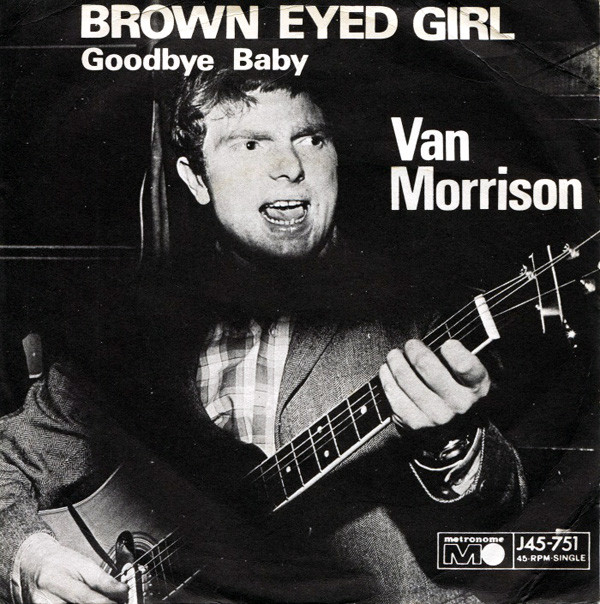
Van Morrison – Brown Eyed Girl

Somehow, I didn’t hear this song until I was 18 in 1985. When  I heard it, I immediately loved it. I didn’t just like the song, I was infatuated with it. One of the most infectious bass lines I’ve ever heard. I would play it so much that my friends would ask…again? So this post is basically a love letter to this song. 

The bass wasn’t the only thing that hit me, it is as clear as a spring day guitar riff. Last but certainly not least, it began my lifelong love for Van Morrison’s writing and voice. How did I make it until 18 without hearing it? I’ll never know. I not only learned the bass, but I also learned the guitar and some of the drums. I described it to someone as Buddy Holly in Technicolor.

I was at the right age for it. It’s a scrapbook of teenage moments, skipping school, hanging out by the green grass, and making out behind the stadium. There’s even a sneaky little bit of controversy: the original line “making love in the green grass” got scrubbed from the single version and replaced with a tamer repeat of an earlier verse (“Laughing‚ and a-running”).

It’s a song that I never get tired of hearing. The entire sound is crystal clear, and it made me feel nostalgic at just 18. It’s not Van Morrison’s best song…that would be impossible to pick, but it is a great pop song packed with memories and fun.

This was Van’s first single after leaving Them. Brown Eyed Girl isn’t trying to change the world. It’s not aiming for psychedelia (very popular at the time) or pushing the studio envelope. What it does do is pack memory, melody, and a whole lot of youthful yearning into a tight little pop song. 

Van would go on to far deeper waters with albums like Astral Weeks, Moondance, Tupelo Honey, and Saint Dominic’s Preview, albums brimming with spiritual searching and jazz improvisation. But Brown Eyed Girl was a huge introduction to the new solo artist… Van Morrison. I’ve told people…if I could have been born with any voice, Van’s voice would have been it. 

He released this song in 1967, it peaked at #10 on the Billboard 100, #13 in Canada, and #60 in the UK. My friends say that I might have listened to this song more than anyone…including Van. Hmmm, where is that email address to the Guinness people?

Brown Eyed Girl

Hey where did we go
Days when the rains came
Down in the hollow
Playin’ a new game
Laughing and a running hey, hey
Skipping and a jumping
In the misty morning fog with
Our hearts a thumpin’ and you
My brown eyed girl
You’re my brown eyed girl

Whatever happened
To Tuesday and so slow
Going down the old mine
With a transistor radio
Standing in the sunlight laughing
Hiding behind a rainbow’s wall
Slipping and sliding
All along the water fall, with you
My brown eyed girl
You’re my brown eyed girl

Do you remember when we used to sing
Sha la la la la la la la la la la te da
Just like that
Sha la la la la la la la la la la te da, la te da

So hard to find my way
Now that I’m all on my own
I saw you just the other day
My how you have grown
Cast my memory back there, Lord
Sometime I’m overcome thinking ’bout
Making love in the green grass
Behind the stadium with you
My brown eyed girl
You’re my brown eyed girl

Do you remember when we used to sing
Sha la la la la la la la la la la te da (lying in the green grass)
Sha la la la la la la la la la la te da (bit, bit, bit, bit, bit, bit)
Sha la la la la la la la la la la te da (sha la la la la la)
Sha la la la la la la la la la la te da

? & the Mysterians – 96 Tears

I absolutely love the organ riff that starts out this song. It was performed on a Vox Continental.

Well, it’s an original name I will say that much for the group…or the lead singer anyway. This song was written by “Question Mark,” the band’s frontman who wanted to be anonymous (he’s listed on the composer credits as (Rudy Martinez). At one point, he referred to the individual band members only by three-letter names (at one point, the band was known as XYZ). The mystery helped market the group, who wore dark glasses to add to the intrigue. He publicly stated that his soul had originated from Mars and that he once walked on Earth with the dinosaurs.

There’s a reason 96 Tears is often tagged as one of the first true garage rock hits, and even a proto-punk to what The Stooges and Ramones would soon torch the world with. It’s raw, it’s relentless, and it’s got attitude for days. It was recorded in Bay City, Michigan, by a band of mostly teenage Mexican-American kids, and it has that magical garage sound. No overthinking. Just a stomp and a sneer. 

The song was originally released on the tiny Pa-Go-Go label before being picked up by Cameo Records. Against all odds, it climbed all the way to #1 on the Billboard Hot 100. Think about that: in a year dominated by the Beatles, stones, Motown, and the Beach Boys, this little three-chord song with an organ and a singer named Question Mark took the top spot.

The song peaked at #1 in the Billboard 100, #1 in Canada, and #37 in the UK in 1966.  They were an American garage rock band of Mexican origins from Bay City and Saginaw in Michigan who were initially active between 1962 and 1969.

It was later covered by Garlan Jefferies

96 Tears

Too many teardrops
For one heart to be crying
Too many teardrops
For one heart to carry on

You`re way on top now since you left me
You’re always laughing way down at me
But watch out now, I`m gonna get there
We`ll be together for just a little while
And then I`m gonna put you way down here
And you`ll start crying ninety-six tears
Cry, cry

And when the sun comes up, I`ll be on top
You`ll be way down there, looking up
And I might wave, come up here
But I don`t see you waving now
I`m way down here, wondering how
I`m gonna get you but I know now
I`ll just cry, cry, I`ll just cry

Too many teardrops
For one heart to be crying
Too many teardrops
For one heart to carry on

You’re gonna cry ninety-six tears
You’re gonna cry, cry, cry, cry now
You’re gonna cry, cry, cry, cry
Ninety-six tears

Come on and lemme hear you cry, now
Ninety-six tears, woo
I wanna hear you cry
Night and day, yeah, all night long

Uh, ninety-six tears, cry cry cry
Come on, baby
Let me hear you cry now, all night long
Uh, ninety-six tears, yeah, come on now
Uh, ninety-six tears

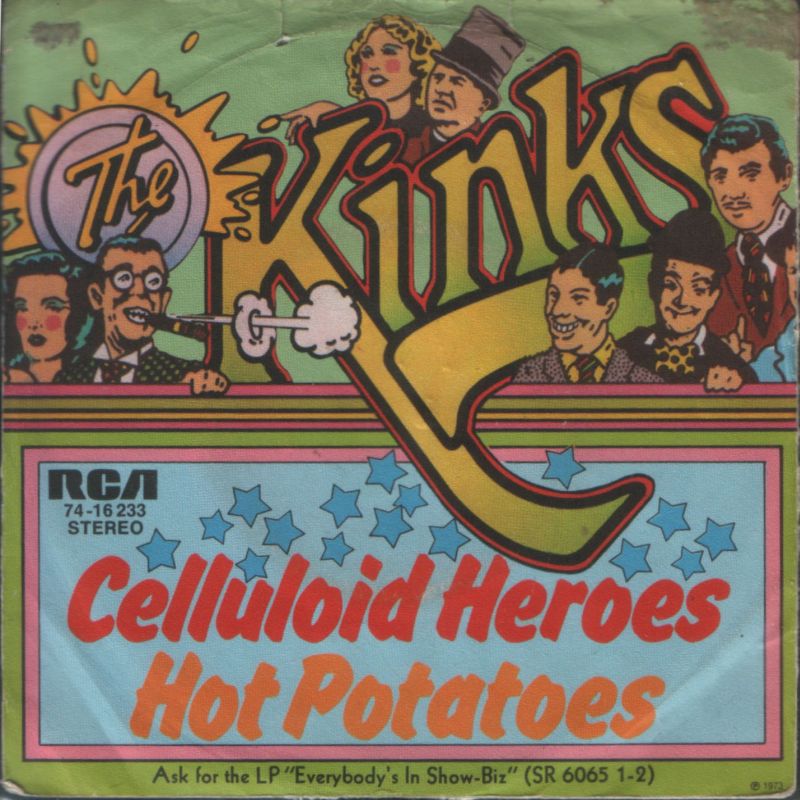
Kinks – Celluloid Heroes

When I heard this song, I loved the movie star references, and that got my attention. He namechecks the legends: Greta Garbo, Rudolph Valentino, Bela Lugosi, and Bette Davis. But he doesn’t dwell on their fame; he dwells on what fame cost them. Some went mad, some died alone, some were used up by the studio system and spit out into forgotten gossip columns.

Ray Davies never really left England in spirit, but with Celluloid Heroes, he made one of his most haunting visits to America.  Walking the Hollywood Walk of Fame, shoulder to shoulder with the ghosts who made generations laugh, cry, and dream on the big screen.  

By 1972, The Kinks released Everybody’s in Show-Biz, it was their 6th straight concept album and they had just released Muswell Hillbillies the year before. This one was part cabaret, part social commentary, part rock and roll vaudeville.

He wrote the song when he visited Los Angeles. He stayed at a hotel near the Walk of Fame and was intrigued by how it represented success alongside failure. It is one of those Kinks songs that doesn’t get the same attention as Lola or Waterloo Sunset, but it should. 

The song was released as the second single from Everybody’s in Show-Biz but failed to chart. However, the track received decent airplay on AOR radio stations in the US, and it remains a song that is often played when these stations mark the passing of a Hollywood star.

Everybody’s In Show-Biz peaked at #63 in Canada and #70 on the Billboard Album Charts. It didn’t chart in the UK. Ray was subtle in this song, and he sings like he means it. 

Single Version

Album Version

Celluloid Heroes

Everybody’s a dreamer and everybody’s a star
And everybody’s in movies, it doesn’t matter who you are
There are starts in every city
In every house and on every street
And if you walk down Hollywood Boulevard
Their names are written in concrete

Don’t step on Greta Garbo as you walk down the Boulevard
She looks so weak and fragile that’s why she tried to be so hard
But they turned her into a princess
And they sat her on a throne
But she turned her back on stardom
Because she wanted to be alone

You can see all the stars as you walk down Hollywood Boulevard
Some that you recognize, some that you’ve hardly even heard of
People who worked and suffered and struggled for fame
Some who succeeded and some who suffered in vain

Rudolph Valentino looks very much alive
And he looks up ladies dresses as they sadly pass him by
Avoid stepping on Bela Lugosi
‘Cause he’s liable to turn and bite
But stand close by Bette Davis
Because hers was such a lonely life

If you covered him with garbage
George Sanders would still have style
And if you stamped on Mickey Rooney
He would still turn round and smile
But please don’t tread on dearest Marilyn
Cause she’s not very tough
She should have been made of iron or steel
But she was only made of flesh and blood

You can see all the stars as you walk down Hollywood Boulevard
Some that you recognize, some that you’ve hardly even heard of
People who worked and suffered and struggled for fame
Some who succeeded and some who suffered in vain

Everybody’s a dreamer and everybody’s a star
And everybody’s in show biz, it doesn’t matter who you are
And those who are successful
Be always on your guard
Success walks hand in hand with failure
Along Hollywood Boulevard

I wish my life was non-stop Hollywood movie show
A fantasy world of celluloid villains and heroes
Because celluloid heroes never feel any pain
And celluloid heroes never really die

You can see all the stars as you walk along…
You can see all the stars as you walk down Hollywood Boulevard
Some that you recognize, some that you’ve hardly even heard of
People who worked and suffered and struggled for fame
Some who succeeded and some who suffered in vain

La la la la….

Oh, celluloid heroes never feel any pain
Oh, celluloid heroes never really die
I wish my life was non-stop Hollywood movie show
A fantasy world of celluloid villains and heroes
Because celluloid heroes never feel any pain
And celluloid heroes never really die

Peter Gabriel – Solsbury Hill

I will be the first to admit that I don’t know much about Peter Gabriel. In 2020, Graham from Aphoristic Album Reviews had a B-side by Genesis called Inside and Out. He also had a B-side from them the year before that really impressed me. It was one of the first real exposures I’ve had to that era of Genesis, and it was quite different from what I expected. I liked what I heard from Peter Gabriel’s era at that time.

I was reading blogs last week when I read Nancy’s blog on this song. I listened to it and loved it, and I urge everyone to go see her post. My friend Dave has also posted some of Gabriel’s music

Genesis had grown into a theatrical beast, complete with fox-head costumes and fifteen-minute suites. But Gabriel was feeling hemmed in, creatively and spiritually. He needed air and some risk. This was Peter Gabriel before Sledgehammer, before Shock the Monkey, before he was an international ambassador for world music. 

He had left Genesis the year or so before, stepping away from the elaborate costumes, the long storylines, and the prog rock labyrinth he helped create. Many expected something equally grandiose for his solo debut. Instead, he delivered a track so personal, introspective, and melodic that it was firmly down to earth. This song was about his dealing with his departure from Genesis and anticipation of his new challenge as a solo artist. Solsbury Hill is a real place near Bath, England, where Gabriel reportedly walked to clear his head after leaving Genesis.

The song was released in 1977. The single did well for a debut. It peaked at #13 in the UK, #92 in Canada, and #68 on the Billboard Album Charts. The album was called Peter Gabriel, as were his next 3 albums. It peaked at #7 in the UK, #30 in Canada, #38 in New Zealand, and #38 on the Billboard Album Charts. 

Solsbury Hill

Climbing up on Solsbury HillI could see the city lightWind was blowing, time stood stillEagle flew out of the night

He was something to observeCame in close, I heard a voiceStanding, stretching every nerveI had to listen, had no choice

I did not believe the informationJust had to trust imaginationMy heart going “Boom-boom-boom”“Son, ” he said“Grab your things, I’ve come to take you home”Hey, back home

To keep in silence I resignedMy friends would think I was a nutTurning water into wineOpen doors would soon be shut

So I went from day to dayThough my life was in a rut‘Til I thought of what I’d sayWhich connection I should cut

I was feeling part of the sceneryI walked right out of the machineryMy heart going “Boom-boom-boom”“Hey, ” he said“Grab your things, I’ve come to take you home”Hey, back home

When illusion spin her netI’m never where I wanna beAnd liberty, she pirouetteWhen I think that I am free

Watched by empty silhouettesWho close their eyes but still can seeNo one taught them etiquetteI will show another me

Today I don’t need a replacementI’ll tell them what the smile on my face meantMy heart going “Boom-boom-boom”“Hey, ” I said“You can keep my things, they’ve come to take me home”

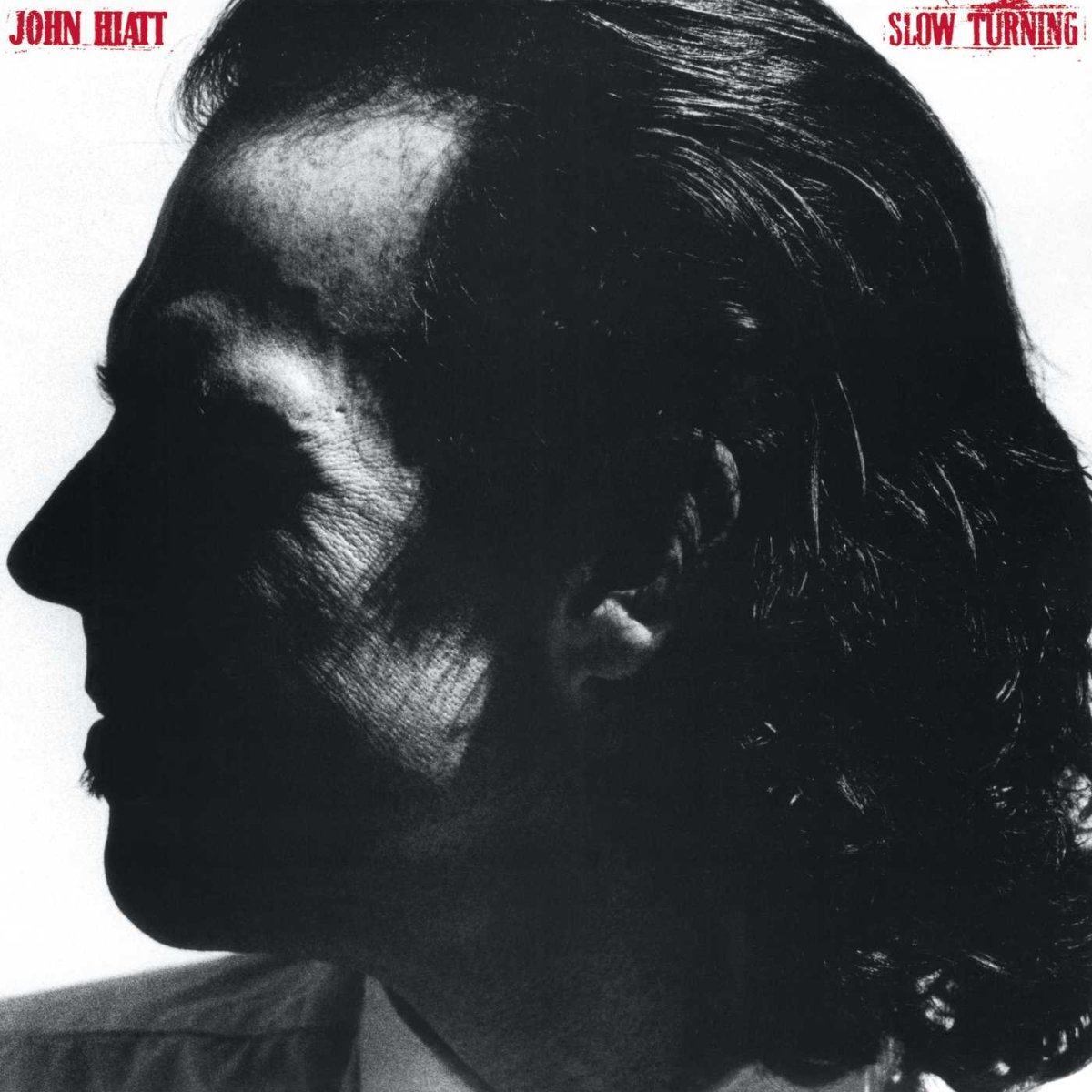
John Hiatt – Slow Turning

Now I’m in my car, I got the radio on, I’m yellin’ at the kids in the back seat
‘Cause they’re bangin’ like Charlie Watts

I love the way this song kicks off with that jangly, ragged guitar riff. John’s voice fits this song perfectly as well. It’s rootsy, raucous, and real, a reminder that the best rock & roll doesn’t have to be flashy or fast to hit you in the gut.

A brilliant performer…he is a songwriter’s songwriter.  The first time I heard this song, I loved it. When you mention Charlie Watts, you have my attention. John Hiatt always releases songs of quality, and they are all solid. Saying that, he is most remembered for his songs that other people cover. I don’t understand that because he has a fine, distinctive voice with a great band behind him. The keyword here is distinctive, I guess, which I look for.

He has a tremendous catalog with 24 studio albums. He released his first album in 1974! By the time John Hiatt released the album Slow Turning in 1988, he wasn’t some wide-eyed newcomer chasing charts; he was a survivor. Some of the songs he wrote and were covered were Angel Eyes, Sure As I’m Sitting Here,  and Thing Called Love, just to name a few. Slow Turning is one of his best-known songs, with him singing.

I’ve seen a lot of Hiatt recently on live clips. He and his band are always great. It’s loose in the best way, the kind of groove that feels like it could fall apart at any second but never does. The rhythm section (Kenneth Blevins on drums and Dave Ranson on bass) just locks in with the kind of warmth that doesn’t come from studio perfection but from chemistry built from sweat on the road.

Slow Turning peaked at #22 on the Billboard Alternative Charts. The album peaked at #98 on the Billboard Album Charts. I thought it would have been higher in the charts. In my region, it got a lot of airplay. 

Slow Turning

When I was a boyI thought it just came to youBut I never could tell what’s mineSo it didn’t matter anyway

My only pride and joyWas this racket down hereBangin’ on an old guitarAnd singin’ what I had to say

I always thought our house was haunted‘Cause nobody said “boo” to meI never did get what I wantedBut now I get what I need

It’s been a slow turnin’From the inside outA slow turnin’, babyBut you come about

A slow learnin’But you learn to swayA slow turnin’, babyNot fade away, not fade away, not fade away

Now I’m in my carOoh, I got the radio downNow I’m yellin’ at the kids in the back‘Cause they’re bangin’ like Charlie Watts

You think you’ve come so farIn this one horse townThen she’s laughin’ that crazy laugh‘Cause you haven’t left the parking lot

Time is short and here’s the damn thing about itYou’re gonna die, gonna die for sureAnd you can learn to live with love or without itBut there ain’t no cure

It’s just a slow turnin’From the inside outA slow turnin’But you come about, ya

A slow learnin’, babyBut you learn to swayA slow turnin’Not fade away, not fade away, not fade awayNot fade away, not fade away

A slow turnin’A slow turnin’A slow turnin’A slow turnin’

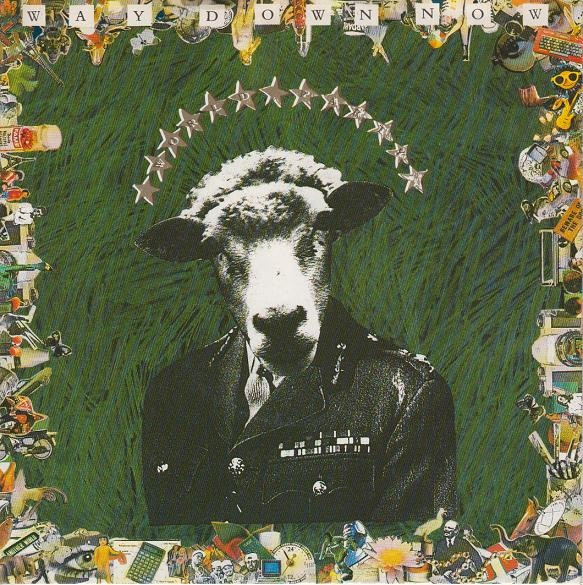
World Party – Way Down Now

The first song I heard from this band was She’s The One that I saw in the movie Matchmaker. I liked the song more than I did the movie.  The second song I heard from them was Ship Of Fools. Lately, I’ve been diving into the albums and more songs than those two. Their album Goodbye Jumbo is a pop masterpiece. When I thought of them at first, it was for their Beatles-type melodies and phrasing, but they also throw in the Rolling Stones. 

Before World Party took form, Wallinger had already built up a behind-the-scenes resume worth bragging about. Born in Prestatyn, Wales, he grew up listening to everything from soul and psychedelia to classical and punk. He was a true musical sponge. His big break came in the early ‘80s when he became the musical director for The Rocky Horror Show play, which led to studio work and eventually landed him in The Waterboys for their This Is the Sea era. 

Right out of the gate with this song, you’re greeted with that slinky, rubbery guitar riff that instantly calls to my mind Sympathy for the Devil, and that’s no accident. Wallinger even throws in some “woo-woos” in the chorus.

By now, he’d fully embraced his role as DIY guy, writing, producing, and playing virtually everything himself. Goodbye Jumbo was a masterful example of building an album. Every song is stitched together from analog and digital, but nothing hits quite like Way Down Now, which kicks the album off like a cool joyride through pop

He was armed with a drum machine, some trusty analog gear, and a pile of vintage records for inspiration. This album, to me, is a cross between Britpop and a bar-band.

The song peaked at #1 on the Billboard Mainstream Rock Charts, #5 on the Alternative Charts, #53 in Canada, and #66 in the UK in 1990. Goodbye Jumbo peaked at #36 in the UK, #26 in Canada, and #73 in the Billboard Album Charts. 

Way Down Now

Inside my TV, INever stop to wonder whyI’m way down nowI’m way down now

Some faceless get on the screenThe most honest man I’ve ever seenI’m way down nowI’m way down now

Won’t you show meSomething true today?C’mon and show meAnything but this

She took us by the handHell was the promised landI’m way down nowI’m way down now

I’m lying by the roadBecause she cut off all my clothesI’m way down nowI’m way down now

Won’t you show meSomething true today?C’mon and show meAnything but this

Inside my future lifeWhat I see just makes me cryI’m way down nowI’m way down now

The clocks will all run backwardsAll the sheep will have two headsAnd Thursday night and FridayWill be on Tuesday night instead

And all the times will keep on changingAnd the movement will increaseThere’s something about the living, babeThat sends me off my feet

There’s breeding in the sewersAnd the rats are on their wayThey’re clouding up the imagesOf my perfect day

And I know I’m not aloneAnd I know I’m not aloneAnd I know I’m not alone

Anything but thisCan you hear me?

Inside my TV, II never stop to wonder whyI’m way down nowI’m way down now

Then some faceless get comes on my screenThe most honest man I’ve ever seenI’m way down nowI’m way down

Something newSomething trueSomething newSomething trueSomething newSomething newSomething true

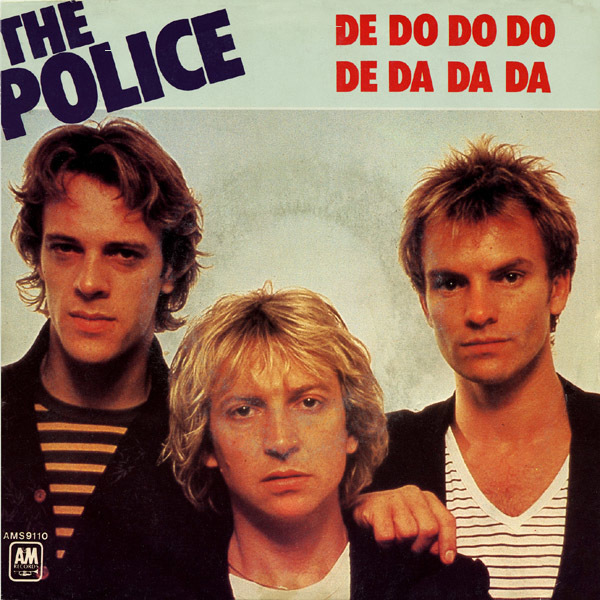
Police – De Do Do Do, De Da Da Da

I’ve never been a huge fan of The Police, but I do like a lot of their earlier songs. They were fun and energetic. 

What does this song mean? Some think it’s about the way politicians, entertainers, and other people use words to manipulate others. Sting called it, “An articulate song about being inarticulate.” Sting wrote this when he became interested in songs with nonsense lyrics, like “Do Wah Diddy Diddy,” “Tutti Frutti,” and “Da Doo Ron Ron.” He wanted to find out why they work and write one of his own. He claimed it was his son who came up with the title.

The charm of “De Do Do Do” is that it makes something very complicated feel effortless. That’s a trick the best pop songs pull off. The Police knew how to make a statement while sounding like they were just having a bit of fun. And whether you hear it as a commentary on communication or just a killer hook to blast on cassette, it sticks in your head like bubblegum on a boot.

The song was inspired by the idea that simple, repetitive phrases can have a profound emotional impact, regardless of their literal meaning. Sting explained that the song reflects the way some people are drawn to shallow or meaningless language, and how, sometimes, even educated people may rely on basic communication in emotionally charged situations.

They reunited in 1986 and tried to update their old songs with new releases…the sessions didn’t work. The only song to be reworked and released was Don’t Stand So Close To Me. This song peaked at #10 on the Billboard 100, #5 in Canada, #8 in New Zealand, and #5 in the UK in 1981.

It was on their album Zenyatta Mondatta. 

Sting: “Certainly what we’re producing is not elitist High Art, But, equally, I think entertainment’s an art. I think my songs are fairly literate – they’re not rubbish. ‘De Do Do Do’, for example, was grossly misunderstood: the lyrics are about banality, about the abuse of words. Almost everyone who reviewed it said, Oh, this is baby talk. They were just listening to the chorus alone, obviously. But they’re the same people who would probably never get through the first paragraph of Finnegan’s Wake, because that’s ‘baby talk’, too.”

De Do Do Do, De Da Da Da

Don’t think me unkind
Words are hard to find
They’re only cheques I’ve left unsigned
From the banks of chaos in my mind

And when their eloquence escapes me
Their logic ties me up and rapes me

De do do do de da da da
Is all I want to say to you
De do do do de da da da
Their innocence will pull me through
De do do do de da da da
Is all I want to say to you
De do do do de da da da
They’re meaningless and all that’s true

Poets priests and politicians
Have words to thank for their positions
Words that scream for your submission
And no-one’s jamming their transmission

‘Cause when their eloquence escapes you
Their logic ties you up and rapes you

De do do do de da da da
Is all I want to say to you
De do do do de da da da
Their innocence will pull me through
De do do do de da da da
Is all I want to say to you
De do do do de da da da
They’re meaningless and all that’s true

De do do do de da da da
Is all I want to say to you
De do do do de da da da
Their innocence will pull me through
De do do do de da da da
Is all I want to say to you
De do do do de da da da
They’re meaningless and all that’s true