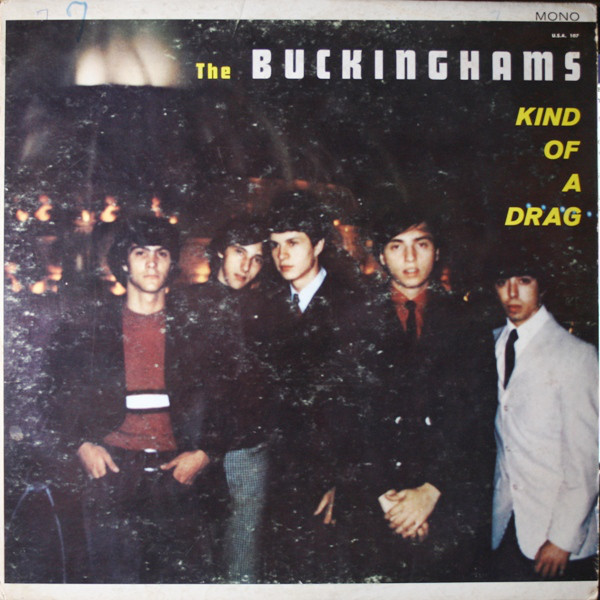
This song peaked at #1 in the Billboard 100 and #1 in Canada in 1967. This was an American band from Chicago that formed in 1966. They scored 3 top ten hits (#5 Mercy, Mercy, Mercy, #6 Don’t you Care and this song).
The Buckingham was a band from Chicago that formed in 1966. They were very successful in 1967 and 68 and broke up in 1970. They reformed in 1980 and are still together today.
“Kind of a Drag” was written by Jim Holvay, who was a friend of the band’s from Chicago. It is The Buckingham’s only #1 hit, although they peeked into the Top 10 twice more and charted a couple more times after that. Holvay went on to write “Don’t You Care,” “Susan” and “Hey Baby They’re Playing Our Song” for The Buckinghams.
Is that a song from the late-’60s/ early-’70s with a horn section? Then odds are good it’s produced by James William Guercio. Guercio produced both early Chicago and The Buckinghams, and the latter influenced the formation of Blood Sweat & Tears. Try playing “Kind of a Drag” back-to-back with “Saturday In The Park” (Chicago) and “You’ve Made Me So Very Happy” (BS&T).
Meet The Buckinghams: Dennis Tufano (vocals), Carl Giammarese (guitar), Martin Grebb (keyboard), Nick Fortuna (bass), Jon Poulos (drums). The band had dissolved by 1970, but a reunion has since taken place starting in 1980, with the only two original members now being Carl and Nick. Jon Poulos died from a drug overdose in 1980.
The Buckinghams had five charting hits, and they all occurred in 1967, prompting Billboard magazine to declare them “the most-listened-to band of the year.” So why did they fall off the map? In our interview with Tommy James, he explained that 1968 marked the emergence of album-oriented bands, with singles acts dying off. Said James: “When we left in August (1968, for the Democratic National Convention), all the big acts were singles acts. It was the Association, it was Gary Puckett, it was the Buckinghams, the Rascals, us. But the point was that it was almost all singles. In 90 days, when we got back, it was all albums. It was Led Zeppelin, Crosby, Stills and Nash, Blood, Sweat and Tears, Joe Cocker, Neil Young. And there was this mass extinction of all of these other acts. It was just incredible. Most people don’t realize that that was sort of the dividing line where so many of these acts never had hit records again.”
The modern-day version of The Buckinghams have risen to such heights as playing at President Barack Obama’s 2009 inauguration ball, and being inducted into the 2009 class of the Hit Parade Hall of Fame.
Kind of a Drag
Kind of a drag When your baby don’t love you Kind of a drag When you know she’s been untrue
Oh oh, listen to what I’ve gotta to say Girl, I still love you I’ll always love you Anyway, anyway, anyway
Kind of a drag When your baby says goodbye Kind of a drag When you feel like you want to cry
Oh oh girl, even though you make me feel blue I still love you I’ll always love you Anyway, anyway, anyway
Oh, listen to what I’ve gotta say Girl, I still love you I’ll always love you Anyway, anyway, anyway
Billy Preston played with and toured with a lot of artists. Mahalia Jackson, Ray Charles, Little Richard, The Beatles, Rolling Stones, and more. He had 17 songs in the Billboard 100, six top ten hits, and three number 1’s… One of the #1’s was with the Beatles with Get Back.
This song peaked at #1 in the Billboard 100 in 1974. Preston performed this song on the very first episode of Saturday Night Live. He and Janis Ian were the musical guests on the October 11, 1975 debut.
Preston started writing this one night in the dressing room of an Atlanta nightclub where he was performing. He wanted to write a song based on the saying, “Nothing from nothing leaves nothing.”
“The saloon piano gave it character,” Preston explained, “and I had a feeling it would be a hit because it was a sing-a-long kind of thing.”
Bruce Fisher, who was Preston’s songwriting partner (he co-wrote his previous American chart-topper, “Will It Go Round In Circles”), added a second verse.
The B-side of the single was another song Preston wrote with Fisher: “You Are So Beautiful,” which was later a hit for Joe Cocker.
Preston started off at the age of 10 playing keyboards for gospel legend Mahalia Jackson. Later he joined Ray Charles’ touring band before recording with The Beatles on several of their tracks including “Get Back” and “Let It Be” (The Beatles considered him to be the fifth Beatle). He also played on a number of Sly & The Family Stone recordings. Preston went on to have a successful solo career with five Top 10 US hits. In 1997 he was sent to prison on drug charges. He died in 2006 at age 59.
In the US, this was used in a TV commercial for Fidelity Investments. >>
This was used in several movies, including the 1995 thriller To Die For, starring Nicole Kidman, the 2003 comedy Elf, starring Will Ferrell, the 2008 comedy Be Kind Rewind, starring Jack Black and Mos Def, and the 2011 comedy Bad Teacher, starring Cameron Diaz and Justin Timberlake.
Nothing from Nothing
Nothin’ from nothin’ leaves nothin’ You gotta have somethin’ if you want to be with me Nothin’ from nothin’ leaves nothin’ You gotta have somethin’ if you want to be with me
I’m not tryin’ to be your hero ‘Cause that zero is too cold for me, Brrr I’m not tryin’ to be your highness ‘Cause that minus is too low to see, yeah
Nothin’ from nothin’ leaves nothin’ And I’m not stuffin’, believe you me Don’t you remember I told ya I’m a soldier in the war on poverty, yeah Yes, I am
Nothin’ from nothin’ leaves nothin’ You gotta have somethin’ if you want to be with me Nothin’ from nothin’ leaves nothin’ You gotta have somethin’ if you want to be with me
You gotta have somethin’ if you want to be with me You gotta bring me somethin’ girl, if you want to be with me
I like the overall sound of this recording. The mix and depth are perfect. Sara’s voice is powerful and the structure of the song is great. This is a song that you turn up to 11 on your stereo, iPod, or phone with good headphones. The engineer of this song did his or her job very well.
She talked about the song and said: “basically about the fact that we all… have insecurities to hide, and we often do that by putting on a façade.” She also goes on to say that “unfortunately, if we just be who we are, that’s usually the more attractive and beautiful thing.”
Building a Mystery peaked at #13 in the Billboard 100 and #1 in Canada in 1997.
This song has been featured in many commercials and movies but I’ve never get tired of it. What a positive vibe it has to it. The O’Jays had six top ten hits, twenty-nine songs in the Billboard 100, and one #1 which was Love Train in 1973.
To honor their contributions to Philadelphia Soul, the BET network awarded the O’Jays a lifetime achievement award, which was presented by the Soul Train creator Don Cornelius.
According to Eddie Levert of the O’Jays, when they started working on this song, it didn’t have lyrics. Kenny Gamble wrote them on the spot in about five minutes. “By the time we started laying down the vocals, we knew we had a hit,”… “Love Train felt like destiny. It had such perfect, timeless lyrics that it was almost as if they’d come from God, and we had to deliver them to the people.”
It was 1973, the height of the Philadelphia soul genre was dawning, and “Love Train” came along with just the right sound at just the right time. It was written by Kenny Gamble and Leon Huff, producers for the O’Jays. The team of Gamble & Huff would go on to write and produce over 170 gold and platinum records – and they also wrote “Back Stabbers” and “For The Love Of Money,” two more key songs in the O’Jays’ career.
The lyrics make a call for unity and world peace, mentioning England, Russia, China, Egypt, Israel, and Africa. “Love Train was the first of our big message songs,” O’Jays singer Walter Williams told The Guardian. 1972 was explosive – Vietnam was rumbling on, the rich were getting richer – so it was the perfect time to sing about social issues. The song mentioned places that were having human rights problems, but in a positive, hopeful way: “The first stop we make will be England… tell all the folks in Russia and China too.”
The O’Jays made a music video for this song, mainly for airing in Europe, where many shows played these clips. In the video, the O’Jays take a group of children on a train to Griffith Park in Los Angeles.
This song was a big part of the satirical 2010 “Rally to Restore Sanity and/or Fear,” put on basically by the Comedy Central network. The “rally” included songs with a train theme, so they got “Love Train,” Ozzy’s “Crazy Train,” as well as “Peace Train.” A merry time was presumably had by all.
The song has been used in numerous TV and film soundtracks, as well as in popular commercials for Coors Light.
Love Train
People all over the world (everybody) Join hands (join) Start a love train, love train People all over the world (all the world, now) Join hands (love ride) Start a love train (love ride), love train
The next stop that we make will be soon Tell all the folks in Russia, and China, too Don’t you know that it’s time to get on board And let this train keep on riding, riding on through Well, well
People all over the world (you don’t need no money) Join hands (come on) Start a love train, love train (don’t need no ticket, come on) People all over the world (Join in, ride this train) Join in (Ride this train, y’all) Start a love train (Come on, train), love train
All of you brothers over in Africa Tell all the folks in Egypt, and Israel, too Please don’t miss this train at the station ‘Cause if you miss it, I feel sorry, sorry for you Well
People all over the world (Sisters and brothers) Join hands (join, come on) Start a love train (ride this train, y’all), love train (Come on) People all over the world (Don’t need no tickets) Join hands (come on, ride) Start a love train, love train Ride, let it ride Let it ride Let it ride People, ain’t no war
People all over the world (on this train) Join in (ride the train) Start a love train, love train (ride the train, y’all) People all over the world (come on) Join hands (you can ride or stand, yeah) Start a love train, love train (makin’ love) People all over the world (’round the world, y’all) Join hands (come on) Start a love train, love train People all over the world Join hands Start a love train, love train People all over the world Join hands Start a love train, love train People all over the world Join hands Start a love train, love train
This song never gets old. It has been recorded by many artists including David Bowie to a disco version by Amii Stewart. The song was written by Steve Cropper and Eddie Floyd. This song peaked at #28 in the Billboard 100 and #19 in the UK. It was released on Stax Records.
Stax Records boss Jim Stewart wasn’t a fan of this song, as he thought it was too similar to “In The Midnight Hour.” He didn’t release it until about six months after it was recorded. When he did, Cropper and Floyd did much of the promotion themselves, visiting radio stations to try to get airplay for the song.
Steve Cropper on the song: “We were trying to write a song about superstitions, and after we’d exhausted about every superstition known to man at that time, from cats to umbrellas, you name it, we said, what do people do for good luck? And Ed tapped on the chair and said, ‘knock on wood, there it is.’ So basically the whole theme of the song changed, and we started to sing about, I’d better knock on wood for good luck, that I can keep this girl that I got, because she’s the greatest – and that’s what it was about.”
This was Eddie Floyd’s biggest hit. He wrote the song with Stax Records guitarist Steve Cropper in the Lorraine Motel, which is where Martin Luther King Jr. was assassinated in 1968. Working late at night, they came up with the famous line, “It’s like thunder, lightning, the way you love me is frightening” when Floyd told Cropper a story about how he and his brother would ride out the storms in Alabama.
“In Alabama, man, there’s like thunder and lightning,” he told Cropper. “We’d hide under the bed because we’d be frightened of the thunder and lightning.”
Cropper liked this phrase and came up with the famous line.
The saying “Knock On Wood” is used to express gratitude for good fortune while humbly acknowledging that it might not continue: “My back has been feeling better ever since I gave up spearfishing… knock on wood.” This is often accompanied by the speaker actually tapping on any nearby (and preferably wooden) surface.
In the song, Eddie Floyd is knocking on wood because he’s so lucky to have found the girl of his dreams.
This song has one of the most effective pauses in music history: After Floyd sings, “I better knock,” there’s some space before drummer Al Jackson comes in with his drumbeats and Floyd completes the line with “on wood.”
This section wasn’t planned – Jackson came up with the idea of putting the pause in and simulating the sound of knocking on a door to break up the line. This little flourish made the song very memorable.
A disco version by Amii Stewart was a #1 hit in 1979. It was the only hit for Stewart, who was also a dancer and actress – she starred in the Broadway musical Bubbling Brown Sugar. The innovative arrangement of her version inspired Jay Graydon’s production of The Manhattan Transfer’s “The Boy From New York City.”
Says Graydon: “There was a re-release of ‘Knock On Wood’ that was fantastic. And some guy played a triplet guitar part in it. I decided to borrow the idea because professionals borrow where amateurs steal. (laughs) So I was borrowing the concept… with different notes that I played, of course, And that was the secondary hook of the song.” (read more in our interview with Jay Graydon)
The intro, with horns and guitar, is similar to another hit for Stax Records: “In The Midnight Hour” by Wilson Pickett. The guitar lines in both songs are deceptively simple. Steve Cropper explained on his website: “It’s a little school-of-guitar thought that I called ‘follow the dots.’ Basically, you look down on the front markers of the guitar and just kind of follow them out and you can come up with the intro of either ‘In The Midnight Hour’ or the intro of ‘Knock On Wood’ depending on where you start. It was kind of funny that sometime after ‘In The Midnight Hour’ had been a hit, I was laughing that we had always put a lot of pride in our intros at Stax, and you could tell it meant a lot because the hits were pretty identifiable – the old game of name that song in one note, and usually you’d get it right off of the intro before the lyrics start. This is one of those cases. We just thought it was funny and I hit it. Eddie said, ‘man, that’s it!’ That’s how the intro to ‘Knock on Wood’ came about.”
After Eddie Floyd and Steve Cropper wrote this song at the Lorraine Motel, they called trumpet player Wayne Jackson, who was doing a gig 10 minutes away in West Memphis, and asked him to come by to work on the horn lines before their session the next morning. He came by around 2 a.m., and an hour later they had the horn lines written and ready to go. At the session, they didn’t have to spend time working up the song because it was already prepared.
This song confused British listeners a bit, as the phrase “knock on wood” in not in their vernacular. In England, the expression is “touch wood.”
According to Eddie Floyd, it was Isaac Hayes, a regular at Stax Records, who came up with the bridge, which ended up being played on a saxophone.
The soul singer Tyrone Davis released a slower version of this song in 1969 on his album Can I Change My Mind.
Otis Redding recorded the song as a duet with Carla Thomas (credited to “Otis & Carla”). Their version went to #30 in 1967.
The Stax house band – Booker T. & the MG’s – provided backing on this track. Isaac Hayes played the piano.
Knock on Wood
I don’t want to lose you, this good thing That I got ’cause if I do I will surely, Surely lose a lot. Cause your love is better Than any love I know. It’s like thunder and lightning, The way you love me is frightening. You better knock, knock on wood, baby.
I’m not superstitious about ya But I can’t take no chance. I got me spinnin’, baby, You know I’m in a trance. ‘Cause your love is better Than any love I know. It’s like thunder and lightning, The way you love me is frightening. You better knock, knock on wood, baby.
It’s no secret, That woman is my loving cup ‘Cause she sees to it That I get enough. Just one touch from here, You know it means so much. It’s like thunder and lightning, The way you love me is frightening. You better knock, knock on wood, baby.
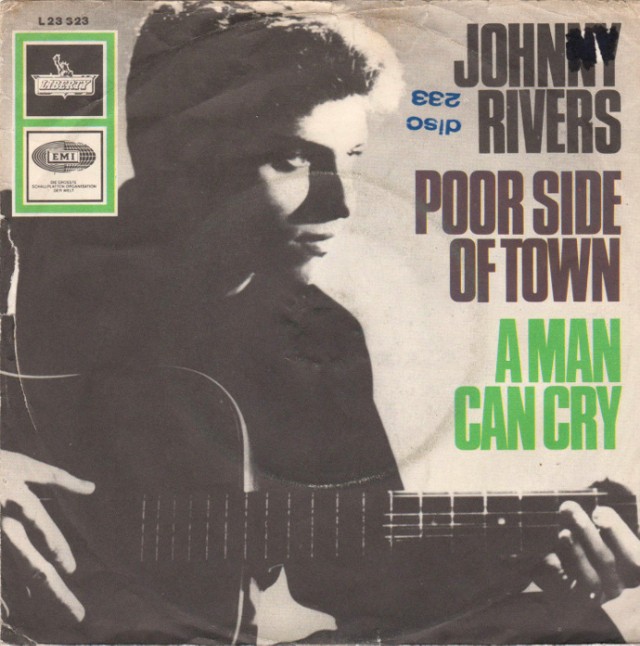
This song has always stuck with me because of that odd guitar riff. The song was written by Johnny Rivers and Lou Adler. Johnny had 29 songs in the top 100, 9 top ten hits, and one number one song. This is the one chart-topper Rivers achieved. It hit #1 in the Billboard 100 in 1966.
The song was on his Changes album that peaked at #33 in 1967. With this album, he moved into a more soulful, contemporary direction with his music. Instead of basic guitar-bass-drums, he added orchestral sounds from horns and strings.
This is Johnny Rivers’ only American chart topper. He co-wrote it with Lou Adler. Marty Paich, who arranged for Mel Torme and Ray Charles, did the string arrangement.
Johnny Rivers: “I had this tune I’d been working on, and I kept playing it for Lou. It took me about 6 months to finish. We cut it with Larry Knechtel, Joe Osborn and Hal Blaine. I did my vocal performances live with the band. I sat and played my guitar and sang. There weren’t any overdubs. So we said it could use some singers and maybe some strings. That’s the time we got together with (arranger) Marty Paich.”
This was a change of direction for Johnny Rivers, who had tired of the upbeat Go-Go sound that provided him with his early hits. However, he found his record company reluctant to tamper with a winning formula. He recalls, “Al Bennett and those guys were goin’ Man. don’t start comin’ out with ballads. You’re gonna kill your career. You got a good thing goin’ with this funky trio rock sound, stay with that.”
Poor Side of Town
How can you tell me how much you miss me When the last time I saw you, you wouldn’t even kiss me That rich guy you’ve been seein’ Must have put you down So welcome back baby To the poor side of town
To him you were nothin’ but a little plaything Not much more than an overnight fling To me you were the greatest thing this boy had ever found And girl it’s hard to find nice things On the poor side of town
I can’t blame you for tryin’ I’m tryin’ to make it too I’ve got one little hang up baby I just can’t make it without you
So tell me, are you gonna stay now Will you stand by me girl all the way now Oh with you by my side They just can’t keep us down Together we can make it girl From the poor side of town
(So tell me how much you love me) (Come be near to me and say you need me now)
Oh, with you by my side This world can’t keep us down Together we can make it baby From the poor side of town
I remember in Jr High school in 1981 I bought Long Distant Voyager by the Moody Blues. The album received heavy play and peaked at #1 in the Billboard album charts. The album had two top twenty hits with The Voice and Gemini Dream. The Voice peaked at #15 in the Billboard 100.
With no clear title in the lyrics, Justin Hayward had no idea what to name this song. When the group’s engineer, Greg Jackman, asked him what to call it, Hayward replied, “I’ll think of that after.”
Jackman thought he said, “Fat Arthur,” and wrote that on the tape. That was the song’s name right up to the mastering process when Jackman pushed for a more sensible title before they turned it over to the label. Hayward went through the lyrics and picked out “The Voice,” which is what stuck.
Mike Pinder left after the previous album Octave and was replaced by Patrick Moraz.
This was one of the songs that propelled The Moody Blues to a comeback in the early 1980s, and of their newer songs, it appealed the most strongly to fans of their original work. Written by Justin Hayward, the lyrics have the same philosophical tone of their songs in the late 1960s, and the song is alternately urgent and hopeful about the future. It seems to be telling listeners that they face major choices on how their world will turn out, and that there is great hope in it, but only if they make it happen of their own initiative.
After the Moody Blues came to San Francisco and played their psychedelia-tinged songs in 1967, they’ve been perceived in some circles as a Flower Power band. They are certainly very introspective, but their music changed with the times, thanks in part to a shift in songwriting for Justin Hayward. By the ’80s, he no longer needed to be in just the right mood to write a song (like he was on one Tuesday Afternoon), but could compose in his music room on a regular schedule. Hayward cites this discipline for the band’s continued success in the ’80s.
Hayward did something different on this track, recording two guitars to a click track and then bringing that tape to the band to give them the tempo and feel of the song. This is the method he used on many songs throughout the decade.
The Voice
Won’t you take me back to school? I need to learn the golden rule. Won’t you lay it on the line? I need to hear it just one more time.
Oh, won’t you tell me again? Oh, can you feel it? Oh, won’t you tell me again tonight?
Each and every heart it seems, Is bounded by a world of dreams. Each and every rising sun, Is greeted by a lonely one.
Oh, won’t you tell me again? Oh, can you feel it? Oh, won’t you tell me again tonight?
Cause out on the ocean of life my love. There a so many storms we must rise above. Can you hear the spirit calling, as it’s carried across the waves? You’re already falling it’s calling you back to face the music. And the song that is coming through. You’re already falling the one that it’s calling is you.
My a promise take a vow. And trust your feelings it easy now. Understand The Voice within. And feel a change already beginning.
Oh, won’t you tell me again? Oh, can you feel it? Oh, won’t you tell me again tonight? Tonight?
Oh, won’t you tell me again? Oh, can you feel it? Oh, won’t you tell me again tonight?
And how many words have I got to say? And how many times will it be this way? With your arms around the future and your back up against the past. You’re already falling it’s calling you on to face the music. And the song that is coming through. You’re already falling the one that it’s calling is you.
Each and every heart it seems, Is bounded by a world of dreams. Each and every rising sun, Is greeted by, a lonely, lonely one.
Won’t you tell me again? Oh, can you feel it? Oh, won’t you tell me again tonight?
A good rocker by George. He recorded this song when he was making his album All Things Must Pass in 1970. Eric Clapton, Jim Gordon, Bobby Keyes, and Badfinger are among the musicians on this recording.
The song peaked at #10 in the Billboard 100 and #3 in Canada in 1971. Originally, Harrison wrote this for Billy Preston with sort of a gospel feel. After it ended up being a fast rocker, he decided to record it himself.
In 2014 there was a contest to come up with a video to this song. The winner is at the bottom of the post. This is the announcement.
Congratulations to Brandon Moore from the United States whose video was chosen by Olivia & Dhani Harrison as the overall winner of the Genero.tv ‘What is Life’ Competition!
Preston was one the early artists on the Beatles’ Apple label (he released two albums), and he was present at the sessions that yielded “Get Back.”
Harrison was writing many religious songs at the time, but this wasn’t one of them. The lyrics are directed to a person, not God.
The original song had piccolo, trumpet, and oboe parts that weren’t used because Harrison didn’t like the feel. They can be heard on the 2000 reissue of the album, where the original backing track is included as an extra song.
Phil Spector produced the album. Bobby Whitlock, who played keyboards at the sessions, had this to say about him in his Songfacts interview: “The real show in that whole place was Phil Spector – what a funny guy. He’s not too funny now, but then, what he was doing in there and the way he was carrying on, I thought, they’ve got all these mics out here catching us jamming, where they need a mic is on the inside. He was a pretty colorful character to say the least. That was one of the highlights of it – listening to him and watching him and watching how he operated. I learned a lot just from being around him. He’s just eccentric, he’s real creative. I agree with his work ethic. I concur with him 100% when it comes to being creative in the studio – put 6 guitars on it if you need it. If it wasn’t for Phil Spector, forget about The Righteous Brothers. There probably wouldn’t be a lot of us here from ‘You’ve Lost That Lovin’ Feelin” – you know how many babies were made to that?”
On the album, the “O’Hara-Smith” singers are credited as background vocalists. Whitlock explains: “That’s Eric Clapton and me. If you listen, you can hear Eric and me wailing away.” (For more on these sessions, check out our Bobby Whitlock interview)
This has been covered by Olivia Newton-John and the surf band The Ventures. A version by Shawn Mullins appeared on the Big Daddy soundtrack.
In the UK, this was released as the B-side to “My Sweet Lord.” In the US, it was released as its own single, with “Apple Scruffs” as the B-side.
What Is Life
What I feel, I can’t say But my love is there for you anytime of day But if it’s not love that you need Then I’ll try my best to make everything succeed
Tell me, what is my life without your love Tell me, who am I without you, by my side
What I know, I can do If I give my love now to everyone like you But if it’s not love that you need Then I’ll try my best to make everything succeed
Tell me, what is my life without your love Tell me, who am I without you, by my side Tell me, what is my life without your love Tell me, who am I without you, by my side
What I feel, I can’t say But my love is there for you any time of day But if it’s not love that you need Then I’ll try my best to make everything succeed
Tell me, what is my life without your love Tell me, who am I without you, by my side Oh tell me, what is my life without your love Tell me, who am I without you, by my side
What is my life without your love Tell me, who am I without you, by my side
Oh tell me, what is my life without your love Tell me who am I without you by my side
I owned a softrock compilation album with this song and It’s So Nice To Be With You on it. Bend Me, Shape Me peaked at #5 in the Billboard 100 in 1968. The group was formed in Cicero, Illinois as Gary & The Knight Lites. The founding members included Gary Loizzo- vocals and guitar, Charles Colbert, Jr.- bass guitar and vocals, Al Ciner- guitar and vocals, and Jim Michalak on drums.
This was originally recorded in 1967 by The Outsiders, who were known for their hit “Time Won’t Let Me.”
This was written by songwriters Scott English and Larry Weiss. Larry Weiss later wrote “Rhinestone Cowboy.”
The song is about a guy who is so enamored with a girl that he will let her do whatever she wants to him as long as she continues to love him.
In the UK this was a #3 hit in 1968 for Amen Corner. The following year they went to the top of the UK charts with “(If Paradise Is) Half As Nice.”
Bend Me, Shape Me
You are all the woman I need, and baby you know it, You can make this beggar a king, a clown or a poet. I’ll give you all that I own. You got me standing in line Out in the cold, pay me some mind. Bend me, shape me Anyway you want me, Long as you love me, it’s all right Bend me, shape me Anyway you want me, You got the power to turn on the light. Everybody tells me I’m wrong to want you so badly, But there’s a force driving me on, I follow it gladly. So let them laugh I don’t care, Cause I got nothing to hide, All that I want is you by my side. Bend me, shape me Anyway you want me, Long as you love me, it’s all right Bend me, shape me Anyway you want me, You got the power to turn on the light. Bend me shape me anyway you want me
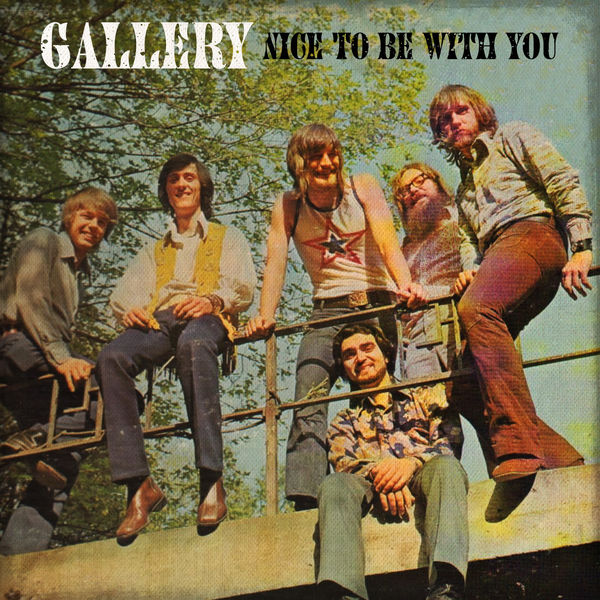
I had this song on a compilation album I had when I was around 18. Gallery was a 1970s American rock band, formed in Detroit, Michigan by Jim Gold. While they did record a number of songs, they are most famous for this 1972 hit single. They are a true one-hit wonder.
The song peaked at #4 on the Billboard 100 and #1 in Canada in 1972.
They had another hit as well as pointed out by a commenter…it was “I Believe In Music”, written by Mac Davis. It peaked at #22 on the Billboard 100 and #5 in Canada in 1972.
It’s So Nice To Be With You
Oh, it’s so nice to be with you I love all the things ya say and do And it’s so nice to hear you say You’re gonna please me in every way Honey, I got the notion you’re causin’ commotion in my soul
Baby, you and me have got somethin’ that’s real I know it’s gonna last a lifetime Aw, ya better believe it, girl at night I call your name Darkness fills my room, I’m only dreamin’ About the time I’m gonna be with you
Oh, it’s so nice to be with you I love all the things ya say and do And it’s so nice to hear you say You’re gonna please me in every way Honey, I got the notion you’re causin’ commotion in my soul
When I’m feelin’ down You’re there to pick me up and help me to carry on Aw, little things mean a lot when you need a shoulder to cry on I’m there to ease the pain and chase away the rain Aw, darlin’, I just gotta say
Oh, it’s so nice to be with you I love all the things ya say and do And it’s so nice to hear you say You’re gonna please me in every way
Oh, it’s so nice to be with you I love all the things ya say and do And it’s so nice to hear you say You’re gonna please me
This song has a gritty garage sound to it. There were many 1960’s garage bands that formed after The Beatles appeared on Ed Sullivan. The Seeds were formed in 1965 by Sly Saxon. Saxon wrote, “Pushin’ Too Hard” while sitting in the front seat of a car waiting for his girlfriend to finish grocery shopping at a supermarket. The song peaked at #36 in the Billboard 100 in 1967. The song is simple and repetitive but catchy in its own way.
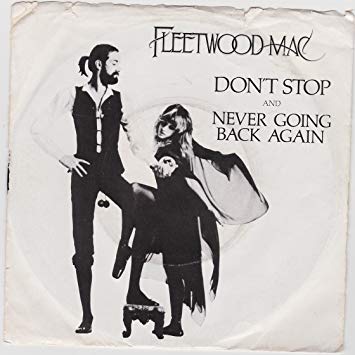
This song was a B side of “Don’t Stop” with both songs coming on the great album Rumors. This is a nice short acoustic Lindsey Buckingham written song. It’s a very understated but powerful song compared with the other ones on the album and one of my favorites.
Lindsey is a great guitar player. He is not flashy but he plays just what is needed like the sustained solo in “Go Your Own Way.” This song is what made me start listening to his playing.
from Rolling Stone Magazine: In the studio, co-producer Ken Caillat asked Buckingham to restring his guitar every 20 minutes. “I wanted to get the best sound on every one of his picking parts,” Caillat said. “I’m sure the roadies wanted to kill me. Restringing the guitar three times every hour was a bitch. But Lindsey had lots of parts on the song, and each one sounded magnificent.”
According to Q magazine, June 2009 the inspiration for this Lindsey Buckingham penned song was a brief relationship with a woman whom he’d met on the road. Buckingham had only recently broken up with his Fleetwood Mac co-singer Stevie Nicks.
Most of the Rumours album was recorded at The Record Plant in Sausalito, California, but this song was recorded at Studio City Sound Recording Studios in Los Angeles. According to recording assistant Cris Morris, this song took a while to record. Said Morris: “It was Lindsey’s pet project, just two guitar tracks but he did it over and over again. In the end his vocal didn’t quite match the guitar tracks so we had to slow them down a little.”
Never Going Back Again
She broke down and let me in Made me see where I’ve been
Been down one time Been down two times I’m never going back again
You don’t know what it means to win Come down and see me again
Been down one time Been down two times I’m never going back again
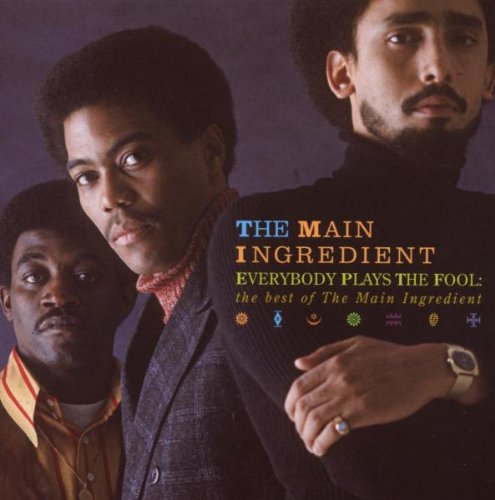
More soul from the seventies. The song peaked at #3 in the Billboard 100 and #6 in Canada. The Main Ingredient had two top ten hits and 11 songs in the top 100. The band was formed in Harlem, New York City in 1964 as a trio called the Poets, composed of lead singer Donald McPherson, Luther Simmons, Jr., and Tony Silvester. Don McPherson died of leukemia in 1971 and was replaced by Cuba Gooding, Sr…the father of Cuba Gooding Jr.
I love Seventies soul music. There were so many great artists like The Delfonics, The Chi-Lites, Smokey Robinson, and the list goes on.
Everybody Plays the Fool
Okay, so your heart is broken You sit around mopin’ Cryin’ and cryin’ You say you’re even thinkin’ about dyin’ Well, before you do anything rash, dig this
Everybody plays the fool sometime There’s no exception to the rule Listen, baby, it may be factual, may be cruel I ain’t lyin’, everybody plays the fool Falling in love is such an easy thing to do And there’s no guarantee that the one you love Is gonna love you
Oh-oh-oh, lovin’ eyes they cannot see A certain person could never be Love runs deeper than any ocean You can cloud your mind with emotion
Everybody plays the fool, sometime There’s no exception to the rule Listen, baby, it may be factual, may be cruel I want to tell ya Everybody plays the fool
How can you help it when the music starts to play And your ability to reason is swept away Oh-oh-oh, heaven on earth is all you see You’re out of touch with reality And now you cry but when you do Next time around someone cries for you
Everybody plays the fool, sometime They use your heart like a tool Listen, baby, they never tell you so in school I want to say it again Everybody plays the fool Listen to me, baby Everybody plays the fool, sometime (No exception) no exception to the rule It may be factual, may be cruel, sometime But everybody plays the fool Listen, listen, baby Everybody plays the fool
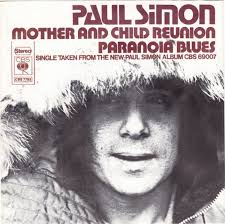
One of my favorite Paul Simon songs. The lyrics, melody, and the reggae feel make this song a classic. Paul’s songwriting is world class…the structure to his songs are great as well as is his guitar playing. The song peaked at #4 in the Billboard 100 and #5 in the UK in 1972.
Simon wrote this in response to the Jimmy Cliff song “Vietnam,” where a mother receives a letter about her son’s death on the battlefield. Simon recorded “Mother and Child Reunion” in Jamaica using Cliff’s musicians, hence the very authentic sound. Simon said of the song that it “became the first reggae hit by a non-Jamaican white guy outside Jamaica.”
Simon came up with the title after seeing a chicken and egg dish called “Mother and Child Reunion” on the menu at 456 Restaurant in Chinatown, New York.
This was Simon’s first single as a solo artist.
Paul Simon was ahead of the trend when he released this reggae-infused song: Johnny Nash went to #1 US later in 1972 with “I Can See Clearly Now,” and Eric Clapton topped the chart with “I Shot The Sheriff” (a Bob Marley cover) in 1974.
Mother and Child Reunion
No I would not give you false hope On this strange and mournful day But the mother and child reunion Is only a motion away, oh, little darling of mine
I can’t for the life of me Remember a sadder day I know they say let it be But it just don’t work out that way And the course of a lifetime runs Over and over again
No I would not give you false hope On this strange and mournful day But the mother and child reunion Is only a motion away, oh, little darling of mine
I just can’t believe it’s so Though it seems strange to say I never been laid so low In such a mysterious way And the course of a lifetime runs Over and over again
But I would not give you false hope On this strange and mournful day When the mother and child reunion Is only a motion away
Oh the mother and child reunion Is only a motion away Oh the mother and child reunion Is only a moment away
Oh the mother and child reunion Is only a motion away Oh the mother and child reunion Is only a moment away
Oh the mother and child reunion Is only a motion away Oh the mother and child reunion Is only a moment away
I remember hearing this song on Fast Times at Ridgemont High. A good pop song by Jackson in 1982 and it peaked at #7 in the Billboard 100 and #16 in Canada in 1982. It was written by Jackson Browne and Danny Kortchmar.
This was his highest ever charting song.
Jackson Browne recorded the song for the film because he was friends with its writer, Cameron Crowe. The song’s co-writer Danny Kortchmar was also friends with Crowe, and was working on the song “Love Rules” for the film with Don Henley when he came up with the framework for “Somebody’s Baby.” Kortchmar convinced Browne to finish writing the song and record it for the movie.
Browne has called this an “unabashed pop song.” Most musicians would want their most popular songs on their albums, but Browne was OK having it on the Fast Times at Ridgemont High soundtrack, despite the advice of his former label boss David Geffen, who told him he was nuts for giving it up.
This song is about a guy who is infatuated with a girl, and convinces himself that she must have a boyfriend. As he tries to work up the courage to talk to her, he keeps losing confidence by reminding himself that she’s too fine not to be taken.
This was part of a memorable scene in the movie Fast Times at Ridgemont High, where it was used to express the feelings of a frustrated teenager. The movie was a huge hit and helped drive the chart success of the song. “Somebody’s Baby” was the only hit from the soundtrack, although “Moving In Stereo” by The Cars was used in a famous scene and also became associated with the film.
Jackson Browne wrote this song with Danny Kortchmar, who played guitar on his Running On Empty and Lives In The Balance albums. Kortchmar had the music and the “must be somebody’s baby” hook. He knew Browne could do something special with the song, so he brought what he had to Jackson, who helped Kortchmar complete it. That’s what I brought to him: all the guitar parts and everything else. In our 2013 interview, Kortchmar explained:
“It was not typical of what Jackson writes at all, that song. But because it was for this movie he changed his general approach and came up with this fantastic song. It’s a brilliant lyric. I think it’s absolutely wonderful. But it’s atypical of him – he wasn’t sure what to make of it himself. He didn’t want to put it on his album that he was making because it was atypical of what he did, but it ended up being something that got requested a lot and he ended up playing it live and taking it to his heart, as it were. And now he plays it all the time.”
Somebody’s Baby
Well, just, a look at that girl with the lights comin’ up in her eyes. She’s got to be somebody’s baby. She must be somebody’s baby. All the guys on the corner stand back and let her walk on by.
She’s got to be somebody’s baby. She must be somebody’s baby. She’s got to be somebody’s baby. She’s so fine.
She’s probably somebody’s only light. Gonna shine tonight. Yeah, she’s probably somebody’s baby, all right.
I heard her talkin’ with her friend when she thought nobody else was around. She said she’s got to be somebody’s baby; she must be somebody’s baby. Cause when the cars and the signs and the street lights light up the town,
She’s got to be somebody’s baby; She must be somebody’s baby; She’s got to be somebody’s baby. She’s so
She’s gonna be somebody’s only light. Gonna shine tonight. Yeah, she’s gonna be somebody’s baby tonight.
I try to shut my eyes, but I can’t get her outta my sight. I know I’m gonna know her, but I gotta get over my fright. We’ll, I’m just gonna walk up to her. I’m gonna talk to her tonight.
Yeah, she’s gonna be somebody’s only light. Gonna shine tonight. Yeah, she’s gonna be somebody’s baby tonight. Gonna shine tonight, make her mine tonight.









 PowerPop... An Eclectic Collection of Pop Culture