The bassist and songwriter for British bands the Small Faces and the Faces, Lane gave it all up for a curious solo career: he ran away and formed a circus. After he quit the Faces he released this single.
Ronnie started his own folk-country band named “Slim Chance” and released a surprise hit single “How Come?” in 1974 and it went to #11 in the UK. Ronnie had a unique idea of touring. His tour was called “The Passing Show” which toured the countryside with a circus tent and included a ringmaster and clowns.
During the recording of the album “Rough Mix” with Pete Townshend… Lane was diagnosed with was Multiple Sclerosis. He still toured with Eric Clapton and others afterward and released an album in 1979 called “See Me.”
Ronnie Lane died of Pneumonia while in the final stages of Multiple Sclerosis in 1997
How Come?
How come when I cut the ace of hearts You always draw the ace of spades? How’s it when your best friend Brings you lillies on your birthday?
How come, how come? Well, I ain’t superstitious, but Well, these things I’ve seen How come, how come? I ain’t a superstitious fella, but it worries me
How come when the local clergy calls He tells me that you shouldn’t wear black And what kind of bread are you gonna bake With that hemlock in your spice rack?
How come, how come? Well, I ain’t superstitious, but Well, these things I’ve seen How come, how come? I ain’t a superstitious fella, but it worries me
The spider’s run, the cobweb’s gone Did you eat it when the moon was new? I drowned your cat, what do you say about that? I’ve even broken up your broom
How come, how come? Well, I ain’t superstitious, but Well, these things I’ve seen How come, how come? I ain’t a superstitious fella, but it worries me
How come, how come? Well, I ain’t superstitious, but Well, these things I’ve seen How come, how come? I ain’t a superstitious fella, but it worries me
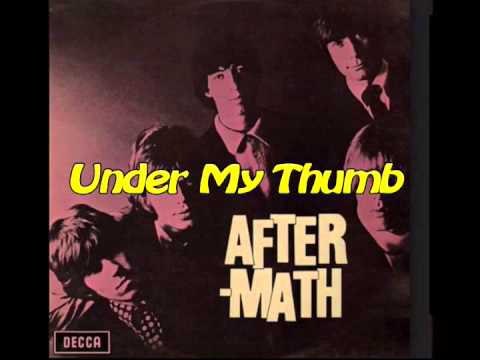
This is a great early Stones song. It was not released as a single which surprises me…so it did not chart. This is one of the many riff songs that the Stones started to have. On this one, Brian Jones is playing the riff on the marimbas on the studio version. Brian gave the Stones different sounds that they would not have had otherwise. Another example would be Brian playing the recorder in Ruby Tuesday…he added different colors to the music.
There have been a lot of complaints about this song…the word “misogynist” comes to mind. Mick Jagger was going out with a model named Chrissie Shrimpton at the time. She helped inspire the song. This is the rare song that I prefer their late sixties live version over the studio one…where the bass plays the main riff.
Some feminist groups opposed this because of the lyrics about dominating a woman. One of the lyrics that upset them the most is the line, “The way she talks when she’s spoken to… down to me.”
Mick Jagger: “The whole idea was that I was under HER, she was kicking ME around. So the whole idea is absurd, all I did was turn the tables around. So women took that to be against femininity where in reality it was trying to ‘get back’ against being a repressed male.”
From Songfacts
Keith Richards (1994): “Brian was still fantastic making records, because he was so versatile. I mean, he’d have marimbas – which is why you have marimbas on Under My Thumb – or dulcimer, sitar. He kind of lost interest in guitar, in a way. But at the same time he added all of that other color, those other instruments and other ideas. He was an incredibly inventive musician.”
This was the song The Stones were playing when a fan named Meredith Hunter was stabbed to death by members of the Hells Angels at their Altamont Speedway concert in 1969. The Hells Angels were a motorcycle gang hired for security at the show. Big mistake.
The Angel who stabbed Hunter, Alan Passaro, was found not guilty, with a jury ruling that he acted in self defense; Hunter produced a gun before he was killed. Footage of the stabbing that appeared in the Rolling Stones documentary Gimme Shelter was shown at the trial.
The Who recorded this in 1967 as a show of support when Mick Jagger and Keith Richards were being held in England on drug charges. After police raided Richards’ home in Sussex, he and Jagger were charged with drug possession when they found some marijuana and amphetamines. Jagger and Richards were found guilty and each spent a night in jail before they were released on bail. The raid was done mostly for publicity and backfired on British lawmakers when it became clear the police staged a massive raid to uncover a small amount of drugs. Charges against Richards were dropped and Jagger’s sentence was reduced to a conditional discharge.
Under My Thumb (lyrics may not match the live version)
Under my thumb The girl who once had me down Under my thumb The girl who once pushed me around
It’s down to me The difference in the clothes she wears Down to me, the change has come She’s under my thumb
And ain’t it the truth babe?
Under my thumb It’s a squirmin’ dog who’s just had her day Under my thumb A girl who has just changed her ways
It’s down to me Yes it is The way she does just what she’s told down to me The change has come She’s under my thumb Ah, ah, say it’s alright
Under my thumb It’s a Siamese cat of a girl Under my thumb She’s the sweetest, hmmm, pet in the world
It’s down to me The way she talks when she’s spoken to Down to me, the change has come She’s under my thumb Ah, take it easy babe Yeah
It’s down to me, oh yeah The way she talks when she’s spoken to Down to me, the change has come She’s under my thumb Yeah, it feels alright
Under my thumb Her eyes are just kept to herself Under my thumb, well I I can still look at someone else
It’s down to me, oh that’s what I said The way she talks when she’s spoken to Down to me, the change has come She’s under my thumb Say, it’s alright
Say it’s all Say it’s all
Take it easy babe Take it easy babe Feels alright Take it, take it easy babe
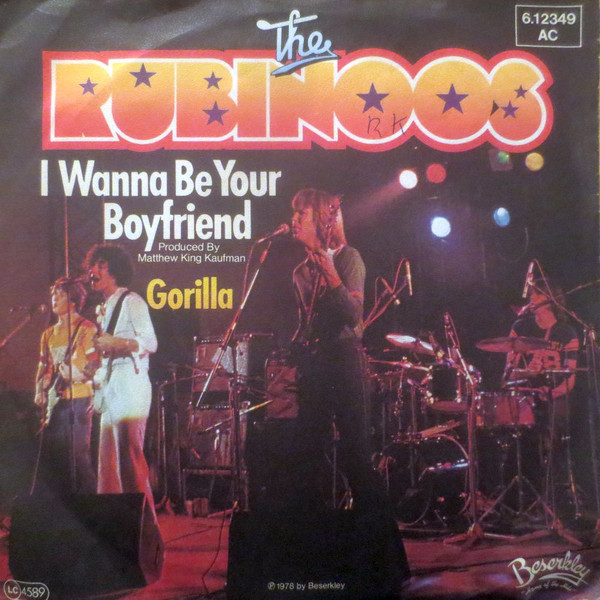
The Rubinoos are an American power pop band that formed in 1970 in Berkeley, California. Their only chart hit was a cover of Tommy James “I Think We’re Alone Now” in 1977.
This song was released in 1979 from the album “Back To The Drawing Board.” They had a resurgence in popularity because of the below claim.
Avril Lavigne had a song called Girlfriend…The writers of The Rubinoos song sued Lavigne in 2007 over the similarities. Avril responded with this statement: “I had never heard this song in my life and their claim is based on five words! All songs share similar lyrics and emotions. As humans we speak one language. Let it be crystal clear that I have not ripped anyone off or done anything wrong.”
The Rubinoos made a statement afterward: “We are satisfied that any similarities between the two songs resulted from Avril and Luke’s use of certain common and widely used lyrics. We therefore completely exonerate Avril and Luke from any wrongdoing of any kind in connection with the claims made by us in our lawsuit.”
They released a new album in 2019 called From Home.
I Wanna Be Your Boyfriend
Sitting here so close, together So far we’re just friends, but I’m wondering whether I, am I just imagining You, or do you really have a thing for me Like I think I see when I see you smile And the smile’s for me, I wanna tell you…Hey, You, I Wanna Be Your Boyfriend Trying to say I wanna be your number one Hey, You, I Wanna Be Your Boyfriend Gonna make you love me before I’m done late at night when I, when I can’t sleep Picture in my mind, I see you and me I, I’m telling you what I wanna be You, you’re saying you’re in love with me And oh, it feels so good in a dream That I know in life it’s just got to be I wanna tell you……Gonna make you love me, yeah I’m Gonna make you love me, yeah I’m Gonna make you love me, before I’m done
I, am I just imagining You, or do you really have a thing for me Like I think I see when I see you smile And the smile’s for me, I wanna tell you… Hey, You, I Wanna Be Your Boyfriend Trying to say I wanna be your number one Hey, You, I Wanna Be Your Boyfriend Gonna make you love me, yeah I’m Gonna make you love me, yeah I’m Gonna make you love me before I’m done
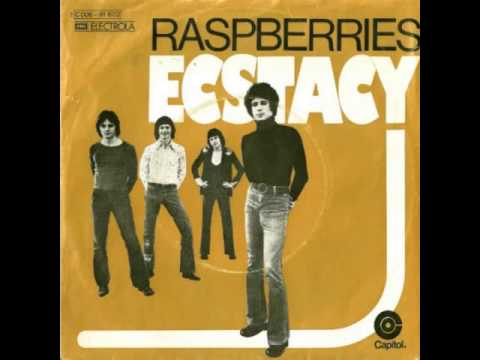
My favorite band from Cleveland. This song was on their Side 3 album released in 1973. The album only charted at #138 in the Billboard album charts. The song was released as a single but it didn’t chart.
The following year the band would give it one more shot with Starting Over and they would have one more top twenty single…Overnight Sensation. After that Eric Carmen lost his edge and was All By…himself.
Anyway, a Raspberries song is a good way to start your weekend…
Ecstacy
Come on!
When I think of all your lovin’ it makes me shiver ‘Cause when I get home Just wait ’til I get you alone
Ecstasy When you touch me I’m in ecstasy No one else could do the things you do Let me please you too Tonight
Ecstasy When you kiss me I’m in ecstasy No one else could make me feel this way Tell me that you’ll stay Tonight
When you wrap your love around me and move so gently, yeah I feel it begin Don’t stop, I can feel my head spinning
Baby, baby, I just wanna make you Feel the way I do You got my backbone shakin’ And my poor heart’s breakin’ in two
This was the first AC/DC song to chart in the US. It helped drive huge sales for the Highway To Hell album, which has sold over seven million copies in America. It was AC/DC’s sixth album, and the last with vocalist Bon Scott, who died in 1980. The song charted at #37 in Billboard 100 in 1979.
Angus Young described Highway to Hell about touring in American but Highway to Hell’s origin was the nickname for the Canning Highway in Australia. It runs from where lead singer Bon Scott lived in Fremantle and ends at a pub/bar called The Raffles, which was a big rock ‘n roll drinking hole in the ’70s. As Canning Highway gets close to the pub, it dips down into a steep decline.
Brian Johnson: “It was written about being on the bus on the road where it takes forever to get from Melbourne or Sydney to Perth across the Nullarbor Plain. When the Sun’s setting in the west and you’re driving across it, it is like a fire ball. There is nothing to do, except have a quick one off the wrist or a game of cards, so that’s where Bon came up with the lyrics.”
From Songfacts
So many people where killed by driving fast over that intersection at the top of the hill on the way for a good night out, that it was called the highway to hell, so when Bon was saying “I’m on the highway to hell” it meant that he was doing the nightly or weekly pilgrimage down Canning Highway to The Raffles bar to rock and drink with his mates: “Ain’t nothing I would rather do. Going down, party time, my friends are gonna be there too.”
Mutt Lange, who has also worked with The Cars, Bryan Adams, and Def Leppard (and Shania Twain, who he was married to from 1993-2008), produced the album. Lange took over after after failed sessions with Eddie Krammer, who had a solid resumé that included work with Led Zeppelin and Jimi Hendrix, but whose procedural style didn’t work for AC/DC.
Lange was able to enhance the band’s sound without altering their essence. On this song, he added robust background vocals to the choruses – something AC/DC didn’t do on their previous efforts. This and other production refinements helped made the song a hit and expand their audience.
Recorded in London, Highway To Hell was the first AC/DC album recorded outside of Australia. The album cover had Angus Young on the cover wearing his schoolboy uniform and devil horns. Some religious groups found this quite offensive.
Serial killer Richard Ramirez claimed this album compelled him to murder. He believed AC/DC stood for “Anti Christ/Devil’s Child.”
In the film School of Rock Jack Black teaches the riff to the guitarist in the band. The song was also featured in the Movie Little Nicky, starring Adam Sandler.
The AC/DC bluegrass tribute band Hayseed Dixie covered this on their 2001 album, A Hillbilly Tribute To AC/DC.
AC/DC performed this at the Rock and Roll Hall of Fame ceremony when they were inducted in 2003. Aerosmith lead singer Steven Tyler inducted them, saying, “There is no greater purveyor of the power chord.”
The chorus to the song was used in the 2010 movie Percy Jackson and the Olympians: the Lightning Thief.
A campaign to make the this the top song on the UK singles chart for Christmas 2013 resulted in a #4 placing and AC/DC’s first top 10 British hit in a 40-year career. The Anglo-Australian hard rockers had previously been the most successful act never to have had a Top 10 hit single in the UK, having achieved a grand total of 30 chart entries, none of which have ever peaked any higher than #12 (that honor went to 1988 hit “Heatseeker”).
When this song was released, there really was a “Highway to Hell” in America: Route 666. This section of highway ran through Arizona and Utah; it was later renumbered after various ghost stories emerged about unexplained happenings on the road.
AC/DC, who didn’t win their first Grammy Award until 2010 (Best Hard Rock Performance for “War Machine”), played this at the 2015 ceremony. They opened the telecast with “Rock or Bust,” then segued into “Highway.”
This is the song that gets Peter Griffin banished from Amish country on the Season 10 episode of Family Guy titled “Amish Guy.” Looking to introduce the Amish to rock and roll, he produces a boom box and plays the song for their leader, who does not approve.
When AC/DC was accused of backmasking Satanic messages on their Highway To Hell record, Angus Young responded: “You didn’t need to play [the album] backwards, because we never hid [the messages]. We’d call an album Highway To Hell, there it was right in front of them.”
Highway To Hell
Livin’ easy Lovin’ free Season ticket on a one way ride Askin’ nothin’ Leave me be Takin’ everythin’ in my stride Don’t need reason Don’t need rhyme Ain’t nothin’ that I’d rather do Goin’ down Party time My friends are gonna be there too
I’m on the highway to hell On the highway to hell Highway to hell I’m on the highway to hell
No stop signs Speed limit Nobody’s gonna slow me down Like a wheel Gonna spin it Nobody’s gonna mess me around Hey, Satan Payin’ my dues Playin’ in a rockin’ band Hey, mamma Look at me I’m on the way to the promised land
I’m on the highway to hell Highway to hell I’m on the highway to hell Highway to hell
Don’t stop me
I’m on the highway to hell On the highway to hell I’m on the highway to hell On the highway to hell
(highway to hell) I’m on the highway to hell (highway to hell) highway to hell (highway to hell) highway to hell (highway to hell)
And I’m goin’ down All the way I’m on the highway to hell
With a line like “You Ain’t Worth The Salt In My Tears” in a song…how could you not listen? This song was released in 1983 and reached #36 on the Billboard Charts. I liked the song because it had a catchy guitar riff that stood out at the time with all the synth music going on.
This was Briley’s only charting single as a solo artist. He released 3 albums on the Mercury label in the early 1980s and was in the groups Mandrake Paddle Steamer, Liverpool Echo, Greenslade, and Ian Hunter’s band. He also worked as a session guitarist and singer for artists like Andy Williams and Meatloaf. He wrote songs for Kenny Loggins, Pat Benatar, and Celine Dion.
Martin Briley is a talented musician… below is from Wikipedia
Briley has received orchestral commissions, and has written songs for such artists as Céline Dion, *NSYNC, Dream, Michael Bolton, Mietta, Kenny Loggins, Pat Benatar, Jessica Andrews, Five Star, Jeff Healey, Rebecca St. James, Nana Mouskouri, Willie Nile, Gregg Allman, Night Ranger, David Hasselhoff, Patrick Swayze, Michael Monroe, Chastity Bono, Peter Tork, Nikki Webster, Hope Partlow, Natascha Sohl, Ballas Hough, Phil Stacey, Orianthi, The Maine and Barry Manilow.
Salt In My Tears
I never did it, no, I won’t admit it
Why should I lie for you anymore
You never loved me
You pushed and shoved me
I see the woman I never saw
I saw you laugh when the knife was twisted
It still hurts but the pain has shifted
I’m looking back at the time that drifted by
But I won’t cry for the wasted years
Cause you ain’t worth the salt in my tears
Feeling neglected, used and rejected
You need a shoulder to lean upon
Baby you picked him, found your next victim
Don’t worry, someone will come along
I broke the spell that you kept me under
I had enough of the rain and thunder
I lost track of the time and I wonder why
But I won’t cry for the wasted years
Cause you ain’t worth the salt in my tears
I’ll sit around and drink a few more beers
Until the memory just disappears
Cause you ain’t worth the salt in my tears
I saw you laugh when the knife was twisted
It still hurts but the pain has shifted
I’m looking back at the time that drifted by
But I won’t cry for the wasted years
Cause you ain’t worth the salt in my tears
Cause you ain’t worth the salt in my tears
Cause you ain’t worth the salt in my tears
What a great song from The Faces. The song was written by Ronnie Lane and Ronnie Wood and sung by Wood. That is strange because The Faces had one of the best lead singers around at the time…Rod Stewart.
Stewart by this time was soaring as a solo artist and his interest in the Faces was waning. He claimed the song was not in his key to sing. He did do vocals for it then and Lane but Wood ended up singing the released version.
The Faces had one big hit…Stay With Me but this song is their greatest song to me. Rod Stewart finally covered the song in 1998 for a tribute to Ronnie Lane. Ronnie Lane did his own version with his band Slim Chance. Ronnie Wood also does it live in solo shows.
A song between Granddad and Son about the ways of love. The song never ages because the subject matter never changes and it is continually passed along. The song creates an atmosphere and Wood who is not known for his singing ability did a great job on this one.
The song was included in the 1998 film Rushmore and enjoyed renewed popularity.
It’s one of my favorite songs of all time. Just a beautiful melody and words.
Ohh La La
Poor old granddad I laughed at all his words I thought he was a bitter man He spoke of woman’s ways
They’ll trap you, then they use you Before you even know For love is blind and you’re far too kind Don’t ever let it show
I wish that I knew what I know now When I was younger I wish that I knew what I know now When I was stronger
The can can’s such a pretty show They’ll steal your heart away But backstage, back on earth again The dressing rooms are gray
They come on strong and it ain’t too long Before they make you feel a man But love is blind and you soon will find You’re just a boy again
When you want her lips, you get a cheek Makes you wonder where you are If you want some more and she’s fast asleep Then she’s twinkling with the stars
Poor young grandson, there’s nothing I can say You’ll have to learn, just like me And that’s the hardest way Ooh la la, ooh la la la yeh
I wish that I knew what I know now When I was younger I wish that I knew what I know now When I was stronger
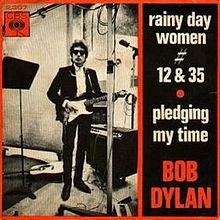
I would say this is a little out of character for Bob. A very commercial song with laughter and what sounds like a drunken Salvation Army band. With the popular sing-along chorus of “Everybody Must Get Stoned,” many people thought it was a drug song at the time. Dylan has denied it saying “I never have and never will write a drug song. I don’t know how to. It’s not a drug song, it’s just vulgar. I like all my songs. It’s just that things change all the time.”
Bob’s story was that while he was recording the song, two females happened to come into the studio to get out of heavy rain that was falling. As the story goes, Dylan correctly guessed their ages to be 12 and 35. I t was recorded in Nashville.
Whatever is true…it didn’t hurt it’s climbing up the charts. it peaked at #2 in the Billboard 100, #3 in Canada, #13 in New Zealand and #7 in the UK in 1966. It was banned on some radio stations but that probably only made it more popular.
From Songfacts
With the line, “Everybody Must Get Stoned,” this song is often associated with smoking marijuana, although Dylan insists it isn’t, stating, “I have never and never will write a ‘drug song.'” It is more likely about trials of relationships with women, and Dylan has hinted that it could have a Biblical meaning. Answering a question about people interpreting this song to be about getting high, Dylan told Rolling Stone in 2012: “These are people that aren’t familiar with the Book of Acts.”
The Book of Acts is from the Gospel of Luke, and contains an account of a stoning: “Stephen, full of the Holy Spirit, looked up to heaven and saw the glory of God, and Jesus standing at the right hand of God… And when they had driven him out of the city, they began stoning him, and the witnesses laid aside their robes at the feet of a young man named Saul.”
In this story, Stephen received his sentence after giving a speech to authorities who were going to kill him no matter what he said. This relates to how Dylan felt about his critics, who were going to figuratively “stone” him no matter what he did. (More on the meaning of “stoned” in popular songs.)
A less official explanation: The song is about two women who came into the studio on a rainy day. Dylan apparently read an article about punishment for women in Islamic states – hence “Everybody must get stoned” because relationships are a trial and error thing.
If you multiply 12 by 35, you get 420, a number commonly associated with smoking marijuana. 420 came about because five high school students in California could only smoke at 4:20 in the afternoon. This time was after school and before their parents came home, so it was a good time for them to get high.
This was one of the few songs Dylan released that was a traditional hit record, reaching the Top 10 in both the US and UK, and spending a week at #2 in America behind “Monday Monday” by The Mamas & The Papas. Perhaps relishing the opportunity to turn a song that repeats “everybody must get stoned” into a radio hit, Dylan cut the song down to 2:26 for the single release. On the Blonde On Blonde album, where it is the first track, the song runs 4:33. The single cuts out two verses and some instrumental passages.
Many radio stations received a publication called the Gavin Report that discussed new songs, and this one was described as a “drug song.” Many stations refused to play it, but Dylan was so influential at the time that the song had no trouble getting plenty of airplay.
You can hear Dylan burst out laughing in this song. According to Down the Highway: the Life of Bob Dylan by Howard Sounes, the musicians were having a lot of fun in the studio, passing around joints and swapping instruments as they kept the mood light and jovial.
This song was covered by The Black Crowes for the 1995 album Hempilation, a collection of songs about marijuana.
Guitarist and bassist Charlie McCoy played the trumpet on this. He recalled to Uncut magazine March 2014: “(Producer, Bob) Johnston said,’Tonight he wants to do a song with a Salvation Army sound – we need a trumpet and trombone.’ I said, ‘Does the trumpet need to be good?’ He’s said, ‘no!’ I kept track: It took 40 hours to cut Blonde on Blonde.”
This was included on the soundtrack to the 1994 movie Forrest Gump.
Rainy Day Women #12 & 35
Well, they’ll stone ya when you’re trying to be so good, They’ll stone ya just like they said they would. They’ll stone ya when you’re tryin’ to go home. Then they’ll stone ya when you’re there all alone. But I would not feel so all alone, Everybody must get stoned.
Well, they’ll stone ya when you’re walkin’ ‘long the street. They’ll stone ya when you’re tryin’ to keep your seat. They’ll stone ya when you’re walkin’ on the floor. They’ll stone ya when you’re walkin’ to the door. But I would not feel so all alone, Everybody must get stoned.
They’ll stone ya when you’re at the breakfast table. They’ll stone ya when you are young and able. They’ll stone ya when you’re tryin’ to make a buck. They’ll stone ya and then they’ll say, “good luck.” Tell ya what, I would not feel so all alone, Everybody must get stoned.
Well, they’ll stone you and say that it’s the end. Then they’ll stone you and then they’ll come back again. They’ll stone you when you’re riding in your car. They’ll stone you when you’re playing your guitar. Yes, but I would not feel so all alone, Everybody must get stoned.
Well, they’ll stone you when you walk all alone. They’ll stone you when you are walking home. They’ll stone you and then say you are brave. They’ll stone you when you are set down in your grave. But I would not feel so all alone, Everybody must get stoned.
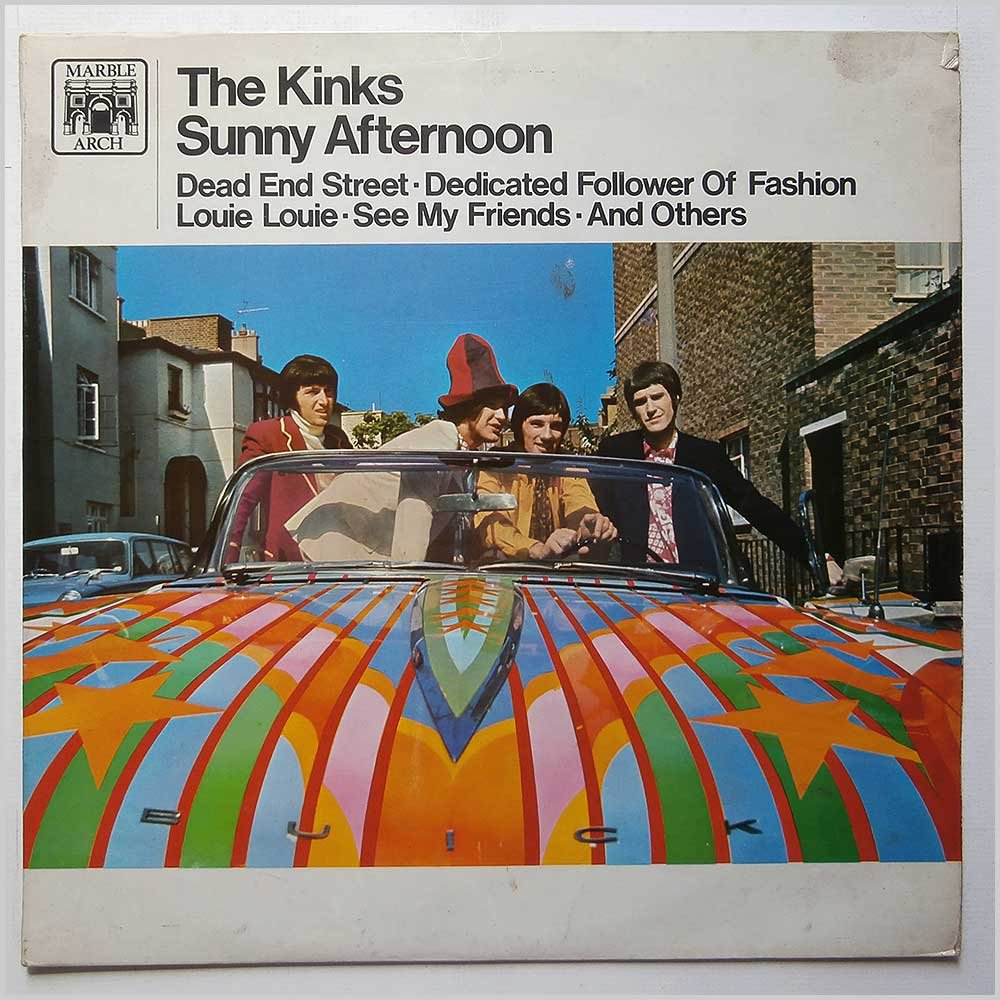
Anytime I can cover a song from 65-66 I’m more than happy to do it. This is my favorite period in pop/rock history. Bands were experimenting with new sounds and also leaning on older sounds. This song written by Ray Davies peaked at #14 in the Billboard 100, #1 in the UK, #1 in Canada, and #2 in New Zealand.
Shel Talmy was The Kinks’ producer at this time. He also worked with The Who, which gave him access to two of the great songwriters of the era: Pete Townshend and Ray Davies. When the song hit #1 in the UK it knocked off Paperback Writer by The Beatles.
Ray Davies: “The only way I could interpret how I felt was through a dusty, fallen aristocrat who had come from old money as opposed to the wealth I had created for myself.” In order to prevent the listener from sympathizing with the song’s protagonist… I turned him into a scoundrel who fought with his girlfriend after a night of drunkenness and cruelty.”
From Songfacts
Despite the title, this is not a breezy, carefree summer song. The guy in the song is a moneyed elite whose mansion has been emptied by the tax man, who even took his yacht! All he has to enjoy himself is the sunny afternoon.
The song was written by Kinks frontman Ray Davies, who was going through a very difficult time. The Kinks were in the midst of a sudden rise to stardom, but group tensions, lawsuits, an unrealistic workload and craven management made them miserable. Davies was also dealing with fatherhood, and left the band for a while.
While he was recovering, Davies wrote “Sunny Afternoon,” putting the music together first and then creating an alter ego to voice his feelings. “The only way I could interpret how I felt was through a dusty, fallen aristocrat who had come from old money as opposed to the wealth I had created for myself,” he said.
In a Rolling Stone interview on November 10, 1969, Ray Davies talked about recording this song. “‘Sunny Afternoon’ was made very quickly, in the morning,” he said. “It was one of our most atmospheric sessions. I still like to keep tapes of the few minutes before the final take, things that happen before the session. Maybe it’s superstitious, but I believe if I had done things differently – if I had walked around the studio or gone out – it wouldn’t have turned out that way. The bass player went off and started playing funny little classical things on the bass, more like a lead guitar: and Nicky Hopkins, who was playing piano on that session, was playing “Liza” – we always used to play that song – little things like that helped us get into the feeling of the song.
At the time I wrote ‘Sunny Afternoon’ I couldn’t listen to anything. I was only playing The Greatest Hits of Frank Sinatra and Dylan’s Maggie’s Farm – I just liked it’s whole presence, I was playing the Bringing It All Back Home LP along with my Frank Sinatra and Glenn Miller and Bach – it was a strange time. I thought they all helped one another, they went into the chromatic part that’s in the back of the song. I once made a drawing of my voice on ‘Sunny Afternoon.’ It was a leaf with a very thick outline – a big blob in the background – the leaf just cutting through it.”
Released as a single with “I’m Not Like Everybody Else” on the B-side, “Sunny Afternoon” was the third (and final) UK #1 hit for The Kinks, following “You Really Got Me” and “Tired of Waiting for You.” Americans didn’t take to The Kinks like they did to The Beatles and The Rolling Stones, and from 1965-1969 a union dispute kept them from touring in that country. Still, their early singles did reasonably well there, with “Sunny Afternoon” reaching #14 even though they couldn’t set foot in the US.
According to Talmy, Davies was a very prolific songwriter who provided plenty of material when it came time to make their albums. “‘Sunny Afternoon,’ I think I heard four bars, and said, ‘That’s probably our next #1,'” Talmy told Songfacts. “It was so obvious.”
Ray Davies recalled writing the song’s intro in the book Isle of Noises by Daniel Rachel: “I’d bought a white upright piano,” he said. “I hadn’t written for a time. I’d been ill. I was living in a very 1960s-decorated house. It had orange walls and green furniture. My one-year-old daughter was crawling on the floor and I wrote the opening riff. I remember it vividly. I was wearing a polo-neck sweater.”
Backing vocalists on this track were Dave Davies, bass player Pete Quaife, and Ray Davies’ wife at the time, Rasa.
Ray Davies was suffering from a bad cold on the day he recorded this song. He recalled to Q magazine in 2016: “I did it in one take and when I heard it back I said, ‘No, let me do it properly,’ but the session was out of time. So that was the vocal. I heard it again the other day. I was 22 but I sound like someone about 40 who’s been through the mill. I really hang on some of the notes. A joyous song, though, even if it’s suppressed joy. I had real fun writing that.”
Ah, save me, save me, save me from this squeeze
I gotta big fat mama trying to break me
Ray Davies explained the lyric to Q: “My mother was quite large. But that also alludes to the government, the British Empire, trying to break people. And they’re still doing it… (sighs) How are we going to get out of this f—ing mess?”
Sunny Afternoon
The tax man’s taken all my dough And left me in my stately home Lazing on a sunny afternoon And I can’t sail my yacht He’s taken everything I got All I’ve got’s this sunny afternoon
Save me, save me, save me from this squeeze I gotta big fat mama trying to break me And I love to live so pleasantly Live this life of luxury Lazing on a sunny afternoon In the summertime In the summertime In the summertime
My girlfriend’s run off with my car And gone back to her ma and pa Telling tails of drunkenness and cruelty Now I’m sitting here Sipping at my ice cold beer Lazing on a sunny afternoon
Help me, help me, help me sail away Well give me two good reasons why I oughta stay ‘Cause I love to live so pleasantly Live this life of luxury Lazing on a sunny afternoon In the summertime In the summertime In the summertime
Ah, save me, save me, save me from this squeeze I gotta big fat mama trying to break me And I love to live so pleasantly Live this life of luxury Lazing on a sunny afternoon In the summertime In the summertime In the summertime In the summertime In the summertime
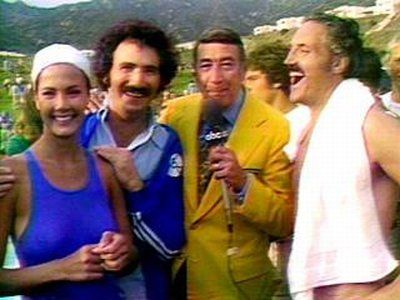
This curiosity was born in the seventies. It was when TV stars were connected with their home network. ABC, CBS, and NBC would all send stars to compete with each other. I will admit it was fun to watch. You would see Telly Savalas, Lynda Carter, Kristy McNichol (remember her?) compete with each other with no other than Howard Cossell announcing.
Regular events included swimming, kayaking, volleyball, golf, tennis, bowling (on custom-made outdoor lanes), cycling, 3-on-3 football, the baseball dunk, running, and the obstacle course. As a pre-teen boy, I still remember Kristy McNichol was great on the obstacle course.
TV now is so fragmented that it would not work. They did try to bring it back in 2017 but it wasn’t the same and fewer viewers viewed with every episode. The networks didn’t want to share their actors with rivals. All of the contestants were from the Disney owned networks or older casts from long ago shows.
The original show ran from 1976 to 1988… Some of the Contestants are below the video.
Some of the Contestants
Howard Cosell
Gabe Kaplan
Darleen Carr
Lynda Carter
Farrah Fawcett
Richard Hatch
Robert Hegyes
Ron Howard
Hal Linden
Penny Marshall
John Schuck
Telly Savalas
Adrienne Barbeau
Gary Burghoff
Kevin Dobson
Pat Harrington Jr.
Bill Macy
Lee Meriwether
Mackenzie Phillips
Loretta Swit
Jimmie Walker
Robert Conrad
Melissa Sue Anderson
Karen Grassle
Tim Matheson
Ben Murphy
Barbara Parkins
Joanna Pettet
Kevin Tighe
Demond Wilson
Mark Spitz
Peter Lawford
Lona Barrett
Caitlyn Jenner
Bob Rosburg
Reggie Jackson
Nadia Comaneci
Joyce Brothers
Robert Stack
Roosevelt Grier
Howard W. Koch
Free ended up being the blueprint for Bad Company. Two of the band members were in the latter group. With a voice Paul Rodgers possesses, I’ve wondered why he isn’t more of a household name outside of the world of rock. He was in successful rock groups such as Free, Bad Company, The Firm, The Law and toured with Queen.
Free was known as a great live band but I’ve only known them as the band before Bad Company. To my surprise by the time they disbanded, they had sold more than 20 million albums around the world. I have never been a fan of some of Rodgers’s songwriting but his voice can carry any song.
Paul Kossoff was the guitar player and influenced a generation of guitar players before and after his early death in 1976.
This song peaked at #13 in the UK charts in 1972. The band formed in 1968 and disbanded in 1973. They are known for their hit All Right Now.
I first heard A Little Bit Of Love on theLife On Mars BBC television show that I have shamelessly plugged since I’ve been posting. It’s only 16 episodes long…if you get a chance to watch it I think you will enjoy it…The UK version NOT the American version.
A Little Bit Of Love
I believe If you give A little bit of love To those you live with A little bit of love Oh oh oh Has gotta come your way.
Well in my mind It’s easy To lose sight of the truth But in my heart I can’t deny My feeling inside
‘Cos I believe If you give A little bit of love To those you live with A little bit of love Oh oh oh Has gotta come your way.
Man in the sky You say you are flying To lose sight of the world You wanna stay high Then don’t deny Your feeling inside
‘Cos I believe If you give A little bit of love To those you live with A little bit of love Oh oh oh Has gotta come your way.
Yeahh! Whooo!
I believe If you give A little bit of love To those you live with A little bit of love Oh! Has gotta come your way.
I believe If you give A little bit of love To those you live with A little bit of love Whooooo Has gotta come your way
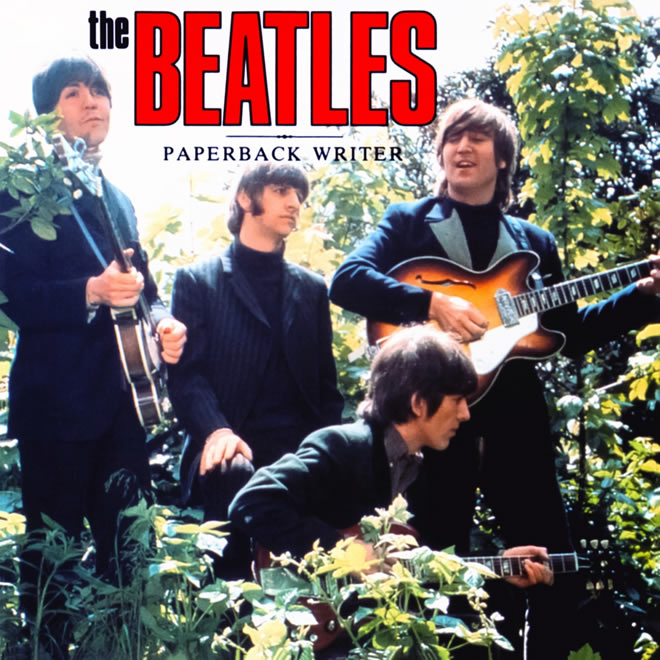
I was eight years old and my cousin introduced me to the Beatles with the American album “Meet The Beatles.” A little later he started to hum a “great” song by the Beatles called Paperback Writer. I asked my mom to take me to a record store…quite a trip from where we lived and I bought a greatest hits album known as Hey Jude or The Beatles Again… Anyway, it had Paperback Writer and I wasn’t disappointed…no offense to my cousin Greg…the real thing was better than the humming and whistling.
Paperback Writer had a terrific guitar riff with the bass sound being more prominent than before. The song peaked at #1 in the Billboard 100, #1 in the UK, and #1 in Canada in 1966.
Speaking of the bass sound…as with the song Rain…The Beatles changed recording techniques.
They experimented with a new way of recording bass. This technique involved “using a loudspeaker as a microphone,” explains engineer Geoff Emerick. “We positioned it directly in front of the bass speaker and the moving diaphragm of the second speaker made the electric current.”
Paperback Writer
Paperback writer Dear Sir or Madam, will you read my book? It took me years to write, will you take a look? Based on a novel by a man named Lear And I need a job, so I want to be a paperback writer, Paperback writer.
It’s the dirty story of a dirty man And his clinging wife doesn’t understand. His son is working for the Daily Mail, It’s a steady job but he wants to be a paperback writer, Paperback writer.
Paperback writer It’s a thousand pages, give or take a few, I’ll be writing more in a week or two. I can make it longer if you like the style, I can change it round and I want to be a paperback writer, Paperback writer.
If you really like it you can have the rights, It could make a million for you overnight. If you must return it, you can send it here But I need a break and I want to be a paperback writer, Paperback writer.
The rhythm of this song drew me in when I was younger. Jive Talkin’ has a strong R&B feel to it. This song started it all for the disco era Bee Gees. This was the first big disco hit for The Bee Gees. They became icons of the era, singing in falsetto harmonies over dance beats.
You couldn’t go anywhere without hearing them blare out of the radio at that time. This song peaked at #1 in the Billboard 100, #1 in Canada, 5 in the UK, and #4 in New Zealand in 1975.
The Bee Gees had an incredible 9 Number 1 hits, 15 Top Ten hits, and 43 songs in the Billboard 100. They have sold more than 220 million records worldwide, making them one of the world’s best-selling artists of all time
From Songfacts
This was called “Drive Talking” in its early stages, but producer Arif Mardin suggested the change to “jive” to play to teenage sensibilities. “Jive Talkin'” is a term for slang.
The rhythm was inspired by the chunka-chunka-chunka sound of a car rolling over a bridge crossing Biscayne Bay near Miami. Robin Gibb explained to The Mail On Sunday November 1, 2009: “We’d already thought up the title for this song, but it wasn’t until Barry, Maurice and I drove from Biscayne Bay to Miami that we realized what the tune was going to be. We had the idea as we passed over a bridge. Some tar noises made a rhythmic sound on the wheels of our car, which created the feel to the type of song we wanted to write. We finished the song at the Criteria studios that day.”
They had seven more #1 hits in the disco era, but the band went out of style at the same time as white leisure suits. The group, which had considerable success before the disco era, took a lot of heat in the press. This criticism would weigh on them in later years as they felt that accusations of selling out and creating popular schlock were out of line. They would often point out that disco became homogenized in the years after they got to it, and that their sound was really an extension of R&B.
This was a comeback song for the group. They were very successful as contemporary singers in the late ’60s and early ’70s, but the two albums they released before Main Course flopped, and it looked like their careers were over.
Knowing that a new Bee Gees single would be met with skepticism by radio programmers, their label sent promotional singles to stations with plain, white labels, giving no indication as to what the name of the song was, or who it was by. The plan worked: the song was added to playlists and revived the fortunes of the group.
Along with several other Bee Gees hits, this was featured on the soundtrack to Saturday Night Fever in 1977. Along with “You Should Be Dancing,” it was one of two previously released Bee Gees songs used – they wrote five more specifically for the film. The set became the best-selling soundtrack album of all time, until it was outsold by The Bodyguard soundtrack.
This was an R&B track that did very well in the black charts in America. The Bee Gees were one of the first white groups to explore that territory.
Former Fugees singer Pras sampled this on his song “Blue Angels.”
Jive Talking
It’s just your jive talkin’ You’re telling me lies, yeah Jive talkin’ You wear a disguise Jive talkin’ So misunderstood, yeah Jive talkin’ You really no good
Oh, my child You’ll never know Just what you mean to me Oh, my child You got so much You’re gonna take away my energy
With all your jive talkin’ You’re telling me lies, yeah Good lovin’ Still gets in my eyes Nobody believes what you say It’s just your jive talkin’ That gets in the way
Oh my love You’re so good Treating me so cruel There you go With your fancy lies Leavin’ me lookin’ Like a dumbstruck fool With all your
Jive talkin’ You’re telling me lies, yeah Jive talkin’ You wear a disguise Jive talkin’ So misunderstood, yeah Jive talkin’ You just ain’t no good
Love talkin’ Is all very fine, yeah Jive talkin’ Just isn’t a crime And if there’s somebody You’ll love till you die Then all that jive talkin’ Just gets in your eye
Jive talkin’ You’re telling me lies,yeah Good lovin’ Still gets in my eyes Nobody believes what you say It’s just your jive talkin’ That gets in the way
Love talkin’ Is all very fine, yeah Jive talkin’, just isn’t a crime And if there’s somebody You’ll love till you die Then all that jive talkin’ Just gets in your eye, yeah yeah
This song changes my mood as soon as it plays. Into the Mystic flows through you…wait… hold on… I’m sounding like a sixties guru but the song is a special one. It was on his album Moondance released in 1970. The album peaked at #29 in the Billboard Album Charts.
Van’s output from the late sixties to mid-seventies was just incredible in quantity and quality. He continues to this day releasing music. In the last 10 years, he has had 3 top ten albums.
I’ve never really tried to interpret this song…I just go where it takes me.
Van Morrsion: “‘Into the Mystic’ is another one like ‘Madame Joy’ and ‘Brown Eyed Girl’. Originally I wrote it as ‘Into the Misty’. But later I thought that it had something of an ethereal feeling to it so I called it ‘Into the Mystic’. That song is kind of funny because when it came time to send the lyrics in WB Music, I couldn’t figure out what to send them. Because really the song has two sets of lyrics. For example, there’s ‘I was born before the wind’ and ‘I was borne before the wind’, and also ‘Also younger than the son, Ere the bonny boat was one’ and ‘All so younger than the son, Ere the bonny boat was won’ … I guess the song is just about being part of the universe.”
From Songfacts
This is about a sailor at sea thinking about returning to his lover, who is back on land. Normally a foghorn signals danger, but in this case it means he is close to home and his love.
There is room for interpretation beyond the superficial meaning. It might be interpreted as expressing an understanding that life is finite (the ship sailing on its round trip) and must be lived to its fullest (“I want to rock your Gypsy soul”), and an acceptance of its inevitable end (“We will magnificently float into the mystic, when the foghorn blows I will be coming home”). When you have seen the world and loved someone, you should have no reason to fear the end because you have lived your life to the fullest.
The original title was “Into the Misty.”
According to Morrison, he couldn’t decide whether the first line should be “We were born before the wind” or “We were borne before the wind.”
This was played in the 1989 Mary Stuart Masterson movie Immediate Family. She played a woman who was young and pregnant and planning to give her baby to Glenn Close and James Woods, who couldn’t have a baby of their own.
According to a BBC survey, because of this song’s cooling, soothing vibe, this is one of the most popular songs for surgeons to listen to whilst performing operations.
Jen Chapin, the daughter of Cat’s In The Cradle singer-songwriter Harry Chapin, covered this on her 2008 CD Light of Mine.
Into The Mystic
We were borne before the wind Also younger than the sun Ere the bonnie boat was won As we sailed into the mystic
Hark, now hear the sailors cry Smell the sea and feel the sky Let your soul and spirit fly into the mystic
And when that foghorn blows I will be coming home And when the foghorn blows I want to hear it
I don’t have to fear it and I want to rock your gypsy soul Just like way back in the days of old And magnificently we will flow into the mystic
When that fog horn blows You know I will be coming home And when that fog horn whistle blows I got to hear it
I don’t have to fear it and I want to rock your gypsy soul Just like way back in the days of old And together we will flow into the mystic Come on, girl
The great hook here that keeps you listening…then comes the catchy chorus that is hard to forget.
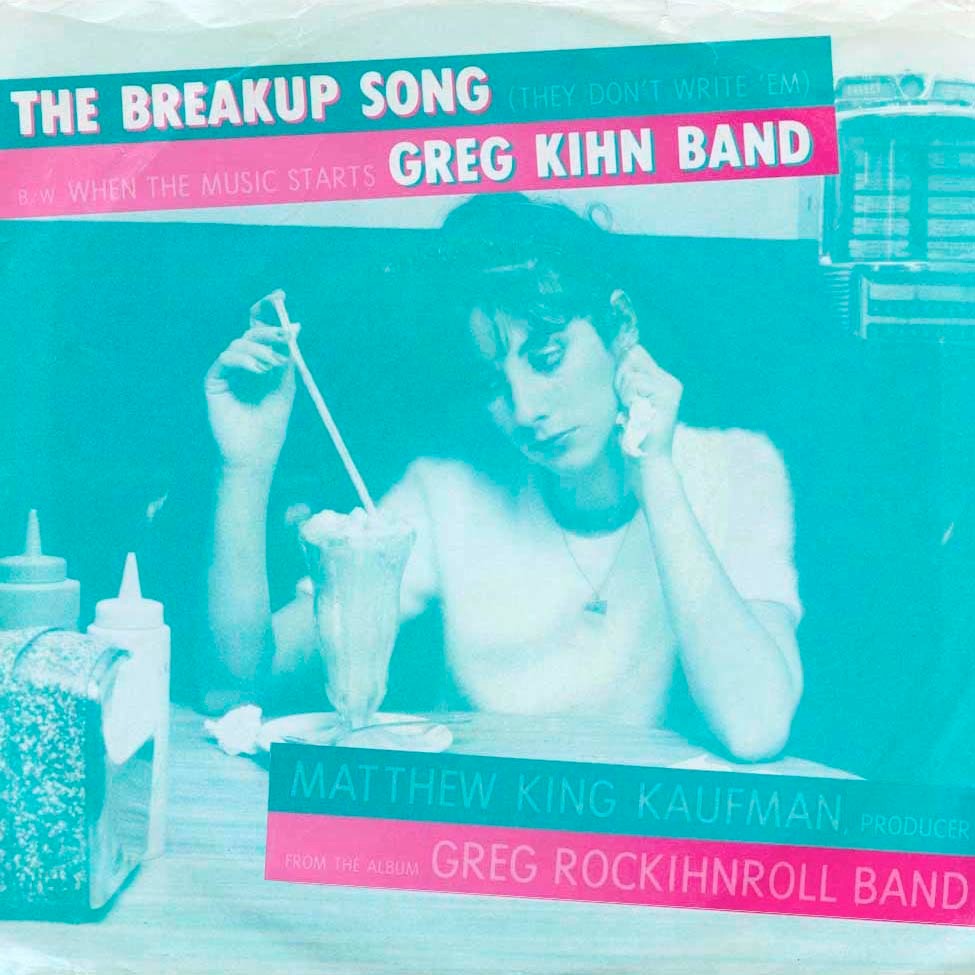
The Breakup song was released in 1981 and peaked at #15 in the Billboard 100. Greg Kihn would later have a top hit ten hit “Jeopardy” when it reached #2 in 1983. Kihn had 7 songs in total in the top 100.
The song was off of the album RocKihnRoll.
This is an interview with Greg Kihn in 2011 about writing the song.
Oh, yeah. There are times in your life that the way is clear. I remember coming home from a gig with the guys. We were in a van, and we pulled up to where I used to live. All of my stuff was piled up on the lawn, and it was raining.
I thought, “Oh, God. My first wife had done it.” We pulled up to the house, and I remember Steve, the bass player, looked at me and just went, “Well, you might as well just keep on going. You’re not going in there.”
There was a Japanese restaurant. I went up there with Stevie, and we were pounding down hot sake. I didn’t know where else to go. It was a cold, rainy night, and we were getting toasted. There was an old Japanese dude there at the sake bar, and he kept saying, “They don’t write ‘em like that anymore.” I thought, Yeah, damn. They don’t, do they? So we got the idea, we wrote that song probably in 15 minutes. All of the great songs are written quickly, by the way.
You have to take a lesson that the stuff that’s real, it’s in you and it’s got to come out like that song. I’d really broken up that very day. It wasn’t like I was trying to feel like what’s a guy like when he’s broken up. I was living it. When things are real, they’re always better than when they’re fiction, if you can dig what I’m saying.
The Breakup Song
We had broken up for good just an hour before Ah ah ah, ah ah ah ah ah And now I’m staring at the bodies as they’re dancing ‘cross the floor Ah ah ah, ah ah ah ah ah And then the band slowed the tempo and the music took me down Ah ah ah, ah ah ah ah ah It was the same old song, with a melancholy sound Ah ah ah, ah ah ah ah ah
They don’t write ’em like that anymore They just don’t write ’em like that anymore
We’d been living together for a million years Ah ah ah, ah ah ah ah ah But now it feels so strange out in the atmospheres Ah ah ah, ah ah ah ah ah And then the jukebox plays a song I used to know Ah ah ah, ah ah ah ah ah And now I’m staring at the bodies as they’re dancing so slow Ah ah ah, ah ah ah ah ah
They don’t write ’em like that anymore They don’t write ’em like that anymore Oh
Hey Now I wind up staring at an empty glass Ah ah ah, ah ah ah ah ah ‘Cause it’s so easy to say that you’ll forget your past Ah ah ah, ah ah ah ah ah
They don’t write ’em like that anymore, no They just don’t write ’em like that anymore They don’t write ’em like that anymore They just don’t write ’em like that anymore They just don’t, no, they don’t No, no, uh-uh








 PowerPop... An Eclectic Collection of Pop Culture