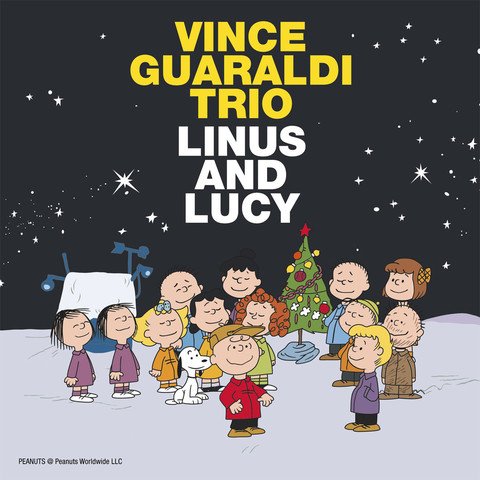
Vince Guaraldi Trio – Linus and Lucy

Nothing like Vince Guaraldi for this time of the year. It’s hard to resist this song. It automatically makes me happy when I hear it. I see the Peanuts gang doing their thing.
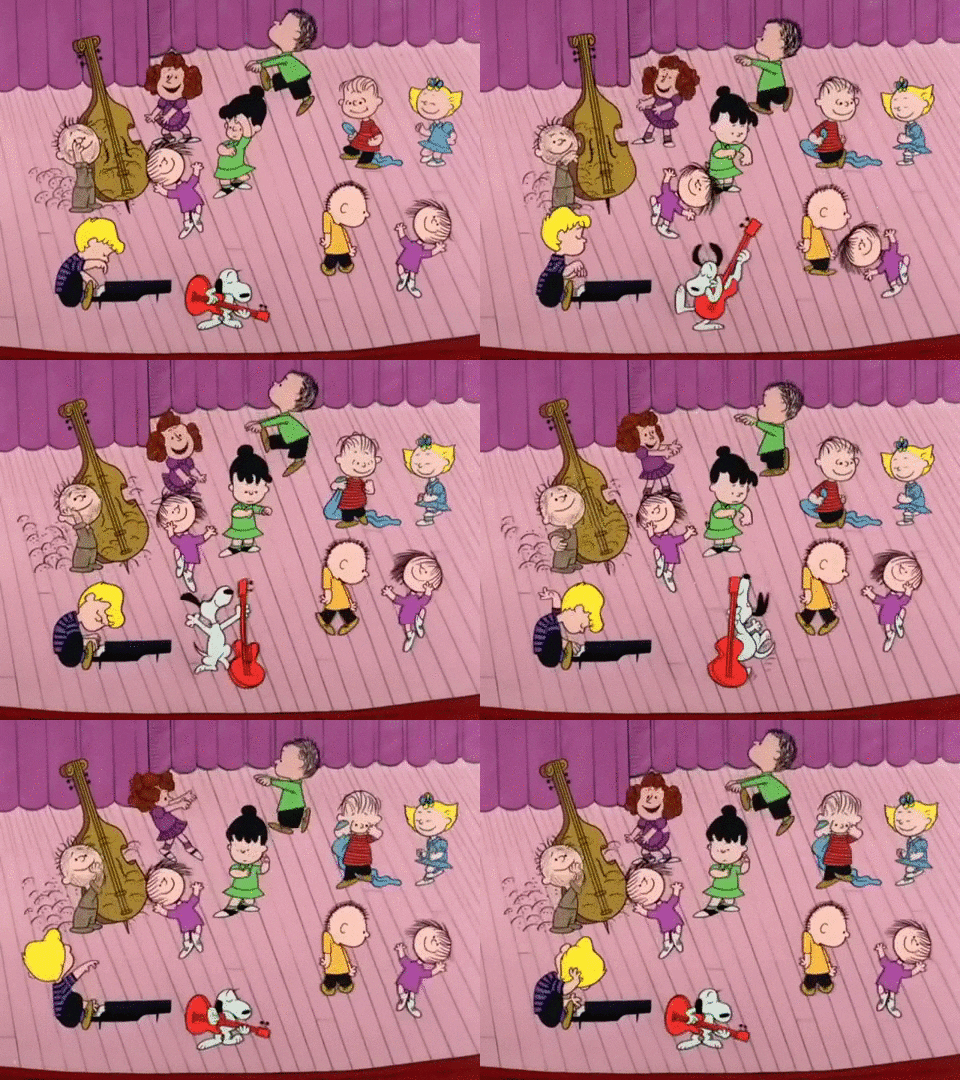
Peanuts GIFs - Get the best GIF on GIPHY

This song I can hear anytime of the year and be happy. It’s associated with Christmas also…whichever… I never get tired of it.

Ironically, just about everyone would call this “the Charlie Brown song” even though it’s actually titled after Linus and Lucy Van Pelt, brother and sister in Charles Schulz’s Peanuts comic strip universe.

The song is most famous for its use in the yearly favorite A Charlie Brown Christmas, which first aired in 1965, but it was written two years earlier for a documentary about Schulz and the Peanuts gang called A Boy Named Charlie Brown, which never aired.

Producer Lee Mendelson was in charge of the documentary and asked Vince Guaraldi to compose music for it

Guaraldi was huge in the jazz world and won the 1962 Grammy for Best Original Jazz Composition for “Cast Your Fate To The Wind” for his group, the Vince Guaraldi Trio. Mendelson was searching for what kind of music to play for the documentary when he took a taxi cab, and “Cast Your Fate To The Wind” was playing as he crossed the Golden Gate Bridge. He loved it and his decision was made.

Guaraldi wrote a series of songs for the project, including “Linus and Lucy,” that he recorded with his group, the Vince Guaraldi Trio. Even though A Boy Named Charlie Brown was shelved, the soundtrack was released in 1964, which is where “Linus and Lucy” first appeared.

In 1965, Mendelson put together the first Peanuts TV special, A Charlie Brown Christmas, using many of the same people who worked on the documentary. “Linus and Lucy” formed the score, and a song he wrote with Guaraldi called “Christmas Time Is Here” was included in a key scene.

When A Charlie Brown Christmas debuted in 1965, it quickly turned the Peanuts franchise into a television institution. That first special also shot Guaraldi to greater fame, and he became connected to all subsequent Peanuts shows.

Guaraldi would continue to work on Peanuts films until his death in 1976.

No words…just enjoy

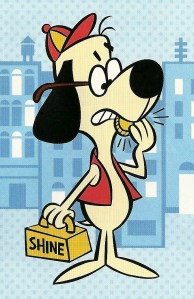
Underdog Is Here!

There’s no need to fear…Underdog is here!

Thanks, Keith, for hosting this and coming up with this great idea! Today, we go back to Saturday mornings. This was when we sat in front of the TV with our favorite cereal and watched hours of cartoons. So I asked my guests to write about their favorite cartoon or cartoon character growing up.

When I was growing up, we kids had two prime times for cartoons. Saturday mornings were our Super Bowl, packed with classics from Warner Bros. and Hanna-Barbera. Even Land of the Lost—though live-action—was a can’t-miss favorite. But not all the best cartoons aired on Saturdays. Every weekday morning, from 6 to 7 a.m. before school, we had another dose of animated fun, with shows like Rocky and Bullwinkle and Courageous Cat and Minute Mouse keeping us entertained.

Underdog debuted October 3, 1964, on the NBC network under the primary sponsorship of General Mills, and continued in syndication until 1973 (although production of new episodes ceased in 1967, for a run of 124 episodes.

Underdog’s secret identity was Shoeshine Boy. He was in love with Sweet Polly Purebred, who was a news reporter. I would watch this cartoon before going to school in 1st and 2nd grade. Underdog would use his secret ring to conceal pills that he would take when he needed energy. NBC soon put an end to that.

For many years, starting with NBC’s last run in the mid-1970s, all references to Underdog swallowing his super energy pill were censored, most likely out of fear that kids would see medication that looked like the Underdog pills (red with a white “U”) and swallow them. Two instances that did not actually show Underdog swallowing the pills remained in the show. In one, he drops pills into water supplies; in the other, his ring is damaged, and he explains that it is where he keeps the pill—but the part where he actually swallows it was still deleted.

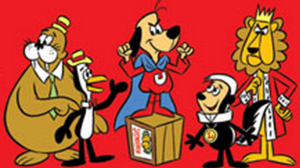
The shows introduced such characters as King Leonardo, Tennessee Tuxedo, Commander McBragg, Klondike Kat,  and more. Underdog was voiced by Wally Cox. Underdog always talked in rhyme and I’m a sucker for that in this and Dr Seuss. Two of the villains every week were Simon Bar Sinister and Riff Raff.

W. Watts Biggers teamed with Chet Stover, Treadwell D. Covington, and artist Joe Harris in the creation of television cartoon shows to sell breakfast cereals for General Mills. The shows introduced such characters as King Leonardo, Tennessee Tuxedo, and Underdog. Biggers and Stover contributed both scripts and songs to the series.

When Underdog became a success, Biggers and his partners left Dancer Fitzgerald Sample to form their own company, Total Television, with animation produced at Gamma Studios in Mexico. In 1969, Total Television folded when General Mills dropped out as the primary sponsor (but continued to retain the rights to the series until 1995; however, they still own TV distribution rights.

Underdog became a pop culture icon, with reruns airing for decades. The character was featured in toys, comics, and even a 2007 live-action film starring Jason Lee as the voice of Underdog. The theme song remains one of the most recognizable in cartoon history.

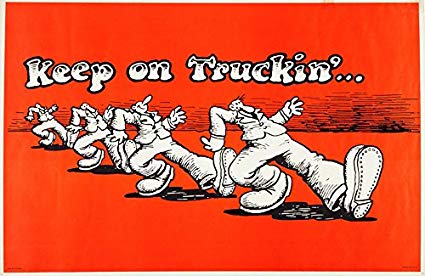
Keep On Truckin’ Poster

I have this hanging in my music room. I saw it on shirts, bumper stickers, and walls everywhere once upon a time. This phrase was used in a song from the 1930s called “Truckin’ My Blues Away” by Blind Boy Fuller and is the origin of this image.

In the seventies as a kid…I remember this phrase and picture everywhere. I saw bumper stickers, pics in magazines, and on patches for pants. In one local restaurant I went to as a kid they had this poster in the dining room. Fast forward to the 90s and the picture was still there. The place was sold in the 2000s and I tried to get the poster but they threw it away…arghhhh. It would have been cool to have that original one. 

Besides the smiley face…it’s one of the most iconic graphics of the 1970s. It was created by Robert Crumb for Zap Comics in 1968. The image was used many times without his permission for years. It was claimed that the Trademark symbol ™ was not on the original drawing.

Crumb went to court and the court ruled it Public Domain. The decision was later reversed in 1977. He sued many for using it including Amazon 2005. Crumb also came up with Fritz the Cat…

Quotes from Robert Crumb on the drawing.

For a while I was most well known for that [the Janis Joplin album cover, and for “Keep on Truckin’.” That was a drawing that came out of LSD trips, and the words came from a Blind Boy Fuller song from 1935. I drew it in my sketchbook and then for Zap. It sort of caught the popular imagination. It became a horrible popular thing.

Take Keep On Truckin’… for example. Keep on Truckin’… is the curse of my life. This stupid little cartoon caught on hugely. … I didn’t want to turn into a greeting card artist for the counter-culture! I didn’t want to do ‘shtick’—the thing Lenny Bruce warned against. That’s when I started to let out all my perverse sex fantasies. It was the only way out of being “America’s Best Loved Hippie Cartoonist.”

keep.jpg

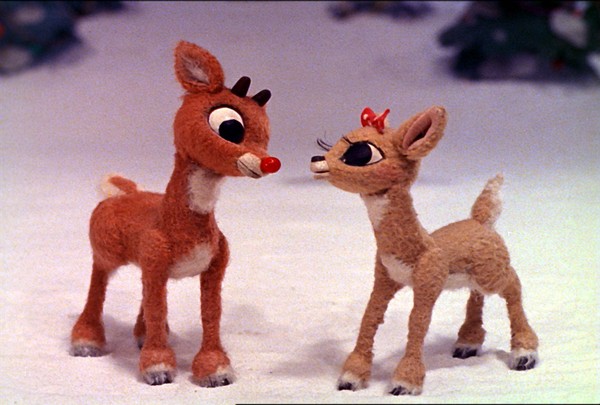
Rudolph The Red Nosed Reindeer

Thank you for dropping by. This is one of my favorite Christmas shows now and as a kid I loved it. There were three specials you didn’t miss…The Peanuts Christmas Show, The Grinch, and this one wasn’t just a show…it was an event. 

Watching Rudolph the Red-Nosed Reindeer every year is the same as setting up the tree. Every year I would look forward to seeing this along with the others but what a fantastic durable show this has been. When I hear Burl Ives in anything…I think of him as the narrator Sam the Snowman of this program. Plus the movie means a lot because my mom and I would watch it together and her name was Clarice like Rudolph’s girlfriend.

The characters are wonderful. Well except those other young reindeer who really come down on Rudolph when his nose lights up. There was absolutely NO need for that. cough cough venison cough. (just joking!)

Hermey the elf who wants to be a dentist
Clarice – The reindeer who likes Rudolph just as he is red nose and all.
Yukon Cornelius the prospector who loves silver and gold and has a tongue that can find his silver and gold. I love this guy…all he wants is a peppermint mine!
Abominable Snowman – The bad guy of the show who only needs a dentist to make him a good guy.
Head Elf – He leans on Hermey to get his elf self-act together and discourages him from being a dentist…I never liked him too much.

Throughout the special, Yukon Cornelius throws his pickaxe into the ground, taking it out and licking it. It turns out he is checking for neither gold nor silver… Yukon was searching for an elusive peppermint mine. In a scene right at the end of the special’s original broadcast, deleted the next year to make room for the Misfit Toys’ new scene, Cornelius pulled his pick from the ground, licked it, and said, “Peppermint! What I’ve been searching for all my life! I’ve struck it rich! I’ve got me a peppermint mine! Wahoo!” The scene was restored in 1998 and has been reinstated in all the subsequent home video releases except for the 2004 DVD release. However, this scene is still cut from recent televised airings.

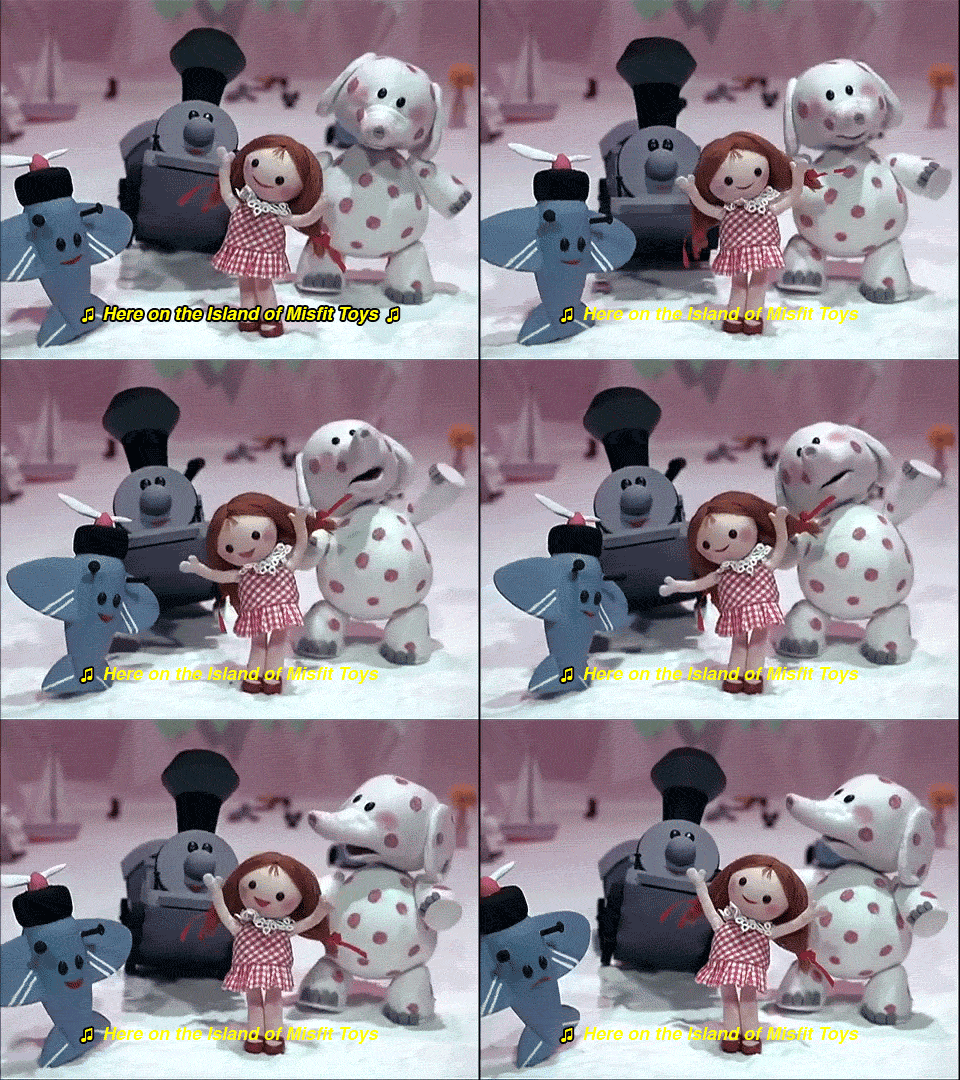
The Island of Misplaced Toys got to me when I was a kid. I really felt sorry for these lonely toys. King Moonracer was over the island and tried to convince Rudolph to tell Santa about them so he could pick them up and find kids who would play with them.

Related image

The original 1964 airing did not include the closing scene where Santa picks up the misfit toys. That scene was added in 1965, in response to complaints that Santa was not shown fulfilling his promise to include them in his annual delivery.

The stop animation in this works really well. I wish they would do more of it today. I truly like it better at times than CGI.

The songs are perfect. Silver and Gold, Holly Jolly Christmas, Jingle Jingle Jingle, We Are Santa’s Elves, There’s Always Tomorrow, We’re a Couple of Misfits and The Most Wonderful Day of the Year.

Below is some trivia from IMDB

In the original TV version of the show, Rudolph, Hermey the elf, and Yukon Cornelius visit the Island of Misfit Toys and promise to help them, but the Misfits are never seen again, only mentioned as Santa’s first stop before he flies off in his sleigh. After it was shown, the producers were inundated with letters from children complaining that nothing had been done to help the Misfit Toys. In response, Rankin-Bass produced a new short scene at the end of the show in which Santa and his reindeer, led by Rudolph, land on the Island and pick up all the toys to find homes for them. This scene became a part of the standard version of the show run during the holidays.

Original puppets of Santa and young Rudolph from the 1964 production went on tour in November 2007. When purchased by their new owner, both were in poor condition – Santa had mold under his beard and half of his mustache was gone, while Rudolph’s nose was gone. The owner took them to stop-motion animation studio Screen Novelties International and restored them “as a labor of love” for expenses only — $4000. The puppets originally cost $5000 each in 1964 dollars.

The Making of Rudolph!

https://christmas-specials.fandom.com/wiki/Rudolph_the_Red-Nosed_Reindeer_(Rankin/Bass)

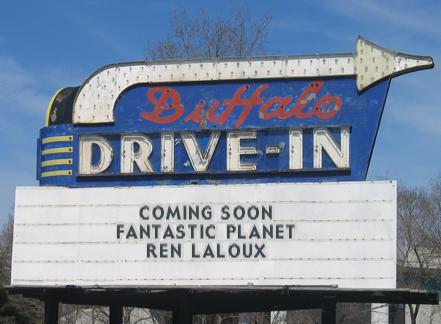
Max’s Drive-In Movie – Fantastic Planet

Fantastic Planet Header

We will take a short break from the Christmas posts. 

This is the first animation that I’ve featured on my Drive-In movie series. This is not The Flintstones, The Simpsons, or anything close to normal. I mean that as a compliment…the visual of this movie is fantastic…no pun intended. 

In 2012 I was sick with the flu and it was around midnight. I had nothing to do so I remembered a movie that a co-worker wanted me to watch. It was the 1973 movie Fantastic Planet and I was blown away. Bailey, my son, came into the room and asked me what I was watching. He started to watch and couldn’t believe the animation and what it was all about. He was 12 at the time and I was amazed as well. I’ve never seen anything like this movie before or since. I still watch it from time to time and I find things in the film I missed before. 

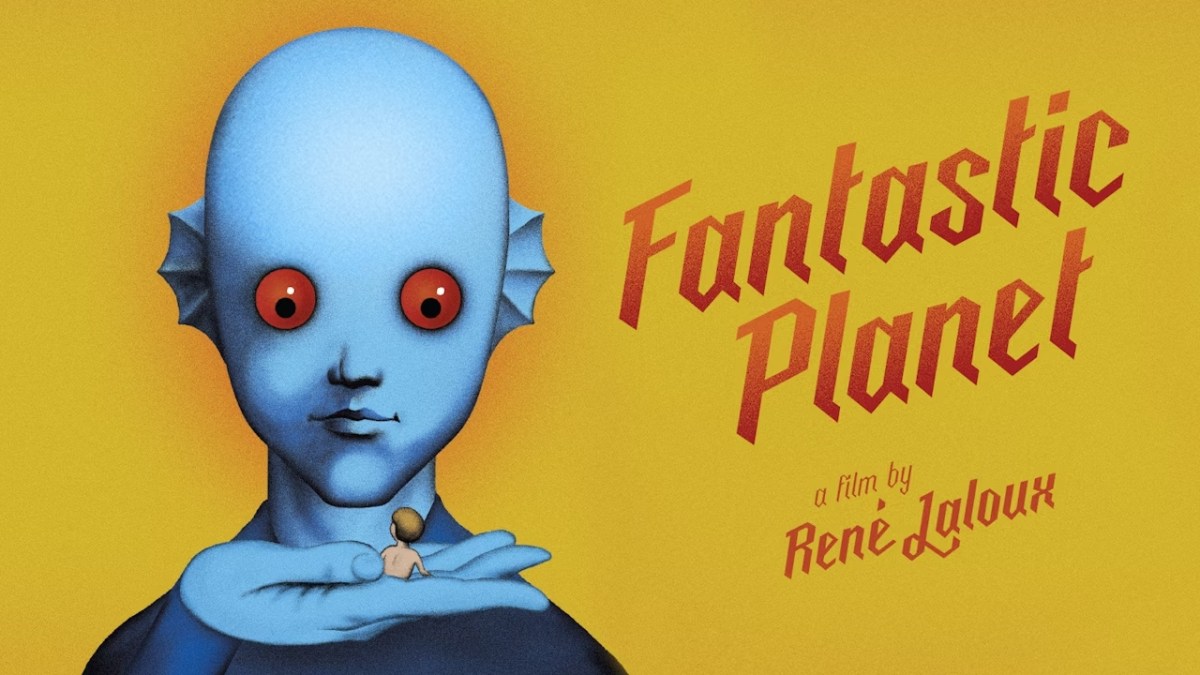
Fantastic Planet (original French title: La Planète Sauvage) is a 1973 French-Czech animated science fiction film directed by René Laloux. The film is known for its surreal, dreamlike visuals and its hidden meanings, which explore themes of oppression, freedom, and coexistence. It’s based on Stefan Wul’s 1957 novel Oms en série, the film became a cult classic, especially in the science fiction and animation communities.

I’ve read some about the making of this movie. The film uses cut-out animation (a form of stop-motion animation using flat characters, props, and backgrounds cut from materials such as paper, cards, stiff fabric, or photographs. The props would be cut out and used as puppets for stop motion. ), a labor-intensive method that gives the movie a distinct, dreamy feel. The style was heavily influenced by Roland Topor, a French artist and writer known for his surrealist work, who also co-wrote the screenplay and designed much of the film’s visual style.

It’s very hard to describe this movie or try to put it in words. You would have to watch it yourself. The full French version of the movie is at the bottom, underneath the trailer.  Unfortunately there are no english subtitles. My son Bailey now teaches classes at college for his Master’s degree, and he took this movie to show his class. He said they were amazed and lost. They wanted to know more about it, and many said they had never seen anything remotely like it before. 

If you are looking for something different…give this a try because it fits that description totally. I think you will be amazed at the animation they used. You also have a very seventies soundtrack which only heightens it to me. 

Plot

The film is set on the planet Ygam, where giant blue humanoid aliens known as Draags dominate the planet and keep human-like creatures, called Oms, as pets. Oms are treated as inferior beings, with some Draags experimenting on them or exterminating wild Oms who resist control. Then, an Om boy becomes educated, thanks to a young female Draag. This leads to an Om rebellion, which weakens the Draag control over their race. Will the Oms and the Draags find a way to coexist?

..,

Vince Guaraldi Trio – Linus and Lucy

It’s hard to resist this song. It automatically makes me happy when I hear it. I see the Peanuts gang doing their thing.

Peanuts GIFs - Get the best GIF on GIPHY

This song I can hear anytime of the year and be happy. It’s associated with Christmas also…whichever… I never get tired of it.

I was reminded of this song this year in Hanspostcard’s song draft when run-sew-read’s pick was this song.

Ironically, just about everyone would call this “the Charlie Brown song” even though it’s actually titled after Linus and Lucy Van Pelt, brother and sister in Charles Schulz’s Peanuts comic strip universe.

The song is most famous for its use in the yearly favorite A Charlie Brown Christmas, which first aired in 1965, but it was written two years earlier for a documentary about Schulz and the Peanuts gang called A Boy Named Charlie Brown, which never aired.

Producer Lee Mendelson was in charge of the documentary and asked Vince Guaraldi to compose music for it

Guaraldi was huge in the jazz world and won the 1962 Grammy for Best Original Jazz Composition for “Cast Your Fate To The Wind” for his group, the Vince Guaraldi Trio. Mendelson was searching for what kind of music to play for the documentary when he took a taxi cab and “Cast Your Fate To The Wind” was playing as he crossed the Golden Gate bridge. He loved it and his decision was made.

Guaraldi wrote a series of songs for the project, including “Linus and Lucy,” that he recorded with his group, the Vince Guaraldi Trio. Even though A Boy Named Charlie Brown was shelved, the soundtrack was released in 1964, which is where “Linus and Lucy” first appeared.

In 1965, Mendelson put together the first Peanuts TV special, A Charlie Brown Christmas, using many of the same people who worked on the documentary. “Linus and Lucy” formed the score, and a song he wrote with Guaraldi called “Christmas Time Is Here” was included in a key scene.

When A Charlie Brown Christmas debuted in 1965, it quickly turned the Peanuts franchise into a television institution. That first special also shot Guaraldi to greater fame, and he became connected to all subsequent Peanuts shows.

Guaraldi would continue to work on Peanuts films until his death in 1976.

No words…just enjoy

A Charlie Brown Christmas

I will watch this show this week…it’s not Christmas without The Peanuts and watching them all dance to “Linus and Lucy.”

The Peanuts were my favorite cartoon growing up and I would never miss their Thanksgiving, Halloween, and Christmas specials. Everyone can relate to Charlie Brown because we all lose more than we win in life. He doesn’t get to kick that football, his dog has more things than he does, and he is forever trying to get the elusive little redhead girl to notice him.

The Peanuts inhabit a kid’s world where grownups are felt but not heard. At least not in English. I’ve said this before but… Charlie Brown, one day when you grow up… I hope you end up with the little red head girl that you like so much and win just for once…for all of us.

Little Red-Haired Girl | Charlie brown characters, Charlie brown and  snoopy, Charlie brown cartoon

This 1965 special has everything good about them in one show.

The gang is skating and Charlie Brown is telling Linus that despite Christmas being a happy time he is depressed. Linus tells Charlie that is normal and Lucy pipes in with “Of all the Charlie Browns in the world, you’re the Charlie Browniest.” That sums it all up.

Charlie gets to direct the Christmas play and his main job was to get a spectacular Christmas tree under Lucy’s orders. …He picks the only real tree there…more like a branch but he is sure it will do the job. Most of the gang do not agree when he comes back with the tree but Charlie persists. Linus gets up and reads from the Bible and the inflection he lends to the reading is great.

After that, you will need to watch because it will be worth it.

Aluminum Christmas trees were marketed beginning in 1958 and enjoyed fairly strong sales by eliminating pesky needles and tree sap. But the annual airings of A Charlie Brown Christmas swayed public thinking: In the special, Charlie Brown refuses to get a fake tree. Viewers began to do the same, and the product was virtually phased out by 1969. The leftovers are now collector’s items.

Actors and Actresses The early Peanuts specials made use of both untrained kids and professional actors: Peter Robbins (Charlie Brown) and Christopher Shea (Linus) were working child performers, while the rest of the cast consisted of “regular” kids coached by Melendez in the studio. When Schulz told Melendez that Snoopy couldn’t have any lines in the show—he’s a dog, and Schulz’s dogs didn’t talk—the animator decided to bark and chuff into a microphone himself, then speed up the recording to give it a more emotive quality.

Love the Christmas Dance.

A Charlie Brown Thanksgiving

I will be reposting some of my Thanksgiving Posts along with some music until Thanksgiving. I’m so ready for Thanksgiving this year…we will be going over to a relative of mine and I get to see some family members I don’t get to see during the year.

Happy Thanksgiving to everyone…we are only two days away for those who celebrate it. This special first premiered on November 20, 1973, on CBS and won an Emmy Award. Great Thanksgiving special as always with the earlier Peanuts.

The Halloween, Thanksgiving, and Christmas Peanuts specials I always looked forward to. The way their world was only for kids where grownups were heard but only as noise in the background. It starts off with Lucy tempting Charlie Brown with that football. Just one time I want to see Charlie kick the football…or Lucy.

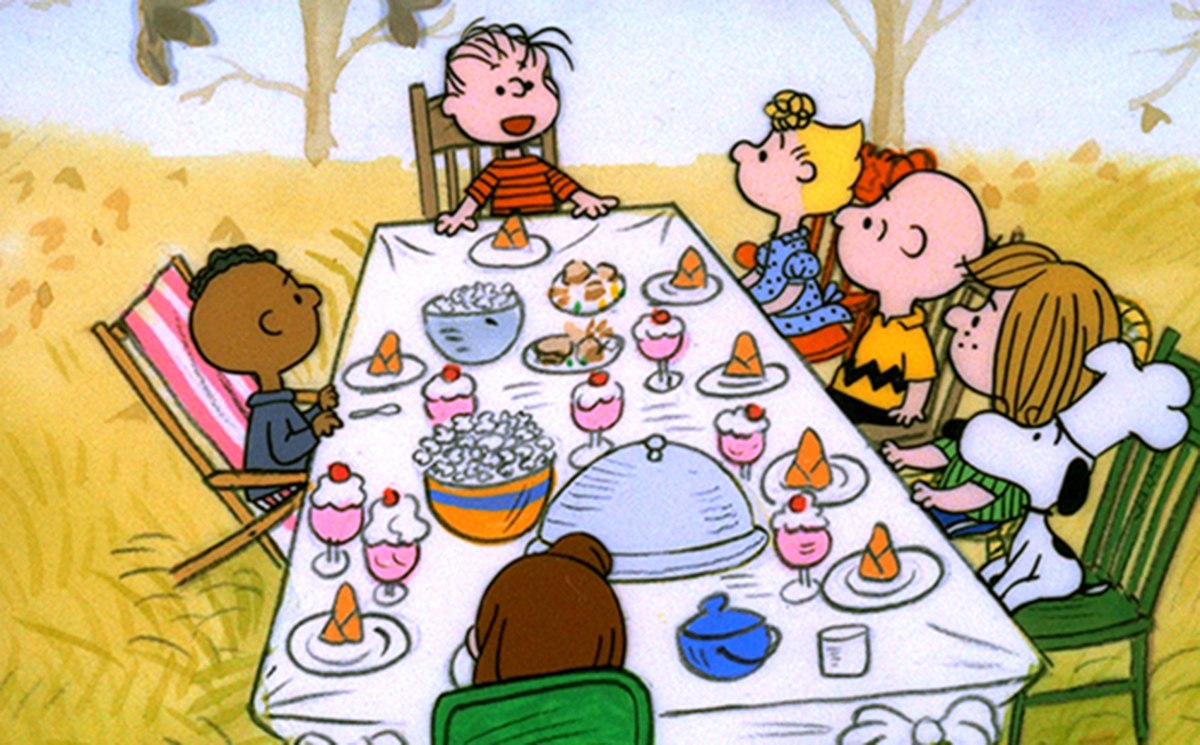
It’s Thanksgiving and Peppermint Patty invites herself and Marcie over to Charlie Brown’s house but Charlie and Sally are ready to go to their grandmothers. Charlie talks to Linus and he suggests having two Thanksgiving dinners.

The only thing Charlie can come up with is feeding his friends toast and cold cereal which does not make Peppermint Patty happy whatsoever. She lets Charlie have it really bad until Marcie reminds her that she invited herself over.

Not going to give it away for those who have not seen this wonderful holiday cartoon. The music by Vince Guaraldi is excellent and makes every Peanuts cartoon special.

How The Grinch Stole Christmas

You’re a mean one…Mr. Grinch. I first posted this in 2018…It’s not Christmas without the Grinch…

The cartoon was released in 1966 and has been shown every year since. This one along with Rudolph, Charlie Brown, and a few more were a part of Christmas. These specials would prime you for the big day.

One cool thing about the cartoon was that Boris Karloff was the narrator. Thurl Ravenscroft (voice of Tony the Tiger) sang the great song “You’re a Mean One Mr. Grinch. ”

The citizens of Whoville looked and acted like the others of Dr. Suess’s universe. They were all getting ready for Christmas while a certain someone…or thing looked down from Mt. Crumpit. The Grinch has hated Christmas for years and sees the Whovillians getting ready for Christmas and is determined once and for all to put an end to it.

He dresses up as Santa Clause and makes his poor dog Max act as a reindeer to swoop down and steal Christmas. The Grinch sleds down the hill almost killing Max and they soon reach Whoville. He is busted by one kid…Cindy Lou Who, who asks him questions as the Grinch took her family tree. He lies to her and sends her to bed.

In the morning after he has everything including “The Roast Beast,” he listens for the sorrow to begin.

You need to watch the rest or rewatch…

A live-action remake came out in 2000 but I still like this one the best. You cannot replicate Boris Karloff.

The Budget – Coming in at over $300,000, or $2.2 million in today’s dollars, the special’s budget was unheard of at the time for a 26-minute cartoon adaptation. For comparison’s sake, A Charlie Brown Christmas’s budget was reported as $96,000, or roughly $722,000 today (and this was after production had gone $20,000 over the original budget).

You’re a mean one Mr. Grinch The famous voice actor and singer, best known for providing the voice of Kellogg’s Tony the Tiger, wasn’t recognized for his work in How the Grinch Stole Christmas. Because of this, most viewers wrongly assumed that the narrator of the special, Boris Karloff, also sang the piece in question. Upset by this oversight, Geisel personally apologized to Ravenscroft and vowed to make amends. Geisel went on to pen a letter, urging all the major columnists that he knew to help him rectify the mistake by issuing a notice of correction in their publications.

Mr Grinch

You’re a mean one, Mr. Grinch
You really are a heel
You’re as cuddly as a cactus
You’re as charming as an eel
Mr. Grinch
You’re a bad banana with a greasy black peel
You’re a monster, Mr. Grinch
Your heart’s an empty hole
Your brain is full of spiders
You’ve got garlic in your soul, Mr Grinch
I wouldn’t touch you with a
Thirty-nine and a half foot pole

You’re a vile one, Mr. Grinch
You have termites in your smile
You have all the tender sweetness of a seasick crocodile
Mr Grinch
Given the choice between the two of you
I’d take the seasick crocodile

You’re a foul one, Mr. Grinch
You’re a nasty wasty skunk
Your heart is full of unwashed socks
Your soul is full of gunk
Mr Grinch

The three best words that best describe you
Are as follows, and I quote”
Stink
Stank
Stunk

You’re a rotter Mr Grinch
You’re the king of sinful sots
Your heart’s a dead tomato splotched with moldy purple spots
Mr Grinch

Your soul is an appalling dump heap
Overflowing with the most disgraceful
Assortment of deplorable rubbish imaginable
Mangled up in tangled up knots

You nauseate me, Mr Grinch
With a nauseous super nos
You’re a crooked jerky jockey and
You drive a crooked horse
Mr Grinch

You’re a three-decker sauerkraut
And toadstool sandwich
With arsenic sauce

http://mentalfloss.com/article/72593/13-spirited-facts-about-how-grinch-stole-christmas

Rudolph The Red Nosed Reindeer

Before I start…I have the complete show and the making of it at the bottom of the post! Just in case you cannot find it anywhere.After this week is over I’ll go back to posting one post a day during the week for the most part…

Watching Rudolph the Red-Nosed Reindeer every year is the same as setting up the tree. Every year I would look forward to seeing this along with the others but what a fantastic durable show this has been. When I hear Burl Ives in anything…I think of him as the narrator Sam the Snowman of this program. Plus the movie means a lot because my mom and I would watch it together and her name was Clarice like Rudolph’s girlfriend.

The characters are wonderful. Well except those other young reindeer who really come down on Rudolph when his nose lights up. There was absolutely NO need for that. cough cough venison cough. (just joking!)

Hermey the elf who wants to be a dentist
Clarice – The reindeer who likes Rudolph just as he is red nose and all.
Yukon Cornelius the prospector who loves silver and gold and has a tongue that can find his silver and gold. I love this guy…all he wants is a peppermint mine!
Abominable Snowman – The bad guy of the show who only needs a dentist to make him a good guy.
Head Elf – He leans on Hermey to get his elf self-act together and discourages him from being a dentist…I never liked him too much.

Throughout the special, Yukon Cornelius throws his pickaxe into the ground, taking it out and licking it. It turns out he is checking for neither gold nor silver… Yukon was searching for an elusive peppermint mine. In a scene right at the end of the special’s original broadcast, deleted the next year to make room for the Misfit Toys’ new scene, Cornelius pulled his pick from the ground, licked it, and said, “Peppermint! What I’ve been searching for all my life! I’ve struck it rich! I’ve got me a peppermint mine! Wahoo!” The scene was restored in 1998 and has been reinstated in all the subsequent home video releases except for the 2004 DVD release. However, this scene is still cut from recent televised airings.

The Island of Misplaced Toys got to me when I was a kid. I really felt sorry for these lonely toys. King Moonracer was over the island and tried to convince Rudolph to tell Santa about them so he could pick them up and find kids who would play with them.

Related image

The original 1964 airing did not include the closing scene where Santa picks up the misfit toys. That scene was added in 1965, in response to complaints that Santa was not shown fulfilling his promise to include them in his annual delivery.

The stop animation in this works really well. I wish they would do more of it today. I truly like it better at times than CGI.

The songs are perfect. Silver and Gold, Holly Jolly Christmas, Jingle Jingle Jingle, We Are Santa’s Elves, There’s Always Tomorrow, We’re a Couple of Misfits and The Most Wonderful Day of the Year.

Below is some trivia from IMDB

In the original TV version of the show, Rudolph, Hermey the elf, and Yukon Cornelius visit the Island of Misfit Toys and promise to help them, but the Misfits are never seen again, only mentioned as Santa’s first stop before he flies off in his sleigh. After it was shown, the producers were inundated with letters from children complaining that nothing had been done to help the Misfit Toys. In response, Rankin-Bass produced a new short scene at the end of the show in which Santa and his reindeer, led by Rudolph, land on the Island and pick up all the toys to find homes for them. This scene became a part of the standard version of the show run during the holidays.

Original puppets of Santa and young Rudolph from the 1964 production went on tour in November 2007. When purchased by their new owner, both were in poor condition – Santa had mold under his beard and half of his mustache was gone, while Rudolph’s nose was gone. The owner took them to stop-motion animation studio Screen Novelties International and restored them “as a labor of love” for expenses only — $4000. The puppets originally cost $5000 each in 1964 dollars.

The Making of Rudolph!

The Complete Show!

https://christmas-specials.fandom.com/wiki/Rudolph_the_Red-Nosed_Reindeer_(Rankin/Bass)

A Charlie Brown Christmas

I watched this on Saturday…gearing up for Christmas…it’s not Christmas without The Peanuts and watching them all dance to “Linus and Lucy.”

The Peanuts were my favorite cartoon growing up and I would never miss their Thanksgiving, Halloween, and Christmas specials. Everyone can relate to Charlie Brown because we all lose more than we win in life. He doesn’t get to kick that football, his dog has more things than he does, and he is forever trying to get the elusive little redhead girl to notice him.

The Peanuts inhabit a kids world where grownups are felt but not heard. At least not in English. I’ve said this before but… Charlie Brown, one day when you grow up… I hope you end up with the little red head girl that you like so much and win just for once…for all of us.

Little Red-Haired Girl | Charlie brown characters, Charlie brown and  snoopy, Charlie brown cartoon

This 1965 special has everything good about them in one show.

The gang is skating and Charlie Brown is telling Linus that despite Christmas being a happy time he is depressed. Linus tells Charlie that is normal and Lucy pipes in with “Of all the Charlie Browns in the world, you’re the Charlie Browniest.” That sums it all up.

Charlie gets to direct the Christmas play and his main job was to get a spectacular Christmas tree under Lucy’s orders. …He picks the only real tree there…more like a branch but he is sure it will do the job. Most of the gang do not agree when he comes back with the tree but Charlie persists. Linus gets up and reads from the Bible and the inflection he lends to the reading is great.

After that, you will need to watch because it will be worth it.

Aluminum Christmas trees were marketed beginning in 1958 and enjoyed fairly strong sales by eliminating pesky needles and tree sap. But the annual airings of A Charlie Brown Christmas swayed public thinking: In the special, Charlie Brown refuses to get a fake tree. Viewers began to do the same, and the product was virtually phased out by 1969. The leftovers are now collector’s items.

Actors and Actresses The early Peanuts specials made use of both untrained kids and professional actors: Peter Robbins (Charlie Brown) and Christopher Shea (Linus) were working child performers, while the rest of the cast consisted of “regular” kids coached by Melendez in the studio. When Schulz told Melendez that Snoopy couldn’t have any lines in the show—he’s a dog, and Schulz’s dogs didn’t talk—the animator decided to bark and chuff into a microphone himself, then speed up the recording to give it a more emotive quality.

Love the Christmas Dance.

Vince Guaraldi Trio – Linus and Lucy

It’s hard to resist this song. It automatically makes me happy when I hear it. I see the Peanuts gang doing their thing.

Peanuts GIFs - Get the best GIF on GIPHY

This song I can hear anytime of the year and be happy. It’s associated with Christmas also…whichever… I never get tired of it.

Here is another post of the song in Hanspostcard’s song draft a few years ago when run-sew-read’s pick was this song.

Ironically, just about everyone would call this “the Charlie Brown song” even though it’s actually titled after Linus and Lucy Van Pelt, brother and sister in Charles Schulz’s Peanuts comic strip universe.

The song is most famous for its use in the yearly favorite A Charlie Brown Christmas, which first aired in 1965, but it was written two years earlier for a documentary about Schulz and the Peanuts gang called A Boy Named Charlie Brown, which never aired.

Producer Lee Mendelson was in charge of the documentary and asked Vince Guaraldi to compose music for it

Guaraldi was huge in the jazz world and won the 1962 Grammy for Best Original Jazz Composition for “Cast Your Fate To The Wind” for his group, the Vince Guaraldi Trio. Mendelson was searching for what kind of music to play for the documentary when he took a taxi cab and “Cast Your Fate To The Wind” was playing as he crossed the Golden Gate bridge. He loved it and his decision was made.

Guaraldi wrote a series of songs for the project, including “Linus and Lucy,” which he recorded with his group, the Vince Guaraldi Trio. Even though A Boy Named Charlie Brown was shelved, the soundtrack was released in 1964, which is where “Linus and Lucy” first appeared.

In 1965, Mendelson put together the first Peanuts TV special, A Charlie Brown Christmas, using many of the same people who worked on the documentary. “Linus and Lucy” formed the score, and a song he wrote with Guaraldi called “Christmas Time Is Here” was included in a key scene.

When A Charlie Brown Christmas debuted in 1965, it quickly turned the Peanuts franchise into a television institution. That first special also shot Guaraldi to greater fame, and he became connected to all subsequent Peanuts shows.

Guaraldi would continue to work on Peanuts films until his death in 1976.

No words…just enjoy

A Charlie Brown Thanksgiving

I will be reposting some of my Thanksgiving Posts along with some music until Thanksgiving.

Happy Thanksgiving to everyone…we are only two days away for those who celebrate it. This special first premiered on November 20, 1973, on CBS and won an Emmy Award. Great Thanksgiving special as always with the earlier Peanuts.

The Halloween, Thanksgiving, and Christmas Peanuts specials I always looked forward to. The way their world was only for kids where grownups were heard but only as noise in the background.

It starts off with Lucy tempting Charlie Brown with that football. Just one time I want to see Charlie kick the football…or Lucy.

It’s Thanksgiving and Peppermint Patty invites herself and Marcie over to Charlie Brown’s house but Charlie and Sally are ready to go to their grandmothers. Charlie talks to Linus and he suggests having two Thanksgiving dinners.

The only thing Charlie can come up with is feeding his friends toast and cold cereal which does not make Peppermint Patty happy whatsoever. She lets Charlie have it really bad until Marcie reminds her that she invited herself over.

Not going to give it away for those who have not seen this wonderful holiday cartoon. The music by Vince Guaraldi is excellent and makes every Peanuts cartoon special.

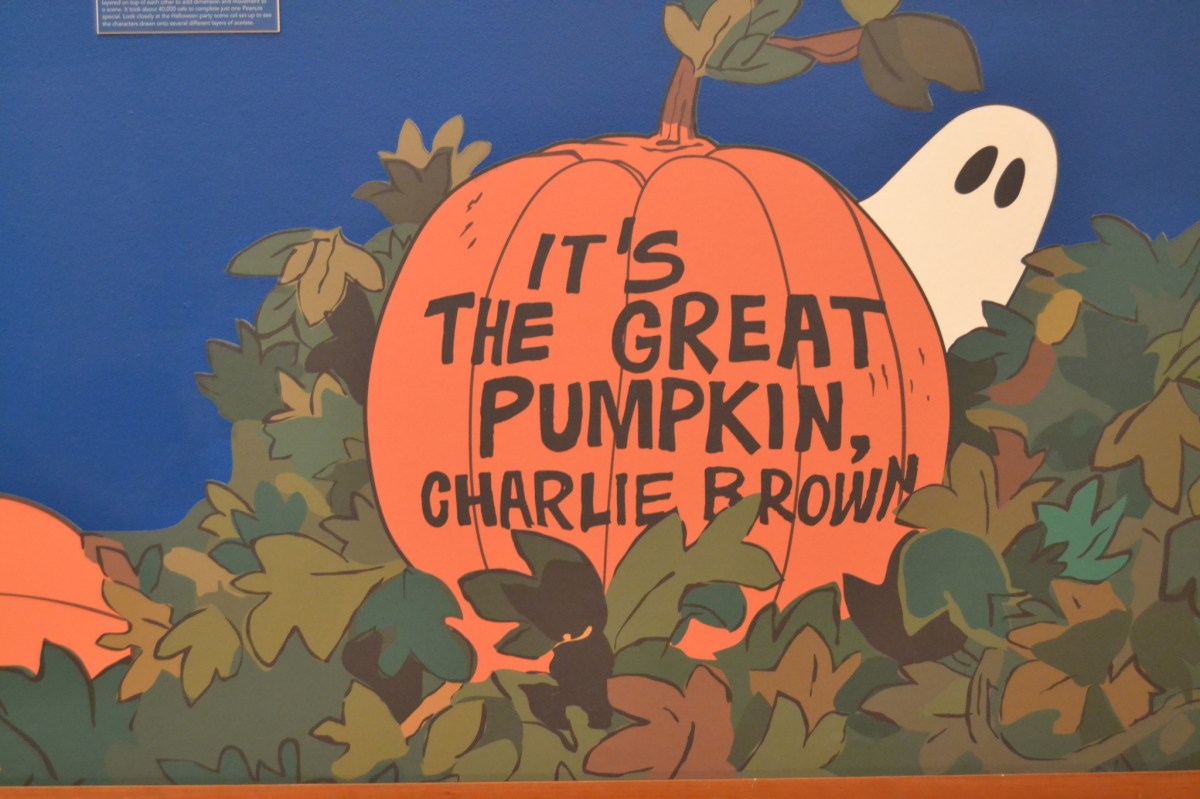
It’s The Great Pumpkin, Charlie Brown

When I was growing up this was a must-watch in October. It’s The Great Pumpkin, Charlie Brown was first released in October 1966.

Great Pumpkin

Charlie Brown is invited to Violet’s Halloween party. Before the party, the Peanuts gang plan to go trick or treating, with Snoopy, who is dressed as the WWI flying ace, taking his Halloween disguise to an extreme. The one person who won’t be joining them for the trick or treating or the party is Linus, who will be waiting in his local pumpkin patch for the arrival of the Great Pumpkin to give toys and candy to all the girls and boys.

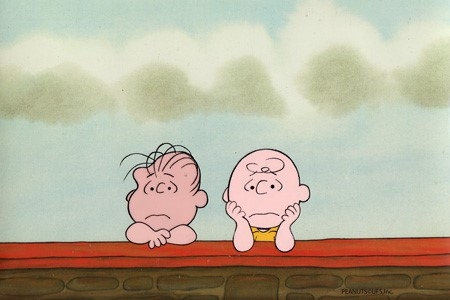
This year he talked Sally, Charlie Brown’s sister, into coming with him while the others went out. Linus and Sally stays at the pumpkin patch all night until Lucy gets up in the middle of the night to take Linus back home. The next day, Charlie Brown and Linus about the night’s events. Charlie Brown assures Linus that he’s done his share of stupid things too. This upsets Linus, who vows that the Great Pumpkin will appear next year.

Charlie Brown and Linus at the Wall

It’s The Great Pumpkin Charlie Brown was adapted from Schulz’s newspaper strip, which he had conceived as a metaphor for some of the hope and disappointment associated with Santa Clause. Schulz didn’t like the idea of kids getting their hopes up about a lot of presents when many families could only afford one or two gifts for the holidays. “The Great Pumpkin is really kind of a satire on Santa Claus, when he doesn’t come, Linus is crushed.”

Growing up, there was no other cartoon I looked forward to more than The Peanuts. Every holiday I was there watching the gang. I would also read the  Sunday paper to see the Peanuts strip.

Everything from Linus telling us the true meaning of Christmas, Sally and Linus waiting for the Great Pumpkin, Lucy pulling that football from Charlie Brown, Snoopy being WWI flying ace, Lucy being a Psychiatrist, and Charlie Brown getting that sad-looking Christmas tree…we got to peek into that kids only world and listen to the wisdom that was going on while Linus and Charlie Brown discussed life.

Charlie Brown and Linus wall

The Peanuts taught us about life. We lose more than we win therefore everyone is Charlie Brown to an extent. Every person has failed at a big moment or many of the small ones. We felt for Charlie Brown because we could relate.

Vince Guaraldi Trio – Linus and Lucy

Good morning everyone! I woke up to snow this morning…and it’s a toasty -4 near Nashville where I live. …It’s hard to resist this song. It automatically makes me happy when I hear it. I see the Peanuts gang doing their thing.

Peanuts GIFs - Get the best GIF on GIPHY

This song I can hear anytime of the year and be happy. It’s associated with Christmas also…whichever… I never get tired of it.

Here is another post of the song in Hanspostcard’s song draft a few years ago when run-sew-read’s pick was this song.

Ironically, just about everyone would call this “the Charlie Brown song” even though it’s actually titled after Linus and Lucy Van Pelt, brother and sister in Charles Schulz’s Peanuts comic strip universe.

The song is most famous for its use in the yearly favorite A Charlie Brown Christmas, which first aired in 1965, but it was written two years earlier for a documentary about Schulz and the Peanuts gang called A Boy Named Charlie Brown, which never aired.

Producer Lee Mendelson was in charge of the documentary and asked Vince Guaraldi to compose music for it

Guaraldi was huge in the jazz world and won the 1962 Grammy for Best Original Jazz Composition for “Cast Your Fate To The Wind” for his group, the Vince Guaraldi Trio. Mendelson was searching for what kind of music to play for the documentary when he took a taxi cab and “Cast Your Fate To The Wind” was playing as he crossed the Golden Gate bridge. He loved it and his decision was made.

Guaraldi wrote a series of songs for the project, including “Linus and Lucy,” which he recorded with his group, the Vince Guaraldi Trio. Even though A Boy Named Charlie Brown was shelved, the soundtrack was released in 1964, which is where “Linus and Lucy” first appeared.

In 1965, Mendelson put together the first Peanuts TV special, A Charlie Brown Christmas, using many of the same people who worked on the documentary. “Linus and Lucy” formed the score, and a song he wrote with Guaraldi called “Christmas Time Is Here” was included in a key scene.

When A Charlie Brown Christmas debuted in 1965, it quickly turned the Peanuts franchise into a television institution. That first special also shot Guaraldi to greater fame, and he became connected to all subsequent Peanuts shows.

Guaraldi would continue to work on Peanuts films until his death in 1976.


No words…just enjoy