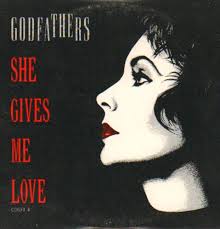
There’s no easing into She Gives Me Love. It hits fast and stays there. Released in 1986 on Hit by Hit, the track shows what The Godfathers were about in their early run: tight playing, sharp edges, and no interest in slowing down.
I listened to their first real album Birth, School, Work, Death, and it was fantastic. I then skipped around and listened to some songs throughout their career. Super band… they have a tough, rough Katie bar the door… no-holds-barred sound. I hear some Who, Kinks, Small Faces, Sloan, and other bands in them.
The main reason I like them…the hooks. They know how to develop and use great hooks in the right places. While you have the hooks and melodies, you also have the super-aggressive anger riding on top of everything. They mix it perfectly. In short… abrasive in-your-face rock.
The band, led by Peter Coyne and Chris Coyne, came out of the UK scene with a sound that pulled from R&B and stripped-down rock. You can hear that here. The guitars are direct, and the whole thing feels built for a small room turned up too loud. It doesn’t try to expand beyond that.
This is one I came across later, digging past the usual tracks people mention. It felt like finding something still wired tight after all these years. No buildup, no release, just straight through. Sometimes that’s all you need.
She Gives Me Love
Don’t claim to understand her I wonder what she’s doing with me Don’t know what she does with the rest of her time But she gives it to me for free
She gives me love She gives me love
She never takes my money But she always steals my time She’s the kind of a girl that if you gave her the world She’d say it wasn’t worth a dime
She gives me love She gives me love
It’s not easy to explain it The effect she has on me Make a dumb man talk and a blind man see That sweet little mystery
I heard this song while listening to Road Apples last year or so, and I knew I wanted to come back to it. A shout-out to deKe, who recommended this album to me. This one is such a beautiful and sad song. When I looked up the inspiration, I sadly understood.
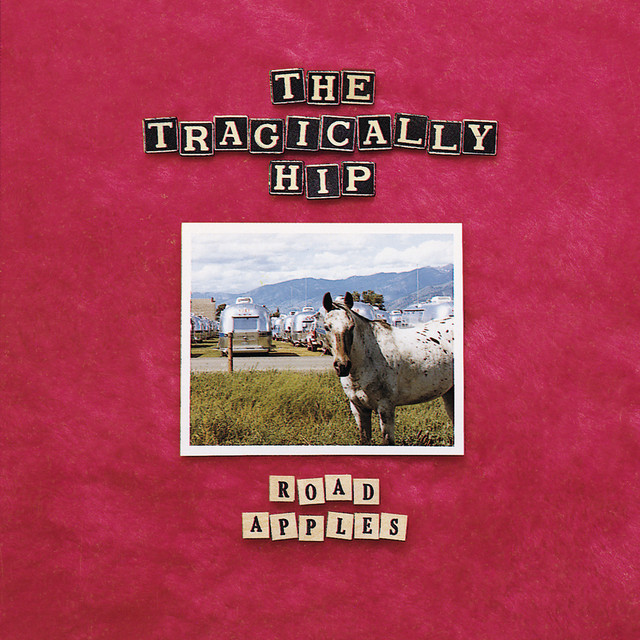
There’s a quiet weight (best way I can describe it) to Fiddler’s Green that sets it apart in the catalog from what I heard of The Tragically Hip. It was released on Road Apples in 1991; it comes in soft and stays there. No huge dynamic, just a steady song that feels epic at times.
The song was written by Gord Downie after the loss of his 3 year old young nephew. That context explains the tone and meaning without needing to be spelled out in the lyrics. The band keeps the arrangement simple, light acoustic guitar, space between the notes, and a vocal that sounds like it’s being carried more than delivered. Producer Don Smith, who had worked with Tom Petty and the Heartbreakers, helped guide the sessions toward a more direct sound, and this track benefits from that restraint.
The album was recorded in New Orleans, and the environment shaped parts of the album, but this song feels separate from the rest. While other tracks were more into groove and band interplay, this song is kept simpler. It’s closer to a live recording in spirit, one voice, one guitar, and the room around it. The band understood it didn’t need more.
I didn’t hear this one right away when I first got into Road Apples. It was one of those tracks you come back to later, and it hits you differently. The first thing I thought was how different it was. The album peaked at #1 in Canada in 1991. The album had 6 singles released from it, but this one wasn’t one of them, and that is a shame.
I’m not an expert on this band, but after listening to the debut album and then this one. It sounded like a band settling into who they were. It’s an excellent album.
Fiddler’s Green
One, two, three, four, one, two
September seventeen For a girl I know it’s Mother’s Day Her son has gone alee And that’s where he will stay Wind on the weathervane Tearing blue eyes sailor-mean As Falstaff sings a sorrowful refrain For a boy in Fiddler’s Green
His tiny knotted heart Well, I guess it never worked too good The timber tore apart And the water gorged the wood You can hear her whispered prayer For men at masts that always lean The same wind that moves her hair Moves a boy through Fiddler’s Green
Oh, nothing’s changed anyway Oh, nothing’s changed anyway Oh, any time today
He doesn’t know a soul There’s nowhere that he’s really been But he won’t travel long alone No, not in Fiddler’s Green Balloons all filled with rain As children’s eyes turn sleepy-mean And Falstaff sings a sorrowful refrain For a boy in Fiddler’s Green
I wrote this for Lisa’s WMM (Women Music March) as I have proudly done for the past few years in March. Lisa was one of the first followers I had when starting out, and she is one of the readers who helped build my site in a lot of ways. Please go see the original post and visit her site. Thanks, Lisa!
It’s a shame she is more remembered for what may or may not have happened to her than for her music. She has been hailed for being ahead of her time, and she was. I plead with everyone reading this, please look her up and read some things about her. I have barely scratched the surface with this post.
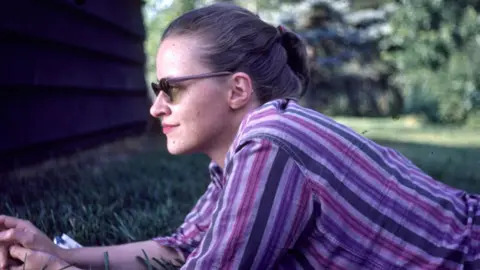
Connie Converse is one of the most unusual stories in folk music or music in general. She wrote quiet, thoughtful songs in the early 1950s. That was years before the folk revival made that style popular. At the time, almost no one outside a small circle of friends heard her music. Decades later, people realized she had been doing something new long before it became fashionable.
She was born Elizabeth Eaton Converse in 1924 in New Hampshire. She grew up in a strict Baptist family and showed an early interest in writing and music. After leaving college, she moved to New York City in the late 1940s. She went there hoping to find a place in the arts. Instead of the louder folk style that would come later, Converse wrote reflective songs that sounded closer to personal thoughts or even letters.
During the early 1950s, she performed occasionally in New York apartments and small gatherings. Her friend Gene Deitch, who later worked in animation, recorded many of her songs at home on a tape machine. In 1954, she appeared on The Morning Show on CBS, singing several of her compositions. The appearance did not lead to a recording contract, and by the end of the decade, she stepped away from performing.
In the early 1960s, Converse moved to Michigan and worked in publishing and writing. Music slowly faded from her life, and she became a huge activist on racism. On August 10, 1974, she wrote letters to friends and family and packed her belongings into a Volkswagen Beetle and drove away from her Ann Arbor, Michigan home. She was never heard from again, and her disappearance remains unexplained. She left letters indicating a desire to start a new life and instructed friends/family not to look for her. No traces of her or her car were ever found. There have been theories about her. While she may have started a new life, the most widely discussed theories include suicide (possibly by driving into a body of water) or death by misadventure.
Several years after she left, someone told her brother Philip that they had seen a phone book listing for “Elizabeth Converse” in either Kansas or Oklahoma, but he never pursued the lead. About ten years after she disappeared, the family hired a private investigator in hopes of finding her. The investigator told the family, however, that even if he did find her, it was her right to disappear, and he could not simply bring her back. After that, her family respected her decision to leave and ceased looking for her.
Her music might have stayed unknown if Gene Deitch had not preserved those early tapes. In 2009, the label Squirrel Thing Recordings released a collection of her recordings. For the first time, people heard the songs she had written more than fifty years earlier. Listeners were struck by how modern they sounded, both in their lyrics and their quiet delivery.
Today, Connie Converse is often mentioned as a lost pioneer of singer-songwriter music. She worked alone with a guitar, writing direct songs about daily life, loneliness, and independence, years before artists in the 1960s folk revival made that approach common.
What makes Connie Converse interesting is timing. She was writing personal, singer-songwriter-style material in the early 1950s, almost a decade before that approach became common. If these songs had been recorded during the 1960s folk revival, her story might look very different.
Connie Converse: “Human society fascinates me and awes me and fills me with grief and joy; I just can’t find my place to plug into it”
“I believe all true art is, in this sense, impersonal: its value does not depend on knowing or thinking anything about its maker. Art is not an extension of the artist’s personality, but has its own life”
“The problem, or at least a problem, I’ve been told — is that I am not very concerned about being missed upon any of my exits, not the ones that are voluntary nor the ones that swoop down without warning to cover me in a quilt of dark feathers”.
In the 1980s, I was watching MTV, and I came across this band playing a song called Our House and I loved it. Not only did I like the song, but the bands irrevelant humor wore off on me. They didn’t take themselves seriously at all, and I respect that.
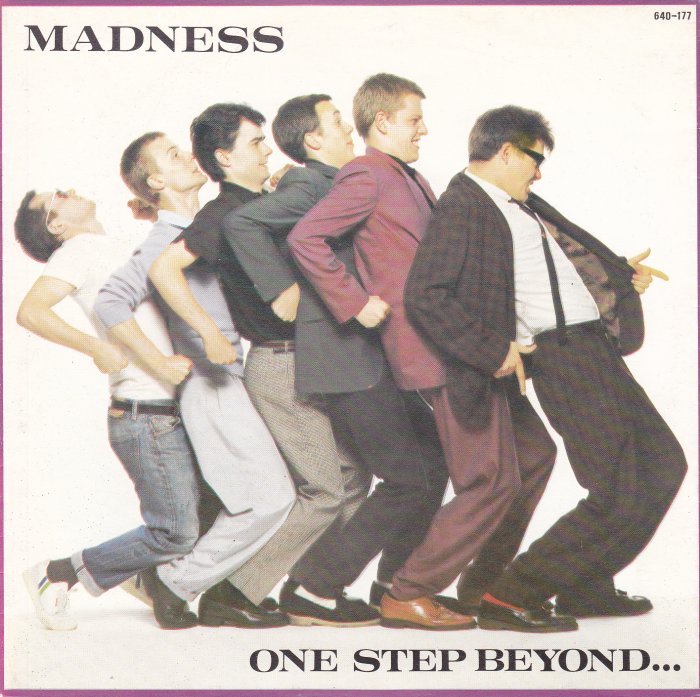
When this song came out in 1979, it sounded like a party breaking out in the middle of the British charts. Madness was part of the late-1970s ska revival that grew out of London clubs. Their version of this was actually a remake of a 1964 instrumental by Jamaican artist Prince Buster. Madness kept the structure but turned it into something louder and more chaotic. The song begins with Chas Smash shouting “Don’t watch that, watch this!” before the band launches into the riff. From that moment, it feels like a call to the dance.
It’s a fast ska rhythm, brass sounds, and a repeating organ line. Unlike many pop songs of the time, there is very little singing. Instead, the horns carry the melody while the band pushes the tempo forward. It captures the mix of Jamaican ska and British pub-rock attitude that defined the early Madness sound. The record was produced by Clive Langer and Alan Winstanley, who helped give the band a tight but lively sound.
The video, with the group dancing and marching through London streets, helped define their image. Madness were not trying to be serious rock stars. They looked like a gang of friends who started a band and brought the party with them. This was the title cut off of their debut album, released in 1979. The album peaked at #2 on the UK Album Charts and #27 in New Zealand that year. The song peaked at #7 in the UK.
Here is a later live version. The crowd was ready!
One Step Beyond
(Hey you, don’t watch that, Watch this! This is the heavy heavy monster sound The nutsiest sound around So if you’ve come in off the street And you’re beginning to feel the heat Well listen buster You’d better to start to move your feet To the rockin’est, rock-steady beat Of Madness One step beyond!)
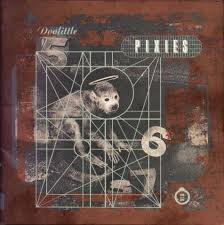
I started following this band in the 1990s after hearing the song “Here Comes Your Man,” which caught my power-pop ear. It was on their 1989 album, Doolittle. I love the dynamics in this one and the harder style.
By 1989, Pixies were no longer an underground surprise. After Surfer Rosa, they went into the studio to make a tighter, more direct record. That record became Doolittle. The sessions took place in late 1988 in Boston, with Gil Norton producing. Norton pushed the band toward precision. He said he focused on structure and dynamics. Gouge Away benefited from that approach.
Black Francis brought the song in with its biblical reference; he drew from the story of Samson and Delilah. But in the studio, the band worked on feeling more than sticking strictly to that concept. The verses were kept restrained on purpose, so the chorus would hit harder. That is where the dynamics came into play. I like the sound of Kim Deal’s driving bass in this one. Also, I have to mention, the guitar solo is very unique to me. I love the way they fit that solo in with the sustain.
Unlike some of the raw edges on Surfer Rosa, Doolittle was built with layering in mind. Multiple vocal takes were tracked to get Francis’s half-whisper right before the explosion of the refrain. The final mix keeps plenty of space in the verses, then opens up when the band surges. As the closing track, Gouge Away was put there to leave a mark. It ends the album the way the Pixies often worked in the studio at that point, controlled and sharp.
The album peaked at #98 in the Billboard Album Charts, #8 in the UK, and #18 in New Zealand in 1989.
Gouge Away
Gouge away You can gouge away Stay all day If you want to
Missy aggravation Some sacred questions You stroke my locks Some marijuana If you got some
Gouge away You can gouge away Stay all day If you want to
Sleeping on your belly You break my arms You spoon my eyes Been rubbing a bad charm With holy fingers
Gouge away You can gouge away Stay all day If you want to
Chained to the pillars A three day party I break the walls And kill us all With holy fingers
Gouge away You can gouge away Stay all day If you want to
I first heard of Wilco from the song Secret of the Sea by Billy Bragg and Wilco for the album Mermaid Avenue Volume II. I started to follow them more closely and learned a lot from bloggers about them.
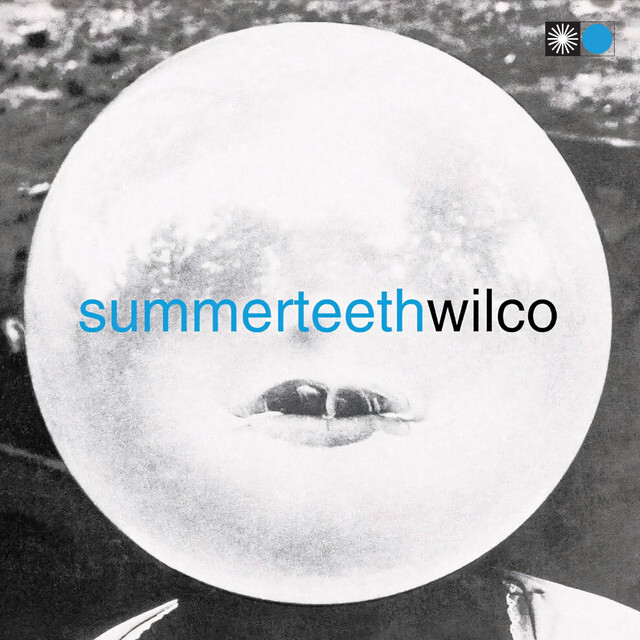
Wilco was formed in 1994 in Chicago, Illinois, following the breakup of Uncle Tupelo. The band was founded by Jeff Tweedy, along with former Uncle Toledo members John Stirratt, Ken Coomer, and Max Johnston. Over the years, Wilco evolved from an alternative country sound into a more experimental and genre-blending style. After this album, their sound changed from the alt-country sound they had with Uncle Tupelo.
What first jumps out with this song is the acoustic in front with a small amount of reverb. It takes me back a little to John Lennon’s version of Stand By Me. I can’t get enough of that sound. The song started with Tweedy at the piano. It was written around a repeating chord pattern and a vocal line that doesn’t try to do too much.
This was on the album Summerteeth, released in 1999. It was their 3rd studio album. From listening to them recently, Wilco had already moved past the alt-country tag that followed them after Uncle Tupelo. Being There opened the door. Summerteeth walked through it and didn’t look back. I really like this album.
From what I’ve read, there was tension during the making of the album. Jay Bennett’s role grew, and he and Tweedy wrote most of the album. So did the friction. Multi-tracking replaced some of the earlier live feel. Drummer Ken Coomer has said parts were built in sections rather than full takes. The band was evolving in real time, and not everyone was comfortable with the shift. Still, the focus was on getting the songs right, even if that meant reworking them again and again, and they did a great job.
The album peaked at #78 on the Billboard Album Charts and #38 in the UK in 1999.
How To Fight Loneliness
How to fight loneliness Smile all the time Shine you teeth til meaningless Sharpen them with lies
And whatevers going down Will follow you around Thats how you fight loneliness You laugh at every joke Drag your blanket blindly Fill your heart with smoke And the first thing that you want Will be the last thing you ever need Thats how you fight it
Just smile all the time Just smile all the time Just smile all the time Just smile all the time
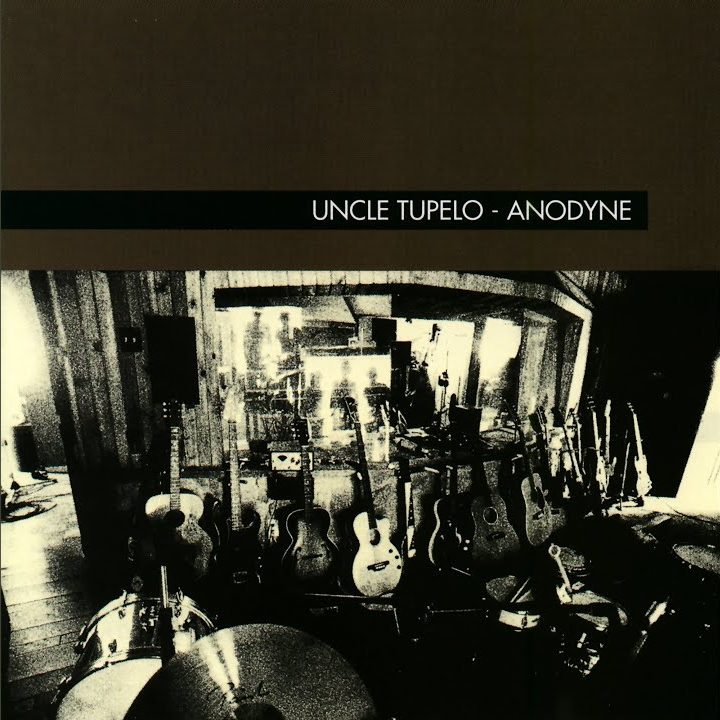
Yes, I posted Sahm recently, but here he is leading the way with Uncle Tupelo. What a great and natural combination. Running across this was just fantastic! I can’t put into words how much I love the down-home sound of this. One more legend is on this album that I will reveal at the bottom of the post…no skipping or peaking!
When Uncle Tupelo teamed up with Doug Sahm on this song, it felt less like a guest spot and more like a handoff between two generations. Sahm had already lived a lifetime in Texas blues, country, and rock and roll. Uncle Tupelo were still mapping out what roots rock could sound like in the early ’90s. The song sits right in the middle of that meeting point.
Sahm sounds relaxed, like he’s telling a story on a porch. Jay Farrar and Jeff Tweedy hang back just enough to let the song lead. I always liked Uncle Tupelo anyway, but add Doug Sahm? Oh hell yes! I could listen to this type of music all day and twice on Sunday, as the saying goes. It gives me a great feeling, and it just fits all together so well. The backup vocals are on target, but also riding around the edges; it’s such a lived-in sound that I love. There is no overdubbing or big production…just back porch sounding goodness.
This track shows what Uncle Tupelo were always good at, connecting past and present without making it sound like a museum piece. Doug Sahm doesn’t feel like a legend that was just dropped in for credibility. He feels like part of the band, which in this he is. Doug Sahm wrote this song, and it was on the Uncle Tupelo album called Anodyne, released in 1993. He first released it as Sir Doug and the Texas Tornados in 1976.
There is one more legend on this album doing some vocals…the one and only Joe Ely. He did the lead vocals on Are You Sure Hank Done It This Way?
Give Back The Key To My Heart
Take my picture off the wall It don’t matter to me at all Said I was headed for a fall But you wanted me to crawl
Give back my TV It don’t mean that much to me While you’re giving back my things Give me back the key to my heart
Give back the key to my heart Give back the key to my heart And let my love flow like a river Straight into your heart, dear
Well, you say I was the one To blame for the wrong that’s been done Well, you got a friend named cocaine And to me, he is to blame
He has drained life from your face He has taken my place While you’re alone in San Antone Give me back the key to my heart
Give back the key to my heart Give back the key to my heart And let my love flow like a river Straight into your heart, dear
A few months ago, around September, I met Arthur when he was commenting on my blog. He is better known as purplegoatee2684b071ed. We have had some wonderful conversations, and I told him if you ever want to post a music post…I would be honored to do it. He took me up on my offer, and he wrote up a post about The Desert Rose Band. I do appreciate Arthur writing this up. Here is Arthur!
I am Purplesomething or other. My name is Art Schaak. I have no idea where WordPress got the name for me. When I found this incredible blog I signed up for WordPress and they told me my e-mail, which is fairly unique, was already assigned to this Purple guy. purplegoatee2684b071ed, that’s what they call me. For years I had a full beard, now I am clean shaven (when I shave) and I’ve never sported a goatee. I have been called an old goat, and old other things, and I honestly find it hard to deny.
I have been reading and commenting on this blog since September of 2025, a relative newcomer. I am much more impressed with the community and its individual members than you should be of me.
I am 72 years old. I have been a big music fan as long as I can remember. I skirted the peripheries of the music industry in the mid 70s until I realized I was not a follower of fashion, dedicated or not. I know a little about this stuff, am horribly opinionated, and have very eclectic tastes.
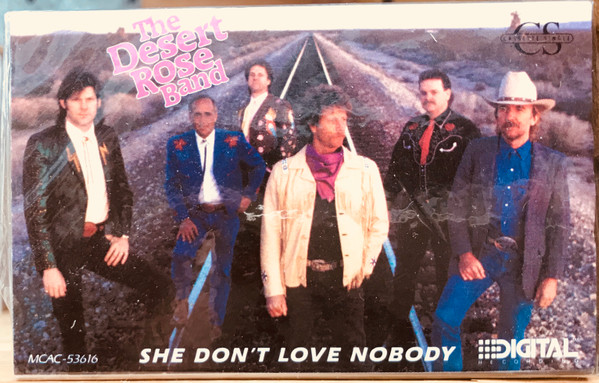
The Desert Rose Band was Chris Hillman, Herb Pedersen, John Jorgenson, Bill Bryson, Jay Dee Maness, and Steve Duncan. This song, written by John Hiatt, reached #3 on Billboard’s US Hot Country Songs and was awarded the 1989 Best Country Performance by a Duo or Group Grammy. It wasn’t their biggest hit, but it is my favorite.
The magic lies in the music. Give it a listen. It is the energy. The harmonies are tight. The performance is together. It might be too perfect, considering some of the opinions offered elsewhere on this blog, but I can’t call that a problem. This tune just delightfully pops along.
Hiatt’s lyrics are a lot of fun. Yes, I am a fan and have been since his Hanging Around The Observatory debut on Epic way back in the 70’s. By the way, Hiatt did two songs on the second White Duck album on Uni that I was amazed I found at a 25-cent parking lot sale at Rhino Records; I played it once, and that was more than it deserved.
Jorgeson continues to play, but his recent performances in the Los Angeles area have been with his bluegrass ensemble and his hot jazz ensemble. A long way from the Desert Rose Band or his tenure with the Elton John band. He is a great guitar player with an even greater sense of the overall music he is producing, kind of like Ry Cooder, where one can groove on his expertise or just be amazed at the incredible music he is putting out.
By the way, the web says the last performance of the Desert Rose Band, Live at the Country Music Hall of Fame CMA Theater, October 2, 2022, is due to be released in March of 2026.
And Chris Hillman seems extremely active (considering his age and such), according to his website, chrishillman.com.
Like I said, give it a listen.
She Don’t Love Nobody
From my humble point of view She don’t love nobody Nothin’ borrowed, nothin’ blue She don’t love nobody
Behind the green eyes I detect She don’t love nobody Her heart no kiss could resurrect She don’t love nobody
All of her life She’s been told to hang on tight There’s a man who’d make her his wife But she’s not interested in anything mama said
She throws passion to the wind She don’t love nobody She don’t give out but she don’t give in She don’t love nobody
And if I could I’d make her mine But she don’t love nobody And she would never walk that line She don’t love nobody
All of my life I’ve been told to hang on tight There’s a girl who’d be my wife But I’m not interested in anything mama said
I want the girl who does not need She don’t love nobody
She’s the one my heart receives She don’t love nobody
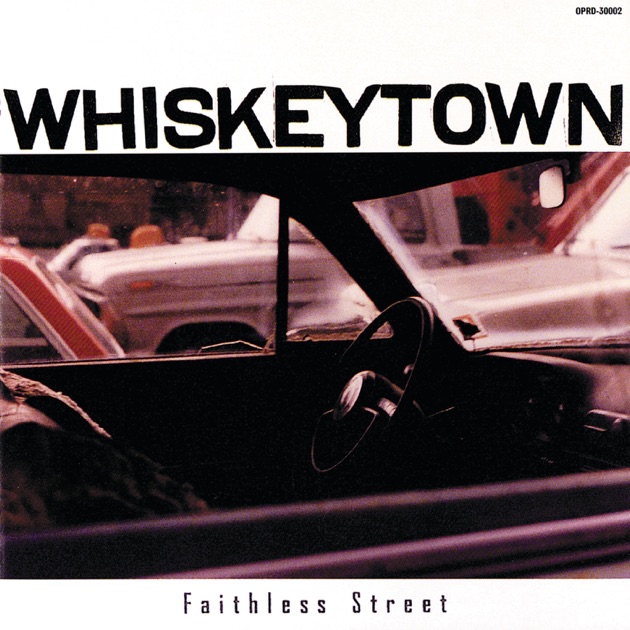
I really like this band. I spent the week living with their album Faithless Street, and what a tight album. Not just musically but vocally. It’s a true album, one song blends into another smoothly, and like I said, tight but loose in just the right spots.
Whiskeytown had one member that you might know. They were an alternative country band from Raleigh, North Carolina. They were active from 1994 to 2000. The band was led by Ryan Adams, who played a role in popularizing the alt-country genre in the 1990s. He blended traditional country with rock and indie influences. They fit in well with The Jayhawks and Wilco in that era.
Faithless Street was made fast and cheap, with a band that was still figuring itself out. It was recorded in North Carolina in 1994, and the sessions were about capturing what Whiskeytown sounded like in real time. They were limited on studio hours, so songs were often tracked live with only a few overdubs. If something felt right, it stayed, even if it wasn’t clean.
Ryan Adams was writing constantly and pushing the group to cut new material almost as quickly as it came together. Some songs had been played on stage for months. Others were nearly brand new. That mix gave the album its loose feel. You can hear moments where the band sticks to a groove and others where they’re holding it together by instinct, off the cuff.
The record opens with Midway Park, and right away, you get the blueprint. Country structure with rock volume. I love that welcoming opening riff that drives that song. Songs like 16 Days and Excuse Me While I Break My Own Heart Tonight ” go into classic barroom sound with the pedal steel and open choruses. There’s also Houses on the Hill, which would later become one of Adams’ calling cards. Even in this early version, the melody sticks.
Songs like Lo-Fi Tennessee Mountain Angel (For Kathy Poindexter) and Too Drunk to Dream go back to roots country. You also have acoustic-driven songs like Factory Girl that to me is as close to perfect as you can get.
The production is spare. Guitars are up front. The drums don’t dominate. The vocals aren’t smoothed out, but they are tight. That raw edge became the album’s identity. Within a few years, Whiskeytown would shift lineups, and Adams would get more well-known.
He has a successful solo career and has also produced albums for Willie Nelson and collaborated with the Counting Crows, Weezer, Norah Jones, America, Minnie Driver, Cowboy Junkies, and Toots & the Maytals. He has written a book of poems, Infinity Blues, and Hello Sunshine, a collection of poems and short stories.
I love this band, and I need to post more by them. Today, I have a theme going: alt-country, with one of the pioneers and one that picked up the mantle a little longer down the line. Like Little Feat, this band was more popular with other musicians than with the public. So the public missed something special here.
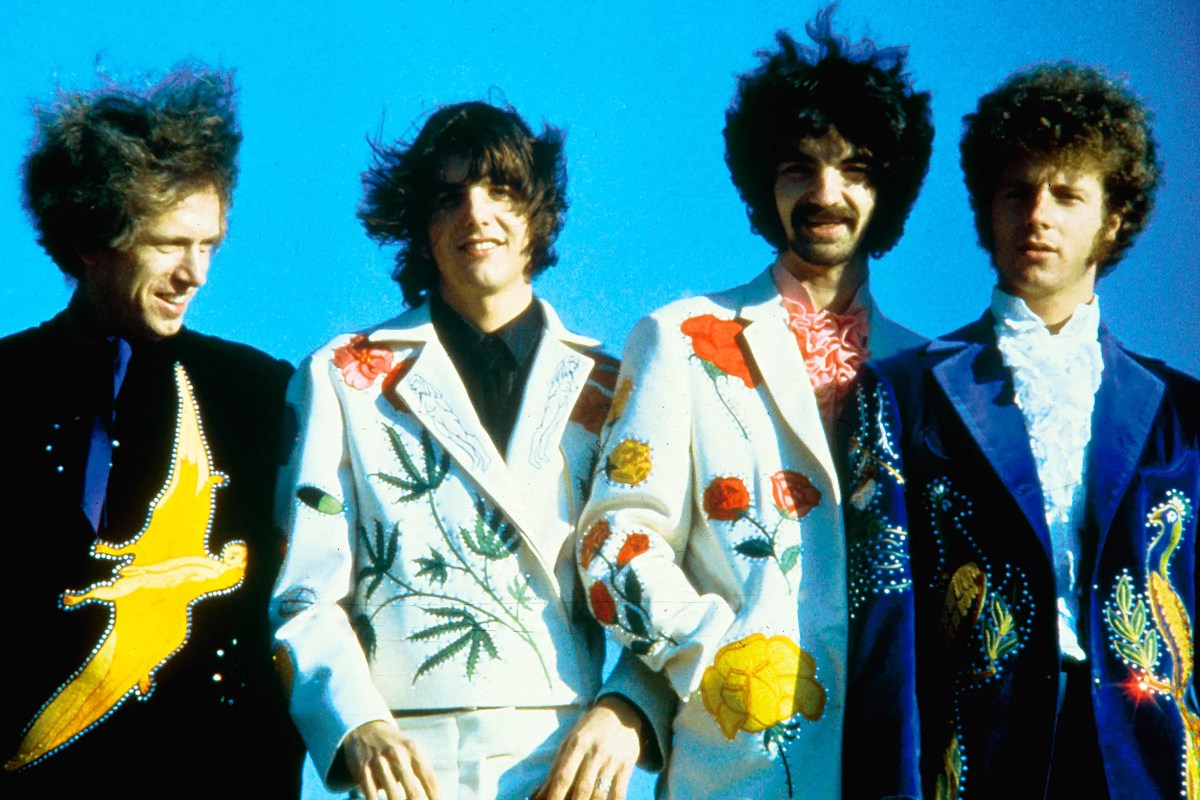
This was the opening song on the album The Gilded Palace of Sin. They didn’t ease you in… they hit you hard with this country song with rock attitude. It’s built around a cool rhythm and sharp harmonies. I like how it had a Bakersfield sound mixed with rock’s drive. It was written by Gram Parsons and Chris Hillman.
This song showed how country music could carry an edge without losing its roots. What makes it work is how natural it sounds, blending those two styles. Pedal steel in the background while the rhythm section drives like a rock band. It set the tone for the whole Burritos sound.
This song, like the album, barely made a dent in the music world of 1969. They developed a cult following upon its release that included Bob Dylan and The Rolling Stones. Over time, it turned into a blueprint for country-rock.
Christine’s Tune (Devil in Disguise)
She’s a devil in disguise You can see it in her eyes She’s telling dirty lies She’s a devil in disguise In disguise Now a woman like that all she does is hate you She doesn’t know what makes a man a man She’ll talk about the times that she’s been with you She’ll speak your name to everyone she can She’s a devil in disguise You can see it in her eyes She’s telling dirty lies She’s a devil in disguise In disguise
Unhappiness has been her close companion Her world is full of jealousy and doubt It gets her off to see a person crying She’s just the kind that you can’t do without She’s a devil in disguise You can see it in her eyes She’s telling dirty lies She’s a devil in disguise In disguise
Her number always turns up in your pocket Whenever you are looking for a dime It’s all right to call her but I’ll bet you The moon is full and your just wasting time
She’s a devil in disguise You can see it in her eyes She’s telling dirty lies She’s a devil in disguise In disguise (in disguise) In disguise (in disguise) In disguise (in disguise) In disguise
I first heard about The Jam in the 80s, around the same time I found Big Star, The Replacements, The Clash, and REM. When I listen to The Jam, I think of the Kinks and The Who right away, and that is always a good thing.
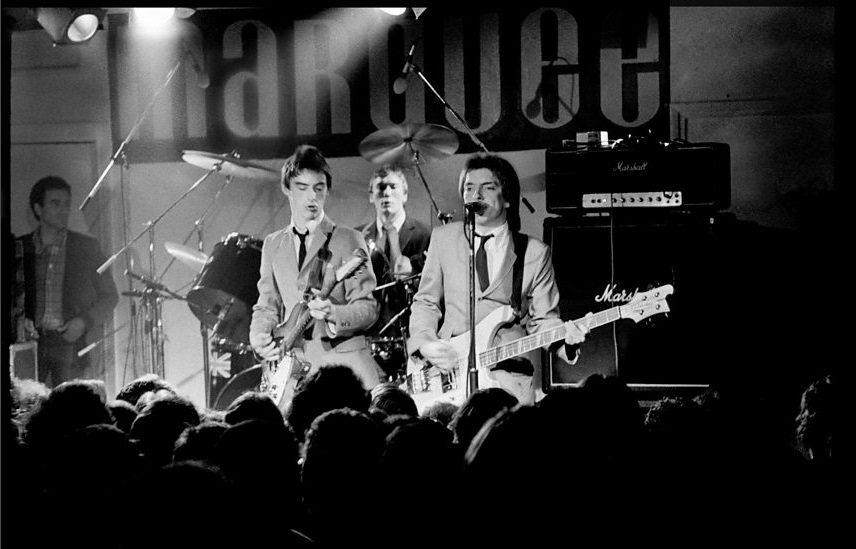
When people talk about the British punk explosion of the late ’70s, The Jam always stand a little apart. While others were known for being abrasive and loud, The Jam drew influence from 1960s Mod culture. Paul Weller had a knack for crafting sharp, pop-infused songwriting about everyday British life. They were formed in Woking in the early ’70s by Paul Weller, bassist Bruce Foxton, and drummer Rick Buckler. The band was a trio that was tight and direct.
They went from pub stages to one of the biggest bands in Britain, leaving behind a catalog that is very strong. There is not much information on this song out there. It wasn’t on a studio album, nor was it a B-side. It was released in 1997 for the first time on their Direction Reaction Creation album, which covered all the studio albums, non-album singles, and demos. They broke up in 1982 after releasing 6 albums in all.
From what I found, it was recorded around 1978 for the album All Mod Cons, but never made the album. I’m sure that is the case because it was also included on the All Mod Cons (Deluxe Edition) that was released in 2002. They were an incredible band, being a tight full trio. Direction Reaction Creation peaked at #8, fifteen years after they broke up in 1997.
Worlds Apart
Worlds apart, you and I, we’re worlds apart
The difference between every day I can’t think of the words to say
Worlds apart, you and I, we’re worlds apart
I’ve been in some clubs where the music’s loud ‘cos I see your face in every crowd But it’s not really you
It’s like having a cold on a summers day Something ain’t right and I want you to stay You must know that
Each tongue is a world, each eye is an ocean Of every child, woman, man here in living motion Now who’ll protect us, who’ll pеrfect us Who’ll live to see the day whеn love connects us
I just started to listen to Peter Case recently, although I like the Plimsouls, I never knew much about Case. This song and its history intrigued me. First of all, it’s a great song, but Case started this song by reminiscing about when he was a kid and shook hands with John Kennedy at a county fair that Kennedy had appeared at. So by total coincidence, this again fits into the book I’m reading. I had a playlist of his songs, and I heard this one, and I thought…what hand did he shake? I then read his quote about shaking hands with JFK.
He first broke out with The Nerves, a tight power pop band that was popular on the early LA power-pop scene. Though they never found major commercial success, they did have the song Hanging on the Telephone, later covered by Blondie. The Nerves showed Case’s gift for melodic songwriting and short three-minute power pop songs.
After that came The Plimsouls, who blended power pop with roots rock and harder edges. Tracks like A Million Miles Away made them cult favorites and briefly pushed them into the mainstream. The band toured constantly, but music industry pressure and burnout pulled them apart just as they were gaining traction.
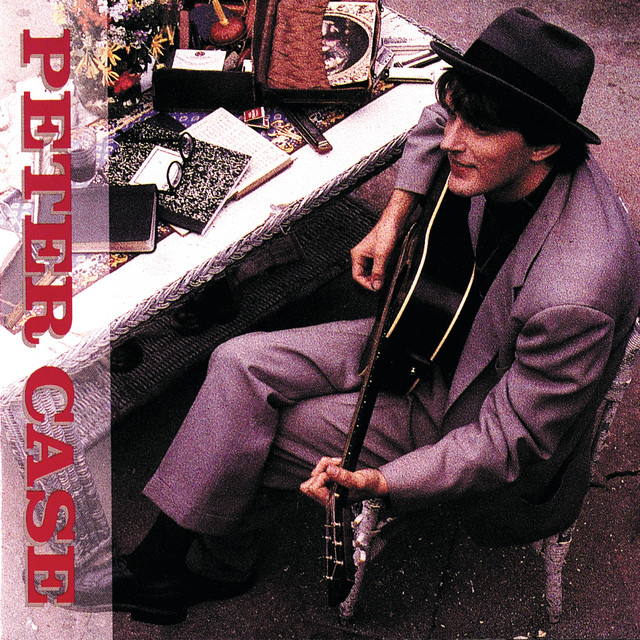
This song is off of Peter’s self-titled debut album, released in 1986. The musicians he gathered, I’m a huge fan of. Roger McGuinn on his 12-string Rickenbacker, Jim Keltner on drums, Van Dyke Parks on keyboards, T-Bone Burnett producing, and acoustic guitar and more. He was on Geffen Records at the time and also released a UK EP called Steel Strings that contained many of these songs. He also released another EP called Selections from Peter Case. That one had two different versions of the song Steel Strings on it.
The album was largely recorded live in the room, with players reacting to each other instead of building tracks layer by layer. I say this a lot in my reviews, but it’s true in this case as well. The band played to each other, and there were minimal overdubs. He kept small imperfections that made the performances feel real. The goal wasn’t to overproduce the album; it was to capture the way these songs worked when he played them alone or in small rooms.
He has been productive as a solo artist. 14 studio albums, 4 EPs, 3 compilations, and 11 singles. A tribute album was also released in 2006, A Case for Case, with various artists.
Peter Case: I wrote this one in 1984, on the Amtrak train down to San Antonio, where I was meeting the rest of the Plimsouls to start a tour. It’s about meeting JFK on his trip to the Erie County Fair, when I was five, though I was also thinking about MLK and RFK.
I Shook His Hand
I was a kid out behind the fair His words were like lightning in the summer air His eyes were wild with the truth he told Holding back the rain while the thunder rolled
I was too young to understand I was proud to say I shook his hand
He took command on a winter’s day All across the land, spring was on its way He struck fear into the hearts of fools Breaking up the gangs, breaking all their rules
Too young not to understand I was proud to say I shook his hand
Each tongue is a world, each eye is an ocean Of every child, woman, man here in living motion Now who’ll protect us, who’ll pеrfect us Who’ll live to see the day whеn love connects us Who’ll take a step out in this land I’ll be proud to say I shook his hand I shook his hand, well I shook his hand
For years they tried to kill him, he finally died I still remember how I felt when my mama cried I grew up with a bullet in my breast If you knew it or not, so did all the rest
I’ve posted a few of Sahm’s tracks in the past 4-5 months. I was inspired this time to post again. I have been reading 11.22.63 by Stephen King, and it’s about a man who was told about a time portal that takes you to September 9, 1958. He walked through and was going back to stop Oswald from killing JFK if Oswald was the one. The book is interesting because of the time he has to kill between 1958 and 1963, and the side trips he takes.
One of them is in Texas in a fictional town called Jodie. He is at a picnic, and this is the paragraph that caught my attention: I got my beer in a paper cup and walked closer to the bandstand. The kid’s voice was familiar. So was the keyboard, which sounded like it desperately wanted to be an accordion. And suddenly it clicked. The kid was Doug Sahm, and not so many years from now he would have hits of his own: “She’s About a Mover” for one, “Mendocino” for another. That would be during the British Invasion, so the band, which basically played Tejano rock, would take a pseudo-British name: The Sir Douglas Quintet.
Hey, inspiration may come from anywhere for a post. After reading that…I’ve been in a Doug Sahm mood. The recording blends country, soul, and Texas rhythm in a way that was natural for Sahm. The groove leans on a steady beat, light horns, and a melody that sticks without trying too hard. It came out during a period when he was working under his own name after years with Sir Douglas Quintet, and it showed how easily he could move between styles. The song had crossed over to country charts and pop audiences, which wasn’t common at the time.
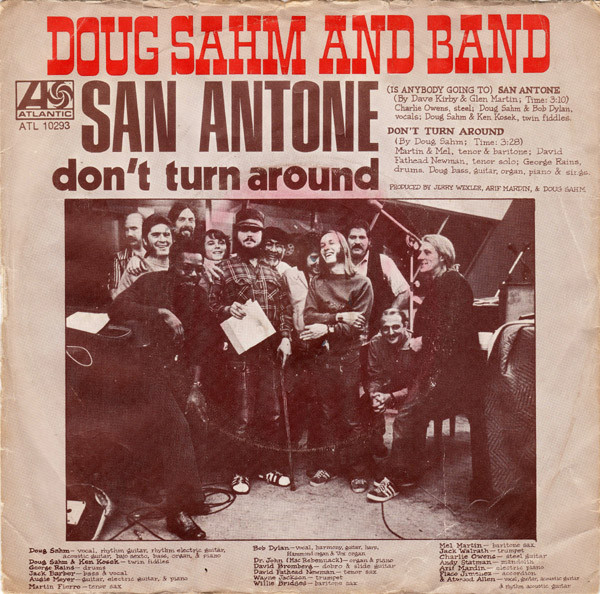
You may remember the version by Charley Pride that peaked at #1 on the Country Charts in 1970. Sahm recorded this for his 1973 album Doug Sahm and Band. Something about Sahm’s version just sounds so authentic that I had to post his version. That is something about Sahm I’ve realized, everything he does sounds authentic. It was written by Glenn Martin and Dave Kirby. The first version was by Bake Turner in 1970.
Doug Sahm and Band peaked at #125 on the Billboard Album Charts and #54 in Canada in 1973. This is another artist where the charts don’t tell the story. His albums are accessible and are full of good songs.
Is Anybody Goin’ to San Antone
Rain drippin’ off the brim of my hat It sure is cold today Here I am walkin’ down 66 Wish she hadn’t done me that way
Sleepin’ under a table in a roadside park A man could wake up dead But it sure seems warmer than it did Sleepin’ in our king-sized bed
Is anybody goin’ to San Antone Or Phoenix, Arizona? Any place is alright as long as I Can forget I’ve ever known her
Wind whippin’ down the neck of my shirt Like I ain’t got nothin’ on But I’d rather fight the wind and rain Than what I’ve been fightin’ at home
Yonder comes a truck with the U.S. Mail People writin’ letters back home Tomorrow, she’ll probably want me back But I’ll still be just as gone
Is anybody goin’ to San Antone Or Phoenix, Arizona? Any place is alright as long as I Can forget I’ve ever known her
I truly love this band, but I try to limit posting them around once a year. I try that with everyone, but it gets hard at times. The last time I posted them was back in February of this fading year, so I thought it was time for another. I respect them so much because of what they came up with. Joe Ely, Jimmie Dale Gilmore, and Butch Hancock were inventing a whole new kind of Texas country while nobody in Nashville was bothering to look. Their loss!
The song selections and the harmonies hooked me long ago. Their songs are simple and straight to the point, and really catchy. This song was written by Leslie York, and the York Brothers were the first to record it. It’s been covered by The Everly Brothers, Sweethearts of the Rodeo, and The Gibson Brothers. There are other songs by that name by Tex Ritter and a different one by CSN.
They were formed in 1972 by three singer-songwriters: Jimmie Dale Gilmore, Joe Ely, and Butch Hancock. The band was born out of the music scene in Lubbock, Texas, where all three members grew up. They recorded their debut album in Nashville. Initially, the album was released only as an 8-track tape by Plantation Records, with the title “Jimmie Dale and the Flatlanders.” This limited release received little attention at the time, and the band members soon went their separate ways to pursue solo careers, but would reunite to release a total of 10 albums of studio and live.
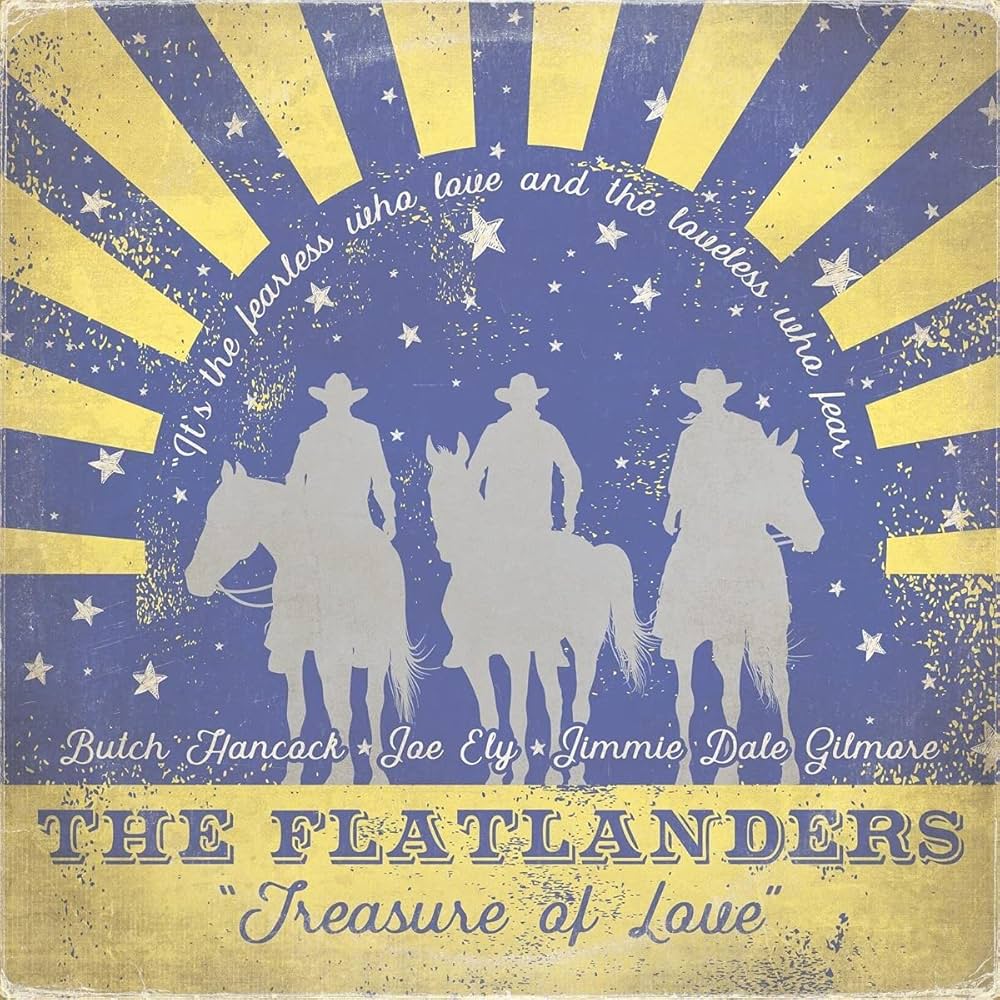
This song was on the 2021 album Treasure of Love. All three members were songwriters, and all had unique voices that blended so well with each other. Treasure of Love was never intended to be an album, at least not at first. So when Joe Ely started gathering the trio in his home studio in Austin during the early and mid-2000s, it was not for some grand comeback. It was more like old friends swapping songs and capturing whatever happened to be good.
Long Time Gone
You cheated me and left me lonely I tried to be your very own There’ll be a day you’ll want me only But when I leave, I’ll be a long time gone Be a long time gone Be a long time gone Yes, when I leave, I’ll be a long time gone You’re gonna be sad, you’re gonna be weepin’ You’re gonna be blue and all alone You’ll regret the day you seen me weepin’ ‘Cause when I leave, I’ll be a long time gone Be a long time gone Be a long time gone Yes, when I leave, I’ll be a long time gone You’ll see my face through tears and sorrow You’ll miss the love you called your own Baby, there’ll be no tomorrow ‘Cause when I leave, I’ll be a long time gone Be a long time gone Be a long time gone Yes, when I leave, I’ll be a long time gone
After I found out about this band in 2000, I had to know more. This song would rank high on the list of my favorite songs of all time. When Olson and Louris lock in on “Why don’t you stay behind? So blue.” they hit that sweet spot that gives me chills. This is the kind of sadness you can hum along to. To me, they are a modern version of Big Star in many ways. They never could buy a hit, but released some excellent music.
The Jayhawks are an American alternative country and country rock band that emerged from the Minneapolis–Saint Paul music scene in the mid-80s. Minneapolis had a strong scene for bands in the 1980s. Gary Louris and Mark Olson built the early band around harmony singing, country roots, and the spirit of the Flying Burrito Brothers, which was not exactly the fashionable choice in a town dominated by Hüsker Dü, the Replacements, and Prince. The Jayhawks went more for warmth and melody instead of loudness. They have a little of The Flying Burrito Brothers mixed with Big Star in them.
Olson eventually left the band to focus on family and a quieter life, leaving Louris to carry on with the Jayhawks. Still, whenever the two reunited, even briefly, the chemistry returned. Their 2008 duo album (Ready For The Flood) and subsequent tours proved the bond still worked.
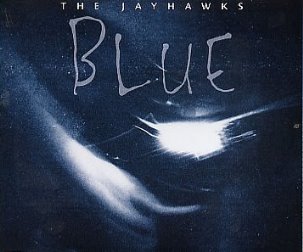
The song was on the album Tomorrow the Green Grass, an album many fans still consider their masterpiece. They recorded the album between Los Angeles and Nashville, a setup that gave it an open feel. Producer George Drakoulias understood that the Jayhawks’ feel wasn’t in piling on big sounds, it was in letting the songs breathe…and breathe they did. This song was written by Mark Olson and Gary Louris.
The album peaked at #92 on the Billboard Album Charts in 1995. The song peaked at #33 in Canada. They recently backed Ray Davies on his albums Americana and Our Country – Americana Act II. Their 2016 album, Paging Mr. Proust, was produced by Peter Buck of REM.
They combine country, folk, rock, and pop with good harmonies.
Gary Lourist: Mark was tired of the grind of playing the game, going to the radio stations and being a low- to mid-level success. I think it just wore him out. He was always frustrated by all the waiting. The Jayhawks made just seven records in 20 years, so there was a lot of it. The Creekdippers did it very organically and made lots of records. But the main thing was that he wanted to be with his wife.
Gary Lourist: What brought Mark and me back together? It started way back with The Rookie, a mediocre Dennis Quaid movie about an older pitcher who makes the big leagues. The producer or the director was a Jayhawks fan, and they wanted a new Olson/Louris song. Olson’s manager called my manager, and the next thing you know, I’m driving out to Joshua Tree. We talked through our old issues. We wrote a couple of songs that day. They didn’t make it in the movie, but it got us thinking that we still really had something when we got together. So we started doing some tours, but we didn’t have any new material, so that lead us to Ready For The Flood, and that led us to the new Jayhawks record.
Blue
Where have all my friends gone?
They’ve all disappeared.
Turned around maybe one day, you’re all that was there.
Stood by on believing, stood by on my own.
Always thought I was someone, turned out I was wrong.
And you brought me through and you made me feel so blue,
Why don’t you stay behind?
So blue. Why don’t you stop, and look at what’s going down.
If I had an old woman she’d never sell me a lie
It’s hard to sing with someone who won’t sing with you.
Give all of my mercy, give all of my heart.
Never thought that I’d miss you, that I’d miss you so much.
And you brought me through and you made me feel so blue.
Why don’t you stay behind?
So blue.
Why don’t you stop and look at what’s going down.
All my life (staying while) I’m waiting for (staying while)
Someone I could (waiting around) show the door
(now that I’m blue) but nothing seems to change (that I’m blue from now on)
You come back that month so blue.
Why don’t you stay behind?
So blue.
Why don’t you, why don’t you stay behind?
So blue.
Why don’t you, why don’t you stay behind?
So blue
Why don’t you stop and look at what’s down


 PowerPop... An Eclectic Collection of Pop Culture