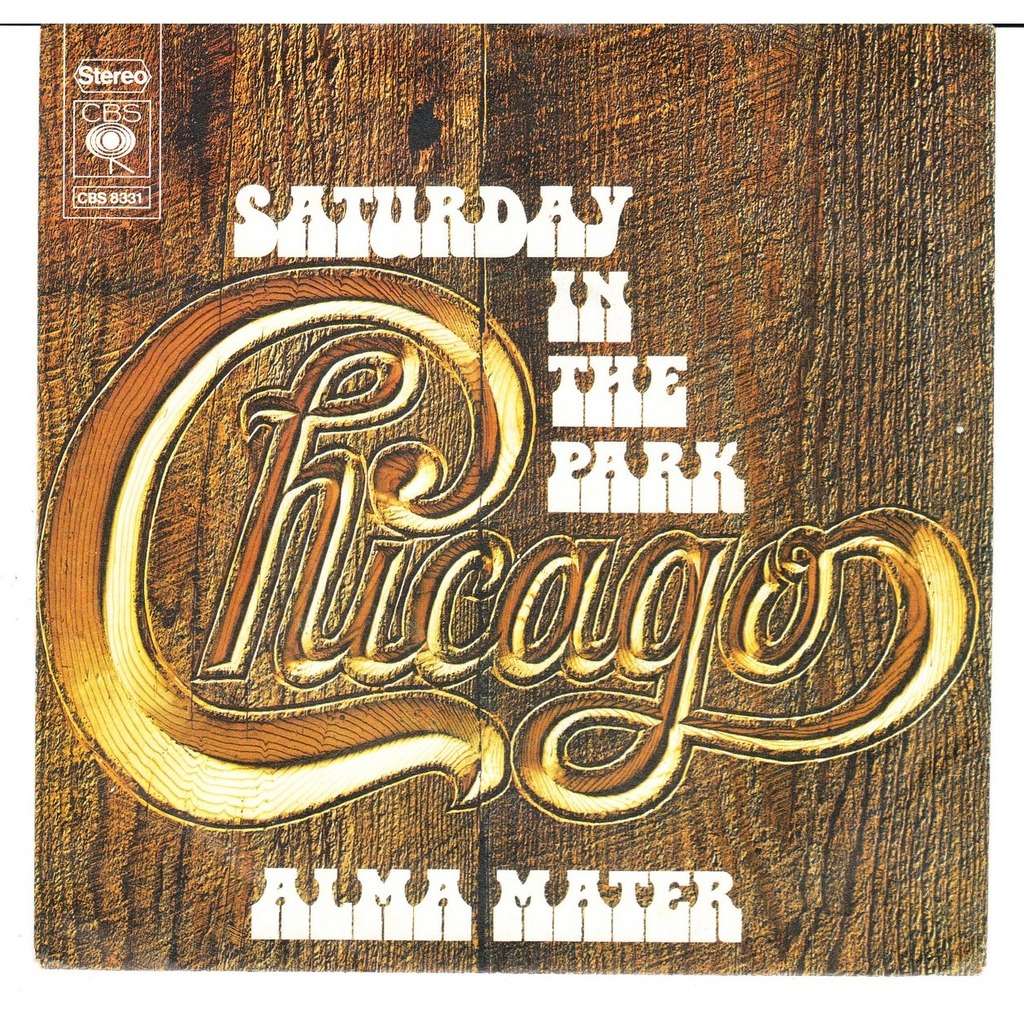
Chicago’s main songwriter, Robert Lamm, wrote this song. Lamm and Peter Cetera sang lead on the track. Robert Lamm based the melody of this song on “You Won’t See Me” by The Beatles, something he openly admitted.
The piano riff, in the beginning, hooks you right away. The song peaked at #3 in the Billboard 100 and #2 in Canada in 1972.
Robert Lamm: It was written as I was looking at footage from a film I shot in Central Park, over a couple of years, back in the early ‘70s. I shot this film and somewhere down the line I edited it into some kind of a narrative, and as I watched the film I jotted down some ideas based on what I was seeing and had experienced. And it was really kind of that peace and love thing that happened in Central Park and in many parks all over the world, perhaps on a Saturday, where people just relax and enjoy each other’s presence, and the activities we observe and the feelings we get from feeling a part of a day like that.
From Songfacts
Like most Chicago singles, this didn’t chart in the UK. In America, however, it was their biggest chart hit to that point and also their first gold single, which at the time meant selling more than a million copies (“25 Or 6 To 4” somehow was never certified gold).
This song contains some of the most famous nonsense singing in rock: after Robert Lamm sings the line, “Singing Italian songs,” he sings some made up words approximating the Italian language.
In the 2000 Adam Sandler film Little Nicky, this song was used for comedic effect when it was played backwards to show that it contains satanic messages.
Other movies to use the song include The Spirit of ’76 (1990) and My Girl (1991). TV series to feature the song include The Sopranos (2002), My Name Is Earl (2005) and Fringe (2011).
Chicago and Robin Thicke performed part of this song at the 2014 Grammy Awards in a medley of Chicago’s hits leading into Thicke’s song “Blurred Lines.” The occasion: Chicago’s first album entering the Grammy Hall of Fame.
Saturday In The Park
Saturday in the park, I think it was the Fourth of July Saturday in the park, I think it was the Fourth of July
People dancing, people laughing A man selling ice cream Singing Italian songs Everybody is another Can you dig it (yes, I can) And I’ve been waiting such a long time For Saturday
Another day in the park I think it was the Fourth of July Another day in the park I think it was the Fourth of July
People talking, really smiling A man playing guitar And singing for us all Will you help him change the world Can you dig it (yes, I can) And I’ve been waiting such a long time For today
Slow motion riders fly the colors of the day A bronze man still can tell stories his own way Listen children all is not lost, all is not lost, oh no, no
Funny days in the park Every day’s the Fourth of July Funny days in the park Every day’s the Fourth of July
People reaching, people touching A real celebration Waiting for us all If we want it, really want it Can you dig it (yes, I can) And I’ve been waiting such a long time For the day, yeah yeah
I had this single in the 70s. I was a kid and I knew every word. I had no clue what it meant…just thought it was a pretty song and the words were powerful. On my single, it was listed as “Only Women” it was shortened from “Only Women Bleed” by the record company because of protests by feminist groups.
Alice Cooper is singing about how women bleed from the heart, mind, and soul. Several feminist groups protested this song, but it was actually a sympathetic look at domestic abuse. It’s a rare song where Cooper doesn’t try to shock.
This ballad was on Alice Cooper’s Welcome To My Nightmare album. The song peaked at #12 in the Billboard 100, #1 in Canada, and #21 in New Zealand in 1975.
The song was written by Cooper and Dick Wagner. Wagner had the melody since the sixties but didn’t like the lyrics. He played the riff for Cooper, and the two developed new lyrics for the song.
The song was produced by Bob Ezrin using a demo that was recorded at the home studio of Micky Dolenz of The Monkees. Cooper and Wagner were able to walk to Dolenz house to record the demo.
Dick Wagner: “It’s really a song about domestic violence. It was misunderstood when it first came out. It was supposedly about a woman’s period, but it wasn’t. It was about a woman’s subservient position in society to a man. I’m a firm believer that women are the superior sex. ‘Only Women Bleed’ was a liberating kind of song.”
From Songfacts
Contrary to what many listeners believed, this is not about menstruation and it does not advocate domestic violence.
Alice Cooper and his guitarist Dick Wagner also wrote the ballads “You And Me” and “I Never Cry” together. Alice called this style “Heavy Metal Housewife Rock,” and explained in an interview with Creem: “I did those songs totally out of spite. I kept reading so many interviews and articles that I said I was never considered musical. Best rock show they ever saw, but musically lacking. They kept saying I was a performer but didn’t write anything. So I said, ‘Oh yeah? Yeah? Wait till you hear this!'”
Cooper performed the song with a single dancer, and it remained a part of his stage show for many of his concerts in the ensuing years. Alice told Mojo: “I didn’t realize it would end up as a woman’s anthem. I just needed a ballad for Welcome to my Nightmare.”
Dick Wagner wrote what would become the music for this song in 1968 when he was with a band called The Frost. Wagner wasn’t happy with the lyrics he wrote for the song, so he never recorded it. When he teamed up with Cooper in 1975, he played the music for Alice, who attached it to a title he was looking to use: “Only Women Bleed.” Based around that title, he and Wagner came up with the rest of the lyrics.
Only Women Bleed
Man’s got his woman to take his seed He’s got the power – oh She’s got the need She spends her life through pleasing up her man She feeds him dinner or anything she can
She cries alone at night too often He smokes and drinks and don’t come home at all Only women bleed Only women bleed Only women bleed
Man makes your hair gray He’s your life’s mistake All you’re really lookin’ for is an even break
He lies right at you You know you hate this game He slaps you once in a while and you live and love in pain
She cries alone at night too often He smokes and drinks and don’t come home at all Only women bleed Only women bleed Only women bleed Only women bleed Only women bleed Only women bleed Only women bleed
Black eyes all of the time Don’t spend a dime Clean up this grime And you there down on your knees begging me please come Watch me bleed
Only women bleed Only women bleed Only women bleed Only women bleed Only women bleed Only women bleed Only women bleed
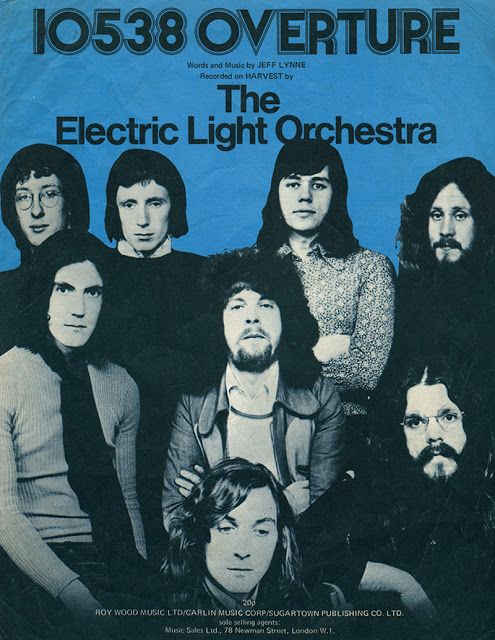
This was the first song ELO recorded and released. Jeff Lynne wrote it when he was in a band called The Move. This prompted some members of The Move to go ahead with plans to create a new band with string instruments called The Electric Light Orchestra.
The song peaked at #9 in the UK in 1972.
The album was first released in the UK as Electric Light Orchestra. When it was released in the US a few months later, someone from their American Record company called to find out the name of the album but didn’t get through. That person wrote down “No Answer” on the paperwork, and that was accidentally used as the name of the US release.
From Songfacts
Lynne wanted the lyrics to be about a man who had a number rather than a name.
1053 was the serial number of the desk Lynne used to write this. They added the 8 and included the word “Overture” to make it clear they were an orchestra.
10538 Overture
Did you see your friend crying from his eyes today Did you see him run through the streets and far away Did you see him run, did you see him fall Did his life flash by at the bedroom door
Did you hear the news it came across the air today Someone has been found on the rocks down in the bay Did you see him hide, did you see him crawl Does his life mean more than it did before
Did you see that man running through the streets today Did you catch his face, was it 10538
When I first heard this…I would have bet money…and lost that it was Elvis singing this song. I was shocked when I found out that it wasn’t him. This song was written by the songwriting team of Dennis Lambert and Brian Potter. They wrote hits for various artists, including Glen Campbell, the Four Tops, and Dusty Springfield.
The song peaked at #4 in the Billboard 100 and #1 in Canada in 1971.
The backing group was the great studio musicians called “The Wrecking Crew” who played with countless artists including The Beach Boys, Simon and Garfunkel, and even Cher.
From Songfacts
This was Hamilton, Joe Frank & Reynolds’ third single and first Top 40 hit. Their two previous singles failed to reach the Top 40 and received very little radio play.
Rob Grill of The Grass Roots explained at a concert that this song was intended for his band, but they were about to release another single. So Potter and Lambert crafted “Two Divided by Love” for The Grass Roots, which sounds somewhat similar to this song. The Grass Roots perform “Don’t Pull Your Love (Out)” in concert, since it was supposed to be their song.
Don’t Pull Your Love
Don’t pull your love out on me, baby If you do, then I think that maybe I’ll just lay me down, cry for a hundred years Don’t pull your love out on me, honey Take my heart, my soul, my money But don’t leave me here drowning in my tears
You say you’re gonna leave, gonna take that big white bird, Gonna fly right out of here without a single word But you know you’ll break my heart when I watch you close that door Cause I know I won’t see you anymore
Don’t pull your love out on me, baby If you do, then I think that maybe I’ll just lay me down, cry for a hundred years Don’t pull your love out on me, honey Take my heart, my soul, my money But don’t leave me here drowning in my tears
Haven’t I been good to you, what about that brand new ring? Doesn’t that mean love to you, doesn’t that mean anything? If I threw away my pride and I got down on my knees, Would you make me beg you “pretty please”?
Don’t pull your love out on me, baby If you do, then I think that maybe I’ll just lay me down, cry for a hundred years Don’t pull your love out on me, honey Take my heart, my soul, my money But don’t leave me here drowning in my tears
There’s so much I want to do I’ve got love enough for two And I’ll never use it, girl, if I don’t have you
Johnny Otis wrote this song and had a hit with it in 1958. It peaked at #9 on the Billboard Hot 100 chart and #5 on the Billboard R&B chart. The song had a Bo Diddley type rhythm to it and it’s such a great groove.
Both versions are great…I think out of the two I favor Johnny’s version.
Eric Clapton included this song on his classic album 461 Ocean Boulevard. Willie and The Hand Jive peaked at #27 for Eric in the Billboard 100 in 1974.
The origin of the song came when one of Otis’ managers, Hal Ziegler, found out that rock’n’roll concert venues in England did not permit the teenagers to stand up and dance in the aisles, so they instead danced with their hands while remaining in their seats. At Otis’ concerts, performers would demonstrate Willie’s “hand jive” dance to the audience, so the audience could dance along.
Willie and the Hand Jive
I know a cat named Way-Out Willie Had a cool little chick named Rockin’ Billie Made a heart of stone Susie-Q, doin’ that crazy hand jive too Papa said “You will ruin my house. You and that hand jive have got to go” Willie said “Papa, don’t you put me down, Been doin’ that hand jive all over town.” Hand jive, hand jive, hand jive, doin’ that crazy hand jiveI don’t want you to get on the floor Gettin’ low, getting down with sister go Come on, get baby, little sister’ll die Said doin’ that hand jive one more time Hand jive, hand jive, hand jive, doin’ that crazy hand jive
Doctor getting low and he getting check Now they’re all digging that crazy beat Way-Out Willie gave ’em all a treat Been doin’ that hand jive with his feet Hand jive, hand jive, hand jive, doin’ that crazy hand jiveWilli and Billie got married last fall Had to live with his sisters and that ain’t all Daddy got famous it’s plain to see Been doin’ that hand jive on his knees Hand jive, hand jive, hand jive, doin’ that crazy hand jive
Yes, this song has been played to death but yes I still love it. Musically the acoustic guitar, mandolin, Rod’s scratchy voice, and those great bass lines that Ronnie Wood plays makes it so memorable. The 16-year-old me spent hours learning those bass lines.
Ray Jackson from the band Lindisfarne plays mandolin on this recording. This was the first big hit of the rock era to feature a mandolin, which was mostly heard in folk music. Stewart first used the instrument on Mandolin Wind, which was one of the first songs he recorded for the album Every Picture Tells a Story. He liked the results, so he used it on this song as well.
The song peaked at #1 in the Billboard 100, # in the UK, #1 in Canaday, and #3 in New Zealand.
Rod Stewart has said the song is a true story of what happened to him at the Beaulieu Jazz Festival as a 16 year old…
Rod Stewart: “At 16, I went to the Beaulieu Jazz Festival in the New Forest. I’d snuck in with some mates via an overflow sewage pipe. And there on a secluded patch of grass, I lost my not-remotely-prized virginity with an older (and larger) woman who’d come on to me very strongly in the beer tent. How much older, I can’t tell you – but old enough to be highly disappointed by the brevity of the experience.”
The Beaulieu Jazz Festival was held in 1961…at the bottom I have a video and at the 13-second mark you can see a 16-year-old Rod Stewart there as a fan… right before he met ‘Maggie”
From Songfacts
This song was inspired by the woman who deflowered Stewart when he was 16. In the January 2007 issue of Q magazine, Stewart said: “‘Maggie May’ was more or less a true story, about the first woman I had sex with, at the Beaulieu Jazz Festival.”
With his reputation on the line, Stewart was nervous. He said the encounter was over “in a few seconds.”
The name “Maggie May” does not occur in the song; Rod borrowed the title from “Maggie Mae,” a Liverpool folk song about a Lime Street prostitute which the Beatles included on their Let It Be album.
Stewart liked the play on words the title created, sometimes introducing the song by saying, “This is ‘Maggie May’ – sometimes she did, sometimes she didn’t.”
This song came together when Stewart began working with guitarist Martin Quittenton from the band Steamhammer. They convened at Stewart’s house in Muswell Hill, where Quittenton played some chords that caught Rod’s ear. As he sussed out a vocal melody, he started singing the words to the folk song “Maggie Mae,” which got him thinking about that day 10 years earlier when he had a quick-and-dirty tryst. They made a demo with Stewart singing fractures lines. From there, he got to work on the lyrics, filling a notebook with ideas and arriving at a story about a guy who falls for an older woman and is now both smitten and perplexed.
“Maggie May” remains the biggest mondolin-based hit ever recorded, although the theme music for The Godfather, released the following year, may be more recognized.
Every Picture Tells A Story was Stewart’s third solo album, and the one that made him a superstar. At the time, he was still lead singer of the Faces, and for this session, which took place at Morgan Sound Studios in Willesden, England, he brought in two of his mates from that group: Ronnie Wood (guitar/bass) and Ian McLagan (organ). The other musicians were drummer Mickey Waller (he forgot to bring his cymbals to the session, so those were overdubbed later), guitarist Martin Quittenton and mandolin player Ray Jackson.
The song came together quickly in the studio, helped along by Jackson’s mandolin contribution. Jackson had been hired to perform on the song “Mandolin Wind,” which is why he was available. Stewart asked him to play something they might use to end the song, which he improvised on the spot.
This became a huge hit in England and America, topping both the UK and US charts at the same time. Every Picture Tells A Story was also the #1 album on both sides of the Atlantic, making him the first artist to have the #1 song and album in both the US and UK simultaneously. Stewart’s success in the UK was expected, as he had a following there as a member of the Faces, but he was little known in America before “Maggie May” took off.
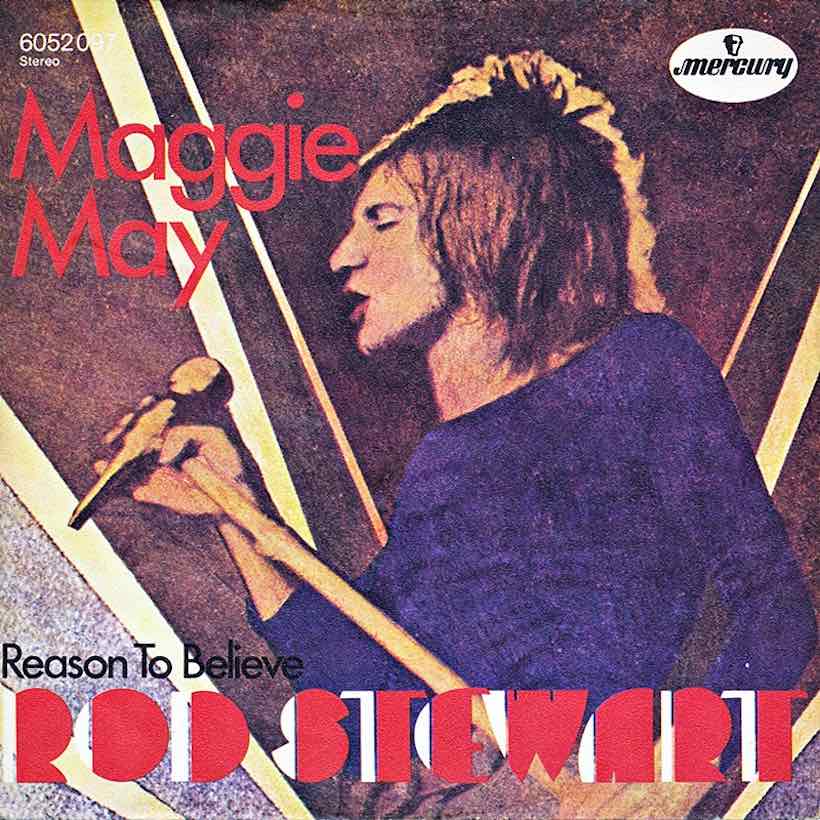
There is no real chorus in this song, but plenty of vocal and instrumental changes to keep it interesting. Running 5:46, it was considered an oddity with no hit potential and nearly left off the album. Stewart’s record company, Mercury, didn’t think it was a hit either, so used it as the B-side of the “Reason To Believe” single. Disc jockeys liked “Maggie” better, so they played it instead, forcing Mercury to put it out as a single. The first station to flip the single and play it as the A-side was WOKY in Milwaukee.
Ray Jackson, a British musician who played in the band Lindisfarne, played the mandolin on this song and on a few others for Stewart. In 2003, Jackson threatened legal action against Stewart, claiming he deserved a writing credit for his contribution. Jackson, who says he made just the standard £15 session fee for his work, stated: “I am convinced that my contribution to ‘Maggie May,’ which occurred in the early stages of my career when I was just becoming famous for my work with Lindisfarne, was essential to the success of the record.”
Stewart employed Jackson on subsequent recordings, but didn’t hear about his beef with the composer credit until the ’80s. Stewart’s retort (through a spokesman): “As is always the case in the studio, any musical contributions he may have made were fully paid for at the time as ‘work-for-hire.'”
Adding insult is Jackson’s credit on the album notes, which reads: “The mandolin was played by the mandolin player in Lindisfarne. The name slips my mind.”
Jackson never brought the case to court, but his threat did illuminate his contribution and help publicize his artistic endeavors.
The 32-second mandolin intro that appears on the album version was added later. Written and played by Martin Quittenton, it was listed as a separate song called “Henry” on UK versions of Every Picture Tells A Story. This was Stewart’s way of giving Quittenton a bonus: no matter the length, any song on an album earns royalties for the writer.
This section was excised from the single release, which still came in at 5:11, far longer than most hit singles.
When this became a hit, Stewart’s popularity surpassed that of his group, so Faces shows started being billed as “The Faces with Rod Stewart,” making him the focus.
Stewart moved to America a few years after this came out. He was doing very well there, but also wanted to avoid the huge taxes England levied on high-income entertainers. This was around the same time The Rolling Stones left England for tax reasons. Their album Exile on Main St. is a reference to their “tax exile” status.
To see Rod…go to the 13 second mark
Maggie May
Wake up, Maggie, I think I got something to say to you It’s late September and I really should be back at school I know I keep you amused, but I feel I’m being used Oh, Maggie, I couldn’t have tried any more
You led me away from home, just to save you from being alone You stole my heart, and that’s what really hurts
The morning sun, when it’s in your face really shows your age But that don’t worry me none in my eyes, you’re everything I laughed at all of your jokes, my love you didn’t need to coax Oh, Maggie, I couldn’t have tried any more
You led me away from home, just to save you from being alone You stole my soul, and that’s a pain I can do without
All I needed was a friend to lend a guiding hand But you turned into a lover, and, mother, what a lover you wore me out All you did was wreck my bed, and in the morning, kick me in the head Oh, Maggie, I couldn’t have tried any more
You led me away from home ’cause you didn’t wanna be alone You stole my heart, I couldn’t leave you if I tried
I suppose I could collect my books and get on back to school Or steal my daddy’s cue and make a living out of playing pool Or find myself a rock ‘n’ roll band that needs a helping hand Oh, Maggie, I wished I’d never seen your face
You made a first-class fool out of me But I’m as blind as a fool can be You stole my heart, but I love you anyway
Maggie, I wished I’d never seen your face I’ll get on back home one of these days Ooh, ooh, ooh
This track sums up the 70s Stones very well. Great riff, great tone, and great Mick Jagger vocal. This song and album were produced by Jimmy Miller who also played percussion on this track.
This song was on the album Sticky Fingers. The album peaked at #1 in the Billboard Album Charts, #1 in the UK and #1 in Canada in 1971.
The Stones played a shorter version of this song a few times before it was released on the Sticky Fingers album. These performances took place on their 11-date UK farewell tour before they left England to avoid taxes. After these shows, they didn’t play it live again until 2002, at which point they could bring alone plenty of musicians to support it.
Mick Taylor: “‘Can’t You Hear Me Knocking’ is one of my favorites. (The jam at the end) just happened by accident; that was never planned. Towards the end of the song I just felt like carrying on playing. Everybody was putting their instruments down, but the tape was still rolling and it sounded good, so everybody quickly picked up their instruments again and carried on playing. It just happened, and it was a one-take thing. A lot of people seem to really like that part.”
From Songfacts
This is an unusually long Stones track, running 7:14. Mick Jagger’s work is done by 2:45, however, as the groove plays out for the next four-and-a-half minutes. The Stones were experimenting with different styles around this time, and “Can’t You Hear Me Knocking?” has a distinct Santana influence.
This featured Bobby Keys on sax, Rocky Dijon on percussion, and Billy Preston on the organ. Keys, along with trumpet player Jim Price, joined The Stones on their 1970 European tour after performing on Sticky Fingers. His lengthy sax solo on this track wasn’t planned out, but once he got going, he kept blowing while the tape ran and Keith Richards loved it.
Probably best not to read too much into the lyrics of this one, since even Mick Jagger isn’t exactly sure what he wrote. As Robert Greenfield recounts in his book Ain’t It Time We Said Goodbye, shortly before the album was released, someone realized that the lyrics for this song and a few others had not been filed, making them impossible to copyright. Members of the Stones camp were dispatched to write down the words by listening to the acetate pressings, and on this song, the best they could come up with for one of the lines near the end was “I’ve got flatted feet, now.” Jagger insisted he didn’t write that line, but couldn’t remember what the real line was, so it stuck.
Andy Warhol designed the Sticky Fingers album cover. Before he started working on it, Mick Jagger send Warhol a note warning that a complicated design could cause nasty production delays, but nonetheless giving him total creative control. The artist responded with a cover that contained an actual working zipper, which of course was a production nightmare.
The cover, however, was one of the most memorable ever made. It showed a man wearing very tight jeans behind that working zipper – many folks assumed this was Mick Jagger, but it was actually Joe Dallesandro, a actor and Warhol cohort. Dallesandro appeared on the cover of the April 15, 1971 issue of Rolling Stone magazine; the album was released on April 23.
Jimmy Miller mixed records for The Spencer Davis Group and produced Steve Winwood’s next group, Traffic.
This was used in the movies Casino (1995), Blow (2001), Without a Paddle (2004) and The Fighter (2010).
Mick Taylor was lead guitarist for The Stones at the time. This was one of his earliest songs with the band – he replaced Brian Jones, who died in 1969.
This appears in the video game Guitar Hero II.
With mentions of “cocaine eyes” and “speed-freak jive,” this song contains some pretty obvious drug references, which makes sense considering the company the band was keeping at the time – pretty much everyone in their circle was doing drugs.
Can’t You Hear Me Knocking
Yeah, you got satin shoes Yeah, you got plastic boots Y’all got cocaine eyes Yeah, you got speed freak jive now
Can’t you hear me knockin’ On your window Can’t you hear me knockin’ On your door Can’t you hear me knockin’ Down your dirty street All right now
Help me baby I ain’t no stranger Help me baby I ain’t no stranger
Can’t you hear me knockin’ Are you safe asleep Can’t you hear me knockin’ Down your gaslight street Can’t you hear me knockin’ Throw me down the keys
Hear me ringin’ Big bell toll Hear me singin’ Soft and low I’ve been beggin’ On my knees I’ve been kickin’ Help me please
Hear me howlin’ I wanna take you down Hear me growlin’ Yeah, I got flatted feet now now now Hear me prowlin’ All around your street Hear me knockin’ All around your town
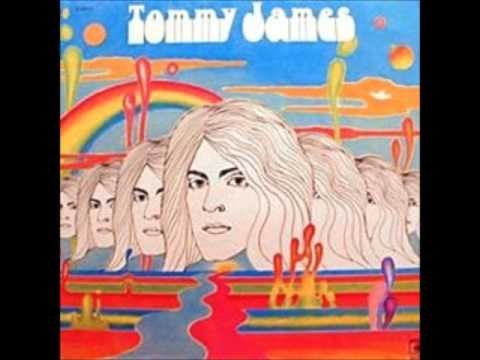
Draggin’ The Line was originally released on James’ second solo album, Christian Of The World. Draggin’ The Line wasn’t considered to be released as the single, and was ultimately was the B-side of the Church Street Soul Revival single. After DJs began playing the song, James went back into the studio to remix the record and add the horn charts. The song became James’ biggest solo hit peaking at #4 in the Billboard 100 in 1971.
Christian Of The World peaked at #131 in the Billboard Album Charts. Tommy’s backing band the Shondells were not on this record – the group broke up in 1970 and Tommy James continued to record as a solo artist.
Tommy James: “It’s almost like the bass guitar was speaking. And it just seemed to say ‘draggin’ the line’ to me. It’s weird. But we had the track before we had the song, and it was like the bass was speaking.”
“The line of ‘hugging a tree’ in there became kind of a slang expression for people who are interested in the ecology. ‘Tree Hugger’ came from that song.”
From Songfacts
In our interview with Tommy James, he explained: “‘Draggin’ The Line’ I wrote up at my farm in 1970, and it was with Bob King. My farm was in upstate New York, I had a couple hundred acres. It was a song I probably couldn’t have written in the city. We just kind of toyed with it. We wrote it, and it was a very repetitious track, and a very sort of hypnotic track. We had the track before we had the song. We went into the studio and just laid down, I don’t know, eight or ten bars of track. We looped it and looped it and looped it, and created the hypnotic rhythm. Bob played bass, Russ Leslie from Neon played drums, and I played guitar. And so we just created loops of tape based on this little riff, and when we had three-plus minutes of it put together we stopped, and then we wrote the song around the track. Second time I had ever done that – first one was “Mony” actually. ‘Draggin’ the Line’ just meant working every day. Nothing really very mysterious about it.”
Regarding the lyrics, “My dog Sam eats purple flowers,” James says: “I did have a cat named Sam – not a dog named Sam. He was a white Persian cat. That was just finding words that fit together (laughing) on a very mellow night, if you get my drift.”
Like many famous songs, this was not considered a hit at first. Says James: “The interesting thing about ‘Draggin’ the Line’ is it was originally the B-side, it was the flip-side of a record called ‘Church Street Soul Revival’ that I had out in 1970. And we put the record out, and the B-side got as much airplay as the A-side, and then finally more airplay. And so we could tell that radio wanted to go with ‘Draggin’ The Line.’ So we went into the studio and threw horns on it, and remixed it with more emphasis on the groove, and re-released it then as an A-side in 1971, and it went #1.”
Draggin’ The Line
Makin’ a livin’ the old, hard way. Takin’ and givin’ by day by day. I dig snow and rain and the bright sunshine. Draggin’ the line [draggin’ the line].
My dog, Sam, eats purple flowers. Ain’t got much, but what we got’s ours. We dig snow and rain and the bright sunshine. Draggin’ the line [draggin’ the line]. Draggin’ the line [draggin’ the line].
I feel fine. I’m talkin’ ’bout peace of mind. I’m gonna take my time. I’m gettin’ the good sign. Draggin’ the line [draggin’ the line]. Draggin’ the line [draggin’ the line].
Lovin’ the free and feelin’ spirit Of hugging a tree, when you get near it. Diggin’ the snow and rain and the bright sunshine. Draggin’ the line [draggin’ the line]. Draggin’ the line [draggin’ the line].
I feel fine. I’m talkin’ ’bout peace of mind. I’m gonna take my time. I’m gettin’ the good sign. Draggin’ the line [draggin’ the line]. Draggin’ the line [draggin’ the line].
Draggin’ the line [draggin’ the line]. La la la la la la la-la-la. Draggin’ the line [draggin’ the line]. La la la la la la la.
“Family Affair,” was on the album There’s A Riot Goin’ On and the last Sly & The Family Stone song to hit #1.
The song’s rhythm was provided by a drum machine, making it one of the earliest hit recordings and the first #1 single to use such a device. The song peaked at #1 in the Billboard 100, #1 in Canada, #15 in the UK, and #11 in New Zealand.
Sly did not use the Family Stone for this recording. His friend Billy Preston played the keyboard lines in the song with Sly also playing keyboard as well as guitar, bass, and programming the rhythm box. His sister Rose sang with him and Bobby Womack played rhythm guitar.
From Songfacts
According to Dave Marsh’s book 1001 Greatest Songs, Sly Stone’s manager told Rolling Stone that Family Affair was the story of Sly’s own life, which was being cut up by the factions that surrounded him in his stardom. Chief among those factions, David Kapralik hinted, was Sly’s own family. Sly denied this. He told Rolling Stone, “Song’s not about that. Song’s about a family affair, whether it’s a result of genetic processes or a situation in the environment.” There was a rumor at the time that Stone had written it in response to demands made on him by black nationalist groups, who didn’t approve of his integrationist sensibility.
According to the Rolling Stone’s 500 Greatest Songs, when There’s A Riot Goin’ On came out in 1971, a reporter mentioned the rumor that Sly Stone had played all the instruments himself, and he asked Sly just how much he played. “I’ve forgotten, man,” Stone said. “Whatever was left.”
Family Affair
It’s a family affair, it’s a family affair It’s a family affair, it’s a family affair
One child grows up to be Somebody that just loves to learn And another child grows up to be Somebody you’d just love to burn
Mom loves the both of them You see it’s in the blood Both kids are good to Mom “Blood’s thicker than mud”
It’s a family affair, it’s a family affair Newlywed a year ago But you’re still checking each other out Nobody wants to blow
Nobody wants to be left out You can’t leave, ’cause your heart is there But you can’t stay, ’cause you been somewhere else!
You can’t cry, ’cause you’ll look broke down But you’re cryin’ anyway ’cause you’re all broke down!
Another song that I first heard on the show Life On Mars.
This song peaked at #1 in the UK and #73 in the Billboard 100 in 1973.
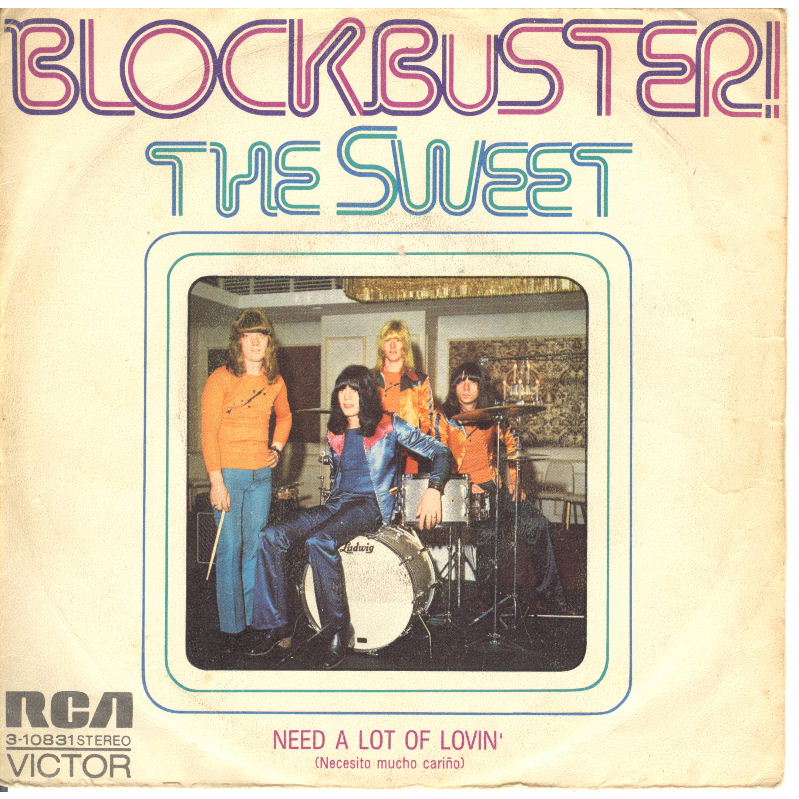
When I first heard it…I thought it had the same riff as David Bowie’s Jean Genie. The songs were recorded at roughly the same time and both Bowie and the Sweet agreed it was a coincidence. Both songs are takeoffs on a Muddy Waters riff.
Guitarist Andy Scott after being played Jean Genie : “We sat there with horrified looks on our faces. The guy asked what was wrong, and we said ‘That’s the same f—ing guitar riff as Blockbuster” He said, ‘Well, it’s quite similar isn’t it?’ ‘It’s the f—ing same!’
“I got on the blower to Nicky Chinn and said, ‘We can’t release this.’ He said, ‘Don’t worry, they’re completely different kinds of records and I predict this will be a number one.’ I thought, ‘Good luck with that.’ But he was proved right. A few weeks later, we were at number one and Bowie was at number two.”
From Songfacts
In December 1973, David Bowie’s “The Jean Genie” peaked at #2 in the UK charts. The following month, this song went one better going all the way to #1. Both songs used the same Yardbirds riff from Bo Diddley’s “I’m A Man.”
This proved to be The Sweet’s only British #1, and it stayed at the top for five weeks. Their next three releases stalled at #2: “Hell Raiser,” “Ballroom Blitz” and “Teenage Rampage.”
This song featured an air-raid siren over a decade before one was used on Frankie Goes To Hollywood’s “Two Tribes.”
This was used in the 2000 film Gangster #1.
The team of Mike Chapman and Nicky Chinn wrote this song. Chinn said in 1000 UK #1 Hits by Jon Kutner and Spencer Leigh, “Every part of a song is important and how you get into it is especially important. You have to catch the public’s attention the second that the record comes on. Look at Blockbuster with its siren. You catch the attention immediately.”
Blockbuster!
Ahh ahhh, ahh ahhh You better beware, you better take care You better watch out if you’ve got long black hair He’ll come from behind, you’ll go out of your mind You better not go, you never know what you’ll find Ahh ahh, ahh ahhh
Can’t look into his eyes, you’ll be surprised If don’t know what going on behind his disguse Nobody knows where buster goes He’ll steal your woman out from under your nose
Does anyone know the way, did we hear someone say (We just haven’t got a clue what to do) Does anyone know the way, there’s got to be a way To blockbuster
The cops are out, they’re running about Don’t know if they’ll ever be able to blockbuster out He’s gotta be caught, he’s gotta be taught ‘Cause he is more evil then anyone here ever thought
Does anybody know the way, did we hear someone say (We just haven’t got a aho) Does anybody know the way, there’s got to be a way To blockbuster
Does anybody know the way, did we hear someone say (We just haven’t got a clue what to do) Does anybody know the way, there’s got to be a way To blockbuster
This song is a guilty pleasure of mine that takes me back to childhood. It is an earworm but I can’t help but like it. The song and video are pure seventies. So put on your Keep On Trucking shirt, eat some fondue and listen to Mouth and MacNeal.
The song does have a good pop melody running through it.
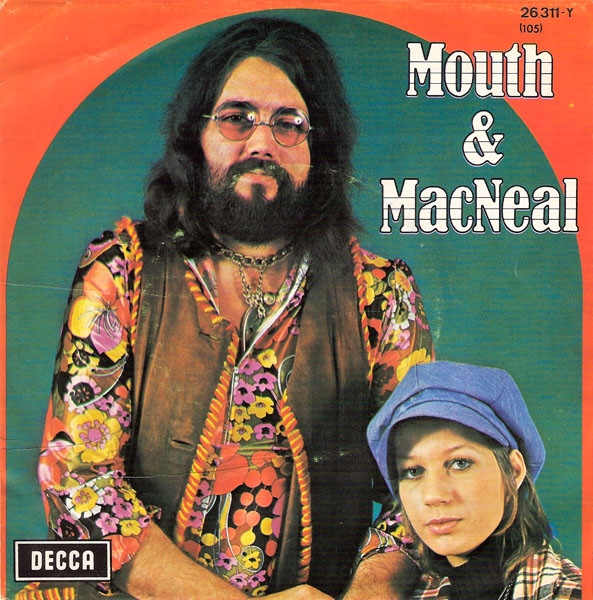
Mouth & MacNeal were Willem “Mouth” Duyn and Maggie MacNeal (real name Sjoukje Van’t Spijker), a pop duo formed in the Netherlands in 1971 by Hans van Hemert, a record producer who saw the value in adding two moderately successful solo artists to make one great team.
Mouth & MacNeal broke up soon after “How Do You Do?” to go back to their respective solo careers. Willem “Mouth” Duyn passed away from a heart attack in 2004 at age 67; Maggie MacNeal went on with her solo career.
The song peaked at #8 in the Billboard 100, #1 in New Zealand, and #2 in Canada in 1972.
From Songfacts
This is Mouth & MacNeal’s biggest claim to fame and their only hit in the US. To clear up some confusion, this song has nothing to do with Natasha Bedingfield’s 2007 “How Do You Do?” – give them both a listen, they’re completely different songs.
Mouth & MacNeal had a moderately successful career in Scandinavia and Europe, but never again charted in the US. Amongst their other notable hits were “I See a Star,” which hit #1 in Ireland, “Hey You Love,” which charted #5 in the Dutch Top 40, and “Hello-A.” They also made an appearance on the Eurovision Song Contest, once coming in third behind ABBA.
I want that hat and green vest…I mean who wouldn’t?
How Do You Do
Once I said I wanted you, I don’t remember why I often wonder if it’s true, that you could make me cry I only know it’s long ago, you said, I love you too But I got one solution left, we’re gonna start anew
How do you do? mmm mmm I thought why not, na-na, na-na Just me and you And then we can, na-na, na-na Just like before And you will say, na-na, na-na Please give me more And you will think, na-na, na-na Hey, that’s what I am living for
How do you do? hoe-hoe
Once I said I wanted you and I remember why I often wonder if it’s true, you still can make me cry And now it’s not so long ago, you said, I love you too ‘Cause I had one solution left and that’s to start anew
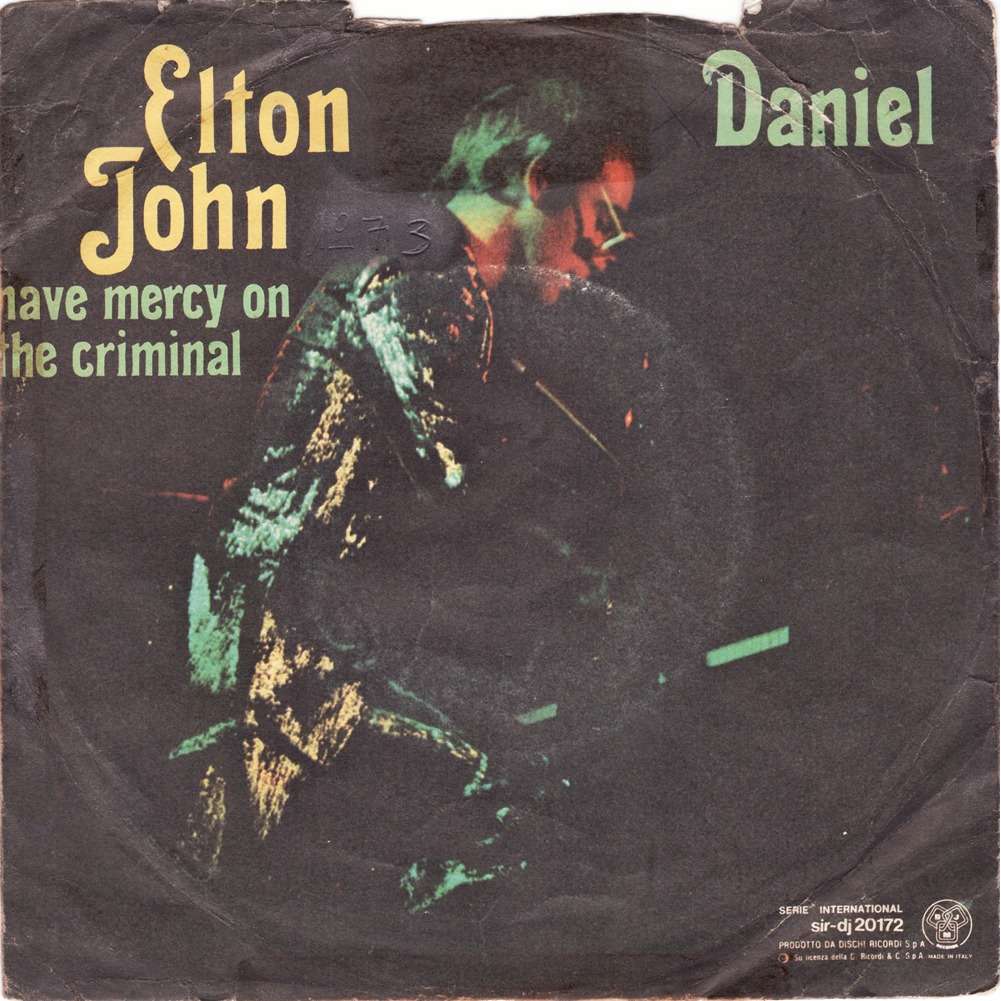
This is one of the first Elton John songs I remember hearing. It’s a great song that I wore out when I got his first greatest hits. The song was written by Bernie Taupin and Elton John.
The song peaked at #2 in the Billboard 100 in 1973. The song was off of the album Don’t Shoot Me I’m Only The Piano Player which peaked at #1.
When Elton wrote the music for this song, he chopped off the last verse because he thought the song was already too long. The deleted verse explained that “Daniel” was a Vietnam vet who returned home to the farm after the war, couldn’t find peace, and decided to leave America and go to Spain. With the last verse chopped off, it became a fairly vague story of two brothers who part ways, although Bernie Taupin says that losing the verse wasn’t a big deal.
Bernie Taupin: “We had that whole thing about the missing verse that everybody seems to believe explained the true meaning of the song. I think that’s just an urban legend. It didn’t really explain anything. Sure, it was cut out. But that used to happen all the time with our songs. I would often overwrite, and Elton felt it necessary to edit somewhat. But believe me, it didn’t say anything that the rest of the song didn’t say.”
From Songfacts
The lyrics were written by Bernie Taupin, Elton’s writing partner. He explained the inspiration on his web site: “I’d seen this article in Time magazine on the Tet Offensive. And there was a sidebar next to it with a story about how many of the soldiers that were coming back from ‘Nam were these simple sort of down home country guys who were generally embarrassed by both the adulation and, depending on what part of the country you came from, the animosity that they were greeted by. For the most part, they just wanted to get back to a normal life, but found it hard, what with all the looky loos and the monkeys of war that they carried on their backs.
I just took it from there and wrote it from a younger brother’s perspective; made him disabled and wanting to get away. I made it Spain, basically, because it rhymes with plane.”
This was written and recorded the same day at the the Chateau d’Herouville in France (the “Honky Chateau”), where Elton and his team retreated to make the album. Bernie Taupin wrote the lyrics one morning at the recording studio and brought them downstairs to Elton, who put music to it and recorded it with the band that day, doing just three takes.
Stowing away to France was Elton’s way of entering a creative environment free from distractions – there was no entourage and no phones. The Chateau could even keep the Black Knight at bay, as it was surrounded by a moat.
The result was part a very productive songwriting period for Taupin and John, who composed 12 songs over a four-day period, including “Daniel.”
Elton called this song “a calypso-type number with Everley Brothers-type harmonies.”
The record company didn’t want to release this as a single because they thought it was too long and somber to be a hit. Elton had other ideas, and insisted they release it as a single before the album came out. The record company did, but with very little promotion. It became a hit anyway.
According to Elton John: The Definitive Biography, here’s how the album got its title: While in Los Angeles, Elton was introduced to the legendary comedian Groucho Marx. They hit it off, but Groucho was always giving Elton a hard time about his name, insisting that he must have it backwards and really be John Elton. After Groucho refused to lay off the name thing at a party, Elton threw up his hands and said jokingly: “Don’t shoot me, I’m just the piano player.”
Bernie Taupin has told a different story, claiming that he found the phrase on a plaque at an American junk shop.
The engineer on the album, Ken Scott, played an ARP synthesizer on this track.
Bernie Taupin called this “the most misinterpreted song we’ve ever written,” saying he’s heard it called a gay anthem and a song about a family dispute.
Daniel
Daniel is traveling tonight on a plane I can see the red tail lights heading for Spain Oh and I can see Daniel waving goodbye God it looks like Daniel, must be the clouds in my eyes
They say Spain is pretty, though I’ve never been Well Daniel says it’s the best place that he’s ever seen Oh and he should know, he’s been there enough Lord I miss Daniel, oh I miss him so much
Oh oh, Daniel my brother you are older than me Do you still feel the pain of the scars that won’t heal? Your eyes have died, but you see more than I Daniel you’re a star in the face of the sky
Oh oh, Daniel my brother you are older than me Do you still feel the pain of the scars that won’t heal? Your eyes have died, but you see more than I Daniel you’re a star in the face of the sky
Daniel is traveling tonight on a plane I can see the red tail lights heading for Spain Oh and I can see Daniel waving goodbye God it looks like Daniel, must be the clouds in my eyes Oh God it looks like Daniel, must be the clouds in my eyes
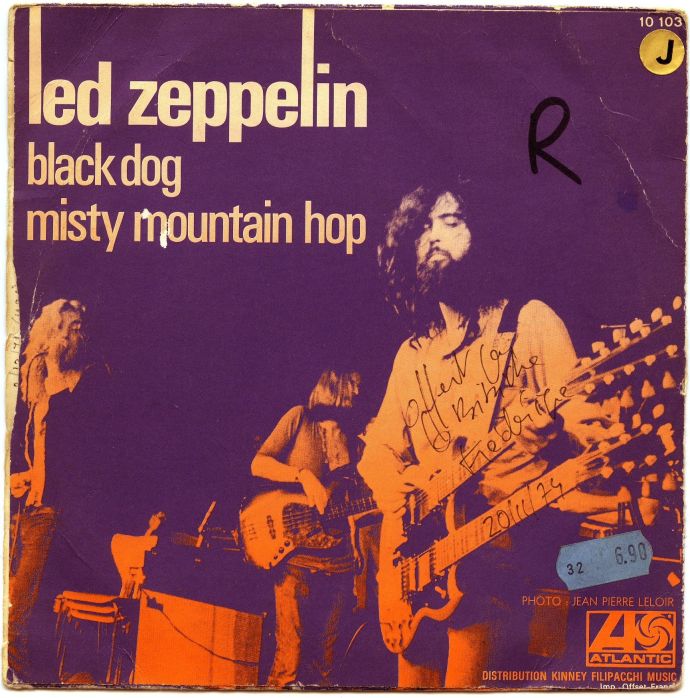
The song really kicks in when John Bonham enters. The song was released as the B side to Black Dog. Misty Mountain Hop didn’t chart but Black Dog did peak at #15 in the Billboard 100 in 1972. Led Zeppelin didn’t like releasing singles and only had 10 songs in the Billboard 100. They wanted fans to buy the complete album and listen to it in context with the other songs.
Led Zeppelin wrote and recorded this at Headley Grange, a mansion with a recording studio in Hampshire, England, where the band sometimes lived. Jimmy Page wrote the song one night while the rest of the band was sleeping.
The song was off the classic Let Zeppelin IV album that was also known as ZoSo, Ruins, 4 Symbols, and Untitled.
This song was about a love-in happening near London that the police came and broke up. Robert Plant said : “It’s about a bunch of hippies getting busted, about the problems you can come across when you have a simple walk in the park on a nice sunny afternoon. In England, it’s understandable, because wherever you go to enjoy yourself, ‘Big Brother’ is not far behind.”
From Songfacts
The Misty Mountains are in Wales. They are referred to in J.R.R. Tolkien’s The Return Of The King. Plant is a big fan of Tolkien and used references to the Lord Of The Rings series from time to time.
This begins with John Paul Jones playing electric piano.
Robert Plant found himself drawn to Wales and eventually settled in Worcestershire, England, near the Welsh border. “I missed the misty mountains – the wet Welsh climate,” he told Rolling Stone in 2017. “I like weather people run away from.”
The band performed this at the Atlantic Records 40th anniversary concert in 1988 with Jason Bonham sitting in on drums for his late father. They played it again with Jason at the 21st birthday party for Robert Plant’s daughter Carmen, and again in 2007 at a London benefit concert for the Ahmet Ertegun education fund.
The 4 Non Blondes recorded this for the 1995 Led Zeppelin tribute album Encomium. It was one of the last songs 4 Non Blondes recorded. They broke up while they were recording their second album.
Misty Mountain Hop
Walkin’ in the park just the other day Baby What do you what do you think I saw? Crowds of people sittin’ on the grass with flowers in their hair said “Hey Boy do you want to score?”
And you know how it is; I really don’t know what time it was woh oh So I asked them if I could stay awhile. I didn’t notice but it had got very dark and I was really
Really out of my mind. Just then a policeman stepped up to me and asked us said, “Please, hey, would we care to all get in line, Get in line.”
Well you know, They asked us to stay for tea and have some fun, Oh, oh, he said that his friends would all drop by, ooh. Why don’t you take a good look at yourself and describe what you see,
And Baby, Baby, Baby, do you like it? There you sit, sitting spare like a book on a shelf rustin’ Ah, not trying to fight it. You really don’t care if they’re coming, oh, oh,
I know that it’s all a state of mind, ooh. If you go down in the streets today, Baby, you better, You better open your eyes. Folk down there really don’t care, really don’t care,
Don’t care, really don’t Which, which way the pressure lies, So I’ve decided what I’m gonna do now. So I’m packing my bags for the Misty Mountains
Where the spirits go now, Over the hills where the spirits fly, ooh, I really don’t know.
This song was on arguably McCartney’s best album Band On The Run. It didn’t chart but it was released as the B side to the song Band on Run but it was played quite a bit on radio. One of my favorite McCartney album tracks.
Nineteen Hundred And Eighty-Five was never performed live by Wings, and only became part of McCartney’s live set in 2010.
Paul McCartney: With a lot of songs I do, the first line is it. It’s all in the first line, and then you have to go on and write the second line. With Eleanor Rigby I had ‘picks up the rice in the church where the wedding has been.’ that was the one big line that started me off on it. With this one it was ‘No one ever left alive in nineteen hundred and eighty-five.” That’s all I had of that song for months. ”No one ever left alive in nineteen hundred and eighty… six?’ It wouldn’t have worked!
Nineteen Hundred and Eighty-Five
On no one left alive in 1985, will ever do She may be right She may be fine She may get love but she won’t get mine ‘Cause I got you Oh, oh I, oh oh I
Well I just can’t enough of that sweet stuff My little lady gets behind (Shake it, baby, don’t break it)
Oh my mama said the time would come When I would find myself in, love with you I didn’t think I never dreamed That I would be around, to see it all come true Whoa oh oh I, oh oh I
Well I just can’t get enough of that sweet stuff My little lady gets behind
Ah no one left alive in 1985, will ever do She may be right She may be fine She may get love but she won’t get mine ‘Cause I got you Oh oh I, oh oh I
Well I just can’t get enough of that sweet stuff My little lady left behind
This is another song I heard for the first time on the 2006 British show Life On Mars. Slade never really broke America until the 80s with Run Runaway and Oh My My. Quiet Riot covered the Slade songs Cum On Feel The Noize and Mama, Weer All Crazee Now and had hits in the 1980s.
“Gudbuy T’Jane” was Slade’s follow-up to their hit single “Mama Weer All Crazee Now.” In his autobiography Who’s Crazee Now?, guitarist and lead vocalist Noddy Holder explained the inspiration for the song.
Jane was the co-host of a TV chat show in San Francisco whom Slade met on their US tour. They wrote the song in about half an hour, “one of the easiest songs we ever recorded.” The line, “Got a kick from her ’40s trip boots” is a reference to her kicking Holder up the backside when the band was having a laugh at her expense.
Jane had bought a pair of platform shoes which she called her “’40s trip boots,” and somehow managed to lose them. “She thought they were original ’40s shoes and she told us that she had paid a fortune for them,” he said. “She was a real loony, a typical San Francisco hippy.”
The song peaked at #2 in the UK and #68 in the Billboard 100 in 1972.
From Songfacts
Jim Lee came up with the title; Holder wanted to call it “Hullo T’Jane,” which doesn’t have the same ring to it. They recorded it in two takes, and, backed by the typically misspelled “I Won’t Let It ‘Appen Agen,” it was released on Polydor and went on to become a monster hit. The single was produced by Chas Chandler.
There was a second track on the A-side: “Take Me Bak ‘Ome.” The sheet music credits “Gudbuy T’Jane”: “Words and Music by Neville Holder and James Lea.” >>
This was kept off the UK #1 spot by Chuck Berry’s live recording of “My Ding-a-Ling.” Coincidentally, Slade was present at the Coventry gig where Berry’s hit was recorded.
Jim Lea recalled the story of the song to Classic Rock magazine: “I’d been round to Nod’s house and played ‘Gudbuy T’Jane’ to him, lyrics and all. He said, ‘S’alright.’ He was always very phlegmatic, had dodgy adenoids.”
“We had some time left at the end of the recording, so we put it down very quickly. Nod said he’d done something with the words on the train down. He started singing, ‘Hello to Jane, hello to Jane.’ I was mortified. He told me he thought that was a bit more optimistic – f–king hell. But with all of them, I knew when we were writing a hit.”
Gudbuy T’Jane
Goodbye to Jane, goodbye to Jane She’s a dark horse see if she can Goodbye to Jane, goodbye to Jane Painted up like a fancy young man She’s a queen, Can’t you see what I mean, she’s a queen, See, see, she’s a queen And I know she’s alright, alright, alright, alright
I say you’re so young, you’re so young I say you’re so young, you’re so young I say you’re so young, you’re so young
I said goodbye to Jane, goodbye to Jane Get a kick from her forties tip boots Goodbye to Jane, goodbye to Jane Has them made to match up to her suits She’s a queen, Can’t you see what I mean, she’s a queen, See, see, she’s a queen And I know she’s alright, alright, alright, alright
I say you’re so young, you’re so young I say you’re so young, you’re so young I say you’re so young, you’re so young
I said goodbye to Jane, goodbye to Jane Like a dark horse see how she ran Goodbye to Jane, goodbye to Jane Spits on me ’cause she knows that she can She’s a queen, Can’t you see what I mean, she’s a queen, See, see, see, she’s a queen And I know she’s alright, alright, alright, alright
I say you’re so young, you’re so young I say you’re so young, you’re so young I say you’re so young, you’re so young I say you’re so young, she’s alright, alright, alright, alright I say she’s so young, so young, alright, alright I say you’re so young …










 PowerPop... An Eclectic Collection of Pop Culture