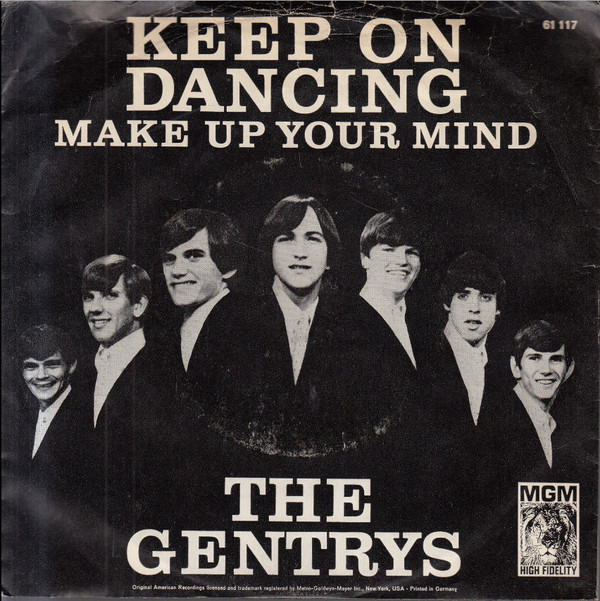
This song was written by Allen A. Jones and Willie David Young. The Gentrys were from Memphis and best known for this 1965 hit which rose to the Top 10 and became a million seller. It’s not a great song but it’s a fun one.
The song is interesting for the fact that it is actually one short recording repeated, to stretch the record out to the length of the typical pop single of its day. The second half of the song, after the false fade, beginning with Wall’s drum fill, is the same as the first. Many modern recordings today more or less use the same trick on songs.
Keep on Dancing peaked at #4 in the Billboard 100 in 1965. The Gentrys did manage an appearance in the 1965 movie It’s a Bikini World and kept releasing singles up to 1971 but they had no other top 40 single and the Gentrys disbanded.
I owned a Gentrys single before…they did a cover of Neil Young’s Cinnamon Girl which I placed below the Keep On Dancing video. It’s odd that its the same group that did Keep On Dancing.
I’m not a wrestling fan at all but this band included Jimmy Hart who would make his name as a bad guy wrestling manager.
Keep On Dancing
I keep on dancin’ (keep on) Keep on doin’ the jerk right now Shake it, shake it, baby Come on & show me how you work
Yellin’ in motion Keep on doin’ the locomotion, yeah Don’t worry, little babe Shake it, shake it, shake it, shake it, yes!
[Chorus:] Keep on dancin’ & a-prancin’ (ah) Keep on dancin’ & a-prancin’ (ah) Keep on dancin’ & a-prancin’ (ah)
[Organ Solo]
I keep on dancin’ (keep on) Keep on doin’ the jerk Shake it, shake it, baby Come on & show me how you work
Yellin’ in motion Keep on doin’ the locomotion, yeah Don’t worry, little babe Shake it, shake it, shake it, shake it, yes!
[Chorus:] Keep on dancin’ & a-prancin’ (ah) Keep on dancin’ & a-prancin’ (ah) Keep on dancin’ & a-prancin’ (ah)
[Organ solo, temporarily fadin]
I keep on dancin’ (keep on) Keep on doin’ the jerk right now Shake it, shake it, baby Come on & show me how you work
[Chorus:] Keep on dancin’ & a-prancin’ (ah) Keep on dancin’ & a-prancin’ (ah) Keep on dancin’ & a-prancin’ (ah)
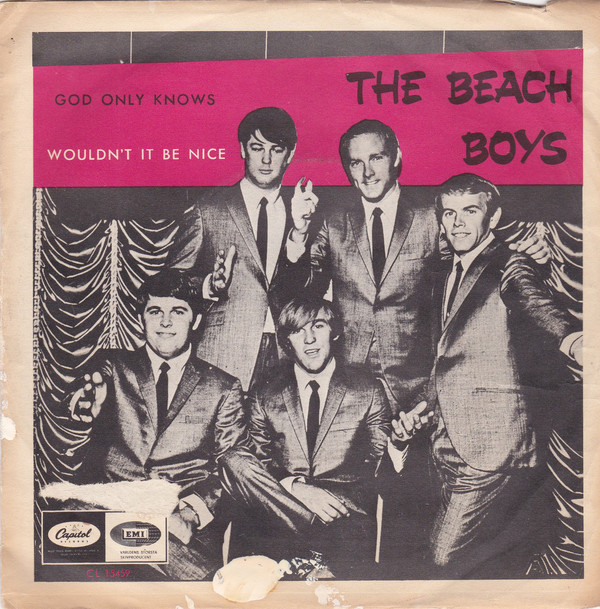
Simply a beautiful song written by Brian Wilson and Tony Asher. Carl Wilson sings lead on this song and it is an incredible vocal performance…one of the best in my opinion. The song peaked at #39 in the Billboard 100 and #2 in the UK in 1966. I still have a hard time believing it only made it to #39.
The Beatles’ “Here, There And Everywhere” was inspired by this song. John Lennon and Paul McCartney heard Pet Sounds at a party and went back to Lennon’s house to write it. Paul McCartney once called “God Only Knows” “The greatest song ever written.”
“God Only Knows” was voted 25th in Rolling Stone magazine’s 500 Greatest Songs of All Time,
Brian Wilson wrote this song with Tony Asher, who was an advertising copyrighter and lyricist that Wilson worked with on songs for Pet Sounds. This song reflects Wilson’s interest in spirituality, and it was a big departure from previous Beach Boys songs that dealt with girls, cars and surfing. Wilson explained to Goldmine in 2011: “Tony Asher and I tried to write something very spiritually. It’s got a melody similar to the song (recites lyric to ‘The Sound Of Music’), ‘I hear the sound of music…’ (Sings lyrics to ‘God Only Knows’) ‘I may not always love you…’ It was similar to it. Tony came up with the title ‘God Only Knows.’ I was scared they’d ban playing it on the radio because of the title but they didn’t.”
This song is considered a Beach Boys classic, but it only managed to scrape the Top 40 in the United States. That’s because it was released as a B-side, partly because of fear that radio stations would refuse to play a song with “God” in the title. In the liner notes to the reissued Pet Sounds album, Tony Asher explained, “I really thought it was going to be everything it was, and yet we were taking some real chances with it. First of all, the lyric opens by saying, ‘I may not always love you,’ which is a very unusual way to start a love song.”
Carl Wilson handled lead vocals on this track. Not long after the song was released, he said, “At present our influences are of a religious nature. Not any specific religion but an idea based upon that of Universal Consciousness. The concept of spreading goodwill, good thoughts and happiness is nothing new. It is an idea which religious teachers and philosophers have been handing down for centuries, but it is also our hope. The spiritual concept of happiness and doing good to others is extremely important to the lyric of our songs, and the religious element of some of the better church music is also contained within some of our new work.”
The famous French horn on this song was played by Alan Robinson, who appeared on the scores for many films, including The Sound of Music and The Ten Commandments. He got the call for the session because he could play without music written out. Brian Wilson sang him the horn line he had in mind, and Robinson played it by ear using a glissando technique suggested by Wilson.
Brian Wilson would sometimes introduce this as “the first song in the world to have God in the title.” God is common in hymns and standards (“God Bless America,” “Nearer, My God, to Thee”), and was rare in pop songs, but not unprecedented; in 1961 Johnny Burnette made #18 US with “God, Country And My Baby.”
Brian Wilson planned to sing the lead vocal himself, but decided that his brother Carl was better suited for the track. “I was looking for a tenderness and a sweetness which I knew Carl had in himself as well as in his voice,” said Brian.
This was featured at the end of the 2003 romantic comedy Love Actually. It was also used in the films Boogie Nights (P.T. Anderson’s drama about the porn industry) and Saved (a 2004 drama about a Christian high school, where there are two versions, both covers). >>
This was the theme song for the first three seasons of the HBO television series Big Love, which ran 2006-2011.
Asked by The Guardian which Beach Boys song took the least effort to write, Brian Wilson replied: “I wrote ‘God Only Knows’ in 45 minutes. Me and Tony Asher.”
In Al Kooper’s tell-all autobiography Backstage Passes and Backstabbing Bastards, Kooper talks about his evening visiting Brian Wilson only a week before Pet Soundshit the streets: “Brian played a test-pressing of the record, jumping up and stopping cuts in the middle and starting them over to emphasize his points. He was very proud of his accomplishment, maybe even a little show-offish, but I wasn’t about to argue. Do you remember the first time you heard ‘God Only Knows’?”
A cover version of the song was broadcast simultaneously across BBC television and radio channels on October 7, 2014 to launch BBC Music. The new adaptation featured Brian Wilson himself as well as various guest stars including Pharrell Williams, Sir Elton John, Lorde, Chris Martin, Stevie Wonder, One Direction and Dave Grohl.
Brian Wilson first toyed with the idea of titling this “Fred Only Knows” before settling on “God Only Knows.”
John Legend and Cynthia Erivo played this to bookend the “In Memorium” segment at the Grammy Awards in 2017. There were an extraordinary number of musical passings that year, David Bowie, Prince and George Michael among them.
God Only Knows
I may not always love you But long as there are stars above you You never need to doubt it I’ll make you so sure about it God only knows what I’d be without you
If you should ever leave me Though life would still go on, believe me The world could show nothing to me So what good would livin’ do me God only knows what I’d be without you
God only knows what I’d be without you
If you should ever leave me Though life would still go on, believe me The world could show nothing to me So what good would livin’ do me God only knows what I’d be without you
I first heard this song on an oldies station in the 80s. This song peaked at #11 in the Billboard 100 and #1 in the UK in 1968. The Foundations were a British Soul band that was active between 1967 to 1970.
When this was first released there appeared to be little enthusiasm for the single until BBC’s newly founded Radio 1 began to play it. The song got onto the station’s playlist mainly because they wanted to avoid any records being played by the pirate radio broadcasters, so they looked back at recent releases that the pirates had missed.
From Songfacts
The song’s co-writer Tony Macaulay recalls in 1000 UK #1 Hits by Jon Kutner and Spencer Leigh: “I woke up that morning with a stinking headache and when I got to the studio and heard The Foundations, I thought they were pretty terrible. I decided my hangover was to blame, and so I gave them the benefit of the doubt. The only song I could think of was something John McLeod and I had had for some time, ‘Baby Now That I’ve Found You.’ I didn’t have a lot of faith in the song but they recorded it with a lot of energy and I learned a lot from making that record.” It went on to become an international hit.
Clem Curtis, the lead vocalist of The Foundations recalls in the same book “Tony Macaulay gave us 2 songs. One was ‘Let The Heartaches Begin’ and the other was ‘Baby Now That I’ve Found You’ and we chose ‘Baby Now That I’ve Found You.’ Long John Baldry recorded the other one and that knocked us off the top.”
This was used in the 2001 film Shallow Hal.
This was the first song by a multiracial band to top the UK singles chart.
A cover version by Alison Krauss was featured in the 1997 Australian comedy, The Castle.
Baby Now That I’ve Found You
[Chorus] Baby, now that I’ve found you I can’t let you go I’ll build my world around you
I need you so Baby, even though you don’t need me You don’t need me.
[Chorus]
Baby, baby, since first we met (doot-doot) I knew in this heart of mine (I want to tell you, doot-doot) The love we had could not be bad (doot-doot) Play it right and bide my time
Spent a lifetime looking for somebody To give me love like you Now you’ve told me that you want to leave me Darling, I just can’t let you.
[Chorus: x2]
Spent a lifetime looking for somebody To give me love like you Now you’ve told me that you want to leave me Darling, I just can’t let you.
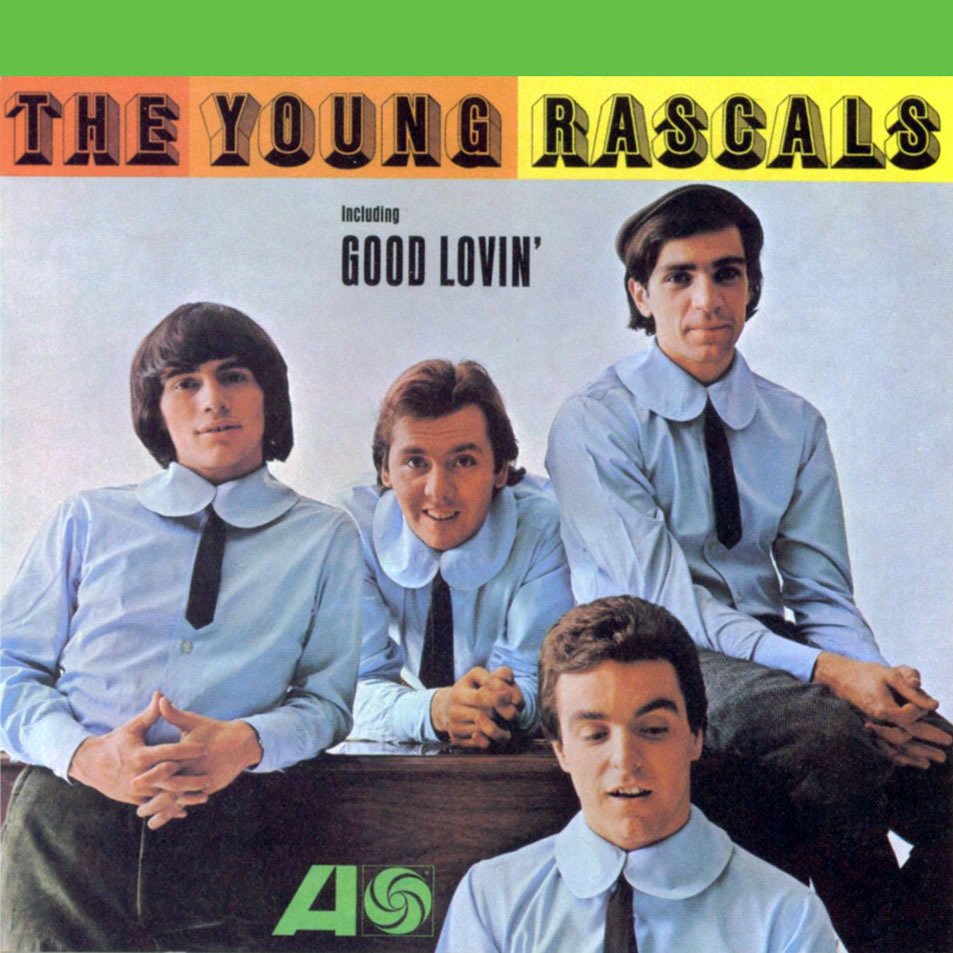
Great song by the Young Rascals and also covered by a number of artists. The song peaked at #1 in the Billboard 100 in 1966. This song was written by Rudy Clark and Arthur Resnick. It was originally recorded in 1965 by The Olympics, a novelty/doo-wop group who had hits with “Peanut Butter,” “Western Movies” and “Hully Gully.”
Felix Cavaliere of The Young Rascals was listening to a New York Soul station when he heard The Olympics version. The Rascals liked it and played a sped-up version at their live performances. They recorded the song for Atlantic Records, and although the group did not like the outcome, famed producer Tom Dowd loved the rawness of it and that version was released, becoming a huge hit.
The Young Rascals added the famous half spoken/half sung “One! Two! Three!” count-in, which was by Cavaliere.
According to Rolling Stone magazine, The Young Rascals were surprised by the success of this track. Felix Cavaliere admitted, “We weren’t too pleased with our performance. It was a shock to us when it went to the top of the charts.”
This was The Young Rascals first hit. They went on to achieve seven US Top 30 hits before becoming The Rascals in 1968. They disbanded in 1972 after recording five more American Top 30 songs.
I was feelin’ so bad, I asked my family doctor just what I had, I said, “Doctor, (Doctor ) Mr. M.D., (Doctor ) Now can you tell me, tell me, tell me, What’s ailin’ me?” (Doctor )
He said, “Yeah, yeah, yeah, yeah, yeah, (Yeah, yeah, yeah, yeah, yeah) Yes, indeed, all you really need (Is good lovin’) Gimme that good, good lovin (Good lovin’) All I need is lovin’ (Good lovin’) Good lovin’, baby.
Baby please, squeeze me tight (Squeeze me tight) Now don’t you want your baby to feel alright? (Feel alright) I said Baby (Baby) now it’s for sure (it’s for sure) I got the fever, Baby, Baby, but you’ve got the cure (You’ve got the cure)
I said, “Yeah, yeah, yeah, yeah, yeah, (Yeah, yeah, yeah, yeah, yeah) Yes, indeed, all I really need (Is good lovin’) Gimme that good, good lovin (Good lovin’) All I need is lovin’ (Good lovin’) Good lovin’, baby.
This is a hidden gem that was never released as a single in America. I first heard this on the Rock and Roll Music compilation album. Paul wrote this song (John and Paul both confirmed this) and his voice and melody are strong. He wrote it in the family home of his current girlfriend Jane Asher where Paul was living.
The song was originally on the “Help!” soundtrack and the album showed the growth the band was making. It’s not among the masterpieces of the Beatles but a very good pop/rock song. John Lennon is playing the electric keyboard (Hohner Pianet) on this song. The Beatles performed this on the Salisbury Plain in their second film, Help!. The album was released in 1965.
Lennon said that Paul and George played the same solo together but in different octaves.
The Night Before
We said our goodbyes, ah, the night before. Love was in your eyes, ah, the night before. Now today I find you have changed your mind. Treat me like you did the night before.
Were you telling lies, ah, the night before? Was I so unwise, ah, the night before? When I held you near you were so sincere. Treat me like you did the night before.
Last night is a night I will remember you by. When I think of things we did it makes me want to cry.
We said our goodbye, ah, the night before. Love was in your eyes, ah, the night before. Now today I find you have changed your mind. Treat me like you did the night before.
When I held you near you were so sincere. Treat me like you did the night before.
Last night is a night I will remember you by. When I think of things we did it makes me want to cry.
Were you telling lies, ah, the night before? Was I so unwise, ah, the night before? When I held you near you were so sincere. Treat me like you did the night before, Like the night before.
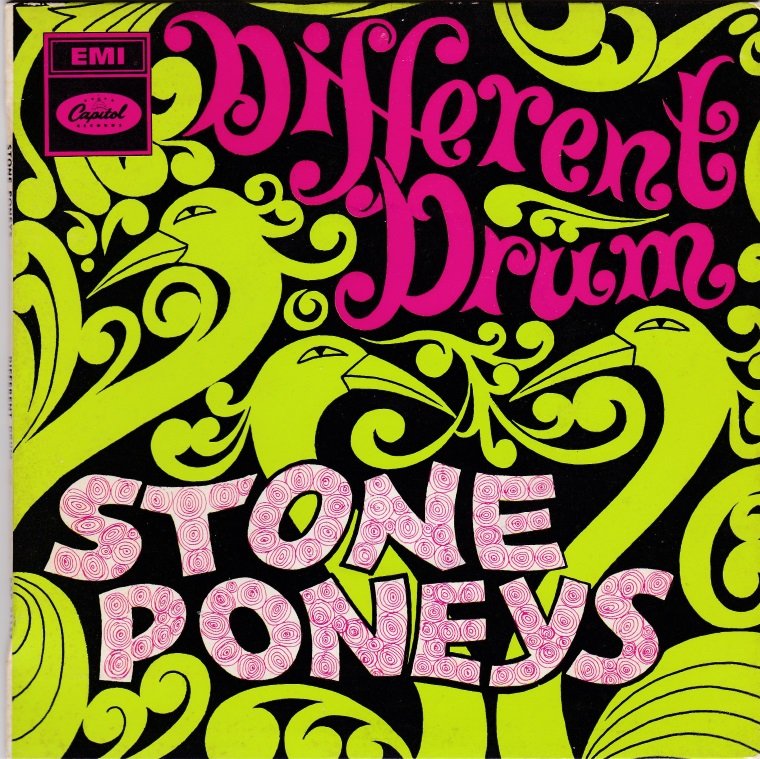
My favorite Monkee wrote this song. Micheal Nesmith wrote this song before he was picked to be a Monkee. At the time, he was developing his skills as a folk singer…a long way from what the Monkees turned into. In 1965, he met John Herald, guitarist for a bluegrass/folk group called The Greenbriar Boys. They played songs for each other, and Herald loved “Different Drum.” He brought it to his group, slowed down the tempo, and released it on the group’s 1966 album Better Late Than Never! Linda Ronstadt heard this version and recorded it with her group The Stone Poneys (named after the Charlie Patton song “Stone Pony Blues), this version is the best-known version of Different Drum.
This version peaked at #13 in the Billboard 100 in 1968. This would be their only top twenty hit. They stayed together a little while after this and even toured with the Doors with Jim Morrison who Rondstadt didn’t like too well. The Stone Poneys broke up and Rondstadt went solo.
Like “Me And Bobby McGee,” this is a song written and originally recorded by a guy that switched genders when a female recorded it. With a male narrator, the girl is tying him down, and he has to leave her to strike out on his own. With Ronstadt singing it, the girl become the one who is reigned in, and leaves her man so she can do her own thing. Notice that she ends up describing the guy as “pretty,” which makes a lot more sense when it was Nesmith singing about a girl.
In this song, Ronstadt is ready to bail on a relationship, claiming they are very different people and she doesn’t want to be tied down to one person anyway. It’s a variation of both the “I want to see other people” and the “It’s not you, it’s me” breakups. Mike Nesmith wrote it in character – he was newly married and his wife was pregnant.
The Monkees were given very little control of their musical output, which didn’t sit well with Mike Nesmith, who found out after he joined the ensemble that session musicians would be playing on their albums and hired guns would write their songs. Nesmith was a talented performer and songwriter, and he proved it with this tune, which he pitched for The Monkees. He explained in 1971: “Most of the songs I did write, they didn’t want, so on the last few albums I didn’t contribute much in the way of material. I took them ‘Different Drum’ and they said all it needed was a hook. They asked me to change it and told me it was a stiff.”
The Stone Poneys were a folk trio of Ronstadt, Kenny Edwards and Bobby Kimmel. They released their first album earlier in 1967, and it went nowhere. This song was included on their second album, Evergreen Volume 2, later that year and appeared to be headed toward a similar fate. In dire financial straits, the band was driving to a meeting with their record company when their car broke down on La Brea Avenue in Los Angeles. At the gas station where they ended up, they heard this song playing on the radio – it had been added to the playlist at KRLA-AM, a huge station in LA. Suddenly, they had a hit on their hands.
Their fortunes improved, but the song only took them so far. After one more charting single (“Up To My Neck In High Muddy Water” – #93) the band broke up. Ronstadt went solo and charted a few minor hits from 1970-1974, but landed a #1 in 1975 with “You’re No Good,” launching her to stardom.
Bobby Kimmel did most of the songwriting in The Stone Poneys, who generally shared vocals like Peter, Paul and Mary. These songs rarely suited Linda Ronstadt’s voice, but when she heard “Different Drum” by The Greenbriar Boys, she thought it was a perfect fit and a great opportunity to take a lead vocal.
Mike Nesmith played a short, intentionally awful version of this song on the “Too Many Girls” episode of The Monkees TV series. The episode aired December 19, 1966, which was shortly before Ronstadt released the song.
Fittingly, this song was far different than previous Stone Poneys material, and the male members of the group, Kenny Edwards and Bobby Kimmel, didn’t even play on it. Ronstadt envisioned the song as an acoustic piece, but their producer, Nick Venet, had different ideas. When the group showed up for the three-song session at Capitol Records’ Studio B in Los Angeles, there were a number of studio musicians there. Edwards and Kimmel played on two of the songs, but when it came time to record “Different Drum,” they watched from the control room as the seasoned studio pros worked up the song under Venet’s direction. Among the musicians:
Don Randi – harpsichord Al Viola – guitar Jimmy Bond – bass Jim Gordon – drums
There was also a string section conducted by Sid Sharp. Gordon and Randi also played on many of the Monkees recordings in place of the actual group.
Ronstadt did one run-through of the song before recording her vocal, start to finish, in the next take. As she developed her vocal talents, she came to hate the way she sounded on the song. “Today I will break my finger trying to get that record off when it’s on,” she said in the 2016 book Anatomy of a Song. “Everyone hears something in that song – a breakup, the antiwar movement, women’s lib. I hear a fear and a lack of confidence on my part. It all happened so fast that day.”
The Monkees were in their second (and final) season when this song reached its chart peak in January 1968. Mike Nesmith heard it for the first time on a Philadelphia radio station when the group was riding together in a limousine.
Nesmith recorded this himself in 1972 on a solo album called And The Hits Just Keep On Comin’. Nesmith had a substantial solo output after The Monkees TV series was canceled.
A Different Drum
You and I travel to the beat of a different drum Oh, can’t you tell by the way I run Every time you make eyes at me. Wo oh You cry and you moan and say it will work out But honey child I’ve got my doubts You can’t see the forest for the trees
Oh, don’t get me wrong. It’s not that I’m knockin’ It’s just that I’m not in the market For a boy who wants to love only me Yes, and I ain’t sayin’ you ain’t pretty All I’m sayin’s I’m not ready for any person, Place or thing to try and pull the reins in on me So goodbye, I’ll be leavin’ I see no sense in the cryin’ and grievin’ We’ll both live a lot longer if you live without me
Oh, don’t get me wrong. It’s not that I’m knockin’ It’s just that I’m not in the market For a boy who wants to love only me Yes, and I ain’t sayin’ you ain’t pretty All I’m sayin’s I’m not ready for any person, Place or thing to try and pull the reins in on me So goodbye, I’ll be leavin’ I see no sense in the cryin’ and grievin’ We’ll both live a lot longer if you live without me
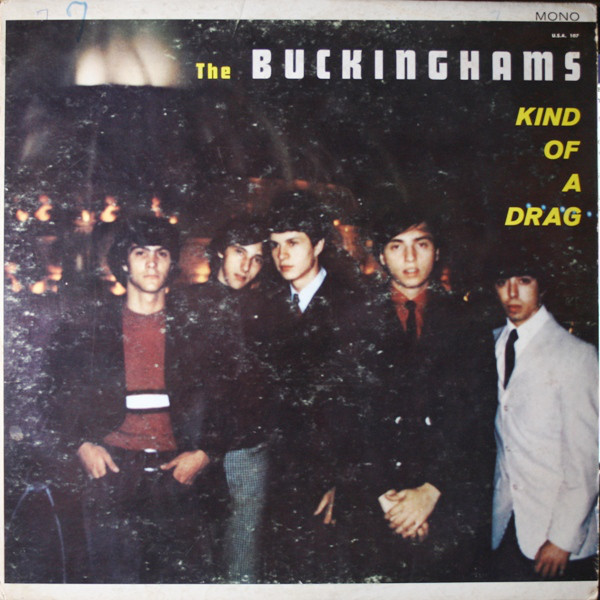
This song peaked at #1 in the Billboard 100 and #1 in Canada in 1967. This was an American band from Chicago that formed in 1966. They scored 3 top ten hits (#5 Mercy, Mercy, Mercy, #6 Don’t you Care and this song).
The Buckingham was a band from Chicago that formed in 1966. They were very successful in 1967 and 68 and broke up in 1970. They reformed in 1980 and are still together today.
“Kind of a Drag” was written by Jim Holvay, who was a friend of the band’s from Chicago. It is The Buckingham’s only #1 hit, although they peeked into the Top 10 twice more and charted a couple more times after that. Holvay went on to write “Don’t You Care,” “Susan” and “Hey Baby They’re Playing Our Song” for The Buckinghams.
Is that a song from the late-’60s/ early-’70s with a horn section? Then odds are good it’s produced by James William Guercio. Guercio produced both early Chicago and The Buckinghams, and the latter influenced the formation of Blood Sweat & Tears. Try playing “Kind of a Drag” back-to-back with “Saturday In The Park” (Chicago) and “You’ve Made Me So Very Happy” (BS&T).
Meet The Buckinghams: Dennis Tufano (vocals), Carl Giammarese (guitar), Martin Grebb (keyboard), Nick Fortuna (bass), Jon Poulos (drums). The band had dissolved by 1970, but a reunion has since taken place starting in 1980, with the only two original members now being Carl and Nick. Jon Poulos died from a drug overdose in 1980.
The Buckinghams had five charting hits, and they all occurred in 1967, prompting Billboard magazine to declare them “the most-listened-to band of the year.” So why did they fall off the map? In our interview with Tommy James, he explained that 1968 marked the emergence of album-oriented bands, with singles acts dying off. Said James: “When we left in August (1968, for the Democratic National Convention), all the big acts were singles acts. It was the Association, it was Gary Puckett, it was the Buckinghams, the Rascals, us. But the point was that it was almost all singles. In 90 days, when we got back, it was all albums. It was Led Zeppelin, Crosby, Stills and Nash, Blood, Sweat and Tears, Joe Cocker, Neil Young. And there was this mass extinction of all of these other acts. It was just incredible. Most people don’t realize that that was sort of the dividing line where so many of these acts never had hit records again.”
The modern-day version of The Buckinghams have risen to such heights as playing at President Barack Obama’s 2009 inauguration ball, and being inducted into the 2009 class of the Hit Parade Hall of Fame.
Kind of a Drag
Kind of a drag When your baby don’t love you Kind of a drag When you know she’s been untrue
Oh oh, listen to what I’ve gotta to say Girl, I still love you I’ll always love you Anyway, anyway, anyway
Kind of a drag When your baby says goodbye Kind of a drag When you feel like you want to cry
Oh oh girl, even though you make me feel blue I still love you I’ll always love you Anyway, anyway, anyway
Oh, listen to what I’ve gotta say Girl, I still love you I’ll always love you Anyway, anyway, anyway
This song never gets old. It has been recorded by many artists including David Bowie to a disco version by Amii Stewart. The song was written by Steve Cropper and Eddie Floyd. This song peaked at #28 in the Billboard 100 and #19 in the UK. It was released on Stax Records.
Stax Records boss Jim Stewart wasn’t a fan of this song, as he thought it was too similar to “In The Midnight Hour.” He didn’t release it until about six months after it was recorded. When he did, Cropper and Floyd did much of the promotion themselves, visiting radio stations to try to get airplay for the song.
Steve Cropper on the song: “We were trying to write a song about superstitions, and after we’d exhausted about every superstition known to man at that time, from cats to umbrellas, you name it, we said, what do people do for good luck? And Ed tapped on the chair and said, ‘knock on wood, there it is.’ So basically the whole theme of the song changed, and we started to sing about, I’d better knock on wood for good luck, that I can keep this girl that I got, because she’s the greatest – and that’s what it was about.”
This was Eddie Floyd’s biggest hit. He wrote the song with Stax Records guitarist Steve Cropper in the Lorraine Motel, which is where Martin Luther King Jr. was assassinated in 1968. Working late at night, they came up with the famous line, “It’s like thunder, lightning, the way you love me is frightening” when Floyd told Cropper a story about how he and his brother would ride out the storms in Alabama.
“In Alabama, man, there’s like thunder and lightning,” he told Cropper. “We’d hide under the bed because we’d be frightened of the thunder and lightning.”
Cropper liked this phrase and came up with the famous line.
The saying “Knock On Wood” is used to express gratitude for good fortune while humbly acknowledging that it might not continue: “My back has been feeling better ever since I gave up spearfishing… knock on wood.” This is often accompanied by the speaker actually tapping on any nearby (and preferably wooden) surface.
In the song, Eddie Floyd is knocking on wood because he’s so lucky to have found the girl of his dreams.
This song has one of the most effective pauses in music history: After Floyd sings, “I better knock,” there’s some space before drummer Al Jackson comes in with his drumbeats and Floyd completes the line with “on wood.”
This section wasn’t planned – Jackson came up with the idea of putting the pause in and simulating the sound of knocking on a door to break up the line. This little flourish made the song very memorable.
A disco version by Amii Stewart was a #1 hit in 1979. It was the only hit for Stewart, who was also a dancer and actress – she starred in the Broadway musical Bubbling Brown Sugar. The innovative arrangement of her version inspired Jay Graydon’s production of The Manhattan Transfer’s “The Boy From New York City.”
Says Graydon: “There was a re-release of ‘Knock On Wood’ that was fantastic. And some guy played a triplet guitar part in it. I decided to borrow the idea because professionals borrow where amateurs steal. (laughs) So I was borrowing the concept… with different notes that I played, of course, And that was the secondary hook of the song.” (read more in our interview with Jay Graydon)
The intro, with horns and guitar, is similar to another hit for Stax Records: “In The Midnight Hour” by Wilson Pickett. The guitar lines in both songs are deceptively simple. Steve Cropper explained on his website: “It’s a little school-of-guitar thought that I called ‘follow the dots.’ Basically, you look down on the front markers of the guitar and just kind of follow them out and you can come up with the intro of either ‘In The Midnight Hour’ or the intro of ‘Knock On Wood’ depending on where you start. It was kind of funny that sometime after ‘In The Midnight Hour’ had been a hit, I was laughing that we had always put a lot of pride in our intros at Stax, and you could tell it meant a lot because the hits were pretty identifiable – the old game of name that song in one note, and usually you’d get it right off of the intro before the lyrics start. This is one of those cases. We just thought it was funny and I hit it. Eddie said, ‘man, that’s it!’ That’s how the intro to ‘Knock on Wood’ came about.”
After Eddie Floyd and Steve Cropper wrote this song at the Lorraine Motel, they called trumpet player Wayne Jackson, who was doing a gig 10 minutes away in West Memphis, and asked him to come by to work on the horn lines before their session the next morning. He came by around 2 a.m., and an hour later they had the horn lines written and ready to go. At the session, they didn’t have to spend time working up the song because it was already prepared.
This song confused British listeners a bit, as the phrase “knock on wood” in not in their vernacular. In England, the expression is “touch wood.”
According to Eddie Floyd, it was Isaac Hayes, a regular at Stax Records, who came up with the bridge, which ended up being played on a saxophone.
The soul singer Tyrone Davis released a slower version of this song in 1969 on his album Can I Change My Mind.
Otis Redding recorded the song as a duet with Carla Thomas (credited to “Otis & Carla”). Their version went to #30 in 1967.
The Stax house band – Booker T. & the MG’s – provided backing on this track. Isaac Hayes played the piano.
Knock on Wood
I don’t want to lose you, this good thing That I got ’cause if I do I will surely, Surely lose a lot. Cause your love is better Than any love I know. It’s like thunder and lightning, The way you love me is frightening. You better knock, knock on wood, baby.
I’m not superstitious about ya But I can’t take no chance. I got me spinnin’, baby, You know I’m in a trance. ‘Cause your love is better Than any love I know. It’s like thunder and lightning, The way you love me is frightening. You better knock, knock on wood, baby.
It’s no secret, That woman is my loving cup ‘Cause she sees to it That I get enough. Just one touch from here, You know it means so much. It’s like thunder and lightning, The way you love me is frightening. You better knock, knock on wood, baby.
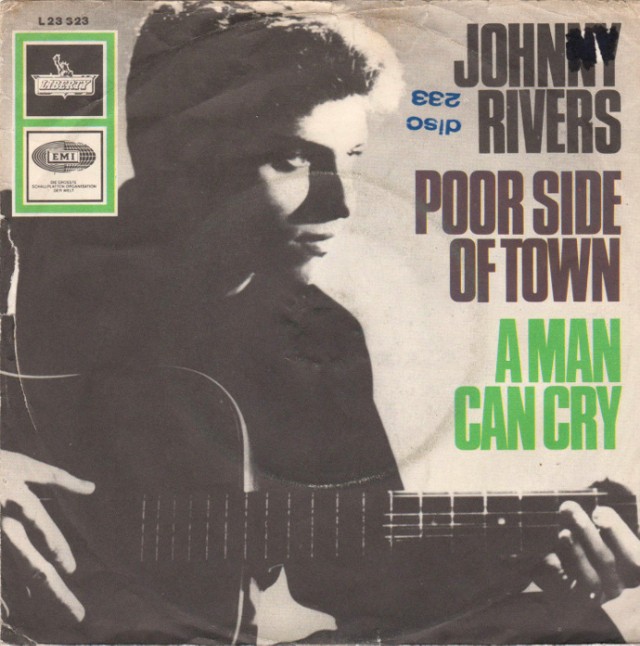
This song has always stuck with me because of that odd guitar riff. The song was written by Johnny Rivers and Lou Adler. Johnny had 29 songs in the top 100, 9 top ten hits, and one number one song. This is the one chart-topper Rivers achieved. It hit #1 in the Billboard 100 in 1966.
The song was on his Changes album that peaked at #33 in 1967. With this album, he moved into a more soulful, contemporary direction with his music. Instead of basic guitar-bass-drums, he added orchestral sounds from horns and strings.
This is Johnny Rivers’ only American chart topper. He co-wrote it with Lou Adler. Marty Paich, who arranged for Mel Torme and Ray Charles, did the string arrangement.
Johnny Rivers: “I had this tune I’d been working on, and I kept playing it for Lou. It took me about 6 months to finish. We cut it with Larry Knechtel, Joe Osborn and Hal Blaine. I did my vocal performances live with the band. I sat and played my guitar and sang. There weren’t any overdubs. So we said it could use some singers and maybe some strings. That’s the time we got together with (arranger) Marty Paich.”
This was a change of direction for Johnny Rivers, who had tired of the upbeat Go-Go sound that provided him with his early hits. However, he found his record company reluctant to tamper with a winning formula. He recalls, “Al Bennett and those guys were goin’ Man. don’t start comin’ out with ballads. You’re gonna kill your career. You got a good thing goin’ with this funky trio rock sound, stay with that.”
Poor Side of Town
How can you tell me how much you miss me When the last time I saw you, you wouldn’t even kiss me That rich guy you’ve been seein’ Must have put you down So welcome back baby To the poor side of town
To him you were nothin’ but a little plaything Not much more than an overnight fling To me you were the greatest thing this boy had ever found And girl it’s hard to find nice things On the poor side of town
I can’t blame you for tryin’ I’m tryin’ to make it too I’ve got one little hang up baby I just can’t make it without you
So tell me, are you gonna stay now Will you stand by me girl all the way now Oh with you by my side They just can’t keep us down Together we can make it girl From the poor side of town
(So tell me how much you love me) (Come be near to me and say you need me now)
Oh, with you by my side This world can’t keep us down Together we can make it baby From the poor side of town
I owned a softrock compilation album with this song and It’s So Nice To Be With You on it. Bend Me, Shape Me peaked at #5 in the Billboard 100 in 1968. The group was formed in Cicero, Illinois as Gary & The Knight Lites. The founding members included Gary Loizzo- vocals and guitar, Charles Colbert, Jr.- bass guitar and vocals, Al Ciner- guitar and vocals, and Jim Michalak on drums.
This was originally recorded in 1967 by The Outsiders, who were known for their hit “Time Won’t Let Me.”
This was written by songwriters Scott English and Larry Weiss. Larry Weiss later wrote “Rhinestone Cowboy.”
The song is about a guy who is so enamored with a girl that he will let her do whatever she wants to him as long as she continues to love him.
In the UK this was a #3 hit in 1968 for Amen Corner. The following year they went to the top of the UK charts with “(If Paradise Is) Half As Nice.”
Bend Me, Shape Me
You are all the woman I need, and baby you know it, You can make this beggar a king, a clown or a poet. I’ll give you all that I own. You got me standing in line Out in the cold, pay me some mind. Bend me, shape me Anyway you want me, Long as you love me, it’s all right Bend me, shape me Anyway you want me, You got the power to turn on the light. Everybody tells me I’m wrong to want you so badly, But there’s a force driving me on, I follow it gladly. So let them laugh I don’t care, Cause I got nothing to hide, All that I want is you by my side. Bend me, shape me Anyway you want me, Long as you love me, it’s all right Bend me, shape me Anyway you want me, You got the power to turn on the light. Bend me shape me anyway you want me
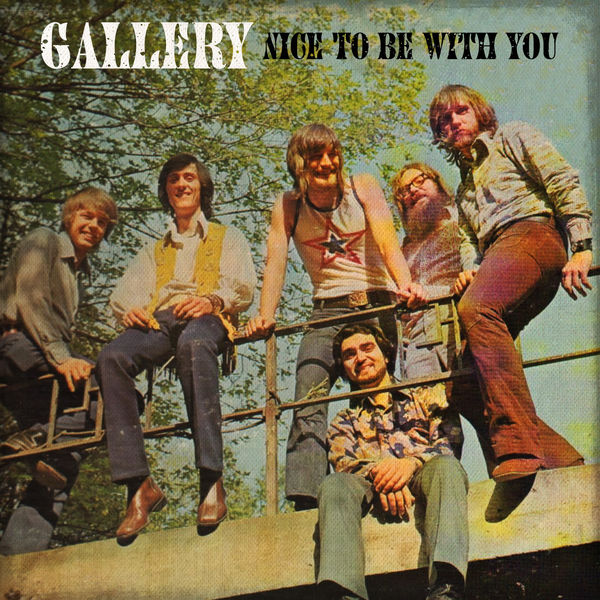
I had this song on a compilation album I had when I was around 18. Gallery was a 1970s American rock band, formed in Detroit, Michigan by Jim Gold. While they did record a number of songs, they are most famous for this 1972 hit single. They are a true one-hit wonder.
The song peaked at #4 on the Billboard 100 and #1 in Canada in 1972.
They had another hit as well as pointed out by a commenter…it was “I Believe In Music”, written by Mac Davis. It peaked at #22 on the Billboard 100 and #5 in Canada in 1972.
It’s So Nice To Be With You
Oh, it’s so nice to be with you I love all the things ya say and do And it’s so nice to hear you say You’re gonna please me in every way Honey, I got the notion you’re causin’ commotion in my soul
Baby, you and me have got somethin’ that’s real I know it’s gonna last a lifetime Aw, ya better believe it, girl at night I call your name Darkness fills my room, I’m only dreamin’ About the time I’m gonna be with you
Oh, it’s so nice to be with you I love all the things ya say and do And it’s so nice to hear you say You’re gonna please me in every way Honey, I got the notion you’re causin’ commotion in my soul
When I’m feelin’ down You’re there to pick me up and help me to carry on Aw, little things mean a lot when you need a shoulder to cry on I’m there to ease the pain and chase away the rain Aw, darlin’, I just gotta say
Oh, it’s so nice to be with you I love all the things ya say and do And it’s so nice to hear you say You’re gonna please me in every way
Oh, it’s so nice to be with you I love all the things ya say and do And it’s so nice to hear you say You’re gonna please me
This song has a gritty garage sound to it. There were many 1960’s garage bands that formed after The Beatles appeared on Ed Sullivan. The Seeds were formed in 1965 by Sly Saxon. Saxon wrote, “Pushin’ Too Hard” while sitting in the front seat of a car waiting for his girlfriend to finish grocery shopping at a supermarket. The song peaked at #36 in the Billboard 100 in 1967. The song is simple and repetitive but catchy in its own way.
Everyone’s list will be different but classic rock radio has just overplayed these songs. It does not mean I don’t/didn’t like the song to begin with…some I didn’t…some I did… There are more than this but I kept it at 20. No need for me to post youtube links…just turn on a classic rock station and they will come to you.
I’ve tried to keep it one per band or artist. The order of these is not really important…you could pull them out of a hat and be just as well. Sometimes the artists have other hits that you don’t hardly hear but no… they stick to the old reliables.
Radio has ruined these for me. Yes, I’m older and have heard them more than some other people but my 18-year-old son suggested a few of them.
Taking Care of Business – Bachman Turner Overdrive – I liked this song at one time…Now I would pull a hamstring getting up to turn it off.
Hotel California – Eagles – I still like the solos at the end with Joe Walsh and Don Felder but the rest I can do without.
More Than A Feeling – Boston – At one time it was refreshing and different. Radio has worked this song like the town pump.
In The Air Tonight– Phil Collins (just one of many) His songs saturated the market so much in the 80s that is was enough for 3 lifetimes
Jukebox Hero – Foreigner – I know huge Foreigner fans but I’m not one of them. This one I know more than I should.
Feel Like Making Love– Bad Company – Not a well-written song to begin with…it doesn’t get better with more spins. They have good songs…Painted Face, Crazy Circles but they don’t get played as much.
Don’t Stop Believing– Journey – Yes it’s catchy and an eighties theme…it fit at the end of the Sopranos…but I can do without it.
Start Me Up – Rolling Stones – Oh how I loved this song when it was released. I liked it a decade later…until Microsoft used it and since then you would think it was the Stones only song.
Tom Sawyer – Rush – See number 5
The Joker – Steve Miller – Hanspostcard says it all.
Money – Pink Floyd – Great band and they have so many others they could play.
Roundabout – Yes – When I hear the octave on the guitar I spin the dial like a top to another station.
Sweet Home Alabama – Lynyrd Skynyrd – In the south where I live this song is required listening…. over and over and over…They have better songs…
Sharp Dressed Man – ZZ Top – I loved the video, the car, and the girls in the video but the song no more. How about the older ZZ Top?
Bad to the Bone – George Thorogood & the Destroyers – In high school alone I heard it enough.
Old Time Rock and Roll– Bob Seger – The first 5 times I heard it…I liked it…but after the 1, 855th time…no more.
Stairway to Heaven – Led Zeppelin – It’s been played backward, forward and sideways…and the hidden message is the same…a worn out masterpiece.
Barracuda – Heart – This and Magic Man are like the bookends of worn out songs.
Black Water – Dobbie Brothers – I’ve never bought a record by them and they had great musicians in that band…but this is nauseatingly overplayed
You Give Love a Bad Name – Bon Jovi – Not for me the first time or the many times after…in cars, shopping centers, and grocery stores.
To be fair…there are songs that are worn out but yet I still listen to… Who Are You, Baba O’Riley, Hey Jude, Lola, Paint It Black, Brown Eyed Girl…
The first time I heard this song was the Dave Clark Five’s version. It was written by Motown president Berry Gordy Jr, who wrote it for The Temptations, but they failed to arrive for the recording session. At the same time but in a different Motown studio, The Contours arrived to record “It Must Be Love,” but Gordy had other ideas – he asked them to cut “Do You Love Me” instead. The song became one of Motown’s first hits.
The song peaked at #3 in the Billboard 100 in 1962. This would be The Contours last top 40 hits although they would place 8 songs in the top 100.
From Songfacts
Joe Billingslea of The Contours told Mojo magazine February 2009 the story of this song: “We had just left the record hop and we turned at the studio. The doors were always open in those days. Berry was down there at the piano and he said ‘I want you to try this song I’m writing.’ He told us how he wanted the backgrounds to go and we sang it. ‘Try it again, I didn’t quite like it,’ he said. After about the third time he said, ‘That’s not right. I think I’ll give it to The Temptations instead.’ I told him not to. We did it again and he said, ‘That’s exactly how I want it. Come in tomorrow morning, we’re going to record it.’ So we did.
I didn’t like the song. It reminded me of ‘Twist And Shout.’ I said: ‘This song ain’t gonna do nothin’, man.’ That same week it was released and the following week it made the charts. I turned around and said: I love that song! Did I change my opinion? Of course! We realized later that The Temptations could never have sung that song because it wasn’t suited to them but Berry had motivated us to sing it the way he wanted it.”
This song peaked in popularity just as Motown launched their first “Motortown Revue” tour to showcase their acts. The Countours were stars of the show, igniting crowds with “Do You Love Me.” Lower on the bill were some other Motown acts that had yet to hit, including Marvin Gaye, Little Stevie Wonder, and The Supremes.
After being featured in the 1988 movie Dirty Dancing, this was re-released 26 years after it was originally recorded. This time, it charted at #11. The song was a good fit for Dirty Dancing, which despite featuring some modern, original songs, was set in 1963. This was a great song of that era for a dance scene.
The Dave Clark Five recorded this in 1964 as the British Invasion was underway. Their rendition hit #11 in the US. On March 8, 1964, The DC5 played it on the first of their 12 appearances on The Ed Sullivan Show.
In his autobiography To Be Loved, recalls a confrontation with Motown’s primary bass player, James Jamerson, over this song. Jamerson, who is lauded as a creator of the Motown sound, was playing a jazz beat during the session despite Berry’s instructions. “You’ve got to stay on the f–kin’ downbeat,” Berry told him, hoping he wouldn’t have to kick his star bassist out of the session. When they rolled for the next take, Jamerson did as instructed, playing the Pop groove Gordy requested… until Berry took his eyes off him. “In that split second, Jamerson hit four or five Jazz upbeats in rapid succession,” Gordy recalled. “I turned to let him have it, but before I could say anything he had jumped back on the downbeat so brilliantly I could only smile.”
In 1963, London group Brian Poole And The Tremeloes recorded a version that topped the charts in 16 countries including the UK.
This song featured in a 2016 Pepsi commercial starring Janelle Monáe. In the spot, which debuted during the Super Bowl, Monáe dances to the song before entering another room where she goes through a time warp and joins in the celebration to Madonna’s “Express Yourself.”
Do You Love Me
You broke my heart ’cause I couldn’t dance, You didn’t even want me around And now I’m back to let you know I can really shake ’em down
Do you love me? (I can really move) Do you love me? (I’m in the groove) Now do you love me? (Do you love me now that I can dance?) Watch me, now (Work, work) ah, work it out baby (Work, work) well, I’m gonna drive you crazy (Work, work) ah, just a little bit of soul, now? (Work) Now I can mash potatoes (I can mash potatoes) I can do the twist (I can do the twist) Tell me, baby, do you like it like this? Tell me (tell me) tell me
Do you love me? Do you love me, baby? Now do you love me? (Do you love me now that I can dance?) Watch me, now (Work, work) ah, work it out baby (Work, work) well, I’m gonna drive you crazy (Work, work) you are getting kind of cold, now (Work) (Work, work) with just a little bit of soul, now ? (Work, work) come on, come on now (Work, work) I’m gonna drive you crazy (Work) I can mash potatoes I can do the twist Well now, tell me, baby, do you like it like this? Tell me (tell me) tell me
Do you love me? Do you love me, baby? Do you love me? Do you love me? Now that I can dance (Work, work) ah, work it out baby (Work, work) well, I’m gonna drive you crazy (Work, work) oh you are getting kind of cold, now (Work) (Work, work) with just a little bit of soul, now (Work, work) now don’t you get kinda bold, now? (Work, work) oh, work it out, baby
Bono once said before playing the song “This is a song Charles Manson stole from The Beatles, well we’re stealin’ it back.” Charles Manson did, in fact, hijack the song from the Beatles. The song is about an amusement park attraction (not a coded message to Charlie). A “Helter Skelter” is an amusement ride popularized mostly in the U.K. with a slide built in a spiral around a high tower. Paul McCartney read an interview with Pete Townshend saying that the Who just recorded the loudest, rawest and dirtiest song ever…it was “I Can See For Miles.” A great song… but not what Townshend described it as exactly…
Paul then started to write a song that fit that description and went above it. Helter Skelter was recorded with all four Beatles in studio two with their amps on 11. It’s a great brutal hard rock song. It was one of the rawest songs ever released by a well-known band at that time. If I hear someone call the Beatles only a pop band…I just point them to this song. Covers of this song range from Motley Crue who despite their image their version sounds light compared to this, Pat Benatar version is not up to this one…U2’s version tries but no version gets close to the Beatles version in rawness. Some credit this song as one of the inspirations of Heavy Metal…
This song fits great on the White Album. The album is the most diverse the Beatles ever made. On the same album, you have Helter Skelter, Rocky Racoon, Sexy Sadie, Honey Pie, Back In The USSR, Blackbird, While My Guitar Gently Weeps, Revolution Nine and many more.
Helter Skelter
When I get to the bottom I go back to the top of the slide Where I stop and I turn and I go for a ride Till I get to the bottom and I see you again
Yeah, yeah, yeah, heh, heh, heh, heh But do you, don’t you want me to love you? I’m (Ahhh) coming down fast but I’m miles above you (Ahhh) Tell me, tell me, tell me, come on tell me the answer
Well, you may be a lover but you ain’t no dancer Now Helter skelter
Helter skelter Helter skelter Yeah! Woo!, hoo!
A Will you, won’t you want me to make you? (Ahhh) I’m coming down fast but don’t let me break you (Ahhh)
Tell me, tell me, tell me the answer You may be a lover but you ain’t no dancer








 PowerPop... An Eclectic Collection of Pop Culture