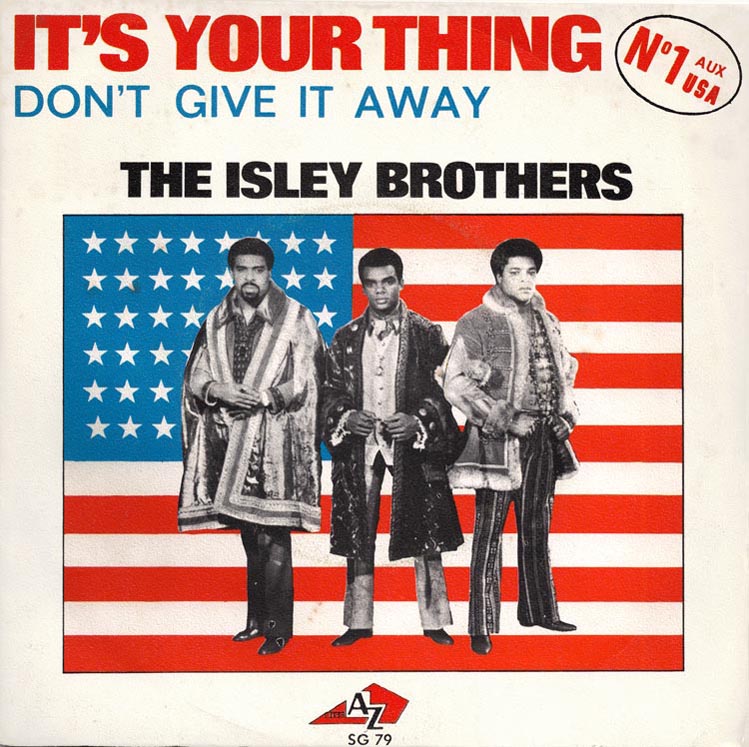
Max Picks …songs from 1959

1959

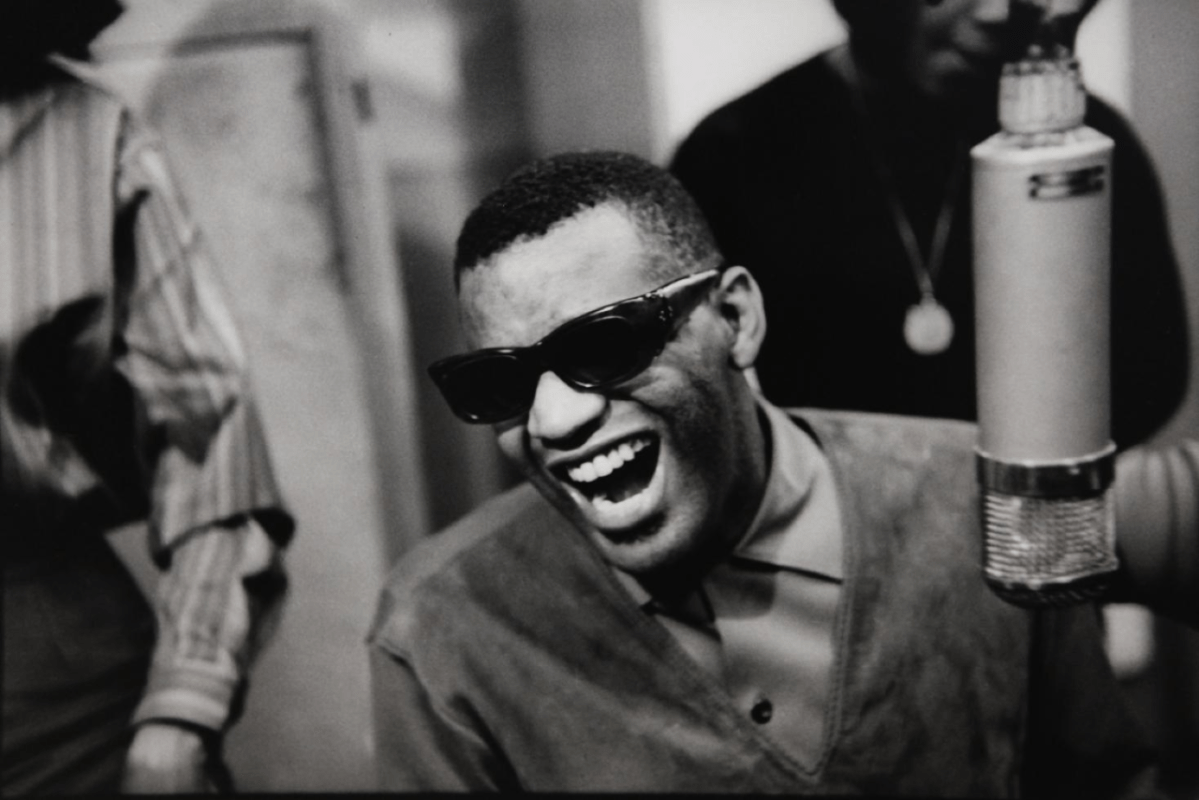
By this time Rock and Roll was not in a good state. Buddy Holly died in February, Jerry Lee Lewis had married his 13-year-old cousin earlier and got the canceled treatment years before it was a phrase, later in this year Chuck Berry would be arrested for the Mann Act, Little Richard was dedicated to the church, and Elvis was in the army in Germany. So you had artists like Anita Bryant, Pat Boone, Fabian, Annette Funicello, Frankie Avalon, and more that I won’t post on the charts. All wasn’t lost though. You did have some great artists left. The one and only Ray Charles is a great place to start in 1959. This is my favorite Ray Charles song…What’d I Say…damn this song is good. It was written by the man himself…Ray Charles.

This is one of if not my favorite instrumentals of all time. Santo and Johnny released this great song called Sleep Walk. Santo Anthony Farina and John Steven Farina were brothers who grew up in Brooklyn. They played a guitar and a steel guitar which was not in many rock/pop bands. I remember this song best from the movie La Bamba in a very emotional scene. Sometimes music can make movies in certain scenes like La Bamba or Goodfellas. The song was written by Santo Farina, Johnny Farina, and Ann Farina.

I first learned about Jackie Wilson through a Van Morrison song titled…Jackie Wilson Said (I’m in Heaven When You Smile). After hearing that song I looked for his music and what an artist! I found many artists by reading about others. Reading about the Beatles took me to Bob Dylan and the tree grew from there. This song was written by Berry Gordy, Roquel “Billy” Davis, and Gwendolyn Gordy.

Fats Domino was one of the old guards still pumping out the hits. This one is called I Want To Walk You Home. Fats wasn’t as flashy as Elvis, Jerry Lee Lewis, or Little Richard but the man could play and sing like no one else. He was steady through the 50s and he did have some success in the 1960s. This song was written by Fats Domino.

I’m cheating a little on this song. It was recorded on December 16, 1958, and was released (and that is what I go by) at the end of December but it’s so close that I’m counting it. It charted in January of 1959 and because of the circumstances, I am posting his great double-A-sided single. At the time of the release… the song Donna was the A-side and La Bamba was the B-side. Ritchie Valens seemed to have a bright future in front of him but was taken from us in the plane crash that took Buddy Holly and The Big Bopper. Donna was written by Ritchie Valens. He wrote the song about Donna Ludwig who was his high school sweetheart. La Bamba was an old Mexican folk song arranged by Ritchie Valens.

Star Trek – Is There in Truth No Beauty?

★★★★ October 18, 1968 Season 3 Episode 5

If you want to see where we are…and you missed a few…HERE is a list of the episodes in my index located at the top of my blog. 

This show was written by Gene Roddenberry, Jean Lisette Aroeste, and Arthur H. Singer

A story that would always interest me in school was Medusa. You would turn to stone when you saw her. This one is built off of that story. 

Before I start…I will say that in the 3rd season, the camera crew did a good job. They added some different shots like using a fish-eyed lens. I liked the different angles they used because it made it feel different and it was effective. 

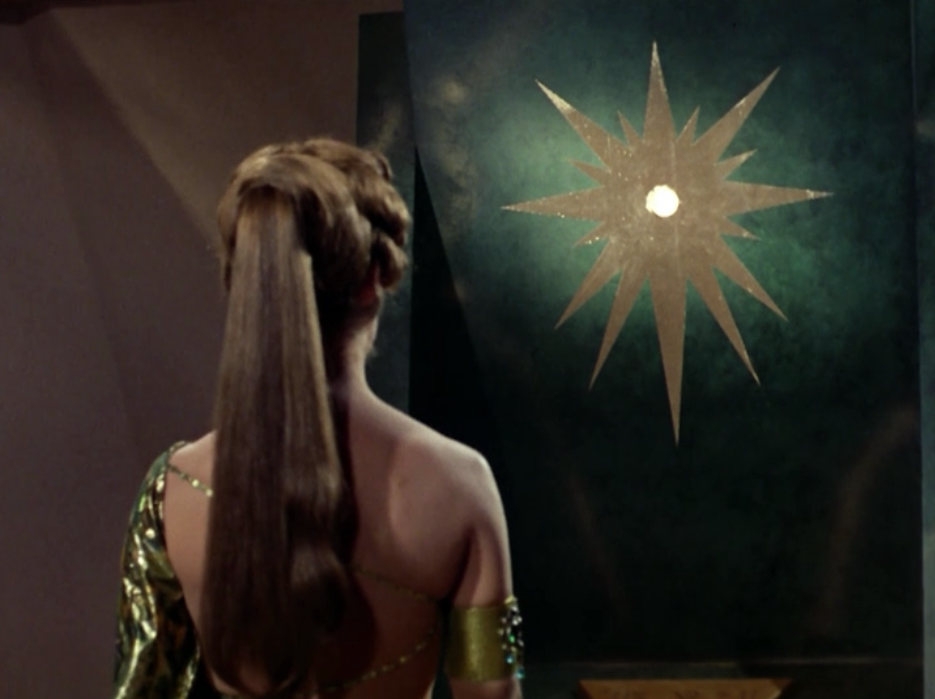
Star Trek - Is There in Truth No Beauty B

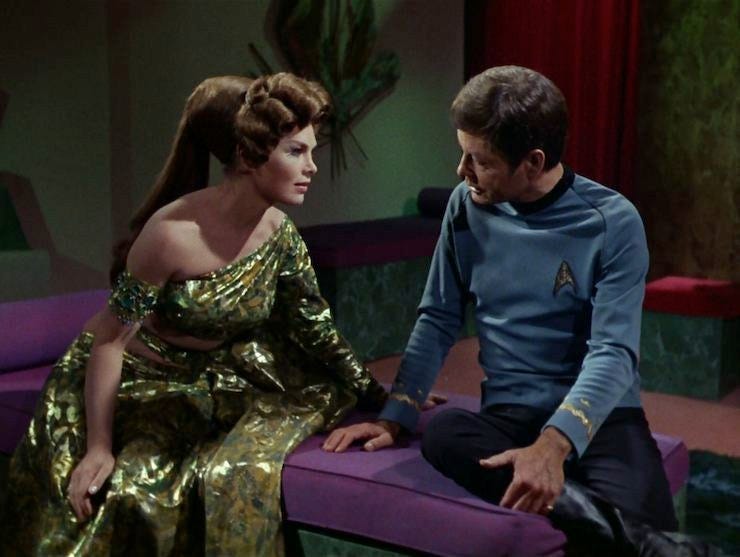
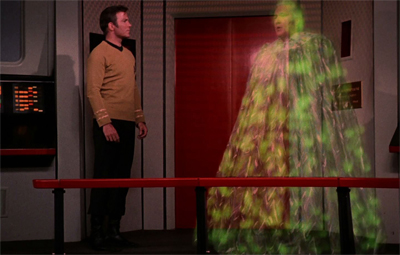
The Enterprise is tasked with transporting an ambassador from a race who is perceived as so ugly, that just the sight of one by human eyes will cause instant madness. The Medusan ambassador Kollos is accompanied by a telepathic human aide named Miranda, who claims that her life of training on Vulcan allows her to see him without insanity ensuing.

A scientist aboard happens to be a scorned lover of Miranda’s. In a fit of jealousy, he attempts to murder Kollos, predictably causing him to go mad. He takes over control of the engines and shoots the Enterprise out of the galaxy into a disorientating patch of space. Only Kollos’s ultra-intelligent mind can bring the Enterprise back.

But he needs control of the bridge, something that is obviously infeasible. Spock must attempt a mind-meld with Kollos, merging the two men into Spock’s body. Miranda feels a special connection to Kollos and attempts to stop this from happening. But Spock wins out and the two merge and help the Enterprise reenter the galaxy.

Miranda sabotages Spock out of jealousy, trying to make him go mad. A now sick Spock needs a mind-meld with Miranda. Kirk is able to convince her to do it.

It’s a very good episode. 

From IMDB:

Diana Muldaur was given a dark wig to wear for the role of Miranda. This was largely to help distinguish the character from her previous guest role as Dr Ann Mulhall in Star Trek: The Original Series: Return to Tomorrow (1968).

Although often cited by some fans as evidence of a “larger message” in Star Trek, the “IDIC” (“Infinite Diversity in Infinite Combinations”) medallion that Spock wears during the dinner scene had much baser origins. Leonard Nimoy was originally supposed to give a lengthy speech about the medallion and what it represented. Nimoy found the speech completely unsuited to the plot, and refused to say the lines until he got an explanation from producer Gene Roddenberry, who had had the lines and the use of the medallion inserted into the script. Roddenberry came to the set and admitted to Nimoy that he was selling the “IDIC” medallions through his personal marketing company, Lincoln Enterprises, and inserted the scene about the “IDIC” purely as product placement to generate sales. Nimoy ultimately refused to say the lines, and instead the scene was re-written with Capt. Kirk and other characters commenting on Spock’s wearing of the medallion instead.

This episode included a rare glimpse of the seldom seen left side of the bridge opposite the turbolift.

Spock/Kollos says to Miranda, “O Brave New World that has such creatures in it.” She replies, ” ‘Tis new to thee.” These are
lines in As You Like It (1908)’s The Tempest, Act V, Sc. 1, whose heroine is named Miranda.

The episode title is from a poem by the 17th century English poet and clergyman George Herbert, from his poem “Jordan (I)”, line 2: “Who says that fictions only and false hair/ Become a verse? Is there in truth no beauty?”

Shots of the Enterprise in the galactic void are recycled from Star Trek: The Original Series: Where No Man Has Gone Before (1966).

The remastered version replaced the Medusan home-world effect with that of a newly-designed Federation vessel. It strongly resembles one of the early sketches that art director Walter M. Jefferies drew of the USS Enterprise, as reproduced in ‘The Making of Star Trek’.

A very rare stock shot of the Enterprise is used when the ship warps towards the barrier under Marvick’s control: it is taken from the opening of Star Trek: The Original Series: The Cage (1966) (just before the “Guest Star Susan Oliver” credit) and shows the Enterprise at high speed blasting towards the camera. The same shot is reused later in Star Trek: The Original Series: That Which Survives (1969).

The name Kollos, is pronounced kàlos, a reference to the Greek word Kallos which means Beauty.

The tartan Scotty wears as part of his dress uniform during the dinner with Amanda Jones IS in fact the dress tartan for the clan Scott.

The arboretum was originally built for Star Trek: The Original Series: Elaan of Troyius (1968), but its appearance ended up as a deleted scene. Apart from this one, it was only seen in Star Trek: The Original Series: And the Children Shall Lead (1968).

The dinner scene marks the first presentation of the Vulcan IDIC (Infinite Diversity in Infinite Combinations) symbol.

Jessica Walter was offered the part of Dr. Miranda Jones but was unavailable.

In Star Trek: Enterprise (2001) it is explained that Commander Trip Tucker designed the Constitution-class Enterprise warp engines that Doctor Larry Marvick commandeers from Scott.

This is one of only two instances in which Scotty wears a dress uniform complete with ancestral tartan. But whereas he wears white socks here, in Star Trek: The Original Series: The Savage Curtain (1969) he wears red ones.

When David Frankham guest-starred on The Outer Limits: Don’t Open Till Doomsday (1964), his character was also the victim of an alien hidden in a box which injured those who glimpsed it.

This was Eddie Paskey’s last appearance in the series.

This is the last appearance of antigravs in the series.

The pictures of exotic planets seen in the dining room reappeared in Kirk’s quarters in other third-season episodes.

The second mention of Scotty’s first name: Montgomery. The first was Star Trek: The Original Series: Wolf in the Fold (1967)(#2.14).

One of two episodes written by Jean Lisette Aroeste, a UCLA librarian and Star Trek fan whose unsolicited scripts were read and recommended by co-producer Robert H. Justman. Her other story was “A Handful of Dust,” which was produced as “All Our Yesterdays.” (S3E23)

The script was written by Jean Lisette Aroeste, one of four writers of Star Trek who had no prior TV writing credits. The other three were David Gerrold (‘The Trouble with Tribbles’, ‘The Cloud Minders’), Judy Burns (‘The Tholian Web’) and Joyce Muskat (‘The Empath’).

McCoy comments that a blind person couldn’t pilot a space craft. However, in Star Trek: The Next Generation (1987), the blind Geordi LaForge piloted the Enterprise-D as the ship’s helmsman during the show’s first season. Dr Jones’ neural net can be seen as a precursor to LaForge’s VISOR.

This is the third of five “Star Trek” episodes to feature a question mark in the title. The other four are Star Trek: The Original Series: What Are Little Girls Made Of? (1966), Star Trek: The Original Series: Who Mourns for Adonais? (1967), Star Trek: Deep Space Nine: Who Mourns for Morn? (1998) and Star Trek: Discovery: Will You Take My Hand? (2018).

Apparently, many people think that members of the Enterprise crew can not walk and listen at the same time. Often, when a ship wide announcement is made, they stop to listen to the announcement. However, is has always been policy that when a captain speaks, the whole crew stops non-essential work to listen, out of respect.

This takes place in 2268.

Miranda Jones wears her hair in a loosely draped style with a toroidal loop on top, very similar to that worn by Kelinda in Star Trek: The Original Series: By Any Other Name (1968). Roses also play an important role in the narrative for each character.

Leonard Nimoy appears to be suffering from nasal congestion during this episode

The first of two times that William Shatner stars with a character who is a blind woman. He would do so again in T.J. Hooker: Blind Justice (1982)(#2.4).

Summary

The Enterprise is tasked with transporting the Medusan ambassador, Kollos, to his home planet along with his human aide, Dr. Miranda Jones, who, for reasons initially understood only by Dr. McCoy, can safely travel be with the Medusan. Medusans are formless creatures, the very sight of whom makes humans go insane. (Like the snake-haired Medusa of ancient Greek mythology whose looks caused humans to turn to stone.) For that reason, aside from Dr. Jones, only half-Vulcan Spock can be in the same room with the ambassador. She expresses envy of Spock. When Engineer Laurence Marvick, unrequitedly in love with Dr. Jones, tries to kill Kollos, he goes insane and dies, after sending the Enterprise beyond the edge of the galaxy. Only Spock and the ambassador (with Miranda’s help) can navigate the starship back to known space.

CAST

William Shatner … Captain James Tiberius ‘Jim’ Kirk
Leonard Nimoy … Mister Spock
DeForest Kelley … Dr. McCoy
Diana Muldaur … Dr. Miranda Jones
David Frankham … Larry Marvick
James Doohan … Scott
George Takei … Sulu
Nichelle Nichols … Uhura
Walter Koenig … Chekov
Bill Blackburn … Lieutenant Hadley (uncredited)
Bob Bralver … Yeoman (uncredited)
Frank da Vinci … Lt. Brent (uncredited)
Vince Deadrick Sr. Vince Deadrick Sr. … Engineer (uncredited)
Louie Elias … Engineer (uncredited)
Dick Geary … Security Guard (uncredited)
Roger Holloway … Lt. Lemli (uncredited)
Jeannie Malone … Yeoman (uncredited)
Eddie Paskey … Lieutenant Leslie (uncredited)


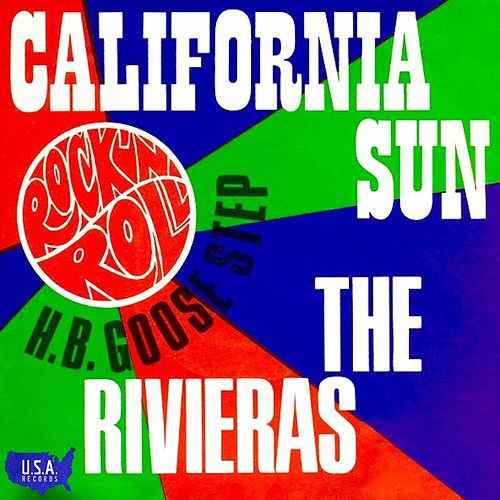
Rivieras – California Sun

If you are interested…Dave at A Sound Day posted an article I wrote on the Replacements.

This was garage band rock and roll at its best. It’s hard not to feel good when this song comes on the radio. The song peaked at #5 on the Billboard 100, #3 in Canada (CHUM), and #6 in New Zealand in 1964. It’s one of those songs that just make you feel good.

Now…is this band from sunny California? No…not even close. They are from South Bend Indiana. They were a garage band and the members all went to South Bend Indiana Central High School in the early sixties. They were originally called the Playmates but alas…there was another band in the area with the same name. They ended up naming themselves after the Buick Riviera.

The song was written by Henry Glover and recorded first by Joe Jones and his version made it to #89 on the Billboard Charts. Instead of guitars, Joe Jones’s version used horns. It’s also been covered by The Ramones, The Beach Boys, Frankie Avalon, The Shondells, and dozens more.

Marty “Bo” Fortson left shortly after this single came out to join the Marines and go off to Vietnam. The other band members dropped out one by one under pressure from their parents to go on to college and stop playing this rock ‘n’ roll.

The song was written by Hendry Glover. Glover was a producer for an independent record label King Records. At one time, record mogul Morris Levy of Roulette Records was listed as a co-writer but that got taken off. Levy was the founder and owner of Roulette Records, which had known ties to the mafia. After the Jones version failed to gain popularity the Rivieras ran with it.

The Ramones covered this one as well.

California Sun

Well I’m going out west where I belong
Where the days are short and the nights are long

Where I’ll walk
And they walk
I’ll twist
And they twist
And I’ll shimmy
And they shimmy
And I’ll fly
And they fly
Where they’re out there having fun
In the warm California sun

Well, I’m going out west
Out on the coast
Where the California girls
Are really the most

And I’ll walk
And they walk
I’ll twist
And they twist
And I’ll shimmy
And they shimmy
And I’ll fly
And they fly
Where they’re out there having fun
In the warm California sun

Well, the girls are frisky
In old ‘Frisco
A pretty little chick
Wherever you go

And I’ll walk
And they walk
I’ll twist
And they twist
And I’ll shimmy
And they shimmy
And I’ll fly
And they fly
Where they’re out there having fun
In the warm California sun
Where they’re out there having fun
In the warm California sun

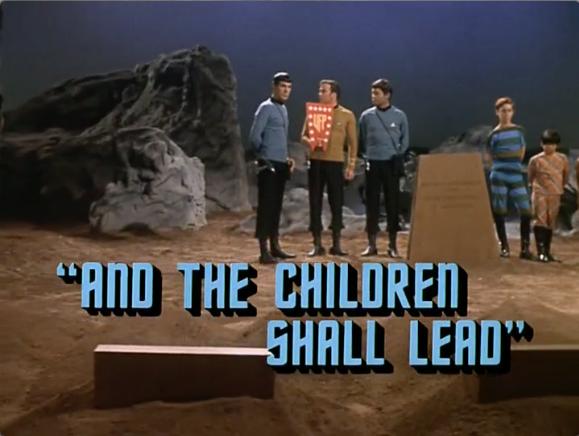
Star Trek – And the Children Shall Lead

★★ October 11, 1968 Season 3 Episode 4

If you want to see where we are…and you missed a few…HERE is a list of the episodes in my index located at the top of my blog. 

This show was written by Gene Roddenberry, Edward J. Lakso, and Arthur H. Singer

Walter Koenig was not happy about this episode. While he felt that the episode was very poor overall, his biggest complaint was the casting of noted criminal attorney Melvin Belli as Gorgan, firstly because it severely undermined the main villain, and secondly, because he considered it an act of stunt casting which had robbed professional actors from a potential job. Belli’s son played one of the children…Stevie. 

Have you ever seen Children of the Corn? There is a little of that feeling in this.  The Enterprise comes to an outpost to check on the Starnes Exploration Party  and finds that all the adults committed suicide. All that remains are the kids, who oddly seem quite happy and indifferent to the deaths. So, despite all the warning signs that there is a major problem, the kids are taken back to the ship where they unleash their reign of terror after a little bit. 

Star Trek - And The Children Shall Lead B

Something has been influencing them since they were on the planet. The something was an evil presence named Gorgan. The Starnes Exploration Party accidentally released Gorgan from his cave. He used the party’s children to evoke the fears of the adults, eventually rendering the adults mentally unstable and driving them to commit mass suicide. He manipulated the children to follow him in his quest of conquering the universe.

While this episode might have been poor, it is written with a decent understanding of how children can resent their parents and deal with grief through denial. That’s about the best thing I can say about it. After the kids use Gorgan’s power to manipulate the crew…Kirk talks to the kids to make them understand they have been used. 

From IMDB:

This was lawyer Melvin Belli’s (Gorgan) first time playing a fictional character. His son Melvin Caesar Belli plays one of the children (Stevie).

Leonard Nimoy explained that when he complained about the script to Fred Freiberger, Freiberger said, “This script is going to be what ‘Miri’ should have been”. Nimoy objected, calling Star Trek: The Original Series: Miri (1966) a beautiful, well-acted story, and felt that Freiberger’s comments were as much as saying, “‘Miri’ was a piece of trash”.

This is the only episode of the original series in which we see the fully fledged United Federation of Planets flag. Previous appearances, such as Star Trek: The Original Series: The Menagerie: Part II (1966), simply used the pre-existing United Nations flag.

During one scene on the bridge, Kirk tries to give orders to Leslie, but his words are garbled. If the audio for this scene is played in reverse, Kirk can be heard to say, “Remove Lieutenant Uhura and Mr. Spock from the bridge. Confine them to quarters. Did you hear me? Take Mr. Sulu to his quarters. He’s relieved of duty. Remove Lieutenant Uhura and Mr. Spock from the bridge. Confine them to quarters. Take Mr. Sulu to his quarters, I said. (garbled) Mr. Spock from the bridge. Confine him to quarters. Mr. Leslie, take Mr. Sulu to his quarters. He’s relieved of duty.”

Producer Fred Freiberger hoped that the presence of Melvin Belli would boost ratings. This plan failed and Freiberger realized it would have been more appropriate to cast an actor in the role.

Actor Craig Hundley also made a musical contribution to “Star Trek.” Under the name Craig Huxley, he invented the Blaster Beam, an 18 foot long aluminum bar strung with piano wire and played with artillery shells. The instrument’s distinctive metallic twang was used to represent V’Ger on Jerry Goldsmith’s soundtrack to Star Trek: The Motion Picture (1979). James Horner used it as well for his “Star Trek” soundtracks, and Huxley composed “Genesis Project” for the Star Trek II: The Wrath of Khan (1982) soundtrack.

Craig Huxley (Tommy Starnes) previously appeared in Star Trek: The Original Series: Operation — Annihilate! (1967) as Kirk’s nephew Peter.

In James Blish’s novelization, Sulu is terrified by the sight of missiles on the view-screen, not swords. More interestingly, the children sing spells to cause havoc among the crew rather than making the fist-pumping gesture which has earned a lot of ridicule among fans.

It is never explained how Kirk knew to refer to the Friendly Angel as “Gorgan”. Based on early drafts of the script, and in a bit of sloppy editing, episode writer Edward J. Lakso alternated between the various names, explaining why it appeared and stuck so late in the episode. A deleted scene had revealed that Tommy did tell Kirk the name. However, this scene took place in the script after Kirk had used the name.

The title paraphrases the last line of Isaiah 11:6: “The wolf also shall dwell with the lamb, and the leopard shall lie down with the kid; and the calf and the young lion and the fatling together; and a little child shall lead them.”

Raymond Burr was the director’s, and several of the main cast’s, original choice to play Gorgan. However, he was either unavailable/too expensive/not interested or the director was overruled by the producers (depending on the source).

Professor Starnes and the other male colonists wore jumpsuits left over from Star Trek: The Original Series: The Devil in the Dark (1967), which were reused many times during the series.

The name on one of the tombstones of the parents is “Tsing Tao” which is the name of a city in China, now written as Qingdao. Tsingtao beer was originated there.

The mirror in which Uhura sees her aged reflection at the communications station is never used in any other episode. Of course, like Uhura’s reflection, the mirror itself may have been an illusion created by the children.

All eight major regular performers of the second and third seasons – Kirk, Spock, McCoy, Scotty, Sulu, Uhura, Chapel, and Chekov – appear in this episode.

A female Expedition Party member wore Martha Leighton’s costume from Star Trek: The Original Series: The Conscience of the King (1966).

This episode borrows elements and concepts from several sources, including Greek mythology (Gorgan), the Old Testament (the Book of Isaiah), and puritanical/colonial witchery (the incantations). It also has a similar plot to the first-season episode Star Trek: The Original Series: Charlie X (1966).

The arboretum set was originally built for Star Trek: The Original Series: Elaan of Troyius (1968), but became a deleted scene due to time constraints. It was later modified for the arboretum that appeared in Star Trek: The Original Series: Is There in Truth No Beauty? (1968).

This episode is the first appearance of the set piece depicting the entrance to the Gorgan’s cave. It would be seen again in many third season episodes, including Star Trek: The Original Series: Spock’s Brain (1968), Star Trek: The Original Series: The Cloud Minders (1969), Star Trek: The Original Series: All Our Yesterdays (1969), and Star Trek: The Original Series: That Which Survives (1969).

The dress worn by the one of the female members of the Starnes Expedition Party was also created by William Ware Theiss, and was previously worn by Janet Wallace in Star Trek: The Original Series: The Deadly Years (1967). ) In fact, both costumes worn by Wallace can be seen in this episode, one worn by Don Linden’s mother and the other worn by an unnamed woman (who commits suicide in the teaser).

Pamelyn Ferdin and Brian Tochi would later co-star on the live-action children’s science fiction TV series Space Academy (1977), which was developed out of a rejected concept for Star Trek: The Animated Series (1973) and starred ‘Lost in Space’ (1965) veteran Jonathan Harris.

This episode was the twenty-sixth remastered episode of the The Original Series to air. It premiered in syndication the weekend of 14 April 2007 and, aside from the standard CGI replacement footage of the Enterprise, this episode most notably featured new effects shots of the planet Triacus.

Kirk’s request for “a very small” dish of ice cream, which he never actually eats, may have been a reference to the fact that William Shatner had put on considerable weight between seasons 2 and 3. According to producer Robert Justman, Shatner was invited to see the rushes (raw footage) from the first day of photography for “Spectre of the Gun.” He was aghast at how he looked on screen and immediately went on a crash diet.

Cameo
Chad Everett: uncredited as the crewman in Auxiliary Control who helps Scotty fight off Kirk and Spock.


Summary

The Enterprise responds to a distress call from the scientific colony on Triacus and arrives to find that all of the adults are dead. Oddly, the children seem unaffected by the deaths and continue to play as if nothing had happened. When questioned, they show no remorse whatsoever and express a dislike for parental authority. Expedition logs reveal that the expedition had discovered an ancient civilization and that there might be one survivor. In fact, the Gorgon thrives on the innocence of the children and the adults’ self-doubt.

CAST

William Shatner … Captain James Tiberius ‘Jim’ Kirk
Leonard Nimoy … Mister Spock
DeForest Kelley … Dr. McCoy
Craig Huxley … Tommy Starnes (as Craig Hundley)
James Wellman … Professor Starnes
Melvin Belli … Gorgan
James Doohan … Scott
Majel Barrett … Nurse Chapel
Nichelle Nichols … Uhura
George Takei … Sulu
Walter Koenig … Chekov
Pamelyn Ferdin … Mary
Melvin Caesar Belli … Steve (as Caesar Belli)
Mark Robert Brown … Don
Brian Tochi … Ray
Louie Elias … 1st Technician (as Lou Elias)
Paul Baxley … Security Guard (uncredited)
Bill Blackburn … Lieutenant Hadley (uncredited)
Frank da Vinci … Transporter Operator (uncredited)
Dick Dial … Security Guard (uncredited)
Roger Holloway … Lt. Lemli (uncredited)
Jay D. Jones … 2nd Technician (uncredited)
Jeannie Malone … Yeoman (uncredited)
Eddie Paskey … Lieutenant Leslie (uncredited)
Leslie Carol Shatner Leslie Carol Shatner … Child (uncredited)
Victor Toyota … Tsing Tao (uncredited)

Star Trek – The Paradise Syndrome

★★★★ October 4, 1968 Season 3 Episode 3

If you want to see where we are…and you missed a few…HERE is a list of the episodes in my index located at the top of my blog. 

This show was written by Gene Roddenberry, Margaret Armen, and Arthur H. Singer

I like this episode. I remembered seeing it and I searched through all of the seasons to find it again. It had been a long time. This movie was Armageddon before the Bruce Willis movie. Oh, and Kirk gets married and seemed ready to settle down…although his memory is gone. 

Kirk is missing and presumed lost on a Class M planet after he accidentally falls into an obelisk-shaped alien structure and is hit with a memory beam. He then suffers from amnesia on the planet which is populated by native Indians while Spock and McCoy are forced to abandon their search for the captain for 2 full months! They had to return to the Enterprise to unsuccessfully divert a giant asteroid from destroying the planet where Kirk was lost…that is why they are there. Kirk and McCoy are struck by how much like Earth it is. 

When Kirk vanished Spock told McCoy they had to beam back up to the Enterprise. McCoy argued about leaving the Captain there but Spock slowly explained to the Doctor that if they cannot divert that asteroid…there would be no planet to search. The asteroid was 2 months away but they had to go to a certain spot to divert it there…they couldn’t divert it when it was close. 

When Kirk regains consciousness and walks out of the alien obelisk, he is seen by Miramanee, a native Indian woman who thinks he is a god. Kirk then promptly saves the life of a drowning child thus instantly becoming the native Indian’s new medicine chief Kirok. However, he makes an enemy, the former medicine man (Sallish), and has to deal with that throughout the episode.  Shatner did a good job of acting here…he seems nonstressed compared to his regular job…of course, he cannot remember what that job is. 

The theme in this one involves placing Kirk in a scenario completely divorced from his usual duties and watching his other true self emerge…the gentle, unhampered Kirk existing with the Indians. Miramanee and Kirk fall for each other and got married. The episode is beautiful, and the fact that Miramanee carried Kirk’s baby is a bit shocking even today. Certainly, it had to be powerful stuff back in 1960s television. It was touchingly and sensitively acted by William Shatner.

Star Trek - Teh Paradise Syndrome B

It’s the action of Spock aboard the Enterprise that grounds this episode back to Star Trek reality. He has to come up with a way to deflect a moon-sized asteroid from obliterating the Indian home planet while pushing the Enterprise to its physical limits. All the while…Spock is studying the obelisk.

They do make it back to the planet and just in the nick of time. Kirk and Miramanee are getting stoned to death because of Sallish..after Kirk is slashed and bleeding. Gods don’t bleed. 

This is an odd…but very good episode…one of the best ones of the third season. Just a side note…everytime Kirk is missing and Spock takes over…McCoy gives him hell over every decision. I think sometimes the writers went overboard on that. Sometimes the Doctor is not mean but cruel to Spock.

From IMDB:

The obelisk in this episode, constructed at Franklin Lake in the Franklin Canyon Reservoir above Beverly Hills, was erected in the same spot where Opie Taylor throws a rock into the lake during the opening credits of The Andy Griffith Show (1960).

The only episode in Season 3 to be filmed on location and not entirely in the studio.

Only in this episode do we see the ship firing its gold deflector beam.

After living on the planet Kirk’s sideburns lose their distinctive pointed ends and become squared off. This was done to emphasize the passage of time and to show Kirk was becoming assimilated to his new life.

The characters on the asteroid-destroying Obelisk are the basis of the alphabet and characters used by the Predators of the Alien-versus-Predator movie franchise.

During the first attempt to deflect the asteroid, a rare top shot of the Enterprise is shown, first used in the Star Trek: The Original Series: The Changeling (1967).

Paradise Syndrome – though not officially recognized as a mental condition by psychologists – is a term conferred upon those who feel dissatisfied despite having achieved all their dreams. Here it is used merely to describe someone who is overworked and needing a break – whether ostensibly Captain Kirk or, obliquely, series creator Gene Roddenberry.

Although not mentioned on screen, the planet was rather unsubtly called “Amerind” in the script.

This episode takes place over the course of approximately two months.

The first Star Trek production to feature Native American Indian culture as a key plot element. Other examples are Star Trek: The Animated Series: How Sharper Than a Serpent’s Tooth (1974), Star Trek: The Next Generation: Journey’s End (1994), and several episodes of Star Trek: Voyager (1995).

This is one of very few occasions where Nurse Chapel is beamed/transported down to a planet surface.

This takes place in 2268.

The Native Americans depicted display none of the cultural elements of the tribes mentioned (Navajo, Delaware, Mohican). The houses are tipis, used by plains peoples. The clothing bears no resemblance to actual Native American clothes, and the names of the characters match no Native naming styles. Also, the Navajo were not peaceful. They were very fierce warriors, as were the Mohican. The Delaware were not called “Delaware,” but rather, were the Lenne Lenape.

During the love scene where Miramanee tells Kirk she’s pregnant, a fly lands on Kirk’s face for several seconds.

Dr. McCoy comments about the “Preservers” that he had always wondered about why there were so many humanoid races. In Star Trek: The Next Generation: The Chase (1993), the question is answered in a slightly different way.

When the Enterprise engines burn out, Mr. Scott laments, “my bairns, my poor bairns”. This is Scottish/English meaning “my poor children”.

Summary

Kirk, Spock and McCoy beam down to a planet that is in the path on an oncoming meteor. They find an idyllic place that is very similar to Earth and whose population is virtually identical to North American Natives. Their visit is meant to be a short one since their mission is to deflect the meteor, still several months away. Before they can return to the ship, Kirk disappears and loses his memory in an accident, forcing Spock to take command of the Enterprise and to leave him behind. On the planet, Kirk is treated like a god when they see him emerge from an obelisk that is actually a deflector beam (which no one remembers how to use, however). When the Enterprise fails to deflect the meteor, they return to the planet only hours before the annihilating meteor’s arrival.

Youtube…has got to the point where any video I try to post has an age restriction if someone slaps someone on the back…youtube blocks me from posting it. So…if there is any action going on…you can forget it. I found the one below that actually allowed me to post it. 

CAST

William Shatner … Captain James Tiberius ‘Jim’ Kirk
Leonard Nimoy … Mister Spock
DeForest Kelley … Dr. McCoy
Sabrina Scharf … Miramanee
Rudy Solari … Sallish
James Doohan … Scott
George Takei … Sulu
Walter Koenig … Chekov
Richard Hale … Goro
Majel Barrett … Nurse Chapel
Naomi Newman … Indian Woman (as Naomi Pollack)
John Lindesmith … Engineer
Peter Virgo Jr. … Warrior
Lamont Laird … Indian Boy
Bill Blackburn … Lieutenant Hadley (uncredited)
Roger Holloway … Lt. Lemli (uncredited)
Foster Hood … Indian (uncredited)
Jeannie Malone … Yeoman (uncredited)
Nichelle Nichols … Lieutenant Nyota Uhura (archive footage) (uncredited)
Vincent St. Cyr … Father of Drowning Boy (uncredited)

Left Banke – Walk Away Renée ….Power Pop Friday

I have always liked this song. This was baroque pop at its finest. Baroque pop combines pop with classical music. Some other examples would be As Tears Go By by the Stones, Yesterday by the Beatles, and She’s Not There by the Zombies. There is also a genre called Barogue Rock.

It peaked at #5 in the Billboard 100 and #3 in Canada. The song is constructed so well and has influenced countless artists. They did have one more top twenty hit in 1967 with Pretty Ballerina. The band helped start “baroque & roll” because of the classical arrangements and melodies.

Michael Brown wrote the song but the band fought constantly so after the success of the single Brown was putting together a new Left Banke to tour that included Michael McKean (Lavergne and Shirley and Spinal Tap) on guitar but that didn’t last long.

The original band regrouped in 1967 and recorded a song but then broke up for good. Walk Away Renee was written by band member Michael Brown, who was 16 at the time, with help from his friends Bob Calilli and Tony Sansone. Brown wrote it after meeting Renee Fladen, the girlfriend of the band’s bass player.

Renee Fladen was in the control room when Michael Brown tried to record his harpsichord part. He later said in an interview that he was so nervous trying to play with the beautiful Renee present that his hands were shaking. In the end, he gave up and returned later when he recorded it without any problem.

The line “Just walk away Renee” is often misinterpreted as “Don’t walk away Renee.” The singer has decided that Renee will never return his affections and is better off with her out of his life.

Walk Away Renée

And when I see the sign that points one way
The lot we used to pass by every day

Just walk away Renee
You won’t see me follow you back home
The empty sidewalks on my block are not the same
You’re not to blame

From deep inside the tears that I’m forced to cry
From deep inside the pain that I chose to hide

Just walk away Renee
You won’t see me follow you back home
Now as the rain beats down upon my weary eyes
For me it cries

Just walk away Renee
You won’t see me follow you back home
Now as the rain beats down upon my weary eyes
For me it cries

Your name and mine inside a heart upon a wall
Still finds a way to haunt me, though they’re so small

Just walk away Renee
You won’t see me follow you back home
The empty sidewalks on my block are not the same
You’re not to blame

Donovan – Season of the Witch

I’ve always liked the groove of this song. Season of the Witch was released in 1966 on the Sunshine Superman Album but not as a single. It remains one of Donovan’s (Donovan Leitch) most well-known songs. The song has been covered many times and often bands start the song and draw it out to a jam.

In 1966 bands were releasing songs about drugs at this time. The Beatles had Dr. Robert and The Stones released Mother’s Little Helper. Season Of The Witch was recorded in Hollywood and clocked in at 5 minutes. He played it with Bobby Ray (bass) and “Fast” Eddy Hoh, although the electric guitar work has been credited by fans to Jimmy Page, who worked on the album. (The Hollywood session notes do not indicate Jimmy Page or John Paul Jones were present.) The organist is unidentified.

It has a spooky feeling to it. The repetition works nicely and that small riff is driven into your head. I rediscovered the song in 2012 when it was in the animated movie “Paranorman.” The song was written by Donovan and Shawn Phillips.

The song was written in an evening at folk music notable Bert Jansch’s house in north London. John Renbourn showed Donovan a D ninth chord. From that, Donovan built up a riff that, according to the memories of those present, he then played solidly for the next seven hours.

During Led Zeppelin’s soundchecks, they often warmed up by playing this. The song allows for lots of jamming when played live, which makes it a popular cover for many bands.

Donovan: I played a white Fender Telecaster Electric Guitar on “Witch,” chunking down on the chord pattern, wailing a chilling chorus. A major seventh with an open G, to D 9th with a G-flat bass (Bert Jansch chord). The riff is pure feel.

Donovan: “I remember the bass line going down and Mickie saying, ‘We’ve got a problem. The engineers are saying that they can’t turn the bass up.’ I said, Why? They said, ‘Well, it’s going into the red.’ And so he said to the engineers, ‘Look, you go into the red, I’m giving you permission. Go in the red! That’s the bass sound I want. Very, very loud.’ And they said, ‘Well, we’ll have to have a meeting.’ So they went upstairs and had a meeting about whether the bass should go into the red. And they came down, they said, ‘No, I’m sorry, the equipment can’t stand it.’ So Mickie Most said, ‘Look, I’ve just made a record deal with your boss Clive Davis for $5 million and seven bands. And he’s given me $1m right now. So do you think if I phone him up, you’d give me a little bit more bass?’ And they looked at each other, and immediately realized that their jobs were on the line. They said, ‘OK, you’ve got more bass.’ We got more bass the needle went into the red, the equipment didn’t blow up. I guess next time they made that needle, they did that thing by just moving the red bit a bit farther to the right, like in Spinal Tap: ‘My amp goes up to 11!'”

Season of the Witch

When I look out my window,
Many sights to see.
And when I look in my window,
So many different people to be
That it’s strange, so strange.

You’ve got to pick up every stitch,
Mmm, must be the season of the witch,
Must be the season of the witch, yeah,
Must be the season of the witch.

When I look over my shoulder,
What do you think I see?
Some other cat looking over
His shoulder at me
And he’s strange, sure he’s strange.

You’ve got to pick up every stitch,
Beatniks are out to make it rich,
Oh no, must be the season of the witch,
Must be the season of the witch, yeah,
Must be the season of the witch.

You’ve got to pick up every stitch,
The rabbits running in the ditch,
Beatniks are out to make it rich,
Oh no, must be the season of the witch,
Must be the season of the witch,
Must be the season of the witch.

When I look out my window,
What do you think I see?
And when I look in my window,
So many different people to be
It’s strange, sure is strange.
You’ve got to pick up every stitch,
The rabbits running in the ditch,
Oh no, must be the season of the witch,
Must be the season of the witch, yeah,
Must be the season of the witch.
When I look, when I look.

Max Picks …songs from 1958

1958

Welcome to another edition of Max Picks. We will start it off with Ricky Nelson on a slow note but this song is so haunting to me. Nelson wasn’t always taken seriously because of his acting in his parent’s sitcom Ozzie and Harriet. That’s a shame because he released some top-grade rockabilly songs. Here he is with the ballad Lonesome Town.

As promised…here is more Buddy Holly, his window was short but strong. Buddy’s songs would influence everyone from The Stones, Hollies, Beatles, and more. He also could have unknowingly started the Power Pop genre. His jangly guitar and that voice with the hiccups. I went to the Buddy Holly Broadway show when it toured and stopped in Nashville. I can’t explain in words how a 3 piece band sounded so full with the music he wrote.

Now we have the one and only Chuck Berry weaving his lyrics about a guy who left his home to make it playing guitar. This song IS Rock and Roll and has been played by every self-respecting garage band ever since. It’s also covered by heavy metal, country, pop, and rock bands. I would lay money down that somewhere tonight in some bar somewhere…Johnny B. Goode will be heard.

Link Wray and his Ray Men gave us this instrumental Rumble in 1958. This instrumental was somewhat controversial because it implied gang violence – some radio stations refused to play it. It might be the only instrumental song ever banned on the radio. It was feared that the piece’s harsh sound glorified juvenile delinquency. Did the song cause juvenile delinquency? We can only hope.

Now we will end it with an artist that unfortunately is about to go in the Army at this time. He would never be the same again. Yes, we would get some great songs in his future but Elvis Presley became more of an all-around entertainer after this year. His rock and roll days were going to fall behind for a while when he started to make movies. This is a fantastic song.

Star Trek – The Enterprise Incident

★★★★★ September 27, 1968 Season 3 Episode 2

If you want to see where we are…and you missed a few…HERE is a list of the episodes in my index located at the top of my blog. 

This show was written by Gene Roddenberry, D.C. Fontana, and Arthur H. Singer

***If you have time please check out my new feature Max Picks coming up right after this.***

This episode is excellent. We are going from a bad episode to one of the best of the 3rd season. The plot was pretty exciting plus it gave Spock a big chance to stretch himself as a character–without McCoy or Shatner tagging along. Also, any episode with the Romulans is great fun, as they were in many ways a more dangerous and more of a foe than the Klingons.

Star Trek - The Enterprise Inccident B

The episode begins with Kirk behaving very erratically. He even orders the ship into Romulan space and nearly starts a war. It seems that the Captain has gone mad and the Romulans take possession of the ship. At the same time, Spock becomes very chummy with the beautiful  Romulan commander, a lady who seems determined to have Spock. I’d like to say more, but it really would spoil the suspense. Just let me say that there is a lot more to the story than this and the show is both interesting and keeps you guessing.

The commander charges Kirk with espionage and locks him up… Kirk injures himself whilst trying to escape. The Romulan commander is attracted to Spock and attempts to turn him. Everyone aboard the Enterprise thinks Spock is a trader and you are wondering while watching.  Spock gives Kirk a “Vulcan Death Grip” ostensibly to kill him.

This is one of the best episodes from the 3rd season. It exploits the rivalry between the Romulans and the Federation, and it has some of the best acting of William Shatner and Leonard Nimoy combined with a compelling and unpredictable storyline. I also liked the cool and controlled Joanne Linville as the Romulan Commander who never raises her voice, even when she condemns Captain Kirk to death.

From IMDB:

This episode is the first to feature a female starship commander.

The Romulan cloaking device prop was created using the Sargon globe (Star Trek: The Original Series: Return to Tomorrow (1968)) and portions of the Nomad probe (Star Trek: The Original Series: The Changeling (1967)).

First broadcast episode of TOS to feature the D7 Klingon battle cruisers. Although the episode Star Trek: The Original Series: Elaan of Troyius (1968) was produced three months before this episode, and technically the first to feature the D7s, this episode was aired on television first, since NBC changed the airing order for all the episodes. For the Remastered series in 2006, digital shots of the D7s were inserted into scenes in the episode Star Trek: The Original Series: Errand of Mercy (1967), which now officially makes that episode to be the first to have the D7s.

D.C. Fontana’s initial inspiration for this story and its title was the Pueblo incident which involved the capture of an American intelligence gathering ship, the USS Pueblo (AGER-2), by North Korean forces during the Vietnam War. North Korea claimed, without evidence, the ship had violated its territorial waters. The incident occurred on January 23, 1968, just two months before Fontana completed her first draft story outline. Although the crew was released after nearly a year, NK still maintains possession of the vessel as a “war trophy”.

This was the last live-action appearance of the Romulans in the “Star Trek” franchise until Star Trek: The Next Generation: The Neutral Zone (1988) 20 years later.

In the opening segment, in regard to the enemy vessels, Spock declares “Romulans now using Klingon design!” Several explanations/theories have been advanced as to why the Romulans use Klingon ships. The real reason is simply because the original Romulan model ship was gone. Non-union, independent creative designer Wah Chang designed and built the original Romulan Bird of Prey model for Star Trek: The Original Series: Balance of Terror (1966). He is also the creator of several iconic Trek costumes and props, including the communicator, original phaser, salt vampires, and tribbles, to name a few of his contributions to the show.

After “Balance of Terror”, the model Bird of Prey was returned to Chang, per his contract, but he eventually disposed of it as he had limited storage and there was never any contractual obligations with CBS to retain it. However, either through poor planning or poor communication or both, season three’s “Enterprise Incident” production staff, expecting to re-use the season one Romulan model, learned from Chang that it was gone. The decision was made to modify the story to use only Klingon model ships, which were kept by the studio, although in recent airings one of the three ships appears to be the original Romulan model. Asking Chang to construct a new Romulan model ship would have been prohibitively costly. Economically, switching to Klingon vessels was the obvious solution.

The Walter M. Jefferies-designed Romulan symbol, composed of a yellow hexagon in the center with three colored spokes coming out of it, can be seen outside the commander’s quarters, above her door. This symbol never appears again in any Star Trek series or movie.

One of the few episodes that opens with McCoy making entries in his medical log.

Jack Donner, who played The Romulan Sub-Commander Tal, was one of only three actors to appear in both the original series and in Star Trek: Enterprise (2001). The others are Joseph Ruskin and Clint Howard.

The Romulans use Klingon disruptor pistols.

Spock scans space out to one-half parsec and says that there are no ships present. As the Enterprise enters the Neutral Zone, Romulan ships appear from nowhere. Later, Spock says that the Romulans must have invented a cloaking device, but they already knew the Romulans had one as they witnessed it in use in Star Trek: The Original Series: Balance of Terror (1966), and their whole mission is to obtain that cloaking device.

In Star Trek: The Original Series: Balance of Terror (1966), the Romulan ship only had simple impulse engines. In this episode, the Romulan ship is capable of going faster than Warp 9 – a major upgrade in capability for such a short time.

Joanne Linville’s Romulan Commander is given the name Dion Charvon in a 1977 Star Trek novel called “The Price of the Phoenix”, by Myrna Culbreath and Sondra Marshak. In the 1999 novel “Vulcan’s Heart” by Josepha Sherman, her name is given as Liviana Charvanek. It’s not clear if either novel is “canonical” but Liviana Charvanek seems to have higher authority and credibility. In addition, Diane Duane’s 1984 novel “My Enemy, My Ally” states that the commander had her name stripped from her because of the events of this episode, and introduces the commander’s aunt, Ael t’Rllaillieu.

This episode takes place in 2268.

One of the most famous lines from this episode is “There’s no such thing as a Vulcan death grip.” In Peter David’s ‘New Frontier’ series, Soleta, a Vulcan, kills a Romulan guard with what she calls the Vulcan death grip. When another character says there’s no such thing as a Vulcan death grip, Soleta glances at the body, and then replies, “There is now.”

During Spock and the Romulan Commanders romantic moment she clearly smears the makeup on Spock’s face

The drink that Spock and the Romulan commander are drinking is very similar to Tranya.

When Spock and Kirk are about to transport over to the Romulan ship, they step onto two of the transport pads. How would they know which pads to step onto as the two Romulans transport over to the Enterprise at the exact same time.

Summary

The Enterprise deliberately crosses the Neutral Zone, on Kirk’s orders, into Romulan space and is promptly surrounded by Romulan warships, each equipped with a “cloaking device” that renders it undetectable. Spock betrays the apparently irrational and paranoid Kirk to the Romulan commander, a woman who is obviously attracted to Spock. A deadly game between Kirk, Spock and the Romulans risks not only the Enterprise but the tenuous cease-fire between the Romulans and the Federation.

CAST

William Shatner … Captain James Tiberius ‘Jim’ Kirk
Leonard Nimoy … Mister Spock
DeForest Kelley … Dr. McCoy
Joanne Linville … Romulan Commander
Jack Donner … Tal
James Doohan … Scott
Nichelle Nichols … Uhura
George Takei … Sulu
Walter Koenig … Chekov
Majel Barrett … Nurse Chapel
Richard Compton … Technical Officer
Mike Howden … Romulan Guard
Gordon Coffey … Romulan Soldier
Roger Holloway … Lt. Lemli (uncredited)
Eddie Paskey … Lieutenant Leslie (uncredited)

Jimi Hendrix – The Star Spangled Banner

Happy Independence Day! Hendrix did a great version of The Star Spangled Banner in my opinion. He had served as a paratrooper in the 101st Airborne Division at Fort Campbell in Clarksville Tennessee in the early 60s.

Jimi Hendrix - Star Spangled Banner B

Yes, this is my favorite version of the song. The poem that formed the basis of the lyrics was penned in 1814 during the War of 1812 by Francis Scott Key, a 35-year-old lawyer who was sent to negotiate with the British in an attempt to gain the release of an American prisoner they were holding.

Later, Key watched the bombardment of Fort McHenry from a ship he was on. The next morning he saw the Americans take down the battle-torn US flag at the fort and replace it with a larger one.

Key’s poem was published on September 17, 1814, the day after he returned to Baltimore. The poem was sung to the music of a popular British drinking song called “To Anacreon in Heaven, ” attributed to John Stafford Smith.

Any time someone does an unusual approach to this song…there is always a lot of complaining from people. Once when Jose Feliciano did the song in Game 5 of the MLB World Series in 1968 on guitar and singing…all hell broke loose. Some listeners thought he had “desecrated” and disrespected the national anthem but when asked about it, Feliciano explained that the reason he offered a non-traditional rendition of the anthem was to get people to pay attention to it. It was a great version of the song.

Jimi Hendrix - Star Spangled Banner

Hendrix took the stage at Woodstock at 8am…only around 30,000 were left out of the huge crowd there. He had been warned not to do the anthem when he toured but did it anyway. He even recorded a studio version and after his death, the takes were put together and released but the Woodstock performance is the one that is best known. What amazes me is when he is imitating bombs dropping…he suddenly goes right back in on time and doesn’t miss a lick.

He didn’t get as much flack as Feliciano did…I think because it wasn’t on prime time during a World Series.

Star Trek – Spock’s Brain

★  September 20, 1968 Season 3 Episode 1

If you want to see where we are…and you missed a few…HERE is a list of the episodes in my index located at the top of my blog. 

This show was written by Gene Roddenberry, Gene L. Coon and Arthur H. Singer

Season 3 is upon us! This may just be me…so all you Star Trek fans weigh in but I think this is the worst episode of the original series. I haven’t heard one of the cast speak good of this episode either. William Shatner has called it one of the worse and Leonard Nimoy was embarrassed during the entire shooting of this episode. 

When you look at the complete picture though…I only see two really bad episodes so when you are talking about 3 seasons with 79 episodes…that is a good track record. With this episode…I guess they tried something different and it just did not work. 

It’s unfortunate that this episode may have been the introduction for many late viewers to the Star Trek series because it kicked off the 3rd season. Basically what we have here…instead of “The Search for Spock” we have The Search for Spock’s brain. 

Star Trek

A mysterious woman magically arrives on the ship. The pushes some buttons on a box on her arm and everyone falls unconscious. When they are under, she steals Spock’s brain. Then, when they awaken, McCoy informs the Captain that this occurred at which point, Kirk asks if Spock will be okay…uh ok.  I couldn’t help but laugh the first time I heard this! What was Kirk thinking?

It gets even worse when they use a cool box on Spock’s body to reanimate him. It seems, according to McCoy, that although Spock has no brain, since he was a Vulcan that his body would live on for 24 hours without dying. What that meant…the clock is ticking while on the search for Spock’s brain. 

It has a 5.2 rating at IMDB but most of the episodes get a 6.5 or above. Maybe I’m being too hard on it? Give it a watch when you can and tell me that is the case or was I completely right?

From IMDB:

Written by Lee Cronin, the pseudonym of Gene L. Coon. Some have assumed that it was used because he was unhappy with the results. Actually, it was because he had left Paramount and was under contract with Universal, so he was not supposed to be working for Paramount as well.

First appearance of Scotty’s new hair style, where it was brushed back instead of parted to the side.

The Controller is “Nomad” repurposed from Star Trek: The Original Series: The Changeling (1967) with a globe on top.

This is the only Original Series episode to use a regular character’s name in the title.

This is the first episode in broadcast order in which the credits are displayed in blue font as opposed to the yellow font of the first two seasons.

TOS Seasons 3 marks the first time Star Trek is credited as being produced by Paramount. During Seasons 1 & 2, Star Trek was a Desilu property. In the summer of 1968, it was sold to Paramount.

This is the only time moving stars are shown on the bridge view screen via rear-projection. This is evident because the camera pans across the screen and people move in front it with stars moving, which would not have been possible if the view screen scenery had been matted in later. (In Star Trek: The Original Series: The Doomsday Machine (1967) they walk in front of the screen, but it is a static picture of stars, although in the digitally mastered edition they did add some moving objects.)

In informal surveys taken at science fiction conventions, this episode is promptly and almost universally named as the worst of the original series.

Footage of the Eymorg computer’s displays in operation is recycled from Star Trek: The Original Series: Assignment: Earth (1968) and Star Trek: The Original Series: The Paradise Syndrome (1968).

Gene Roddenberry was fascinated by the idea of a matriarchal society, and revisited the idea in Genesis II (1973) and Star Trek: The Next Generation: Angel One (1988).

Although scantily clad young women were common in this series, the Eymorgs, with their mod mini-dresses, were purportedly a response to Rowan & Martin’s Laugh-In (1967) which featured them on a regular basis. Luma, in particular, was a response to Goldie Hawn’s air-headed persona.

The Vulcan philosophy of “the needs of the many outweigh the needs of the few,” is paraphrased. In reference to Spock’s brain Kara says, “The need of my people for their controller is greater than your need for your friend.”

According to her official website, Marj Dusay said she had not viewed this show until a fan sent her a VHS tape in the 1990’s. The multitude of autograph requests she received over the years led her to believe that this show was popular. She described having fun in the role, and that she was delighted with the costume and boots designed for her.

This takes place in 2268.

There are two Morg guards in the scene where Kirk and his men are held captive. The big one who guards the communicators and other items taken from the Enterprise crew is played by Pete Kellett. The bald one by the door who says “Yes, mistress,” is none other than an uncredited Sid Haig.

Pete Kellett, the uncredited actor who played a Morg guard, has the single, dramatic line, “Yes, mistress”. He was the only Morg that had dialogue.

Marj Dusay played the role of Kara, which was the name of the cabaret dancer character in the opening scene of this season’s show “Wolf in the Fold”.

James Daris, the creature that Kirk stuns with his phaser, had a role in the “Mission: Impossible” show “Encore” in which William Shatner played one of main adversaries of the IMF team. As one of the henchmen of the other adversary, he did not share scenes with Shatner’s character.

Sheila Leighton (Luma) and Marj Dusay (Kara) each appeared separately in shows of “Hogan’s Heroes”. Leighton was cast in one role, and Dusay played three different roles.

Summary

When the Enterprise encounters an ion-powered vessel – far more advanced than their own warp-powered technology – they soon find themselves knocked unconscious by a beautiful alien who suddenly appears on the bridge. When they come to, they find that Spock’s brain has been surgically removed using technology way beyond their own current level of development. Following the ion trail left by the spacecraft, they arrive at a barren, ice-covered planet where the men live on the surface and the women in a highly advanced underground complex. Spock’s brain is now the central intelligence that runs the entire complex. The problem before them: how to reunite his brain to his body.

CAST

William Shatner … Captain James Tiberius ‘Jim’ Kirk
Leonard Nimoy … Mister Spock
DeForest Kelley … Dr. McCoy
Marj Dusay … Kara
James Doohan … Scott
Walter Koenig … Chekov
George Takei … Sulu
Nichelle Nichols … Uhura
Majel Barrett … Nurse Chapel
Daris … Creature
Sheila Leighton … Luma
Bill Blackburn … Lieutenant Hadley (uncredited)
Frank da Vinci … Lt. Brent (uncredited)
Roger Holloway … Lt. Lemli (uncredited)
Pete Kellett … Morg Guard (uncredited)Jeannie Malone … Yeoman (uncredited)
Eddie Paskey … Lieutenant Leslie (uncredited)

Star Trek – Assignment Earth

★★★★1/2 March 22, 1968 Season 2 Episode 26

If you want to see where we are…and you missed a few…HERE is a list of the episodes in my index located at the top of my blog. 

This show was written by Gene Roddenberry and Art Wallace

We are now at the last episode of the 2nd season…I can’t believe we are this far already. One more season to go. This is a different kind of episode for Star Trek. It reminded me right away of Doctor Who or a Scifi James Bond. It was planned as a spin-off episode but didn’t end up that way. Robert Lansing played Mister Seven and he was great. I would have watched the show if they would have spun it off. He had magnetism and was perfect for that role. 

This was in reality a pilot episode about Gary Seven and his assistant played by future star Teri Garr when she was 20 years old. It is a show I wish would have been picked up. I could have been writing about that one today. 

The Enterprise travels back in time to observe Earth during a particularly tumultuous period in its history. However, upon arriving they intercept a mysterious alien transmission and end up beaming aboard a man wearing a 20th-century business suit and carrying a cat. Kirk doesn’t know if he is human, alien, good, or bad. Seven is not a fool though and knows enough to escape the Enterprise with the transporter. 

Star-Trek-Assignment-Earth-3

Seven is a human trained by an unnamed alien race to protect humanity against threats to world peace. In this story, his mission is to transport to Earth and prevent the US from shooting a military satellite into space that could set off a nuclear exchange between the US and the Soviet Union.

When the Enterprise captures Seven en route to Cape Canaveral, Kirk is reluctant to let him go, fearing Seven’s mission may not be as altruistic as he claims. Mr. Seven then escapes the ship, beaming down to the city of Manhattan with Kirk and Spock in hot pursuit.

Seven does get to finish his mission when Kirk finally realizes that Seven is telling the truth. 

From IMDB:

While at the launch base and showing his ID to the security person, Mr. Seven shows a National Security Agency credential card. The NSA was one of the worst kept government secrets, but was not publicly acknowledged until nearly 25 years after this episode originally aired.

This is the only episode of Star Trek in which time travel is treated as “routine.” The Temporal Prime Directive does not yet appear to have been proposed, least of all taken effect.

This is the only episode of Star Trek in which a guest star is listed after the opening credits rather than in the end credits: “Guest Star Robert Lansing as Mister Seven” is displayed when the character is first shown in the transporter chamber.

Gary Seven’s computer display is the same one used as Dr. Daystrom’s M-5 computer in Star Trek: The Original Series: The Ultimate Computer (1968), as well as being used by Mr. Atoz, the librarian, in Star Trek: The Original Series: All Our Yesterdays (1969).

This episode features one of the first uses of stock footage of the first test launch of the Saturn V moon rocket in November 1967.

Spock mentions all the events which are to occur on that date the Enterprise travelled back in time to the 20th century and met Gary Seven. Among the events mentioned was an important political assassination. As it turned out, there were ultimately two important political assassinations in 1968: just six days after this episode aired on March 29, 1968, Reverend Martin Luther King Jr. was shot and killed in Memphis, Tennessee on April 4, 1968, and two months later, on June 6, 1968, Senator Robert F. Kennedy was killed in Los Angeles, California on the night that he won the California Democratic presidential primary.

The script called for Isis the cat to make various cat sounds on cue (meows, purrs, growls, etc.) Since finding appropriate real cat sounds for the soundtrack proved problematic, the director discovered that Barbara Babcock, who was hired to do the voice of the Beta 5 computer, could vocalize convincing cat sounds.

Teri Garr had such an unpleasant time filming this episode she refused to ever talk about Star Trek again, although she did do an interview with STARLOG magazine many years later in which she was very disparaging of both the show and its fans. One reason was Gene Roddenberry’s frequent clashes with the costume designers over the length of Roberta’s skirt; Roddenbury wanted it shortened to the extent that Ms Garr’s underwear is glimpsed on occasions. However, she clearly had no such inhibitions in her roles other productions, such as the sultry and provocatively dressed Inga in ‘Young Frankenstein’ (1974) or wearing even an even skimpier outfit (see-through baby-doll nightie) as a Pajama Girl in ‘Pajama Party’ (1964).

The main plotline of countries launching nuclear weapons into space had a real-world parallel at the time. The major world powers pledged to use outer space for peaceful purposes in the “Outer Space Treaty” that became official on October 10, 1967.

Three black cats were used for the role of Isis.

No scenes for this episode were actually shot at Cape Kennedy itself. The illusion of being in Florida was achieved by using a combination of stock footage and Paramount studio locations.

This is the only episode where a Federation transporter system is used to intercept and re-direct another transporter beam.

Star Trek: Voyager: Prime Factors (1995) was originally going to be based on “Assignment: Earth”. David R. George III and Eric A. Stillwell’s original story involved the crew of Voyager encountering the race that had dispatched Gary Seven. However, this was declined as the Aegis’ technology could transport individuals over thousands of light-years, thereby providing an easy “out” for the USS Voyager and precluding the series.

Gene Roddenberry would later rework key elements of this story – an agent to Earth by aliens to shepherd humanity out of its “childhood”, with help from a human – into another unsuccessful pilot titled The Questor Tapes (1974), with the agent being an android..

Gary Seven’s “servo” is used in ways not unlike Doctor Who (1963)’s “sonic screwdriver”, which had been ‘invented’ for the now-famous BBC series just a couple of years earlier. Seven also has a young, naive, attractive human companion, much as the Doctor often has. Whether this is coincidence or the writers had some awareness of Doctor Who’s now-iconic tool is unknown.

This episode takes place in 1968. Along with Star Trek: Enterprise: Storm Front (2004) (which takes place in 1944), this is one of only two “Star Trek” episodes to take place entirely in the 20th Century. Furthermore, both episodes take place mostly in and around New York City.

The sound when Scotty was zooming in on Gary Seven’s position is the same as the one used for the poison dart flower in Star Trek: The Original Series: The Apple (1967).

The art on the wall in the office is from Reginald Pollack.

Gary Seven’s cohort Isis, is established as being a shape-changer, but it is unclear whether Isis is a cat who can appear as a woman, a woman that can appear as a cat, or some creature that can assume both and other appearances at will.

The name “Roberta Lincoln” is a feminine version of Robert Lincoln. Robert Todd Lincoln was a lawyer, politician, and businessman who had a long career and was present at or near the violent deaths of three USA Presidents: Abraham Lincoln (his father), James A. Garfield, and William McKinley. In the “Assignment: Earth” spin-off series, Gary Seven and Roberta Lincoln would have been in the business of rescuing people from assassination.

James Doohan was one of the Mission Control voices.

The aliens which Gary Seven represents call themselves “The Aegis” – another word for “shield”. Gary’s tool/weapon is known as a “servo”. The Marvel Comics fictional agency S.H.I.E.L.D. (Strategic Hazard Intervention, Espionage & Logistics Directorate) was depicted as S.E.R.V.O., which sounds like “brain” (cerveau) in French.

Gary Seven and/or Roberta Lincoln appear in Star Trek novels such as “Assignment: Eternity” (1997) by Greg Cox, “Star Trek: The Eugenics Wars: The Rise and Fall of Khan Noonien Singh” (2001), also by Cox, and “From History’s Shadow” (2013) by Dayton Ward. In the short story “Seven & Seven” by Kevin Hosey in “Star Trek: Strange New Worlds”, Volume VI, (2003), Gary Seven teams up with Seven of Nine from Star Trek: Voyager (1995).

The final use of Sol Kaplan’s “Planet Killer” theme (in the climactic scene).

Roberta Lincoln was born in 1948.

During the street scene, a woman passes by wearing a two-piece fur suit, the top of which had been worn as a dress by Barbara Anderson as Lenore Karidian in the Star Trek episode, “The Conscience of the King”.

Roberta tells Gary Seven that she understood the work of her previous employers (his predecessors in that office) to be “research for a new encyclopedia”. This is most likely a hat tip to Isaac Asimov’s seminal Foundation novel, where the Foundation is working under the guise of producing an encyclopedia.

47 Reference: While scanning Kirk’s and Spock’s location on earth from the Enterprise, Scotty tells them to proceed 5 meters, 247 degrees true.

The sticker on the windshield of the car that Gary Seven uses says Mission Director Cromwell. An actor named James Cromwell later played several roles in the Trek Universe, most famously as Zefram Cochrane in Star Trek: First Contact (1996).

The first episode to use the new phaser stun effect.

The second time to star a black cat: The first was Star Trek: The Original Series: Catspaw (1967)(#2.7).

Gary Seven’s computer said Roberta Lincoln (Teri Garr) was 20 years old. Teri Garr was born December 11, 1947 which would have made her 20 when this episode was filmed.

Cameo
Bruce Mars: Finnegan from Star Trek: The Original Series: Shore Leave (1966) can be briefly seen as a New York Police Department officer.

Summary

Having traveled back in time to visit Earth on a historical information-gathering exercise, the Enterprise intercepts a space traveler being beamed to Earth. Gary Seven is human but clearly comes from an advanced civilization that claims to have been specially trained for a mission to save mankind from itself. Captain Kirk isn’t at all sure that Seven isn’t there for malicious purposes and puts him in the brig. Seven does manage to escape however and with Kirk and Spock in pursuit, tries to complete the mission that two missing agents were unable to finalize. For Kirk, the decision he has to make is very real: does he stop Seven or let him finish – a wrong decision may mean altering Earth’s history altogether.

A later Star Trek referencing Gary Seven

CAST

William Shatner … Captain James Tiberius ‘Jim’ Kirk
Leonard Nimoy … Mister Spock
DeForest Kelley … Dr. McCoy
Robert Lansing … Mister Seven
Teri Garr … Roberta Lincoln (as Terri Garr)
James Doohan … Scott
George Takei … Sulu
Nichelle Nichols … Uhura
Walter Koenig … Chekov
Don Keefer … Cromwell
Lincoln Demyan … Sergeant
Morgan Jones … Col. Nesvig
Bruce Mars … First Policeman
Ted Gehring … Second Policeman
Paul Baxley … Security Chief
Barbara Babcock … Beta 5 Computer / Isis (voice) (uncredited)
Bill Blackburn … Lieutenant Hadley / Rocket Base Technician (uncredited)
Frank da Vinci … Lt. Clifford Brent (uncredited)
Rudy Doucette … Staff Member (uncredited)
Bob Johnson … Ground Control (voice) (uncredited)
Eddie Paskey … Lieutenant Leslie (uncredited)
Edwin Rochelle … Man With Newspaper (uncredited)
April Tatro … Cat Girl (uncredited)

Cream – Spoonful

I always thought this band was the ultimate power trio…and I mean no offense to ZZ Top. Seeing Cream was like watching a baseball team that has all-star players in each position.

When I first started to listen to Cream, what stood out was not Clapton’s guitar or Baker’s drumming…no it was Jack Bruce’s bass. There are three bass players I listened to while starting to play music. John Entwistle, Jack Bruce, and Paul McCartney.  Those three covered the chaotic, the sliding, and the melodic. Jack Bruce had all of these traits.

Chester Burnett…better known as Howlin’ Wolf was from White Station, Mississippi. He influenced so many including Brian Jones of the Rolling Stones. This was his signature song although he didn’t write it…the one and only Willie Dixon did. Howlin’ Wolf released this song in 1960.

Fresh cream.jpg

Cream released this single in 1967 and it was off the UK album Fresh Cream in 1966. That album peaked at #6 in the UK and #39 on the Billboard Album Charts. I searched the Canadian RPM archives but this album did not show up.

There have been many rumors about what the song is about. Some say the song is about heroin and cooking it up. Some say it’s about… let’s just say sex. Willie Dixon said no on both. Here is Dixon’s take on it.  “The idea of ‘Spoonful’ was that it doesn’t take a large quantity of anything to be good if you have a little money when you need it, you’re right there in the right spot, that’ll buy you a whole lot. If a doctor give you less than a spoonful of some kind of medicine that can kill you, he can give you less than a spoonful of another that will make you well”. Asked about heroin, he replied, “People who think ‘Spoonful’ was about heroin are mostly people with heroin ideas”.

Cream influenced so many bands. They mixed blues, jazz, and hard rock into new kind of music in 1966. They may have created Heavy Metal/Hard Rock or it evolved from what they were doing. Bands like Lynyrd Skynyrd, Van Halen, Led Zeppelin, and countless more. Eric Clapton, Jack Bruce, and Ginger Baker are all probably in the top 5 in rock with each of their instruments.

Its 1968 double album Wheels of Fire features a 16-minute-plus live version of “Spoonful” recorded at San Francisco’s Winterland Ballroom.

Spoonful

Could fill spoons full of diamonds,Could fill spoons full of gold.Just a little spoon of your precious loveWill satisfy my soul.

Men lies about it.Some of them cries about it.Some of them dies about it.Everything’s a-fightin’ about the spoonful.That spoon, that spoon, that spoonful.That spoon, that spoon, that spoonful.That spoon, that spoon, that spoonful.That spoon, that spoon, that spoonful.

Could fill spoons full of coffee,Could fill spoons full of tea.Just a little spoon of your precious love;Is that enough for me?

Men lies about it.Some of them cries about it.Some of them dies about it.Everything’s a-fightin’ about the spoonful.That spoon, that spoon, that spoonful.That spoon, that spoon, that spoonful.That spoon, that spoon, that spoonful.That spoon, that spoon, that spoonful.

Could fill spoons full of water,Save them from the desert sands.But a little spoon of your forty-fiveSaved you from another man.

Men lies about it.Some of them cries about it.Some of them dies about it.Everything’s a-fightin’ about the spoonful.That spoon, that spoon, that spoonful.That spoon, that spoon, that spoonful.That spoon, that spoon, that spoonful.That spoon, that spoon, that spoonful.

Star Trek – Bread And Circuses

★★★★ March 15, 1968 Season 2 Episode 25

If you want to see where we are…and you missed a few…HERE is a list of the episodes in my index located at the top of my blog. 

This show was written by Gene Roddenberry, Gene L. Coon, and John Kneubuhl

This is one that I like more than some Star Trek fans. 

The Enterprise is on its routine patrol when it runs across some wreckage of the SS Beagle. The Beagle has been lost for 6 years and its captain was R. M. Merik, a man Kirk once knew. They find no signs of humans so they guessed that the crew was able to leave the ship before it was destroyed. They follow the debris trail to an unknown planet – never charted before. They discover the planet is very much like planet Earth and even pick up radio and video signals from it.

The ship’s computer picks up survivors from the Beagle on the planet. Kirk, Spock & McCoy beam down to the planet’s surface and are soon met with a group of men with shotguns – they are runaway slaves. Kirk, Spock, and McCoy befriend the runaway slaves. It is revealed that their slavery is over a belief or dispute of gods: sun god vs other gods. Kirk is looking for Captain Merik the slaves have mentioned a man named Merikus – is it one in the same man?

Star Trek - Bread And Circuses B

The planet is similar to Earth’s ancient Rome but mixed with 20th-century Earth and soon they find themselves in a 20th-century jail cell while searching for Merik… they soon find Merik. Merik takes them to the pro-council where Merik explains what happened to him, his crew, and the Beagle. Later Kirk is made to order some of his crew members down to fight in the old Roman-style arena. The mix of old Rome with the 20th Century with the gladiators and TV cameras takes a minute to get used to. 

He tells Mr. Scott code green, all is well. Scotty knows that means trouble, don’t interfere but stand by. Kirk refused to bring down his men so Kirk, Spock, and McCoy are taken to the arena in a real fight to the death which is broadcasted on television. The Enterprise can pick up television signals but must stand by under the captain’s orders…Scotty cannot send down a landing party but he can do other things from the ship.

It’s a very interesting episode and one that I appreciate much more now that I have rewatched. 

From IMDB:

The caves where the Children of the Sun hide out are one of the most-used locations in television and movies. In addition to being the entrance to Batman (1966)’s Batcave, they are also seen in Invasion of the Body Snatchers, Kung Fu (1972) and various police and western shows. They are located right below the famous Hollywood sign.

One of several “parallel Earth” plots in the series, contrived to save money by avoiding the necessity for “alien” sets, costumes, and makeup.

The coat of arms on the clothes of the Proconsul Claudius Marcus is William Shakespeare’s.

The title “Bread and circuses” is a translation of “Panem et circenses”, an ancient Roman metaphor for people choosing food and fun over freedom. It first appears around AD 100 in the Satires of Juvenal, which also provided the title of another Star Trek production about 20 years later: Star Trek: The Next Generation: Who Watches The Watchers (1989).

The episode parodies the television industry in several ways. Fake applause and catcalls are used to simulate a studio audience, and the race for high television ratings is lampooned several times. The TV station manager threatens the now-pacifist runaway slave that he had better fight convincingly: “You bring this network’s ratings down, Flavius, and we’ll do a special on you!” Later, the Proconsul sneers at Kirk about the captain’s impending death, to be televised from the arena, by telling Kirk that “You’re centuries beyond anything as crude as, television.” Kirk replies, “I’ve heard it was… similar,” an oblique reference to the series’ own ratings difficulties. Comic relief is in the scene where McCoy and Spock heckle each other on the TV Stage during the gladiatorial duels.

When Kirk and Spock are breaking out of their cell, two phalanxes of about 5 machine-gun-armed guards each run to block off each end of the corridor which would lead the flag officers to freedom. In the blooper reel, the lead guard of the group closest to the camera reaches his ‘mark’, but is unable to stop; his feet slide out from under him and he falls and goes sliding toward screen-right, after which everyone breaks out in laughter. When you watch the aired version of the scene closely, it has been edited in such a way that you never see that Roman trooper come to a complete stop. It seems they USED the ‘take’ and cut the embarrassing part (for the extra) out.

During the location shooting for this episode, the new producer John Meredyth Lucas visited the set, accompanied by Gene Roddenberry. Lucas was struck by the tension and bad atmosphere among the cast. “Shatner came around the corner, and when he saw Gene, he turned around and went the other way. And the cast was fighting too. All the actors complained to me about all the other actors.”

The Jupiter 8 car was actually the Reactor, a custom aluminum show car designed by Gene Winfield and completed in 1965. The Reactor was based on a 1956 Citroën DS chassis and powered by a Chevrolet Corvair engine. It also made appearances in Mission: Impossible (1966) and Bewitched (1964).

Claudius Marcus recommends the sparrow broiled in garum. Garum was a sauce made by salting the intestines of fish and collecting the fermented juices that dripped out. It was very popular in classical Greek and Roman cuisine.

The DVD and earlier VHS editions of this episode contain what is probably the best McCoy/Spock dialogue of the series, which was always edited out in syndication.

This episode marks the final appearance of Kirk’s second season green wrap-around tunic. Beginning in Star Trek: The Original Series: Assignment: Earth (1968), which followed, and when the series returned for its third and final season Kirk goes back to wearing his standard gold and black v-neck shirt full-time.

One of the shots of the planetary capital (in the opening of Act II) is of the Great Dome at the Massachusetts Institute of Technology, whose words can be read (somewhat) above the pillars. The next shot shows the Legion of Honor on the Left Bank in Paris. Its motto ‘Honneur et Patrie’ is not Latin but French.

This was one of the first second-season episodes filmed, but the penultimate one aired.

This is one of only two TOS episodes featuring dialog between the credits and the episode title card. The other episode is Star Trek: The Original Series: A Private Little War (1968).

Gene Roddenberry and Gene L. Coon wrote this episode’s teleplay from a story by playwright and television writer John Kneubuhl. However, Roddenberry and Coon received sole writing credit for the episode.

Gene Roddenberry revised the shooting script as the episode was being filmed. Director Ralph Senensky remembers picking up the day’s script pages when arriving to the set in the morning.

Ian Wolfe later made a second Star Trek appearance in Star Trek: The Original Series: All Our Yesterdays (1969), as Mr. Atoz.

The name of Merrick’s merchant vessel, the S.S. Beagle, is a reference to the vessel famous for carrying Charles Darwin on the mission to chart South America, the H.M.S. Beagle, which would, coincidentally, turn into a five year mission, and the early basis for Darwin’s “On the Origin of Species.”

The automatic weapons that the Roman guards wield are Danish Madsen M-50 sub-machine guns.

George Takei does not appear in this episode. He was shooting The Green Berets (1968) at the time.

Consistent with the Roman themes throughout this episode, the escaped slaves which Kirk, Spock, and McCoy first encounter are references to and representative of the Spartacus group of gladiators and slaves in rebellion against ancient Rome.

47-reference: The S.S. Beagle had a crew complement of 47.

This takes place in 2268.

Much like the “red shirt syndrome” in normal episodes, each Roman who dies seems to be wearing a red cape or cloak.

Ian Wolfe (Septimus) also starred in THX 1138 (1971) which indirectly connects him to the Star Wars & Star Trek franchises. Since THX-1138 is not an actual part of the STAR WARS franchise, this is not exactly true.

An outtake from a deleted scene is in the famous blooper reels: Spock and McCoy are reluctant to come out to fight in the games and the Game Master shouts, “If they refuse to move out on cue, skewer them!” Instead, he shouts, “If they refuse to move out on cue, screw them!” At that point, the onlooking cast bursts out laughing.

William Smithers (Merik) and Logan Ramsey (Claudius Marcus) both appeared in two different shows of the original “Mission: Impossible”, another Desilu production.

During the arena combat scene of Spock and McCoy, Merik mentions that a star ship is a very special vessel and crew, and that he tried for such a command. During the opening scene upon learning that Merik captained the SS Beagle, Kirk states that Merik was dismissed from the academy and went into the merchant service. When prodded by Spock in the cave of the Son Worshippers, he revealed that Merik failed the psycho-simulator test because of a split-second of indecision.

Summary

While searching for the crew of a destroyed spaceship, the Enterprise discovers a planet whose oppressive government is a 20th-century version of Earth’s Roman Empire. Kirk, Spock and McCoy meet the rebels, seemingly sun worshipers, but are soon thereafter apprehended by the regime. The missing Captain Merik is revealed as the “First Citizen” and a pawn of the regime, but he and the rebels ultimately help Kirk and company to escape. Back on the Enterprise, Uhura observes that the crew’s understanding of the rebels as sun worshipers was not completely accurate.

CAST

William Shatner … Captain James Tiberius ‘Jim’ Kirk
Leonard Nimoy … Mister Spock
DeForest Kelley … Dr. McCoy
William Smithers … Merik
Logan Ramsey … Claudius
Ian Wolfe … Septimus
William Bramley … Policeman
Rhodes Reason … Flavius
James Doohan … Scott
Nichelle Nichols … Uhura
Walter Koenig … Chekov
Bart La Rue … Announcer (as Bart Larue)
Jack Perkins … Master of Games
Max Kleven … Maximus
Lois Jewell … Drusilla
Paul Baxley … Policeman #1 (uncredited)
Bill Blackburn … Lieutenant Hadley (uncredited)
Frank da Vinci … Lt. Brent (uncredited)
Tony Dante … Legionnaire (uncredited)
Chester Hayes … Sound Effects Man (uncredited)
Roger Holloway … Lt. Lemli (uncredited)
Shep Houghton … Cameraman (uncredited)
Jeannie Malone … Yeoman / Slave Girl (uncredited)
Bob Orrison … Policeman #2 (uncredited)
Eddie Paskey … Lieutenant Leslie (uncredited)
Gil Perkins … Slave #3 (uncredited)
Paul Stader … Slave #1 (uncredited)
Tom Steele … Slave #2 (uncredited)
Joe Walls … Slave (uncredited)

Star Trek – The Ultimate Computer

★★★★★ March 8, 1968 Season 2 Episode 24

If you want to see where we are…and you missed a few…HERE is a list of the episodes in my index located at the top of my blog. 

This show was written by Gene Roddenberry, D.C. Fontana, and Laurence N. Wolfe 

This one is easy to identify with today with computers taking jobs that once belonged to humans. This computer’s function is to take Kirk’s job in running the ship. This one is a favorite of mine from the 2nd season. I get flashbacks to a movie that was still in the future at that time…anyone of you remembers HAL 9000? Excellent episode!

Hal 9000 and M-5

The computer here, M-5, was intended as the next step up from the 23rd-century starship machines which were also designed by the genius Daystrom. Under the test guidelines in this episode, the Enterprise is emptied of all but 20 personnel, and the new M-5 is plugged in, running standard ship’s operations, such as navigation and entering into orbit around a planet.

Later, the plan is to indulge in war games with a quartet of other starships, testing M-5’s calculations during a battle. It’s man vs. machine; it’s human workers vs. the automated line… it’s all about…becoming obsolete. The war games don’t go the way Daystrom imagined…M-5 decided to attack the starships. 

The story revolves around the goals and aspirations of two men – Kirk and Daystrom. Kirk’s career appears to be in danger of winding down very quickly in the first act – replaced by machinery, while Daystrom’s might be gaining a second wind after 25 years of stagnation. It all revolves around the personal needs of these two men – what they need in life to feel functional, to be useful.

Kirk’s role is deemed non-essential due to the delegation of command decisions to M-5. Seeing him in this situation is compelling and William Shatner does an excellent job of portraying the angst the character is suffering.

Spock and McCoy help Kirk through a difficult time and they also share their own opinions about the merit of the M-5. I want to say also that William Marshall did a great job as Daystrom.

Star Trek: The Ultimate Computer - Daystrom's Last Hurrah... - YouTube

From IMDB:

The Daystrom Institute, mentioned prominently in Star Trek: The Next Generation (1987), Star Trek: Deep Space Nine (1993), Star Trek: Voyager (1995), and ‘Star Trek: Picard’ (2020) is named for Dr. Richard Daystrom, the guest character in this episode.

 In his 1999 essay “Welcome Aboard the Enterprise”, science fiction author Robert J. Sawyer writes, “…the ship’s computers, as seen in ‘The Ultimate Computer’, were designed by a Nobel-prize-winning black cyberneticist, played with equal dignity by William Marshall. During the era of Martin Luther King and the Watts Riots, it was a powerful, important statement to have the white captain of the Enterprise deferring to black people; as Marshall observed thirty years later, the single most significant thing about his guest-starring role was that he, an African-American, was referred to as ‘Sir’ throughout the episode.”

 Robert Wesley was named for a pseudonym that Gene Roddenberry had used early in his career, and “Wesley” is Roddenberry’s given middle name.

 Barry Russo, appearing here as Commodore Wesley, also appears in Star Trek: The Devil in the Dark (1967) as Lieutenant Commander Giotto.

 When Commodore Wesley observes the Enterprise from the Lexington, this is the only time in the series that the audience sees the Enterprise from another ship.

 The script came from an unsolicited screenplay submitted by Laurence M. Wolfe, who was a mathematician. John Meredyth Lucas chose to adapt the story, feeling that it would be relatively inexpensive and quick to produce. D.C. Fontana rewrote much of the story, as much of the original screenplay was focused on Dr Daystrom and the M-5 Computer, with little emphasis on the show’s regular characters.

 This episode was a social commentary on the American job losses caused by increased mechanization during the 1960s. This still remains a problem in the 2020s, with AI and software replacing many jobs formerly done by people.

 Kirk recites a line from John Masefield’s poem, “Sea Fever” (“All I ask is a tall ship…”). He does it again in Star Trek V: The Final Frontier (1989). Quark paraphrases it in Star Trek: Deep Space Nine: Little Green Men (1995) and it appears on the USS Defiant’s dedication plaque.

 The character name Daystrom appears to be a reference to a company named Daystrom Systems, which was around since the 50s. One of the company’s products, the Daystrom 046, was installed in the Little Gypsy Power Plant in 1961 in LaPlace, La., and was the first computer to control a power plant from startup to shutdown.

 The M-5 reacted as it did because it did not want to be shut down. A similar theme was explored a few months later with the computer HAL in 2001: A Space Odyssey (1968)

 Spock mentions that there is nothing in 23rd century computer technology to replace a starship’s medical officer. By the 24th century, Federation starships are equipped with Emergency Medical Hologram (EMH) technology.

 The remastered version replaced the stock footage used. The space station, now named Starbase 6, used images of Deep Space Station K-7 from Star Trek: The Trouble with Tribbles (1967) in the original broadcast. In the remastered version, it was remodeled to look like Starbase 47, as seen in the ‘Star Trek: Vanguard’ series of novels. The Woden, which used footage of the SS Botany Bay from Star Trek: Space Seed (1967), was redesigned as an Antares-type vessel. The crippled USS Excalibur, which reused footage of the USS Constellation from Star Trek: The Doomsday Machine (1967), and the space battle were redesigned with new computer generated images.

 Commodore Wesley’s high-backed command chair appears to be the same one used on the ISS Enterprise’s bridge in Star Trek: Mirror, Mirror (1967).

 This is the second time Kirk tells McCoy he would like to be on a long sea voyage. The first time happened in Star Trek: Balance of Terror (1966).

 The Japanese-made Sord M-5 home computer, released in 1982, was named in homage to Dr Daystrom’s creation in this story. Ironically it too was deemed a failure and discontinued after about a year.

 Alpha Carinae, whose second planet was scheduled for exploration by the scientific survey team, is better known as Canopus.

 Spock describes M-5’s diversionary tactics as “pursuing a wild goose”. In Star Trek: The Gamesters of Triskelion (1968), after McCoy calls Spock’s search for Kirk, Uhura, & Chekov a wild goose chase, Spock retorts that he was not chasing “some wild aquatic fowl”.

 The evocative music by George Duning, composed for Star Trek: Metamorphosis (1967), was re-used when Kirk romanticizes about sailing on a tall ship.

 Sean Morgan (Harper), also played Brenner in Star Trek: Balance of Terror (1966), O’Neil in Star Trek: The Return of the Archons (1967) and Star Trek: The Tholian Web (1968), and unidentified characters in Star Trek: The Corbomite Maneuver (1966), Star Trek: This Side of Paradise (1967), and Star Trek: Patterns of Force (1968).

 A close-up of the three scanning heads on the trident scanner seem to be a re-use of the disruptor weapons from Star Trek: A Taste of Armageddon (1967).

 This takes place in 2268.

 Daystrom’s scanning device, which he used to analyze the M-5, resembles McCoy’s medical scanner. It also resembles the one used in Star Trek: The Naked Time (1966), when Scotty used it to point out the critical engineering wall circuits and when Joe Tormolen used it on the surface of Psi 2000.

 The Excalibur was commanded by “Captain Harris”. Harris was Associate Producer Robert Justman’s middle name.

 A similar question (computer control versus human control) arises for Captain Picard in Star Trek: The Next Generation: Booby Trap (1989), in which the Enterprise is caught in an ancient booby trap. ‘Booby Trap’ presents a situation where, as a ship caught in the trap tries to fly out, the trap absorbs and powers itself from the ship, while reacting to, and counterbalancing, the ship’s engines. This counterbalancing prevents the ship caught in the trap from moving. One method of escape from the booby trap, proposed by the Chief Engineer, is to turn complete navigation and engine control over to the computer, and allow it to make the calculations and adjustments faster than the booby trap can react to the Enterprise, thereby allowing it to power out of the trap. In that situation, Picard makes the decision to take the helm himself, instead of allowing the computer to take total control.

 The character of Bob Wesley appears later in the animated series episode “One of Our Planets is Missing”, written by Star Trek director Marc Daniels. Wesley has retired from Starfleet and is governor of the remote Federation planet, Mantilles.

 Star Trek: Lower Decks: The Stars at Night (2022) pays homage to this episode with the plot theme of crewless starships controlled by artificial intelligence, going haywire and firing on friendly forces. Also, images of Admiral Buenamigo’s control console for his Texas-class starships bear a strong resemblance to the M-5’s control console.

This is the only time in the series where the Enterprise is seen from another ship.

Summary

Captain Kirk replies to an urgent (yet brief) message from Commodore Enright, which only tells him to report to the nearest space station. Once there, most of the crew is removed – held in a security area, leaving only a minimal skeleton crew on board. Commodore Bob Wesley arrives and informs the captain he’s the unwitting ‘fox in the hunt;’ of simulated war games to be played. The purpose? To put the so far only-rumored-to-exist M-5 Multitronic unit – through its paces. The M-5 computer is the latest invention of the brilliant Dr. Richard Daystrom, creator of the Duotronic computer systems, which power Enterprise, and many other high-end systems. Daystrom is confident his unit can not only take control of the starship but do a better job than humans can. At first, the Enterprise under M-5’s control easily defeats two other starships, but, quickly begins to act independently of its human masters, Daystrom has little interest in disconnecting the M-5 and treats it more like an errant child than a machine. For Kirk and the few crew members still aboard, it becomes a matter of life and death when Starfleet Command orders the Enterprise destroyed.

CAST

William Shatner … Captain James Tiberius ‘Jim’ Kirk
Leonard Nimoy … Mister Spock
DeForest Kelley … Dr. McCoy
William Marshall … Daystrom
James Doohan … Scott
George Takei … Sulu
Nichelle Nichols … Uhura
Walter Koenig … Chekov
Sean Morgan … Harper
Barry Russo … Wesley
Bill Blackburn … Lieutenant Hadley (uncredited)
Frank da Vinci … Lt. Brent (uncredited)
Roger Holloway … Lt. Lemli (uncredited)
Eddie Paskey … Lieutenant Leslie (uncredited)