Power Pop fan, Baseball, Beatles, Alternative music, old movies, and tv show fan. Also anything to do with pop culture in the 60s and 70s... I'm also a songwriter, bass and guitar player. Not the slightest bit interested in politics at all.
Yesterday my friends Hanspostcard and Dave featured The Who’s Tommy’s 50th anniversary. I missed out on that so I picked one of my favorite songs off of the Tommy album. Pete Townsend said this song’s message is “we’re not gonna take fascism.”
I’ve never been a big Woodstock fan but there were a few great performances there. The Who performing this song was one of them. It was raw, huge, powerful and almost spiritual sounding. Pete Townsend’s SG there sounded HUGE and it was a great performance considering the circumstances.
When the lyrics get to Listening to you, I get the music…it rises to another level.
In the story, the song is about Tommy’s followers who are revolting against him when they feel exploited.
We’re Not Going To Take It/See Me Feel Me
Welcome to the Camp, I guess you all know why we’re here My name is Tommy And I became aware this year
If you want to follow me, You’ve got to play pinball And put in your earplugs Put on your eye shades You know where to put the cork
Hey you getting drunk, so sorry! I’ve got you sussed Hey you smoking Mother Nature! This is a bust! Hey hung up old Mr. Normal Don’t try to gain my trust! ‘Cause you ain’t gonna follow me any of those ways Although you think you must
We’re not gonna take it We’re not gonna take it We’re not gonna take it We’re not gonna take it
We’re not gonna take it Never did and never will We’re not gonna take it Gonna break it, gonna shake it Let’s forget it better still
Now you can’t hear me Your ears are truly sealed You can’t speak either Your mouth is filled You can’t see nothing And pinball completes the scene Here comes Uncle Ernie to guide you to Your very own machine
We’re not gonna take it We’re not gonna take it We’re not gonna take it We’re not gonna take it
We’re not gonna take it Never did and never will Don’t want no religion And as far as we can tell We ain’t gonna take you Never did and never will We’re not gonna take you We forsake you Gonna rape you Let’s forget you better still
We forsake you Gonna rape you Let’s forget you better still
See me Feel me Touch me Heal me
Listening to you I get the music Gazing at you I get the heat Following you I climb the mountains I get excitement at your feet
Right behind you I see the millions On you I see the glory From you I get opinions From you I get the story
Listening to you I get the music Gazing at you I get the heat Following you I climb the mountains I get excitement at your feet
Right behind you I see the millions On you I see the glory From you I get opinions From you I get the story
Listening to you I get the music Gazing at you I get the heat Following you I climb the mountains I get excitement at your feet
Right behind you I see the millions On you I see the glory
I remember seeing this movie in the 80s. My girlfriend was working so Paul… a friend of mine and I went to see it. We saw a lot of bad and good movies during this time because we had time to kill and he knew the owner or the manager of the movie theater and we would get in free. We bought popcorn and coke so I didn’t feel so bad.
This is the first movie I remember leaving afterward and us not saying a word to each other for a good 30 minutes. Not the usual laughter and carrying on. This was one of those movies that really affected me. The village scene was brutal and it took a while to process it all. I just saw it again a couple of nights ago and it still works.
I’ve seen Vietnam Vets interviewed who have said this film brought a lot of it back…good and mostly bad. This is not a feel-good film but its a superb movie.
You see Tom Berenger as Sergeant Bob Barnes as he snaps and Charlie Sheen’s character Chris Taylor tries to hold it together at the end.
Oliver Stone put these actors through hell. Two weeks of intense basic training in the jungle with a Marine trainer. They dug their own holes and lived off of rations over the shoot.
Smokey has one of the best voices ever and he can write like no one else. Everyone from John Lennon to Bob Dylan was a fan. I had the single “Tears of a Clown” given to me as a kid by my cousin along with this one.
This song peaked at #4 in the Billboard 100 in 1967.
Al Cleveland and Smokey Robinson wrote this song. It was inspired by a trip to a department store. Robinson and Cleveland were shopping at a Detroit department store. Smokey found a set of pearls for his wife, Claudette. “They’re beautiful,” he said to the salesperson. “I sure hope she likes them.” Cleveland then added, “I second that emotion.” and the song was born.
From Songfacts
“I second that motion” is a common phrase heard at meetings in America where policy is being determined. It’s what Motown producer Al Cleveland meant to say when he was on a shopping trip with Smokey Robinson.
Robinson and Cleveland produced the song, and it was released in October 1968, entering the US Top 40 in December, about a year after it was written. The song was also a #1 R&B hit.
This was the first Top 10 hit for the group after their 1967 name change from The Miracles. Robinson and Cleveland teamed up to write several more hits for the group, including “Special Occasion” (#26 US, 1968), “Yester Love” (#31 US, 1968), and “Baby, Baby Don’t Cry” (#8 US, 1969).
Robinson and Cleveland wrote a third verse for this song, which pushed the length to 3:15. Acutely aware that songs longer than 3 minutes were often denied airplay, Motown head Berry Gordy had them eliminate the verse and bring the song down to 2:38, which was much more palatable for radio programmers. Robinson was OK with altering the song, as he had tremendous respect for Gordy’s judgment and wanted the song to be a hit. He felt that he could tell a story in a song in whatever time he was allotted – even under 3 minutes.
In songwriting circles, this one is often studied for its use of secondary rhymes and melodic intricacy. Smokey Robinson sprinkled in words like “notion” and “devotion” to compliment the title, all while rhyming verses with phrases like “kisses sweet” and “no repeat.” The guitar line also perfectly accents the vocal. Robinson credits Berry Gordy for his songwriting evolution. Gordy was a songwriter before he started Motown (he wrote song for Jackie Wilson), and he taught Robinson how to write intricate, yet accessible songs like this one.
This was featured on the soundtrack of the 1983 film The Big Chill.
This song was a favorite of Jerry Garcia; he often performed it with the Grateful Dead and with the Jerry Garcia Band. These versions show up on a variety of bootleg recordings.
I Second That Emotion
Maybe you’ll wanna give me kisses sweet But only for one night with no repeat. And maybe you’ll go away and never call, And a taste of honey is worse that none at all. Oh little girl!
In that case I don’t want nobody I do believe that that would only break my heart Oh, but if you feel like lovin’ me If you got the notion, I second that emotion. So, if you feel like giving me a lifetime of devotion I second that emotion.
Maybe you’ll think that love will tie you down And you don’t have the time to hang around. Or maybe you’ll think that love will make us fools, And so it makes you wise to break the rules. Oh little girl!
In that case I don’t want nobody I do believe that that would only break my heart Oh, but if you feel like lovin’ me If you got the notion, I second that emotion. So, if you feel like giving me a lifetime of devotion I second that emotion.
Sam Cooke is one of the artists that you have to think…what could have been if he wouldn’t have had such a tragic death at such a young age… Not that he didn’t have a very successful career to that point. He had 20 Top Ten Hits, 29 Top 40 Hits, and 4 Number 1 hits in the R&B Charts.
In the Billboard 100, he had 34 songs in the top 100 and 4 top ten hits. He died when he was only 33 years old. I would suggest reading All Things Thriller’spost about Sam Cooke’s death.
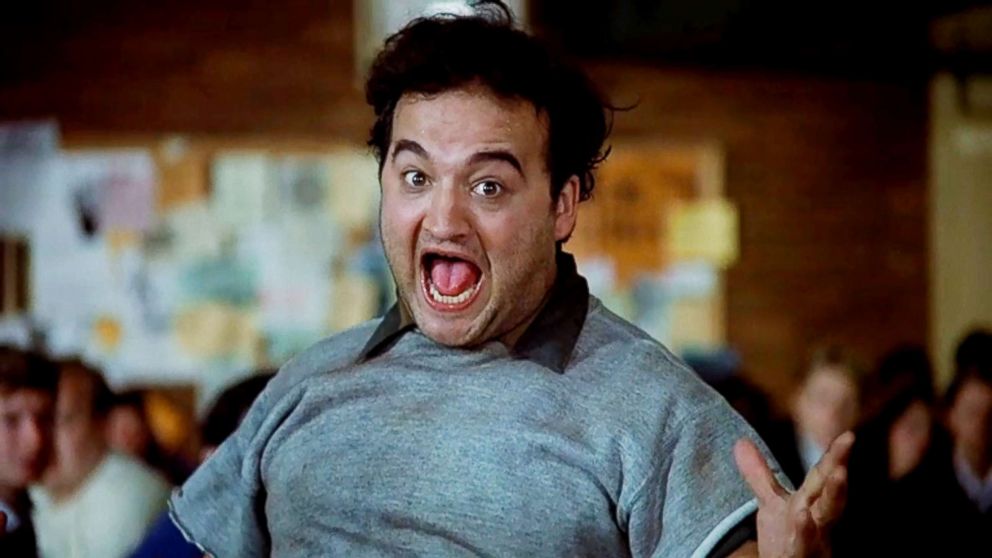
The first time I heard the Cooke version of this song was in Animal House when Belushi was heading down the cafeteria line and for me this is my go-to version. Cooke had such a smooth soulful voice.
Cooke recorded Wonderful World on Keen Records shortly before he left the label over a royalty dispute in 1959. In 1960, Cooke had moved on to RCA Victor, but Keen, still owning the rights to Wonderful World, released the single in April 1960.
From Songfacts
“Wonderful World,” or “(What a) Wonderful World,” was one of Sam Cooke’s 29 US Top 40 hits released between 1957 and 1964. The song was released on April 14, 1960 and quickly reached #2 on the US Black Singles chart, #12 on the US Pop Singles chart, and #27 on the UK Singles chart.
“Wonderful World” was originally written by music legends Lou Alder and Herb Alpert, but Cooke added the finishing lyrical touches, and the trio used the songwriting pseudonym “Barbara Campbell,” the name of Cooke’s high school sweetheart. Adler went on from this success to found Dunhill Records and manage big name artists such as Jan & Dean, The Mamas & The Papas, and Carole King. Not to be outdone, his writing partner, Herb Alpert, put the “A” in A&M Records after performing for several years with his band Herb Alpert & The Tijuana Brass.
Don’t let the bouncy rhythm and upbeat tempo fool you. According to Craig Werner, a professor of African American Studies at the University of Wisconsin-Madison, the song may have a more politically charged meaning. In his book, A Change Is Gonna Come: Music, Race and the Soul of America, Werner writes that “Wonderful World” may be one of the first examples of Cooke’s crossover into politics, where he informs white listeners that he “don’t know much about history” and “don’t know much biology” as a comment that these are the things to forget about African-Americans, and all they need to remember is love.
Throughout the years, “Wonderful World” has been covered by a number of artists including Otis Redding, Bryan Ferry, Michael Bolton, and Rod Stewart. After Sam Cooke’s death in 1964, there were a rash of “tribute” covers released including a 1965 up-tempo version by Herman’s Hermits, which reached #4 on the US Pop Singles chart and #7 on the UK Singles chart, and a rendition by The Supremes released on their 1965 album “We Remember Sam Cooke.” In 1977, Art Garfunkel put his spin on the hit for his album, Watermark, which featured harmonies by friend, James Taylor, and former partner, Paul Simon.
“Wonderful World” has been a hit with filmmakers since its release. The song can be heard in the famous lunchroom scene of the 1978 classic, Animal House. It was also featured in the 1983 Richard Gere drama, Breathless, and appeared in the opening titles of the 2005 Will Smith comedy, Hitch. A Greg Chapman cover of “Wonderful World” was spotlighted in the 1985 film, Witness, which spurred resurgence in popularity for the single and led to use of the Cooke original in a well-remembered 1986 British ad for Levi 501 Jeans. The song originally peaked at #27 in the UK, but after the commercial, the song was re-released there and reached #2.
According to Rolling Stone, before the song came out, Cooke liked to sing it for women he met, telling them he’d made it up on the spot just for them.
Wonderful World
Don’t know much about history Don’t know much biology Don’t know much about a science book, Don’t know much about the french I took But I do know that I love you, And I know that if you love me, too, What a wonderful world this would be
Don’t know much about geography, Don’t know much trigonometry Don’t know much about algebra, Don’t know what a slide rule is for But I do know that one and one is two, And if this one could be with you, What a wonderful world this would be
Now, I don’t claim to be an “A” student, But I’m tryin’ to be For maybe by being an “A” student, baby, I can win your love for me
Don’t know much about history, Don’t know much biology Don’t know much about a science book, Don’t know much about the french I took But I do know that I love you, And I know that if you love me, too, What a wonderful world this would be
History Biology Science book French I took But I do know that I love you, And I know that if you love me, too, What a wonderful world this would be
I wish this era of the Stones would have lasted longer. Yes, I love the electric blues slanted work they did after this but they wrote some great pop songs. Brian Jones plays the recorder (it sounds like a flute) in this song. You don’t hear much about Brian now but he expanded their sound in the mid-sixties with an array of instruments.
Bill Wyman said that Keith wrote the lyrics and Brian helped finish the melody. This song was the B side to “Let’s Spend The Night Together.”
This song peaked at #1 in the Billboard 100 in 1967.
Keith Richards: “That’s one of those things – some chick you’ve broken up with. And all you’ve got left is the piano and the guitar and a pair of panties. And it’s goodbye you know. And so it just comes out of that. And after that, you just build on it. It’s one of those songs that are easiest to write because you’re really right there and you really sort of mean it. And for a songwriter, hey break his heart and he’ll come up with a good song.”
From Songfacts
The fourth US #1 hit for the Rolling Stones, this ballad is about a groupie. It may have been inspired by Linda Keith, who was Keith Richards’ girlfriend. Richards said in According to the Rolling Stones: “It was probably written about Linda Keith not being there (laughs). I don’t know, she had pissed off somewhere. It was very mournful, very, VERY Ruby Tuesday and it was a Tuesday.”
Originally, this was called “Title B.”
Keith Richards and Brian Jones wrote most of this, but in keeping with Stones tradition, it was credited to Mick Jagger and Keith Richards.
Brian Jones was their lead guitarist until he died in 1969, and could play just about any instrument.
A large double-bass was used. Bill Wyman plucked the notes while Richards played it with a bow.
This was not on the English version of Between The Buttons because it was already released as a single there, and it was customary not to put singles on albums.
This was supposed to be the B-side of “Let’s Spend the Night Together,” but many radio stations shied away from the sexual implications of that song, so they played this instead and made it a hit.
Jagger: “Ruby Tuesday is good. I think that’s a wonderful song. It’s just a nice melody, really. And a lovely lyric. Neither of which I wrote, but I always enjoy singing it.”
The singer Melanie, who had a #1 hit with “Brand New Key” in 1971, released a cover of “Ruby Tuesday” in 1970 that went to #9 in the UK and #52 in the US. Rod Stewart also released a popular cover that was accompanied by a video. His version made #11 in the UK in 1993.
Ruby Tuesday
She would never say where she came from Yesterday don’t matter if it’s gone While the sun is bright Or in the darkest night No one knows, she comes and goes
Goodbye Ruby Tuesday Who could hang a name on you? When you change with every new day Still I’m gonna miss you
Don’t question why she needs to be so free She’ll tell you it’s the only way to be She just can’t be chained To a life where nothings gained And nothings lost, at such a cost
Goodbye Ruby Tuesday Who could hang a name on you? When you change with every new day Still I’m gonna miss you
“There’s no time to lose”, I heard her say Catch your dreams before they slip away Dying all the time Lose your dreams and you will lose your mind Ain’t life unkind?
Goodbye Ruby Tuesday Who could hang a name on you? When you change with every new day Still I’m gonna miss you
That simple bass guitar riff hooks me when it comes in during the drum intro.
A good pop song from Paul McCartney in the 1980s. This was on an album called Tug of War which peaked at #1 in the Billboard album charts. The highlight to me is another McCartney bass line. The song peaked at #10 in the Billboard 100 in 1982.
Paul played bass, Ringo played drums, and George Martin played electric piano. Eric Stewart from 10cc influenced the layered backup vocals.
Paul McCartney:
“Well, there were a couple of songs that we ended up recording which Ringo asked me to write at a certain period. I was writing some songs for Ringo and “Take It Away” was in amongst those songs. I thought it would suit me better the way it went into the chorus and stuff; I didn’t think it was very Ringo.”
“I mean, the chorus I think, was Ringo, the other bits… but that’s how that comes to be that kind of track I think, I was right in that sort of direction with Ringo in mind actually.”
Take It Away
Take it away Want to hear you play Till the lights go down Take it away Don’t you want to stay Till there’s no one else around?
Lonely driver Out on the road With a hundred miles to go Sole survivor Carrying the load Switches on his radio
Take it away Want to hear you play Till the lights go down (down down) Take it away Don’t you want to stay Till there’s no one else around?
In the audience Watching the show With a paper in his hand (In his hand, in his hand) Some important impresario Has a message for the band
Oh Take it away Want to hear you play Till the lights go down (down down) Take it away Don’t you want to stay Till there’s no one else around?
You never know who may be Listening to you Never know who may be Listening to you You never know who may be Listening to you Take it away, take it away
After hours Late in the bar By a darkened corner seat Faded flowers wait in the jar Till the evening is complete
This was on the album Coda it was released two years after John Bonham’s death and features outtakes from sessions throughout their career. I heard this one more than the others on the album.
Recorded in 1978 at a studio in Sweden owned by Abba, this song was intended for the Led Zeppelin album In Through the Out Door, but it didn’t make the cut. Ozone Baby peaked at #14 in the Mainstream Rock Songs Charts in 1982. Coda was released in 1982 and peaked at #6 in the Billboard Album Charts in 1983.
Coda is by no means a great album but it does have some enjoyable tracks like Wearing and Tearing and Darlene. It’s not like they set out to record an album… it was released to honor contractual commitments to Atlantic Records.
From Songfacts
The entire band’s instrumentals come in right at the opening with Robert Plant’s vocals starting in soon after. This was Zeppelin’s typical style, a straightforward “get it done” 12-bar-blues attitude without very much pretension. It shows something of their character that they were consistent in doing this on one of the last songs done by the classic lineup.
Another telling sign of Zeppelin’s character: How many drummers do most bands go through? Next to the bass, the drummer is usually the most-rotated spot. Not Zeppelin! Lose the drummer, and that’s it, the band calls it quits – but to be fair, growing tensions within the band could have broken them up anyway.
A bit of rock history trivia: Led Zeppelin today is remembered as practically having walked on water. One easily forgets that back when these albums were coming out, while they had a huge fan base, rock critics panned them almost unanimously. Rolling Stone raspberried every single Zep album.
Ozone Baby
I hear ya knock on my door I ain’t been saving this scene for ya honey Don’t wantcha ringin’ my bell It’s too late for you to be my honey
Oh, it’s my love Oh, it’s my own true love
Don’t want you wasting my time Tired of ya doing the things that you do It’s no use standing in line Follow the line, you better follow queue
I say, oh, it’s my love Oh, it’s my own true love
Oh, it’s my love Oh, it’s my own true love, my my own
I could sail a river run dead, but I know it’s dead I could I wish for a million, yeah but I know it’s dead I could cry within the darkness, I sail away I save a lifetime forever? But you know, you know, you know what I say
And I say oh, it’s my love Oh, it’s my own true love
Oh, it’s my love Oh, it’s my own true love, my my own
Oh, it’s my love Oh, it’s my own true love
Oh, it’s my love Oh, it’s my own true love, my own true love My own true love, my own true love My own true love I said Oh, it’s my love Oh, it’s my own true love Oh, it’s my love Oh, it’s my own true love, my own
Mid-Sixties pop classic. If I Needed Someone is a George Harrison song that was on the album Rubber Soul. In America this was one of the four songs left off of Capital’s version of Rubber Soul…it was included on Yesterday and Today…an album that Capital put together for the American market. It was originally issued only in the United States and Canada
George Harrison said the song was influenced by the Byrds: “It was based on the twelve-string figure from ‘The Bells Of Rhymney’ by The Byrds.”
McCartney called the song the first “landmark” song written by George for the Beatles.
George Harrison: “It was like a million other songs written around one chord, a D chord actually.” “If you move your fingers about you get various little melodies. That guitar line, or variations on it, is found in many a song, and it amazes me that people still find new permutations of the same notes.”
As a guitarist, there are many songs that have been written around the D chord by moving your fingers in different positions. Here Comes The Sun, Woman by Lennon, Free Falling, Sweet Home Alabama, and like George said…a million others.
On January 24th, 1996, “If I Needed Someone” got its first and only release on a single. The Capitol series of “For Jukebox Only” singles paired the song as the b-side to “Norwegian Wood” and was printed on both black and green vinyl.
The Hollies received an early version of the song and then quickly recorded their own version of the song and released it as their next single at the end of 1965. It reached #20 in the UK, making it the first George Harrison composition to make the charts.
George made it known he didn’t like their version…but to me, the Hollies did a good job.
From Songfacts
This was written by George Harrison, who got the idea from a few of The Byrds’ songs including “The Bells of Rhymney” and “She Don’t Care About Time.” It was not Ravi Shankar that introduced George to the wonderment of sitar, but Byrd traveler David Crosby shortly after Shawn Phillips had shown him the basic steps. In 1965 The Beatles toured the US and visited Ravi at World Pacific Studios where The Byrds had permanent residency. It was also here that Roger McGuinn’s Rickenbacker jingle jangle influenced Harrison’s “If I Needed Someone.” In turn, The Byrds were influenced by Harrison’s 12-string guitar work. >>
Former Byrds guitarist Roger McGuinn recalled to Christianity Today magazine: “George Harrison wrote that song after hearing the Byrds’ recording of “Bells of Rhymney.” He gave a copy of his new recording to Derek Taylor, the Beatles’ former press officer, who flew to Los Angeles and brought it to my house. He said George wanted me to know that he had written the song based on the rising and falling notes of my electric Rickenbacker 12-string guitar introduction. It was a great honor to have in some small way influenced our heroes the Beatles.”
If I Needed Someone
If I needed someone to love You’re the one that I’d be thinking of If I needed someone
If I had some more time to spend Then I guess I’d be with you my friend If I needed someone Had you come some other day Then it might not have been like this But you see now I’m too much in love
Carve your number on my wall And maybe you will get a call from me If I needed someone Ah, ah, ah, ah
If I had some more time to spend Then I guess I’d be with you my friend If I needed someone Had you come some other day Then it might not have been like this But you see now I’m too much in love
Carve your number on my wall And maybe you will get a call from me If I needed someone Ah, ah
I’ve never been a fan of the Jefferson Airplane/Starship or just plain Starship but this one has good memories connected to it. It was released in 1978 and it peaked at #8 in the Billboard 100, #9 in Canada, and #24 in New Zealand. This is the last output by the band that I liked.
Marty Balin sang this song…whenever I think of Marty Balin I think of when he was in The Jefferson Airplane at Altamont. He stood up to the Hells Angels and got walloped over the head for his trouble. Paul Kantner (guitar player for the Airplane) then announced what happened. It went something like this.
Kantner to the crowd:“Hey man, I’d like to mention that the Hell’s Angels just smashed Marty Balin in the face and knocked him out for a bit. I’d like to thank you for that.”
A Hell’s Angel grabs a microphone: “Is this on? If you’re talking to me, I’m gonna talk to you.”
Kantner:“I’m not talking to you, I’m talking to the people who hit my lead singer in the head.”
Hell’s Angel:“You’re talking to my people.”
Kantner: “Right.”
Hell’s Angel: “Let me tell you what’s happening: You are what’s happening.”
Paul Kantner, Marty Balin and later Keith Richards stood up to the Angels at Altamont.
Precious love I’ll give it to you Blue as the sky and deep in the Eyes of a love so true Beautiful face You make me feel Lite on the stairs and lost in the Air of a love so real
And you can count on me girl You can count on my love Woman You can count on me baby You can count on my love to see You through
Emerald eyes and China perfume Caught in the wheel and lost in The feel of a love so soon Ruby lips You make my song Into the night and saved by the lite Of a love so strong
See you through Oh You can count on me girl You can count on my love
Some songs can be written by anyone. Songs can be very popular but generic. Some can only be written by certain songwriters. This would be one of those songs. Ray Davies’s songs have their own DNA. This was on the great 1968 album The Kinks Are the Village Green Preservation Society.
This nostalgic song is a favorite of mine. This is a big jump from You Really Got me to…”We are the Sherlock Holmes English-speaking Vernacular, God save Fu Manchu, Moriarty and Dracula.”
Ray Davies: “You have to remember that North London was my village green, my version of the countryside. The street and district I grew up in was called Fortis Green, and then there was Waterlow Park and the little lake. I sang in the choir at St James’s Primary School until I was about 10, then I trained myself to sing out of tune so I could hang around with a gang called the Crooners instead. Our Scottish singing teacher Mrs. Lewis said, ‘Never mind, Davies – I hear crooners are making a lot of money these days.'”
From Songfacts
A very reflective and nostalgic song written by lead singer Ray Davies, this is about the innocent times in small English towns, where the village green was the community center. The entire album was based on this theme.
This plays in the movie Hot Fuzz as Sgt. Angel is jogging through a village.
Some critics thought the album’s snapshots of village life were partly inspired by performances by the Kinks in rustic Devon. Instead, they were based on memories of his growing up in London.
Ray Davies namechecks various fictional characters that bring back childhood memories, such as music hall act Old Mother Riley and Mrs. Mopp, who was a character from the wartime radio comedy, ITMA.
We are the Draught Beer Preservation Society.
God save Mrs. Mopp and good old Mother Riley.
Davies explained to Q magazine: “The people in it are all characters I liked as a kid or people my family could relate to, like Old Mother Riley and Mrs Mopp. Because I used to love listening to the BBC Light Programme on Sundays, like Round The Horne with Kenneth Williams. A time when the population was allowed to be trivial.”
Village Green Preservation Society
We are the Village Green Preservation Society. God save Donald Duck, vaudeville and variety. We are the Desperate Dan Appreciation Society. God save strawberry jam and all the different varieties.
Preserving the old ways from being abused. Protecting the new ways, for me and for you. What more can we do?
We are the Draught Beer Preservation Society. God save Mrs. Mopp and good old Mother Riley. We are the Custard Pie Appreciation Consortium. God save the George Cross, and all those who were awarded them.
Oooh…
We are the Sherlock Holmes English-speaking Vernacular. God save Fu Manchu, Moriarty and Dracula. We are the Office Block Persecution Affinity. God save little shops, china cups, and virginity. We are the Skyscraper Condemnation Affiliates. God save Tudor houses, antique tables, and billiards.
Preserving the old ways from being abused. Protecting the new ways, for me and for you. What more can we do?
We are the Village Green Preservation Society. God save Donald Duck, vaudeville and variety. We are the Desperate Dan Appreciation Society. God save strawberry jam and all the different varieties.
This list will be different for every baseball fan. Many times it’s your team’s announcer and other times it’s a network announcer you grew up with. I tend to like announcers who are not complete homers although some I like… like Harry Caray. He made it fun even though he openly rooted for the Cubs…and Budweiser.
There are many more that could be on this list.
5:Harry Caray – He injected fun into the game. It was like a fan announcing the game. He wasn’t technically the best baseball announcer but he was enjoyable.
4:Mel Allen – I remember Mel when I was a kid on “This Week in Baseball.” That voice was a part of my childhood.
3:Bob Uecker – “Just a bit outside” the more I listen to him the more I appreciate him.
2:Jack Buck – NOT Joe… You could hear his excitement for the game in his voice. For me, the best is between Jack and…
1: Vin Scully – Being a Dodgers fan I was spoiled by Vin Scully… my number 1 favorite. If you tuned into a Dodger game you would not know who employed Mr. Scully. He would not root for the Dodgers and he knew when not to say anything and let the action speak for itself.
When I think of horror movies..this one tops the list. I don’t get scared easily and slasher films make me laugh more than anything. This film is different to me than other horror movies. It’s been copied with sometimes awful results.
I got to see this in a theater in 2000 on Halloween at the re-release of the director’s cut. It was an experience I’ll never forget. The place was full of teenagers who were scared even though they had seen more modern horror movies but this one still worked.
When it was released in 1973 it was a huge success. Lines wrapped around street corners waiting to get in to see this. It broke records across the nation in most theaters it opened. The Exorcist went on to gross $232.91 million (1.6 Billion adjusted to today) domestically. The Exorcist film has grossed over $441 million at the worldwide box office.
I remember firsthand how this was handled by theaters. My cousin was pregnant at the time this movie premiered in 1973 and they would not let her in to see the movie because they did not want to be liable.
People were fainting or becoming ill at almost every show. This movie has its place firmly in 70’s pop culture.
Stephen King: [The Exorcist] is a film about explosive social change, a finely honed focusing point for that entire youth explosion that took place in the late sixties and early seventies. It was a movie for all those parents who felt, in a kind of agony and terror, that they were losing their children and could not understand why or how it was happening.
The guitar on this is so simple yet so powerful. Some Clash songs take me a couple of listens to really like…this one was instant. The song peaked at #45 in the Billboard 100, #17 in the UK and #40 in Canada in 1982 and #1 in the UK in 1992.
The song was off of Combat Rock (Dave at “A Sound Day” has a writeup about the album) released in 1982. This was when I was watching MTV and every few minutes that year you knew The Who was supposedly on their last tour (They are in Nashville Thursday Night) and The Clash was opening up for them.
Mick Jones wrote this about his girlfriend Ellen Foley, who acted on the TV series Night Court and sang with Meat Loaf on “Paradise By the Dashboard Light.”
From Songfacts
One of the more popular songs by The Clash, this one uses a very unusual technique: Spanish lyrics echoing the English words.
Singing the Spanish parts with Joe Strummer was Joe Ely, a Texas singer whose 1978 album Honky Tonk Masquerade got the attention of The Clash when they heard it in England. When Ely and his band performed in London, The Clash went to a show and took them around town after the performance. They became good friends, and when The Clash came to Texas in 1979, they played some shows together. They stayed in touch, and when The Clash returned to America in 1982, they played more shows together and Ely joined them in the studio when they were recording Combat Rock at Electric Ladyland Studio in New York.
In our 2012 interview with Joe Ely, he explained: “I’m singing all the Spanish verses on that, and I even helped translate them. I translated them into Tex-Mex and Strummer kind of knew Castilian Spanish, because he grew up in Spain in his early life. And a Puerto Rican engineer (Eddie Garcia) kind of added a little flavor to it. So it’s taking the verse and then repeating it in Spanish.”
When we asked Ely whose idea the Spanish part was, he said, “I came in to the studio while they were working out the parts. They’d been working on the song for a few hours already, they had it sketched out pretty good. But I think it was Strummer’s idea, because he just immediately, when it came to that part, he immediately went, ‘You know Spanish, help me translate these things.’ (Laughs) My Spanish was pretty much Tex-Mex, so it was not an accurate translation. But I guess it was meant to be sort of whimsical, because we didn’t really translate verbatim.”
According to Strummer, Eddie Garcia, the sound engineer, called his mother in Brooklyn Heights and got her to translate some of the lyrics over the phone. Eddie’s mother is Ecuadorian, so Joe Strummer and Joe Ely ended up singing in Ecuadorian Spanish.
About two minutes in, you can hear Mick Jones say, “Split!” While it sounds like it could be some kind of statement related to the song, Joe Ely tells us that it had a much more quotidian meaning. Said Ely: “Me and Joe were yelling this translation back while Mick Jones sang the lead on it, and we were doing the echo part. And there was one time when the song kind of breaks down into just the drums right before a guitar part. And you hear Mick Jones saying, ‘Split!’ Just really loud, kind of angry. Me and Joe had snuck around in the studio, came up in the back of his booth where he was all partitioned off, and we snuck in and jumped and scared the hell out of him right in the middle of recording the song, and he just looked at us and says, ‘Split!’ So we ran back to our vocal booth and they never stopped the recording.”
The line, “If you want me off your back” was originally the sexually charged line “On your front or on your back.” In April 1982, the famed ’60s producer Glyn Johns was brought in to slash the album down and make it into a mainstream-friendly single-LP. In addition to cutting parts of songs out, he insisted that Mick Jones re-record this line, fearing that US radio stations would not touch a record with such a sexually suggestive line.
These sessions as a whole were in bad blood, with Jones furious that his original mixes of his songs were being massacred against his will, and it was this combined with other factors (such as the return of controversial manager Bernie Rhodes) which resulted in the breakdown of the band and Jones’ sacking in 1983.
Mick Jones in 1000 UK #1 Hits by Jon Kutner and Spencer Leigh said, “Should I Stay Or Should I Go? wasn’t about anything specific and it wasn’t pre-empting my leaving The Clash. It was just a good rocking song, our attempt at writing a classic.”
It was speculated that the song was also a comment on Jones’ position in the band, pre-empting his sacking in 1983 by over a year and a half. Strummer pondered this in interviews, as did Jones. “Maybe it was pre-empting my leaving” he noted in 1991, although he did conclude that it was more likely about a “personal situation” – presumably his relationship with Foley.
Psychobilly is the punk version of rockabilly; it’s a fusion genre which also gets a nice sound out of elements of everything from doo-wop to blues, but with that punk edge to it. “Should I Stay or Should I Go?” resembles early punk, almost retro style, and so could be called rockabilly. More than anything, it compares very nicely with The Cramps.
“Should I Stay Or Should I Go?” is possibly one of the most covered Clash songs by dint of being one of the most popular. Just some of the groups to cover this song include Living Colour, Skin, MxPx, Weezer, ZZ Top, and The Ukulele Orchestra of Great Britain. Anti-Flag covered the song at various festival dates in 2012, and more memorable versions exist by Die Toten Hosen and Australian pop star Kyle Minogue. It even shows up in “Weird Al” Yankovic’s “Polkas On 45” medley – a takeoff on the “Stars On 45 Medley.”
As a UK #1 single, what song did it replace as #1 on the UK charts? “Do the Bartman” by The Simpsons. Speaking of charts, while this song was their only #1 in the UK, The Clash got even less respect in the US; their highest chart on the Billboard was #8 for “Rock the Casbah”. That’s amazing when you consider how much airplay they get on the radio.
Introduced into The Clash’s live set in Paris in September 1984, “Should I Stay or Should I Go?” sat awkwardly in the set after Jones was fired – it was a hugely popular song so fans expected it to be played, but its author and singer was no longer in the band.
For a while in 1984 it was performed with new guitarist Nick Sheppard singing lead vocals, with the song developing into an aggressive Metal thrash with bellowed Punk-style vocals. In the end The Clash Mark II dropped the song altogether, although not before they also added some nasty lyrics about Jones (as was common in the post-Jones Clash, sadly). Two much more representative versions are the version of the song filmed at Shea Stadium in 1982 (supporting The Who) for the music video, and the version from Boston in 1982 that features on the From Here To Eternity live compilation.
Ice Cube and Mack 10 did a rap remake of this song for the 1998 Clash tribute album Burning London.
This was re-released as a single in February 1991 after it was used in a Levi’s jeans television ad. It went to #1 in the UK, but didn’t chart in the US.
Cheekily, Mick Jones used a vocal sample from this track on one of his post-Clash projects, Big Audio Dynamite. You can hear it on their song “The Globe.”
This is a key song in the ’80s-themed Netflix series Stranger Things. It was first used in the second episode (2016), where the character Jonathan Byers introduces it to his younger brother, Will to distract him when their parents fight, telling him it will change his life. When Will gets abducted into an alternate universe, the song becomes a way for him to communicate, and a source of comfort. The song is used several times throughout the series.
To secure the rights, music supervisor Nora Felder had to explain to the band how it would be used. Through scene descriptions, she convinced them they would honor the song.
Should I Stay Or Should I Go
Darling you got to let me know Should I stay or should I go? If you say that you are mine I’ll be here till the end of time So you got to let me know Should I stay or should I go?
It’s always tease tease tease You’re happy when I’m on my knees One day is fine, and next is black So if you want me off your back Well come on and let me know Should I Stay or should I go?
Should I stay or should I go now? Should I stay or should I go now? If I go there will be trouble And if I stay it will be double So come on and let me know
This indecision’s bugging me Esta indecision me molesta If you don’t want me, set me free Si no me quieres, librame Exactly whom I’m supposed to be Digame quien tengo ser
Don’t you know which clothes even fit me? Sabes que ropas me queda? Come on and let me know Me tienes que decir Should I cool it or should I blow? Me debo ir o quedarme?
Split
Should I stay or should I go now? Me entra frio por los ojos Should I stay or should I go now? Me entra frio por los ojos If I go there will be trouble Si me voy va a haber peligro And if I stay it will be double Si me quedo va a ser doble So you gotta let me know Me tienes que decir Should I cool it or should I blow?
Should I stay or should I go now? Me entra frio por los ojos If I go there will be trouble Si me voy va a haber peligro And if I stay it will be double Si me quedo va a ser doble So you gotta let me know Should I stay or should I go
The song peaked at #94 in the Billboard 100 in 1986. The song was on Lifes Rich Pageant which peaked at 21 in 1986. A musician friend of mine invited me over to listen to this album. We must have played it 5 times through by night time.
Bill Berry (drummer) said the song was specifically about Acid Rain, which occurs when the burning of fossil fuels releases sulfur dioxide and nitrogen oxides into the atmosphere, causing rain to be acidic and threatening the environment.
Michael Stipe said about the song: “I was reading an article in Boston when I was on tour with the Golden Palominos, and Chris Stamey showed me this article about this guy that did an experiment from the Leaning Tower of Pisa, whereby he dropped a pound of feathers and a pound of iron to prove that there was… a difference in the… density? What did he prove? I don’t even know. They fall just as fast.”
From Songfacts
The video was filmed upside down in a rock quarry, and snippets of the environmentally concerned words flash on-screen throughout: “Buy” the sky, “Sell” the sky, etc.
Before it ended up on the Lifes Rich Pageant album, R.E.M. performed a variation of this song on tour promoting their previous album, Fables of the Reconstruction. Peter Buck remembered in the liner notes for Part Lies, Part Heart, Part Truth, Part Garbage 1982-2011: “And pretty much every day Michael had different lyrics or a different melody; we changed the bridge a hundred times. On the Lifes Rich Pageant anniversary box set, there is a version that is kind of what we used to do on stage. Michael wrote new words and melodies during the making of the record, which all took a bit of getting used to since we were so used to the previous versions. But no question, the one on the record is so superior.”
We didn’t forget to add that possessive apostrophe to the album title. The band intentionally left it out, or so the story goes. “We all hate apostrophes,” Peter Buck proclaimed. “There’s never been a good rock album that had an apostrophe in the title.” Beatles fans may disagree – A Hard Day’s Night and Sgt. Pepper’s Lonely Hearts Club Band both employ the punctuation mark. Maybe Buck’s oft-quoted comment is meant to be taken with a dose of irony, or maybe he’s just a Stones fan (that band shunned the apostrophe for Their Satanic Majesties Request).
Fall On Me
There’s a problem feathers iron Bargain buildings, weights and pulleys Feathers hit the ground before the weight can leave the air Buy the sky and sell the sky and tell the sky and tell the sky
Don’t fall on me (what is it up in the air for?) (it’s gonna fall) Fall on me (if it’s there for long) (it’s gonna fall) Fall on me (it’s over, it’s over me) (it’s gonna fall)
There’s the progress we have found (when the rain) A way to talk around the problem (when the children reign) Building towered foresight (keep your conscience in the dark) Isn’t anything at all (melt the statues in the park) Buy the sky and sell the sky and bleed the sky and tell the sky
Don’t fall on me (what is it up in the air for?) (it’s gonna fall) Fall on me (if it’s there for long) (it’s gonna fall) Fall on me (it’s over, it’s over me) (it’s gonna fall)
Don’t fall on me
Well, I could keep it above But then it wouldn’t be sky anymore So if I send it to you, you’ve got to promise to keep it whole
Buy the sky and sell the sky and lift your arms up to the sky And ask the sky and ask the sky
Don’t fall on me (what is it up in the air for?) (it’s gonna fall) Fall on me (if it’s there for long) (it’s gonna fall) Fall on me (it’s over, it’s over me) (it’s gonna fall)
Fall on me, don’t fall on me (what is it up in the air for?) (it’s gonna fall) Fall on me (if it’s there for long) (it’s gonna fall) Fall on me (it’s over, it’s over me) (it’s gonna fall)
This song was on the album “Born In The USA.” released in 1984. I was a Jr in high school and this song hit like a blast. Bruce had been huge when Born To Run was released in 1975 but since then he had been popular but this album placed him in the stratosphere. He was reluctant to release the album because Bruce had a clue on how big this album was going to be and he didn’t know how comfortable he would be with that.
When you are 17 years old and waiting for your life to start… then hear the lyrics Well, we busted out of class, Had to get away from those fools, We learned more from a three-minute record, baby Than we ever learned in school… it gets your attention.
I think every song on the album could have been released as a single. This one did not chart but remains a strong song. Steven Van Zandt convinced Springsteen to include this song on the album because Bruce was going to leave it off.
From Songfacts
Springsteen wrote this about the inspirational power of rock music. It came to represent his friendship with members of his band.
This was the last song chosen for the album. E Street Band guitarist Steven Van Zandt had to convince Springsteen to put it on. Van Zandt had left the band, but remained close to Springsteen and would eventually play with him again.
The original title was “Brothers Under The Bridges.”
Part of the chorus provided the title for Jean-Claude Van Damme’s first movie, No Retreat, No Surrender.
Springsteen often performed a slower version of this at concerts. The version on the box set Live 1975-1985 is a slower, solo performance.
No Surrender
Well, we busted out of class Had to get away from those fools We learned more from a three-minute record, baby Than we ever learned in school Tonight I hear the neighborhood drummer sound I can feel my heart begin to pound You say you’re tired and you just want to close your eyes And follow your dreams down
Well, we made a promise we swore we’d always remember No retreat, baby, no surrender Like soldiers in the winter’s night With a vow to defend No retreat, baby, no surrender
Well, now young faces grow sad and old And hearts of fire grow cold We swore blood brothers against the wind Now I’m ready to grow young again And hear your sister’s voice calling us home Across the open yards Well maybe we’ll cut someplace of our own With these drums and these guitars
‘Cause we made a promise we swore we’d always remember No retreat, baby, no surrender Blood brothers in the stormy night With a vow to defend No retreat, baby, no surrender
Now on the street tonight the lights grow dim The walls of my room are closing in There’s a war outside still raging You say it ain’t ours anymore to win I want to sleep beneath Peaceful skies in my lover’s bed With a wide open country in my eyes And these romantic dreams in my head
Once we made a promise we swore we’d always remember No retreat, baby, no surrender Blood brothers in a stormy night With a vow to defend No retreat, baby, no surrender No retreat, baby, no surrender