Power Pop fan, Baseball, Beatles, Alternative music, old movies, and tv show fan. Also anything to do with pop culture in the 60s and 70s... I'm also a songwriter, bass and guitar player. Not the slightest bit interested in politics at all.
This post is a little longer than usual, but this was a unique artist, to say the least. Many musicians like Jeff Tweedy, Kurt Cobain, Chris Cornell, Tom Waits, Beck, Lana Del Rey, Eddie Vedder, and countless others were huge fans. Eddie Vedder spent some time with Chris Cornell listening to Johnston’s music. Eddie Vedder: “We listened for two hours straight, it turned into four hours, and then into six hours, until it was six in the morning, laughing and crying and then smiling so hard that tears were squeezed out of our eyes, and then looking at each other and going, I’ll never forget, we said, ‘He is better than both of us.’”
My friend Ron (Hanspostcard) grew up with this guy, as they met in high school. Ron and he hung out with each other and would visit, and Ron would listen to what Daniel recorded. Johnston was very socially awkward and not really connected to the world as much. He recorded on cassette tapes, very lo-fi. He was a musician and a very good painter as well. It was hard for him to perform in front of people. You can see it on his face when he did live performances. He suffered from different mental issues.
The most powerful songs don’t always come from stacks of amplifiers or a room full of seasoned players. This is one of those songs. At just over two minutes, it’s as unvarnished as a song can be and so vulnerable. It was recorded with the kind of lo-fi immediacy that feels more like he was confessing this to a person, and it wasn’t meant to be heard. It was on his 1984 cassette album Retired Boxer. Underneath the out-of-tune singing and guitars, there are some pure gems. Most people compose songs self-consciously, hence why it is sometimes not very original or good. This guy writes songs so naively, like a child, that it sometimes creates incredibly beautiful songs
He was born in Sacramento in 1961 but raised in West Virginia. He didn’t look like your typical future rock icon. He sketched comic book heroes, taped Beatles songs off the TV, and played on a chord organ in his parents’ basement. When he later moved to Austin, Texas, he began recording homemade cassette tapes, cassette albums like Hi, How Are You, Songs of Pain, and Don’t Be Scared. These weren’t studio-polished records. These were hissing-filled songs, often off-key, but full of heart. He would dub them by hand and pass them out on the streets. Austin didn’t just shrug him off…they embraced him.
In the mid-1980s, Johnston was the local eccentric in the Austin music scene, passing out tapes at gigs and working at McDonald’s, where he’d draw cartoons for customers along with their fries. His break nationally came almost by accident: MTV aired a special on Austin’s underground in 1985, and there was Daniel playing a song called Walking The Cow. Suddenly, he wasn’t just the quirky guy on the street; he was a known musician.
Everything changed when Kurt Cobain started wearing a Hi, How Are You t-shirt in the early ’90s. At the height of Nirvana’s fame, Cobain’s endorsement turned Johnston into a name everyone knew, even if they hadn’t actually heard a single song. Labels arrived, and a bidding war began. But signing Daniel wasn’t like signing Pearl Jam. He was battling severe manic depression and schizophrenia, and his health often made recording and touring a near impossibility. He did sign with Atlantic Records briefly.
As the years went on, Johnston’s health declined, and he lived with his parents in Waller, Texas. He was the subject of the 2005 documentary The Devil and Daniel Johnston, which told his story. Artists wore his shirts, fans tattooed his drawings, and a mural of his alien frog (“Hi, How Are You”) became a landmark in Austin.
When Daniel Johnston died in 2019 at age 58, the tributes poured in from artists all over the world.
I would highly recommend this documentary.
Here is Wilco doing this song.
True Love Will Find You In The End
True love will find you in the end You’ll find out just who was your friend Don’t be sad, I know you will But don’t give up until
True love will find you in the end This is a promise with a catch Only if you’re looking can it find you ‘Cause true love is searching too
But how can it recognize you If you don’t step out into the light, the light Don’t be sad I know you will Don’t give up until True love will find you in the end
California is the garden of eden It’s a paradise to live in or see But believe it or not You won’t find it so hot If you ain’t got the do re mi
Guitar player extraordinaire Ry Cooder… everything he plays has feeling and soul. This song just rolls and doesn’t skip a beat. I want to thank Clive for bringing Ry Cooder up a month or so ago, before I posted another Cooder song. I usually don’t post songs by the same artist so close together, but I made an exception in this case.
Cooder is an excellent musician and one of the great slide players of our time. He contributed to the Rolling Stones’ albums Let It Bleed and Sticky Fingers and was briefly considered as a replacement for Brian Jones. Some say he wrote the riff to “Honky Tonk Woman.”
The song was written by Woody Guthrie as a warning to the Okie dreamers heading west during the Great Depression. It’s a cautionary folk tale wrapped in wit. But when Ry Cooder tackles it on his 1970 self-titled debut album, he swaps Woody’s acoustic for a blues groove that you won’t forget.
I’ve talked about guitar tone here before, and this is great. It moans. It sings. It talks back. He plays like he’s got some blues legends in his hand. Each lick feels like it was pulled straight from the dirt.
What makes Cooder’s take so great isn’t just the craftsmanship, it’s the context. Coming out in 1970, on the heels of the Nixon unease and the Vietnam burnout, Ry drags this Depression-era ballad into a new kind of storm.
Do Re Mi
Lots of folks back east they say Leaving home most every day Beating the hot old dusty way To the California line
Across the desert sands they roll Getting out of that old dust bowl Think they’re coming to a sugar bowl But here’s what they find
Police at the port of entry say You’re number fourteen thousand for today
Hey, if you ain’t got the do re mi, boy If you ain’t got the do re mi Well, you better go back to beautiful Texas Oklahoma, Kansas, Georgia, Tennessee
California is the garden of eden It’s a paradise to live in or see But believe it or not You won’t find it so hot If you ain’t got the do re mi
You want to buy a home or a farm That can’t do nobody harm Take your vacation by mountains or sea Don’t swap your old cow for a car You better stay right where you are Better take this little tip from me
Well, I look through the want ads every day The headlines in the papers always say
Hey, if you ain’t got the do re mi, boy If you ain’t got the do re mi…
California is the garden of eden It’s a paradise to live in or see But believe it or not You won’t find it so hot If you ain’t got the do re mi
I posted this song, covered by Greg Kihn a while back.
The simplicity is what gets me about this song. It reminds me a little of the Velvet Underground in that way. Jonathan Richman, who wrote the song, had seen the VU many times, and this was influenced by the Underground song Sister Ray. John Cale produced the 1972 version.
Jonathan Richman grew up in Natick, Massachusetts, a suburb of Boston. As a teenager in the mid-60s, he became obsessed with The Velvet Underground. He wasn’t just a fan; he followed them around New York City, crashing on couches, walking down the same streets Lou Reed walked. He took their sound and feel and made something a little brighter.
It was first recorded in 1972 with John Cale producing, but it would be recorded with different producers through the years. Roadrunner exists in multiple versions, some faster, some longer, some even sloppier, and it works in each version.
Richman takes the Velvet Underground’s art style and replaces it with suburbia. He created a song that manages to be a blend of punk, power pop, and garage rock all at once. It’s a great song to blast out of your windows while driving down the road. Richman took the Chuck Berry/Springsteen dream of a car equaling freedom and ran with it.
Here are two versions of the song. I like the original 1972 the best.
Roadrunner
Roadrunner, roadrunner Going faster miles an hour Gonna drive past the Stop ‘n’ Shop With the radio on I’m in love with Massachusetts And the neon when it’s cold outside And the highway when it’s late at night Got the radio on I’m like the roadrunner
Alright I’m in love with modern moonlight 128 when it’s dark outside I’m in love with Massachusetts I’m in love with the radio on It helps me from being alone late at night Helps me from being lonely late at night I don’t feel so bad now in the car Don’t feel so alone, got the radio on Like the roadrunner That’s right
Said welcome to the spirit of 1956 Patient in the bushes next to ’57 The highway is your girlfriend as you go by quick Suburban trees, suburban speed And it smells like heaven, I say Roadrunner once Roadrunner twice I’m in love with rock and roll and I’ll be out all night Roadrunner That’s right
Well now Roadrunner, roadrunner Going faster miles an hour Gonna drive to the Stop ‘n’ Shop With the radio on at night And me in love with modern moonlight Me in love with modern rock & roll Modern girls and modern rock & roll Don’t feel so alone, got the radio on Like the roadrunner O.K. now you sing Modern Lovers
I got the AM (Radio on!) Got the car, got the AM (Radio on!) Got the AM sound, got the (Radio on!) Got the rockin’ modern neon sound (Radio on!) I got the car from Massachusetts, got the (Radio on!) I got the power of Massachusetts when it’s late at night (Radio on!) I got the modern sounds of modern Massachusetts I’ve got the world, got the turnpike, got the I’ve got the, got the power of the AM Got the, late at night, hit ’em wide, rock & roll late at night The factories and the auto signs got the power of modern sounds Alright
I could place Jerry Butler on the turntable and drift away in a cloud full of soul. He was nicknamed “The Ice Man” for his cool, smooth delivery. He wasn’t a flashy guy, didn’t move like James Brown or shout like Wilson Pickett, but when he sang, like EF Hutton, everyone listened.
He grew up in Chicago’s Cabrini-Green projects, and like so many soul legends, it began in the church with gospel music. By the late 1950s, he teamed up with a young Curtis Mayfield to form The Impressions. Their 1958 single, For Your Precious Love was a template for modern soul, which he co-wrote with Arthur and Richard Brooks. It had a gospel foundation dressed up as a pop song. Jerry left the group in 1960, but his partnership with Mayfield would remain throughout his career.
His songs would be covered by everyone from Aretha to Otis Redding. He would also eventually become a Chicago politician. Few artists could claim hit records on Vee-Jay, Mercury, Motown, and Philadelphia International, while also serving as a Cook County Commissioner for over 30 years. The man’s career stretched across six decades.
This song was written by Jerry Butler, Calvin Carter, and Curtis Mayfield. Butler’s voice is calm, and he gives it effortlessly.. The song peaked at #7 on the Billboard 100, #1 on the R&B charts, and #9 in Canada in 1960.
This song didn’t just stop with Butler. The song took on a second life in 1975 when Tony Orlando & Dawn covered it under the longer title “He Don’t Love You (Like I Love You).” That version actually hit No. 1 on the Billboard Hot 100. Orlando may have had a bigger hit out of it, but Butler had the soul.
I’m including a bonus song…Ain’t That Lovin’ You Baby, a duet with Betty Everett in 1964. They also had a #5 song together called Let It Be Me. According to Discogs, he released a total of 161 singles and EPs throughout his career, which lasted until 1983. Mr Butler passed away in February of this year at the age of 85 years old.
He Will Break Your Heart
He don’t love you like I love you If he did, he wouldn’t break your heart He don’t love you like I love you He’s tryin’ to tear us apart
Fare thee well, I know you’re leavin’ (I know you’re leavin’) For the new love that you’ve found The handsome guy that you’ve been dating, whoa I got a feelin’ he’s gonna put you down, ’cause
He don’t love you like I love you If he did, he wouldn’t break your heart He don’t love you like I love you He’s tryin’ to tear us apart
He uses all the great quotations Says the things I wish I could say Whoa, but he’s had so many rehearsals Girl, to him it’s just another play But wait When the final act is over And you’re left standing all alone When he takes his bow and makes his exit Girl, I’ll be there to take you home
He don’t love you (and he never will) like I love you If he did, he wouldn’t break your heart Oh, he don’t love you, girl, like I love you He’s tryin’ to tear us apart
I started to go through his songs and found quality throughout. I went with this one because the car/van song fan in me had to pick it. Here is a 1985 Econoline. Let’s take a ride.
Certain songs feel like they were written for the open highway. Not really to a set destination, but through unnamed towns and roadside attractions. This is that type of song. In this song, every mile matters, and the road is always calling.
Prophet first broke onto the music scene in the mid-1980s with Green on Red, a band in the Paisley Underground in Los Angeles. Prophet joined as guitarist in 1985, just in time to inject his rootsy edge into their sound. He was barely out of his teens, suddenly on the road in Europe, and finding out fast what life in a rock band really meant: cheap motels, crooked promoters, and that you kept going, no matter what.
When Green on Red broke up in the early 1990s, Prophet made a solo album called Brother Aldo, which showcased his knack for blending storytelling with rootsy music. He has released 17 solo albums since then and was on 10 of Green on Red albums. While some of his peers have retired, he is still showing up in clubs playing his Telecaster.
After listening to some of his catalog, he comes from everywhere. He has something for almost everyone, from pop, soul, rock, and Americana. I’ve mostly listened to Night Surfer, but I started to explore other albums. His songwriting really stands out, and his songs are catchy and stick with you. This song came out in 2014 on his Night Surfer album. Peter Buck worked on this album with Chuck, playing guitar.
Ford Econoline
She pulled over said, “Climb on in” I did what she said She turned the music up real loud It was The Talking Heads Didn’t matter where we were going Made no difference to me at the time It takes me back when I hear that song Makes me feel warm inside Ford Econoline! Ever since the beginning of the world The beginning of time Somebody said that the road was his Somebody said, “No, it’s mine” Some folks are born ‘neath a sign on the road Close enough to turn and leave it all behind Fall together like the Rock Of Gibraltar Guitars and drums inside Ford Econoline! Ford Econoline Ford Econoline Chris-crossed the country in two tone job It was a 1985 Mile after mile we was burning oil We couldn’t keep it alive Laid out flatter than a Chinese rug When she went her way I went mine All these memories like dirty plates Stacked up in the sink of time Ford Econoline! Ford Econoline
I didn’t really listen to it until the 1980s when I saw Good Morning Vietnam. I’ve loved the song ever since. Sometimes a great song is a hit by a good performer. Sometimes a great performer makes a good song a hit. In this case… great meets great, and we have one for the ages. I can’t be a critic with this song…it’s about as perfect as you can get.
This was completely out of step in 1968; it could have been sung in 1948, but it worked then as it does now. It was written by Bob Thiele (under the pseudonym George Douglas) and George David Weiss. The song was intended as a soothing counterpoint to the racial and political turmoil of the late 1960s. Some say the song was offered to Tony Bennet first, who reportedly turned it down; however, Weiss claims it was written specifically for Louis Armstrong.
Not such a wonderful world all of the time, but a wonderful song every time it is played. Not many songs can match the beauty of this recording. It only peaked at #112 in the Billboard Charts… but charted again in 1988 off the strength of the movie Good Morning Vietnam and peaked at #32 on the Billboard 100.
The song did peak at #1 in the UK in 1968, and Armstrong was the oldest male to ever top it at 66 years old. Eva Cassidy had a posthumous UK chart-topper. #1 UK hit with this song 11 months after she passed. Joey Ramone covered the song, and it was released posthumously.
No matter how many weddings, graduations, and slow-motion movie montages have borrowed it since, the song never loses its sincerity.
I see trees of green, red roses too I see them bloom for me and you And I think to myself what a wonderful world
I see skies of blue and clouds of white The bright blessed day, the dark sacred night And I think to myself what a wonderful world
The colors of the rainbow so pretty in the sky Are also on the faces of people going by I see friends shaking hands saying how do you do They’re really saying I love you
I hear babies crying, I watch them grow They’ll learn much more than I’ll never know And I think to myself what a wonderful world Yes I think to myself what a wonderful world
This song burst through the radio in 1981 like an old friend coming to visit. I loved it from the first hearing. It’s pure power pop candy, jangly guitars, handclaps, and that chorus that just sticks with you. Ah ah ah, ah ah ah ah ah. That guitar hook at the beginning won me over without hearing a word.
Greg Kihn earned this spot in the sun. By the time this song hit, Kihn and his band had been grinding it out in the Bay Area scene for years, signed to Beserkley Records, the indie label that also gave us Jonathan Richman and The Rubinoos. They specialized in no-frills rock with clean riffs, catchy hooks, and no gimmicks.
The song is also 100 percent relatable. Who hasn’t been through a tough breakup? When I did, I would play The Temptations, but I would slip this one in as well. He was both talking about the end of a relationship and paying tribute to the golden era of pop songwriting. Kihn’s voice isn’t flashy at all, but it’s just what the song needs.
The Breakup song was released in 1981 and peaked at #15 on the Billboard 100 and #25 in Canada. He had his most successful release in 1983 with the album Kihnspiracy, which peaked at #15, and the smash single Jeopardy, which peaked at #2. His albums were a mix of original and cover songs. He covered Springsteen (Rendezvous and For You), Buddy Holly, Curtis Mayfield, and many more. Kihn was a good songwriter as well. Kihn had 7 songs in total in the top 100.
The song was from the album RocKihnRoll. The album peaked at #32 on the Billboard Album Charts.
Greg Kihn:Oh, yeah. There are times in your life that the way is clear. I remember coming home from a gig with the guys. We were in a van, and we pulled up to where I used to live. All of my stuff was piled up on the lawn, and it was raining.
I thought, “Oh, God. My first wife had done it.” We pulled up to the house, and I remember Steve, the bass player, looked at me and just went, “Well, you might as well just keep on going. You’re not going in there.”
There was a Japanese restaurant. I went up there with Stevie, and we were pounding down hot sake. I didn’t know where else to go. It was a cold, rainy night, and we were getting toasted. There was an old Japanese dude there at the sake bar, and he kept saying, “They don’t write ‘em like that anymore.” I thought, Yeah, damn. They don’t, do they? So we got the idea, we wrote that song probably in 15 minutes. All of the great songs are written quickly, by the way.
You have to take a lesson that the stuff that’s real, it’s in you and it’s got to come out like that song. I’d really broken up that very day. It wasn’t like I was trying to feel like what’s a guy like when he’s broken up. I was living it. When things are real, they’re always better than when they’re fiction, if you can dig what I’m saying.
The Breakup Song
We had broken up for good just an hour before Ah ah ah, ah ah ah ah ah And now I’m staring at the bodies as they’re dancing ‘cross the floor Ah ah ah, ah ah ah ah ah And then the band slowed the tempo and the music took me down Ah ah ah, ah ah ah ah ah It was the same old song, with a melancholy sound Ah ah ah, ah ah ah ah ah
They don’t write ’em like that anymore They just don’t write ’em like that anymore
We’d been living together for a million years Ah ah ah, ah ah ah ah ah But now it feels so strange out in the atmosphere Ah ah ah, ah ah ah ah ah And then the jukebox plays a song I used to know Ah ah ah, ah ah ah ah ah And now I’m staring at the bodies as they’re dancing so slow Ah ah ah, ah ah ah ah ah
They don’t write ’em like that anymore They don’t write ’em like that anymore Oh
Hey Now I wind up staring at an empty glass Ah ah ah, ah ah ah ah ah ‘Cause it’s so easy to say that you’ll forget your past Ah ah ah, ah ah ah ah ah
They don’t write ’em like that anymore, no They just don’t write ’em like that anymore They don’t write ’em like that anymore They just don’t write ’em like that anymore They just don’t, no, they don’t No, no, uh-uh
I thought I would get back to the blogs name and feature two power pop songs today.
What is that old saying? More hooks than a tackle shop? This song would fit that description. This is pure power pop where the feel is more important than the lyrics. When you listen to the song in headphones, you can hear things going on everywhere in the song. Twilley’s voice is drenched with delay, and it works in this. It’s the delivery that I like.
The Dwight Twilley Band, Twilley and partner Phil Seymour, was a power pop duo of pure melodic instinct and harmony-drenched hooks. The magic here isn’t just in the title, it’s in the song. Of course, like so many great power pop songs, this one slipped through the cracks commercially. Twilley was cursed with bad label timing and promotion, and Shelter Records was basically a soap opera by the late 70s.
This song was on their 1977 Twilley Don’t Mind album. Shelter Records had switched its distribution around the time this was released. The album only peaked at #70 on the Billboard Album Charts, and after that, Phil Seymour quit, and the band broke up. Seymour saw labelmate Tom Petty hit it big, but not the Dwight Twilley Band. In fact, Tom Petty played some guitar on this song.
Twilley did have two songs that hit the top twenty. I’m On Fire in 1975 and Girls in 1984.
Check out the bass player on the live version.
Looking For The Magic
All my life I’m looking for the magic I’ve been looking for the magic Fantasize on a silly little tragic I’ve been looking for the magic In my eyes
Oh, oh, oh, I’m Looking for the magic in my eyes In my eyes Baby in my eyes
Only child is a silly little ragged She’s been looking for the magic Stay awhile til the city is a desert She’s been looking for the treasure In my eyes
Because a photograph is Like an hourglass out of time And then I never laughed Because I never had no time
Oh, oh, oh, I’m Looking for the magic in my eyes In your eyes Baby in your eyes
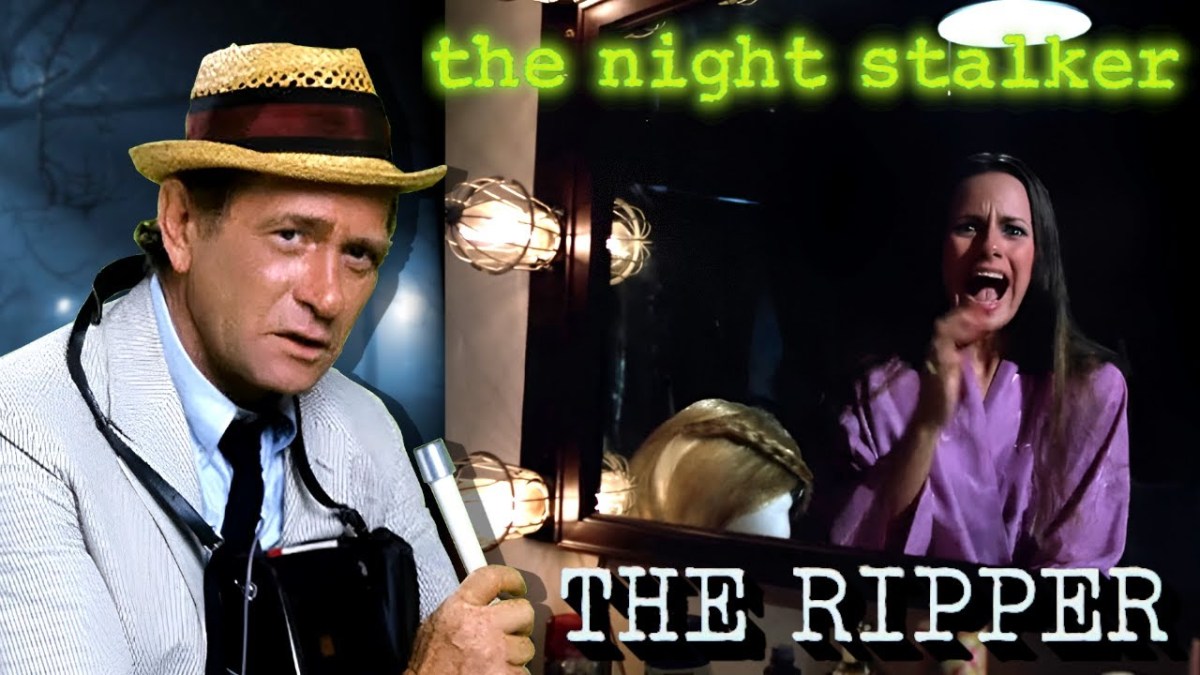
I wanted to post this first before I start posting the movies and television shows starting on Thursday, September 4. This is to provide a little history to the two movies and the twenty episodes of the television series. The reviews for the movies are going to be a little longer than the TV episode reviews. I’ll try to keep those brief.
It all started with a writer named Jeff Rice, who in 1970 finished a novel called The Kolchak Papers. It told the story of a wisecracking reporter investigating a string of murders in Las Vegas, murders that turned out to be the work of a real vampire. Networks weren’t sure what to do with it; horror on TV wasn’t exactly safe material at the time. But producer Dan Curtis (of Dark Shadows) saw the potential, and ABC bit and ran with it.
Richard Matheson, the legendary writer behind I Am Legend and many Twilight Zone episodes, was brought in to adapt Rice’s manuscript into a teleplay. He smoothed over some of Rice’s rough edges and made some tight structure and sharp dialogue changes. And Darren McGavin, already a seasoned character actor, was cast as Carl Kolchak.
The result was The Night Stalker, a TV movie that aired in January 1972. It pulled in a staggering 33.2 rating and a 48 share, at the time, the highest-rated TV movie ever, beating out 1971’s Brian’s Song. Viewers were glued to the sight of a driven reporter chasing a vampire through neon-lit Vegas while the cops were pummeled by this thing. It was funny, scary, and unique.
With ratings like that, ABC wanted more. In 1973 came The Night Strangler, also penned by Matheson and directed by Curtis. This time, Kolchak was in Seattle chasing an immortal doctor who needed to kill every 21 years to survive. It wasn’t as tight as the first, but it gave McGavin more space to talk and cemented Kolchak’s character. Once again, the audience tuned in big numbers. A third TV movie was planned, The Night Killers, involving androids in Hawaii, but ABC passed. They wanted a full series.
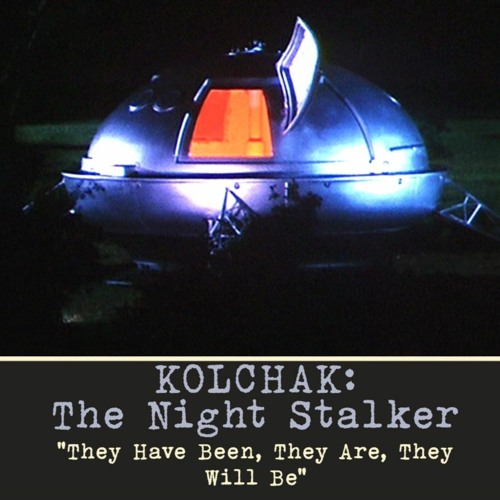
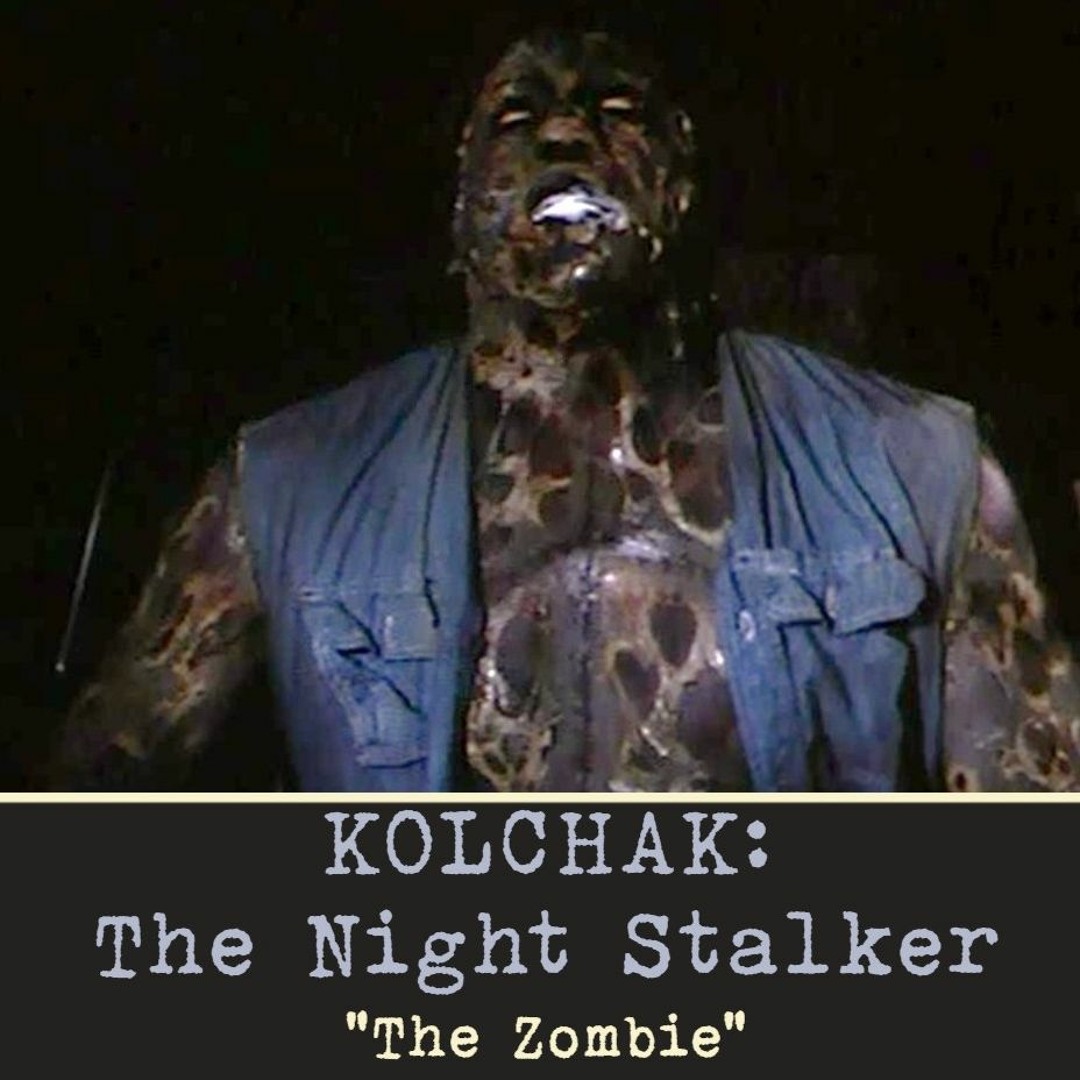
In 1974, Kolchak: The Night Stalker hit ABC’s Friday night lineup. Each week, Kolchak stumbled into another supernatural situation: werewolves on a cruise ship, a lizard monster in the sewers, a headless motorcyclist, an Aztec mummy, aliens, you name it. It was part horror, part comedy, part newsroom. The production values weren’t up to movie standards, but McGavin’s energy sold it. He made Kolchak more than just a reporter; he was a lovable pest who wouldn’t stop until he uncovered the truth.
It has since developed a huge cult following. Without this show, we may not get the X-Files and many shows to follow.
Next week I’ll feature The Night Stalker TV movie in 1972.
I wrote this for Dave’s Turntable Talk back in April. Now I’m glad I waited to post it myself. The Beatles have remixed the song (along with the Anthology) and smoothed out this great video. This is my favorite post-Beatles song they did.
Dave wanted us to pick a favorite video of theirs and tell us a bit about it, or why they love it.
In the 1990s, I kept reading about the Beatles Anthology coming out and the three surviving Beatles getting back together to release some unheard-of older music as well as new. They would take a John Lennon demo and add something to it. This was beyond exciting for me. I was too young to remember a new Beatles song coming out.
It had an older feel, but sounded modern at the same time. George Harrison’s distorted guitar playing brought an edge to it. It even had a strange ending like some of their other songs. I got an early release of the Anthology CD from a friend of mine who worked in a record store, and he said…don’t tell anyone. I sat glued to Free As a Bird because for once I was listening to a new Beatles song… I was one year old in 1968, so I missed them when they were originally out. I liked the song and still do. I have talked to Beatles fans who don’t really like it that much, but the song has stuck with me. Real Love…the second release didn’t do as much for me because it was basically a solo John Lennon song.
Was Free As a Bird the best song in the Beatles’ catalog? No, not even close but just to hear something new was fantastic. The Anthology videos and CDs jump-started their popularity all over again…and it hasn’t stopped since then. I had cousins who were teenagers at the time who never had an interest in them until Anthology came out. All I could say to them was…I’ve told you for years.
The video of Free As a Bird is fantastic and still my favorite music video. It told their history through the different eras of their career. Every time I watch it I always notice something I didn’t notice before. I just wish they would go in now (and they did!) and smooth it out. In some spots, it can be a bit bitmappy, but it’s still great.
Apple Corps commissioned the services of Joe Pytka, well-known in the U.S. industry for his TV commercials. His task was to assemble a video based on Iyrical themes from the band’s songbook.
‘Free As A Bird’ was the result of discussions between Pytka and his team, the three Beatles and Neil Aspinall, who agreed that archive film of the band members should be added into new footage shot in Liverpool, London and Los Angeles, bringing to life song titles like ‘Paperback Writer’, ‘Penny Lane’ and ‘She’s Leaving Home’.
Though the video has been described as a “post-production nightmare”, producer Vincent Joliet is more upbeat about the project. “It wasn’t easy but we did exactly what we set out to do. There weren’t many surprises on our part,” he said.
Location work began in Liverpool on October 23rd 1995. Joliet comments: “We shot the location scenes knowing that something was going to be added later. We had to find the right footage. With the accident scene, for example, we selected the best take and then looked at all the old footage for the shots of John’s head and body movements that would fit best. The post-production itself took about three weeks from the moment we finished the location shoots to the moment we delivered the tapes.“
Little did he know that day in 1977 when John made a demo of a song idea on a cheap cassette recorder… it would be a future Beatle song. Not to mention that the tape itself would be part of the song.
The song did win a Grammy Award for Best Pop Performance by a Duo or Group with Vocal…
After reading the mixed reactions, one thing dawned on me. The Beatles did the right thing by not reuniting when John was alive. There is no way they could have made anything that would have lived up to the expectations of everyone…You cannot compete against a memory because you lose every time… But yea… I still would have loved to hear it.
Here is the new version of the video. Still not perfect but, it looks MUCH better!
Here is a cheat sheet from Beatlesagain.com
BEATLE REFERENCES IN “FREE AS A BIRD” VIDEO
***Obvious references***
:07 - portraits of Beatles as children on mantle (from left to right,
John, George, Paul. Ringo in front)
:14 - more portraits (left to right, Paul, John, Ringo, George)
:38 - Beatles walk through dock workers
:48 - Cavern Club (club where Beatles played many shows before becoming
famous)
:52 - Beatles performing at Cavern Club
1:06 - Strawberry Field ("Strawberry Fields Forever")
1:18 - Eggman appears ("I Am the Walrus")
1:27 - Beatles begin to walk off curb behind eggman
1:33 - Pretty nurse selling poppies from tray ("Penny Lane")
1:42 - Barber shop, with pictures of every head he's had the pleasure
to know, including the Fab Four ("Penny Lane")
1:47 - Sign on wall reads "Help" ("Help!")
1:49 - Boy holds up hand to whisper to girl ("Do You Want to Know
a Secret?")
1:50 - Ringo jumps from doorway
1:54 - Beatles stand by car
1:56 - Window has Beatles montage. First third looks like
Anthology 1 cover. Other panels may be covers of other two
volumes. [They Are, ed.]
2:02 - Birthday cake ("Birthday")
2:02 - Cake has a 6 and a 4 on it ("When I'm Sixty-Four")
2:07 - George appears on street
2:13 - George walks into office (In reality, Apple headquarters) with
sign that reads "Dr. Robert" ("Dr. Robert")
2:18 - Ringo runs by
2:22 - John in crowd scene at car wreck, craning neck while others
turn away ("A Day in the Life")
2:26 - Car wreck of Tara Browne ("A Day in the Life" definitely, "Don't Pass Me By"
possibly)
2:27 - Fire engine ("Penny Lane")
2:29 - Policemen in a row ("I Am the Walrus")
2:32 - Fireman ("Penny Lane")
2:38 - Helter Skelter slide (It looks like a lighthouse, but you can
see the slide circling the building. "Helter Skelter," of course.)
2:38 - Kite ("Being for the Benefit of Mr. Kite")
2:42 - Children run by in pig masks ("Piggies")
2:43 - Someone enters house through window from ladder ("She Came in
Through the Bathroom Window")
2:51 - Writer working at desk ("Paperback Writer")
2:54 - Beatles walk behind children in pig masks (It's small, but it's
obvious it's them)
3:05 - Beatles on TV
3:06 - John sitting in chair
3:08 - Copy of Daily Mail on table ("Paperback Writer")
3:08 - Bowl of green apples (reference to Apple Corps, Ltd.)
3:08 - Box of Savoy Truffles sits on table (kind of hard to make out,
but that's what it says: "Savoy Truffle")
3:10 - Picture of Chairman Mao in window ("Revolution")
3:13 - Workers repairing hole in roof ("Fixing a Hole")
3:13 - Blue Meanie pops his head through hole (the film
"Yellow Submarine")
3:18 - Newspaper taxi appears ("Lucy in the Sky with Diamonds")
3:22 - Woman leaves home ("She's Leaving Home")
3:22 - Picture of Mao being carried across street ("Revolution"
definitely, "Carry That Weight" possibly)
3:22 - John and Yoko waltz by (taken from film "Let It Be" and
probably representing "The Ballad of John and Yoko.")
3:23 - Blue Meanie pops head up from out of sewer (the film
"Yellow Submarine")
3:25 - Magical Mystery Tour bus passes in far background (Hard to see,
but it's there)
3:31 - Big game hunter leads procession, including elderly lady and
elephant, out of party ("The Continuing Adventures of Bungalow
Bill," who always went hunting with his elephant and gun and
always took his mum.)
3:33 - Ringo at table near door
3:45 - Brian Epstein begins to put on his scarf
3:47 - Head of Stu Sutcliffe on body of James Dean from "Sgt Pepper"
cover
3:48 - Flowers, drum and tuba from "Sgt Pepper" cover
3:49 - H.G. Wells and Lawrence of Arabia from "Sgt Pepper" cover
chat (I know other guests are supposed to be rest of people on
the cover, but they aren't as clearly identifiable as these two)
3:58 - Eleanor Rigby headstone ("Eleanor Rigby")
4:00 - Priest walks from grave ("Eleanor Rigby")
4:01 - Sheepdog runs through cemetery ("Martha My Dear" definitely,
"Hey Bulldog" possibly)
4:04 - Long and winding road in background ("The Long and Winding Road")
4:05 - Paul romps on hill ("The Fool on the Hill")
4:12 - Crosswalk from the cover of "Abbey Road"
4:14 - Meter maid with bag across her shoulder steps onto curb
("Lovely Rita." She's definitely wearing a uniform and
carrying a little white book.)
4:30 - Beatles walk into theater (taken from "A Hard Days Night")
***References with more than one possible interpretation***
:01 - Bird flying. (Interpretations range from "Blackbird" to
"And Your Bird Can Sing" to "Norwegian Wood (This Bird Has
Flown)" to even "Blue Jay Way." The flapping of the wings,
though, sounds like the intro to the original version of
"Across the Universe" which I think it's meant to represent.
The entire concept of flying in the whole video could be
taken to represent "Flying.")
1:27 - Children run by holding hands ("Lady Madonna" is most likely,
but "I Wanna Hold Your Hand" is another possibility.)
1:45 - Woman appears in plastic-appearing coat (Some say, and I
agree, that she is "Polythene Pam," but others have suggested
she is "Sexy Sadie," or that her companion in the white coat
is "Sexy Sadie." Since I can't locate a "Sexy Sadie" anywhere
else in the video, I'll play it safe and place it in this
category.)
1:53 - Couple kissing in car (may be banker on corner with a motorcar
from "Penny Lane" or amorous couple from "Drive My Car." Most
likely, though, it's "Why Don't We Do It In The Road?")
2:45 - Sunflowers. (I lean toward saying they're "the flowers that
grow so incredibly high" from "Lucy in the Sky with Diamonds."
Other interpretations are "I'll Follow the Sun" (since that is
what flowers do), "Sun King" and "Here Comes the Sun," hence
its inclusion here.)
3:08 - Portrait of Queen Elizabeth II sits on floor ("Her Majesty" or
portrait of the Queen from "Penny Lane," though it's hardly
pocket-sized)
3:53 - Statue in cemetery turns head (Statue could be of the Madonna
("Lady Madonna") or could be Mother Mary ("Let It Be")
***Reference that may not actually *be* references***
1:18 - Marketplace (Could be reference to "Ob-La-Di, Ob-La-Da," but
since I see no one with a barrow in the marketplace, I'm
unconvinced.)
3:38 - Last boy in Bungalow Bill's entourage looks very much like
Sean Lennon. Could be a cameo or just a coincidence.
3:50 - Sun through panes in roof (It's the only intentional shot of
the sun in the whole video. It could be meant to represent
"Here Comes the Sun," "Sun King," "Good Day Sunshine" or
"I'll Follow the Sun.")
4:06 - Woman walks down road with suitcase (could be "She's Leaving
Home," but since we already had that song done with the woman
leaving home in the newspaper taxi at 3:22, would she need to
appear again?)
4:06 - Car heads up long and winding road ("Drive My Car"? Not many
other cars in video, and one of few that's moving)
and let us not forget ...
***The Voice***
4:36 - Voice at end of song. It sounds like backward masking, and it
is definitely John's voice. Interpretations I've seen include:
"Turned out well at the end"
"There's that noise again"
"Turned out nice again."
Strangely, though, the backward tape sounds like John saying
"My name is John Lennon" to me. It's possible the Fab Three put
the tape on the end not only because it's a throwback to their
backward tape use in the '60s, but also because it SOUNDS like
"My name is John Lennon" when it's played backward.
Last week, I posted a Sir Douglas Quintet song called She’s About A Mover. Many people commented about the song and about another Sir Douglas Quintet song Mendocino as well. So, hearing the Texas Tornados with Doug Sahm do it, I had to post about Doug again because I couldn’t resist. I’ve been listening to his other music and I love it. This song was a top 40 hit in 1969. It peaked at #27 on the Billboard 100 and #14 in Canada. The song has been covered over 100 times, according to Secondhand Songs.
They were a Tex-Mex supergroup before anyone called them that: Doug Sahm (Sir Douglas Quintet), Augie Meyers (Sir Douglas Quintet), Freddy Fender (the man of many hits), and accordion ace Flaco Jiménez. They first gigged under the name “Tex-Mex Revue,” then took the name from Sahm’s earlier Texas Tornado. They formed around 1989-1990. It was lightning in a bottle.
Sahm wrote it, he rode it up the charts with the Sir Douglas Quintet back in 1968-69, and then, a couple of decades later, he brought it back to the table with his Tex-Mex supergroup, the Texas Tornados, Augie Meyers, Flaco Jiménez, and Freddy Fender. Flaco Jiménez, who had a long career, just passed on July 31 at age 86.
What I love here is how the Tornados make nostalgia feel alive. Plenty of bands drag their old hits around like they are carrying bulky luggage; these guys plug in and let it go. They play loose, not trying to change the song, but not bound to the original record. They revitalize this song, and it sounds like it was written yesterday. It’s not an easy thing to do, but they pull it off.
BTW… Mendocino is a small town located in Northern California; it’s about 150 miles north of San Francisco.
This song was off the album Live from Austin, TX released in 2005 from a performance in 1990.
Here is the original band, Sir Douglas Quintet, doing Mendocino. This is the Playboy After Dark studio. Bring back muttonchops!
Mendocino
Teeny Bopper, my teenage lover I caught your waves last night It sent my mind to wonderin’. You’re such a groove Please don’t move Please stay in my love house by the river. Fast talkin’ guys with strange red eyes Have put things in your head And started your mind to wonderin’ I love you so, please don’t go Please stay here with me in Mendocino. Mendocino, Mendocino, Where life’s such a groove You blow your mind in the morning. We used to walk through the park, Make love along the way in Mendocino. (Ah, play it, Augie! Yeah!) Like I told you, can you dig it? If you wanna groove, I’ll be glad to have you. ‘Cause I love you so, please don’t go, Please stay here with me in Mendocino, Mendocino, Mendocino Where life’s such a groove, You blow your mind in the morning We used to walk through the park, Make love along the way in Mendocino Mendocino, Mendocino, Mendocino
When I was recommended this band years ago ,it led me to a much bigger picture. They came from the Paisley Underground Scene of the 1980s, which caught my attention. The more I hear them, the more they interest me.
What makes this band so appealing is that they were not trying to write top 40 hits; it’s just natural music. They were not trying to force a style in this to make it fit the status quo on the radio at the time. The guitars are raw but melodic, with a raw sound; no overproduction on this. This song has been covered by The Bo-Weevils and Rain Parade.
Green on Red started in Tucson, Arizona, as The Serfers, a teenage garage band that was influenced by the Stones. Dan Stuart (vocals/guitar) had the charisma, while Chris Cacavas (keys) brought that carnival-organ swirl that would become a trademark. They eventually packed up and headed for Los Angeles, where the Paisley Underground scene was starting around bands like The Dream Syndicate, The Bangs (pre-Bangles), and The Rain Parade.
They changed their name to Green on Red (TV test patterns), they became the scene’s ragged outsiders, more Neil Young & Crazy Horse grit than chiming ’60s Rickenbackers, more bar than ballroom. They were never the most famous band of the scene, but probably the most unpredictable, which is a plus in my book. What set them apart was Dan Stuart’s writing and singing.
This song was on their 1983 debut album, Gravity Talks, released in 1983. Green On Red has been described as Desert Rock, Paisley Underground, Alternative Country-Rock, Garage-Country, and Country-Punk. They made their mark in the 80s, touring college towns on the circuit with REM, the Replacements, and other alternative bands.
They never pigeonhole themselves into one style. They would be produced by some great producers such as Jim Dickinson, Glyn Johns, and Al Kooper, but could not connect with the masses; however, they connected with people like me who wanted something more than the top 40.
Here is the band live in 2006, and they open up with Cheap Wine.
Cheap Wine
I can’t seem to clear my mind Foreign seeds and cheap wine I’m drifting back in an awful way The cartoon is real this is what it says
I’m just a man who doesn’t know Right from wrong who can tell I’m just a man who cannot see Just dissed so easily, as you
It’s late at night All the booze is gone I see the light through my window at home I stare right in, to the rising sun My God what kind of pain, what have I done?
I’m just a man who doesn’t know Right from wrong who can tell I’m just a man who cannot see Just dissed … so easily
If i had a boat, man I would sail away from this town To save my soul All the trees are dying All the faces are glowing With the pain of life Man it keeps flowing
I’m just a man who doesn’t know right from wrong who can tell I’m just a man who cannot see Just missed so easily as you
When I’m in the mood to hear a well-written song, I go to either John Prine, Townes Van Zandt, Bob Dylan, Steve Earle, or Guy Clark. They always hit the spot, and this song is one of those story songs that just stuck with me. I look at some of these songwriters not as normal songwriters but mini movie writers.
Guy Clark wrote this song in the early ’70s, drawing from his own childhood in Texas. The old drifter in the song, the surrogate grandfather who taught him about cards, women, and hard living, wasn’t made up. Jack Prigg, a wildcatter and oilfield worker, had lived in Clark’s grandmother’s boarding house, and a young Guy Clark soaked up every curse word and story. By the time Clark wrote the song, the memories meant something more universal, a man who refused to fade quietly.
The song was on Clark’s 1975 album, Old No. 1, and it quickly became one of his signature songs. But it didn’t stop there; it was picked up and recorded by Jerry Jeff Walker (first recording of the song), Tom Rush, Rita Coolidge, and, eventually, The Highwaymen (Waylon, Willie, Kris, and Johnny), covering it in 1985. It’s been covered 32 times. Walker, Coolidge, David Allan Coe, and Tom Rush covered it before Guy released his version.
This is wonderful Americana storytelling is as rich as anything you have heard or watched. He writes these story songs so well that you can see them in your head being acted out like a movie.
Jack Prigg and a young Guy Clark
Jack Prigg was an old oil wildcatter and oilfield worker who lived for a time in Clark’s grandmother’s boarding house in Monahans, Texas, during the 1940s. Clark’s parents had split up when he was young, and he spent a big part of his boyhood around his grandmother’s place. That’s where he met Prigg, who was already an old man by then, tough and weathered from a lifetime in the oilfields. Clark mentioned that he didn’t romanticize the lyrics, he wrote them straight. That’s why this song works, everything is left intact. Clark said, “He was my hero. He was a tough old bird who drank hard, swore a lot, and lived a big life.”
Desperados Waiting For The Train
I’d play the Red River Valley And he’d sit in the kitchen and cry And run his fingers through 70 years of livin’ And wonder, “Lord, has ever, well, I’ve drilled gone dry?” We was friends, me and this old man
We was like desperados waiting for a train Like desperados waiting for a train
Well, he’s a drifter and a driller of oil wells And an old-school man of the world He taught me how to drive his car When he’s too drunk to And he’d wink and give me money for the girls And our lives was like some old western movie
Like desperados waiting for a train Like desperados waiting for a train
From the time that I could walk, he’d take me with him To a bar called the Green Frog Cafe And there was old men with beer guts and dominoes Lying ’bout their lives while they played And I was just a kid that they all called his sidekick
We was like desperados waiting for a train Like desperados waiting for a train
One day I looked up and he’s pushin’ 80 And there’s brown tobacco stains all down his chin Well, to me he’s one of the heroes of this country So why’s he all dressed up like them old men? Drinkin’ beer and playin’ Moon and 42
Just like a desperado waiting for a train Like a desperado waiting for a train
And then the day before he died, I went to see him I was grown and he was almost gone So we just closed our eyes and dreamed us up a kitchen And sang another verse to that old song “Come on, Jack, that son of a bitch is coming”
And we’re desperados waiting for a train Like desperados waiting for a train Like desperados waiting for a train Like desperados waiting for a train
You know, some singers’ voices are made for great soul/pop, and Paul has one of those voices. I’ve just rediscovered this song that I have been trying to remember for years. When I heard that bass intro, I knew I hit the right one. This is the one that I have been trying to remember since the 1980s.
Paul Carrack is one of those musicians whose career reveals a series of classic moments in pop and rock history. How Long with Ace. Tempted with Squeeze. The Living Years with Mike + the Mechanics. And in between all that, he made a great power-pop-soul album of the early ’80s: Suburban Voodoo. One reviewer called it “a Nick Lowe album with Carrack singing,” and that is not a bad thing! He and Paul Rodgers get the call when an artist needs a special vocalist.
This song is from that album. Carrack hits the pop-soul sweet spot. It was produced by Nick Lowe; it has that Nick Lowe tight rhythm section, jangly guitars, and Lowe’s knack for making a record sound both edgy and polished. Carrack, for his part, gives a vocal performance that makes you wonder why the song wasn’t all over the charts in the early ’80s. It was written by Paul Carrack, Nick Lowe, and Martin Belmont.
The music was supplied by Nick Lowe and his Cowboy Outfit. It included Lowe on bass, Martin Belmont on guitar, Bobby Irwin on drums, and of course, Paul Carrack on keyboards and lead vocals. The contrast on this album works well. You have Nick Lowe still bringing a little pub rock influence along, backed with Carrack’s smooth voice.
The song peaked at #37 on the Billboard 100 and #20 on the US Rock Mainstream Charts. The album peaked at #78 on the Billboard Album Charts in 1982.
I Need You
Don’t need a Roller Or a Limousine I don’t need my picture In a magazine Don’t need approval From a chosen few I tell you what I do need I need you.
Don’t need no fixtures Or feelings of home I’m so unfurnished I’m on my own Don’t need reminding When the rent is due Tell you what I do need I need you
I need you Like a fly needs a plane I need you Like a ball needs a game I need you Like a pool needs a cue I need you, need you, need you I need you
I don’t need no covered kisses To comfort me I don’t want no washed up dishes Soft-soaping me Don’t need no Cinderella In high-heeled shoes I tell you what I do need I need you
Da da da da Da da da da Da da da da da da da da Ooh lala la la I need you
I need you Like a fly needs a plane I need you Like a ball needs a game I need you Like a shot needs to shoot I need you, need you, need you I need you
I need you, need you, need you I need you
Said I want you I need you I need you, need you, need you I need you Well I want I want you I need you
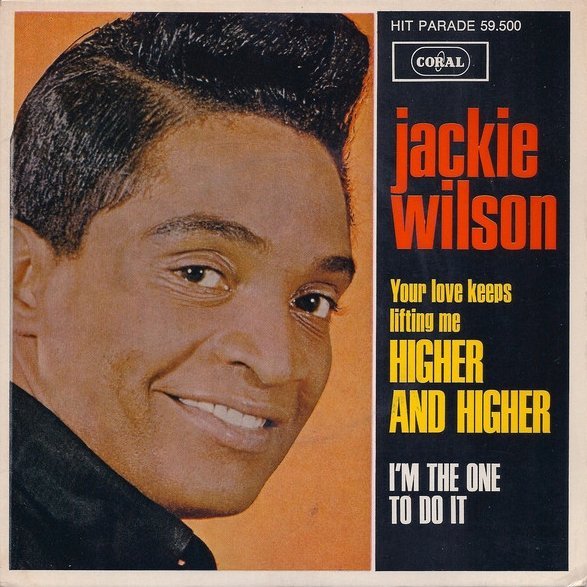
This is another song I picked up from Good Morning Vietnam. James Brown releases enough energy in this song to light up a huge town. He kicks open the door like he always does.
Browns band, the Famous Flames, were tight. When I say tight…I mean TIGHT. A band so tight they could lock into a groove like it was second nature. There was a reason for that, though. Brown wasn’t the type to just hit “record” and let it roll. He was a drill sergeant in pointy leather shoes, waving the band into the song.
He had a reputation for being a demanding taskmaster who expected perfection and discipline from his musicians. This extended to their appearance, punctuality, and performance, with fines imposed for any shortcomings. It paid off, though, in some of the best shows ever heard or seen. Brown’s process was obsessive. He’d run the song down once, stop halfway through, and demand another take.
What you hear is a LIVE take, not overdubbing, and you can tell from the excitement in the recording. When he recorded his songs, he was thinking of radio, but he would also think just as much of the stage presentation of it. He had all the bases covered.
He had hits before, like “Papa’s Got a Brand New Bag,” and this was the follow-up, but this one was a game-changer. It peaked at #3 on the Billboard 100, his highest charting song ever on the Billboard 100. It also spent 6 weeks at number 1 on the R&B Charts.
This live version has Brown doing a medley of Papa’s Got A Brand New Bag and I Got You (I Feel Good)
I Got You (I Feel Good)
I feel good Like I knew that I would, yeah-yeah-yeah-yeah, oh I feel good, baby, whoo! Like I knew that I would, yeah-yeah-yeah-yeah, oh So good
I, I feel nice Like sugar and spice, yeah-yeah-yeah-yeah, oh I, I-I-I love Like sugar and spice, yeah So nice
I, I feel good Like I said that I would, yeah-yeah Whoo! Lord, have mercy, good God, get down So good, I
Get down Bring it back
When I hold you in my arms I know I can’t do no wrong When I hold you in my arms I know I can’t do no wrong When I hold you, baby, in my arms You know I can’t do no wrong And that my love won’t do you no harm
Hit me I feel good Hit me, baby, hit me, love Like I know that I would, yeah So good
Yeah, I feel nice Like sugar and spice, yeah-yeah-yeah-yeah I feel nice, yeah-yeah-yeah-yeah Like sugar and spice So nice
Da-da-da-da, da-da-da-da-da Da-da-da, goo-ga
Hit me, I feel good Like I knew that I would, yeah-yeah-yeah-yeah I, I-I, whoo! Hit me So good, hey-hey Whoo-ah!