Kolchak: The Night Stalker – The Knightly Murders

March 07, 1975 Season 1 Episode 18

If you want to see where we are…HERE is a list of the episodes.

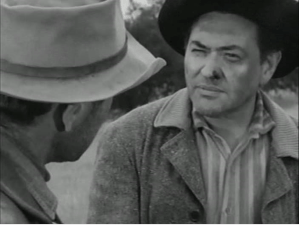
In this one, we have another police captain. John Dehner plays Captain Vernon Rausch in this episode. His name is not Steve McQueen or Marlon Brando, but he had an incredible 305 acting credits to his name. A wonderful character actor that you have probably seen in the 1940s through the 1980s. He was in Gunsmoke, Twilight Zone, Mission Impossible, and so many other television shows. Compared to the other captains, he actually talked to Kolchak without making him go away for the most part…but he is “playing out the string” to his career, so to speak, and he gets reporters like Kolchak to do a lot of the investigating for him.  Carl calls him out on this. 

Another character actress, Lieux Dressler, played Minerva Musso an interior decorator. She livened the episode up with her couple of appearances. 

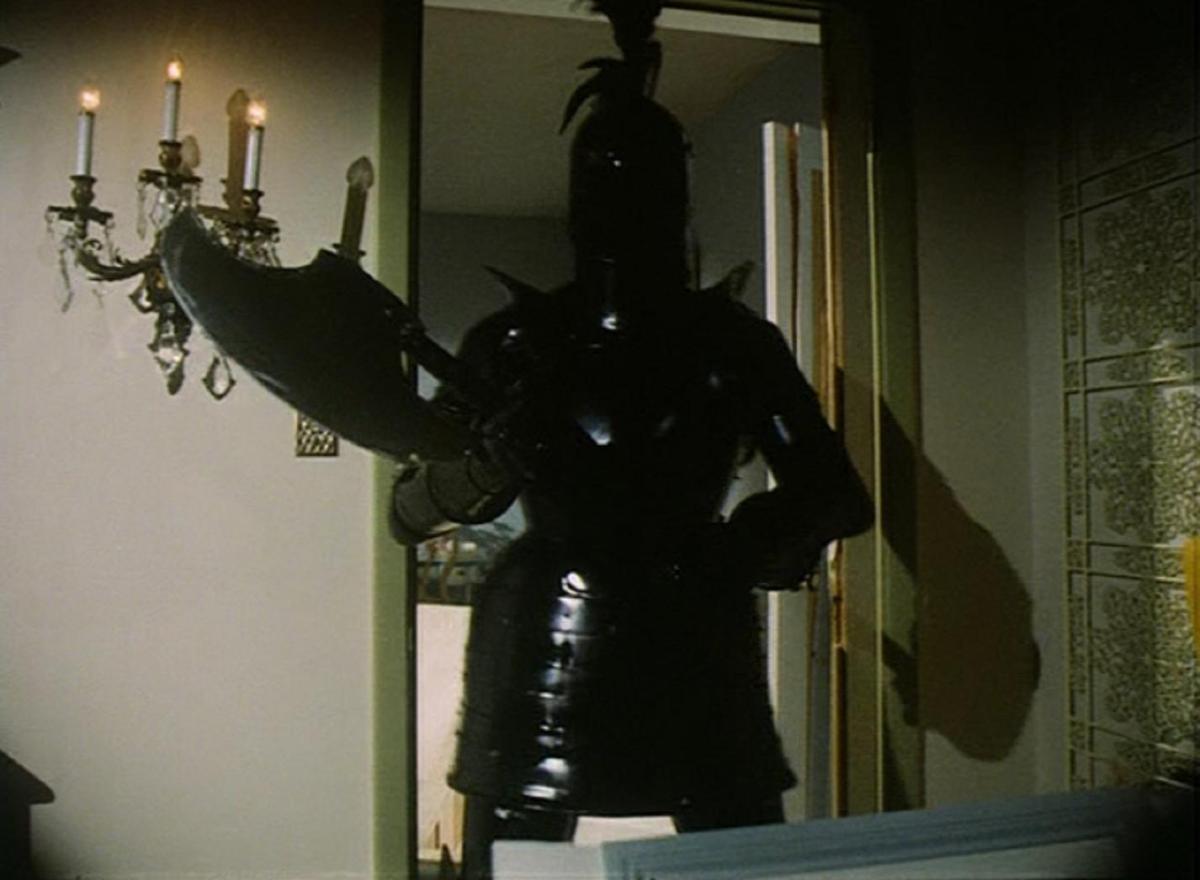
The 18th episode of Kolchak begins with a series of killings in Chicago tied to a museum exhibit of medieval artifacts. Victims are found run through with what appears to be a lance. The police look for a modern suspect using antique weapons, but Kolchak sees a pattern linked to a specific suit of armor on display. Each murder is connected to members of a small historical society, men who share a past dispute that dates back years.

Kolchak digs into the background of the group and learns they were once part of a medieval re-enactment order. One of their former members died under questionable circumstances. The armor in the exhibit had belonged to that man. As more society members are killed, Kolchak concludes that the armor itself is animated, moving on its own to carry out revenge. Witnesses describe a towering knight appearing and vanishing without explanation.

SPOILER Below

In the final act, Kolchak tracks the armor to the museum after hours. He confirms that the spirit of the dead member is driving the killings from within the suit of armor. Using quick thinking rather than force, he disrupts the armor and ends the threat, exposing the truth even as the authorities dismiss the supernatural angle. As usual, Kolchak files his story, and as usual, it is unlikely to see print.

I love this quote by Tony:

  • Carl Kolchak: What is important is that it takes 420 pounds of pressure – psi. – to crush a telephone. Now, it says right here that a medieval knight in full armor and in full weaponry weighs well over 400 pounds.
  • Tony Vincenzo: Oh, I feel much better. All my life I wanted to know that a medieval knight could crush a telephone.
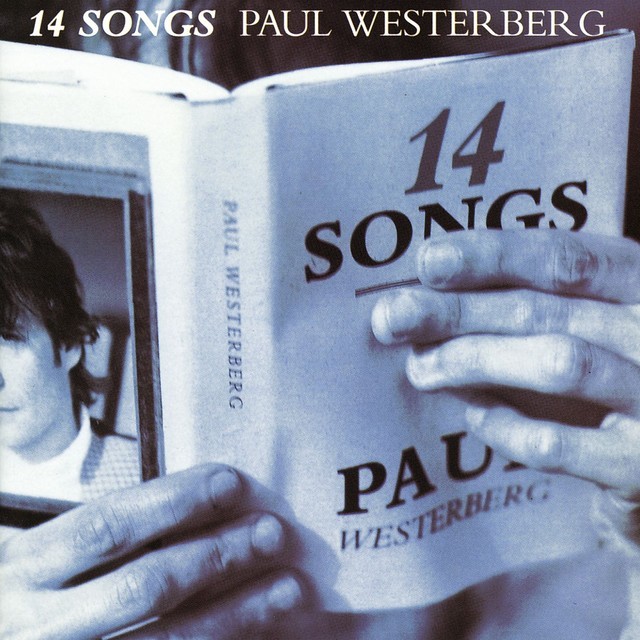
Paul Westerberg – 14 Songs …album review

Everyone knows I’m a huge Replacements fan. In the 1980s, I leaned more toward them than mainstream bands. They would produce music that I always hoped the mainstream would, but that didn’t happen. They broke up on July 4, 1991. Westerberg released his debut album, 14 Songs, two years later in 1993. I’ve never explored his solo albums a bunch, but now it’s time.

The album doesn’t sound like a Replacements record, and it doesn’t go after anything modern for the time. It sounds like Westerberg was finding his way without the baggage of the Replacements. With this album, he did find his way just fine.

The album moves between loose home recordings and more finished studio tracks, and that contrast works. Songs like Love You in the Fall and Runaway Wind sound close and personal, almost like letters instead of songs. Westerberg keeps the arrangements simple, letting the songs breathe and sometimes wobble. The roughness isn’t fixed because it doesn’t need to be. The opening song, Knockin’ On Mine (live version here), kicks the door in with a rough, cool, welcoming riff.

I also noticed on this album that his voice is slightly different. I always loved his voice for the human feel and the roughness. He doesn’t lose that with this album, but it’s more concise and not all over the place…it seems more focused.

What holds 14 Songs together is the writing. Westerberg writes in everyday language and trusts the melody to do the rest. There’s humor, regret, and acceptance, often in the same verse, which again shows his songwriting skills. I always thought that Westerberg was one of the best songwriters of the 1980s, and he didn’t disappoint on this one.

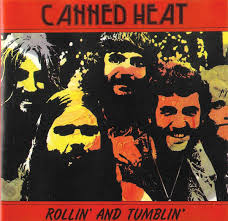
Canned Heat – Rollin’ and Tumblin’

A few weeks ago, Lisa posted something on the Monterey Pop Festival with the Animals. After we got our power back on last week, I was browsing through Tubi, and there it was. It’s been so long since I saw the Monterey Pop Festival, I clicked play, and Canned Heat impressed the hell out of me with this song. Alan Wilson’s guitar and especially Bob Hite’s vocal. 

This is their take on an old Delta blues standard that goes back to Hambone Willie Newbern, Robert Johnson, and later Muddy Waters. Canned Heat didn’t try to modernize it too much. They kept the pulse steady, the guitar lines loose, and the vocal right up front, like it was happening in the room.

Bob “The Bear” Hite sings it rough but clear, leaning into the rhythm instead of forcing it. His voice is outstanding, and I know many who would kill to have it. Alan “Blind Owl” Wilson’s slide guitar moves in short phrases, answering the vocal like a second voice. The band holds everything in place with everything going in forward motion.

Canned Heat understood the song didn’t need fixing. They honored the blues structure and let feel do the work. It’s not about showing off licks, just getting the essence of the song right. Simple, direct, and built to roll all the way through. They are one of those underrated bands of the sixties, known for their 3 hits Going Up the Country (1968), On the Road Again (1968), and Let’s Work Together (1970). They are far better than that. A live album by them and John Hooker I can’t recommend enough called Hooker ‘n Heat

Rollin’ and Tumblin’

Well, I rolled ‘n’ tumbled
I cried the whole night long
Oh well, I rolled ‘n’ tumbled
I cried the whole night long
Oh well, I had the feelin’, baby
Something’s goin’ on wrong

Oh well, I really love you, baby
Come on and say you’ll be mine
Oh well, I really love you, baby
Come on and say you’ll be mine
Well, if you don’t like my taters
Don’t you dig up my vine

Oh well, I cried last night, mama
I cried the night before
Oh well, I cried last night, mama
I cried the night before
Oh well, I had the feelin’, baby
You don’t love me no more

Well, if the river was whiskey
I was a divin’ duck
Well, if the river was whiskey
I was a divin’ duck
Well, I would swim to the bottom
Baby, I wouldn’t come up

Oh well, I rolled ‘n’ tumbled
I cried the whole night long
Oh well, I rolled’ ‘n’ tumbled
I cried the whole night long
Oh well, I had the feelin’, baby
Something’s goin’ on wrong

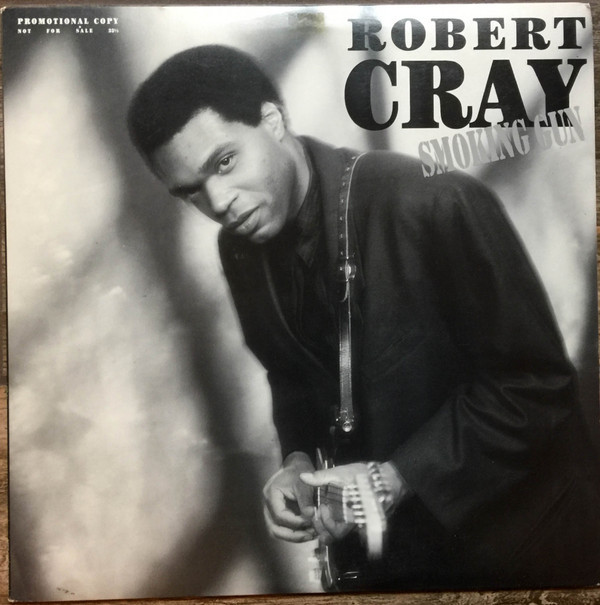
Robert Cray – Smoking Gun

Robert Cray was a delight to hear in the 1980s. SRV, Robert Cray, Eric Clapton, and a few others received significant radio play in that decade. It was great hearing the guitar-dominant songs.

The song was recorded for Strong Persuader, the album that changed Robert Cray’s career. The sessions focused on sound clarity and guitar, not excess. Producers Bruce Bromberg and Dennis Walker kept the arrangements tight, making sure the rhythm section stayed locked in.

The song’s success was helped by radio and MTV, which was unusual for a blues artist at the time. The video, simple and story-driven, fit the song’s mood and helped it cross formats. That exposure turned this song into a breakout hit and pushed Strong Persuader into success. This song helped him get to a wider audience, and he didn’t lose who he was.

His guitar tone is remarkably clean and controlled in this song. Sometimes, it’s not what you put into a song, but what you leave out. Silent spaces let songs breathe, and I think that is a big part of this. The song peaked at #22 on the Billboard 100 in 1986. The album peaked at #13 on the Billboard Album Charts, #34 in Canada, #5 in New Zealand, and #34 in the UK.

Smoking Gun

I get a constant busy signal
When I call you on the phone
I get a strong, uneasy feeling
You’re not sitting there alone

I’m having nasty, nasty visions
And baby you’re in every one, yeah
And I’m so afraid I’m gonna find you with
A so-called smoking gun

Maybe you wanna end it
You’ve had your fill with my kind of fun
But you don’t know how to tell me
And you know that I’m not that dumb

I put two and one together
And you know that’s not an even sum
And I know just where to catch you with
That well-known smoking gun

I’m standing here, bewildered
I can’t remember just what I’ve done
I can hear the sirens whining
My eyes blinded by the sun

I know that I should be running
My heart’s beating just like a drum
Now they’ve knocked me down and taken it
That still-hot smoking gun

Yeah, yeah, still-hot smoking gun
They’ve taken it, the still-hot smoking gun
Oh, they’ve taken it, still-hot smoking gun
They’ve knocked me down
And taken it
Oh

Third Mind – Reno, Nevada

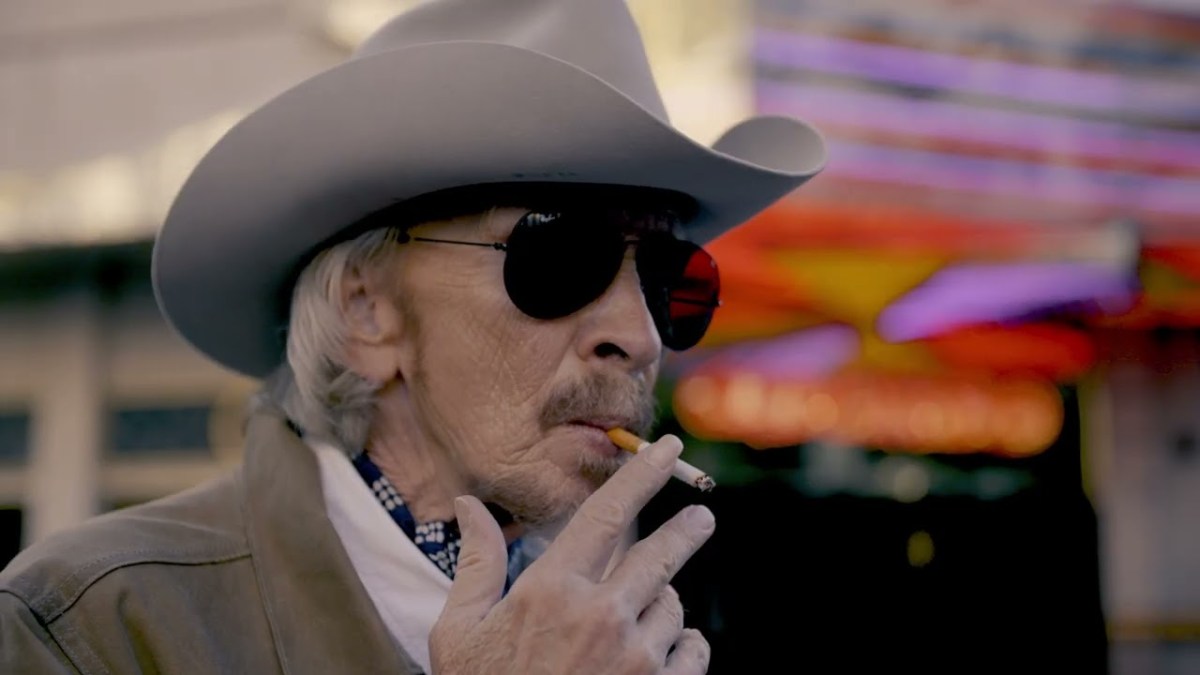
Back a few years ago, I got into The Blasters. Since then, I’ve followed their guitar player, Dave Alvin,  into different bands and soloed all over the map. I never say this phrase much, but Dave Alvin is a true American treasure. I’ve heard the man play roots rockabilly, old country, punk, rock and roll, hard rock, and psychedelic/jazz type of music as The Third Mind. It’s nothing that this man can’t do on guitar. 

The Third Mind is a band co-founded by Dave Alvin and bassist Victor Krummenacher (of Camper Van Beethoven) with the idea of creating spontaneous, live-in-the-studio music without rehearsals. The concept is inspired by the free-form recording techniques of artists like Miles Davis, where musicians simply pick a key, start playing, and let the performance evolve organically.

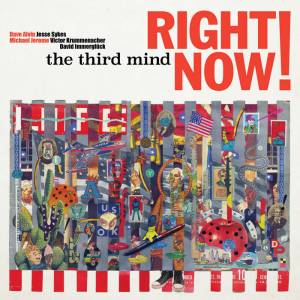
They took this folk song by Richard Farina and gave it some bite with Alvin’s guitar. It’s a folk song stretched into something wider, keeping the original intact. I have also heard them cover Dark Star and Morning Dew (a song originally written and recorded by Canadian Folk singer Bonnie Dobson) by the Grateful Dead. Reno, Nevada, is on the 2025 album Right Now!. This song feels like a drive through the desert at night.

Dave Alvin: I had a crazy idea and was looking for musicians who perhaps didn’t think it was so insane. Many years ago I’d been reading John Szwed’s excellent biography of Miles Davis, “So What”, and was fascinated by his thorough descriptions of how Mr. Davis and his producer, Teo Macero, created some of his classic electric albums like Bitches Brew and Jack Johnson. Basically, Miles would gather great musicians in a studio, pick a key and a groove and then record everything live over several days. Then he and Mr. Macero would edit and shape these improvisations into compositions. Having never recorded like that, I had a fantasy to try it someday if the fates ever allowed.

One night after a gig in San Francisco, a decade or more later, I mentioned this fantasy to Victor Krummenacher. I’d known the always musically adventurous Mr. Krummenacher for a couple of decades (since he was a young buck bassist in Camper Van Beethoven) and hoped he would understand.

The Third Mind
Dave Alvin: Guitar, Vocals
David Immerglück: Guitar, Keyboards, Vocals
Michael Jerome: Drums, Percussion
Victor Krummenacher: Bass, Vocals
Featuring:
Jesse Sykes: Guitar, Vocals

Here is a full performance by The Third Mind

Reno, Nevada

It’s a long, long way down to Reno, Nevada
And a long, long way to your home
But the change in your pocket is beginning to grumble
And you reap just about what you’ve sown
You can walk down the street, pass your face in the window
You can keep on fooling around
You can work day and night, take a chance on promotion
You can fall through a hole in the ground

Now there ain’t no game like the game you been playing
When you got a little something to lose
And there ain’t no time like the time you been wasting
And you waste just about what you choose
There’s a man at the table and you know he’s been able
To return all the odds that you lay
But you can’t feed your hunger and you ain’t getting younger
And your tongue ain’t got nothing to say

It’s a long, long way down to Reno, Nevada
And a long, long way to your home
But the ground underneath you is beginning to tremble
And the sky up above you has grown
There’s a time to be moving and a time to be grooving
And a time just for climbing the wall
But the odds have been doubled, and it ain’t worth the trouble
And you’re never going nowhere at all

Tom Petty – Out In The Cold

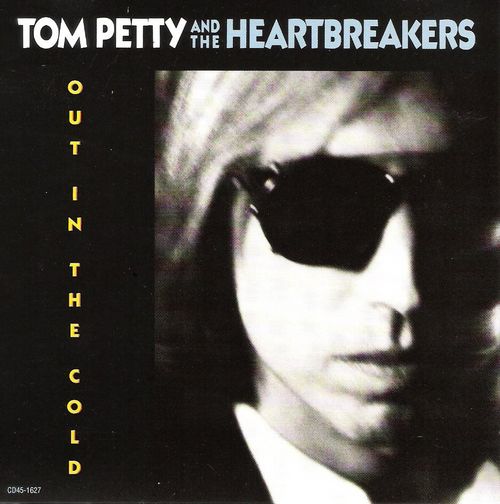
I saw them on this tour (Into The Great Wide Open), and it would be the only time I got to see Tom Petty and the Heartbreakers. He came to Nashville on that last tour, and I stupidly didn’t go. I bought this album the day it was released. It will always be one of my favorite Petty albums.

Petty had released his solo album Full Moon Fever in 1989, and it was huge, with 5 singles pulled from it. This album was a reunion with the Heartbreakers, and 7 singles were pulled from this album, including this one. The making of Into the Great Wide Open emerged from a creative stretch where Tom Petty felt clear again after the fights with record labels that had plagued him earlier in his career. Coming off Full Moon Fever, he wasn’t trying to recreate that sound. He wanted to make a real band record, one that sounded lived-in, and he succeeded with this one.

A huge part of the album’s sound came from working again with Jeff Lynne, who helped keep everything tight without making it stiff. Lynne pushed for clean arrangements and strong melodies, but Petty made sure the songs still breathed and felt organic. Many tracks started as simple demos, acoustic guitar and voice, then slowly grew as the band locked into the groove. First takes often mattered more than perfection.

This song peaked at #1 on the Billboard Mainstream Rock Charts in 1991. The album peaked at #13 on the Billboard 200, #4 in Canada, #12 in New Zealand, and # #3 in the UK. This song was written by Petty and Jeff Lynne.


Out in the Cold

The day fell down, the air got coldI walked out in the streetDaydreamed for a mile or twoStaring at my feet

Like a workin’ boy, out of luckFallin’ through the cracksNight rolled in, I turned back homeA hard wind at my back

I’m out in the cold (Out in the cold)Body and soul (Out in the cold)There’s nowhere to go (Out in the cold)I’m out in the cold (Out in the cold)

Well I woke up, my brain was stunnedI could not come aroundI reached out to grab my keysTumbled to the ground

I thought of you, starry eyedI wonder where we standDid I just fall from your armsDown into your hands?

I’m out in the cold (Out in the cold)Body and soul (Out in the cold)There’s nowhere to go (Out in the cold)I’m out in the cold (Out in the cold)

I’m outStandin’ in a doorway

I’m outWalkin’ aroundHands in my pocketsI’m out in the cold (Out in the cold)Body and soul (Out in the cold)There’s nowhere to go (Out in the cold)I’m out in the cold (Out in the cold)

Kolchak: The Night Stalker – Legacy Of Terror

February 14, 1975 Season 1 Episode 17

If you want to see where we are…HERE is a list of the episodes.

In this one, Carl Kolchak investigates the brutal, unsolved murders of healthy people whose hearts were removed. It seems that an Aztec cult is offering them as sacrifices for their mummified warrior chief. It’s needed every 52 years in a ten-cycle pattern; this being the ninth, and the fifth and final offering must be a willing one. Pepe Torres seems to be that man, though if Carl has any say in the matter, he may make him change his mind…

Though not tightly plotted, this is still an interesting episode that makes use of its millennium theme and 52-year cycles – we’ll have to watch out for the year 2027! This had some gruesome things in it, especially for network television at the time. If this were on today, it would be an HBO series, I’m sure. 

In this episode, we have toothy Erik Estrada (playing Pepe Torres) before his fame in CHiPs. Three lovely ladies, Vicky (Sondra Currie), Nina (Merrie Lynn Ross), and Lona (Dorrie Thomson), who is at Pepe Torre’s beck and call, but the story drops the ball by mostly ignoring them, with only Currie getting much screen time. We also have Sorrell Booke, a wonderful character actor made famous by The Dukes of Hazzard and many other shows he was in. 

I must say this. One thing I didn’t understand here. Tony Vincenzo is attending a journalist’s convention and has invited Carl Kolchak along. Kolchak hears of a homicide over his police radio and abruptly leaves. I can’t believe that any editor or company, for that matter, would try to prevent a reporter from going to the scene of a crime. But to give it some credit, it’s not a secret that Kolchak doesn’t exactly listen to Tony anyway, so there would be some frustration on Tony’s part. 

You know, it would have been cool if Simon Oakland could have been written to help Kolchak a little more. In fact, Oakland said, “I wish he would, then I could get away from the office, but the scripts have been running this way. They want more of me in the office, but we’ve found we’re competing with the other networks for action, so it’s been all Darren’s (McGavin) show. I suppose I could help him, but…”

“Well, I’m supposed to keep the office scenes alive because they can go dead. I’ve got to bring some organic life into them, and I’m really trying to bring a feeling to it…I wish I had a little more to do in the show. I don’t like it, but I don’t mind.”

Fun Note…Simon Oakland and Darren McGavin got along well both on and off set. They were both featured in a Gunsmoke episode called “The Hostage” in 1965.