


Again…a big thank you again to Phil Strawn who gave me the necessary information so the story could be told and much of it from a personal view.
One of the performers in The Big D Jamboree was Ronnie Dawson. He was from Dallas Texas and was nicknamed “The Blonde Bomber.” His father Pinkie showed him how to play the mandolin, drums, and bass guitar. Dawson attended Southwestern Bible Institute in Waxahachie but was expelled. After that, he appeared regularly on the Big D Jamboree Radio Show in Dallas in 1958 as Ronnie Dee and the D Men. Dawson was known to be highly energetic on stage. Many thought he got it from Elvis but he said no, he learned it from the dynamic Pentecostal revivals he attended.
The Jack Rhodes song “Action Packed” was Dawson’s first release in 1958 on the Backbeat label. After that came the 1959 Rockin’ Bones and this time it was on the Rockin’ Records label. It was issued under Ronnie’s own name with “The Blond Bomber” added. Though Ronnie toured nationally with Gene Vincent and appeared on TV, his records gained no more than regional airplay.
The next 3 paragraphs are from Phil. Back in the early ’60s, there was a club on Mockingbird Lane in Dallas called The Levee. It was a sing-along Dixieland place that was popular at the time. The band was banjos, a doghouse bass and a clarinet and sax. Burgers and pitchers of beer made up the menu. Southern Methodist University was two blocks away, across Highway 75, so most of the clientele were students and couples in their twenties. The famous Egyptian Lounge was next door. It served the best Italian food in Dallas and was a known hangout for the Dallas Mafia and other wise guys.
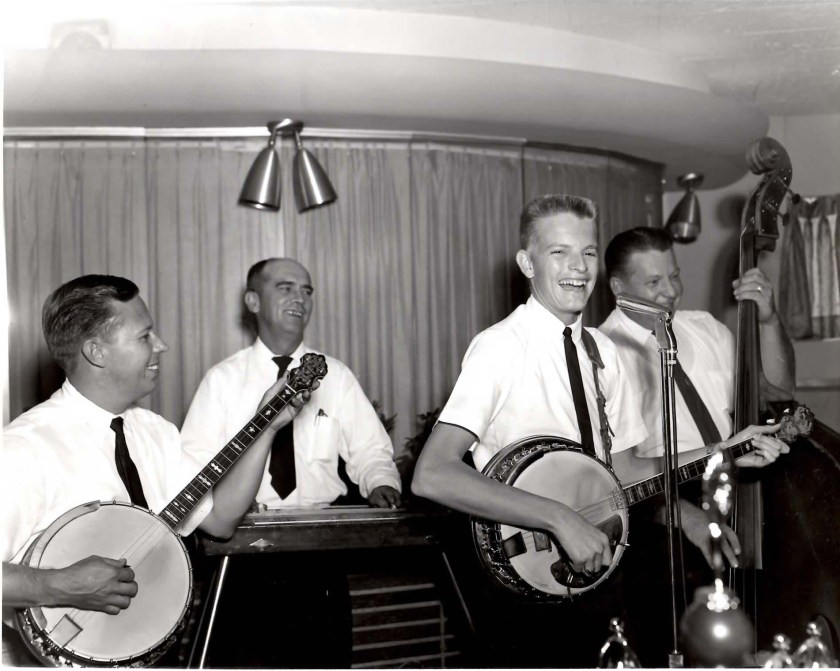
Smokey Montgomery, the banjo player for the Light Crust Doughboys, started the Levee with Ed Burnett, who was also his partner in Summit Sounds, a well-known recording studio on Greenville Ave. Ronnie was playing with the Doughboys, so Smokey asked him to play with the banjo band in order to add some youth to the mix. He was a huge hit, and the business tripled. The coeds loved him; their boyfriends hated him. The Levee bounced along all through the 60s until the fad went flat. In the mid-70s, Ronnie was into the progressive country music scene and started a band called The Steel Rail. I don’t remember the drummer, lead, or bass players’ names, but the legendary Tommy Morrell played the pedal steel while Ronnie sang and tore up his Strat.
The old Levee club was empty, so Ronnie leased the space and opened a club called “Aunt Emma’s,” a nod to his favorite aunt. On opening night, Ronnie asked my dad to come down and add some fiddle to the band, which he did. I took my guitar, just in case he needed another player. The place was full up, with a line down past the Egyptian. Around 11 pm, Johnny Paycheck strolled in the door. He had finished a gig in Dallas and heard about Ronnie’s new club, so he stopped by to sit in. Of course, he did all of his hits and played for at least an hour. After that, word got around that Aunt Emma’s was the place to go for the new outlaw country; it out-drew Willie Nelson’s Whiskey River which was a few blocks away on Greenville Ave.
He made several singles in the early sixties with Dick Clark’s Swan Records. He also did some session work. He played on Paul & Paula’s “Hey Paula. After Elvis died rockabilly started to make a comeback.
Dawson’s career experienced periods of obscurity. However, he continued to perform and record music throughout his life, earning a cult following among rockabilly enthusiasts. In the 1980s and 1990s, he experienced a resurgence of interest in his music, performing at festivals and recording new albums.
In the 1980s Ronnie was just beginning. A fifties revival was happening in the UK and he became popular there. This led Dawson to tour Britain for the first time in 1986. He was blown away by the audience’s reception. Dawson sounded purer than most of his peers from the 1950s and he put on a more energetic show.
He recorded new material for No Hit Records, the label of British rockabilly fan Barry Koumis, which was leased in the USA to Crystal Clear Records. No Hit Records also reissued his recordings from the 1950s and early 1960s on a 16-track LP called “Rockin’ Bones” and an extended 2-CD version of which was released by Crystal Clear in 1996.
Ronnie was still performing until the early 2000s when health problems started. He passed away in Dallas on September 30, 2003, at the age of 64.
Phil Strawn: He was a great guy and close friend. After his death from lung cancer, which shocked us all because he never smoked cigarettes but did partake of other smokable plants, his wife, Chris, held a wake at the Sons of Herman Hall in Deep Ellum. You couldn’t stir the musicians and rock stars with a stick; the ballroom on the second floor was packed. I remember Billy Joe Shaver, Ray Wylie Hubbard, Michael Martin Murphy, Robert Earl Keen, and Robert Duvall being there. George Gimarc, a noted Texas music historian, has a treasure trove of photos and reel-to-reel recording tapes of Ronnie dating back to the Big D Jamboree and American Bandstand. He refuses to share or part with any of his collections. I told him, that’s okay, leave a few to me when you bite the dust. There is no need for me to approve of your article; you write great music history, and Ima sure this one will also be stellar.
Ronnie Dawson: “At that point in my life, I was so ready to get out of Dallas. I was really ready to go, and I just blew up when I got over there. … I couldn’t believe it. All these people started embracing me. I was in heaven. I didn’t want to go home.”
He was inducted into the Rockabilly Hall of Fame, in 1998.
…

 PowerPop... An Eclectic Collection of Pop Culture
Another great bio…those photos are so cool. It’s a shame Ronnie didn’t get the national exposure of some of his peers but I’m glad he was so close to Phil for him to be a part of the fun & energy, and that you have documented it here.
LikeLiked by 1 person
Thanks Dave it was a lot of fun to do….I loved the Wanda Jackson story and that must have been cool to be around these people at any age.
LikeLiked by 1 person
oh no question about that, it’s awesome some of the people Phil knew when little through his dad’s music.
LikeLiked by 1 person
What a time in history to be able to see these performers first hand….before they were really ELVIS or ORBISON.
LikeLiked by 1 person
A name im not familiar with but man could he rock or what! I have run across the Doughboys as they were a well known Texas Swing/ Rockabilly group. Great touch to hear the stories from Phil. You can’t do better than those first hand accounts. Time to get to some Ronnie Dawson tune, just listen to ACTION PACKED that’ll knock your socks off!
LikeLiked by 1 person
Thanks Randy! He is kinda like Springsteen…he gave everything when he did a song. I’m happy that Rockabilly came around again in the 80s and 90s.
LikeLiked by 1 person
Me too I love this stuff and I don’t know how Ive missed him!
LikeLiked by 1 person
Thats me also…I didn’t know until Phil told me. Right up my alley with rockabilly.
LikeLiked by 1 person
This is really some great stuff, Max as I loved all of these songs.
LikeLiked by 1 person
Thanks for reading Jim!
LikeLiked by 1 person
Thank you, Max for the great article. I was a young boy then and didn’t know these performers were going to be legendary, or I would have paid more attention. I was fortunate to have been in a small bit part of it all. Great research, and thanks again for including me.
LikeLiked by 3 people
Thank you Phil for letting me do this and providing me with the info nad the pictures that I couldn’t just grab anywhere. It was my honor to do it.
LikeLiked by 2 people
Glad to be a part of it.
LikeLike
Second time I will use this word today, fantastic!. That first live cut should seal the deal for anyone who’s sitting on the fence about rock n roll.
LikeLiked by 2 people
Yes…I told Randy he reminded me of Springsteen in the fact that he gave everything he had when he was on stage.
LikeLike
That guitar player is very good. I guess living in Texas you cant be a pretender when picking up n instrument.
LikeLiked by 1 person
That Conan appearance made me think “I’ll have what he’s having!” That was either a lot of enthusiasm or…;)
LikeLiked by 1 person
No kidding. If you’re having fun the audience will have fun.
LikeLiked by 2 people
Now I would have paid more attention in Mr Morris’ dull as dust History classes if this was the the kind of history he would have been teaching. Who cared who signed that treaty or that bill way back in 1627? Forget the text-books and chalky blackboards Morrie, turn down the lights and crank up that tape recorder.
Great to get stories like this.
LikeLiked by 3 people
I took a history course for which the professor brought a boombox and a stack of CDs. Great way to study history.
LikeLiked by 2 people
THAT’S how to reach and teach people.
LikeLiked by 2 people
These first hand stories are always great…and we don’t get a chance to see many of them regarding music.
LikeLiked by 1 person
Damfine write-up by a serious rockabilly magician, Max and Phil. Loved reading about Ronnie and hearing the music. I pumped up the volume and was dancing around the house with these tunes.
LikeLiked by 1 person
Thanks Lisa! This was so much fun and I like shining the light on an artist that not a lot of people know about.
LikeLiked by 1 person
You’re welcome. Phil’s personal connection elevates the share.
LikeLiked by 1 person
Yes it does…of all the posts I’ve done…I’m probably more proud of these two more than any other.
LikeLiked by 1 person
Looks very relaxing too!
LikeLiked by 1 person