Home Before Daylight…My Life On The Road With The Grateful Dead by Steve Parish
I bought this book thinking it was going to be another Grateful Dead history book by a roadie and manager. I was wrong on that account. Parish had no desire to retell what’s been told in so many books. It was more of his story and the brotherhood shared with the roadies and band. Yes…it is a book about sex, drugs, and rock and roll…make no mistake about that…but around the Dead things were different.
Parish’s story is worth hearing. How he worked himself up from a roadie working for free…to a paid roadie with this traveling circus of a band. After years of adventure, Garcia appointed him manager of the Jerry Garcia Band while also working as a roadie for them and The Grateful Dead. He was one of Jerry’s most trusted friends to the end.
He goes into all the members of the Dead…past and present and the members of that wild road crew. He got along with the band really well except for one…for a while anyway. Like I said at the beginning yes there was drink, drugs, and sex but these guys did work hard. The roadies would have at times, 16-20 hour days, especially in the 70s. At the time it was easy to see how drugs slipped into their world. What was amazing is how all of them cared about each other and wanted the best show possible for the band. That crew wielded an exceptional amount of power and influence. It’s safe to say more than any other road crew at that time and probably ever.
After driving all day and all night, Parish was in an accident while riding in the equipment truck in Texas. It’s a miracle no one wasn’t killed. Phil Lesh, the bass player for the Dead, pulled him aside later that night and told him he was relieved no one died and this would not happen again. Phil told him it was not worth this so they started to have regular drivers for the trucks so the roadies didn’t have to drive plus setup everything.
Parish also tells us of the tragedies through the years and the friends they lost. He also had an extremely large personal loss in the 80s but the band rallied around him and helped him through it. He also goes into detail about how the Hells Angels played a part in their world. I never knew how close they were to the roadies and a few members of the band.
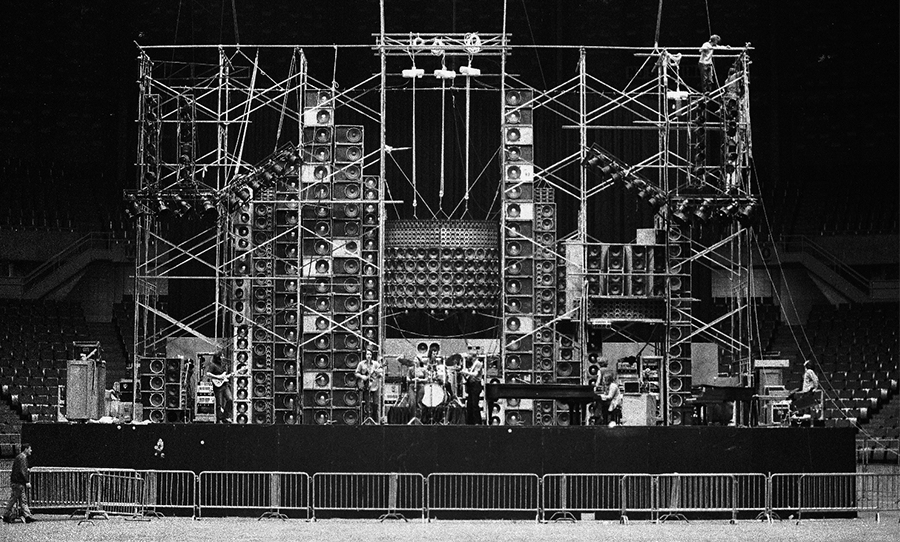
He also talked about the Wall Of Sound. A giant PA system that Owsley Stanley designed. The wall was impressive to look at as well to listen to. It was created to prevent feedback and distortion. It took four semi-trailers and 21 crew members were required to haul and set up the 75-ton Wall. The sound had a reach of a quarter of a mile. It stood 3 stories high…just think of the work it took for the crew to set it up and take it down nightly. Some specs from wiki:
89 300-watt solid-state and three 350-watt vacuum tube amplifiers generating a total of 26,400 watts of audio power. 604 speakers total.
586 JBL speakers and 54 Electro-Voice tweeters powered by 48 McIntosh MC-2300 Amps (48 × 600 = 28,800 watts of continuous (RMS) power).
Here is some grainy footage of the wall.
All in all…if you like rock and roll books…this one is really interesting.
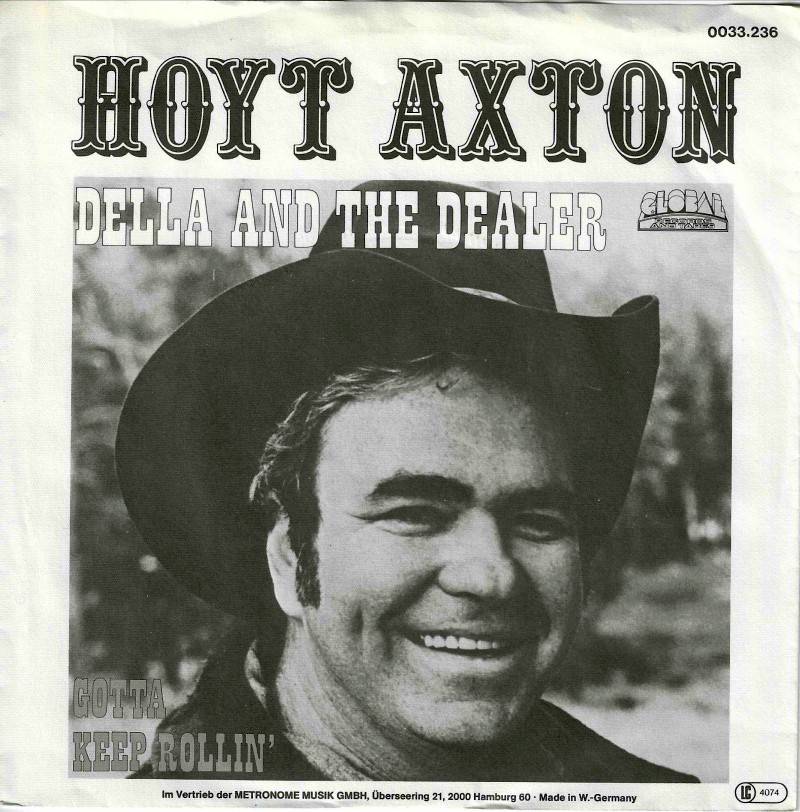
I cannot remember the first time I heard this song but I heard it alot growing up. The imagery of the lyrics is a lot of fun. It’s country but it’s also a little rock and a little blues. It’s hard to classify many of his songs although he was mainly known for being a country singer and songwriter. He also ventured out into garage rock, folk, and hard rock with his songs.
Hoyt Axton:“I’m one of those fringe dudes: half folkie, half hippie, half Okie. My input has been very eclectic. I was always surrounded by all kinds of music, as my family moved around the country: jazz, classical, gospel, whatever… the influences enter from a lot of directions.”
Hoyt Axton was a talented artist. He was a singer, songwriter, and actor. We all know his songs. Joy To The World, Never Been To Spain, Snowblind Friend, The Pusher, The No, No Song, and When the Morning Comes. He was also in a number of movies, commercials, and tv shows. The movie I remember him most for was Gremlins. Axton always came off as incredibly likable.
Hoyt Axton’s mom could write songs herself…Mae Boren Axton, a songwriter, co-wrote the classic rock “Heartbreak Hotel”, which became a major hit for Elvis and an iconic rock song. Now that is a cool mom.
Axton had his big hits with other people singing his songs. His composition “Joy to the World”, as performed by Three Dog Night, was #1 on the charts for six straight weeks in 1971, making it the top hit of the year. He named his record label Jeremiah after the bullfrog mentioned in the song.
Axton had an addiction problem early in his career. He wrote songs about it like Snowblind Friend, The Pusher, and The No No Song which Ringo covered.
There are a lot of theories about this song. The dog and cat are real people. He is being purposely vague as they were all involved in some shady dealings…hanging out with what is obviously a drug dealer and murderer, but the narrator is no snitch….he’s a “cool cat.” There are a lot of theories about the song…it’s a fun story song regardless.
This song was released in 1979 and peaked at #17 on the Billboard Country Charts. It was on his album A Rusty Old Halo that peaked at #27 in the Billboard Country Charts and #14 in the Canada Album Charts.
Hoyt Axton passed away on October 26, 1999, at the age of 61.
On November 1, 2007, Axton and his mother were both inducted posthumously into the Oklahoma Music Hall of Fame in Muskogee, Oklahoma.
Tomorrow I have another Axton song but not with Hoyt singing.
Della and the Dealer
It was Della and the Dealer and a dog named Jake And a cat named Kalamazoo. Left the city in a pick up truck, Gonna make some dreams come true.
Yea, they rolled out west where the wild sunsets And the coyote bays at the moon. Della and the Dealer and a dog named Jake and a cat named Kalamazoo
If that cat could talk what tales he’d tell About Della and the Dealer and the dog as well But the cat was cool, and he never said a mumblin word.
Down Tucson way there’s a small cafe Where they play a little cowboy tune. And the guitar picker was a friend of mine By the name of Randy Boone.
Yea, Randy played her a sweet love song And Della got a fire in her eye The Dealer had a knife and the dog had a gun and the cat had a shot of Rye.
If that cat could talk what tales he’d tell About Della and the Dealer and the dog as well But the cat was cool, and he never said a mumblin word.
Yea, the dealer was a killer, He was evil and mean And he was jealous of the fire in her eyes.
He snorted his coke through a century note And swore that Boone would die.
The stage was set when the lights went out. There was death in Tucson town. Two shadows ran for the bar back door And one stayed on the ground
If that cat could talk what tales he’d tell About Della and the Dealer and the dog as well But the cat was cool, and he never said a mumblin word.
Two shadows ran from the bar that night And dog and cat ran too. And the tires got hot on the pick up truck As down the road they flew.
It was Della and her lover and a dog named Jake And a cat named Kalamazoo. Left Tucson in a pick-up truck Gonna make some dreams come true.
If that cat could talk what tales he’d tell About Della and the Dealer and the dog as well But the cat was cool, and he never said a mumblin word.
Ken Stringfellow and Jon Auer started to write songs together while in High School in Bellingham, Washington in 1986. They were influenced by The Hollies, Hüsker Dü, XTC, Elvis Costello, Squeeze, and Big Star.
When they started out, a cassette of songs Stringfellow and Jon Auer traded back and forth went viral, which in the late ’80s meant copies got passed around and radio stations started playing them. The had one big problem though. They didn’t have an actual band together. Drummer Mike Musberger and bassist Rick Roberts were added as the first Posies rhythm section.
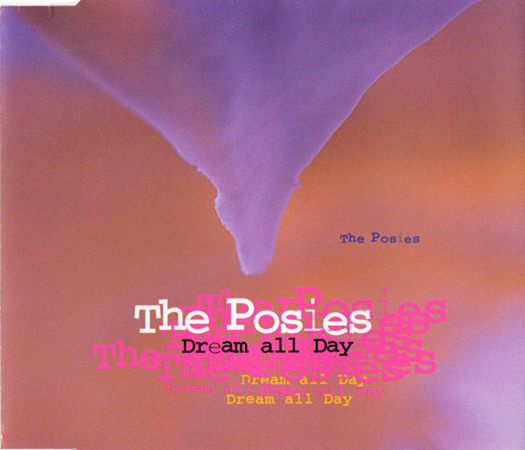
This song was on their third album released in 1993 called Frosting On The Beater. Dave Fox had replaced Rick Roberts by this time on bass. Dream All Day was released as the first single on the album.
The song peaked at #4 on the Billboard Alternative Airplay Charts and #17 in the Billboard Mainstream Charts in 1993.
The Posies soon got signed to DGC and “Golden Blunders,” the first single from their Dear 23 debut on the label, became enough of a college radio hit that Ringo Starr recorded as part of his 1992 album Time Takes Time.
The made 8 albums altogether with the last one being in 2016.
In 1993 Ken Stringfellow and Jon Auer joined Big Star’s Jody Stephens and Alex Chilton to reform Big Star. They toured and released a Big Star album in 2005 called In Space. It came to an end in 2010 with the death of Alex Chilton.
Dream All Day
I’ve got a lot of thoughts Got a lot of plans I lost a lot of sleep Trying to understand
I could dream all day
In a blackened room Staring into space Underneath a thousand blankets Just to find a place Where everything is reachable Imagining is safe I tried to make it so I didn’t even know
I could dream all day
I dreamt I was awake My mouth was colored grey As the world revolved around me I could only say
I first heard this song in the 80s and later on, I heard it in a Tarantino movie called Jackie Brown. You feel like you are walking down that Street in 1973 with this song. You can see the sights and feel the grime as the song finishes. It’s R&B, Soul, and a touch…just a small touch of Motown in the background.
Across 110th Street Pimps trying to catch a woman that’s weak Across 110th Street Pushers won’t let the junkie go free Across 110th Street Woman trying to catch a trick on the street, ooh, baby Across 110th Street You can find it all in the street
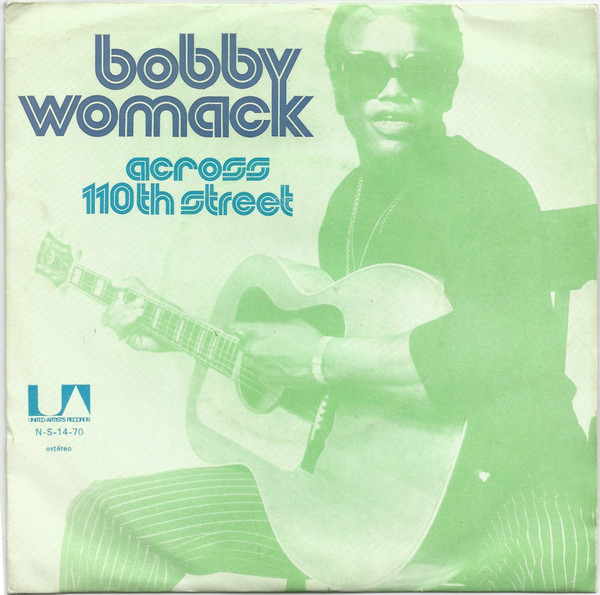
Bobby Womack’s 1973 hit single Across 110th Street was the title song from Barry Shear-directed movie starring Anthony Quinn for which Womack provided the soundtrack music. The song peaked at #56 on the Billboard 100 and #19 in the R&B Charts. The song was written by Bobby Womack and J.J. Johnson.
It was used in the movie by Quentin Tarantino “Jackie Brown” in 1997 and featured in the 2007 movie “American Gangster.” I’m glad that it has had a revival of sorts and didn’t get lost in history.
Bobby Womack was asked if he noticed his audience changed after this song.
Bobby Womack: I did simply because, at that particular time, that was a change for me, to record with orchestration like that. Across 110th Street had meaning, because although I lived on Central Avenue in Cleveland Ohio [growing up], it was like Across 110th Street. That’s what made me in the frame of mind to write the lyric as I did, because it sort of typified me and my brothers growing up.
I was the third brother of five Doing whatever I had to do to survive I’m not saying what I did was all right Trying to break out of the ghetto was a day-to-day fight
Been down so long, getting up didn’t cross my mind But I knew there was a better way of life that I was just trying to find You don’t know what you’ll do until you’re put under pressure Across 110th Street is a hell of a tester
Across 110th Street Pimps trying to catch a woman that’s weak Across 110th Street Pushers won’t let the junkie go free Across 110th Street Woman trying to catch a trick on the street, ooh, baby Across 110th Street You can find it all in the street
Ooh, ooh-ooh-ooh, ooh-ooh-ooh, oh-oh-oh
I got one more thing I’d like to talk to y’all about right now
Hey, brother, there’s a better way out Snorting that coke, shooting that dope, man, you’re copping out Take my advice, it’s either live or die You got to be strong if you want to survive
The family on the upper side of town Would catch hell without a ghetto around In every city you’ll find the same thing going down Harlem is the capital of every ghetto town Help me sing it
Across 110th Street Pimps trying to catch a woman that’s weak Across 110th Street Pushers won’t let the junkie go free Oh, across 110th Street A woman trying to catch a trick on the street, ooh, baby Across 110th Street You can find it all In the street Yes, you can
Oh, look around you, look around you Look around you, look around you Yeah Yeah
Welcome to the Hanspostcard TV Draft. I hope you will enjoy it! Today’s post was written by Keith at https://nostalgicitalian.com/
For my next pick in the Hanspostcard TV Show Draft is one that is one of my all time favorites. I don’t remember when I first was introduced to this show, but I am guessing my dad had something to do with it. Early on in the draft, I chose Police Squad, which only aired 6 episodes. This show is known for its “Classic 39” – The Honeymooners.
This isn’t my first blog about the show. Some time ago, I took part in a “Favorite TV Episode” Blogathon and picked 2 of my favorite episodes to present. You can read that blog here:
When you think about 50’s TV shows, there was very little struggle involved. Think about it. I Love Lucy, The Adventures of Ozzie and Harriet, The Andy Griffith Show, and Leave it to Beaver all showed families who were living in nice homes or apartments, showed no signs of financial struggles, and while there may be a misunderstanding here and there, it was mostly “bliss.” In 1955-1956, however, The Honeymooners focused on two couples from New York, who were struggling to get by.
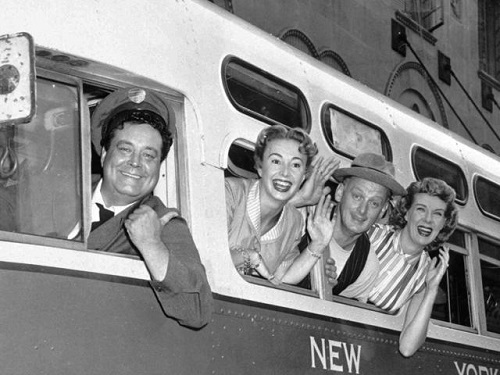
The show focused on the lives of Ralph (Jackie Gleason) and Alice Kramden (Audrey Meadows), and Ed (Art Carney) and Trixie Norton (Joyce Randolph). One article I found on the show says this about Gleason’s Kramden character: Ralph was the get-rich-quick scheming, short-tempered, soft-hearted guy who was always striving for greatness, but never made it out of that two-room Brooklyn apartment. And that’s one of the main attractions for even the most casual of viewers: the characters are so identifiable. As Jackie himself said at the time, “Everything we did could have happened. People like the show, because we are them.”
The show began as a simple sketch on the DuMont Television Network, on the Cavalcade of Stars. The original hosts were Jack Carter and Jerry Lester, but in July of 1950 comedian Jackie Gleason took over the hosting duties. In the process, Gleason took the struggling show and turned it around to be a hit. The show, which featured comedy skits and a number of different performers each week, was broadcast live in front of a theater audience. In 1951, Jackie and his writers came up with the idea for a sketch called The Honeymooners. It was about a struggling couple living in Brooklyn who frequently fought, but in the end, there was no question that they loved each other.
Leonard Stern was a writer on both The Honeymooners and The Jackie Gleason Show. In an interview with the Archive of American Television he stated, “We started doing one sketch of The Honeymooners every five or six weeks and the response of people on the street was tremendous. So we started doing them every other week. Eventually, though, everyone, including Jackie, lost interest in the other characters in the different sketches, so we started to do them every week until the fatigue level hit its high and we’d have to take a break. I think Gleason had fun doing them, because he recognized the impact Kramden and Alice and Norton and Trixie were having on the audience. I’m not a great fan of ratings, but let me say that 53% of the total television audience was watching the show. There’s nothing like that in existence today. It was astonishing and the show itself was live. Remember, the audience of 3,000 people filled that theater. You earned your laughs. It was a resounding success and very exhilarating for all of us. It was opening night every week.”
When Gleason left the Dupont Network and went to CBS, he hosted the Jackie Gleason Show, where the Honeymooners sketches continued. In the 1952 season, the sketches usually ran between seven and 13 minutes. In the following season, and those sketches ran for a minimum of 30 minutes, and sometimes longer. Then, in the 1954-55 season, they actually filled the entire hour of The Jackie Gleason Show and was doing so well in the ratings that it occasionally surpassed the viewership of I Love Lucy. That is almost unheard of!
In the 1955-56 season, The Jackie Gleason Show literally became The Honeymooners! It aired as a half-hour sitcom that was filmed in front of a studio audience. In total, 39 episodes were produced, and these episodes are the ones that are still being broadcast today. These 39 episodes are the ones that most people remember.
I read an article that said Jackie Gleason had actually been given a three-year contract from CBS for 78 episodes of The Honeymooners to be produced in the first two seasons. The contract also included an option for a third season of 39 more. For whatever it is worth, Gleason felt the quality of the scriptwriting couldn’t be maintained, and the show was mutually canceled by him and CBS.
A Closer Weekly article says: What’s particularly impressive about The Honeymooners living on the way it has is the fact that back in the day, there needed to be a minimum of 100 episodes of a show available so that local stations could run it five days a week. Any less made syndication difficult, since the cycle would be repeated that much sooner. But then there was The Honeymooners, with a mere 39 episodes to offer up, yet it worked. And continues to do so.
In a 1996 appearance on The Tonight Show with Johnny Carson, Jackie was asked why the show ended. He told Carson, “We were running out of ideas. I liked The Honeymooners and I liked doing them, and I didn’t want to denigrate them by forcing scenes that didn’t mean anything. So I wanted to quit, but they didn’t believe me. They thought I had another job someplace, but I didn’t. I’m glad I did stop them, because what we had done was good and if we had gone any further, we might have spoiled it.”
Those “Classic 39” are classic for a reason. They are still funny. The situations that The Kramdens and the Nortons muddle through every week will make you laugh, cry, think, and smile. They still hold up today. Each one of them has memorable scenes and quotable lines.
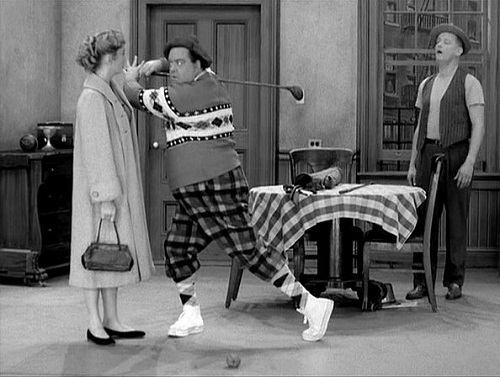
In one episode Ralph tells his boss he is a great golfer and is immediately asked to go play around with him. Now Ralph needs to learn how to play – and fast. He finds the perfect teacher in his best friend Ed Norton. In pure Art Carney fashion, Ed reads from a book that you must “address the ball,” to which he takes the club, stands in front of the ball, looks down and says, “Hello, Ball!”
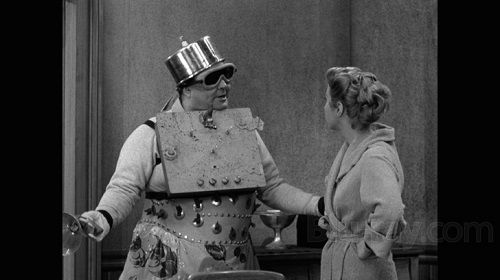
An episode of the show was featured in the movie Back To The Future. When Marty McFly winds up in 1955, a family is watching the episode The Man From Space. Intending to win the $50 first prize at the Racoon Lodge’s costume ball, Ralph decides to create his own outfit. And what an outfit! After appropriating (among other things) a faucet, a pot, a radio tube, and the icebox door, he presents himself as the Man from Space.
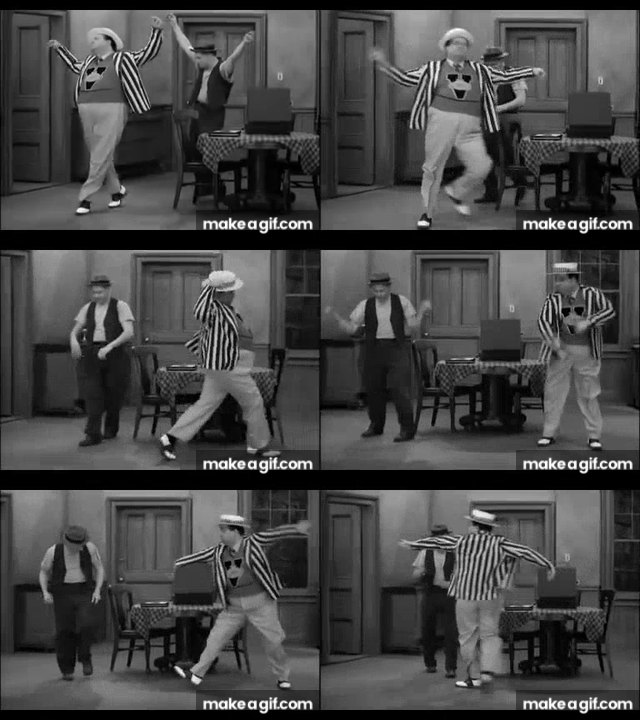
In another episode, Alice says she wants to go dancing. Ralph has Ed come over to teach him how to dance. Ralph’s outfit is hilarious (he tells Alice it is “what all us cats where! I’m hip!”). The dance (to the song The Hucklebuck) is worth the watch.
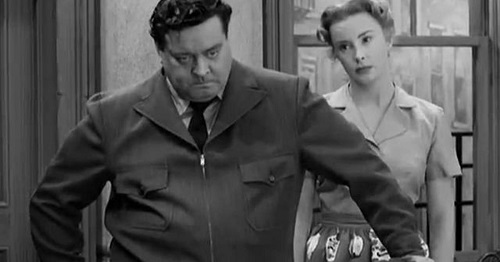
To me, sometimes the funniest stuff can be as simple as Ralph’s face …
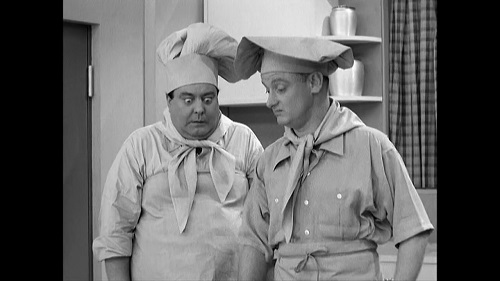
In another classic episode, Ralph and Norton appear on a TV commercial trying to sell their Handy Housewife Helper, a kitchen gadget that can, among other things, open cans, remove corns, and “core an apple.” In the inspired, ad-lib-laden episode, “Chef of the Future” Ralph demonstrates the wonders of the gizmo to “Chef of the Past” Norton. Rehearsal goes great, but in front of live cameras, Ralph freezes up.
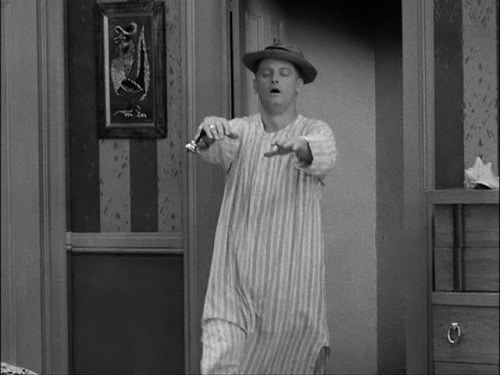
Art Carney was the perfect second banana. The play between him and Gleason is classic. In one episode Norton’s sleepwalking becomes a waking nightmare for Ralph. Ralph can’t get any sleep because he’s been asked to keep his pal from wandering off on late-night strolls around the neighborhood.
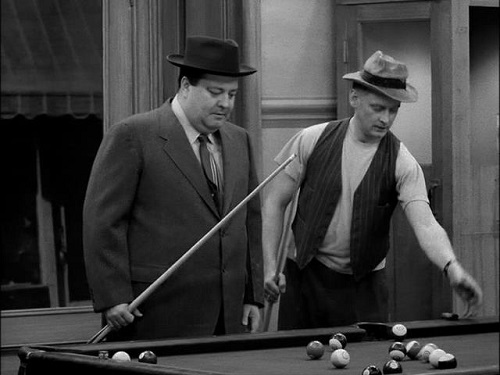
Another classic episode takes place at the pool hall where Ralph gets into an argument with the diminutive guy named George. “My friend is even bigger than me,” he tells Ralph. “I have a friend Shirley that’s bigger than you,” Ralph counters. But then he comes eye-to-chin with George’s friend, the towering Harvey, who challenges Ralph to a fight. This prompts Norton to observe: “He’s even bigger than your friend Shirley.”
Many of the plot lines from the classic episodes made it into the Joe Piscopo and Eddie Murphy novelty hit “The Honeymooners Rap.”
In the 1980’s, Jackie Gleason announced that in his vault he had found a number of Honeymooners skits from The Jackie Gleason Show that had been shot on Kinescope, which is a way of filming directly through a lens that actually focused on the screen of a video monitor. 107 of those skits were released on DVD and syndicated to television stations. These would have been shot before the “Classic 39” and two of them stand out to me.
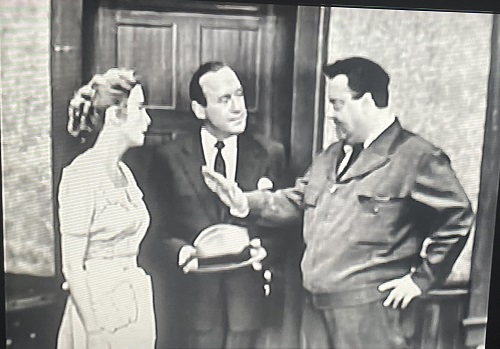
Jackie had been a guest star on the Jack Benny Show, so Jack makes an appearance as the Kramden’s landlord. The rent is being raised and Ralph is mad. When there is a knock on the door, Ralph opens it and Jack Benny is standing there. The audience chuckles in anticipation. Ralph calls to Alice that “the Landlord’s here” and the audience erupts. Benny stands there quietly as Ralph reads him the riot act! He calls him a “penny pincher” (which plays into Benny’s “cheap” character”) and says that he pinches a penny so hard that when he is through “both heads and tails are on the same side of the coin!”
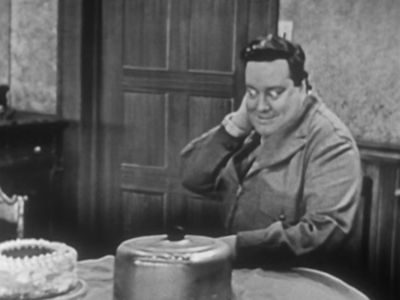
In another lost episode, Ralph must lose weight for work. All through the episode, he is starving. Finally, he is left alone in the apartment and sitting at the kitchen table. He notices a cake pan. He lifts the lid and sees the cake. His eyes bulge and he goes nuts. As he is about to tear into the cake Alice walks in. “Everybody get back,” he yells! The brief 3 minutes of him staring at the cake before getting ready to eat it is comedy genius!
As brilliant as Jackie Gleason was as Ralph Kramden, he never won an Emmy Award for it. Art Carney, however, won 5 Emmys for Best Supporting Actor on The Honeymooners and the Jackie Gleason Show.
The Honeymooners influenced a huge 1960s cartoon – The Flintstones. It is a blatant rip-off of the show and was a huge hit. It is said that Gleason considered suing Hanna-Barbera Productions because of the similarities, but decided that he did not want to be known as “the guy who yanked Fred Flintstone off the air”
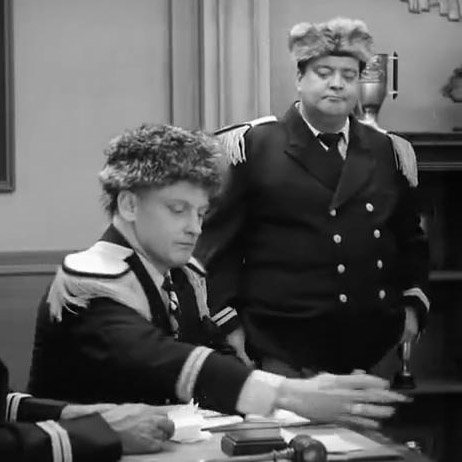
Water Buffalo members and Racoon members
The Honeymooners is over 65 years years old! Joyce Randolph, who played Trixie Norton is 97 years old and still going strong. I wonder if Gleason ever thought that those 39 episodes would still find an audience today and that they would still bring much laughter.
In 1990, Audrey Meadows joined Bob Costas on Later to discuss the show. You can see that footage here:
If you have never seen an episode, I encourage you to do so. The two episodes I mentioned in a previous blog are good places to start – TV or Not TV or A Matter of Record. Most are available on Youtube.
This and I Want To Be Sedated are my two favorite songs by the Ramones. I’ve been apprehensive about posting this one because of obvious reasons. UK #1s blog (Stuart) and I were talking a couple of weeks ago about how much we liked this song. It has a couple of really interesting stories that go with it as you might imagine.
There are two stories about how this song came to be. The most popular (but probably not true) is this one. Johnny Ramone, the politically conservative member of the group, stole away liberal Joey Ramone’s girlfriend Linda Daniele, and Joey wrote this song about it. So Joey made the comparison of the KKK to Johnny in the song…not because Johnny was a racist but because of his conservative views and being a tad upset about the Linda thing. Johnny eventually married Linda, causing a huge strain on his relationship with Joey.
More likely it’s this one. Joey’s brother, Mickey Leigh, has said that the song was written before he knew about Johnny and Linda. Leigh said their parents disapproved of interracial relationships. Joey was dating a black woman at the time and one day Leigh noticed they weren’t together anymore. He asked Joey what happened to the girl and Joey responded by saying “the KKK took my baby away.” The KKK was Joey’s parents who broke them up.
I seriously doubt if Johnny would have played on a song with him being referred to as the KKK. That being said…the marriage did cause a huge strain on Joey and Johnny’s personal relationship. Even before this, they were extreme in their political beliefs so they didn’t have an easy relationship anyway.
Monte Melnick the band’s tour manager on Joey and Johnny after the marriage: “They came to an agreement where they kind of tolerated each other, It’s like a business. You’re working with someone you don’t particularly like, but you’re still working there because you like your job.”
Linda Daniele: “So when it came time for Joey and me to break up, we understood. It was time to move on. Johnny was in love with me, I had been falling in love with Johnny. Joey knew that. For the first couple of years, I didn’t speak to Joey and then of all a sudden, this guy was doing a Ramones book. And out of the blue Joey called me. From that moment on, me and Joey always stayed in touch. I know people go, ‘Oh, you broke his heart.’ But Joey got another girlfriend right away after I left!”
The song was on their 1981 album Pleasant Dreams. The album peaked at #58 in the Billboard Album Charts.
Here are the Drive-By Truckers with a cover
The KKK Took My Baby Away
She went away for the holidays Said she’s going to L.A. But she never got there She never got there She never got there, they say
The KKK took my baby away They took her away Away from me The KKK took my baby away They took her away Away from me
Now I don’t know Where my baby can be They took her from me They took her from me I don’t know Where my baby can be They took her from me They took her from me
Ring me, ring me ring me Up the President And find out Where my baby went Ring me, ring me, ring me Up the FBI And find out if My baby’s alive Yeah, yeah, yeah






 PowerPop... An Eclectic Collection of Pop Culture