
Beatles – Rocky Raccoon

This coming weekend I’m going to attempt a Beatles album ranking post which I’ve never done… so I’ve been listening to the White Album. Rocky Raccoon is a  great way to start out the week

I bought the White Album in the winter of 1981 right after John Lennon was murdered. It has remained my favorite album ever by far. You have such a variety on this album and it gives you different glances at the Beatles without many studio tricks and sounds.

This song starts with a strumming guitar and then comes Paul talking/singing in his best western voice. Now somewhere in the Black Mountain Hills of Dakota
There lived a young boy named Rocky Raccoon. 

The main character was originally called Rocky Sassoon but McCartney changed it to Raccoon, as he thought the name was more cowboyish.

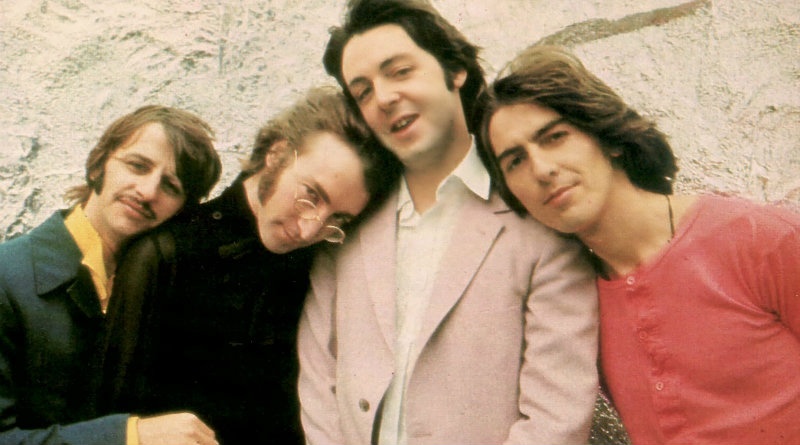
The original title of the album was going to be “A Doll’s House“… but the band  Family used the title Music from a Doll’s House for its debut album, so The Beatles scrapped the idea. The album’s real name ended up being “The Beatles” but the plain white cover nickname soon took over. From some accounts here is the original cover.

A Doll's House

In 1968, McCartney got the idea for it when he was playing guitar with John Lennon and Donovan Leitch at the Maharishi’s camp in India. Rocky in the song is a cowboy in the old west and challenges Dan when Dan ran off with Rocky’s girl. In the gunfight, Dan is too quick and shoots Rocky wounding him. When the song was recorded… Beatles producer George Martin played the piano in an old-west saloon style.

Rocky in this song is not a raccoon but a boy whose girl runs off with his rival, Dan. The song is set in the Old West, so Rocky does what any self-respecting cowboy would do: he challenges Dan to a gunfight. Unfortunately for Rocky, he Dan is quick on the draw and shoots him first, wounding Rocky and proving himself worthy of the girl.

The album peaked at #1 in the US, Canada, UK, and just about everywhere in 1968.

Paul McCartney: “Rocky was me writing (speaks-sings in a baccy-chewing old prospector voice), ‘It was way back in the hills of Dakota-or Arkansas-in the mining days. And it was tough, picking shovels, and we were underground 24 hours a day…’ I could have taken this serious route, researched it – ‘Take This Hammer’ (a prison work song recorded by British skiffle star Lonnie Donegan in 1959), stuff I’d been brought up on. But at that point I was a little tongue-in cheek. So I crossed it with a (British singer and banjo player popular in the 1940s) George Formby sensibility, where John and I would go (sings a bit of doggerel in a choppy rhythm) – Stanley Holloway, Albert in The Lion’s Den (the comic poem The Lion and Albert, written by Holloway’s creative partner Marriott Edgar in 1932). We were very versed in all that stuff (sings opening lines of Rocky Raccoon in the same choppy way). The scanning of the poetical stanza always interested me. Somehow this little story unfolded itself.

I was basically spoofing ‘the folk-singer.’ And it included Gideon’s Bible, which I’ve seen in every hotel I’ve ever been in. You open the drawer and there it is! Who’s this guy Gideon! I still don’t know to this day who the heck he is. I’m sure he’s a very well-meaning guy. Rocky Raccoon was a freewheeling thing, the fun of mixing a folky ramble with Albert In The Lion’s Den with its ”orse’s ‘ead ‘andle,’ ha ha.”

Many cover versions have been recorded. Some of the artists are Richie Havens, Ramsey Lewis, Jack Johnson, Andrew Gold, James Blunt, Phish, Jimmy Buffett, Maureen McGovern, Kingston Wall, Charlie Parr, and Andy Fairweather Low.

Rocky Raccoon

Now somewhere in the Black Mountain Hills of Dakota
There lived a young boy named Rocky Raccoon
And one day his woman ran off with another guy
Hit young Rocky in the eye
Rocky didn’t like that
He said, “I’m gonna get that boy”
So one day he walked into town
Booked himself a room in the local saloon

Rocky Raccoon checked into his room
Only to find Gideon’s Bible
Rocky had come, equipped with a gun
To shoot off the legs of his rival
His rival it seems, had broken his dreams
By stealing the girl of his fancy
Her name was Magill, and she called herself Lil
But everyone knew her as Nancy
Now she and her man, who called himself Dan
Were in the next room at the hoe down
Rocky burst in, and grinning a grin
He said, “Danny boy, this is a showdown”
But Daniel was hot, he drew first and shot
And Rocky collapsed in the corner

Now the doctor came in, stinking of gin
And proceeded to lie on the table
He said, “Rocky, you met your match”
And Rocky said, “Doc, it’s only a scratch
And I’ll be better, I’ll be better, Doc, as soon as I am able”

Now Rocky Raccoon, he fell back in his room
Only to find Gideon’s Bible
Gideon checked out, and he left it, no doubt
To help with good Rocky’s revival
Beatles – Blackbird

The acoustic guitar part that Paul wrote to this song is iconic now. The first few bars and you know what it is without hearing anything else. This song added to the texture of The White Album. On the same album you had the bone-crunching Helter Skelter, the rock and roll of Back in the USSR, the great pop of Sexy Sadie, the hard blues of Yer Blues, and then you have this song. It was credited to Lennon and McCartney but Paul wrote this one alone. The White Album was released in 1968 and it peaked at #1 in the Billboard 100, #1 in the UK, and #1 in Canada.

Paul McCartney wrote this about the civil rights struggle for African Americans after reading about race riots in the US. He penned it in his kitchen in Scotland after he heard about an incident in Little Rock when the federal courts forced the racial desegregation of the Arkansas capital’s school system.

Paul McCartney met two of the women who inspired the song in 2016.

https://www.rollingstone.com/music/music-news/paul-mccartney-meets-women-who-inspired-beatles-blackbird-57076/

Paul McCartney: “I was sitting around with my acoustic guitar and I’d heard about the civil rights troubles that were happening in the ’60s in Alabama, Mississippi, Little Rock in particular,” “I just thought it would be really good if I could write something that if it ever reached any of the people going through those problems, it might give them a little bit of hope. So, I wrote ‘Blackbird.'”

Dave Grohl: “It’s such a beautiful piece of music, perfect in composition and performance, and in its lyrics and in the range of his voice. Just learning that song made me a better guitar player and gave me a better appreciation of songwriting. To me it’s just musical bliss.”


From Songfacts

Only three sounds were recorded: Paul’s voice, his Martin D-28 acoustic guitar, and a tapping that keeps time on the left channel.

This tapping sound is a bit of a mystery, although in the Beatles Anthology video McCartney appears to be making the sound with his foot. Some sources have claimed it is a metronome.

The birds were dubbed in later using sound effects from the collection at Abbey Road, where the song was recorded.

McCartney did not have ornithological intentions when he wrote this song. In England, “bird” is a term meaning “girl,” so the song is a message to a black girl, telling her it’s her time to fly:

All your life
You were only waiting for this moment to arise

The guitar accompaniment for this song was inspired by Bach’s Bourrée in E minor for lute. This is often played on classical guitar, an instrument Paul McCartney and George Harrison had tried to learn when they were kids. McCartney told Mojo magazine October 2008: “We had the first four bars (of the Bourrée in E minor) and that was as far as my imagination went. I think George had it down for a few more bars and then he crapped out. So I made up the next few bars, and (sings his four-note variation Bach’s theme) it became the basis of ‘Blackbird.'”

This is one of the songs novice guitar players often try to learn, as it’s one of the most famous finger-style tunes. The singer Donovan claims some credit for teaching The Beatles a technique similar to the one McCartney used here when they were on a retreat to India in early 1968.

The word “bird” had been floating around Paul McCartney’s musical lexicon since 1958 when the Everly Brothers had a hit with “Bird Dog,” a song about a guy trying to steal another dude’s girl. McCartney was a huge fan of the Everly Brothers.

There have been hundreds of covers of this song. Perhaps the most enduring is Brad Mehldau’s instrumental jazz version, released in 1997. The only charting version of the song was by the Cast of Glee, which took it to #37 in 2011. Other notable covers include renditions by José Feliciano, Billy Preston, Sarah Vaughan, Jaco Pastorius, Crosby, Stills & Nash, Bobby McFerrin and Dwight Twilley. The Doves did a cover in 2002 for the soundtrack to the TV series Roswell.

The singer-guitarist Kenny Rankin recorded it for his 1974 album Silver Morning. McCartney was a big fan of Rankin’s rendition: when the Songwriters Hall of Fame induced Lennon and McCartney in 1987, McCartney skipped the ceremony but had Rankin accept the award on his behalf and perform “Blackbird.”

The “broken wings” concept had been fluttering about for a while, notably in Kahlil Gibran’s 1912 story The Broken Wings. (The Beatles song “Julia” uses lines from one of Gibran’s poems, but McCartney has never cited him as an influence on “Blackbird.”) In 1985, the American group Mr. Mister released their #1 hit “Broken Wings,” which was directly inspired by The Broken Wings and like “Blackbird,” used the line, “Take these broken wings and learn to fly.”

At the Academy Awards ceremony in 2016, Dave Grohl performed this song to accompany the “in memoriam” segment, recognizing those in the movie industry who died the previous year.

Blackbird Singing is the title of a book of poems McCartney wrote.

This is one of about 12 Beatles songs that McCartney often played in his live shows throughout his career. It lends itself to live performance because it is rather compact (it runs just 2:18) and can be played with just a guitar.

Blackbird

Blackbird singing in the dead of night
Take these broken wings and learn to fly
All your life
You were only waiting for this moment to arise

Blackbird singing in the dead of night
Take these sunken eyes and learn to see
All your life
You were only waiting for this moment to be free

Blackbird fly, blackbird fly
Into the light of a dark black night

Blackbird fly, blackbird fly
Into the light of a dark black night

Blackbird singing in the dead of night
Take these broken wings and learn to fly
All your life
You were only waiting for this moment to arise

Beatles – Happiness Is A Warm Gun

This song took a while to grow on me but it did and became one of my favorites from the White Album. The song is divided into three different sections that fit together and climaxing at the end with the great chorus Happiness is a warm gun (bang bang shoot shoot). It has a fifties sound with the backup vocals.

John saw an article in a gun magazine that George Martin had in the studio. The article was titled Happiness is a Warm Gun… John: “Wow! Incredible,’ you know, the fact that happiness was a warm gun that had just shot something or somebody…I thought it was a fantastic, insane thing to say.”

Image result for the happiness is a warm gun magazine cover   The magazine in question was the May 1968 edition of “American Rifleman,” which contained an article entitled “Happiness Is A Warm Gun.” This article, written by Warren W. Herlihy, relates the author’s pride in his 18-year-old son John who has been shooting guns since the age of seven.

The song seems to have had drug references in the song although John usually denied them. The line “I need a fix ’cause I’m going down” does point that direction. According to Paul and others around him at this time, John was into heroin.

Paul McCartney said:  “and so his songs were taking on more references to heroin. Until that point, we had made rather mild, rather oblique references to pot or LSD. Now John started to be talking about fixes and monkeys and it was a harder terminology which the rest of us weren’t into. We were disappointed that he was getting into heroin because we didn’t really see how we could help him…It was a tough period for John, but often that adversity and that craziness can lead to good art, as I think it did in this case.”

The chorus is what won me over at first but the lyrics are fascinating in the first section.

She’s well acquainted with the touch of the velvet hand like a lizard on a window pane.
The man in the crowd with the multi-colored mirrors on his hobnail boots.
Lying with his eyes while his hands are busy working overtime.
A soap impression of his wife which he ate and donated to the National Trust.

Lennon said that the Mother Superior jump the gun section was about Yoko.

John:  “She was rabbiting on in the car one day, and I said, ‘mother superior jumped the gun again,’ because she’s always one jump ahead.  So that was Yoko really.  It was camp.”

The White Album was a stressful album to make but there were some fun and camaraderie during this time also. One such occasion was the recording of this song. All four Beatles have been quoted as saying they liked the song, Paul even naming it as the best on the White Album.


From Songfacts

In the last section of the song, the backing vocals are “Bang, Bang, Shoot, Shoot.” 

A popular theory is that Lennon meant for this to be a drug metaphor for doing heroin:

“Needing a fix”

“Jump the gun” – meaning to cook it up

“Bang, Bang, SHOOT, SHOOT”

“When I hold you in my arm, nobody can do me no harm” – heroin addicts tell how when you’re on it, nothing can do you no harm and Lennon’s overall nature seem to point to this 

This was banned by the BBC for sexual symbolism. They thought the gun was a phallic symbol.

The original line “When I hold you in my arms and feel my finger on your trigger…” appears in unreleased, bootlegged versions of “I’m So Tired” as “When I hold you in your arms, when you show me each one of your charms, I wonder should I get up, and go to the funny farm.” This could mean the line was originally sexual but was put in as a metaphor for a gun later on. 

The final doo-wop chorus of this song has the exact same chord progression as “This Boy,” just in a different key.

The phrase “happiness is a warm gun” is a play on a Peanuts comic strip from 1960 where Lucy hugs Snoopy and says, “Happiness is a warm puppy.” That phrase became a popular slogan, appearing on mugs, T-shirts and lots of other merch.

Tori Amos covered this on her 2001 album Strange Little Girls. All the songs on the album were written by men – Amos took on different characters to interpret them from a woman’s point of view. Yoko Ono had to approve this, and she did.

The Breeders covered this on their 1990 album Pod

This is the song that inspired 2Pac to cast his gun as his girlfriend in “Me and My Girlfriend”: “She’s the only woman I need!”

Happiness Is A Warm Gun

She’s not a girl who misses much
Do do do do do do, oh yeah

She’s well acquainted with the touch of the velvet hand like a lizard on a window pane.

The man in the crowd with the multi-colored mirrors on his hobnail boots.

Lying with his eyes while his hands are busy working overtime.

A soap impression of his wife which he ate and donated to the National Trust.

I need a fix ’cause I’m going down
Down to the bits that I left uptown
I need a fix ’cause I’m going down

Mother Superior jump the gun

Happiness is a warm gun (bang bang shoot shoot)
Happiness is a warm gun, mama (bang bang shoot shoot)
When I hold you in my arms (oh, yeah)
And I feel my finger on your trigger (oh, yeah)
I know nobody can do me no harm (oh, yeah)
Because, (happiness) is a warm gun, mama (bang bang shoot shoot)
Happiness is a warm gun, yes it is (bang bang shoot shoot)

Happiness is a warm, yes it is, gun
Happiness (bang bang shoot shoot)

Well don’t you know that happiness (happiness) is a warm gun, (is a warm gun, yeah).