This is the twentieth century But too much aggravation This is the edge of insanity I’m a twentieth century man but I don’t want to be here
This song is for Song Lyric Sunday for Jim Adams’s blog. This week’s prompt is (drum roll please…) a song from a concept album.
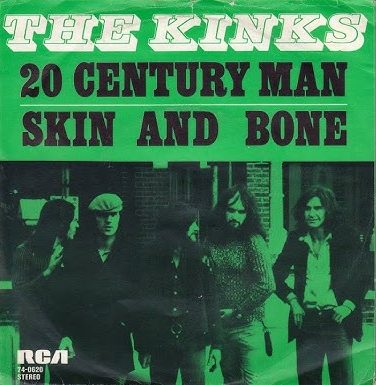
This song came from the album Muswell Hillbillies. A blogger friend of mine halffastcyclingclub, wrote up a post about it when I had the Kinks Weeks last year, it’s right here. Muswell Hillbillies is one of the many concept albums The Kinks did in the late sixties and early seventies. 20th Century Man kicks off the album.
The song is an anthem of the over-civilized, over-documented, over-saturated age. Davies isn’t just annoyed by technology or bureaucracy; he’s exhausted by the entire machinery of progress. X-rays, radiation, political ideology, Big Brother watching from the corner of the room, Ray sees it all and wants out. Half a century later, 20th Century Man sounds eerily current. All those worries about surveillance, conformity, soulless routine? They didn’t go away, they just put on a fresh coat of Wi-Fi and Bluetooth.
Musically, it’s a leaner Kinks, with no horn section, no vaudeville flourishes, and no trimmings. Just guitars, grit, and a message that cuts you like a cold wind. Even the production feels lived-in, like it’s already been through the wringer. At the end of the song, it comes to life with a frustrated Ray Davies singing that he cannot keep up and doesn’t want to be there.
I can really relate to what he is going through in this song. This was before the 24/7 news cycle and advertising chasing us everywhere we turn. It peaked at #106 on the Billboard 100. The album peaked at #100 on the Billboard Album Charts in 1971. Lola just came out the year before, but it would be in the mid to late seventies when they returned to more commercial success. These albums, though, were great.
20th Century Man
This is the age of machinery A mechanical nightmare The wonderful world of technology Napalm hydrogen bombs biological warfare
This is the twentieth century But too much aggravation It’s the age of insanity What has become of the green pleasant fields of Jerusalem
Ain’t got no ambition I’m just disillusioned I’m a twentieth century man but I don’t want, I don’t want to be here
My mama said she can’t understand me She can’t see my motivation Just give me some security I’m a paranoid schizoid product of the twentieth century
You keep all your smart modern writers Give me William Shakespeare You keep all your smart modern painters I’ll take Rembrandt, Titian, Da Vinci and Gainsborough
Girl we gotta get out of here We gotta find a solution I’m a twentieth century man but I don’t want, I don’t want to die here
Girl, we gotta get out of here We gotta find a solution I’m a twentieth century man but I don’t want, I don’t want to be here
I was born in a welfare state Ruled by bureaucracy Controlled by civil servants And people dressed in grey Got no privacy, got no liberty ‘Cause the twentieth century people Took it all away from me
Don’t want to get myself shot down By some trigger happy policeman Gotta keep a hold on my sanity I’m a twentieth century man but I don’t want to die here
My mama says she can’t understand me She can’t see my motivation Ain’t got no security I’m a twentieth century man but I don’t want to die here
I don’t want twentieth century, man I don’t want twentieth century, man I don’t want twentieth century, man I don’t want twentieth century, man
This is the twentieth century But too much aggravation This is the edge of insanity I’m a twentieth century man but I don’t want to be here
He started the blog halffastcycling.club to chronicle a coast-to-coast bike trip and I’ll let him tell you the rest. Recently retired from a series of careers (in co-ops, plumbing, and health care), I spend my time riding my bike (once across the continent wasn’t enough so I quit working to do it again), paddling, writing about bikes and whatever pops into my head, and sitting on the front porch in a rocking chair. I’m old enough that I remember this music when it was new, not from oldies stations. The first hit records I remember hearing were by Little Richard (78 RPM). (I have older siblings.) My intro to live music (besides high school dances) was through BB King (followed quickly by Willie Dixon, Muddy Waters, Luther Allison, Bonnie Raitt, Pete Seeger, and the Grateful Dead, among others). I wrote a high school term paper on the Beatles (after reading the new Hunter Davies bio in 1968) and got a D.
Muswell Hillbilly
The Buddha said that life is suffering and suffering arises from desire.
Pop culture, one could argue, is the packaging and selling of fantasy. Hell, one could argue that all of capitalism involves packaging and selling fantasy. And by fantasy, I mean the objects of desire.
One of the more insidious forms of fantasy is nostalgia…a desire for what was or, more commonly, what never was but what we imagine to have been.
Make America Great Again sells us the fantasy that there once was a time that the USA was great and that it is no longer. When was it great? That’s never specified, but maybe it was 1776 or maybe 1956. When did it stop being great? That’s implied, but might be when folks other than white, property-owning men wanted their share.
Carol Hanisch wrote a paper that was published in 1970 with the title “The Personal is Political”. She argued that “There are no personal solutions at this time. There is only collective action for a collective solution.”
What does this have to do with The Kinks? In 1964 they released “You Really Got Me” and “All Day and All of the Night”, two songs that led some 11 year olds I know to think we could be rock and rollers. The Beatles were unreachable to us, but we thought we could be The Kinks. Some of us only fantasized. Some went out and bought instruments. None of us became rock and roll musicians. (At least not that particular group of 11 year olds.)
By the time “Muswell Hillbillies” was released in 1971, rock music had gained sophistication, musically and lyrically. It was no longer enough to sing “I wanna hold your hand” or “Girl, I want to be with you in the daytime”, even if we added “nighttime” (“nudge-nudge, wink-wink, say no more”).
A critique of mainstream society was an element of rock by then. In 1969 The Jefferson Airplane sang:
We are forces of chaos and anarchy. Everything they say we are we are. And we are very Proud of ourselves.
The world of rock music had moved on from selling 2 minute singles to selling albums. Albums then became more than a collection of singles and filler. The Kinks had already embraced that by 1968’s “The Kinks are the Village Green Preservation Society” as well as 1970’s “Lola Versus Powerman and the Moneygoround, Part One”. “Lola” was both a critique of the music industry and an exploration of sexuality and gender. I hope this series will cover both of these songs or albums. (If not, check out this and this from Powerpop five years ago.)
Muswell Hill is a suburban district of North London, the childhood home of Ray and Dave Davies. It is also the location of St Luke’s Woodside Hospital for Functional Nervous Disorders, a branch of the former St. Luke’s Hospital for Lunatics (1751-1916).
Muswell Hillbillies
explores alienation and mental illness. “Acute Schizophrenia Paranoia Blues” is sung from the viewpoint of a man who is “too terrified to walk out of my own front door”.
He sings:
They’re watching my house and they’re tapping my telephone. I can’t trust nobody, but I’m much too scared to be on my own. And the income tax collector’s got his beady eye on me. Oh, there ain’t no cure for acute schizophrenia disease.
In “Catch-22″ (1961), Joseph Heller wrote, “Just because you’re paranoid doesn’t mean they aren’t after you.”
In the US, COINTELPRO (1956-71) targeted anyone the FBI considered subversive. That originally meant suspected communists, then mostly Black people but also the New Left. They aimed to disrupt organizations via planting false information, creating conflict, infiltration; in short, by making people paranoid. MKUltra (1953-73), a CIA program, dosed people with LSD and other psychedelics without their knowledge. So is the protagonist of Muswell Hillbillies crazy, or does he just think he is, or is there no difference?
In “20th Century Man”, he sings:
This is the age of machinery, A mechanical nightmare, The wonderful world of technology, Napalm, hydrogen bombs, biological warfare.
He has confirmed Hanisch’s assertion that “the personal is political”. He is paranoid but the solution is not an individual one because the problem is not an individual one. Therapy is not going to fix this.
In the title track (you knew we’d get to that eventually, right?) the singer is nostalgic for a USA that he has never seen. US culture is dominant so he knows “Oklahoma” the musical, he knows roots music, and it sounds like he listened to “Rocky Raccoon” for some of his US education, or maybe it was cowboy movies:
Cos I’m a Muswell Hillbilly boy, But my heart lies in old West Virginia, Never seen New Orleans, Oklahoma, Tennessee, Still I dream of the Black Hills that I ain’t never seen.
He’s headed for the mental hospital:
They’ll move me up to Muswell Hill tomorrow, Photographs and souvenirs are all I’ve got, They’re gonna try and make me change my way of living, But they’ll never make me something that I’m not.
He knows he doesn’t fit in but he’s not certain that that is his problem. He recognizes that this is bigger than he is but feels powerless to stop it:
They’re putting us in identical little boxes, No character just uniformity, They’re trying to build a computerised community, But they’ll never make a zombie out of me.
But maybe he can resist individually, even if he can’t stop the train. He doesn’t have the power to change society but maybe he can maintain some personal integrity. He is a little bit RP McMurphy from “One Flew Over the Cuckoo’s Nest” (1962, Ken Kesey). [Spoiler Alert: They make a zombie out of RP McMurphy via frontal lobotomy. Of note, the novel was written under the influence of LSD when Ken Kesey was a voluntary subject of MKUltra and working nights in a VA hospital psychiatric unit. He didn’t know it was a CIA project but did know he was getting free LSD.]
By 1971, the Left in the US was in disarray. By 1971, the Left in the US was in disarray. The 1970 bombing of the Army Math Research Center (AMRC), in the wake of the National Guard killing of students at Kent State and Jackson State, had brought the war home in a way no one expected, as someone was accidentally killed in the bombing. The Kent State killings had galvanized mainstream opposition to the war. [Killing people of color was a long-standing US tradition.] After Army Math, revolution no longer seemed to be just around the corner; and this shit was getting serious. Were we still, like the Jefferson Airplane, “very proud of ourselves”?
COINTELPRO and MKUltra had not yet been exposed and were still active. The American Dream seemed to be a nightmare. Paranoia is no fun. [Many in Madison, WI – home of AMRC – feared that the Grand Jury investigation would be a fishing expedition into the New Left and “We Won’t Talk” bumperstickers appeared around town. Were we paranoid? Were they after us?] Nostalgia began to look good – certainly in the US, probably equally in the UK.
The Muswell Hillbilly is paranoid, but that doesn’t mean they aren’t after him. He wants to live in a nostalgic fantasy world where life is simpler
But in her dreams, she is far away In Oklahoma, USA.
– but instead he is being packed off to a mental hospital. He feels the alienation of modern life and continues to resist in any way that he can. When faced with a world we don’t want, what are our choices? We can capitulate, we can resist, we can escape to a fantasy world. We can organize, but even that looks hopeless to him.
There are so many songs I had to leave off…I could have filled up 50 slots. This is the year music exploded into what developed into modern rock. The British were coming, they came, and they conquered. On February 9, 1964, the world changed. We all know the song that hit first… I Want To Hold Your Hand. If you want to know about that one…here is a link to the good article that halffastcyclingclub wrote for The Beatles week that I had.
I’m going to start off with the B side of that single…one of the best B sides ever. It’s a fairly well-known song also. Let’s start off with the John Lennon and Paul McCartney song I Saw Her Standing There. After this year…the world would never be the same.
The English bands started to come over after the door was kicked in by The Beatles. One of the rawest and roughest was The Animals. They do their take on this classic traditional song and it has become the standard version that most people remember and it’s been covered by artists including Woody Guthrie in the 1940s.
A garage-sounding song and a future look at punk music. The Kinks made themselves known with this raw edgy hit.
The Dave Clark Five knocked the Beatles out of the number one position on the UK charts with Glad All Over. It was written by Dave Clark and Mike Smith.
Let’s end with an American band that had been charting since 1962 but now they were getting huge. The Beach Boys with Don’t Worry Baby. This is a masterpiece of a song. One of my all-time favorites. It’s up there with God Only Knows by them also. Brian Wilson wrote this tremendous song. I bumped another great song for this…I Get Around…but I just had to. Do you agree?
The guitar riff to this song is one to remember. When I heard Green Day’s song “Warning”I knew where they got the inspiration for their song.
Ray Davies wrote this about the nostalgic feel that comes from looking through photo albums. The song was originally written for a planned Davies solo project, but he relented and let The Kinks take a shot at it. It was recorded in May 1968 and released that November The Kinks Are the Village Green Preservation Society.
Davies, who also acted as producer, wanted the sound of the album to reflect its old-fashioned themes. He wanted it more low-fi.
The song was an album track but The song gained a new popularity when it was used on a Hewlett-Packard 2004 commercial promoting their digital cameras and printers that featured numerous “Pictures Of You” superimposed with each other.
Dave Davies: “Halfway through ‘Picture Book,’ I was trying to do a bit of jazz improvisation like Jo Stafford,” “You can almost hear Ray mimicking or singing across it, ‘scooby-dooby-doo,’ poking fun at what I was saying. That was quite a spontaneous album.”
From Songfacts
Along with Village Green‘s closing track “People Take Pictures of Each Other,” this song uses photography to drive home the album’s concept about holding onto and appreciating the past. “There’s more value in an old picture than there is now on iPhones,” Ray Davies told Rolling Stone in 2018. “I know a guy. He’s homeless and I chat with him sometimes in the street. He’s got a picture of his family in his pocket, and he’s always got a picture with him, he says, ‘For when things get really low'” (pause) “It’s all gotten cheaper because of iPhones.”
The vocal harmonies for the Village Green Preservation Society album were worked out by Ray Davies, Dave Davies and Pete Quaife round the piano. Dave Davies has fond memories of creating the sweet choirboy vocal harmonies to “Picture Book.”
Picture Book
Picture yourself when you’re getting old, Sat by the fireside a-pondering on Picture book, pictures of your mama, taken by your papa a long time ago. Picture book, of people with each other, to prove they love each other a long ago. Na, na, na, na, na na. Na, na, na, na, na na. Picture book. Picture book.
A picture of you in your birthday suit, You sat in the sun on a hot afternoon. Picture book, your mama and your papa, and fat old Uncle Charlie out cruising with their friends. Picture book, a holiday in August, outside a bed and breakfast in sunny Southend. Picture book, when you were just a baby, those days when you were happy, a long time ago. Na, na, na, na, na na. Na, na, na, na, na na. Picture book. Picture book. Picture book. Picture book.
Picture book, Na, na, na, na na, Na, na, na, na na, A-scooby-dooby-doo. Picture book, Na, na, na, na na, Na, na, na, na na, A-scooby-dooby-doo.
Picture book, pictures of your mama, taken by your papa a long time ago. Long time ago, Long time ago, Long time ago, Long time ago, Yeah, yeah, yeah.
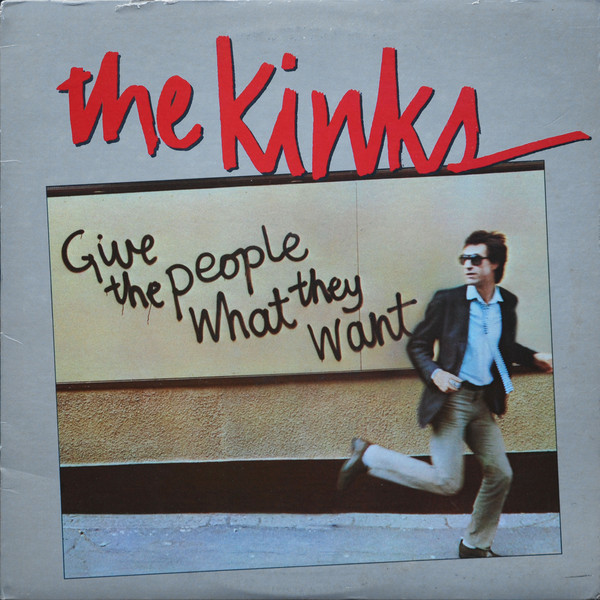
In 1981 I remember hearing Destroyer on the radio and was confused..Wait…is this a new version of All Day and All of the Night? I wanted that song so I bought the album. Give The People What They Want combines different styles. Punk, Rock, and a little New Wave was thrown in on a few of the songs. I had bought singles and a greatest hits by the Kinks but this was the first new Kinks album I purchased. It’s not considered among their best but I think it’s been underrated and the album still stands up today.
It didn’t get the recognition that their next album “State of Confusion” received because it didn’t have a huge hit single like Come Dancing. Songs like Better Things, Around The Dial, and Destroyer did get radio play though.
Two years after I bought the album I saw the Kinks live at the Grand Ole Opry in Nashville. They opened with “Around The Dial,” the opener off of this album.. Ray started to write songs that played well in arenas during this time. The concert was right up there with The Stones concerts to me. I was lucky to see the Kinks while they still were still releasing new albums.
Their energy was off the charts. They were approaching middle age but they had more energy than their opening band (The White Animals) who were in their early 20s.
The album opener… Around The Dial is a song that I totally can relate to today because of pre-programmed radio shows. It’s about corporations taking over radio and getting rid of the free form local DJ’s who played songs that their audience actually wanted to hear. This was starting to get popular in the late seventies…now it’s standard.
The song Give The People What They Want is my favorite song off the album. While writing Low Budget, their previous album, Ray was watching American TV including “That’s Incredible” where people did dangerous and insane stunts. He writes a fair statement about the viewing public…now and then. Parts of it are crude but is true to life. When Oswald shot Kennedy, he was insane, But still we watch the re-runs again and again, We all sit glued while the killer takes aim…
Ray borrowed his own riff from All Day And All Of The Night and repurposed it for Destroyer. He also revisits Lola in the song. Destroyer reached #3 on the Billboard Rock Top Tracks chart and #85 on the Billboard 100.
Better Things has a new wave feel to it and one of the few optimistic songs on the record. It’s the closing song on the album and changes the dark cynical tone of the album to a little more hopeful.
I finally brought an album to the island that wasn’t released in the 60s or 70s. This 1981 album rocks. It’s probably the hardest rock album that the Kinks ever produced…but it’s still unmistakably Ray Davies.




 PowerPop... An Eclectic Collection of Pop Culture