The Band – The Shape I’m In

The first Band album I ever bought was The Best of The Band. When I heard “The Shape I’m In” I knew I was going to like them. I knew the hits of course but the songs I never heard of at that point were great. I then started to buy their albums and loving this band. The song was off on the album Stage Fright and was a B side to the song “Time To Kill.”

There is a great version on The Last Waltz which is below. Robbie wrote the song for Richard to sing and at that time Levon, Rick, and Richard were heavy into heroin and drinking. The song peaked at #64 in Canada.

Robbie Robertson talks some about writing this song

At one time, there was talk that if you wanted to play like the angels, you had to dance with the devil—that heroin was a gateway to music supremacy. That myth was yesterday, but the power of addiction was still in full force. It hit me hard that in a band like ours, if we weren’t operating on all cylinders, it threw the whole machine off course.
This was the first time that writing songs was painful for me. In some cases I couldn’t help but reflect on what was happening behind the curtain. I wrote “The Shape I’m In” for Richard to sing, “Stage Fright” for Rick, and “The W. S. Walcott Medicine Show” for Levon—all with undertones of madness and self-destruction. While watching Richard pound out the rhythm on the clavichord, I couldn’t help but see the irony as he sang out, “Oh, you don’t know, the shape I’m in.”

The Shape I’m In

Go out yonder, peace in the valley
Come downtown, have to rumble in the alley
Oh, you don’t know the shape I’m in

Has anybody seen my lady
This livin’ alone would drive me crazy
Oh, you don’t know the shape I’m in

I’m gonna go down by the water
But I ain’t gonna jump in, no, no
I’ll just be lookin’ for my maker
And I hear that that’s where she’s been?

Oh, out of nine lives, I spent seven
Now, how in the world do you get to Heaven
Oh, you don’t know the shape I’m in

I’ve just spent 60 days in the jail house
For the crime of having no dough, no no
Now here I am back out on the street
For the crime of having nowhere to go

Save your neck or save your brother
Looks like it’s one or the other
Oh, you don’t know the shape I’m in

Now two young kids might start a ruckus
You know they feel you’re tryin’ to shuck us
Oh, you don’t know the shape I’m in

Watkins Glen 1973

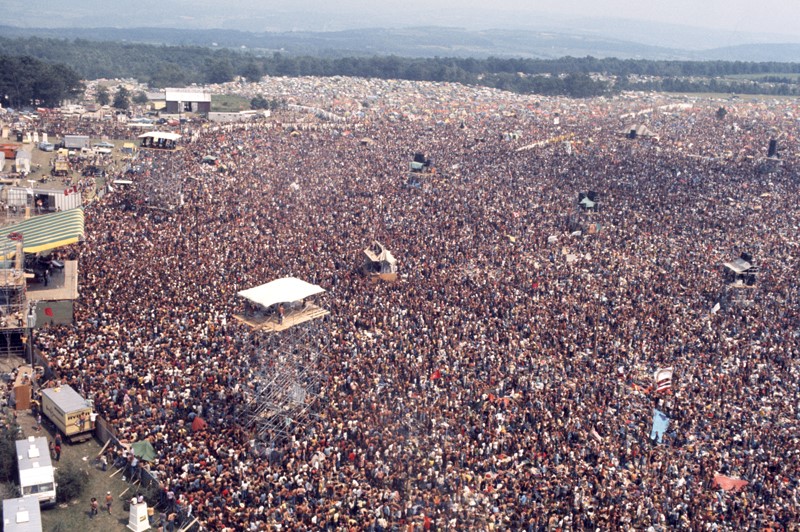
I first read about this concert-festival in a Grateful Dead biography… There is not much video footage from the concert. I never could understand why this concert didn’t hold up in history like some others like The Atlanta Pop festival and others. I’m not saying it should have been remembered like Woodstock because it’s cultural impact was like no others…but this drew more than any other festival including Woodstock.

An estimated 600,000 people came to this concert on July 28, 1973, in Watkins Glen N.Y. 45 years ago. Maybe the reason it is not as remembered is that only three bands performed…but the three bands were giant bands in their prime. The Grateful Dead, The Allman Brothers, and The Band.

From the bands themselves, almost all agree the sound check on Friday was better than the concerts.

Perspective about the concert by a member from each band.

Robbie Robertson from his book Testimony

Then we got a request from Bill Graham, who was putting together a show “just up the highway from us” at the Watkins Glen Raceway. We’d be performing with the Allman Brothers and the Grateful Dead. Playing some gigs could help us get “back on the stick,” as they say.
We went up to Watkins Glen the day before the show for the sound check. Bill Graham said that the Dead would go on first and play for three or four hours—that was part of their thing, giving the audience their money’s worth. “Until the drugs wear off,” said Bill, laughing. We’d go on in the late afternoon, and the Allmans would take over at sundown. As we were leaving the sound check, it looked like cars were heading toward the racetrack from every direction. Bill said he expected maybe a hundred thousand or more.
When we came back the next day, we couldn’t believe our eyes. Hundreds of thousands of people had showed up, and more just kept coming and coming. The crowds mowed down the high chain-link fences around the racetrack and filled the area as far as the eye could see. Bill was running around trying to make people pay admission, but the mobs were out of control.
When it came time for the Band to take the stage, it started pouring. As we waited, hoping it was going to let up, Bill came over. “They’ve determined there are 650,000 people here. It’s the biggest concert in history.” The news was somewhere between an incredible accomplishment and a huge disaster.
The rain started letting up, and Garth played some churchy, rainy-day keyboard sounds out over the crowd. When it was safe to go on, we decided to start our set with Chuck Berry’s “Back to Memphis.” And wouldn’t you know, as Levon sang that baby, the sun came out.

Gregg Allman from My Cross to Bear

Right before Brothers and Sisters came out, we played the festival at Watkins Glen with the Band and the Grateful Dead, in front of six hundred thousand people—the biggest show in history to that point. People always talk about Woodstock. Watkins Glen was like three Woodstocks. I think actually it might’ve been a little too big. They should have had people all the way around the raceway, and maybe had the stage in the center revolving real slowly, do a revolution in a minute. That’s not that complicated.
A show like Watkins Glen was uncomfortable, because you know that you’re getting the show across to this many people, but you still got two times that many behind them. You could finish a song, take your guitar off, put it in the case, and latch it up before the last guy heard the last note. Sound ain’t all that fast, not compared to light.

When you’re playing in that situation, you’re kind of thinking about the end. Not that you’re wishing it to be over, but you can’t even hear yourself—that was back before we had the in-ear monitors. Everything was so loud. You just walk out there and start to wince before you even start playing. It’s hard to get any kind of coziness, any kind of feel with the audience.
I guess there’s something about that many people seeing you all at once that’s real nice, but it’s just too much. You’re just like a little squeak in the middle of a bomb going off. But it was interesting, and it was a pretty fun day. People were OD’ing all over the place. And of course, Uncle Bill was there, which cured everything. It was exciting to be there and see it—and to be able to make ’em stand up, now that was something else.

Bill Kreutzmann from Deal

We made some questionable business decisions and we couldn’t sell records, but we sure could sell tickets. We sold around 150,000 tickets for a single show at a racetrack in Watkins Glen, New York, on July, 28, 1973. Yes, and more than 600,000 people ended up coming out for it. The lineup was just us, the Allman Brothers, and the Band. That show, called the Summer Jam at Watkins Glen, made it into the Guinness Book of World Records for what, at the time, was the largest audience ever assembled at a rock concert. In fact, that record may still hold today, at least in the U.S., and some have even proposed that it was the largest gathering in American history. Originally, the bill was supposed to just be the Dead and the Allmans, but our respective camps fought with the promoter over which band would get headliner status. The solution was that both bands would co-headline and they’d add a third, “support” act.
The friendly (“-ish”) competition between us and the Allman Brothers carried through to the event itself. And yet, the memory that I’m most fond of and hold most dear from that whole weekend was jamming backstage with Jaimoe, one of the Allman’s drummers. We were just sitting in the dressing room, banging out rhythms, and that was a lot of fun for me. Jaimoe backed Otis Redding and Sam & Dave before becoming a founding member of the Allman Brothers, where he remains to this day. He’s a soulful drummer and just an incredible guy who is impossible not to like.
As for the show itself, it is a well-known fact that the Grateful Dead always blew the big ones. Watkins Glen was no exception. However, we still got a great night of music out of it—the night before. The show took place on a Saturday, but by Friday afternoon there were already about 90,000 people in front of the stage. I’ve heard others place that number closer to 200,000. Either way, the audience was already many times the size of any of our regular shows, and the show was still a full day away. The only duty we had on Friday was to do a soundcheck, and even that was somewhat optional. The Band soundchecked a couple of songs. The Allman Brothers soundchecked for a bit. Then, perhaps spurred on by our friendly rivalry, we decided to one-up both bands by turning our soundcheck into a full-on, two-set show. Naturally, without any of the pressure of the “official show” the next day, we really let loose and played a good one. There was an eighteen-minute free-form jam that eventually made it onto So Many Roads, one of our archival box sets. It’s good music, all right, and it still holds its own.
On the day of the actual show, we had to fly into the venue via helicopter because the roads were all backed up, like what happened at Woodstock. People left their cars on the side of the road and walked for miles to the gig. I remember looking down from the helicopter and seeing the most incredible impressionist painting, a Monet of heads, shoulders, tie-dyes, baseball caps, and backpacks, packed front to back. You couldn’t see the ground for the crowd. To this day, I’ve never seen anything else like that.
Nowadays at large music events and festivals, they have golf carts for artists and crews to get around, but back then they used little motor scooters. Early, during the day of our supposed “soundcheck,” I commandeered one of these scooters and, because the venue was an actual racetrack, I decided to do a lap. This was before the gates were opened. The scooter went maybe fifteen or eighteen miles an hour, something stupid like that, and it took forever just to do one lap. But I did it. And that’s when I first started to get a feel for the scale of the event and just how large it was.
During the Summer Jam itself, I watched the other bands play and I honestly thought the Allman Brothers played better on the big day than we did. As for the Band, well, they always sounded great.

If you have read this long…below is some crowd video and a little of the music.

Testimony

The autobiography of Robbie Robertson. I read this right after My Cross To Bear by Gregg Allman. The only surprising part is it stops at 1976 and doesn’t cover Robbie’s solo career.

Robbie is 33 when the book ends. It ends at a recording session where only Robbie shows up after The Last Waltz.

If you have read Levon Helm’s This Wheels on Fire you know that Levon was pretty hard on Robbie. He rips him for songwriting credits and The Last Waltz. Robbie takes the high road in his book. He talks about the brotherhood they all shared. He mentions that Levon was his best friend he ever had in his life.

Robbie was in the middle of musical history throughout the book. He talks about joining Ronnie Hawkins and the Hawks and befriending Levon…they eventually picked up Richard Manuel, Rick Danko, and Garth Hudson. After they split with Ronnie they get busted and gigged at various bars while meeting music legends Sonny Boy Williamson II, Paul Butterfield, Mike Bloomfield and then Bob Dylan. After meeting Dylan they start backing him on his first electric tour.

They are in the middle of the chaos of Dylan’s electric tour…Levon quits a few shows into it because of the booing and the people that surround Dylan. The rest of the Band (still called the Hawks) continue to back Dylan around the world. Along the way, they make friends with Brian Jones, The Beatles, Johnny Cash and eventually Jimi Hendrix (Jimmy James at the time).

He also mentions about living at the Chelsea Hotel, Big Pink, Levon coming back, living in Woodstock, playing Woodstock, and being friends with Dylan. This is one book that gives you a side of Dylan you never read much about. Robbie humanizes him while keeping respect. The Band much like the Allman Brothers valued brotherhood. They stuck together and got along really well until heroin started to enter the picture.

He goes into his songwriting and where he got the ideas. A lot of his ideas came from hanging out with Levon at Levon’s home in Arkansas. Robbie enjoyed the area and the southern culture that surrounded him.

Robbie is big foreign film buff who read many screenplays and would have people to pick them up when going through New York. After reading those he said it helped him to express what he felt in lyrics.

You get such a mix of personalities in the book… Edie Sedgwick, Carly Simon, Eric Clapton, George Harrison, to smoking pot with John Lennon in the sixties with John’s special made “cigarettes.”

All of the Band had street smarts and mixed with killers, thieves and mafia members before they made it. They were without money at one point and Robbie and Levon were actually going to wear masks and hold up a high stakes poker game. It’s a wonder one of them wasn’t killed before the band met Dylan.

I’ve read both Levon’s and Robbie’s books. I liked them both. Robbie is more consistent in his telling. There is a reason Robbie wanted to get off the road. Richard Manuel was not in good shape…even on The Last Waltz and Robbie was no angel himself. The road brought temptations that were hard for them to resist.

If you are a Band fan and/or Dylan fan…get it. I would place this book up there with Keith Richard’s book Life. That is about the highest praise I can give…


The Last Waltz

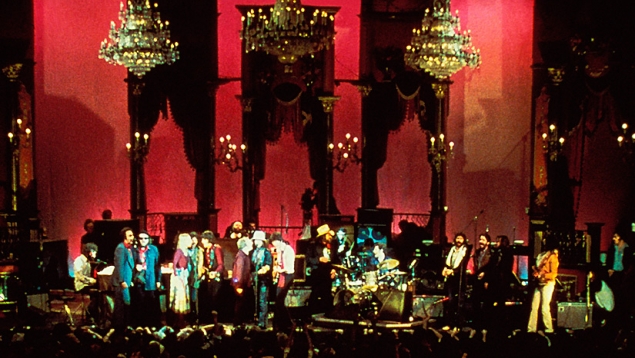
The Band on Thanksgiving in 1976 at the Fillmore West. The film starts off with THIS FILM MUST BE PLAYED LOUD! A cut to Rick Danko playing pool and then it then to the Band playing “Don’t Do It”…the last song they performed that night after hours of playing. Through the music and some interviews, their musical journey and influences are retraced.

This film is considered by many the best concert film ever made. It was directed by Martin Scorsese. I love the setting with the chandeliers that were from the movie Gone With The Wind. The quality of the picture is great because it was shot with 35-millimeter which wasn’t normally done with concerts.

Before the Band and guests hit the stage, Bill Graham, the promoter, served a Thanksgiving dinner to 5000 people that made up the audience with long tables with white tablecloths.

The Band’s musical guests included

Ronnie Hawkins, Bob Dylan, Neil Young, Dr. John, Paul Butterfield, Van Morrison (my favorite performance of a guest), Joni Mitchell, Eric Clapton and Muddy Waters

The Staple Singers and Emmylou Harris also appear but their segments were taped later on a sound stage and not at the concert.

Robbie wanted off the road earlier and that is what the Last Waltz was all about…the last concert by The Band with a lot of musical friends. He was tired of touring and also the habits the band was picking up…the drugs and drinking. Richard Manuel, in particular, was in bad shape and needed time.

The rest of the Band supposedly agreed but a few years later all of them but Robbie started to tour as The Band again. Richard Manuel ended up hanging himself in 1986. Rick Danko passed away in 1999 at the end of a tour of a heart attack attributed to years of drug and alcohol abuse. Levon Helm died of cancer in 2012.

The Band sounded great that night and it might be the best version you will ever hear of The Night They Drove Old Dixie Down.

The Last Waltz is a grand farewell to a great band and a film that I revisit at least twice a year… once always around Thanksgiving.