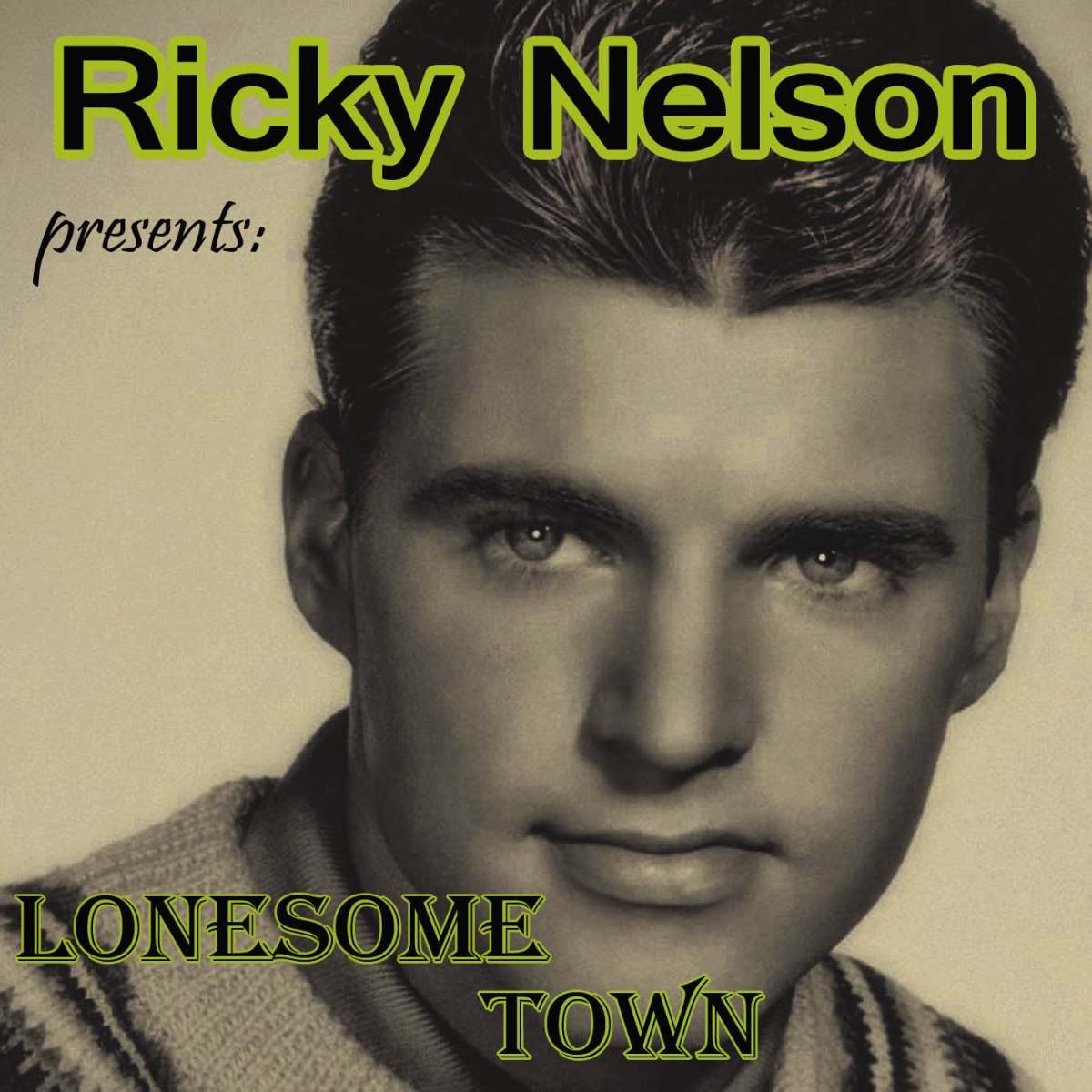
Ricky Nelson’s 1958 hit Lonesome Town is one of those songs that sneaks up on you, not with a scream, but with a sigh. Something about this song hits me when I hear it. When I think of Ricky Nelson, I think of this song over Garden Party or any other for some reason.
The production is sparse, but that’s the point. Just a hushed acoustic guitar, a ghostly bassline, and the Jordanaires humming like they’re trapped behind church doors. The reverb wraps around Nelson’s voice like fog rolling in over the streets of this town. Ricky Nelson might not have had Elvis’s sneer or Jerry Lee’s wildness, but he had something those guys didn’t always chase…subtlety.
Not only do we have Ricky Nelson singing, but the great Jordanaires backing him up. The loneliness conveyed in this song still works. The song peaked at #7 on the Billboard 100, 1958. The song was written by Baker Knight. Knight wrote more hits for Ricky Nelson and more. Elvis, Dean Martin, Frank Sinatra, Paul McCartney, and Jerry Lee Lewis covered his songs.
Ricky Nelson was huge in the 50s, given his constant exposure on The Adventures of Ozzie and Harriet… This song was a change for him at the time, as he usually did up-tempo songs. The show ended up hurting him a bit in the long run. It was a while before people took him as seriously as a performer.
I first heard this song in the 1980s, listening to an oldies channel that stayed locked in for me. I was reminded of it later in the mid-nineties with a Pepsi Commercial.
Lonesome Town
There’s a place where lovers go to cry their troubles away And they call it lonesome town, where the broken hearts stay You can buy a dream or two to last you all through the years And the only price you pay is a heartful of tears
Goin’ down to lonesome town, where the broken hearts stay Goin’ down to lonesome town to cry my troubles away In the town of broken hearts the streets are paved with regret Maybe down in lonesome town I can learn to forget
There’s a place where lovers go to cry their troubles away And they call it lonesome town, where the broken hearts stay You can buy a dream or two to last you all through the years And the only price you pay is a heartful of tears
Goin’ down to lonesome town, where the broken hearts stay Goin’ down to lonesome town to cry my troubles away In the town of broken hearts the streets are paved with regret Maybe down in lonesome town I can learn to forget
Around 1984 or so I really started to get into Ricky Nelson. Song after song of quality. At first, I only knew Garden Party but it’s his 50s catalog where many of his best songs are found…and I love Garden Party.
By 1957, Ricky Nelson was already a well-known actor from his role on “The Adventures of Ozzie and Harriet”, a TV show that starred his real-life family. His transition into music was initially seen as a part of his television character, but he quickly proved his talents as a serious musician. The show helped him of course but also hurt his credibility as a rock and roll artist.
Stood Up was part of a string of hits he was enjoying in the late 50s. The song was written by Dub Dickerson and Erma Herrold. The great James Burton, who would later lead Elvis’s TCB Band, played guitar on this song.
The song peaked at #2 on the Billboard 100 and #27 in the UK in 1957. Stood Up was his second #2 single and the next year he would have his first number one with Poor Little Fool. Poor Little Fool featured The Jordanaires, who were Elvis Presley’s backing singers.
Throughout the 1960s, Nelson continued to record rockabilly and evolve as an artist. He shifted to a more folk-rock sound and formed The Stone Canyon Band and in 1972 he had the hit Garden Party.
Stood Up
Well, I’ve been waitin’ ever since eight Guess my baby’s got another date Stood up, broken-hearted, again
I’ll bet she’s out havin’ a ball Not even thinkin’ of me at all Stood up, broken-hearted, again
Well, I know just what I oughta do I oughta find somebody new But, baby, I couldn’t forget about you Stood up, broken-hearted, again, mm
Why must I always be the one Left behind never havin’ any fun? Stood up, broken-hearted, again
But I guess I’ll go on bein’ a fool Sittin’ around just waitin’ for you Stood up, broken-hearted, again
Well, I know just what I oughta do I oughta find somebody new But, baby, I couldn’t forget about you Stood up, broken-hearted, again
Stood up, broken-hearted, again Stood up, broken-hearted, again
Ricky Nelson was a rockabilly guy and a very good one. He gets lost in the shuffle because he was a huge teenage actor at the time on his family’s show…The Adventures of Ozzie and Harriet. Actors that switch to music are sometimes looked over but Nelson was very successful. All in all, he released 94 singles and 24 studio albums in his career. When talking about the fifties though….Chuck Berry, Fats Domino, Jerry Lee Lewis, Buddy Holly, and Elvis get brought up a lot but Nelson not as much.
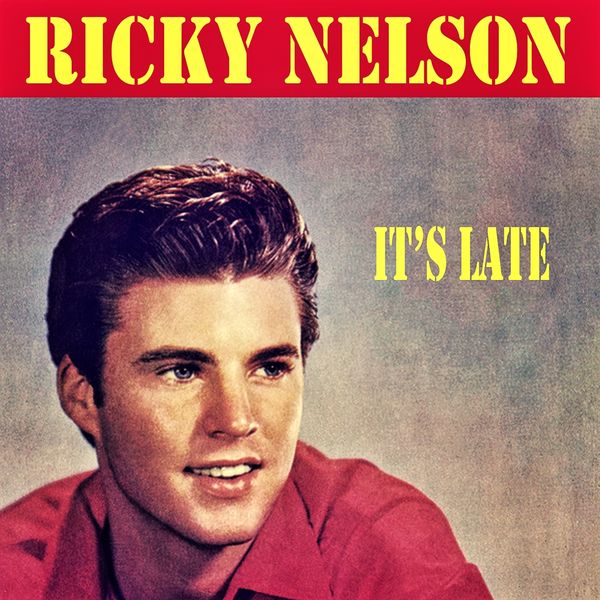
t’s Late was written by Dorsey Burnette and his cousin Johnny Burnette and Dorsey released it in 1958. The following year Nelson recorded and released the song. It peaked at #9 on the Billboard 100 and #3 in the UK in 1959.
I went through a Ricky Nelson phase when I graduated high school in 1985. I purchased a greatest hits package and was learning more songs from him. I wanted to go see him perform that year and I kept waiting for him to appear somewhere because I heard he was touring. This was before the internet and you had to look at the newspapers for any announcements and listen to the radio. Musicians would play at places and you would never know sometimes.
I never got a chance to see him because on December 31, 1985, his chartered jet crashed killing him and six other passengers.
I have to admit…I like the Dorsey Burnette version of this also.
It’s Late
It’s late, it’s late We gotta get on home It’s late, it’s late We’ve been gone too long
Too bad, too bad We shoulda checked our time Can’t phone, can’t phone We done spent every dime
It’s late, it’s late We’re ’bout to run outta gas It’s late, it’s late We gotta get home fast
Can’t speed, can’t speed We’re in a slow-down zone Baby, look at that clock Why can’t it be wrong
If we coulda left home at a quarter to nine Woulda had fun and plenty of time We got started just a little bit late Hope this won’t be our last date
Look up, look up Is that the moon we see? Can’t be, can’t be Looks like the sun to me
It’s late, it’s late I hate to face your dad Too bad, too bad I know he’s gonna be mad
It’s late, it’s late We gotta get on home It’s late, it’s late We’ve been gone too long
It’s late, it’s late We’re ’bout to run outta gas It’s late, it’s late We gotta get home fast
Can’t speed, can’t speed We’re in a slow-down zone Baby, look at that clock Why can’t it be wrong
If we coulda left home at a quarter to nine Woulda had fun and plenty of time We got started just a little bit late Hope this won’t be our last date
Look up, look up Is that the moon we see? Can’t be, can’t be Looks like the sun to me
It’s late, it’s late I hate to face your dad Too bad, too bad I know he’s gonna be mad
It’s late, it’s late We gotta get on home It’s late, it’s late We’ve been gone too long
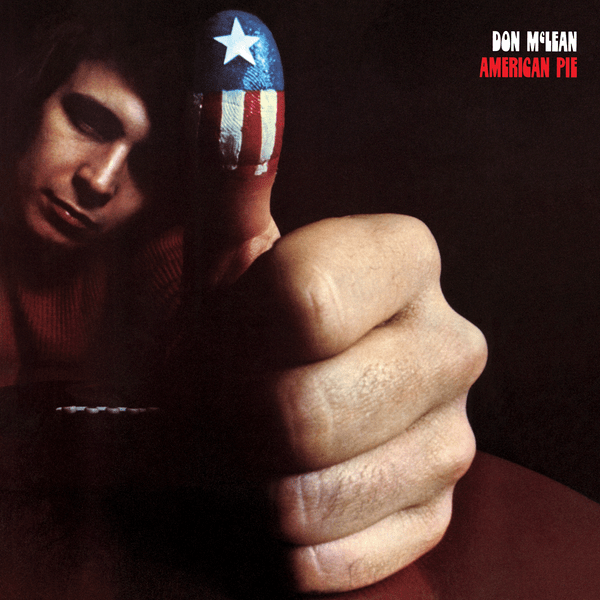
Everyone…I messed up last week. While making these, I go to Wiki’s Billboard Year-End Hot 100 Singles to go over some of the singles and then… I look at album cuts. Well, I didn’t check to see when American Pie was released…it was released in late 1971…but I would never have left that one off…ever. So forgive me…I won’t do this again…but I am leading off with it. It did its damage on the charts in 1972…so this one time I’m breaking my rule. It’s too important of a song.
American Pie… by Don Mclean. Where do I begin with this one? The song has so many references that it acts as a pop culture index itself. We do know the song was inspired by Buddy Holly’s death… What does it all mean? While being interviewed in 1991, McLean was asked for probably the 1000th time “What does the song ‘American Pie’ mean to you?,” to which he answered, “It means never having to work again for the rest of my life.” Now that is a great and honest answer by Mclean.
The holy trinity of power pop for me is…Badfinger, Big Star, and The Raspberries…those were the 70s pioneers. Badfinger was the most successful out of the three…hit wise anyway. You can hear later bands like Cheap Trick, The Posies, Teenage Fanclub, Matthew Sweet, and even KISS get something from each three.
This is my personal number 1 Power Pop song of all time. Baby Blue was written by Pete Ham.
He was playing in a Rock and Roll revival show in 1971 at Madison Square Gardens with other artists such as Chuck Berry, Bo Diddley, and Bobby Rydell. Ricky Nelson was releasing new music and he did not look the way he did in the 50s. He had long hair and dressed modern. He started off with some of his old songs the fans responded enthusiastically but then he played “Country Honk” a country version of the Rolling Stones “Honky Tonk Women.” That is when it went south.
Arlo Guthrie seems like the most laid-back guy in the world. His father was the great singer-songwriter, Woody Guthrie. Arlo wrote some very good songs but he didn’t write this one. The City of New Orleans was written by Steve Goodman. Steve did a great job writing this song. Its structure and imagery are fantastic.
After seeing the screenplay, Mayfield jumped into this movie project and was given complete creative freedom. He wrote the songs to suit the scenes, but he made sure they could stand on their own, telling the stories even without the visuals. “Superfly” works very well outside of the film. It was written by Curtis Mayfield. I saw this on the big screen a few years ago.
Welcome to another edition of Max Picks. We will start it off with Ricky Nelson on a slow note but this song is so haunting to me. Nelson wasn’t always taken seriously because of his acting in his parent’s sitcom Ozzie and Harriet. That’s a shame because he released some top-grade rockabilly songs. Here he is with the ballad Lonesome Town.
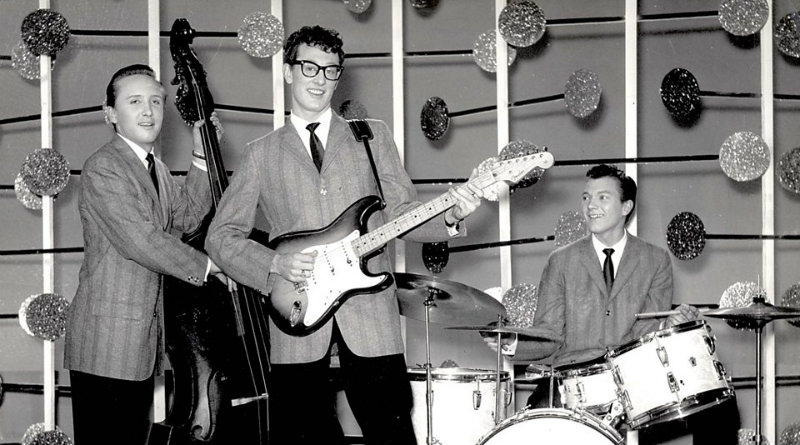
As promised…here is more Buddy Holly, his window was short but strong. Buddy’s songs would influence everyone from The Stones, Hollies, Beatles, and more. He also could have unknowingly started the Power Pop genre. His jangly guitar and that voice with the hiccups. I went to the Buddy Holly Broadway show when it toured and stopped in Nashville. I can’t explain in words how a 3 piece band sounded so full with the music he wrote.
Now we have the one and only Chuck Berry weaving his lyrics about a guy who left his home to make it playing guitar. This song IS Rock and Roll and has been played by every self-respecting garage band ever since. It’s also covered by heavy metal, country, pop, and rock bands. I would lay money down that somewhere tonight in some bar somewhere…Johnny B. Goode will be heard.
Link Wray and his Ray Men gave us this instrumental Rumble in 1958. This instrumental was somewhat controversial because it implied gang violence – some radio stations refused to play it. It might be the only instrumental song ever banned on the radio. It was feared that the piece’s harsh sound glorified juvenile delinquency. Did the song cause juvenile delinquency? We can only hope.
Now we will end it with an artist that unfortunately is about to go in the Army at this time. He would never be the same again. Yes, we would get some great songs in his future but Elvis Presley became more of an all-around entertainer after this year. His rock and roll days were going to fall behind for a while when he started to make movies. This is a fantastic song.
I just had a Ricky Nelson song not long ago…sue me…I’ve been listening to him a lot lately.
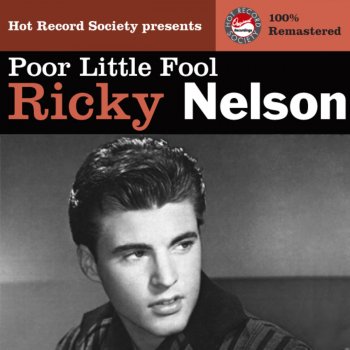
“Poor Little Fool” was written by 17-year-old Sharon Sheeley when she was still attending high school in Newport Beach, California. Female songwriters were rare at the time, and when the song climbed to #1 in the US, she became the first woman to compose an American chart-topper on her own.
Sharon Sheeley was engaged to Eddie Cochran and was involved in the car wreck that killed Cochran and injured Gene Vincent. Sheeley suffered a broken pelvis, Vincent broke his ribs and collarbone and added further damage to his already weak leg.
Sheeley later collaborated with Jackie DeShannon on hits for artists like Brenda Lee, and Irma Thomas. Sheeley and DeShannon were the first female writing team to have significant success in the pop realm. She died in 2002 at the age of 62 of complications following a cerebral hemorrhage.
Ricky Nelson didn’t hear hit potential in this song, but his father, the popular bandleader Ozzie Nelson, did. Ozzie convinced Ricky’s label, Imperial Records, to issue it as a single, but Ricky refused to approve a photo for the cover and wouldn’t perform it on the family TV show, The Adventures of Ozzie and Harriet. Ozzie’s instincts were correct. Father knew best in this instance.
Poor Little Fool featured The Jordanaires, who were Elvis Presley’s backing singers. This song peaked at #1 in the Billboard Charts in 1958. This was Ricky’s first number one hit.
Poor Little Fool
I used to play around with hearts that hastened at my call But when I met that little girl I knew that I would fall Poor little fool oh yeah I was a fool uh huh (Uh huh poor little fool I was your fool oh yeah)
She played around and teased me with her carefree devil eyes She’d hold me close and kiss me but her heart was full of lies Poor little fool She told me how she cared for me and that we’d never part
And so for the very first time I gave away my heart Poor little fool The next day she was gone and I knew she’d lied to me She left me with a broken heart and won her victory
Poor little fool Well I’d played this game with other hearts but I never thought I’d see The day that someone else would play love’s foolish game with me Poor little fool
I went through a Ricky Nelson phase when I graduated in 1985. I purchased a greatest hits package and was learning more songs by him. I wanted to go see him perform that year and I kept waiting for him to appear somewhere because I heard he was touring. This was before the internet and you had to look at the newspapers for any announcements and listen to the radio. Musicians would play at places and you would never know sometimes.
I never got a chance to see him because on December 31, 1985 his chartered jet crashed killing him and six other passengers.
Ricky was a rockabilly guy and a good one. He gets lost in the shuffle because he was a huge teenage actor at the time on his family’s show…The Adventures of Ozzie and Harriet.
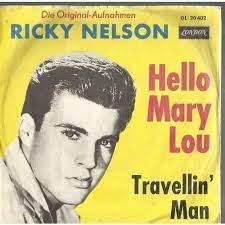
This was part of a super single. In America, this was released on the B side of Travelin’ Man, which peaked at #1 in the Billboard 100. At the time, most artists put hastily produced or unwanted songs on the flip sides of singles, but Nelson took his B-sides seriously, figuring the singles would sell better if he did. The Beatles would do that later.
This song peaked at #9 in the Billboard 100, #1 in New Zealand, and #2 in the UK despite being on the B side in 1961.
The song was written by Gene Pitney and Cayet Mangiaracina. Cavet was given credit later because his music pubishing company sued for plagrism because of the similiar titled Merry, Merry Lou.
From Songfacts
One of Ricky Nelson’s most popular songs, in “Hello Mary Lou” he gets a case of love at first sight, as she steals his heart at first glance. It’s a very simple tune but quite memorable, with 14 mentions of the melodious Mary Lou packed into a 2:17 running time. The song begins and ends with the chorus, with another between the two verses.
There are two credited writers of this song: Gene Pitney and Cayet Mangiaracina.
Pitney is a rock legend whose biggest hits as an artist – “Only Love Can Break A Heart” and “(The Man Who Shot) Liberty Valance” were written by the Burt Bacharach-Hal David team. Pitney also wrote some hits for other artists, including “He’s A Rebel” for The Crystals and “Rubber Ball” for Bobby Vee. He wrote and recorded “Hello Mary Lou,” but he had another single out so his record company didn’t release it. Meanwhile, his publisher shopped the song around to various artists, including Ricky Nelson, whose version became a huge hit.
In 1957, a New Orleans group called The Sparks released a song called “Mary, Mary Lou,” which goes:
Mary, Mary Lou
Why must you do
The things that you always do
In this song, Mary Lou runs off to marry another man, leaving our hero heartbroken.
Cayet Mangiaracina, who was a member of The Sparks, wrote it in 1954 and the band started playing it at their gigs. Mangiaracina, who said there was no Mary Lou and that the lyric just sounded good, left the band in 1956, but the following year they won a “battle of the bands” competition that earned them a deal with Decca Records to record the song and release it as a single. The Sparks version went nowhere, but Bill Haley and Sam Cooke both covered it, Haley in 1957 and Cooke the following year.
After “Hello Mary Lou” became a hit, Cayet Mangiaracina’s publisher, Champion Music, took legal action and got a share of the song, with Mangiaracina listed as a co-writer along with Pitney. Mangiaracina became priest and claimed to give royalties from the song to the Southern Dominican Province, where he served.
Pitney, who died in 2006, never spoke of Mangiaracina or the lawsuit.
This was a huge hit in Australia, where it went to #1. In the UK, it was also very popular, reaching #2.
Nelson’s father Ozzie, a popular bandleader and star (along with Ricky and the rest of his family) of the TV series The Adventures of Ozzie & Harriet, played tenor guitar on this song. The solo is by Nelson’s guitarist James Burton, who later joined up with Elvis Presley.
Gene Pitney claimed to be baffled by this song’s success. “I’ve spent a lifetime trying to analyze why it was as big as it was,” he said.
Several acts have done popular covers of this song, including Brownsville Station, New Riders of the Purple Sage and Creedence Clearwater Revival. When Ricky Nelson entered the Rock and Roll Hall of Fame in 1987, he was inducted by John Fogerty.
Nelson’s voice sounds very full and ambient thanks to overdubs in the studio. Producer Jimmie Haskell joked that he used “15 layers of overdubbing.”
Queen played this on their 1986 tour, their last with Freddie Mercury. It was part of a tribute to American rock from the ’50s that also included “Tutti Frutti.”
Hello Mary Lou
“Hello Mary Lou Goodbye heart Sweet Mary Lou I’m so in love with you
I knew Mary Lou We’d never part So hello Mary Lou Goodbye heart”
You passed me by one sunny day Flashed those big brown eyes my way And ooh I wanted you forever more Now I’m not one that gets around I swear my feet stuck to the ground And though I never did meet you before
I said “hello Mary Lou Goodbye heart Sweet Mary Lou I’m so in love with you
I knew Mary Lou We’d never part So hello Mary Lou Goodbye heart”
I saw your lips I heard your voice Believe me I just had no choice Wild horses couldn’t make me stay away I thought about a moonlit night Arms around you, good an’ tight All I had to see for me to say
I said “hello Mary Lou Goodbye heart Sweet Mary Lou I’m so in love with you
I knew Mary Lou We’d never part So “hello Mary Lou Goodbye heart Yes, hello Mary Lou Goodbye heart Well, hello Mary Lou Goodbye heart”
Ricky Nelson was a two-way star in the 50s. He gets overlooked at times compared to his peers.
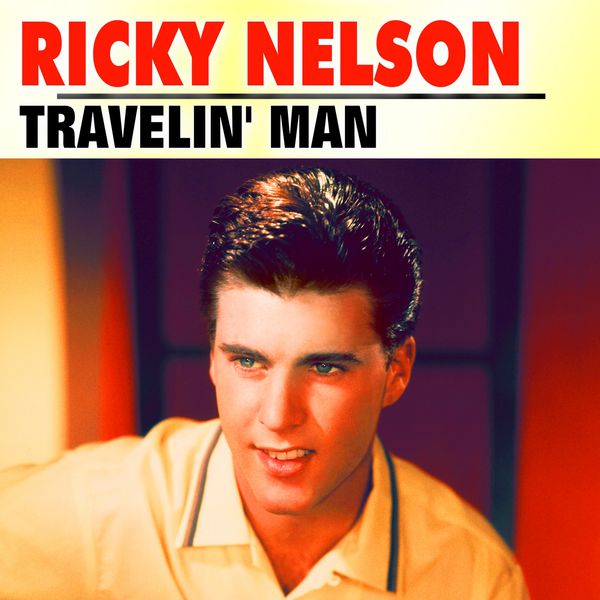
This song was written by Jerry Fuller, a singer who had minor hits in 1959 with “Betty My Angel” and a cover of “Tennessee Waltz.” Fuller wrote “Travelin’ Man” one day at De Longpre Park in Hollywood while he was waiting to pick up his wife. He didn’t play an instrument, so he beat out the melody on his car’s dashboard.
Fuller recorded a demo of this song with Glen Campbell on guitar. He was hoping Sam Cooke would record it, so he brought it to Cooke’s manager, J.W. Alexander. Joe Osborn, who was Ricky’s bass player, heard it through the wall, He said, ‘J.W., do you have that ‘Travelin” song you just played?’ He said, ‘Yeah, you can have it,’ and he reached in the trash and he pulled out the demo.”
Osborn brought the song to Nelson, who loved it and recorded it. The song became his second (and last) #1 hit, and gave him a huge career boost.
Travelin’ Man peaked at #1 in 1961.
From Songfacts
For the lyrics, Fuller came up with a “girl in every port” idea – a guy who travels all over the world and finds a different girl waiting for him wherever he goes. He used an atlas to get ideas for places and looked up what the word for “girl” was in those places, so in German it’s “Fraulien,” in Mexico it’s “Senorita,” and in Alaska it’s a “cute little Eskimo.” He couldn’t figure out what the term was in Hawaii, so he went with “pretty Polynesian baby.”
Nelson used Elvis Presley’s backing singers The Jordanaires on this song, as he did on most of his recordings. He loved the background vocals on the demo though, which were done by Fuller, Glen Campbell and Dave Burgess. Nelson brought them in to record on subsequent records.
Depending on the criteria, “Travelin’ Man” could be the song with the very first music video. Ozzie Nelson realized that whenever he had Ricky sing on their show The Adventures Of Ozzie And Harriet, Ricky’s record sales shot up the next day, so Ozzie tried to work it into the plot whenever Ricky had a new record out. As Ricky became popular and the demand for his songs was overwhelming, Ozzie realized that working his singing into the plot was going to be impossible, so Ozzie filmed Ricky singing “Travelin’ Man,” superimposed some travelogue scenes over the film and tacked it onto a show episode at the end. Viola! The music video was born.
That is, if you don’t count performance videos and extracted movie scenes like “Jailhouse Rock.” And if you’re OK with it being black and white.
The episode, “A Question of Suits and Ties,” aired on April 5, 1961 (the song hit #1 on May 29). The clip is far from groundbreaking, but it was footage synched to a performance. Around this time, standalone concept videos were starting to show up for use throughout Europe in Scopitone video jukeboxes, which were typically placed in bars. A few American artists made videos for these machines in the mid’-60s when they started to appear Stateside. Neil Sedaka made one for “Calendar Girl” and Nancy Sinatra did one (for a company called Color-Sonics) for “These Boots Are Made For Walkin’.”
Rick Nelson was born Eric Hilliard Nelson in 1940. He died in a small plane crash in Texas in 1985 while flying to a New Year’s Eve concert. Mechanical problems and a cabin fire were suspected as the cause of the crash. Speculation that the fire was caused by someone on board freebasing cocaine was never proven, though aerosol cans were found at the crash site. The Nelson family said that the cans were part of the makeup box and that no drugs were involved. The matter was never completely resolved.
This is a crowd favorite on the “Ricky Nelson Remembered” show, staged by his twin sons Matthew and Gunnar. In our interview with Matthew Nelson, he said, “When I’m singing ‘Travelin’ Man,’ it’s 1977 at the Sahara in Las Vegas, when I hung out for a week while Pop did a residency there. And I think about the guys who were in the band.”
Travelin’ Man
I’m a travelin’ man and I’ve made a lot of stops All over the world And in every part I own the heart Of at least one lovely girl
I’ve a pretty Señorita waiting for me Down in old Mexico If you’re ever in Alaska stop and see My cute little Eskimo
Oh, my sweet Fraulein down in Berlin town Makes my heart start to yearn And my China doll down in old Hong Kong Waits for my return
Pretty Polynesian baby over the sea I remember the night When we walked in the sands of the Waikiki And I held you, oh so tight
Oh, my sweet Fraulien down in Berlin town Makes my heart start to yearn And my China doll down in old Hong Kong Waits for my return
Pretty Polynesian baby over the sea I remember the night When we walked in the sands of the Waikiki And I held you, oh so tight
Oh, I’m a travelin’ man Yes, I’m a travelin’ man Yes, I’m a travelin’ man Whoa, I’m a travelin’ man
Songs like Hello Mary Lou, Lonesome Town, and Traveling Man from the fifties and sixties still sound good today.
He was playing in a Rock and Roll revival show in 1971 at Madison Square Gardens with other artists such as Chuck Berry, Bo Diddley, and Bobby Rydell. Ricky was releasing new music and he did not look the way he did in the 50s. He had long hair and dressed modern. He started off with some of his old songs the fans responded enthusiastically but then he played “Country Honk” a country version of the Rolling Stones “Honky Tonk Women.” That is when it went south.
He started to hear booing and eventually left the stage. There are mixed reports about the booing. Some say there was a disturbance in the crowd with policemen escorting people out and that is what the booing was aimed at… not Ricky. Either way, he got a great song out of it.
He wrote the song about what happened with some references to ex- Beatles, Yoko. Elvis and Chuck Berry.
A garden party – October 15, 1971’s Rock ‘n Roll Revival concert at Madison Square Garden, New York City My old friends – fellow performers at the concert Chuck Berry, Bo Diddley and Bobby Rydell Yoko – Yoko Ono Yoko’s walrus – John Lennon Mr. Hughes – George Harrison
(Mr. Hughes) hid in Dylan’s shoes – Harrison’s planned (but later abandoned) album of Bob Dylan covers I said hello to Mary Lou, she belongs to me – Nelson’s song “Hello Mary Lou”, which he played at the concert; also a reference to “She Belongs to Me”, a Bob Dylan song covered by Nelson I sang a song about a Honky-Tonk – The Rolling Stones song “Country Honk”, the song that allegedly caused the booing And it was time to leave – Nelson’s subsequent departure Out stepped Johnny B. Goode – Chuck Berry’s song “Johnny B. Goode” Playing guitar like a-ringing a bell – the line in “Johnny B. Goode”, “he could play guitar just like a-ringing a bell” I’d rather drive a truck – Elvis Presley worked for a time as a truck driver, having famously been told after several failed auditions to “stick to truck driving because you’re never going to make it as a singer”
The song peaked at #6 in the Billboard 100 and #44 in the Country Charts.
Ricky Nelson had 44 songs in the top 100, 2 number 1’s and 14 top ten hits. This song was Ricky’s last top 40 hit.
“Garden Party” I went to a garden party To reminisce with my old friends A chance to share old memories And play our songs again When I got to the garden party They all knew my name No one recognized me I didn’t look the same
But it’s all right now I learned my lesson well You see, ya can’t please everyone So ya got to please yourself
People came from miles around Everyone was there Yoko brought her walrus There was magic in the air ‘N’ over in the corner Much to my surprise Mr Hughes hid in Dylan’s shoes Wearing his disguise
But it’s all right now I learned my lesson well You see, ya can’t please everyone So ya got to please yourself
Lott-in-dah-dah lot-in-dah-dah-dah
Played them all the old songs Thought that’s why they came No one heard the music We didn’t look the same I said hello to “Mary Lou” She belongs to me When I sang a song about a honky-tonk It was time to leave
But it’s all right now I learned my lesson well You see, ya can’t please everyone So ya got to please yourself
Lot-dah-dah (lot-dah-dah-dah) Lot-in-dah-dah-dah
Someone opened up a closet door And out stepped Johnny B Goode Playing guitar Like a-ringin’ a bell And lookin’ like he should If you gotta play at garden parties I wish you a lotta luck But if memories were all I sang I rather drive a truck
But it’s all right now I learned my lesson well You see, ya can’t please everyone So ya got to please yourself
Lot-dah-dah (lot-dah-dah-dah) Lot-in-dah-dah-dah
‘N’ it’s all right now Learned my lesson well You see, ya can’t please everyone So you got to please yourself




 PowerPop... An Eclectic Collection of Pop Culture