The bicentennial in America and everything that wasn’t nailed down was painted Red, White, and Blue. It was the first year I remember becoming aware of news and popular culture. In 1977 I would start watching the news and following baseball.
I always liked the imagery of this song.
When Phil Lynott was a kid his mother Philomena ran an illegal drinking den in Manchester, England. Phil was often with his mother in this den. Some of her most frequent returning customers were members of the Quality Street Gang (a group of criminals operating in Manchester, England, in the 1960s, 1970s, and 1980s).
He would spend his time observing the gang, their mannerisms, the way they talk, and the way they fight. All of this observation eventually inspired him to write a song about them called “The Boys Are Back In Town.”
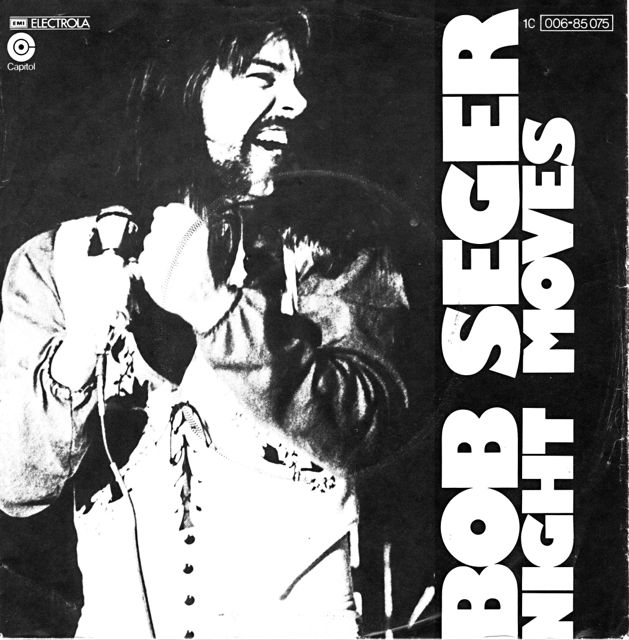
I always liked this song by Seger. This song is a staple on classic radio and I still listen to it when it comes on. Seger has great imagery in this song.It took Seger around six months to write this song. Along with “Turn The Page,” this was one of just two songs Seger ever wrote on the road. Night Moves was a breakthrough hit for Seger, introducing the heartland rocker to a much wider audience. He had been very popular in Michigan ever since his first album in 1969… which had the hit Ramblin’ Gamblin’ Man. That song went to #17 on the Hot 100, but over the next few years, he struggled to make a national impact.
Lynyrd Skynyrd’s Freebird was originally released on the (Pronounced ‘Lĕh-‘nérd ‘Skin-‘nérd) in 1973 but the live version is what hit in 1976 with a single released off of One More From The Road. This is when the song became a legend. Personally, I like the studio version of it a lot but live it was unbeatable.
It’s become so ingrained that people will shout this out at concerts. In 2016 someone shouted this out at a Bob Dylan concert…guess what? Bob and his band went into the ending of the song where it rocks.
This is the band at Knebworth in 1976.
Punk was around in the UK and in America, we had the Ramones.
The Ramones were no frills and to the point. No long solos (or any) or instrumental breaks. Just 2-minute rock songs full of energy. This was the song that helped launch the Ramones.
The song never charted but is probably their best-known song because of the many movies, TV shows, and commercials it’s been in. The song was mainly written by drummer Tommy Ramone, while bassist Dee Dee Ramone came up with the title (the song was originally called “Animal Hop”). Dee Dee also changed one line: the original third verse had the line “shouting in the back now”, but Dee Dee changed it to “shoot ’em in the back now.”
This song still sounds fresh today. Got To Get You Into My Life was on Revolver released in 1966. It was not released as a single at the time. Any other band would have released it as a single.
In 1976 it was released as a single and peaked at #7 in the Billboard 100…not bad for a song that was 10 years old. It was released off of the horribly packaged compilation album Rock and Roll Music. Capital Records seemed to forget The Beatles represented the 60s, not the 50s that the album cover represented.
Pop’s Pool Hall…did every small town have one? I was there in a small town in Tennessee as a 12-year-old when I first heard this song in that pool hall. The song had been out for a few years but this is when I really paid attention to it. It made me feel like I was looking back on my town at 12 years old. The guitar (Pete Carr) stands out in this song and any song that can make a 12-year-old look back works rather well.
What surprised me about this one is the Canadian love for this Seger song. Personally, I thought it did better in America than it did…but Canada really loved it. This song peaked at #1 in Canada and #24 in the Billboard 100 in 1977. The song was on his Night Moves album released in 1976. This was his breakthrough album and it peaked at #8 in the Billboard Album Charts and #12 in Canada.
The actual street Seger sings about in this song is Ann Street, which was off of Main Street in Ann Arbor. Seger has said he wrote this song about his high school years in Ann Arbor, Michigan. The song explores the promise of youth, and what Seger calls his “awakening” after being a quiet, awkward kid for most of his youth.
This is another song that Seger recorded at Muscle Shoals Sound Studios in Sheffield, Alabama. While most of Seger’s work was done with his Silver Bullet Band, he did make a few trips to Alabama to record at Muscle Shoals, taking advantage of the talented musicians and lack of distractions.
Bob Seger:“It was a club. I can’t remember the name of the club, but the band that played there all the time was called Washboard Willie. They were a Delta and Chicago blues band. Girls would dance in the window. They were a black band, and they were very good. That’s where I would go but I was too young to get in. It wasn’t in a great part of town but college students loved to go there.”
From Songfacts
The nostalgic tone of this song led many critics to compare Seger to Bruce Spingsteen, sometimes unfavorably. The NME wrote, “Leaning heavily on anyone so personally stylized as Springsteen has got to qualify as an error of judgment.”
Seger acknowledges Springsteen as an influence at that time, but insists he wasn’t going after Bruce’s sound or image. There weren’t many rock musicians writing introspective hit songs about life in working-class America at the time, and with Springsteen in a legal dispute with his manager that kept him from recording, Seger had 1977 to himself.
The studio was owned by four of the guys who played on the track: David Hood (bass), Jimmy Johnson (rhythm guitar), Roger Hawkins (drums) and Barry Beckett (keyboards). The lead guitarist on the session was Pete Carr.
This was the second single from the Night Moves album, following the title track. Both songs are very nostalgic and a departure from high-energy rockers that dominate his album Live Bullet, which was released in 1976 six months before Night Moves. By this time, Seger had been at it in earnest for over a decade and was just starting to break through to a national audience. Live Bullet was his first album to find a broad audience; many who bought it snatched up Night Moves when it came out, and weren’t disappointed. Both albums ended up selling over 5 million copies, making Seger a star.
Mainstreet
I remember standing on the corner at midnight Trying to get my courage up There was this long, lovely dancer in a little club downtown Loved to watch her do her stuff Through the long, lonely nights she filled my sleep Her body softly swaying to that smoky beat Down on Main Street Down on Main Street
In the pool halls, the hustlers and the losers Used to watch ’em through the glass Well I’d stand outside at closing time Just to watch her walk on past Unlike all the other ladies, she looked so young and sweet As she made her way alone down that empty street Down on Main Street Down on Main Street
Sometimes even now, when I’m feeling lonely and beat I drift back in time and I find my feet Down on Main Street Down on Main Street Down on Main Street Down on Main Street Down on Main Street Down on Main Street
I always liked this song by Seger. This song is a staple on classic radio and I still listen to it when it comes on. Seger has great imagery in this song.
It took Seger around six months to write this song. Along with “Turn The Page,” this was one of just two songs Seger ever wrote on the road.
Night Moves was a breakthrough hit for Seger, introducing the heartland rocker to a much wider audience. He had been very popular in Michigan ever since his first album in 1969… which had the hit Ramblin’ Gamblin’ Man. That song went to #17 on the Hot 100, but over the next few years, he struggled to make a national impact.
A big break came in April 1976 when his label, Capitol, seeing the success of Peter Frampton’s Frampton Comes Alive, issued a Seger live album, Live Bullet, recorded at two of his Detroit concerts in 1975. It quickly found a following and outsold every other Seger album.
Bob was born in Detroit. His father was a bandleader and musician who worked in an auto plant to support his wife and two children. He was the younger of two sons and got less attention from his father.
Bob Seger was inspired by the movie American Graffiti, which was released in 1973 but set in 1962. He said, “I came out of the theater thinking, Hey, I have a story to tell too. Nobody has ever told about how it was to grow up in my neck of the woods.”
Night Moves peaked at #4 in the Billboard 100, #5 in Canada, and #39 in New Zealand.
From Songfacts
This song is about a young couple losing their virginity in the back seat of a Chevy. Seger says the song is autobiographical, but he took some liberties, as their tryst was after high school. The girl he was with had a boyfriend away in the military, and when he came back, she married him, breaking Seger’s heart. Seger says the song represents the freedom and possibility of the high school years.
The phrase “night moves” has a number of meanings, which made it an intriguing song title. It could mean “putting the moves on” a girl in the back seat of a car, but Seger says it also relates to the impromptu parties he and has buddies threw in the fields of Ann Arbor, Michigan, where they would turn on the headlights and dance their “night moves.” They called these gatherings “grassers.”
Four songs on the Night Moves album were recorded at Muscle Shoals Sound Studios in Alabama with the Muscle Shoals Rhythm Section, and another four at Pampa Studios in Detroit with Seger’s Silver Bullet Band. They needed one more for the album, so Seger’s manager booked three days at Nimbus Nine Studios in Toronto with producer Jack Richardson. They quickly recorded three songs that weren’t that memorable. Seger’s guitarist and sax player returned to Detroit, but the rest of the crew kept working on a very stubborn song Seger had been toiling over: “Night Moves.” When it started to come together, Richardson brought in the local guitarist Joe Miquelon and organist Doug Riley to play on the track along with Seger and two members of his band: bass player Chris Campbell and drummer Charlie Allen Martin.
It’s also the only track on Night Moves with female backing vocals, which were provided by Laurel Ward, Rhonda Silver and Sharon Dee Williams, a trio from Montreal that happened to be in town.
The famous bridge in this song, where Seger strips it down and sings “I woke last night to the sound of thunder,” is something he and producer Jack Richardson came up with on the fly in the studio.
Night Moves was released in October 1976, with the title track issued as the lead single. When the Night Moves album entered the chart at #84 on November 13, Live Bullet was hanging around at #159. For the rest of the year and most of 1977, both albums were on the chart. Each ended up selling 5 million copies.
As for the “Night Moves” single, it rose to #4 in March 1977, making the heartland rocker a national name.
On the album, this runs 5:25. The single version was cut down to 3:23, taking out the bridge section where Seger wonders about the thunder and hums a song from 1962.
This reflective track was a change of pace for Seger, whose songs tended to be rockers with lot of live energy. It wasn’t his first slower song though: “Turn The Page” was released in 1972 but got little attention. After “Night Moves” and the next single, “Mainstreet,” took off, many radio stations added “Turn The Page” to their playlists.
According to Seger, he knew he had a hit after he recorded the song. Folks at his record company were also sure of it; Seger recalls the esteemed promotions man at Capitol, Bruce Wendell, telling him, “You’re going to be singing this song for your entire career.”
Like many of Seger’s songs, there is a touch of nostalgia in the lyrics. When he sings, “And it was summertime, sweet summertime, summertime,” he’s not only referring to the time of the year, but to that season of his life as well. In the last verse of the song, when he is reminiscing, he says, “With autumn closing in” and is referring to the autumn of his life, getting older. >>
Rolling Stone magazine named this Single of the Year for 1977.
The tempo changes were inspired by Bruce Springsteen’s “Jungleland.” Seger wrote the song in pieces; he had the first two verses written but was having trouble finishing the song. After hearing “Jungleland,” he realized he could connect the song with two distinct bridges.
When Seger sings the line about how he dressed in high school, “Tight pants, points, hardly renowned,” “Points” refers to small metal objects some teenagers wore on their shoes in the ’60s.
“Night Moves” didn’t get a video when it was first released (it was five years before MTV), but when Seger’s Greatest Hits album was released in 1994, a video was made to promote it. The video borrows heavily from American Graffiti, showing young people at a ’60s drive-in, intercut with shots of Seger singing the song in the projection room. It was directed by Wayne Isham and stared some soon-to-be famous actors, notably Matt LeBlanc, who would later appear on the TV series Friends. His love interest is played by Daphne Zuniga, who was already starring in Melrose Place. Johnny Galecki, who later found fame on Roseanne and The Big Bang Theory, also appears. The video version of the song runs 4:30, splitting the difference between the album version and the single edit.
In the UK, the song charted for the first time (at #45) when it was released as a single along with Seger’s Greatest Hits package.
According to Seger, he and the girl really made it in the backseat of a ’62 Chevy, but it didn’t fit lyrically, so he changed the line to “my ’60 Chevy.” >>
“Night Moves” is also the name of a 1975 movie starring Gene Hackman that is unrelated to the song. Another movie called Night Moves, this one starring Jesse Eisenberg and also unrelated to the song, hit theaters in 2013.
Since this is such a personal song, it has garnered few covers, although Garth Brooks and The Killers have performed it live.
Seger revealed in a radio interview that in the line, “Started humming a song from 1962,” the song he had in mind was “Be My Baby” by the Ronettes (which was actually released in 1963).
Seger credits the Kris Kristofferson-written song “Me And Bobby McGee” for inspiring the narrative songwriting style he employed on this track.
Night Moves
I was a little too tall, could’ve used a few pounds Tight pants points hardly renown She was a black-haired beauty with big dark eyes And points all her own sitting way up high Way up firm and high
Out past the cornfields where the woods got heavy Out in the back seat of my sixty Chevy Workin’ on mysteries without any clues Workin’ on our night moves Trying’ to make some front page drive-in news Workin’ on our night moves In the summertime In the sweet summertime
We weren’t in love, oh no, far from it We weren’t searching for some pie in the sky summit We were just young and restless and bored Living by the sword And we’d steal away every chance we could To the backroom, the alley, the trusty woods I used her she used me, but neither one cared We were getting our share
Workin’ on our night moves Trying to lose the awkward teenage blues Workin’ on out night moves And it was summertime Sweet summertime, summertime
And oh, the wonder Felt the lightning Yeah, and we waited on the thunder Waited on the thunder
I woke last night to the sound of thunder How far-off, I sat and wondered Started humming a song from nineteen-sixty-two Ain’t it funny how the night moves? When you just don’t seem to have as much to lose Strange how the night moves With autumn closing in
Hmm, night moves (Night moves) night moves (Night moves) yeah (Night moves) night moves (Night moves) I remember the night moves (Night moves) ain’t it funny how you remember? (Night moves) funny how you remember (Night moves) I remember, I remember, I remember, I remember (Night moves) oh (Night moves) move away (Night moves) we’re gonna practice, love (Night moves) night moves (Night moves) oh, I remember (Night moves) yeah, yeah, yeah, I remember (Night moves) oh, I remember (Night moves) god, I remember (Night moves) lord, I remember
Oh, woman, oh, yeah, yeah, uh-huh, I remember, I remember




 PowerPop... An Eclectic Collection of Pop Culture