Link Wray – Link Wray …album review

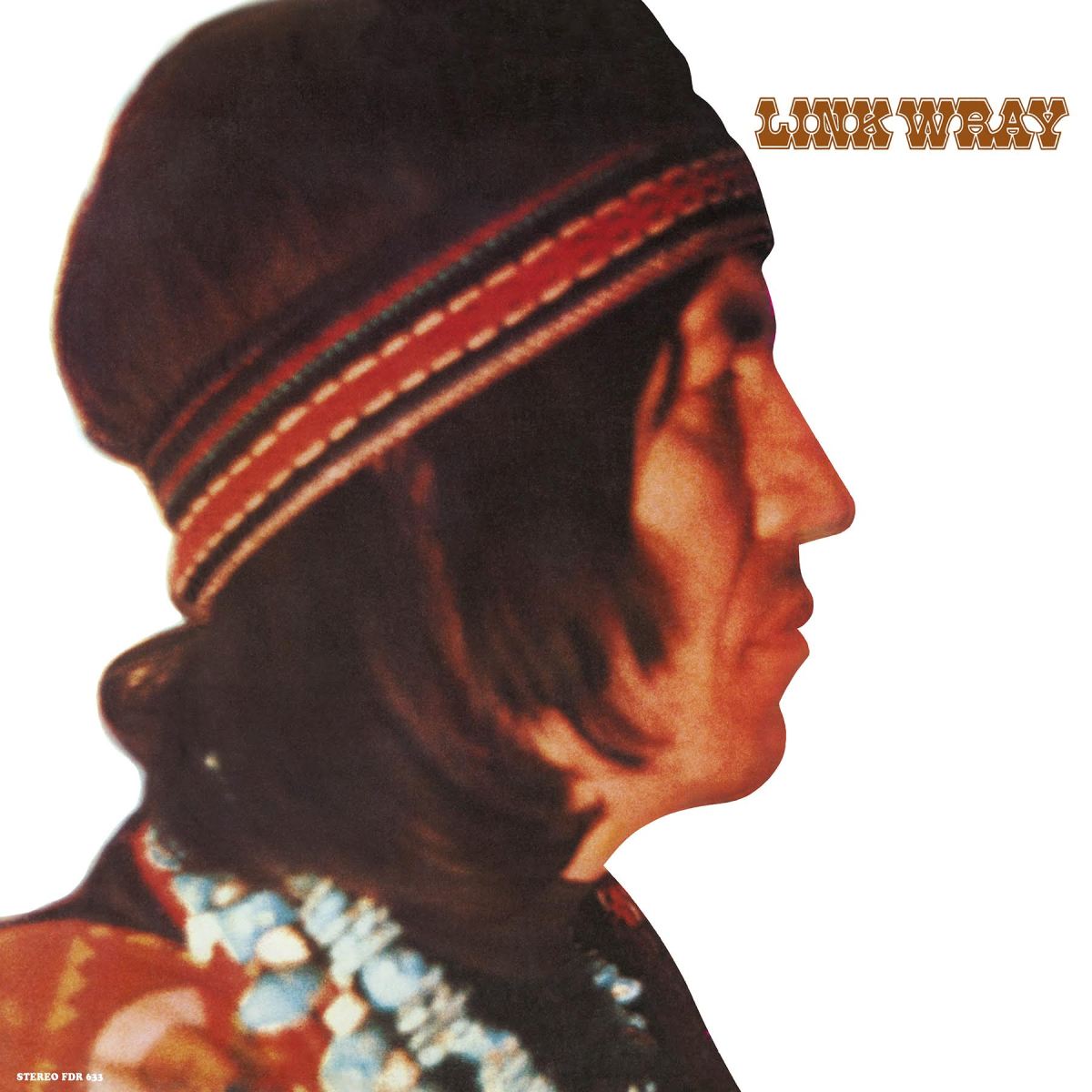
I was really taken aback when I saw this album. I played it, expecting an instrumental, and when I heard a voice, I thought it was a different singer. When I think of Link Wray, I think of Rumble and instrumentals like that. I was surprised when I found this roots album by him, recorded in 1971. I want to thank Lisa for posting something that made me think of this rare Link Wray album.

After serving in the military, Wray contracted tuberculosis and lost a lung, which made singing difficult, and doctors advised him against it. Because of his breathing difficulties, Wray began to focus more on expressive and experimental guitar playing, leading him to become known for his instrumental hits. Wray was a Native American of Shawnee descent. He grew up in North Carolina. Wray later honored his heritage in his music, with songs like Apache and Comanche.

This album was recorded in a converted chicken shack. His brother, Ray Vermon Wray, helped produce it along with Bob Feldman and Steve Verroca. Instead of power chords and a leather jacket, Link traded distortion for Americana, funk, gospel, and storytelling. It was earthy, roots-driven, and deeply personal, almost a different artist altogether from the one I thought I knew. After being freed from label pressures, Link finally made the music he grew up with: gospel from church revivals, Native American rhythms from family heritage, country blues, and Southern soul.

There were still guitars, but now they sat behind the songs instead of smashing through them. Tracks like Fire and Brimstone, Juke Box Mama, and Ice People feel like they were born out of the dirt. The grooves are loose, almost like field recordings. His voice, rarely heard on record before this, carries a soulful and weathered sound. He didn’t sound like a rock guitarist trying to sing; he sounded like a weathered preacher who happened to play guitar.

You hear old-time country on Take Me Home Jesus, boogie on God Out West, and Native rhythms driving Black River Swamp. No other rock guitarist of his generation made anything remotely like this. Only one song retains his old tone, and that’s the intro to Tail Dragger. If anything, it pointed the way decades later for artists like Los Lobos and the entire alt-country movement. If you want to hear some authentic Americana, listen to this album.

Polydor gave the album a shot, but the public wanted Link the guitar guy, not Link the backwoods Americana prophet. Sales were modest, and critics were divided. However, like many records that were too authentic for their time, it grew in legend over time. Today, many fans call the 1971 album his true masterpiece

Black River Swamp

I was born down in the countryDown where the cotton growsTurnin’ off the main highwayGoin’ down that country road

There’s a place down in the countryWhere the pine trees grow so tallWalk across that old log bridgeStretching ‘cross Black River Swamp

I can hear them bullfrogs croakingIn the blackness of the nightCalling me back to my childhoodDown here in Black River Swamp

Saw my name carved on a big oak treeDown there by the fishing holeAnd the smell of old Black RiverWhere the waters are deep and cold

I can hear the hound dogs howlin’Chasin’ that old fox where I used to roamDown there in the countryCallin’ me to Black River Swamp

I can hear them hound dogs howlin’Chasin’ that old fox where I used to roamDown there in the countryCallin’ me to Black River Swamp

I was born in the countryDown where the cotton growsTurnin’ off the main highwayGoin’ down that country road

There’s a place down in the countryWhere the pine trees grow so tallGo across that log bridgeStretching ‘cross Black River Swamp
Robert Gordon – Fire

A few weeks back Randy from Mostlymusiccovers was listing songs with Rock and Roll in the title and mentioned Robert Gordon. I knew I knew the name and I remember CB mentioning him a while back and I’ve been in a rockabilly mood recently and have been listening to him.

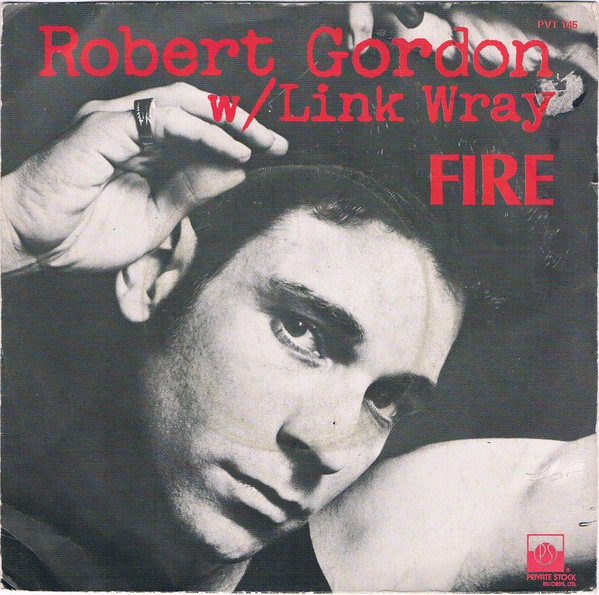
Bruce Springsteen wanted Elvis to do this song but Elvis died in 1977 soon after Bruce wrote it. Springsteen offered it to Robert Gordon after seeing him perform live. This 1977 recording features Link Wray on guitar and Springsteen on piano. “Fire” would become a hit later that year when it was recorded by the Pointer Sisters. After listening to it…I do understand why he offered it to Gordon. He did a fantastic job with it and yes…you can hear Elvis in his version.

The man sounds like he should have been born earlier and active through the fifties.  He helped kickstart the worldwide rockabilly revival in 1977 with the release of his debut album, Robert Gordon With Link Wray, made in tandem with the guitar legend behind the 1958 instrumental hit Rumble.

Everyone thought he would be huge. His producer was Richard Gottehrer and he helped launch the careers of Madonna, Blondie, The Ramones, and The Talking Heads. Gordon did pave the way for future rockabilly acts like The Stray Cats that came in the 80s. He also shined a much-needed light on the legendary guitarist Link Wray. He saw Wray playing the oldies circuit and convinced Wray to play guitar with him.

Much like The Yardbirds and John Mayall…Gordon had a knack for picking great guitar players to play with him. Chris Spedding (a versatile session guitarist), Danny Gatton (toured with Roger Miller and others), Eddie Angel, Quentin Jones, and, most recently, Danny B. Harvey. Gordon’s 2020 album Rockabilly For Life had players such as Albert Lee, Steve Wariner, and the great Steve Cropper.

From 1977 to 2022 he made 12 studio albums and 4 live albums. Gordon died in 2022 of acute myeloid leukemia.

Robert Gordon: “I’ve always done my thing. I choose the songs, and I let the guitarists do their thing. I don’t step on their territory, but I like to hear what I like to hear, and it works out good. When you’re working with people like Chris Spedding and Danny Gatton, you don’t have to tell them too much. These guys have been there and done that, and they’re the best. I always let them do their thing before I open my mouth.” 

Fire

I’m drivin’ in my car, you turn on the radio
I’m pullin’ you close, but you just say no
You say you don’t like it, but girl I know you’re a liar
‘Cause when we kiss, ooh, fire

Late at night, I’m chasin you home
I say I wanna stay, you say you wanna be alone
You say you don’t need me, but you can’t hide your desire
‘Cause when we kiss, ooh, fire

You’ve had a hold on me right from the start
It felt so good, I couldn’t tear it apart
Got my nerves all jumpin’, actin’ like a fool
‘Cause your kisses they burn, but your heart stays cool

Romeo and Juliet, Samson and Delilah
Baby, you can bet the love they couldn’t deny
Well, now your words say split, but your words they lie
‘Cause when we kiss, ooh, fire

Oh-oh, fire
Mm-mm, fire
Oh-oh, fire
Oh-oh, fire

Max Picks …songs from 1958

1958

Welcome to another edition of Max Picks. We will start it off with Ricky Nelson on a slow note but this song is so haunting to me. Nelson wasn’t always taken seriously because of his acting in his parent’s sitcom Ozzie and Harriet. That’s a shame because he released some top-grade rockabilly songs. Here he is with the ballad Lonesome Town.

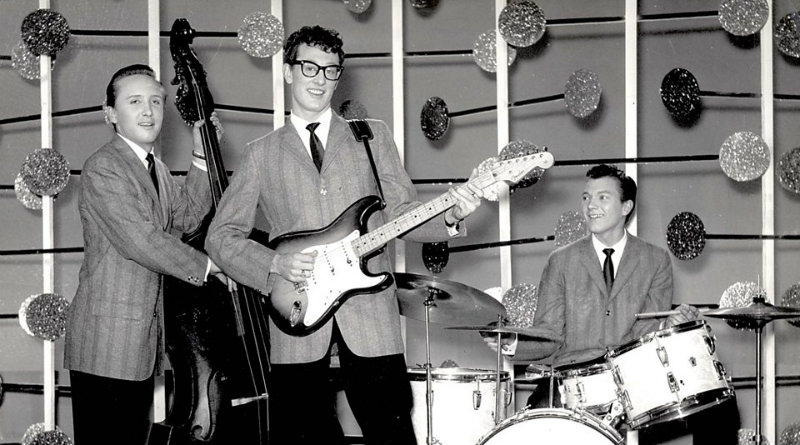
As promised…here is more Buddy Holly, his window was short but strong. Buddy’s songs would influence everyone from The Stones, Hollies, Beatles, and more. He also could have unknowingly started the Power Pop genre. His jangly guitar and that voice with the hiccups. I went to the Buddy Holly Broadway show when it toured and stopped in Nashville. I can’t explain in words how a 3 piece band sounded so full with the music he wrote.

Now we have the one and only Chuck Berry weaving his lyrics about a guy who left his home to make it playing guitar. This song IS Rock and Roll and has been played by every self-respecting garage band ever since. It’s also covered by heavy metal, country, pop, and rock bands. I would lay money down that somewhere tonight in some bar somewhere…Johnny B. Goode will be heard.

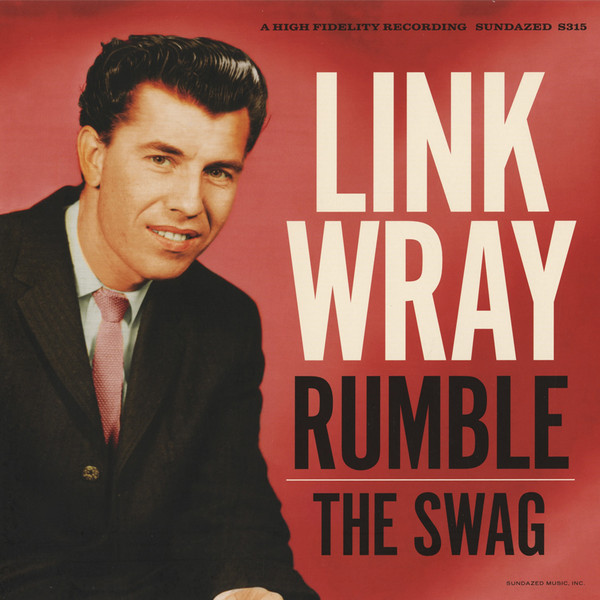
Link Wray and his Ray Men gave us this instrumental Rumble in 1958. This instrumental was somewhat controversial because it implied gang violence – some radio stations refused to play it. It might be the only instrumental song ever banned on the radio. It was feared that the piece’s harsh sound glorified juvenile delinquency. Did the song cause juvenile delinquency? We can only hope.

Now we will end it with an artist that unfortunately is about to go in the Army at this time. He would never be the same again. Yes, we would get some great songs in his future but Elvis Presley became more of an all-around entertainer after this year. His rock and roll days were going to fall behind for a while when he started to make movies. This is a fantastic song.

Link Wray & His Ray Men – Rumble

When I hear this song I automatically think of Jack Rabbit Slim’s restaurant in the movie Pulp Fiction. It was played when Mia and Vincent were talking about the five dollar milk shake. 

Wray came up with this when he was asked to play a stroll at one of his shows. The song was different from other popular instrumentals, as it helped introduce gritty guitar distortion and power chords to the world of rock.

The song is credited to Link Wray and Milt Grant.

This instrumental was somewhat controversial because it implied gang violence – some radio stations refused to play it. It might be the only instrumental song ever banned on the radio. It was feared that the piece’s harsh sound glorified juvenile delinquency. Did the song cause juvenile delinquency? We can only hope. 

The song peaked at #16 in the Billboard 100 in 1958.

Pete Townshend on Link Wray: “He is the King; if it hadn’t been for ‘Rumble,’ I would have never picked up a guitar.”

From Songfacts

Wray was with Archie Bleyer’s Cadence label and he wanted to record this as a single. Bleyer was ready to pass on it until his step daughter said she liked it and that it reminded her of the rumble scenes in West Side Story. Bleyer named the song “Rumble” and decided to release it.

Wray was drafted in 1951 and fought in the Korean War where he caught Tuberculosis. As a result, he had a lung removed in 1957 and couldn’t sing. After returning from Korea, he joined his family band the Palomino Ranch Gang, and went on to record as “Lucky” Wray in 1956.

Wray used a 1953 Gibson Les Paul guitar run through a Premier amp to produce this song.

This was used in a 2017 commercial for the Ford Focus where a cat rides in the backseat and closes the window to drown out the sound of a barking dog.

The song was honored at the Rock and Roll Hall of Fame in 2018 when they announced a category for “singles.” Five other songs were selected along with it:

“The Twist” – Chubby Checker
“Rocket 88” – Jackie Brenston and his Delta Cats
“Louie Louie” – The Kingsmen
“A Whiter Shade Of Pale” – Procol Harum
“Born To Be Wild” – Steppenwolf