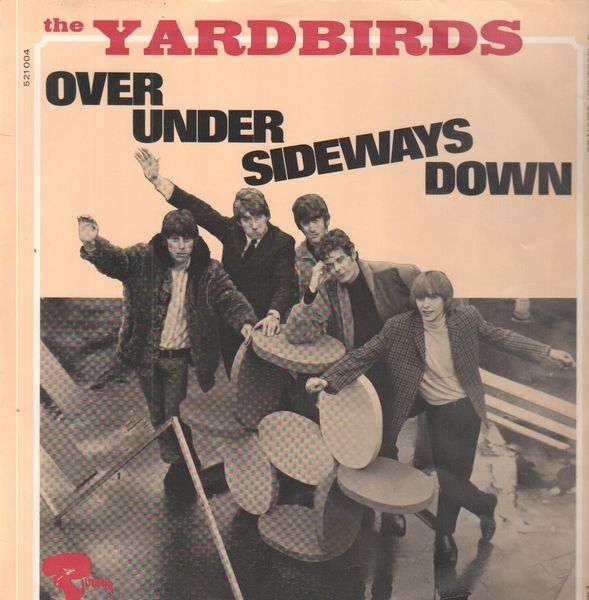
Yardbirds – Over, Under, Sideways, Down

The 1966 song begins loudly with a snake-charming-sounding riff by Jeff Beck. It jumps out of the turntable. I had one of the many Yardbirds greatest hits packages in the 1980s and became a fan. 

Jeff also plays the bass on this song. When you talk about the Yardbirds, you almost have to pick which Yardbirds you’re talking about. The Clapton Yardbirds? The Jeff Beck Yardbirds? The Page Yardbirds? They were a band in constant transition, always chasing the next sound (and guitar player). With Jeff Beck holding the guitar reins, they gave us one of their strangest and coolest singles.

From the opening guitar riff, you know you’re not in typical British Invasion territory. The tune was inspired by Middle Eastern scales. The band had been soaking up Indian and Eastern music around the same time the Beatles were dabbling in sitars. Instead of George Harrison’s spiritual leanings, though, the Yardbirds went for having a good time at all costs. 

The song was a group composition, something the Yardbirds often did to keep things fair. Beck’s guitar is the real star, but the whole band had a hand in shaping its feel. It was one of their last sessions with bassist Paul Samwell-Smith, who would leave shortly afterward to focus on production. Chris Dreja, their rhythm guitarist, has said the song captured the manic, party-heavy atmosphere of their lives at the time.

Over, Under, Sideways, Down peaked at #13 in the Billboard 100 and #10 in the UK in 1966. I must say it’s one of my all-time favorite titles.

Jim McCarty: “‘Over Under Sideways Down’ was about the situation of having a good time – a bit of decadence, really – in the ’60s. Cars and girls are easy to come by in this day and age, and laughing, drinking, smoking, whatever, till I’ve spent my wages, having fun.”

Jim McCarty: “On ‘Over Under Sideways Down’ I think we all put in our bit. I put in a tune, somebody else said, ‘How about the state of things at the moment, it’s all over the place, so it’s sort of over, under, Sideways, down.'”

Jim McCarty: “It’s very much up and down. Yeah, it was very much like a microcosm of a life, really. Very extreme, because we’d go from being on top of the charts and going to fantastic places and traveling to places like California that were just our dream after being in a sort of post-war London, which was rather dismal and rather miserable. Suddenly we were going to sunny California where things were happening and things were rich and there were lovely girls and cars and everything. From that to sitting all night in a bus driving to a gig and not being able to stop and feeling absolutely wretched from being so tired. And getting on each other’s nerves and arguing. (laughing) So it’s very much the extreme life.” 

Jeff Beck: “I actually didn’t have a guitar of my own, I was so hard up. The Yardbirds sort of sneaked Eric’s guitar out. He’d finished using the red Tele (Fender Telecaster)
and was using a Les Paul, so he didn’t care about the red Tele. The bands manager, said well, ‘You’d better use Eric’s guitar—we can’t afford to go out and buy one now.’ So I borrowed Eric’s for the first couple of gigs”.

Over, Under, Sideways, Down

(Hey! Hey! Hey! Hey!)
Cars and girls are easy come by in this day and age.
Laughing, joking, dreams, weed smoking, till I’ve spent my wage.
When I was young, people spoke of immorality.
All the things they said were wrong are what I want to be.

(Hey!) Over, under, sideways, down,
(Hey!) I bounce a ball that’s square and round.
(Hey!) Over, under, sideways, down,
(Hey!) I bounce a ball that’s square and round.
When will it end? (When will it end?)

(Hey! Hey! Hey! Hey!)
I find comments ’bout my looks irrelativity.
Think I’ll go and have some fun, ’cause it’s all for free.
I’m not searchin’ for a reason to enjoy myself.
Seems it’s better done than argue with somebody else.

(Hey!) Over, under, sideways, down,
(Hey!) I bounce a ball that’s square and round.
(Hey!) Over, under, sideways, down,
(Hey!) I bounce a ball that’s square and round.
When will it end? (When will it end?)
Jeff Beck Group – Spanish Boots

I haven’t reviewed Beck’s discography as much as I should have. This song is really good and so is the rest of the album. They touch on so many different styles.

The Jeff Beck Group was formed by guitarist Jeff Beck after he left The Yardbirds. The original lineup included Rod Stewart on vocals, Ronnie Wood on bass, Micky Waller on drums, and Nicky Hopkins on piano. This lineup is known for blending rock, blues, and jazz elements. The critics also cited this album as a big step to heavy metal and hard rock.

This was before The Faces with Wood and Stewart. Rod Stewart did some of his best vocals with this band.  Spanish Boots was written by Jeff Beck, Rod Stewart, and Ronnie Wood. The song appears on Jeff Beck’s album Beck-Ola, released in 1969. Beck-Ola peaked at #39 in the UK, #15 on the Billboard 200, and #22 in Canada.

The album didn’t achieve the same level of commercial success as some of Jeff Beck’s later works but was critically acclaimed. Truth was their debut album, and it was released in 1968. It was a big success and critically acclaimed.

Spanish Boots

I used to work and take a salaryIn a hole up near a foundryBut it did not take me too longTo get my boots on a “So Long!”Long Spanish boots on a “So Long!”I took a day job in BethlehemI nearly threw in the towel thenBut it did not take me too longTo get my boots on a “So Long!”High Spanish boots on a “So Long!”

Dig itI took a Spanish haberdasheryRestored with 15th century tapestryBut oh, Mr. Nesbitt got the best of meSo I strapped on my boots and said “So Long!”Laced up my high boots and “So Long!”

GoodbyeAm on a job you see‘Cause my old boots they mean too much to meLeather boots are just a mysteryPut on my boots and said “So Long!”High Spanish boots on and “So Long!”Put on my boots and said “So Long!”Those old Spanish bootsPut on my boots and said “So Long!”High Spanish boots

….

Yardbirds – Shapes of Things

This is the Yardbirds… Jeff Beck edition. Great song that peaked at #11 in the Billboard 100, #3 in the UK, and #7 in Canada in 1966. Beck’s guitar solo in this song is fantastic as he uses distortion, sustain, feedback, and some Eastern influence. This was shortly before Jimmy Page joined the group.

The band recorded this song at Chess Studio in Chicago, their first time there. Chris Dreja said it’s one of the best songs they ever made. Shapes of Things was about the state of the UK during the Vietnam War, so it was an anti-war song according to the band. The song was written by Jim McCarty, Keith Relf, and Paul Samwell-Smith.

The band is best known now because of the great guitarists that were in the band. Eric Clapton joined the band in 1963, but soon quit to concentrate on the blues with Cream.

Jeff Beck replaced him in 1965, and then Jimmy Page joined in 1966 on bass. He soon switched to guitar, and the band had Page and Beck together.

Later, Beck walked out of the band, leaving only Page. The Yardbirds broke up, but Jimmy Page kept the name and played under “The New Yardbirds” with his new bandmates Robert Plant, John Paul Jones, and drummer John Bonham, who would change their name to Led Zeppelin.

Jeff Beck liked the song so much that he used it on arguably his best album Truth. He was able to control feedback and use it to enhance the song. The song is often considered a precursor to the heavier, more experimental rock sound that would emerge in the late 1960s and early 1970s.

Jeff Beck: “The way they worked was completely off the cuff: We’d jam, Keith would rush off and write some lyrics in the toilet, it was exactly like that. After four verses, let’s go into this raga thing. I kept changing guitar sounds all the way through. So we did two or three takes of my guitars and blended them all together. But the solo on “Shapes Of Things” was pretty honest until that feedback note that comes in over it. If nothing else, that was the best single.”

Bassist Paul Samwell-Smith: I wrote it in a bar in Chicago. I just lifted part of a Dave Brubeck fugue to a marching beat. It’s a sort of protest song.

Jim McCarty: “With ‘The Shapes of Things’ I came up with a marching type of rhythm that I tried to make interesting. And at the end of each line we’d build up like we used to do with some of our stage stuff – the rave ups. And then the bass riff came on top of that. And the bass riff was loosely based on a Dave Brubeck song, sort of a jazz song, around a doo doo doo doo doo doo, and then the chords came over that. The chords were very basic, came between the two tones, I think G and F, and then resolving it in D, each verse. And then the tune came on top of that. In fact, I remember putting the backing track down, which sounded great. I wasn’t at the session where Keith made up the tune, and when I heard the tune, I thought, Oh, that’s great. It’s a real surprise. He made up the tune, and then we had this sort of ‘Come tomorrow,’ but that was part of the song, anyway, at the beginning. So it was an exciting song to be involved in.”

Jim McCarty: “That’s probably the hardest thing to try and do. Every time we tried to do that it never really succeeded. I suppose we were lucky in that when we did ‘Shapes of Things’ it was like a hit song, but we were really coming from not trying to create a sort of a 3-minute piece of music, it was just something that seemed natural to us. We started with the rhythm, we used a bass riff that came from a jazz record, got a groove going with that and then added a few other bits from elsewhere, other ideas that we’d had. And I think it was a great success for us, it was a good hit record that wasn’t really selling out. And it was original.”

Shapes of Things

Shapes of things before my eyes,
Just teach me to despise.
Will time make men more wise?
Here within my lonely frame,
my eyes just heard my brain.
But will it seem the same?

(Come Tomorrow) Will I be older?
(Come Tomorrow) May be a soldier.
(Come Tomorrow) May I be bolder than today?

Now the trees are almost green.
But will they still be seen?
When time and tide have been.
Fall into your passing hands.
Please don’t destroy these lands.
Don’t make them desert sands.

Chorus, Lead.

Soon I hope that I will find,
Thoughts deep within my mind.
That won’t displace my kind.

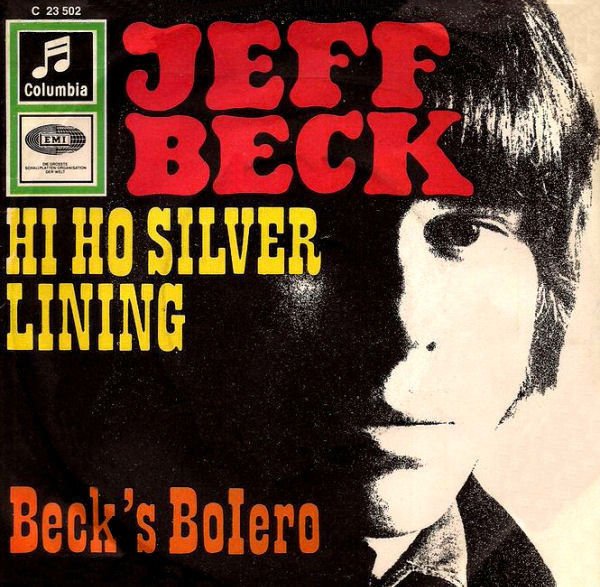
Jeff Beck – Beck’s Bolero

This song is for Song Lyric Sunday for Jim Adams’s blog. This week’s prompt is Gone But Not Forgotten. We lost Jeff Beck this year and he was a huge loss.

I hardly ever post instrumentals but this one is special. Keith Moon on drums, John Paul Jones on bass, Nicky Hopkins on keyboard, and Jimmy Page,  on 12-string guitar along with Jeff Beck on slide guitar. John Paul Jones said the group that played on Beck’s Bolero was kicking around the idea of touring. They also were thinking about trying to get the Small Faces singer Steve Marriott but his management would not go for that.

Beck’s Bolero was recorded over one day on May 16th, 1966. At this point, Moon was unhappy in The Who, and this impromptu band did initially plan to record and release a full album, but contractual obligations…amongst other things, prevented them from ever doing it.

John Entwistle, who originally agreed to play bass in the session, pulled out at the last minute and was replaced with session ace John Paul Jones. Personally, I’m glad this didn’t gel because The Who would have stopped dead most likely.

When you listen to the song…there isn’t a doubt who was playing drums. Jeff Beck later claimed that Pete Townshend “glared like daggers at me” after he found out about the recording sessions.

Jimmy Page is credited with writing the song but Jeff has said no… that he worked more of it out. Instead of me writing out the differences…I’ll let Beck and Page do it below.

Jimmy Page: “On the ‘Beck’s Bolero’ thing I was working with that, the track was done, and then the producer just disappeared. He was never seen again; he simply didn’t come back. Napier-Bell, he just sort of left me and Jeff to it. Jeff was playing and I was in the box (recording booth). And even though he says he wrote it, I wrote it. I’m playing the electric 12-string on it. Beck’s doing the slide bits, and I’m basically playing around the chords. The idea was built around (classical composer) Maurice Ravel’s ‘Bolero.’ It’s got a lot of drama to it; it came off right. It was a good lineup too, with Keith Moon, and everything.”

Jeff Beck: “No, Page didn’t write that song, we sat down in his front room once, this tiny, pokey room, and he was sitting on the arm of a chair and he started playing that Ravel rhythm. He had a 12-string, and it sounded so full, really fat and heavy. And I just played the melody. And I went home and worked out the other bit [the up-tempo section].”

This song was the B side to Hi Ho Silver Lining which peaked at #14 in the UK in 1967. The song was later on Jeff Beck’s Truth album.

Jeff Beck: Me and Jim Page arranged a session with Keith Moon in secret, just to see what would happen. But we had to have something to play in the studio because Keith only had a limited time — he could only give us like three hours before his roadies would start looking for him. So I went over to Jim’s house a few days before the session, and he was strumming away on this 12-string Fender electric that had a really big sound. It was the sound of that Fender 12-string that really inspired the melody. And I don’t care what he says, I invented that melody, such as it is. I know I’m going to get screamed at because in some articles he says he invented it, he wrote it. I say I invented it. This is what it was: He hit these Amaj7 chords and the Fm7 chords, and I just started playing over the top of it. We agreed that we would go in and get Moonie to play a bolero rhythm with it. That’s where it came from, and in three or four takes it was down. John Paul Jones on the bass. In fact, that group could have been a new Led Zeppelin.

Yardbirds – Heart Full Of Soul

The Yardbirds had three of Rock’s greatest guitar players pass through them. Eric Clapton, Jeff Beck, and Jimmy Page. They had such a raw edge to them with Jeff Beck so that is the version I like best.

Heart Full of Soul peaked at #9 in the Billboard 100, #2 in the UK, and #2 in Canada in 1965. From the opening, it hooks you.

The lead guitarist Jeff Beck used an early version of a fuzz box on his lead part. They tried a sitar in the intro but they instead opted for Beck’s sitar-sounding guitar. “Heart Full of Soul” was the second of three Yardbirds singles written by non-member Graham Gouldman (the first was “For Your Love,” the other was “Evil Hearted You”).

This was the Yardbirds’ first single after Jeff Beck replaced Eric Clapton as lead guitarist. Released only three months after “For Your Love.” The song is interesting because it contains Eastern and Western musical influences.

Jeff Beck gave the song an Eastern feel by the way he played the intro. When Jeff Beck joined the Yardbirds he didn’t have a guitar.

Jeff Beck: I actually didn’t have a guitar of my own, I was so hard up. The Yardbirds sort of sneaked Eric’s guitar out. He’d finished using the red Tele (Fender Telecaster)
and was using a Les Paul, so he didn’t care about the red Tele. The bands manager, said well, ‘You’d better use Eric’s guitar—we can’t afford to go out and buy one now.’ So I borrowed Eric’s for the first couple of gigs”.

Drummer Jim McCarty: “‘Heart Full of Soul,’ which was very moody, gave us the ability to play the riff in sort of an Eastern way, give it an Oriental touch. Another very good song.”

Heart Full Of Soul

Sick at heart and lonely, deep in dark despair
When you want her only, tell me where is she where?
And if she says to you, that she don’t love me
Just give her my message, tell her of my plea
And I know, if I could have her back again, I would never make her sad
I got a heart full of soul I got a heart full of soul
She’s been gone such a long time, longer than I can bear
But if she says she wants me, tell her I’ll be there

And I know, if I could have her back again, I would never make her sad
I got a heart full of soul I got a heart full of soul
Sick at heart and lonely, deep in dark despair
When you want her only, tell me where is she where?
And if she says to you, that she don’t love me
Just give her my message, tell her of my plea
And I know, if I could have her back again, I would never make her sad
I got a heart full of soul I got a heart full of soul
I got a heart full of soul!

Yardbirds – Happenings Ten Years Time Ago

I remember this song on some Yardbirds album I had back in the day. The guitar riff is outstanding. This band had no shortage of guitarists. Eric Clapton, Jeff Beck, and then Jimmy Page.

This is the first Yardbirds song that Beck and Page played together. The bass player on this song, Led Zeppelin fans will know right away. John Paul Jones played bass on this song. Jones also played bass on the Yardbird’s tracks “No Excess Baggage” and “Goodnight Sweet Josephine.” The reason Jones, who was a studio musician at that point, played on these songs was that the regular bass player Paul Samwell-Smith was pursuing record production full-time.

Paul Samwell-Smith went on to be a successful producer with credits such Cat Stevens’ albums Tea for the TillermanTeaser and the Firecat, and Catch Bull at Four. He also produced Jethro Tull, Carly Simon, and others. A couple of years later…John Paul Jones would be part of the New Yardbirds before they morphed into Led Zeppelin. Page wisely kept the rights to the name and the band played their first shows under that name.

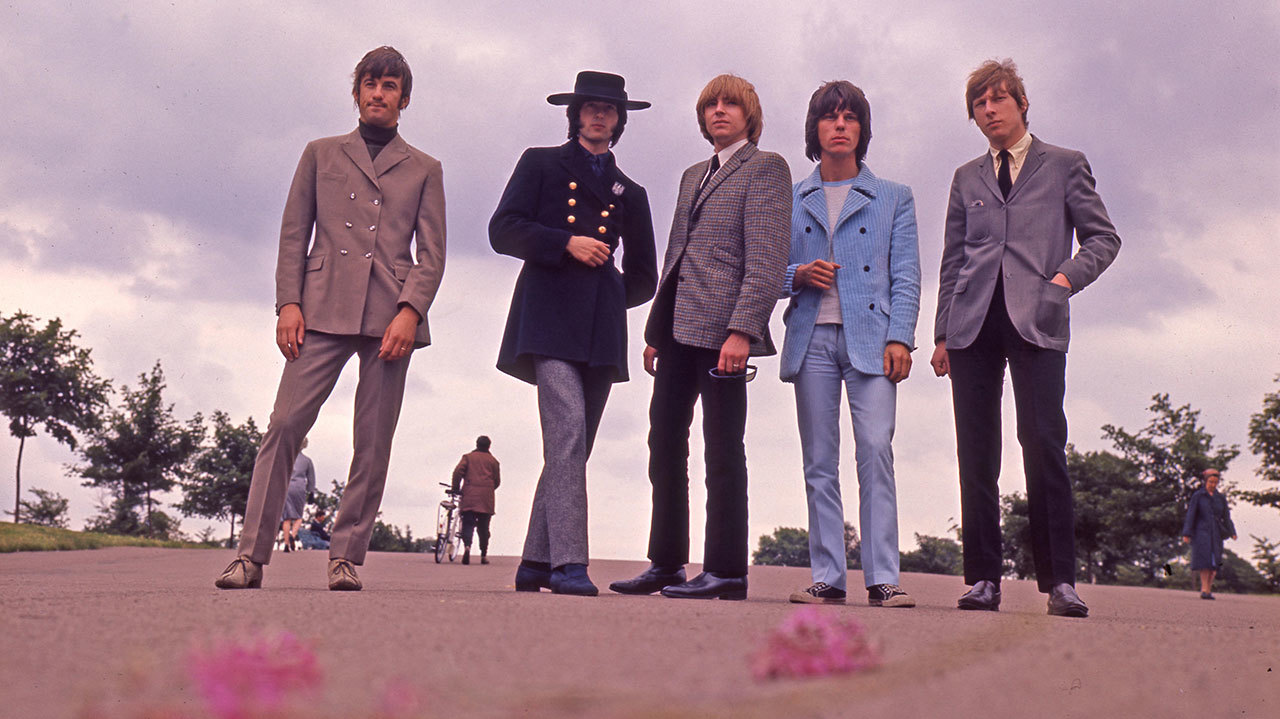
Fantastically flash, inscrutably cool: How the Yardbirds shaped rock'n'roll  | Louder

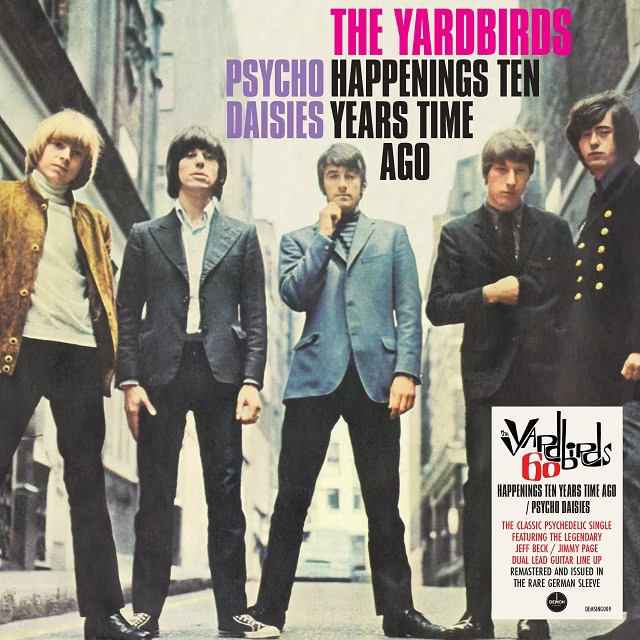
This song was released in 1966 as a single with the B-side Psycho Daisies. The song peaked at #43 in the UK. As the title of the B side suggests…music was going into a psychedelic period that would peak the following year with The Beatles Sgt Peppers album.

The song was credited to the band… Keith Relf, Jim McCarty, Jeff Beck, and Jimmy Page except for rhythm guitar player Chris Dreja and bass player Paul Samwell-Smith.

Jim McCarty:  “On ‘Happenings Ten Years Time Ago,’ Keith (Relf) and I were trying to write a song about reincarnation. We’d seen everything before, and it was all happening again. That was quite an interesting viewpoint, really. Meeting people along our way that we’d seen from another day. Sort of bringing in that situation that we’d been there before.”

Jimmy Page: We rehearsed hard on all sorts of riffs to things like “Over Under Sideways Down” which we were doing in harmonies and we worked out where we’d play rehearsed phrases together. It was the sort of thing that people like Wishbone Ash and Quiver [later] perfected, that dual-lead-guitar idea.

Happenings Ten Years Time Ago

Meeting people along my way
Seemingly I’ve known one day
Familiarity of things
That my dreaming always brings

Happenings ten years time ago
Situations we really know
But the knowing is in the mind
Sinking deep into the well of time

Walking in the room, I see
Things that mean a lot to me
Why they do I never know
Memories don’t strike me so

It seems to me I’ve been here before
The sounds I heard and the sights I saw
Was it real? Was it in my dreams?
I need to know what it all means

Happenings ten years time ago
Situations we really know
But the knowing is in the mind
Sinking deep into the well of time

Honeydrippers – Sea of Love

I immediately liked this song when I heard it in 1984.  The song originally was by Phil Phillips with the Twilights and they took it to #2 in 1959. Phil Phillips and George Khoury wrote this song. I knew Robert Plant wanted to distance himself from the hard sounds of Led Zeppelin when I heard this. I went out and immediately bought the single.

This version of the Honeydrippers included Jimmy Page and Jeff Beck. I had forgotten that Brian Setzer was in it also but it makes complete sense.  The members were…

Robert Plant – vocals
Jimmy Page – guitars
Jeff Beck – guitars
Paul Shaffer – keyboard
Nile Rodgers – guitar, co-producer
Wayne Pedzwater – bass
Dave Weckl – drums
Brian Setzer – guitar
Keith “Bev” Smith – Drums

That is some kind of band… a lot of great players in famous bands in this group. The song peaked at #1 in Canada, #3 on the Billboard 100, #12 in New Zealand, and #56 in the UK.

Robert Plant was actually quite horrified with this song’s success for The Honeydrippers. The A-side was “Rockin’ At Midnight,” with “Sea of Love” as the B-side. But the single got flipped. Plant feared that this would destroy his reputation and he would be typecast as a crooner, so he deliberately cut off the career of the Honeydrippers.

He thought about bringing them back in the 21st century with Ahmet Ertegün, but at the latter’s passing Plant put the idea on permanent hold. Robert can really sing those 50s hits quite well. I remember seeing him on the broadcast of the Concert for Kampuchea playing with Rockpile.

“Sea Of Love”
Do you remember when we met?
That’s the day I knew you were my pet
I wanna tell you how much I love you

Come with me, my love, to the sea
The sea of love
I wanna tell you just how much I love you
Come with me to the sea of love

Do you remember when we met?
Oh, that’s the day I knew you were my pet
I wanna tell you, oh, how much I love you

Come with me to the sea of love
Come with me, my love, to the sea
The sea of love
I wanna tell you just how much I love you
I wanna tell you, oh, how much I love you

John Lennon – Isolation

Many people posted this song during the lockdown and I can see why.

I always liked the song and understood that isolation doesn’t equate to loneliness. You can be in a crowd of people and yet feel isolated or alone. You can be physically isolated from others yet still feel very much connected to others.

The bass player on this track was Klaus Voormann, who was a friend of the Beatles from their Hamburg days. He was also an artist… he is the artist who designed the cover of Revolver. Ringo Starr also lends a hand with drums on this track.

JLPOBCover.jpg

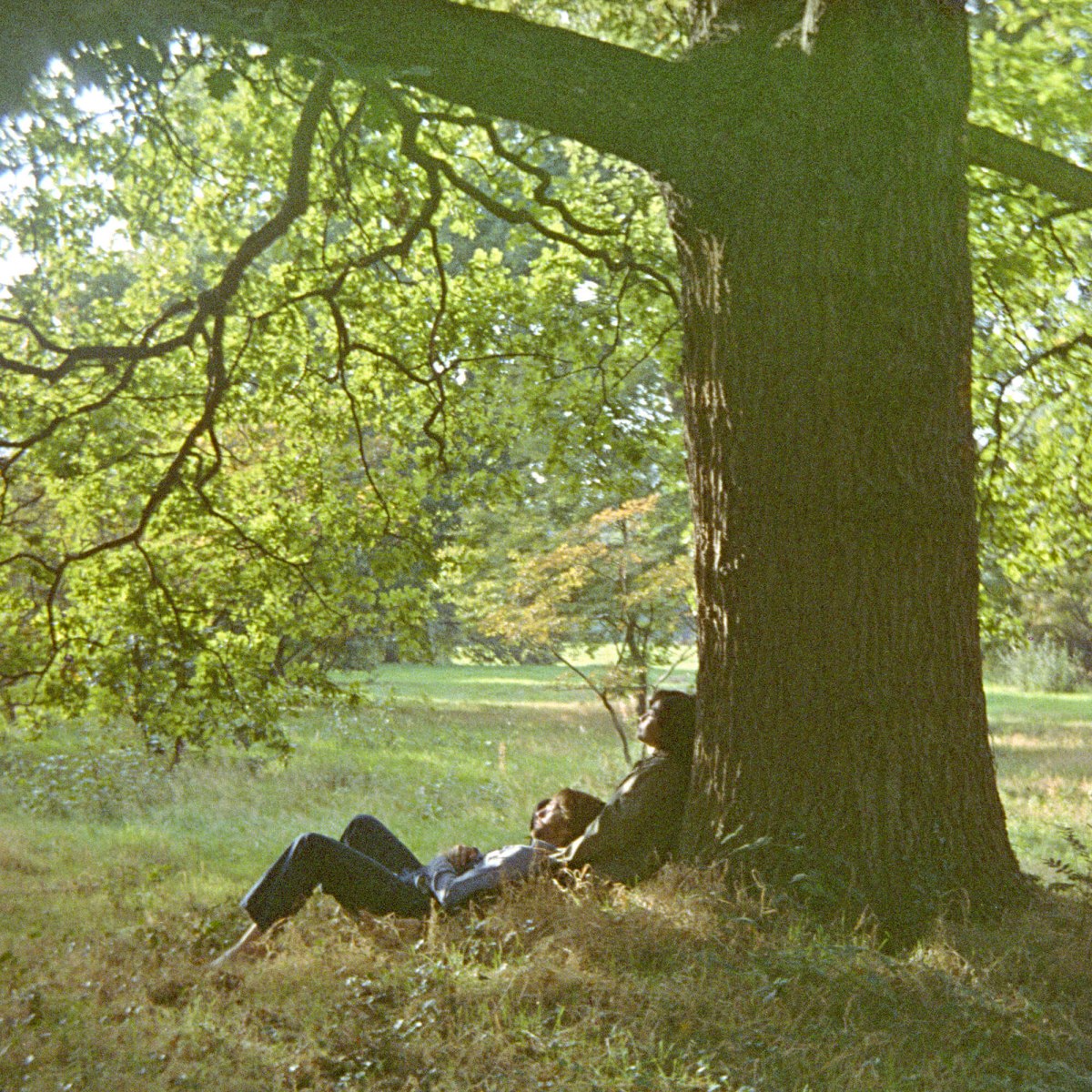
The song was released on his true debut album John Lennon/Plastic Ono Band in 1970. Arguably one of if not his best album. Like Paul’s debut this one was not big in production but unlike Pauls…this album was not light pop songs. You can feel John releasing his inner feelings for everyone to see on this album. Not an album to play to get a party going. You can hear John’s disillusionment with life, fame, and his three former bandmates.

This was during the time John Lennon went to see Doctor Arthur Janov in scream therapy. A way to bare his soul for his feelings like his mom that was killed when he was a teenager.

John Lennon: ‘Isolation’ and ‘Hold On John’, they’re the rough remixes. I just remixed them that night on seven-and-a-half [inches per second tape] to take them home to see what else I was going to do with them. And then I didn’t really, I didn’t even put them onto fifteen [IPS], so the quality is a bit hissy on ’em too. By the time I’d done everything, I started listening. I found out it’s better that, with ‘Instant Karma’ and other things, you remix it right away that night. I’d known that before, but never followed it through.

I usually don’t pay much attention to covers. I ignore actors turn singers but I did find a very good version of this song out there. In 2020 Jeff Beck and Johnny Depp recorded this song and Beck’s guitar work is great. Depp also does the vocals justice in this.

Isolation

People say we got it made
Don’t they know we’re so afraid
Isolation
We’re afraid to be alone
Everybody got to have a home
Isolation

Just a boy and a little girl
Trying to change the whole wide world
Isolation
The world is just a little town
Everybody trying to put us down
Isolation

I don’t expect you, to understand
After you caused so much pain
But then again, you’re not to blame
You’re just a human, a victim of the insane

We’re afraid of everyone
Afraid of the sun
Isolation
The sun will never disappear
But the world may not have many years
Isolation