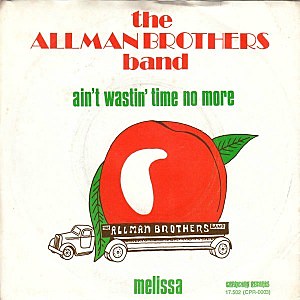
Allman Brothers – Ain’t Wastin’ Time No More

This is one of the first Allman Brothers songs I remember hearing on the radio.

It’s a fantastic song that you don’t hear as much as some of the other Allman songs like Rambling Man. Gregg Allman had most of the music written already but wrote the lyrics right after his brother Duane died in a motorcycle wreck.

It’s about Gregg dealing with the loss of his brother and the soldiers coming back from Vietnam. The Allmans had just started recording the album Eat A Peach when Duane died. Soon after he passed they went to Miami to finish the album.

They started to work on this album in September of 1971 and laid down the basic tracks for “Blue Sky,” “Stand Back” and “Little Martha.” Duane Allman died on October 29, 1971. So those tracks have Duane playing on them and of course, all of the live material features him on guitar. After he died the band went back to the studio and recorded the rest and it was finished in December.

The album also included live tracks that were not used on At Fillmore East like One Way Out, Trouble No More, and a 33-minute “Mountain Jam” that was built off a riff from a Donovan song “There is a Mountain.”

They had some sort of chemistry live that was incredible. I’m usually not a fan of long endless live songs but they keep the intensity up…plus with this album, you get the best of both worlds. The album was released on February 12, 1972, and it peaked at #4 on the Billboard 100 and #12 in Canada. The original name was going to be “Eat A Peach for Peace.”

Dickey Betts had never played electric slide before but when Duane died he was forced to learn the old material and put his spin on Duane’s slide parts. He also came up with new slide parts to this song and Melissa.

The song peaked at #77 on the Billboard 100 in 1972.

Gregg Allman: Losing Duane really slammed Dickey too, but he didn’t show it. We didn’t see too much of Dickey after my brother died. He had this huge garden, and when something would piss him off, he would go out there and sling a hoe or a shovel or an ax for about four hours in the hot sun. He’d come back in for dinner, and he’d be okay. The cat really does have a heart, and I think he really cared about my brother—you don’t go naming your child after someone that you don’t care for.

When my brother died, Dickey really stepped up. He wood-shedded like crazy; I remember him learning how to play the slide part for “Ain’t Wastin’ Time No More” on the airplane, during the flight down to Miami to finish up Eat a Peach.

Ain’t Wastin’ Time No More

Last Sunday morning, the sunshine felt like rain
The week before, they all seemed the same
With the help of God and true friends, I’ve come to realize
I still have two strong legs, and even wings to fly

So I, ain’t a wastin’ time no more
‘Cause time goes by like hurricanes, and faster things

Well, Lord, Lord, Miss Sally, why are your cryin?
Been around here three long days, lookin’ like we’re dyin’
Go step yourself outside and look up at the stars above
And go on downtown, baby, find somebody to love

Meanwhile, I ain’t a wastin’ time no more
‘Cause time goes by like pourin’ rain, and much faster things

You don’t need no gypsy to tell you why
Ya can’t let one precious day to slip by
Well, look inside yourself, and if you don’t see what you want
May be sometimes then ya don’t
But leave your mind alone and just get high

Well, by and by, way after many years have gone
And all the war freaks die off, leavin’ us alone
We’ll raise our children, in the peaceful way we can
It’s up to you and me brother to try and try again

So, hear us now, we ain’t wastin’ time no more
‘Cause time rolls by like hurricanes
Runnin’ after the subway train
Don’t forget the pourin’ rain

Skydog – The Duane Allman Story: by Randy Poe

After re-reading Gregg Allman’s biography My Cross To Bear  I noticed this book about his brother Duane… the founding member of the Allman Brothers Band. It’s a good read and an informative book. Its forward is written by one of his friends…ZZ Top’s guitarist Billy Gibbons.

The Allman Brothers Band formed in 1969 and they lost their leader Duane Allman in 1971. They continued on to be one of the most successful American bands ever. They finally called it quits in 2014.

I saw this book about Duane and I was excited to read it. Going in… I had read Gregg’s bio, Duane’s daughter’s (Galadrielle Allman) book Please Be With Me: A Song for My Father, Duane Allman, and One Way Out: The Inside History of the Allman Brothers Band so I was well rounded on the Allman Brothers. Duane lived a short life but Poe seemed to find many of the musicians he played within the 60s and 70s.

Duane believed in brotherhood…not just with his brother but the band and the entire cast around them. Phil Walden was the president of Capricorn Records, The Allman Brothers record label. He would call for a meeting with the band…he really only wanted to see Duane. Duane not only brought everyone in the band but he brought the roadies also. He told Walden flatly.. .you will not talk with just me but with all of us. Walden would reply …but Duane why are the roadies in here? Duane said they were just as important as the band…without them, we can’t play. The roadies would stay. Duane’s lack of ego in his vision for the Allman Brothers Band made them who they were even after he was gone.

He created a family atmosphere with the Allman Brothers organization. Their 3rd album At Fillmore East was their breakthrough…the album cover shows the band against a brick wall. On the other side of the album shows the roadies in front of the wall also…and a picture of one roadie Twiggs Lyndon who couldn’t be there that day. Another band that shared that same philosophy was the Grateful Dead where the roadies were family. Modern businesses would be wise to take this philosophy and use it.

Duane worked with many musicians and touched their lives. Many that drifted in and out of his bands were not forgotten. The original keyboard player for the Allman Brothers was Reese Wynans until Greg joined. Duane broke it to Reese that the band didn’t need two keyboard players.

In a short time, Duane met Boz Scaggs and recommended Reese to play with him and he did. That started his successful career and he would play with many musicians in his career and was the keyboard player in Stevie Ray Vaughan’s band Double Trouble.

This book doesn’t stop at Duane’s death. It follows the band all the way up to their end in 2014. In the end, he gives a good discography of Duane’s studio recordings. It’s really incredible how many sessions the man was on and he didn’t even reach the age of 25.

The book goes over why he turned Eric Clapton down on joining Derek and the Dominos. This was before the Allman Brothers had made it. He remained loyal to his band because it took him so long to find the right mix of musicians to get the sound he wanted. They didn’t have a hit until the Live At Fillmore East album was released in July of 1971. It would go gold 5 days before Duane was killed. 

I would recommend this book to anyone wanting to know more about Duane and The Allman Brothers. It is full of great information. After you read it you will want to look up all of the recordings he was on. His playing was edgy, tasteful, and like great jazz…takes you on a journey.

At the end of the book, you have to wonder how far he would have gone if he would have lived.

One passage from the book: “In September 2003 ‘Rolling Stone’ published its list of the “100 Greatest Guitarists of All Time”, placing Duane at #2 just behind Jimi Hendrix. Gregg Allman commented that he thought it was a very wonderful gesture and said “…I thought ‘You made your mark man. You didn’t make any money, but you made your mark.”‘ Rounding out the top five were B.B. King, Eric Clapton and Robert Johnson—pretty impressive company for a kid from the South who didn’t even live to see his 25th birthday.”.

If you want to read about the Allman Brothers I would recommend these books also.

My Cross To Bear by Alan Light and Gregg Allman

One Way Out: The Inside History of the Allman Brothers Band by Alan Paul

For a more personal view and her journey to know her dad…

Please Be With Me: A Song for My Father, Duane Allman by Galadrielle Allman

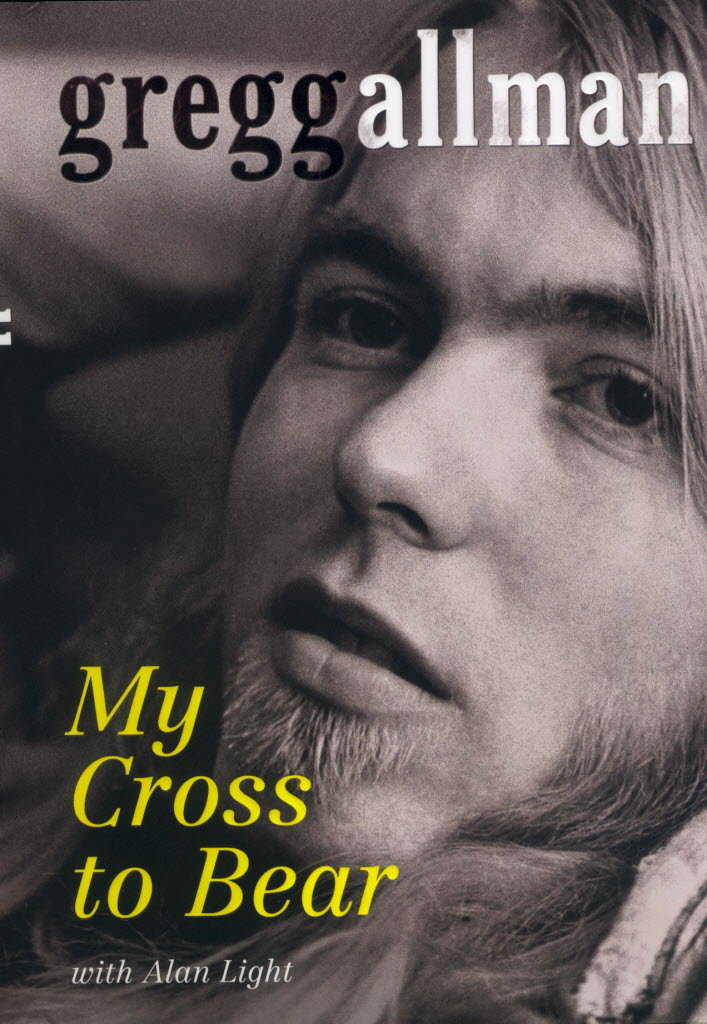
My Cross To Bear

I was never a huge Allman Brothers Band fan. I always respected them and I liked their radio songs and heard enough of Duane Allman to know he was a great slide guitar player. I also knew Gregg could make any song his song because of his vocals. I never really wanted to know more about them.

A friend of mine recommended Gregg Allman’s autobiography My Cross To Bear. I have a 72-mile round trip car ride to work every day so I downloaded the audio version. I took a  chance on this one a couple of years ago and I really enjoyed it.  I also downloaded the E-book after I finished it.

The Allman Brothers have always been known as the Godfathers of Southern Rock. I never considered them Southern Rock…like Gregg himself said… they were a blues band with some jazz thrown in and they were from the south.

The audiobook is narrated by Will Patton who does a great job of channeling Gregg.

It is like having Gregg over on your back porch telling you these great stories. He is very down to earth and does not try to make his mistakes sound like someone else’s fault. If you want to know about Duane Allman get this book. He is honest about his brother…warts and all. He doesn’t try to whitewash himself either.

He starts at the Rock and Roll Hall of Fame induction where he was sick, miserable, and bloated because of his drinking problem…from there he starts going back through his personal history and the many ups and downs of the Allman Brothers. He covers the bands that Duane and he formed…The Escorts, The Allman Joys (which I would have kept that name) and Hourglass.

Hourglass made a couple of albums of original material and covers but the record company made them “pop” everything up. They would not let them play with an edge. The Escorts and Allman Joys were cover bands… very good cover bands.

After reading the book I have started to listen to the Allman Brothers more. He gives you some funny stories and you see how close that band was in the early days before Duane and Berry Oakley died. He mentions his struggles with Dickey Betts, alcohol, drugs and wives. You also read about a “foot shooting” party…

He also talks about being on stage noticing Eric Clapton among the audience. That led to the Layla sessions. Eric was a big fan of Duane’s slide playing.

You learn some history about a cover band’s travels, trials, and tribulations in the mid-1960s…youtube has a few crude recordings of the Allman Joys live in the mid-60s. Below is The Allman Joys version of Help. I would have never thought it was Gregg Allman singing.

If you are a music fan you will probably enjoy this book.

Help by the Allman Joys in 1966 is the opening song.