All summer long we were dancing in the sand, Everybody just kept on playing “Sgt. Pepper’s Lonely Hearts Club Band”
Ok, I’m cheating a little on this kinda… It doesn’t mention “Beatles” but Sgt Pepper’s Lonely Hearts Club Band was the Beatles alter ego on the Sgt Peppers album.
This song was a hit for Johnny Rivers and it was written by James Hendricks. Summer Rain was on his Realization album released in 1968. It was written about the Summer of Love in 1967. The song peaked at #14 in the Billboard 100, #10 in Canada in 1968.
I like Johnny Rivers…he was strictly a singles artist and had some good songs. He did chart a lot of covers in his career. He had 29 songs in the top 100, 9 top ten songs and 1 number 1 (Poor Side of Town).
I first heard this song in the 80s on a local oldies station at the time… 96.3 in Nashville.
Summer Rain
Summer rain taps at my window West wind soft as a sweet dream My love, warm as the sunshine Sitting here by me, yeah She’s here by meShe stepped out of a rainbow Golden hair shining like moonglow Warm lips, soft as her soul Sitting here by me, now She’s here by meAll summer long we were dancing in the sand Everybody just kept on playing “Sgt. Pepper’s Lonely Hearts Club Band”We sailed into the sunset Drifting home, caught by a gulf stream Never gave a thought for tomorrow Let tomorrow be, yeah Let tomorrow be
She wants to live in the Rockies She says that’s where we’ll find peace Settle down, raise up a family One to call our own, yeah We will have a home
All summer long we were grooving in the sand Everybody just kept on playing “Sgt. Pepper’s Lonely Hearts Club Band”
Winter snows drift by my window North wind blowing like thunder Our love is burning like fire She’s here by me, yeah She’s here by me Let tomorrow be
I’m gonna stand the test of time Like Beatles and Stones
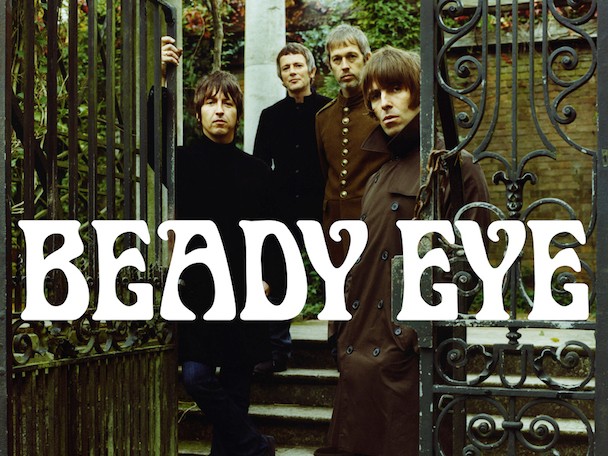
Beady Eye was a band formed by Liam Gallagher of Oasis with former members of Oasis. This song was written by Liam Gallagher and it was on the Different Gear, Still Speeding album released in 2011.
They recycled the Who’s My Generation riff to good effect. They defiantly have that mid-sixties mod thing going on.
Beady Eye released two albums. Different Gear, Still Speeding (#3 UK) in 2011 and BE (#2 UK) in 2013. In 2014 Beady Eye broke up because of the failure to gain popularity in the US according to Liam Gallagher.
Beatles and Stones
Well it beats me mama, I just want to rock and roll Well it beats me mama, I just want to rock and roll I’m gonna stand the test of time Like Beatles and Stones
Well it freaks them mama I’m not doin’ what I’m told Well it freaks them mama You know I can’t be bought and sold I’m gonna stand the test of time Like Beatles and Stones
I’m on my way home, just get back to what’s mine And when I get home, well I’ll be alright
Well it beats me mama, I just want to rock and roll I’m gonna stand the test of time Like Beatles and Stones
I’m on my way home, just get back to what’s mine And when I get home, well I’ll be alright
What’s that you say? Get out the way!
Well it beats me mama, I just want to rock and roll Well it beats me mama, I just want to rock and roll I’m gonna stand the test of time Like Beatles and Stones
Well it freaks them mama
I’m not doin’ what I’m told Well it freaks them mama You know I can’t be bought and sold I’m gonna stand the test of time Like Beatles and Stones
I’m on my way home, just get back to what’s mine And when I get home, well I’ll be alright Well it beats me mama, I just want to rock and roll I’m gonna stand the test of time Like Beatles and Stones
I’m on my way home, just get back to what’s mine And when I get home, well I’ll be alright
Fear in the air, tension everywhere, Unemployment rising fast, the Beatles new record’s a gas
This song has an edge to it that Motown songs lack at times. This was one of the many psychedelic soul records that Norman Whitfield wrote and produced for the Temptations between the late ’60 and early ’70s. The song tries to make sense of the chaos and disorder pervading the times and still relevant today. Norman Whitfield and Barrett Strong wrote the song.
Motown wasn’t known to make a lot of protest records but this one contained lyrics about Nixon’s influence, Vietnam, and drug addiction.
This song peaked at #3 in the Billboard 100 in 1970. The Temptations had 53 songs in the top 100, 15 top ten hits and 4 number 1’s. This song was on their Greatest Hits II album.
From Songfacts
Bob Babbitt of the Motown house band The Funk Brothers recalled to Mojo magazine February 2009 the recording of this track: “Norman Whitfield gave the call to me the night before (the session). So I got to the studio the next day, there was a whole load of guys in there – Uriel Jones, Pistol Allen, Jack Ashford, Eddie Bongo, Earl Van Dyke on clavinet, Johnny Griffith on organ, Joe Messina, Dennis Coffey.
There was no song, just some musical ideas, some chord patterns, and part of a bassline he played us. Norman knew what he wanted though, that it was going to be funky. He’d been listening to a lot of Hendrix, Sly & the Family Stone, that’s the sound he wanted to make the Motown sound.
Putting it together was simple, we just did that one song in the three-hour session and we had enough time left over to eat some BLT sandwiches. We didn’t know it was going to be political, because the lyrics weren’t written when the rhythm track was recorded.
I heard the song four days later. It was a Saturday morning, I was running errands and it came on the automobile radio. They got the songs out quick in those days, especially in Detroit.”
Dennis Coffey used a Vox Tone Bender pedal and an Echoplex effect unit on his guitar to get psychedelic delay. Coffey also used the Echoplex on “In The Rain” by The Dramatics, where it is more pronounced.
This was one of the number of classic R&B and gospel songs performed by Whoopi Goldberg and her choir in the 1993 movie, Sister Act 2 Back in the Habit.
A number of artists have covered this tune, including The Neville Brothers, Tina Turner, Duran Duran and Anthrax. Tina Turner’s version was included on the 1982 LP Music of Quality And Distinction Volume One, a tribute album by the B.E.F, a production team formed by former Human League members Martyn Ware and Ian Craig Marsh who later became Heaven 17 (with lead singer Glenn Gregory). The album involved other artists covering classic songs, mainly done in their electro-pop style with synthesizers and LinnDrums. Martyn Ware recalled to us the moment where Tina and her manager Rodger Davis first walked into the studio. “She said, ‘Martyn, nice to meet you. Where is the band?’ And I pointed at the Fairlight and I said, ‘It’s there.’ Of course, this was the early days of that stuff. They were blown away, really.”
Tina Turner’s recording of the track opened the album and was also issued as a single reaching the Top 5 in Norway. It proved to be an important song in Turner’s career as it led to Capitol Records signing her and her next single, a Martyn Ware produced cover of Al Green’s “Let’s Stay Together,” became a surprise hit on both sides of the Atlantic.
Ball Of Confusion (That’s What the World Is Today)
One, two, one, two, three, four, ow
People moving out, people moving in Why, because of the color of their skin Run, run, run but you sure can’t hide
An eye for an eye, a tooth for a tooth Vote for me and I’ll set you free Rap on, brother, rap on
Well, the only person talking about love thy brother is the preacher And it seems nobody’s interested in learning but the teacher Segregation, determination, demonstration, integration Aggravation, humiliation, obligation to our nation
Ball of confusion Oh yeah, that’s what the world is today Woo, hey, hey
The sale of pills are at an all time high Young folks walking round with their heads in the sky The cities ablaze in the summer time
And oh, the beat goes on
Evolution, revolution, gun control, sound of soul Shooting rockets to the moon, kids growing up too soon Politicians say more taxes will solve everything
And the band played on
So, round and around and around we go Where the world’s headed, nobody knows
Oh, great googa-looga, can’t you hear me talking to you Just a ball of confusion Oh yeah, that’s what the world is today Woo, hey
Fear in the air, tension everywhere Unemployment rising fast, the Beatles new record’s a gas
And the only safe place to live is on an Indian reservation
And the band played on
Eve of destruction, tax deduction, city inspectors, bill collectors Mod clothes in demand, population out of hand, suicide, too many bills Hippies moving to the hills, people all over the world are shouting, end the war
And the band played on
Great googa-looga, can’t you hear me talking to you Sayin’ ball of confusion That’s what the world is today, hey, hey
Let me hear ya, let me hear ya, let me hear ya Sayin’, ball of confusion That’s what the world is today, hey, hey Let me hear ya, let me hear ya, let me hear ya, let me hear ya, let me hear ya Ball of confusion
And you know something’s happening but you don’t know what it is Do you, Mr. Jones?
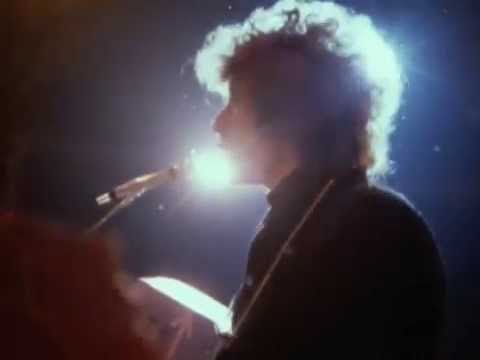
There is a lot of power in just that one line and the song. Not only the lyrics but the intensity that Bob sings it. When it was released everyone wanted to know who Mr. Jones was and people still wonder. Bob Dylan set it straight like only Dylan does with this statement…“I could tell you who Mr. Jones is in my life, but, like, everybody has got their Mr. Jones.”
“Ballad Of A Thin Man” was recorded on August 2, 1965, at the same session as “Just Like Tom Thumb’s Blues,” “Queen Jane Approximately” and “Highway 61 Revisited,” when you get those songs out of a session…you are doing alright.
The song was on the great album Highway 61 Revisited. The album peaked at #3 in the Billboard 100 and #4 in the UK in 1965.
From Songfacts
While speculations remain rampant as to who “Mr. Jones” is and what exactly this song is supposed to mean, there is no definitive answer at this time. The closest thing we’ve seen to an answer from Dylan himself appears in an interview given in Keys to the Rain: The Definitive Bob Dylan Encyclopedia, where Dylan asserts that the “Mr. Jones” in question is a real person not known by this name, who is a pinboy, wears suspenders, and “puts his eyes in his pocket” which might mean that he wears glasses.
Before launching into this song in Japan, 1986, Dylan said, “This is a song I wrote in response to people who ask questions all the time. You just get tired of that every once in a while.”
Of the many references to “Ballad of a Thin Man” found throughout media, are the lines “feel so suicidal, just like Dylan’s Mr. Jones” from the Beatles’ “Yer Blues,” “Mr. Jones is a man who doesn’t know who Mr. Jones is” from Momus’ “Who Is Mr. Jones?,” “I wanna be Bob Dylan, Mr. Jones wishes he was someone just a little more funky.” from Counting Crows’ “Mr. Jones,” and “Mr. Jones won’t lend me a hand” from Country Joe and the Fish’ “Flying High.” While we cannot speculate on the true identity of Mr. Jones, it can be said that the name “Mr. Jones” has come to symbolize for the music world the kind of old-guard “square” who “doesn’t get it,” similar to our modern usage of the mythical “Joe Sixpack.”
This is the song which Bob Dylan and his band played at the Forest Hills concert of 1965 in an attempt to soothe the unruly crowd. As Al Kooper recounts in Backstage Passes and Backstabbing Bastards, “It had a quiet intro, and the kids persisted in yelling and booing all the way through it. Dylan shouted to us to ‘keep playing the intro over and over again until they shut up!’ We played it for a good five minutes – doo do da da, do da de da – over and over until they did, in fact, chill. A great piece of theater. When they were finally quiet, Dylan sang the lyrics to them.”
A 1966 cover of this song (titled “Mr. Jones (Ballad of a Thin Man)”) was the first single for The Grass Roots. At the time, the group was led by P.F. Sloan and Steve Barri. Sloan credits Bob Dylan for sticking by him when many other musicians and industry insiders dissociated themselves from him. Sloan was an up-and-coming songwriter/producer when he wrote the incendiary hit “Eve Of Destruction,” which went to #1 in 1965, but caused a great deal of controversy and made it very difficult for him to find work.
According to Al Kooper, Bob Dylan took from Ray Charles’s “I Believe to My Soul” for “Ballad of a Thin Man.”
In a September 22, 1966 interview in Austin, Texas, a reporter asked Dylan if “Ballad of a Thin Man” was about “a newspaper reporter or something.” Dylan, who spent the entire interview mocking and evading the questions, responded with a single line: “No, it’s just about a fella that came into a truck stop once.”
The opening line, “You walk into the room with your pencil in your hand,” was at one point, “You walk into the room with a hatchet in your hand.” This was revealed in a lyric sheet that is part of Dylan’s archives in Tulsa.
Before and after their speeches, Black Panther founder Huey P. Newton and Bobby Seale regularly played this song over the PA system. Insiders reported they listened to it almost obsessively. The two men felt it was speaking about the black struggle in America.
Ballad of a Thin Man
You walk into the room with your pencil in your hand You see somebody naked and you say, “Who is that man?” You try so hard but you don’t understand Just what you will say when you get home Because something is happening here but you don’t know what it is Do you, Mr. Jones?
You raise up your head and you ask, “Is this where it is?” And somebody points to you and says, “It’s his” And you say, “What’s mine?” and somebody else says, “Well, what is?” And you say, “Oh my God, am I here all alone?” But something is happening and you don’t know what it is Do you, Mr. Jones?
You hand in your ticket and you go watch the geek Who immediately walks up to you when he hears you speak And says, “How does it feel to be such a freak?” And you say, “Impossible!” as he hands you a bone And something is happening here but you don’t know what it is Do you, Mr. Jones?
You have many contacts among the lumberjacks To get you facts when someone attacks your imagination But nobody has any respect, anyway they already expect you to all give a check To tax-deductible charity organizations
Ah, you’ve been with the professors and they’ve all liked your looks With great lawyers you have discussed lepers and crooks You’ve been through all of F. Scott Fitzgerald’s books You’re very well-read, it’s well-known But something is happening here and you don’t know what it is Do you, Mr. Jones?
Well, the sword swallower, he comes up to you and then he kneels He crosses himself and then he clicks his high heels And without further notice, he asks you how it feels And he says, “Here is your throat back, thanks for the loan” And you know something is happening but you don’t know what it is Do you, Mr. Jones?
Now, you see this one-eyed midget shouting the word “Now” And you say, “For what reason?” and he says, “How” And you say, “What does this mean?” and he screams back, “You’re a cow” “Give me some milk or else go home” And you know something’s happening but you don’t know what it is Do you, Mr. Jones?
Well, you walk into the room like a camel, and then you frown You put your eyes in your pocket and your nose on the ground There ought to be a law against you comin’ around You should be made to wear earphones ‘Cause something is happening and you don’t know what it is Do you, Mr. Jones?
In the next few days, I will be featuring some songs that make references to The Beatles. either separately or as a band. Today will be Life On Mars?. They will be in no order…
Now the workers have struck for fame ‘Cause Lennon’s on sale again
Life On Mars is my absolute favorite song by David Bowie. Not only favorite by Bowie but one of my favorites ever. Both the abstract lyrics and music are perfect. This song was on the Hunky Dory album released in 1971. The song peaked at #3 in the UK charts in 1972.
The piano on the recording was played by Rick Wakeman of Yes.
Bowie came up with this after he was asked to put English lyrics to a French song called “Comme d’habitude.” Paul Anka bought the rights to the original French song and rewrote it in English as “My Way,” later made famous by Frank Sinatra. “Life On Mars?” uses practically the same chords as “My Way” and the Hunky Dory liner notes state that the song is “Inspired by Frankie.”
David Bowie about the song: A sensitive young girl’s reaction to the media” “I think she finds herself disappointed with reality… that although she’s living in the doldrums of reality, she’s being told that there’s a far greater life somewhere, and she’s bitterly disappointed that she doesn’t have access to it.”
From Songfacts
The song is about a girl who goes to watch a movie after an argument with her parents. The film ends with the line “Is there life on Mars?”
The lyrics also contain imagery suggesting the futility of man’s existence, a topic Bowie used frequently on his early albums.
In 2008, Bowie recalled writing this song to the Mail on Sunday: “This song was so easy. Being young was easy. A really beautiful day in the park, sitting on the steps of the bandstand. ‘Sailors bap-bap-bap-bap-baaa-bap.’ An anomic (not a ‘gnomic’) heroine. Middle-class ecstasy. I took a walk to Beckenham High Street to catch a bus to Lewisham to buy shoes and shirts but couldn’t get the riff out of my head. Jumped off two stops into the ride and more or less loped back to the house upon Southend Road. The workspace was a big empty room with a chaise lounge; a bargain-price art nouveau screen (‘William Morris,’ so I told anyone who asked); a huge overflowing freestanding ashtray and a grand piano. Little else. I started working it out on the piano and had the whole lyric and melody finished by late afternoon. Nice. Rick Wakeman [of prog band, Yes] came over a couple of weeks later and embellished the piano part and guitarist Mick Ronson created one of his first and best string parts for this song which now has become something of a fixture in my live shows.”
The band Bush used the line, “Mickey Mouse has grown up a cow” as a tribute to Bowie in their song “Everything Zen.”
This was released as a single in 1973, two years after it appeared on Hunky Dory.
The song was recorded in Portuguese by Seu Jorge for the soundtrack of the 2004 film The Life Aquatic With Steve Zissou. Anni-Frid Lyngstad, formerly of ABBA, recorded a Swedish version titled “Liv pa Mars?”
If you listen closely to the end of the original recording of this song, you can hear a telephone ringing.
The Ukulele Orchestra of Great Britain often performs this song at live shows. They claim it is a “song about plagiarism” and that it “wasn’t our idea.” The first verse is played straight as Jonty Bankes sings. As Bankes sings the second verse, George Hinchcliffe sings “My Way” until the bridge (“But the film is a sadd’ning bore”) when Peter Brooke-Turner sings lines from “For Once in My Life.” Then through the chorus, Hester Goodman sings from “Born Free” while Dave Suich sings The Who’s “Substitute.” Watch it here. >>
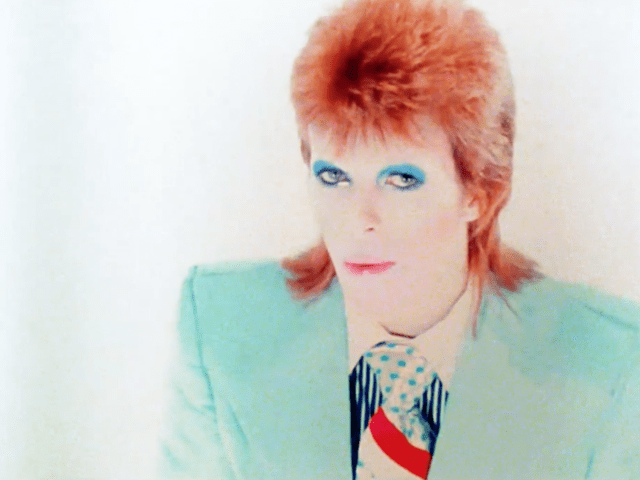
Mick Rock directed the song’s official video. It was filmed backstage at Earls Court in London in 1973. It features Bowie in a turquoise suit and makeup, performing the song against a white backdrop.
The BBC television series, Life On Mars, was named after this, while its sequel, Ashes to Ashes, was also named after the Bowie song of the same name.
Green Day frontman Billie Joe Armstrong has stated he would like this song to be played at his funeral.
This was featured on the first episode of the TV series American Horror Story: Freak Show, where it was sung by Jessica Lange’s character. The series is set in 1952 but used music recorded much later, similarly to how Baz Luhrmann incorporated contemporary tunes into the films Moulin Rouge and The Great Gatsby.
Ryan Murphy, who created the show, says that he looked for music by artists who were oddities themselves, and proud of it. Bowie fit the bill and approved the use of the song, as did Fiona Apple, who allowed her song “Criminal” to be used in the next episode.
Life On Mars
It’s a God-awful small affair To the girl with the mousy hair But her mummy is yelling no And her daddy has told her to go
But her friend is nowhere to be seen Now she walks through her sunken dream To the seat with the clearest view And she’s hooked to the silver screen
But the film is a saddening bore For she’s lived it ten times or more She could spit in the eyes of fools As they ask her to focus on
Sailors fighting in the dance hall Oh man look at those cavemen go It’s the freakiest show Take a look at the lawman Beating up the wrong guy Oh man wonder if he’ll ever know He’s in the best selling show Is there life on Mars?
It’s on America’s tortured brow That Mickey Mouse has grown up a cow Now the workers have struck for fame ‘Cause Lennon’s on sale again See the mice in their million hordes From Ibiza to the Norfolk Broads Rule Britannia is out of bounds To my mother, my dog, and clowns But the film is a saddening bore ‘Cause I wrote it ten times or more It’s about to be writ again As I ask you to focus on
Sailors fighting in the dance hall Oh man look at those cavemen go It’s the freakiest show Take a look at the lawman Beating up the wrong guy Oh man wonder if he’ll ever know He’s in the best selling show Is there life on Mars?
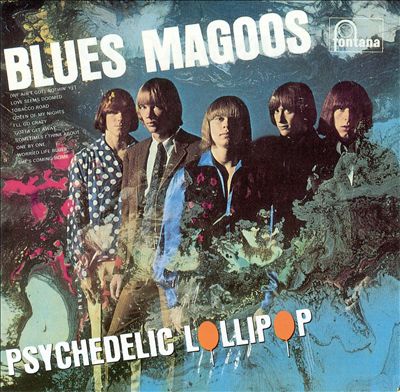
I remember this song in Easy Rider from the cool bass line. The Blues Magoos were a psychedelic rock band formed in 1964 as the “The Trenchcoats” in the Bronx, New York. This song came off of the album Psychedelic Lollipop (Great name) in 1967. The song peaked at #5 in 1967 in the Billboard 100 and the album peaked at 21 in the same year.
By 1972 the Blues Magoos name was retired, although the group reunited for live shows in the late 2000s
The Spectres…soon to be Status Quo also covered the song in 1967.
From Songfacts
Blues Magoos were a Psychedelic Rock group from The Bronx who was part of a New York City music scene that included The Lovin’ Spoonful and The Youngbloods. “(We Ain’t Got) Nothin’ Yet” was their only hit, reaching its chart peak the first week of 1967. The band, led by lead singer Emil “Peppy Castro” Thielhem, was a huge influence on Syd Barrett and his band Pink Floyd. Thielhem later became the lead singer of the band Balance.
This song occupies an interesting little niche in music history: somewhere between Acid and Punk Rock, with a little Mothers Of Invention “Freak Out” mixed in. The band is quite boastful in the song, declaring, “Nothin’ can hold us and nothin’ can keep us down, and someday our names will be spread all over town.” Of course, they ended a one-hit-wonder, but the arrogance was part of a display that included big, stylish hair and electric blue/flashing light suits. They were hard to miss when they performed the song on various TV shows.
We Aint Got Nothin’ Yet
One day you’re up and the next day you’re down You can’t face the world with your head to the ground The grass is always greener on the other side, they say So don’t worry, boys, life will be sweet some day Oh, oh, oh, oh Oh, oh, oh, oh We made enough mistakes But you know we got what it takes
Oh, we ain’t got nothin’ yet No, we ain’t got nothin’ yet
Nothin’ can hold us and nothin’ can keep us down And someday our names will be spread all over town We can get in while the getting is good So make it on your own, yeah, you know that you could Oh, oh, oh, oh Oh, oh, oh, oh We got to make the break ‘Cause we got too much at stake
Oh, we ain’t got nothin’ yet No, we ain’t got nothin’ yet
We made enough mistakes But you know we got what it takes
Oh, we ain’t got nothin’ yet No, we ain’t got nothin’ yet
I haven’t featured many garage rock songs in a while so I wanted to include this one. There was such an explosion of garage rock bands in the 60s and some were lucky enough to be heard if only for a brief while. They made their mark on rock music and their music is still played and still inspire bands today.
Roky Erickson co-founded the 13th Floor Elevators in late 1965 in Austin Texas. He and bandmate Tommy Hall were the main songwriters. Early in her career, singer Janis Joplin considered joining the Elevators, but Family Dog’s Chet Helms persuaded her to go to San Francisco, California instead where she joined Big Brother and the Holding Company.
I’ve noticed a lot of these bands have singers who have a sound like a young Mick Jagger or young Van Morrison with Them…
Many of these bands were punk long before punk.
This song peaked at #55 in the Billboard 100 in 1966. This would be their only charting single.
You’re Gonna Miss Me
Oh yeah!
Ahh!
You’re gonna wake up one morning as the sun greets the dawn.
You’re gonna wake up one morning as the sun greets the dawn.
You’re gonna look around in your mind, girl, you’re gonna find that
I’m gone.
You didn’t realize,
You didn’t realize,
You didn’t realize,
You didn’t realize,
You didn’t realize.
Oh! you’re gonna miss me, baby.
Oh! you’re gonna miss me, baby.
Oh! you’re gonna miss me, child, yeah, yeah.
I gave you the warning,
But you never heeded it.
How can you say you miss my lovin,
When you never needed it?
Yeah! Yeah! Ow!
You’re gonna wake up wonderin’,
Find yourself all alone,
But what’s gonna stop me, baby?
I’m not comin’ home.
I’m not comin’ home.
I’m not comin’ home.
Oh, oh, oh, yeah!
The main thing I like about the song is the guitar. It has a slight Chuck Berry feel to it and I like the fills the guitar player throws in. The band signed with Warner Brothers and the label wanted a soft country sound like the Eagles but the band refused to change it’s raw style.
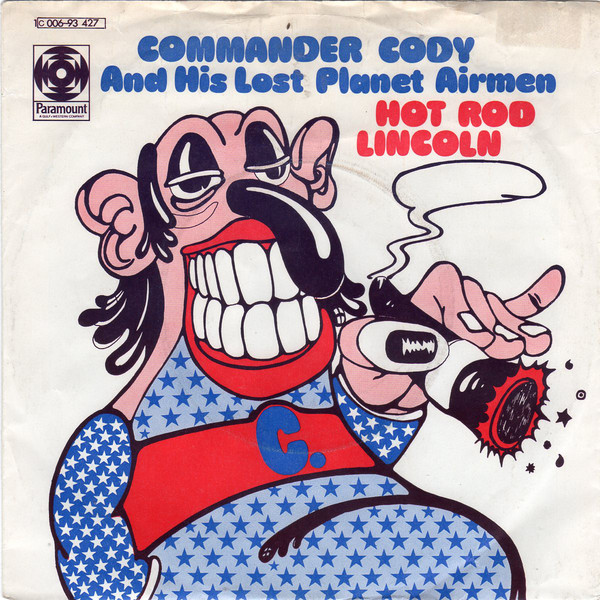
Hot Rod Lincoln was originally written by Charlie Ryan. It was first recorded and released by Charlie Ryan and The Livingston Brothers in 1955. This was the only hit for Commander Cody and His Lost Planet Airmen, who were a County-Rock group formed at the University of Michigan. Commander Cody is the lead singer and piano player George Frayne.
Commander Cody and His Lost Planet Airmen are still out there touring now.
The song peaked at #9 in the Billboard 100 and #7 in Canada in 1972.
From Songfacts
It tells the second half of the story started by the song “Hot Rod Race,” recorded in 1951 by Arkie Shibley and his Mountain Dew Boys, as referenced by the opening: “Have you heard this story of the Hot Rod Race, when Fords and Lincolns was settin’ the pace? That story is true, I’m here to say; I was drivin’ that Model A.” While the song tells of a race between a Lincoln and a Cadillac on the Grapevine grade in California, the actual location was on the Lewiston grade in Idaho.
The most iconic line from the song is: “Son, you’re gonna drive me to drinkin’ if you don’t stop drivin’ that Hot Rod Lincoln!”
Was there really a “hot-rod Lincoln?” Yes and no. Actually, it was a rebuilt car with the body of a Model “A” coupe set into the frame of a 1941 Lincoln, along with a “hopped-up” Lincoln engine block. However, at the time of this song’s writing, Ryan built a second car, this time with a chop-shop melding of a 1930 Model “A” Ford coupe and a wrecked 1948 Lincoln. It is this second restored car with which has Ryan toured.
Both the songs “Hot Rod Lincoln” and “Hot Rod Race” are defining anthems of the hot rod community and 1950s car song culture. “Hot Rod Lincoln” has appeared in the soundtracks to The Beverley Hillbillies and MTV’s Beavis and Butthead.
Hot Rod Lincoln
My pappy said, “Son, you’re gonna’ drive me to drinkin’
If you don’t stop drivin’ that Hot Rod Lincoln.”
Have you heard this story of the Hot Rod Race
When Fords and Lincolns was settin’ the pace.
That story is true, I’m here to say
I was drivin’ that Model A.
It’s got a Lincoln motor and it’s really souped up.
That Model A Vitimix makes it look like a pup.
It’s got eight cylinders; uses them all.
It’s got overdrive, just won’t stall.
With a 4-barrel carb and a dual exhaust,
With 4.11 gears you can really get lost.
It’s got safety tubes, but I ain’t scared.
The brakes are good, tires fair.
Pulled out of San Pedro late one night
The moon and the stars was shinin’ bright.
We was drivin’ up Grapevine Hill
Passing cars like they was standing still.
All of a sudden in a wink of an eye
A Cadillac sedan passed us by.
I said, “Boys, that’s a mark for me!”
By then the taillight was all you could see.
Now the fellas was ribbin’ me for bein’ behind,
So I thought I’d make the Lincoln unwind.
Took my foot off the gas and man alive,
I shoved it on down into overdrive.
Wound it up to a hundred-and-ten
My speedometer said that I hit top end.
My foot was blue, like lead to the floor.
That’s all there is and there ain’t no more.
Now the boys all thought I’d lost my sense
And telephone poles looked like a picket fence.
They said, “Slow down! I see spots!
The lines on the road just look like dots.”
Took a corner; sideswiped a truck,
Crossed my fingers just for luck.
My fenders was clickin’ the guardrail posts.
The guy beside me was white as a ghost.
Smoke was comin’ from out of the back
When I started to gain on that Cadillac.
Knew I could catch him, I thought I could pass.
Don’t you know by then we’d be low on gas?
We had flames comin’ from out of the side.
Feel the tension. Man! What a ride!
I said, “Look out, boys, I’ve got a license to fly!”
And that Caddy pulled over and let us by.
Now all of a sudden she started to knockin’,
And down in the dips she started to rockin’.
I looked in my mirror; a red light was blinkin’
The cops was after my Hot Rod Lincoln!
They arrested me and they put me in jail.
And called my pappy to throw my bail.
And he said, “Son, you’re gonna’ drive me to drinkin’
If you don’t stop drivin’ that hot rod Lincoln!”
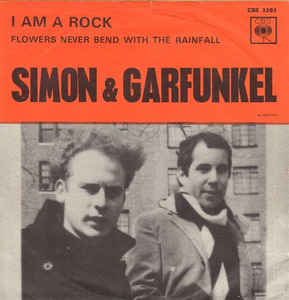
I first found this song on Simon and Garfunkel’s greatest hits. At times everyone could relate to this song. Beautiful melody along with lyrics about someone shutting themselves from life. The verse I’ve built walls, A fortress deep and mighty, That none may penetrate, I have no need of friendship, friendship causes pain It’s laughter and it’s loving I disdain, I am a rock, I am an island… says it all.
The song peaked at #3 in the Billboard 100, #6 in Canada, #2 in New Zealand, and #17 in the Uk in 1966.
In the UK, this was released three times in a one year span: first as the original Paul Simon single in 1965, then in the summer of 1966, it was released as an EP and again as a single. The song was very popular there in 1966, but the chart position suffered because the sales of the single were diluted by multiple releases.
From Songfacts
This song is about a recluse locking himself away from the world. When he says, “I am a rock, I am an island,” he means away from everything and everyone. It’s far from autobiographical, as Paul Simon was doing his best to write a hit song with this effort, and didn’t write it for himself. The use of the word “rock” is interesting in that Simon considered himself a folk singer, and didn’t associate himself with rock music. In the vast majority of songs with the word “rock” in the lyrics, it is used to imply music or lifestyle, but for Simon, it was just a piece of stone. He did the same thing in 1973 for his song “Loves Me Like A Rock.”
This song has one of more perplexing histories of recordings and releases. Written by Paul Simon before he hit it big as a musician, the song was offered to the duo Chad and Jeremy, who turned it down. Simon then recorded it himself for his UK solo album (released in America 1981) The Paul Simon Songbook, which was released in the UK in August 1965. The single was issued in September but didn’t chart despite a performance by Simon on the show Ready, Steady. Go!
Simon was going solo at this time because the Simon & Garfunkel 1964 debut album Wednesday Morning, 3 A.M. had stiffed, and the duo split up. Late in 1965, the producer Tom Wilson overdubbed and remixed a track from that album, “The Sound Of Silence,” and it became a huge hit. Paul Simon and Art Garfunkel were summoned back to the studio, where they recorded the singles “I Am A Rock” and “Homeward Bound,” which were included on their Sound of Silence album. These songs were recorded with producer Bob Johnston at one of the Columbia Records studios in New York City, and now released with a more contemporary sound, “I Am A Rock” became a hit for the duo.
The guitarist on the Simon & Garfunkel hit version of this song was Ralph Casale, who was a top session player in the ’60s. He remembers organist Al Kooper and drummer Bobby Gregg – both associated with Bob Dylan – also performing on the song. Describing the sessions, Ralph told us: “The band was booked from 7:00 p.m. into the wee hours of the morning. I was given a lead sheet for ‘I Am A Rock’ with just chords and asked to play the electric twelve string guitar. The producer wanted a sound similar to the Byrds. It was important that session players became familiar with the current hits because many times producers describe the style they want by referring to well known groups. Paul Simon sang the figure he wanted me to play between verses and asked me to play it in thirds. The rest was left to me. ‘Homeward Bound’ was on that same date.”
I Am A Rock
A winter’s day In a deep and dark December I am alone Gazing from my window to the streets below On a freshly fallen silent shroud of snow I am a rock I am an island
I’ve built walls A fortress deep and mighty That none may penetrate I have no need of friendship, friendship causes pain It’s laughter and it’s loving I disdain I am a rock I am an island
Don’t talk of love But I’ve heard the words before It’s sleeping in my memory I won’t disturb the slumber of feelings that have died If I never loved I never would have cried I am a rock I am an island
I have my books And my poetry to protect me I am shielded in my armor Hiding in my room, safe within my womb I touch no one and no one touches me I am a rock I am an island
And a rock feels no pain And an island never cries
This song was off the 2012 album Temptest. Bob wrote this song with Robert Hunter, the Grateful Dead lyricist. The album peaked at #3 in the Billboard Album Charts. My son is who called my attention to this one. Unlike some other older performers, Bob somehow stays relevant to the times.
The memorable video is directed by Nash Edgerton. Bob looks just really cool in this video as he leads some kind of gang.
The song refers to the Duquesne train service that used to run between New York Penn and Pittsburgh Penn Stations, which was named after the 18th century Fort Duquesne in the latter city. That route is now served by the daily Amtrack Pennsylvanian service.
From Songfacts
The bluesy song The lyrics show Dylan’s distaste at times a changing’. “Listen to that Duquesne whistle blowing,” he demands. “Blowing like it’s gonna sweep my world away.”
The Nash Edgerton-directed music video is set on the streets of downtown Los Angeles. Dylan appears briefly throughout the clip.
The line, “I’m gonna stop at Carbondale and keep on going” refers to Carbondale, Pennsylvania, in the northeast corner of the state. Like all of the region, it’s now a small rust belt town, but at the time when the Duquesne train line was running, Carbondale was fat off the anthracite coal industry.
Duquesne Whistle
Listen to that Duquesne whistle blowing Blowing like it’s gonna sweep my world away I’m gonna stop at Carbondale and keep on going That Duquesne train gon’ rock me night and day
You say I’m a gambler, you say I’m a pimp But I ain’t neither one
Listen to that Duquesne whistle blowing Sound like it’s on a final run
Listen to that Duquesne whistle blowing Blowing like she never blowed before Little light blinking, red light glowing Blowing like she’s at my chamber door
You smiling through the fence at me Just like you’ve always smiled before
Listen to that Duquesne whistle blowing Blowing like she ain’t gon’ blow no more
Can’t you hear that Duquesne whistle blowing? Blowing like the sky’s gonna blow apart You’re the only thing alive that keeps me going You’re like a time bomb in my heart
I can hear a sweet voice steadily calling Must be the mother of our Lord
Listen to that Duquesne whistle blowing Blowing like my woman’s on board
Listen to that Duquesne whistle blowing Blowing like it’s gon’ blow my blues away You’re a rascal, I know exactly where you’re going I’ll lead you there myself at the break of day
I wake up every morning with that woman in my bed Everybody telling me she’s gone to my head
Listen to that Duquesne whistle blowing Blowing like it’s gon’ kill me dead
Can’t you hear that Duquesne whistle blowing? Blowing through another no good town
The lights on my native land are glowing I wonder if they’ll know me next time ’round I wonder if that old oak tree’s still standing That old oak tree, the one we used to climb
Listen to that Duquesne whistle blowing Blowing like she’s blowing right on time
Some songs make you think about social issues, some make you feel good, some make you sad, some make you think of certain people…and some take you back to a place in time when you first remember it. This one does the later for me. It’s not Elton’s best single whatsoever but I heard it a lot later on when I was 13 and I’m 13 again when I hear it and it’s 1980. I must have heard it before many times but it took hold for some reason then.
This came along in the fifties revival that happened in the 1970s. This is not a type of song I would normally like but it transports me back and I like it.
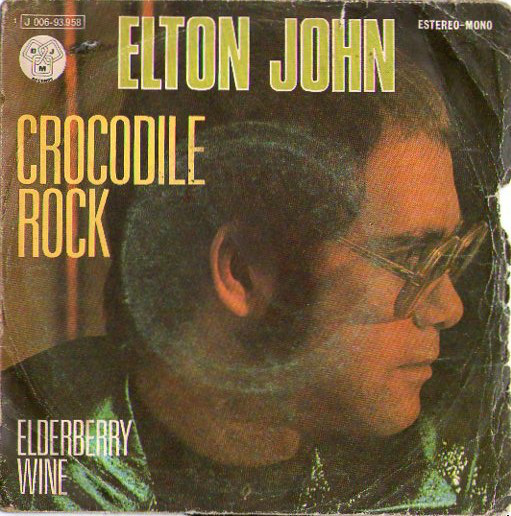
Crocodile Rock was a fifties sounding single that was a massive hit. It peaked in 1972 at #1 in the Billboard 100, #5 in the UK, #1 in Canada, #1 in New Zealand.
Elton and Bernie Taupin wrote the song.
Bernie Taupin “a strange dichotomy because I don’t mind having created it, but it’s not something I would listen to.”
From Songfacts
This tells the story of a guy in the ’50s and ’60s who frequented a restaurant where the patrons loved an obscure dance called the Crocodile Rock. Because of all the events that happened in the ’60s, however, this unknown little dance forever vanished into history and no one cared anymore. Even his girlfriend, who also enjoyed “burning up to the Crocodile Rock,” left him. It’s a catchy little song with really sad lyrics.
There is a distinct ’50s musical theme in this song. Elton said that it contains flavors of a lot of his favorite early rock songs, including “Little Darlin’,” “At The Hop” and “Oh Carol,” as well as songs by The Beach Boys and Eddie Cochran. The title is a play on the Bill Haley song “See You Later Alligator” – Haley’s “Rock Around The Clock” even gets a mention, as that’s what the other kids were listening to while our hero was doing the Crocodile Rock.
This was the first of many #1 singles by Elton John in the US. His first in the UK came in 1976 with Kiki Dee (“Don’t Go Breaking My Heart”). His first solo #1 in the UK was “Sacrifice” in 1990.
The falsetto hook from Pat Boone’s 1962 hit, “Speedy Gonzales” has some similar “La La”s, and that song’s writers spoke out, accusing Elton of plagiarism. There was no legal action taken, and Elton has copped to the influence, saying “Crocodile Rock” was “a really blatant homage to ‘Speedy Gonzales’ and all the great ’50s and ’60s records that we used to love.”
A precursor to this song is Elton’s 1970 single “Rock And Roll Madonna,” which pays tribute to the musical form. “This time I wanted to do something that was a send-up of the early ’60s rather than an out-and-out rocker,” he told Beat Instrumental. I wanted it to be a tribute to all those people I used to go and see as a kid. That’s why I used the Del Shannon-type vocals and that bit from Pat Boone’s ‘Speedy Gonzales.'”
Elton added: “We also tried to get the worst organ sound possible… something like Johnny and The Hurricanes used to manage to produce. This type of song is actually a very hard thing to write because the temptation is to try too hard and go berserk.”
Don McLean has mentioned that this is similar to his hit “American Pie,” which came out the previous year. Both songs are about young people in the ’50s obsessed with rock n’ roll, but disappointed when the music “dies.” Both songs also feature a Chevy. Elton admits the song is highly derivative because it’s about the things he grew up with. In Elton John: The Definitive Biography, Elton is quoted as saying: “I wanted it to be a record about all the things I grew up with. Of course, it’s a rip-off.”
Elton performed this on The Muppet Show when he appeared on a Season Two episode in 1977. A very popular song with kids, it made for a great opening number, with Elton performing in a swamp with a crocodile chorus.
This song helped send the Don’t Shoot Me I’m Only the Piano Player album to #1 on both sides of the Atlantic. It was Elton’s first #1 in the UK, but Honky Chateau went to #1 in the US earlier that year.
A few “firsts” are attributed to both the song and album. It was the first song released as a single on the MCA label (catalog #40000) after MCA dissolved its Uni (Elton John’s previous label), Decca, Kapp and Coral labels. It was also MCA’s first #1 song as well as Elton John’s first #1. >>
There is a Crocodile Rock in The Philippines, which from the right angle, looks like an enormous croc.
Partial inspiration for this song is the Australian band Daddy Cool and their hit single “Eagle Rock,” which Elton discovered on his 1972 tour to Australia. In the artwork for the Don’t Shoot Me I’m Only the Piano Player packaging, there is a shot of Bernie Taupin wearing a badge that says “Daddy Who?”
The sheer popularity of this song caused a backlash against it in some circles – notably disc jockeys who had to play it over and over. Stations used to determine what songs they would play by using “auditorium testing,” where listeners were gathered into a big room and played hooks from different songs, which they would then rate. This song always got very high marks, which embedded it onto playlists and drove some DJs to hate it.
The odd thing is that Elton has a very deep catalog filled not just with meaningful hits, but with more obscure songs that many listeners enjoy. “It was just a one-off thing,” Elton said of “Crocodile Rock,” adding, “It became a huge hit record, and in the long run, it became a negative for me.”
Elton has described this song as “disposable pop.” Bernie Taupin gave his thoughts in a 1989 interview with Music Connection. Said Taupin: “I don’t want people to remember me for ‘Crocodile Rock.’ I’d much rather they remember me for songs like ‘Candle In The Wind’ and ‘Empty Garden,’ songs that convey a message. Well, they don’t really need to convey a message, as long as they can convey a feeling. But there are things like ‘Crocodile Rock,’ which was fun at the time, but it was pop fluff. It was like, ‘Okay, that was fun for now, throw it away, and here’s the next one. So there’s a certain element of our music that is disposable, but I think you’ll find that in anybody’s catalog.”
One of Elton’s more memorable performances of this song took place on September 7, 1973 at the Hollywood Bowl. As Elton played from his piano, a few feet behind him, sound engineer Clive Franks played the electric piano while wearing an enormous crocodile head.
The Baha Men recorded a new version of this for the film The Crocodile Hunter: Collision Course with new lyrics that described the life of Steve Irwin. Ironically, “Suzie” (the girl described in this song) is the name of Steve Irwin’s dog, who appears frequently on the series.
Elton John – Crocodile Rock
I remember when rock was young Me and Suzie had so much fun Holding hands and skimming stones Had an old gold Chevy and a place of my own But the biggest kick I ever got Was doing a thing called the Crocodile Rock While the other kids were Rocking Round the Clock We were hopping and bopping to the Crocodile Rock
Well Crocodile Rocking is something shocking When your feet just can’t keep still I never knew me a better time and I guess I never will Oh Lawdy mama those Friday nights When Suzie wore her dresses tight And the Crocodile Rocking was out of sight
But the years went by and the rock just died Suzie went and left us for some foreign guy Long nights crying by the record machine Dreaming of my Chevy and my old blue jeans But they’ll never kill the thrills we’ve got Burning up to the Crocodile Rock Learning fast as the weeks went past We really thought the Crocodile Rock would last
Well Crocodile Rocking is something shocking When your feet just can’t keep still I never knew me a better time and I guess I never will Oh Lawdy mama those Friday nights When Suzie wore her dresses tight And the Crocodile Rocking was out of sight
I had this post started since last year but never posted. I saw another blog yesterday mentioning Leon’s passing at 69 years old on Thursday. I never bought a record by him but I loved his songs and his appearances on Saturday Night Live in the 70s. This was back when Lorne Michaels would actually take a chance and let someone play that wasn’t on the charts or “hot.”
I have a friend…Chris who would play his songs on guitar and sometimes goof around on popular songs in Leon’s style. Redbone was one of a kind and a part of my childhood growing up.
He was a hell of a guitar player that played in a twenties – forties jazz and blues style along with his deep voice.
This was on Leon’s website…
“It is with heavy hearts we announce that early this morning, May 30th 2019, Leon Redbone crossed the delta for that beautiful shore at the age of 127. He departed our world with his guitar, his trusty companion Rover, and a simple tip of his hat. He’s interested to see what Blind Blake, Emmett, and Jelly Roll have been up to in his absence, and has plans for a rousing sing along number with Sári Barabás. An eternity of pouring through texts in the Library of Ashurbanipal will be a welcome repose, perhaps followed by a shot or two of whiskey with Lee Morse, and some long overdue discussions with his favorite Uncle, Suppiluliuma I of the Hittites. To his fans, friends, and loving family who have already been missing him so in this realm he says, ” Oh behave yourselves. Thank you…. and good evening everybody.”
Please Don’t Talk About Me When I’m Gone
Please don’t talk about me when I’m gone, oh honey
Though our friendship ceases from now on
If you can’t say anything real nice, it’s better
Not to talk at all, is my advice
You go your way I’ll go mine, best we do
Here’s a kiss, I hope that this brings lots of luck to you
Makes no difference, how I carry on
Please don’t talk about me when I’m gone
You go your way I’ll go mine, best we do
Here’s a kiss, I hope that this brings lots of luck to you
Makes no difference, how I carry on
Please don’t talk about me when I’m gone
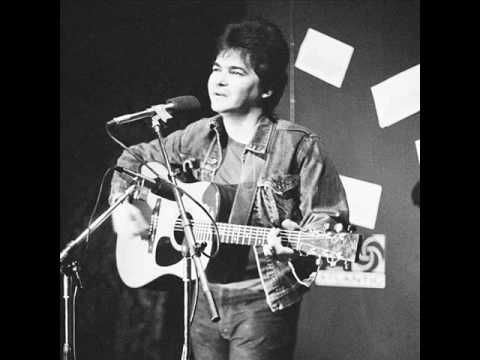
It’s hard not to like John Prine. This is a brilliant song…for him to think of this and write about it shows he thinks outside of the box. The song is included on the album “Sweet Revenge” released in 1973… it peaked at #135.
I have a one John Prine story. A friend of mine named Chris went to see John Prine and Arlo Guthrie in the ’90s and met John in the parking lot after the concert. Prine was really talkative and asked Chris if he could boost his car off…which, of course, he did. Chris told me he was really down to earth and a genuinely nice guy.
Dear Abby for those of you who may be too young to remember was an American Advice Columnist. Her real name was Pauline Phillips who went under the pen name “Abigail Van Buren”. people would write in and tell her their troubles and she would answer back in the newspaper. Her daughter, Jeanne Phillips, now owns the legal rights to the pen name.
From Songfacts
Prine’s song about an assortment of miserable people who write letters to the renowned advice columnist was recorded during a live gig at New York’s State University after a studio session didn’t pan out. Prine explained in an interview with Performing Songwriter: “The studio version of that was cut with a band, and it was real stiff and humorless. We cut it once, live, and that was it. That was the power of the song, in the way people would turn their heads the minute I’d get to the first verse, the first chords. That was the reason we used the live version.”
Prine found inspiration when he happened upon a “Dear Abby” column while on a trip to Rome, Italy. He said:
“I was in Europe and my first wife and I stopped in Rome for the day. I wanted a newspaper and all they had was the International Herald Tribune which is all the tragic news in the world crammed into six pages with no sports results and no comics. And yet here’s ‘Dear Abby.’ She was the only relief in the whole paper. and that’s where I wrote most of the song – in Rome, Italy that is.”
“Years later somebody took the verse about the guy whose stomach makes noises, wrote it just out of kilter enough so it didn’t rhyme, and send it to ‘Dear Abby.’ And she answered it in her column. She suggested that he seek professional help. She got loads of letters from people who knew the song and told her she’d been had.”
Dear Abby
Dear Abby, dear Abby My feet are too long My hair’s falling out and my rights are all wrong My friends they all tell me that I’ve no friends at all Won’t you write me a letter, won’t you give me a call Signed bewildered
Bewildered, bewildered
You have no complaint You are what your are and you ain’t what you ain’t So listen up buster, and listen up good Stop wishing for bad luck and knocking on wood
Dear Abby, dear Abby My fountain pen leaks My wife hollers at me and my kids are all freaks Every side I get up on is the wrong side of bed If it weren’t so expensive I’d wish I were dead Signed unhappy
Unhappy, unhappy
Dear Abby, dear Abby You won’t believe this But my stomach makes noises whenever I kiss My girlfriend tells me it’s all in my head But my stomach tells me to write you instead Signed noise-maker
Noise-maker, noise-maker
Dear Abby, dear Abby Well I never thought That me and my girlfriend would ever get caught We were sitting in the back seat just shooting the breeze With her hair up in curlers and her pants to her knees Signed just married
I’ve always liked this song and album. I saw them on this tour and it would be the only time I got to see Tom Petty and the Heartbreakers. The song is a cautionary tale about stardom and the record business. The album of the same name peaked at #13 in 1991. This was the first Heartbreakers album since Let Me Up (I’ve Had Enough) in 1987. Tom Petty released his solo album Full Moon Fever two years before this.
The song peaked at #4 in the Billboard Album Rock Tracks.
The video to the song was well made. Petty later commented that he was approached about making a movie out of the song. The video not only featured Johnny Depp but also Faye Dunaway.
From Songfacts
“‘Into The Great Wide Open’ had a lot of dark humor,” Tom Petty told Mojo in 2009.
The song tells the story of a guy named Eddie who moves to Los Angeles, meets a girl and becomes a rock star. On their journey, there is a struggle, but always a possibility, as the future is wide open. Eddie plays from the heart, and it pays off with a record deal and a hit. But once he’s achieved his dream, the sky is no longer the limit, as his A&R man spouts that industry cliché, “I don’t hear a single.”
Petty, who knows a thing or two about record company machinations, leaves it to the listener to decide what happens next. There’s a good chance it doesn’t go so well for Eddie.
In the music video, Johnny Depp stars as Eddie. It was directed by Julien Temple and also features Faye Dunaway as Eddie’s manager, Gabrielle Anwar as his girlfriend, and appearances by Matt LeBlanc, Terence Trent D’Arby and Chynna Phillips. As in many of his videos, Tom Petty opens the book to reveal the story. In this one, Petty also plays the roadie Bart, the tattoo artist, and the reporter.
In the video, Eddie becomes a boorish narcissist and his career tanks. Dropped by his label, he goes into the same tattoo parlor where he started and sees himself inking up a newcomer (LeBlanc).
This was the first music video in which Johnny Depp starred. He was a big deal at the time (it was after Edward Scissorhands but before What’s Eating Gilbert Grape), and Petty remarked, “I never met so many women in my life as when we had Johnny Depp in this video.”
Depp later featured in videos for Lemonheads (“It’s A Shame About Ray”), Johnny Cash (“God’s Gonna Cut You Down”) and Alice Cooper (“I’ll Bite Your Face Off”). He also played guitar on songs by a number of high-profile artists, including Oasis (“Fade In-Out”), Patti Smith (“Banga”) and Paul McCartney (“My Valentine”).
This was used in the 2013 Family Guy episode “12 and a Half Angry Men.”
Into The Great Wide Open
Eddie waited till he finished high school He went to Hollywood, got a tattoo He met a girl out there with a tattoo too The future was wide open
They moved into a place they both could afford He found a nightclub he could work at the door She had a guitar and she taught him some chords The sky was the limit
Into the great wide open Under them skies of blue Out in the great wide open A rebel without a clue
The papers said Ed always played from the heart He got an agent and a roadie named Bart They made a record and it went in the charts The sky was the limit
His leather jacket had chains that would jingle They both met movie stars, partied and mingled Their A&R man said “I don’t hear a single” The future was wide open
Into the great wide open Under them skies of blue Out in the great wide open A rebel without a clue
Into the great wide open Under them skies of blue Into the great wide open A rebel without a clue
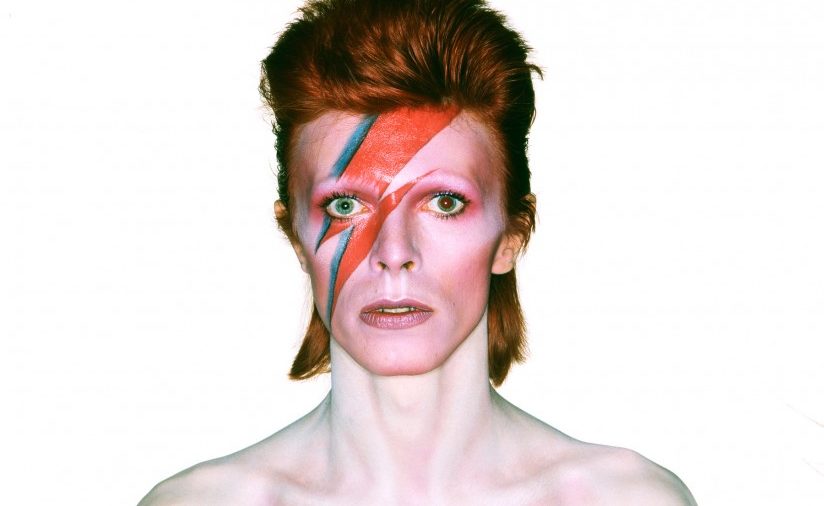
What hooked me on this song was the guitar riff played by Mick Ronson. Bowie said that the song is “about the ultimate rock superstar destroyed by the fanaticism he creates.”
The song is off of The Rise and Fall of Ziggy Stardust and the Spiders from Mars and it peaked at #75 in the Billboard 100 in 1973 and #5 in the UK in 1972.
Ziggy Stardust is a character Bowie created with the help of his then-wife, Angela. The character’s name was inspired by the 1960s psychobilly musician, Legendary Stardust Cowboy. Bowie performed under the Stardust persona for about a year.
In 2010 the song ranked at No. 282 on Rolling Stone‘s list of “The 500 Greatest Songs of All Time.”
In the middle of this period, Bowie was itching to move on from Ziggy. “I’d said all I could say about Ziggy,” Bowie said. “I’m very tempted to go further with this Ziggy thing only because it’s so popular, but actually, it’s not what I really want to do. I’ve created this bloody thing, how do I sort of get out of it?” He soon did… Bowie abandoned Ziggy and re-imagined himself again. “He really grew, sort of out of proportion — got much bigger than I thought Ziggy was going to be,” “Ziggy just overshadowed everything.”
Bowie said that Ziggy “wouldn’t leave me alone for years. That was when it all started to go sour … My whole personality was affected. It became very dangerous. I really did have doubts about my sanity.”
From Songfacts
This specific song is about Stardust growing too conceited: “Making love with his ego, Ziggy sucked up into his mind.” Stardust’s band, The Spiders From Mars, consequently plan to get revenge on the egotistical front man: “So we bitched about his fans, and should we crush his sweet hands?”
Iggy Pop (note the name: zIGGY), Lou Reed, Marc Bolan, Gene Vincent and Jimi Hendrix (“He played it left hand, but made it too far” – Hendrix was left-handed), were all likely influences on the character Ziggy Stardust, but the only musician Bowie admits was a direct influence is Vince Taylor, an English singer who took the “rock star” persona to the extreme, calling himself Mateus and declaring himself the son of God. Taylor was popular in France in the early ’60s, and Bowie met him in 1966 after his popularity had faded.
Bowie-based the clothes, hair, and makeup of Ziggy Stardust on the Malcolm McDowell character in A Clockwork Orange, and on William Burroughs book Wild Boys. Some of the posturings were inspired by Gene Vincent, a rockabilly star who injured his leg in a 1960 car accident that killed Eddie Cochran. When Bowie saw Vincent in concert, he was wearing a leg brace and had to stand with his injured leg behind him; Bowie appropriated this stance, calling it “position number one for the embryonic Ziggy.”
“Weird and Gilly” were two of Bowie’s bandmates in The Spiders From Mars: bassist Trevor Bolder and drummer Woody Woodmansey.
This song and the Ziggy Stardust persona as a whole was a major influence on glam rock bands like T-Rex and Suede. Glam rock was characterized by outrageous costumes, flamboyant stage antics, and sexual ambiguity.
Bowie was very theatrical and a student of acting and mime. He admitted that the Ziggy character was his way of dealing with the mental health issues that plagued his family – he basically went into character so he wouldn’t go crazy. “One puts oneself through such psychological damage in trying to avoid the threat of insanity,” Bowie said. “As long as I could put those psychological excesses into my music and into my work, I could always be throwing it off.” After a while, Ziggy started to scare David, as he was getting engrossed in the persona. He was afraid that the blurring of Stardust and Bowie would lead to madness, and on July 3, 1973, David did his last show as Ziggy at the Hammersmith Odeon in London. The show was made into a movie directed by D.A. Pennebaker called Ziggy Stardust and The Spiders From Mars. It was released on DVD in 2003. For years Bowie would not look at tapes of himself performing as Ziggy Stardust, but when he finally did, he thought they were hilarious.
The album cover shows David Bowie (dressed as Ziggy Stardust) standing outside the furriers, K. West, which was located at 23 Heddon Street, London. In March 2012, a plaque honoring Ziggy Stardust was installed where the K. West sign once hung. This plaque is one of the few in the UK dedicated to a fictional character.
While doing an interview in character as Ziggy Stardust, Bowie admitted he was gay. This gave him a great deal of publicity, even though it was not entirely true. Bowie later married the model, Iman.
Bauhaus recorded a version of this song in 1982 that hit #15 in the UK. The song has also been recorded by Def Leppard, Nina Hagen, and Hootie And The Blowfish.
A production error meant a live version of this song was left off some copies of the 3-CD set Bowie At The Beeb. Bowie later made the track available for download to those fans who did not get it on the album.
This never charted because it was not released as a single. Many British acts at the time focused on albums and tried to limit the number of singles they issued.
There is a plaque outside the pub in London where Bowie created the Ziggy Stardust character. Bowie performed there when it was The Three Tuns. It is now called The Rat And Parrot.
Ziggy Stardust
Ziggy played guitar, jamming good with Weird and Gilly And the spiders from Mars. He played it left hand But made it too far Became the special man, then we were Ziggy’s band
Now Ziggy really sang, screwed up eyes and screwed down hairdo Like some cat from Japan, he could lick ’em by smiling He could leave ’em to hang ‘Came on so loaded man, well hung and snow white tan
So where were the spiders, while the fly tried to break our balls With just the beer light to guide us So we bitched about his fans and should we crush his sweet hands?
Ziggy played for time, jiving us that we were voodoo The kid was just crass, he was the nazz With God given ass He took it all too far but boy could he play guitar
Making love with his ego Ziggy sucked up into his mind Like a leper messiah When the kids had killed the man I had to break up the band








 PowerPop... An Eclectic Collection of Pop Culture