I would never bet against Bob doing anything. When one of my friends told me at the time that Dylan released a Christmas album…I thought he was kidding. Nope…and I liked it when I heard it.
“Must Be Santa” was written by Hal Moore and Bill Fredericks. The song was first released in 1960 by Mitch Miller. In 2009, Bob Dylan covered Brave Combo’s arrangement as part of his holiday album, Christmas in the Heart.
All of the profits from this album went towards Feeding America, Crisis and the World Food Program. In 2009, Dylan told Bill Flanagan that he had intended to make a Christmas record for sometime: “Yeah, every so often it has crossed my mind. The idea was first brought to me by Walter Yetnikoff, back when he was President of Columbia Records.”
Bob Dylan: “This version comes from a band called Brave Combo. Somebody sent their record to us for our radio show [Theme Time Radio Hour]. They’re a regional band out of Texas that takes regular songs and changes the way you think about them. You oughta hear their version of ‘Hey Jude.'”
From Songfacts
This song is reportedly based on a German drinking game, with the lyrics taking on a ‘call and answer’ structure: “Who’s got a beard/That’s long and white?/Santa’s got a beard/That’s long and white.” Dylan’s version intersperses the names of former US presidents into the list of Santa’s reindeers: “Dasher, Dancer, Prancer, Vixen/Eisenhower, Kennedy, Johnson, Nixon/Dasher, Dancer, Prancer, Vixen/Carter, Reagan, Bush, and Clinton.”
The official video for this was directed by Nash Edgerto and features Dylan singing in a gray wig in the midst of a rather raucous Christmas house party.
Even though Dylan is Jewish, he told Flanagan he never felt left out at Christmastime: “…it’s so worldwide and everybody can relate to it in their own kind of way.” Dylan added his ideal Christmas dinner would consist of “Mashed potatoes and gravy, roast turkey and collard greens, turnip greens, biscuit dressing, corn bread and cranberry sauce.”
Bob Dylan – Must Be Santa
Who’s got a beard that’s long and white? Santa’s got a beard that’s long and white Who comes around on a special night? Santa comes around on a special night
Special Night, beard that’s white
Must be Santa Must be Santa Must be Santa, Santa Claus
Who wears boots and a suit of red? Santa wears boots and a suit of red
Who wears a long cap on his head? Santa wears a long cap on his head
Cap on head, suit that’s red Special night, beard that’s white
Must be Santa Must be Santa Must be Santa, Santa Claus
Who’s got a big red cherry nose? Santa’s got a big red cherry nose
Who laughs this way: “HO HO HO”? Santa laughs this way: “HO HO HO”
HO HO HO, cherry nose Cap on head, suit that’s red Special night, beard that’s white
Must be Santa Must be Santa Must be Santa, Santa Claus
Who very soon will come our way? Santa very soon will come our way
Eight little reindeer pull his sleigh? Santa’s little reindeer pull his sleigh
Reindeer sleigh, come our way HO HO HO, cherry nose Cap on head, suit that’s red Special night, beard that’s white
Must be Santa Must be Santa Must be Santa, Santa Claus
Dasher, Dancer, Prancer, Vixen Eisenhower, Kennedy, Johnson, Nixon Dasher, Dancer, Prancer, Vixen Carter, Reagan, Bush and Clinton
Reindeer sleigh, come our way HO HO HO, cherry nose Cap on head, suit that’s red Special night, beard that’s white
Must be Santa Must be Santa Must be Santa, Santa Claus Must be Santa Must be Santa Must be Santa, Santa Claus
My favorite song off of John and Yoko’s album Double Fantasy released in 1980. Three singles off of the album made it to the top ten. (Just Like) Starting Over, Woman, and Watching The Wheels which peaked at #10 on the Billboard 100.
This song was John describing his absence from the music scene since 1975. As always he was straightforward and honest. People could not believe he gave up a career to stay at home with his family. Nowadays no one would blink an eye with waiting 5 years for an album. His last album Rock ‘n’ Roll (old rock and roll covers) was released in 1975.
I found this on The Beatles Bible…Engineer Tony Davilio… “Jack” is Jack Douglas the producer
Jack heard this guy named Matthew Cunningham playing dulcimer on the street and he was good. This guy was a real hippie with stringy long hair. He was a typical street musician. They brought him in to play dulcimer on Watching The Wheels. He came in looking pretty spaced out. When you play the dulcimer you sit in that Indian position on the floor. Jack told me, ‘Tony, go out there and make sure he’s in tune.’ So I went over to the piano and plucked out some notes and he kept shaking his head and said, ‘That sounds sour, that’s not in tune,’ but it was. So he’s sitting there playing along with the track and the tape stops. John was standing up in the control room and said something to him over the talkback. Matt squinted his eyes, looking at him, and said, ‘What’s your name?’ And John gets back on the talkback and says ‘My name’s John.’ This guy’s just staring at him and goes, ‘Hi, John.’ And then John says, ‘Hi, Matt’ and then I see them all laughing in there because this guy didn’t know who he was. Apparently, he was the only person in the country who wouldn’t know John Lennon.
From Songfacts
John Lennon wrote this ode to inactivity to explain what he had been up to in the last six years. Until Double Fantasy, his last album was Walls And Bridges, which was released in 1974. He was no longer interested in fame, and dedicated himself to family: his wife Yoko and young son Sean (John became the world’s most famous househusband, baking bread and feeding Sean).
The song makes a statement that taking it easy and spending time with loved ones is anything but crazy. Working way too hard in an attempt to be a productive as possible, on the other hand, can be quite unfulfilling in the end.
The mindset Lennon describes in this song is a stark contrast to his 1973-’74 self, when he embarked on his “lost weekend,” leaving Yoko and engaging in self-destructive behavior. He returned to Yoko in 1975, sinking into domestic life.
Explaining the message of this song after Lennon’s death, Yoko said: “Let’s have that inner space to dream, the dream power.”
Watching The Wheels
People say I’m crazy Doing what I’m doing Well, they give me all kinds of warnings To save me from ruin When I say that I’m okay, well they look at me kinda strange “Surely, you’re not happy now, you no longer play the game”
People say I’m lazy Dreaming my life away Well they give me all kinds of advice Designed to enlighten me When I tell them that I’m doing fine watching shadows on the wall “Don’t you miss the big time boy, you’re no longer on the ball?”
I’m just sitting here watching the wheels go round and round I really love to watch them roll No longer riding on the merry-go-round I just had to let it go
Ah, people ask me questions Lost in confusion Well, I tell them there’s no problem Only solutions Well, they shake their heads and they look at me, as if I’ve lost my mind I tell them there’s no hurry, I’m just sitting here doing time
I’m just sitting here watching the wheels go round and round I really love to watch them roll No longer riding on the merry-go-round
I just had to let it go I just had to let it go I just had to let it go
I really liked this song when it was released in 1997. Unfortunately what it’s remembered for is the royalties and credit that The Verve lost. Lead singer Richard Ashcroft wrote the lyrics but the credits also included Jagger and Richards. Allen Klein owned the publishing rights on all of the Stones songs until 1969.
The song peaked at #12 in the Billboard 100 and #2 in the UK in 1997. The trouble started when the Verve wanted to use a sample, an instrumental version of the Rolling Stones song “The Last Time” that had appeared on an album by the Andrew Loog Oldham Orchestra. It sounded nothing like The Last Time and was written by the arranger.
According to the book Allen Klein: The Man Who Bailed Out the Beatles, Made the Stones, and Transformed Rock & Roll, it states that The Verve’s manager offered Klein 15% of the publishing to obtain the rights for the sample. Klein turned him down flat, and when he realized that the Verve were sitting on a hit record they couldn’t release without a deal, he insisted on 100% of the publishing. The Verve gave in, since they really had no choice. Richard Ashcroft, who wrote the lyric, was given a flat fee of $1,000 and had to sign away his rights. “I was put under duress to sign away one of the greatest songs of all time.”
The end result was Klein make an enormous profit on the song every time it was purchased or used in a TV show, movie or commercial. Jagger and Richard still owned a percentage and their name was placed on the song. Jagger and Richards had both a payday and a Grammy nomination for Song of the Year which they had nothing to do with.
But there is a good ending. In 2019 Mick Jagger and Keith Richards signed over all their publishing for Bitter Sweet Symphony, which was the right thing for them to do. Jody Klein (Klein’s son) was part of the process.
Richard Ashcroft said this right after this happened:
It gives me great pleasure to announce as of last month Mick Jagger and Keith Richards agreed to give me their share of the song Bitter Sweet Symphony. This remarkable and life affirming turn of events was made possible by a kind and magnanimous gesture from Mick and Keith, who have also agreed that they are happy for the writing credit to exclude their names and all their royalties derived from the song they will now pass to me.
I would like to thank the main players in this, my management Steve Kutner and John Kennedy, the Stones manager Joyce Smyth and Jody Klein (for actually taking the call) lastly a huge unreserved heartfelt thanks and respect to Mick and Keith.
From Songfacts
At this point in his career, Ashcroft had learned that money and happiness were not synonymous. “People have been sold a lottery dream in life that money solves everyone’s problems,” he said in a Songfacts interview. “Suddenly you’re looking at people and you’re thinking: ‘I know they need X but if I give X then that relationship that should have died years ago is going to carry on and spoil.’ It opens up a myriad of things that you would never normally be thinking about, responsibilities on a new level.”
The famous orchestral riff incorporates a sample from an obscure instrumental version of the 1965 Rolling Stones song “The Last Time” by Stones producer Andrew Loog Oldham, who included it on a 1966 album called The Rolling Stones Songbook (credited to The Andrew Oldham Orchestra). The Verve got permission to use the six-second sample from Decca Records, which owned the Oldham recording, but they also needed permission from the publisher of “The Last Time,” something they didn’t realize until after the album was completed.
So, with Urban Hymns ready to go and “Bitter Sweet Symphony” slated as the first single, Verve manager Jazz Summers tried to secure those rights, which belonged to Allen Klein’s company ABKCO. The Rolling Stones signed a very lopsided contract with Klein, who was their manager, early in their career, and had to make huge concessions in order to get out of it. Part of the deal gave Klein the publishing rights to all of the Stones’ songs they recorded through 1969.
“Try to make ends meet, you’re a slave to money, then you die”
Ashcroft’s father, Frank, was an office clerk, a dissatisfying job that earned him enough to get by. He died suddenly of a brain hemorrhage in 1982 when Richard was 11 and his sisters, Victoria and Laura, were very young.
“He worked nine to five and got nowhere,” Ashcroft told Select. “I immediately realized that wasn’t the life for me.”
The sample used in this song is one of many layers that make up the track. The opening section of the song isn’t a sample – it was arranged by Wil Malone – although it was based on those notes.
Nike used this in commercials as part of their 1998 “I Can” campaign, showing everyday athletes practicing with determination. The Verve were dead set against using their songs in commercials, but they didn’t control the publishing rights to this song: Allen Klein’s ABKCO company did. When ABKCO authorized the song, it gave Nike the right to re-record it with other musicians, so The Verve agreed to let their original recording be used so that wouldn’t happen.
Lyrically, the song stands in stark opposition to the sneaker-selling corporate monolith, but Nike used just the instrumental portion, which was in high demand, as Coca-Cola, Budweiser, and other big companies were vying to use it.
The Verve were reportedly paid $175,000, with ABKCO receiving much more. The group donated the money to the Red Cross Land Mine Appeal.
After the ad started running, the Urban Hymns album got a nice sales bump in America, giving the band lots of additional exposure in that country.
In Europe, the song was used under similar circumstances around the same time in ads for the car company Vauxhall.
This was the only American hit for The Verve, but they were far more popular in their native UK, where their next single, “The Drugs Don’t Work,” went to #1. The band broke up in 1999 and reformed in 2007, releasing the album Forth in 2008. Their previous albums were:
A Northern Soul – Released in 1995, it has a darker side. A Storm In Heaven – Released in 1993, a psychedelic rocker. No Come Down – A collection of the B-sides from A Storm in Heaven, released in 1994.
After Urban Hymns, their lead singer, Richard Ashcroft, launched a successful solo career.
Did you catch the play on words in the title?: Bitter Suite Symphony.
The video shows Ashcroft bumping into people as he walks down Hoxton Street, a crowded shopping area in London. It was inspired by the video for Massive Attack’s 1991 song “Unfinished Sympathy,” which was showed the singer walking down a street in a similar manner. The clip was directed by Walter Stern, who also did Massive Attack’s “Teardrop” promo.
Had The Verve retained publishing rights to this song, there’s a good chance it never would have become a hit in America. That’s because they wouldn’t have allowed it to be used in the Nike commercial, which is what introduced the song there.
The Verve tried to break into the American market in 1992 when they staged a publicity stunt, playing their song “A Man Called Sun” for a few hours from the back of a flatbed truck driving around New York City. But they couldn’t break through in America and put little effort into promoting Urban Hymns there.
When Nike started airing the commercial (it debuted during the NFC Championship game between the San Francisco 49ers and Green Bay Packers on January 11, 1998), radio stations added “Bitter Sweet Symphony” to their playlists, and MTV put the video in rotation. But the song wasn’t released as a single in America until March 10, when it had already peaked in popularity. It debuted at #13 on the Hot 100, peaked at #12 a week later and gradually climbed down the chart over the next 18 weeks.
Because this sampled the song from The Rolling Stones, Mick Jagger and Keith Richards got composer credits along with Richard Ashcroft. Upset that he lost the royalties, Ashcroft said this was “The best song Jagger and Richards have written in 20 years.”
This is featured at the pivotal end scene in the 1999 movie Cruel Intentions, where after Sebastian (Ryan Phillippe) dies, his stepsister Kathryn (Sarah Michelle Gellar) gets her comeuppance. It is meant to portray Sebastian’s ups and downs in life: Kathryn’s cruel antics that nearly destroyed him and the beautiful girl (Reese Witherspoon) who showed him how to love and redeemed his life.
According to producer Neal Moritz, the song cost nearly a million dollars to clear, about 10% of their budget. When they found out the cost, they tried many other songs in its place, but none had the same impact.
We have yet to find an explanation why, but the Seattle Seahawks football team has been using this as their theme song since the mid-’00s. The song is certainly not a typical sports anthem, and has nothing to do with Seattle – a city with a rich musical history and many homegrown songs that seem more appropriate.
The Seahawks play the song when coming on to the field, so it could be heard at the three Super Bowls the team made: a loss to the Steelers in 2006, a win against the Broncos in 2014, and a loss to the Patriots in 2015 (the Pats came out to “Crazy Train”).
Details of the legal tussle surrounding this song aren’t clear-cut, as there was no court case to get it on record. It appears that David Whitaker, who did the string arrangement on the orchestral version of “The Last Time” that was sampled, got nothing. Andrew Loog Oldham, who produced that version, got in on the action after “Bitter Sweet Symphony” was released, and it’s unclear if he got a settlement.
As for the publishing rights to the “The Last Time,” those were administrated by ABKCO, but Allen Klein apparently was not the sole owner. According to an article in Mojo magazine, Klein got 9/24ths of the publishing, Mick Jagger and Keith Richards split 9/24ths, and 3/24ths went to Westminster Publishing, who were the Stones publishers early on. The takeaway here is that Jagger and Richards profited from the deal in a big way, which explains why they never had much to say about the lawsuit.
Another wrinkle: “The Last Time” is very similar to a 1955 song by The Staple Singers called “This May Be The Last Time,” but The Stones claimed it as their own.
In a statement released on May 23, 2019, Richard Ashcroft announced that Jagger and Richards had given him back “Bitter Sweet Symphony” royalties and The Stones duo also had their writing credits removed. The announcement coincided with Ashcroft receiving the Outstanding Contribution To British Music prize at the Ivor Novello Awards. Ashcroft says he can finally enjoy the song when he hears it played at football matches.
Bitter Sweet Symphony
Cause it’s a bittersweet symphony this life Trying to make ends meet, you’re a slave to the money then you die. I’ll take you down the only road I’ve ever been down You know the one that takes you to the places where all the veins meet, yeah. No change, I can’t change, I can’t change, I can’t change, but I’m here in my mold, I am here in my mold. But I’m a million different people from one day to the next I can’t change my mold, no, no, no, no, no, no, no
Well I never pray, But tonight I’m on my knees, yeah. I need to hear some sounds that recognize the pain in me, yeah. I let the melody shine, let it cleanse my mind, I feel free now. But the airwaves are clean and there’s nobody singing to me now.
No change, I can’t change, I can’t change, I can’t change, But I’m here in my mold, I am here in my mold. And I’m a million different people from one day to the next I can’t change my mold, no, no, no, no, no, no, no
(Well have you ever been down?) (I can’t change, I can’t change)
Cause it’s a bittersweet symphony this life. Trying to make ends meet, trying to find some money then you die. I’ll take you down the only road I’ve ever been down You know the one that takes you to the places where all the veins meet, yeah. No change, I can’t change, I can’t change, I can’t change, but I’m here in my mold, I am here in my mold. But I’m a million different people from one day to the next I can’t change my mold, no, no, no, no, no, no, no I can’t change my mold, no, no, no, no, no, no, no I can’t change my mold, no, no, no, no, no, no, no
It justs sex and violence melody and silence It justs sex and violence melody and silence (I’ll take you down the only road I’ve ever been down) It’s just sex and violence melody and silence It’s just sex and violence melody and silence It’s just sex and violence melody and silence (I’ll take you down the only road I’ve ever been down) (It’s just sex and violence melody and silence)Been down (Ever been down) (Ever been down) (Ever been down) (Ever been down) (Ever been down)
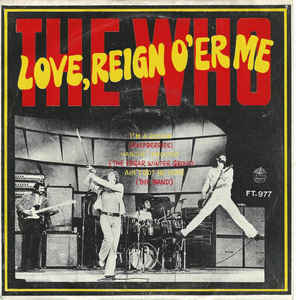
This is an epic song That was on the Who’s concept album Quadrophenia. The album peaked at #2 in 1973 in the Billboard Album Charts.
This may be Roger Daltrey’s best vocal performance in the Who’s long career. Pete has said he wanted a quiet song but when Roger sang it…it was more of a scream…Pete liked what Roger did and thought it fit the story better.
“Love, Reign o’er Me,” date back to 1972. It was originally intended to be part of the unreleased autobiographical album, Rock Is Dead—Long Live Rock! This later evolved into Quadrophenia.
The song peaked at #76 in the Billboard 100 and #31 in Canada in 1973.
From Songfacts
This is the last track on The Who’s rock opera Quadrophenia. The main character Jimmy suffers from a four-way split personality, with each personality reflecting a member of The Who. This is Pete Townshend’s theme. The personality is described as “A beggar, a hypocrite, love reign over me.”
At the end of the story, Jimmy steals a boat and takes it to a rock out on the sea. What happens out on the rock is described in this song.
Townshend was a follower of the spiritualist Meher Baba. Meher Baba’s teachings were incorporated into some of Townshend’s songs, including this one.
Townshend (from the Quadrophenia liner notes): “(Love, Reign O’er Me) refers to Meher Baba’s one-time comment that rain was a blessing from God; that thunder was God’s Voice. It’s another plea to drown, only this time in the rain. Jimmy goes through a suicide crisis. He surrenders to the inevitable, and you know, you know, when it’s over and he goes back to town he’ll be going through the same s–t, being in the same terrible family situation and so on, but he’s moved up a level. He’s weak still, but there’s a strength in that weakness. He’s in danger of maturing.”
In 2007, Adam Sandler starred in a dramatic film titled after this song, named Reign Over Me. Sandler played a widowed dentist who can only relate to old rock music since losing his family in the September 11th terrorist attacks. The soundtrack of the film featured a cover version of this song by the band Pearl Jam. Pearl Jam’s Eddie Vedder is a huge Who fan, and has covered many Who songs in the past.
Love Reign O’er Me
Only love Can make it rain The way the beach is kissed by the sea. Only love Can make it rain Like the sweat of lovers’ Laying in the fields.
Only love Can bring the rain That makes you yearn to the sky. Only love Can bring the rain That falls like tears from on high.
Love reign o’er me. On the dry and dusty road The nights we spend apart alone I need to get back home to cool cool rain. I can’t sleep and I lay and I think The nights are hot and black as ink Oh God, I need a drink of cool cool rain.
This was my favorite period of Rod Stewart. The early seventies would have him pulling double duty with the Faces and a solo career. A lot of his songs through this period blended acoustic and electric extremely well.
You Wear It Well was written as a collaboration between Rod Stewart and Martin Quittenton. He played guitar in a band called Steamhammer. The song was on the Never A Dull Moment album which peaked at #2 in the Billboard Album Charts in 1972.
You Wear It Well peaked at #13 in the Billboard 100 and at #1 in the UK in 1972. Ronnie Wood from The Faces and later of The Rolling Stones played guitar on this track.
From Songfacts
The subject of this song is Stewart writing a letter to an old flame – and having a pretty good attitude about it. What she is wearing well might be her current life, the years passing by, or the birthday gown he once bought her.
This song falls squarely into Stewart’s central body of work, as another folksy “blue-eyed soul” ballad. You’ll notice how similar this song sounds to another Stewart hit, “Maggie May,” from the previous Rod Stewart album Every Picture Tells a Story. Well, Quittenton collaborated with Stewart on that one, too!
Along with this song, other charting singles from the Never a Dull Moment album include a cover of Jimi Hendrix’s song “Angel,” and “What Made Milwaukee Famous.”
The line “Madame Onassis got nothing on you” is a reference to Jacqueline Kennedy Onassis – former First Lady to and widow of President John F. Kennedy. At the time of this song, Jacqueline – often referred to as “Jackie O” – was the spouse of Greek shipping magnate Aristotle Onassis until his death in 1975, widowing her again. Jackie O made quite a reputation for herself as a woman of grace, charm, and style, prompting the London Evening Standard to comment, “Jacqueline Kennedy has given the American people… one thing they have always lacked: Majesty.”
You Wear It Well
I had nothing to do on this hot afternoon But to settle down and write you a line I’ve been meaning to phone you but from Minnesota Hell it’s been a very long time You wear it well A little old fashioned but that’s all right
Well I suppose you’re thinking I bet he’s sinking Or he wouldn’t get in touch with me Oh I ain’t begging or losing my head I sure do want you to know that you wear it well There ain’t a lady in the land so fine
Remember them basement parties, your brother’s karate The all day rock and roll shows Them homesick blues and radical views Haven’t left a mark on you, you wear it well A little out of time but I don’t mind
But I ain’t forgetting that you were once mine But I blew it without even tryin’ Now I’m eatin’ my heart out Tryin’ to get a letter through
Since you’ve been gone it’s hard to carry on I’m gonna write about the birthday gown that I bought in town When you sat down and cried on the stairs You knew it did not cost the earth, but for what it’s worth You made me feel a millionaire and you wear it well Madame Onassis got nothing on you
Anyway, my coffee’s cold and I’m getting told That I gotta get back to work So when the sun goes low and you’re home all alone Think of me and try not to laugh and I wear it well I don’t object if you call collect ‘Cause I ain’t forgetting that you were once mine But I blew it without even tryin’ Now I’m eatin’ my heart out tryin’ to get back to you
After all the years I hope it’s the same address Since you’ve been gone it’s hard to carry on
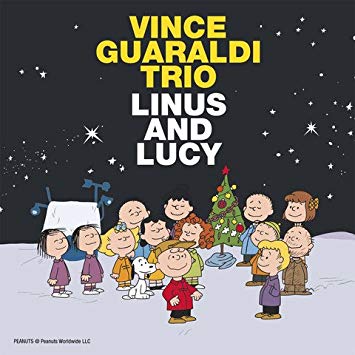
It’s hard to resist this song. It automatically makes me happy when I hear it. I see Snoopy dancing on Schroeder’s piano.
Ironically, just about everyone would call this “the Charlie Brown song” even though it’s actually titled after Linus and Lucy Van Pelt, brother and sister in Charles Schulz’s Peanuts comic strip universe.
The song is most famous for its use in the yearly favorite A Charlie Brown Christmas, which first aired in 1965, but it was written two years earlier for a documentary about Schulz and the Peanuts gang called A Boy Named Charlie Brown, which never aired.
Songfacts
Guaraldi wrote a series of songs for the project, including “Linus and Lucy,” that he recorded with his group, the Vince Guaraldi Trio. Even though A Boy Named Charlie Brown was shelved, the soundtrack was released in 1964, which is where “Linus and Lucy” first appeared.
In 1965, Mendelson put together the first Peanuts TV special, A Charlie Brown Christmas, using many of the same people who worked on the documentary. “Linus and Lucy” formed the score, and a song he wrote with Guaraldi called “Christmas Time Is Here” was included in a key scene.
A Charlie Brown Christmas aired on CBS and was a huge hit. It bucked convention, with actual children providing the voices, no laugh track, and an anti-materialism message. The jazz stylings of the music – something that had never been done in a high-profile animated children’s special – went over very well with viewers of all generations, and this song quickly became associated with the Peanuts.
With the exception of a limited 2013 release, this song was never released as a single, although thanks to steady airplay every December, it remains a holiday favorite, eliciting fond memories of the TV special.
The Vince Guaraldi Trio worked on more Peanuts projects and did a reworking of this song on a 1968 album called Oh Good Grief!. In 1976, Guaraldi died from a heart attack at age 47.
Amongst the many honors this tune has enjoyed over the years, it was the wake-up alarm music for the crew of the Space Shuttle Endeavour’s March 2008 mission “STS-123.” That was played on Day 2 of the mission. Since Day 2 is traditionally the day on which the crew does an inspection for launch damage to the ship – a precaution looking back to the 2003 Space Shuttle Columbia’s disaster – the crew could probably appreciate some lighten-up music that day.
I discovered Star Trek in the 1980s. It was one of those marathons that some station ran at the time. What impressed me was those wonderful stories. Some people gripe about the special effects…to me they were fine. They got the point across and that is what counts. William Shatner’s acting is a little different but hey…he is Captain Kirk. Leonard Nimoy was brilliant as the Vulcan Spock.
There are too many good episodes to pick from… the show only had one bad episode that I will not watch again…and that one is Spock’s Brain…Leonard Nimoy didn’t like that one either.
This episode has the beautiful Joan Collins and features time travel which is always a plus.
Capt. Kirk: You were actually enjoying my predicament back there. At times, you seem quite human.
Spock: Captain, I hardly believe that insults are within your prerogative as my commanding officer.
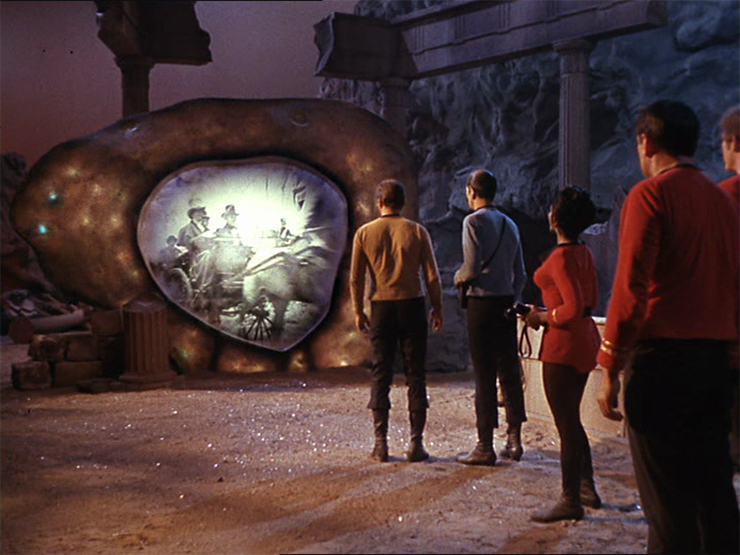
Notice the picture below…the Andy Griffith set was used…you see “Floyds Barber Shop”
Star Trek: The City On The Edge Of Tomorrow
The characters: Spock, Captain Kirk, Edith Keeler, Dr. McCoy, Scottie, Sulu, Uhura, Rodent, Galloway, and The Guardian.
When an accident causes Dr. McCoy to go temporarily insane, he escapes to a strange planet. There, the search party discovers a device left by a superior, vanished civilization, a time portal that plays the history of Earth for them – but then Bones jumps through it into the past, causing a change in history important enough to make the Enterprise vanish. Kirk and Spock, who fortunately made a tricorder recording, must attempt to go through to just before McCoy’s arrival and stop him from changing history in the United States during the Great Depression, where they have no advanced technology available
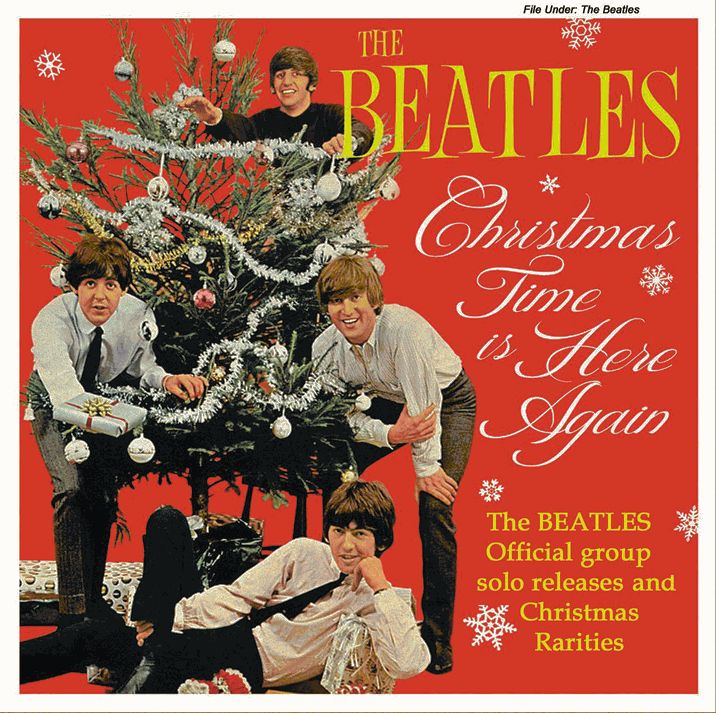
The Beatles recorded this in 1967 and wasn’t released until 1994 paired with “Free As A Bird”. It is a fun Christmas song that will stick in your head. The Beatles did not release a Christmas song commercially… only to their fan club when they were active.
Recorded December 6, 1966, and November 28, 1967, in London, England, this song was never officially released until it appeared as the B-side to “Free As A Bird” in 1994. The original version was distributed to The Beatles fan club in 1967. It’s the only song ever written specifically for the Beatles Fan Club members.
Many upbeat Pop groups of this era like The Beach Boys and The Four Seasons released Christmas songs, but The Beatles never had an official Christmas release.
Christmas Time Is Here Again
Christmas time is here again Christmas time is here again Christmas time is here again Christmas time is here again
Ain’t been round since you know when Christmas time is here again O-U-T spells “out”
Christmas time is here again Christmas time is here again Christmas time is here again Christmas time is here again
Ain’t been round since you know when Christmas time is here again O-U-T spells “out”
Christmas time is here again Christmas time is here again Christmas time is here again Christmas time is here again
Ain’t been round since you know when Christmas time…[music continues and fades to background]
[spoken]
This is Paul McCartney here, I’d just like to wish you everything you wish yourself for Christmas.
This is John Lennon saying on behalf of the Beatles, have a very Happy Christmas and a good New Year.
George Harrison speaking. I’d like to take this opportunity to wish you a very Merry Christmas, listeners everywhere.
This is Ringo Starr and I’d just like to say Merry Christmas and a really Happy New Year to all listeners
[a John Lennon pastiche at this point, very hard to understand]
In between new wave and hair metal, there was an occasional pop/rock hit in the 80s. This one was catchy and it stuck with you. The opening line “Josie’s on a vacation far away, Come around and talk it over” is hard to get out of your head after hearing it. It got massive airplay in my corner of the world.
The song was performed by the Outfield. Formed in Manchester, England and signed to Columbia Records as “The Baseball Boys,” the group changed their name to The Outfield. They released their debut album Play Deep in 1985 which peaked at #9 in the Billboard Album Charts. Your Love was on the album and peaked at #6 in the Billboard 100, #37 in Canada, and #83 in the UK.
“Your Love” was written by the band’s guitarist, John Spinks, who died of liver cancer in 2014 at age 60.
I don’t know whether I like the song or hate it because I can still hear the damn thing in my head.
From Songfacts
With a distinctive guitar riff and an unforgettable opening line, “Your Love” became one of the most memorable hits of the ’80s. When lead singer Tony Lewis declares, “Josie’s on a vacation far away, come around and talk it over,” we know he’s up to something. Our hero spends the rest of the song in seduction mode, trying to convince this girl (probably and ex-girlfriend) to have a one-night-stand. He pulls every trick from the player’s handbook:
Nobody Will Ever Know (“Stay the night but keep it undercover”) I Really Need Comfort (“Another shoulder to cry upon”) I Don’t Know Where Else To Turn (“I ain’t got many friends left to talk to”) It Won’t Mean Anything (“I just wanna use your love tonight”)
Does he capture his prey? We never find out, but it’s clear that Josie deserves better.
The song became an ’80s classic and the showcase song for the band, which scored four more Top 40 hits: “All the Love in the World” (#19, 1985), “Since You’ve Been Gone” (#31, 1987), “Voices of Babylon” (#25, 1989) and “For You” (#21, 1990).
In 2013, Saturday Night Live did a skit based on this song where host Josh Hutcherson speaks in the song’s lyrics, trying to convince Josie’s friend to have an affair. In the skit, Hutcherson is Josie’s younger brother. It’s a great visualization of the dynamic, as the girl rebuffs him at first, but is drawn in when he gets to the blue talk (“I can’t hide the way I’m feelin’…”).
Your Love
Josie’s on a vacation far away Come around and talk it over So many things that I want to say You know I like my girls a little bit older
I just want to use your love tonight I don’t want to lose your love tonight
I ain’t got many friends left to talk to Nowhere to run when I’m in trouble You know I’d do anything for you Stay the night but keep it under cover
I just want to use your love tonight I don’t want to lose your love tonight
Try to stop my hands from shaking But something in my mind’s not making sense It’s been a while since we were all alone But I can’t hide the way I’m feeling
As you’re leaving please would you close the door? And don’t forget what I told you Just ’cause you’re right that don’t mean I’m wrong Another shoulder to cry upon
I just want to use your love tonight I don’t want to lose your love tonight I just want to use your love tonight I don’t want to lose your love tonight I just want to use your love tonight I don’t want to lose your love tonight Use your love, lose your love, your love! I don’t want to lose your love tonight (I don’t wanna, I don’t wanna, I don’t wanna) Lose your love tonight (your love) Lose your love tonight (your love) Lose your love tonight (your love) (Lose your) I don’t want to lose your love tonight
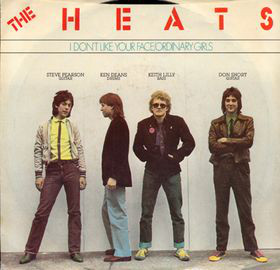
While reading about Nirvana from other Seattle musicians…this band came up in the conversations as one of the great Seattle bands. The Heats were 10 years before Nirvana but were really popular in the Seattle area.
Before Grunge, The Heats played in the Northwest. In 1980 They were the biggest band in the area. Everyone was convinced they were only going to get bigger.
“They were top dog,” said fellow Seattle musician and KJET/KNDD personality Jim Keller. “Opening for them was like opening for a major concert artist, with barricades to keep the fans back at the front of the stage. “And more than any other group, they made it cool for Seattle bands to do original songs.”
They sold thousands of copies of the records they produced themselves. They played some big shows in Seattle and opened up for The Kinks and toured around the US with Heart and The Knack.
This song was the B side to “I Don’t Like Your Face” released in 1980
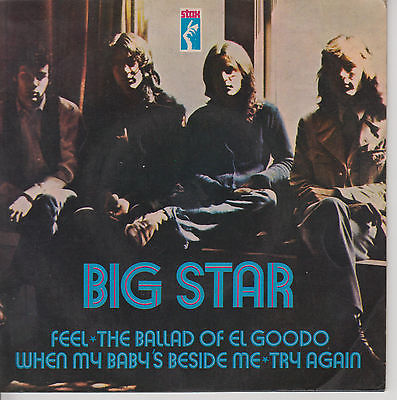
Great riff by Alex Chilton and full of the hooks that Big Star is known for. This song was the A-side to In The Street released in 1972. Both songs are on Big Star’s album #1 Record.
With the exception of some smart critics, at the time of their existence, Big Star was all but ignored. Big Star played a one-off promotional show for the Memphis Rock Writer’s Convention at Lafayette’s Music Room in Memphis in May of 1973. It cemented them into legendary status due to the writers who witnessed it and carried the message of Big Star out in their writing. Chris Bell had left the band by the time this live show was recorded.
The song is credited to Alex Chilton and Chris Bell.
When My Baby’s Beside Me
Don’t need to talk to my doctor Don’t need to talk to my shrink Don’t need to hide behind no locked door I don’t need to think
‘Cause when my baby’s beside me, I don’t worry When my baby’s beside me, all I know When my baby’s beside me, I don’t worry When my baby’s beside me, all I know
Read all my books and talked about Listen to my radio Been in school and dropped right out Tryin’ to find out what I didn’t know
But when my baby’s beside me, I don’t worry When my baby’s beside me, all I know When my baby’s beside me, I don’t worry When my baby’s beside me, all I know
Don’t need to talk to my doctor Don’t need to talk to my shrink Don’t need to hide behind no locked door I don’t need to think
‘Cause when my baby’s beside me, I don’t worry When my baby’s beside me, all I know When my baby’s beside me, I don’t worry When my baby’s beside me, all I know
When my baby’s beside me, I don’t worry When my baby’s beside me, all I know When my baby’s beside me, I don’t worry When my baby’s beside me, all I know
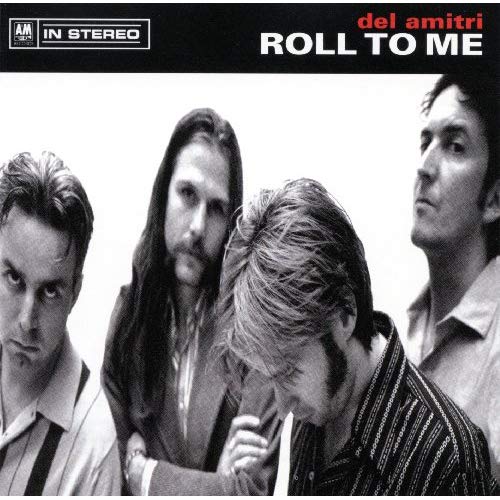
In 1995 “Roll to Me” peaked at #10 in the Billboard 100, #5 in Canada and #22 on the UK charts. One of the many power-pop songs of the 90s.
Ironically it was the band’s biggest hit and they did not like the song. Del Amitri toured the US when this became a hit, but they played the song reluctantly, often telling the audience that it was something they had to do. Del Amitri wasn’t able to get a foothold in the States, and this was their last hit there.
They are a Scottish alternative rock band formed in Glasgow in 1980. In 2002 the band went on hiatus and reformed in 2014 and are now still together.
Roll to Me
Look around your world pretty baby Is it everything you hoped it’d be The wrong guy, the wrong situation The right time to roll to me
Roll to me
Look into your heart pretty baby Is it aching with some nameless need? Is there something wrong And you can’t put your finger on it? Right, then roll to me
And I don’t think I have ever seen A soul so in despair So if you want to talk the night through Guess who will be there?
So don’t try to deny it pretty baby You’ve been down so long you can hardly see When the engine’s stalled and it won’t stop raining It’s the right time to roll to me Roll to me Roll to me
And I don’t think I have ever seen A soul so in despair So if you want to talk the night through Guess who will be there?
So, Look around your world pretty baby Is it everything you hoped it’d be The wrong guy, the wrong situation The right time to roll to me The right time to roll to me The right time to roll to me…oooh
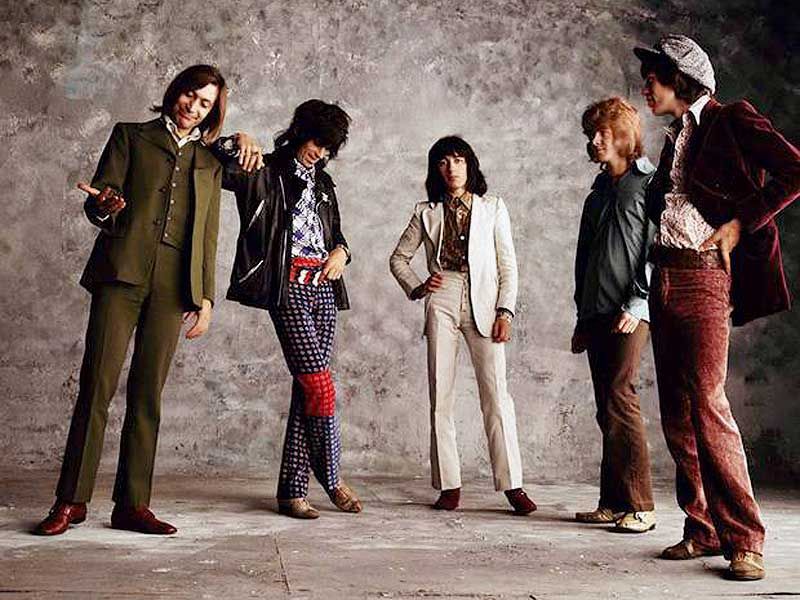
When I saw the Stones on the 2006 Bigger Bang tour I was looking forward to this song than any other. It was the second time I had gone to see them. This time it was in Kentucky at the famous Churchill Downs venue that is not meant for Rock and Roll but it was cool.
The lyric “Making bets on Kentucky Derby Day” drew a huge response from the rain-drenched crowd. The song was on the great Sticky Fingers album released in 1971. Gram Parsons who was into country music heavily and hanging around with the Stones probably influence this track to a point.
This song rolled during the final credits of The Big Lebowski. Allen Klein, the ex Rolling Stones manager and owner of the song initially wanted $150,000 for the movie’s use of it. He was then convinced to let them use it for free when he saw the scene in which The Dude says, “I hate the f—in’ Eagles, man!”. The version in the movie was a Townes Van Zandt cover.
From Songfacts
In this song, Mick Jagger addresses a girl named Susie with more than a little disdain: She’s welcome to send him dead flowers, but he’ll put roses on her grave. The music and lyrics both have a distinct country vibe. Jagger explained in 1995: “I love country music, but I find it very hard to take it seriously. I also think a lot of country music is sung with the tongue in cheek, so I do it tongue-in-cheek. The harmonic thing is very different from the blues. It doesn’t bend notes in the same way, so I suppose it’s very English, really. Even though it’s been very Americanized, it feels very close to me, to my roots, so to speak.”
Mick Jagger, 2003: “The ‘Country’ songs we recorded later, like ‘Dead Flowers’ on Sticky Fingers or Far Away Eyes on Some Girls, are slightly different (than our earlier ones). The actual music is played completely straight, but it’s me who’s not going legit with the whole thing, because I think I’m a blues singer not a country singer – I think it’s more suited to Keith’s voice than mine.” >>
The line, “I’ll be in my basement room with a needle and a spoon” is probably a reference to shooting up heroin.
Dead Flowers
Well when you’re sitting there in your silk upholstered chair Talkin’ to some rich folk that you know Well I hope you won’t see me in my ragged company Well, you know I could never be alone
Take me down little Susie, take me down I know you think you’re the queen of the underground And you can send me dead flowers every morning Send me dead flowers by the mail Send me dead flowers to my wedding And I won’t forget to put roses on your grave
Well when you’re sitting back in your rose pink Cadillac Making bets on Kentucky Derby Day Ah, I’ll be in my basement room with a needle and a spoon And another girl to take my pain away
Take me down little Susie, take me down I know you think you’re the queen of the underground And you can send me dead flowers every morning Send me dead flowers by the mail Send me dead flowers to my wedding And I won’t forget to put roses on your grave
Take me down little Susie, take me down I know you think you’re the queen of the underground And you can send me dead flowers every morning Send me dead flowers by the U.S. Mail Say it with dead flowers in my wedding And I won’t forget to put roses on your grave No, I won’t forget to put roses on your grave
This song is on the B side of Abbey Road in the medley right after Mean Mr. Mustard.The song was brought up and recorded on a demo for the White Album. John then brought it up for inclusion on Let It Be. After that he made the statement that he would give it to a “Liverpool Folk Singer.”
John contributed Sun King, Mean Mr. Mustard, and Polythene Pam to the medley.
The song was about two people… Pat Hodgett, who was a regular attendee at the Cavern Club when The Beatles played in the early 60’s. It was readily known that Pat was in the habit of eating polythene… The Beatles affectionately referred to her as “Polythene Pat”
John remembering the second girl: So this poet took me to his place, and I had a girl and he had one he wanted me to meet. He said she dressed up in polythene, which she did. In polythene bags. She didn’t wear jackboots and kilts – I just sort of elaborated – and no, she didn’t really look like a man. There was nothing much to it. It was kind of perverted sex in a polythene bag. But it provided something to write a song about.”
The poet’s name was Royston Ellis… The girl in the polythene bag could have been Royston’s girlfriend at the time…remembered as Stephanie.
Paul McCartney: “John, being Royston’s friend, went out to dinner with him and got pissed (drunk) and stuff and they ended up back at his apartment with a girl who dressed herself in polythene for John’s amusement, so it was a little kinky scene…She was a real character.”
From Songfacts
Polythene is a British term for polyethylene, a plastic polymer used in containers, insulation, and packaging. Written by John Lennon, this song has a rather strange background, and fortunately, our Beatles expert Pattie Noah has sorted it out.
Lennon sang this in a thick Liverpool accent. Like the other Beatles, his regular singing voice sounded very American because he grew up listening to US artists.
In the line, “She’s the kind of a girl that makes the News Of The World,” The News Of The World is a tabloid newspaper that specializes in risqué news reporting. Pam must have been a wild girl.
The Beatles recorded this as one song with “She Came In Through the Bathroom Window.”
Originally intended for The White Album, this was used in a suite of songs at the end of Abbey Road.
Polythene Pam
Well, you should see Polythene Pam She’s so good-looking but she looks like a man Well, you should see her in drag dressed in her polythene bag Yes, you should see Polythene Pam Yeah, yeah, yeah
Get a dose of her in jackboots and kilt She’s killer-diller when she’s dressed to the hilt She’s the kind of a girl that makes the “News of the World” Yes, you could say she was attractively built Yeah, yeah, yeah
This short song was on the B Side of Abbey Road in the Medley. I really like Paul McCartney’s fuzz bass on this track. The song is right before “his sister Pam’s” song Polythene Pam which continues the medley.
John Lennon: In Mean Mr Mustard I said ‘his sister Pam’ – originally it was ‘his sister Shirley’ in the lyric. I changed it to Pam to make it sound like it had something to do with Polythene Pam. They are only finished bits of crap that I wrote in India.
John Lennon got the idea for this song from a newspaper article he read about a miser. “Mr. Mustard” was John Mustard, who was described in the story as “an exceptionally mean man.” His wife was divorcing him because, among other things, she couldn’t stand being in the dark all the time – he insisted on keeping the lights off most of the time to save money. The article appeared in the Daily Mirror on June 7, 1967, with the headline, “Scotsman’s Meanness ‘Was Cruel.'”
The article read:
SCOTSMAN’S MEANNESS ‘WAS CRUEL’
“Scotsman John Mustard – an “exceptionally mean man” – gave his wife only £1 in the year before they parted, a Divorce Court judge said yesterday.
Mr. Mustard, a civil servant, was also so mean with lighting and heating that he went far beyond what any wife could be expected to bear, said Mr. Justice Rees.
LIVED IN THE DARK
To save electricity, he would turn off the light while they were listening to the radio, “because it was not necessary to see in order to listen.”
And he would also shave and go to bed in the dark.
The judge said:- “He was at pains to explain that he came from North of the Border, where carefulness was part of the upbringing.”
He added that:- “His conduct affected her health and made life unendurable.”
The judge granted 55-year-old Mrs. Freda Mustard, a deputy head mistress, a decree nisi because of cruelty by Mr. Mustard, who lives at Old Park-View, Enfield.
HE DENIED IT
Mr. Mustard, 65, denied cruelty and alleged that his wife deserted him. The judge rejected that allegation.
The judge said he did not believe that Mr. Mustard was being vicious or unpleasant toward his wife.
But there was “a menacing quality about him to which he wife was particularly sensitive.”
From Songfacts
John Lennon wrote most of this when he was in India at the Maharishi’s meditation camp with the other Beatles in 1967. He didn’t think much of the song, calling it and “Polythene Pam” “finished bits of crap that I wrote in India.”
It wasn’t the first time John Lennon was inspired by a newspaper story: some of the lyrics in “A Day In The Life” came from articles he read in the Daily Mail.
The Beatles recorded this as one song with “Sun King.” It’s part of a suite of songs at the end of Abbey Road.
The Beatles considered using this on The White Album, but decided not to.
Mean Mr. Mustard
Mean Mister Mustard sleeps in the park Shaves in the dark trying to save paper Sleeps in a hole in the road Saving up to buy some clothes Keeps a ten-bob note up his nose Such a mean old man Such a mean old man
His sister Pam works in a shop She never stops, she’s a go-getter Takes him out to look at the queen Only place that he’s ever been Always shouts out something obscene Such a dirty old man Dirty old man







 PowerPop... An Eclectic Collection of Pop Culture