This song is why I first bought this album. I heard it and it’s country/blues/rock style stayed with me. The song sounds low down, dirty, and sleazy…that only the Stones can deliver.
Keith Richards’ fingers began to bleed as he played acoustic guitar for hours while Mick Jagger worked with an engineer on the drum track. The title came from Keith’s desire to record his track. At least that’s the story the Mick and Keith tells. The phrase “Let It Bleed” is an intravenous drug user slang for successfully finding a vein. The syringe plunger is pulled back and if blood appears, it is called letting it bleed.
This was recorded around the same time as The Beatles Let It Be, but the similar titles were just a supposed coincidence.
The Stones recorded this after the death of Brian Jones but before Mick Taylor joined the band as his replacement. As a result, Keith Richards played both acoustic and slide electric guitar, and Bill Wyman played bass and autoharp.
The song wasn’t a single but the album (also named Let It Bleed) peaked at #3 in the Billboard Album Chart in 1969.
From Songfacts
This was the first Stones song to also be the album title.
Ian Stewart, often considered “The sixth Stone,” played the piano. This was his only appearance on Let It Bleed.
There are many references to sex and drugs in the lyrics to this track – an example of the Stones writing about what they knew.
Autoharp is a string instrument with a series of chord bars attached to dampers which, when pressed, mute all but the desired chord. An autoharp is not really a harp – it’s a zither.
The English TV cook and author Delia Smith baked the cake on the album sleeve before she became famous. She got the gig through being a friend of the photographer, Don McAllester. In 1971, two years after the release of Let It Bleed, Delia Smith’s first cookery book, How To Cheat at Cooking, was launched and by the end of the decade she’d become the UK’s best known TV cook.
Let It Bleed
Well, we all need someone we can lean on And if you want it, you can lean on me Yeah, we all need someone we can lean on And if you want it, you can lean on me
She said, my breasts, they will always be open Baby, you can rest your weary head right on me And there will always be a space in my parking lot When you need a little coke and sympathy
Yeah we all need someone we can dream on And if you want it baby, you can dream on me Yeah, we all need someone we can cream on Yeah and if you want to, you can cream on me
I was dreaming of a steel guitar engagement When you drunk my health in scented jasmine tea But you knifed me in my dirty filthy basement With that jaded, faded, junky nurse oh what pleasant company, ha
Though, we all need someone we can feel on Yeah and if you want it, you can feel on me, hey Take my arm, take my leg Oh baby don’t you take my head Hoo
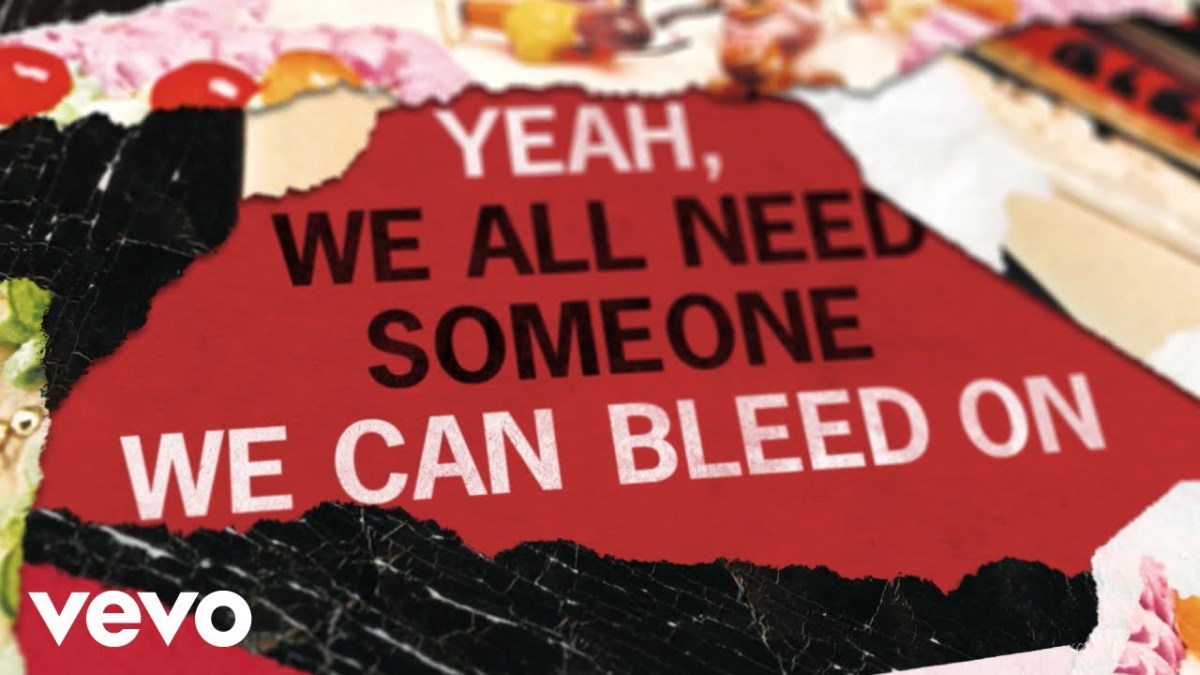
Yeah, we all need someone we can bleed on Yeah but if you want it, well you can bleed on me Yeah, we all need someone we can bleed on Yeah yeah and if you want it baby why don’t ya You can bleed on me All over, hoo
Ah, get it on rider, hoo Get it on rider Get it on rider You can bleed all over me, yeah Get it on rider, hoo Get it on rider, yeah You can cream all over, you can come all over me, ah Get it on rider ey Let it out rider Let it out rider You can come all over me
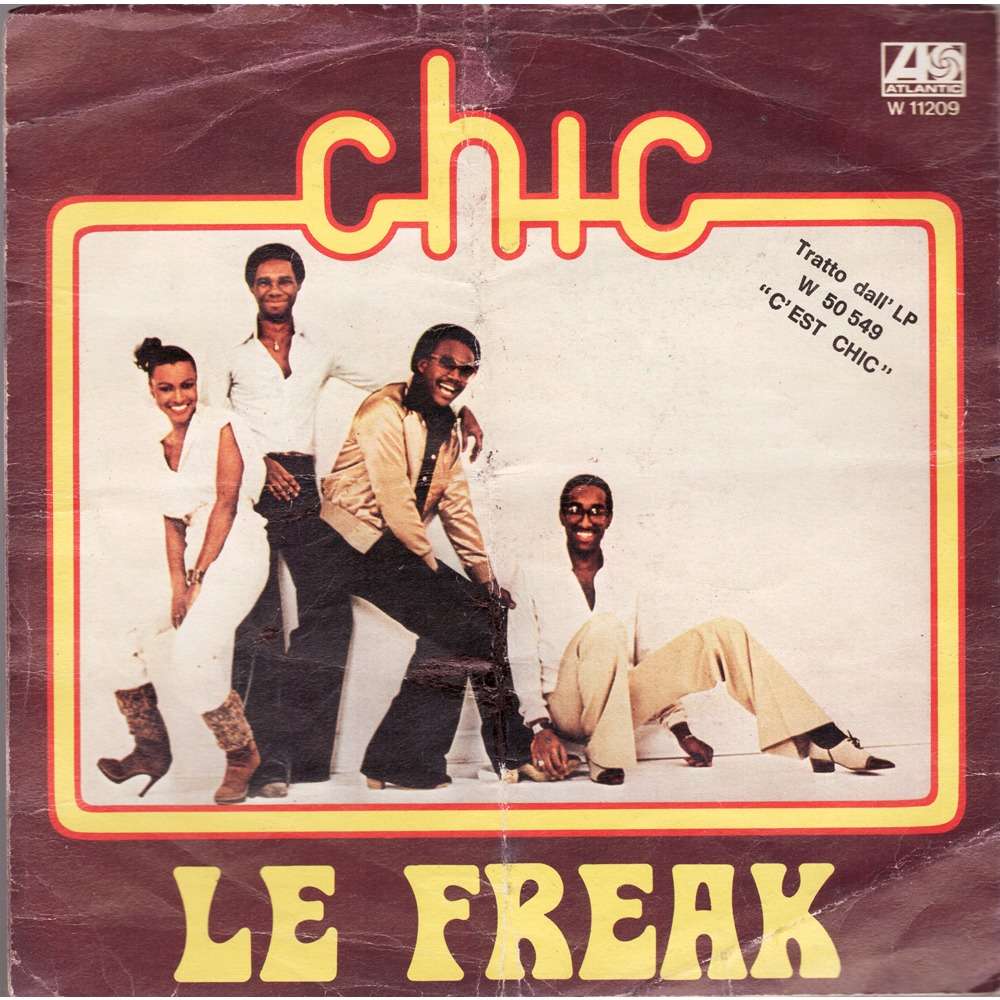
Ah Freak out! Dance music is usually not my thing but Nile Rodgers guitar groove on this song is fantastic. It’s also a great memory of 5th grade for me.
Rodgers and Edwards wrote this after they were denied admission to a nightclub, even though their song “Dance, Dance, Dance (Yowsah, Yowsah, Yowsah)” often played inside.
It was New Year’s Eve, 1977, and they were invited to Studio 54, a very popular club in New York City where many celebrities and trendsetters were known to hang out. A singer named Grace Jones wanted Nile Rodgers (guitarist) and Bernard Edwards (Bass Player) to do some production work for her and asked them to come down to the club as her guest.
When they got there, they were not on the list, and couldn’t convince the doorman that they were the group Chic. All dressed up and nowhere to go on New Year’s Eve, they left and started writing this song as a reply to the doorman. They called it “F–k Off,” but when they decided to record it, Edwards wasn’t comfortable with the cursing, so they tried it as “Freak Off.” That title sounded lame, but when they made the opening lines “aaaahh Freak Out!” instead of “aaaahh F–k Off!”, they came up with a better title: “La Freak.”
The song peaked at #1 in the Billboard 100 in 1978. This was #1 in the US for six weeks. After a while, they stopped distributing it as a single to encourage people to buy the album.
From Songfacts
Chic was a group led by bass player Bernard Edwards and guitarist Nile Rodgers. Both were very successful writers and producers, combining to work on hits for Sister Sledge and Diana Ross. Edwards went on to produce for The Power Station, Joe Cocker, and Robert Palmer, while Rodgers has worked with Mick Jagger, David Bowie, and Madonna. Edwards died of pneumonia in 1996.
They ended up not working for Grace Jones, although Rodgers produced her comeback album in 1986.
Studio 54 is mentioned in the last verse: “Come on down to 54.” A year after Rodgers and Edwards couldn’t get into the club, this was included on an album of dance songs called A Night At Studio 54. They had no trouble getting in at this point.
“C’est Chic” (which was not just the name of the album but also part of the lyrics to the song) is French for “It is Chic.”
This is the best selling single of all time for Atlantic Records with 13 million sales, including 2 million in the USA.
This was the first single to be displaced from the US # 1 twice, each time regaining the top position. It first hit the top spot in December 1978, then dropped to #2 for a week to make way for “You Don’t Bring Me Flowers.” After reassuming the #1 position for a second week, it then dropped to #2 again for two more weeks, this time to make way for the Bee Gees’ hit “Too Much Heaven.” In January 1979, “Le Freak” then moved back into the #1 spot for a third time, holding down the top spot for four more weeks.
This song returned, remixed, to the UK Top 20 in 1987 as “Jack le Freak.”
Nile Rodgers told Billboard that the song “was our homage to a Chubby Checker song called the ‘Peppermint Twist.'”
Nile Rogers told the Big Issue that he knew “Le Freak” was going to be a monster record even though the record company hated the song. He recalled:
“By the time the song ended, after about seven and a half minutes, we’d cleared the conference room. We were just sitting there by ourselves – myself, Bernard Edwards and our attorney. Everybody else was outside trying to figure out how to tell us how much the song sucked, and wondering did we have anything else on the album that was better.”
Le Freak
Ah Freak out! Le Freak, see’est Chic Freak out! Ah Freak out! Le Freak, see’est Chic Freak out! Ah Freak out! Le Freak, see’est Chic Freak out! Ah Freak out! Le Freak, see’est Chic Freak out!
Have you heard about the new dance craze? Listen to us, I’m sure you’ll be amazed Big fun to be had by everyone It’s up to you, It surely can be done Young and old are doing it, I’m told Just one try, and you too will be sold It’s called Le Freak! They’re doing it night and day Allow us, we’ll show you the way
[Chorus]
All that pressure got you down Has your head spinning all around Feel the rhythm, check the ride Come on along and have a real good time Like the days of stopping at the Savoy Now we freak, oh what a joy Just come on down, two fifty four Find a spot out on the floor
[Chorus]
Now Freak! I said Freak! Now Freak!
All that pressure got you down Has your head spinning all around Feel the rhythm, check the ride Come on along and have a real good time Like the days of stopping at the Savoy Now we freak, oh what a joy Just come on down, two fifty four Find a spot out on the floor
This is one of my favorite songs from Led Zeppelin. I think it’s one of their best if not their best. It was on the Physical Graffiti Album released in 1975. The song did not chart but is hugely popular on the radio.
The song is hypnotic to listen to. The drums are the key to this song… Jimmy Page has said this about John Bonham on Kashmir… It was what he didn’t do that made it work.
Jimmy also said this was the best Led Zeppelin guitar riff.
Kashmir, also known as Cashmere, is a lush mountain region North of Pakistan. India and Pakistan have disputed control of the area for years. The fabric Cashmere is made from the hair of goats from the region. The area is also famous for growing poppies, from which heroin is made.
The songwriters were John Bonham, Jimmy Page, and Robert Plant.
Robert Plant – Plant explained: “‘Kashmir’ came from a trip Jimmy and me made down the Moroccan Atlantic coast, from Agadir down to Sidi Ifni. We were just the same as the other hippies really.”
From Songfacts
All band members agreed this was one of their best musical achievements. Robert Plant said it was “One of my favorites… it was so positive, lyrically.”
Plant wrote the lyrics in 1973 while driving through the Sahara Desert on the way to the National Festival of folklore in Morocco. Kashmir is in Southern Asia; he was nowhere near it. In Mojo magazine, September 2010,
The original title was “Driving To Kashmir.”
This runs 8:31. Radio stations had no problem playing it, especially after “Stairway To Heaven,” which was almost as long, did so well.
The signature guitar riff began as a tuning cycle Jimmy Page had been using for years.
This is one of the few Zeppelin songs to use outside musicians. Session players were brought in for the string and horn sections. Jimmy Page said (Rolling Stone, 2012): “I knew that this wasn’t just something guitar-based. All of the guitar parts would be on there. But the orchestra needed to sit there, reflecting those other parts, doing what the guitars were but with the colors of a symphony.”
Speaking with Dan Rather in 2018, Robert Plant said: “It was a great achievement to take such a monstrously dramatic musical piece and find a lyric that was ambiguous enough, and a delivery that was not over-pumped. It was almost the antithesis of the music, this lyric and this vocal delivery that was just about enough to get in there.”
Led Zeppelin played this in every live show from it’s debut in 1975 to their last concert in 1980.
Page and Plant recorded this with an orchestra and Moroccan musicians for their 1994 Unledded album.
Puff Daddy (he wasn’t Diddy yet) sampled this in 1998 for a song called “Come With Me.” He performed it on Saturday Night Live with Page on guitar.
The remaining members of Led Zeppelin performed this at the Atlantic Records 40th-anniversary party in 1988 with Jason Bonham on drums. It was a mess – the keyboards got lost in the feed and Plant was bumped by a fan and forgot some of the words. They had more success when they performed the song on December 10, 2007, at a benefit show to raise money for the Ahmet Ertegun education fund.
In the movie Fast Times At Ridgemont High, Mike Damone tells Mark Ratner, “When it comes down to making out, whenever possible, put on side one of Led Zeppelin 4. In the next scene, he is on the date with this song playing in the car. Cameron Crowe, who wrote the screenplay, couldn’t get the rights to any of the songs on Led Zeppelin 4, so he used “Kashmir” instead. Crowe used Zeppelin’s “That’s The Way” on his 2001 movie Almost Famous.
Plant said in an audio documentary that he loved this song not only because of its intensity but also because it was so intense without being considered “heavy metal,” a label none of the band liked.
Jimmy Page: “The intensity of ‘Kashmir’ was such that when we had it completed, we knew there was something really hypnotic to it, we couldn’t even describe such a quality. At the beginning, there was only Bonzo [drummer John Bonham] and me in Headley Grange. He played the rhythm on drums, and I found the riff as well as the overdubs which were thereafter duplicated by an orchestra, to bring more life to the track. It sounded so frightening at first…”
Zeppelin’s manager Peter Grant said: “I remember Bonzo having me listen to the demo of ‘Kashmir’ with only him and Jimmy. It was fantastic. What’s funny is that after a first recording of the song, we found it sounded a bit like a dirge. We were in Paris, we had Atlantic listen to it, and we all thought it really sounded like a dirge. So Richard (Cole) was sent to Southall in London to find a Pakistanese orchestra. Jonesy put it all together and the final result was exactly what was needed. He was an exceptional arranger.”
“Kashmir” makes the “songs performed at the Super Bowl” list because a few seconds of it played during Shakira’s set when she performed at halftime in the matchup between the Kansas City Chiefs and San Francisco 49ers in 2020.
Kashmir
Oh, let the sun beat down upon my face And stars to fill my dream I’m a traveler of both time and space To be where I have been To sit with elders of the gentle race This world has seldom seen They talk of days for which they sit and wait All will be revealed
Talk in song from tongues of lilting grace Sounds caress my ear And not a word I heard could I relate The story was quite clear
Oh, oh Oh, oh
Oh, oh baby, I been flying No yeah, mama, there ain’t no denying Oh, oh yeah I’ve been flying Mama, mama, ain’t no denying, no denying
All I see turns to brown As the sun burns the ground And my eyes fill with sand As I scan this wasted land Trying to find, trying to find, where I’ve been
Oh, pilot of the storm who leaves no trace Like thoughts inside a dream Heed the path that led me to that place Yellow desert stream Like Shangri-la beneath the summer moon I will return again Sure as the dust that floats high in June When moving through Kashmir
Oh, father of the four winds fill my sails Across the sea of years With no provision but an open face Along the straits of fear
Oh, oh Oh, oh
Oh, when I’m on, when I’m on my way, yeah When I see, when I see the way, you stay yeah
Oh, yeah-yeah, oh, yeah-yeah, when I’m down Oh, yeah-yeah, oh, yeah-yeah, but I’m down, so down Oh, my baby, oh, my baby, let me take you there Come on, come on, oh, let me take you there, let me take you there
McCartney wrote this song. John Lennon had said it was a Paul song and it is thought to be mostly if not all his song. The song was not a single but just added another great song to the album.
The song was on the Beatles arguably best album Revolver…and perhaps one of the best albums of all time.
George Martin called in Alan Civil to play the French horn in the solo.
Paul McCartney and George Martin about the French Horn : ‘Well, it goes from here to this top E,’ and I said, ‘What if we ask him to play an F?’ George saw the joke and joined in the conspiracy. We came to the session and Alan looked up from his bit of paper: ‘Eh, George? I think there’s a mistake here – you’ve got a high F written down.’ Then George and I said, ‘Yeah,’ and smiled back at him, and he knew what we were up to and played it. These great players will do it. Even though it’s officially off the end of their instrument, they can do it, and they’re quite into it occasionally. It’s a nice little solo.”
Most people would have never written that part for a French horn player because it was too high to play, but that was the note Paul wanted to hear.
Paul McCartney: “I was in Switzerland on my first skiing holiday. I’d done a bit of skiing in ‘Help!’ and quite liked it, so I went back and ended up in a little bathroom in a Swiss chalet writing ‘For No One.’ I remember the descending bass-line trick that it’s based on, and I remember the character in the song – the girl putting on her make-up.”
From Songfacts
Paul McCartney wrote this song sitting in a chalet while on holiday with his girlfriend Jane Asher in Klosters, Switzerland, March of 1966. The working title was “Why Did It Die,” and there is speculation that McCartney wrote the song about Asher, who was a successful London actress.
The theory is that Paul wanted her to cater to his schedule, tour with him, and be the “perfect Beatle wife,” but Jane had a life and career of her own, hence the “She doesn’t need you” lyrics. Paul has never said it was about Jane specifically, however he did say, “I guess there had been an argument. I never have easy relationships with women.” He knew what he was getting into when he got involved with Jane, and being that the song was written in 1966 and they didn’t break up until 1968, it’s likely that if the song was about Jane, it wasn’t a serious argument.
This was recorded on May 9, 16 and 19, 1966 by only two Beatles – Paul singing and playing the keyboard and bass, and Ringo on percussion.
Maureen McGovern recorded this and “Things We Said Today” as a 2-song medley for her 1992 album Baby I’m Yours.
McCartney used this in his 1984 movie Give My Regards to Broad Street.
Revolver was the last Beatles album to have different US and UK versions. In 2002, Rolling Stone readers voted it the greatest album of all time. The album cover was created by artist Klaus Voormann, who became friends with the band when they were playing clubs in Hamburg, Germany in the early ’60s.
For No One
Your day breaks, your mind aches You find that all the words of kindness linger on When she no longer needs you
She wakes up, she makes up She takes her time and doesn’t feel she has to hurry She no longer needs you
And in her eyes you see nothing No sign of love behind the tears Cried for no one A love that should have lasted years!
You want her, you need her And yet you don’t believe her when she says her love is dead You think she needs you
And in her eyes you see nothing No sign of love behind the tears Cried for no one A love that should have lasted years!
You stay home, she goes out She says that long ago she knew someone but now he’s gone She doesn’t need him
Your day breaks, your mind aches There will be times when all the things she said will fill your head You won’t forget her
And in her eyes you see nothing No sign of love behind the tears Cried for no one A love that should have lasted years!
A friend of mine who played guitar in high school got a bootleg of this song a year before it was officially released. His band was playing in the gym before we went on and they played this song. I thought they wrote it until I asked him. It’s a great-sounding song live.
It was an instant bar band song. It was a song you didn’t really have to rehearse…just one listen would do it.
This was the only big hit for the Georgia Satellites, although lead singer Dan Baird had a hit as a solo artist in 1992 with “I Love You Period.” They didn’t have another big hit but they did have some songs that got airplay on radio and MTV like Battleship Chains and a cover of Hippy Shake. This was one of the few straight-out rock and roll songs to hit the charts at this time.
It was released in 1986 and peaked at #2 in the Billboard 100 and #69 in the UK in 1987.
From Songfacts
Lead singer Dan Baird wrote this about the problems their drummer was having with his girlfriend. He wrote it in one sitting on their tour bus.
The video portrayed a shotgun wedding, complete with very pregnant bride and actual shotgun. It was directed by Bill Fishman, whose other credits include the Ramones’ “I Wanna Be Sedated” and Good Charlotte’s “Lifestyles Of The Rich And Famous.”
Many people thought the line “I’ve got a little change in my pocket, going jingle, linga, ling” was a reference to masturbation. The group denied this.
The group was signed to Elektra Records after executives heard a cheaply made 8-track demo of this song. Elektra gave the band a 5-figure budget to cut an entire album of material, but despite attempting several different recordings of “Keep Your Hands to Yourself,” none of these takes were as good as the demo. The demo was included on the album, and that is the version you hear.
Keep Your Hands To Yourself
I got a little change in my pocket going jingle lingle ling Want to call you on the telephone baby i give you a ring But each time we talk i get the same old thing Always no huggin no kissin until i get a wedding ring My honey my baby don’t put my love upon no shelf She said don’t give no lies and keep your hands to yourself
Cruel baby baby baby why you want to treat me this way You know i’m still your lover boy i still feel the same way That’s when she told me a story ’bout free milk and a cow And she said no huggin no kissin until i get a wedding vow My honey my baby don’t put my love upon no shelf She said don’t hand me no lies and keep your hands to yourself
You see i wanted her real bad and i was about to give in That’s when she started talkin’ true love started talkin’ about sin I said honey i’ll live with you for the rest of my life She said no huggin no kissin until you make me your wife My honey my baby don’t put my love on no shelf She don’t hand me no lies and keep your hands to yourself.
The album Damn The Torpedos broke Tom Petty and the Heartbreakers to the masses.
In the US, Damn The Torpedoes was a big success and helped the band grow a huge audience. The album peaked at #2 in the Billboard 100, held out of #1 by Pink Floyd’s The Wall.
The song peaked at #15 in the Billboard 100, #2 in Canada, and #3 in New Zealand in 1980.
Tom Petty: “This was a reaction to the pressures of the music business. I wound up in a huge row with the record company when ABC Records tried to sell our contract to MCA Records without us knowing about it, despite a clause in our contract that said they didn’t have the right to do that. I was so angry with the whole system that I think that had a lot to do with the tone of the Damn the Torpedoes album. I was in this defiant mood. I wasn’t so conscious of it then, but I can look back and see what was happening. I find that’s true a lot. It takes some time usually before you fully understand what’s going on in a song – or maybe what led up to it.”
From Songfacts
Heartbreakers guitarist Mike Campbell wrote the music and Petty added the lyrics. In a Songfacts interview with Campbell, he told us about the recording process: “That was a hard record to make. It was a 4-track that I made at my house. Tom wrote over the music as it was, no changes, but it took us forever to actually cut the track. We just had a hard time getting the feel right. We must have recorded that 100 times. I remember being so frustrated with it one day that – I think this is the only time I ever did this – I just left the studio and went out of town for two days. I just couldn’t take the pressure anymore, but then I came back and when we regrouped we were actually able to get it down on tape.”
Mike Campbell: “When we were at the studio mixing it, I remember this one girl who was working in reception, she came in and heard the mix and she said, ‘That’s a hit, that’s a hit,’ and we looked at each other and said, ‘Maybe it is.’ You don’t always know. Sometimes you think certain things are surefire and people just don’t latch on to them and other things they do. You know when it’s good or not, but you don’t always know if it’s a hit. A hit record a lot of times is more than just the song, it’s the timing, the climate you put it out in, what people are listening to and what they’re expecting to hear and if it touches a nerve at a certain time.”
Campbell and Petty teamed up to write many of the band’s songs, including “Here Comes My Girl,” “Jammin’ Me,” and “You Got Lucky.” Mike also wrote the music for Don Henley’s “The Boys of Summer” and “The Heart Of The Matter.” When we asked him what was his favorite song he’s written, he said: “Refugee always makes me happy. Maybe because it was so hard to get on the tape, there was a time when I thought it would never come out, that we just can’t do it. It always sounds like it really captured a moment. If I had to pick one favorite, I’d probably pick that first.”
Tom Petty and the Heartbreakers performed this in 1979 on their first Saturday Night Live appearance, where they also played “Don’t Do Me Like That.”
The band closed out their Live Aid set at JFK Stadium in Philadelphia with “Refugee.” The massive 1985 benefit concert was also staged in London the same day.
The band shot a music video for this song because they didn’t want to appear on The Merv Griffin Show in person. It did the trick, and the video aired on the show, allowing Tom Petty and the Heartbreakers to promote the song without showing up. This was the only place they thought the video would air, but when MTV launched in 1981, it got lots of play on the network, which craved rock videos from American artists. The band became one of the most popular acts on MTV, feeding the network with cinematic productions for songs like “Don’t Come Around Here No More” and “Free Fallin’.”
During a Twitter Q&A in December 2011, Petty disclosed that Melissa Etheridge doing “Refugee” was the best cover of the song he ever heard. Etheridge’s version was recorded for her 2005 compilation album, Greatest Hits: The Road Less Traveled.
Refugee
We did somethin’ we both know it We don’t talk too much about it Ain’t no real big secret all the same Somehow we get around it Listen it don’t really matter to me baby You believe what you want to believe You see you don’t have to live like a refugee (don’t have to live like a refugee)
Somewhere, somehow somebody Must have kicked you around some Tell me why you want to lay there And revel in your abandon Honey, it don’t make no difference to me baby Everybody’s had to fight to be free You see you don’t have to live like a refugee (don’t have to live like a refugee) Now baby you don’t have to live like a refugee (don’t have to live like a refugee)
Baby we ain’t the first I’m sure a lot of other lover’s been burned Right now this seems real to you But it’s one of those things You gotta feel to be true
Somewhere, somehow somebody Must have kicked you around some Who knows, maybe you were kidnapped Tied up, taken away and held for ransom It don’t really matter to me Everybody’s had to fight to be free You see you don’t have to live like a refugee (don’t have to live like a refugee) I said you don’t have to live like a refugee (don’t have to live like a refugee) You don’t have to live like a refugee (don’t have to live like a refugee), ah , ah
Looking back it’s kinda hard to believe that a fifties sounding band made a big splash among the big hair synth 1980s. In the seventies yes it would have been not only possible but probable because of a 50’s revival then.
Brian Setzer lead guitarist: ‘I couldn’t relate to prog rock. We never had any wizards in my neighborhood. We had ’58 Chevys and good-looking girls’
Brian came up with Stray Cat Strut back his garage in Long Island when he was 18. He wanted something slower than their other songs. It was about the three members, and the lives they were living. At that point, they were still called the Tomcats, but it became “stray” when they went to London.
They found a counterculture in London that related to the fifties music and style. The original group of people that came to see them included Chrissie Hynde, Joe Strummer, Lemmy and Glen Matlock.
Ronnie Lane from the Faces put them up and Dave Edmunds grabbed them at the Venue and said: “Let me produce you before someone else ruins you.” Dave did indeed produce them.
This song peaked at #3 in the Billboard 100 in 1983.
Black and orange stray cat sittin’ on a fence Ain’t got enough dough to pay the rent I’m flat broke, but I don’t care I strut right by with my tail in the air
Stray cat strut, I’m a (Ladies’ cat) I’m a feline Casanova (Hey, man, that’s where it’s at) Get a shoe thrown at me from a mean old man Get my dinner from a garbage can
Meow Yeah, don’t cross my path
I don’t bother chasing mice around, oh, no I slink down the alley looking for a fight Howling to the moonlight on a hot summer night Singin’ the blues while the lady cats cry “Wild stray cat, you’re a real gone guy I wish I could be as carefree and wild But I got cat class, and I got cat style”
I don’t bother chasing mice around I slink down the alley looking for a fight Howling to the moonlight on a hot summer night Singin’ the blues while the lady cats cry “Wild stray cat, you’re a real gone guy I wish I could be as carefree and wild But I got cat class, and I got cat style”
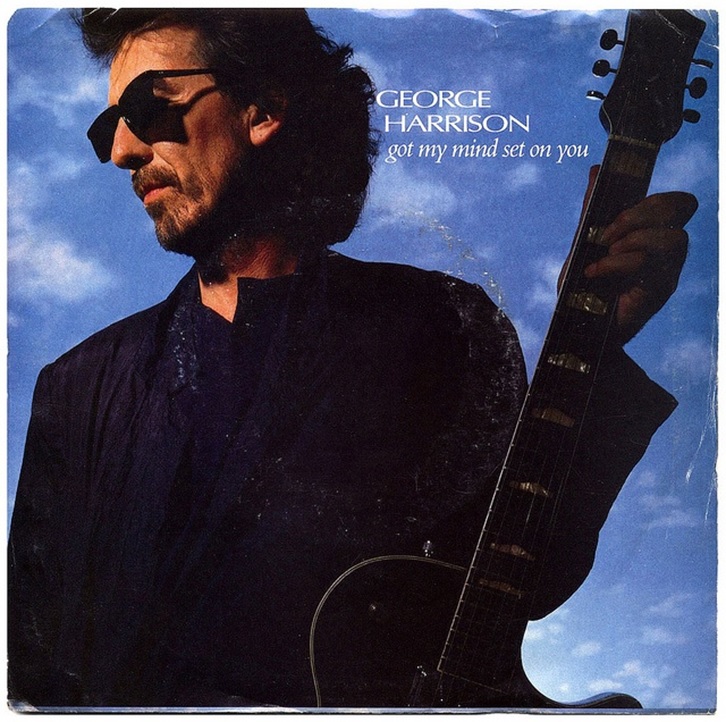
In 1988 I bought Cloud Nine by George Harrison. It stayed on my turntable and in my cassette player for months. This song is not my favorite on the album but I was happy to see George at the top of the charts for the first time since “Give Me Love (Give Me Peace on Earth)” in 1973.
The song was written and composed by Rudy Clark and originally recorded by James Ray in 1962 but it was not a hit for James.
ELO’s Jeff Lynne produced this song with Harrison. His influence can be heard in the backing vocals of the chorus. The song peaked at #1 in the Billboard 100, #1 in Canada, #2 in the UK, and #4 in NewZealand in 1988.
This song is the last number 1 song by a Beatle. Paul did have a number 1 album in 2018 with Egypt Station. Cloud Nine peaked at #8 in the Billboard Album Chart.
From Songfacts
This was written by Rudy Clark and originally recorded by James Ray in 1962. Harrison bought a copy of the single in the summer of 1963 when visiting his sister Louise in Illinois. Many years later when he was writing his Cloud Nine album, he remembered the song and decided to cover it.
Cloud Nine was Harrison’s comeback album. He hadn’t had a hit since 1981 with “All Those Years Ago,” and his previous US #1 was “Give Me Love (Give Me Peace On Earth)” in 1973. Until the Beach Boys released “Kokomo,” Harrison had the record for longest span between #1 hits. “Got My Mind Set On You,” however, was his last single to chart.
Harrison released another album earlier in 1982 called Gone Troppo, which flopped. Proving that he could whip up a hit, he released this very simplistic cover song and it was a huge commercial success. A lot of Harrison’s work was well off the mainstream, using unusual instruments and based on Indian music. This proved that he could release a song requiring very little thought and send it up the charts. Predictably, many of Harrison’s ardent followers can’t stand this song.
Along with Roy Orbison, Bob Dylan, and Tom Petty, Harrison and Lynne formed The Traveling Wilburys in 1988.
Got My Mind Set On You
I got my mind set on you I got my mind set on you I got my mind set on you I got my mind set on you
But it’s gonna take money A whole lot of spending money It’s gonna take plenty of money To do it right, child
It’s gonna take time A whole lot of precious time It’s gonna take patience and time, um To do it, to do it, to do it, to do it, to do it To do it right, child
I got my mind set on you I got my mind set on you I got my mind set on you I got my mind set on you
And this time I know it’s for real The feelings that I feel I know if I put my mind to it I know that I really can do it
I got my mind set on you Set on you I got my mind set on you Set on you
But it’s gonna take money A whole lot of spending money It’s gonna take plenty of money To do it right, child
It’s gonna take time A whole lot of precious time It’s gonna take patience and time, um To do it, to do it, to do it, to do it, to do it To do it right
I got my mind set on you I got my mind set on you I got my mind set on you I got my mind set on you
And this time I know it’s for real The feelings that I feel I know if I put my mind to it I know that I really can do it
But it’s gonna take money A whole lot of spending money It’s gonna take plenty of money To do it right, child
It’s gonna take time A whole lot of precious time It’s gonna take patience and time, um To do it, to do it, to do it, to do it, to do it To do it right
Set on you Set on you
Set on you Set on you Set on you Set on you Set on you Set on you I set my mind on you I’m gonna set on you
This is the first song I heard by them and I liked it right away.
The Go-Go’s formed in the spring of 1978 but didn’t really get serious until 1979 when drummer Gina Schock joined. Her playing gave the music a more forceful punch, and her insistence on frequent practicing helped move the band from novelty to contender in the L.A. scene.
Guitar player Charlotte Caffey wrote this song. It peaked at #2 in the Billboard 100 and #3 in Canada. The song was on the album Beaty and the Beat which peaked at #1 in 1981 in the Billboard Album Charts.
The Go-Go’s are the first all-girl band to write the songs and play the instruments on a #1 US album.
Charlotte Caffey: “I thought it would be very clever to do ‘Going To A Go-Go.’ I thought, Well, let’s try working this out as a cover song. Which is really funny when I think about it. I was listening to it a lot one day, and later that night, the song came to me within five minutes. I don’t even know if it has anything to do with listening to that song, but this whole idea came to me. It was one of those things that just went right through me and came out my hand; I wrote it down, recorded it a little bit, and then brought it into rehearsal a few days later.”
From Songfacts
The Go-Go’s wrote their own songs, and along with the Bangles and The Dixie Chicks, are one of the most successful all-girl bands to do so. “We Got The Beat” was written by guitarist Charlotte Caffey, who drew inspiration from some Motown beats, specifically one that mentioned the name of her group.
In the ’70s, American female rockers like Suzi Quatro and The Runaways found the UK more receptive than their homeland, so The Go-Go’s followed this model, releasing an early version of “We Got The Beat” in the UK as their first single. It was issued on Stiff Records, which was home to The Specials and Madness, both groups The Go-Go’s toured with in England to promote it. It flopped, but the group fared far better in America, where they were signed to IRS Records by Miles Copeland, who managed The Police. In the US, “Our Lips Are Sealed” was released as their first single in the summer of 1981, followed by a new version of “We Got The Beat” in January 1982. This release was The Go-Go’s biggest hit, spending three weeks at #2 in April behind Joan Jett’s “I Love Rock And Roll.”
Jett was able to box them out of the top spot on the Hot 100, but Beauty And The Beat spent six weeks at #1, fending off Jett’s album. This made The Go-Go’s the first all-girl band to top the US albums chart, a mark that stood until 1999, when Dixie Chicks landed with Fly.
This plays in the opening scene of the 1982 movie Fast Times at Ridgemont High, where we meet the main characters in their natural habitat: the Ridgemont Mall. The song doesn’t appear on the soundtrack but got a lot of attention from the film. Other movies to use the song include:
Brimstone & Treacle (1982) Romy and Michele’s High School Reunion (1997) Jimmy Neutron: Boy Genius (2001) My Little Pony: The Movie (2017) Poms (2019)
When The Go-Go’s formed in 1978, they had little experience but figured they could learn on the fly in the LA punk scene, where enthusiasm could make up for shortfalls in musicianship. The only seasoned member was guitarist Charlotte Caffey, who was a few years older and knew how to play when lead singer Belinda Carlisle asked her to join this new all-girl band. Charlotte took the offer, leaving her band The Eyes and becoming a key songwriter in the group along with Jane Wiedlin, the group’s other guitarist, who quickly developed into an excellent musician as well. In 1979, they replaced original drummer Elissa Bello with the more experienced Gina Schock; in early 1981 they swapped out bass player Margot Olavarria for Kathy Valentine, who had been in a group called The Textones and also wrote songs.
The narrative of the band having no idea how to play when they started stuck with them, but by the time they released their first album, Wiedlin and Carlisle were the only members without much previous experience. Those two became the most visible members and each launched successful solo careers after the band folded in 1985. Carlisle got a lot of help from Charlotte Caffey, who worked on much of her solo material.
The Go-Go’s played this and “Our Lips Are Sealed” when they were musical guests on Saturday Night Live, November 14, 1981. The group would often have a few drinks before their shows, but for SNL they didn’t take the stage until about midnight, so all that early drinking caught up with them, resulting in a rather sluggish performance.
In a Songfacts interview with Go-Go’s bass player Kathy Valentine, she said: “I think of ‘We Got The Beat’ as an anthem. It’s very trance-like, so you combine that trance factor with the beat and the anthem nature and it’s very unique.”
The song ties into the album title, Beauty And The Beat, which was Belinda Carlisle’s idea. The group’s first album, it was recorded in New York City with producer Richard Gottehrer, the man who gave us “I Want Candy.” The Go-Go’s were based in Los Angeles, so during this time they stayed together in suites at the Wellington Hotel in New York City, causing lots of mischief and having way too much fun.
The group brainstormed ideas for the cover and decided to go with a spa theme, showing the girls wrapped in towels with cream on their faces. Their art director, George DuBois, took the photos in the hotel, with shots of each member in the bathtub for use on the back cover. According to Kathy Valentine, their manager, Ginger Canzoneri, got the towels from Macy’s and returned them after the shoot. They used Pond’s cold cream on their faces.
This was performed by the cast of the TV series Glee in the 2011 episode “The Purple Piano Project.” Released as a single, this version went to #83 in the US.
This opens the musical Head Over Heels, based on the music of The Go-Go’s, which played on Broadway in 2018. When an oracle, played by Peppermint of RuPaul’s Drag Race, foresees a beatless future for the Elizabethan-era townsfolk of Arcadia, they respond with the tune.
We Got The Beat
See the people walking down the street Fall in line just watching all their feet They don’t know where they want to go But they’re walking in time
They got the beat They got the beat They got the beat Yeah, they got the beat
All the kids just getting out of school They can’t wait to hang out and be cool Hang around ’til quarter after twelve That’s when they fall in line
They got the beat They got the beat Kids got the beat Yeah kids got the beat
Go-go music really makes us dance Do the pony puts us in a trance Do the Watusi just give us a chance That’s when we fall in line
‘Cause we got the beat We got the beat We got the beat Yeah we got it!
We got the beat We got the beat We got the beat Everybody get on your feet we got the beat We know you can dance to the beat we got the beat Jumpin’ get down we got the beat Round and round and round
We got the beat We got the beat We got the beat We got the beat We got the beat We got the beat We got the beat We got the beat We got the beat We got the beat We got the beat We got the beat We got the beat We got the beat
“I Walk the Line” was recorded at Sun Studios for Sun Records in Memphis, Tennessee. A 24-year-old Cash is said to have written the lyrics in just 20 minutes as the words about his then-wife, Vivian Liberto, flowed out of him.
Recorded in April 1956, Cash’s first #1 was sped up at the urging of Sun Studios owners Sam Phillips. Jack Clements, who worked with Cash, recalled: “I wasn’t impressed with Cash at first, because I like recordings with class… And Cash seemed rough, but ‘I Walk The line’ was a class recording.”
While performing the song on his TV show, Cash admitted that his eerie hum at the beginning of each verse was to get his pitch. The song required Cash to change keys several times while singing it.
Cash wanted to record the song at a much slower tempo, making it a ballad. Sam Phillips, encouraged him to speed up the track, it became the song that we remember.
Bob Dylan on the song: “It was different than anything else you had ever heard,” “A voice from the middle of the Earth.”
From Songfacts
One of his most famous songs, this song details Johnny Cash’s values and lifestyle. It is a promise to remain faithful to his first wife, Vivian, while he is on the road.
“Walk The Line” was the title of the 2005 Cash biopic, starring Joaquin Phoenix as Cash and Reese Witherspoon as June Carter.
Carl Perkins suggested the title “I Walk The Line” while on tour with Cash.
A version by Megan Wyler and Adem Ilhan was used in popular Levi’s commercials that aired in 2006.
On March 31, 1971, Cash closed out the finale of his television series The Johnny Cash Show with this song. The show had run since June 7, 1969, and drew a substantial audience, but was eliminated as part of the “rural purge” that cancelled many popular shows because they didn’t appeal to the younger generation of television viewers who were primarily concerned with things like the Vietnam War, rock and roll, and the Hippie counterculture.
The Voice contestant Craig Wayne Boyd reached #84 on the Hot 100 following a November 24, 2014 performance of the song on the show where he reinterpreted it as a slow, soulful ballad. It was the tune’s first appearance on the chart since Jaye P. Morgan’s cover reached #66 in 1960.
I Walk The LIne
I find it very, very easy to be true I find myself alone when each day is through Yes, I’ll admit that I’m a fool for you Because you’re mine, I walk the line
As sure as night is dark and day is light I keep you on my mind both day and night And happiness I’ve known proves that it’s right Because you’re mine, I walk the line
You’ve got a way to keep me on your side You give me cause for love that I can’t hide For you I know I’d even try to turn the tide Because you’re mine, I walk the line
I keep a close watch on this heart of mine I keep my eyes wide open all the time I keep the ends out for the tie that binds Because you’re mine, I walk the line
Because you’re mine, I walk the line Because you’re mine, I walk the line
This is one of the songs that got me into ELO. I always thought Jeff Lynne was singing “Bruuucee” in this song but he wasn’t. Jeff Lynne repeatedly sings the word “gruss” after the song’s title line? Apparently, it was a made-up place-keeper word to fill a gap in the vocals when he was improvising the lyrics.
When the German engineer Reinhold Mack heard the ELO frontman’s demo he asked Lynne how he knew “Gruss” means “greetings” in his country’s language. Upon learning the German meaning, Lynne decided to leave it in. Many fans misinterpreted “gruss” as “Bruce.” In fact, so many people misheard the lyric that Lynne actually began to sing the word as “Bruce” for fun at live shows.
The song peaked at #4 in the Billboard 100, #3 in the UK, #1 in Canada, and #6 in New Zealand in 1979. The song was on the Discovery album which peaked at #5 in the Billboard Album Chart in 1979.
From Songfacts
This was the first ELO song that did not use strings. After recording it, they fired their string section, leaving four members in the band.
This is the highest-charting ELO hit in both the UK and US, although ELO’s “Xanadu” collaboration with Olivia Newton-John did hit #1 UK.
ELO leader Jeff Lynne wrote this song late in the sessions for the Discovery album. He came up with the track by looping the drums from a song he recorded earlier in the session, then coming up with more music on the piano. The words came last, as Lynne put together some lyrics about a girl who thinks she’s too good for the guy she’s with.
As a little joke, Lynne put a count-in at the beginning of the song, even though there was nobody he was counting in.
This turned out to be a good theme song for astronauts enjoying their time in space. The song was played to astronauts on the Space Shuttle Columbia as their wake up call on July 6, 1996 – they were in flight longer than expected because of bad weather on the ground. ELO’s record company also tried to tie in the song with the Skylab space station, which crashed to Earth on July 11, 1979 after six years in space. They placed ads in trade magazines promoting the new single “Don’t Bring Me Down” by dedicating it to Skylab.
This appears in the 2006 Doctor Who episode “Love & Monsters,” and in the 2012 Family Guy episode “Jesus, Mary, and Joseph!” It has also been used in these films:
I Can Only Imagine (2018) Super 8 (2011) College Road Trip (2008) The In-Laws (2003) Donnie Brasco (1997)
In 2020, this was used in a Peloton commercial where a dad tries to stay motivated using the fitness bike. It was also used in the trailer for the 2017 film The Emoji Movie.
Don’t Bring Me Down
You got me runnin’ goin’ out of my mind You got me thinkin’ that I’m wastin’ my time (Don’t bring me down, no no no no no) I’ll tell you once more before I get off the floor (Don’t bring me down)
You wanna stay out with your fancy friends I’m tellin’ you it’s got to be the end (Don’t bring me down, no no no no no) I’ll tell you once more before I get off the floor (Don’t bring me down)
Don’t bring me down, gruss Don’t bring me down, gruss Don’t bring me down, gruss Don’t bring me down
What happened to the girl I used to know? You let your mind out somewhere down the road (Don’t bring me down, no no no no no) I’ll tell you once more before I get off the floor (Don’t bring me down)
You’re always talkin’ ’bout your crazy nights One of these days you’re gonna get it right (Don’t bring me down, no no no no no no no) I’ll tell you once more before I get off the floor (Don’t bring me down)
Don’t bring me down, gruss Don’t bring me down, gruss Don’t bring me down, gruss Don’t bring me down
You’re lookin’ good just like a snake in the grass One of these days you’re gonna break your glass (Don’t bring me down, no no no no no no no) I’ll tell you once more before I get off the floor (Don’t bring me down)
You got me shakin’ got me runnin’ away You got me crawlin’ up to you everyday (Don’t bring me down, no no no no no) I’ll tell you once more before I get off the floor (Don’t bring me down)
I’ll tell you once more before I get off the floor (Don’t bring me down)
A guitar-powered anthem if I ever heard one. Great title track of the Clash’s greatest album London Calling.
Authorship of this song was credited to Joe Strummer and Mick Jones, but at some point, the other two members of the band, Paul Simonon and Topper Headon were added.
The title came from the BBC World Service’s radio station identification: “This is London calling…” The BBC used it during World War II to open its broadcasts outside of England. Joe Strummer heard it when he was living in Germany with his parents.
According to guitarist Mick Jones, it was a headline in the London Evening Standard that triggered the lyric. The paper warned that “the North Sea might rise and push up the Thames, flooding the city,” he said in the book Anatomy of a Song. “We flipped. To us, the headline was just another example of how everything was coming undone.”
The song peaked at #11 in the UK in 1979
The Clash wrote this song in 1979 on their first US tour, then recorded it after returning to England.
From Songfacts
This is an apocalyptic song, detailing the many ways the world could end, including the coming of the ice age, starvation, and war. It was the song that best defined The Clash, who were known for lashing out against injustice and rebelling against the establishment, which is pretty much what punk rock was all about.
Joe Strummer explained in 1988 to Melody Maker: “I read about 10 news reports in one day calling down all variety of plagues on us.”
Singer Joe Strummer was a news junkie, and many of the images of doom in the lyrics came from news reports he read. Strummer claimed the initial inspiration came in a conversation he had with his then-fiancee Gaby Salter in a taxi ride home to their flat in World’s End (appropriately). “There was a lot of Cold War nonsense going on, and we knew that London was susceptible to flooding. She told me to write something about that,” noted Strummer in an interview with Uncut magazine.
The line “London is drowning and I live by the river” came from a saying in England that if the Thames river ever flooded, all of London would be underwater. Joe Strummer was living by the river, but in a high-rise apartment, so he would have been OK.
The line about the “a nuclear era, but I have no fear” was inspired by the Three Mile Island nuclear reactor meltdown in March 1979. This incident is also referred to in the lyrics to “Clampdown” from the same album.
The band was intrigued by American music as well as its rock’n’roll mythology, so much so that the album cover was a tribute to Elvis Presley’s first album.
This was recorded at Wessex Studios, located in a former church in the Highbury district of North London. Many hit recordings had already come out of this studio, including singles and albums by the Sex Pistols, The Pretenders and the Tom Robinson Band. Chief engineer and studio manager Bill Price had developed a slew of unique recording techniques suited to the room.
Fellow punk band The Damned were recording overdubs to their album Machine Gun Etiquette in the studio, and as they were old touring buddies of The Clash they roped Strummer and Mick Jones into record backing vocals for the title song to their album – the shouted lines of “second time around!” in that song are actually Strummer and Jones in uncredited cameos.
Interestingly, the band initially wrote most of the London Calling album at the Vanilla rehearsal studios near Vauxhall Bridge in London. Roadie Johnny Green explained: “It had the advantage of not looking like a studio. Out front of a garage. We wrote a sign out front saying ‘we ain’t here.’ We weren’t disturbed.”
With a great vibe going in the studio and having already recorded some demos with The Who’s soundman Bob Pridden, Strummer had the crazy idea to record the entire album there and bypass expensive studio time. CBS refused point blank, so Wessex was chosen because it had a similar intimacy to Vanilla. The original Vanilla demos were made available on the 25th anniversary edition of London Calling.
At the end of the song, a series of beeps spells out “SOS” in morse code. Mick Jones created these sounds on one of his guitar pickups.
The SOS distress signal has often been used metaphorically in songs (like the 1975 Abba song), but in “London Calling” it’s more literal, implying that the disaster has struck and we are calling for help.
London Calling was a double album, but it wasn’t supposed to be. The band were angry that CBS had priced their previous EP, The Cost of Living at £1.49, and so in the interests of their fans they insisted that London Calling be a double LP. CBS refused, so the band tried a different tactic: how about a free single on a one-disc LP? CBS agreed, but didn’t notice that this free single disc would play at 33rpm and contain eight songs – therefore making it up to a double album! It then became nine when “Train in Vain” was tacked on to the end of the album after an NME single release fell through. “Train” arrived so late on that it isn’t on the tracklisting on the album sleeve, and the only evidence of its existence is a stamp on the run-out groove and its presence on the end of side four. So in the end, London Calling was a 19-song double-LP retailing for the price of a single!
Rolling Stone magazine named London Calling the best album of the ’80s. Pedantic readers noted that it was first released in the UK in December 1979. In the US it was released two weeks into January 1980, meaning that from a US perspective, it’s a 1980s album. And if anyone can come up with a better alternative to best album of the ’80s, Rolling Stone would love to hear from you!
According to NME magazine (March 16, 1991), we know that Paul Simonon smashed his bass guitar – as photographed on the cover of the album – at exactly 10:50 pm. This is because he broke his watch in the process and handed the busted bits to photographer Pennie Smith, who snapped the photo.
Smith thought the photo wouldn’t be good for an album cover, citing that it was too blurry and out of focus. “I was wrong!” she admitted in the Westway to the World documentary!
As a tribute to Clash singer/guitarist Joe Strummer, who died in 2002, Bruce Springsteen, Dave Grohl, Elvis Costello and Little Steven Van Zant played this at the close of the 2003 Grammys as a tribute to the band. All four played guitar and took turns on vocals. The Grammys is the type of commercialized event The Clash probably would have avoided, although they did win their first Grammy that night when “Westway To The World” won for Best Long Form Music Video.
In 2003, The Clash were inducted into the Rock and Roll Hall of Fame, and it was rumored that Bruce Springsteen would join them to perform at the ceremony. The classic lineup of Strummer/Jones/Simonon/Headon were in talks to reunite to perform at the ceremony and play on stage for the first time since 1982, but Simonon was always against a reunion. In the end, Strummer’s death in December 2002 put paid to the reunion of the original lineup, and the remaining members declined to play. Said Simonon: “I think it’s better for The Clash to play in front of their public, rather than a seated and booted audience.”
According to Mick Jones, his guitar solo was played back backwards (done by flipping over the tape) and overdubbed onto the track.
This is one of the most popular Clash songs, and has been used in many commercials and soundtracks. It was used in promos counting down the 2012 Summer Olympics in London, as well as the film soundtracks for Intimacy (2001), Billy Elliot (2000), Atomic Blonde (2017) and the James Bond movie Die Another Day (2002).
The lyrics contain an observation about how society often turns to pop music to make them feel better about world events, and how The Clash didn’t want to become false idols for folks looking for escapism. This can be heard in the line, “Don’t look to us – phoney Beatlemania (a reference to The Beatles’ massive fanbase in the ’60s) has bitten the dust!” (Mick Jones said the line was “aimed at the touristy soundalike rock bands in London in the late ’70s.)
There’s also a subtle reference to Joe Strummer’s brush with Hepatitis in 1978 with the mention of “yellowy eyes.”
A check of the archives reveals that this song – hailed by many music journalists as a monumental track – received far from unanimous praise from critics when it was released. David Hepworth in Smash Hits criticized the band for playing too loud in the studio. “Why won’t Joe Strummer let us hear more than one word in every three? Until they face those elementary facts, sides like ‘London Calling’ will always fail to condense all that fury and grandeur into a truly great record,” he wrote.
The sales figures and continuing popularity of the song suggest that not many other people had the same problem!
The video was filmed at Cadogan Pier, next to the Albert Bridge in Battersea Park in London. It was directed by longtime friend of the band Don Letts, and made on a wet night in December 1979 which sees the band performing on a barge. Letts didn’t have a happy time doing the video. He explained:
“Now me, I am a land-lover, I can’t swim. Don Letts does not know that the Thames has a tide. So we put the cameras in a boat, low tide, the cameras are 15 feet too low. I didn’t realize that rivers flow, so I thought the camera would be bouncing up and down nicely in front of the pier. But no, the camera keeps drifting away from the bank. Then it starts to rain. I am a bit out of my depth here, but I’m going with it and The Clash are doing their thing. The group doing their thing was all it needed to be a great video. That is a good example of us turning adversity to our advantage.”
Joe Strummer does some ominous echoed cackling about two minutes into this song. He was essentially imitating a seagull, as heard on the Otis Redding song “(Sittin’ On) The Dock of the Bay.”
Many cover versions of this song have been recorded, including variants by One King Down, Stroh, and the NC Thirteens. Bob Dylan covered the song during his 2005 London residency, and Bruce Springsteen has followed up from his performance of the song at the 2003 Grammys by performing it at some of his concerts, including on his 2009 London Calling: Live in Hyde Park DVD, which is named after the song.
In late 1991, the Irish folk-punk band The Pogues sacked lead singer Shane MacGowan just at the height of their fame. Joe Strummer, by now well split up from The Clash, agreed to take over on vocals for a couple of years until he departed in 1993 on good terms – he didn’t want to be the permanent replacement for MacGowan and wanted to do his own thing. During his time with the Pogues, the band would often play a searing version of “London Calling” at live shows. Like many strong Clash songs, Strummer took it with him to play with his solo band the Mescaleros in the late 1990s.
This was featured in the October 13, 2013 Funny Or Die episode, where a costumed Fred Armisen interviewed the real Mick Jones and Paul Simonon.
This was featured in the 1998 Friends episode “The One with Ross’s Wedding: Part 1,” when the gang arrives in London for Ross and Emily’s nuptials.
London Calling
London calling to the faraway towns Now war is declared and battle come down London calling to the underworld Come out of the cupboard, you boys and girls London calling, now don’t look to us Phony Beatlemania has bitten the dust London calling, see we ain’t got no swing Except for the ring of that truncheon thing
The ice age is coming, the sun is zooming in Meltdown expected, the wheat is growin’ thin Engines stop running, but I have no fear ‘Cause London is drowning, and I, I live by the river
London calling to the imitation zone Forget it, brother, you can go it alone London calling to the zombies of death Quit holding out and draw another breath London calling and I don’t want to shout But when we were talking I saw you nodding out London calling, see we ain’t got no high Except for that one with the yellowy eye
The ice age is coming, the sun is zooming in Engines stop running, the wheat is growin’ thin A nuclear era, but I have no fear ‘Cause London is drowning, and I, I live by the river
The ice age is coming, the sun is zooming in Engines stop running, the wheat is growin’ thin A nuclear era, but I have no fear ‘Cause London is drowning, and I, I live by the river
Now get this
London calling, yes, I was there, too And you know what they said? Well, some of it was true! London calling at the top of the dial And after all this, won’t you give me a smile?
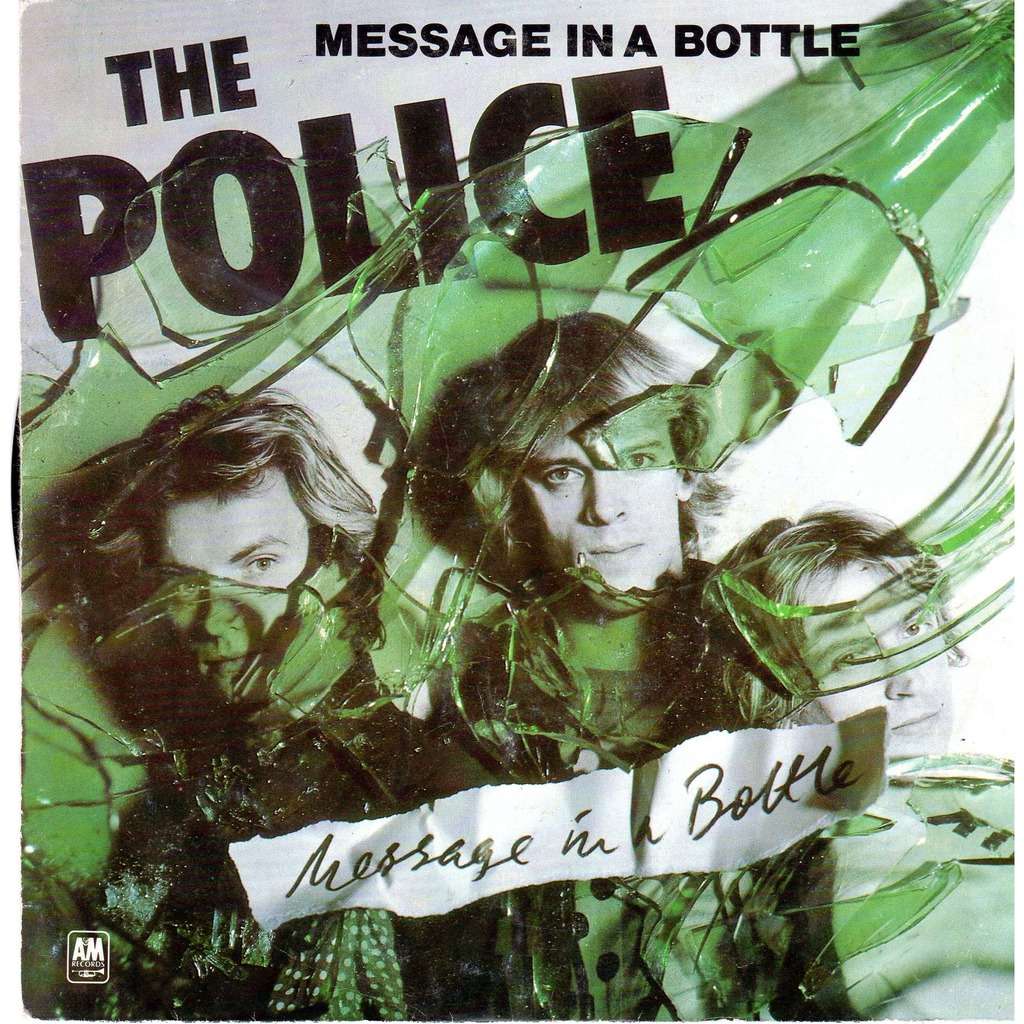
It’s one of those songs that I would have bet charted higher in the US than it did. In America, “Message In A Bottle” was just a minor hit, peaking at #74 in the Billboard 100 in 1979. It wasn’t until their third album, Zenyatta Mondatta, released in 1980, that the group got much attention in the US.
The song peaked at #1 in the UK, #2 in Canada, and #11 in New Zealand.
Sting:“I used to sing Gregorian chants and plainsong as an altar boy. A lot of my melodies might reflect that love and my early exposure to that stark, melodic narrative. ‘Message In A Bottle’ reflects that, too.”
“I think the lyrics are subtle and well crafted enough to hit people on a different level from something you just sing along to. It’s quite a cleverly put together metaphor. It develops and has an artistic shape to it.”
From Songfacts
This song is about a guy stranded on a remote island. One day he finds a bottle, puts a message in it and throws it out to sea in hopes that someone will find it and come save him. He’s thrilled to wake up one morning and find a whole bunch (a hundred billion, by his count) of bottles on the shore, proving there are many other castaways just like him. The lyrics can be seen as a metaphor for being lonely and realizing there are lots of people just like you. >>
Guitarist Andy Summers said it was the best track he ever played on.
Until they were inducted into the Rock and Roll Hall of Fame, this was the last song The Police played together; after breaking up in 1986, they performed it at Sting’s wedding to Trudie Styler in 1992. Sting, Stewart Copeland, and Andy Summers were all a little drunk and didn’t play it very well, but the guests loved it. In 2003, The Police got together again for the induction ceremonies, where they played this along with “Roxanne” and “Every Breath You Take.”
This was the first single from the second Police album, Reggatta De Blanc (which means “White Reggae” in Police-speak). In the UK, their first album, Outlandos d’Amour, was released a year earlier but was still being discovered. “Roxanne” and “Can’t Stand Losing You” had charted, but the band was still bubbling under. “Message In A Bottle” was when they exploded in Britain; the song went to #1 on September 29, 1979 and stayed for three weeks. Their next single, “Walking On The Moon,” also went to the top. At this point, “So Lonely,” a track from their first album that flopped when it was issued as a single, was re-released, reaching #6 in March 1980.
Sting wrote in Lyrics By Sting: “I was pleased that I’d managed a narrative song with a beginning, a middle, and some kind of philosophical resolution in the final verse. If I’d been a more sophisticated songwriter, I would have probably illuminated this change of mood by modulating the third verse into a different key. But it worked anyway.”
This song is “Hey Jude”-like in its outro, with the phrase “sending out an SOS” repeated over and over for over a minute as it slowly fades. We counted 25 repetitions of the phrase.
Drummer Stewart Copeland overdubbed some cymbals and snare on top of this section, which he later came to regret. “I just overdid it,” he told Songfacts. “Where was Andy [Summers] when we needed him? Because usually it was Andy who was the limiter of our indulgence. He must have stepped out of the studio.”
The first person to hear the guitar riff for this song was not a person at all, but Sting’s dog. “I used to play it over and over again to my dog in our basement flat in Bayswater,” Sting wrote in Lyrics By Sting, “and he would stare at me with that look of hopeless resignation dogs can have when they’re waiting for their walk in the park. Was it that hopeless look that provoked the idea of the island castaway and his bottle? I don’t know, but the song sounded like a hit the first time we played it. The dog finally got his walk, and this song was our first number-one in the UK.”
This was the first-ever UK #1 for the A&M label, which Herb Alpert and Jerry Moss founded in 1962.
This might be the most famous song where a singer sends out an SOS distress signal, but it’s certainly not the only one. The Clash did it in “London Calling,” and many groups have done it metaphorically to signify love gone wrong.
Sting performed this at an Amnesty International benefit in 1981 that was used in a film released the following year called The Secret Policeman’s Other Ball.
This was one of the most popular live songs for the band, played at just about every concert after it was released, often as the set opener. Sting continued to perform it as a solo artist, including at his set at Live Aid in 1985.
After MTV launched in 1981, The Police made some high-concept, big-budget videos that were huge on the network. Prior to that, their videos were more restrained. The “Message in a Bottle” video combines concert footage with shots of the band performing it in some kind of backstage area. It was directed by Derek Burbidge.
Sting performed this with No Doubt at halftime of the 2003 Super Bowl between the Bucs and Raiders. No Doubt lead singer Gwen Stefani came out and sang with him about midway through. Stefani inducted Police into the Rock and Roll Hall of Fame later that year.
It may surprise you to learn that the song was influenced by the church music that Sting used to sing as a child. He explained in Isle of Noises by Daniel Rachel: isode “Fallen Angel”; in Doctors, in the 2011 episode “Message in a Bottle”; and in The Office (US), in the 2007 episode “Phyllis’ Wedding.”
The Police boxed set is called Message In A Box as a reference to this song.
The industrial metal band Machinehead covered this on their 1999 album The Burning Red >>
There is a 1999 film by the same name starring Kevin Costner, Robin Wright Penn, and Paul Newman that is not directly connected to this song. >>
In 2003, this song got the post-punk treatment when American Hi-Fi covered it for the film Rugrats Go Wild.
Message In A Bottle
Just a cast away an island lost at sea-o Another lonely day, no one here but me-o More loneliness than any man could bear Rescue me before I fall into despair-o
I’ll send an S.O.S. to the world I’ll send an S.O.S. to the world I hope that someone gets my I hope that someone gets my I hope that someone gets my message in a bottle yeah Message in a bottle yeah
A year has passed since I wrote my note But I should have known this right from the start Only hope can keep me together Love can mend your life but love can break your heart
I’ll send an S.O.S. to the world I’ll send an S.O.S. to the world I hope that someone gets my I hope that someone gets my I hope that someone gets my message in a bottle yeah Message in a bottle yeah Oh message in a bottle yeah Message in a bottle yeah
Walked out this morning I don’t believe what I saw A hundred billion bottles washed up on the shore Seems I’m not alone in being alone A hundred billion castaways looking for a home
I’ll send an S.O.S. to the world I’ll send an S.O.S. to the world I hope that someone gets my I hope that someone gets my I hope that someone gets my message in a bottle yeah Message in a bottle yeah Message in a bottle whoa Message in a bottle yeah
Sending out an S.O.S. Sending out an S.O.S. I’m sending out an S.O.S. I’m sending out an S.O.S. Sending out an S.O.S. Sending out an S.O.S. Sending out an S.O.S. Sending out an S.O.S. Sending out an S.O.S. Sending out an S.O.S. Sending out an S.O.S. Sending out an S.O.S. Sending out an S.O.S. Sending out an S.O.S. Sending out an S.O.S. Sending out an S.O.S. Sending out an S.O.S. Sending out an S.O.S. Sending out an S.O.S. Sending out an S.O.S. Sending out an S.O.S. Sending out an S.O.S. Sending out an S.O.S. Sending out an S.O.S. Sending out an S.O.S.
I’ve heard this one a lot but I still love that simple bass line that drives the song. They did manage to get 8 songs in the Billboard 100 but with only two top twenty hits. Radar Love is a great driving song.
This song peaked at #13 in the Billboard 100 and #7 in the UK in 1973.
Golden Earring was founded 1961 and into the ’00s was still playing with the same lineup since 1970, doing 100+ shows a year in The Netherlands, Belgium, and Germany. The group is from The Netherlands, where this was a #1 hit. They had only one other hit. It didn’t come until 1982, with “Twilight Zone.”
To celebrate the fiftieth anniversary of the band, Golden Earring recorded a new track in October 2019, titled “Say When”
The time signatures to this song are quite different than your normal songs. I found this about it…so Jeremy if you are reading…you might be interested.
The song is all in 4/4 time, and the original tempo is around 100 BPM. It’s a very clever arrangement: the intro is on the beat of each bar at the start. The shuffle on the snare is semi triplets which give the illusion of the song speeding up. You have to quantize drum machines to a 6th beat. Consequently, the chorus is doubled up to give the impression that the tempo has speeded up to 200 BPM. You have to transpose the 4/4 bar so it can be played with in 1 beat of the bar. It does take a bit of lateral thinking to get your head around the math, but the song is all 4/4 at 100 BPM.
From Songfacts
Before you could send a text message or call someone in their car, there was no way to communicate to a driver – unless you had a certain telepathic love that could convey from a distance your desire to be with that person, something you might call – Radar Love. In this song, the guy has been driving all night, but keeps pushing the pedal because he just knows that his baby wants him home.
Like many of Golden Earring’s songs, this began with the title and grew from there. Originally intended only as an album track, it turned out to be the only cut on their US debut album Moontan that they could whittle down to a single for radio. It became their showstopper at concerts, and provided a striking moment for their drummer Cesar Zuiderwijk, who would take a few steps back and leap at the drum kit near the end of the song.
This song is featured in the movie Detroit Rock City, about four teenage boys and their struggle to finally see the band KISS play live.
The website http://www.radar-love.net details lots of info on the use and abuse of this song. It has been covered over 250 times: Notable versions include Bryan Adams, U2, Crowded House, Def Leppard, R.E.M. and Carlos Santana. It has also been used in TV shows The Simpsons, The X-Files, Beverly Hills, 90210 and My Name Is Earl. Movie usages include The Break-Up, Pushing Tin and Wayne’s World 2.
White Lion had a minor hit with their cover of this in 1989.
UK radio station Planet Rock carried out a survey of their listeners in 2011 regarding their favourite tracks for in-car listening. This song came out top with Deep Purple’s “Highway Star” the runner-up and AC/DC’s “Highway To Hell” in third place.
The line, “The radio’s playing some forgotten song, Brenda Lee’s coming on strong” is a reference to the 1966 Brenda Lee song “Coming On Strong,” which made #11 US.
Radar Love
I’ve been drivin’ all night, my hands are wet on the wheel There’s a voice in my head that drives my heel My baby call said I need you here It’s half past four and I’m shifting gears
When she gets lonely and the longing gets too much She sends a cable coming in from above Don’t need a phone at all We got a thing that’s called radar love We got a wave in the air Radar love
The radio’s playin’ some forgotten song Revelry’s coming on strong The road has got me hypnotized As I spin into a new sunrise
When I get lonely and I’m sure I’ve had enough She sends comfort coming in from above Don’t need no letters at all We got a thing that’s called radar love We got a line in the sky
No more speed I’m almost there Gotta keep cool, now, gotta take care Last car to pass, here I go The line of cars drove down real slow The radio plays that forgotten song Brenda Lee’s coming on strong The news man sang his same song One more radar lover gone
When I’m feeling lonely and I’m sure I’ve had enough She sends the comfort coming in from above Don’t need no radio at all We got a thing that’s called radar love We got a light in the sky We got a thing and its called radar love We got a thing that’s called Radar love
Got a wife and kids in Baltimore, Jack I went out for a ride and I never went back Like a river that don’t know where it’s flowing I took a wrong turn and I just kept going
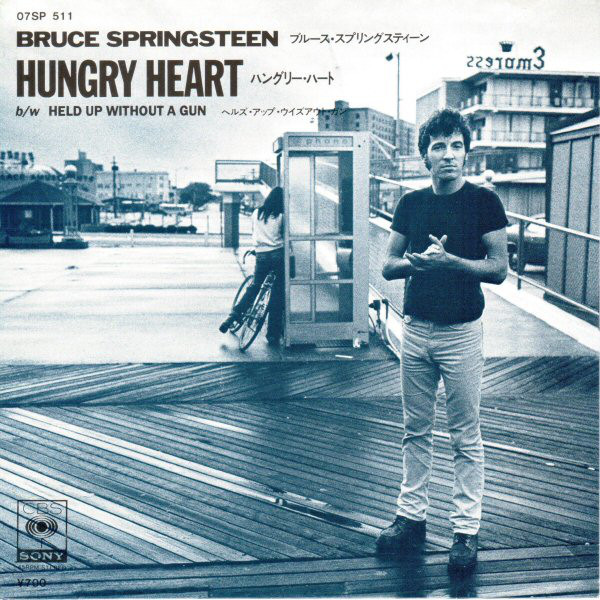
It’s hard to beat that as an opening verse…once I heard that I was hooked. Springsteen met Joey Ramone in Asbury Park, New Jersey, Ramone asked Bruce to write a song for his band, The Ramones. Springsteen wrote “Hungry Heart” that night but decided to keep it.
Mark Volman and Howard Kaylan (Flo and Eddie) of The Turtles sang backup.
The song was on the album The River. The album peaked a #1 in the Billboard Album Charts in 1980. Hungry Heart peaked at #5 in the Billboard 100 in 1980. This was Springsteen’s first top 10 hit.
Bruce Springsteen:“I saw the Ramones in Asbury Park,” “and we were talking for a while and I was like, ‘Man I’ve got to write the Ramones a song.’ So I went home and I sat at my table and I wrote it in about the time it took me to sing it. I brought it in and we went to make a demo for it or I played it for [Johnny Ramone], and he said, ‘Nah, you better keep that one.’ He was right about that. It did pretty well.”
From Songfacts
This was Springsteen’s first Top 10 hit. Born To Run was a big album five years earlier, but did not have any hit singles. This song proved that Springsteen could not just sell concert tickets and albums, but could record hit pop songs.
This song explores a man’s wanderlust contrasted with his desire for a stable family life. Many of Springsteen’s songs are about wanting to get away, and in this song the main character concludes that he does not want to be alone.
Springsteen’s voice was slightly sped up on the recording, producing a higher vocal. Bob Dylan did the same thing on “Lay Lady Lay.”
This was used in the Tom Cruise movie Risky Business. It was the first time a Springsteen song was used in a film.
In the 1981 Rolling Stone reader’s poll, this was voted best single. Springsteen also won for Best Artist, Album, and Male Singer.
Bruce has the audience sing the first verse and chorus when he performs this live.
The single was backed with “Held Up Without A Gun.” This started a tradition of using songs that did not appear on his albums as B-sides.
This went to #28 when it was Reissued in England in 1995. The first time it was released it only went to #44.
Springsteen performed this with Crosby, Stills, Nash & Young at Young’s first annual Bridge School benefit concert in 1986.
Hungry Heart
Got a wife and kids in Baltimore, Jack I went out for a ride and I never went back Like a river that don’t know where it’s flowing I took a wrong turn and I just kept going
Everybody’s got a hungry heart Everybody’s got a hungry heart Lay down your money and you play your part Everybody’s got a hungry heart
I met her in a Kingstown bar We fell in love I knew it had to end We took what we had and we ripped it apart Now here I am down in Kingstown again
Everybody’s got a hungry heart Everybody’s got a hungry heart Lay down your money and you play your part Everybody’s got a hungry heart
Everybody needs a place to rest Everybody wants to have a home Don’t make no difference what nobody says Ain’t nobody like to be alone
Everybody’s got a hungry heart Everybody’s got a hungry heart Lay down your money and you play your part Everybody’s got a hungry heart







 PowerPop... An Eclectic Collection of Pop Culture