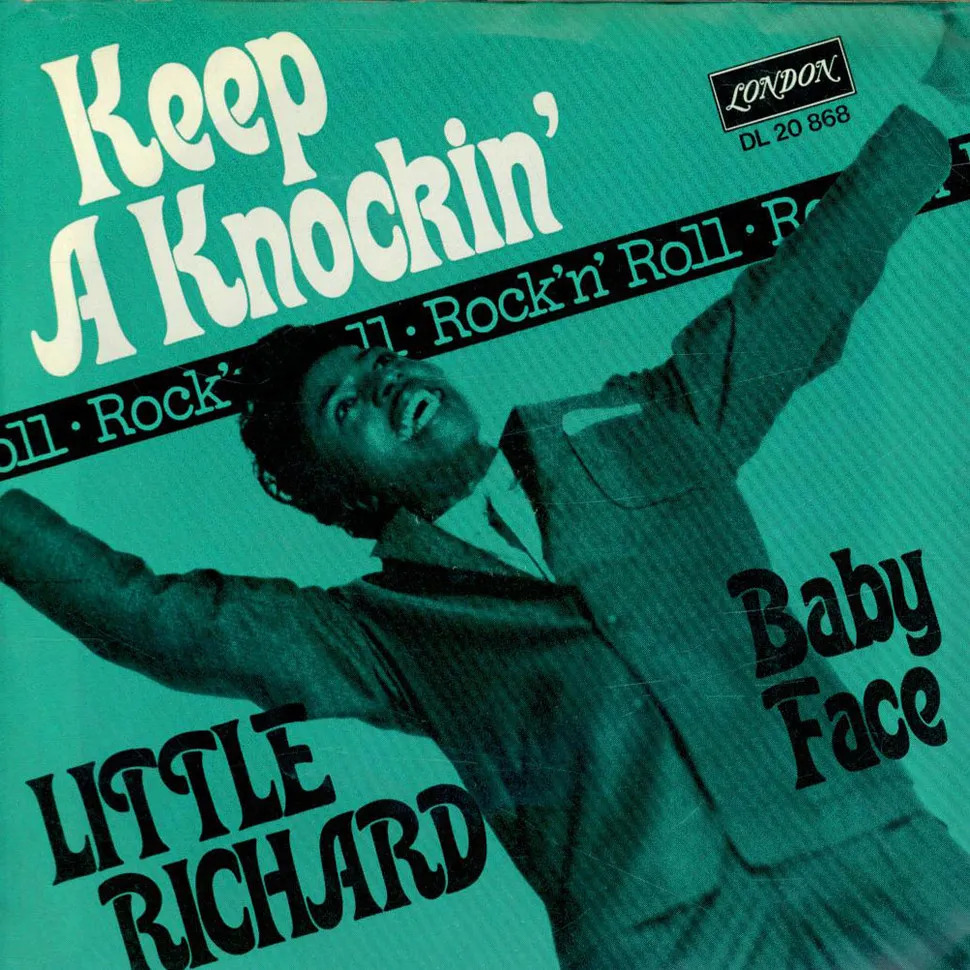
Little Richard – Keep A-Knocking

Every time I post Little Richard, I think of my dad. I never heard my dad gush over a music performer besides three artists. Elvis Presley, George Jones, and Little Richard. I think Richard was his favorite voice. He would tell me, no one, absolutely no one, sounded like Little Richard. My dad was born in 1938, so he was the perfect age (17) in 1955 to enjoy the rock and roll boom that was going on.

I only knew Richard from his manic songs, but Graham talked about him singing some ballads, so I checked them out. The man could sing a great ballad as well, but I’m not posting a ballad today. I had Little Richard’s greatest hits as a youngster, after all of the buildup from my dad. Since I got into the Beatles so early, I knew enough to know Paul was emulating Little Richard with Long Tall Sally. He did a great job, but nothing beats the man himself. 

From the opening crash of Charles Connor’s drums, a bolt of energy that feels like it might knock your turntable off its spindle. Richard isn’t asking anyone in; he’s telling the world to keep knocking because the party inside is already out of control. It’s controlled chaos, and I love it. I also love Samuel Parker’s breakout sax solo in the middle. 

The heartbeat of this song came from drummer Charles Connor, whose opening drum break is one of the most famous in rock history. Connor later said he borrowed the feel from a New Orleans parade rhythm and stripped it down. Connor has spoken about how Little Richard wanted the drums to sound like chaos barely held together, loud and urgent. That intro became so iconic that it later inspired John Bonham’s opening on Led Zeppelin’s Rock and Roll, but the original blueprint belongs to Charles Connor.

Listening to this song is like taking speed for 2 minutes. The lyrics are almost childishly simple, but the delivery makes them monumental. If you want to explain why Little Richard matters, just listen to this song and stand back. This is the sound of the door being slammed on the old world and kicked open into something louder and faster. No polish or no restraint.

The song was released in 1957, and it was credited to Little Richard but he wrote it based on a blues song by James “Boodle It” Wiggins in 1928 called Keep a-Knocking An You Can’t Come In. The song peaked at #8 on the Billboard 100, #2 on the Billboard R&B Charts, and #21 in the UK in 1957. 

Keep A-Knocking

Keep a knockin’, but you can’t come inKeep a knockin’, but you can’t come inKeep a knockin’, but you can’t come inCome back tomorrow night and try it again

You said you love me and you can’t come inYou said you love me and you can’t come in (woo!)You said you love me and you can’t come inCome back tomorrow night and try it again (woo!)

Keep a knockin’, but you can’t come inKeep a knockin’, but you can’t come inKeep a knockin’, but you can’t come inCome back tomorrow night and try it again

You said you love me and you can’t come inYou said you love me and you can’t come in (woo!)You said you love me and you can’t come inCome back tomorrow night and try it again (woo!)

Keep a knockin’, but you can’t come inKeep a knockin’, but you can’t come in (woo!)Keep a knockin’, but you can’t come inCome back tomorrow night and try it again

You said you love me and you can’t come inYou said you love me and you can’t come inYou said you love me and you can’t come inCome back tomorrow night and try it again (woo!)

“You shouldn’t like music that was made before you were born”

I thought I would do something different today. I was reminded of this by the phrase, “it was before my time.” Movies and music fall into this category. I do know people who will not watch movies made “before their time.” I don’t think many of my readers would agree to this statement, but who knows?

I had a co-worker in the early 2000s (Sam) tell me that I shouldn’t like music that was before my time because it was unnatural (yes, he said that). I was first kinda of amused and shocked. I like Sam a lot, and we would talk a lot; he is a smart fellow. However, on this point, I didn’t understand. Why? Is there some unwritten law that I can’t like 1950s or 1960s music up to 1967, when I was born?  That cut off some of the best music of the 20th century and beyond.

He grew up in the 80s, as I did,  and was probably around 5 or so years younger than me. I’ve seen other people act the same way. If it were before they were born, then they would not give it a second listen. If a movie is black and white, they act as if they are near a radiation leak!

 I think the subject centered around how I loved 50s and 60s music and The Beatles, The Who, The Stones, and The Kinks. He said I should be listening to music from my teenage years (well, I WAS…60s music was my soundtrack growing up), but I DID listen to the top 40 when I was a teenager, which, to me, didn’t live up to those bands to any degree or form. Maybe it wasn’t fair to compare Men Without Hats to those 1960s bands. It was hard to stomach some of the ’80s for me, but not all. Now I’m busy catching up on music I missed that wasn’t on Top 40 radio at the time. I did find an oasis in the 80s, alternative music like The Replacements and REM…and the classic bands.

I still want to find other music and movies I like. Why would age have any effect on the music, whether we like it or not? That doesn’t mean I don’t like new music. I have posted newer bands here before who have just released albums. If it’s good, it doesn’t matter what era it came from, at least not to me. Christian, Graham, and Lisa all posted some newer songs that I liked. With movies, yes, I find some I like. I just saw Weapons and loved it, plus there are others.

I’m not putting people down at all who think like that. Hey, if that is what they believe, more power to them. I never believed in criticizing people for their opinions, music, or otherwise. Whatever blows their hair back.

Anyway, what do you think? 

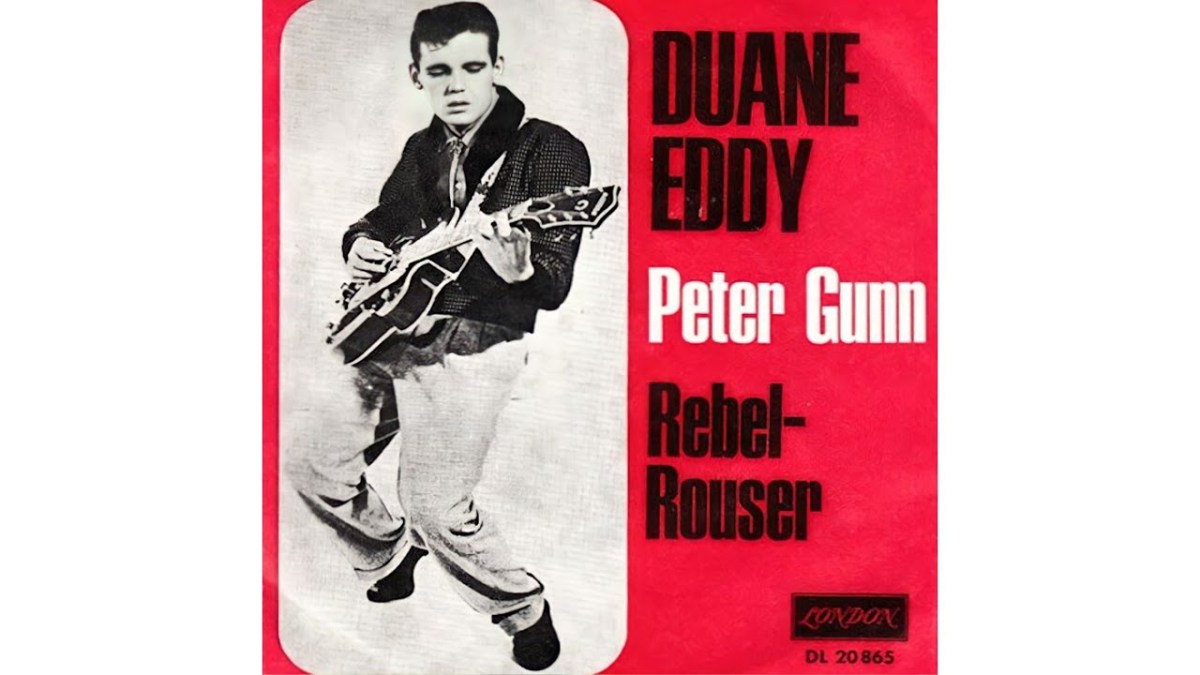
Duane Eddy – Peter Gunn

I’ve always liked this song. It was originally by Henry Mancini for the Peter Gunn television show in 1958. I love instrumentals, and this is one of the best. I think the heyday of instrumentals was the fifties and sixties.

This (and many of his songs) was recorded in a Phoenix studio, which had an echo chamber that was originally a large water tank. A single speaker was placed at one end of the tank, the microphone at the other, and the guitar was piped in there. It’s hard to mimic that with a reverb stomp box.

Duane Eddy, the man who made a single twangy note sound like thunder rolling across the land. In 1959, he took Henry Mancini’s already cool Peter Gunn TV theme and turned it into something leaner and meaner. Backing him up was producer Lee Hazlewood, who knew how to turn an amplifier and that echo chamber into sonic gold. Together, they recorded this song in Phoenix, with a rhythm section that was tight and lean.

I like how Eddy arranged his songs. No big flashy solos or seeing how fast he could play, just that sound he had, never letting up. Duane Eddy laid the groundwork for surf music, spy soundtracks, and even hard rock. Everyone from The Ventures to George Harrison took notes from that tone.

The song peaked at #27 on the Billboard 100, #30 in Canada, and #6 in the UK in 1959 and 1960.

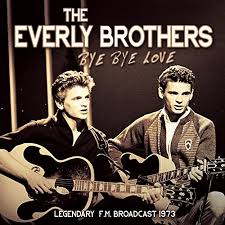
Everly Brothers – Bye Bye Love

Love the intro to this song. It’s the kind of song that turns teenage heartache into pure joy. This song was my introduction to the Everly Brothers, and I have never stopped listening. 

The husband-and-wife songwriting team of Boudleaux and Felice Bryant wrote this song. Together, this talented couple wrote many hits for the Everly Brothers and other artists, including Wake Up Little Susie and All I Have To Do Is Dream. The Bryants are credited with being the first songwriters to come to Nashville and make a living only by writing songs. Almost 30 other artists had previously rejected this song before The Everly Brothers recorded it. It became their first hit in both the UK and the US.

Behind the scenes, the recording session was minimal: two voices, a couple of guitars, Floyd Chance on upright bass, and Buddy Harman on drums, but the sound was huge. The Everlys blended country, pop, and rock ’n’ roll, and it gave teenagers something they hadn’t quite heard before. That ringing acoustic rhythm became very influential, later inspiring everyone from The Beatles to Simon & Garfunkel, The Hollies, and countless power-pop bands down the road.

This song was more than just a hit; it opened doors. The Beatles modeled their early vocal style after Don and Phil. Keith Richards once said that hearing the Everly Brothers changed everything for him. The song has been covered by everyone from Simon & Garfunkel to George Harrison. It’s a rare song that never feels dated

The song peaked at #2 on the Billboard 100, #1 on the Billboard  Country Charts, #2 on Canada’s CHUM charts, #1 in New Zealand, and #6 in the UK in 1957. It was recorded in Nashville at the RCA Studios.

Boudleaux: “I wrote ‘Bye Bye Love’ while traveling home one night. Felice was driving down the highway and I got the first verse and chorus right down there. I always make sure I have a pen and paper in the car for these occasions.”

“We really believed in the song and were disappointed when so many people turned it down. They said it was unsuitable, some even asked if we has anything better!”

Bye Bye Love

Bye bye love
Bye bye happiness, hello loneliness
I think I’m-a gonna cry-y
Bye bye love, bye bye sweet caress, hello emptiness
I feel like I could di-ie
Bye bye my love goodby-eye

There goes my baby with-a someone new
She sure looks happy, I sure am blue
She was my baby till he stepped in
Goodbye to romance that might have been

Bye bye love
Bye bye happiness, hello loneliness
I think I’m-a gonna cry-y
Bye bye love, bye bye sweet caress, hello emptiness
I feel like I could di-ie
Bye bye my love goodby-eye

I’m-a through with romance, I’m a-through with love
I’m through with a’countin’ the stars above
And here’s the reason that I’m so free
My lovin’ baby is through with me

Bye bye love
Bye bye happiness, hello loneliness
I think I’m-a gonna cry-y
Bye bye love, bye bye sweet caress, hello emptiness
I feel like I could di-ie
Bye bye my love goodby-eye

Bye bye my love goodby-eye

Bye bye my love goodby-eye

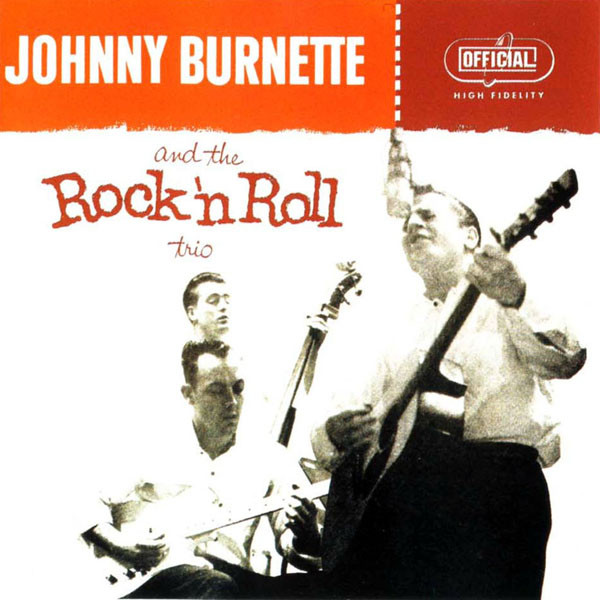
Johnny Burnette Trio – Tear It Up

There is not a week that goes by that I don’t listen to some rockabilly. It’s not just the leads, it’s the fills as well. Rockabilly music is like this machine where parts are moving everywhere, but it always falls into place.

In this song, it’s not the opening riff that gets to me; it’s the fills that the guitar player is playing while Johnny is singing. He also slips some basslines in, all the while the bass is throwing some in as well. When you analyze this music, it can be chaotic, but when done right, it’s hard to resist. It’s like music climbing a ladder on one side and coming back down on the other at the same time.

This song was released in 1956; a very unpolished burst of energy that still sounds electric seventy years later. The Rock ’n Roll Trio, Johnny on vocals and rhythm guitar, his brother Dorsey on bass, and Paul Burlison on guitar, made a sound that helped define the very idea of rockabilly.

While it didn’t chart at the time, its influence was huge. The record’s mix of rhythm and attitude caught the attention of British musicians, guys like Jeff Beck, Keith Richards, Jimmy Page, and Paul McCartney, who all cited Burnette’s Trio as a crucial influence. The Stray Cats and Robert Gordon helped revived rockabilly in the late 1970s and early 1980s; this song was one of the first songs they covered. You might remember another song by Johnny, Train Kept a Rollin’ and it was covered by Aerosmith and The Yardbirds.

If you only like smoothly produced music, rockabilly is not for you. If you want a primal sound, welcome aboard!

Tear It Up

Come on little baby let’s tear the dancefloor up
Come on little mama let me see you strut your stuff
Tear it up, tear it up
Come on little baby let me see you strut your stuff

I’m leavin’ little baby, gonna be gone a long-long time
So come on little baby, show me a real good time
Tear it up, tear it up
Come on little mama let’s tear the dancefloor up
(Goow!)

Well you step back baby, move my way
Step around again an’ let me hear you say
Tear it up, tear it up
Come on little baby let’s tear the dancefloor up
Tear it up, tear it up
Come on little mama let’s tear the dancefloor up

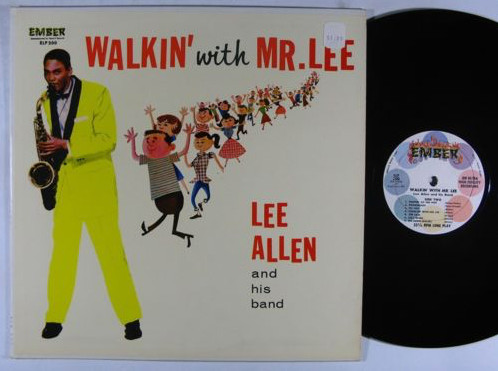
Lee Allen – Walking With Mr. Lee

I’m sitting here with my headphones on and listening to this instrumental, Walking With Mr. Lee. This one makes me feel like I’m walking down a street in the 1950s, flushed with money. Not every classic needs a big chorus or a star singer; sometimes it’s a great musician taking a walk and inviting us all to follow…and follow I will. 

Allen grew up in Denver after being born in Pittsburg, Kansas, and headed to New Orleans on a combined athletics and music scholarship to Xavier University in the mid-1940s. He fell straight into the city’s music scene, working alongside Dave Bartholomew’s crew with Red Tyler, Earl Palmer, and company. He worked with the best, and that included Fats Domino (Allen played on many of his records), Lloyd Price, Huey “Piano” Smith, Professor Longhair, The Blasters, The Stray Cats, Allen Toussaint, The Rolling Stones, and, crucially, Little Richard’s 1955-1956 Specialty singles that were full of Allen’s saxophone.

So Mr. Allen wasn’t a guy who came out of nowhere. He rarely showed off; he guided the band, nudging Fats Domino forward, egging Little Richard on, and making every garage band probably think, “we need a sax.” As Chuck Berry’s guitar was so important to the 1950s, Lee Allen’s sax was in the thick of it as well.

I found a 1991 video featuring Lee Allen, Boots Randolph, Sil Austin, Hans & Candy Dulfer, and it’s definitely worth watching. Walking With Mr. Lee did become a minor hit, and it was played on American Bandstand constantly. The song passes my smile test…because when I hear it, I’m happy.

Lee Allen on sax with the Blaster.

No lyrics needed…just put some headphones on and enjoy.

Buddy Holly – Rave On

This song is always played when I’m in a Buddy Holly mood and even when I’m not. This song is so Buddy Holly. What I mean is he doesn’t complicate it; he just infuses this simple song with energy, and the result tells it all. This is the kind of song that makes you remember why rock ’n’ roll mattered in the first place. It’s not about overthinking, it’s about fun.

The title was inspired by the 1956 Sun Records recording “Dixie Fried” by Carl Perkins, which uses the refrain “rave on.” The B-side was Holly’s composition “Take Your Time“. Petty’s production gave the song just enough polish without sanding down all the grit. I think Holly understood that a song could be a bolt of lightning, two minutes of pure adrenaline.

This was written by Sonny West, Bill Tilghman, and Norman Petty and recorded in January 1958 at Petty’s New Mexico studio, where Holly laid down most of his hits. Petty wanted to give it to another act, but Holly protested and persuaded the songwriters to let him record it. Holly and the Crickets transformed it into the definitive version.

Every time I hear Rave On, I picture a small garage with a beat-up amp, drums, a cheap guitar, and a group of kids who believe they can play rock music. And thanks to Buddy, they can.

The song peaked at #5 in the UK, #12 in Canada, and #37 on the Billboard 100 in 1958. 

Rave On

A we-a-e-a-ell
The little things you say and do
Make me want to be with you-a-hoo
Rave on, it’s a crazy feelin’ and
I know it’s got me reelin’
When you say, I love you, rave on

The way you dance and hold me tight
The way you kiss and say goodni-hi-hight
Rave on, it’s a crazy feelin’ and-a
I know it’s got me reelin’
When you say, I love you, rave on

A-well rave on, it’s a crazy feelin’ and
I know, it’s got me reelin’
I’m so glad, that you’re revealin’
Your love for me
Rave on, rave on and tell me
Tell me, not to be lonely
Tell me, you love me only
Rave on to me

A-well rave on, it’s a crazy feelin’ and
I know, it’s got me reelin’
I’m so glad, that you’re revealin’
Your love for me
Rave on, rave on and tell me
Tell me, not to be lonely
Tell me, you love me only
Rave on to me

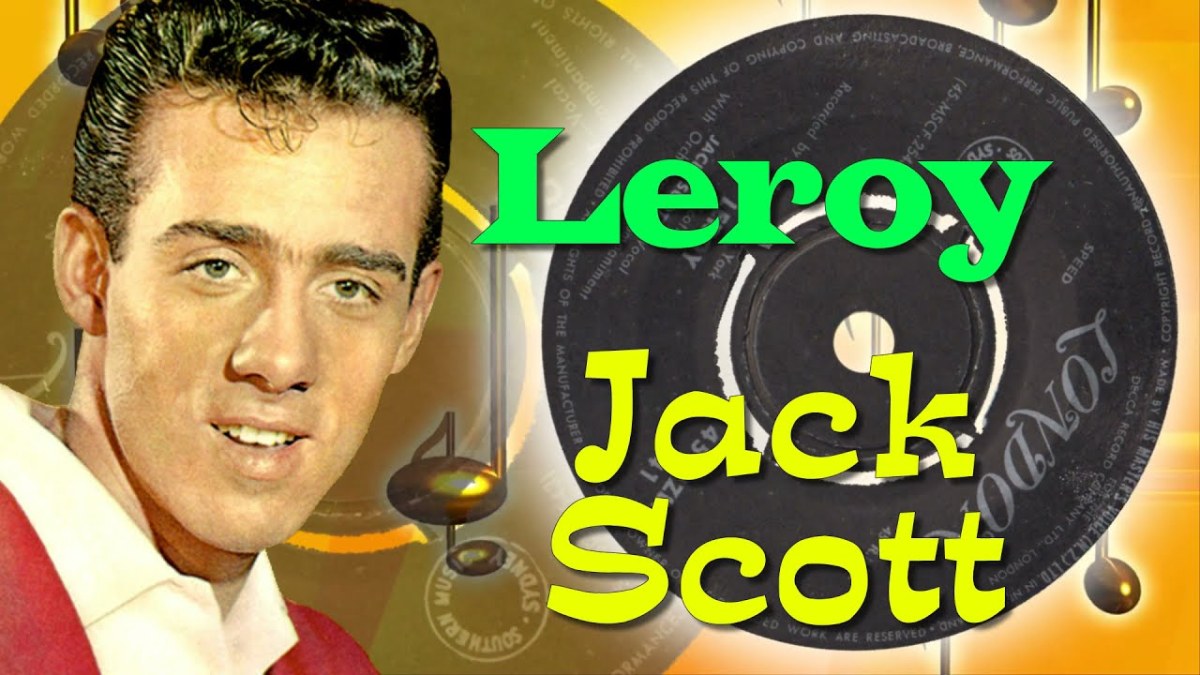
Jack Scott – Leroy

I wanted to hear some rockabilly, and that is how I ran across Canadian Jack Scott. As successful as he was, I’m surprised he is not known more.

He was born, Giovanni Domenico Scafone Jr., in Windsor, Ontario, in 1936. Scott grew up straddling the border between Detroit and Canada. That location shaped his sound. He was influenced by gospel, country, R&B, and the raw early rock, blending them into a voice and style that didn’t quite fit into any one style or box. By the late 1950s, he was producing records that rivaled those of Elvis Presley, Gene Vincent, and Roy Orbison.

Jack Scott released 19 singles that charted on the U.S. Billboard 100 between 1958 and 1961, which was a remarkable number for the era. This was more U.S. singles in a shorter time than any other recording artist, except for The Beatles. Again, it looks like he would be more well-known.  

Scott’s chart success slowed down after the early ’60s, but he never stopped performing. He returned to country music in the 1970s and maintained a loyal fan base in rockabilly revival circles in Europe and North America. Today, he’s remembered as Canada’s first true rock ’n’ roll star, a bridge between rockabilly, country, and pop, and an artist whose influence can still be heard in roots rock.

This song came out in 1958, and it peaked at #11 on the Billboard 100 and #15 in Canada. I’m including another song called Goodbye Baby that peaked at #8 on the Billboard 100 and #3 in Canada. 

Leroy

I know a boy who was never blueNow he lives in cellblock twoI don’t know just why he’s blue…… leroy… whatd you do

Leroys back in jail again -2-I don’t know why, why he’s blue…… leroy… whatd you do

Went to the judge, dig man wailI’m here and I got leroys bailJudge said son, don’tcha tell me no tale…… leroy, he’s gonna stay in jail

Now, leroy says man, you tried the bestMan, I’m here gonna take a rest.I’ve seen minny, she’s got the blues…… she let you wear my long pointed shoes

Now, leroys heart is a bowl of hateLeroy, he just can’t go straightTell my minny, I can’t keep my date…… I’m gonna be bout six months late

John Lee Hooker – I’m In The Mood

Hooker only needed a guitar and that voice to make any song interesting. If you ever needed proof that less really is more, play this song. 

There’s a reason John Lee Hooker didn’t need a band on this song. He was the band. A one-man rhythm machine with a foot that kept better time than some drummers I’ve seen on stage. In a way, this song is blues stripped to its bones. No solos. No pyrotechnics. Just mood, repetition, and that unmistakable voice. He doesn’t shout to get your attention; he commands, and you come running.

The song was recorded in Detroit, Michigan, where Hooker had relocated in the late 1940s. It was released in 1951 on Modern Records. It features Hooker on guitar and vocals, accompanied by minimalistic instrumentation.

He was fresh off the success of Boogie Chillen, and while that earlier hit was electric blues, this song was something different; smokier and more intimate.

This 1951 song was his first R&B #1 since Boogie Chillen in 1948. It also peaked at #30 on the US Hot 100 that year. It was a hit in the juke joints and on jukeboxes. It made people lean in, not turn up. And it cemented Hooker’s place as something far more than a bluesman.

I’m In The Mood

I’m in the mood, babyI’m in the mood for loveI’m in the mood, babyI’m in the mood for loveI’m in the mood, in the moodBabe, I’m in the mood for love

I say, nighttime is the right time, to be with the one you loveYou know when the night come, baby got no use so far away

I’m in the moodI’m in the mood, babeI’m in the mood for loveI’m in the mood, in the mood, babyIn the mood for love

I said, yes my mama told me, “Don’t leave that girl alone”But my mama didn’t know, God know, yeah, I wouldn’t put it down

I’m the moodI’m in the mood, baby, mood for loveI’m in the mood, I’m in the moodBabe, in the mood for love

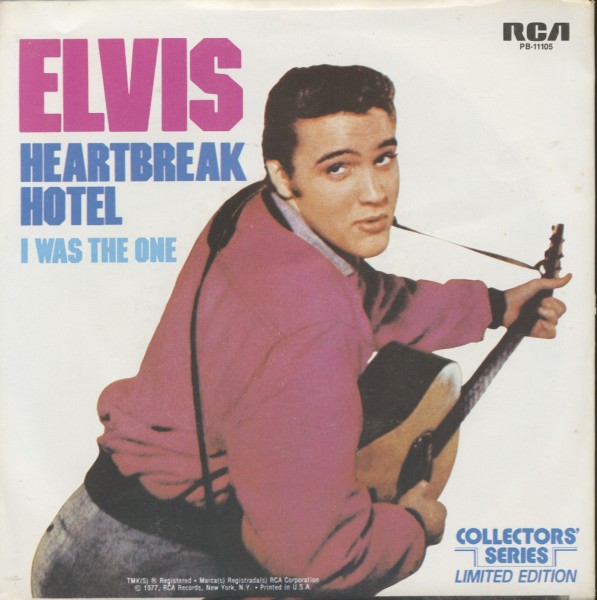
Elvis Presley – Heartbreak Hotel

One of the most perfect Rock and Roll songs ever. There are many different eras of Elvis. This is not the jumpsuit Elvis or even the great comeback Elvis. This is the mid-fifties Elvis, who I think is untouchable. 

This 1955 song found Elvis Presley right on the cusp. He’d already cut a few sides for Sun that shaped hillbilly music into something sharp and unruly, but this was his first single for RCA. The stakes were high, and the sound? Even higher. Everything about Heartbreak Hotel is drenched in echo. Not just the vocals, which slap back like they’re ricocheting off the walls, but the very mood of it.

Chet Atkins and Scotty Moore laid down little guitar stabs. Floyd Cramer’s piano combines with the emptiness. RCA execs weren’t sure about it. They wanted something upbeat. Something with bounce. But the public knew better, as they usually do.  The song was written by Hoyt Axton’s mother, Mae Boren Axton, who wrote the music, and a steel guitar player from Nashville named Tommy Durden wrote the lyrics. He said he was inspired by a newspaper article about a man who killed himself at a hotel and left a note that stated, “I walk a lonely street.” 

The song peaked at #1 on the Billboard 100 and the Country charts and #2 in the UK Charts. It also reached #10 in the UK in 1971. The first RCA sessions were held on January 10, 1956, at their Nashville studios ( The Methodist Television, Radio and TV Studios, 1525 McGavock Street, Nashville), and that’s where Elvis recorded this song. His backing musicians were his mainstays, Scotty Moore on electric guitar and Bill Black on bass, D.J. Fontana on drums, Floyd Cramer on piano, and Chet Atkins on acoustic guitar.

Heartbreak Hotel

Well, since my baby left me
Well, I found a new place to dwell
Well, it’s down at the end of Lonely Street
At Heartbreak Hotel
Where I’ll be–where I get so lonely, baby
Well, I’m so lonely
I get so lonely, I could die

Although it’s always crowded
You still can find some room
For broken-hearted lovers
To cry there in the gloom
And be so, where they’ll be so lonely, baby
Well, they’re so lonely
They’ll be so lonely, they could die

Well, the bellhop’s tears keep flowin’
And the desk clerk’s dressed in black
Well, they’ve been so long on Lonely Street
Well, they’ll never, they’ll never get back
And they’ll be so, where they’ll be so lonely, baby
Well, they’re so lonely
They’ll be so lonely, they could die

Well now, if your baby leaves you
And you have a sad tale to tell
Just take a walk down Lonely Street
To Heartbreak Hotel
And you will be, you will be, you will be lonely, baby
You’ll be so lonely
You’ll be so lonely, you could die

Well, though it’s always crowded
You still can find some room
For broken-hearted lovers
To cry there in the gloom
And they’ll be so, they’ll be so lonely, baby
They’ll be so lonely
They’ll be so lonely, they could die

Ricky Nelson – Lonesome Town

Ricky Nelson’s 1958 hit Lonesome Town is one of those songs that sneaks up on you, not with a scream, but with a sigh. Something about this song hits me when I hear it. When I think of Ricky Nelson, I think of this song over Garden Party or any other for some reason. 

The production is sparse, but that’s the point. Just a hushed acoustic guitar, a ghostly bassline, and the Jordanaires humming like they’re trapped behind church doors. The reverb wraps around Nelson’s voice like fog rolling in over the streets of this town. Ricky Nelson might not have had Elvis’s sneer or Jerry Lee’s wildness, but he had something those guys didn’t always chase…subtlety.

Not only do we have Ricky Nelson singing, but the great Jordanaires backing him up. The loneliness conveyed in this song still works. The song peaked at #7 on the Billboard 100, 1958. The song was written by Baker Knight. Knight wrote more hits for Ricky Nelson and more. Elvis, Dean Martin, Frank Sinatra, Paul McCartney, and Jerry Lee Lewis covered his songs. 

Ricky Nelson was huge in the 50s, given his constant exposure on The Adventures of Ozzie and Harriet… This song was a change for him at the time, as he usually did up-tempo songs. The show ended up hurting him a bit in the long run. It was a while before people took him as seriously as a performer. 

I first heard this song in the 1980s, listening to an oldies channel that stayed locked in for me. I was reminded of it later in the mid-nineties with a Pepsi Commercial. 

Lonesome Town

There’s a place where lovers go to cry their troubles away
And they call it lonesome town, where the broken hearts stay
You can buy a dream or two to last you all through the years
And the only price you pay is a heartful of tears

Goin’ down to lonesome town, where the broken hearts stay
Goin’ down to lonesome town to cry my troubles away
In the town of broken hearts the streets are paved with regret
Maybe down in lonesome town I can learn to forget

There’s a place where lovers go to cry their troubles away
And they call it lonesome town, where the broken hearts stay
You can buy a dream or two to last you all through the years
And the only price you pay is a heartful of tears

Goin’ down to lonesome town, where the broken hearts stay
Goin’ down to lonesome town to cry my troubles away
In the town of broken hearts the streets are paved with regret
Maybe down in lonesome town I can learn to forget

Max’s Drive-In Movie – Sunset Boulevard

“I am big. It’s the pictures that got small.”

I didn’t find this movie until the 90s. In the late eighties, I was watching and reading about every silent movie and artist that I could. Clara Bow, Buster Keaton, and Charlie Chaplin were at the top of my list. Back then, you had to get book after more books. I would also find ads in magazines of people selling silent movies on VHS. 

In a  Keaton book, I saw this as a film credit. I then read some about the great Billy Wilder, director, screenwriter, and producer,  and I had to watch it. The movie did not disappoint. Buster’s part was nothing more than a cameo, but the movie more than made up for it. It’s funny how we find some movies. This would be high on top of my movie list. I’ve watched it so many times that I’ve lost count. I always notice something that I didn’t before. I keep hoping a change will happen, Joe will do something different, or just go back home. 

Billy Wilder’s Sunset Boulevard isn’t just a film noir. It’s a Hollywood horror story soaked in pool water and silent film ghosts. The real trick Wilder pulls here is making you feel both horror and heartbreak. Norma isn’t really a villain or a relic; she’s an open wound. She’s clinging to her dreams like a one-hit wonder who never got the memo that the charts moved on. And Joe Gillis? He’s the guy who sells out until he’s got nothing left but a typewriter and a guilty conscience.

The movie was released in 1950. By 1950, the first great silent film stars of the 20s were aging, and there was interest in knowing what happened to them. The Norma Desmond character was thought to be a composite of Mary Pickford, who lived her life in seclusion, Clara Bow, who had a mental illness, as well as some other silent greats. The name was a combination of silent-film star Norma Talmadge and silent movie director William Desmond Taylor, who was mysteriously shot and killed… and remains unsolved to this day..

The star of this movie, without a doubt, is Gloria Swanson as Norma Desmond. When we first meet Norma, we think she is just an over-the-top, egocentric former silent era actress. Slowly, we see what a psychotic existence she lives, and it only gets worse. Norma still thinks she is adored by millions. Her chauffeur, Max Von Mayerling, helps perpetuate this lie. We find out why as the movie goes along, and it is shocking. It will blow up in his face, but he never quits building her up.

The final scene is chilling. Norma Desmond is in a catatonic state, asking for a close-up. Her eyes alone will send a shiver down your spine. The movie is full of great actors and actresses. The focus is on William Holden, Gloria Swanson, and Erich Von Stroheim. Holden was a great actor who appeared in movies such as The Bridge on the River Kwai, Stalag 17, and The Wild Bunch. Erich Von Stroheim plays Max, and in the twenties, Erich was a silent movie actor but best remembered as an avant-garde director in the 1920s. Gloria Swanson was a very successful silent movie actress who made a successful move to sound pictures. She also appeared on Broadway in the 40s and 50s. She started many production companies in the 1920s and 30s.

PLOT (Spoilers)

Screenplay writer Joe Gillis was desperately trying to sell his stories, but Hollywood did not want to listen. Joe had talent, but he wasn’t trying to write something great…just something that would sell. He was going to have to return home to Dayton, Ohio, a failure if something didn’t happen and soon. His car was getting repossessed, and he was trying to hide it just for a little while. While being chased by creditors, he parks it in a decrepit old mansion. Little did he know that former silent movie star Norma Desmond still lived there.  She used to be a big (“I am big, it’s the pictures that got small”) star.

Joe Gillis ended up being invited to stay to edit Norma’s film screenplay that she wrote. That screenplay was going to be her return to film.  One thing leads to another, and Joe ends up being a kept man, and he doesn’t like it one bit. As time goes by, life at Norma’s mansion…it gets darker and darker. Joe is stuck there working on Norma’s horrible screenplay while playing the good boy. He gets new clothes, perks, and is not wanting for anything…except freedom. There is a price to be paid for being kept by Desmond. He sneaks out and sees a young girl whom he writes with and falls for, but cannot break Norma’s grip.

__________________________________________

The movie was written by Charles Brackett and Billy Wilder. It was directed by Billy Wilder and released in 1950. This movie is one of the greats. It’s a movie that anyone who is a film fan must watch.

“Alright, Mr. DeMille, I’m ready for my close-up” 

Yes, she was indeed ready…she spent years getting ready for her final starring role. Just not the role you would think.

Sister Wynona Carr – The Ball Game

One of my great loves in life is baseball. It lends itself to music and movies better than any other sport, in my opinion. I’ve been asked what are my favorite baseball songs. This one is in my top 5. It uses baseball as a metaphor, but I count it.  Some other songs are Centerfield by John Fogerty, Talkin’ Baseball by Terry Cashman, Did You See Jackie Robinson Hit That Ball?, and so many more. Also, the Baseball Project, which has Mike Mills from REM as a member. I first heard this song in Ken Burns’ documentary “Baseball” in the mid-nineties. It was also in the movie about Jackie Robinson called 42. 

Sister Wynona Carr had such a powerful, soulful voice. This song is also known as Life Is A Ballgame. It’s a gospel song recorded by Sister Wynona Carr in 1952. The song uses baseball as a metaphor for life’s challenges, depicting Jesus as the coach and Satan as the opposing pitcher, with bases representing stages of temptation, sin, and tribulation.

Wynona Carr started her musical career in gospel, forming the Carr Singers around 1945. She later signed with Specialty Records, where she recorded around twenty gospel tracks between 1949 and 1954, including this song. Despite its initial success, Carr moved to popular music in the mid-1950s, exploring R&B and rock and roll genres.

She was influenced by Sister Rosetta Tharpe in bringing in jazz, gospel, and blues influences. Sister Wynonna Carr also wrote this song, which is incredible. I think it’s one of the best songs to use baseball as the subject. 

The Ball Game

Life is a ball game

Bein’ played each day

Life is a ball game

Everybody can play


Yes you know, Jesus standing at the home plate

He is waiting for you there

You know, the life is a ball game

But you’ve got to play it fast


The first base is temptation

You know the second base is sin

The third base tribulation

If you pass, you can make it in


Old man Solomon is the umpire

And Satan pitchin’ a game

He’ll do his best, strike you out

He playin’ just the same


You know, Daniel’s up to bat first

You know, he pray three times a day

Yes Satan pitched him a fast ball

But he hit it anyway


Yes you know, Job is up to bat next

Satan’s struck him in every way

But Job hit a home run

And he came on in that day


Yes you know, prayer is a strong bat

To hit at Satan’s ball

And when you start to swing it

You got to give it your all and all


Yes you know, the priest gonna be your catcher

And on him you can depend

Oh Jesus standing at the home plate

And He is waiting for you to come in


Yes you know, Moses is on the sidelines

Waiting to be called

You know, the day he parted the Red Sea

Little price all and all


Then John came in the ninth inning

And the game was almost done

Then God gave John a vision

And he knew we’d already won


Yes you know life is a ball game

Being played each day

You know life is a ball game

Each and everybody can play


Yes you know, Jesus is standing at the home plate

He is waiting for you there

Well you know, life is a ball game

But you’ve got to play it fast

Ronnie Hawkins and The Hawks – 40 Days

I’ve never posted a song on Ronnie Hawkins, and it was about time. I always loved his aggression on stage. I see these old clips of him, and he is everywhere. 

He was born in Huntsville, Arkansas, and became an important in the U.S. and Canadian music scenes. The guy could appear unhinged live, and I love that fact. From the film clips I’ve seen, he was all over the place. In the clip at the bottom, you will see a young blonde-headed Levon Helm on drums. 

In 1958, Hawkins toured Canada with The Hawks and decided to settle there, where he found a huge music scene. He became a Canadian citizen and remained in the country for much of his career. His decision to stay in Canada played a huge part in its rock and roll development.

Chuck Berry wrote 30 Days or Thirty Days (To Come Back Home) in 1955. Ronnie rewrote it as 40 days. Ernest Tubb, Cliff Richard, and The Tractors have covered it. It did really well in Canada, peaking at #4 and #45 on the Billboard 100 in 1959. 

A young Robbie Robertson, then a member of the Suedes, opened for Hawkins and the Hawks at the Dixie Arena in Toronto. He was impressed by Hawkins’ dynamic performance, and Robertson was eager to contribute material when he overheard Hawkins expressing a need for new songs for an upcoming recording session. He stayed up all night to write Someone Like You and Hey Boba Lu, both of which Hawkins recorded for his album Mr. Dynamo. He would join the Hawks in 1961. 

Ronnie is best known for the latter Hawks. In 1961, Robbie Robertson, Levon Helm, Rick Danko, Richard Manuel, and a 24-year-old kid named Garth Hudson would be the Hawks…and eventually break away from Hawkins and form The Band. 

40 Days

I’m gonna give you 40 daysTo get back homeI done called up a gypsy woman on the telephoneI’m gonna send out a world-wide who-do-thatAnd do the very thing that I should, yeahI’m gonna sentence you to be back home in 40 days

Whew! 40 days! (40 days)Whew! 40 days! (40 days)I’m gonna sentence you to be back home in 40 days(40 days)

I’m gonna send out a world-wide who-do-thatAnd do everything that I should, yeahI’m gonna sentence you to be back home in 40 days (40 days)

I heard ’em talkin’ to the judge in privateEarly this mornin’I heard they took it to the SherriffOffice to signed a warnin’

They’re gonna go and call a charge against youThat’d be the very thing that I’ll send youI’m gonna sentence you to be back in 40 days

Whew! 40 days! (40 days)Whew! 40 days! (40 days)I’m gonna sentence you to be back home in 40 days (40 days)

I’m gonna send out a world-wide who-do-thatAnd do everything that I shouldI’m gonna sentence you to be back home in 40 days (40 days)

Whoa, 40 days (40 days)Whew! 40 days(40 days)I’m gonna sentence you to be back home in 40 days(40 days)

I’m gonna go and call a charge against youThat’ll be the very thing that I send youI’m gonna sentence you to be back home in 40 days(40 days)

Diablos – The Wind

I’m reading Peter Wolf’s autobiography, and he mentioned this song being his and his first love’s song. I listened to it and instantly liked the guitar’s haunting mood and slight tremolo. It’s a doo-wop song from 1954, and it sounds heavenly. Many of the slow 50s doo-wop songs do sound haunting now. I think it was the production that helped as well. 

The record also mentioned “featuring Nolan Strong” on the record, and it’s posted as Nolan Strong and the Diablos. He was an outstanding singer.  The Diablos were a Detroit-based doo-wop group formed in the early 1950s. They had tight harmonies and Strong’s falsetto at the time set them apart. They recorded for Fortune Records, a label known for its gritty, cheap, and raw production style.

This was their biggest song and a cult classic. While it didn’t chart nationally, it became a staple on jukeboxes and a huge influence in Detroit. Nolan Strong became well-known among other musicians. Smokey Robinson said, “There was a guy who lived in Detroit and had a group called the Diablos. His name was Nolan Strong. They were my favorite vocalists at that time.” When Smokey Robinson says that…I automatically listen. Lou Reed added: “If I could really sing, I’d be Nolan Strong.” 

Berry Gordy had wanted to bring the Diablos into his growing Motown complex and is said to have offered Jack & Devora Brown $5,000 for the Diablos contract, but the deal never transpired, much to the disappointment of the group, who felt that Motown could have done a better job in promoting and recording them.

The song has been covered a few times, most notably by Laura Nyro in 1971 and a live version by her was released in 2002. The Chenille Sisters also covered it in 1991. 

Bobby Rogers (A Miracle Member): Smokey and I used to go see Nolan all the time at the Warfield Theater over on Hastings, He was a great singer. I don’t know, some people are just ahead of their time.’

The Wind

Wind, wind blow
Wind, wind blow
Wind, wind blow
Wind, wind blow
Wind, wind blow

When the cool summer breeze
Sends a chill down my spine
When I long for my love’s sweet caress
I know she has gone, but my love lingers on
In a dream that the winds bring to me
I remember as we kissed in the cool summer breeze
As she lay warm and tender in my arms

Darling, when a star falls, I wish for you
And, darling, when I see lover’s making love
Then I long for you
And when the sun and her stars are shimmering across the mountains and the valleys
Then, darling, I look for you
And even until the Heavens above can no longer exist
Even until then, shall I still love you

I know she has gone, but my love lingers on
In a dream that the winds bring to me