Star Trek – Spock’s Brain

★  September 20, 1968 Season 3 Episode 1

If you want to see where we are…and you missed a few…HERE is a list of the episodes in my index located at the top of my blog. 

This show was written by Gene Roddenberry, Gene L. Coon and Arthur H. Singer

Season 3 is upon us! This may just be me…so all you Star Trek fans weigh in but I think this is the worst episode of the original series. I haven’t heard one of the cast speak good of this episode either. William Shatner has called it one of the worse and Leonard Nimoy was embarrassed during the entire shooting of this episode. 

When you look at the complete picture though…I only see two really bad episodes so when you are talking about 3 seasons with 79 episodes…that is a good track record. With this episode…I guess they tried something different and it just did not work. 

It’s unfortunate that this episode may have been the introduction for many late viewers to the Star Trek series because it kicked off the 3rd season. Basically what we have here…instead of “The Search for Spock” we have The Search for Spock’s brain. 

Star Trek

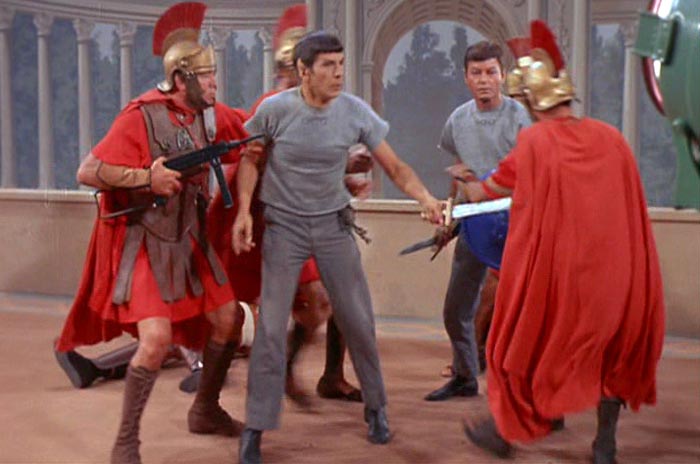
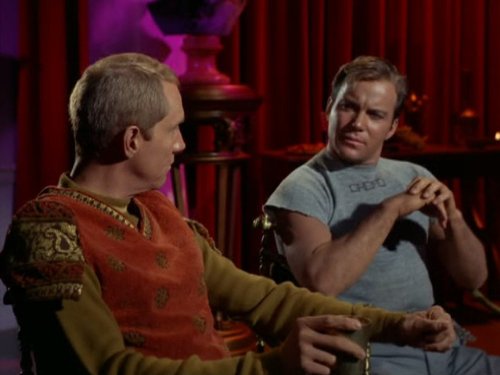
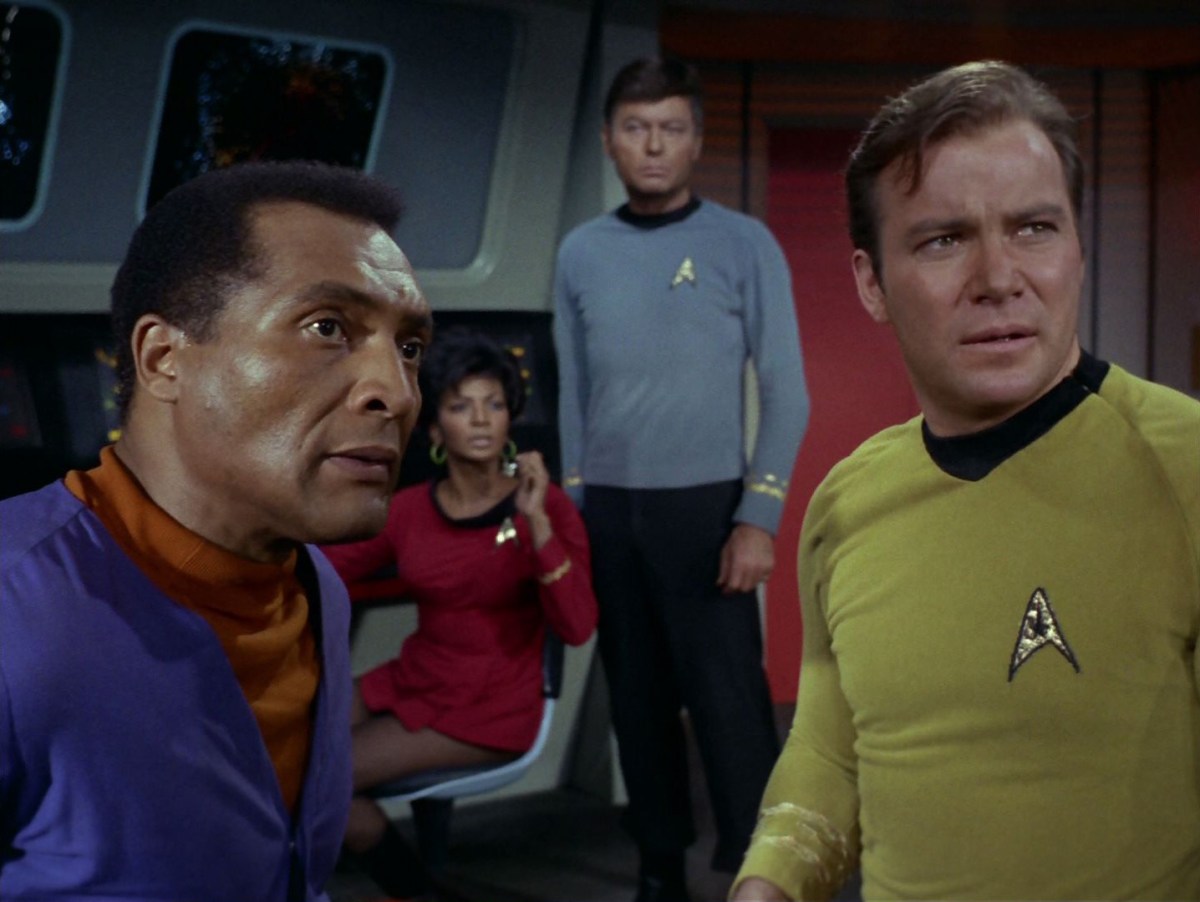
A mysterious woman magically arrives on the ship. The pushes some buttons on a box on her arm and everyone falls unconscious. When they are under, she steals Spock’s brain. Then, when they awaken, McCoy informs the Captain that this occurred at which point, Kirk asks if Spock will be okay…uh ok.  I couldn’t help but laugh the first time I heard this! What was Kirk thinking?

It gets even worse when they use a cool box on Spock’s body to reanimate him. It seems, according to McCoy, that although Spock has no brain, since he was a Vulcan that his body would live on for 24 hours without dying. What that meant…the clock is ticking while on the search for Spock’s brain. 

It has a 5.2 rating at IMDB but most of the episodes get a 6.5 or above. Maybe I’m being too hard on it? Give it a watch when you can and tell me that is the case or was I completely right?

From IMDB:

Written by Lee Cronin, the pseudonym of Gene L. Coon. Some have assumed that it was used because he was unhappy with the results. Actually, it was because he had left Paramount and was under contract with Universal, so he was not supposed to be working for Paramount as well.

First appearance of Scotty’s new hair style, where it was brushed back instead of parted to the side.

The Controller is “Nomad” repurposed from Star Trek: The Original Series: The Changeling (1967) with a globe on top.

This is the only Original Series episode to use a regular character’s name in the title.

This is the first episode in broadcast order in which the credits are displayed in blue font as opposed to the yellow font of the first two seasons.

TOS Seasons 3 marks the first time Star Trek is credited as being produced by Paramount. During Seasons 1 & 2, Star Trek was a Desilu property. In the summer of 1968, it was sold to Paramount.

This is the only time moving stars are shown on the bridge view screen via rear-projection. This is evident because the camera pans across the screen and people move in front it with stars moving, which would not have been possible if the view screen scenery had been matted in later. (In Star Trek: The Original Series: The Doomsday Machine (1967) they walk in front of the screen, but it is a static picture of stars, although in the digitally mastered edition they did add some moving objects.)

In informal surveys taken at science fiction conventions, this episode is promptly and almost universally named as the worst of the original series.

Footage of the Eymorg computer’s displays in operation is recycled from Star Trek: The Original Series: Assignment: Earth (1968) and Star Trek: The Original Series: The Paradise Syndrome (1968).

Gene Roddenberry was fascinated by the idea of a matriarchal society, and revisited the idea in Genesis II (1973) and Star Trek: The Next Generation: Angel One (1988).

Although scantily clad young women were common in this series, the Eymorgs, with their mod mini-dresses, were purportedly a response to Rowan & Martin’s Laugh-In (1967) which featured them on a regular basis. Luma, in particular, was a response to Goldie Hawn’s air-headed persona.

The Vulcan philosophy of “the needs of the many outweigh the needs of the few,” is paraphrased. In reference to Spock’s brain Kara says, “The need of my people for their controller is greater than your need for your friend.”

According to her official website, Marj Dusay said she had not viewed this show until a fan sent her a VHS tape in the 1990’s. The multitude of autograph requests she received over the years led her to believe that this show was popular. She described having fun in the role, and that she was delighted with the costume and boots designed for her.

This takes place in 2268.

There are two Morg guards in the scene where Kirk and his men are held captive. The big one who guards the communicators and other items taken from the Enterprise crew is played by Pete Kellett. The bald one by the door who says “Yes, mistress,” is none other than an uncredited Sid Haig.

Pete Kellett, the uncredited actor who played a Morg guard, has the single, dramatic line, “Yes, mistress”. He was the only Morg that had dialogue.

Marj Dusay played the role of Kara, which was the name of the cabaret dancer character in the opening scene of this season’s show “Wolf in the Fold”.

James Daris, the creature that Kirk stuns with his phaser, had a role in the “Mission: Impossible” show “Encore” in which William Shatner played one of main adversaries of the IMF team. As one of the henchmen of the other adversary, he did not share scenes with Shatner’s character.

Sheila Leighton (Luma) and Marj Dusay (Kara) each appeared separately in shows of “Hogan’s Heroes”. Leighton was cast in one role, and Dusay played three different roles.

Summary

When the Enterprise encounters an ion-powered vessel – far more advanced than their own warp-powered technology – they soon find themselves knocked unconscious by a beautiful alien who suddenly appears on the bridge. When they come to, they find that Spock’s brain has been surgically removed using technology way beyond their own current level of development. Following the ion trail left by the spacecraft, they arrive at a barren, ice-covered planet where the men live on the surface and the women in a highly advanced underground complex. Spock’s brain is now the central intelligence that runs the entire complex. The problem before them: how to reunite his brain to his body.

CAST

William Shatner … Captain James Tiberius ‘Jim’ Kirk
Leonard Nimoy … Mister Spock
DeForest Kelley … Dr. McCoy
Marj Dusay … Kara
James Doohan … Scott
Walter Koenig … Chekov
George Takei … Sulu
Nichelle Nichols … Uhura
Majel Barrett … Nurse Chapel
Daris … Creature
Sheila Leighton … Luma
Bill Blackburn … Lieutenant Hadley (uncredited)
Frank da Vinci … Lt. Brent (uncredited)
Roger Holloway … Lt. Lemli (uncredited)
Pete Kellett … Morg Guard (uncredited)Jeannie Malone … Yeoman (uncredited)
Eddie Paskey … Lieutenant Leslie (uncredited)
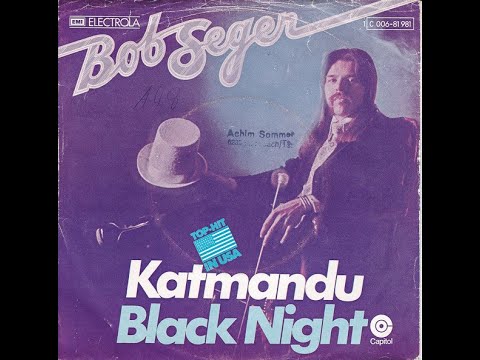
Bob Seger – Katmandu

This song is rocking and raw…it reminds me a little of his song Ramblin’, Gamblin’, Man because of his voice and sound. I remember this song vividly from the 1985 movie Mask with Eric Stoltz, Cher, and Sam Elliott.

In the 1960s Kathmandu (the correct spelling) was a place where people traveled to find themselves and to get enlightenment from life…or just to go where no one could find or bother them. It’s the capital of Nepal and a remote location. Seger used an alternate spelling of the song (Katmandu) so it would be easier for people to recognize. Cat Stevens wrote a song with the same name years before and used this spelling. 

This song was more popular in Michigan (Seger’s home state) than the rest of the country but it did chart at #43 on the Billboard 100 and #57 in Canada. Now it’s one of those songs that live on with classic radio. The album Beautiful Loser peaked at #131 but it sold two million copies since it was released. Three songs charted off of the album…Beautiful Loser, Nutbush City Limits, and Katmandu. 

On his albums, he would record sometimes half with The Silver Bullet Band and half with the Muscle Shoals musicians. This song came off of the Beautiful Loser album which was his breakthrough album. It set him up for his next album that made him a household name…Night Moves

On this album, he recorded 7 out of 9 tracks in Muscle Shoals including this song. The owners of the studio were also the musicians: Jimmy Johnson (guitar), Barry Beckett (keyboards), David Hood (bass), and Roger Hawkins (drums), and were much more affordable than big studios plus you got that Muscle Shoals sound. 

Katmandu

I think I’m going to Katmandu
That’s really, really where I’m going to
If I ever get out of here
That’s what I’m gonna do
K-k-k-k-k-k Katmandu
I think that’s really where I’m going to
If I ever get out of here
I’m going to Katmandu

I got no kick against the west coast
Warner brothers are such good hosts
I raise my whiskey glass and give them a toast
I’m sure they know it’s true
I got no rap against the southern states
Every time I’ve been there it’s been great
But now I’m leaving and I can’t be late
And to myself be true

That’s why I’m going to Katmandu
Up to the mountain’s where I’m going to
And if I ever get out of here
That’s what I’m gonna do
Aw, k-k-k-k-k-k Katmandu
Really, really where I’m going to
If I ever get out of here
I’m going to Katmandu

Oh
Take it away
I ain’t got nothin’ ‘gainst the east coast
You want some people where they got the most
And New York City’s like a friendly ghost
You seem to pass right through
I know I’m gonna miss the USA
I guess I’ll miss it every single day
But no one loves me here anyway
I know my plane is due

The one that’s going to Katmandu
Up to the mountain’s where I’m going to
If I ever get out of here
That’s what I’m gonna do
K-k-k-k-k-k Katmandu
Really, really, really, going to
If I ever get out of here
I’m going to Katmandu, oh
Ooh huh huh
Ooh huh huh ooh yeah

Katmandu
Katmandu
Katmandu
Katmandu
Katmandu
Katmandu
Katmandu
Katmandu
Katmandu
Katmandu

Max Picks …songs from 1957

I usually run this on Wednesdays after the Star Trek. We finished up season 2 and we are starting the last season…season 3 tomorrow!  Thanks for visiting the third installment of Max Picks. If you missed the first or second just follow the links.

1957

Let’s start this year with two brothers with some of the best harmonies ever in Rock/Pop…The Everly Brothers. Many guitar players could get close to the intro to this song but never exactly. The reason is Don Everly was using open G tuning…what Keith Richards later learned and made a career out of it…and that’s not an exaggeration. If you tune your guitar to open G tuning…you could play over half of the Stones catalog…believe me I do. Enough of guitar talk… this song was written by Felice and Boudleaux Bryant. This song has sheer beauty to it and also drive. I love Elvis but I’m leaving him off of this one since we featured him in the last two.

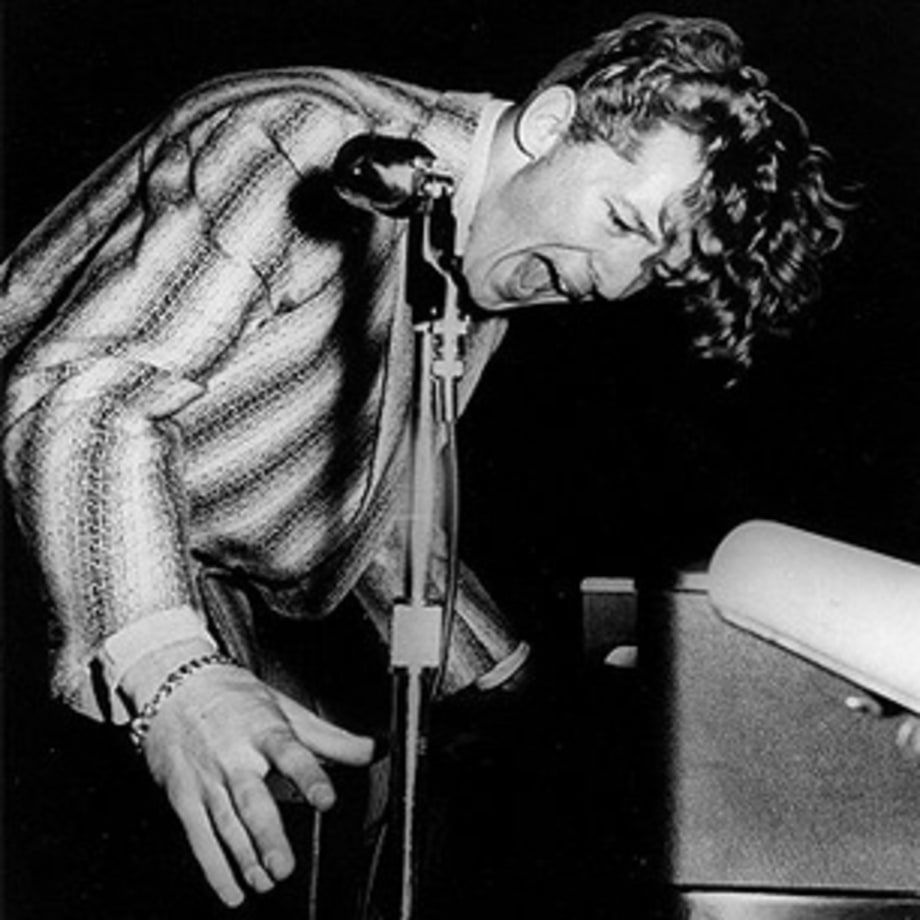
Now we get to the one…the only Pat Boone! NOT. I had to make sure you were paying attention. Now lets get to the bad boy of the fifties and all the decades that followed. He made other “bad boys” look tame. Jerry Lee Lewis was the real deal. Pure Rock and Roll that made Elvis look subtle. I can imagine he was public enemy number one with a lot of parents. Forget that though… his music is like an adrenaline rush to get up and move. The song was written by Dave “Curlee” Williams and James Faye “Roy” Hall.

I promised more Buddy Holly in the last post so I’m coming through on that promise. I could not believe the songs I could pick from in 1957. Take a look at the singles he had this year. Oh Boy, Not Fade Away, Peggy Sue, Everyday, Rock Around With Ollie Vee, and last but not least…That’ll Be The Day. That simple intro to this song is magic. I could have picked any of those songs. This song was written by Jerry Allison, Buddy Holly, and Norman Petty.

Now we have a singer who had a voice that was as smooth as silk. Sam Cooke‘s voice still gets to me. It was named as one of the 500 most important rock and roll recordings by the Rock and Roll Hall of Fame. Many artists have covered it but I’ll take Cooke’s version of it any day. It was written by the man himself.

I want to add a doo-wop vocal group because they were very popular then and this song is great. This song is called Come Go With Me by The Del-Vikings. The first time Paul and John met…John and his band The Quarrymen were playing this song with Lennon making up the words “Come and Go with me to the penitentiary” and probably some obscene words here and there. It was written by Clarence Quick.

As always…thanks for reading and listening!

Grateful Dead – Friend Of The Devil

Power Pop Friday will be back after the 4th. 

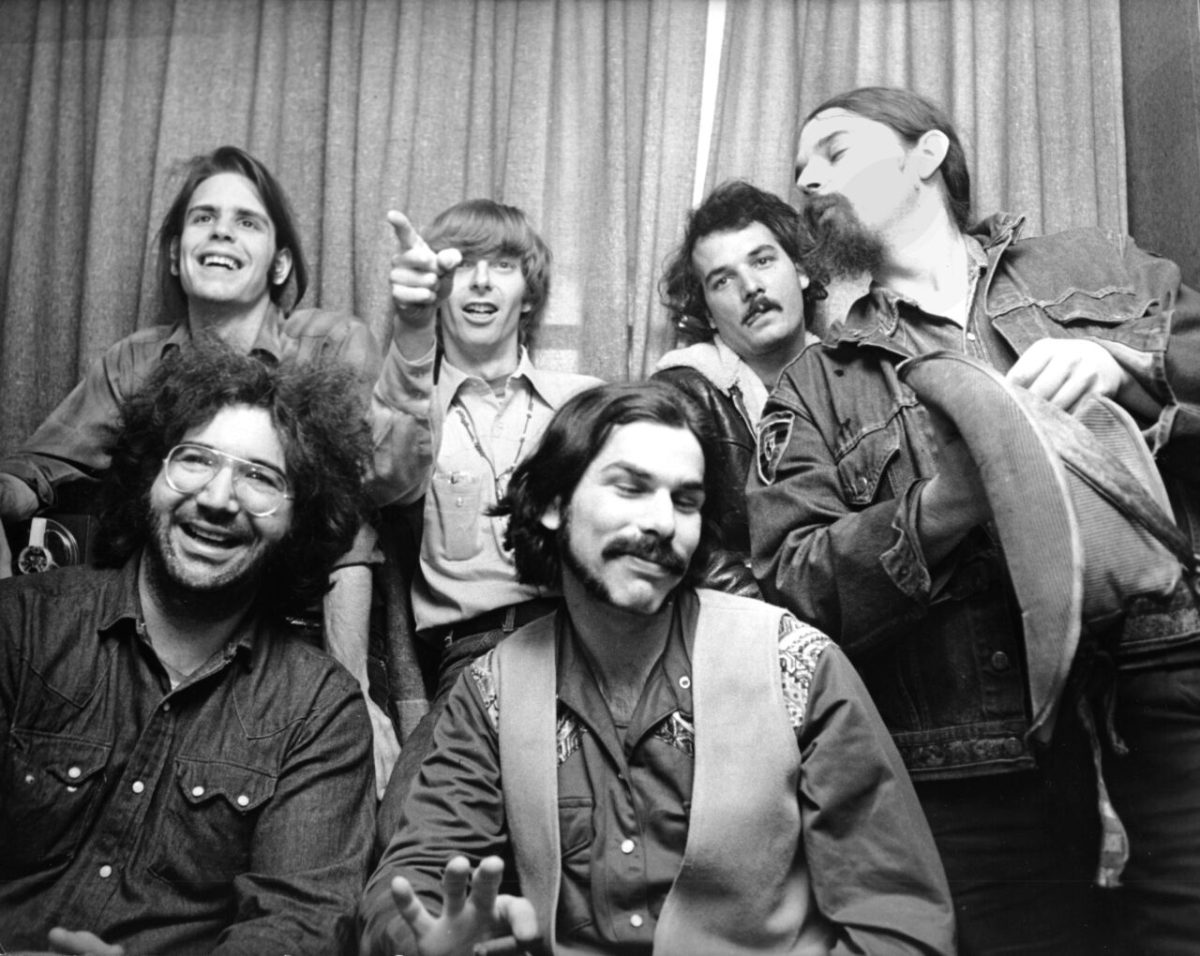
When I purchased The Grateful Dead’s greatest hits back when I was around 13 or so…the songs like Truckin, Casey Jones, and Uncle John’s Band that I knew. After that, I found out that I liked everything on that album. This song became one of my favorites back then.

Skeletons from the Closet: The Best of Grateful Dead - Wikipedia

Jerry Garcia not only played with the Grateful Dead but did many solo shows while the Dead were on hiatus. He played with the New Riders of the Purple Sage as well. Jerry Garcia and John “Marmaduke” Dawson (New Riders of the Purple Sage ) wrote the music to the song and lyricist Robert Hunter came up with the lyrics except for one important line. The original chorus went like this.

I set out running but I take my time
It looks like water but it tastes like wine
If I get home before daylight
I just might get some sleep tonight

After hearing it on tape as a demo…John Dawson said all the lyrics were great except It looks like water but it tastes like wine. He then suggested, “How about… A Friend of the Devil is a friend of mine?” That was it…the right line for the right song.

The following day, Hunter awoke in the group’s communal residence to find Garcia listening to a tape of the new song. “He had that funny look in his eye,” Hunter recalled. “The next thing I knew, the Grateful Dead had snapped it up, much to the New Riders’ dismay.”

After the song appeared on American Beauty it became an immediate hit with fans, ultimately becoming a permanent fixture in the Dead’s onstage repertoire. At first, it was performed at a brisk, bluegrass-style tempo built upon a descending scale played by Garcia… then, several years later, a piano provided much of its melodic sound.

American Beauty peaked at #19 on the Billboard 100, #43 in Canada, and #27 in the UK in 1970. A single was not released of this song. Truckin’ was released as Ripple as the B side.

Dennis McNally (Grateful Dead  publicist and official biographer) on the intro: “Before they started recording, Nelson was checking to see that his guitar was in tune, and he ran this thing, ding, ding, ding, down a scale. And if you listen to the recording, that’s how the song opens. When he first did that, he did it simply to check the guitar’s tuning and they kept it. It suddenly became part of the song.”

Robert Hunter: “We all went down to the kitchen to have espresso made in Dawson’s new machine. We got to talking about the tune and John said the verses were nifty except for “it looks like water but it tastes like wine” which I had to admit fell flat. Suddenly Dawson’s eyes lit up and he crowed “How about “a friend of the devil is a friend of mine.” Bingo, not only the right line but a memorable title as well! We ran back upstairs to Nelson’s room and recorded the tune.”

Friend Of The Devil

I lit out from Reno, I was trailed by twenty hounds
Didn’t get to sleep that night ’til the morning came around

Set out runnin’ but I take my time
A friend of the devil is a friend of mine
If I get home before daylight
Just might get some sleep tonight

Ran into the devil, babe, he loaned me twenty bills
Spent the night in Utah in a cave up in the hills

Set out runnin’ but I take my time
A friend of the devil is a friend of mine
If I get home before daylight
Just might get some sleep tonight

I ran down to the levee but the devil caught me there
He took my twenty dollar bill and he vanished in the air

Set out runnin’ but I take my time
A friend of the devil is a friend of mine
If I get home before daylight
Just might get some sleep tonight

Got two reasons why I cry away each lonely night:
The first one’s named sweet Anne Marie, and she’s my heart’s delight
The second one is prison, babe, and the sheriff’s on my trail
And if he catches up with me, I’ll spend my life in jail

Got a wife in Chino, babe, and one in Cherokee
The first one says she’s got my child, but it don’t look like me

Set out runnin’ but I take my time
A friend of the devil is a friend of mine
If I get home before daylight
Just might get some sleep tonight

Got two reasons why I cry away each lonely night:
The first one’s named sweet Anne Marie, and she’s my heart’s delight
The second one is prison, babe, the sheriff’s on my trail
And if he catches up with me, I’ll spend my life in jail

Got a wife in Chino, babe, and one in Cherokee
The first one says she’s got my child, but it don’t look like me

Set out runnin’ but I take my time
A friend of the devil is a friend of mine
If I get home before daylight
Just might get some sleep tonight

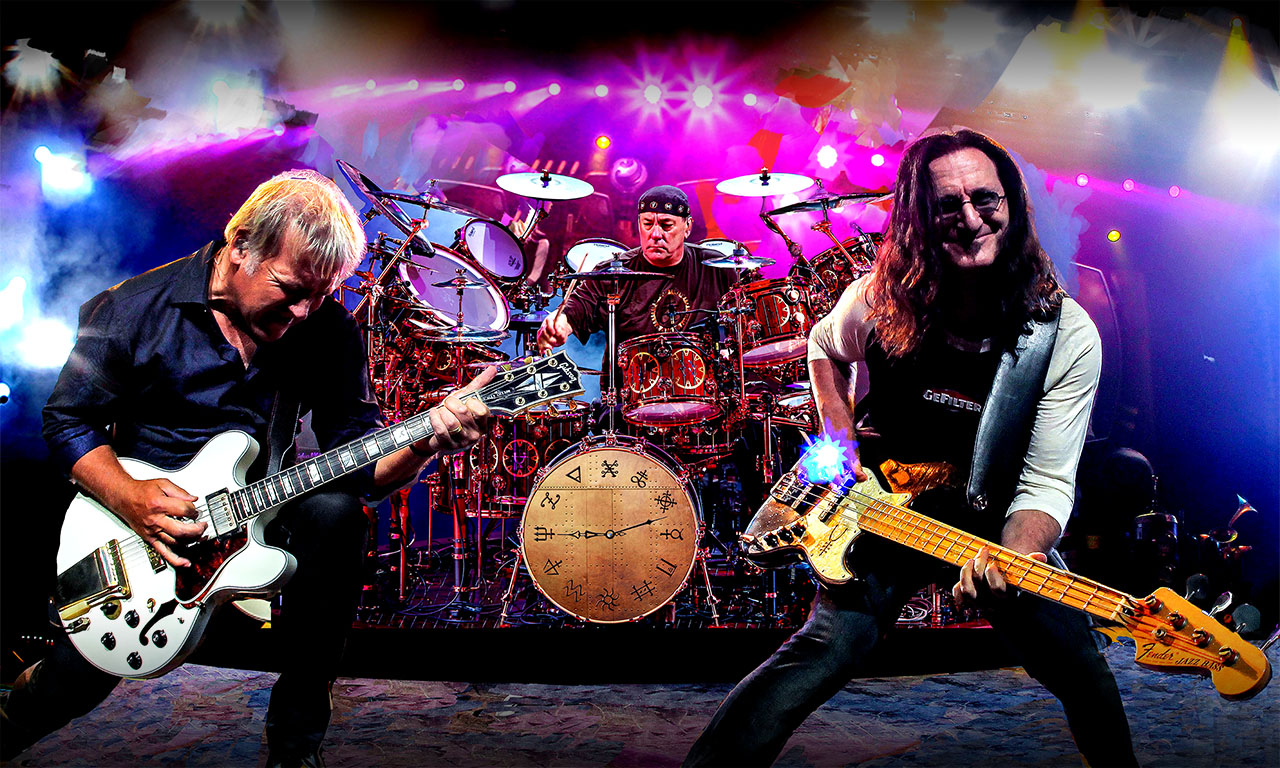
Rush – Limelight

I’m not the biggest fan of Rush but there are songs that were masterpieces…and this was one of them. When I heard that guitar riff at the beginning…BOOM…automatically loved the song.

As I listen to interviews and watched their documentary… that I will plug to everyone that would listen. I’ve grown to like them more and more. As a musician myself…yes I respect them as masters of their craft.

They had an unusual songwriting setup in that band. For the most part Geddy Lee and Alex Lifeson will come up with the music and drummer Neil Peart will supply the often complex lyrics. The drummers I’ve worked with…uh… that would not happen. This song hit me a like a great rock song which it is and is completely understandable.

The Story Behind 'Limelight' by Rush | Articles @ Ultimate-Guitar.Com

While Alex and Geddy are outgoing guys…Neil Peart was not. He never hated the fans or anything but he was shy and didn’t feel comfortable with meet and greets etc. As Geddy Lee said (full quote below): “Limelight was probably more of Neil’s song than a lot of the songs on that album in the sense that his feelings about being in the limelight and his difficulty with coming to grips with fame and autograph seekers and a sudden lack of privacy and sudden demands on his time… he was having a very difficult time dealing with.

Neil said that while he was a huge fan of The Who and Keith Moon…he would have never dreamed of following them back to their hotel or meeting them. He just didn’t understand that concept and why. The song is about his feelings toward the fame that hit Rush and changed everything.

Neil Peart was a heavy reader and you could see the influence in many things. William Shakespeare’s 1599 play As You Like It contains the line “All the world’s a stage and all the men and women merely players” – a similar phase appears in the lyrics – “All the worlds indeed a stage, and we are merely players.” Rush named one of their albums All The Worlds A Stage. 

The song peaked at #18 in Canada, #55 on the Billboard 100, and #4 on the US Mainstream Rock Tracks. It was on the album Moving Pictures (My favorite by them) and that one peaked at #1 in Canada, #3 on the Billboard Album Charts, and #3 in the UK. This was the album in my area that had young musicians going out and learning these songs…not an easy task.

While researching this song I saw a headline that best sums it up. “Neil Peart explains his introverted nature through Rush song ‘Limelight.”

Geddy Lee: “Limelight was probably more of Neil’s song than a lot of the songs on that album in the sense that his feelings about being in the limelight and his difficulty with coming to grips with fame and autograph seekers and a sudden lack of privacy and sudden demands on his time… he was having a very difficult time dealing with. I mean we all were, but I think he was having the most difficulty of the three of us adjusting; in the sense that I think he’s more sensitive to more things than Alex and I are, it’s harder for him to deal with those interruptions on his personal space and his desire to be alone. Being very much a person who needs that solitude, to have someone coming up to you constantly and asking for your autograph is a major interruption in your own little world. I guess in the one sense that we’re a little bit like misfits in the fact that we’ve chosen this profession that has all this extreme hype and this sort of self-hyping world that we’ve chosen to live in, and we don’t feel comfortable really in that kind of role.”

Alex Lifeson:  “I’ve always enjoyed the elasticity of that solo, particularly the way it sounds on the record. It has a certain tonality I just love. I do like playing the solo live, but I think I prefer listening to it on the album. On record, it has a magical quality to it – it really conveys the pathos of the song and the lyrics. I’ve never been able to re-create that live. I get pretty close, but it’s never exactly the way it is on record. I’ll keep trying, though.”

Neil Peart: “Success puts a strain on the friendship and it puts the strains on your day-to-day relationship, and it’s something that we did go through, you know, we’re not immune to it. But we were able to overcome it just through our closeness and we were able to help each other with difficulties like that and then we could deal with the pressures and things and that.”

Limelight

Living on a lighted stage
Approaches the unreal
For those who think and feel
In touch with some reality
Beyond the gilded cage

Cast in this unlikely role
Ill-equipped to act
With insufficient tact
One must put up barriers
To keep oneself intact

Living in the limelight
The universal dream
For those who wish to seem
Those who wish to be
Must put aside the alienation
Get on with the fascination
The real relation
The underlying theme

Living in a fish eye lens
Caught in the camera eye
I have no heart to lie
I can’t pretend a stranger
Is a long-awaited friend

All the world’s indeed a stage
And we are merely players
Performers and portrayers
Each another’s audience
Outside the gilded cage

Living in the limelight
The universal dream
For those who wish to seem
Those who wish to be
Must put aside the alienation
Get on with the fascination
The real relation
The underlying theme

Living in the limelight
The universal dream
For those who wish to seem
Those who wish to be
Must put aside the alienation
Get on with the fascination
The real relation
The underlying theme
The real relation
The underlying theme

Max Picks …songs from 1956

Hello everyone…I changed the name of this series…I never liked the original name and I heard from a couple of commenters and I totally agreed… Last week I got great responses from many of you and I appreciate it.

1956

Rock and Roll was reviving up now. The song that represents it the most this year to me was Be-Bop-a-Lula. The song is a perfect piece of rock and roll. His voice with reverb is just magical and artists have been chasing that sound ever since. I can’t imagine hearing this on the radio back then. Gene Vincent must have sounded so alien to some people but it’s what rock and roll needed. The song was written by Gene Vincent, Donald Graves, and Bill “Sheriff Tex” Davis.

“That beginning – ‘we-e-e-e-e-l-l-l-l-l!’ – always made my hair stand on end.”
John Lennon

***We have a bonus today at the bottom out of Lubbock Texas***

Yes, I could have gone with the Elvis version but I wanted the rockabilly man who wrote the song. Carl Perkins with Blue Suede Shoes. This was released in January of 1956 on Sun Records. Carl was amazing with his songwriting, guitar playing, and singing. The man could rock with the best.

I will make a confession here…out of all the 50s artists…Buddy Holly was probably my all-time favorite. The man had it all and he was ahead of his time. I’ve said this before but if he would have lived…out of all the 50s artists…he is the one that could have made a huge mark in the 60s alongside the British Invasion bands. They were playing modified versions of the songs he already wrote. This was not a massive hit… in fact it was a B side but one I’ve always liked. Blue Days, Black Nights. You WILL be seeing/hearing more Buddy in this series.

Now we are getting to the meat on the bone. Little Richard sings what was my dad’s favorite rock song…Long Tall Sally. The only time I remember getting a standing ovation is when I was 16 in a bar (shhhh don’t tell) playing this song with our band. Little Richard’s voice was fierce…I compare it to Jimi Hendrix’s guitar…just relentless. The song was written by Enotris Johnson, Robert Blackwell, and Richard Penniman (Little Richard).

Saw Uncle John with Long Tall Sally
They saw Aunt Mary comin’
So they ducked back in the alley

It’s hard to go through these songs and pick only 5. Let’s close things out with The Man in Black! Johnny Cash released this in 1956 on Sun Records.

***BONUS: Buddy Holly, Elvis Presley, Johnny Cash, Scotty Moore, and Carl Perkins all in one place….backstage at a High School in Lubbock Texas in this really short clip. I wish we could hear the music.***

Star Trek – Assignment Earth

★★★★1/2 March 22, 1968 Season 2 Episode 26

If you want to see where we are…and you missed a few…HERE is a list of the episodes in my index located at the top of my blog. 

This show was written by Gene Roddenberry and Art Wallace

We are now at the last episode of the 2nd season…I can’t believe we are this far already. One more season to go. This is a different kind of episode for Star Trek. It reminded me right away of Doctor Who or a Scifi James Bond. It was planned as a spin-off episode but didn’t end up that way. Robert Lansing played Mister Seven and he was great. I would have watched the show if they would have spun it off. He had magnetism and was perfect for that role. 

This was in reality a pilot episode about Gary Seven and his assistant played by future star Teri Garr when she was 20 years old. It is a show I wish would have been picked up. I could have been writing about that one today. 

The Enterprise travels back in time to observe Earth during a particularly tumultuous period in its history. However, upon arriving they intercept a mysterious alien transmission and end up beaming aboard a man wearing a 20th-century business suit and carrying a cat. Kirk doesn’t know if he is human, alien, good, or bad. Seven is not a fool though and knows enough to escape the Enterprise with the transporter. 

Star-Trek-Assignment-Earth-3

Seven is a human trained by an unnamed alien race to protect humanity against threats to world peace. In this story, his mission is to transport to Earth and prevent the US from shooting a military satellite into space that could set off a nuclear exchange between the US and the Soviet Union.

When the Enterprise captures Seven en route to Cape Canaveral, Kirk is reluctant to let him go, fearing Seven’s mission may not be as altruistic as he claims. Mr. Seven then escapes the ship, beaming down to the city of Manhattan with Kirk and Spock in hot pursuit.

Seven does get to finish his mission when Kirk finally realizes that Seven is telling the truth. 

From IMDB:

While at the launch base and showing his ID to the security person, Mr. Seven shows a National Security Agency credential card. The NSA was one of the worst kept government secrets, but was not publicly acknowledged until nearly 25 years after this episode originally aired.

This is the only episode of Star Trek in which time travel is treated as “routine.” The Temporal Prime Directive does not yet appear to have been proposed, least of all taken effect.

This is the only episode of Star Trek in which a guest star is listed after the opening credits rather than in the end credits: “Guest Star Robert Lansing as Mister Seven” is displayed when the character is first shown in the transporter chamber.

Gary Seven’s computer display is the same one used as Dr. Daystrom’s M-5 computer in Star Trek: The Original Series: The Ultimate Computer (1968), as well as being used by Mr. Atoz, the librarian, in Star Trek: The Original Series: All Our Yesterdays (1969).

This episode features one of the first uses of stock footage of the first test launch of the Saturn V moon rocket in November 1967.

Spock mentions all the events which are to occur on that date the Enterprise travelled back in time to the 20th century and met Gary Seven. Among the events mentioned was an important political assassination. As it turned out, there were ultimately two important political assassinations in 1968: just six days after this episode aired on March 29, 1968, Reverend Martin Luther King Jr. was shot and killed in Memphis, Tennessee on April 4, 1968, and two months later, on June 6, 1968, Senator Robert F. Kennedy was killed in Los Angeles, California on the night that he won the California Democratic presidential primary.

The script called for Isis the cat to make various cat sounds on cue (meows, purrs, growls, etc.) Since finding appropriate real cat sounds for the soundtrack proved problematic, the director discovered that Barbara Babcock, who was hired to do the voice of the Beta 5 computer, could vocalize convincing cat sounds.

Teri Garr had such an unpleasant time filming this episode she refused to ever talk about Star Trek again, although she did do an interview with STARLOG magazine many years later in which she was very disparaging of both the show and its fans. One reason was Gene Roddenberry’s frequent clashes with the costume designers over the length of Roberta’s skirt; Roddenbury wanted it shortened to the extent that Ms Garr’s underwear is glimpsed on occasions. However, she clearly had no such inhibitions in her roles other productions, such as the sultry and provocatively dressed Inga in ‘Young Frankenstein’ (1974) or wearing even an even skimpier outfit (see-through baby-doll nightie) as a Pajama Girl in ‘Pajama Party’ (1964).

The main plotline of countries launching nuclear weapons into space had a real-world parallel at the time. The major world powers pledged to use outer space for peaceful purposes in the “Outer Space Treaty” that became official on October 10, 1967.

Three black cats were used for the role of Isis.

No scenes for this episode were actually shot at Cape Kennedy itself. The illusion of being in Florida was achieved by using a combination of stock footage and Paramount studio locations.

This is the only episode where a Federation transporter system is used to intercept and re-direct another transporter beam.

Star Trek: Voyager: Prime Factors (1995) was originally going to be based on “Assignment: Earth”. David R. George III and Eric A. Stillwell’s original story involved the crew of Voyager encountering the race that had dispatched Gary Seven. However, this was declined as the Aegis’ technology could transport individuals over thousands of light-years, thereby providing an easy “out” for the USS Voyager and precluding the series.

Gene Roddenberry would later rework key elements of this story – an agent to Earth by aliens to shepherd humanity out of its “childhood”, with help from a human – into another unsuccessful pilot titled The Questor Tapes (1974), with the agent being an android..

Gary Seven’s “servo” is used in ways not unlike Doctor Who (1963)’s “sonic screwdriver”, which had been ‘invented’ for the now-famous BBC series just a couple of years earlier. Seven also has a young, naive, attractive human companion, much as the Doctor often has. Whether this is coincidence or the writers had some awareness of Doctor Who’s now-iconic tool is unknown.

This episode takes place in 1968. Along with Star Trek: Enterprise: Storm Front (2004) (which takes place in 1944), this is one of only two “Star Trek” episodes to take place entirely in the 20th Century. Furthermore, both episodes take place mostly in and around New York City.

The sound when Scotty was zooming in on Gary Seven’s position is the same as the one used for the poison dart flower in Star Trek: The Original Series: The Apple (1967).

The art on the wall in the office is from Reginald Pollack.

Gary Seven’s cohort Isis, is established as being a shape-changer, but it is unclear whether Isis is a cat who can appear as a woman, a woman that can appear as a cat, or some creature that can assume both and other appearances at will.

The name “Roberta Lincoln” is a feminine version of Robert Lincoln. Robert Todd Lincoln was a lawyer, politician, and businessman who had a long career and was present at or near the violent deaths of three USA Presidents: Abraham Lincoln (his father), James A. Garfield, and William McKinley. In the “Assignment: Earth” spin-off series, Gary Seven and Roberta Lincoln would have been in the business of rescuing people from assassination.

James Doohan was one of the Mission Control voices.

The aliens which Gary Seven represents call themselves “The Aegis” – another word for “shield”. Gary’s tool/weapon is known as a “servo”. The Marvel Comics fictional agency S.H.I.E.L.D. (Strategic Hazard Intervention, Espionage & Logistics Directorate) was depicted as S.E.R.V.O., which sounds like “brain” (cerveau) in French.

Gary Seven and/or Roberta Lincoln appear in Star Trek novels such as “Assignment: Eternity” (1997) by Greg Cox, “Star Trek: The Eugenics Wars: The Rise and Fall of Khan Noonien Singh” (2001), also by Cox, and “From History’s Shadow” (2013) by Dayton Ward. In the short story “Seven & Seven” by Kevin Hosey in “Star Trek: Strange New Worlds”, Volume VI, (2003), Gary Seven teams up with Seven of Nine from Star Trek: Voyager (1995).

The final use of Sol Kaplan’s “Planet Killer” theme (in the climactic scene).

Roberta Lincoln was born in 1948.

During the street scene, a woman passes by wearing a two-piece fur suit, the top of which had been worn as a dress by Barbara Anderson as Lenore Karidian in the Star Trek episode, “The Conscience of the King”.

Roberta tells Gary Seven that she understood the work of her previous employers (his predecessors in that office) to be “research for a new encyclopedia”. This is most likely a hat tip to Isaac Asimov’s seminal Foundation novel, where the Foundation is working under the guise of producing an encyclopedia.

47 Reference: While scanning Kirk’s and Spock’s location on earth from the Enterprise, Scotty tells them to proceed 5 meters, 247 degrees true.

The sticker on the windshield of the car that Gary Seven uses says Mission Director Cromwell. An actor named James Cromwell later played several roles in the Trek Universe, most famously as Zefram Cochrane in Star Trek: First Contact (1996).

The first episode to use the new phaser stun effect.

The second time to star a black cat: The first was Star Trek: The Original Series: Catspaw (1967)(#2.7).

Gary Seven’s computer said Roberta Lincoln (Teri Garr) was 20 years old. Teri Garr was born December 11, 1947 which would have made her 20 when this episode was filmed.

Cameo
Bruce Mars: Finnegan from Star Trek: The Original Series: Shore Leave (1966) can be briefly seen as a New York Police Department officer.

Summary

Having traveled back in time to visit Earth on a historical information-gathering exercise, the Enterprise intercepts a space traveler being beamed to Earth. Gary Seven is human but clearly comes from an advanced civilization that claims to have been specially trained for a mission to save mankind from itself. Captain Kirk isn’t at all sure that Seven isn’t there for malicious purposes and puts him in the brig. Seven does manage to escape however and with Kirk and Spock in pursuit, tries to complete the mission that two missing agents were unable to finalize. For Kirk, the decision he has to make is very real: does he stop Seven or let him finish – a wrong decision may mean altering Earth’s history altogether.

A later Star Trek referencing Gary Seven

CAST

William Shatner … Captain James Tiberius ‘Jim’ Kirk
Leonard Nimoy … Mister Spock
DeForest Kelley … Dr. McCoy
Robert Lansing … Mister Seven
Teri Garr … Roberta Lincoln (as Terri Garr)
James Doohan … Scott
George Takei … Sulu
Nichelle Nichols … Uhura
Walter Koenig … Chekov
Don Keefer … Cromwell
Lincoln Demyan … Sergeant
Morgan Jones … Col. Nesvig
Bruce Mars … First Policeman
Ted Gehring … Second Policeman
Paul Baxley … Security Chief
Barbara Babcock … Beta 5 Computer / Isis (voice) (uncredited)
Bill Blackburn … Lieutenant Hadley / Rocket Base Technician (uncredited)
Frank da Vinci … Lt. Clifford Brent (uncredited)
Rudy Doucette … Staff Member (uncredited)
Bob Johnson … Ground Control (voice) (uncredited)
Eddie Paskey … Lieutenant Leslie (uncredited)
Edwin Rochelle … Man With Newspaper (uncredited)
April Tatro … Cat Girl (uncredited)

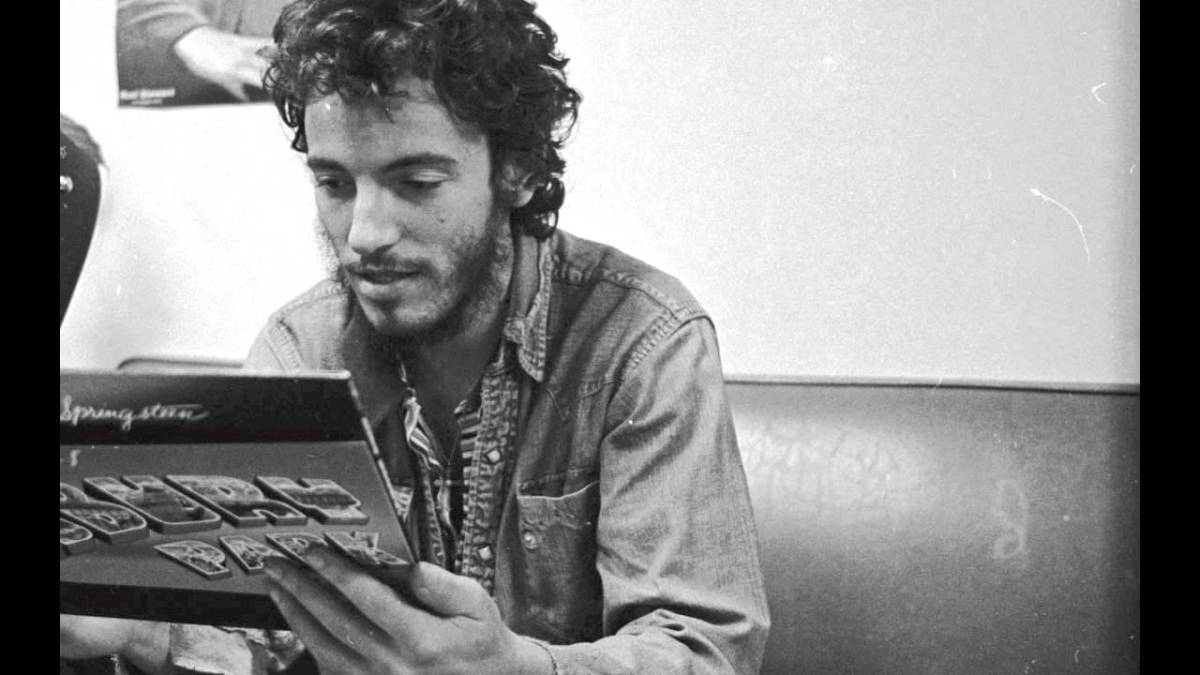
Bruce Springsteen – Does This Bus Stop At 82nd Street?

Under the Covers Tuesday will be back next week. 

This was originally posted at Dave’s Turntable Talk. This is what Dave asked for… Tell us about a song (or album if you’re more ambitious) you like that is all about going somewhere. Trains, planes, automobiles – there’ve been scores of good songs about traveling, geographically or even mentally, not to mention songs about specific destinations from ‘Viva Las Vegas’ to ‘One Night in Bangkok’ and about everyplace in between.

After Dave asked us to write a post about traveling… it was between Promise Land by the Big E and this one by Bruce. I had to go with this one.

This song is a journey through an enjoyable play of words. It was written about a bus journey to Bruce’s girlfriend’s house. This song was also based on people and places Springsteen met in his early years as a songwriter. His father was a bus driver for a time, which helped inspire the song.

I listened to it so many times that I know every word to this day. I was surprised to see that he still plays this in concert every now and then…but you can’t beat the studio version. 

I was around 19 (1986) or so when I found this album, or when the album found me, and I was going through an angry young man phase. I had just bought a 1976 Fender Musicmaster guitar (I still have it) and a black leather jacket so I was ready.  The imagery flows like water with Greetings From Ashbury Park, Bruce’s debut album in 1973… It’s not very polished but that adds to it.  The songs have a stream-of-consciousness feel to them. It was critically praised but did not have huge sales. The album only peaked at #60 in the Billboard Album Charts.

This album is my favorite by Springsteen. Yes, I like his other albums…but I love the wordplay on this one. I think the only song that halts the album is Mary Queen of Arkansas. I hear some Dylan and a very strong Van Morrison influence on this album and song. It is rough and raw and unpredictable.

Wizard imps and sweat sock pimps
Interstellar mongrel nymphs
Rex said that lady left him limp
Love’s like that (sure it is)

Songs like this helped give Springsteen the tag….” the new Dylan” and he was the one performer who actually lived up to it…strap in and ride the Springsteen-driven bus.

Does This Bus Stop At 52nd Street?

Hey bus driver, keep the change
Bless your children, give them names
Don’t trust men who walk with canes
Drink this and you’ll grow wings on your feet
Broadway Mary, Joan Fontaine
Advertiser on a downtown train
Christmas crier bustin’ cane
He’s in love again

Where dock worker’s dreams mix with panther’s schemes
To someday own the rodeo
Tainted women in VistaVision
Perform for out-of-state kids at the late show

Wizard imps and sweat sock pimps
Interstellar mongrel nymphs
Rex said that lady left him limp
Love’s like that (sure it is)
Queen of diamonds, ace of spades
Newly discovered lovers of the Everglades
They take out a full-page ad in the trades
To announce their arrival
And Mary Lou, she found out how to cope
She rides to heaven on a gyroscope
The Daily News asks her for the dope
She said, “Man, the dope’s that there’s still hope”

Senorita, Spanish rose
Wipes her eyes and blows her nose
Uptown in Harlem she throws a rose
To some lucky young matador

Cream – Spoonful

I always thought this band was the ultimate power trio…and I mean no offense to ZZ Top. Seeing Cream was like watching a baseball team that has all-star players in each position.

When I first started to listen to Cream, what stood out was not Clapton’s guitar or Baker’s drumming…no it was Jack Bruce’s bass. There are three bass players I listened to while starting to play music. John Entwistle, Jack Bruce, and Paul McCartney.  Those three covered the chaotic, the sliding, and the melodic. Jack Bruce had all of these traits.

Chester Burnett…better known as Howlin’ Wolf was from White Station, Mississippi. He influenced so many including Brian Jones of the Rolling Stones. This was his signature song although he didn’t write it…the one and only Willie Dixon did. Howlin’ Wolf released this song in 1960.

Fresh cream.jpg

Cream released this single in 1967 and it was off the UK album Fresh Cream in 1966. That album peaked at #6 in the UK and #39 on the Billboard Album Charts. I searched the Canadian RPM archives but this album did not show up.

There have been many rumors about what the song is about. Some say the song is about heroin and cooking it up. Some say it’s about… let’s just say sex. Willie Dixon said no on both. Here is Dixon’s take on it.  “The idea of ‘Spoonful’ was that it doesn’t take a large quantity of anything to be good if you have a little money when you need it, you’re right there in the right spot, that’ll buy you a whole lot. If a doctor give you less than a spoonful of some kind of medicine that can kill you, he can give you less than a spoonful of another that will make you well”. Asked about heroin, he replied, “People who think ‘Spoonful’ was about heroin are mostly people with heroin ideas”.

Cream influenced so many bands. They mixed blues, jazz, and hard rock into new kind of music in 1966. They may have created Heavy Metal/Hard Rock or it evolved from what they were doing. Bands like Lynyrd Skynyrd, Van Halen, Led Zeppelin, and countless more. Eric Clapton, Jack Bruce, and Ginger Baker are all probably in the top 5 in rock with each of their instruments.

Its 1968 double album Wheels of Fire features a 16-minute-plus live version of “Spoonful” recorded at San Francisco’s Winterland Ballroom.

Spoonful

Could fill spoons full of diamonds,Could fill spoons full of gold.Just a little spoon of your precious loveWill satisfy my soul.

Men lies about it.Some of them cries about it.Some of them dies about it.Everything’s a-fightin’ about the spoonful.That spoon, that spoon, that spoonful.That spoon, that spoon, that spoonful.That spoon, that spoon, that spoonful.That spoon, that spoon, that spoonful.

Could fill spoons full of coffee,Could fill spoons full of tea.Just a little spoon of your precious love;Is that enough for me?

Men lies about it.Some of them cries about it.Some of them dies about it.Everything’s a-fightin’ about the spoonful.That spoon, that spoon, that spoonful.That spoon, that spoon, that spoonful.That spoon, that spoon, that spoonful.That spoon, that spoon, that spoonful.

Could fill spoons full of water,Save them from the desert sands.But a little spoon of your forty-fiveSaved you from another man.

Men lies about it.Some of them cries about it.Some of them dies about it.Everything’s a-fightin’ about the spoonful.That spoon, that spoon, that spoonful.That spoon, that spoon, that spoonful.That spoon, that spoon, that spoonful.That spoon, that spoon, that spoonful.

Ian Dury and The Blockheads – Hit Me With Your Rhythm Stick

The name alone makes me want to listen to the song. The bass line is one of the coolest bass parts I’ve heard in a number 1 song. Usually on high-charting songs you just don’t hear basslines like this. I also like the out-of-left-field sax solo by saxophonist Davey Payne. 

This song was supposedly inspired by Dury’s disability. He contracted polio when he was 7 years old. Luckily, he was not confined to a wheelchair but he did have to use a walking cane.

The song was recorded live with all the Blockheads placed in different positions in the studio’s live area, with Jankel playing a Bechstein grand piano, Mickey Gallagher playing the Hammond organ, and Dury sitting on a stool in the center singing into a hand-held microphone.

He wrote this song with Chaz Jankel in 1978. Chaz was in a band with Dury called The Kilburns and when they disbanded…he got together with Ian Dury as a co-songwriter. It is the group’s most successful single, reaching number one on the UK Singles Chart in January 1979 as well as reaching the top three in Ireland, Australia, and New Zealand, and it was also a top 20 hit in several European countries.

The song was a non-album single. He didn’t like to include singles on his albums if possible. It peaked at #1 in the UK, #2 in Australia, #3 in New Zealand, and #79 on the Billboard 100 in 1979. I found no charting in Canada.

“Hit Me with Your Rhythm Stick” was named the 12th best single of 1978 by the writers of British music magazine NME, and best single of 1979 in the annual ‘Pazz & Jop’ poll organized by music critic Robert Christgau in The Village Voice.

Hit Me With Your Rythm Stick

In the deserts of Sudan
And the gardens of Japan
From Milan to Yucatan
Every woman, every man

Hit me with your rhythm stick.
Hit me! Hit me!
Je t’adore, ich liebe dich,
Hit me! hit me! hit me!
Hit me with your rhythm stick.
Hit me slowly, hit me quick.
Hit me! Hit me! Hit me!

In the wilds of Borneo
And the vineyards of Bordeaux
Eskimo, Arapaho
Move their body to and fro.

Hit me with your rhythm stick.
Hit me! Hit me!
Das ist gut! C’est fantastique!
Hit me! hit me! hit me!
Hit me with your rhythm stick.
It’s nice to be a lunatic.
Hit me! Hit me! Hit me!

Hit me! Hit me! Hit me!
In the dock of Tiger Bay
On the road to Mandalay
From Bombay to Santa Fe
Over hills and far away

Hit me with your rhythm stick.
Hit me! Hit me!
C’est si bon, mm? Ist es nicht?
Hit me! hit me! hit me!
Hit me with your rhythm stick.
Two fat persons, click, click, click.
Hit me! Hit me! Hit me!

Hit me! Hit me! Hit me!
Hit me!
Hit me!
Hit me! Ow!
Hit me!
Hit me!
Hit me! hit me!

Hit me [Repeat: x 5]

Hit me! Hit me! Hit me!

Star Trek – Bread And Circuses

★★★★ March 15, 1968 Season 2 Episode 25

If you want to see where we are…and you missed a few…HERE is a list of the episodes in my index located at the top of my blog. 

This show was written by Gene Roddenberry, Gene L. Coon, and John Kneubuhl

This is one that I like more than some Star Trek fans. 

The Enterprise is on its routine patrol when it runs across some wreckage of the SS Beagle. The Beagle has been lost for 6 years and its captain was R. M. Merik, a man Kirk once knew. They find no signs of humans so they guessed that the crew was able to leave the ship before it was destroyed. They follow the debris trail to an unknown planet – never charted before. They discover the planet is very much like planet Earth and even pick up radio and video signals from it.

The ship’s computer picks up survivors from the Beagle on the planet. Kirk, Spock & McCoy beam down to the planet’s surface and are soon met with a group of men with shotguns – they are runaway slaves. Kirk, Spock, and McCoy befriend the runaway slaves. It is revealed that their slavery is over a belief or dispute of gods: sun god vs other gods. Kirk is looking for Captain Merik the slaves have mentioned a man named Merikus – is it one in the same man?

Star Trek - Bread And Circuses B

The planet is similar to Earth’s ancient Rome but mixed with 20th-century Earth and soon they find themselves in a 20th-century jail cell while searching for Merik… they soon find Merik. Merik takes them to the pro-council where Merik explains what happened to him, his crew, and the Beagle. Later Kirk is made to order some of his crew members down to fight in the old Roman-style arena. The mix of old Rome with the 20th Century with the gladiators and TV cameras takes a minute to get used to. 

He tells Mr. Scott code green, all is well. Scotty knows that means trouble, don’t interfere but stand by. Kirk refused to bring down his men so Kirk, Spock, and McCoy are taken to the arena in a real fight to the death which is broadcasted on television. The Enterprise can pick up television signals but must stand by under the captain’s orders…Scotty cannot send down a landing party but he can do other things from the ship.

It’s a very interesting episode and one that I appreciate much more now that I have rewatched. 

From IMDB:

The caves where the Children of the Sun hide out are one of the most-used locations in television and movies. In addition to being the entrance to Batman (1966)’s Batcave, they are also seen in Invasion of the Body Snatchers, Kung Fu (1972) and various police and western shows. They are located right below the famous Hollywood sign.

One of several “parallel Earth” plots in the series, contrived to save money by avoiding the necessity for “alien” sets, costumes, and makeup.

The coat of arms on the clothes of the Proconsul Claudius Marcus is William Shakespeare’s.

The title “Bread and circuses” is a translation of “Panem et circenses”, an ancient Roman metaphor for people choosing food and fun over freedom. It first appears around AD 100 in the Satires of Juvenal, which also provided the title of another Star Trek production about 20 years later: Star Trek: The Next Generation: Who Watches The Watchers (1989).

The episode parodies the television industry in several ways. Fake applause and catcalls are used to simulate a studio audience, and the race for high television ratings is lampooned several times. The TV station manager threatens the now-pacifist runaway slave that he had better fight convincingly: “You bring this network’s ratings down, Flavius, and we’ll do a special on you!” Later, the Proconsul sneers at Kirk about the captain’s impending death, to be televised from the arena, by telling Kirk that “You’re centuries beyond anything as crude as, television.” Kirk replies, “I’ve heard it was… similar,” an oblique reference to the series’ own ratings difficulties. Comic relief is in the scene where McCoy and Spock heckle each other on the TV Stage during the gladiatorial duels.

When Kirk and Spock are breaking out of their cell, two phalanxes of about 5 machine-gun-armed guards each run to block off each end of the corridor which would lead the flag officers to freedom. In the blooper reel, the lead guard of the group closest to the camera reaches his ‘mark’, but is unable to stop; his feet slide out from under him and he falls and goes sliding toward screen-right, after which everyone breaks out in laughter. When you watch the aired version of the scene closely, it has been edited in such a way that you never see that Roman trooper come to a complete stop. It seems they USED the ‘take’ and cut the embarrassing part (for the extra) out.

During the location shooting for this episode, the new producer John Meredyth Lucas visited the set, accompanied by Gene Roddenberry. Lucas was struck by the tension and bad atmosphere among the cast. “Shatner came around the corner, and when he saw Gene, he turned around and went the other way. And the cast was fighting too. All the actors complained to me about all the other actors.”

The Jupiter 8 car was actually the Reactor, a custom aluminum show car designed by Gene Winfield and completed in 1965. The Reactor was based on a 1956 Citroën DS chassis and powered by a Chevrolet Corvair engine. It also made appearances in Mission: Impossible (1966) and Bewitched (1964).

Claudius Marcus recommends the sparrow broiled in garum. Garum was a sauce made by salting the intestines of fish and collecting the fermented juices that dripped out. It was very popular in classical Greek and Roman cuisine.

The DVD and earlier VHS editions of this episode contain what is probably the best McCoy/Spock dialogue of the series, which was always edited out in syndication.

This episode marks the final appearance of Kirk’s second season green wrap-around tunic. Beginning in Star Trek: The Original Series: Assignment: Earth (1968), which followed, and when the series returned for its third and final season Kirk goes back to wearing his standard gold and black v-neck shirt full-time.

One of the shots of the planetary capital (in the opening of Act II) is of the Great Dome at the Massachusetts Institute of Technology, whose words can be read (somewhat) above the pillars. The next shot shows the Legion of Honor on the Left Bank in Paris. Its motto ‘Honneur et Patrie’ is not Latin but French.

This was one of the first second-season episodes filmed, but the penultimate one aired.

This is one of only two TOS episodes featuring dialog between the credits and the episode title card. The other episode is Star Trek: The Original Series: A Private Little War (1968).

Gene Roddenberry and Gene L. Coon wrote this episode’s teleplay from a story by playwright and television writer John Kneubuhl. However, Roddenberry and Coon received sole writing credit for the episode.

Gene Roddenberry revised the shooting script as the episode was being filmed. Director Ralph Senensky remembers picking up the day’s script pages when arriving to the set in the morning.

Ian Wolfe later made a second Star Trek appearance in Star Trek: The Original Series: All Our Yesterdays (1969), as Mr. Atoz.

The name of Merrick’s merchant vessel, the S.S. Beagle, is a reference to the vessel famous for carrying Charles Darwin on the mission to chart South America, the H.M.S. Beagle, which would, coincidentally, turn into a five year mission, and the early basis for Darwin’s “On the Origin of Species.”

The automatic weapons that the Roman guards wield are Danish Madsen M-50 sub-machine guns.

George Takei does not appear in this episode. He was shooting The Green Berets (1968) at the time.

Consistent with the Roman themes throughout this episode, the escaped slaves which Kirk, Spock, and McCoy first encounter are references to and representative of the Spartacus group of gladiators and slaves in rebellion against ancient Rome.

47-reference: The S.S. Beagle had a crew complement of 47.

This takes place in 2268.

Much like the “red shirt syndrome” in normal episodes, each Roman who dies seems to be wearing a red cape or cloak.

Ian Wolfe (Septimus) also starred in THX 1138 (1971) which indirectly connects him to the Star Wars & Star Trek franchises. Since THX-1138 is not an actual part of the STAR WARS franchise, this is not exactly true.

An outtake from a deleted scene is in the famous blooper reels: Spock and McCoy are reluctant to come out to fight in the games and the Game Master shouts, “If they refuse to move out on cue, skewer them!” Instead, he shouts, “If they refuse to move out on cue, screw them!” At that point, the onlooking cast bursts out laughing.

William Smithers (Merik) and Logan Ramsey (Claudius Marcus) both appeared in two different shows of the original “Mission: Impossible”, another Desilu production.

During the arena combat scene of Spock and McCoy, Merik mentions that a star ship is a very special vessel and crew, and that he tried for such a command. During the opening scene upon learning that Merik captained the SS Beagle, Kirk states that Merik was dismissed from the academy and went into the merchant service. When prodded by Spock in the cave of the Son Worshippers, he revealed that Merik failed the psycho-simulator test because of a split-second of indecision.

Summary

While searching for the crew of a destroyed spaceship, the Enterprise discovers a planet whose oppressive government is a 20th-century version of Earth’s Roman Empire. Kirk, Spock and McCoy meet the rebels, seemingly sun worshipers, but are soon thereafter apprehended by the regime. The missing Captain Merik is revealed as the “First Citizen” and a pawn of the regime, but he and the rebels ultimately help Kirk and company to escape. Back on the Enterprise, Uhura observes that the crew’s understanding of the rebels as sun worshipers was not completely accurate.

CAST

William Shatner … Captain James Tiberius ‘Jim’ Kirk
Leonard Nimoy … Mister Spock
DeForest Kelley … Dr. McCoy
William Smithers … Merik
Logan Ramsey … Claudius
Ian Wolfe … Septimus
William Bramley … Policeman
Rhodes Reason … Flavius
James Doohan … Scott
Nichelle Nichols … Uhura
Walter Koenig … Chekov
Bart La Rue … Announcer (as Bart Larue)
Jack Perkins … Master of Games
Max Kleven … Maximus
Lois Jewell … Drusilla
Paul Baxley … Policeman #1 (uncredited)
Bill Blackburn … Lieutenant Hadley (uncredited)
Frank da Vinci … Lt. Brent (uncredited)
Tony Dante … Legionnaire (uncredited)
Chester Hayes … Sound Effects Man (uncredited)
Roger Holloway … Lt. Lemli (uncredited)
Shep Houghton … Cameraman (uncredited)
Jeannie Malone … Yeoman / Slave Girl (uncredited)
Bob Orrison … Policeman #2 (uncredited)
Eddie Paskey … Lieutenant Leslie (uncredited)
Gil Perkins … Slave #3 (uncredited)
Paul Stader … Slave #1 (uncredited)
Tom Steele … Slave #2 (uncredited)
Joe Walls … Slave (uncredited)

Dave Edmunds

I’ve always liked rockabilly and roots rock but CB has made me appreciate it even more. We have talked about Dave Edmunds before but now, let’s go deeper into his great catalog. The first time I saw Edmunds was in a movie called Stardust. The next time I saw him really play was in the Concert for Kampuchea when Rockpile did a blistering version of Little Sister with Robert Plant.

Edmunds was born in 1944 in Cardiff, Wales. His first band was with his brother Geoff, they were called fittingly enough…The Edmunds Brothers in 1954. After that, they moved on to a band called The Stompers where Dave played lead and Geoff played rhythm guitar. Keep in mind that in those two bands, Dave was only 10 years old. His brother Geoff was 15. Dave went through several bands such as The Heartbeats, The 99ers, and in 1960 he was in The Hill-Bills and then in the Raiders. In 1965 he was with a band called The Image who briefly had a recording contract and he then joined a band called The Human Beans. The Human Beans later evolved into a band called Love Sculpture and that band is where he really started his career.

Love Sculpture played mostly blues standards with some punch. They did hit the charts with a song called The Sabre Dance. The song was originally in the final act of Aram Khachaturian’s ballet Gayane. Love Sculpture’s version peaked at #5 in the UK charts in 1968. It was helped by being played by the great British DJ John Peel. After two albums the band broke up after a US 1970 tour.

The name Rockpile was used as the title of a Dave Edmunds solo album in 1970 and as the name of his backing band when he toured that year. In 1974, Edmunds began working with Lowe on various studio projects. Then, in 1976, Rockpile came together, but still wouldn’t release material as Rockpile until 1980 even though they had recorded several songs before then as a band. This was due to Edmunds and Lowe being contracted to different labels, but in 1980 they were finally able to sign to the same label and Rockpile released the album Seconds of Pleasure.

in 1981 the band went their separate ways. According to the liner notes of the CD release of Seconds of Pleasure in 2004, Nick Lowe said. “We got together for fun and when the fun had all been had… we packed it in.

Dave released 14 albums under his name. He is also a major producer. Some of the acts that he has produced are Foghat, Flamin’ Groovies, Fabulous Thunderbirds Stray Cats, Brinsley Schwarz, and so many more. So let’s take a quick tour through Dave Edmunds’ history.

Dave started off his solo career quite nicely! This song is probably the best-known out of his catalog. It peaked at #1 in the UK charts, #4 on the Billboard 100, #3 in Canada, and #3 in New Zealand in 1970. The song was written by  Dave Bartholomew.

In 1978 Edumnds released Tracks on Wax 4 his fourth album. I’m hooked on this album that CB told me about. Not a weak song on the album. If you want…and I suggest checking this album out. Here is the link to the complete album. I’ve lived a week with this album at work and at home. I picked one song from the album to place on this post…it could have been any of them.

For those of you who like Rockpile the band with Nick Lowe, Dave Edmunds, Billy Bremmer, and Terry Williams…this IS a Rockpile album released by Edmunds. Since Edmunds and Lowe were signed to two different record companies…they could not release it under Rockpile at the time. Edmunds overdubs his voice over Lowe’s on some songs.

I cannot stop listening to this song. From Small Things (Big Things One Day Will Come). The song was written by Bruce Springsteen during The River sessions and one that did not get released by Bruce until 2003. Dave Edmunds released it in 1982. It peaked at #28 on the Billboard 100.

Now lets hear a song officially by Rockpile off the album Seconds of Pleasure released in 1980. This song rocks and it’s called If Sugar Was As Sweet As You.

I heard this when I was in high school and bought the single. Slipping Away was released in 1983. The pairing was odd but it worked. Jeff Lynne wrote and produced this song…even with all of the ELO studio enhancements, Edmunds still comes through. It peaked at #7 on the US Mainstream Rock Charts. I also like the Longhorn Danelectro guitar that Edmunds is playing in this video.

BONUS Track Today! 

Dave Edmunds and Carlene Carter did Baby Ride Easy in 1980. Carlene at the time was married to Nick Lowe.

Star Trek – The Ultimate Computer

★★★★★ March 8, 1968 Season 2 Episode 24

If you want to see where we are…and you missed a few…HERE is a list of the episodes in my index located at the top of my blog. 

This show was written by Gene Roddenberry, D.C. Fontana, and Laurence N. Wolfe 

This one is easy to identify with today with computers taking jobs that once belonged to humans. This computer’s function is to take Kirk’s job in running the ship. This one is a favorite of mine from the 2nd season. I get flashbacks to a movie that was still in the future at that time…anyone of you remembers HAL 9000? Excellent episode!

Hal 9000 and M-5

The computer here, M-5, was intended as the next step up from the 23rd-century starship machines which were also designed by the genius Daystrom. Under the test guidelines in this episode, the Enterprise is emptied of all but 20 personnel, and the new M-5 is plugged in, running standard ship’s operations, such as navigation and entering into orbit around a planet.

Later, the plan is to indulge in war games with a quartet of other starships, testing M-5’s calculations during a battle. It’s man vs. machine; it’s human workers vs. the automated line… it’s all about…becoming obsolete. The war games don’t go the way Daystrom imagined…M-5 decided to attack the starships. 

The story revolves around the goals and aspirations of two men – Kirk and Daystrom. Kirk’s career appears to be in danger of winding down very quickly in the first act – replaced by machinery, while Daystrom’s might be gaining a second wind after 25 years of stagnation. It all revolves around the personal needs of these two men – what they need in life to feel functional, to be useful.

Kirk’s role is deemed non-essential due to the delegation of command decisions to M-5. Seeing him in this situation is compelling and William Shatner does an excellent job of portraying the angst the character is suffering.

Spock and McCoy help Kirk through a difficult time and they also share their own opinions about the merit of the M-5. I want to say also that William Marshall did a great job as Daystrom.

Star Trek: The Ultimate Computer - Daystrom's Last Hurrah... - YouTube

From IMDB:

The Daystrom Institute, mentioned prominently in Star Trek: The Next Generation (1987), Star Trek: Deep Space Nine (1993), Star Trek: Voyager (1995), and ‘Star Trek: Picard’ (2020) is named for Dr. Richard Daystrom, the guest character in this episode.

 In his 1999 essay “Welcome Aboard the Enterprise”, science fiction author Robert J. Sawyer writes, “…the ship’s computers, as seen in ‘The Ultimate Computer’, were designed by a Nobel-prize-winning black cyberneticist, played with equal dignity by William Marshall. During the era of Martin Luther King and the Watts Riots, it was a powerful, important statement to have the white captain of the Enterprise deferring to black people; as Marshall observed thirty years later, the single most significant thing about his guest-starring role was that he, an African-American, was referred to as ‘Sir’ throughout the episode.”

 Robert Wesley was named for a pseudonym that Gene Roddenberry had used early in his career, and “Wesley” is Roddenberry’s given middle name.

 Barry Russo, appearing here as Commodore Wesley, also appears in Star Trek: The Devil in the Dark (1967) as Lieutenant Commander Giotto.

 When Commodore Wesley observes the Enterprise from the Lexington, this is the only time in the series that the audience sees the Enterprise from another ship.

 The script came from an unsolicited screenplay submitted by Laurence M. Wolfe, who was a mathematician. John Meredyth Lucas chose to adapt the story, feeling that it would be relatively inexpensive and quick to produce. D.C. Fontana rewrote much of the story, as much of the original screenplay was focused on Dr Daystrom and the M-5 Computer, with little emphasis on the show’s regular characters.

 This episode was a social commentary on the American job losses caused by increased mechanization during the 1960s. This still remains a problem in the 2020s, with AI and software replacing many jobs formerly done by people.

 Kirk recites a line from John Masefield’s poem, “Sea Fever” (“All I ask is a tall ship…”). He does it again in Star Trek V: The Final Frontier (1989). Quark paraphrases it in Star Trek: Deep Space Nine: Little Green Men (1995) and it appears on the USS Defiant’s dedication plaque.

 The character name Daystrom appears to be a reference to a company named Daystrom Systems, which was around since the 50s. One of the company’s products, the Daystrom 046, was installed in the Little Gypsy Power Plant in 1961 in LaPlace, La., and was the first computer to control a power plant from startup to shutdown.

 The M-5 reacted as it did because it did not want to be shut down. A similar theme was explored a few months later with the computer HAL in 2001: A Space Odyssey (1968)

 Spock mentions that there is nothing in 23rd century computer technology to replace a starship’s medical officer. By the 24th century, Federation starships are equipped with Emergency Medical Hologram (EMH) technology.

 The remastered version replaced the stock footage used. The space station, now named Starbase 6, used images of Deep Space Station K-7 from Star Trek: The Trouble with Tribbles (1967) in the original broadcast. In the remastered version, it was remodeled to look like Starbase 47, as seen in the ‘Star Trek: Vanguard’ series of novels. The Woden, which used footage of the SS Botany Bay from Star Trek: Space Seed (1967), was redesigned as an Antares-type vessel. The crippled USS Excalibur, which reused footage of the USS Constellation from Star Trek: The Doomsday Machine (1967), and the space battle were redesigned with new computer generated images.

 Commodore Wesley’s high-backed command chair appears to be the same one used on the ISS Enterprise’s bridge in Star Trek: Mirror, Mirror (1967).

 This is the second time Kirk tells McCoy he would like to be on a long sea voyage. The first time happened in Star Trek: Balance of Terror (1966).

 The Japanese-made Sord M-5 home computer, released in 1982, was named in homage to Dr Daystrom’s creation in this story. Ironically it too was deemed a failure and discontinued after about a year.

 Alpha Carinae, whose second planet was scheduled for exploration by the scientific survey team, is better known as Canopus.

 Spock describes M-5’s diversionary tactics as “pursuing a wild goose”. In Star Trek: The Gamesters of Triskelion (1968), after McCoy calls Spock’s search for Kirk, Uhura, & Chekov a wild goose chase, Spock retorts that he was not chasing “some wild aquatic fowl”.

 The evocative music by George Duning, composed for Star Trek: Metamorphosis (1967), was re-used when Kirk romanticizes about sailing on a tall ship.

 Sean Morgan (Harper), also played Brenner in Star Trek: Balance of Terror (1966), O’Neil in Star Trek: The Return of the Archons (1967) and Star Trek: The Tholian Web (1968), and unidentified characters in Star Trek: The Corbomite Maneuver (1966), Star Trek: This Side of Paradise (1967), and Star Trek: Patterns of Force (1968).

 A close-up of the three scanning heads on the trident scanner seem to be a re-use of the disruptor weapons from Star Trek: A Taste of Armageddon (1967).

 This takes place in 2268.

 Daystrom’s scanning device, which he used to analyze the M-5, resembles McCoy’s medical scanner. It also resembles the one used in Star Trek: The Naked Time (1966), when Scotty used it to point out the critical engineering wall circuits and when Joe Tormolen used it on the surface of Psi 2000.

 The Excalibur was commanded by “Captain Harris”. Harris was Associate Producer Robert Justman’s middle name.

 A similar question (computer control versus human control) arises for Captain Picard in Star Trek: The Next Generation: Booby Trap (1989), in which the Enterprise is caught in an ancient booby trap. ‘Booby Trap’ presents a situation where, as a ship caught in the trap tries to fly out, the trap absorbs and powers itself from the ship, while reacting to, and counterbalancing, the ship’s engines. This counterbalancing prevents the ship caught in the trap from moving. One method of escape from the booby trap, proposed by the Chief Engineer, is to turn complete navigation and engine control over to the computer, and allow it to make the calculations and adjustments faster than the booby trap can react to the Enterprise, thereby allowing it to power out of the trap. In that situation, Picard makes the decision to take the helm himself, instead of allowing the computer to take total control.

 The character of Bob Wesley appears later in the animated series episode “One of Our Planets is Missing”, written by Star Trek director Marc Daniels. Wesley has retired from Starfleet and is governor of the remote Federation planet, Mantilles.

 Star Trek: Lower Decks: The Stars at Night (2022) pays homage to this episode with the plot theme of crewless starships controlled by artificial intelligence, going haywire and firing on friendly forces. Also, images of Admiral Buenamigo’s control console for his Texas-class starships bear a strong resemblance to the M-5’s control console.

This is the only time in the series where the Enterprise is seen from another ship.

Summary

Captain Kirk replies to an urgent (yet brief) message from Commodore Enright, which only tells him to report to the nearest space station. Once there, most of the crew is removed – held in a security area, leaving only a minimal skeleton crew on board. Commodore Bob Wesley arrives and informs the captain he’s the unwitting ‘fox in the hunt;’ of simulated war games to be played. The purpose? To put the so far only-rumored-to-exist M-5 Multitronic unit – through its paces. The M-5 computer is the latest invention of the brilliant Dr. Richard Daystrom, creator of the Duotronic computer systems, which power Enterprise, and many other high-end systems. Daystrom is confident his unit can not only take control of the starship but do a better job than humans can. At first, the Enterprise under M-5’s control easily defeats two other starships, but, quickly begins to act independently of its human masters, Daystrom has little interest in disconnecting the M-5 and treats it more like an errant child than a machine. For Kirk and the few crew members still aboard, it becomes a matter of life and death when Starfleet Command orders the Enterprise destroyed.

CAST

William Shatner … Captain James Tiberius ‘Jim’ Kirk
Leonard Nimoy … Mister Spock
DeForest Kelley … Dr. McCoy
William Marshall … Daystrom
James Doohan … Scott
George Takei … Sulu
Nichelle Nichols … Uhura
Walter Koenig … Chekov
Sean Morgan … Harper
Barry Russo … Wesley
Bill Blackburn … Lieutenant Hadley (uncredited)
Frank da Vinci … Lt. Brent (uncredited)
Roger Holloway … Lt. Lemli (uncredited)
Eddie Paskey … Lieutenant Leslie (uncredited)

Gordon Lightfoot – Carefree Highway

I was walking around for days with the words “Every Highway” chorus in my head which I knew was Lightfoot but I had forgotten the name of the song. The mystery was solved when I got on youtube.

Lightfoot said he was influenced by a road sign he saw just north of Phoenix, Arizona. Lightfoot was traveling between Southwest concert tour stops in the early 1970s, and jotted the name of the Carefree Highway down on a piece of paper after reading it on a roadway sign. Interstate 17 had just been completed around that time between Phoenix and Camp Verde.

He kept the piece of paper with the song’s lyrics for a long time before turning it into a tune. “I thought it would make a good title for a song, I wrote it down, put it in my suitcase and it stayed there for eight months.” Just in case you want to know… The Carefree Highway is an east-west segment of State Route 74 in Maricopa County that connects I-17 to Tom Darlington Drive near the town of Carefree.

He had said that the song was about Ann, an old girlfriend of his when he was 22. She dropped by to see Gordon much later after the song had been released at a concert. After the concert, he didn’t say a word about the song and he never knew if she knew it was her he was talking about in this song.

The song peaked at #11 in Canada, #1 on the Canada Adult Contemporary Charts, #1 on the Canadian Country Charts, #1 on Billboard 100, and #1 on the Billboard Adult Contemporary in 1974.

The song was off the album Sundown released in 1974. It peaked at #1 in Canada, #1 on the Billboard Album Charts, and #45 in the UK. This was Lightfoot’s only number 1 album in the Billboard Album Charts.

Gordon Lightfoot: “I thought it would make a good title for a song, I wrote it down, put it in my suitcase and it stayed there for eight months.”

Gordon Lightfoot: “There was a real Ann, it reaches way back to a time when I was about 20 or so. It’s one of those situations where you meet that one woman who knocks you out and then leaves you standing there and says she’s on her way.” 

“She stopped by to say hello, I don’t think she knew that she is the one the song was about, and I wasn’t about to tell her.”

Gordon Lightfoot: “I’m not an act that just sits around and waits for inspiration to hit. Making record albums takes a lot of work and a lot of sweat. To borrow a phrase, 10 percent inspiration and 90 percent perspiration.

 “Writing takes application of your talents. A lot of people think songs pop off the top of your head while you’re walking down the street, but that is not the case. Ideas may come this way, but not songs.

Carefree Highway

Pickin’ up the pieces of my sweet shattered dream
I wonder how the old folks are tonight
Her name was Ann and I’ll be damned if I recall her face
She left me not knowin’ what to do

Carefree highway, let me slip away on you
Carefree highway, you seen better days
The mornin’ after blues from my head down to my shoes
Carefree highway, let me slip away
Slip away on you

Turnin’ back the pages to the times I love best
I wonder if she’ll ever do the same
Now the thing that I call livin’ is just bein’ satisfied
With knowin’ I got no one left to blame

Carefree highway, I got to see you my old flame
Carefree highway, you seen better days
The mornin’ after blues from my head down to my shoes
Carefree highway, let me slip away
Slip away on you

Searchin’ through the fragments of my dream-shattered sleep
I wonder if the years have closed her mind
I guess it must be wanderlust or tryin’ to get free
From the good old faithful feelin’ we once knew

Carefree highway, let me slip away on you
Carefree highway, you seen the better days
The mornin’ after blues from my head down to my shoes
Carefree highway, let me slip away
Slip away on you
Let me slip away on you

Carefree highway, I got to see you my old flame
Carefree highway, you seen better days
The mornin’ after blues from my head down to my shoes
Carefree highway, let me slip away
Slip away on you

Chuck Berry – Little Queenie

There she is againStandin’ over by the record machineLooking like a modelOn the cover of a magazine

Every single time I post a Chuck Berry song I go on and on about how great a lyricist he was…and this one will be no different. The words in his songs have a flow to them that seems so natural.

Chuck Berry - Little Queenie B

This song has the Chuck Berry style all over it.  It appeared on the 1959 album Chuck Berry Is on Top and was released as a double A-side with “Almost Grown.” He has a line in the song that people seem to frown on these days. “She’s too cute to be a minute over seventeen” because of her age. What some forget is back then the target audience was teenagers. The singer whether it be Chuck Berry, Little Richard, Fats Domino, or Buddy Holly…they were the voice of the teens. They were the teenagers talking…the rock stars were the teen’s voices.

The song peaked at #80 on the Billboard 100 in 1959.

Later on in the late 60s and to the 2000’s he would tour by himself and in his contract…the promoter had to provide a backing band. He did this to save money but it affected the quality of the shows at times. He did have a super backing band at one of his gigs in 1973.

Berry’s contract stipulated that it was the promoter’s responsibility to supply him with a backing band for this concert. Apparently, Bruce Springsteen learned about a week before the show that the promoter was seeking a group to support Berry and immediately volunteered his band’s services for free, which the promoter gladly accepted.

There was no rehearsal or soundcheck with Berry, so Bruce and the band improvised as best they could. The show was Bruce’s first known appearance in Maryland. Bruce and the E-Street Band opened their part of the show with a 50-minute set, followed by a 60-minute set by Jerry Lee Lewis and his band. Chuck Berry (with Springsteen’s entire band backing him, including Bruce and Southside Johnny) closed the evening’s festivities with a 70-minute performance.

Springsteen asked Chuck what songs they were going to do. Berry said: “We’re going to do some Chuck Berry songs.That is one of the funniest rock stories I’ve ever heard. Imagine being on stage and not knowing what song is coming. What makes it worse is that Chuck would change the keys of songs. So instead of playing in the universally known A chord to Johnny B Goode…he would start in an F# chord sometimes. Luckily the bass player Gary Tallent was a music historian so he led the band that night. He played in those keys because his former piano player Johnnie Johnson helped him write and arrange those songs so Chuck would play them in keys as a piano player would.

More than 20 years later, Springsteen again played backup for Berry, at a concert at Cleveland Municipal Stadium, celebrating the opening of the Rock and Roll Music Hall of Fame.

Bruce Springsteen when Chuck Berry died: “Chuck Berry was rock’s greatest practitioner, guitarist, and the greatest pure rock ‘n’ roll writer who ever lived. This is a tremendous loss of a giant for the ages.”

Little Queenie

I got lumps in my throatWhen I saw her comin’ down the aisleI got the wiggles in my kneesWhen she looked at me and sweetly smiledThere she is againStandin’ over by the record machineLooking like a modelOn the cover of a magazineShe’s too cute to be a minute over seventeen

Meanwhile I was thinkin’

If she’s in the mood no need to break itI got the chance and I oughta take itIf she can dance we can make itC’mon queenie let’s shake it

Go, go, go, little queenieGo, go, go, little queenieGo, go, go, little queenie

Tell me who’s the queenStandin’ over by the record machineLooking like a modelOn the cover of a magazineShe’s too cute to be a minute over seventeen

Meanwhile, I was still thinkin’If it’s a slow song, we’ll omit itIf it’s a rocker, then we’ll get itAnd if it’s good, she’ll admit itC’mon queenie, let’s get with it

Go, go, go, little queenieGo, go, go, little queenieGo, go, go, little queenie