Power Pop fan, Baseball, Beatles, Alternative music, old movies, and tv show fan. Also anything to do with pop culture in the 60s and 70s... I'm also a songwriter, bass and guitar player. Not the slightest bit interested in politics at all.
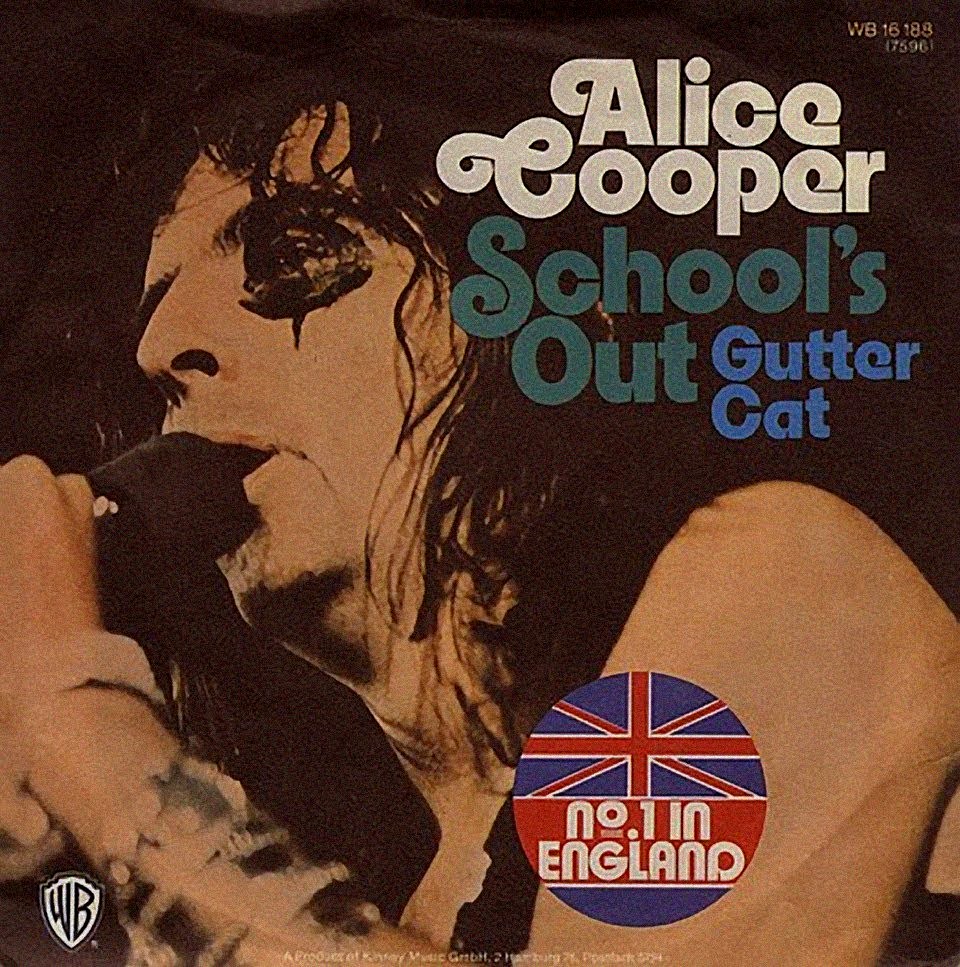
Loved this song as a student. I would make sure to fire it up on that last day in May and most of my friends would be shouting it. Cooper (Vincent Damon Furnier) wrote this song with his guitarist Michael Bruce. At the time, “Alice Cooper” was the name of the band, not just the lead singer, and all members contributed to their songwriting. Bruce also wrote the group’s songs “Caught In A Dream” and “Be My Lover,” and co-wrote “No More Mr. Nice Guy” with Cooper.
I’ve always liked Alice Cooper. He wasn’t just a show (uh…Kiss) he had some good hard rock and even pop music. I saw him open for the Rolling Stones in 2006 in Churchill Downs and I’m not saying he was better than the Stones but the sound was much better for his set. With his makeup…he doesn’t age.
The song peaked at #7 in the Billboard 100, #1 in the UK, and #3 in Canada in 1972.
From Songfacts
The title (and song) were inspired by a warning often said in Bowery Boys movies in which one of the characters declares to another, “School is out,” meaning “to wise up.” The Bowery Boys were characters featured in 48 movies that ran from 1946-1958. They were young tough guys in New York City who were always finding trouble. The movies ran on American TV throughout the ’60s and ’70s, eating up a lot of air time on independent stations. It was one of these TV viewings that Cooper saw. In the film, the character Sach (Huntz Hall) did something dumb, which prompted one of the other guys to say, “Hey, Sach, School’s Out!” Cooper like the way the phrase sounded and used it as the basis for this song.
This is a fixture at Cooper’s concerts. He says the difference between him and guys like Marilyn Manson is that he leaves the crowd in a good mood. His shows are meant to be fun, not depressing.
This was released in the summer of 1972, when school really was out. It’s since become an anthem for summer vacation.
This was Cooper’s biggest hit; it was especially popular in the UK where it topped the chart for three weeks. A concert staple, it is usually the last song he plays at his shows.
The chorus of children who sing on this was put together by producer Bob Ezrin. In 1979, Ezrin used another kid’s chorus when he produced “Another Brick In The Wall (part II)” for Pink Floyd. He liked the idea of hearing children’s voices on songs about school. In this song, they sing the children’s rhyme “No more pencils, no more books, no more teachers’ dirty looks.”
In a 2008 Esquire interview, Cooper said: “When we did ‘School’s Out,’ I knew we had just done the national anthem. I’ve become the Francis Scott Key of the last day of school.”
The album opened like a school desk and contained a pair of paper panties. This is the kind of “added value” you just don’t get with CDs.
Soul Asylum covered this for the 1998 movie The Faculty.
Cooper recorded a new version of this with Swedish pop group The A-Teens in 2002. It was an odd pairing, but the A-Teens claimed Cooper did not scare them. Cooper said that was because they had never seen his stage show. The lyrics of the new version were altered from “School’s been blown to pieces” to “I’m bored to pieces.”
Cooper starred in a TV commercial for Staples where a young girl is forced to shop for school supplies while a Muzak version of this song plays. She looks at Cooper and says, “I thought you said School’s out forever.” He replies, “No, the song goes, ‘School’s out for summer. Nice try, though.” At this point, the real version of the song kicks in.
On May 13, 2009, Cooper performed this song at the Arizona State University graduation ceremonies with his son Dash’s band, Runaway Phoenix. Alice wore his varsity letter sweater from Cortez High (Class of ’66) for the performance, which preceded a speech by US President Barack Obama. Cooper’s son Dash was attending the ASU journalism school.
This was slated for the 1992 film Wayne’s World, where Cooper was to perform it before meeting Wayne and Garth backstage. Shortly before filming began, Cooper’s manager Shep Gordon changed the playbook and told the film’s producers that Alice would be performing a new song instead: “Feed My Frankenstein.”
Schools Out
Well we got no choice All the girls and boys Makin’ all that noise ‘Cause they found new toys Well we can’t salute ya can’t find a flag If that don’t suit ya that’s a drag School’s out for summer School’s out forever School’s been blown to pieces
No more pencils no more books No more teacher’s dirty looks yeah Well we got no class And we got no principals And we got no innocence We can’t even think of a word that rhymes School’s out for summer School’s out forever My school’s been blown to pieces
No more pencils no more books No more teacher’s dirty looks Out for summer Out till fall We might not come back at all School’s out forever School’s out for summer School’s out with fever School’s out completely
One of Ringo’s best songs. This one and It Don’t Come Easy is at the top of my list of Ringo’s solo songs. The song fits Ringo perfectly. Photograph was off of what is Ringo’s best album “Ringo” that peaked at #2 in the Billboard album charts, #7 in the UK and #1 in Canada. Ringo wrote this with George Harrison. Ringo was the lead vocalist and drummer for the track, while Harrison sang harmony vocals and played 12-string guitar.
The song peaked at #1 in the Billboard 100, #1 in Canada, and #8 in the UK in 1973. I saw a John Lennon interview where he said he used to worry about Ringo and what he would do after the Beatles. Suddenly Ringo was on top of the world and John jokingly said he telegrammed Ringo and asked Ringo would he “write me a hit?”
From Songfacts
In this song, the singer laments the loss of his girl. The pain is made more intense by a photograph he has that keeps reminding him of the good times they had.
Ringo performed this song at the Grammy Awards in 2014. Despite the affliction described in the lyric, Ringo did a very joyful rendition, turning the song into one more about nostalgia – old photos from his days with The Beatles were projected on the backdrop to complement this interpretation.
Later in the broadcast, Ringo backed Paul McCartney on drums for Paul’s song “Queenie Eye.”
Photograph
Every time I see your face It reminds me of the places we used to go But all I’ve got is a photograph And I realize you’re not coming back anymore
I thought I’d make it the day you went away But I can’t take it ’til you come home again to stay
I can’t get used to living here While my heart is broke, my tears I cry for you I want you here to have and hold As the years go by, and we grow old and gray
Now you’re expecting me to live without you But that’s not something that I’m looking forward to
I can’t get used to living here While my heart is broke, my tears I cry for you I want you here to have and hold As the years go by, and we grow old and grey
Every time I see your face It reminds me of the places we used to go But all I’ve got is a photograph And I realize you’re not coming back anymore
Every time I see your face It reminds me of the places we used to go But all I’ve got is a photograph And I realize you’re not coming back anymore
This song has an excellent melody and John’s voice is great. It’s always been a favorite of mine. When I first got the White Album I zeroed in on Dear Prudence, Helter Skelter and this one at first.
John wrote this song about the Maharishi after John decided he wasn’t going to be the spiritual leader John thought. The song was called “Maharishi” but George convinced him to change the name of the song to Sexy Sadie. Personally, I think the Maharishi was good for them at the time. They cut down on the drugs and wrote some great songs without being pestered by the public or reporters.
George said this about John’s disillusionment of the Maharishi: “Someone started the nasty rumor about Maharishi, a rumor that swept the media for years…This whole piece of bullsh*t was invented. It’s probably even in the history books that Maharishi ‘tried to attack Mai Farrow‘ – but it’s bullsh*t, total bullsh*t. Just go ask Mia Farrow. There were a lot of flakes there; the whole place was full of flaky people. Some of them were us.”
“The story stirred up a situation. John had wanted to leave anyway, so that forced him into the position of thinking: ‘OK, now we’ve got a good reason to get out of here.’ We went to Maharishi, and I said, ‘Look, I told you I was going’…He couldn’t really accept that we were leaving, and he said, ‘What’s wrong?’ That’s when John said something like: ‘Well, you’re supposed to be the mystic, you should know.’ We took some cars that had been driven up there…We drove for hours. John had a song he had started to write which he was singing: ‘Maharishi, what have you done?’ and I said, ‘You can’t say that it’s ridiculous.’ I came up with the title of ‘Sexy Sadie’ and John changed ‘Maharishi’ to ‘Sexy Sadie.’
From Songfacts
John Lennon wrote this about the Maharishi while he was leaving India in 1968. After attending his Transcendental Meditation camp with the other Beatles, Lennon thought The Maharishi was a crock.
The song describes Lennon’s total dissatisfaction with the Maharishi. While at his retreat, it has been said that the Maharishi attempted to rape Mia Farrow. Once The Beatles learned of this, they immediately went to the Maharishi, and Lennon announced they were all leaving. The Maharishi asked why? Lennon said, “If you’re so cosmic, you’ll know why.” As originally written, some of its lyrics were considered obscene and had to be refined. Lennon had used the Maharishi’s name but had to change it for fear of being sued. But, Sexy Sadie is the Maharishi. Needless to say, that was the end of the Maharishi and The Beatles relationship.
Lennon dubbed the Maharishi “sexy” after he hit on Mia Farrow. Farrow’s sister, Prudence, was also there, and her experience led Lennon to write “Dear Prudence.”
Maharishi Mahesh Yogi was born on January 12, 1917. The founder of the Transcendental Meditation Movement, the Beatles spent time with the Maharishi in 1967-68; they were visiting him when they learned of the death of their manager Brian Epstein. John was disenchanted with the Maharishi and thought he was a hoax, and left abruptly convincing the others he was using the girls The Beatles had brought him.
This song required 52 takes and a full day-and-a-half of studio time. Lennon spent much of time cussing his way through the sessions, deeply hurt after coming to the conclusion that the Maharishi was not as holy as he’d hoped.
The song confirmed Charles Manson’s belief that the Beatles were talking directly to him, by virtue of one of his followers, Susan Atkins, having already been nicknamed Sadie Mae Glutz. Many of the tracks from The White Album (“Piggies” for example) were interpreted by Manson as messages directed to him.
In the Anthology book when The Beatles were talking about Manson, John Lennon was quoted as saying, “All the other fellows had some ‘influence’ on Manson, but not me I didn’t do nothing,” but Sadie was the nickname for Susan Atkins (Sadie Mae Glutz) which did contribute to Manson’s belief that the Beatles were singing about him and his “Family.”
Sexy Sadie
Sexy Sadie, what have you done You made a fool of everyone You made a fool of everyone Sexy Sadie, ooh, what have you done
Sexy Sadie, you broke the rules You laid it down for all to see You laid it down for all to see Sexy Sadie, ooh, you broke the rules
One sunny day the world was waiting for a lover She came along and turned on everyone Sexy Sadie, the greatest of them all
Sexy Sadie, how did you know The world was waiting just for you The world was waiting just for you Sexy Sadie, ooh, how did you know
Sexy Sadie, you’ll get yours yet However big you think you are However big you think you are Sexy Sadie, ooh, you’ll get yours yet
We gave her everything we owned just to sit at her table Just a smile would lighten everything Sexy Sadie, she’s the latest and the greatest of them all
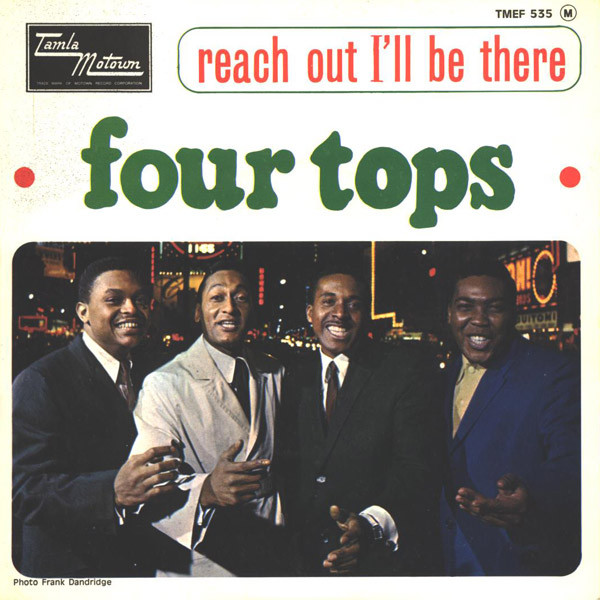
The Four Tops had 45 songs in the Billboard 100, 7 top ten hits, and 2 number one singles. This song peaked at #1 in the Billboard 100, #1 in the UK, #6 in Canada in 1966.
The Motown songwriting team of Eddie Holland, Lamont Dozier and Brian Holland (Holland-Dozier-Holland) wrote this. Dozier explained: “Brian, Eddie and I often had discussions about what women really want most of all from a man, and after talking about some of our experiences with women, we all three agreed that they wanted someone to be there for them, through thick or thin, and be there at their beck and call! Thus this song was born.”
The Four Tops recorded this in just two takes and had practically forgotten about the song until it was released, assuming it was a throwaway album track. Motown boss Berry Gordy had other ideas and released it as a single. Gordy thought he heard a hit song and got this one right.
From Songfacts
Holland-Dozier-Holland team also produced the songs they wrote. For this one, they told lead singer Levi Stubbs to sing like Bob Dylan on “Like a Rolling Stone,” which explains the urgency in his lyrics. Phil Spector once described it as “black Dylan.”
This was one of many hits the Holland-Dozier-Holland team wrote for The Four Tops. Some of these songs sounded remarkably similar, but the Motown writers didn’t have time to start from scratch with every song, since they were expected to crank out lots of songs in a hurry. H-D-H averaged two or three songs a day and literally had to clock in to work. Lamont Dozier said in a 1984 interview with NME: “If we didn’t complete them at least we would start them. We would have parts of the songs, like hooks, or maybe parts of verse, so that at the end of the day we would have something accomplished. I guess that was primarily the reason for the success we had in such a short time. We were there eight or nine years and out of those years we racked up some 50 or 60 Top 20 records, 66 Top Ten… something like that.”
The line, “happiness is just an illusion” appeared in another Motown song that was on the charts at the same time: “What Becomes of the Brokenhearted” by Jimmy Ruffin. That one also rhymed “illusion” with “confusion.”
Telma Hopkins and Joyce Vincent sang backup. They later went on to form the successful vocal trio Dawn along with Tony Orlando.
This is a very difficult song to sing, something BeBe Winans learned when he performed it at a 2003 ceremony where Holland-Dozier-Holland were given a BMI Icon Award. “He had the hardest time singing it because it was switching keys and going to different places,” Lamont Dozier recalled to Songfacts. “But he finally got it. Some of those songs are awkward to sing and you have to be a great singer to sell it.”
Diana Ross recorded this for her 1971 album Surrender, taking the song to #29 in the US. Her version, which was produced by Ashford & Simpson, is drastically different from the Four Tops original. Ross sang it in a similar style to her 1970 hit, “Ain’t No Mountain High Enough.” >>
This song has an interesting chart history in the UK: The original hit #1 in 1966, Gloria Gaynor took a disco version to #14 in 1975, a remix of the Four Tops version by the production team Stock, Aitken & Waterman went to #11 in 1988, and Michael Bolton’s version hit #37 in 1993.
It was just the second Motown song to hit #1 in the UK, following “Baby Love” by The Supremes, which reached the summit in 1964.
Reach Out (I’ll Be There)
Now if you feel that you can’t go on Because all of your hope is gone, And your life is filled with much confusion Until happiness is just an illusion, And your world around is crumblin’ down; Darling, reach out (come on girl, reach on out for me) Reach out (reach out for me.) I’ll be there, with a love that will shelter you. I’ll be there, with a love that will see you through. I’ll be there to always see you through.
When you feel lost and about to give up ‘Cause your best just ain’t good enough And you feel the world has grown cold, And you’re drifting out all on your own, And you need a hand to hold: Darling, reach out (come on girl, reach out for me) Reach out (reach out for me.) I’ll be there, to love and comfort you, And I’ll be there, to cherish and care for you. I’ll be there to love and comfort you.
I can tell the way you hang your head, You’re without love and now you’re afraid And through your tears you look around, But there’s no peace of mind to be found. I know what you’re thinkin’, You’re alone now, no love of your own, But darling, reach out (come on girl, reach out for me) Reach out (reach out for me.) Just look over your shoulder I’ll be there, to give you all the love you need, And I’ll be there, you can always depend on me.
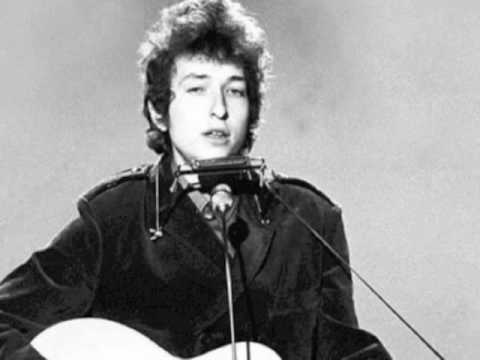
A great song that sounds like a giant statement. It still rings true today and it’s just an incredible piece of work. Dylan sings this song as if every word has a purpose to it and it does. I’ve seen Bob eight times and he has played this song twice and it was one of the highlights when he did perform it.
The song was included on the album Bringing It All Back Home released in 1965. The song was not released as a single but the album peaked at #6 in the Billboard Album Charts. The song on the album to make it into the top 40 was “Subterranean Homesick Blues” which peaked at #39.
I haven’t posted many Bob Dylan songs because the original songs on youtube were almost impossible to find but observationblogger posted Tuesday that Dylan has released his songs on youtube. You can find almost everything now.
From Songfacts
Dylan vents about subjects such as commercialism, hypocrisy and warmongering in this song. In the book, Bob Dylan, Performing Artist, author Paul Williams states this song sees Dylan acknowledge “the possibility that the most important (and least articulated) political issue of our times is that we are all being fed a false picture of reality, and it’s coming at us from every direction.”
Williams adds that Dylan portrays an “alienated individual identifying the characteristics of the world around him and thus declaring his freedom from its ‘rules’.”
This song is one of Dylan’s personal favorites. In 1980, he stated: “I don’t think I could sit down now and write ‘It’s Alright, Ma’ again. I wouldn’t even know where to begin, but I can still sing it.”
The opening line, “Darkness at the break of noon,” is referring to a nuclear explosion. After a nuclear explosion, the sky turns black and the sun disappears. >>
The line, “He who is not busy being born in busy dying” is popular with politicians. Jimmy Carter used the line in his acceptance speech at the 1976 Democratic National convention, and while campaigning for President in 2000, Al Gore told talk show host, Oprah Winfrey, that it was his favorite quote. Ironically, the song also contains the line, “But even the President of the United States sometimes must have to stand naked,” which is Dylan alluding to the fact even the most powerful people will be ultimately judged.
The album cover shows a woman lounging by a fireplace with Dylan in the foreground holding a cat. She is Sally Grossman, the wife of Dylan’s manager Albert Grossman. The photo was taken in Grossman’s house, and the cat belonged to Sally.
Bob Dylan – It’s Alright Ma I’m Only Bleeding
Darkness at the break of noon Shadows even the silver spoon The handmade blade, the child’s balloon Eclipses both the sun and moon To understand you know too soon There is no sense in trying
Pointed threats, they bluff with scorn Suicide remarks are torn From the fool’s gold mouthpiece The hollow horn plays wasted words Proves to warn that he’s not busy being born Is busy dying
Temptation’s page flies out the door You follow, find yourself at war Watch waterfalls of pity roar You feel to moan but unlike before You discover that you’d just be One more person crying
So don’t fear if you hear A foreign sound to your ear It’s alright ma, I’m only sighing
As some warn victory, some downfall Private reasons great or small Can be seen in the eyes of those that call To make all that should be killed to crawl While others say don’t hate nothing at all Except hatred
Disillusioned words like bullets bark As human gods aim for their mark Made everything from toy guns that spark To flesh-colored Christs that glow in the dark It’s easy to see without looking too far That not much is really sacred
While preachers preach of evil fates Teachers teach that knowledge waits Can lead to hundred-dollar plates Goodness hides behind its gates But even the president of the United States Sometimes must have to stand naked
An’ though the rules of the road have been lodged It’s only people’s games that you got to dodge And it’s alright ma, I can make it
Advertising signs that con you Into thinking you’re the one That can do what’s never been done That can win what’s never been won Meantime life outside goes on All around you
You lose yourself, you reappear You suddenly find you got nothing to fear Alone you stand with nobody near When a trembling distant voice, unclear Startles your sleeping ears to hear That somebody thinks they really found you
A question in your nerves is lit Yet you know there is no answer fit to satisfy Insure you not to quit To keep it in your mind and not forget That it is not he or she or them or it That you belong to
Although the masters make the rules For the wise men and the fools I got nothing ma, to live up to
For them that must obey authority That they do not respect in any degree Who despise their jobs, their destinies Speak jealously of them that are free Do what they do just to be nothing more than something they invest in
While some on principles baptized To strict party platform ties Social clubs in drag disguise Outsiders they can freely criticize Tell nothing except who to idolize And then say “God bless him”
While one who sings with his tongue on fire Gargles in the rat race choir Bent out of shape from society’s pliers Cares not to come up any higher But rather get you down in the hole that he’s in
But I mean no harm nor put fault On anyone that lives in a vault But it’s alright ma, if I can’t please him
Old lady judges watch people in pairs Limited in sex, they dare To push fake morals, insult and stare While money doesn’t talk, it swears Obscenity, who really cares Propaganda, all is phony
While them that defend what they cannot see With a killer’s pride, security It blows the minds most bitterly For them that think death’s honesty Won’t fall upon them naturally Life sometimes must get lonely
My eyes collide head-on with stuffed graveyards False gods, I scuff At pettiness which plays so rough Walk upside-down inside handcuffs Kick my legs to crash it off Say okay, I have had enough What else can you show me?
And if my thought-dreams could be seen They’d probably put my head in a guillotine But it’s alright ma, it’s life, and life only
I remember when I was 5-6 years old and listening to this song. The verses I ignored at the time and enjoyed the chorus immensely going around singing it and being told to shut up already by my sister. I guess a six-year-old singing Bye, bye Miss American Pie Drove my Chevy to the levee but the levee was dry, And them good ole boys were drinking whiskey and rye, Singin’ this’ll be the day that I die, This’ll be the day that I die… Would get old but hey…I had good taste anyway (better than my sister).
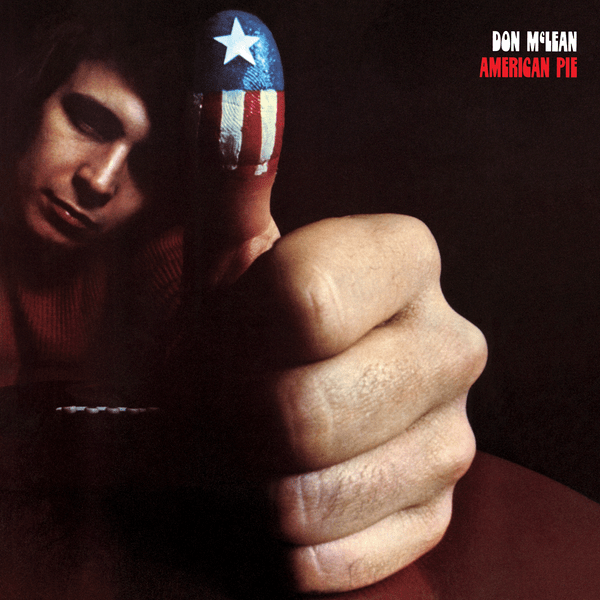
Where do I begin with this one? The song has so many references that it acts as a pop culture index by itself. We do know the song was inspired by Buddy Holly… What does it all mean? While being interviewed in 1991, McLean was asked for probably the 1000th time “What does the song ‘American Pie’ mean to you?,” to which he answered, “It means never having to work again for the rest of my life.” Now that is a great and honest answer by Mclean.
In 2015 he opened up about the song and sold the original lyrics for 1.2 million dollars. This time he answered the question seriously. “It was an indescribable photograph of America that I tried to capture in words and music.”
“People ask me if I left the lyrics open to ambiguity,” McLean said “Of course I did. I wanted to make a whole series of complex statements. The lyrics had to do with the state of society at the time.”
In later years I would buy the single and try to figure out who he was talking about. Some of the lyrics include references to Karl Marx; Vladimir Ilyich Lenin (or John Lennon), the Beatles, Bob Dylan, Buddy Holly, The Byrds; James Dean; Charles Manson; the Rolling Stones; the “widowed bride,” Jackie Kennedy, the Vietnam War and more.
This song peaked at #1 in the Billboard 100, #1 in Canada, and #2 in the UK in 1972
If you want more… here is a website PDF that breaks down line by line of their interpretation.
From Songfacts (A lot of info here)
According to McLean (as posted on his website), this song was originally inspired by the death of Buddy Holly. “The Day The Music Died” is February 3, 1959, when Holly, Ritchie Valens, and The Big Bopper were killed in a plane crash after a concert. McLean wrote the song from his memories of the event (“Dedicated to Buddy Holly” was printed on the back of the album cover).
The Beatles Sgt. Pepper album was also a huge influence, and McLean has said in numerous interviews that the song represented the turn from the innocence of the ’50s to the darker, more volatile times of the ’60s – both in music and politics.
McLean was a 13-year-old paperboy in New Rochelle, New York when Holly died. He learned about the plane crash when he cut into his stack of papers and saw the lead story.
Talking about how he composed this song when he was a guest on the UK show Songbook, McLean explained: “For some reason, I wanted to write a big song about America and about politics, but I wanted to do it in a different way. As I was fiddling around, I started singing this thing about the Buddy Holly crash, the thing that came out (singing), ‘Long, long time ago, I can still remember how that music used to make me smile.’
I thought, Whoa, what’s that? And then the day the music died, it just came out. And I said, Oh, that is such a great idea. And so that’s all I had. And then I thought, I can’t have another slow song on this record. I’ve got to speed this up. I came up with this chorus, crazy chorus. And then one time about a month later I just woke up and wrote the other five verses. Because I realized what it was, I knew what I had. And basically, all I had to do was speed up the slow verse with the chorus and then slow down the last verse so it was like the first verse, and then tell the story, which was a dream. It is from all these fantasies, all these memories that I made personal. Buddy Holly’s death to me was a personal tragedy. As a child, a 15-year-old, I had no idea that nobody else felt that way much. I mean, I went to school and mentioned it and they said, ‘So what?’ So I carried this yearning and longing, if you will, this weird sadness that would overtake me when I would look at this album, The Buddy Holly Story because that was my last Buddy record before he passed away.”
This song made the 26-year-old McLean very famous very quickly, which was difficult for the songwriter. McLean was prone to depression, losing his father at age 15 and dealing with a bad marriage when recording the album. So when the song hit, it thrust him into the spotlight and took the focus away from the body of his work. In a 1973 interview with NME, he explained: “I was headed on a certain course, and the success I got with ‘American Pie’ really threw me off. It just shattered my lifestyle and made me quite neurotic and extremely petulant. I was really prickly for a long time. If the things you’re doing aren’t increasing your energy and awareness and clarity and enjoyment, then you feel as though you’re moving blindly. That’s what happened to me. I seemed to be in a place where nothing felt like anything, and nothing meant anything. Literally, nothing mattered. It was very hard for me to wake up in the morning and decide why it was I wanted to get up.”
Contrary to rumors, the plane that crashed was not named the “American Pie” – Dwyer’s Flying Service did not name their planes. McLean made up the name.
McLean admits that this song is about Buddy Holly, but has never said what the lyrics are about, preferring to let listeners interpret them on their own. In these next few Songfacts, we’ll take a look at some logical interpretations: “The Jester” is probably Bob Dylan. It refers to him wearing “A coat he borrowed from James Dean,” and being “On the sidelines in a cast.” Dylan wore a red jacket similar to James Dean’s on the cover of The Freewheeling Bob Dylan and got in a motorcycle accident in 1966 which put him out of service for most of that year. Dylan also made frequent use of jokers, jesters or clowns in his lyrics. The line, “And a voice that came from you and me” could refer to the folk style he sings, and the line, “And while the king was looking down the jester stole his thorny crown” could be about how Dylan took Elvis Presley’s place as the number one performer.
The line “Eight miles high and falling fast” is likely a reference to The Byrds’ hit “Eight Miles High.” Regarding the line, “The birds (Byrds) flew off from a fallout shelter,” a fallout shelter is a ’60s term for a drug rehabilitation facility, which one of the band members of The Byrds checked into after being caught with drugs.
The section with the line “The flames climbed high into the night” is probably about the Altamont Speedway concert in 1969. While the Rolling Stones were playing, a fan was stabbed to death by a member of The Hells Angels who was hired for security.
The line “Sergeants played a marching tune” is likely a reference to The Beatles’ album Sgt. Pepper’s Lonely Hearts Club Band.
The line “I met a girl who sang the blues and I asked her for some happy news, but she just smiled and turned away” is probably about Janis Joplin. She died of a drug overdose in 1970.
The lyric “And while Lenin/Lennon read a book on Marx” has been interpreted different ways. Some view it as a reference to Vladimir Lenin, the communist dictator who led the Russian Revolution in 1917 and who built the USSR, which was later ruled by Josef Stalin. The “Marx” referred to here would be the socialist philosopher Karl Marx. Others believe it is about John Lennon, whose songs often reflected a very communistic theology (particularly “Imagine”). Some have even suggested that in the latter case, “Marx” is actually Groucho Marx, another cynical entertainer who was suspected of being a socialist, and whose wordplay was often similar to Lennon’s lyrics.
“Did you write the book of love” is probably a reference to the 1958 hit “Book of Love” by the Monotones. The chorus for that song is “Who wrote the book of love? Tell me, tell me… I wonder, wonder who” etc. One of the lines asks, “Was it someone from above?” Don McLean was a practicing Catholic, and believed in the depravity of ’60s music, hence the closing lyric: “The Father, Son, and the Holy Ghost, they caught the last train for the coast, the day the music died.” Some, have postulated that in this line, the Trinity represents Buddy Holly, Ritchie Valens, and the Big Bopper. >>
Some more interpretations:
“And moss grows fat on our rolling stone” – Mick Jagger’s appearance at a concert in skin-tight outfits, displaying a roll of fat, unusual for the skinny Stones frontman. Also, the words, “You know a rolling stone don’t gather no moss” appear in the Buddy Holly song “Early in the Morning,” which is about his ex missing him early in the morning when he’s gone.
“The quartet practiced in the park” – The Beatles singing at Shea Stadium.
“And we sang dirges in the dark, the day the music died” – The ’60s peace marches.
“Helter Skelter in a summer swelter” – The Manson Family’s attack on Sharon Tate and others in California.
“We all got up to dance, Oh, but we never got the chance, ’cause the players tried to take the field, the marching band refused to yield” – The huge numbers of young people who went to Chicago for the 1968 Democratic Party National Convention, and who thought they would be part of the process (“the players tried to take the field”), only to receive a violently rude awakening by the Chicago Police Department nightsticks (the commissions who studied the violence after-the-fact would later term the Chicago PD as “conducting a full-scale police riot”) or as McLean calls the police “the marching band.”
Madonna covered this in 2000 for the movie The Next Best Thing. Her version topped the UK charts and peaked at #29 in the US. It was her friend, the English actor Rupert Everett, who suggested Madonna record a cover of this song and sang backup on her version.
On January 29, 2007 Madonna’s recording was voted the worst ever cover version in a poll by BBC 6 Music. Despite the critical derision, McLean had good things to say about Madonna’s cover, and he released this statement: “Madonna is a colossus in the music industry and she is going to be considered an important historical figure as well. She is a fine singer, a fine songwriter and record producer, and she has the power to guarantee success with any song she chooses to record. It is a gift for her to have recorded ‘American Pie.’ I have heard her version and I think it is sensual and mystical. I also feel that she’s chosen autobiographical verses that reflect her career and personal history. I hope it will cause people to ask what’s happening to music in America. I have received many gifts from God but this is the first time I have ever received a gift from a goddess.”
Madonna was supposed to perform her version at the Super Bowl in 2001, but backed out, claiming she did not have enough time to prepare. No one was too upset.
At 8 minutes 32 seconds, this is the longest song in length to hit #1 on the Hot 100. The single was split in two parts because the 45 did not have enough room for the whole song on one side. The A-side ran 4:11 and the B-side was 4:31 – you had to flip the record in the middle to hear all of it. Disc jockeys usually played the album version at full length, which was to their benefit because it gave them time for a snack, a cigarette or a bathroom break.
In 1971, a singer named Lori Lieberman saw McLean perform this at the Troubadour theater in Los Angeles. She claimed that she was so moved by the concert that her experience became the basis for her song “Killing Me Softly With His Song,” which was a huge hit for Roberta Flack in 1973. When we spoke with Charles Fox, who wrote “Killing Me Softly” with Norman Gimbel, he explained that when Lieberman heard their song, it reminded her of the show, and she had nothing to do with writing the song.
McLean (from his website): “I’m very proud of the song. It is biographical in nature and I don’t think anyone has ever picked up on that. The song starts off with my memories of the death of Buddy Holly. But it moves on to describe America as I was seeing it and how I was fantasizing it might become, so it’s part reality and part fantasy but I’m always in the song as a witness or as even the subject sometimes in some of the verses. You know how when you dream something you can see something change into something else and it’s illogical when you examine it in the morning but when you’re dreaming it seems perfectly logical. So it’s perfectly okay for me to talk about being in the gym and seeing this girl dancing with someone else and suddenly have this become this other thing that this verse becomes and moving on just like that. That’s why I’ve never analyzed the lyrics to the song. They’re beyond analysis. They’re poetry.” >>
This song did a great deal to revive interest in Buddy Holly. Says McLean: “By 1964, you didn’t hear anything about Buddy Holly. He was completely forgotten. But I didn’t forget him, and I think this song helped make people aware that Buddy’s legitimate musical contribution had been overlooked. When I first heard ‘American Pie’ on the radio, I was playing a gig somewhere, and it was immediately followed by ‘Peggy Sue.’ They caught right on to the Holly connection, and that made me very happy. I realized that it was actually gonna perform some good works.”
In 2002, this was featured in a Chevrolet ad. It showed a guy in his Chevy singing along to the end of this song. At the end, he gets out and it is clear that he was not going to leave the car until the song was over. The ad played up the heritage of Chevrolet, which has a history of being mentioned in famous songs (the line in this one is “Drove my Chevy to the levee”). Chevy used the same idea a year earlier when it ran billboards of a red Corvette that said, “They don’t write songs about Volvos.”
Weird Al Yankovic did a parody of this song for his 1999 album Running With Scissors. It was called “The Saga Begins” and was about Star Wars: The Phantom Menace written from the point of view of Obi-Wan Kenobi. Sample lyric: “Bye, bye this here Anakin guy, maybe Vader someday later but now just a small fry.”
It was the second Star Wars themed parody for Weird Al – his first being “Yoda,” which is a takeoff on “Lola” by The Kinks. Al admitted that he wrote “The Saga Begins” before the movie came out, entirely based on Internet rumors.
The line “Jack be nimble, Jack be quick, Jack Flash sat on a candle stick” is taken from a nursery rhyme that goes “Jack be nimble, Jack be quick, Jack jump over the candlestick.” Jumping over the candlestick comes from a game where people would jump over fires. “Jumpin’ Jack Flash” is a Rolling Stones song. Another possible reference to The Stones can be found in the line, “Fire is the devils only friend,” which could be The Rolling Stones “Sympathy For The Devil,” which is on the same Rolling Stones album. >>
McLean wrote the opening verse first, then came up with the chorus, including the famous title. The phrase “as American as apple pie” was part of the lexicon, but “American Pie” was not. When McLean came up with those two words, he says “a light went off in my head.”
In the liner notes to the 2003 reissue of the album, McLean said: “A month or so later I was in Philadelphia and I wrote the rest of the song. I was trying to figure out what this song was trying to tell me and where it was supposed to go. That’s when I realized it had to go forward from 1957 and it had to take in everything that has happened. I had to be a witness to the things going o, kind of like Mickey Mouse in Fantasia. I didn’t know anything about hit records. I was just trying to make the most interesting and exciting record that I could. Once the song was written, there was no doubt that it was the whole enchilada. It was clearly a very interesting, wonderful thing and everybody knew it.”
When the original was released at a whopping 8:32, some radio stations in the United States refused to play it because of a policy limiting airplay to 3:30. Some interpret the song as a protest against this policy. When Madonna covered the song many years later, she cut huge swathes of the song, ironically to make it more radio friendly, to 4:34 on the album and under 4 minutes for the radio edit. >>
This song was enshrined in the Grammy Hall of Fame in 2002, 29 years after it was snubbed for the four categories it was nominated in. At the 1973 ceremony, “American Pie” lost both Song of the Year and Record of the year to “First Time Ever I Saw Your Face.”
Regarding the lyrics, “Jack Flash sat on a candlestick, ’cause fire is the devil’s only friend,” this could be a reference to the space program, and to the role it played in the Cold War between America and Russia throughout the ’60s. It is central to McLean’s theme of the blending of the political turmoil and musical protest as they intertwined through our lives during this remarkable point in history. Thus, the reference incorporates Jack Flash (the Rolling Stones), with our first astronaut to orbit the earth, John (common nickname for John is Jack) Glenn, paired with “Flash” an allusion to fire, with another image for a rocket launch, “candlestick,” then pulls the whole theme together with “’cause fire is the Devil’s (Russia’s) only friend” (as Russia had beaten us to manned orbital flight. >>
Fans still make the occasional pilgrimage to the spot of the plane crash that inspired this song. It’s in a location so remote that tourists are few.
The song starts in mono, and gradually goes to stereo over its eight-and-a-half minutes. This was done to represent going from the monaural era into the age of stereo.
Contrary to local lore, McLean neither wrote “American Pie” on cocktail napkins at the Tin and Lint in Saratoga Springs, New York, nor debuted it on stage at Caffe Lena, a famous coffeehouse around the corner from the bar. Speaking to Saratoga newspaper The Post-Star in November 2011, McLean disclosed that he penned the song in Philadelphia and performed it for the first time at Temple University, where he was billed to perform with Laura Nyro. “I have heard this for years. I guess you can’t really control these things, but these are both not true. That is from the horse’s mouth that’s exactly what happened,” McLean said. “Unfortunately Caffe Lena or Saratoga Springs – neither of those places can lay claim to anything with regard to ‘American Pie.'”
This song was a forebear to the ’50s nostalgia the became popular later in the decade. A year after it was released, Elton John scored a ’50s-themed hit with “Crocodile Rock; in 1973 the George Lucas movie American Graffiti harkened back to that decade, and in 1978 the movie The Buddy Holly Story hit theaters.
One of the more bizarre covers of this song came in 1972, when it appeared on the album Meet The Brady Bunch, performed by the cast of the TV show. This version runs just 3:39.
This song appears in the films Born on the Fourth of July (1989), Celebrity (1998) and Josie and the Pussycats (2001).
Don McLean’s original manuscript of “American Pie” was sold for $1.2 million at a Christie’s New York auction on April 7, 2015. McLean wrote for the catalog description:
“Basically in ‘American Pie’ things are heading in the wrong direction… It is becoming less idyllic. I don’t know whether you consider that wrong or right but it is a morality song in a sense. I was around in 1970 and now I am around in 2015… there is no poetry and very little romance in anything anymore, so it is really like the last phase of ‘American Pie’.”
Despite the critical flack that Madonna received for her version, Don McLean was impressed with the Queen of Pop’s interpretation. “I think it is sensual and mystical,” he told the Mail on Sunday’s Event magazine. “I also feel that she’s chosen autobiographical verses that reflect her career and personal history.”
American Pie
A long long time ago I can still remember how That music used to make me smile And I knew if I had my chance That I could make those people dance And maybe they’d be happy for a while
But February made me shiver With every paper I’d deliver Bad news on the doorstep I couldn’t take one more step
I can’t remember if I cried When I read about his widowed bride Something touched me deep inside The day the music died So
Bye, bye Miss American Pie Drove my Chevy to the levee but the levee was dry And them good ole boys were drinking whiskey and rye Singin’ this’ll be the day that I die This’ll be the day that I die
Did you write the book of love And do you have faith in God above If the Bible tells you so? Do you believe in rock and roll? Can music save your mortal soul? And can you teach me how to dance real slow?
Well, I know that you’re in love with him ‘Cause I saw you dancin’ in the gym You both kicked off your shoes Man, I dig those rhythm and blues
I was a lonely teenage broncin’ buck With a pink carnation and a pickup truck But I knew I was out of luck The day the music died I started singin’
Bye, bye Miss American Pie Drove my Chevy to the levee but the levee was dry And them good ole boys were drinking whiskey and rye Singin’ this’ll be the day that I die This’ll be the day that I die
Now, for ten years we’ve been on our own And moss grows fat on a rolling stone But, that’s not how it used to be
When the jester sang for the king and queen In a coat he borrowed from James Dean And a voice that came from you and me
Oh and while the king was looking down The jester stole his thorny crown The courtroom was adjourned No verdict was returned
And while Lennon read a book on Marx The quartet practiced in the park And we sang dirges in the dark The day the music died We were singin’
Bye, bye Miss American Pie Drove my Chevy to the levee but the levee was dry Them good ole boys were drinking whiskey and rye And singin’ this’ll be the day that I die This’ll be the day that I die
Helter skelter in a summer swelter The birds flew off with a fallout shelter Eight miles high and falling fast
It landed foul on the grass The players tried for a forward pass With the jester on the sidelines in a cast
Now the half-time air was sweet perfume While sergeants played a marching tune We all got up to dance Oh, but we never got the chance
‘Cause the players tried to take the field The marching band refused to yield Do you recall what was revealed The day the music died? We started singin’
Bye, bye Miss American Pie Drove my Chevy to the levee but the levee was dry Them good ole boys were drinking whiskey and rye And singin’ this’ll be the day that I die This’ll be the day that I die
Oh, and there we were all in one place A generation lost in space With no time left to start again
So come on Jack be nimble, Jack be quick Jack Flash sat on a candlestick ‘Cause fire is the devil’s only friend
Oh and as I watched him on the stage My hands were clenched in fists of rage No angel born in Hell Could break that Satan’s spell
And as the flames climbed high into the night To light the sacrificial rite I saw Satan laughing with delight The day the music died He was singin’
Bye, bye Miss American Pie Drove my Chevy to the levee but the levee was dry Them good ole boys were drinking whiskey and rye Singin’ this’ll be the day that I die This’ll be the day that I die
I met a girl who sang the blues And I asked her for some happy news But she just smiled and turned away
I went down to the sacred store Where I’d heard the music years before But the man there said the music wouldn’t play
And in the streets the children screamed The lovers cried, and the poets dreamed But not a word was spoken The church bells all were broken
And the three men I admire most The Father, Son, and the Holy Ghost They caught the last train for the coast The day the music died And they were singing
Bye, bye Miss American Pie Drove my Chevy to the levee but the levee was dry And them good ole boys were drinking whiskey and rye Singin’ this’ll be the day that I die This’ll be the day that I die
They were singing Bye, bye Miss American Pie Drove my Chevy to the levee but the levee was dry Them good ole boys were drinking whiskey and rye Singin’ this’ll be the day that I die
Are You Gonna Be My Girl is a song by the Australian rock band Jet. It was the first single from their debut record Get Born, which was released in 2003. I like this song because of the rawness of it. You can hear the amps buzz slightly when the song starts. The song’s drum beat and riff do sound like Iggy Pop’s Lust For Life.
Drummer Chris Cester said: “It’s funny because I asked him (Iggy Pop) point blank about that. He said I was crazy. He said that when he and David Bowie were writing ‘Lust for Life’, they were ripping off Motown’s beat. It’s funny that he said that to me because we also thought we were ripping off Motown more than ‘Lust for Life’.
The song peaked at #29 on the Billboard Hot 100 in 2004.
This was a hit twice in the UK, in 2003 it reached #23 in the singles chart. The following year it was re-released after being featured in the Vodaphone picture messaging TV ads and this time it rose to #16 in the charts.
From Songfacts
This was Jet’s first hit song. It was also the first song to be used in the popular iPod commercials, where a black shadow of a person, listening to a white iPod danced to this tune in front of colorful backgrounds. These ads helped boost sales of iPods and of Jet albums.
Are You Gonna Be My Girl
Go!
So one, two, three, take my hand and come with me Because you look so fine That I really wanna make you mine
I say you look so fine That I really wanna make you mine
Oh, four, five, six c’mon and get your kicks Now you don’t need that money When you look like that, do ya honey
Big black boots Long blonde hair She’s so sweet With her get back stare
Well I could see You home with me But you were with another man, yeah! I know we Ain’t got much to say Before I let you get away, yeah! I said, are you gonna be my girl?
Well, so one, two, three, take my hand and come with me Because you look so fine That I really wanna make you mine
I say you look so fine That I really wanna make you mine
Oh, four, five, six c’mon and get your kicks Now you don’t need that money With a face like that, do ya
Big black boots Long brown hair She’s so sweet With her get back stare
Well I could see You home with me But you were with another man, yeah! I know we, Ain’t got much to say Before I let you get away, yeah! I said, are you gonna be my girl?
Oh yeah, oh yeah, c’mon! I could see You home with me But you were with another man, yeah! I know we Ain’t got much to say Before I let you get away, yeah! Uh, be my girl Be my girl Are you gonna be my girl? Yeah
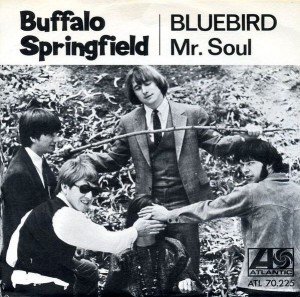
Buffalo Springfield is a band that never quite reached its true potential but still made a big impression in the late sixties. This song comes in with a bang. “Mr. Soul” It was written by Young after experiencing an epilepsy attack after an early show with Buffalo Springfield in San Francisco. Many people in the audience were questioning if it was part of the act.
The lyrics had reflected Young’s experience, feeling as though he was about to die. Thereupon, he was advised by his doctor to never take LSD or any other hallucinogenic drugs.
The song was the first track of their second album Buffalo Springfield Again. The song did not chart.
From Songfacts
One hardly knows where to begin with this song’s lyrics. In just three short verses with no chorus, Young practically flaunts his lyrical prowess at this early stage in his career. He invokes both Beatles and early proto-punk, in verses that manage to be both angry and whimsical at the same time. Like the team of Lennon-McCartney, Young and Stills experienced friendly rivalry with their equally matched talents that also inspired each of them to top the other, bringing their work to an edginess that drove them to brilliance.
At the time of “Mr. Soul,” Young was wavering on leaving the band. His first departure was on the eve of Buffalo Springfield’s booking to appear on The Tonight Show with Johnny Carson, which he was vehemently opposed to. Young later told British music magazine Mojo, “I thought it was belittling what the Buffalo Springfield was doing. That audience wouldn’t have understood us. We’d have been just a f–kin’ curiosity to them.”
Along with missing The Tonight Show, Young’s sudden departure also cast a cold shadow over Buffalo Springfield’s appearance at the now-legendary 1967 Monterey International Pop Festival. Buffalo Springfield brought in Doug Hastings to substitute on guitar and had Stephen Stills’ friend David Crosby drop by to assist with the Festival appearance, but even so, the group’s performance suffered so much that they were dropped from the Pennebaker documentary.
The book Neil Young: Long May You Run: The Illustrated History says that this song “was likely more indicative of where his [Young’s] head truly was. Much like the songs from the Springfield’s debut, ‘Mr. Soul’ suggests that Young’s work was still razor-sharp, even when it was coming from a very unhappy place.”
While we’re book-hopping, there are some ties between Buffalo Springfield members and Al Kooper (of Blues Project / Blood Sweat & Tears fame). In Kooper’s memoir Backstage Passes and Backstabbing Bastards, Kooper consulted with David Crosby when the idea of Blood Sweat & Tears was forming in his mind, and also recruited Jim Fielder (Frank Zappa and the Mothers alumni), who also part of Buffalo Springfield when they were seeking a replacement for Bruce Palmer’s continuous absences. And then Stephen Stills himself popped by to fill in for Mike Bloomfield when Kooper, in a panic, called him to help complete the album Super Session. There, is that enough threads weaving everything together?
Robin Lane ran in Young’s circle in the late ’60s. She also lived with him for some time and sang on “Round and Round (It Won’t Be Long).” Lane told Songfacts that the song “Mr. Soul” was inspired in some way by the death of Lenny Bruce, who died less a year before the song was recorded. In Shakey, Jimmy McDonough writes that Young himself had no recollection of the Bruce connection.
Mr. Soul
Oh, hello Mr. Soul, I dropped by to pick up a reason For the thought that I caught that my head is the event of the season Why in crowds just a trace of my face could seem so pleasin’ I’ll cop out to the change, but a stranger is putting the tease on.
I was down on a frown when the messenger brought me a letter I was raised by the praise of a fan who said I upset her Any girl in the world could have easily known me better She said, You’re strange, but don’t change, and I let her.
In a while will the smile on my face turn to plaster? Stick around while the clown who is sick does the trick of disaster For the race of my head and my face is moving much faster Is it strange I should change? I don’t know, why don’t you ask her?
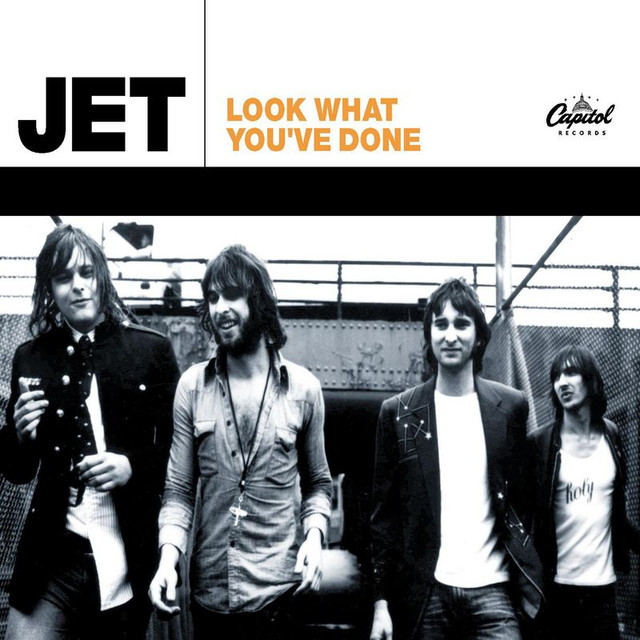
Jet is an Australian band that came out in the 2000s and I really liked them. They have 60’s and 70’s sound to them. When I listened to the song the first time I liked it and noticed they borrowed from The Beatles White Album song “Sexy Sadie”….lyrically and some of the melody. Two brothers Nic Cester and Chris Cester formed the group and were influenced by their father’s 60’s and 70s albums. The drumming on this song I really like.
The band broke up in 2012 and reformed in 2016.
The song peaked at #37 in 2005 in the Billboard 100 and #14 in Australia.
Look What You’ve Done
Take my photo off the wall If it just won’t sing for you. ‘Cause all that’s left has gone away And there’s nothing there for you to prove.
Oh, look what you’ve done You’ve made a fool of everyone. Oh, well, it seems like such fun Until you lose what you had won.
Give me back my point of view ‘Cause I just can’t think for you. I can hardly hear you say What should I do? Well, you choose
Oh, look what you’ve done You’ve made a fool of everyone. Oh, well, it seems like such fun Until you lose what you had won.
Oh,look what you’ve done You’ve made a fool of everyone A fool of everyone A fool of everyone
Take my photo off the wall If it just won’t sing for you. ‘Cause all that’s left has gone away And there’s nothing there for you to do.
Oh, look what you’ve done You’ve made a fool of everyone. Oh, well, it seems like such fun Until you lose what you had won.
Oh, look what you’ve done You’ve made a fool of everyone A fool of everyone A fool of everyone.
Written by the Motown songwriting team of Eddie Holland, Lamont Dozier and Brian Holland, this was the first Top 10 hit for Martha & the Vandellas, whose lead singer, Martha Reeves, started as a secretary at Motown. Heatwave is a powerful song that has been covered by many artists but this one remains my favorite. This song peaked at #4 in the Billboard 100 and #12 in Canada in 1964.
Martha & the Vandellas became the first Motown group ever to receive a Grammy Award nomination when this song was nominated in 1964 for Best Rhythm & Blues Recording; it lost to Ray Charles’ hit “Busted.”
From Songfacts
“Heat Wave” was the group’s second hit written by Holland-Dozier-Holland, following “Come and Get These Memories.” It was also one of the first songs to create the style of music that would be known as the “Motown Sound.”
In this song, Reeves sings about a guy who turns her on so much that her temperature rises when he’s around. Like many of Motown’s hits, it’s a light and amorous pop song.
Many of the jaunty songs Holland-Dozier-Holland wrote at Motown are underpinned with heartbreaking lyrics, often inspired by real-life breakups. This one is more congruent and less personal. Lamont Dozier explained: “It was summertime and hot and sticky in Detroit. I often sat at the piano and played a warm-up riff to get my day started. This one particular day the heat was over the top and I was watching tv and the weatherman said we had a record-breaking five-day heat wave that was not going to let up. So all this funky riff needed was for me to throw a girl into the mix and this song was born.”
Whoopi Goldberg sang this in the 1992 film Sister Act.
Linda Ronstadt reached US #5 in 1975 with her cover version, which was the first single from her album Prisoner In Disguise. It was a song her band had been pushing her to perform; they finally did at a gig in Long Island when they kept getting called back for encores and ran out of material. Recording it was a challenge; Ronstadt’s producer Peter Asher tried it with a few different sets of musicians before getting the take he liked with Andrew Gold on drums and Ronstadt’s Stone Poneys bandmate Kenny Edwards on bass. Gold then overdubbed guitars, piano and an ARP string synthesizer. Asher added four tracks of hand claps.
Artists who have covered this song include Lou Christie, the Jam, Joan Osborne, the Supremes, and The Who.
Heat Wave
Heat wave Heat wave
Whenever I’m with you Something inside Starts to burn deep And my heart’s filled with fire Could be that I’m very sentimental Or is this just the way love’s supposed to be?
I got a heat wave Burning in my heart I can’t keep from crying Tearing me apart
Sometimes she calls my name Yeah, yeah, yeah, I can’t explain I feel, yeah I feel I feel this burning flame This high blood pressure’s got a hold on me ‘Cause this is the way love’s supposed to be
I got a heat wave Burning in my heart I can’t keep from crying Tearing me apart
Oh yeah Oh yeah
Oh yeah Oh yeah
Just give me another chance This could be a new romance
This one is probably my favorite of the after Army Elvis songs. Colonel Parker had no qualms about pushing Elvis to the middle of the road. This one has some bite and is a great song. Elvis had 7 number 1 hits in the Billboard 100 total…this is his last one in his career. I actually thought he had more but he did place 109 songs in the top 100 and 25 top ten hits. Suspicious Minds peaked at #1 in 1969.
Elvis’ publishing company, along with his manager Colonel Tom Parker, tried to get fifty percent of the publishing rights to this song and threatened to stop the recording if they didn’t. Elvis insisted on recording the song regardless.
This was a big comeback song for Elvis. It was seven years since his last #1 hit.
From Songfacts
Memphis singer Mark James and Chips Moman wrote this. James recorded and released his own version, but it didn’t go anywhere. Memphis Soul producer Chips Moman brought this to Presley in 1969, and Elvis immediately fell in love with it and decided he could turn it into a hit, even though it had flopped for James.
This was recorded between 4-7 in the morning, during the landmark Memphis session that helped Elvis reclaim his title of “The King.”
This song was inducted into the Grammy Hall of Fame in 1999.
Artists to cover this song include Dwight Yoakam, Waylon Jennings, The Heptones, Candi Staton (#31 UK), B.J. Thomas and even The Fine Young Cannibals, whose 1985 version not only hit #8 in the UK, but was bizarrely referenced on the American TV show Psych, when Shawn tells his partner Gus: “Don’t be Fine Young Cannibals cover of ‘Suspicious Minds.’ We’re going to find her.”
In the UK, Elvis had a hit with this song three times. First in 1969 when it was originally released, then in 2001 when a live version recorded at The International Hotel, Las Vegas, in August 1970 was issued and went to #15, then in 2007 when it was re-issued to commemorate the 30th anniversary of Elvis’ death, going to #11.
Dennis Quaid and Elizabeth Mitchell dance to this in the 2000 sci-fi drama Frequency.
According to Elvis’ good friend Marty Lacker, who convinced him to record in Memphis with Chips Moman, the song’s fake ending was a result of tampering by Elvis’ longtime producer Felton Jarvis. “When Chips cut ‘Suspicious Minds’ and mixed it, the fade and bump at the end was not there,” Lacker told Goldmine magazine. “In other words, the song fades out and then it bumps up again. It’s that part where Elvis is just repeating and repeating the last chorus. In my opinion, it might be good for the stage, a dramatic thing, but it’s not good on a record. What happened was Felton Jarvis took the master to Nashville and started fooling with it thinking he could do better. And he couldn’t. He should have left it alone. He added background voices. The voices that Chips put on in Memphis, Mary Green and all those people, they’re fantastic southern sounding R&B-ish singers. Chips used them on a lot of the hits he had.”
Waylon Jennings and Jessi Colter first covered this in 1970 and landed at #25 on the country chart. Their version was re-released to promote the 1976 album Wanted! The Outlaws, the first country album certified Platinum, with more than a million records sold. This time, the single peaked at #2 and earned the couple a Grammy nomination for Best Country Performance by a Duo or Group with Vocal.
Suspicious Minds
We’re caught in a trap I can’t walk out Because I love you too much baby
Why can’t you see What you’re doing to me When you don’t believe a word I say?
We can’t go on together With suspicious minds (suspicious minds) And we can’t build our dreams On suspicious minds
So, if an old friend I know Stops by to say hello Would I still see suspicion in your eyes?
Here we go again Asking where I’ve been You can’t see these tears are real I’m crying (Yes I’m crying)
We can’t go on together With suspicious minds (suspicious minds) And be can’t build our dreams On suspicious minds
Oh let our love survive Or dry the tears from your eyes Let’s don’t let a good thing die When honey, you know I’ve never lied to you Mmm yeah, yeah
We’re caught in a trap I can’t walk out Because I love you too much baby
Why can’t you see What you’re doing to me When you don’t believe a word I say?
Don’t you know I’m caught in a trap I can’t walk out Because I love you too much baby
Don’t you know I’m caught in a trap I can’t walk out Because I love you too much baby
Don’t you know I’m caught in a trap I can’t walk out Because I love you too much baby
Don’t you know I’m caught in a trap I can’t walk out Because I love you too much baby
Don’t you know I’m caught in a trap I can’t walk out Because I love you too much baby
Don’t you know I’m caught in a trap I can’t walk out Because I love you too much baby
The great Al Green. I never tire of hearing his voice. This song almost wasn’t released because Al Green hated the thin sound of his falsetto in it. Producer Willie Mitchell said: “The only fight I ever had with him was about ‘Let’s Stay Together,’ because he thought ‘Let’s Stay Together’ was not a hit.” It did pretty well for a song that Green didn’t think was a hit.
The song peaked at #1 in the Billboard 100, #7 in the UK, and #14 in Canada in 1972. Let’s Stay Together also spent nine straight weeks at the top of the Billboard Hot Soul Singles chart.
It was selected by the Library of Congress as a 2010 addition to the National Recording Registry, which selects recordings annually that are “culturally, historically, or aesthetically significant.
From Songfacts
This song is about an unconditional love where you are determined to stick it out through good times and bad. It’s a very popular wedding song.
Al Green wrote the lyrics to this song; the music was written by Al Jackson Jr., and Willie Mitchell. Jackson is a legendary soul drummer who recorded with Booker T. & the MG’s; Mitchell was Green’s producer. Green did about 100 takes before he got one he liked, and even then he wasn’t sure the song was any good. It was Mitchell who set him straight, telling him it “had magic on it.”
This has appeared in such movies as The Ladies’ Man, On the Line, How to Lose a Guy in 10 Days, and Munich. Perhaps the most famous cinematic use of the song was in the scene from the film Pulp Fiction, where it is playing in the background. It’s on the stereo in the bar, where we first confront Bruce Willis’ poker face while Ving Rhames gives him the “pride only hurts” speech. It’s a relatively quiet scene, so the song really has a chance to set the mood.
According to Rolling Stone magazine’s Top 500 songs, after Willie Mitchell gave Al Green a rough mix of a tune he and drummer Al Jackson had developed, Green wrote the lyrics in 5 minutes. However, Green didn’t want to record the song and for two days he argued with Willie Mitchell before finally agreeing to cut it.
Tina Turner’s 1983 cover of this song revitalized her career, returning her to the charts in both the UK and US for the first time for over a decade. After divorcing Ike Turner in 1976 she jumped on the disco trend with solo albums in 1978 and 1979 that went nowhere. In 1982, she released a cover of The Temptations “Ball Of Confusion” that was produced by the B.E.F. production team, which comprises Heaven 17 members Martyn Ware and Ian Craig Marsh. Turner and her manager Roger Davies liked this direction and enlisted them for more help.
In our interview with Martyn Ware, he recalled: “They said, ‘Would you be interested in writing a song for Private Dancer?’ And I said, ‘Well, we don’t really write for other people.’ We felt a bit self-conscious because we thought that what we did was our particular thing. It wasn’t just an arrogance thing; it was, like, ‘God, how would we start writing a song for Tina Turner?’ Seriously. She was a legend in our eyes. I said, ‘Well, I don’t really feel confident with that, but I really would like to do a cover version, or a couple of cover versions, so we ended up drawing up a shortlist.”
“She was staying in London at the time,” Ware continued, “and the one track I really wanted to do with her was ‘Let’s Stay Together’ because I thought she had turned her back a little bit on her soul roots – she clearly wanted to be a rock singer. I said, ‘Look, as far as I’m concerned Tina, you are still one of the greatest soul singers in the world.’ And I said, ‘What were your influences when you were growing up?’ And she said, ‘Otis Redding, Sam Cooke.’ And I said, ‘How would you feel about “Let’s Stay Together” by Al Green?’ And she jumped at the idea.”
Turner had just signed to Capitol Records, which released her version of “Let’s Stay Together” in the UK. With backing vocals by Glenn Gregory and Martyn Ware of Heaven 17 and a modern production touch supplied by B.E.F., the song took off, rising to #6 in December 1983. Issued in the US, the song became a favorite in New York dance clubs and rose to #26 in March 1984. After it hit in the UK, Capitol commissioned a full album, giving Turner two weeks to record what became [b]Private Dancer[/b], which returned Turner to stardom.
This was used in a television commercial for Tide laundry detergent.
After explaining how he idolized Al Green growing up in Tennessee, Justin Timberlake sang this with the Reverend at the Grammy awards in 2009 with Boyz II Men and Keith Urban joining in the song. This performance was a last-minute addition to the show, as Rihanna and Chris Brown, who were both scheduled to perform, canceled after an altercation the night before.
Barack Obama sang a couple of lines of the song during an appearance on January 19, 2012 at the Apollo Theater in Harlem for a fund-raising event. Al Green was the opening act and as the American president took to the stage, he noted the soul legend’s presence in the audience and surprised his staffers close by with an impromptu spot of crooning. “Those guys didn’t think I would do it,” he joked. “I told you I was going to do it. The Sandman did not come out.”
It wouldn’t be the last time Obama sang in public during his term: In 2015 he sang part of “Amazing Grace” when he delivered the eulogy for Rev. Clementa Pinckney, who was killed by a gunman at his church.
When the track at was cut at Royal, Mitchell brought in a group of neighborhood winos who used to linger outside the studio, to serve as Green’s audience. “Willie wanted Al to have people here,” recalled the song’s organist Charles Hodges to Mojo magazine. “Sometimes, when you sing about something, if you look at people, you can relate with the song a little more compassionately. You’d be surprised what you can project from that. You feed on what you’re looking at.”
Let’s Stay Together
Let’s stay together
I, I’m I’m so in love with you
Whatever you want to do
Is all right with me
Cause you make me feel so brand new
And I want to spend my life with you
Let me say that since, baby, since we’ve been together
Loving you forever
Is what I need
Let me, be the one you come running to
I’ll never be untrue
Oh baby
Let’s, let’s stay together (gether)
Lovin’ you whether, whether
Times are good or bad, happy or sad
Oh, oh, oh, oh, yeah
Whether times are good or bad, happy or sad
Why, why some people break up
Then turn around and make up
I just can’t see
You’d never do that to me (would you, baby)
Staying around you is all I see
(Here’s what I want us do)
Let’s, we oughta stay together (gether)
Loving you whether, whether
Times are good or bad, happy or sad
Come on
Let’s stay,(let’s stay together) let’s stay together
Loving you whether, whether times are good or bad
The slide guitar sounds familiar because George Harrison produced this and played slide on it. The year before, Badfinger played on Harrison’s first solo album, All Things Must Pass. Leon Russell played piano on this recording. It was mixed by Todd Rundgren. It’s a beautiful song about longing.
They were signed to the Beatle’s Apple Records which was a blessing and a curse. It got them noticed with initial excitement but also hindered their development for their own sound.
This is one of their best-known songs. This is their highest charting song and it peaked at #4 in the Billboard 100, #2 in Canada, and #10 in the UK Charts in 1972. The song was off of the Straight Up album that peaked at #31 in the Billboard album charts.
From Songfacts
Badfinger guitarist Peter Ham wrote this. A few years later, after a dispute with their record label over missing money, Ham committed suicide.
This sounds a lot like The Beatles. Badfinger was one of the first bands to sign with The Beatles’ label, Apple Records. As a result, they got to know The Beatles quite well and picked up on their sound. Badfinger signed with Warner Brothers when Apple Records folded.
This song appeared on the Fox television show The Simpsons, in the episode “Eternal Moonshine of the Simpson Mind” (Episode 9, Season 19) in which Homer tries to recollect events that happened from the night before. It had a very high rating on Fox, and is considered by fans to be as good as the original seasons episodes.
Day After Day
I remember finding out about you
Every day, my mind is all around you
Looking out from my lonely room, day after day
Bring it home, baby, make it soon
I give my love to you
I remember holding you while you sleep
Every day, I feel the tears that you weep
Looking out of my lonely gloom, day after day
Bring it home, baby, make it soon
I give my love to you
Looking out of my lonely room, day after day
Bring it home, baby, make it soon
I give my love to you
I remember finding out about you
Every day, my mind is all around you
Looking out of my lonely gloom, day after day
Bring it home, baby, make it soon
I give my love to you.
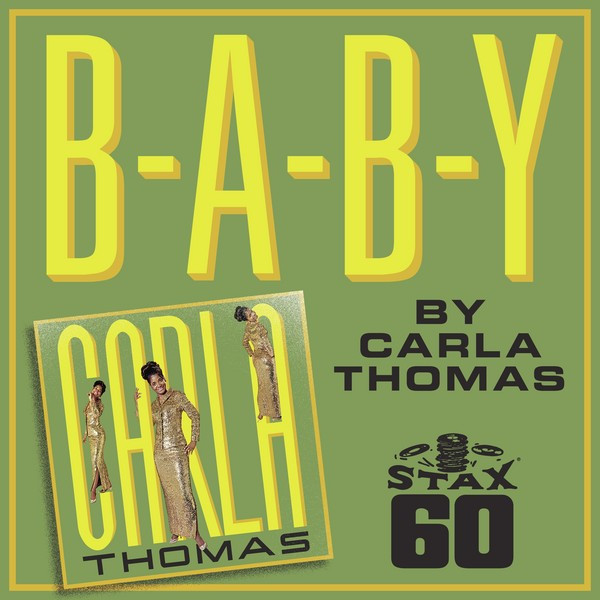
The song peaked at #14 in the Billboard 100 and #3 in the R&B Chart. B-A-B-Y was released on Stax Records in 1966. It was written by Isaac Hayes and David Porter.
Carla had 20 songs in the Billboard 100 with 4 top 40 hits and 1 top ten hit. The song was on the 2017 Baby Driver soundtrack. The song has a great soul sound to it with that Stax feel.
She is called the Queen of Memphis Soul. Carla Venita Thomas was born on December 1, 1942, in the Foote Homes Housing Project in Memphis, Tennessee. She teamed with Stax performer Otis Redding and in March of 1967, they released the album, King & Queen.
B-A-B-Y
Baby, ooh baby I love to call you baby Baby, oh oh baby I love for you to call me baby When you squeeze me real tight You make wrong things right And I can’t stop loving you And I won’t stop calling you Baby, oh baby You look so good to me baby Baby, ooh baby You are so good to me baby Just one look in your eye And my temperature goes sky high I live for you and can’t help it [Lyrics from: https:/lyrics.az/soundtracks/baby-driver/b-a-b-y-by-carla-thomas.html] You know I really don’t want to help it B.A.B.Y. baby B.A.B.Y. baby Whenever the sun don’t shine You go out to light my hind Then I get real close to you And your sweet kisses see me through I said baby, ooh baby You look so good to me baby Baby, ooh baby How I love for you to call me baby When you squeeze me real tight You know you make wrong things right And I can’t stop loving you And I won’t stop calling you B.A.B.Y. baby
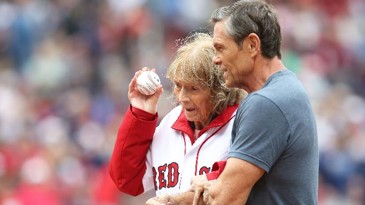
Julia Ruth Stevens, the adopted daughter of Babe Ruth, died on Saturday in an assisted living facility in Henderson, Nev.
Babe Ruth married Claire Hodgson on the opening day of the 1929 baseball season. He adopted Julia, and Claire adopted Dorothy (Babe Ruth’s biological daughter) in 1930, and they all lived together, with Claire’s extended family, in an apartment on West 88th Street.







 PowerPop... An Eclectic Collection of Pop Culture