Power Pop fan, Baseball, Beatles, Alternative music, old movies, and tv show fan. Also anything to do with pop culture in the 60s and 70s... I'm also a songwriter, bass and guitar player. Not the slightest bit interested in politics at all.
Buster Keaton was a little off kilter to his comedy peers. He was more subtle than Chaplin or Harold Lloyd. Keaton used non movement to his advantage. You would see him in a crowd easily. They would be moving along and his stillness would get your attention.
Chaplin had two rivals in comedy at the time. Buster Keaton and Harold Lloyd. Lloyd was more successful than Keaton but he was more of an actor playing a comedian on screen. Charlie and Buster were stage trained natural comedians and made some of the best comedies of the teens and twenties…and some would say all time.
Buster was an excellent filmmaker. I would put him over Chaplin in that regard. Buster didn’t fake stunts…he didn’t like cutting in at the last minute. He wanted the gag or whatever it was to be filmed in one shot and completely natural.
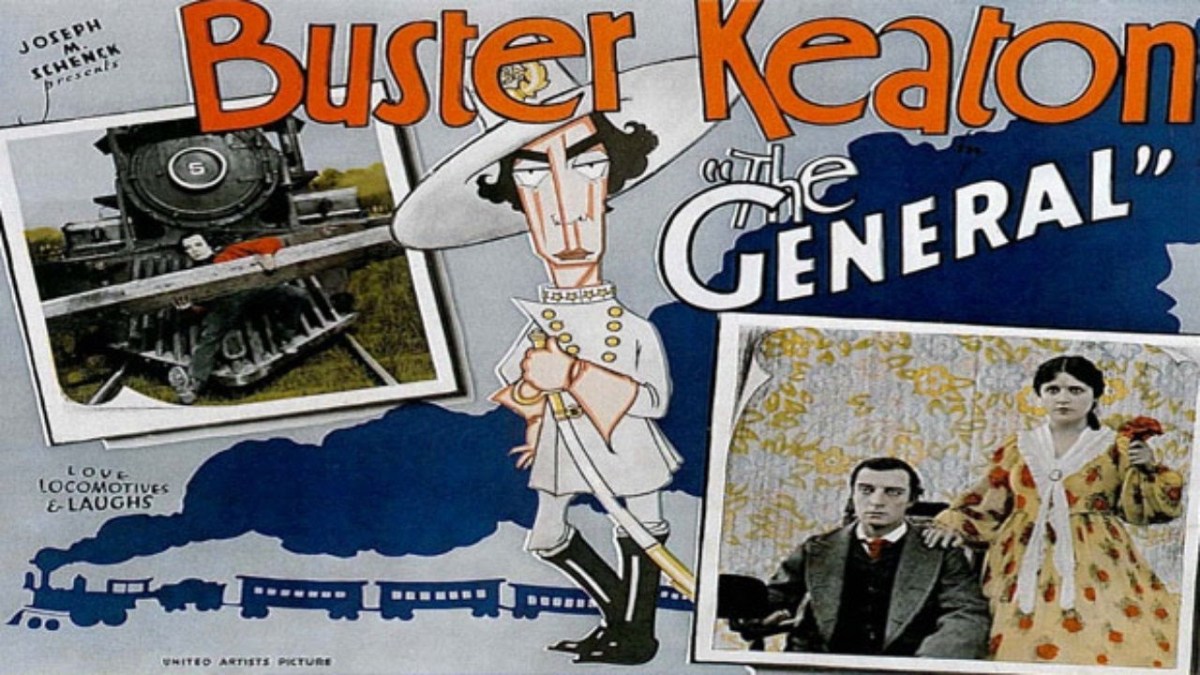
This is Buster Keaton’s civil war era masterpiece. It was released in 1927 to mediocre reviews. Keaton was ahead of his time and it caught the audience by surprise. This movie is now considered one of the best movies ever made. Buster wanted to make it look real to the era. He told his crew to make it so authentic that it hurt. This film is a reference point to some people to see what the Civil War looked like.
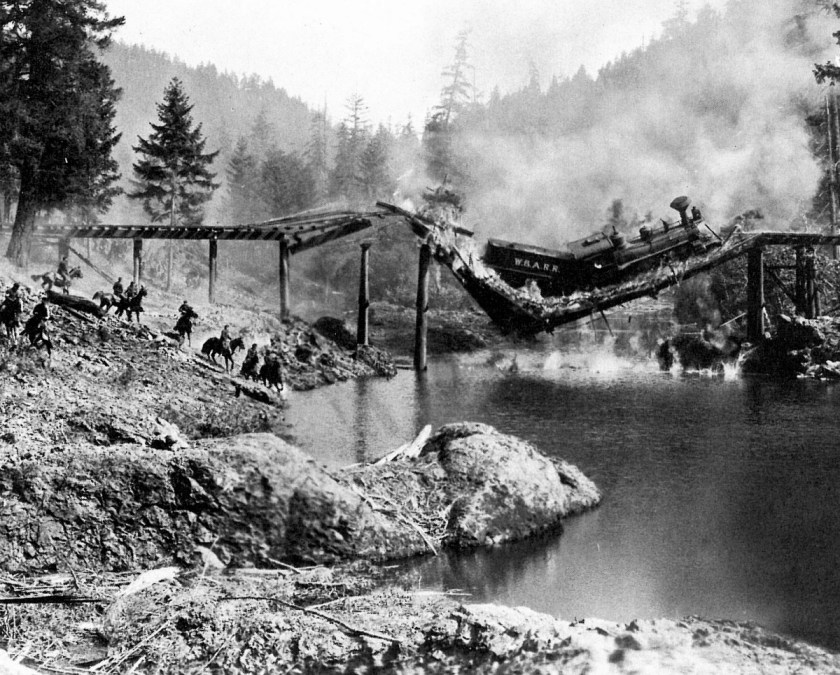
This film contained the most expensive shot in silent movie history. Buster had free rein on this movie and it showed. His budget was $750,000 dollars which was huge at the time for a comedy. Buster had a bridge built just to have a train go across it and crash. The single scene cost 42,000 in 1927 dollars. In today’s money that would be over half a million. But doesn’t it look great?
Buster made the movie in Cottage Grove Oregon. Animal House would be made there 51 years later. When World War 2 came, the train was pulled out of the creek bed and used for scrap iron. People say you can still find fragments around this site of the train.
This movie was based on a true story in the civil war known now as The Great Locomotive Chase or Andrew’s Raid.
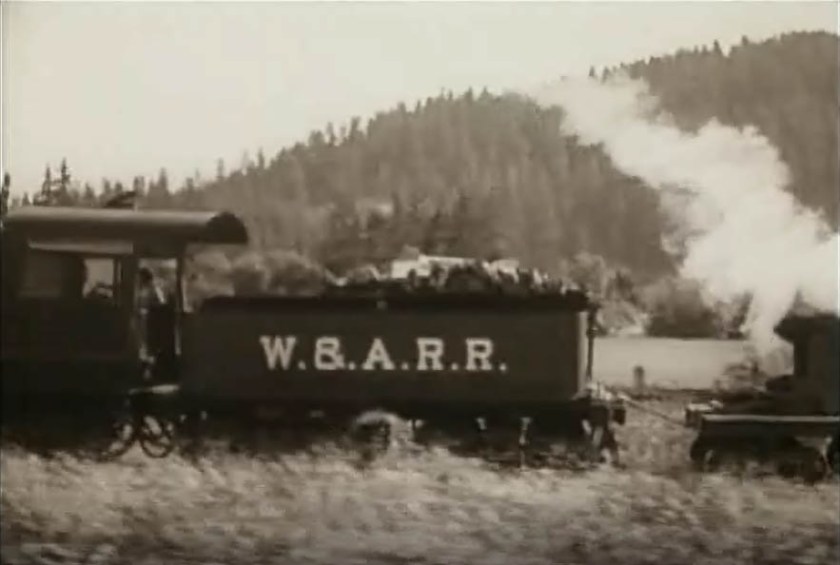
The Great Locomotive Chase unfolded during the early years of the Civil War, an attempt by Union forces and sympathizers to destroy railroad infrastructure north of Atlanta, Georgia in hopes of eventually capturing the strategic city of Chattanooga, Tennessee. The celebrity locomotive in what also became known as Andrews’ Raid was the Western & Atlantic Railroad’s General. The American Type 4-4-0 steamer was commandeered by James Andrews himself (leader of the raid) and used throughout the chase where he traveled northward from Atlanta causing as much damage as he could. Unfortunately, the hasty Union plans were too slow and disorganized to cause serious damage and most of those involved were eventually captured.
Buster made very few changes in the story. He kept his eye on details though. The cannon he used in the film was built to the specs of the Civil War Era.
When he shot the cannonball from the cannon railway car on the train to land in the locomotive… he kept trying different measures of powder to get it right until he had to use tweezers to get the right amount. He would do gags without camera trickery when he could. Below is the cannon shot… shot without cuts.
He worked for an independent producer Joseph Schenck so he had complete control of his movies. A little while after this movie lost money he had to go into the studio system and still managed to make a couple of great movies for MGM but after that, the studio would control everything he did which meant the quality of his movies took a nose dive.
Keaton was an incredible filmmaker. This movie is a true chase movie. Buster is either chasing the General (train) after it was stolen or being chased by the Union Army in the “Texas” until it crashes in the ravine.
If you have never seen a silent movie…this is a good one to start at…this one and The Gold Rush by Chaplin.
This is one I hope I will be able to see on the big screen one day.
The organ intro to this song by Ray Manzarek is one of most iconic intros in rock. I first heard this song as a kid and automatically loved it. It is the song that the Doors are most known by. I like the album version that is longer and has more of a solo.
This was included on their first album and it was a huge hit. The song launched them to stardom. Before it was released, The Doors were an underground band popular in the Los Angeles area, but “Light My Fire” got the attention of a mass audience.
The producers of The Ed Sullivan Show asked the band to change the line “Girl we couldn’t get much higher” for their appearance in 1967. Morrison said he would, but sang it anyway. Afterwards, he told Sullivan that he was nervous and simply forgot to change the line. No that didn’t fly, and The Doors were never invited back.
The song peaked at #1 in the Billboard 100, #2 in Canada, #7 in New Zealand, and #7 in the UK in 1967. Frankly, that surprises me because I thought it would have been an international number 1.
This was the second single on their self-titled debut album. Break On Through (To The Other Side) was their debut single.
The four band members were credited for writing this song Jim Morrison, Robby Krieger, John Densmore, and Ray Manzarek.
Jim Morrison indicated in his notebooks that he disliked this song and hated performing it. He also seemed to resent that the popularity of the band derived from this song, which he had just a small part in writing.
The Doors didn’t have a bass player and none was credited because studio musicians were not credited. Carol Kaye claims it was her.
From Songfacts
Most of the song was written by Doors guitarist Robby Krieger, who wanted to write about one of the elements: fire, air, earth, and water. He recalled to Uncut: “I was living with my parents in Pacific Palisades – I had my amp and SG. I asked Jim, what should I write about? He said, ‘Something universal, which won’t disappear two years from now. Something that people can interpret themselves.’ I said to myself I’d write about the four elements; earth, air, fire, water, I picked fire, as I loved the Stones song, ‘Play With Fire,’ and that’s how that came about.”
Krieger came up with the melody and wrote most of the lyrics, which are about leaving inhibitions behind in flames of passion.
At first, the song had a folk flavor, but it ignited when Jim Morrison wrote the second verse (“our love become a funeral pyre…”) and Ray Manzarek came up with the famous organ intro. Drummer John Densmore also contributed, coming up with the rhythm. Like all Doors songs of this era, the band shared composer credits.
On the album, which was released in January 1967, the song runs 6:50. The group’s first single, “Break On Through (To The Other Side),” reached just #126 in America. “Light My Fire” was deemed too long for airplay, but radio stations (especially in Los Angeles) got requests for the song from listeners who heard it off the album. Their label, Elektra Records decided to release a shorter version so they had producer Paul Rothchild do an edit. By chopping out the guitar solos, he whittled it down to 2:52. This version was released as a single in April, and the song took off, giving The Doors their first big hit.
To many fans, the single edit was an abomination, and many DJs played the album version once the song took off.
Elektra founder Jaz Holzman recalled to Mojo magazine November 2010: “We had that huge problem with the time length – seven-and-a-half minutes. Nobody could figure out how to cut it. Finally I said to Rothchild, ‘Nobody can cut it but you.’ When he cut out the solo, there were screams. Except from Jim. Jim said, ‘Imagine a kid in Minneapolis hearing even the cut version over the radio, it’s going to turn his head around.’ So they said, ‘Go ahead, release it.’ We released it with the full version on the other side.”
This was the first song Robby Krieger wrote to completion. Jim Morrison did most of the songwriting for the album, but he needed some help and asked Krieger to step in. The 20-year-old guitarist asked him what to write about, and Morrison replied, “Something universal.”
There are some pretty basic, but effective, rhymes in this song:
fire liar higher mire pyre
A “funeral pyre” is a platform used in ceremonial cremations. The image evokes spirituality and ancient mythology, as well as death, one of Jim Morrison’s favorite topics. Robby Krieger objected to the line at first, but Morrison convinced him it would work in opposition to the love-based lyrics that dominate the song.
This was produced by Paul Rothchild and was recorded in late 1966 and then released in April 1967.
The song topped the Hot 100 for the first three weeks of July 1967. It sold over one million copies and was the first #1 hit for their record label Elektra.
This was the first rock song to feature both a guitar and keyboard in the instrumental section.
A blind, Puerto Rican singer named Jose Feliciano recorded a Latin-tinged version of this song that reached #3 in 1968 and won a Grammy for Best Contemporary Pop Vocal Performance, Male. For Feliciano, who also won the Best New Artist Grammy that year, the song was his breakout hit and introduced his style of acoustic, woodwind-heavy arrangements. Based on his “Light My Fire” performance, Feliciano was asked to sing the The Star Spangled Banner before Game 5 of World Series between the Tigers and Cardinals. He delivered the first non-traditional take on the National Anthem at a major sporting event, doing a slow, acoustic version and causing an uproar. Feliciano capitalized on the controversy by releasing his Anthem performance as a single, and it reached #50 in the US.
In 1968, Buick offered The Doors $75,000 to use this song in a commercial as “Come on Buick, light my fire.” With Morrison away, Krieger, Densmore, and Manzarek agreed to allow it. When Morrison found out, he pitched a fit and killed the deal.
This was the last song Jim Morrison performed live. It took place at the Doors concert at The Warehouse in New Orleans on December 12, 1970. Midway through the song, Morrison became exasperated and smashed his microphone into the floor, ending the show.
It was also the last song The Doors played live as a trio, as they continued without Morrison after his death. Their final performance took place at the Hollywood Bowl in Los Angeles on September 10, 1972.
According to Ray Manzarek on BBC Radio 2’s program Ray Manzarek’s Summer of Love, the baseline to “Light My Fire” was inspired by Fats Domino’s “Blueberry Hill.”
Manzarek told About.com how the keyboard solo came about: “It was exactly what we were doing at the time at Whisky a Go Go – letting the music take us wherever it might lead in a particular performance, just improvising. And that?s exactly the same way that solo came about.”
She was a first-call studio pro at the time and had performed on a lot of the hits that were recorded in Los Angeles, including many of Phil Spector’s productions. She told Songfacts regarding her involvement: “The Doors weren’t there. Just a couple of the guys were there in the booth. We cut the track. I’m playing on that, but I don’t like to talk about it, because there’s too many fanatics about that stuff. I’m a prude. I don’t do drugs. I think it’s stupid. I think for people to be into drugs and to die on stage, I think that’s so stupid, and totally unnecessary. So I stay away from even talking about that. But I am on the contract, yeah, I played on the hit of that.” (Here’s our full Carol Kaye interview.)
The extended organ and guitar solos in the album version of the song are based on two of John Coltrane’s works: his 1961 track “Ole,” and his jazz cover of the song “My Favorite Things” from the motion picture The Sound of Music.
Robby Krieger told Clash Music he put “every chord I knew into this song.” Most of the group’s songs to this point were three-chord compositions, so he wanted to do something more “adventurous.”
In concert, Robby Krieger never played the same guitar solo on this song. He would sometimes mix in bits of the Beatles song “Eleanor Rigby.”
Train covered this on the 2000 Doors tribute album Stoned Immaculate. Lead singer Pat Monahan sang with the remaining members (Manzarek, Krieger, Densmore) on the VH1’s Storytellers dedicated to the Doors. Other artists to cover the song include Jackie Wilson, Etta James, Shirley Bassey, Nancy Sinatra, Will Young, UB40, B. J. Thomas and Beastie Boys.
Light My Fire
You know that it would be untrue You know that I would be a liar If I was to say to you Girl, we couldn’t get much higher
Come on baby, light my fire Come on baby, light my fire Try to set the night on fire
The time to hesitate is through No time to wallow in the mire Try now we can only lose And our love become a funeral pyre
Come on baby, light my fire Come on baby, light my fire Try to set the night on fire, yeah
The time to hesitate is through No time to wallow in the mire Try now we can only lose And our love become a funeral pyre
Come on baby, light my fire Come on baby, light my fire Try to set the night on fire, yeah
You know that it would be untrue You know that I would be a liar If I was to say to you Girl, we couldn’t get much higher
Come on baby, light my fire Come on baby, light my fire Try to set the night on fire Try to set the night on fire Try to set the night on fire Try to set the night on fire
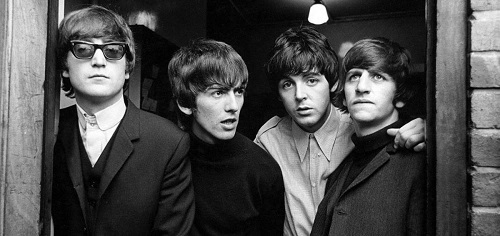
Last week, he presented a blog of his favorite Beatles songs that were cover songs (songs originally done by other artists). This week, he looks at the other side of the coin. Here now, is his presentation of great covers of Beatles songs by other artists. I hope you enjoy it! Take it away, Max…
Beatle Songs By Others …
Hello everyone welcome back this week for the conclusion of the Beatlefest on Keith’s site. Today I’m going to list my favorite Beatle covers. Although I like these a lot…I usually still go with the Beatles version. There is one that I do like better than the original…and that is…well you will just have to read on. I did include some live versions of songs.
I’m going to write about my top 10 favorite TZ episodes in the next few weeks…Most of the Twilight Zones are like songs to me…to be enjoyed over and over. The Twilight Zone is not really an ordinary TV show. It’s THE TWILIGHT ZONE. This is my personal choice for #5 on my list.
This is a heartwarming episode. I would think any teachers out there would really like this one.
Rod Serling’s Opening Narration:Professor Ellis Fowler, a gentle, bookish guide to the young, who is about to discover that life still has certain surprises, and that the campus of the Rock Spring School for Boys lies on a direct path to another institution, commonly referred to as the Twilight Zone.
Professor Ellis Fowler has been teaching at the Rock Spring School for Boys for a great many years. In fact, he taught the grandfather of one of his current students. Just before Christmas however, he’s told by the headmaster that his contract will not be renewed for the new year.
H is despondent, he returns home convinced that his life has been wasted and decides to end it all. He gets his gun and goes to the school in front of a statue and pulls it out. He gets ready to shoot but before he can do it, his is visited by some very special students who give him cause to reconsider. Will it be enough?
Donald Pleasence plays Professor Ellis Fowler and he was only 43 years old when he played the professor.
Rod Serlings Closing Narration: Professor Ellis Fowler, teacher, who discovered rather belatedly something of his own value. A very small scholastic lesson, from the campus of the Twilight Zone.
***I have posted my 10 favorite covers of Beatle songs at Keith’s site nostaligicitalian ***
The man was such a great songwriter. His influences stretched from Bob Dylan, Johnny Cash, Rolling Stones and everyone in between…so lets hear it for The Hillbilly Shakespeare
This could be William’s best known song. Williams wrote this shortly after divorcing his wife, Audrey Mae Sheppard. They married in 1944 right after Audrey got a divorce from her husband. The pair would go on to record several duets together (and produce a son, Hank Williams Jr.), but Williams’ drinking ultimately caused trouble in their marriage.
When Hank described his first wife (Audrey) having a cheatin’ heart to country singer Billie Jean Jones, who would soon become his second wife, he was inspired to write the song.
This song was recorded in September of 1952. He would die in January 1, 1953. This would be his last recording session. He also recorded recording Kaw-Liga, I Could Never Be Ashamed of You, and Take These Chains from My Heart.
His last single during his lifetime was I’ll Never Get Out of This World Alive backed with I Could Never Be Ashamed of You which was released in November 1952.
Your Cheatin’ Heart peaked at #1 on the US Country Charts in 1953.
Billie Jean Jones (second wife) on Hank Williams saying the phrase in a car: “Then he said, ‘Hey that’d make a good song! Get out my tablet, baby, you and I are gonna write us a song,'” “Just about as fast as I could write it, Hank quoted the words to me in a matter of minutes.”
From Songfacts
Williams recorded this in September 1952 during what would be his last session at Nashville’s Castle Records. He would die just months later from heart problems (or, some say, suspicious circumstances) on the way to a New Year’s concert in Canton, Ohio. The song was posthumously released in January 1953 and topped the Country & Western Billboard Charts for six weeks.
Many artists have covered this over the years, including Louis Armstrong, Glen Campbell, Fats Domino and Jerry Lee Lewis. Ray Charles’ 1962 version was a hit in both the US and the UK, peaking at #29 and #13, respectively.
Rat Pack member Joey Bishop recorded this in the ’60s on the album Cold, Cold, Heart. Bishop was an actor, and many people considered his version so bad it was actually entertaining. On the album cover, Bishop is dressed in a rhinestone cowboy costume. It contains liner notes by fellow Rat Packer Dean Martin.
For the line “You’ll walk the floor, the way I do,” Williams took inspiration from his friend Ernest Tubb’s “Walkin’ the Floor Over You.” He also recorded three of Tubb’s hits, which were released posthumously: “First Year Blues,” “It Just Don’t Matter Now” and “I’m Free at Last.”
This song shares its name with the 1964 biopic of Hank Williams, starring George Hamilton. Hank Williams Jr. recorded the soundtrack album.
Two versions of this hit the pop charts in 1953: Joni James’ at #2 and Frankie Laine’s at #18.
Your Cheatin’ Heart
Your cheatin’ heart Will make you weep You’ll cry and cry And try to sleep But sleep won’t come The whole night through Your cheatin’ heart Will tell on you
When tears come down Like falling rain You’ll toss around And call my name You’ll walk the floor The way I do Your cheatin’ heart Will tell on you
Your cheatin’ heart Will pine some day And crave the love You threw away The time will come When you’ll be blue Your cheatin’ heart Will tell on you
When tears come down Like falling rain You’ll toss around And call my name You’ll walk the floor The way I do Your cheatin’ heart Will tell on you
I’m going to write about my top 10 favorite TZ episodes in the next few weeks…Most of the Twilight Zones are like songs to me…to be enjoyed over and over. The Twilight Zone is not really an ordinary TV show. It’s THE TWILIGHT ZONE. This is my personal choice for #6 on my list.
Rod Serling’s Opening Narration: Missing: one frightened little girl. Name: Bettina Miller. Description: six years of age, average height and build, light brown hair, quite pretty. Last seen being tucked in bed by her mother a few hours ago. Last heard: ‘ay, there’s the rub,’ as Hamlet put it. For Bettina Miller can be heard quite clearly, despite the rather curious fact that she can’t be seen at all. Present location? Let’s say for the moment… in the Twilight Zone.
I always thought Poltergeist borrowed heavily from this Twilight Zone episode. Both girls were lost in another dimension and it Poltergeist plays out much like this episode. The inside of the dimension in this episode is done really well.
A couple awakens in the night to hear their daughter Tina crying. When the father, Chris, enters her bedroom, however, she is nowhere to be found. She can be heard as if she is still in the room, but not seen. Moments later, the family dog, Mac, runs into the room in a state of agitation, goes under the bed and vanishes just like Tina. Panicking, Chris and his wife Ruth call their physicist friend Bill, who comes over immediately and begins to investigate, moving the girl’s bed and looking for the “opening.”
Chris and Ruth are nonplussed, but suddenly Bills hand seems to disappear through the bedroom wall, and he explains that he thinks Tina and Mac are trapped in another dimension. He draws on the wall with chalk and outlines the opening, explaining the theories about alternate dimensions. Suddenly, Ruth realizes that she can no longer hear Tina. The adults move around the house in a frenzy and finally hear her voice again, seemingly coming from another place, as well as the dog’s barks. Bill says to let the dog lead her back out, and Chris repeatedly calls Mac… Will they get her out safely?
Rod Serling’s Closing Narration: The other half where? The fourth dimension? The fifth? Perhaps. They never found the answer. Despite a battery of research physicists equipped with every device known to man, electronic and otherwise, no result was ever achieved, except perhaps a little more respect for and uncertainty about the mechanisms of the Twilight Zone.
***I have posted my 10 favorite covers of Beatle songs at Keith’s site nostaligicitalian ***
This takes me back to riding with my dad and him wearing a Merle Haggard 8-Track out completely. I knew so many of Merle’s songs before I was 6. One big regret I have is that I never saw Merle Haggard live. Haggard would be legally pardoned for his past crimes by California’s Governor Ronald Reagan in 1971.
This song peaked at #1 in the US Hot 100 Billboard Country Charts in 1967.
Merle Haggard went to jail for robbery in 1957, and was released in 1960. This song is about how he felt that no matter what he did, who would always be known for his time spent in jail “branded” as an inmate.
He was serving his time at San Quentin prison when Johnny Cash performed there. That event changed his life.
Future Eric Clapton drummer Jim Gordon played on this song.
Branded Man
I’d like to hold my head up and be proud of who I am But they won’t let my secret go untold I paid the debt I owed them, but they’re still not satisfied Now I’m a branded man out in the cold
When they let me out of prison, I held my head up high Determined I would rise above the shame But no matter where I’m living, the black mark follows me I’m branded with a number on my name
I’d like to hold my head up and be proud of who I am But they won’t let my secret go untold I paid the debt I owed them, but they’re still not satisfied Now I’m a branded man out in the cold
If I live to be a hundred, I guess I’ll never clear my name ‘Cause everybody knows I’ve been in jai No matter where I’m living, I’ve got to tell them where I’ve been Or they’ll send me back to prison if I fail
I’d like to hold my head up and be proud of who I am But they won’t let my secret go untold I paid the debt I owed them, but they’re still not satisfied Now I’m a branded man out in the cold
***I have posted my 10 favorite covers of Beatle songs at Keith’s site nostaligicitalian ***
This song was off of the 1983 album Hootenanny. This was their third release and second album. The album was all over the place style wise but it works.
For the album cover they found a 1963 Crestview Records folk sample album and changed the type.
The original The Replacements Hootenanny
What first caught my ear was the unorthodox solo that Bob Stinson played. You can hear the feedback from the guitar before he starts it.
The band never sold many records but they influenced many musicians and as it turns out movie makers.
Daniel Waters wrote the black comedy “Heathers” movie in 1989. He was such a fan of their music that Waters peppered his script with Replacements references…from the school being Westerburg High (the spelling of Paul’s surname was changed at the urging of a film exec who felt that the name Westerberg seemed “a little too Jewish” for a Midwestern high school) to male lead J.D. (Christian Slater) and one of the Heathers saying, “Color me impressed.”
He also wanted to use a Replacements song in the credits but there was no money to buy the rights.
Paul Westerberg about Hootenanny: “You could hear me more or less trying to find my voice, or trying to find out where I fit in…a way of trying to fuse what I had been listening to growing up into what was happening at the time.”
Color Me Impressed
Everybody at your party They all look depressed Everybody dressin’ funny Color me impressed
Stayin’ out late tonight Won’t be gettin’ any sleep Givin’ out their word Because that’s all that they won’t keep
Put the party on the mirror Oh shit, pass the bill to Chris Intoxicated lover ending our french kiss
Can you stand me on my feet? Can you stand me on my feet?
(Everybody)
Everybody at your party They don’t look depressed And everybody’s dressin’ funny Color me impressed
Color me impressed Color me impressed Color me impressed Color me impressed I call it out
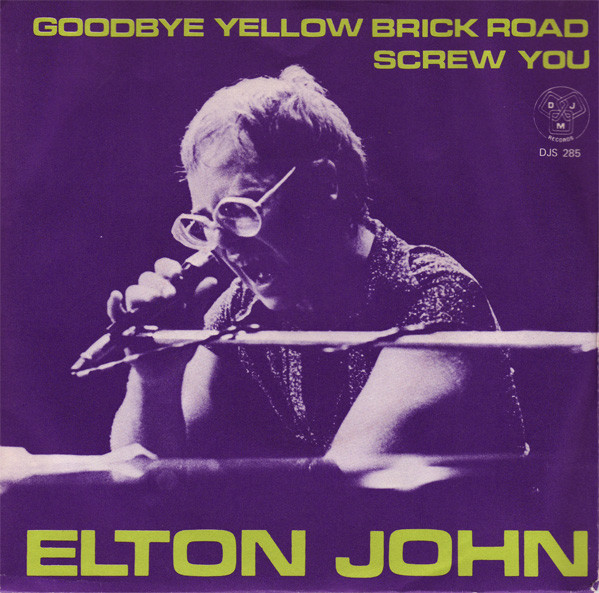
One of the songs that reminds me of childhood. This was Elton in his most fertile period of the seventies. Elton and Bernie had the Midas touch with songs.
Elton and his songwriting partner Bernie Taupin went to Jamaica to record the album, but the studio wasn’t up to standard, so the project was abandoned there with only a rough version of “Saturday Night’s Alright (For Fighting)” actually being recorded. “Goodbye Yellow Brick Road” and the rest of the album were recorded in France at Strawberry Studios (The Chateau d’Hierouville).
The song peaked at #2 in the Billboard 100, #1 in Canada, #6 in the UK, and #2 in New Zealand in 1973-74. This made the third Elton single to make number 1 in Canada in 1973.
The song’s B side was originally titled “Screw You”, although the US release re-titled the song “Young Man’s Blues” so that it would not offend American record buyers.
Bernie Taupin: “It’s funny, but there are songs that I recall writing as if it was yesterday. And then there are those I have absolutely no recollection of, whatsoever. In fact, I’d have to say that for the most part, if someone was to say that the entire Yellow Brick Road album was actually written by someone else, I might be inclined to believe them. I remember being there, just not physically creating.
There was a period when I was going through that whole ‘got to get back to my roots’ thing, which spawned a lot of like-minded songs in the early days, this being one of them. I don’t believe I was ever turning my back on success or saying I didn’t want it. I just don’t believe I was ever that naïve. I think I was just hoping that maybe there was a happy medium way to exist successfully in a more tranquil setting. My only naiveté, I guess, was believing I could do it so early on. I had to travel a long road and visit the school of hard knocks before I could come even close to achieving that goal. So, thank God I can say quite categorically that I am home.”
From Songfacts
The Yellow Brick Road is an image taken from the movie The Wizard of Oz. In the movie, Dorothy and her friends follow the yellow brick road in search of the magical Wizard of Oz, only to find they had what they were looking for all along. It was rumored that the song was about Judy Garland, who starred in the film.
Bernie Taupin wrote the lyrics to this and most of Elton’s other songs. He often seems to write about Elton, but this one appears to be about himself. The lyrics are about giving up a life of opulence for one of simplicity in a rural setting. Elton has enjoyed a very extravagant lifestyle, while Taupin prefers to keep it low key.
Bernie’s canine imagery, including the part about sniffing around on the ground, is a sly poke at Linda’s two little dogs. Linda was a girlfriend of Elton John’s.
In 2008, Ben & Jerry’s created a flavor of ice cream in honor of Elton John called “Goodbye Yellow Brickle Road.” Made of chocolate ice cream, peanut butter cookie dough, butter brickle and white chocolate chunks, it was made to commemorate Elton’s first concert in Vermont (home of the ice cream makers) on July 21, 2008 at the Essex Junction fairgrounds. Elton had played every other state before his Vermont show. He had some of the ice cream before the show.
Ben Folds told Rolling Stone magazine for their 100 Greatest Singers Of All Time issue: “He was mixing his falsetto and his chest voice to really fantastic effect in the ’70s. There’s that point in ‘Goodbye Yellow Brick Road,’ where he sings, ‘on the grooound’ – his voice is all over the shop. It’s like jumping off a diving board when he did that.”
American rock group Queens Of The Stone Age covered the song for the 2018 Elton John tribute album Revamp. Their version was produced by Mark Ronson and features backing vocals with Jake Shears of The Scissor Sisters.
“It’s nice to pick something that may seem off kilter at first for us to do. But ‘Goodbye Yellow Brick Road’ really has the psychedelic carousel nature to it,” said QOTSA’s Josh Homme. “I think at first we thought we will tinker with the arrangement, but there’s so many beautiful chords- the chord progression is so wonderful- once you step on that carousel, it’s just this beautiful musical swirl and it’s really intoxicating to be on that carousel. And it seemed like there’s a psychedelic element that we could bring out, that it’s touching on, and that maybe the key for us to do it would be to accentuate the wispiness that is going on in the song.”
Goodbye Yellow Brick Road
When are you gonna come down? When are you going to land? I should have stayed on the farm I should have listened to my old man
You know you can’t hold me forever I didn’t sign up with you I’m not a present for your friends to open This boy’s too young to be singing, the blues
So goodbye yellow brick road Where the dogs of society howl You can’t plant me in your penthouse I’m going back to my plough
Back to the howling old owl in the woods Hunting the horny back toad Oh I’ve finally decided my future lies Beyond the yellow brick road
What do you think you’ll do then? I bet that’ll shoot down your plane It’ll take you a couple of vodka and tonics To set you on your feet again
Maybe you’ll get a replacement There’s plenty like me to be found Mongrels who ain’t got a penny Sniffing for tidbits like you on the ground
So goodbye yellow brick road Where the dogs of society howl You can’t plant me in your penthouse I’m going back to my plough
Back to the howling old owl in the woods Hunting the horny back toad Oh I’ve finally decided my future lies Beyond the yellow brick road
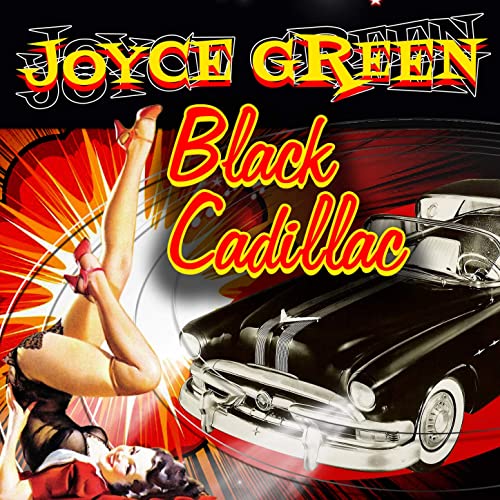
I caught you cheatin’ and runnin’ round And now I’m gonna put you in a hole in the ground I’m gonna ride to your funeral Daddy, in a black Cadillac….Joyce Green 1959
Joyce was only 19 and she didn’t play around in this song. How great are those lyrics? She not only sings this song…she owns it and you don’t want on Joyce’s bad side. Her voice is electric. It’s a downright shame she didn’t do much more. The quality is great.
When I heard this I thought I died and went to rockabilly heaven. A man named Tommy Holder is playing guitar and does he ever. This wasn’t a hit but it’s a treasure to find. Joyce embarked on a promotional tour with Carl Perkins to support the record. The record was never a hit and Joyce did not record again until the 1970s. These later recordings were lost in a fire… and that is sad.
The song was a reworking of an old blues number by Buddy Moss, with Moss’s V8 Ford replaced by a flashy Cadillac.
In 1959, Joyce wrote the song Black Cadillac with her sister Doris. She played the song for Arlen Vaden who arranged a recording session for her at KLCN in Blytheville, Arkansas. Joyce sang and played rhythm guitar on the record which included the song Tomorrow on the A-side and Black Cadillac on the B-side. I can’t believe this was a B side. This was her only release…the single Tomorrow/Black Cadillac.
The other musicians on the record included Tommy Holder on guitar, Teddy Redell on piano, Scotty Kuykendall on bass and Harvey Farley on drums. The record was released on Vaden Records 1959. Vaden Records, based in Trumann (Poinsett County), started as a mail-order company featuring gospel music. It soon grew into a regional studio that released music by such blues and early rock and roll artists as Bobby Brown, Teddy Riedel, Larry Donn, and many others who went on to regional and national fame.
Black Cadillac
I caught you cheatin’ and runnin’ round
And now I’m gonna put you in a hole in the ground
I’m gonna ride to your funeral
Daddy, in a black Cadillac
Oh yeah, you think you won
Oh baby, but you can’t come back
Now, I’m gonna bump you off
Gonna tell you the reason why
You’re worth more to me dead daddy
Than you is alive
I’m gonna ride to your funeral
Daddy, in a black Cadillac
Oh yeah, you think you won
Oh baby, but you can’t come back
I’m gonna buy me a pistol
A great big forty-five
I’m gonna bring you back baby, dead or alive
I’m gonna ride to your funeral
Daddy, in a black Cadillac
Oh yeah, you think you won
Oh baby, but you can’t come back
I’ll hire a black Cadillac
To drive you to your grave
I’m gonna be there baby
Throw that mud in your face
I’m gonna ride to your funeral
Daddy, in a black Cadillac
Oh yeah, you think you won
Oh baby, but you can’t come back
I’ll wear a black mink coat
A diamond ring on my hand
I’m gonna put you under ground
I’ll find myself another man
I’m gonna ride to your funeral
Daddy, in a black Cadillac
Oh yeah, you think you won
Oh baby, but you can’t come back
This song is probably the most important rock and roll song in the history of rock. Parts of it have been borrowed, stolen, and picked apart. Any rock band should be able to play this song or their rock-card gets taken away.
This song that was released in 1958 is based on Berry’s life. It tells the tale of a boy with humble beginnings with a talent for guitar. Some details were changed… Berry was from St. Louis, not Louisiana, and he knew how to read and write very well. He graduated from beauty school with a degree in hairdressing and cosmetology.
Chuck got the name “Johnny” from Johnnie Johnson, a piano player who collaborated with Berry on many songs, including “Maybellene,” “Roll Over Beethoven” and “Sweet Little 16.” Johnson often wrote the songs on piano, and then Berry converted them to guitar and wrote lyrics. Berry joined Johnson’s group, The Sir John Trio, in 1953, and quickly became the lead singer and centerpiece of the band.
Berry got the word “Goode” from the street in St. Louis where he grew up. He lived at 2520 Goode Avenue
Johnnie Johnson as very well-respected among many musicians. He played with Keith Richards, Eric Clapton, John Lee Hooker and many others before his death at age 80 in 2005.
In 1977, NASA sent a copy of this on the Voyager space probe as part of a package that was meant to represent the best in American culture. Someday, aliens could find it and discover Chuck Berry.
The contents of the golden record were selected for NASA by a committee chaired by Carl Sagan. Some disagreed with the inclusion of Johnny B. Goode on the disc, claiming that rock music was adolescent. Carl Sagan responded, “There are a lot of adolescents on the planet.”
The song peaked at #8 in the Billboard 100 in 1958.
From Songfacts
The line “that little country boy could play” was originally “that little colored boy can play.” Berry knew he had to change it if he wanted the song played on the radio, and he didn’t want to alienate his white fans, who could better relate to the tale of a “country” boy.
Berry lifted some guitar licks for this song: the intro came from the Louis Jordan song “Ain’t That Just Like A Woman,” and the guitar break came from a 1950 T-Bone Walker song called “Strollin’ With Bones.” Jordan was a very influential R&B singer and a huge influence on Berry; Walker was a famous guitarist in the ’40s and early ’50s who came up with an electric guitar sound and raucous stage act that Berry incorporated.
In 2000, Johnnie Johnson sued Berry, claiming that he never got credit for helping write many of Berry’s hits, including this. The case was dismissed in 2002, with the judge ruling that too much time passed between the writing of the songs and the lawsuit.
This song is a great example of the care and precision Berry used when writing and delivering his lyrics. He wanted the words to his songs to tell a story and stand on their own, and took care to clearly enunciate so listeners could understand them. Many of the Country and Blues singers who preceded Berry weren’t so clear with the words.
In 1981, Keith Richards went backstage at a Chuck Berry show in New York, where he made the mistake of plucking the strings on one of Berry’s guitars. Chuck came in and punched him, giving Richards a black eye. This wasn’t out of character for the sometimes-prickly Berry. Richards later said: “I love his work, but I couldn’t warm to him even if I was cremated next to him.”
Berry recorded a sequel to this song called “Bye Bye Johnny,” which tells the story of Johnny as a grown man.
Johnny Winter played this at the Woodstock festival in 1969. He released a studio version the same year on his album Second Winter.
At the Summer Jam in Watkins Glen, New York in 1973, The Band, The Allman Brothers and The Grateful Dead played this song as an encore. It was the largest rock concert ever, with about 600,000 people attending.
This was featured in the 1985 movie Back To The Future. Michael J. Fox’ character goes back in time and plays it to a stunned crowd as Marvin Berry looks on. Marvin rings his cousin, Chuck, saying that he thinks he has found the new style he is looking for, then points the telephone so that it catches most of the music coming from Marty McFly. This scene produced a classic line when McFly comes on stage and tells the band, “It’s a blues riff in B, watch me for the changes, and try to keep up.”
A musician named Mark Campbell sang Fox’s vocals, but was credited as “Marty McFly.”
Peter Tosh did a reggae version in 1983 that reached #48 in the UK and #84 in America. His producer, Donald Kinsey, told Mojo magazine that during the session, Tosh struggled to add anything sufficiently original to Chuck Berry’s rock and roll classic, but then Kinsey woke up with a breakthrough. “It hit me: the bassline, the vocal melody, The Almighty gave it to me,” he said. “I was so excited, I woke everybody up. The next day I told Peter, we need a hit record. Let me get the band and lay the track, brother. And if you don’t like it, burn it up.”
Along with Peter Tosh, these singers charted in America with covers of “Johnny B. Goode”:
71/64 Dion (#71, 1964) 114/69 Buck Owens (#114, 1969) 92/70 Johnny Winter (#92, 1970)
The Beatles, Jimi Hendrix, Jerry Lee Lewis, The Sex Pistols and the Grateful Dead are among the many artists to cover it.
In 1988, a movie called Johnny Be Good was released with a version of this song by the British metal band Judas Priest as the theme. The film, which stars Anthony Michael Hall and Robert Downey Jr., was soon forgotten; the Priest cover was included on the soundtrack as well as their album Ram It Down. Released as a single, it reached #64 in the UK. The music video, directed by Wayne Isham, uses footage from the film.
In 1991 Johnnie Johnson released his first solo album: Johnnie B. Bad.
In 2004, John Kerry used this as his theme song at most of his campaign events when he was running for president of the US. In 2008, John McCain used the song in his successful run for the Republican nomination, but phased it out and began using ABBA’s “Take A Chance On Me.” Chuck Berry made it clear that he supported McCain’s opponent, Barack Obama. >>
When AC/DC opened for Cheap Trick at a show in Sioux Falls, South Dakota on July 7, 1979 the bands joined together to play this song, a recording of which was circulated as a bootleg single. It was officially released in 2007.
Johnny B. Goode
Deep down in Louisiana close to New Orleans Way back up in the woods among the evergreens There stood a log cabin made of earth and wood Where lived a country boy named Johnny B. Goode Who never ever learned to read or write so well But he could play a guitar just like a-ringin’ a bell
Go go Go Johnny go go Go Johnny go go Go Johnny go go Go Johnny go go Johnny B. Goode
He used to carry his guitar in a gunny sack Go sit beneath the tree by the railroad track Oh, the engineers would see him sitting in the shade Strumming with the rhythm that the drivers made People passing by, they would stop and say “Oh my that little country boy could play”
Go go Go Johnny go go Go Johnny go go Go Johnny go go Go Johnny go go Johnny B. Goode
His mother told him “Someday you will be a man And you will be the leader of a big old band Many people coming from miles around To hear you play your music when the sun go down Maybe someday your name will be in lights Saying “Johnny B. Goode tonight”
Go go Go Johnny go Go go go Johnny go Go go go Johnny go Go go go Johnny go Go Johnny B. Goode
In Jimi’s short life he must have stayed hooked up to a recording console 24/7. So many albums have been released posthumously.
The only Jimi Hendrix Experience studio recording of this song crops up on the 2010 Valleys of Neptune album. The documentary film Experience (1968) features the only version released during Hendrix’s lifetime.
The song was inspired by earlier American spirituals and blues songs which use a train metaphor to represent salvation. Hendrix recorded the song in live, studio, and impromptu settings several times between 1967 and 1970, but never completed it to his satisfaction.
It was also known as “Getting My Heart Back Together Again,” Hendrix often played this song live.
Hendrix first played it in studio on December 19, 1967. During a photo shoot session, he was given a guitar and asked to play something for the camera. The original tape was re-discovered in 1993 only and remastered by Eddie Kramer.
Hendrix producer/engineer Eddie Kramer: “It shows a complete at-oneness with his instrument. Jimi had a thought in his mind, and in a nanosecond it gets through his body, through his heart, through his arms, through the fingers, onto the guitar.”
From Songfacts
The version on Hendrix’s posthumous album, People, Hell & Angels, was drawn from Jimi’s first ever recording session with his old army pal, Billy Cox, and drummer Buddy Miles. He would later record the groundbreaking album Band Of Gypsys with the powerhouse rhythm duo. Co-producer John McDermott commented to Digital Spy: “Billy and Buddy understood how to set the tempo. If you listen to this recording, they play it the same way as they did on the Live At The Fillmore East album. They knew intuitively that the song should have a great, menacing groove; it shouldn’t be old-school, old-tempo, four-bar stuff. They wanted it to have a totally different feel, and that’s what makes it exciting.”
Hear My Train A Comin’
Hear my train a comin’ Hey Wait around the train station Waitin’ for that train Take me Take me away From this lonesome time A whole lot of people put me through a lot of changes And my girl done put me down
Tears burnin’ me Burnin’ me Way down in my soul Way down in my heart It’s too bad you don’t love no more, child Too bad you and me have to part, have to part baby Have to part
Hear my train is coming Hear my train is coming Hear my train is coming Hear my train is coming
Gonna make it bigger With all that’s still in my heart Gonna be a magic boy ooh child Gonna come back and buy this town An’ put it all in my shoe In my shoe baby You make love to me one more time girl So I give a piece to you baby Hey hey hey
Hear my train is coming Hear my train is coming Here come the rest of my soul Movin’ through the washer baby Hear my train a comin’ yeah yeah
The Bad News Bears fulfills my Sports portion of the draft.
A small personal story to show how true this movie was of the time and why I can relate to it so much.
Our coach would be hitting grounders to each of the fielders from home plate and I was the catcher that day. The infielders would throw to first and then throw back to home…normal right? Not so fast… Our coach would have a beer in one hand and would hand it to me when hitting the ball. I would hand it back while the first baseman was throwing it back to me. This would happen in each practice on the city field. We didn’t think anything about it. The catcher was also the official beer passer and holder…none of us blinked an eye.
This movie was a surprise hit in 1976. It’s about an inept baseball team that is coached by an alcoholic named Morris Buttermaker. He is recruited by an attorney who filed a lawsuit against a competitive Southern California Little League, which excluded the least athletically skilled children (including his son) from playing. To settle the lawsuit, the league agrees to add an additional team…the Bears which is composed of the worst players.
The kids are foul-mouthed and the coach could care less… for a while anyway. When I watch this movie I’m in little league again. There was a remake in 2005 but I’ve always stuck to this one.
The script is smartly written and the comedy is good. Sometimes this movie gets overlooked but it is a great baseball movie. The cast includes Walter Matthau, Tatum O’Neal, Vic Morrow, Jackie Earle Haley, and a cast of unknown kids.
Walter Matthau plays the drunk Morris Buttermaker, perfectly… he does the minimum for a while. He has the kids cleaning pools in one scene while drinking beer and driving them down the road in the next. While hunting around for a business to sponsor uniforms. Other teams have Pizza Hut and Dennys but Buttermaker gets a …”Chico Bail Bonds” and that is fitting for this team.
The first game the Bears were beat 26-0 and Buttermaker recruited 12 year old girl name Amanda (Tatum O’Neal) who was the daughter of one of his old girlfriends. Amanda could pitch and pitch well. He taught her at a younger age. He talks her into pitching for the team.
The team starts coming together. Now comes the rebel. Jackie Earle Haley plays Kelly the cool neighborhood punk who rides his motorcycle at the ballpark interrupting games. He is the best athlete around but he refuses to play. He starts liking Amanda and after a bet begins playing with the team.
With the Kelly and Amanda, the team starts winning. They are moving up in the rankings and play for the championship. The last game is when the tone of the movie changes dramatically. Winning comes before everything and Buttermaker becomes serious… and the kids help produce a showdown.
What makes the movie special is despite the huge ensemble you get to know these kids and the quirks they all show. It also sums up little league quite well.
One thing I remember when this movie was released was the absolute shock of parents everywhere because of these kids swearing. What the parents in 1976 didn’t understand was this is how many kids talked when adults weren’t around…mostly picked it up from their parents.
The movie is so 1970s and it pulls the veil back on youth sports then and now. They really nail down what the adults are like in little league… I coached little league a few years ago and I had a parent actually call me about his son at 10pm because he thought he should be hitting 3rd instead of 5th…this was a team of 4 and 5 year olds. I have seen a coach and parent have a fist fight in the back of the stands…
If you have never seen this film you are missing a baseball classic. But since we do live in 2021…if bad language stresses you out…don’t watch it.
There are two sequels. Bad News Bears Breaking Training and The Bad News Bears Go To Japan. Breaking Training is ok…Avoid the Japan movie at all costs.
Cast
Walter Matthau – Coach Morris Buttermaker Tatum O’Neal – Amanda Whurlitzer Vic Morrow – Roy Turner Joyce Van Patten – Cleveland Ben Piazza – Bob Whitewood Jackie Earle Haley – Kelly Leak Alfred Lutter III – Ogilvie (as Alfred W. Lutter) Chris Barnes – Tanner Boyle Erin Blunt – Ahmad Abdul Rahim Gary Lee Cavagnaro – Engelberg Jaime Escobedo – Jose Agilar Scott Firestone – Regi Tower George Gonzales – Miguel Agilar Brett Marx – Jimmy Feldman David Pollock – Rudi Stein Quinn Smith – Timmy Lupus David Stambaugh – Toby Whitewood Brandon Cruz – Joey Turner Timothy Blake – Mrs. Lupus Bill Sorrells – Mr. Tower Shari Summers – Mrs. Turner Joe Brooks – Umpire George Wyner – White Sox Manager David Lazarus – Yankee Charles Matthau – Athletic Maurice Marks – Announcer
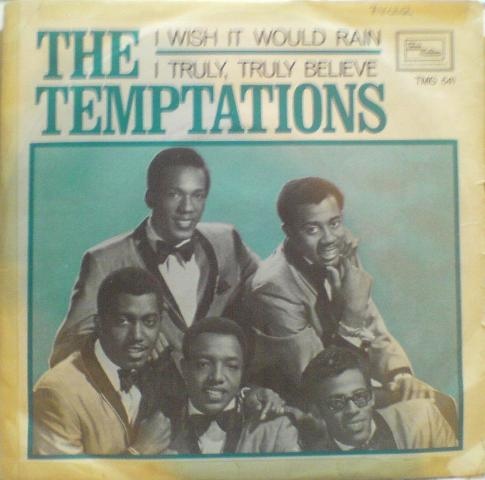
The Temptations classic lineup released this song in 1967 and peaked at #4 in the Billboard 100, #1 in the R&B charts, and #45 in the UK.
David Ruffin sings this song and you can feel the sadness and pain in his voice. The man had a tremendous voice. Naming my favorite Temptations song would be hard but this one would be near the top.
The song has been covered by Gladys Knight and the Pips, Marvin Gaye, Aretha Franklin and The Faces.
This song was released right before the psychedelic soul hit Cloud Nine and the bands style began to change.
It was written by Norman Whitfield, Barrett Strong, and Rodger Penzabene.
I Wish It Would Rain
Hmm hmm
Sunshine, blue skies, please go away A girl has found another and gone away With her went my future, my life is filled with gloom So day after day I stay locked up in my room I know to you, it might sound strange But I wish it would rain, oh yeah, yeah, yeah, yeah
‘Cause so badly I wanna go outside (such a lovely day) But everyone knows that a man ain’t supposed to cry Listen, I gotta cry ’cause crying eases the pain, oh yeah People this hurt I feel inside Words could never explain, I just wish it would rain, oh let it rain, rain, rain, rain, ooo baby
Let it rain, oh yeah, let it rain
Day in day out my tear-stained face Pressed against the window pane My eyes search the skies desperately for rain ‘Cause rain drops will hide my tear drops And no one will ever know that I’m crying Crying when I go outside To the world outside my tears I refuse to explain, ooo I wish it would rain, ooh, baby
Let it rain, let it rain I need rain to disguise the tears in my eyes Oh, let it rain Oh yeah, yeah, listen I’m a man and I got my pride ‘Til it rains I’m gonna stay inside, let it rain
I’m going to write about my top 10 favorite TZ episodes in the next few weeks…Most of the Twilight Zones are like songs to me…to be enjoyed over and over. The Twilight Zone is not really an ordinary TV show. It’s THE TWILIGHT ZONE. This is my personal choice for #7 on my list.
I have to watch these again before I write about them…Now I wish I would have made this my top 50.
Rod Serling Opening Narration:Portrait of a frightened man: Mr. Robert Wilson, thirty-seven, husband, father, and salesman on sick leave. Mr. Wilson has just been discharged from a sanitarium where he spent the last six months recovering from a nervous breakdown, the onset of which took place on an evening not dissimilar to this one, on an airliner very much like the one in which Mr. Wilson is about to be flown home—the difference being that, on that evening half a year ago, Mr. Wilson’s flight was terminated by the onslaught of his mental breakdown. Tonight, he’s traveling all the way to his appointed destination, which, contrary to Mr. Wilson’s plan, happens to be in the darkest corner of the Twilight Zone.
In this episode he plays a husband (Bob Wilson) who just suffered a nervous breakdown on a plane 6 months before. Him and his wife Julia were taking a flight and you could tell Bob was a nervous as soon as he boarded the plane. He had just spent 6 months in an institution getting over his breakdown and now his Doctor said he was ready to fly again. He sits by the window and the fun begins… after take off he thinks sees a creature of some sort out on the wing of the aircraft.
Because of the breakdown he is not sure he saw the creature or not. Bob starts freaking out and eventually gets a gun from an officer on the plane. Hmmm gun, nervous man, and a plane. Nothing good will come from that. Everyone thinks he is crazy…is he? This one is a thriller with a creepy creature.
Richard Matheson wrote this episode. He wrote 16 Twilight Zones in all.
This is an iconic episode of the Twilight Zone. It was redone in the 1983 movie Twilight Zone with John Lithgow in the title role. I’ll take the classic version though.
Rod Serling’s Closing Narration: The flight of Mr. Robert Wilson has ended now, a flight not only from point A to point B, but also from the fear of recurring mental breakdown. Mr. Wilson has that fear no longer… though, for the moment, he is, as he has said, alone in this assurance. Happily, his conviction will not remain isolated too much longer, for happily, tangible manifestation is very often left as evidence of trespass, even from so intangible a quarter as the Twilight Zone.






:format(jpeg):mode_rgb():quality(90)/discogs-images/R-3674792-1466793098-1432.jpeg.jpg)




 PowerPop... An Eclectic Collection of Pop Culture