
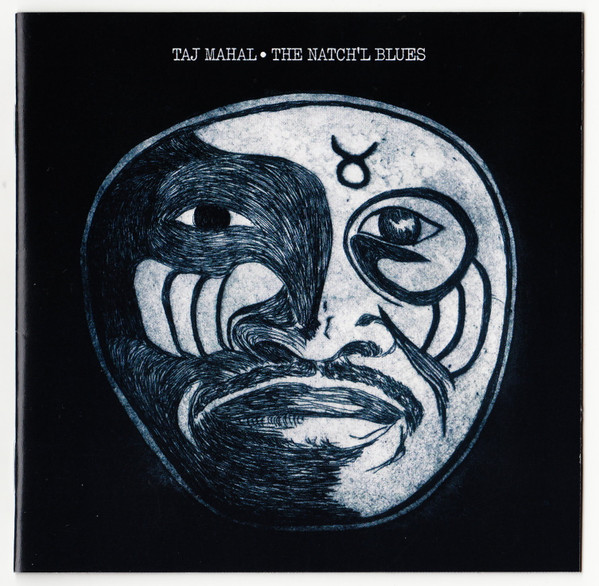
Taj Mahal – She Caught the Katy (And Left Me a Mule to Ride)

I’ve become a Taj Mahal fan in the past few years, as I was previously unfamiliar with him, except for his name. Also, with THAT title, I don’t care who it was by, I would have to listen to it. Sometimes I know the names of artists, but when I see the passion of other bloggers toward them, I want to check these artists out.  It’s not always what stats or facts the blogger writes or comments; it’s the enthusiasm you can tell they have for the performer. It makes you think…hmmm…I’m really missing something here!

His real name is Henry Saint Clair Fredericks Jr., and he was born in Harlem in 1942 and grew up in a musical home. His father was a jazz arranger, and his mother sang gospel, which gave him early exposure to American roots music. After moving to California in the early 1960s, he became part of the rising folk and blues scene, mixing country blues with elements of jazz, Caribbean music, and R&B.

His first major break came with his self-titled debut in 1968, followed closely by The Natch’l Blues. These records helped reintroduce older blues styles to a younger rock audience without changing their original feel. Instead of copying one tradition, Taj Mahal connected Delta blues, jug band music, rural folk, and modern sounds into a single sound that felt natural and current.

The song has since become a blues standard, and it earned that spot. I first heard it in The Blues Brothers movie. Mahal has said the song was built from older blues travel songs that talked about trains, leaving town, and getting left behind. Taj Mahal pulled those themes together and shaped them into something new, keeping the story simple and the rhythm moving.

This was on his second album, The Natch’l Blues, released in 1968. On lead guitar, we have Jesse Ed Davis, Gary Gilmore on Bass, Chuck Blackwell on drums, Earl Palmer on drums, and on piano, none other than Al Kooper. Kooper pops up everywhere in the history of blues, rock, and pop.

The band played mostly live in the room, locking into a steady groove before adding small fills. Guitar and piano stayed in short phrases, never stepping over the vocal.

Taj Mahal – She Caught the Katy (And Left Me a Mule to Ride)

She caught the Katy and left me a mule to ride
Well, my baby caught the Katy
She left me a mule to ride
The train pulled out and I swung on behind
I’m crazy ’bout her
That hard-headed woman of mine

Man, my baby long
Great, God, she mighty, she tall
You know my baby long
Great God, she mighty, my baby tall
Well, you know my baby, she long
My baby, she tall
She sleep with her head in the kitchen
And her big feet’s out in the hall
And I’m still crazy about her
That hard-headed woman of mine

I love my baby
She’s so fine
I wish she’d come to save me sometime
‘Cause she don’t believe I love her
Look what a hole I’m in
And she don’t believe I’m singin’
What look what a shape I’m in

She caught the Katy and left me a mule to ride
Well, my baby caught the Katy
Left me a mule to ride
The train pulled out and I swung on behind
Well, I’m crazy ’bout her
That hard-headed woman
Hard-headed woman of mine
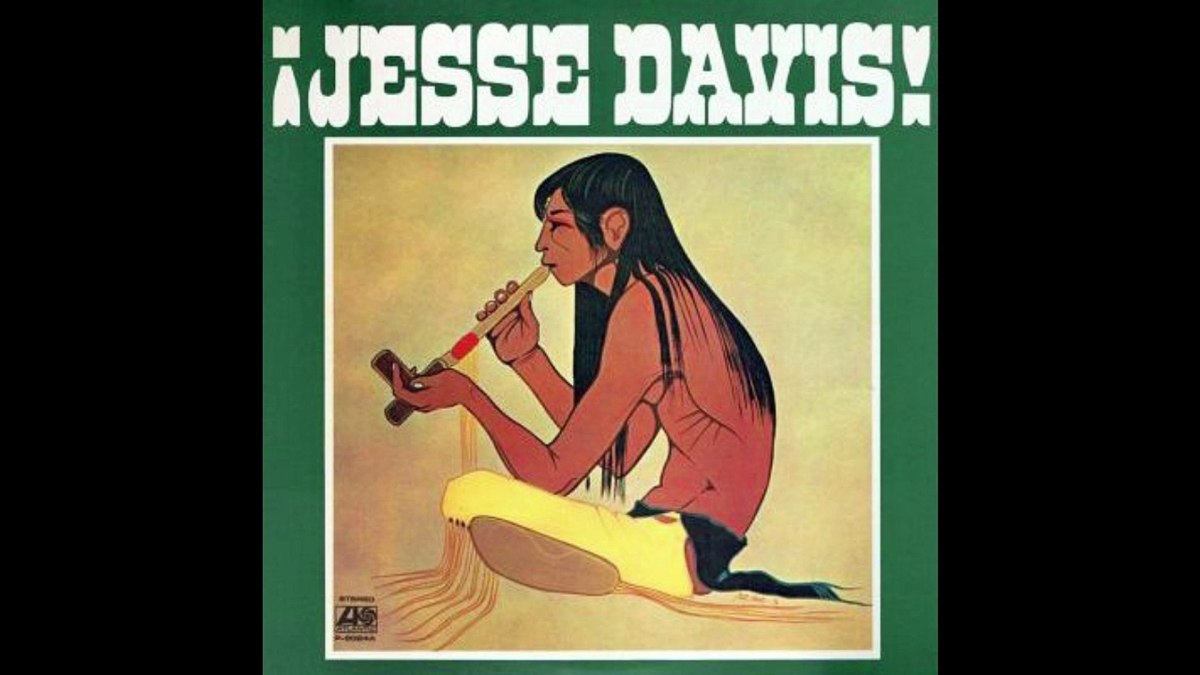
Jesse Ed Davis – ¡Jesse Davis! …album review

I’ve heard of this guy for so long, associated with Taj Mahal and solo Beatles tracks. He played on over 80 albums of other artists. His guitar playing was top shelf and was truly one of the guitar greats. He doesn’t get the attention he deserves. My admitted lack of knowledge of him led me to think he could only play guitar. Much like last week’s Link Wray post, who I didn’t know could sing, he had a really good voice. I also want to thank Lisa from Tao-Talk for posting a Davis song last Friday. 

Jesse Ed Davis was Kiowa, Comanche, and Muscogee (Creek) on his father’s side, while his mother was of Kiowa and Cherokee descent with a small strand of European ancestry. In other words, he was overwhelmingly Native American, with family roots braided through several Plains and Southeastern tribes. He grew up connected to that identity, not as a stage costume, but as him. His dad painted the cover for this album. 

I started to go through his albums like ¡Jesse Davis!, Ululu, and Keep Me Comin or Keep On Coming. He has a couple more, which I still have to get to. I’m totally impressed by his rootsy music. Again, instead of just picking a song, I wanted to feature the album. There is no #1 hit on the album, nor do I think he was trying for that. Just really good, solid songs. 

When Jesse Ed Davis stepped into a studio to record his 1971 debut album ¡Jesse Davis!. He had already carved out a reputation as the guitarist you called when you wanted soul and a heavenly guitar tone, and most importantly, zero ego. He’d played with Taj Mahal, recorded with Gene Clark, and done sessions with everyone from Albert King to Earl Hooker, Jackson Browne, John Lennon, and a ton of other artists. Jesse was the go-to guitarist of the 1970s. 

How respected was he? On this album, he had some incredible guests. Eric Clapton, Leon Russell, Gram Parsons, Alan White, and the Gimme Shelter singer Merry Clayton. This album sounds like a loose jam session that worked all the way around. My favorite song on the album is Washita Love Child. It just hit me and has stuck. I found myself hitting the play button again and again. The band around him cooks with an irresistible looseness. You can hear Clapton on his track loud and clear. After researching for this post, I found out it was featured on the TV show  Reservation Dogs. 

The album works because it stays out of its own way. Lou Adler keeps the production loose and moving. Leon Russell arranged some of the songs and added his unique touch. The songs drift between blues, roots rock, and a kind of West Coast soul. Reno Street Incident floats in like someone cracked open a window at two in the morning. Every Night Is Saturday Night for Me comes alive with Leon’s piano, rolling forward like only Leon can do. And when Gram Parsons or Eric Clapton pop up, they don’t hijack the song; they simply join in.

What really holds everything together is Jesse’s guitar, a voice unto itself. He never shows off, he never “shreds,” he simply plays for the song. His solos feel lived in and warm. He didn’t shout to be heard; he just played. Hearing him play and sing on this album is like slipping into a holey, comfortable favorite shirt.

The album doesn’t scream commercial…it doesn’t scream at all. It’s an album you put on and listen to all the way through, and sit back and enjoy some great music. Jesse Ed Davis passed away in 1988 at the young age of 43. 

I added a 10-minute documentary clip.

Washita Love Child

I was born on the bank
in the Washitaw river
in a Kiowa Comanche teepee

Daddy had a hard time
Mama made his eyes shine
Lord, it was just us three
Well they weaned me riding bareback
And I’d tie my hair back
And i did that pow wow thang
Daddy showed up with his stand up guitar
and then we rocked it i believe

I’m a love child
and I’m running wild
hope it don’t take too long
I’m a love you
I’m a try to make you happy
you got to let me sing my song

Mama said to son
Said what about your school books?
Baby baby what about the draft?
Daddy said honey don’t you worry about this boy he’s headed somewhere
Got a guitar and a van to ride

He’s a love child
He’s gonna be running wild
Hope he don’t take too long
He’s gonna love you
He’s in love with me too
So we got to let him sing his song

Well i got myself together
And i’ve been rolling down the road
Gonna boogie down down down down
If i ever get a chance to boogie woogie you
Ha, you can’t sit down

Taj Mahal – Leaving Trunk

The harmonica intro to this song is dirty as hell. You can hear the slide cutting in like a knife while the rhythm is chugging along. The song was written by Sleepy John Estes, son of a Tennessee sharecropper and blind in one eye, in 1930. He wrote it as Milk Cow Blues. It was recorded in Memphis with piano, mandolin, and Este’s guitar.

Leaving Trunk was on Taj Mahal’s self-titled debut album released in 1968. Like Ry Cooder two years after…he had a great band backing him up. On slide guitar and harmonica is Taj Mahal. The great Jesse Ed Davis is on slide guitar also on this album as well as Ry Cooder on rhythm guitar.

He covered songs written by Estes, Robert Johnson, himself, Sonny Boy Williamson II, and Blind Willie McTell. Leaving Trunk is a song that has been covered by many artists over the years, and it continues to be a favorite among blues fans. Secondhandsongs.com says it has 39 different versions to date. Everyone from Bob Willis to The Black Keys has covered this song. This album played a big part in influencing Duane Allman with Statesboro Blues.

I’ve listened to this album in the past few days I’ve been off of work. I’ve been rotating this one and the debut album of Ry Cooder. The slide guitar work on this album is blistering. I can’t state the importance of this album enough. I can see why Duane Allman was so inspired by it. I won’t go through the complete story but Duane was sick with a cold and his brother Gregg gave him a bottle of Coricidin and this album for Duane’s birthday. Below Gregg Allman tells it.

Gregg Allman: And then I looked on the table and all these little red pills, the Coricidin pills, were on the table. He had washed the label off that pill bottle, poured all the pills out. He put on that Taj Mahal record, with Jesse Ed Davis playing slide on “Statesboro Blues,” and starting playing along with it. When I’d left those pills by his door, he hadn’t known how to play slide. From the moment that Duane put that Coricidin bottle on his ring finger, he was just a natural.

Looking back on it, I think that learning to play slide was a changing moment in his life, because it was like he was back in his childhood—or maybe not his childhood, because it never seemed to me like Duane was a child, so it was more like going back to his first days of playing the guitar. He took to the slide instantly and mastered it very quickly. He practiced for hours and hours at a time, playing that thing with a passion—just like he did when he first learned to play the guitar.

Leaving Trunk

I went upstairs to pack my leavin’ trunk
I ain’t see no blues, whiskey made me sloppy drunk
I ain’t never seen no whiskey, the blues made me sloppy drunk
I’m going back to Memphis babe, where I’ll have much better luck

Look out mama you know you asked me to be your king
She said, “You kiddin’ man, if you want it, keep it hid
But please don’t let my husband, my main man catch you here
Please don’t let my main man, my husband catch you here”

The blues are mushed up into three different ways
One said, “Go the other”, two said, “Stay”
I woke up this mornin’ with the blues three different ways
You know one say, “Go baby, I want to hang up”
The other two said, “Stay”

Wake up mama, I got something to tell you
You know I’m a man who loves to sing the blues
Now you got to wake up baby, mama now
I got something, I got something to tell you
Well, you know I’m the man, I’m the man
Oh yes, and I love to sing the blues

Come on Davis
Come on, come on

I went upstairs to pack my leavin’ trunk, you know
I ain’t see no blues or whiskey made me sloppy drunk
I never seen no whiskey, the blues made me sloppy drunk
I go home baby and I lay down on the lawn