I hope I’m wording this right and what I’m trying to get across are songs that are not just regular pop/rock songs. Some of these have sections instead of 3 or 4 chords and it’s over with. Intricate songs to duplicate and fit together like a jigsaw puzzle. I’ll give you an example…Queen’s Bohemian Rhapsody or The Beach Boys Good Vibrations. Those are not songs you just run into a studio and record in one take. Many of these songs took days, weeks, or months to get right recording different sections.
I usually like down-to-earth and rootsy kind of songs but sometimes I do like listening to these great songs. These are overlooked by the masses with people often connecting with a big hit by the band instead. I’ve picked 3 songs to present here. Being a musician…I can sure appreciate what it took to record these.
Overnight Sensation (Hit Record) – The Raspberries
I posted a Raspberries song this weekend but this one remains my number 1 song even over Go All The Way because it’s so epic.
Overnight Sensation (Hit Record) is an epic, ambitious, grand, lofty, extravagant, and brilliant song from the Raspberries. They were swinging for the fences when they made this song and they hit it out of the park. It’s on the album Starting Over released in 1974.
Put some headphones on and listen to this completely to the very end… When I hear it, I think this is what it would sound like if The Who, Beach Boys and Beatles made a song together…this would be it. Musically you have a little of everything. Sliding bass lines, tasteful guitar licks, great vocals, a sax solo that gives way to more lyrics as the song morphs into an AM radio sound… and then comes a solo piano.
Stay until the very end because they dupe you into a fake ending and the drums will come in as if the world is going to end. Then… a Beach Boys final huge crescendo wave will wash over you like a warm summer moonlit night. It’s a wall of sound of ecstasy that you wish would go on forever.
Bruce Springsteen:“Overnight Sensation (Hit Record) should go down as one of the great mini-rock-opera masterpieces of all time”
Broken Arrow – Buffalo Springfield
The song Broken Arrow is a song that was made in sections and it’s hard to explain it with words… Something is haunting and beautiful about it. I listen to it now and it’s like Buffalo Springfield’s own A Day In The Life. It was produced in 1967 during the psychedelic era. One of my favorite songs of all time…any song with the lyric “He hung up his eyelids and ran down the hall” grabs my attention. Neil Young wrote this beautiful song. Gregg Allman cornered Neil backstage somewhere in the 2000s and pleaded with him to start playing this song again. He did when Buffalo Springfield reformed.
Care Of Cell 44 – The Zombies
This is one of my favorite pop songs of the 1960s. The vocals are reminiscent of the Beach Boys. It’s a sunny and bright song musically about a guy writing to his girl…in prison. The song doesn’t express or explain why she is in prison just that he will be with her when her stay is over.
The song is arranged beautifully. with the vocal-only arrangements, You can hear Brian Wilson and Paul McCartney’s influence on this recording. Chris White’s (Zombies bass player) bass playing is phenomenal in this song.
It is on the album Odessey and Oracle, one of the best albums of the sixties. The hit song on the album is Time of the Season but it is full of great songs. It charted a year after it was released at #95 in the Billboard 200 album charts in 1969. The song/album would be on my desert island list.
I wrote this before I had any readership so I thought I would post it today.
I had a friend’s dad who owned their 1969 greatest hits album when I was in sixth grade and we wore it out. Broken Arrow, Mr Soul, and Expecting to Fly were the ones we played over and over, and heard something we missed in the previous play. So when my peers were listening to The Flock of Seagulls (nothing wrong with that!)…I was listening to Buffalo Springfield and I stayed stuck in the 60s for a long time.
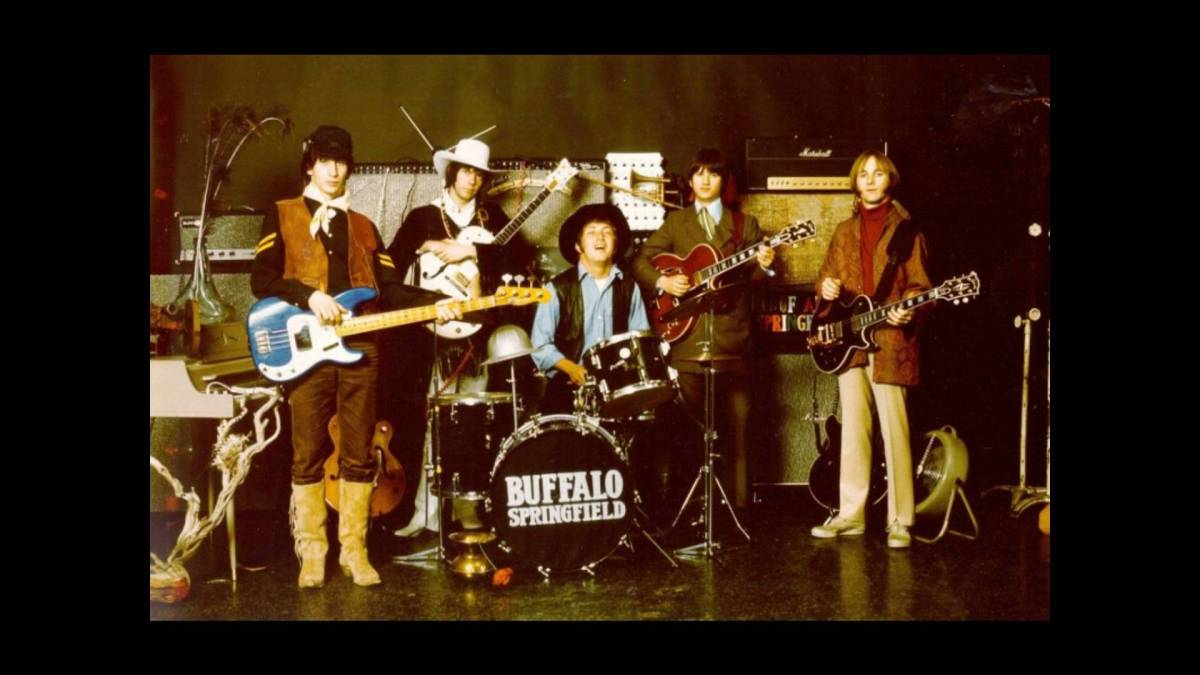
Buffalo Springfield is a band that gets lost in the shuffle at times. People know their big hit “For What It’s Worth” but little about the band. They were only active between 1966-68 but had a huge impact on other artists. The band was very talented……with Neil Young, Stephen Stills, Richie Furay, Bruce Palmer, Dewey Martin, and Jim Messina who replaced Bruce Palmer. They had some great songs like Mr Soul, Nowadays Clancy Can’t Even Sing, Burned, Expecting to Fly, Bluebird, Rock and Roll Woman, Broken Arrow, and their big hit For What It’s Worth…
I just read Neil Young’s book “Waging Heavy Peace” and he said that the end of Buffalo Springfield started because the bass player Bruce Palmer kept getting busted for drugs and taken away…more than once… By 1968 it was over and what a waste of potential they had…The remaining members reunited in 2011 and played 6 concerts… in 2012 they were going to tour and do 30 concerts. Neil quit and did an album with Crazy Horse. He has a history of leaving projects when they don’t interest him anymore.
If this band would have stayed together originally… There’s little doubt they would have gotten much bigger with the talented members they had in place.
The song Broken Arrow is a song that was made in sections and it’s hard to explain it with words… Something is haunting and beautiful about it. I listen to it now and it’s like Buffalo Springfield’s own A Day In The Life. It was produced in 1967 during the psychedelic era. One of my favorite songs of all time…any song with the lyric “He hung up his eyelids and ran down the hall” grabs my attention. Neil Young wrote this beautiful song. Gregg Allman cornered Neil backstage somewhere in the 2000s and pleaded with him to start playing this song again. He did when Buffalo Springfield reformed.
Right after the breakup, Stephen Stills helped form Crosby, Stills, and Nash….short time later Young came aboard and would join them occasionally. Furay and Messina helped form Poco and Messina teamed up with Kenny Loggins later on.
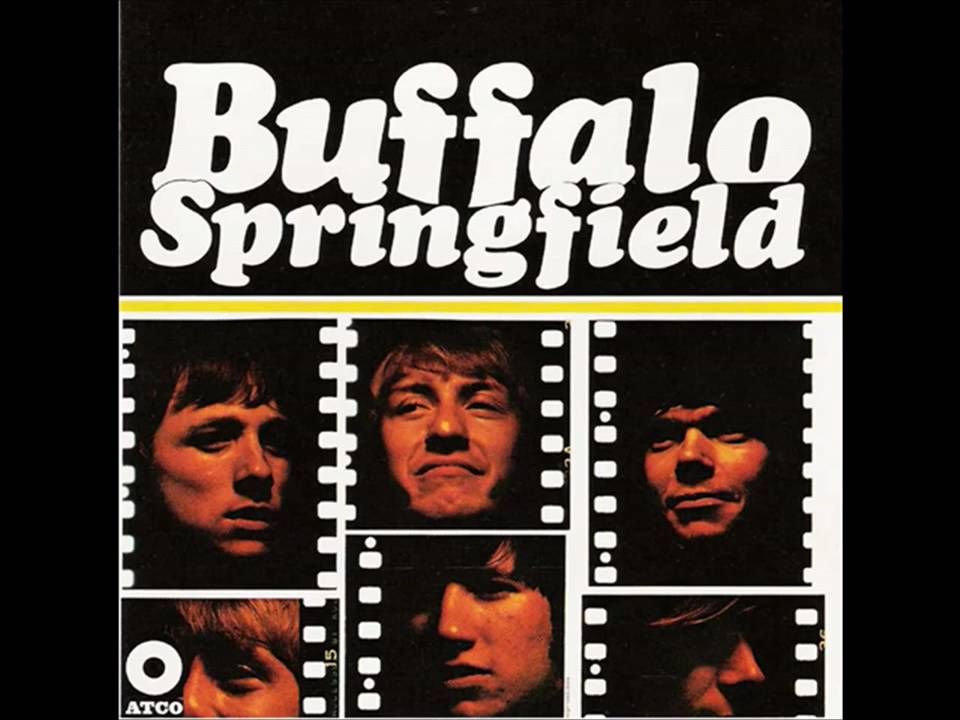
They made three albums while together. Buffalo Springfield (1966), Buffalo Springfield Again (1967) and Last Time Around (1968). A greatest hits came out in 1969 called Retrospective The Best of Buffalo Springfield. A box set was released in 2001.
So…what are your thoughts about Buffalo Springfield?
Broken Arrow
The lights turned on and the curtain fell down And when it was over it felt like a dream They stood at the stage door and begged for a scream The agents had paid for the black limousine That waited outside in the rain Did you see them, did you see them? Did you see them in the river? They were there to wave to you Could you tell that the empty quivered Brown skinned Indian on the banks That were crowded and narrow Held a broken arrow?
Eighteen years of American dream, He saw that his brother had sworn on the wall He hung up his eyelids and ran down the hall His mother had told him a trip was a fall And don’t mention babies at all Did you see him, did you see him? Did you see him in the river? He was there to wave to you Could you tell that the empty quivered Brown skinned Indian on the banks That were crowded and narrow Held a broken arrow?
The streets were lined for the wedding parade The Queen wore the white gloves, the county of song The black covered caisson her horses had drawn Protected her king from the sun rays of dawn They married for peace and were gone Did you see them, did you see them? Did you see them in the river? They were there to wave to you Could you tell that the empty quivered Brown skinned Indian on the banks That were crowded and narrow Held a broken arrow?
For those in the US and celebrate Memorial Day…Happy Memorial Day!
I had a friend’s dad who owned their 1969 greatest hits album when I was in sixth grade and we wore it out. Broken Arrow, Bluebird, Mr. Soul, For What It’s Worth, and Expecting to Fly were the ones we played over and over and caught something we missed in the previous play.
In 1966 a folk-rock band was formed in Los Angeles from a mix of Canadian and American musicians. It was called Buffalo Springfield. The band consisted of Stephen Stills (guitar, keyboards, vocals), Dewey Martin (drums, vocals), Bruce Palmer (electric bass), Richie Furay (guitar, vocals), and Neil Young (guitar, harmonica, piano, vocals).
Buffalo Springfield is a band that gets lost in the shuffle at times. People know their big hit “For What It’s Worth” but little about the band. They were only active between 1966-68 but had a huge impact on other artists. The band was very talented……with Neil Young, Stephen Stills, Richie Furay, Bruce Palmer, Dewey Martin, and Jim Messina who replaced Bruce Palmer. They had some great songs like Mr. Soul, Nowadays Clancy Can’t Even Sing, Burned, Expecting to Fly, Bluebird, Rock and Roll Woman, Broken Arrow, and their big hit For What It’s Worth. Buffalo Springfield is a band that never quite reached its true potential but still made a big impression in the late sixties and after.
Before forming this band, Furay and Stills had played together in the Au Go Go Singers. Palmer and Young had played together in the Mynah Birds. That band featured Rick James on lead vocals and was signed to Motown. Just think about that for a second…Neil Young and Super Freak himself…Rick James was in a band together. They sounded much like the Stones.
If Buffalo Springfield would have stayed together… it’s little doubt they would have gotten much bigger than they did with the talented members they had in place. The name of the group was inspired by the Buffalo-Springfield steamroller made by the Buffalo-Springfield Roadroller Company in Springfield, Ohio.
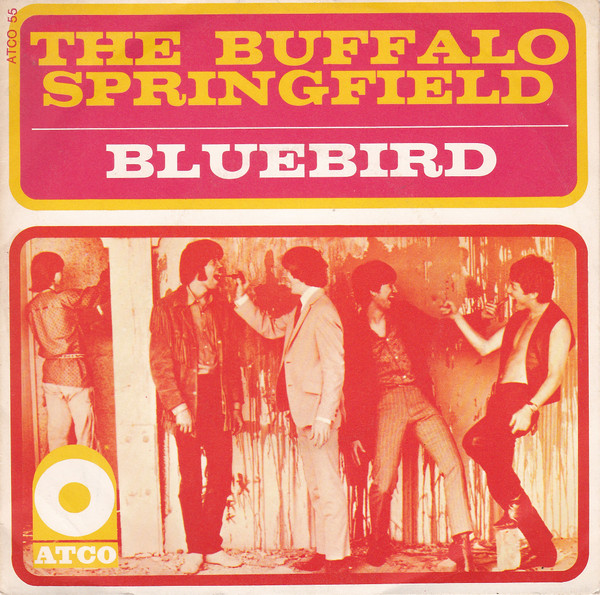
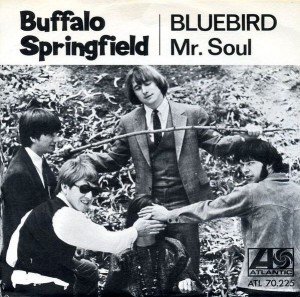
In 1967 they released their second album Buffalo Springfield Again. The album peaked at #44 in the Billboard Album Charts. Bluebird peaked at #58 on the Billboard 100 and #38 in Canada. Three singles in total were pulled off the album.
After various drug-related arrests and line-up changes, Buffalo Springfield decided to break up in 1968. Stephen Stills went on to form the folk-rock supergroup Crosby, Stills & Nash with David Crosby of the Byrds and Graham Nash of the Hollies. Neil Young launched his successful solo career and reunited in 1969 with Crosby, Stills, Nash & Young.
Neil Young on the breakup: “I just couldn’t handle it towards the end. It wasn’t me scheming on a solo career, it wasn`t anything but my nerves. Everything started to go too fucking fast. I was going crazy, joining and quitting, joining and quitting again. I began to feel like I didn’t have to answer or obey anyone. I needed more space. That was the big problem in my head. So I’d quit, then I`d come back ‘cos it sounded so good. It was a constant problem. I just wasn’t mature enough to deal with it. I was very young. We were getting the shaft from every angle, and it seemed like we were trying to make it so bad and getting nowhere.”
Bluebird
Listen to my bluebird laugh She can’t tell you why Deep within her heart, you see She knows only crying Just crying
There she sits, aloft at perch Strangest color blue Flying is forgotten now Thinks only of you Just you Oh yeah
So, get all those blues Must be a thousand hues And be just differently used You just know
You sit there mesmerized By the depth of her eyes That you can’t categorize She got soul She got soul She got soul She got soul
Do you think she loves you Do you think at all
Soon she’s going to fly away Sadness is her own. Give herself a bath of tears And go home, and go home
My friend and I discovered his father’s Buffalo Springfield’s greatest hits album in the early eighties. I grew to be a fan then and there, before I knew about Stills, Young, and the rest. Broken Arrow was my favorite song but Mr. Soul, For What It’s Worth, and this one we could not get enough of.
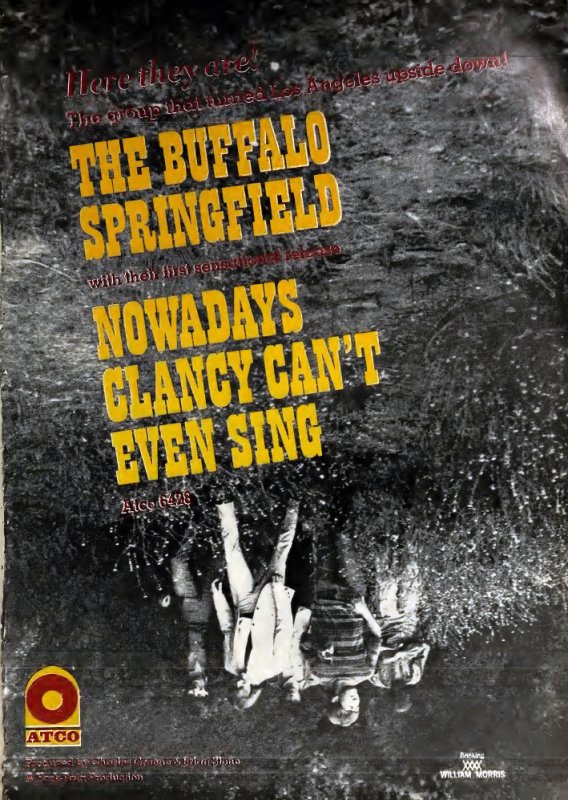
This song was Buffalo Springfield’s first single and the breakout for both Stephen Stills and Neil Young – although it wasn’t supposed to be. Originally the song Go and Say Goodbye by Stephen Stills on the A-side and Young’s Nowadays Clancy Can’t Even Sing on the B-side, before their producers caved to pressure from distributors and flipped the sides.
Richie Furay sings the lead on this song after hearing Young play it earlier. Furay had songs he wanted to include on the album. His songs got lost in the shuffle with the Stills and Young and the developing rivalry between the two.
It wasn’t a smash by any means, but it charted at #110 in the Billboard 100 and #75 in Canada in 1966… so it got some airplay and was a regional success in California. Their album Buffalo Springfield peaked at #80 in the Billboard Album charts in 1967.
In Los Angeles, California’s WKHJ was the first radio station to play the song. Buffalo Springfield’s management arranged this feat by giving the station advanced tapes of “A Day In The Life” by the Beatles, which gave them the chance to break the song ahead of anyone else.
Neil Young wrote this song, which is partially based on one of his real-life schoolmates. Ross “Clancy” Smith attended Kelvin High School in Winnipeg, Canada, with Young.
Neil Young:“He was a kind of persecuted member of the community. He used to be able to do something, sing or something, and then he wasn’t able to do it anymore. The fact was that all the other problems or things that were seemingly important didn’t mean anything anymore because he couldn’t do what he wanted to do.”
The Carpenters did a version on their album Ticket To Ride in 1969.
From Songfacts
Further stress on the band’s debut was brought about by frustration with their producers. Though the legendary Ahmet Ertegun was their mentor, they’d been hooked up through the management team of Charlie Greene and Brian Stone, who were clearly out of their depth. Greene and Stone named themselves Buffalo Springfield’s producers and had them signed not to Atlantic proper or even their subsidiary Atco, but to their own York/Pala Records label, giving them a bigger slice of the profit pie than they otherwise would have been entitled to. As drummer Bruce Palmer is quoted in Neil Young: Long May You Run: The Illustrated History, “They were the sleaziest, most underhanded, backstabbing motherf–kers in the business! They were the best!”
Also from that book: “What hurt the album more than anything, though, was Greene and Stone’s production. Despite the Springfield’s strength as a live act, the managers forced each musician to record separately, piecing the parts together. Worse, after the band participated in the mono mix, Greene and Stone quickly converted the album to stereo, resulting in a tinny mix that outrages the group to this day. Young commented that Greene and Stone made them sound like the All-Insect Orchestra.”
In the same book, classmate Diana Halter says Clancy had multiple sclerosis, and was “so intelligent and so bright that he masked the sweet soul beneath it all.”
All accounts taken together, it’s hard to put an exact picture together of what made Clancy such a standout figure, but all agree he was exactly that.
Though Clancy was an inspiring figure in the song, “Nowadays Clancy Can’t Even Sing” is about Young as much as it about Clancy. He wrote it in 1965 after having a terrible time in Toronto, where his attempts to get things going as a professional musician totally flopped. The rejection he experienced there was so complete (“humbling,” as he called it) that it sent him into a fit of introspective, frustrated songwriting. Out of this pain began to emerge the songwriting style on which Young would build his legend. The pinnacle of those songs, many of which were only recorded on demos or not recorded at all, was “Nowadays Clancy Can’t Even Sing.”
Released on Buffalo Springfield’s eponymous debut album, the song peaked at #110, which wasn’t very good at that time. Unlike the modern era when there are so many bands and expectations are a bit more muted, back then a major-label act, even a new one, was expected to at least break into the top 100 to be considered commercially viable. The song was popular in the Los Angeles area, however, which was the nexus of hippie counterculture.
Young first recorded this song on a January 1966 demo for Elektra Records (Elektra rejected the demos). It can be heard on the 2009 release of The Archives Vol. 1 1963–1972.
There’s a live solo recording of the song on Sugar Mountain – Live at Canterbury House 1968.
The psychedelic band Fever Tree recorded the song in 1968 on their self-titled debut album.
Furay got an early preview of this song from Young himself when the Canadian visited Furay’s New York City apartment. He was auditioning to be house performer at a nightclub called the The Bitter End and played it there. Some of the auditions were recorded but haven’t been released anywhere.
The Clancy Brothers inspired the musical form in this song, with its Irish-styled 2/4 rhythm verses and 3/4 rhythm choruses.
Many journalists and historians have noted this song as Young’s artistic breakthrough, the one that helped him find the niche that would give him the kind of appeal that endured over 50 years later.
Who’s coming home on old 95?
Einarson in Don’t Be Denied posits that this line might refer to a trip that Young took home to Winnipeg in the fall of ’65, suggesting that the train was numbered 95.
Nowadays Clancy Can’t Even Sing
Hey who’s that stomping all over my face? Where’s that silhouette I’m trying to trace? Who’s putting sponge in the bells I once rung? And taking my gypsy before she’s begun? To singing the meaning of what’s in my mind Before I can take home what’s rightfully mine Joinin’ and listenin’ and talkin’ in rhymes Stoppin’ the feeling to wait for the times Who’s saying baby that don’t mean a thing ‘Cause nowadays Clancy can’t even sing
And who’s all hung-up on that happiness thing? Who’s trying to tune all the bells that he rings? And who’s in the corner and down on the floor? With pencil and paper just counting the score? And who’s trying to act like he just in between? The night isn’t black, it can only be screened Don’t bother looking you’re too blind to see Who’s coming on like he wanted to be Who’s saying baby, that don’t mean a thing ‘Cause nowadays Clancy can’t even sing
And who’s coming home on the old ninety five? Who’s got the feeling to keep him alive Though havin’ it, sharin’ it ain’t quite the same It ain’t no gold nugget you can’t lay a claim Who’s seeing eyes through the crack in the floor There it is baby don’t you worry no more Who should be sleepin’ but is writing this song Wishin’ and a-hopin’ he weren’t so damned wrong Who’s saying baby, that don’t mean a thing ‘Cause nowadays Clancy can’t even sing Who’s saying baby that don’t mean a thing ‘Cause nowadays Clancy can’t even sing
I had a friend’s dad who owned their 1969 greatest hits album when I was in sixth grade and we wore it out. Broken Arrow and Expecting to fly were the ones we played over and over and heard something we missed on the previous play.
Buffalo Springfield were only active between 1966-68 but had a huge impact on other artists. The band was very talented……with Neil Young, Stephen Stills, Richie Furay, Bruce Palmer, Dewey Martin and Jim Messina who replaced Bruce Palmer. They had some great songs like Mr Soul, Now days Clancy Can’t Even Sing, Burned, Expecting to Fly, Bluebird, Rock and Roll Woman, Broken Arrow and their big hit For What It’s Worth…
Ritchie Furay and Steven Stills had played together in the Au Go Go Singers. Bruce Palmer and Neil Young had played together in the Mynah Birds. That band featured Rick James on lead vocals and was signed to Motown.
It was written by Neil Young. The song peaked at #98 in the Billboard 100 in 1968.
Expecting to Fly
There you stood on the edge of your feather, Expecting to fly. While I laughed, I wondered whether I could wave goodbye, Knowin’ that you’d gone. By the summer it was healing, We had said goodbye. All the years we’d spent with feeling Ended with a cry, Babe, ended with a cry, Babe, ended with a cry.
I tried so hard to stand As I stumbled and fell to the ground. So hard to laugh as I fumbled And reached for the love I found, Knowin’ it was gone. If I never lived without you, Now you know I’d die. If I never said I loved you, Now you know I’d try, Babe, now you know I’d try. Babe, now you know I’d try, Babe.
This was Buffalo Springfield’s only top 40 hit. I’ve always liked the song, especially Neil Young’s harmonics on guitar. The album Buffalo Springfield was the band’s first album, and this song was not originally included on it. After “For What It’s Worth” became a hit single, it replaced “Baby Don’t Scold Me” on re-issues of the album.
According to BMI, the song’s publishing house, “For What It’s Worth” been played 8 million times on TV and radio since its release. In 2014, it came in at number three on Rolling Stone‘s readers poll of the best protest songs.
For What It’s Worth peaked at #7 in the Billboard 100 and #9 in Canada.
From Songfacts
Written by Buffalo Springfield guitarist Stephen Stills, this song was not about anti-war gatherings, but rather youth gatherings protesting anti-loitering laws, and the closing of the West Hollywood nightclub Pandora’s Box. Stills was not there when they closed the club, but had heard about it from his bandmates.
In the book Neil Young: Long May You Run: The Illustrated History, Stephen Stills tells the story of this song’s origin: “I had had something kicking around in my head. I wanted to write something about the kids that were on the line over in Southeast Asia that didn’t have anything to do with the device of this mission, which was unraveling before our eyes. Then we came down to Sunset from my place on Topanga with a guy – I can’t remember his name – and there’s a funeral for a bar, one of the favorite spots for high school and UCLA kids to go and dance and listen to music.
[Officials] decided to call out the official riot police because there’s three thousand kids sort of standing out in the street; there’s no looting, there’s no nothing. It’s everybody having a hang to close this bar. A whole company of black and white LAPD in full Macedonian battle array in shields and helmets and all that, and they’re lined up across the street, and I just went ‘Whoa! Why are they doing this?’ There was no reason for it. I went back to Topanga, and that other song turned into ‘For What It’s Worth,’ and it took as long to write as it took me to settle on the changes and write the lyrics down. It all came as a piece, and it took about fifteen minutes.”
Notable when you consider this song’s success, the group quietly recorded this without involving their producers Charles Greene and Brian Stone, with whom they had had immense dissatisfaction about the recording of their album up until then. Greene and Stone had insisted on recording each musician separately and then combining them later into mono to stereo tracks, which produced a tinny sound. This was the first time the group’s united performance was caught on tape. (Thanks to Dwight Rounds for his help with this. Dwight is author of The Year The Music Died, 1964-1972.)
This was used in a commercial for Miller beer. The anti-establishment message was, of course, ignored and the song was edited to avoid the line “There’s a man with a gun over there, telling you-you’ve got to beware.” The commercial replaced this line by pulling up the chorus of “Everybody look what’s going down.”
Songwriting powerhouses Jim Messina and Neil Young were also in Buffalo Springfield, but Stills wrote this song himself. Young has never allowed his songs to be used in commercials, and wrote a song bashing those who do called “This Note’s For You.”
This song helped launch the band to stardom and has remained one of the era’s most enduring protest songs, but Stephen Stills, who authored the tune, had very different feelings than many might expect. He said, “We didn’t want to do another song like ‘For What It’s Worth.’ We didn’t want to be a protest group. That’s really a cop-out and I hate that. To sit there and say, ‘I don’t like this and I don’t like that’ is just stupid.”
Public Enemy sampled this on their 1998 song “He Got Game,” which was used in the movie of the same name. Stephen Stills appears on this song.
This song gets covered a lot – for a weird experience, check out the cover versions of “For What It’s Worth” done by Ozzy Osbourne on the Under Cover album and Queensryche on their Take Cover album. Both of them pretty much murder it.
This song plays during the opening credits of the movie Lord Of War starring Nicolas Cage, and was used in the movie Forrest Gump starring Tom Hanks.
Buffalo Springfield
There’s something happening here What it is ain’t exactly clear There’s a man with a gun over there Telling me I got to beware
I think it’s time we stop, children, what’s that sound Everybody look what’s going down
There’s battle lines being drawn Nobody’s right if everybody’s wrong Young people speaking their minds Getting so much resistance from behind
It’s time we stop, hey, what’s that sound Everybody look what’s going down
What a field-day for the heat A thousand people in the street Singing songs and carrying signs Mostly say, hooray for our side
It’s s time we stop, hey, what’s that sound Everybody look what’s going down
Paranoia strikes deep Into your life it will creep It starts when you’re always afraid You step out of line, the man come and take you away
We better stop, hey, what’s that sound Everybody look what’s going down Stop, hey, what’s that sound Everybody look what’s going down Stop, now, what’s that sound Everybody look what’s going down Stop, children, what’s that sound Everybody look what’s going down
Buffalo Springfield is a band that never quite reached its true potential but still made a big impression in the late sixties. This song comes in with a bang. “Mr. Soul” It was written by Young after experiencing an epilepsy attack after an early show with Buffalo Springfield in San Francisco. Many people in the audience were questioning if it was part of the act.
The lyrics had reflected Young’s experience, feeling as though he was about to die. Thereupon, he was advised by his doctor to never take LSD or any other hallucinogenic drugs.
The song was the first track of their second album Buffalo Springfield Again. The song did not chart.
From Songfacts
One hardly knows where to begin with this song’s lyrics. In just three short verses with no chorus, Young practically flaunts his lyrical prowess at this early stage in his career. He invokes both Beatles and early proto-punk, in verses that manage to be both angry and whimsical at the same time. Like the team of Lennon-McCartney, Young and Stills experienced friendly rivalry with their equally matched talents that also inspired each of them to top the other, bringing their work to an edginess that drove them to brilliance.
At the time of “Mr. Soul,” Young was wavering on leaving the band. His first departure was on the eve of Buffalo Springfield’s booking to appear on The Tonight Show with Johnny Carson, which he was vehemently opposed to. Young later told British music magazine Mojo, “I thought it was belittling what the Buffalo Springfield was doing. That audience wouldn’t have understood us. We’d have been just a f–kin’ curiosity to them.”
Along with missing The Tonight Show, Young’s sudden departure also cast a cold shadow over Buffalo Springfield’s appearance at the now-legendary 1967 Monterey International Pop Festival. Buffalo Springfield brought in Doug Hastings to substitute on guitar and had Stephen Stills’ friend David Crosby drop by to assist with the Festival appearance, but even so, the group’s performance suffered so much that they were dropped from the Pennebaker documentary.
The book Neil Young: Long May You Run: The Illustrated History says that this song “was likely more indicative of where his [Young’s] head truly was. Much like the songs from the Springfield’s debut, ‘Mr. Soul’ suggests that Young’s work was still razor-sharp, even when it was coming from a very unhappy place.”
While we’re book-hopping, there are some ties between Buffalo Springfield members and Al Kooper (of Blues Project / Blood Sweat & Tears fame). In Kooper’s memoir Backstage Passes and Backstabbing Bastards, Kooper consulted with David Crosby when the idea of Blood Sweat & Tears was forming in his mind, and also recruited Jim Fielder (Frank Zappa and the Mothers alumni), who also part of Buffalo Springfield when they were seeking a replacement for Bruce Palmer’s continuous absences. And then Stephen Stills himself popped by to fill in for Mike Bloomfield when Kooper, in a panic, called him to help complete the album Super Session. There, is that enough threads weaving everything together?
Robin Lane ran in Young’s circle in the late ’60s. She also lived with him for some time and sang on “Round and Round (It Won’t Be Long).” Lane told Songfacts that the song “Mr. Soul” was inspired in some way by the death of Lenny Bruce, who died less a year before the song was recorded. In Shakey, Jimmy McDonough writes that Young himself had no recollection of the Bruce connection.
Mr. Soul
Oh, hello Mr. Soul, I dropped by to pick up a reason For the thought that I caught that my head is the event of the season Why in crowds just a trace of my face could seem so pleasin’ I’ll cop out to the change, but a stranger is putting the tease on.
I was down on a frown when the messenger brought me a letter I was raised by the praise of a fan who said I upset her Any girl in the world could have easily known me better She said, You’re strange, but don’t change, and I let her.
In a while will the smile on my face turn to plaster? Stick around while the clown who is sick does the trick of disaster For the race of my head and my face is moving much faster Is it strange I should change? I don’t know, why don’t you ask her?




 PowerPop... An Eclectic Collection of Pop Culture