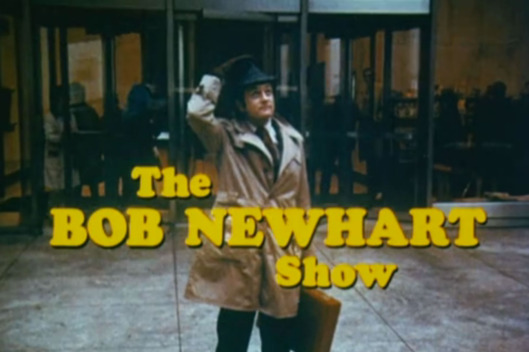
The Bob Newhart Show

I found out yesterday that one of my comedy heroes died…Bob Newhart. I watched him as a small kid and didn’t always understand the adult humor at the time but I loved it. He delivered it in a way that you could understand. I wrote this back in 2018 or so but I wanted to repost it. Also…having a crush on Suzanne Pleshette didn’t hurt either. 

If you don’t like a dry sense of humor…Bob was NOT for you. Bob Newhart excelled in dry humor…and talking on the telephone, a part of his long history in standup.

One of my personal favorite sitcoms of the seventies. It would never be rated as the best by many people or critics…I just like Newhart’s dry sense of humor. Bob Newhart also was in a sitcom in the 1980s called “Newhart”  that was set in Vermont which sometimes people confuse with this show. That one was good but this one was more believable to me…although Newhart had the best last episode ever.

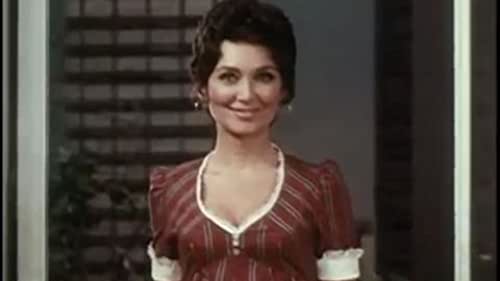
This show was set in Chicago with Bob playing psychologist Bob Hartley. He lived with his wife Emily Hartley in an apartment complex. He worked in an office building with a receptionist named Carol and an Orthodontist name Jerry. There is also a neighbor named Howard Borden…who sometimes can be just a little too out there (or dumb) but he is more like Bob and Emily’s child at times. Speaking of Emily…I was around 9 years old when I started to watch this…Suzanne Pleshette was one of my first of many crushes growing up.

The show ran from 1972 to 1978 with 142 episodes. It was never a Nielson Rating giant despite following the Mary Tyler Moore Show but it was in the top 20 in its first few years.

A college drinking game originated from this show. Every time you heard “Hi Bob” you would consume alcohol…sounds like a better time than Yahtzee or Monopoly!

The show’s plot takes place usually in three different locations. Bob is at home with Emily, Bob with his patients, and Bob with Carol and Jerry. Elliot Carlin was a patient of Bob’s and the most pessimistic character I ever saw on a sitcom. He thought the worst of people and himself and often would puncture Bob’s optimism.

This show was part of CBS’s Super Saturday night lineup that featured All In The Family, The Jeffersons, The Mary Tyler Moore Show, The Bob Newhart Show, and then The Carol Burnett Show. All of those shows are remembered today.

It is a smartly written sitcom…the two episodes I would recommend is “Motel” in season 2 episode 2 and the classic episode “Over the River and Through the Woods” season 4 episode 11…a great one to watch at Thanksgiving.

If you like a dry sense of humor this show is for you. Some trivia about the show, the bedspread, and sheets in Bob and Emily’s bedroom were designed by Suzanne Pleshette. She designed bedding for JP Stevens Utica brand.

The cast is
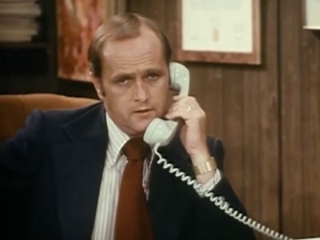
Bob Newhart 1

Bob Newhart – Bob Hartley

Bob Newhart 2

Suzanne Pleshette – Emily Hartley

Bob Newhart 3

Bill Daily – Howard Borden

Bob Newhart 4

Marcia Wallace – Carol Kester

Bob Newhart 5

Peter Bonerz – Jerry Robinson

Bob Newhart 6

Jack Riley – Elliot Carlin

Bob Newhart 7

Pat Finley – Ellen Hartley

Below is a great description of the show

https://tv.avclub.com/the-bob-newhart-show-has-aged-gracefully-1798180611

The Bob Newhart Show might be the driest American sitcom to ever attain anything like major success. While the show was buoyed by running after The Mary Tyler Moore Show for much of its run, making it more of a beneficiary of a good time slot than a breakout hit, in some ways, Bob Newhart has aged even better than that series. Mary Tyler Moore was more historically important, but the center of the show is the uneasy tension arising from the increased entry of women into the workplace in the ’60s and ’70s, which gives the series a certain quaintness in 2014. Bob Newhart—produced by MTM Enterprises, the studio behind Mary Tyler Moore—is about the perils of trying to lead a mentally sound and fulfilling life in the morass of modern society. It’s a subject that will never go out of fashion—even if the series’ ’70s trappings and outfits seem occasionally ridiculous.


The Bob Newhart Show has gotten even more modern in tone with the passage of time, an unusual trick for a TV show. The complete series, collected on DVD for the first time by Shout Factory recently, centers on the home and work lives of Dr. Bob Hartley (Newhart), a Chicago psychologist whose life is rigidly defined by dealing with his patients—both individually and in the group therapy sessions that became a famous source of jokes for the show. The personalities at his office—orthodontist Jerry (Peter Bonerz) and their receptionist, Carol (Marcia Wallace)—are rarely the draw for the show, but they’re perfectly fine as foils both for Bob and his patients.

It’s on the other side of the series that the show crackles to life. When Bob goes home, he arrives to his wife, Emily (Suzanne Pleshette), and the relationship between the two is the thing about the show that most feels like something no network executive would ever greenlight today. The two are deeply in love, and reading between the lines of their dialogue also reveals they’re having lots of sex. But the show codes their conversation as their sex, taking a tip from the great screwball comedies of the ’30s and ’40s. There’s nothing they love so much as ribbing each other with jokes that would be acidic in lesser hands but feel affectionate coming from the mouths of Newhart and Pleshette. What’s more, the two don’t have children and rarely discuss having them. This was because Newhart didn’t want the show to turn into one where he played off of cute kids, but it played as quietly revolutionary at the time and even more so now. The Hartleys are eternally childless, finding their fulfillment in their professional lives and each other, building a marriage that’s more about finding a solid partner to navigate life with than anything else.

The Bob Newhart Show is also notable for breaking down into three rough eras of two seasons each. Where many other sitcoms of this era (the best ever for American sitcoms) were shepherded by a handful of the same producers from start to finish, Bob Newhart began life as a sort of drier, chillier riff on Mary Tyler Moore, under the tutelage of Lorenzo Music and David Davis. This version of the show, its weakest but still an enjoyable one, ran for the first two years, before spending the next two seasons with Tom Patchett and Jay Tarses working first as head writers, then as showrunners. Tarses’ darkly misanthropic streak and lack of love for the sitcom form blended well with a show about psychoanalysis, and the series became one of the darker sitcoms in TV history. By its fifth (and best) season, it was practically death-obsessed, with frequent riffs on suicide and serious psychological conditions. Yet these final two seasons (which gave some of the best TV writers in history their big break) also up an absurdist quality that was already in the show to quantities that hadn’t been seen in the sitcom since the heyday of Green Acres.

That absurdism also taught future writers who would work on shows starring Newhart a valuable lesson: Newhart, in and of himself, is not the driver of the story. He is, instead, the reactor, the modern man trapped in an absurd system and forced to remark quietly on how bizarre it is. Despite being deliberately low-concept, The Bob Newhart Show is one of the weirdest sitcoms in history, especially as it goes on. Even the characters who seem to be the most traditional sitcom types, like Bill Daily’s Howard Borden, go beyond what they initially seem to be (in Howard’s case, a generic dumb guy) and take on a specificity that other shows would avoid. Howard, for instance, is a navigator for an airline, who has terrible luck in love and a tendency to spiral blame for things he’s done wrong outward at others. What seemed like a generic riff on Mary’s Ted Baxter early in the show’s run becomes something else entirely—not a buffoon but, rather, a man limited by his own perceptions.

All of this reaches its apex in the show’s best character, Jack Riley’s Elliot Carlin, one of Bob’s patients and an almost perfect foil for Dr. Hartley, his dark, dour demeanor acting like a funhouse-mirror version of his therapist. The scenes between the two can feel like minimalist one-act plays at times, with Newhart and Riley bouncing off of each other in barely varying monotones that take on the vibe of complex business negotiations disguised as therapy sessions. In Carlin and Hartley, the show found two very similar men who looked at the dehumanizing state of American society of the ’70s and chose wildly different reactions. Hartley, an optimist, chose to believe people could improve themselves; Carlin, a pessimist, was pretty sure they never would. The genius of The Bob Newhart Show was how it knew Carlin was right but admired Bob Hartley for trying anyway.

bob__newhart__show_2_copy_-_h_2018.jpg

bobandcarlin.jpg

Comedian Quotes II

I did this last week with the earlier comedians….this week I’ll concentrate on the 60s-70s.

George Carlin to Receive Two-Part Documentary From HBO and Judd Apatow -  Rolling Stone

George Carlin

Here’s all you have to know about men and women: women are crazy, men are stupid. And the main reason women are crazy is that men are stupid.

Most people work just hard enough not to get fired and get paid just enough money not to quit

Ever wonder about those people who spend $2 apiece on those little bottles of Evian water? Try spelling Evian backward

Think of how stupid the average person is, and realize half of them are stupider than that

Fighting for peace is like screwing for virginity

That Richard Pryor Biopic Is Back, And Headed To Netflix |  Birth.Movies.Death.

Richard Pryor

Who you gonna believe, me or your lying eyes?

I’m not addicted to cocaine. I just like the way it smells

I had to stop drinking, ‘cause I got tired of waking up in my car driving ninety

Marriage is really tough because you have to deal with feelings… and lawyers

There’s a thin line between to laugh with and to laugh at

No Respect: The Rodney Dangerfield of the Investment World | Core Compass

Rodney Dangerfield

I could tell my parents hated me. My bath toys were a toaster and a radio

My marriage is on the rocks again. Yeah. My wife just broke up with her boyfriend

My wife has to be the worst cook. In my house, we pray after we eat

When I was born, I was so ugly the doctor slapped my mother

Marriage. It’s not a word. It’s a sentence

When I was a kid my parents moved a lot, but I always found them

Remembering Lenny Bruce, 50 years after his death - Los Angeles Times

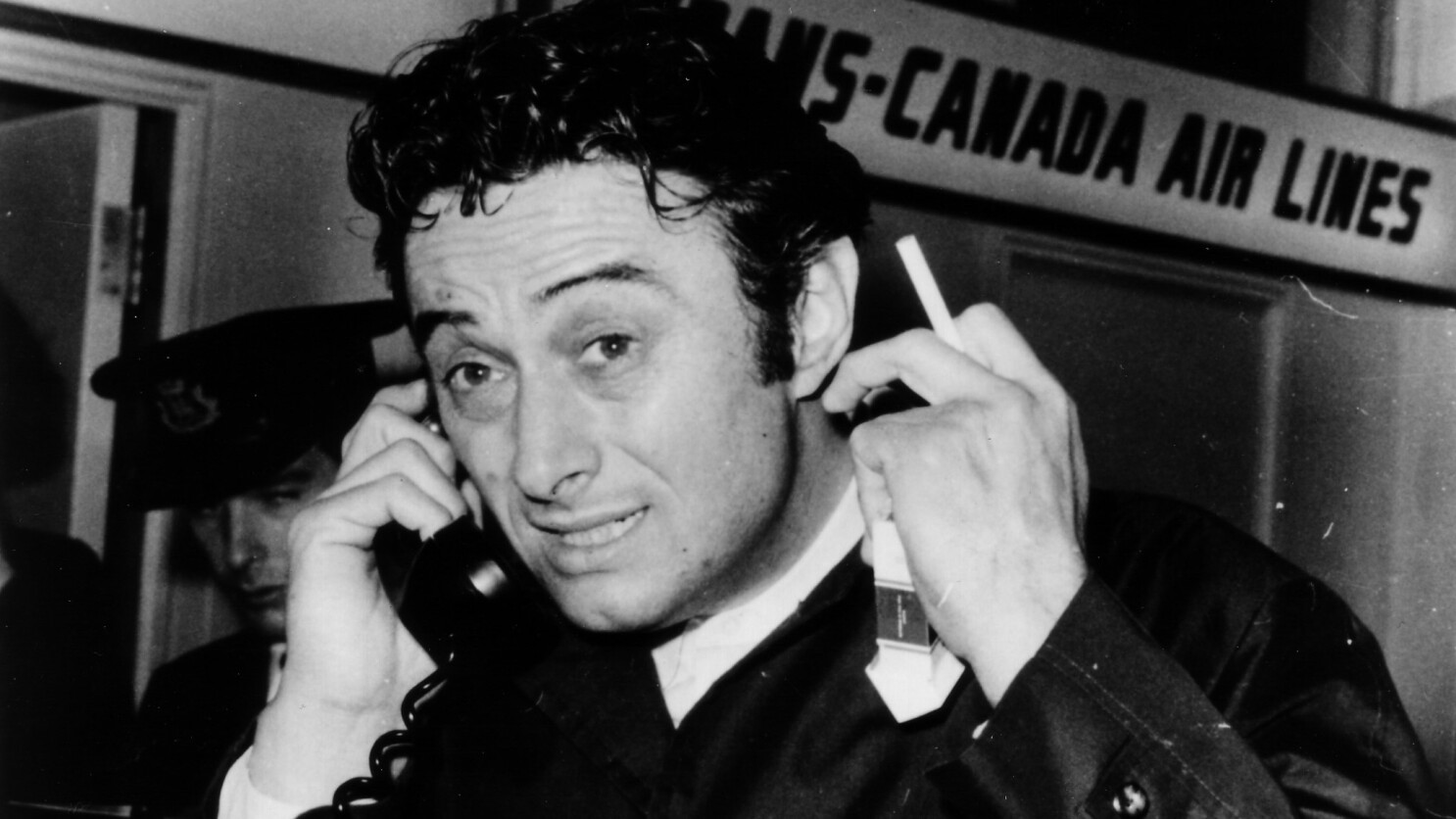
Lenny Bruce

Every day people are straying away from the church and going back to God

Alright, let’s admit it, we Jews killed Christ – but it was only for three days

I am influenced by every second of my waking hour

It’s the suppression of the word that gives it the power, the violence, the viciousness

Emmys history: One-season winners starring Bob Newhart, Julie Andrews -  GoldDerby

Bob Newhart

I don’t like country music, but I don’t mean to denigrate those who do. And for the people who like country music, denigrate means ‘put down’

Stammering is different than stuttering. Stutterers have trouble with the letters, while stammerers trip over entire parts of a sentence. We stammerers generally think of ourselves as very bright

I think you should be a child for as long as you can. I have been successful for 74 years being able to do that. Don’t rush into adulthood, it isn’t all that much fun

Phyllis Diller "Mother-In-Law" on The Ed Sullivan Show - YouTube

Phyllis Diller

The reason women don’t play football is because 11 of them would never wear the same outfit in public.

I spent seven hours in a beauty shop… and that was for the estimate.

I’ve tried Buddhism, Scientology, Numerology, Transcendental Meditation, Qabbala, t’ai chi, feng shui and Deepak Chopra but I find straight gin works best

I never made `Who’s Who,’ but I’m featured in `What’s That?’

I want my children to have all the things I couldn’t afford. Then I want to move in with them

Redd Foxx | Walk of Fame

Redd Foxx

If you can see the handwriting on the wall… you’re on the toilet

I feel sorry for people who don’t drink or do drugs. Because someday they’re going to be in a hospital bed, dying, and they won’t know why

You make me wish that birth control was retroactive

Beauty may be skin deep, but ugly goes clear to the bone.

Lily Tomlin Biography - Childhood, Life Achievements & Timeline

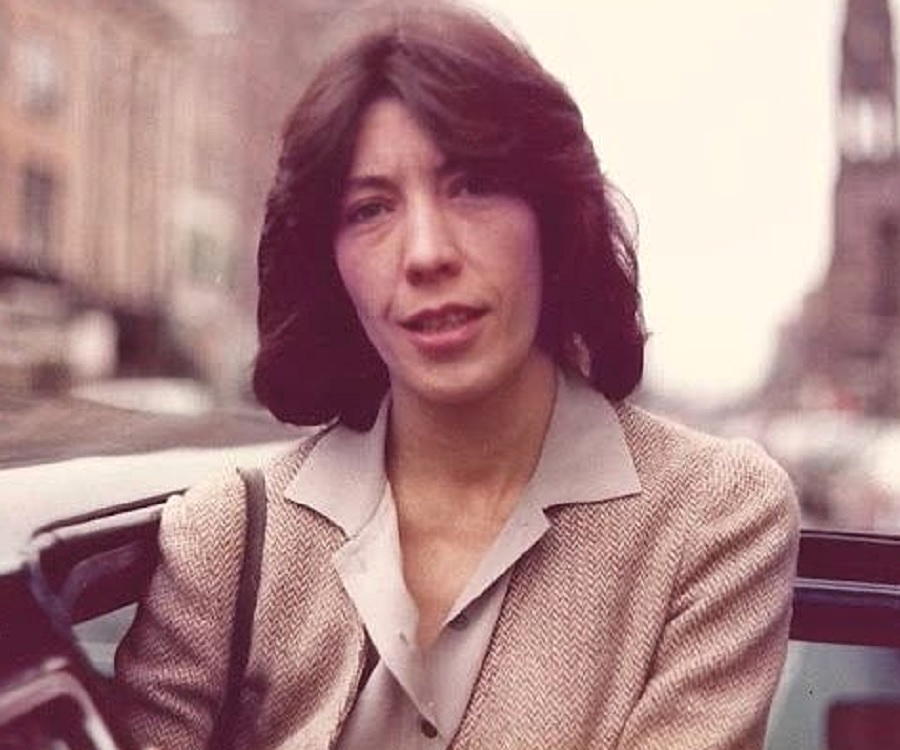
Lily Tomin

The best mind-altering drug is the truth.

The road to success is always under construction.

I always wondered why somebody doesn’t do something about that. Then I realized I was somebody.

I always wanted to be somebody, but now I realize I should have been more specific.

Reality is the leading cause of stress among those in touch with it.

Classic TV Episodes: Newhart – The Last Newhart

My favorite final episode of any TV series. I liked the 1980’s Newhart show but I preferred the seventies series “The Bob Newhart Show” where Bob played psychologist Bob Hartley. This was the most creative ending I have ever seen in a sitcom. I remember watching it and was caught completely off guard. Seeing Emily (Suzanne Pleshette) again in that role was great.

The story didn’t matter as much as the end. No one had a clue this was going to happen in the finale. Bob Newhart had planted a story in the press where the ending was going to be Bob talking to God…played by George Burns or George C. Scott…just to throw people off.

Some shows have let me down with their final episode…this one pays off. In 2013 it was ranked number 1 in Entertainment Weekly’s 20 Best TV Series Finales Ever

“You won’t believe the dream I just had.”

You should really wear more sweaters.

What do you mean, beautiful blonde?

Your- your brothers can speak? Why didn’t they say anything up ’till now?  I guess they’ve never been this P.O.’ed before.

Newhart: The Last Newhart

The characters: Dick Loudon / Robert Hartley, Joanna Loudon, Michael Harris, Stephanie Vanderkellen, George Utley, Larry, Darryl #1, Darryl #2, Emily Hartley

A Japanese firm buys up all the land in the town where Newhart is set to build a golf course. Everyone sells out and moves away wealthy… except Dick. Dick will not sell and they build the course around his Inn. Years pass and the old town residents return for a reunion at the Inn. They all regret moving and decide they are all moving back and will live at the Inn. Things are getting very bizarre and Dick, furiously yelling at everyone at how nuts they are steps out onto the Inn’s porch where he is knocked out by a stray golf ball.

We cut to a darkened bedroom. Bob Newhart wakes up and turns on a light. Its Bob Hartley’s bedroom from The Bob Newhart Show. Bob reaches over and shakes the person sleeping next to him awake. It’s Emily, Bob’s wife from The Bob Newhart Show. Newhart, now clearly Dr. Bob Hartley, starts to tell Emily about the strange dream he has just had – where he was an Inn Keeper in Vermont. The entire run of Newhart was nothing but Bob Hartley’s dream


The Bob Newhart Show

Probably my personal favorite sitcom of the seventies. It would not be rated as the best by many people or critics…I just like Newhart’s dry sense of humor. Bob Newhart also was in a sitcom in the 80’s called “Newhart”  that was set in Vermont that sometimes people confuse with this show.

This show was set in Chicago with Bob playing psychologist Bob Hartley. He lived with his wife Emily Hartley in an apartment complex. He worked in an office building with a receptionist named Carol and an Orthodontist name Jerry. There is also a neighbor named Howard Borden…who sometimes can be just a little too out there (or dumb) but he is more like Bob and Emily’s child at times.

The show ran from 1972 – 1978 with 142 episodes. It was never a Nielson Rating giant despite following the Mary Tyler Moore Show but it was in the top 20 in it’s first few years.

A college drinking game originated from this show. Every time you heard “Hi Bob” you would consume alcohol…sounds like a better time than Yahtzee.

The show’s plot takes place usually in three different places. Bob at home with Emily, Bob with his patients, and Bob with Carol and Jerry. Elliot Carlin was a patient of Bob’s and the most pessimistic character I ever saw on a sitcom. He thought the worse of people and himself and often would puncture Bob’s optimism.

This show was part of CBS’s Super Saturday night lineup that featured All In The Family, The Jeffersons, The Mary Tyler Moore Show, The Bob Newhart Show and then The Carol Burnett Show. All of those shows are remembered today.

It is a smartly written sitcom…the two episodes I would recommend is “Motel” in season 2 episode 2 and the classic episode “Over the River and through the Woods” season 4 episode 11.

If you like a dry sense of humor this show is for you. Some trivia about the show, the bedspread, and sheets in Bob and Emily’s bedroom were designed by Suzanne Pleshette. She designed bedding for JP Stevens Utica brand.

The cast was

Bob Newhart – Bob Hartley

Suzanne Pleshette – Emily Hartley
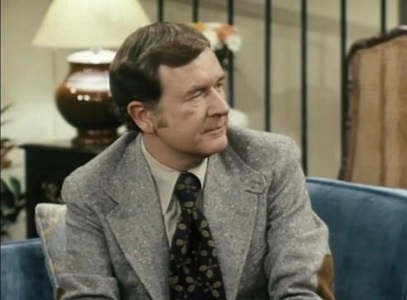
Bill Daily – Howard Borden

Marcia Wallace – Carol Kester

Peter Bonerz – Jerry Robinson

Jack Riley – Elliot Carlin

Below is a great description of the show

https://tv.avclub.com/the-bob-newhart-show-has-aged-gracefully-1798180611

The Bob Newhart Show might be the driest American sitcom to ever attain anything like major success. While the show was buoyed by running after The Mary Tyler Moore Show for much of its run, making it more of a beneficiary of a good time slot than a breakout hit, in some ways, Bob Newhart has aged even better than that series. Mary Tyler Moore was more historically important, but the center of the show is the uneasy tension arising from the increased entry of women into the workplace in the ’60s and ’70s, which gives the series a certain quaintness in 2014. Bob Newhart—produced by MTM Enterprises, the studio behind Mary Tyler Moore—is about the perils of trying to lead a mentally sound and fulfilling life in the morass of modern society. It’s a subject that will never go out of fashion—even if the series’ ’70s trappings and outfits seem occasionally ridiculous.

The Bob Newhart Show has gotten even more modern in tone with the passage of time, an unusual trick for a TV show. The complete series, collected on DVD for the first time by Shout Factory recently, centers on the home and work lives of Dr. Bob Hartley (Newhart), a Chicago psychologist whose life is rigidly defined by dealing with his patients—both individually and in the group therapy sessions that became a famous source of jokes for the show. The personalities at his office—orthodontist Jerry (Peter Bonerz) and their receptionist, Carol (Marcia Wallace)—are rarely the draw for the show, but they’re perfectly fine as foils both for Bob and his patients.

It’s on the other side of the series that the show crackles to life. When Bob goes home, he arrives to his wife, Emily (Suzanne Pleshette), and the relationship between the two is the thing about the show that most feels like something no network executive would ever greenlight today. The two are deeply in love, and reading between the lines of their dialogue also reveals they’re having lots of sex. But the show codes their conversation as their sex, taking a tip from the great screwball comedies of the ’30s and ’40s. There’s nothing they love so much as ribbing each other with jokes that would be acidic in lesser hands but feel affectionate coming from the mouths of Newhart and Pleshette. What’s more, the two don’t have children and rarely discuss having them. This was because Newhart didn’t want the show to turn into one where he played off of cute kids, but it played as quietly revolutionary at the time and even more so now. The Hartleys are eternally childless, finding their fulfillment in their professional lives and each other, building a marriage that’s more about finding a solid partner to navigate life with than anything else.

The Bob Newhart Show is also notable for breaking down into three rough eras of two seasons each. Where many other sitcoms of this era (the best ever for American sitcoms) were shepherded by a handful of the same producers from start to finish, Bob Newhart began life as a sort of drier, chillier riff on Mary Tyler Moore, under the tutelage of Lorenzo Music and David Davis. This version of the show, its weakest but still an enjoyable one, ran for the first two years, before spending the next two seasons with Tom Patchett and Jay Tarses working first as head writers, then as showrunners. Tarses’ darkly misanthropic streak and lack of love for the sitcom form blended well with a show about psychoanalysis, and the series became one of the darker sitcoms in TV history. By its fifth (and best) season, it was practically death-obsessed, with frequent riffs on suicide and serious psychological conditions. Yet these final two seasons (which gave some of the best TV writers in history their big break) also up an absurdist quality that was already in the show to quantities that hadn’t been seen in the sitcom since the heyday of Green Acres.

That absurdism also taught future writers who would work on shows starring Newhart a valuable lesson: Newhart, in and of himself, is not the driver of the story. He is, instead, the reactor, the modern man trapped in an absurd system and forced to remark quietly on how bizarre it is. Despite being deliberately low-concept, The Bob Newhart Show is one of the weirdest sitcoms in history, especially as it goes on. Even the characters who seem to be the most traditional sitcom types, like Bill Daily’s Howard Borden, go beyond what they initially seem to be (in Howard’s case, a generic dumb guy) and take on a specificity that other shows would avoid. Howard, for instance, is a navigator for an airline, who has terrible luck in love and a tendency to spiral blame for things he’s done wrong outward at others. What seemed like a generic riff on Mary’s Ted Baxter early in the show’s run becomes something else entirely—not a buffoon but, rather, a man limited by his own perceptions.

All of this reaches its apex in the show’s best character, Jack Riley’s Elliot Carlin, one of Bob’s patients and an almost perfect foil for Dr. Hartley, his dark, dour demeanor acting like a funhouse-mirror version of his therapist. The scenes between the two can feel like minimalist one-act plays at times, with Newhart and Riley bouncing off of each other in barely varying monotones that take on the vibe of complex business negotiations disguised as therapy sessions. In Carlin and Hartley, the show found two very similar men who looked at the dehumanizing state of American society of the ’70s and chose wildly different reactions. Hartley, an optimist, chose to believe people could improve themselves; Carlin, a pessimist, was pretty sure they never would. The genius of The Bob Newhart Show was how it knew Carlin was right but admired Bob Hartley for trying anyway.

bob__newhart__show_2_copy_-_h_2018.jpg


bobandcarlin.jpg

bob and phone.jpg