Pouring Water on a Drowning Man charted at #85 in the Billboard 100 and #23 in the R&B Chart in 1966. This song is so easy to listen to. Great guitar sound and Carr’s voice is wonderful. The small intro is worth it. He lived in Memphis and was called “the world’s greatest Soul Singer” but he had a bipolar disorder and that made it hard for him to tour because of the depression.
At one time he was mentioned along with Otis Redding and they had the same manager for a while. The guy had a great voice.
He toured Japan in1979 and stood motionless at the microphone as though in a hypnotic trance on many dates. He returned to Memphis, where he lived with his sister (in between institutionalizations), and spent much of the ’80s barely conscious of the world around him.
He did improve with medicine and in the 90s he did make an album, Take Me to the Limit and in 94 he released another album Soul Survivor. Soon after he died of lung cancer in 2001.
Pouring Water On A Drowning Man
You push me when I’m falling and you kick me when I’m down I guess I missed my calling ’cause I should have been a clown How much more, how much more could I stand When you’re pouring water on a drowning man, I like that
Put me on the right track And then you let me down You stab me in the back, yes you do baby Every time I turn around, oh
Criticize my loving Won’t you try, just try to understand You’re pouring water, I got to tell you about it, on a drowning man
You’re pouring water on a drowning man You treat me like the fool that I am You brag that I like everything you do You put salt in my wounds it’s sad but it’s true
You warm me with your kissin’ then you leave me in the cold How can I know your wishes, when you tell me, when I’ve never been told, alright I cry in mercy baby, just try to understand You’re pouring water, I got to tell you about it, on a drowning man, yeah
You’re pouring water, ha ha, you see I’m a drowning man Oh I got tears in my eyes, I’m a drowning man Don’t me drown, oh baby, I’m a drowning man Don’t let me drown
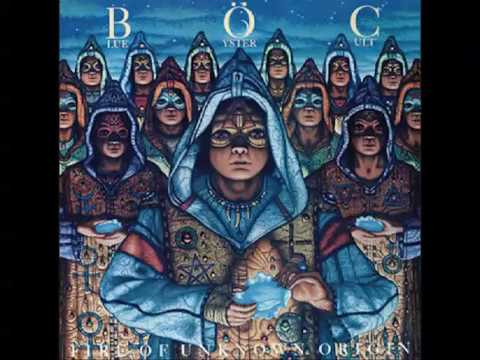
It is not the more cowbell song but I like it. I never owned a Blue Oyster Cult album in my life and probably never will but I liked a couple of their popular songs. The song peaked at #40 in the Billboard 100 in 1981. This would be their last Top 40 hit but it was a #1 hit on Billboard’s Mainstream Rock chart.
Lead guitarist Don “Buck Dharma” Roeser wrote this with Richard Meltzer, a rock writer who often contributed lyrics to the band. Dharma initially planned to release this song on his solo album, Flat Out, but was later convinced to include it on Blue Öyster Cult’s Fire Of Unknown Origin.” Dharma sang lead, as he did on many of BÖC’s songs.
Band manager Sandy Pearlman, claimed that the name came to him when he saw Blue Point oysters on a menu.
From Songfacts
When Richard Meltzer wrote the lyrics, he titled the song “Burn Out The Night,” a reference to an evening of rock and roll. Blue Öyster Cult had a “band house” where their band members and associates (including their manager, Sandy Pearlman would bring in song ideas and lyrics.
Joe Bouchard, who was their bass player at the time, told the metal magazine Chips & Beer that he and Buck Dharma came across Meltzer’s lyrics at the same time, and each wrote their own song around it. Dharma’s version, with the title changed to “Burnin’ For You,” was the one that got recorded.
Along with Black Sabbath, Blue Öyster Cult was one of the first heavy metal bands. They issued their first album in 1972 and grew a modest following before scoring a hit with “(Don’t Fear) The Reaper” (also written by Buck Dharma) from their 1976 album Agents of Fortune, which hit #12 and became embedded on rock playlists.
In the book MTV Ruled the World – The Early Years of Music Video, frontman Eric Bloom tells the story of the “Burnin’ For You” video: “We went out to California, and our management found a video company, and we did two videos in 24 hours – ‘Burnin’ For You’ and ‘Joan Crawford.’ MTV wouldn’t show the ‘Joan Crawford’ video, because there was something about it that was too racy for them. But ‘Burnin’ For You’ got a ton of airplay on MTV in 1981 and 1982.”
Bloom continues: “We made it in the storm drains of LA. If anyone has seen the movie about giant ants, called Them!, with James Whitmore, it was filmed in the same place.” Later he adds: “We thought the car on fire was very Hollywood, very cool. They had to have a Hollywood film/pyro guy there, who was licensed to burn s–t up. He had propane tanks, and he had to have a hunk of car to burn.”
These videos were directed by Richard Casey, who directed the 1985 movie Horror House on Highway Five.
Burnin For You
Home in the valley Home in the city Home isn’t pretty Ain’t no home for me
Home in the darkness Home on the highway Home isn’t my way Home will never be
Burn out the day Burn out the night I can’t see no reason to put up a fight I’m living for giving the devil his due
And I’m burning, I’m burning, I’m burning for you I’m burning, I’m burning, I’m burning for you
Time is the essence Time is the season Time ain’t no reason Got no time to slow
Time everlasting Time to play b-sides Time ain’t on my side Time I’ll never know
Burn out the day Burn out the night I’m not the one to tell you what’s wrong or what’s right I’ve seen signs of what (freezing their eyes) went through
Well I’m burning, I’m burning, I’m burning for you I’m burning, I’m burning, I’m burning for you
Burn out the day Burn out the night I can’t see no reason to put up a fight I’m living for giving the devil his due
And I’m burning, I’m burning, I’m burning for you I’m burning, I’m burning, I’m burning for you
Graham Nash wanted to change the direction of the Hollies and write songs that were more in vogue around this time instead of the simple pop songs they were writing. The song only made it to #18 in the UK charts and it was considered a failure compared to their earlier releases although it was praised by the critics. I think it is inventive and fits in really well with the times.
Nash wrote it after he got back from America on a tour. This was not the rest of the band’s favorite song by any means and they wrote a simple…very simple pop song to follow this song called Jennifer Eccles that of course went to #7 in the UK charts which a disheartened Nash hated and he left for greener pastures with Crosby, Stills, Nash, and Young. I can’t blame him for not liking Jennifer Eccles…it was a weak song.
The song only made it to #51 in the Billboard 100 in 1967. Maybe the change of direction didn’t sit too well with the public. It’s one of my favorites by the Hollies.
Graham said: “My world was turning to sh*t at that point. I was on top of the world, we had 16 or 17 top ten hits, but I was feeling shitty. We made a great record of that song but it only got into the top 30, and the Hollies were always expecting their songs to go into the top 10. So they started to not trust me and not record my songs, ‘’Marrakesh Express’’ being one of them. So I wasn’t feeling that great about my life. It was all turning to sh*t, it wasn’t turning to gold, it was turning to rust.”
Personally, I like the song better than Marrakesh Express.
King Midas In Reverse
If you could only see me. And know exactly were I am. You wouldn’t want to be me, Oh I can assure you of that.
I’m not the guy to run with, Cause I’ll pull you off the line. I’ll break you and destroy you Give time.
He’s King Midas with a curse. He’s king Midas in Reverse. He’s King Midas with a curse. He’s King Midas in Reverse.
It’s plain to see it’s hopeless, Goin’ on the way we are. So even though I loose you, You’ll be better off by far.
He’s not the man to hold your trust, Everything he touches turns to dust in his hands. Nothing he can do is right, he’d even like to sleep at night, but he can’t.
All he touches turns to dust All he touches turns to dust All he touches turns to dust All he touches turns to dust
I wish someone would find me, And help me gain control. Before I loose my reason, And my soul
He’s King Midas with a curse. He’s King Midas in reverse. He’s King Midas with a curse. He’s king Midas in Reverse.
He’s King Midas with a curse (all he touches turns to dust) He’s Kind Midas in Reverse. (all he touches turns to dust) He’s King Midas with a curse, (all he touches turns to dust) He’s King Midas in Reverse
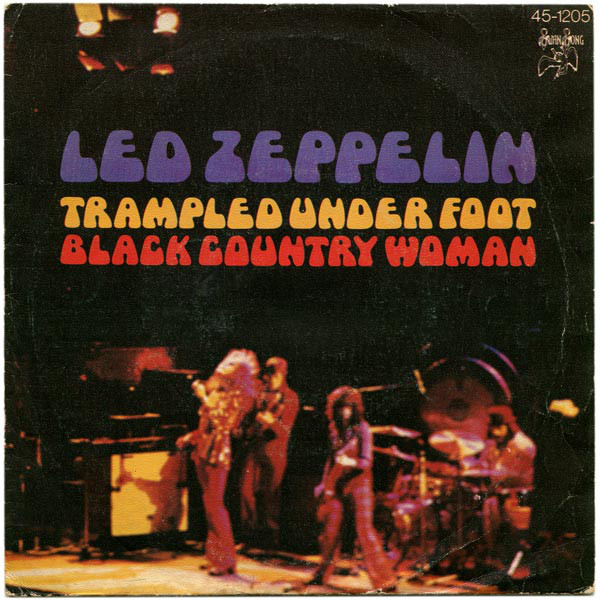
A bit different of a song for Led Zeppelin. This was on their great Physical Graffiti album…which was to me their last great album. This song peaked at #38 in the Billboard 100 in 1975. Led Zeppelin really was not a singles band but they did have 10 songs in the top 100 and 1 top ten song.
Led Zeppelin wasn’t a funk band but on this track they had something going. John Paul Jones played clavinet on this song that is just outstanding. Jones was the utility player for the band and probably the most underrated member.
The guitar had a great sound…Jimmy Page: It’s sort of backward echo and wah-wah. I don’t know how responsible I was for new sounds because there were so many good things happening around that point, around the release of the first Zeppelin album, like Hendrix and Clapton.
From Songfacts
The lyrics were based on Robert Johnson’s 1936 “Terraplane Blues.” A Terraplane is a classic car, and the song uses car parts as metaphors for sex: “pump your gas,” “rev all night,” etc.
This evolved out of a jam session. It became a concert favorite and a popular song on rock radio. When Led Zeppelin played it live, they would often jam on it, extending it with guitar and keyboard solos.
This is one of Robert Plant’s favorite Zeppelin songs. He sang it on his 1988 Now and Zen tour.
Led Zeppelin performed this at Carmen Plant’s 21st birthday party in 1989 with Jason Bonham on drums. Carmen is Robert’s daughter.
The “Talkin ’bout love” part was most likely nicked from the song “Love” by Curtis Knight and Jimi Hendrix.
Led Zeppelin did not release any singles in the UK until 1997 when “Whole Lotta Love” was released 18 years after it was written. In 1975, Zeppelin’s Swan Song label sent 5000 pressings of “Trampled Underfoot” to UK record stores as incentive to stock the Physical Graffiti album. These were labeled “Special Limited Edition” and became collectors’ items.
At Earls Court in 1975, Robert Plant introduced the song like this: “If you like the motor cars and the parts of the human body, then sometimes… you can get trrrrrampled under foot!”
“Trampled Underfoot” was probably named after the bassline being a repetitive boom, played with a Moog pedal.
Trampled Under Foot
Greasy slicked-down body, Groovy leather trim I like the way you hug the road, Mama it ain’t no sin Talkin’ ’bout love, Talkin’ ’bout love, Talkin’ ’bout Ooh, trouble-free transmission, helps your oil’s flow Mama, let me pump your gas, mama, let me do it all Talkin’ ’bout love, huh, Talkin’ ’bout love, ooh, Talkin’ ’bout Take that heavy metal underneath your hood Baby, I could work all night, leave a big pile of tubes Talkin’ ’bout lo-ove, Talkin’ ’bout lo-ove, Talkin’ ’bout Automobile club-covered, really built in style Special is tradition, mama, let me feast my eyes Talkin’ ’bout love, Talkin’ ’bout love, Talkin’ ’bout Factory air-conditioned, wind begins to rise Guaranteed to run for hours, mama, and brand-new tires Talkin’ ’bout love, Talkin’ ’bout love, Talkin’ ’bout Groovin’ on the freeway, blazes on the road From now on my gasoline is even gonna conk your hair Talkin’ ’bout love, Talkin’ ’bout love, Talkin’ ’bout I can’t stop talkin’ about, I can’t stop talkin’ about Ooh, yeah-yeah, yes, ah, drive on Ooh, yeah-yeah-yeah-yeah-yes, I’m comin’ through Come to me for service every hundred miles Baby, let me check your valves, fix your overdrive Talkin’ ’bout love, Talkin’ ’bout love, Talkin’ ’bout Ooh, yes, fully automatic, comes in any size Makes me wonder what I did, before I got synchronized Talkin’ ’bout lo-ove, Talkin’ ’bout love, Talkin’ ’bout Ooh, feather-light suspension, coils just couldn’t hold I’m so glad I took a look inside your showroom doors Talkin’ ’bout love, Talkin’ ’bout lo-oo-oh-ove, Talkin’ ’bout Oh yeah, oh yeah, Oh, I can’t stop talkin’ about love I can’t stop talkin’ about love Ooh, let me go in down, go in down, go in down, go in down, go in down, yes, I can’t stop talkin’ about I can’t stop talkin’ about lo-oh’, baby I can’t stop talkin’ about love, or my baby I can’t stop talkin’ about love, my baby, uh, my baby, my baby, yeah, Unnh, push, push, push it, push, push Ounheahhonhouh
Hanspostcard recommended Last Train to Memphis and this sequel Careless Love The Unmaking of Elvis Presley… and both are excellent recommendations for anyone who wants to learn about Elvis. This one begins where the other left off with Elvis going to Germany in the Army and ends…at the end.
Guralnick covers everything here. Elvis’s gradual distaste of the movies he was making, the great comeback special, Las Vegas, the Richard Milhous Nixon meeting, two concert documentaries, recording good music again, Aloha from Hawaii, the freefall, and then death. In between these events, we see the girls, his buddies the Memphis Mafia, the drugs, the paranoia, his search for something more, and his huge generosity.
I always wondered why he didn’t try to blend in a little more and not be so noticeable…but he loved so much being Elvis Presley. Once he was in a restaurant and no one was noticing him…he walked by a couple of women near the bathroom and gave them a smile just so they knew. He also loved making people happy by being over-generous. If you were in the right place at the right time you could end up with a car or a diamond ring.
He was raised well by his parents and seemed like a good person. He could show flashes of anger at people around, have jealousy, even a Christ complex at times, unpredictable and living in denial about his drug problem. In other words…he was human and that is what I like about the book. It’s not elevating him too high nor turning him into a parody of himself.
The book also goes into his manager “Colonel” Tom Parker who at one point was getting 50 percent of what Elvis was earning. He could have done much better than Parker but Elvis was loyal and in some ways insecure. If you want to know about Elvis…get Last Train to Memphis and this one…Careless Love.
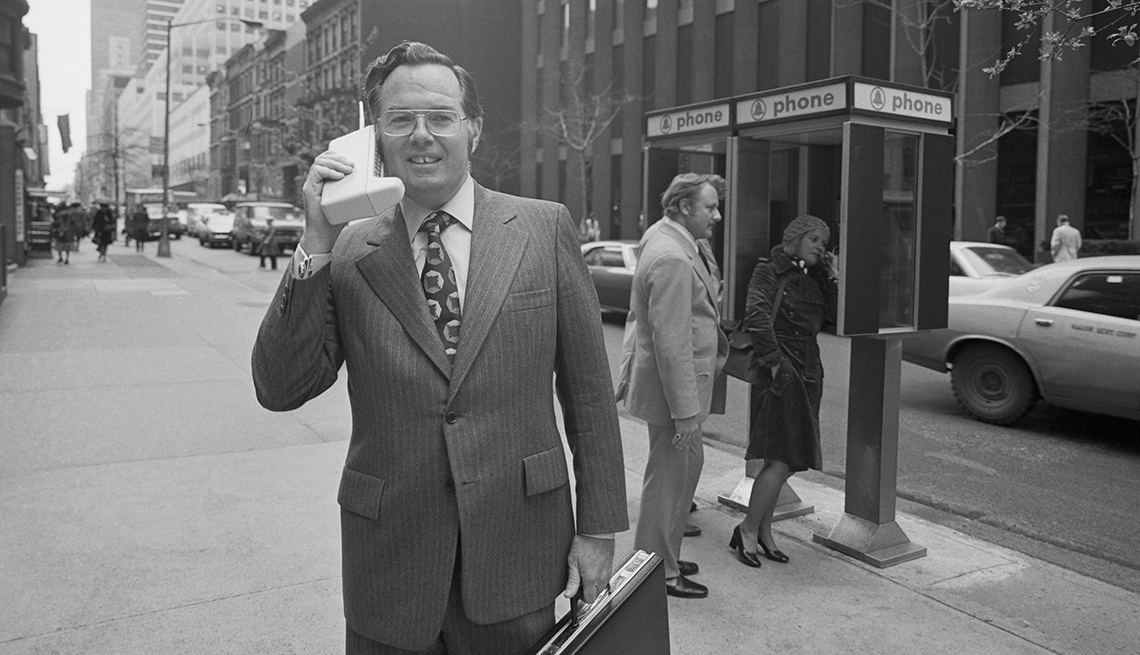
It was 46 years ago today that the first cell phone call was made…so when you see people walking down the street like zombies with their eyes on their phone…you know the beginning.
On April 3, 1973, the first cell phone call was made by Motorola engineer Martin Cooper from Sixth Avenue in New York while walking between 53rd and 54th streets.
Martin used a 2 1/2-pound prototype to his ear and called a rival, Joel Engel of Bell Laboratories at AT&T, to declare that his Motorola team had devised a functional portable phone. “There was silence at the other end of the line,” Cooper recalled to Bloomberg in 2015. “To this day, Joel doesn’t remember that call, and I’m not sure I blame him.”
Martin Cooper…wonder if he is about to text after the call?
This was his biggest charting hit. It peaked at #3 in the Billboard 100 in 1976. It’s groove song I’ve always liked…very smooth and catchy.
Scaggs wrote this song with the keyboard player David Paich, who would later form the band Toto and write many of their hits. “Lowdown” was the first song that Scaggs and Paich wrote together…it was Silk Degrees producer Joe Wissert who put them together.
Boz Scaggs said: “We took off for a weekend to this getaway outside of LA where there was a piano and stayed up all night banging around ideas. We hit on ‘Lowdown,’ and then we brought it back to the band and recorded it. We were just thrilled with that one. That was the first song that we attempted, and it had a magic to it.”
From Songfacts
This was the second single released from Silk Degrees. The first was “It’s Over,” which charted at a modest #38 in May 1976. Scaggs had little name recognition at the time, and sales were stagnant for the album until an R&B radio station in Cleveland started playing “Lowdown.” Other stations followed suit, and it quickly became clear that the song had crossover appeal and hit potential. Scaggs’ label, CBS, released it as a single and it climbed to #3 on the Hot 100 in October, spurring sales of the album along the way.
The song is about a girl who doesn’t appreciate what her man gives her. The “dirty lowdown” is the honest truth – what Scaggs is encouraging this poor sap to face.
The word “Lowdown” was popular slang meaning a summary of what’s going on for real. The first Hot 100 entry with the term in the title came in 1969 with the instrumental “Lowdown Popcorn” by James Brown (#41, 1969). Next came Chicago’s song “Lowdown” (#35, 1971).
Along with keyboard player David Paich, two other future Toto members also played on this track: drummer Jeff Porcaro and bass player David Hungate. The Silk Degrees marked the first time that Scaggs used these studio pros, and it was also his first album produced by Joe Wissert, who was a staff producer at Columbia Records who had previously worked with Earth, Wind & Fire.
The crew for the album found just the right sound, a Disco-blend that could play in dance clubs and pool halls. Scaggs credits Wissert for giving him and the other musicians plenty of freedom in the studio, resulting in one of the most successful albums of the ’70s – Silk Degrees went on to sell over five million copies.
This won the Grammy for Best R&B Song of 1976, making Scaggs the first white artist to win the award (Leo Sayer was the second, taking the trophy the next year for “You Make Me Feel Like Dancing.”)
The producers of Saturday Night Fever asked to use this in their movie, but Scaggs’ manager turned them down and instead used it in the movie Looking For Mr. Goodbar. Not a good move – Saturday Night Fever became one of the best-selling soundtracks of all time.
Lowdown
Baby’s into running around Hanging with the crowd Putting your business in the street Talking out loud Saying you bought her this and that And how much you done spent I swear she must believe it’s all heaven sent
Hey boy you better bring the chick around To the sad, sad truth the dirty lowdown
(Ooh I wonder, wonder, wonder, wonder who) Taught her how to talk like that (Ooh I wonder, wonder, wonder, wonder who) Gave her that big idea
Nothin’ you can’t handle Nothin’ you ain’t got Put your money on the table And drive it off the lot Turn on that old love light And turn a “maybe” to a “yes” Same old schoolboy game got you into this mess
Hey son, better get back on to town Face the sad old truth, the dirty lowdown
(Ooh I wonder, wonder, wonder, wonder who) Put those ideas in your head (Ooh I wonder, wonder, wonder, wonder who)
Yeah
Come on back down, little son Dig the low, low, low, low, lowdown!
You ain’t got to be so bad, got to be so cold This dog eat dog existence sure is getting old Got to have a Jones for this Jones for that This runnin’ with the Joneses, boy, just ain’t where it’s at, no, no
You gonna come back around To the sad, sad truth, the dirty lowdown
(Ooh I wonder, wonder, wonder, wonder who) Got you thinking like that, boy (Ooh I wonder, wonder, wonder, wonder who)
I wonder, wonder, wonder, wonder who Said I wonder, wonder, wonder, I wonder who Oh, look out for that lowdown (ohh, I wonder, wonder, wonder, wonder who) That dirty, dirty, dirty, dirty lowdown
Ooh I wonder, wonder, wonder, wonder who Ooh I wonder, wonder, wonder, wonder who
Got you thinkin’ like that Got you thinkin’ just like that (Ooh I wonder, wonder, wonder, wonder who) Lookin’ that girl in the face is so sad I’m ashamed of you
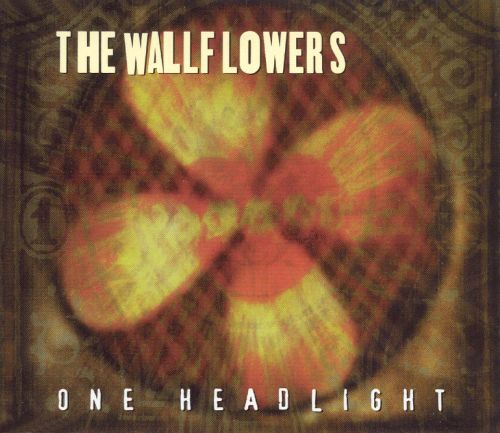
The song was written by Jakob Dylan, and produced by T-Bone Burnett. It was released in November 1996 as the second single from the band’s 1996 album, Bringing Down the Horse. This one really got my attention when it came out. Well written and performed song. The Wallflowers song I heard first a few years before was Asleep At The Wheel. Off of their first album. This one got plenty of airplay.
The song is notable for being the first song to reach No. 1 on all three of Billboard‘s rock airplay charts – Alternative Songs, Mainstream Rock Songs, and Adult Alternative Songs. The song did not make the Billboard 100 though.
Really Good RS 2000 article about Jakob Dylan and the Wallflowers…by David Fricke
Jakob Dylan: “I tend to write with a lot of metaphors and images, so people take them literally. The song’s meaning is all in the first verse. It’s about the death of ideas. The first verse says, ‘The death of the long broken arm of human law.’ At times, it seems like there should be a code among human beings that is about respect and appreciation. I wasn’t feeling like there was much support outside the group putting together the record. In the chorus, it says, ‘C’mon try a little.’ I didn’t need everything to get through, I could still get through – meaning ‘one headlight.” >>
This song wasn’t released as a single in America, so it was not eligible for the Hot 100 (Billboard changed this rule a few years later). It did, however, make #2 on the Airplay chart.
One Headlight
So long ago, I don’t remember when That’s when they say I lost my only friend Well they said she died easy of a broken heart disease As I listened through the cemetery trees
I seen the sun comin’ up at the funeral at dawn The long broken arm of human law Now it always seemed such a waste, she always had a pretty face So I wondered how she hung around this place
Hey, come on try a little Nothing is forever There’s got to be something better than In the middle But me and Cinderella We put it all together We can drive it home With one headlight
She said it’s cold It feels like Independence Day And I can’t break away from this parade But there’s got to be an opening Somewhere here in front of me Through this maze of ugliness and greed And I seen the sun up ahead at the county line bridge Sayin’ all there’s good and nothingness is dead We’ll run until she’s out of breath She ran until there’s nothin’ left She hit the end, it’s just her window ledge
Hey, come on try a little Nothing is forever There’s got to be something better than In the middle But me and Cinderella We put it all together We can drive it home With one headlight
Well this place is old It feels just like a beat up truck I turn the engine, but the engine doesn’t turn Well it smells of cheap wine, cigarettes This place is always such a mess Sometimes I think I’d like to watch it burn I’m so alone and I feel just like somebody else Man, I ain’t changed, but I know I ain’t the same But somewhere here in between the city walls of dyin’ dreams I think of death, it must be killin’ me
Hey, hey hey come on try a little Nothing is forever There’s got to be something better than In the middle But me and Cinderella We put it all together We can drive it home With one headlight
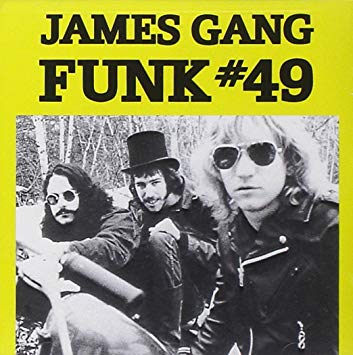
This song has been played a bunch on the radio but Joe Walsh’s intro doesn’t get old to me. The song peaked at #59 in the Billboard 100 in 1971.
The James Gang is best known for their guitarist, Joe Walsh, whose playing on this track helped establish him as a superstar guitarist. Walsh joined the Cleveland-based group in 1969 after making a name for himself as one of the top guitarists in Ohio. He replaced Glenn Schwartz in the band, who Walsh considers a mentor. They were a 5-piece when Walsh joined but was down to three when they released their second album James Gang Rides Again.
From Songfacts
With just three members, it meant Walsh had to play both rhythm and lead guitar parts, and also sing (he got a lot more help when he joined the Eagles in 1975). It was quite a learning experience for Walsh, who left the James Gang in 1971 after recording three studio albums with the group.
It was the producer Bill Szymczyk who signed the James Gang to ABC Records after seeing them perform at a show in Ohio. Szymczyk produced the band and began a long association with Joe Walsh, producing his solo albums and most of the Eagles output in the ’70s.
Walsh wrote this song with his bandmates, drummer Jim Fox and bass player Dale Peters. The song is about a girlfriend whose wild ways the singer just can’t tame (the female equivalent of Joe Walsh’s character in his solo hit “Life’s Been Good”). There isn’t much in the way of lyrics, as the song is mostly a showcase for Walsh’s guitar work. He explained in the book The Guitar Greats, “I came up with the basic guitar lick, and the words never really impressed me intellectually, but they seemed to fit somehow. It was a really good example of how we put things together, bearing in mind that it was a three-piece group, and I don’t think that there was any overdubbing. The only thing we really added was the percussion middle part, which the three of us actually played, putting some parts on top of the drums, but that’s the three-piece James Gang, and that’s the energy and kind of the symmetry we were all about.”
The first James Gang album (Yer’ Album, 1969) contained the track “Funk #48,” which according to producer Bill Szymczyk, got its title “out of thin air.” When they came up with what would become “Funk #49,” they were once again faced with no logical title based on the lyrics, and followed the sequence. There was a “Funk 50,” but not until Joe Walsh released it on his 2012 album Analog Man after being asked to rework “Funk #49” for the ESPN show Sunday NFL Countdown.
“Funk #49” became a staple of Album Oriented Rock and Classic Rock radio, but it wasn’t the biggest chart hit for the James Gang – that would be “Walk Away,” which made #51 in 1971 and was later reworked for Walsh’s 1976 solo album You Can’t Argue with a Sick Mind. “Funk #49” is one of Joe Walsh’s most popular songs, and by the mid-’70s he admitted that he couldn’t stand playing it anymore, but did so because fans loved it.
Funk #49
Uh, sleep all day, out all night, I know where you’re going. I don’t that’s a-acting right, You don’t think it’s showing. A-jumpin’ up, fallin’ down, Don’t misunderstand me. You don’t think that I know your plan, What you try’n to hand me?
Out all night, sleep all day, I know what you’re doing. If you’re gonna a-act that way, Think there’s trouble brewing.
This song was the first single off of the album Mott. The album peaked at #35 in Billboard album charts in 1973. The single did not chart in the US but did peak at #10 in the UK. The song was based on a real event about gear being lost during overseas tours. ‘All the Way From Memphis’ chronicles an incident in which Mick Ralphs’ guitar was shipped to a different state than the one in which the band was playing.
Martin Scorsese used this song as the opening song in “Alice Doesn’t Live Here Anymore.”
From Songfacts
The single “All The Way From Memphis” was released in September 1973, and like the B-side, “Ballad Of Mott,” (the extended version) appears on the Mott album. Considered one of Ian Hunter’s finest efforts, it was inspired by events leading up to the final date of their US tour, which is detailed in the band’s official biography by Campbell Devine. When they flew down to Memphis, Mick Ralphs decided to travel by road with Verden Allen. The other members of the band went by plane, but the airline lost Mick’s guitar. When they arrived, the road crew had disappeared with Ralphs and Allen, ticket sales were very grim, and Ralphs’ hotel room was robbed, but then they received a message to say that ticket sales were rising rapidly.
The concert, three days before Christmas at Ellis Auditorium, was “an incredible triumph wrenched from the jaws of disaster.” They were supported by Joe Walsh, who returned to jam with them. Hunter wrote the song on the day of the concert and dedicated it to two of their crew, Lee Childers and Tony Zanetta. And Memphis, Tennessee.
All The Way From Memphis
Forgot my six-string razor hit the sky Half way to Memphis ‘fore I realized Well I rang the information my axe was cold They said she rides the train to oreoles
Now it’s a mighty long way down the dusty trail And the sun burns hot on the cold steel rails ‘n I look like a bum ‘n I crawl like a snail All the way from Memphis
Well I got to oreoles y’know it took a month And there was my guitar, electric junk. Some spade said rock ‘n’ rollers, you’re all the same. Man that’s your instrument. I felt so ashamed.
Now it’s a mighty long way down rock ‘n’ roll Through the Bradford cities and the oreoles ‘n you look like a star but you’re still on the dole All the way from Memphis
Yeah it’s a mighty long way down rock ‘n’ roll From the Liverpool docks to the Hollywood bowl ‘n you climb up the mountains ‘n you fall down the holes All the way from Memphis
Yeah it’s a mighty long way down rock ‘n’ roll As your name gets hot so your heart grows cold ‘n you gotta stay young man, you can never be old All the way from Memphis
Yeah it’s a mighty long way down rock ‘n’ roll Through the Bradford cities and the oreoles ‘n you look like a star but you’re really out on parole! All the way from Memphis
My favorite song by Everclear is “Wonderful” that was released in 2000 on the album “Songs from an American Movie Vol. One: Learning How to Smile.” It’s about divorce through a child’s eyes. I can relate to that so the song hit home in a lot of ways. The line that I liked was after the parents separated and the child was living in a new place…”I want the things that I had before Like a Star Wars poster on my bedroom door”
In 2000 the song peaked at #3 in the Billboard Alternative Charts and #11 in the Billboard 100 charts, and #1 in the Canadian Alternative Charts.
From Songfacts
Lead singer Art Alexakis wrote this from a child’s perspective. He was dealing with a recent divorce and the effect it had on his daughter, Anna. He says, “I was a child of a broken marriage, my daughter was the child of a broken marriage, and it was hard to watch it happen to her. That was me trying to make sense of it.”
Alexakis: “It’s one of those songs where I take my experiences as a kid, some experiences of some friends of mine, and kind of put myself into this kid’s place. It’s not really autobiographical but it’s coming from a place that I understand very well. My characters tend to have aspects of my personality. It wouldn’t be real if it didn’t have a part of my reality.”
Along with “Father Of Mine” and “Santa Monica,” Alexakis considers this one of his most personal songs. He used to think these kind of songs were too serious and intense to be hits, but has found they strike chords with people and do very well.
Wonderful
I close my eyes when I get too sad I think thoughts that I know are bad Close my eyes and I count to ten Hope it’s over when I open them
I want the things that I had before Like a Star Wars poster on my bedroom door I wish I could count to ten Make everything be wonderful again
Hope my mom and I hope my dad Will figure out why they get so mad Hear them scream, I hear them fight Say bad words that make me want to cry
Close my eyes when I go to bed And I dream of angels that make me smile I feel better when I hear them say Everything will be wonderful someday
Promises mean everything when you’re little And the world’s so big I just don’t understand how You can smile with all those tears in your eyes Tell me everything is wonderful now
(Na na na na na na na)
Please don’t tell me everything is wonderful now
I go to school and I run and play I tell the kids that it’s all okay I like to laugh so my friends won’t know When the bell rings I just don’t want to go home
Go to my room and I close my eyes I make believe that I have a new life I don’t believe you when you say Everything will be wonderful someday
Promises mean everything when you’re little And the world is so big I just don’t understand how You can smile with all those tears in your eyes When you tell me everything is wonderful now
I don’t want to hear you tell me everything is wonderful now
I don’t want to hear you say That I will understand someday No, no, no, no I don’t want to hear you say We both have grown in a different way No, no, no, no I don’t want to meet your friends And I don’t want to start over again I just want to my life to be the same Just like it used to be Some days I hate everything I hate everything Everyone and everything Please don’t tell me everything is wonderful now
I don’t want to hear you tell me everything is wonderful now
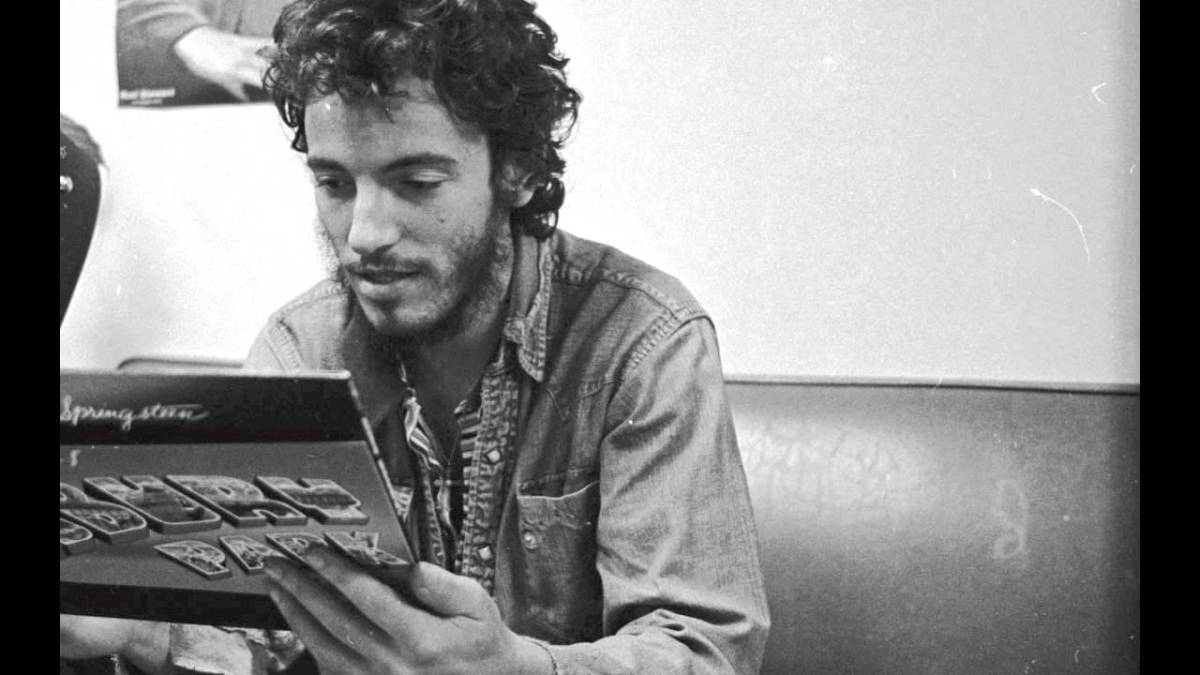
After posting about Blinded By The Light yesterday…I was commenting with jeremyjames (Jeremy in Hong Kong) and he mentioned this song which was on the Greetings From Asbury Park debut album by Bruce Springsteen. I started to listen to this album in the 80s and it has remained one of my favorite albums by Springsteen.
I wrote this about the album last summer and started to listen to the album again Saturday afternoon. This was one of the many songs off the album that I liked at first listen and was surprised that I remembered most of the words to the song right off the bat.
“Does This Bus Stop At 82nd Street?” is a journey through an enjoyable play of words. It was written about a bus journey to a girlfriend’s house. Here is a sample of a verse
“Wizard imps and sweat sock pimps Interstellar mongrel nymphs Rex said that lady left him limp Love’s like that (sure it is) Queen of diamonds, ace of spades Newly discovered lovers of the Everglades They take out a full-page ad in the trades To announce their arrival And Mary Lou, she found out how to cope She rides to heaven on a gyroscope The Daily News asks her for the dope She said, “Man, the dope’s that there’s still hope”
From Songfacts
This song is based on people and places Springsteen met in his early years as a songwriter. His father was a bus driver for a time, which helped inspire the song.
The barrage of images in the lyrics helped earn Springsteen the tag “The New Dylan,” a comparison he played down. He moved away from the Dylan style by writing less introspective, harder rocking songs on his next album, The Wild, The Innocent & The E Street Shuffle.
This song started with the lyrics, something Springsteen did from time to time when he started out as a songwriter. Greetings From Asbury Park, N.J. was his first album, and it marked a turning point in his songwriting: Instead of keeping the lyrics as simple and repetitive as possible to accommodate the bars he was playing with his bands, he started using elaborate wordplay to tell different stories, often within the same song – something you could do in a recording studio but not in a noisy club. This song makes passing reference to a number of characters but leaves the listener to decide their fates. Just what becomes of Mary Lou, the mongrel nymphs and the lucky, young matador who catches the rose is in the ear of the beholder.
Joan Fontaine pops up in the lyrics for no apparent reason:
Broadway Mary, Joan Fontaine
advertiser on a downtown train
She was an actress who starred in the Alfred Hitchcock movie Rebecca.
Does This Bus Stop At 52nd Street?
Hey bus driver, keep the change Bless your children, give them names Don’t trust men who walk with canes Drink this and you’ll grow wings on your feet Broadway Mary, Joan Fontaine Advertiser on a downtown train Christmas crier bustin’ cane He’s in love again
Where dock worker’s dreams mix with panther’s schemes To someday own the rodeo Tainted women in VistaVision Perform for out-of-state kids at the late show
Wizard imps and sweat sock pimps Interstellar mongrel nymphs Rex said that lady left him limp Love’s like that (sure it is) Queen of diamonds, ace of spades Newly discovered lovers of the Everglades They take out a full-page ad in the trades To announce their arrival And Mary Lou, she found out how to cope She rides to heaven on a gyroscope The Daily News asks her for the dope She said, “Man, the dope’s that there’s still hope”
Senorita, Spanish rose Wipes her eyes and blows her nose Uptown in Harlem she throws a rose To some lucky young matador
A George Harrison song that was inspired by… Pattie Boyd of course. It was on perhaps the worst Beatle album, the soundtrack to Yellow Submarine. This one I have always liked. The intro is psychedelic with an awesome loud guitar with an organ following. It’s not George’s or the Beatles best song but it fits well on the album and film. Like many Beatle songs…any other band would have featured this song more prominently on an album but the Beatles just stuck it on the soundtrack they didn’t care much about at the time.
Harrison said in 1999 that Paul McCartney played the screaming intro guitar on this song and John Lennon supplied the guitar feedback, allowing George to be free to concentrate only on vocals during the recording of this song.
The Beatles recorded this at De Lane Lea Recording Studios instead of Abbey Road because they were booked at the time.
From Songfacts
A verse was edited out of album version, cutting time from 8 minutes to 6. The full version appears in film Yellow Submarine.
This was by far the longest Beatles song until “Hey Jude” was recorded over a year later.
The line, “With your long blond hair and your eyes of blue” was taken from the song “Sorrow,” originally recorded by the McCoys but popularly covered by The Merseys in 1966 and David Bowie in 1973.
It’s All Too Much
It’s all too much, it’s all too much
When I look into your eyes, your love is there for me And the more I go inside, the more there is to see
It’s all too much for me to take The love that’s shining all around you Everywhere, it’s what you make For us to take, it’s all too much
Floating down the stream of time, of life to life with me Makes no difference where you are or where you’d like to be
It’s all too much for me to take The love that’s shining all around here All the world’s a birthday cake So take a piece but not too much
Set me on a silver sun, for I know that I’m free Show me that I’m everywhere, and get me home for tea
It’s all to much for me to see A love that’s shining all around here The more I am, the less I know And what I do is all too much
It’s all too much for me to take The love that’s shining all around you Everywhere, it’s what you make For us to take, it’s all too much
Shaft peaked at #1 in the Billboard 100 in 1971. In the beginning, the high hat starts and then that cool seventies wah wah pedal kicks in..a coolness just washes all over you.
Isaac Hayes was a songwriter for Stax records before he became a successful recording artist. He wrote some hits for Sam & Dave, including “Soul Man” and “Hold On I’m Coming.” Hayes explained Shaft: “The character Shaft was explained to me: a relentless character always on the prowl, always on the move. I had to create something to denote that. Otis Redding’s ‘Try A Little Tenderness,’ I had a hand in arranging that. At the end, Al Jackson was doing some stuff on a hi-hat, and I thought if I sustained that kind of thing on a hi-hat, it would give a relentless, dramatic effect, and it worked.”
The instruments were played by Memphis funk group The Bar-Kays. For a while, they were Otis Redding’s backup band… Can you dig it? “Shaft”
From Songfacts
This was featured in the 1971 movie of the same name starring Richard Roundtree. It was remade in 2000 starring Samuel L. Jackson as Shaft. Hayes made an uncredited appearance in the remake, but that wasn’t what he had in mind. According to Q magazine, Hayes agreed to write the Shaft theme after being promised the lead role but the promise wasn’t kept – he didn’t even get an audition.
This won a Grammy for Best Instrumental Arrangement and an Oscar for Best Original Score. The Oscar win made Hayes the first African-American to win an Academy Award in a composer category.
Future actress (she was on the TV shows Bosom Buddies and Family Matters) Telma Hopkins was one of the backup singers. That’s her saying “Shut Your Mouth!”, which became a bit of a catchphrase for Hopkins, whose character would often say it on her shows. Joyce Wilson was the other backup singer; she and Hopkins performed as Tony Orlando’s backup group Dawn.
The distinctive funk guitar and hi-hat cymbals make this a very recognizable song. It is often used in commercials and TV promos, sometimes with the product name put in place of the word “Shaft.”
Hayes was the voice of “Chef” on the TV show South Park. Despite being a cartoon, Chef usually found an opportunity to sing on each show.
There was also a TV version of Shaft, which lasted one season on CBS in 1973. Hayes contributed music to the series.
When Hayes was inducted into the Rock and Roll Hall of Fame in 2002, he opened the ceremonies with this song.
Bart and Lisa sing this on The Simpsons episode “One Fish, Two Fish, Blowfish, Blue Fish.”
Theme From Shaft
Shaft Who’s the black private dick That’s a sex machine to all the chicks? (Shaft!) You’re damn right Who is the man That would risk his neck for his brother man? (Shaft!) Can ya dig it? Who’s the cat that won’t cop out When there’s danger all about (Shaft!) Right on You see this cat Shaft is a bad mother (Shut your mouth) But I’m talkin’ about Shaft (Then we can dig it) He’s a complicated man But no one understands him but his woman (John Shaft)
In the late-1990s I started to listen to this band. They were formed in the early 90s by lead singer, guitarist, and songwriter Art Alexakis. Art’s dad left his mom and family and they had to survive in rough neighborhoods in LA. Some of the songs he wrote like “Father of Mine” relates that.
This is a band I really liked in the 90s and early 2000s. This song has a great hook to it.
This song peaked at #3 in the US Billboard Alternative Songs Charts and #1 in the Canadian Rock/Alternative Charts in 1998.
This is a personal song written by lead singer Art Alexakis. When his daughter Anna was a baby, he and his ex-wife would go to a wealthy neighborhood in the West Hills of Portland, Oregon. They would look at the fancy houses, drive around and fantasize about living there. One day, after the success of Everclear, Art bought one of those houses and moved into the neighborhood.
Alexakis: “It wasn’t about the money, it was about a different kind of life, giving all of yourself to another person. It’s the ultimate romantic song to me.”
I Will Buy You A New Life
Here is the money that I owe you
Yes you can pay the bills
I will give you more
When I get paid again
I hate those people who love to tell you
Money is the root of all that kills
They have never been poor
They have never had the joy of a welfare christmas
I know we will never look back
You say you wake up crying
Yes and you don’t know why
You get up and you go lay down
Inside my baby’s room
Yeah, I guess I’m doing OK
I moved in with the strangest guy
Can you believe he actually thinks
That I am really alive
I will buy you a garden
Where your flowers can bloom
I will buy you a new car
Perfect shiny and new
I will buy you that big house
Way up in the west hills
I will buy you a new life
Yes I will
Yes, I know all about that other guy
The handsome man with athletic thighs
I know about all the time before
With that obsessive little rich boy
They might make you think you’re happy
Yeah maybe for a minute or two
They can’t make you laugh
No they can’t make you feel the way that I do
I will buy you a garden
Where your flowers can bloom
I will buy you a new car
Perfect shiny and new
I will buy you that big house
Way up in the west hills
I will buy you a new life
I will buy you a new life
I know we can never look back
Will you please let me stay the night
Will you please let me stay the night
No one will ever know
I will buy you a garden
Where your flowers can bloom
I will buy you a new car
Perfect shiny and new
I will buy you that big house
Way up in the west hills
I will buy you a new life
I will buy you a garden
Where your flowers can bloom
I will buy you a new car
Perfect shiny and new
I will buy you that big house
Way up in the west hills
I will buy you a new life
I will buy you a new life
I will buy you a new life
I will buy you a new life
I will buy you a new life
I will buy you a new life
I will buy you a new life










 PowerPop... An Eclectic Collection of Pop Culture