English Beat – Save It For Later

I always heard of this band but didn’t know much about them in real time. When I heard this recently, I was caught unaware of how good it was. It’s a pop gem out of the 1980s, which you don’t hear me say a lot.

Dave Wakeling, the band’s lead vocalist and rhythm guitarist, wrote this song when he was still a teenager, and that teen confusion seeps through every line. It’s a song about growing up, about wanting to hold on to innocence while the world says no, you are going to grow up.

By 1982, The English Beat (also known as The Beat at home) had established a presence in the British ska and new wave scenes. But this song, from their third and final album Special Beat Service, was something else entirely,  a melodic farewell that bridged ska and pop.  This one was more reflective, a coming-of-age song packaged in jangly guitars and on-target harmonies.

Behind the scenes, the song nearly didn’t make it. Wakeling and guitarist Andy Cox had trouble convincing their bandmates that this softer, more melodic song fit the band’s style. But they pushed it through, and it became one of the band’s most remembered tracks. After Special Beat Service, The Beat split up, with Wakeling and Ranking Roger forming General Public and Cox and bassist David Steele launching Fine Young Cannibals.

Pete Townshend loved it so much that he recorded his own version, and it’s shown up in films like Clueless and Kingpin, giving it a second life with new generations. The song peaked at #47 in the UK and #6 on Billboard’s Bubbling Under 100 Singles Charts in 1982. It was written by Wakeling but credited to the entire band…Roger Charlery, Andy Cox, Everett Morton, David Steele, and Dave Wakeling.

Here is Dave Wakeling talking about Pete Townsend calling him up asking about the special tuning to the song. Love his humor in this.

Save It For Later

Two dozen other dirty loversMust be a sucker for itCry, cry, but I don’t need my motherJust hold my hand while I come to a decision on it

Sooner or laterYour legs give way, you hit the groundSave it for laterDon’t run away and let me downSooner or laterYou hit the deck, you’ll get found outSave it for laterDon’t run away and let me down, you let me down

Black air and seven seas and rotten throughBut what can you do?I don’t know how I’m meant to act with all you lotSometimes I don’t tryI just na, na, na, na, na, naNa, na, na, na, nowNa, na, na, na, na, naNa, na, na, na, now (now, now, now, now)

Sooner or laterYour legs give way, you hit the groundSave it for laterDon’t run away and let me downSooner or laterYou hit the deck, you’ll get found outSave it for laterDon’t run away and let me down, you let me downYou run away, run away, and let me down

Two dozen other stupid reasonsWhy we should suffer for this?Don’t bother trying to explain themJust hold my hand while I come to a decision on it

Sooner or laterYour legs give way, you hit the groundSave it for laterDon’t run away and let me downSooner or laterYou hit the deck, you’ll get found outSave it for laterDon’t run away and let me down, you let me downYou run away, run away, run away, run awayRun away, run away, and let me down

Da, da, da, da, daDa, da, da, da, da, da, daDa, da, da, da, da, da, daDa, da, da, da, da, da, daDa, da, da, da, da, da, daDa, da, da, run away, run

Run away, run awayRun away, run awayRun away, run awayRun away and let me down

Johnny Burnette Trio – Tear It Up

There is not a week that goes by that I don’t listen to some rockabilly. It’s not just the leads, it’s the fills as well. Rockabilly music is like this machine where parts are moving everywhere, but it always falls into place.

In this song, it’s not the opening riff that gets to me; it’s the fills that the guitar player is playing while Johnny is singing. He also slips some basslines in, all the while the bass is throwing some in as well. When you analyze this music, it can be chaotic, but when done right, it’s hard to resist. It’s like music climbing a ladder on one side and coming back down on the other at the same time.

This song was released in 1956; a very unpolished burst of energy that still sounds electric seventy years later. The Rock ’n Roll Trio, Johnny on vocals and rhythm guitar, his brother Dorsey on bass, and Paul Burlison on guitar, made a sound that helped define the very idea of rockabilly.

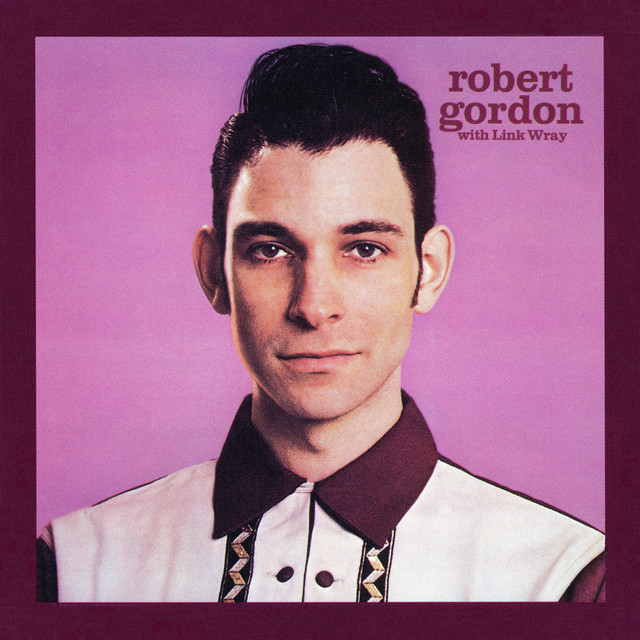
While it didn’t chart at the time, its influence was huge. The record’s mix of rhythm and attitude caught the attention of British musicians, guys like Jeff Beck, Keith Richards, Jimmy Page, and Paul McCartney, who all cited Burnette’s Trio as a crucial influence. The Stray Cats and Robert Gordon helped revived rockabilly in the late 1970s and early 1980s; this song was one of the first songs they covered. You might remember another song by Johnny, Train Kept a Rollin’ and it was covered by Aerosmith and The Yardbirds.

If you only like smoothly produced music, rockabilly is not for you. If you want a primal sound, welcome aboard!

Tear It Up

Come on little baby let’s tear the dancefloor up
Come on little mama let me see you strut your stuff
Tear it up, tear it up
Come on little baby let me see you strut your stuff

I’m leavin’ little baby, gonna be gone a long-long time
So come on little baby, show me a real good time
Tear it up, tear it up
Come on little mama let’s tear the dancefloor up
(Goow!)

Well you step back baby, move my way
Step around again an’ let me hear you say
Tear it up, tear it up
Come on little baby let’s tear the dancefloor up
Tear it up, tear it up
Come on little mama let’s tear the dancefloor up

Rare Earth – I Just Want To Celebrate

I’m so thankful for a cousin who gave me and my sister a lot of singles. Cool singles, not the ones my sister had. I remember this single because of the artwork. The singles artwork really caught my attention, and when I think of this song, I think of the single spinning around. The groove in this song is hard to resist. 

This band helped bridge the gap between Motown soul and straight-up rock and roll. This band was Motown’s attempt to be played on FM radio, and it worked. Rare Earth’s success was more than just a one-off hit; it marked a turning point for Motown. Before these Detroit rockers came along, Berry Gordy’s label was almost exclusively known for its soul and R&B greats: The Temptations, The Supremes, Marvin Gaye, and Stevie Wonder. But in 1969, Gordy decided to take a chance on the growing rock audience and launched Rare Earth Records, a Motown imprint named after the band itself. The idea worked while it showcased white rock groups who could carry that Motown groove into new territory. Berry took a chance and it paid off with this band. 

Rare Earth was a blue-collar group of guys who could play as hard as Grand Funk but still had a Motown groove. The band had already made some noise with stretched-out covers like Get Ready, (I Know) I’m Losing You, but I Just Want to Celebrate was the one they will be remembered by the most.  

This song peaked at #7 on the Billboard 100 and #10 in Canada in 1971. It was off their album One World. This was Rare Earth’s last top 10 single. The song was written by Dino Fekaris and Nick Zesses. This song has been covered by a span of artists, such as David Ruffin, rapper Foxy Brown, Metallica, and Marshall Crenshaw. How is that for different genres?

The song has had one of those second lives most bands only dream about. Decades after its release, the song kept finding new audiences, blasting out in movies like Tropic Thunder, Three Kings, and A Knight’s Tale, and even in TV spots for Ford, Nike, and Coca-Cola. 

The song has been in countless commercials and movies.  It is one of those songs that makes you feel good! It’s got soul, rock, and that Detroit groove, no overthinking, just joy. The band is still playing today, but with no original members.

I Just Want To Celebrate

One, two, three, four

I just want to celebrate another day of livin’
I just want to celebrate another day of life
I put my faith in the people
But the people let me down
So I turned the other way
And I carry on, anyhow

That’s why I’m telling you
I just want to celebrate, yeah, yeah
Another day of living, yeah
I just want to celebrate another day of life
Had my hand on the dollar bill
And the dollar bill flew away
But the sun is shining down on me
And it’s here to stay

That’s why I’m telling you
I just want to celebrate, yeah, yeah
Another day of living, yeah
I just want to celebrate another day of livin’
I just want to celebrate another day of life

Don’t let it all get you down, no, no
Don’t let it turn you around and around and around, no

Well, I can’t be bothered with sorrow
And I can’t be bothered with hate, no, no
I’m using up the time but feeling fine, every day
That’s why I’m telling you I just want to celebrate
Oh, yeah
I just want to celebrate another day
Oh, I just want to celebrate another day of livin’
I just want to celebrate another day of life

Don’t let it all get you down, no, no
Don’t let it turn you around and around, and around, and around
And around, and round, and round
Round, round, round, round
Don’t go round

I just want to celebrate
Well, I just want to celebrate
Said I just want to celebrate (celebrate)
I just want to celebrate (I want to celebrate)
I just want to celebrate (I got to celebrate)
I just want to celebrate

Rolling Stones – Monkey Man

Yeah, I’m a sack of broken eggs
I always have an unmade bed
Don’t you?

This song is a great album cut. The way I would describe the song?  It is the actual sound of sleaze, and that is a compliment. It was used well in Goodfellas, the 1990 movie, in a scene where the gangsters are trafficking cocaine. One of my favorite Stone songs. I always liked the Stones album cuts more than their hits. This is when they had the perfect producer (Jimmy Miller), the perfect guitar player (Keith Richards), and the perfect sound. This is the Stones I love, their golden period. 

What makes this song is Keith Richards’ riff, and it is menacing and on the prowl, practically alive in this song, stalking you outside your bedroom window. Only Keith could make a riff sound dangerous, and it builds up through the song. Richards laid down the main riff on a late-night jam, a hypnotic riff, with just enough space for Nicky Hopkins to work in his piano. Hopkins’ playing on this is greatness: melodic and sinister all at once. He reportedly improvised much of it, adding those runs that make the song snarl.

This song was on Let It Bleed, and it was recorded after Brian Jones was fired and before Mick Taylor replaced him. On Monkey Man, Keith Richards played electric and slide electric guitar, Bill Wyman played bass, and producer Jimmy Miller assisted drummer Charlie Watts on tambourine. Mick Jagger and Keith Richards wrote “Monkey Man” as a tribute to Italian pop artist Mario Schifano, whom they met on the set of his movie Umano Non Umano! (Human, Not Human!).

This song is the Let It Bleed track I always come back to when I want to feel the Stones at their most human and feral. 

Monkey Man

I’m a fleabit peanut monkey
And all my friends are junkies
That’s not really true

I’m a cold Italian pizza
I could use a lemon squeezer
What you do?

But I’ve been bit and I’ve been tossed around
By every she-rat in this town
Have you babe?

But I am just a monkey man
I’m glad you are a monkey woman too

I was bitten by a boar
I was gouged and I was gored
But I pulled on through

Yeah, I’m a sack of broken eggs
I always have an unmade bed
Don’t you?

Well I hope we’re not too messianic
Or a trifle too satanic
But we love to play the blues

But well I am just a monkey man
I’m glad you are a monkey woman too
Monkey woman too babe

I’m a monkey man
I’m a monkey man
I’m a monkey man
I’m a monkey man
I’m a monkey
I’m a monkey
I’m a monkey
I’m a monkey
Monkey, monkey
Monkey

Monkey
I’m a monkey

Blasters – This Is It

It’s been a while since I posted a Blasters song (although I’ve posted performances by them), so I thought we would revisit them today on this fine Sunday. When I listen to the Blasters, I feel that I’m hearing every American sound that mattered. Rockabilly, R&B, gospel, blues, and the ghost of early rock ’n’ roll. This song is from their self-titled album, released in 1981.

I missed the Blasters when they were real-time, but I’m happy to be catching up with them now. They didn’t follow trends; instead, they stuck with what they knew best. 1950s energy reimagined through the early 1980s, without the trap of big production and high-gloss synths.

The Blasters album was the one that put them on the map. It caught the ear of critics, landed them an opening spot for Queen and The Cars, and even made them heroes of the early L.A. punk scene. But they didn’t fit neatly anywhere; they were too raw for pop radio, too traditional for punk, and too loud for nostalgia. They were their own being.

The Blasters never had mainstream success…but mainstream radio back in the ’80s would have been greatly improved by these guys. They were a rock and roll band formed in 1979 in Downey, California, by brothers Phil Alvin (vocals and guitar) and Dave Alvin (guitar), with bass guitarist John Bazz and drummer Bill Bateman.

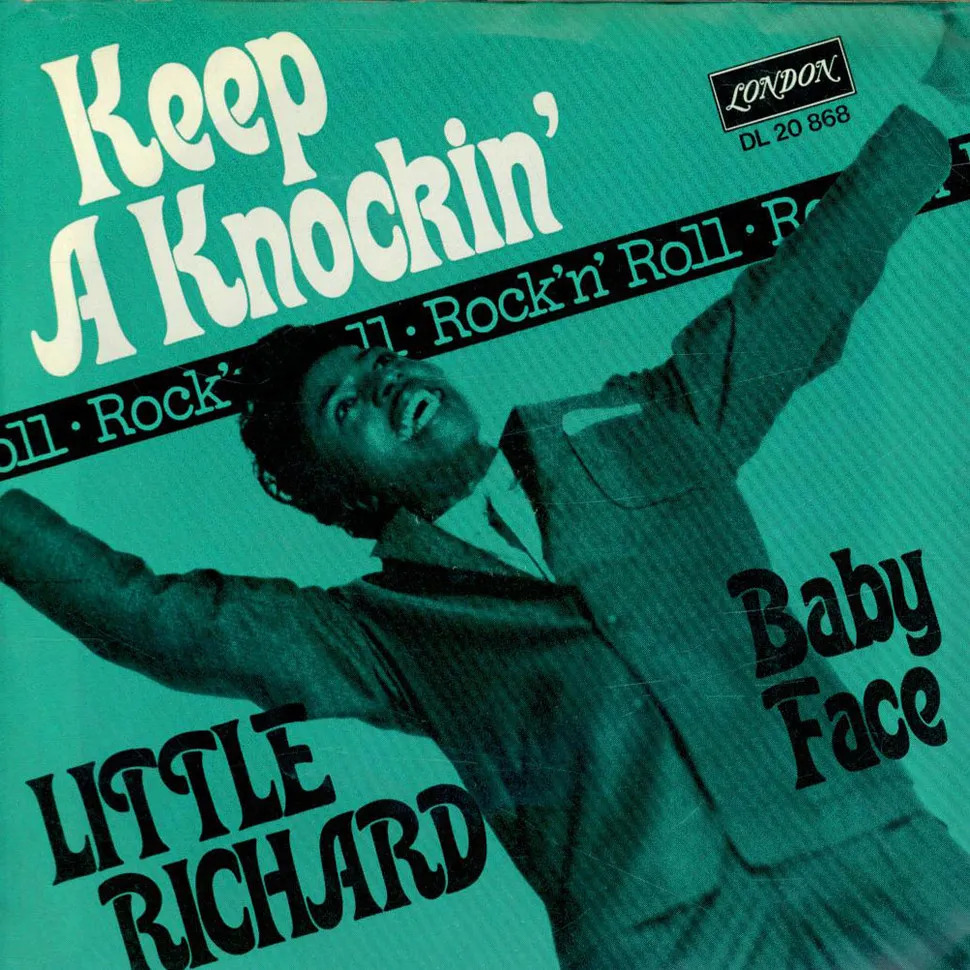
You can hear the ghosts of Gene Vincent and Little Richard shouting approval. It’s pretty simple, just the sound of American rock ’n’ roll refusing to die. If you’re new to The Blasters, start here with this album because… This is it.

This Is It

This is it, now, baby
The moon, it sure looks fine
I can tell your future by looking
At the highway sign

It’s something we’ll never know
Unless we get up and go
This is it, now, baby
We’re gonna have a time tonight

This is it, this is it
This is it, now, baby
We’re gonna have a time tonight

This is it, now, baby
It’s something we can share
Don’t worry about the rules
Tonight i just don’t care

Our world’s just a little too grey
Tonight’s right for our getaway
This is it, now, baby
We’re gonna have a time tonight

This is it, now, baby
It ain’t no hanging crime
But when the sun comes up
Maybe you’ll change your mind

If you want to go home say when
But you’ll never come with me again
This is it, now, baby
We’re gonna have a time tonight

This is it, this is it
This is it, now, baby
We’re gonna have a time tonight

Rockpile – Teacher Teacher

Love this band, and thanks to Randy at mostlymusiccovers, who got me to look at this band more. What a fantastic duo Nick Lowe and Dave Edmunds were in the 70s and 80s. 

Nick Lowe (lead vocals, bass), Dave Edmunds (lead vocals, guitar), Billy Bremner (backing vocals, guitar), and Terry Williams (drums) had been writing, recording, and playing live together for years before they released just one album, at least under the Rockpile name.

Before the band that recorded Seconds of Pleasure, the name “Rockpile” had already been used as the title of an album by Dave Edmunds that he released in 1970. Edmunds then toured as “Dave Edmunds and Rockpile,” with a band that included Williams on drums. But the group that became known as Rockpile didn’t form until Lowe and Edmunds began recording together in the mid-1970s.

In 1979, Edmunds and Lowe reached new heights of popularity with the release of Lowe’s Labour of Lust, including his hit Cruel to Be Kind, and Edmunds’ Repeat When Necessary, including his popular versions of Queen of Hearts and Elvis Costello’s Girls Talk. Both of those records were recorded by the members of Rockpile, but with the headliner singing all of the lead vocals on his album.

This song was written by Eddie Phillips and Kenny Pickett, both from the mod 1960s band The Creation (a band who patterned themselves on The Who). That makes sense because it has got that mid-’60s British melody, while the performance is pure pub-rock punch. Nick Lowe takes the vocal lead, while Edmunds’s production keeps everything crisp.

This song peaked at #51 on the Billboard 100  and #31 in Canada in 1980.

Teacher Teacher

Young love, teacher’s pet
Cheeks flushed, apple red
Ringing you every day
Begging for a word of praise
I’ve put aside my foolish games
I run and hide and callin’ names
School’s out, the bells’ll ring
Now’s the time to teach me everything

Teacher, teacher, teach me love
I can’t learn it fast enough
Teacher, teacher, teach me more
I’ve got to learn to love for sure

Lesson one, just begun
Growing up ain’t much fun
Grown up, out of school
Out of luck and out of rules
No one there to tell me how
A different world, teacher teach me now

Teacher, teacher, teach me love
I can’t learn it fast enough
Teacher, teacher, teach me more
I’ve got to learn to love for sure

Lesson two, nothing new
I can’t love, just passing through

Books I read don’t understand
What it means to be a man
I need a woman just like you
Teacher, teacher, teach me what to do

Teacher, teacher, teach me love
I can’t learn it fast enough
Teacher, teacher, teach me more
I’ve got to learn to love for sure

Teacher, teacher, teach me love
I can’t learn it fast enough
Teacher, teacher, teach me more
I’ve got to learn to love for sure

Teacher, teacher, teach me love
I can’t learn it fast enough

Joe South – Walk A Mile In My Shoes

When I hear this song, I think of Joe South delivering a Sunday sermon on Southern philosophy. It was on the AM radio growing up, and I remember it well. This one and Games People Play were the two South songs I heard the most. 

This song is a little bit of everything with pop, gospel, country, and soul. Before his solo success, South had already built a reputation that most session players would love to have. He played guitar on Aretha Franklin’s Chain of Fools, wrote Billy Joe Royal’s Down in the Boondocks, and later wrote his own solo hit, Games People Play, which was a Grammy-winning anthem of its own. Joe South was Georgia guy who would write songs that people could relate to. His records were smart, soulful, and unafraid to say something.

Elvis Presley covered this song during his 1970 That’s the Way It Is concerts, giving it his full Vegas-gospel jumpsuit treatment, which helped carry Joe’s song to the mainstream. Everyone from Coldcut to Bryan Ferry to Otis Clay would later cover it, but none quite captured that mix of frustration and hope that Joe did on the original.

Joe South doesn’t get enough credit in the conversation about 60s/70s singer-songwriters. He wasn’t flashy, but was saying something worth hearing. The song peaked at #12 on the Billboard 100, #10 in Canada, #11 on the Canada Country Charts, and #56 on the Billboard Country Charts in 1970. 

Joe South is personal to me because of his connection to my family. He recorded some in my uncle’s studio. This is from 1964. 

Walk A Mile In My Shoes

If I could be you, if you could be meFor just one hourIf we could find a wayTo get inside each other’s mind

If you could see you through my eyesInstead of your egoI believe you’d beSurprised to seeThat you’ve been blind

Walk a mile in my shoesWalk a mile in my shoesAnd before you abuse, criticize and accuseWalk a mile in my shoes

Now, your whole worldYou see around youIs just a reflectionAnd the law of KarmaSays you gonna reapJust what you sow, yes you will

So unless you’ve lived a lifeOf total perfectionYou better be careful of every stoneThat you should throw, yeah

And yet we spend the day throwing stonesAt one another‘Cause I don’t think or wear my hairThe same way you do

Well, I may be common peopleBut I’m your brotherAnd when you strike out and try to hurt meIt’s hurtin’ you, Lord have mercy

Walk a mile in my shoesWalk a mile in my shoesHey, before you abuse, criticize and accuseWalk a mile in my shoes

There are people on reservationsAnd out in the ghettosAnd brother, thereBut for the grace of GodGo you and I, yeah, yeah

And if I only had the wingsOf a little angel, yeahDon’t you know I’d flyTo the top of the mountainAnd then I’d cry, hey

Walk a mile in my shoesWalk a mile in my shoesHey, before you abuse, criticize and accuseBetter walk a mile in my shoes

Walk a mile in my shoesWalk a mile in my shoesOh, before you abuse, criticize and accuseWalk a mile in my shoes, yeah…

Them – Gloria

Please pardon the personal story…but, you should be used to it by now, by the way I go on.  I hope I haven’t told this story before, but if I have…I apologize. This is just one of the songs we played. 

This song belongs right beside Louie Louie and Wild Thing as a staple of garage band rock. Three chords… E D A, and you are off to the races.  A beginner guitar player can emulate this song rather well. When I was in high school, the band I was in… played this song. We would play more challenging songs, of course, but this one always got a good response and participation from the crowd with the call-and-answer lyrics.

When I was a senior, we played in the “fall frolics” (rock bands, singers) in our high school gym, and I had a couple of friends who were curious/envious and wanted to know how it felt to play in front of people. We had been playing at parties and a bar (shhhh yea we were underage) by this time. What I did was show one of them this song on bass…it’s that easy… and the other one we handed a tambourine and told him to participate in the chorus.

For that one song, we called them up and they got to know how it felt. I ran into one of them a few years back, and he thanked me again. He said it was one of the scariest but best moments he ever had in high school.

Sorry for the detour… This song was by “Them,” which featured no other than Van the Man Morrison (who also wrote the song). It peaked at #93 in the Billboard 100 in 1965 and #71 in 1966.

Morrison wrote this song while fronting Them at the Maritime Hotel in Belfast, often using it as their closer, a song that could stretch to ten minutes or more depending on the crowd and Van’s mood. Recorded at Decca Studios in London, it was originally the B-side to Baby, Please Don’t Go. Ironically, this song would outlive its A-side by miles, becoming a rock ’n’ roll rite of passage for any band that could play an A, D, and E chord. Well…their version of Baby, Please Don’t Go is my definite version of the song.  

The song charted higher for The Shadows of Knight in 1966 at #10 on the Billboard 100, but this is the version I listen to. Finding Them at 18 led me to Van Morrison, which I have followed ever since. The first thing I did was order an album from the UK, which I still have with many of their hits. 

At this stage in their career, sometimes, some session musicians played on Them’s records instead of the actual band, although Van Morrison did the real singing. One of these session players was Jimmy Page, who played guitar on this song.

In the video below…is that a donkey they flash to? 

Gloria

Like to tell you ’bout my baby
You know she comes around
Just ’bout five feet-four
A-from her head to the ground
You know she comes around here
At just about midnight
She make me feel so good, Lord
She make me feel all right

And her name is G-L-O-R-I
G-L-O-R-I-A
Gloria!
G-L-O-R-I-A
Gloria!
I’m gonna shout it all night
Gloria!
I’m gonna shout it every day
Gloria!
Yeah, yeah, yeah, yeah, yeah, yeah

She comes around here
Just about midnight
She make me feel so good, Lord
I want to say she make me feel all right
Comes a-walkin’ down my street
Then she comes up to my house
She knock upon my door
And then she comes to my room
Yeah, and she make me feel all right

G-L-O-R-I-A
Gloria!
G-L-O-R-I-A
Gloria!
I’m gonna shout it all night
Gloria!
I’m gonna shout it every day
Gloria!
Yeah, yeah, yeah, yeah, yeah
So good
Gloria!
All right
Feels so good
Gloria!
All right, yeah

Big Wreck – That Song

I first discovered this band through deKe on his blog, The Distortion Den. After that, someone brought up a song, and I knew I knew the band from somewhere. deKe always surprises me with something. I never know if it’s going to be heavy metal, power pop (Sloan), hard rock, or just rock. 

When people talk about great Canadian rock bands of the late ’90s and beyond, Big Wreck is right there. They were a thinking person’s hard-rock band, and it all started with a chance meeting at Berklee College of Music.

In the early ’90s, guitarist-vocalist Ian Thornley, a Toronto native with a passion for Jeff Beck, Soundgarden, and Zeppelin, enrolled at Boston’s Berklee College of Music. There, he met guitarist Brian Doherty, bassist Dave Henning, and drummer Forrest Williams. The four clicked immediately, bonding over odd time signatures, vintage amps, and songs. They called themselves Big Wreck, a tongue-in-cheek nod to the chaos of their early practice sessions. They soon began gigging around Boston.

They have been a highly successful band in their history. They have released 8 albums, and 5 have been in the Canadian top ten. This song was on their debut album, released in 1997, called In Loving Memory Of. The album peaked at #48 in Canada and #31 on the US Heatseekers Chart. That Song peaked at #31 in Canada, #7 on Canadian Alt Rock charts, and #32 on the US Mainstream Rock charts. 

After listening to them, I can see why they were at Berklee. They are very talented, and it shows in their songs. However, they don’t sound too polished, and they keep some of the raw edges. They seem genuine, and many talented bands tend to show off rather than concentrate on songs, and Big Wreck does. 

That Song

So I always get nostalgic with that song
But in my room it’s forced
It has to be in some car across the street
And I always catch the back of your head in a crowd
Just don’t turn around
It’s never you and you ruin those memories
And those photos are great if I catch them with the side of my eye
But if I stare, it just turns into you and me
We’re just standing there

And now its over
Would you hear me
Scream at the top of my lungs
And when you go there
Would you hear me
Scream at the top of my lungs

So I always fool my friends and we head down there
You think that we are en route
We just drove past your old house and you weren’t there
And I’m always great when I’m hanging with your buds and they lie
They think that I’m just fine
Its always been that way, just a pocketbook Brando

And when you hold him
Would you hear me
Scream at the top of my lungs
You love my whisper
But did you hear me
Scream at the top of my lungs

So you crank that song
And it might sound doom
So just leave the room
While I sit and stare
Cause this is rare
I really love that tune
Man, I love that song
I really love that song
I love that song

So when you go there
Would you hear me
Scream at the top of my lungs
And when you’re hated
Would you hear me
Scream at the top of my lungs

So you crank that song
And it might sound doom
So just leave the room
While I sit and stare
Cause yeah, that’s rare
I really love that tune
Man, I love that song
I love that song
I love that song

Lee Allen – Walking With Mr. Lee

I’m sitting here with my headphones on and listening to this instrumental, Walking With Mr. Lee. This one makes me feel like I’m walking down a street in the 1950s, flushed with money. Not every classic needs a big chorus or a star singer; sometimes it’s a great musician taking a walk and inviting us all to follow…and follow I will. 

Allen grew up in Denver after being born in Pittsburg, Kansas, and headed to New Orleans on a combined athletics and music scholarship to Xavier University in the mid-1940s. He fell straight into the city’s music scene, working alongside Dave Bartholomew’s crew with Red Tyler, Earl Palmer, and company. He worked with the best, and that included Fats Domino (Allen played on many of his records), Lloyd Price, Huey “Piano” Smith, Professor Longhair, The Blasters, The Stray Cats, Allen Toussaint, The Rolling Stones, and, crucially, Little Richard’s 1955-1956 Specialty singles that were full of Allen’s saxophone.

So Mr. Allen wasn’t a guy who came out of nowhere. He rarely showed off; he guided the band, nudging Fats Domino forward, egging Little Richard on, and making every garage band probably think, “we need a sax.” As Chuck Berry’s guitar was so important to the 1950s, Lee Allen’s sax was in the thick of it as well.

I found a 1991 video featuring Lee Allen, Boots Randolph, Sil Austin, Hans & Candy Dulfer, and it’s definitely worth watching. Walking With Mr. Lee did become a minor hit, and it was played on American Bandstand constantly. The song passes my smile test…because when I hear it, I’m happy.

Lee Allen on sax with the Blaster.

No lyrics needed…just put some headphones on and enjoy.

J.J. Cale – Crazy Mama

The thing that I’ve found about Cale is that his music isn’t in your face. It really sneaks up on you while you listen. I remember this getting played on AM radio when I was a kid, and this song introduced me to J.J. Cale. Yes I may have heard some of his songs that were covered by others, but I knew this by Cale and no one else. 

Oklahoma blues guitarist and songwriter J.J. Cale is best known for a number of songs that became radio favorites when covered by other artists. These include both After Midnight and Cocaine, which were written and recorded by Cale before Eric Clapton cut his versions. Also, Cale’s track Call Me The Breeze has been covered by numerous acts, most notably by Lynyrd Skynyrd.

The record feels loose, almost casual, like you just stumbled across him jamming in a Tulsa roadhouse. Yet the track is locked in tight, every note exactly where it needs to be. Musicians took notice; countless guitarists, from Mark Knopfler to Neil Young, would later cite Cale’s minimalism as an influence.

He made this hit song without raising his voice or speeding up this song. Remember this was the era of bombast, arena rock, prog, and wall-to-wall sound. Cale proved that restraint could be just as powerful. It’s no surprise that Clapton and others gravitated to his songs; Cale had a way of making music that felt timeless and genuine. This song may have been his only chart hit, but it wasn’t his only masterpiece.

Crazy Mama is a song from Cale’s debut album, Naturally, and was his only Top 40 hit in the US. Naturally peaked at #51

This song peaked at #22 on the Billboard 100 in 1971.

Crazy Mama

Crazy mama, where you been so long?
You’ve been hiding out, I know that’s true
Crazy mama, I sure need you
Crazy mama, where you been so long?

Standing on the corner, looking for you, babe
Lord have mercy, can I see,
that crazy mama coming back to me?
Crazy mama, where you been so long?

Big Star – Third/Sister Lovers …album review

This was written for Dave’s Tuntable Series. The topic is Going out on a High Note. We all have seen artists who stick around long after they should have exited gracefully. For this round, pick a musical artist who you think ended their career on a high note, a great final album, or a triumphant concert tour before they grew stale.

I could have picked The Beatles, probably one of the best examples of going out on top with Abbey Road, but as usual, I wanted to go down the path less travelled. I wanted to feature Big Star’s last album, recorded in 1974. Parts of the band did release an album in 2005 under the Big Star name, but I’m not counting that one. This album was on Rolling Stone Magazine’s 500 Greatest Albums list at #285. 

If there’s an album that feels like the final curtain was lowered, it’s Big Star’s Third/Sister Lovers album. Recorded in late 1974, it dribbled out years later in different forms; the record doesn’t just mark the end of Big Star, it feels like the end of Alex Chilton’s patience with power pop itself. This album had test pressings in 1975, but didn’t get officially released until 1978

Unlike #1 Record and Radio City, which had power-pop perfection, Third/Sister Lovers is messy and sometimes unsettling. It sounds less like a polished album and more like a band trying everything while the tape keeps rolling. Jim Dickinson’s production at Ardent Studios only added to the loose, haunted feel, he let Chilton and whoever else showed up throw down takes that feel unfinished and unfiltered.

Songs like Kizza Me, Jesus Christ, and Thank You Friends have some of Big Star’s old jangle, but the edges are jagged. Then you get Holocaust and Kanga Roo, two of the most desolate tracks they ever did. Holocaust is not something you hum; it’s something that stays with you afterward.

Part of the mythology of this album is that no one really knows the “real” tracklist. Different labels sequenced it differently when it trickled out in the late 70s and early 80s. By the time Rykodisc issued it on CD in the 90s and Omnivore Recordings gave us the expanded Complete Third box, it was clear… this wasn’t one neatly tidy album, it was choppy, uneven, and brilliant. 

For all its chaos, this album became a blueprint for generations of indie and alternative bands. You hear its fingerprints in REM., Replacements, and Wilco, artists who weren’t afraid to experiment with pop and let it stand on its own. For a band that never could catch a break, Big Star ended with an album that was seldom properly released, yet somehow became arguably their most influential. That’s Big Star in a nutshell: tragedy, beauty, and magic all together.

Thank You Friends

Thank you, friendsWouldn’t be here if it wasn’t for youI’m so grateful for all the things you helped me do.

All the ladies and gentlemenWho made this all so probable

Thank you, friendsI rejoice to the skiesDear ones like you do the best I doAs far as can see my eyes

All the ladies and gentlemenWho made this all so probable

Without my friends I got chaosI’m often a bead of light.Without my friends I’d be swept up high by the wind

do, do…

All the ladies and gentlemen (I said all)All the ladies and gentlemen (I said all)All the ladies and gentlemenWho made this all so probable

Thank you friends (thank you again)Thank you friends (thank you again)Dear, dear friends (thank you again)Thank you friends (thank you again)And again, and again…Never too late to start

Doug Sahm – Groover’s Paradise

A groove you can drive a truck through
wider than a Texas mile

I’ve been waiting until I could start listening to the former lead singer of the Sir Douglas Quintet. The time has arrived, and I knew it would be some quality music, and I’ve enjoyed dipping my toe in the Doug Sahm waters. I’d heard his music from the ’60s and ’90s, but didn’t know much about the 1970s; it didn’t disappoint.

Texan Doug Sahm was an exceptional talent. By the time most kids were still figuring out how to play Little League, Sahm was already on stage. At age 11, he played steel guitar at the Skyline Club in Austin, sharing the bill with Hank Williams on what was one of Hank’s final performances on December 19, 1952.

Why choose one genre when you can play ‘em all? He could play country, blues, Tex-Mex, rock ‘n’ roll, R&B, and anything else that came his way. He was one of those musicians who seemed to be a walking jukebox.

This song is very country-rock and has a San Francisco hippie feel to it. He was basically Americana before Americana was a popular word. He didn’t chase trends at all; he did what made him happy, and that is why his music sounds so genuine. He hung out in San Francisco for a while in the early seventies. Among his friends were Bob Dylan, Dr. John, Willie Nelson, and the Grateful Dead. But he always went back to Texas.

This song is the title track from his 1974 album. It was produced by none other than Doug Clifford and Stu Cook of Creedence Clearwater Revival; the album has a loose, laid-back feel, and Clifford played drums. This song is a tribute to Austin, celebrating the unique blend of hippies, cowboys, and soul that defined the city in the mid-1970s.

For me, he was like a bridge between genres and generations. He could play an accordion song, a honky-tonk ballad, then rip into a garage rock, all in the same set.

Here is one of his sons, Shandon Sahm, playing this song.

An entire concert, but I have it starting on Groover’s Paradise.

Groover’s Paradise

Go out on the highway
I thumbed myself a ride
Too long in New York City
My mind is taking a ride

I want to go back to Texas
Cosmic cowgirls playin’
I want to have some fun
in a good ole Texas way
Down in Groover’s Paradise
Groover’s Paradise, Groover’s Paradise

Told you one or two times
Ain’t gonna tell you no more
Too long in Detroit city
I can’t hardly breathe no more

I need a whole lot of cold Pearl beer
and a little Texas smile
A groove you can drive a truck through
wider than a Texas mile
Down in Groover’s Paradise
Groover’s Paradise, Groover’s Paradise

Groover’s Paradise!

Well the guacamole queen is there
Man she’ll really curl your hair
Enchiladas and Bar B Que
Come on baby what you gonna do?

Come on over here beside me
Tell me how you’ve been
When I get done layin’ it on you
Then you’ll know I am back again
Back in Groover’s Paradise
Groover’s Paradise, Groover’s Paradise

Buddy Holly – Rave On

This song is always played when I’m in a Buddy Holly mood and even when I’m not. This song is so Buddy Holly. What I mean is he doesn’t complicate it; he just infuses this simple song with energy, and the result tells it all. This is the kind of song that makes you remember why rock ’n’ roll mattered in the first place. It’s not about overthinking, it’s about fun.

The title was inspired by the 1956 Sun Records recording “Dixie Fried” by Carl Perkins, which uses the refrain “rave on.” The B-side was Holly’s composition “Take Your Time“. Petty’s production gave the song just enough polish without sanding down all the grit. I think Holly understood that a song could be a bolt of lightning, two minutes of pure adrenaline.

This was written by Sonny West, Bill Tilghman, and Norman Petty and recorded in January 1958 at Petty’s New Mexico studio, where Holly laid down most of his hits. Petty wanted to give it to another act, but Holly protested and persuaded the songwriters to let him record it. Holly and the Crickets transformed it into the definitive version.

Every time I hear Rave On, I picture a small garage with a beat-up amp, drums, a cheap guitar, and a group of kids who believe they can play rock music. And thanks to Buddy, they can.

The song peaked at #5 in the UK, #12 in Canada, and #37 on the Billboard 100 in 1958. 

Rave On

A we-a-e-a-ell
The little things you say and do
Make me want to be with you-a-hoo
Rave on, it’s a crazy feelin’ and
I know it’s got me reelin’
When you say, I love you, rave on

The way you dance and hold me tight
The way you kiss and say goodni-hi-hight
Rave on, it’s a crazy feelin’ and-a
I know it’s got me reelin’
When you say, I love you, rave on

A-well rave on, it’s a crazy feelin’ and
I know, it’s got me reelin’
I’m so glad, that you’re revealin’
Your love for me
Rave on, rave on and tell me
Tell me, not to be lonely
Tell me, you love me only
Rave on to me

A-well rave on, it’s a crazy feelin’ and
I know, it’s got me reelin’
I’m so glad, that you’re revealin’
Your love for me
Rave on, rave on and tell me
Tell me, not to be lonely
Tell me, you love me only
Rave on to me

Yardbirds – Over, Under, Sideways, Down

The 1966 song begins loudly with a snake-charming-sounding riff by Jeff Beck. It jumps out of the turntable. I had one of the many Yardbirds greatest hits packages in the 1980s and became a fan. 

Jeff also plays the bass on this song. When you talk about the Yardbirds, you almost have to pick which Yardbirds you’re talking about. The Clapton Yardbirds? The Jeff Beck Yardbirds? The Page Yardbirds? They were a band in constant transition, always chasing the next sound (and guitar player). With Jeff Beck holding the guitar reins, they gave us one of their strangest and coolest singles.

From the opening guitar riff, you know you’re not in typical British Invasion territory. The tune was inspired by Middle Eastern scales. The band had been soaking up Indian and Eastern music around the same time the Beatles were dabbling in sitars. Instead of George Harrison’s spiritual leanings, though, the Yardbirds went for having a good time at all costs. 

The song was a group composition, something the Yardbirds often did to keep things fair. Beck’s guitar is the real star, but the whole band had a hand in shaping its feel. It was one of their last sessions with bassist Paul Samwell-Smith, who would leave shortly afterward to focus on production. Chris Dreja, their rhythm guitarist, has said the song captured the manic, party-heavy atmosphere of their lives at the time.

Over, Under, Sideways, Down peaked at #13 in the Billboard 100 and #10 in the UK in 1966. I must say it’s one of my all-time favorite titles.

Jim McCarty: “‘Over Under Sideways Down’ was about the situation of having a good time – a bit of decadence, really – in the ’60s. Cars and girls are easy to come by in this day and age, and laughing, drinking, smoking, whatever, till I’ve spent my wages, having fun.”

Jim McCarty: “On ‘Over Under Sideways Down’ I think we all put in our bit. I put in a tune, somebody else said, ‘How about the state of things at the moment, it’s all over the place, so it’s sort of over, under, Sideways, down.'”

Jim McCarty: “It’s very much up and down. Yeah, it was very much like a microcosm of a life, really. Very extreme, because we’d go from being on top of the charts and going to fantastic places and traveling to places like California that were just our dream after being in a sort of post-war London, which was rather dismal and rather miserable. Suddenly we were going to sunny California where things were happening and things were rich and there were lovely girls and cars and everything. From that to sitting all night in a bus driving to a gig and not being able to stop and feeling absolutely wretched from being so tired. And getting on each other’s nerves and arguing. (laughing) So it’s very much the extreme life.” 

Jeff Beck: “I actually didn’t have a guitar of my own, I was so hard up. The Yardbirds sort of sneaked Eric’s guitar out. He’d finished using the red Tele (Fender Telecaster)
and was using a Les Paul, so he didn’t care about the red Tele. The bands manager, said well, ‘You’d better use Eric’s guitar—we can’t afford to go out and buy one now.’ So I borrowed Eric’s for the first couple of gigs”.

Over, Under, Sideways, Down

(Hey! Hey! Hey! Hey!)
Cars and girls are easy come by in this day and age.
Laughing, joking, dreams, weed smoking, till I’ve spent my wage.
When I was young, people spoke of immorality.
All the things they said were wrong are what I want to be.

(Hey!) Over, under, sideways, down,
(Hey!) I bounce a ball that’s square and round.
(Hey!) Over, under, sideways, down,
(Hey!) I bounce a ball that’s square and round.
When will it end? (When will it end?)

(Hey! Hey! Hey! Hey!)
I find comments ’bout my looks irrelativity.
Think I’ll go and have some fun, ’cause it’s all for free.
I’m not searchin’ for a reason to enjoy myself.
Seems it’s better done than argue with somebody else.

(Hey!) Over, under, sideways, down,
(Hey!) I bounce a ball that’s square and round.
(Hey!) Over, under, sideways, down,
(Hey!) I bounce a ball that’s square and round.
When will it end? (When will it end?)