This list means more to me because I started off playing bass and spent a lot of time listening to records of many of these artists. Slowing the record down when I was 15 -16 trying to learn the runs. There was no youtube or tabs to show how to play songs.
These are my favorite bass players and the ones I grew up listening to.
1…John Entwistle, The Who – For my money, John was the best rock bass player. He was incredibly quick on bass and his late sixties and mid-seventies tone was great. Some of his bass playing style was developed from having Keith Moon as a rhythm partner. He would have to follow Keith all over the place.
2…James Jamerson, Motown – One of the most influential bass players without a doubt. All of those great records that Jamerson played on showed how powerful and melodic he was…
3-…Paul McCartney, Beatles – The most melodic bass player that I’ve heard. Starting with Sgt Pepper his bass playing and sound changed the way the bass was recorded and played.
4…Jack Bruce, Cream – Like John Entwistle he was incredibly fast and held the song together while singing most of the time.
5…John Paul Jones – I wish Jimmy Page would have mixed his bass louder in recordings of Zeppelin. Fantastic bass player and arranger.
6…Rick Danko, The Band – He played the perfect bass lines for all of those Robbie Robertson songs. I like his sliding style along with his very loose playing. Rick also sang either lead or backup while playing.
7…Roger Waters, Pink Floyd – Roger waters made some of the most memorable bass lines ever.
8…Bill Wyman, Rolling Stones – Part of a great rhythm section with Charlie Watts. I didn’t appreciate Bill until I started to hear him live. He is still playing now at 82 with his own group The Rhythm Kings. He was overlooked with Charlie because of Mick and Keith.
9…Bootsy Collins, James Brown, Parliament-Funkadelic – You want flashy? Bootsy is your man but he is also one of the best funk bass players ever.
10…Carol Kaye, Studio Musician (The Wrecking Crew) – If you listened to the radio in the 60s and 70s you heard Carol. I knew her bass playing long before I knew of her. She has played on thousands of sessions with artists such as the Beach Boys, Stevie Wonder…the list doesn’t end. Here is a link to what she played on.
Honorable Mention
Les Claypool, Stanley Clarke, Donald “Duck” Dunn, All those bass players on those 70s disco records, Flea, “Jaco” Pastorius, Chris Squire, Phil Lynott
I really liked the way this song is produced and the sound of it. The song peaked at #5 in the Billboard 100 and #14 in the UK Charts in 1964. This was the Shangri-Las’ first national hit single. Like their other hits “Leader Of The Pack” and “I Can Never Go Home Anymore,” the song is about young love gone wrong, as the singer remembers all the good times with the guy who left her.
Aerosmith covered this song in 1979 with Shangri-Las lead singer Mary Weiss on uncredited backup vocals.
This was the Shangri-Las’ first national hit single. Like their other hits “Leader Of The Pack” and “I Can Never Go Home Anymore,” the song is about young love gone wrong, as the singer remembers all the good times with the guy who inexplicably left her.
George “Shadow” Morton wrote this song. Morton was an aspiring songwriter who was recommended by Ellie Greenwich to her husband Jeff Barry. Barry wanted to find out if Morton could give him a song, so Morton arranged meetings with musicians and the Shangri-Las for a future demo session. However while driving to Barry’s studio for the session, Morton remembered that he forgot to write a song! So, he pulled over to the side of the road and began writing. Thus, the song was born.
This song contains the sound effects of seagull cries. Shadow Morton was once asked how these sound effects were included, as many people assumed that they were taped from a beach. His response to the question was: “sound effects record.”
A young Billy Joel played the piano on the sessions for this and The Shangri-Las’ followup (and biggest) hit “Leader of the Pack.” In a 1987 interview with Q magazine, Joel explained: “I met a guy at an Echoes gig – was about 15 and he asked me if I wanted to play piano on a recording. So I go down to this little studio in a guy’s basement in Levittown, Dynamic Studios, and they’ve got this sheet music down there. There’s two songs, one’s called ‘Leader Of The Pack’ and the other is called ‘Remember (Walking In The Sand)’ and this is pretty easy stuff to play and then Shadow comes in. He’s a pretty strange guy, Shadow. He’s wearing this big cape and dark glasses and he played the producer role to the hilt. I think he had a thing about Phil Spector. He wanted to be the Phil Spector of the East Coast. And he talked in these wild, dramatic, theatrical terms – he wanted more ‘thunder’ and he wanted more ‘purple’ in the record. He’s waving his arms in the air saying ‘give me more PURPLE’. And I’m sitting there kind a nervous – this is my first time ever in a recording studio – and I’m hissing to the other musicians, What does that mean? How do I play “purple”? And the guitar player leans over and say, Oh, just play louder, kid.
So we did these songs in a couple of hours and the singers didn’t actually sing with us, we just did the backing tracks and I was never really sure who it was for and then I heard ‘Remember (Walking In The Sand)’ by the Shangri-Las on the radio and I went Wait a minute, that’s me, and the guys in the band said, Oh, what did you get paid? I didn’t get paid anything. What did I know. I guess Shadow pulled in guys like me so he could save some money.”
Remember (Walking in the Sand)
Seems like the other day My baby went away He went away cross the sea It’s been two years or so Since I saw my baby go And then this letter came for me
He said that we were through He’s found somebody new (who?) Let me think, let me think What can I do?
Oh no Oh no Oh no no no no no
(Remember) Walking in the sand (Remember) Walking hand in hand (Remember) The night was so exciting (Remember) Smile was so inviting (Remember) Then he touched my cheek (Remember) With his finger tips (Remember) Softly, softly we’d meet with our lips
What ever happened to The boy that I once knew? The boy who said he’d be true Oh, what happened to The light I gave to you What will I do with it now?
(Remember) Walking in the sand (Remember) Walking hand in hand (Remember) The night was so exciting (Remember) Smile was so inviting (Remember) Then he touched my cheek (Remember) With his finger tips (Remember) Softly, softly we’d meet with our lips
When I learned this riff on guitar I felt like I won the lottery. It’s easy but sounds impressive. This is a great song from Led Zeppelin with their light-heavy approach. It starts off with an acoustic and works itself up to hard electric guitar.
The song peaked at #51 in the Billboard 100 in 1973. It was on the Houses of the Holy album.
This evolved from the Yardbirds song “White Summer,” an acoustic solo by Jimmy Page. Many of the same riffs and chords are in it. After The Yardbirds broke up, Led Zeppelin continued to play “White Summer” live. >>
This was one of the few Led Zeppelin songs released as a single in the US. It made it only to #51.
The music was inspired by Jimmy Page’s Celtic ancestry.
This began as an instrumental. Robert Plant came up with backing tracks and then lyrics.
Plant’s lyrics were inspired by the J.R.R. Tolkien book The Hobbit, and to Tolkein’s 1915 poem of the same name. “Over The Hills And Far Away” describes the adventure the Hobbits embark on.
Over the Hills and Far Away
Hey lady, you got the love I need Maybe more than enough Oh darling, darling, darling Walk a while with me Ohh, you’ve got so much, so much, so much
Many have I loved, and many times been bitten Many times I’ve gazed along the open road
Many times I’ve lied, and many times I’ve listened Many times I’ve wondered how much there is to know
Many dreams come true, and some have silver linings I live for my dream, and a pocket full of gold
Mellow is the man who knows what he’s been missing Many, many men can’t see the open road
Many is a word that only leaves you guessing Guessing ’bout a thing you really ought to know, oh, oh, oh, oh Really ought to know I really ought to know Oh You know I should, you know I should, you know I should, you know I should
This is my top ten favorite drummers…I’m sure I’m going to leave some great ones out. Like guitarists, I like drummers with feel more than technique. Anyone who has read this blog knows who my number 1 is without question…
1…Keith Moon, The Who – It’s hard if not impossible to copy this man’s drumming style. He changed the Who completely and was their engine. I’m not a drummer so I really never cared like some drummers do if he played by the rules in drumming…Was he disciplined? No, but it worked well for him and for the songs. Songs like Bargain and Goin’ Mobile are great examples of Keith.
2…John Bonham, Led Zeppelin – Without Bonham, there is no Led Zeppelin as we know them. He was the ultimate groove drummer. He was a bricklayer and had hard hands and hit the drums incredibly hard but with a light touch also.
3…Levon Helm, The Band – Not only was he a great drummer but also a soulful singer. He brought something many drummers didn’t… a bit of the old south.
4…Charlie Watts, Rolling Stones – Charlie and Ringo made their respective groups swing. Charlie can play blues, rock, big band, and jazz. Charlie and his rhythm section partner Bill Wyman were overlooked being in the same band with Mick and Keith. On top of his drumming skills…Charlie grounds the band much like Ringo did for the Beatles.
5…Ringo Starr, The Beatles – He was not Moon or Bonham in flash but he played exactly what was needed…He could have gone overboard and the songs would have suffered. He played for the song. Some have called him the human metronome. I cannot imagine any other drummer for The Beatles. His tom tom work on Sgt Pepper alone is excellent.
6…Mitch Mitchell, Jimi Hendrix Experience – Any holes left in Jimi’s music would be quickly filled in by Mitch. He was a jazz drummer who fused it into rock.
7…Ginger Baker, Cream – If this was a list of “likable people” Ginger would not be in the top 1000 but his drumming was some of the best of the sixties and I’m sure he would say “ever”… He was as big of part of Cream’s sound as Clapton or Bruce.
8…Bobby Elliot, Hollies – Drummer from the Hollies that other drummers have admired. He hit the drums hard and his fills were great… He is often overlooked but he is always spot on.
9…Dave Grohl, Foo Fighters, Nirvana – He can play anything… He fuels those Nirvana songs…and is really great at whatever instrument he plays.
10…Clem Burke, Blondie – An exciting drummer that was heavily influenced by number 1 on this list. He has played with Pete Townshend, Bob Dylan, Iggy Pop, and David Bowie.
Honorable Mention
Gene Krupa, Buddy Miles, Mick Fleetwood, Max Weinberg, “D.J.” Fontana, Benny Benjamin, Stewart Copeland, and Hal Blaine.
Yes, I know… No Neil Peart…yes he is a great drummer…just not my style of music.
I could listen to this song on a tape loop for eons and eons and be happy. Paul Simon is on a different level than other songwriters. This song peaked at #95 in the Billboard 100 and #25 in the UK in 1972. The song was originally on the album Bookends released in 1968 but this record was released as single in 1972 to promote their Greatest Hits.
The first Simon and Garfunkel album I bought was the Greatest Hits in the 80s. None of the songs ever get old to me.
In this song, Paul Simon and his longtime girlfriend Kathy Chitty (from “Kathy’s Song”) are coming to America (moving from England). Paul is deeply confused and unsatisfied, but he doesn’t know why. He just knows that something is missing. It is also about the “American Dream” – the guarantee that you will make it if you stumble upon this country. That is why they are coming to America.
The song is a great example of Paul Simon and Art Garfunkel singing in unison, which was a hallmark of their sound. Garfunkel is especially fond of the section where they sing, “And walked off to look for America.” To told Paul Zollo in 1993: “That has a real upright, earnest quality because we both have the identical soul at that moment. We come from the identical place in our attitude, and the spine that’s holding us up, we are the same person. Same college kid, striking out.”
There are no rhymes in this song, which is quite a feat of songwriting. In his Songfacts interview, Gerry Beckley of America (no relation) broke it down: “The entire song is prose. There’s not one line that rhymes and I will tell some of the best songwriters you’ve ever met that particular element and you can see them stop and go through it in their head. We’re oblivious to that being an ingredient because we’re so involved in the story. You’re not sitting there going, ‘That didn’t rhyme, wait a second.’ It’s not an issue.”
The prolific session drummer Hal Blaine played on this, and considers it one of his favorites. Blaine also played on Simon & Garfunkel’s “Mrs. Robinson.”
Other musicians on the track include Joe Osborn on bass and Larry Knechtel on organ.
At their live show in Central Park, Simon & Garfunkel repeated the line “Counting the cars on the New Jersey Turnpike” because the home crowd could relate to the image of massive traffic on New Jersey highways.
This was used by James Leo Herlihy in his all-but-forgotten classic novel, The Season of the Witch. The story begins with a pair of teenage runaways traveling by bus to New York, riffing off the lyrics all the way. When they actually see the moon rising over an open field, they feel their journey was meant to happen.
In the movie Almost Famous, the teenaged character Anita (Zooey Deschanel) plays this song to explain why she is leaving home to explore the country. The song is included on the soundtrack to the film.
The progressive rock band Yes recorded a vastly different version which they released as a single in 1972. Their rendition, with layered vocals and musical breakdowns, made #46 in the US. The single version ran 4:06, but a full 10:28 version was also released on a sampler album called The New Age of Atlantic later that year, and included on their 1996 Keys To Ascension album.
In our interview with Yes bass player Chris Squire, he explained: “When Yes first formed, Simon & Garfunkel were very prevalent hit makers at the time and both myself and Jon Anderson were big fans of them. That’s why we covered the song ‘America.’ But we did it differently than their way. We wanted to expand things, which is basically what we did. When Pop tunes were expected to be three minutes long, our mantra was, ‘Let’s make them 10 minutes long.’ So that was really what we did.”
Paul Simon gave Bernie Sanders permission to use this song in a campaign ad when Sanders was campaigning for the Democratic nomination against Hillary Clinton in 2016. Simon told Billboard magazine: “Look, here’s a guy, he comes from Brooklyn, he’s my age. He voted against the Iraq War. He’s totally against Citizens United, thinks it should be overturned. He thinks climate change is an imminent threat and should be dealt with. And I felt: Hats off to you! You can use my song.”
America
Let us be lovers, we’ll marry our fortunes together I’ve got some real estate here in my bag So we bought a pack of cigarettes and Mrs. Wagner’s pies And we walked off to look for America Cathy, I said as we boarded a Greyhound in Pittsburgh Michigan seems like a dream to me now It took me four days to hitchhike from Saginaw I’ve gone to look for America
Laughing on the bus, playing games with the faces She said the man in the gabardine suit was a spy I said, be careful, his bowtie is really a camera Toss me a cigarette, I think there’s one in my raincoat We smoked the last one an hour ago So I looked at the scenery She read her magazine And the moon rose over an open field
Cathy, I’m lost, I said though I knew she was sleeping And I’m empty and aching and I don’t know why Counting the cars on the New Jersey Turnpike They’ve all come to look for America All come to look for America All come to look for America
Here are some of my favorite guitarists. Being fast is not something I care about… I’ve always liked guitarists who play with feel more than finger tapping.
Roger McGuinn, Byrds – He will not rip off lightning licks but he plays the Rickenbacker 12 string like no one else. I like the tone and his understated style.
Neil Young – This may seem like an odd choice but when Neil plays the electric guitar…anything that can happen will. He plays by feel and feedback and God bless him for that.
Brian May, Queen– You can hum his solos. One of the most melodic lead guitar players I’ve ever heard.
Pete Townsend, Who – The king of the power chord. Pete does not have blinding speed but every note he plays is for a purpose.
Keith Richards, Stones – The Human Riff… When Keith found G tuning the Stones sound changed forever and it may have been the key to their longevity.
George Harrison, Beatles – After the Beatles, he reinvented himself into a great slide guitar player. Guitar players are still trying to find that tone. He had a great touch and taste in whatever he played.
Buddy Guy – For electric blues and the tone he gets Buddy Guy is the man. Below is a picture of Buddy at the Festival Express playing a great version of Money.
Jimi Hendrix – Like Keith Moon…many musicians have tried to copy him but none have. It is controlled chaos but I like it.
Chuck Berry – Rock and roll owes a lot to him…he has been copied more than anyone.
Scotty Moore, Elvis – The guitar player backing Elvis on his great 50s hits. Keith Richards said of Moore… Everyone else wanted to be Elvis, I wanted to be Scotty.
Also
Robert Johnson, Eric Clapton, Duane Allman, Peter Green, Lindsey Buckingham, BB King, Joe Walsh, Jimmy Page
The song peaked at #1 in 1971 in the Billboard 100 and #11 in Canada. They were an R&B soul trio. These early seventies soul records have some great grooves on them. Martha & the Vandellas and the Marvelettes two of the female vocal groups that epitomized Motown Records’ sound in the ’60s were among Honey Cone’s main influences
Honey Cone was the first act signed to the Hot Wax label, which Eddie Holland, Lamont Dozier and Brian Holland (Holland-Dozier-Holland) formed after leaving Motown in 1969. The group was the trio of Shelly Clark, Carolyn Willis, and Edna Wright. Wright was an accomplished singer, having done background work on various TV shows as well as tours with Bill Medley and Billy Preston, and singing backup for Motown, which is where she met Eddie Holland. Hot Wax wanted to sign Wright’s sister, Darlene Love (Phil Spector is the one who suggested she change her name from Darlene Wright to Darlene Love), but she was busy with her group the Blossoms and passed on the offer. When Darlene got an offer to do an Andy Williams TV special, she turned it down but suggested Edna, who called her friend Carolyn Willis, who called her friend Shelly Clark, and they sang together for the first time at the gig.
They continued to perform together, and when Hot Wax signed them, they took a page from Motown’s book and crafted an image for them. The attractive trio was christened Honey Cone and sent to charm school and to dance classes where they choreographed some routines. The girls returned to Detroit and released the singles “Girls It Ain’t Easy” and “While You’re Out Looking For Sugar” (both written by H-D-H, “Girls hit #68 and “Sugar went to #62, both in 1969) before hitting it big with “Want Ads,” a song about a girl who is fed up with her lying, cheating man and is ready to advertise for a new one (and even willing to train). The song topped both the Hot 100 and the R&B charts.
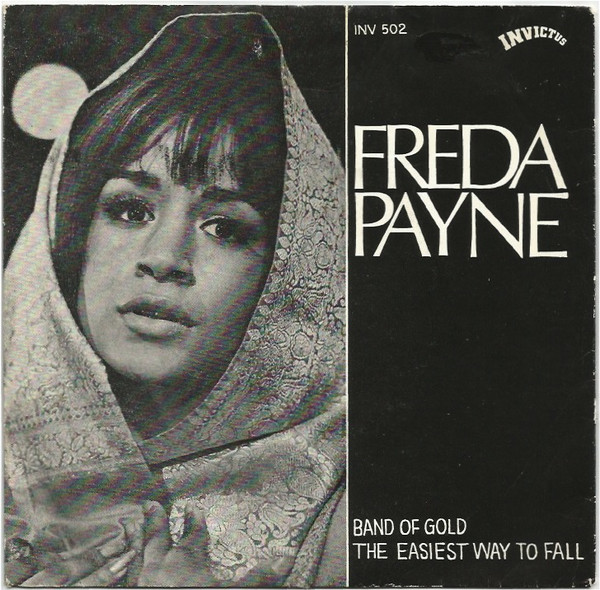
This was written by the Hot Wax songwriting team of General Johnson (the Showmen, The Chairmen of the Board) and Greg Perry (Chairmen of the Board), who produced versions by Glass House, Scherrie Payne (who later joined the Supremes), and Frieda Payne (Scherrie’s sister, who hit #1 with “Band of Gold”) before deciding to try the song with Honey Cone. An engineer at the studio named Barney Perkins also got a songwriting credit.
It was Perkins who suggested a song about want ads, which were the way goods and services were solicited before the internet. A week later, Perry was sitting at the piano when the chorus line came to him: “Gonna put it in the want ads, I need some love for sale.” Johnson suggested they tweak the lyric so the girl didn’t sound like a prostitute, and they came up with the idea of looking for a new man to replace the defective one.
Johnson and Perry teamed up to write a follow-up hit for Honey Cone (this time with Angelo Bond as co-writer) called “Stick-Up,” which made #11 on the Hot 100 and gave the group their second #1 R&B hit. Subsequent hits for the group were “One Monkey Don’t Stop No Show (Part I)” (#15) and “The Day I Found Myself” (#23).
Sixteen years later in 1987, Taylor Dayne, who was nearly unknown at the time, recorded a cover version of this song for her debut album Tell It To My Heart. Dayne’s cover wasn’t released as a single, but the album was a big hit, selling over 2 million copies.
Want Ads
Wanted, young man single and free Experience in love preferred, but will accept a young trainee Oh I’m gonna put it in the want ads, I need a love that’s true Gonna put it in the want ads, my man and I are through
At home I find myself, lost and all alone My man is playing the field, the thrill is gone He stays out all night, says he’s with the boys But lipstick on his collar, perfume on it too Tells me he’s been lying, tell ya what I’m gonna do I’m gonna put it in the want ads, this girl’s in misery Gonna put it in the want ads, somebody rescue me
I spend my nights alone, cryin’ bitter tears Although I cry aloud, nobody really hears And when I need him most, he’s never by my side He’s either playing cards or drinking at the bar He thinks that I’m a fool, I’m going to the evening news Gonna put it in the want ads, I need somebody new Gonna put it in the want ads, my man and I are through
Extra extra, read all about it, wanted, young man single and free Experience in love preferred but will accept a young trainee
Oh I’m gonna put it in the want ads, I need somebody new Gonna put it in the want ads, my man and I are through Gonna put it in the want ads, this girl’s in misery Gonna put it in the want ads, please somebody rescue me
Lipstick on his collar, perfume on it too Tells me he’s been lying, I’m going to the evening new Gonna put it in the want ads, I need somebody new Gonna put it in the want ads, my man and I are through Gonna put it in the want ads, this girl’s in misery Gonna put it in the want ads, please som
My first favorite Beatle song. The first Beatle album I was exposed to was the American album “Meet the Beatles” and I loved it. This song jumped out at me. Loved Johns voice, melody and the guitar riff. I also like the call and answer of the “yeah”. John had the chorus written and sat down with Paul in 1963 to finish it off. With the intention of writing a follow up single to the yet unreleased “She Loves You,” they put together verses and bridges in an unusual configuration with the already written chorus.
The song is a rocker and catchy but never released as a single.
It Won’t Be Long
It won’t be long yeh, yeh, yeh It won’t be long yeh, yeh, yeh It won’t be long yeh, till I belong to youEvery night when everybody has fun Here am I sitting all on my ownIt won’t be long yeh, yeh, yeh It won’t be long yeh, yeh, yeh It won’t be long yeh, till I belong to youSince you left me, I’m so alone Now you’re coming, you’re coming on home I’ll be good like I know I should You’re coming home, you’re coming home
Every night the tears come down from my eyes Every day I’ve done nothing but cry
It won’t be long yeh, yeh, yeh It won’t be long yeh, yeh, yeh It won’t be long yeh, till I belong to you
Since you left me, I’m so alone Now you’re coming, you’re coming on home I’ll be good like I know I should You’re coming home, you’re coming home
So every day we’ll be happy I know Now I know that you won’t leave me no more
It won’t be long yeh, yeh, yeh It won’t be long yeh, yeh It won’t be long yeh, till I belong to you, woo
Slade was one of the UK’s biggest glam bands in the early to mid-seventies. They were huge in the UK but never hit in America until the 80s. This song was released in 1972 and peaked at #1 in the UK and #76 in the Billboard 100 in 1973.
Quiet Riot took two of their songs, Cum On Feel The Noize and this one and hit with them in the 80s. I’ll take Slade’s versions myself. It’s a fun rock and roll song.
Some trivia about Noddy Holder the lead singer… AC/DC asked him to sing for them after the death of Bon Scott but he turned them down because of loyalty to Slade.
This was originally the work of bassist Jim Lea; it was the first tune he wrote completely on his own. However, his writing partner Noddy Holder was responsible for the lyrics, standing on the stage after a typically boisterous London show and surveying the smashed seating left in the auditorium. “I thought everyone must have been crazy tonight,” he later said.
The song was originally titled “My My We’re All Crazy Now.” The title was changed by their manager Chas Chandler, and the intentional misspelling became a Slade trademark years before Prince adopted a similar convention. Some of their other hits were “Look wot You Dun,” “Cum On Feel The Noize” and “Skweeze Me Pleeze Me.”
In the UK Slade enjoyed 16 Top 10 hits including six #1s. They didn’t enjoy the same success in the US, where their biggest hit was “Run Runaway,” which peaked at #20 in 1984. They had just one other American Top 40: “My Oh My” (#37) also in 1984.
The American metal band Quiet Riot broke big with a cover of Slade’s “Cum On Feel The Noize” in 1983. For their next album, they did “Mama Weer All Crazee Now,” issuing it as the first single. It reached #51, marking their last Hot 100 appearance. “We were already getting the stigma of, ‘You had a hit with somebody else’s song,'” their drummer, Frankie Banali, said in a Songfacts interview. “I could see the writing on the wall coming on that one.”
Slade
I don’t want to drink my whisky like you do I don’t need to spend my money but still do Chorus Don’t stop now a c’mon another drop now c’mon I want to lot now so c’mon That’s right, that’s right I said Mama but we’re all crazy now I said Mama but we’re all crazy now I said Mama but we’re all crazy now A you told me fool fire water won’t hurt me A you tease me and all my ladies desert me Chorus don’t want to drink my whisky but still do I had enough to fill up “H” Hill’s left shoe Chorus Mama mama mama mama oh yeah…
I was 12 when this came out in 1979 and loved it…especially the video that went with it. The live version is the one that hit really big and the single had the live and studio version. The song (Live Version) peaked at #1 in the Billboard 100, #2 in the UK and #1 in Canada in 1980.
McCartney played all the instruments and shared vocal harmonies with wife Linda McCartney on the studio version.
Paul McCartney on recording Coming Up
I originally cut it on my farm in Scotland. I went into the studio each day and just started with a drum track. Then I built it up bit by bit without any idea of how the song was going to turn out. After laying down the drum track, I added guitars and bass, building up the backing track. I did a little version with just me as the nutty professor, doing everything and getting into my own world like a laboratory. The absent-minded professor is what I go like when I’m doing those; you get so into yourself it’s weird, crazy. But I liked it.
Then I thought, ‘Well, OK, what am I going to do for the voice?’ I was working with a vari-speed machine with which you can speed up your voice, or take it down a little bit. That’s how the voice sound came about. It’s been speeded up slightly and put through an echo machine I was playing around with. I got into all sorts of tricks, and I can’t remember how I did half of them, because I was just throwing them all in and anything that sounded good, I kept. And anything I didn’t like I just wiped.
On John Lennon
I heard a story from a guy who recorded with John in New York, and he said that John would sometimes get lazy. But then he’d hear a song of mine where he thought, ‘Oh, shit, Paul’s putting it in, Paul’s working!’ Apparently ‘Coming Up’ was the one song that got John recording again. I think John just thought, ‘Uh oh, I had better get working, too.’ I thought that was a nice story.
Coming Up
You want a love to last forever One that will never fade away I want to help you with your problem Stick around, I say
Coming up, coming up, yeah Coming up like a flower Coming up, I say
You want a friend you- can rely on One who will never fade away And if you’re searching for an answer Stick around. I say
It’s coming up, it’s coming up It’s coming up like a flower It’s coming up. yeah
You want some peace and understanding So everybody can be free I know that we can get together We can make it, stick with me
It’s coming up, it’s coming up It’s coming up like a flower It’s coming up for you and me
Coming up, coming up It’s coming up, it’s coming up, I say It’s coming up like a flower It’s coming up I feel it in my bones
You want a better kind of future One that everyone can share You’re not alone, we all could use it Stick around we’re nearly there
It’s coming up, it’s coming up everywhere It’s coming up like a flower It’s coming up for all to share It’s coming up, yeah It’s coming up, anyway It’s coming up like a flower Coming up
Something light and simple today…a number one in 1969. This song was written as a throwaway B side but ended up peaking at #1 in the Billboard 100 in 1969. The song was written by Gary DeCarlo, Dale Frashuer and Paul Leka, who had been in a band together called the Chateaus in the early ’60s. One of the unfinished songs they wrote as the Chateaus was a tune called “Kiss Him Goodbye,” which they worked on in 1961.
Not a great piece of work but a memorable song that will stay with you.
In 1968, Leka co-wrote and co-produced the song “Green Tambourine,” which was a huge hit for The Lemon Pipers. The following year, he started working with DeCarlo, who was using the stage name Garrett Scott. Working for Mercury Records, they set to work writing singles for “Garrett Scott,” recording four songs, which Leka produced. The first one released was “Working On A Groovy Thing,” which was written by Roger Atkins and Neil Sedaka. The 5th Dimension also recorded the song and released it first, which tanked the Garrett Scott version (The 5th Dimension recording made #20 US; Patti Drew recorded the song a year earlier, taking it to #62).
The next single planned for DeCarlo was “Sweet Laura Lee,” a ballad written by Larry Weiss, composer of “Rhinestone Cowboy.” Needing a B-side, Leka and DeCarlo went back to the studio, where they were joined by their old bandmate Dale Frashuer, who suggested they use their 1961 song “Kiss Him Goodbye.” That song didn’t have a chorus, so Leka wrote one, lazily using “na na”s instead of actual words. They started the session around 7 p.m. and finished at 5 a.m., but when they emerged, they had the completed song.
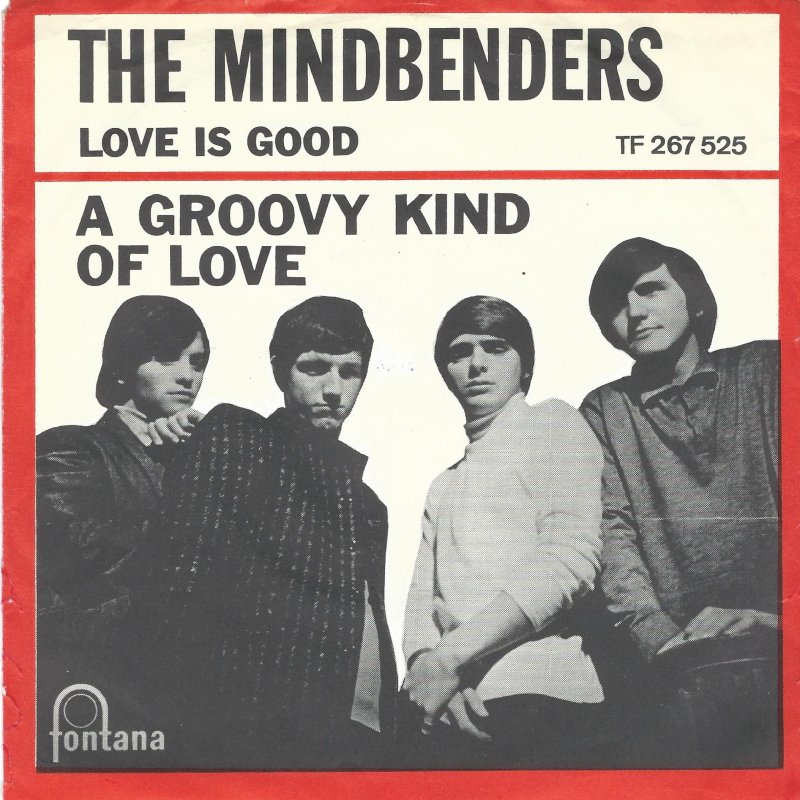
When Bob Reno, the A&R man at Mercury, heard the song, he loved it and didn’t want to waste it as a B-side. He needed singles for the Mercury subsidiary Fontana Records, so the song was released on that label and credited to the group Steam (named because after the session to record it, the guys were crossing 7th Ave and a subway train went beneath the roadway, shooting steam up from a manhole).
From there, the story gets convoluted, but when the single was released it became a surprise hit. Another song called “Now That I Love You” was used instead on the Garrett Scott “Sweet Laura Lee” single, which went nowhere when it was released. DeCarlo had a huge hit on his hands, but not as a solo artist but as part of an anonymous group.
The most-repeated story is that the three writers were embarrassed about “Na Na Hey Hey Kiss Him Goodbye,” so they created the name Steam to hide their identities. DeCarlo told Songfacts, however, that he was never embarrassed by the song, and that he was promised more of the action. “I was supposed to be the singer and road act for ‘Na Na’ as it was my B-side,” he said. “When Paul and the company got together they decided to split the record, meaning there would be two out. Paul said I would be able to do both as Garrett Scott, which I was later told I had no group. Paul said he would get me a group from a booking agency in New York, which never happened. ‘Na Na’ was never done with a group in mind, it was the B-side of my single. The name Steam wasn’t invented until the album was being done.”
Steam – Na Na Hey Hey Kiss Him Goodbye
He’ll never love you, the way that I love you
‘Cause if he did, no no, he wouldn’t make you cry
He might be thrillin’ baby but a-my love
(My love, my love)
So dog-gone willin’, so kiss him
(I wanna see you kiss him, wanna see you kiss him)
Go on and kiss him goodbye, now
Na na na na, hey hey, goodbye
Na na na na, na na na na, hey hey, goodbye
Listen to me now
He’s never near you to comfort and cheer you
When all those sad tears are fallin’ baby from your eyes
He might be thrillin’ baby but a-my love
(My love, my love)
So dog-gone willin’, so kiss him
(I wanna see you kiss him, I wanna see you kiss him)
Go on and kiss him goodbye, na na na na, na na na
Na na na na, hey hey, goodbye
Hey hey, goodbye
Na na na na, na na na na, hey hey, goodbye
Hey hey, goodbye
Na na na na, na na na na, hey hey, goodbye
Hey hey, goodbye
Na na na na, na na na na, hey hey, goodbye
When I heard this on Lightning 100 in Nashville (alternative station) I thought it was an old song. I liked it off the bat. Alex Ebert had left his band Ima Robot and formed this odd hippie type band with Jade Castrinos. They were a band that had members that would come and go and were like a commune type group. The song was released in 2010 and it charted at #25 in the Billboard Alternative Songs in 2010 and #50 in the UK Charts in 2013.
The song is extremely catchy. Unfortunately Jade is not in the band now…
This feel-good song was written by Edward Sharpe & the Magnetic Zeros vocalists Alex Ebert and Jade Castrinos, who were a couple at the time. As Jade tells it, they were enjoying a romp through Elysian Park in Los Angeles when she lost her shoes and he carried her on his back. The scene was like a montage from a romantic comedy, and giddy with love, they returned to his apartment and wrote the song. Using Ebert’s Pro Tools setup, they put the song together on the fly, with each trading lines and then singing together on the chorus.
The lyrics are effusively lovey, but genuine:
I’ll follow you into the park Through the jungle, through the dark Girl, I never loved one like you
And while there are many songs called “Home,” this one has a key hook line in the lyric that connected with listeners:
Home is wherever I’m with you
Ebert does the whistling intro, which is reminiscent of the Ennio Morricone scores found in many westerns, often starring Clint Eastwood.
Edward Sharpe & the Magnetic Zeros rose to power early in the American folk music revival that included acts like Mumford & Sons and The Lumineers. “Home” was part of their debut album Up From Below, and established their love-centric, communal sound that made them a festival favorite.
The band is named after a character from a novel Ebert was writing – Edward Sharpe is an otherworldly figure who comes to Earth to offer enlightenment to the masses, but finds himself getting distracted by the beautiful women. Ebert, raised in an upper middle class household, spent a lot of time looking for the meaning of life, and created his own hardship by getting hooked on heroin. He got clean, but sobriety didn’t suit him, so he ditched treatment and switched to (mostly) mushrooms. He went minimalist, with no car or cell phone, and began working on the Up From Below in a tiny apartment. After meeting the like-minded Jade Castrinos, they put a 10-piece band together and went all-in on the joyful, enlightened sound. Even churlish listeners who weren’t buying this hippie vibe agreed that it was convincing, and even after they found an audience with this song, Ebert stayed steady to his creed, often blurring the lines between Edward Sharpe and his true self.
When Ebert and Castrinos banter about her falling out of a window on this track, they’re recounting a true story:
Jade Alexander, do you remember that day you fell out of my window? I sure do, you came jumping out after me
Castrinos was defenestrated from his second-story apartment, and couldn’t walk for a week. Ebert came to her rescue and took her to the hospital.
In 2014, the band parted ways with Jade Castrinos, changing the dynamic of this song considerably (she and Ebert had broken up). At their first show without her – May 11, 2014 at the Shaky Knees Music Festival in Atlanta – Ebert turned much of the song over to the crowd, doing it “campfire style.” It worked, and the band continued performing it that way, with the crowd filling in much of Castrinos’ vocals.
Like many songs in its genre, this song didn’t make the US Hot 100, even though it seemed to be everywhere. Much of its ubiquity comes from its use in commercials – the message and the melody make it suitable for a number of companies looking to project community.
In 2010, the NFL used it in a spot titled “There’s No Place Like Home”; that same year it was in commercials for the Kin phone, Blue Cross Blue Shield of Texas, Levi’s, and the trailer for the movie Cyrus. They did turn down some offers: AT&T wanted to use the song where “Home” was the AT&T store, and the band declined.
Home
Alabama, Arkansas I do love my ma and pa Not that way that I do love you
Holy moley, me oh my You’re the apple of my eye Girl, I’ve never loved one like you
Man, oh man, you’re my best friend I scream it to the nothingness There ain’t nothing that I need
Well, hot and heavy, pumpkin pie Chocolate candy, Jesus Christ Ain’t nothing please me more than you
Ah, home, let me go home Home is wherever I’m with you Ah, home, let me go home Home is wherever I’m with you
La, la, la, la, take me home Mommy, I’m coming home
I’ll follow you into the park Through the jungle, through the dark Girl, I never loved one like you
Moats and boats and waterfalls Alleyways and pay phone calls I’ve been everywhere with you
That’s true, laugh until we think we’ll die Barefoot on a summer night Never could be sweeter than with you
And in the streets you run a-free Like it’s only you and me Geez, you’re something to see
Ah, home, let me go home Home is wherever I’m with you Ah, home, let me go home Home is wherever I’m with you
La, la, la, la, take me home Daddy, I’m coming home
Jade Alexander, do you remember that day you fell out of my window? I sure do, you came jumping out after me Well, you fell on the concrete, nearly broke your ass, You were bleeding all over the place and I rushed you out to the hospital, you remember that? Yes, I do, well, there’s something I never told you about that night What didn’t you tell me? While you were sitting in the backseat smoking a cigarette you thought was going to be your last, I was falling deep, deeply in love with you, and I never told you until just now
Ah, home, let me go home Home is wherever I’m with you Ah, home, let me go home Home is where I’m alone with you
Home, let me come home Home is wherever I’m with you
Ah, home, yes I am home Home is when I’m alone with you
Alabama, Arkansas I do love my ma and pa Moats and boats and waterfalls Alleyways and pay phone calls
Ah, home, let me go home Home is wherever I’m with you Ah, home, let me go home Home is where I’m alone with you
When I would go skating, the best part was playing all of the pinball machines. I’ve always favored them over the video games at arcades because they were machines instead of a screen. Some took some skill and bumping the machine a little but not too much to tilt. I remember Baseball pinball machines, Elton John model, KISS model, The Who Pinball Wizard model, and many bicentennial models.
The start of the pinball machine started in the 19th century with a “Bagatelle-Table”,
a sort of hybrid between a “pin table” and pool table. Players tried to hit balls with cue sticks and get them into pockets or slots surrounded by nails and pins. Another step towards the modern pinball form occurred sometime at the end of 19th century when inventor Montague Redgrave patented a device called a “ball shooter”, which was based on the recently invented steel spring.
The first coin-operated “pinball machine” was invented in 1931 by Automatic Industries and was called “Whiffle Board”. But the gaming industry really began in the mid-1930’s with the production of a game called “Ballyhoo”. It was invented by one Raymond Maloney, who later started the Bally Manufacturing Company of Chicago, IL.
Pinball machines really grew in popularity after World War II. The ten year period of 1948-58 is referred to by some as the “Golden Age” of pinball, due to the invention of flippers in 1947 by the D. Gottlieb Co. in a game called “Humpty Dumpty”, and was one of the main reasons for the renewed interest in pinball machines at the time. Humpty Dumpty was the very first pinball machine with flippers!
In 1966, the first digital scoring pinball machine, “Rally Girl” was released Rally. In 1975, the first solid-state electronic pinball machine, the “Spirit of 76”, was released by Micro. In 1998, the first pinball machine with a video screen was released by Williams in their new “Pinball 2000” series machines. Versions of pinball are now being sold that are completely software based.
I still like the software free machines…some were like works of art.
This is the last Christmas song that I will feature…because right now people have had about enough Christmas songs in every restaurant, mall, and grocery store…this one I don’t hear as much.
I also want to thank everyone for dropping by here this year.
The Beatles recorded this in 1967 and wasn’t released until 1994 paired with “Free As A Bird”. It is a fun Christmas song that will stick in your head. The Beatles did not release a Christmas song commercially… only to their fan club when they were active.
Recorded December 6, 1966, and November 28, 1967, in London, England, this song was never officially released until it appeared as the B-side to “Free As A Bird” in 1994. The original version was distributed to The Beatles fan club in 1967. It’s the only song ever written specifically for the Beatles Fan Club members.
Many upbeat Pop groups of this era like The Beach Boys and The Four Seasons released Christmas songs, but The Beatles never had an official Christmas release.
Christmas time is here again
Christmas time is here again Christmas time is here again Christmas time is here again Christmas time is here again
Ain’t been round since you know when Christmas time is here again O-U-T spells “out”
Christmas time is here again Christmas time is here again Christmas time is here again Christmas time is here again
Ain’t been round since you know when Christmas time is here again O-U-T spells “out”
Christmas time is here again Christmas time is here again Christmas time is here again Christmas time is here again
Ain’t been round since you know when Christmas time…[music continues and fades to background]
[spoken]
This is Paul McCartney here, I’d just like to wish you everything you wish yourself for Christmas.
This is John Lennon saying on behalf of the Beatles, have a very Happy Christmas and a good New Year.
George Harrison speaking. I’d like to take this opportunity to wish you a very Merry Christmas, listeners everywhere.
This is Ringo Starr and I’d just like to say Merry Christmas and a really Happy New Year to all listeners
[a John Lennon pastiche at this point, very hard to understand]