Loretta Lynn – Coal Miner’s Daughter

She was the greatest female singer-songwriter of the 20th centuryJack White

This is one country song that even rockers know and of course, the movie with the same title doesn’t hurt either. I remember the movie when I was younger and hearing this song constantly. She wrote it and she wears it like a badge of honor singing it.

In 1976 Loretta wrote an autobiography and named it Coal Miner’s Daughter. That book is what they made the movie on. I always looked at Loretta as the Punk of country music. What I mean by that is she wrote about subjects that weren’t talked about…much less in country music. Songs like The Pill and Rated X just to name a couple. While talking…she had no filter at times and told you exactly how she felt.

In life and in this song Lynn’s main point is that she is proud of where she comes from and the morals her family values. She is not ashamed of her poverty or rural upbringing, but appreciative of her family’s hard work ethic, love for each other, and the bond that happens in hardships.

The song was on the album of the same name released in 1970. What made this one different is that it crossed over to the pop charts. It peaked at #1 on the Billboard Country Charts and Canada’s Country Charts. I also peaked at #83 on the Billboard 100 in 1970.

The song was released in 1980 with Sissy Spacek singing her version of the movie…it peaked at #7 in Canada (Country Charts) and #24 in the Billboard Country Charts.

The movie Coal Miner’s Daughter was released in 1980. It starred Sissy Spacek as Loretta Lynn as well as co-stars Levon Helm, Tommy Lee Jones, Beverly D’Angelo, and more.

The producer Owen Bradley told Lynn to drop off four additional verses that she had. Loretta Lynn: “He said, There’s already been one ‘El Paso,’ and there’s never going to be another one, so I fiddled around and fiddled around, and finally I got four verses that I took off of ‘Coal Miner’s Daughter.’ I wished I hadn’t, but I did.”

Sadly those verses were lost to time because she left them in the studio.

Loretta Lynn: “I remember that, in one of the verses, I talked about Mommy papering the wall with movie magazines, and she named me after Loretta Young, because she had Bette Davis and Claudette Colbert and Loretta Young up on the wall. And the day before I was born, she said, ‘If this baby is a little girl, I’m going to name her after one of them girls.’ And she said, ‘I kept looking at the pictures, and I thought Loretta Young was the prettiest, so I named you Loretta.’ And I’m glad she did.”

“I didn’t think anybody be interested in my life, I know everybody’s got a life, and they all have something to say. Everybody has a story about their life. It wasn’t just me. I guess I was just the one that told it.”

Coal Miner’s Daughter

Well, I was borned a coal miner’s daughter
In a cabin, on a hill in Butcher Holler
We were poor, but we had love
That’s the one thing that daddy made sure of
He shoveled coal to make a poor man’s dollar

My daddy worked all night in the Van Lear coal mines
All day long in the field a hoin’ corn
Mommy rocked the babies at night
And read the Bible by the coal oil light
And ever’ thing would start all over come break of morn’

Daddy loved and raised eight kids on a miner’s pay
Mommy scrubbed our clothes on a washboard every day
Why, I’ve seen her fingers bleed
To complain, there was no need
She’d smile in mommy’s understanding way

In the summertime we didn’t have shoes to wear
But in the wintertime we’d all get a brand new pair
From a mail order catalog
Money made from selling a hog
Daddy always managed to get the money somewhere

Yeah, I’m proud to be a coal miner’s daughter
I remember well, the well where I drew water
The work we done was hard
At night we’d sleep ’cause we were tired
I never thought of ever leaving Butcher Holler

Well, a lot of things have changed since a way back then
And it’s so good to be back home again
Not much left but the floor, nothing lives here anymore
Except the memories of a coal miner’s daughter

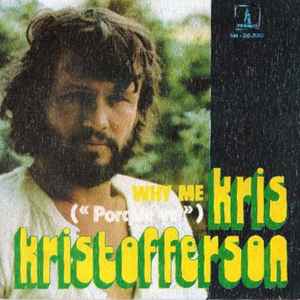
Kris Kristofferson – Why Me

Good morning to everyone on this fine Sunday morning! This was a song that I heard on my mom’s country stations along with the AM pop stations that my sister listened to. It crossed genres and was a massive hit.

It peaked at #1 on the Billboard Country Charts and Canada’s Country Charts, #16 on the Billboard 100, and #19 on Canada’s RPM Charts in 1973.

Kristofferson is an incredible songwriter but he gave up a lot to be one. He is very intelligent and he was a Rhodes Scholar at Oxford University.

Kristofferson came from a military family. Both of his grandfathers were military men, his dad was a general in the Air Force, and his brother was in the Navy. Kris himself had made a name for himself in the armed forces, achieving the rank of captain and being offered a teaching position at West Point.

Instead, he moved to Nashville and ended up working odd jobs to support his disabled son while trying to break into the music business. When his mother found out about the music business she wrote a letter to him that he was an embarrassment to the family and he was disowned. Someone showed the letter to Johnny Cash, who believed in Kristofferson, and Cash told him ‘Always nice to get a letter from home, isn’t it, Kris?’

I feel lazy doing this but Kristofferson tells the story of the song better than I can. He went to church with country music artist Connie Smith and this happened.

Kris Kristofferson: “The night before we’d been down in Cookeville with a bunch of people, doing a benefit for Dottie West’s High School band or something and then Connie took me over to church the next day to Jimmie Snow’s church. And I had a profound religious experience during the session, something that never had happened to me before. And ‘Why Me’ came out of it.

Everybody was kneeling down and Jimmie said something like if anybody’s lost, please raise their hand. And I was kneeling there. I don’t go to church a lot and the notion of raising my hand was out of the question and I thought, ‘I can’t imagine who’s doing this.’ And all of a sudden I felt my hand going up and I was hoping nobody else was looking because everybody had their head bent over praying.

And then he said, ‘If anybody is ready to accept Jesus, come down to the front of the church.’ I thought that would never happen and I found myself getting up and walking down with all these people and going down there. And I don’t really know what he said to me. He said something to me like, ‘Are you ready to accept Jesus Christ in your life?’ And I said: ‘I don’t know.’ I didn’t know what I was doing there. And he put me down, said, ‘Kneel down here.’ I can’t even remember what he was saying but, whatever it was, was such a release for me that I found myself weeping in public and I felt this forgiveness that I didn’t know I even needed.”

Why Me

Why me Lord, what have I ever done
To deserve even one
Of the pleasures I’ve known
Tell me Lord, what did I ever do
That was worth loving You
Or the kindness You’ve shown

Lord help me Jesus, I’ve wasted it
So help me Jesus, I know what I am
Now that I know that I’ve needed you
So Help me Jesus, my soul’s in Your hand

Tell me Lord, if you think there’s a way
I can try to repay
All I’ve taken from You
Maybe Lord, I can show someone else
What I’ve been through myself
On my way back to You

Lord, help me Jesus, I’ve wasted it
So Help me Jesus, I know what I am
Now that I know that I’ve needed you
So help me Jesus, my soul’s in Your hand

Lord, help me Jesus, I’ve wasted it
So Help me Jesus, I know what I am
Now that I know that I’ve needed you
So help me Jesus, my soul’s in Your hand

Jesus, my soul’s in Your hand

Waylon Jennings – Only Daddy That’ll Walk the Line

When I hear this song…I think it’s one of the coolest songs I’ve ever heard. The song is classified as country but there is some early rock in this also. I could hear Buddy Holly singing this one with no problem. Jennings to me, could have easily been a rock and roll singer and his songs often crossed genres. Waylon was in the “Outlaws” which included Willie Nelson, Johnny Cash, Merle Haggard, Kris Kristofferson, and David Allan Coe. It wasn’t a band but a group of musicians who had freedom with their music and didn’t follow Nashville’s so called guidelines.

Speaking of Buddy Holly. Jennings played with Buddy Holly in the 50s. Holly saw Jennings, a radio DJ since his pre-teen years, as a promising talent. The first fruits of the two late 50s partnership came when Jennings recorded the songs “Jole Blon” and “When Sin Stops (Love Begins)” with Holly and guitarist Tommy Allsup.

Jennings went on the road as part of Holly’s post-Crickets backing band for the Winter Dance Party Tour along with co-headliners Ritchie Valens and The Big Bopper (JP Richardson). They had unheated buses and the drummer Carl Bunch got frost bite on the bus. Holly charted a flight and bandmate Allsup allegedly lost a seat in a coin toss to Ritchie Valens, and Jennings offered his spot to a sick Richardson.

Holly and Jennings were very close. They joked with each other on the night of the crash as Holly was leaving. Holly jokingly told Jennings, “Well, I hope your ol’ bus freezes up!” Jennings jokingly replied, “Well, I hope your ol’ plane crashes!” That haunted Jennings for years after that. Jennings has said that Buddy influenced him a lot in his career. He said he learned not to compromise your music.

Jim Alley, an American country singer, first recorded this song in 1967. However, his version didn’t become that popular during his time. Jimmy Bryant wrote this song and was a fiddle player who played on some country records along with The Monkees song Sweet Young Thing.

Waylon recorded the song at RCA Victor Studios in Nashville and no other than Chet Atkins produced it. The song was released a few months later. The song was a hit, it peaked at #1 on the Canadian Country Charts and #2 on the Billboard Country Charts in 1968. The Kentucky Headhunters and Linda Ronstadt covered the song later on.

Waylon and Jessi

Jennings had one of the best marriages in music. He married Jessi Colter in 1969. Jennings experienced three failed marriages before he finally found the one. Jessi remained his wife until Jennings’s death in 2002.

https://www.youtube.com/watch?v=nqOii9S6GGc

Only Daddy That’ll Walk the Line

Everybody knows you’ve been steppin’ on my toes
And I’m gettin’ pretty tired of it
You keep a steppin’ out of line
You’re messin’ with my mind
If you had any sense you’d quit

‘Cause ever since you were a little bitty teeny girl
You said I was the only man in this whole world
Now you better do some thinkin’ then you’ll find
You got the only daddy that’ll walk the line

I keep a workin’ every day all you want to is play
I’m tired of stayin’ out all night
I’m comin’ unglued
From your funny little moods
Now Honey baby that ain’t right

You keep a packin’ up my clothes nearly everybody knows
That you’re still just a puttin’ me on
But when I start a walkin’
Gonna hear you start a squawkin’
And beggin’ me to come back home

You got the only daddy that’ll walk the line

Jimmie Rodgers – Blue Yodel No 1 (T For Texas)

T for Texas
T for Tennessee
T for Tennessee
T for Thelma
That gal that made a wreck out of me

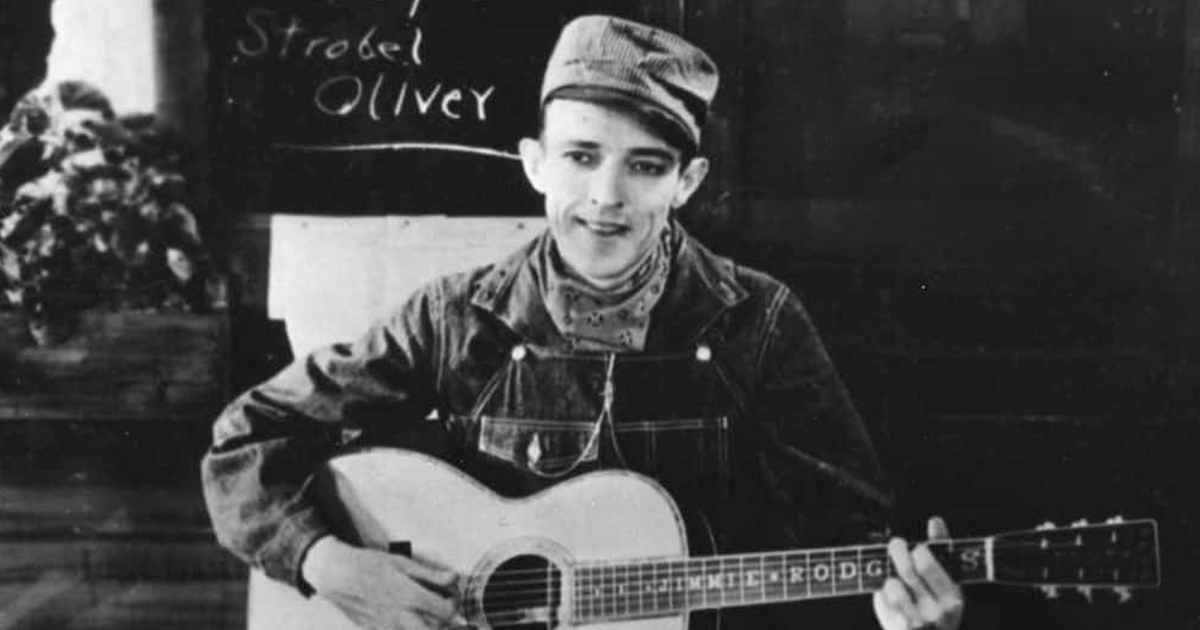
Jimmie Rodgers was the first country star and is called the Father of Country Music. He is also called The Singing Brakeman and The Blue Yodeler. He was massively popular and others got their start imitating him like Roy Rodgers and Gene Autry. Rodgers had a deep love for Texas and all it represented. He drew inspiration from his travels and experiences across the country.

I never heard Rodgers version until the internet. I had read where a young George Harrison mention that he was a big influence on him. I do know this song well by Lynyrd Skynyrd who Ronnie Van Zant was influenced by him. They took this 1928 song and turned it on its ear.

Rodgers recorded this at what used to be Trinity Baptist Church in New Jersey. The record company Victor (later RCA Victor) was launched in Camden, New Jersey in 1901 and, in 1918, purchased Trinity Baptist Church, at 114 N. Fifth St., in order to have a space large enough to record a symphony orchestra, with good acoustics. Many artists recorded there including Fats Waller, Jelly Roll Morton, Duke Ellington, and the Carter Family. At the time of his death in 1933, his sales represented 10% of the total for the label. Even during the Depression his records sold well.

The song was released on February 3, 1928. Why the yodels? Rodgers said he saw a troupe of Swiss yodelers doing a demonstration at a church. They were touring America, and he just happened to catch it, liked it, and incorporated it into his songs. Altogether he wrote 13 Blue Yodels.

It’s been covered in every decade since. According to secondhandsongs.com it’s had 71 versions. Jimmie Rodgers died at 35 from a pulmonary embolism that was a direct result of tuberculosis he was diagnosed in 1924. He passed on May 26, 1933.

Journalist John Lilly wrote about the original song in 1992: It generated an excitement and record-buying frenzy that no one could have predicted. … The lyrics made an obvious connection to the southern states, talked about hard times with women and work, and had a macho, slightly dangerous undertone. Not only were these to be recurring themes in subsequent Jimmie Rodgers songs, (he re-worked these ideas for a total of 13 ‘Blue Yodels’ but they continue as themes in country songwriting to this day.”

Blue Yodel No 1 (T For Texas)

T for Texas
T for Tennessee
T for Tennessee
T for Thelma
That gal that made a wreck out of me

If you don’t want me mama
You sure don’t have to stall
‘Cause I can get more women
Than a passenger train can haul

I’m gonna buy me a pistol
Just as long as I’m tall
I’m gonna shoot poor Thelma
Just to see her jump and fall

I’m goin’ where the water
Drinks like cherry wine
‘Cause this Georgia water
Tastes like turpentine

I’m gonna buy me a shotgun
With a great long shiny barrel
I’m gonna shoot that rounder
That stole away my gal

‘Druther drink muddy water
Sleep in a holler log
Than to be in Atlanta
Treated like a dirty dog

Blackie and The Rodeo Kings – Step Away

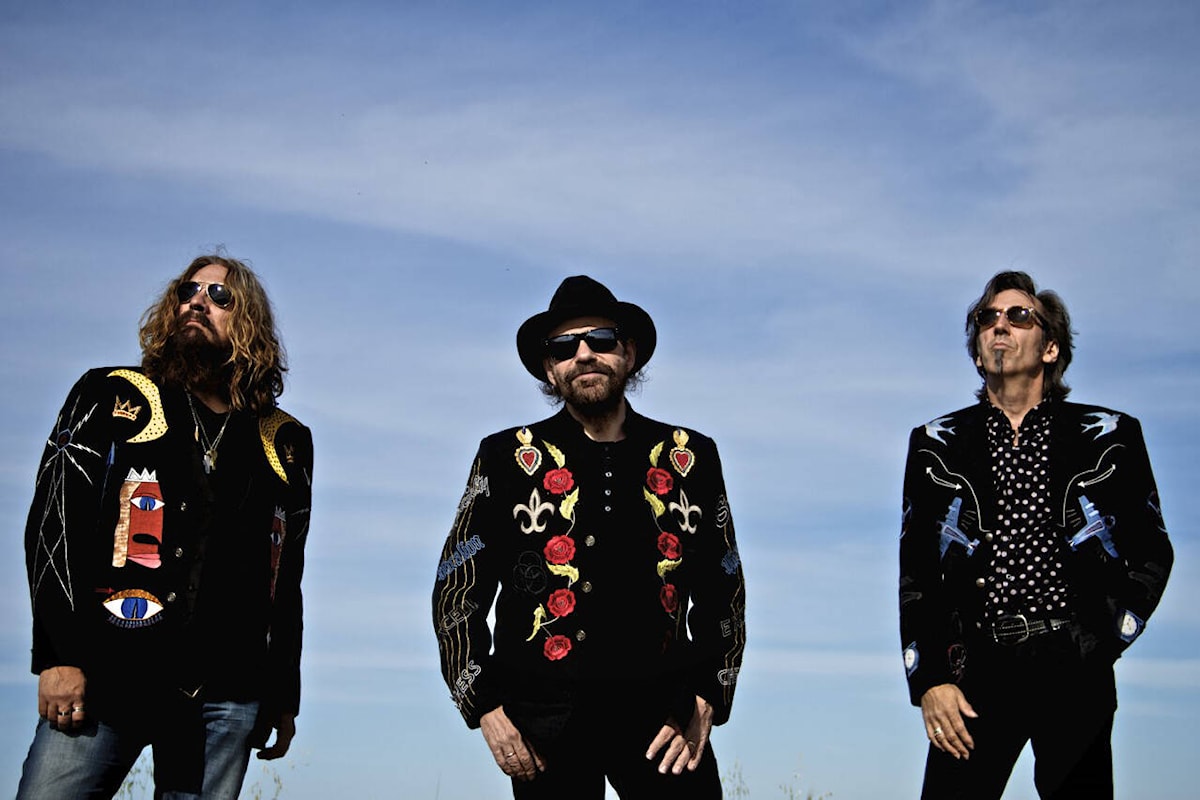
CB introduced this band to me a couple of weeks ago. I started to listen to them and ran across this album and as soon as I heard this…I liked it.

This song is beautiful… the band was making an album and put a call out to many female singers to do duets. Some of the women they got were Lucinda Williams, Amy Helm (daughter of Levon Helm), Patti Scialfa (wife of Bruce Springsteen), Pam Tillis, Rosanne Cash, and more. One of the “more” is Emmylou Harris. She is the one who is singing in Step Away.

Last Sunday I posted a song named When The Spirit Comes by Colin Linden. Colin is part of this band that includes Tom Wilson and Stephen Fearing. They started the band in 1996 as a tribute to  Canadian folk artist Willie P. Bennett. One of Bennett’s albums was called Blackie and the Rodeo King. They wanted to get one of Bennett’s songs down on an album and this is the one. Colin Linden said, “I wanted a Willie P. Bennett song on the record, and I couldn’t imagine a better honor to bestow on someone we love as much as Willie than to have Emmylou Harris sing on one of his songs. I don’t think there’s ever been a better singer on the planet; I’m so glad she said yes.”

This album is called Kings and Queens and it was released in 2011. I’m also including a song they did with Rosanne Cash that was released as a single off the album called Got It Covered. Linden said, “Rosanne’s a real supporter of Blackie and the Rodeo Kings, and I knew she was a fan of Ron Sexsmith. Ron came in with an idea for Got You Covered and we wrote it in a hotel room in Austin, Texas in a matter of a couple of hours. He’s brilliant a pretty easy guy to write with. It’s like riding in a Cadillac, writing with that guy.”

Got You Covered has an older soul feel and Cash sounds fantastic in this one. In my next post with these guys, I’ll get to more of the edgier ones.

Tom Wilson on Willie Bennett: “Willie articulated the sensitivity of a fifty-year-old guy and he represented the rebellious ‘fuck you’ attitude of a sixteen-year-old. Willie managed to be more punk rock than any punk rocker I have ever met and, at the same time, could probably break your heart in two. He was a true poet. His wings were a little dirty. He wasn’t afraid of living life and taking chances. When you’re a young guy and you’re looking for an influence, there’s your man right there.”

Step Away

I’m just a step away
Turn around, see where I’m standin’
I’m a step away
From your heart
I’m just a step away
I might stand here forever
I’m a step away
From your heart

Some people act kind; some people act cruel
Some people act blind when they see the Golden Rule
If you ask me, I’d say you’re a nervous wreck
I’ve got me to share if that’s what it takes to get

Just a step away
Turn around, see where I’m standin’
I’m a step away
From your heart
I’m just a step away
I might stand here forever
I’m a step away
From your heart

Reelin’ from a brand new lost love affair
You weren’t so lucky this time; somebody got scared
Maybe you’re like me and you can’t be nobody’s pet
I’ve got love to share if that’s what it takes to get

Just a step away
Turn around, see where I’m standin’
I’m a step away
From your heart
I’m just a step away
I might stand here forever
I’m a step away
From your heart

I’m just a step away
Turn around, see where I’m standin’
I’m a step away
From your heart
I’m just a step away
I might stand here forever I’m a step away
From your heart

A step away (step away)
A step away
Just a step away

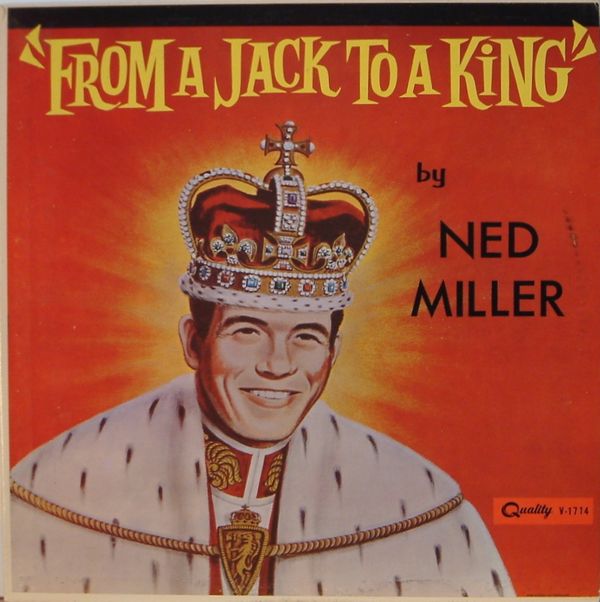
Ned Miller – From A Jack To A King

This song takes me back to when I was a kid. On my country post a few weeks ago, I did 5 songs that I liked…Obbverse mentioned this one and I didn’t remember it by the title. Once I played it I knew it right away. I probably haven’t heard it since I was around 7-8 years old.

Ned’s mom taught him how to play guitar, and he wrote his first song at 16 while still in High School in Salt Lake City. After a three-year stint in the Marine Corps – he served in the Pacific theater during World War II – he went to college with the help of the G.I. Bill and became a pipe-fitter and later air-conditioning man by trade.

He wrote a song called Dark Moon that was made into two top 5 hits for other artists. He wrote and recorded this song in 1957 but it did absolutely nothing on the charts. He convinced his record company to re-release this song in 1962 and it was a massive international hit.

Ned recorded between 1957 and 1970. He did have another huge country hit with Do What You Do Do Well.  After that, he had some top-50 hits in country but nothing in the top 10. It didn’t help that Ned rarely toured owing to stage fright. He gave up recording in the 1970s and moved to Prescott, Arizona, and later to Las Vegas, Nevada.

Ned came back into the limelight in 1989, when Ricky Van Shelton resurrected ‘From A Jack To A King’ and took it to #1 on the Country charts and #1 in the Canadian Country Charts.

The song peaked at #2 on the Country Charts, #6 on the Billboard 100, and #2 in the UK in 1962.

Ned Miller passed away at the age of 90 in 2016.

From A Jack To A Queen

From a jack to a king
From loneliness to a wedding ring
I played an ace and I won a queen
And walked away with your heart

From a jack to a king
With no regrets I stacked the cards last night
And lady luck played her hand just right
And made me king of your heart

For just a little while
I thought that I might lose the game
Then just in time
I saw the twinkle in your eye

From a jack to a king
From loneliness to a wedding ring
I played an ace and I won a queen
You made me king of your heart

For just a little while
I thought that I might lose the game
Then just in time
I saw the twinkle in your eye

From a jack to a king
From loneliness to a wedding ring
I played an ace and I won a queen
You made me king of your heart…

Townes Van Zandt – Waiting Around To Die

Once in a while, I’ll listen to a song that is so good that it’s beyond a normal song. It happens when lyrics can tell a story just right..in a real down-to-earth way. Few fit in this category…this song does. Townes said it was the first song he ever wrote. If so…that would be like painting the Mona Lisa on your first try.

He lived in an apartment with his first wife Fran and he converted a walk-in closet into a studio. Fran said that he wrote the song in there and she was disappointed that he didn’t write a happy or a love song.

“Waitin’ Around to Die” was first recorded for Van Zandt’s 1968 studio debut called For the Sake of the Song. It’s a dark song that encapsulates the pain, despair, and struggle that can engulf a person’s life. It also foretold Van Zandt’s life and ending in a lot of ways.

Townes was diagnosed with depression in his sophomore year of college. His father, Harris Williams Van Zandt, was a corporate lawyer. Townes tried to follow in his footsteps but dropped out of school to become a musician. Earlier in grade school, his friend Guy Clark said that Van Zandt found out that the sun was slowly burning out. Clark thinks that after that he didn’t take much seriously in life.

He was born John Townes Van Zandt in Fort Worth, Texas, into a wealthy oil family whose prestige was known throughout the state. His great-great-grandfather Khleber Miller Van Zandt became president of both a construction company and a bank, the Fort Worth National Bank. Khleber’s own dad, Isaac Van Zandt, was a leader of the Republic of Texas. Van Zandt County, located in the northeastern part of the state, was named for Isaac in 1848.

Townes Van Zandt died on New Year’s Day in 1997 at age 52, exactly 44 years after the death of his idol, Hank Williams.

Townes Van Zandt: “I talked to this old man for a while, and he kinda put out these vibrations.  I was sitting at the bar of the Jester Lounge one afternoon drinking beer, thinking about him, and just wrote it down …..Sometimes I don’t know where this dirty road is taking me/Sometimes I can’t see the reason why/But I guess I’ll keep rambling/Lots of booze and lots of gambling/Well, it’s easier than waitin’ round to die.”

Townes Van Zandt:  “I have a few others like that that I don’t play all the time. I have to watch that when I do shows. I have to stay away from that side because nobody wants to hear blues on blues on blues.”

Waiting Around To Die

Sometimes I don’t know where
This dirty road is taking me
Sometimes I don’t even know the reason why
But I guess I keep a-gamblin’
Lots of booze and lots of ramblin’
Well it’s easier than just a-waitin’ around to die

One time, friends, I had a ma
I even had a pa
Well he beat her with a belt once ’cause she cried
She told him to take care of me
Headed down to Tennessee
Well it’s easier than just a-waitin’ around to die

Well I came of age and I found a girl in a Tuscaloosa bar
She cleaned me out and hit in on the sly
I tried to hide the pain, I bought some wine and hopped a train
Well it’s easier than just waitin’ around to die

A friend said he knew
Where some easy money was
We robbed a man, and brother did we fly
The posse caught up with me
And drug me back to Muskogee
Two long years waitin’ around to die

Well, now I’m out of prison
I got me a friend at last
Well he don’t drink or steal or cheat or lie
His name’s codeine
He’s the nicest thing I’ve seen
Yah, together we’re gonna wait around and die
Yah together we’re gonna wait around and die

Merle Haggard – Swinging Doors

And I’ve got swinging doors a jukebox and a barstool
And my new home has got a flashing neon sign

This is country music I love. I’ve always been a bit jealous of the Country music genre in one area. I’m not sure they still have this but at certain times of year the musicians and artists are out and about and you can meet them. It was really big in Nashville through the years.

It was called Fan Fair.  It’s basically like a job fair but with country stars. Can you imagine Mick Jagger, Paul McCartney, Eric Clapton, and others in a building meeting and talking to their fans? How about going up to Bob Dylan and slapping him on the back…” Hey Bob” how are ya? No that would not happen.

I remember this happening in Nashville where you could go and meet Merle Haggard, Loretta Lynn, and more. Rock and Roll doesn’t have anything like that. Maybe it’s because Country is centered in Nashville where Rock is spread throughout the world? I think it was a great way to spread their music.

Swinging Doors - Song Lyrics and Music by Merle Haggard arranged by  OF_ALLAN_SVI on Smule Social Singing app

In 1966 Merle Haggard traveled to Nashville to record his first-ever collaboration project with The Strangers. They would later on become his backing band. At first, it just didn’t work but Haggard and the band continued. The album ended up with 12 tracks and Swinging Doors was the title track. Haggard wrote all of the tracks on the album. The album peaked at #1 on the Billboard Country Charts. His first number-one album. He would go on to record 66 studio albums and 8 live ones.

The song peaked at #5 on the Billboard Country Charts in 1966. Another song off of this album peaked at #5…The Bottle Let Me Down.

This song takes me back to being a kid. Early morning rides with my dad and him having a country station on.

Swinging Doors

This old smoke-filled bar is something I’m not used to
But if gave up my home to see you satisfied
And I just called to let you know where I’ll be living
It’s not much but I feel welcome here inside

And I’ve got swinging doors a jukebox and a barstool
And my new home has got a flashing neon sign
Stop by and see me anytime you want to
Cause I’m always here at home till closing time

I’ve got everything I need to drive me crazy
I’ve got everything it takes to lose my mind
And in here the atmosphere’s just right for heartaches
And thanks to you I’m always here till closing time

And I’ve got swinging doors a jukebox and a barstool
And my new home has got a flashing neon sign
Stop by and see me anytime you want to
Cause I’m always here at home till closing time

Yeah, I’m always here at home till closing time

Waylon Jennings – Are You Sure Hank Done It This Way

This song I wrote in 10 minutes…it took me 10 years to think it up thoughWaylon Jennings 

This is country music that I really like. Waylon was part of the Outlaw country movement of the 1970s and he was a badass. This song is a tribute to Hank Willaims and also questions the extravagance of the modern country stars of the 70s with their “new shiny cars” and “rhinestone suits”.

The song peaked at #1 on the Billboard Country Charts and #21 on the Canadian RPM Country Tracks…it also made it in the Billboard 100 at #60 in 1975.

Waylon acted more like a rock star. He took that Outlaw title to heart. He used the Hells Angels as bodyguards and hung out and partied with them. Lynyrd Skynyrd was known as rough and fighters but when they shared a plane with Jennings and the Angels… they gave them plenty of room and stayed quiet like school boys.

In the seventies, Waylon took a pistol to a recording studio one time because he didn’t like studio musicians. He knew they were great musicians but they didn’t give any new ideas so he was joking around with the pistol about shooting someone’s fingers off if they didn’t play well. It wasn’t serious and everyone there knew it was a joke… but rumors got around that he was serious. Later on in 1975 at the Grammys… Waylon Jennings and John Lennon met backstage. They started talking to each other and really hit it off. Waylon was surprised because he told John that he was very funny but he thought he was some kind of madman because of John’s press. John then told him that people in England thought Waylon shot people.

Lennon wrote him a letter after that and there was even talk of Waylon recording a song by Lennon (Tight A$ on Mind Games). Not much came of it but the letter was found when Waylon passed away and sold at auction.

John-Lennon-Letter

Waylon was hired to play bass for Buddy Holly on that last tour and he gave up his seat on the plane for J.P. Richardson (The Big Bopper) and ended up saving his own life. So he was in rock and roll before country.

Also…if you see the live clip…Waylon used that guitar for years. My guitar tech was Waylon’s guitar tech. The guitar was at the shop one day and Turner (the tech) told me to come over and play it. Of course, I did…I’ve never seen a guitar with leather…and I’ll never forget it. It was sometime in the late eighties or early nineties. He used that guitar from the 70’s to the mid-nineties.

Waylon Jennings: “I met John Lennon, and we were cutting up and everything at one of the Grammy things, and I said, man, you’re funny. I didn’t know you were funny,’ I said, ‘I thought you were some kind of mad guy or something like that.”

John Lennon: “Listen, people in England think you shoot folks.”

Are You Sure Hank Done It This Way

Lord it’s the same old tune, fiddle and guitar
Where do we take it from here?
Rhinestone suits and new shiny cars
It’s been the same way for years
We need a change

Somebody told me, when I came to Nashville
Son you finally got it made
Old Hank made it here, and we’re all sure that you will
But I don’t think Hank done it this way
No, I don’t think Hank done it this way

Ten years on the road, makin’ one night stands
Speedin’ my young life away
Tell me one more time just so’s I’ll understand
Are your sure Hank done it this way?
Did ol’ Hank really do it this way?

Lord I’ve seen the world, with a five piece band
Looking at the back side of me
Singing my songs, and one of his now and then
But I don’t think Hank done ’em this way
I don’t think Hank done it this way 
Take it home

Dwight Yoakam – Guitars, Cadillacs

Buck Owens made the Bakersville sound popular and it’s one of my favorite types of country. My friend deKE mentioned this one on a list and again I’m surprised I haven’t posted it already. Yoakam and Steve Earle came out at around the same time and they were not like everyone else (George Jones has a funny quote about that at the bottom of the page). They were a breath of fresh air in country music and they crossed over genres as well.

It was released in 1986 and was the second single off of his debut album Guitars, Cadillacs, Etc., Etc. This song was written by Dwight Yoakam. Pete Anderson (producer) was a huge help in the making of the album. He provided some ideas music-wise, played the guitar, and even sang background vocals.

The two of them were surprised that the album had as much success as it did. Country music at the time was geared more toward country-pop and Dwight wrote these honky tonk type songs that weren’t popular at the time.

It originally came out as a six-track EP in 1984 on a small label. Warner Brothers were listening as he made it into a full album and it was released in 1986. The album peaked at #1 on the Billboard Country Charts, #61 on the Billboard Album Charts. The song Guitars, Cadillacs peaked at #4 on the Billboard Country Charts, and #2 on the Canadian Country Charts in 1986.

Rolling Stone magazine ranked this song as number 94 in their list of the 100 greatest country songs.

Dwight Yoakam:  “We were reinterpreting the Bakersfield ‘shuffle sound’ of Buck Owens and what he was doing with that terse kind of shuffle.”

Pete Anderson: “I was a guitar player for hire in the early ’80s in Los Angeles, and I played mostly country music. I played some blues gigs and kind of roots rock Americana gigs. He needed a guitar player to play a gig, and we played together. He was playing some of his original songs and I got to hear the songs and said..Man, these are really good songs.”

George Jones: ‘We spent all these years trying not to be called hillbillies, and Dwight Yoakam and Steve Earle fucked it up in one day.'”

Guitars, Cadillacs

Girl you taught me how to hurt real bad and cry myself to sleep
And showed me how this town can shatter dreams
Another lesson ’bout a naive fool who came to Babylon
And found out that the pie don’t taste so sweet

Now it’s guitars, Cadillacs, hillbilly music
Lonely, lonely streets that I call home
Yeah, my guitars, Cadillacs, hillbilly music
It’s the only thing that keeps me hangin’ on

Ain’t no glamour in this tinseled land of lost and wasted lives
Painful scars are all that’s left of me
Oh, but thank you girl for teachin’ me brand new ways to be cruel
If I can find my mind now I guess I’ll just leave

And it’s guitars, Cadillacs, hillbilly music
Lonely, lonely streets that I call home
Yeah, my guitars, Cadillacs, hillbilly music
It’s the only thing that keeps me hangin’ on

Oh it’s guitars, Cadillacs, hillbilly music
Lonely, lonely streets that I call home
Yeah, my guitars, Cadillacs, hillbilly music
It’s the only thing that keeps me hangin’ on

Gram Parsons and Emmylou Harris – Return of the Grievous Angel

A song I heard many many years ago. This is about as genuine as you can get.

What a beautiful song. Country or whatever you want to call it…it’s a great one. Gram Parsons and poet Tom Brown wrote this song. This song was on his last solo album Grievous Angel. Gram was not a country wanna-be…he was country. Keith Richards has said that Gram taught him everything he knows about country music. After hearing Gram Parsons…Merle Haggard wanted to produce him.

After leaving the Byrds, Parsons made a series of albums… Grievous Angel completes the cycle. Beginning with the Flying Burrito Brothers’ The Gilded Palace of Sin, the work progressed through Burrito Deluxe and Parsons’ earlier solo effort, GP.

Gram Parsons and Emmylou Harris3

I have not mentioned his singing partner yet. The wonderful and beautiful Emmylou Harris. Emmylou Harris was an unknown singer in her early twenties when Gram Parsons saw her perform at a folk club in Washington, D.C. in 1971. He recruited her the following year to sing on 1973’s classic album GP and the subsequent tour. She ended up on the GP album and this one…Grievous Angel.

Grievous Angel peaked at #195 on the Billboard Album Charts. If Parsons had survived it’s no telling what he and Emmylou would have done together. His voice wasn’t strong like Johnny Cash or Merle Haggard but it was so emotional that you were in the story with him.

This song describes the vision of home and love that haunts a wanderer through his travels across America.

Emmylou Harris:  “I would say until I had met Gram and started working with him I didn’t really understand or have a real love or feel for country music. Like most of my generation, you know, country music was politically incorrect for us at that point. It was associated with Republicans and Right Wing and that sort of thing. He taught me the beauty and the poetry, the simplicity, the honesty in the music. And the love of harmony came from really singing with him.”

Emmylou Harris: Well, we got fired after our first gig. We had two weeks of rehearsal. And I was just in the band. I never worked with a band. I didn’t know how you did things. So I just recorded things as we went down. But Gram didn’t focus on the material from the record; he just wanted to play songs. So we sat around and played all these songs, but we never worked up a beginning, middle, and end. It was such a train wreck that first night. But actually, before we got fired, the club got closed down because Weather Report had played there a few days earlier, and they were so loud that an injunction was put against the club. So, technically, we really didn’t get fired.

Emmylou Harris: “I discovered my own voice singing in harmony with Gram, there is something about the uniqueness of two voices creating a sound that does not come when they are singing solo, and I have always been fascinated by that. That song, and our harmony, is kind of a pinnacle of our duet-singing together.”

Return of the Grievous Angel

Won’t you scratch my itch, sweet Annie Rich
And welcome me back to town?
Come out on your porch or step into your parlor
And I’ll tell you how it all went down
Out with the truckers and the kickers and the cowboy angels
And a good saloon in every single town

Oh, and I remembered something you once told me
And I’ll be damned if it did not come true
Twenty thousand roads I went down, down, down
And they all lead me straight back home to you

‘Cause I headed west to grow up with the country
Across those prairies with the waves of grain
And I saw my devil
And I saw my deep blue sea
And I thought about a calico bonnet
From Cheyenne to Tennessee

We flew straight across that river bridge
Last night a half past two
The switchman waved his lantern goodbye and good day
As we went rolling through
Billboards and truckstops pass by the grievous angel
And now I know just what I have to do
Take it for me, James

And the man on the radio won’t leave me alone
He wants to take my money
For something that I’ve never been shown
And I saw my devil
And I saw my deep blue sea
And I thought about a calico bonnet
From Cheyenne to Tennessee

The news I could bring, I met up with the king
On his head an amphetamine crown
He talked about unbuckling that old bible belt
And lighted out for some desert town
Out with the truckers and the kickers and the cowboy angels
And a good saloon in every single town

Oh, but I remembered something you once told me
And I’ll be damned if it did not come true
Twenty thousand roads I went down, down, down
And they all lead me straight back home to you

Twenty thousand roads I went down, down, down
And they all lead me straight back home to you

Patsy Cline – Walkin’ After Midnight

I’ve always liked Patsy Cline…her voice was so good.  Fellow blogger Dana mentioned her name in the comments and I’m surprised I’ve never done a Cline post.

She was born Virginia Patterson Hensley. Known in her youth as “Ginny,” she began to sing with local country bands while a teenager, sometimes accompanying herself on guitar. By the time she had reached her early 20s, Cline was promoting herself as “Patsy” and was on her way toward country music stardom.

This song came out in 1957 but her voice sounds so fresh and vibrant. This was her first hit. It was a big crossover hit after she performed it on the variety show Arthur Godfrey’s Talent Scouts and won that night’s competition.

At only 15 years old, songwriter Alan Block wrote the original version of “Walkin’ After Midnight” in 1954. The song was based on a personal experience of Block’s, in which he found himself taking a solitary midnight stroll through the city streets. Block’s friend Donn Hecht later collaborated with him on the song, and the two fine-tuned its lyrics and melody.  It was originally intended for Kay Starr, a pop and jazz singer but she turned it down.

Cline didn’t like the song when she heard it but compromised with the record company (Four Star Records) and she recorded it. It was first released by Lynn Howard and the Accents the year before but wasn’t a hit.

The song peaked at #12 on the Hot 100 and #2 on the Country Charts in 1957.

https://www.youtube.com/watch?v=WDVOZLKSLRc

Walkin’ After Midnight

(Wa-wa-walking, wa-wa-walking)
I go out walkin’ after midnight
Out in the moonlight
Just like we used to do, I’m always walkin’
After midnight, searchin’ for you (wa-wa-walking, wa-wa-walking)

I walk for miles along the highway
Well, that’s just my way
Of sayin’ I love you, I’m always walkin’
After midnight, searchin’ for you (wa-wa-walking, wa-wa-walking)

I stop to see a weepin’ willow
Cryin’ on his pillow
Maybe he’s cryin’ for me
And as the skies turn gloomy
Night winds whisper to me
I’m lonesome as I can be

I go out walkin’ after midnight
Out in the moonlight
Just hopin’ you may be somewhere a-walkin’
After midnight, searchin’ for me (Wa-wa-walking, wa-wa-walking)

I stop to see a weepin’ willow
Cryin’ on his pillow
Maybe he’s cryin’ for me
And as the skies turn gloomy
Night winds whisper to me
I’m lonesome as I can be

I go out walkin’ after midnight
Out in the moonlight
Just hopin’ you may be somewhere a-walkin’
After midnight, searchin’ for me (wa-wa-walking, wa-ooh-ah)

Townes Van Zandt – Pancho and Lefty

After the country post on Saturday…I looked through a lot of lists you all made. I listened…I want to thank Lisa for bringing this one up. It’s high time I did a post on Townes Van Zant. He was one of the best songwriters of the 20th Century.

What a songwriter Towns Van Zandt was…this song is probably best known for the Merle Haggard and Willie Nelson cover in 1983. The song peaked at #1 on the Country Billboard Charts and #1 on the Canadian Country Charts in 1983.

Willie Nelson has said that his and Merles duet album was almost complete but it lacked THAT song to put it over the top. Nelson said his daughter Lana suggested to him to listen to Pancho and Lefty by Townes Van Zandt. Willie then asked Townes what the song was about…and Townes said he didn’t know. Nelson then cut the track with his band. Willie and Merle had never heard that song before.

Nelson recorded it that night with his band and had to go and drag a sleepy Haggard (who was sleeping on his bus) to do the vocal part. The vocals were recorded in one take that night. They made a video of it and invited Townes to be in it. He was in the video as one of the Mexican  Federales.

The royalties from this song helped Van Zandt through the years. He told a story of getting pulled over by a couple of policemen. His car sticker was out of date so he got into the police car and they asked him what he does for a living. He said he was a songwriter and the policemen shook their heads. He then told them that he wrote “Pancho and Lefty” and their eyes lit up and they started to grin. Pancho and Lefty were the policemen’s police radio code names. They let Townes go after that.

Van Zandt did not like fame or what came attached to it. It’s been reported that he turned down opportunities to write with Bob Dylan. He respected Dylan a great deal but it was the celebrity part he didn’t want. He never ended up on a major label through his career…by choice. Steve Earle counted Townes Van Zandt as his mentor, and the two formed a close bond in the years since their initial encounter in 1978.

Unfortunately, Earle also adopted Van Zandt’s drug and alcohol habits. So bad, in fact, that Van Zandt actually visited Earle during a rare moment in which Townes was sober. Earle told him “I must be in trouble if they’re sending you.” Earle eventually named his son after Townes Justin Townes Earle.

The original song was on Van Zandt’s 1972 album The Late Great Townes Van Zandt. 

For Willie’s Big 60 show, Bob Dylan and Willie Nelson sang Pancho and Lefty. Bob covered the song sporadically in concert during the 90’s. In 2004, Rolling Stone ranked “Pancho and Lefty” 41st on its list of the “100 Greatest Country Songs of All Time.

Townes Van Zandt on being invited to be in the video: “It was real nice they invited me,”they didn’t have to invite me and I made I think $100 dollars a day. I was the captain of the federales. And plus I got to ride a horse. I always like that. It took four and a half days and that video was four and a half minutes long…The money goes by a strange life, or elsewhere. I mean it doesn’t come to me. But money’s not the question. I would like if I could write a song that would somehow turn one five-year-old girl around to do right. Then I’ve done good. That’s what I care about.”

Townes Van Zandt:  “I realize that I wrote it, but it’s hard to take credit for the writing, because it came from out of the blue. It came through me and it’s a real nice song, and I think, I’ve finally found out what it’s about. I’ve always wondered what it’s about. I kinda always knew it wasn’t about Pancho Villa, and then somebody told me that Pancho Villa had a buddy whose name in Spanish meant ‘Lefty.’ But in the song, my song, Pancho gets hung. ‘They only let him hang around out of kindness I suppose’ and the real Pancho Villa was assassinated.”

Pancho and Lefty

Living on the road my friend,
Is gonna keep you free and clean
Now you wear your skin like iron,
Your breath as hard as kerosene.
You weren’t your mama’s only boy,
But her favorite one it seems
She began to cry when you said goodbye,
And sank into your dreams.

Pancho was a bandit boy,
His horse was fast as polished steel
He wore his gun outside his pants
For all the honest world to feel.
Pancho met his match you know
On the deserts down in Mexico
Nobody heard his dying words,
Ah but that’s the way it goes.

All the Federales say
They could have had him any day
They only let him slip away
Out of kindness, I suppose.

Lefty, he can’t sing the blues
All night long like he used to.
The dust that Pancho bit down south
Ended up in Lefty’s mouth
The day they laid poor Pancho low,
Lefty split for Ohio
Where he got the bread to go,
There ain’t nobody knows

The poets tell how Pancho fell,
And Lefty’s living in cheap hotels
The desert’s quiet, Cleveland’s cold,
And so the story ends we’re told
Pancho needs your prayers it’s true,
But save a few for Lefty too
He only did what he had to do,
And now he’s growing old

Buck Owens – Buckaroo

I remember watching Buck Owens and his red, white, and blue guitar on Hee Haw on Saturday nights. He wasn’t the musician that Roy Clark was…but who is? Owens had a great band and he was a really good musician to boot. This song is a cool instrumental. I want to thank Run-Sew-Read for suggesting this one. It’s probably my favorite song by Owens.

Buck Owens Guitar

And for those to whom this applies… Happy Labor Day!

In the 1950’s and 60’s Bakersfield California became an unlikely birthplace for a new sound…The Bakersfield Sound. Universally recognized as ‘The Country Music Capital of the West Coast’ and “Nashville West”, Bakersfield is the birthplace of what would become known worldwide as the Bakersfield Sound.

Who are some of the examples of this sound? Buck Owens and Merle Haggard. Both artists cut their teeth at the bars and honkytonks around Bakersfield before gaining international success. Later on, Dwight Yoakam carried on this sound with outstanding results.

Buck’s genre of country music was different. It was the Bakersville style of country. He didn’t have that exaggerated Southern voice with tractor lyrics. Well in this song…he didn’t have a voice at all! It’s an instrumental from 1965 and you can hear the British invasion seeping in Buck’s country song.

Buck Owen’s guitar player was a man named Don Rich. He was an excellent guitar player and helped Buck become successful. Not only was he a great guitarist but he was Buck’s best friend also. He died tragically in a 1974 motorcycle accident after leaving the studio. Owens pleaded with Rich to stop riding it but Rich kept on. Buck Owens refused to talk about it until the late nineties. He said:  “He was like a brother, a son, and a best friend. Something I never said before, maybe I couldn’t, but I think my music life ended when he died. Oh yeah, I carried on and I existed, but the real joy and love, the real lightning and thunder is gone forever.”

This song peaked at #1 on the Billboard Country Charts and  #60 on the Billboard 100 in 1965. In the video below…Don Rich is on the left.

Flying Burrito Brothers – Six Days on the Road

I got ten forward gears and a sweet Georgia overdrive
I’m taking little white pills and my eyes are open wide

I love this song so much. The first time I remember hearing it was in the Gimme Shelter film and the Flying Burrito Brothers were playing it before all hell broke loose. This is country music that I can get into.

I’ve heard this song by dozens of other artists. I’ve heard country and rock versions…and country/rock versions of it.  This song was originally written by Carl Montgomery and Earl Green, and originally performed by Dave Dudley, becoming Dudley’s first hit at #2 on the Country chart. It is often referenced as one of the first trucker songs.

In 1963 the Grand Ole Opry star Jimmy C. Newman let Dudley hear a demo for ‘Six Days on the Road’. It was an up-tempo song, it was a departure from the ballads Dudley had specialized in, and he was initially reluctant to record it. At the session in 1963 for ‘Six Days on the Road’, produced by Shelby Singleton at Kay Bank Studios, in Minneapolis, MN, the song was recorded unrehearsed and nailed on the second take. The release, on the independent Minneapolis label Golden Wing Records, led Mercury Records to sign him in Nashville.

Taj Mahal and Steve Earle did great versions of it as well.

The studio version came out on Hot Burritos Anthology released in 2000. A live version came out in 1972 that was on the Last of the Red Hot Burritos live album. By this time Gram Parson had left for a solo career and Bernie Leadon left for The Eagles. Chris Hillman was the only original member left. He left in late 1971 and A&M released this album and dropped the band.

According to Secondhandsongs.com …the song has 126 versions. Not too bad for a truck driver country song.

Dave Dudley on the recording session: “I went to make three songs, it took all the money I had to do it. We weren’t planning on a fourth song, but we found out we had 35 or 40 minutes of time left. So I gave the lyrics to the girl, and while she was typing it, we were learning it. We practiced it once, and on the second time through we got it.”

Six Days On The Road

Well, I pulled out of Pittsburgh rolling down the Eastern seaboard
I got my diesel wound up and she’s a running like never before
There’s a speed zone ahead alright but
I don’t see a cop in sight
Six days on the road and I’m gonna make it home tonight
I got ten forward gears and a George Overdrive
I’m takin’ little white pills and my eyes are opened wide
I just passed a Jimmy and White
I been passing everything in sight
Six days on the road and I’m gonna make it home tonight

Well, it seems like a month since I kissed my baby goodbye
I could have a lotta women but I’m not like some other guys
I could find me one to hold me tight
But I could never make believe it’s alright
Six days on the road and I’m gonna make it home tonight

The FBI is checkin’ on down the line
Well, I’m a little overweight but my log books way behind
But nothing bothers me tonight
I’m gonna dodge all the scales alright
Six days on the road and I’m gonna make it home tonight

My rigs a little old but that don’t mean she’s slow

There’s a good flame blowing from her smoke stack
Black as coal
Well, my home town’s coming in sight
And if you think I’m happy you’re right
Six days on the road and I’m gonna make it home tonight