I remember this song from the late 80s. The best I can remember it was on an alternative radio station. It’s a nice piece of jangly power pop that stuck with me for a while.
They are best known for this song…Crash and it was released in 1988. The song peaked at #5 in the Uk charts and #3 in the U.S. Billboard Modern Rock Tracks. They were not a one-hit-wonder though. They charted 5 top twenty songs in the U.S. Billboard Modern Rock Tracks…and charted 7 songs in the UK in their career but none as big as this one.
I f you like jangly power-pop like me…go check some of their vintage and new music out.
The Primitives formed during 1984 and created catchy and jangly songs that seemed to be influenced by 1960s pop and psychedelia. They were initially called an indie group and released their songs on their own label which was called Lazy.
The band then went on to sign with RCA records. While at RCA they released more original material but also re-recorded some of their earlier Lazy label songs.
They broke up in 1992 but reformed in 2009 and have been releasing albums and singles since then.
In 1994, the song was featured on the Dumb & Dumber movie soundtrack as “Crash (The ’95 Mix)”. This remix included additional guitars, percussion, organ, and backing vocals – none of which were performed by any of The Primitives.
Crash
Here you go, way too fast Don’t slow down, you’re gonna crash You should watch, watch your step Don’t look out, gonna break your neck
So shut, shut your mouth Cause I’m not listening anyhow I’ve had enough, enough of you Enough to last a lifetime through
So what do you want of me Got no words of sympathy And if I go around with you You know that I get messed up, too With you
Na na na na na na na na na Na na na na na na na na na
Here you go, way too fast Don’t slow down, you’re gonna crash You don’t know what’s been going down You’ve been running all over town
So shut, shut your mouth Cause I’m not listening anyhow I’ve had enough, enough of you Enough to last a lifetime through [Lyrics from: https:/lyrics.az/the-primitives/lovely/crash.html]
So what do you want of me Got no cure for misery And if I go around with you You know that I get messed up, too With you With you With you
Na na na na na na na na na (Slow down, you’re gonna crash) Na na na na na na na na na (Slow down, you’re gonna crash) Na na na na na na na na na (Slow down, you’re gonna crash) Na na na na na na na na na (Slow down, you’re gonna crash)
Na na na na na na na na na (Slow down, you’re gonna crash) Na na na na na na na na na (Slow down, you’re gonna crash) Na na na na na na na na na (Slow down, you’re gonna crash) Na na na na na na na na na (Slow down, you’re gonna crash) Na na na na na na na na na (Slow down, you’re gonna crash)
This song is really positive and positive is a good thing right now.
Ray Davies wrote this song in 1979 during the Low Budget sessions. It was written about Ray’s failing marriage to Yvonne Gunner…his second marriage. The band tried to record it for their album Low Budget that year, but couldn’t make it work.
It ended up on the Album “Give The People What They Want.” That was the first new Kinks album I ever bought. It’s a good album…some punk influence along with what the Kinks do best.
This song peaked at #92 in 1982 in the Billboard 100. The album peaked at #15 in the Billboard Album Charts in 1981.
From Songfacts
“Better Things,” written by Kinks’ frontman Ray Davies, was a single released in August of 1981 in the US, but not until January of 1982 in the UK. It is a cheerful, uplifting song, and so it fulfills what seemed to be a rule with The Kinks’ later albums, to end each album on a positive note: See also “Get Up” from Misfits, and “Life Goes On” from Sleepwalker.
The single’s initial copies came with a lagniappe 7-inch vinyl containing live versions of “Lola” and “David Watts,” which had been recorded on American tours in 1979 and 1980.
Artists who have covered this song include Bouncing Souls, Dar Williams, and Fountains of Wayne, the last of which was for a tribute album The Modern Genius of Ray Davies, arranged by the British music magazine Mojo.
The last track on Give The People What They Want, this song changes the tone of the album, which to this point is very unsettling and cynical (the penultimate song is “A Little Bit of Abuse”). “It’s just a change, a musical trick,” Ray Davies told Creem. “But I really like the song, ‘Better Things.’ It gives me hope. And after a song like ‘A Little Bit Of Abuse,’ you need some hope.”
Better Things
Here’s wishing you the bluest sky And hoping something better comes tomorrow Hoping all the verses rhyme And the very best of choruses, too Follow all the doubt and sadness I know that better things are on the way
Here’s hoping all the days ahead Won’t be as bitter as the ones behind you Be an optimist instead And somehow happiness will find you Forget what happened yesterday I know that better things are on the way
It’s really good to see you rocking out And having fun Living like you’ve just begun Accept your life and what it brings I hope tomorrow you’ll find better things I know tomorrow you’ll find better things
Here’s wishing you the bluest sky And hoping something better comes tomorrow Hoping all the verses rhyme And the very best of choruses, too Follow all the doubt and sadness I know that better things are on the way
I know you’ve got a lot of good things happening up ahead The past is gone, it’s all been said So here’s to what the future brings I know tomorrow you’ll find better things I know tomorrow you’ll find better things I hope tomorrow you’ll find better things I know tomorrow you’ll find better things I hope tomorrow you’ll find better things
Bruce makes it abundantly clear that he is not going to town, nor dinner, or in any way… up…nope he is going down, down, down etc… He repeats “down” over eighty times in this song…My word count counts 90 in the song. I don’t care…its a good song and as Bruce always does he sings it with conviction.
The reason I like this song is the overall sound that Bruce got on the guitar and the echo in his voice… it’s just perfect. I can hear the Sun Records influence in this one.
Born In The USA was the album I listened to endlessly in 1984-1985. You heard it everywhere you turned. A friend of mine (big Bruce fan from the old days) saw Bruce in 85 and he was depressed that Bruce was no longer a cult performer anymore. The horse was out of the barn so to speak…The public knew and knew him well. Bruce and that bandana were all over the news and any magazine you read.
Born in the USA had 7 top ten singles… I’m Going Down peaked at #9 in the Billboard 100 and #23 in Canada in 1985. The album was released on June 4, 1984… this song was at #9 over a year later on October 25, 1985. This was the 6th of the 7 singles to go to the top 10. My Hometown being the last in January of 1986…and it peaked at #6… within 5 months of two years after the release.
Lets fire up the Delorean and go back to 1985…please…
I’m Going Down
We sit in the car outside your house
I can feel the heat coming ’round
I go to put my arm around you
And you give me a look like I’m way out of bounds
Well you let out one of your bored sighs
Well lately when I look into your eyes
Down, down, down, down
I’m goin down, down, down, down
I’m goin down, down, down, down
I’m goin down, down, down, down
We get dressed up and we go out, baby, for the night
We come home early burning, burning, burning in some fire fight
I’m sick and tired of you setting me up yeah
Setting me up just to knock-a knock-a knock-a me down
Down, down, down, down
I’m goin down, down, down, down
I’m goin down, down, down, down
I’m goin down, down, down, down, hey now
I pull you close now baby but when we kiss I can feel a doubt
I remember back when we started
My kisses used to turn you inside out
I used to drive you to work in the morning
Friday night I’d drive you all around
You used to love to drive me wild yeah
But lately girl you get your kicks from just driving me down
I’m goin down, down, down, down
I’m goin down, down, down, down
I’m goin down, down, down, down
I’m goin down, down, down, down
I’m goin down, down, down, down
I’m goin down, down, down, down
I’m goin down, down, down, down
I’m goin down, hey bopa d-d-down
Hey hey mmm bopa bopa well down
Hey babe mmm bopa bopa said down
Hey hey mmm bopa bopa well down
Hey hey mmm bopa bopa say
Hey unh say down, down, down, down, down
Hey down now, say down, down, down, down, down
It’s easy to relate to this song… most have someone who they felt got away and you still think about them and wonder if they think about you.
It has a great hook and it gets you right away. The Moody Blues have been described as a progressive rock band but I have never thought of them that way. Maybe because I don’t particularly like progressive rock bands. I’ve always thought the Moodies were a great pop/rock band who plays for the song like Story In Your Eyes, Question, and others. This song is more of a pop song than some of their early ones but a catchy one.
It was written by Justin Hayward and peaked at #9 in the Billboard 100, #1 in the Adult Contemporary Charts, and #2 in the Mainstream Rock Charts in1986.
Justin Hayward: “I found with ‘Wildest Dreams’ that it was a common experience for a lot of people,” he said. “I thought I was writing a frivolous sort of song. I thought ‘Wildest Dreams’ would be a throwaway thing that people wouldn’t really take much notice of lyrically. But I found out that it was a common experience and desire by a lot of people. So that was very revealing.”
From Songfacts
The Moody Blues were one of the first bands to use a Mellotron, which was a keyboard instrument that played sounds by triggering tape loops. Mike Pinder, a founding member of the band, was their Mellotron virtuoso. After Pinder’s departure in 1979, Justin Hayward began experimenting with synthesizers and became particularly fond of the Yamaha DX7, which is apparent on this track.
Tony Visconti, famous for his work with David Bowie, produced The Other Side Of Life album and encouraged the band to use some unusual instruments. “Most of ‘Wildest Dreams’ – 90% of it – is Tony Visconti, my DX7, and a guitar synth,” Justin Hayward tells us. “The piece at the beginning that sounds like a sort of Theremin, a (humming) ‘oooo ooo,’ that’s a guitar synth. All of that is. So it was just another way of exploring musical avenues. Tony Visconti was very much into that and the first person who really turned the band on to programming in a serious way. And he was very, very good at it, so I enjoyed every moment of that.”
Justin Hayward wrote the song “I Know You’re Out There Somewhere,” which appeared on the next Moody Blues album, Sur la Mer, as a sequel to this song, with the singer longing to find the girl.
For “Somewhere,” he went back to his Yamaha DX7 synthesizer and used the same keyboard and bass sounds, keeping the same tempo. This gave the songs a similar musical feel to connect them musically, and then he wrote the lyrics to continue the story.
Your Wildest Dreams
Once upon a time Once when you were mine I remember skies Reflected in your eyes I wonder where you are I wonder if you think about me Once upon a time In your wildest dreams
Once the world was new Our bodies felt the morning dew That greets the brand new day We couldn’t tear ourselves away I wonder if you care I wonder if you still remember Once upon a time In your wildest dreams
And when the music plays And when the words are touched with sorrow When the music plays I hear the sound I had to follow Once upon a time
Once beneath the stars The universe was ours Love was all we knew And all I knew was you I wonder if you know I wonder if you think about it Once upon a time In your wildest dreams
And when the music plays And when the words are touched with sorrow When the music plays And when the music plays I hear the sound I had to follow Once upon a time
Once upon a time Once when you were mine I remember skies Mirrored in your eyes I wonder where you are I wonder if you think about me Once upon a time In your wildest dreams (ah, ah, ah, ah, ah, ah) In your wildest dreams (ah, ah, ah, ah, ah, ah) In your wildest dreams (ah, ah, ah, ah, ah, ah) In your wildest dreams (ah, ah, ah, ah, ah, ah)
I always liked this song. It is defiant and cocky and in times like these, we need it.
Before recording Full Moon Fever, an arsonist burned down Tom Petty’s house while he was in it with his family and their housekeeper. They escaped and spent much of the next few months driving between hotel rooms and a rented house, but Petty was badly shaken.
It was on these drives that he came up with many of the songs for the album, and the fire was a huge influence, especially on this song. Petty felt grateful to be alive, but also traumatized – understandable he could have been killed. According to a report, an arsonist had drenched the house’s back staircase in lighter fluid. Petty and his family was deeply disturbed by the fact that someone had wanted to kill them. The case remains unsolved.
The song was on Full Moon Fever which I bought as soon as it was released. The song peaked at #12 in 1989 in the Billboard 100. Full Moon Fever peaked at #3 in the Billboard Album Charts that same year. The song was written by Petty and producer Jeff Lynne.
Tom Petty: “At the session George Harrison sang and played the guitar. I had a terrible cold that day, and George sent to the store and bought a ginger root, boiled it and had me stick my head in the pot to get the ginger steam to open up my sinuses, and then I ran in and did the take.”
I remember loving the video to this song. George Harrison and Ringo appear and guitar player Mike Campbell plays George’s guitar “Rocky” for the solo.
Songfacts
“I Won’t Back Down” was his way of reclaiming his life and getting past the torment – he said that writing and recording the song had a calming effect on him.
The arsonist was never caught, which made Petty’s plight even more challenging. As for motive, there was no direct connection made, but 11 days earlier, Petty won a lawsuit against the B.F. Goodrich tire company for $1 million. Goodrich wanted to use Petty’s song “Mary’s New Car” in a TV commercial, and when he wouldn’t let them, their advertising agency commissioned a copycat song that the judge felt was too similar.
This was the first single from Full Moon Fever, which was produced and co-written by Jeff Lynne. Petty and Lynne worked on the album at Mike Campbell’s house. As guitarist for the Heartbreakers, Mike has written and produced many songs with Petty.
He told us what happened when they brought the album to MCA Records: “We thought it was really good, we were real excited about it. We played it for the record company and they said, ‘Well, we don’t hear any hits on here.’ We were very despondent about the whole thing and we went back and recorded another track, a Byrds song called ‘I’ll Feel A Whole Lot Better,’ thinking at the time that maybe they’ll like this one. In the interim, they changed A&R departments and a whole new group of people were in there. We brought the same record back like six months later and they loved it – they said ‘Oh, there’s three hits on here.’ We were vindicated on that one. It was the same record. We played the same thing for them and they went for it. I guess it’s a situation of timing and the right people that wanted to get inspired about it. At the end of the line, if the songs are good and if the public connects with certain songs, that really is the true test, but you’ve got to get it out there.” (Read more in our interview with Mike Campbell.)
This was Petty’s first single without the Heartbreakers credited as his backing band. Members of the band did play on the album.
The video, directed by David Leland, features Ringo Starr on drums, with George Harrison and Jeff Lynne on guitar. Harrison did play on the track and contributed backing vocals, but Ringo had nothing to do with the song itself – a session musician named Phil Jones played drums on the Full Moon Fever album.
In some shots, Mike Campbell is playing George Harrison’s Stratocaster guitar, which he called “Rocky.” It was Harrison’s suggestion for Campbell to play it.
Around this time, Petty was active in the group The Traveling Wilburys with Lynne, Harrison, Bob Dylan and Roy Orbison.
This is perhaps Tom Petty’s most personal song. In a 2006 interview with Harp, he said, “That song frightened me when I wrote it. I didn’t embrace it at all. It’s so obvious. I thought it wasn’t that good because it was so naked. So I had a lot of second thoughts about recording that song. But everyone around me liked the song and said it was really good and it turns out everyone was right – more people connect to that song than anything I ever wrote. I’ve had so many people tell me that it helped them through this or it helped them through that. I’m still continually amazed about the power a little 3-minute song has.”
Many fans have felt a connection with this song. “The one that most strangers come up and tell me about is ‘I Won’t Back Down,'” Petty told Mojo. “So many people tell me it meant something in their lives.”
Petty played this on September 21, 2001 as part of a telethon to benefit the victims of the terrorist attacks on America. Celebrities at the event included Julia Roberts, Tom Hanks, Bruce Springsteen, and Tom Cruise. Almost 60 million people watched the special in the US.
In response to this being used as a patriotic anthem after September 11th, Petty said: “The song has also been adopted by nice people for good things, too. I just write them, I can’t control where it ends up.”
This was one of four songs Tom Petty and the Heartbreakers played at the halftime show of the Super Bowl in 2008. The others were “American Girl,” “Runnin’ Down A Dream” and “Free Fallin’.”
Tom Petty died on October 2, 2017, the day after a mass shooting at the Route 91 Harvest festival in Las Vegas that killed 58. On October 7, Jason Aldean, who was on stage during the shooting, opened Saturday Night Live with a performance of this song, which served as both a tribute to Petty and a call for togetherness. “When America is at its best, our bond and our spirit is unbreakable,” he said before playing it.
When the shooting took place, Aldean was performing “When She Says Baby,” which was inspired by Petty’s “Here Comes My Girl.”
I Won’t Back Down
Well, I won’t back down No I won’t back down You can stand me up at the gates of hell But I won’t back down
No I’ll stand my ground Won’t be turned around And I’ll keep this world from draggin’ me down Gonna stand my ground
And I won’t back down (I won’t back down) Hey baby, there ain’t no easy way out (I won’t back down) Hey I will stand my ground And I won’t back down Well I know what’s right I got just one life In a world that keeps on pushin’ me around But I’ll stand my ground And I won’t back down (I won’t back down) Hey baby, there ain’t no easy way out (I won’t back down) Hey I will stand my ground (I won’t back down) Hey baby, there ain’t no easy way out (I won’t back down) Hey I won’t back down (I won’t back down) Hey, baby, there ain’t no easy way out (I won’t back down) I will stand my ground And I won’t back down No I won’t back down
This song is not one of John’s big hits but it’s a damn good song. It’s off the Scarecrow album. In my opinion, this was John’s best album and arguably the peak of his career.
To prepare for this album Mellencamp had a good idea. He had his band run through old rock songs for a month. They learned them inside and out and applied the knowledge on the new songs they were working on for the Scarecrow album.
You can hear it in songs like R.O.C.K in the U.S.A. and through the complete album.
Minutes to Memories peaked at #14 on the Top Rock Tracks in 1986. It was not released as a single.
Minutes to Memories
On a Greyhound thirty miles beyond Jamestown He saw the sun set on the Tennessee line He looked at the young man who was riding beside him He said I’m old kind of worn out inside I worked my whole life in the steel mills of Gary And my father before me I helped build this land Now I’m seventy-seven and with God as my witness I earned every dollar that passed through my hands My family and friends are the best thing I’ve known Through the eye of the needle I’ll carry them home
[Chorus:] Days turn to minutes And minutes to memories Life sweeps away the dreams That we have planned You are young and you are the future So suck it up and tough it out And be the best you can
The rain hit the old dog in the twilight’s last gleaming He said Son it sounds like rattling old bones This highway is long but I know some that are longer By sunup tomorrow I guess I’ll be home Through the hills of Kentucky ‘cross the Ohio river The old man kept talking ’bout his life and his times He fell asleep with his head against the window He said an honest man’s pillow is his peace of mind This world offers riches and riches will grow wings I don’t take stock in those uncertain things
[Chorus]
The old man had a vision but it was hard for me to follow I do things my way and I pay a high price When I think back on the old man and the bus ride Now that I’m older I can see he was right
Another hot one out on highway eleven This is my life it’s what I’ve chosen to do There are no free rides No one said it’d be easy The old man told me this my son I’m telling it to you
I can’t help but think of that awful song by Vanilia Ice when I hear this now.
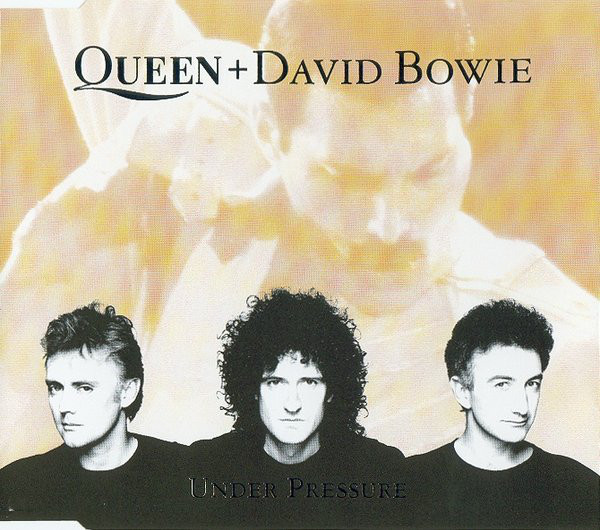
Vanilla Ice sampled this on “Ice Ice Baby,” which was a huge hit in 1990. It appears that the sample was never cleared and a settlement was reached with Queen and Bowie long after Vanilla’s song hit it big… I was very happy to see this happen.
John Deacon (Queen’s Bass Player) came up with the iconic two-note bass riff, although it came very close to vanishing. Deacon came up with the riff, then the band went for pizza before coming back to continue rehearsals. Upon returning, Deacon had completely forgotten his idea! Luckily, Taylor eventually remembered how the bassline went. The song is credited to Queen and David Bowie.
The song peaked at #29 in the Billboard 100, #1 in the UK, #3 in Canada, and #6 in NewZealand in 1982.
Brian May: “It was hard because you had four very precocious boys and David, who was precocious enough for all of us. David took over the song lyrically. Looking back, it’s a great song but it should have been mixed differently. Freddie and David had a fierce battle over that.”
\From Songfacts
A collaboration with David Bowie, this is credited to “Queen with David Bowie” because the B-side of the single is Queen’s “Soul Brother.” It was recorded at an impromptu session in Montreaux, Switzerland in the summer of 1981.
According to Queen bass player John Deacon, Freddie Mercury did most of the songwriting on this, although everyone contributed. The lyrics deal with how pressure can destroy lives, but love can be the answer. The lyrics are characteristic of Mercury’s songwriting.
May adds to this feeling of the sessions being fairly strained in a further interview for the Days of our Lives documentary, where he notes that “suddenly you’ve got this other person inputting, inputting, inputting… he (David) had a vision in his head, and it’s quite a difficult process and someone has to back off… and eventually I did back off, which is unusual for me.”
In the US, this was on Queen’s Greatest Hits album and released as a single at the same time. It was not released on a UK album until six months later, when it was included on Hot Space.
This was only the second UK #1 hit for Queen. They hit #2 with “Crazy Little Thing Called Love,” “We Are The Champions,” “Somebody To Love,” and “Killer Queen,” but their only previous #1 in England was “Bohemian Rhapsody.”
In the early ’80s, it was popular for two superstars to get together to release a hit single. Other notable combinations include Paul McCartney and Stevie Wonder on “Ebony And Ivory,” Diana Ross and Lionel Richie on “Endless Love,” and Kenny Rogers and Dolly Parton on “Islands in the Stream.” “Under Pressure” marked the first time Queen collaborated with another artist.
David Bowie performed this with Annie Lennox at the 1992 “Concert For Life” in Wembley Stadium, London. The show was a tribute to Freddie Mercury, with proceeds going to AIDS causes.
This song has been used in a number of movies, including 2002’s 40 Days And 40 Nights and 2004’s The Girl Next Door. It is also included in the hugely successful Queen tribute show We Will Rock You. >>
During the Taste Of Chaos tour, the singers from My Chemical Romance and The Used would come out and perform this song at the end of the show. >>
Joss Stone covered this for the 2005 Queen tribute album Killer Queen. >>
Reinhold Mack, who did production work on the Hot Space album, told an amusing story about the vocal recording for “Under Pressure,” where one of the two singers would record their improvised vocals with the other being locked out so they couldn’t hear what the other was doing.
Said Mack: “Freddie is doing all his bits and pieces and I see out of the corner of my eye David sticking his head in and listening. Then Fred came down and David went up, and Fred was quite impressed how David was counterpointing to what he (Freddie) had done before. Fred said ‘what do you make of this?’ and I said ‘Well, it’s kinda easy if you stand in the doorway and listen!'”
At which point Freddie apparently had some choice words for David!
According to a 2017 Mojo interview with Brian May, Freddie and David “locked horns” in the studio. Asked to elaborate, the Queen guitarist replied: “In subtle ways, like who would arrive last at the studio. So it was sort of wonderful and terrible. But in my mind I remember the wonderful now, more than the terrible.”
The two singers first met a dozen years before they recorded the song. In 1969, Freddie Mercury fitted David Bowie for a pair of boots during his day job working on a boot stall in Kensington Market.
Under Pressure
Mmm num ba de Dum bum ba be Doo buh dum ba beh beh
Pressure pushing down on me Pressing down on you, no man ask for Under pressure that burns a building down Splits a family in two Puts people on streets
Um ba ba be Um ba ba be De day da Ee day da, that’s okay
It’s the terror of knowing what the world is about Watching some good friends screaming “Let me out!” Pray tomorrow gets me higher Pressure on people, people on streets
Day day de mm hm Da da da ba ba Okay Chipping around, kick my brains around the floor These are the days it never rains but it pours Ee do ba be Ee da ba ba ba Um bo bo Be lap People on streets Ee da de da de People on streets Ee da de da de da de da
It’s the terror of knowing what the world is about Watching some good friends screaming ‘Let me out’ Pray tomorrow gets me higher, high Pressure on people, people on streets
Turned away from it all like a blind man Sat on a fence but it don’t work Keep coming up with love but it’s so slashed and torn Why, why, why? Love, love, love, love, love Insanity laughs under pressure we’re breaking
Can’t we give ourselves one more chance? Why can’t we give love that one more chance? Why can’t we give love, give love, give love, give love Give love, give love, give love, give love, give love?
‘Cause love’s such an old fashioned word And love dares you to care for The people on the edge of the night And love (people on streets) dares you to change our way of Caring about ourselves This is our last dance This is our last dance This is ourselves under pressure Under pressure Pressure
Of all the U2 songs this one is probably on the top of my list. The drum pattern sounds like they are marching off to battle. It’s raw and you can hear the conviction in what Bono is singing. The Edge’s guitar is crunchy and perfect.
The drum-beat was composed by Larry Mullen Jr., which was recorded in a staircase of their Dublin recording studio because producer Steve Lillywhite was trying to get a full sound with natural reverb.
“Bloody Sunday” was a term given to an incident, which took place on 30th January 1972 in Derry, Northern Ireland where British Soldiers shot 28 unarmed civilians who were peacefully protesting against Operation Demetrius. Thirteen were killed outright, while another man lost his life four months later due to injuries. It was reported that many of the victims who were fleeing the scene were shot at point-blank range.
The first person to have addressed these events musically was John Lennon who composed “Sunday Bloody Sunday” and released it on his third Solo album “Sometime In New York City”. His version of the song directly expresses his anger towards the massacre
The song peaked at #7 in the US Billboard Top Tracks Chart.
From Songfacts
There are two Bloody Sundays in Irish history. The first was in 1920 when British troops fired into the crowd at a football match in Dublin in retaliation for the killing of British undercover agents. The second was on January 30, 1972, when British paratroopers killed 13 Irish citizens at a civil rights protest in Derry, Northern Ireland. The song is more about the second Bloody Sunday.
The lyrics are a nonpartisan condemnation of the historic bloodshed in Ireland – politics is not something you want to discuss in Ireland. Bono’s lyrics in the song are more about interpersonal struggles than about the actual Bloody Sunday events.
Bono used to introduce this at concerts by saying: “This is not a rebel song.”
U2 has played several times at Croke Park, the site of the 1920 Bloody Sunday in Dublin. They first performed there in 1985 on the Unforgettable Fire tour.
Bono started writing this with political lyrics condemning the Irish Republican Army (the IRA), a militant group dedicated to getting British troops out of Northern Ireland. He changed them to point out the atrocities of war without taking sides.
While performing this, Bono would wave a white flag as a call for peace.
Bono was trying to contrast the 1972 Bloody Sunday massacre with Easter Sunday, a peaceful day Protestants and Catholics both celebrate.
The music video for this song was taken from a live performance that’s part of their Live at Red Rocks: Under a Blood Red Sky concert film. The concert took place June 5, 1983 at Red Rocks Amphitheatre in Colorado. Directed by Gavin Taylor, it captures the live energy of the band as they fight through the wind and rain to deliver a high-energy performance. At this time, U2 liked their videos shot outdoors in a natural setting.
Larry Mullen’s drums were recorded in a staircase of their Dublin recording studio. Producer Steve Lillywhite was trying to get a full sound with a natural echo.
Steve Wickham, who went on to join The Waterboys, played the electric fiddle on this track.
This took on new meaning as the conflict in Northern Ireland continued through the ’90s.
U2 recorded this in Denver for their Rattle And Hum movie on November 8, 1987. It was the same day as the Enniskillen massacre, where 13 people in Northern Ireland were killed by a bomb detonated by the Irish Republican Army (the IRA). Angered by these events, U2 gave a very emotional performance.
The version on U2’s live album Under A Blood Red Sky was recorded at a show in Sankt Goarshausen, Germany on August 20, 1983.
In 2003, The Edge inducted The Clash into the Rock and Roll Hall of Fame. In his speech, he said, “There is no doubt in my mind that “Sunday Bloody Sunday” wouldn’t – and couldn’t – have been written if not for The Clash.”
A live version of this song plays during the end credits of the 2002 movie Bloody Sunday, which is a documentary-style drama recreating the events of January 30,1972 in Derry, Ireland. It stars James Nesbitt (you may remember him as “Pig Finn” from Waking Ned Devine) as a local Member of Parliament who is involved with the Civil Rights Movement.
Sunday Bloody Sunday
Yeah Hmm hmm
I can’t believe the news today Oh, I can’t close my eyes And make it go away How long How long must we sing this song? How long? How long
’cause tonight we can be as one Tonight
Broken bottles under children’s feet Bodies strewn across the dead end street But I won’t heed the battle call It puts my back up Puts my back up against the wall
And the battle’s just begun There’s many lost, but tell me who has won? The trench is dug within our hearts And mothers, children, brothers, sisters torn apart
Sunday, bloody Sunday Sunday, bloody Sunday
How long How long must we sing this song? How long? How long
’cause tonight we can be as one Tonight tonight
Sunday, bloody Sunday Sunday, bloody Sunday
(Yeah, let’s go)
Wipe the tears from your eyes Wipe your tears away Oh, wipe your tears away I wipe your tears away (Sunday, bloody Sunday) I wipe your blood shot eyes (Sunday, bloody Sunday)
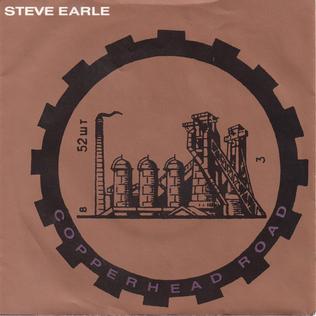
The first time I heard this song I was actually playing it on guitar. A buddy of mine started to play it in the late eighties and I started to follow him with the chords. I asked him where he heard it and he played me the Copperhead Road album. This one became one of my favorites off of the album.
It’s a great piece of songwriting.
The Copperhead Road album peaked at #56 in the Billboard Album Charts in 1989… which is hard to believe it wasn’t higher than that. It did peak at #7 in the Country Billboard Chart in 1989.
It’s a great song that has been covered by many artists including Waylon Jennings, Johnny Cash, and the Highwaymen.
From Songfacts
Songwriter Steve Earle is well known as a vocal opponent of capital punishment; running to 3 minutes 1 second, this classic miniature has a message for those who are likely to end up facing it; an attack on what Louis Farrakhan called “the glorification of the gun,” it makes the point that though a gun can get you into a lot of trouble, it can’t get you out of it.
In the song, the unfortunate storyteller fails to heed his mother’s warnings about carrying a pistol, and his youthful fascination ends with him shooting a man dead after being cheated at cards. When the authorities come for him, he protests they have the wrong man because “nothing touched the trigger but the Devil’s right hand”, which in the 21st Century would amount to an insanity defense, but would have probably not have swayed a jury in late 19th Century America wherein this cameo is set.
Waylon Jennings released this song before Earle did – he included it on his 1986 album Will the Wolf Survive. Jennings and Earle were good friends and kindred spirits; during one of Earle’s stints in prison, Jennings wore a bandana in his honor (Earle wears a bandana on his right wrist).
The Devil’s Right Hand
About the time that Daddy left to fight the big war I saw my first pistol in the general store In the general store, when I was thirteen I thought it was the finest thing I ever had seen
So l asked if I could have one someday when I grew up Mama dropped a dozen eggs, she really blew up She really blew up, and she didn’t understand Mama said the pistol is the devil’s right hand
The devil’s right hand, the devil’s right hand Mama says the pistol is the devil’s right hand
Me very first pistol was a cap and ball Colt Shoots as fast as lightnin’ but it loads a mite slow It loads a mite slow, and soon I found out It’ll get you into trouble but it can’t get you out
So about a year later I bought a Colt 45 Called a peacemaker but I never knew why I never knew why, I didn’t understand Mama says the pistol is the devil’s right hand
The devil’s right hand, the devil’s right hand Mama says the pistol is the devil’s right hand
Got into a card game in a company town I caught a miner cheating, I shot the dog down I shot the dog down, I watched the man fall He never touched his holster, never had a chance to draw
The trial was in the morning and they drug me out of bed Asked me how I pleaded, not guilty I said Not guilty I said, you’ve got the wrong man Nothing touched the trigger but the devil’s right hand
The devil’s right hand, the devil’s right hand Mama says the pistol is the devil’s right hand
The devil’s right hand, the devil’s right hand Mama says the pistol is the devil’s right hand
Brilliant song by Steve Earle. I became a fan of Steve Earle when I heard “I Aint Never Satisified” off of the Exit 0 album. Copperhead Road was an actual road near Mountain City, Tennessee. It has since been renamed Copperhead Hollow Road, owing to the theft of road signs bearing the song’s name.
What is interesting is Earle tells a story of three generations, of three different eras, and shows how they intersect all in one song.
This song peaked at #10 in the Billboard Mainstream Charts, #45 in the UK, and #12 in Canada in 1988.
Earle himself called the album the world’s first blend of heavy metal and bluegrass.
When you wrote things like “Copperhead Road,” did you know you had something that would be a signature song?
Steve Earle: Yeah. I did. That song I did. “Guitar Town,” I didn’t. I just thought I was writing a song that was going to open my tour and open my record, because I’d seen Springsteen come out and open the show with “Born in the U.S.A.” on that tour. That’s really when I started writing that album, the day after I saw that tour. But it had such a utilitarian reason to exist for me that I thought that was it. So I was shocked when they made it a single and shocked when it was a hit. But “Copperhead” I knew.
From Songfacts
Copperhead Road is a real road in East Tennessee where moonshine was made and two generations later, marijuana was grown. The song tells the story of a soldier who returns home from Vietnam and starts trafficking marijuana.
Copperhead Road is a highly acclaimed album that came after an interesting year for Earle: he spent New Year’s Day of 1988 in a Dallas jail charged with assaulting a policeman, had to deal with various legal and business issues, and at one point had a message on his answering machine that said, “This is Steve. I’m probably out shooting heroin, chasing 13-year-olds and beatin’ up cops. But I’m old and I tire easily, so leave a message and I’ll get back to you.” He also married his fifth wife around the time the album was released.
Along with “Guitar Town,” this is one of Earle’s signature songs. When he wrote it, he knew it would catch on.
Copperhead Road
Well my name’s John Lee Pettimore Same as my daddy and his daddy before You hardly ever saw Grandaddy down here He only came to town about twice a year He’d buy a hundred pounds of yeast and some copper line Everybody knew that he made moonshine Now the revenue man wanted Grandaddy bad He headed up the holler with everything he had It’s before my time but I’ve been told He never came back from Copperhead Road Now Daddy ran the whiskey in a big block Dodge Bought it at an auction at the Mason’s Lodge Johnson County Sheriff painted on the side Just shot a coat of primer then he looked inside Well him and my uncle tore that engine down I still remember that rumblin’ sound Well the sheriff came around in the middle of the night Heard mama cryin’, knew something wasn’t right He was headed down to Knoxville with the weekly load You could smell the whiskey burnin’ down Copperhead Road
I volunteered for the Army on my birthday They draft the white trash first,’round here anyway I done two tours of duty in Vietnam And I came home with a brand new plan I take the seed from Colombia and Mexico I plant it up the holler down Copperhead Road Well the D.E.A.’s got a chopper in the air I wake up screaming like I’m back over there I learned a thing or two from ol’ Charlie don’t you know You better stay away from Copperhead Road
I enjoyed this song and album when it was released. It was somewhat of a comeback for Simon. I traveled to Graceland the same year it was released for the first time. I got ignored by the guide. It was 1987 and the guide brought up the Beatles and I asked a question about it…I cannot remember the question. The second question I asked was about Bruce Springsteen…how he supposedly climbed the gate to give Elvis the song “Fire” but Elvis wasn’t at home. She finally asked..do we have any more questions…and looked at me…” about Elvis?” I shook my head no and continued…
Part of this song is an account of Paul Simon’s marriage breakup with his first wife Peggy Harper. The nine-year-old “traveling companion” he refers to is their son Harper, who three years later, at the age of 12, accompanied his father on the Graceland tour. Harper Simon, born in 1972, developed into a singer-songwriter.
The song only charted at #81 in the Billboard 100 in 1987…which is surprising to me now. It got a lot of airplay at the time.
At first, Simon considered the word “Graceland” a placeholder title until he could come up with something better – maybe something that had to do with Africa. After a while, he realized the title wasn’t going away, and he got comfortable with it.
Paul Simon: “I couldn’t replace it. I thought, Maybe I’m supposed to go to Graceland. Maybe I’m supposed to go on a trip and see what I’m writing about, and I did.”
Paul Simon: “The track has a beautiful emptiness to it. That’s what made me think of Sun Records when it was nothing but slapback echo and the song.”
From Songfacts
Graceland is the mansion in Memphis, Tennessee where Elvis Presley lived; it is where Elvis is buried, and it is now a museum and popular tourist attraction. Paul Simon started calling his song “Graceland” after he came up with the track, which reminded him of the Sun Records sound where Elvis recorded.
Simon says this song is an example of “how a collaboration works even when you’re not aware of it occurring.” He traveled to South Africa in February 1985 and recorded with a variety of local musicians. One of these sessions was with an accordion player named Forere Motloheloa, who played on the song “The Boy in the Bubble.” These sessions produced a drum sound that Simon liked, which he described in the 2012 Graceland reissue: “The drums were kind of a traveling rhythm in country music – I’m a big Sun Records fan, and early-’50s, mid-’50s Sun Records you hear that beat a lot, like a fast, Johnny Cash type of rhythm.”
Simon put together a rhythm section comprised of three African musicians: guitarist Ray Phiri, fretless bass player Baghiti Khumalo, and drummer Isaac Mtshali. Simon played the drums for Phiri, and asked him to play something over it. Phiri started to play his version of American Country on electric guitar, which were chords not frequently used in African music: minor chords. When Simon asked him why he played that, Phiri responded, “I was just imitating the way you write.”
With Phiri playing his approximation of Amercian country, and Baghiti playing a straight ahead African groove on bass, Simon felt there was a commonality in the music, and he wrote a lyric to express that.
Simon describes that trip in the song; he drove to Graceland from Louisiana on Route 61, and the lyrics were his thoughts of the countryside: “The Mississippi Delta is shining like a National guitar.” When he finally got to Graceland, he took the famous tour.
This is the title track of Simon’s most successful album, selling over 15 million copies and winning a Grammy for Album of the Year. It is an album focusing mostly on African music, but it also explores other forms of non-mainstream music, like Zydeco. Simon considers this song to be less African-sounding than most of the other African-based tracks. The single also won Simon his third Record of the Year award – he previously won for “Mrs. Robinson” and “Bridge Over Troubled Water.”
Paul Simon’s visit to South Africa was no easy task, as many nations were boycotting the country because of their racist apartheid policy. However, the United Nations Anti-Apartheid Committee supported his efforts since he only recorded with black South African musicians and did not collaborate with the government in any way. This didn’t appease some critics, who felt that violating sanctions undermined efforts to effect change in the country, no matter his artistic intentions. Ultimately, the Graceland project helped raise awareness to the apartheid struggle and expose many South African musicians to a global audience. The sanctions were put in place mainly to prevent entertainers from performing lucrative gigs at the Sun City resort, and Simon did nothing to support the corrupt government there.
Regarding the lyrics, “There’s a girl in New York City who calls herself the human trampoline,” Simon explained to SongTalk magazine: “That line came to me when I was walking past the Museum of Natural History. For no reason, I can think of. It’s not related to anybody. Or anything. It just struck me as funny. Although that’s an image that people remember, they talk about that line. But really, what interested me was the next line, because I was using the word ‘Graceland’ but it wasn’t in the chorus. I was bringing ‘Graceland’ back into a verse. Which is one of the things I learned from African music: the recapitulation of themes can come in different places.”
Explaining the World Music component of this song in the album reissue, Simon explained: “The part of me that had ‘Graceland’ in my head I think was subconsciously reacting to what I first heard in the drums, which was some kind of Sun Records/country/blues amalgam. What Ray was doing was mixing up his aural recollections of what American country was and what kind of chord changes I played. So the whole song really is one sound evoking a response, and that eventually became a lyric that instead of being about a South African subject or a political subject, it became a traveling song. That’s really the secret of World Music is that people are able to listen to each other, made associations, and play their own music that sounds like it fits into another culture.”
Several months after the initial recording sessions, Nigerian pedal steel guitarist Demola Adepoju was added to the track. This added a sound familiar to both American and African music, as the pedal steel guitar is a popular instrument in West Africa.
This song has stood the test of time, but when it was released as a single, it only charted at #82 in the US and didn’t crack the charts in the UK. It didn’t fit neatly into any radio formats like “You Can Call Me Al,” so it lacked hit potential. It did find an audience as part of the album, which went to #1 in the UK and stayed on the charts for nearly two years. In America, the album peaked at #3 but stayed on the chart for 97 weeks.
Don and Phil Everly of the Everly Brother sang backup on this track. Paul Simon and his musical partner Art Garfunkel idolized the Everlys and recorded their song “Bye Bye Love” for their Bridge Over Troubled Water album. Simon said he heard “Graceland” as “a perfect Everly Brothers song.”
In a 1993 interview on Larry King Live, Simon said this was his favorite song.
The B-side of the single was “Hearts And Bones,” which can be found on the album of the same name, released three years prior to Graceland.
Simon’s second wife, Carrie Fisher, was the topic of some of the songs on his 1983 Hearts and Bones album, including the title track. They got married that year, divorced a year later, but kept an on-and-off relationship throughout the ’80s. Fisher told Rolling Stone, “‘Graceland’ has part of us in it.”
Graceland
The Mississippi Delta was shining like a National guitar I am following the river Down the highway Through the cradle of the civil war
I’m going to Graceland, Graceland Memphis, Tennessee I’m going to Graceland Poor boys and pilgrims with families And we are going to Graceland
My traveling companion is nine years old He is the child of my first marriage But I’ve reason to believe We both will be received In Graceland
She comes back to tell me she’s gone As if I didn’t know that As if I didn’t know my own bed As if I’d never noticed The way she brushed her hair from her forehead And she said, “losing love Is like a window in your heart Everybody sees you’re blown apart Everybody sees the wind blow”
I’m going to Graceland Memphis, Tennessee I’m going to Graceland Poor boys and pilgrims with families And we are going to Graceland
And my traveling companions Are ghosts and empty sockets I’m looking at ghosts and empties But I’ve reason to believe We all will be received In Graceland
There is a girl in New York City Who calls herself the human trampoline And sometimes when I’m falling, flying Or tumbling in turmoil I say “Whoa, so this is what she means” She means we’re bouncing into Graceland And I see losing love Is like a window in your heart Well, everybody sees you’re blown apart Everybody sees the wind blow
Ooh, ooh, ooh In Graceland, in Graceland I’m going to Graceland For reasons I cannot explain There’s some part of me wants to see Graceland And I may be obliged to defend Every love, every ending Or maybe there’s no obligations now Maybe I’ve a reason to believe We all will be received In Graceland
Whoa, oh, oh In Graceland, in Graceland, in Graceland I’m going to Graceland
A friend of mine who played guitar in high school got a bootleg of this song a year before it was officially released. His band was playing in the gym before we went on and they played this song. I thought they wrote it until I asked him. It’s a great-sounding song live.
It was an instant bar band song. It was a song you didn’t really have to rehearse…just one listen would do it.
This was the only big hit for the Georgia Satellites, although lead singer Dan Baird had a hit as a solo artist in 1992 with “I Love You Period.” They didn’t have another big hit but they did have some songs that got airplay on radio and MTV like Battleship Chains and a cover of Hippy Shake. This was one of the few straight-out rock and roll songs to hit the charts at this time.
It was released in 1986 and peaked at #2 in the Billboard 100 and #69 in the UK in 1987.
From Songfacts
Lead singer Dan Baird wrote this about the problems their drummer was having with his girlfriend. He wrote it in one sitting on their tour bus.
The video portrayed a shotgun wedding, complete with very pregnant bride and actual shotgun. It was directed by Bill Fishman, whose other credits include the Ramones’ “I Wanna Be Sedated” and Good Charlotte’s “Lifestyles Of The Rich And Famous.”
Many people thought the line “I’ve got a little change in my pocket, going jingle, linga, ling” was a reference to masturbation. The group denied this.
The group was signed to Elektra Records after executives heard a cheaply made 8-track demo of this song. Elektra gave the band a 5-figure budget to cut an entire album of material, but despite attempting several different recordings of “Keep Your Hands to Yourself,” none of these takes were as good as the demo. The demo was included on the album, and that is the version you hear.
Keep Your Hands To Yourself
I got a little change in my pocket going jingle lingle ling Want to call you on the telephone baby i give you a ring But each time we talk i get the same old thing Always no huggin no kissin until i get a wedding ring My honey my baby don’t put my love upon no shelf She said don’t give no lies and keep your hands to yourself
Cruel baby baby baby why you want to treat me this way You know i’m still your lover boy i still feel the same way That’s when she told me a story ’bout free milk and a cow And she said no huggin no kissin until i get a wedding vow My honey my baby don’t put my love upon no shelf She said don’t hand me no lies and keep your hands to yourself
You see i wanted her real bad and i was about to give in That’s when she started talkin’ true love started talkin’ about sin I said honey i’ll live with you for the rest of my life She said no huggin no kissin until you make me your wife My honey my baby don’t put my love on no shelf She don’t hand me no lies and keep your hands to yourself.
The album Damn The Torpedos broke Tom Petty and the Heartbreakers to the masses.
In the US, Damn The Torpedoes was a big success and helped the band grow a huge audience. The album peaked at #2 in the Billboard 100, held out of #1 by Pink Floyd’s The Wall.
The song peaked at #15 in the Billboard 100, #2 in Canada, and #3 in New Zealand in 1980.
Tom Petty: “This was a reaction to the pressures of the music business. I wound up in a huge row with the record company when ABC Records tried to sell our contract to MCA Records without us knowing about it, despite a clause in our contract that said they didn’t have the right to do that. I was so angry with the whole system that I think that had a lot to do with the tone of the Damn the Torpedoes album. I was in this defiant mood. I wasn’t so conscious of it then, but I can look back and see what was happening. I find that’s true a lot. It takes some time usually before you fully understand what’s going on in a song – or maybe what led up to it.”
From Songfacts
Heartbreakers guitarist Mike Campbell wrote the music and Petty added the lyrics. In a Songfacts interview with Campbell, he told us about the recording process: “That was a hard record to make. It was a 4-track that I made at my house. Tom wrote over the music as it was, no changes, but it took us forever to actually cut the track. We just had a hard time getting the feel right. We must have recorded that 100 times. I remember being so frustrated with it one day that – I think this is the only time I ever did this – I just left the studio and went out of town for two days. I just couldn’t take the pressure anymore, but then I came back and when we regrouped we were actually able to get it down on tape.”
Mike Campbell: “When we were at the studio mixing it, I remember this one girl who was working in reception, she came in and heard the mix and she said, ‘That’s a hit, that’s a hit,’ and we looked at each other and said, ‘Maybe it is.’ You don’t always know. Sometimes you think certain things are surefire and people just don’t latch on to them and other things they do. You know when it’s good or not, but you don’t always know if it’s a hit. A hit record a lot of times is more than just the song, it’s the timing, the climate you put it out in, what people are listening to and what they’re expecting to hear and if it touches a nerve at a certain time.”
Campbell and Petty teamed up to write many of the band’s songs, including “Here Comes My Girl,” “Jammin’ Me,” and “You Got Lucky.” Mike also wrote the music for Don Henley’s “The Boys of Summer” and “The Heart Of The Matter.” When we asked him what was his favorite song he’s written, he said: “Refugee always makes me happy. Maybe because it was so hard to get on the tape, there was a time when I thought it would never come out, that we just can’t do it. It always sounds like it really captured a moment. If I had to pick one favorite, I’d probably pick that first.”
Tom Petty and the Heartbreakers performed this in 1979 on their first Saturday Night Live appearance, where they also played “Don’t Do Me Like That.”
The band closed out their Live Aid set at JFK Stadium in Philadelphia with “Refugee.” The massive 1985 benefit concert was also staged in London the same day.
The band shot a music video for this song because they didn’t want to appear on The Merv Griffin Show in person. It did the trick, and the video aired on the show, allowing Tom Petty and the Heartbreakers to promote the song without showing up. This was the only place they thought the video would air, but when MTV launched in 1981, it got lots of play on the network, which craved rock videos from American artists. The band became one of the most popular acts on MTV, feeding the network with cinematic productions for songs like “Don’t Come Around Here No More” and “Free Fallin’.”
During a Twitter Q&A in December 2011, Petty disclosed that Melissa Etheridge doing “Refugee” was the best cover of the song he ever heard. Etheridge’s version was recorded for her 2005 compilation album, Greatest Hits: The Road Less Traveled.
Refugee
We did somethin’ we both know it We don’t talk too much about it Ain’t no real big secret all the same Somehow we get around it Listen it don’t really matter to me baby You believe what you want to believe You see you don’t have to live like a refugee (don’t have to live like a refugee)
Somewhere, somehow somebody Must have kicked you around some Tell me why you want to lay there And revel in your abandon Honey, it don’t make no difference to me baby Everybody’s had to fight to be free You see you don’t have to live like a refugee (don’t have to live like a refugee) Now baby you don’t have to live like a refugee (don’t have to live like a refugee)
Baby we ain’t the first I’m sure a lot of other lover’s been burned Right now this seems real to you But it’s one of those things You gotta feel to be true
Somewhere, somehow somebody Must have kicked you around some Who knows, maybe you were kidnapped Tied up, taken away and held for ransom It don’t really matter to me Everybody’s had to fight to be free You see you don’t have to live like a refugee (don’t have to live like a refugee) I said you don’t have to live like a refugee (don’t have to live like a refugee) You don’t have to live like a refugee (don’t have to live like a refugee), ah , ah
Looking back it’s kinda hard to believe that a fifties sounding band made a big splash among the big hair synth 1980s. In the seventies yes it would have been not only possible but probable because of a 50’s revival then.
Brian Setzer lead guitarist: ‘I couldn’t relate to prog rock. We never had any wizards in my neighborhood. We had ’58 Chevys and good-looking girls’
Brian came up with Stray Cat Strut back his garage in Long Island when he was 18. He wanted something slower than their other songs. It was about the three members, and the lives they were living. At that point, they were still called the Tomcats, but it became “stray” when they went to London.
They found a counterculture in London that related to the fifties music and style. The original group of people that came to see them included Chrissie Hynde, Joe Strummer, Lemmy and Glen Matlock.
Ronnie Lane from the Faces put them up and Dave Edmunds grabbed them at the Venue and said: “Let me produce you before someone else ruins you.” Dave did indeed produce them.
This song peaked at #3 in the Billboard 100 in 1983.
Black and orange stray cat sittin’ on a fence Ain’t got enough dough to pay the rent I’m flat broke, but I don’t care I strut right by with my tail in the air
Stray cat strut, I’m a (Ladies’ cat) I’m a feline Casanova (Hey, man, that’s where it’s at) Get a shoe thrown at me from a mean old man Get my dinner from a garbage can
Meow Yeah, don’t cross my path
I don’t bother chasing mice around, oh, no I slink down the alley looking for a fight Howling to the moonlight on a hot summer night Singin’ the blues while the lady cats cry “Wild stray cat, you’re a real gone guy I wish I could be as carefree and wild But I got cat class, and I got cat style”
I don’t bother chasing mice around I slink down the alley looking for a fight Howling to the moonlight on a hot summer night Singin’ the blues while the lady cats cry “Wild stray cat, you’re a real gone guy I wish I could be as carefree and wild But I got cat class, and I got cat style”
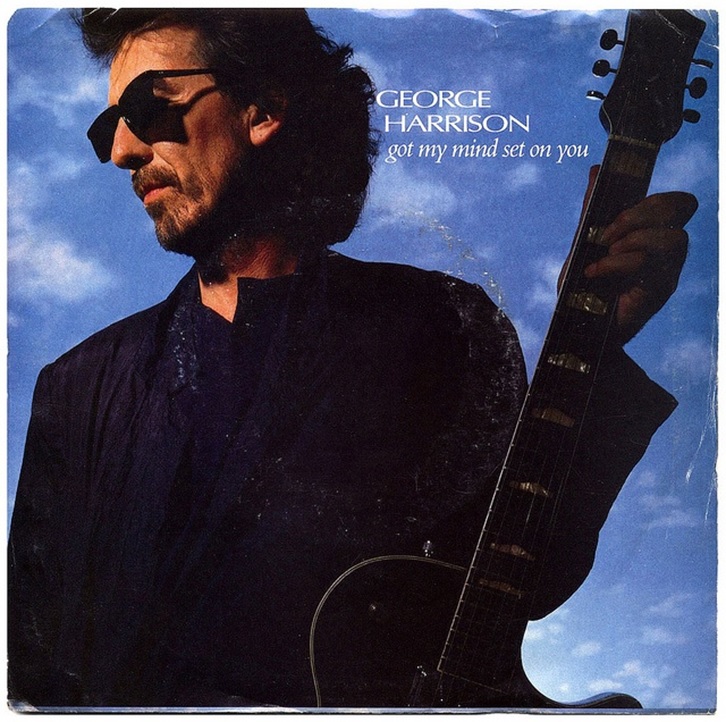
In 1988 I bought Cloud Nine by George Harrison. It stayed on my turntable and in my cassette player for months. This song is not my favorite on the album but I was happy to see George at the top of the charts for the first time since “Give Me Love (Give Me Peace on Earth)” in 1973.
The song was written and composed by Rudy Clark and originally recorded by James Ray in 1962 but it was not a hit for James.
ELO’s Jeff Lynne produced this song with Harrison. His influence can be heard in the backing vocals of the chorus. The song peaked at #1 in the Billboard 100, #1 in Canada, #2 in the UK, and #4 in NewZealand in 1988.
This song is the last number 1 song by a Beatle. Paul did have a number 1 album in 2018 with Egypt Station. Cloud Nine peaked at #8 in the Billboard Album Chart.
From Songfacts
This was written by Rudy Clark and originally recorded by James Ray in 1962. Harrison bought a copy of the single in the summer of 1963 when visiting his sister Louise in Illinois. Many years later when he was writing his Cloud Nine album, he remembered the song and decided to cover it.
Cloud Nine was Harrison’s comeback album. He hadn’t had a hit since 1981 with “All Those Years Ago,” and his previous US #1 was “Give Me Love (Give Me Peace On Earth)” in 1973. Until the Beach Boys released “Kokomo,” Harrison had the record for longest span between #1 hits. “Got My Mind Set On You,” however, was his last single to chart.
Harrison released another album earlier in 1982 called Gone Troppo, which flopped. Proving that he could whip up a hit, he released this very simplistic cover song and it was a huge commercial success. A lot of Harrison’s work was well off the mainstream, using unusual instruments and based on Indian music. This proved that he could release a song requiring very little thought and send it up the charts. Predictably, many of Harrison’s ardent followers can’t stand this song.
Along with Roy Orbison, Bob Dylan, and Tom Petty, Harrison and Lynne formed The Traveling Wilburys in 1988.
Got My Mind Set On You
I got my mind set on you I got my mind set on you I got my mind set on you I got my mind set on you
But it’s gonna take money A whole lot of spending money It’s gonna take plenty of money To do it right, child
It’s gonna take time A whole lot of precious time It’s gonna take patience and time, um To do it, to do it, to do it, to do it, to do it To do it right, child
I got my mind set on you I got my mind set on you I got my mind set on you I got my mind set on you
And this time I know it’s for real The feelings that I feel I know if I put my mind to it I know that I really can do it
I got my mind set on you Set on you I got my mind set on you Set on you
But it’s gonna take money A whole lot of spending money It’s gonna take plenty of money To do it right, child
It’s gonna take time A whole lot of precious time It’s gonna take patience and time, um To do it, to do it, to do it, to do it, to do it To do it right
I got my mind set on you I got my mind set on you I got my mind set on you I got my mind set on you
And this time I know it’s for real The feelings that I feel I know if I put my mind to it I know that I really can do it
But it’s gonna take money A whole lot of spending money It’s gonna take plenty of money To do it right, child
It’s gonna take time A whole lot of precious time It’s gonna take patience and time, um To do it, to do it, to do it, to do it, to do it To do it right
Set on you Set on you
Set on you Set on you Set on you Set on you Set on you Set on you I set my mind on you I’m gonna set on you







 PowerPop... An Eclectic Collection of Pop Culture