
Books I Would Recommend…Part 3

Keith Moon Dear Boy

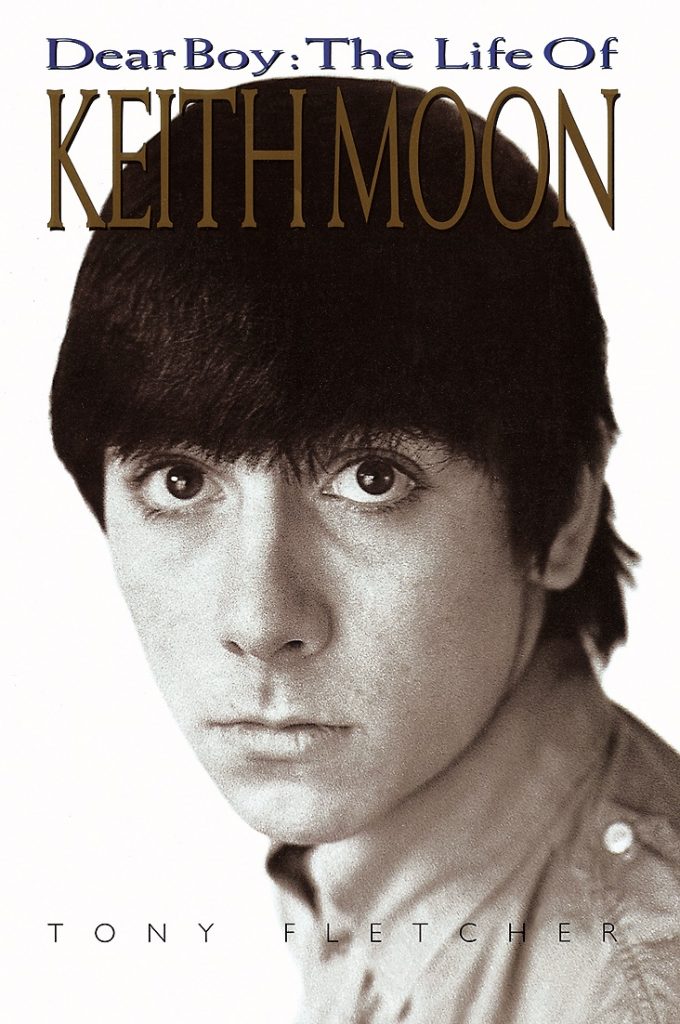
Keith Moon: Dear Boy – Tony Fletcher

I didn’t think I would ever see an extensive book (nearly 600 pages) on Keith Moon. Tony Fletcher wrote this book and he thoroughly researched Keith and he had been a fan since his teenage years. As a teenager, he actually met Keith before he died.

Fletcher talks to everyone of importance in Keith’s life. The only disappointing thing for me and for Fletcher himself is he had to debunk some of the myths about Keith. The great story of him driving a car in the pool of a Flint Michigan Holiday Inn… didn’t happen… but the real story is just as interesting though.

The veil is drawn back on a lot of myths. It’s not a book full of Keith doing wild things like the book “Full Moon”. This one shows his ugly side also. Keith had one of the most dangerous traits you could have…the ability not to be embarrassed. Think about that…that keeps us in check at times. With Keith, anything could happen at any time.
Replacements - Trouble Boys

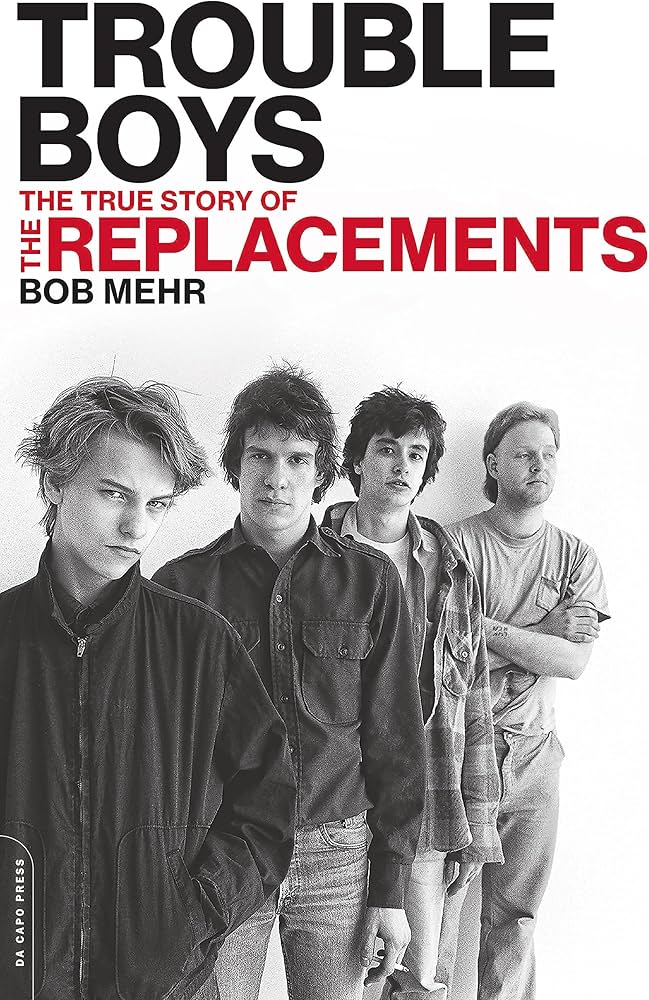
Trouble Boys – Bob Mehr

One of the only books about The Replacements. After this book, I started to understand the reckless and sabotaging behavior of the band. It also goes through the tough decision of Bob Stinson leaving the band only to die a few years later.

It was interesting to see the relationship they had with other bands such as REM at the time. They would goad each other into making better albums. I was a fan before I read it but it increased my interest by a bunch afterwards.

Up and Down with the Rolling Stones - Tony Sanchez

Up and Down with the Rolling Stones – Tony Sanchez

This was the first book I read on the Rolling Stones when I was around 13. It’s an easy but dark read. It’s written by Tony Sanchez, Keith’s drug dealer and sometimes partner in crime. Tony was also a photographer who took photos of the Stones and the Moody Blues. Spanish Tony, as he was called hung around with the Stones, Moody Blues and also knew the Beatles.

It’s full of wrecked cars, heroin, dead friends, sleazy characters, and some eventful journeys. At first, I would take some of the stories with a grain of salt but most of the events were verified by Keith’s book “Life.”
Let The Good Times Roll - Kenney Jones

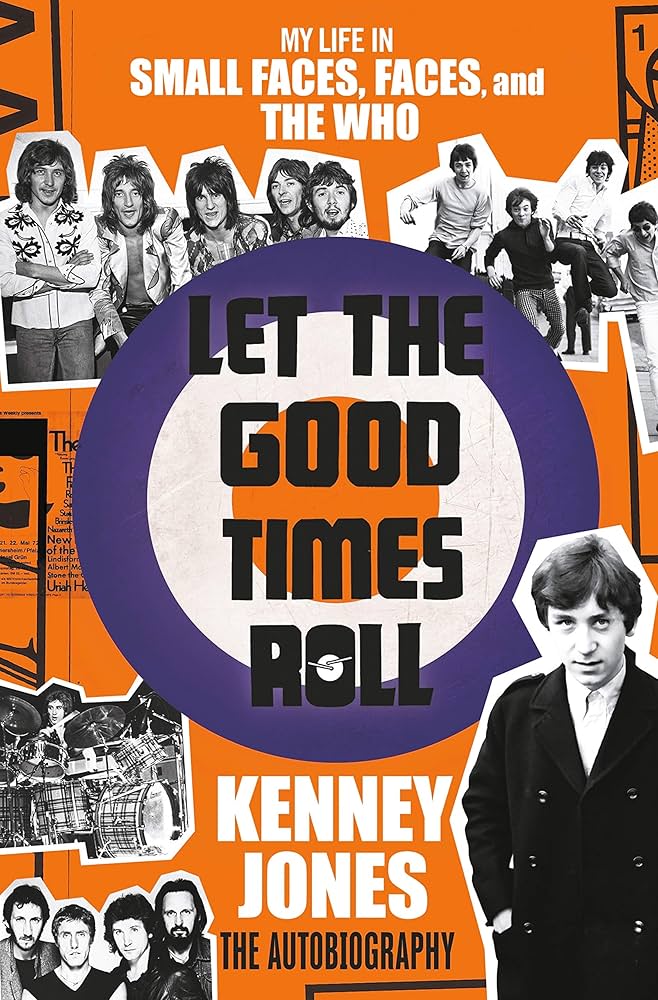
Let The Good Times Roll – Kenney Jones

Kenney Jones was the drummer of three of England’s most influential bands – The Small Faces, The Faces and for a few years The Who. I was pleasantly surprised by this book. Kenney keeps the book interesting from his childhood, teen years, swinging London, the Swinging Seventies, up til now.

I never knew much about the Small Faces and Faces and this book answered some questions I had about both bands.  He gave much more information than Roger Daltrey did in his book about Jone’s tenure as the drummer of the Who and their difficulties. Personally, I don’t think Kenney was the right drummer for the Who but then again…I don’t think anyone could have taken Moon’s place. He does give an interesting perspective on it though.

I didn’t’ realize that Keith Moon and Kenney were as close as they were.  Kenney had played with the Who before in sound checks when the Small Faces and Who were touring with each other and Moon couldn’t be found. After Moon died a few strange things happened to Kenney right before Bill Curbishley (The Who’s Manager) called to see if he would join. The strange events helped him make the decision.
Living The Beatles Legend

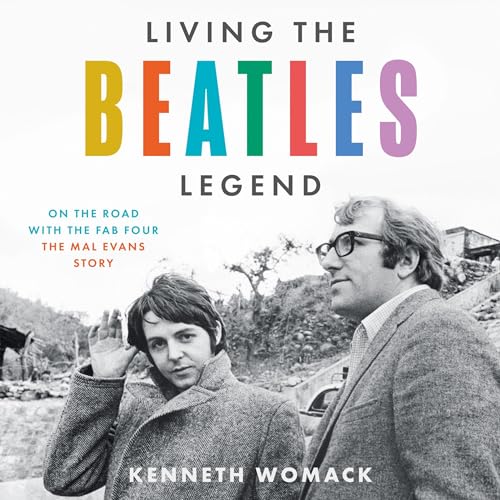
Living The Beatles Legend – Kenneth Womack

I did a review on this last year but I wanted to get it in here.

I’ve been waiting on this book since I read about the Beatles in the 70s as a kid. I knew the story…after a showdown with police Mal Evans was shot and killed on January 5, 1976. He was working on his autobiography at the time. Evans was the last person you would think would die that way…and in this case…he wanted it. Could the police have handled it better? Yes, but Mal had said that is how he wanted to go out. He forced the situation. He was only 40 years old.

Mal Evans along with Neil Aspinal were the roadies for the Beatles. Imagine that…2 roadies for the world’s biggest band. Mal worked at a telephone company in the early ’60s but he loved rock and roll…especially Elvis Presley. He would go see bands at the Cavern and struck up a friendship with George Harrison. George told him since he loved music…take a part-time job as a bouncer at The Cavern. The Beatles automatically liked him from the start. He was a big guy at 6’4″ but he never wanted to use violence. More times than not…he talked his way out of trouble. Aspinal was their only roadie and when Love Me Do and then Please Please Me came out…they needed another person because Aspinal was worn out.

I would highly recommend this book. Kenneth Womack had full access to his diaries and used many of the entries. This book turned up a lot of things about them that I had no clue about. It also gave a different look at their personalities on an everyday basis. Near the end, Mal went to the 2nd Beatles convention and spoke. He started to battle depression in the seventies after living in California and missing his wife and kids back in London. He picked up a girlfriend in California and that made his guilt worse. Drugs also affected him in the end.

Dear Boy: The Life Of Keith Moon

I didn’t think I would ever see an extensive book (nearly 600 pages) on Keith Moon. Tony Fletcher wrote this book and he thoroughly researched Keith and he had been a fan since his teenage years. As a teenager, he actually met Keith before he died. I’ll post what happened at the end of the blog from Tony’s website.

The book is huge and Fletcher talks to everyone of importance in Keith’s life. The only disappointing thing for me and for Fletcher himself is he had to debunk some of the myths about Keith. The great story of him driving a car in the pool of a Flint Michigan Holiday Inn…didnt happen… but the real story is just as interesting though.

The veil is drawn back on a lot of myths. It’s not a book full of Keith doing wild things like the book “Full Moon”. This one shows his ugly side also. Keith had one of the most dangerous traits you could have…the ability not to be embarrassed. Think about that…that keeps us in check at times. With Keith, anything could happen at any time.

Keith was diagnosed with Borderline Personality Disorder and elements of schizophrenia…add that with alcohol and drug abuse and it’s a wonder he lived as long as he did… In his first and only marriage, he was terrible to his wife Kim who finally had enough and left him for Ian McLagan and Keith never recovered from that. Kim would say he would dress up and be Hitler one day, a Pirate the next and Noel Coward at other times…not only dress up but BE those people all day.

The book also concentrates on his drumming and the influence he was to so many. The author wanted to show it was more to Keith than the Moon the Loon image…and it was. He was fantastic to fans and his friends. He would play with friends kids…like Ringo’s son Zak and Larry Hagman’s child for hours but yet basically ignore his daughter Mandy. It also touched on his relationship with each member of the band and his love of the Beach Boys and friendship with The Beatles.

He would go to schools and talk to unruly kids and explain to them that they need to settle down. He could get by with bad things because he was a pop star but they would get thrown in jail.

He became a caricature of his self at the end. He tried to live up to the image that he created. Many people have said that during the last few months of his life he was trying to settle down and even started to write an autobiography so he could put to bed the Moon the Loon image. He was trying to stop drinking but he would go into seizures because his body craved alcohol so bad.

A doctor gave him Heminevrin to ease the withdrawal symptoms from alcohol and he took too many and overdosed. Heminevrin should not have been given to him, it should have only been administered in a hospital but he was a rock star and so the doctor looked the other way. He kept waking up through the night and taking more…32 tablets were found in his system.

The book covers everything about the man and information about The Who I never knew. You can’t help but laugh at some of the things he did. At the same time, it’s sad knowing the man was mentally unstable. That probably helped his drumming on the edge but the price was too high.

There is just too much in the book to cover in a blog. It is an interesting read… The first line says it all… How do you attempt to capture an exploding time bomb? These were the first words put to me by one of the vast number of people I talked to while researching the life of Keith Moon.

From Tony Fletcher’s iJammin! website…  http://www.ijamming.net/Moon/ChasingTheMoon.html

On August 1, 1978, an exhibition of Who memorabilia curated by the group’s fans opened at the Institute Of Contemporary Arts on The Mall, near Buckingham Palace in London.

It was perhaps inevitable that members of the band would turn up to the opening. Their presence brought the process full circle: if the Who meant so much to their fans that the audience should mount an exhibition, then it followed that the fans meant so much to the Who that the band would want to see it.

So it came about that both Pete Townshend and Keith Moon immersed themselves among the hundreds of diehard Who worshippers that first day of ‘Who’s Who’ to make their way around the exhibition, pausing to talk with the audience along the way.

To a fourteen-year old fanzine writer, who had identified with the Who since first discovering pop music, and had attended the group’s last London stadium show as an excited twelve-year old, being in the same room as Pete and Keith was a significant moment. Like many others throwing nervous glances his heroes’ way, he respected them enough to grant them their privacy, but still he wanted an autograph, a chance to talk. While studying a bizarre life-size hologram of Keith Moon at the drums, the boy turned to find the real thing standing next to him. Keith looked shorter in real life, and somewhat chubbier. But it was unmistakably him: the hologram had obviously been based on a recent picture or film. The boy made a comment about the surreal situation, looking at an illusion while standing next to the real thing, and the rock star, quietly, in contrast to his larger-than-life reputation, said something in agreement. The boy then seized his moment. He pulled from his sports bag a lone copy of the fanzine he produced and asked Keith Moon to autograph a basic biography on the Who he had written for it.

The drummer looked at the cheaply produced fanzine, checked the cover to register the name — Jamming! — examined the boy’s face, and said, “I don’t think I’ve seen this one.”

You wouldn’t have, thought the boy, given that there were only one hundred copies in existence, and those mainly sold at his school. “It’s my own magazine,” he said aloud.

“I’d like to read this article some time,” said the rock star with evident sincerity.

“You can keep it if you want,” replied the boy, eager to please.

“No, you want it autographed,” said Moon, signing his name across the page with a flourish. “Tell you what, though.” He produced a slip of paper from an inside pocket and scribbled an address in Mayfair on it. “Here’s where I live,” he said as he handed it to the incredulous fourteen year old. “Come and see me. Bring a copy of your magazine with you. Any time’s fine by me.”

A week or so after meeting his hero, the fourteen-year old boy made his way nervously to a plush apartment building in London’s Mayfair. He carried the star’s address in his pocket: Flat 9, 12 Curzon Place, London W1. He did not know if he possessed the courage. It didn’t make sense his being invited around like that; it was hardly as if someone so popular could be lonely for company. With no security to stop him, he made his way to the fourth floor. His heart in his mouth, he approached Flat 9 with his magazine under his arm and knocked quietly. He thought he could hear music, yet from which apartment he was not sure. He knocked again, a little louder this time. But there was no reply. He slipped the magazine under the door along with an appreciative note bearing his own phone number and address. He didn’t really expect to hear back from his hero.
And he never did. Just a couple of weeks later, Keith Moon died in that same Mayfair apartment.

I cried when I learned of Keith Moon’s death: on Capital Radio at 9pm, at the start of Nicky Horne’s show, as I vividly recall it being, late that Thursday evening of September 7. (At 10pm every night, I would turn religiously to John Peel on Radio 1.) It was the first time anybody’s death had ever hit me personally, and it affected me in much deeper ways than I believe my family could understand at the time. To them he was just another alcoholic rock star, pissing away his limited talent and excess wealth, and indeed there was an ugly scene at a cousin’s communion shortly thereafter, when an aunt dared to insult the dead drummer for his general debauchery and lack of morals as she had read about in a middle-class tabloid and I jumped passionately to my dead hero’s defense. For me, Keith Moon had been more than just a world-famous rock star, more than simply a brilliant drummer, more even than the most irrepressible and carefree character of rock’n’roll’s last (and British rock’s first) fifteen years. He had been a human being, an approachable, affable man who had never forgotten what it was like to be a fan or a dreamer. More than that, for those few minutes that August on The Mall, he had been as a friend.

This website has stories from Jeff Beck, Alice Cooper, and Dave Edmunds about Keith. If you have the time check them out.

The night before he died.

keith last.jpg