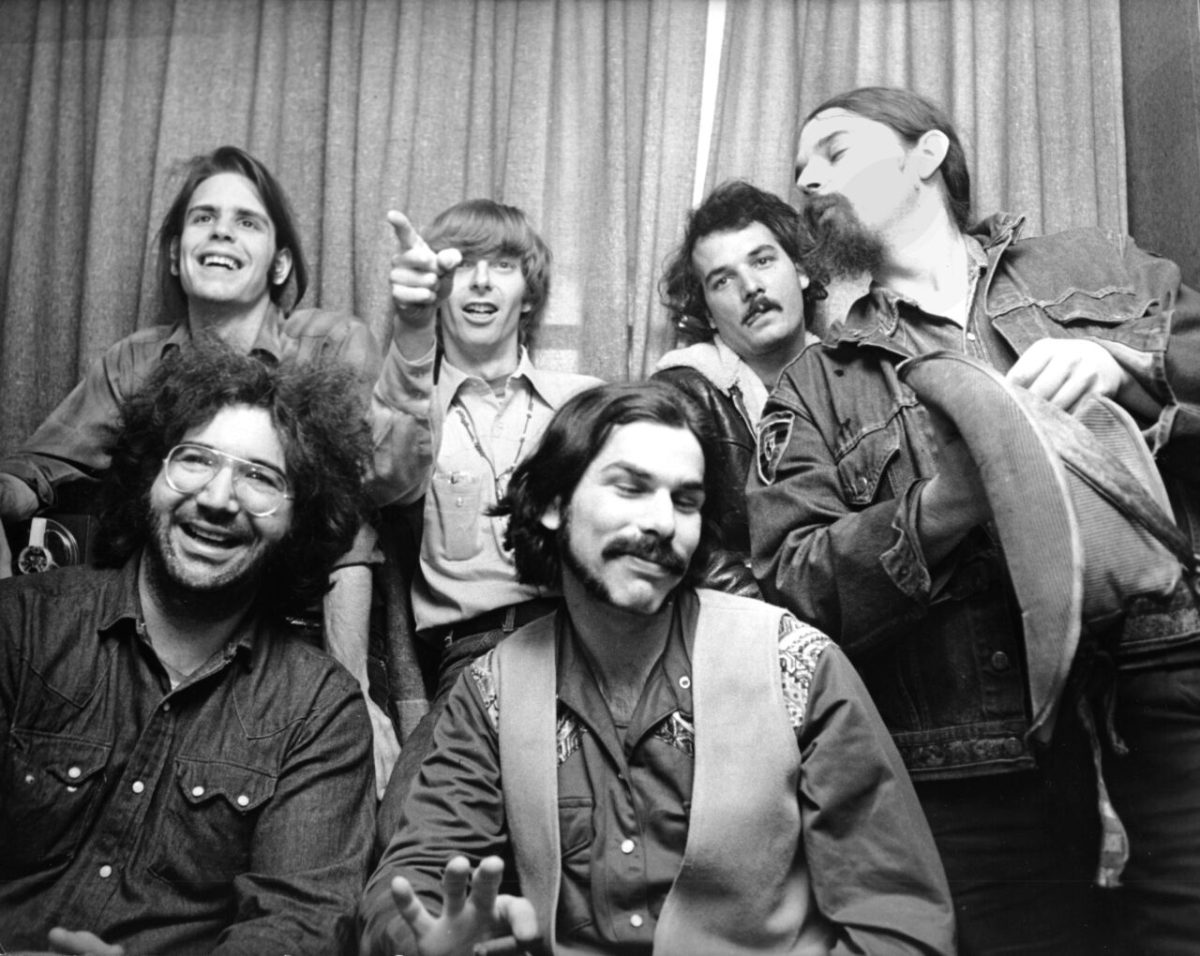
The Grateful Allman Brothers

This was for Dave’s Turntable Talk, and he wanted us to pick either an artist, or an album, or even one song that has risen steadily in our estimation through the years. I picked two…because they are similar and both happened at the same time with me. 
I’m cheating a bit, but I got permission from the principal. I simply could not pick between the Grateful Dead and the Allman Brothers. I always liked them both, but didn’t really LIKE them until the teens, around the same time. Thanks, Dave, for another intriguing question.

In the 1980s, I had a greatest hits package by both bands, and I thought I was doing fine. One day, I needed to pick a book from Audible, and I happened to pick Gregg Allman’s book The Cross I Bear, which I would put up there with the Keith Richards book Life. I started to get into the book, and then I started to listen to the music, and I was blown away. In that book, he talked about The Grateful Dead, and I soon got Dead’s drummer Bill Kreutzmann’s book Deal about his life, and the same thing happened. 

This is how a young Max got into music in the first place: by getting Beatles books and going from there. In those books, the author would mention other artists, and I would have to check them out. Out of that, I got the Who, Kinks, Stones, and the rest. 

Both of these bands seem to be related to each other. Two jam bands, one from the West Coast and their southern brother in Macon, Georgia. Both were led by a strong lead guitarist and two drummers. They did have separate styles, but live, you could expect a different concert night to night. Both of them treated their road crew much better than other bands. They considered them just as important as the band itself. 

Both bands pulled from American styles: blues, country, folk, and jazz. The Dead leaned into folk, bluegrass, and psychedelic experimentation, while the Allmans drew more heavily from Delta blues and Southern soul. But in both cases, their sound was a gumbo rather than a single style.

As I got into them, what grabbed me about the Grateful Dead were the lyrics that Hunter and Garcia wrote and the beautiful melodies they wrote. With the Allmans, it was that driving music. I always thought they were more intense than the Dead. Their songs were not as deep, but I loved the music. I instantly fell for both bands. I threw away the greatest hits packages and started to explore more of their albums, and I’m better for it. 

It’s a shame we didn’t have more Allmans with Duane and more Dead with Pigpen. Those two losses changed the dynamics of both bands. Both of these bands had talent to burn, and the Allmans put that to the test. After losing Duane, they lost their melodic bass player, Berry Oakley, a year after Duane’s passing. 

If I had to pick my favorite album by both bands, it would be Eat A Peach by the Allmans and American Beauty by the Grateful Dead, although Wake of the Flood would be a close second.  Without them, there’s no Phish, Widespread Panic, or modern jam band scene. Both are considered the patron saints of improvisational rock, each with its own branch on the family tree.

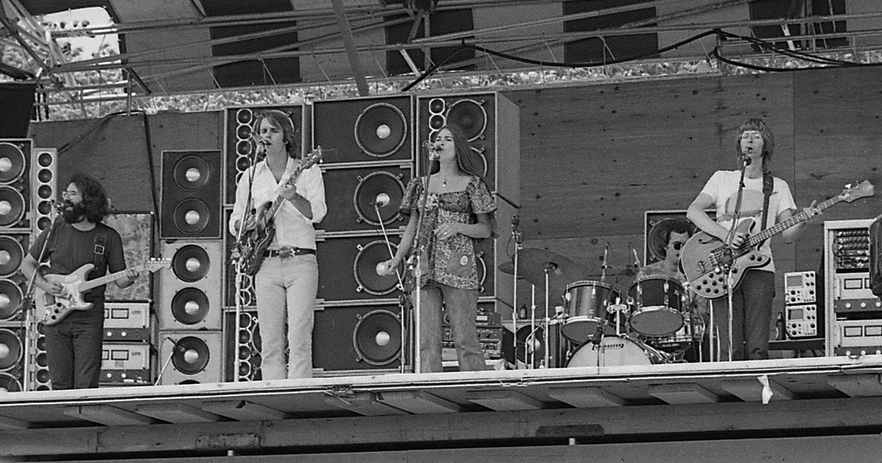
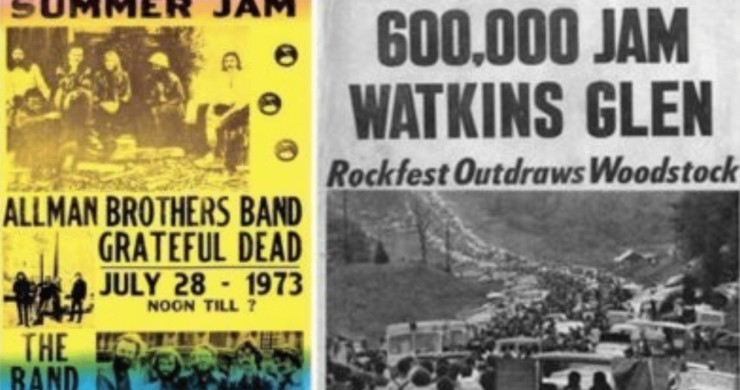
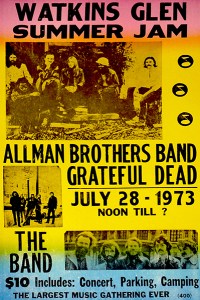
They did share a stage at the Fillmore East in 1970 with Duane and Pigpen. They also played massive shows together at Watkins Glen and at RFK Stadium, both in 1973. 

Grateful Dead – Fire On The Mountain

I like a couple of Fire on the Mountain songs: The Marshall Tucker Band and this one. They’re two totally different songs, but both are really good. I want to thank Jim for this because he sent me some information about this song in an email. 

Fire on the Mountain’s music was primarily written by one of the Grateful Dead’s drummers, Mickey Hart, with lyrics by the band’s lyricist, Robert Hunter. The song’s groove reflects Hart’s rhythm sensibilities, while Hunter’s lyrics (as with most of his) are open to interpretation and rich with imagery.

The song initially existed as an instrumental titled Happiness is Drumming, which appeared on Mickey Hart’s 1976 solo album, Diga. The instrumental version already contained the core melody.  The song evolved into the version that the Grateful Dead began performing live in 1977 and eventually included on their 1978 album Shakedown Street.

The first time I heard the song was a live video of The Grateful Dead playing in Egypt in 1978. I’ve watched that concert many times, and it’s fantastic. This song was one of the songs that got me into the band. When they played it live, the song was frequently paired with Scarlet Begonias. 

The Dead didn’t always do commercially huge songs but some songs like this one…should have been at least released as a single. 

Robert Hunter: “Written at Mickey Hart’s ranch in heated inspiration as the surrounding hills blazed and the fire approached the recording studio where we were working.”

Fire On The Mountain

Long distance runner, what you standin’ there for?Get up, get out, get out of the doorYou’re playin’ cold music on the barroom floorDrowned in your laughter and dead to the coreThere’s a dragon with matches that’s loose on the townTakes a whole pail of water just to cool him down

Fire! Fire on the mountainFire! Fire on the mountainFire! Fire on the mountainFire! Fire on the mountain

Almost ablaze, still you don’t feel the heatIt takes all you got just to stay on the beatYou say it’s a livin’, we all gotta eatBut you’re here alone, there’s no one to competeIf Mercy’s a business, I wish it for youMore than just ashes when your dreams come true

Fire! Fire on the mountainFire! Fire on the mountainFire! Fire on the mountainFire! Fire on the mountain

Long distance runner, what you holdin’ out for?Caught in slow motion in a dash for the doorThe flame from your stage has now spread to the floorYou gave all you had, why you wanna give more?The more that you give, the more it will takeTo the thin line beyond, which you really can’t fake

Fire! Fire on the mountainFire! Fire on the mountainFire! Fire on the mountainFire! Fire on the mountain

Grateful Dead – Friend Of The Devil

Power Pop Friday will be back after the 4th. 

When I purchased The Grateful Dead’s greatest hits back when I was around 13 or so…the songs like Truckin, Casey Jones, and Uncle John’s Band that I knew. After that, I found out that I liked everything on that album. This song became one of my favorites back then.

Skeletons from the Closet: The Best of Grateful Dead - Wikipedia

Jerry Garcia not only played with the Grateful Dead but did many solo shows while the Dead were on hiatus. He played with the New Riders of the Purple Sage as well. Jerry Garcia and John “Marmaduke” Dawson (New Riders of the Purple Sage ) wrote the music to the song and lyricist Robert Hunter came up with the lyrics except for one important line. The original chorus went like this.

I set out running but I take my time
It looks like water but it tastes like wine
If I get home before daylight
I just might get some sleep tonight

After hearing it on tape as a demo…John Dawson said all the lyrics were great except It looks like water but it tastes like wine. He then suggested, “How about… A Friend of the Devil is a friend of mine?” That was it…the right line for the right song.

The following day, Hunter awoke in the group’s communal residence to find Garcia listening to a tape of the new song. “He had that funny look in his eye,” Hunter recalled. “The next thing I knew, the Grateful Dead had snapped it up, much to the New Riders’ dismay.”

After the song appeared on American Beauty it became an immediate hit with fans, ultimately becoming a permanent fixture in the Dead’s onstage repertoire. At first, it was performed at a brisk, bluegrass-style tempo built upon a descending scale played by Garcia… then, several years later, a piano provided much of its melodic sound.

American Beauty peaked at #19 on the Billboard 100, #43 in Canada, and #27 in the UK in 1970. A single was not released of this song. Truckin’ was released as Ripple as the B side.

Dennis McNally (Grateful Dead  publicist and official biographer) on the intro: “Before they started recording, Nelson was checking to see that his guitar was in tune, and he ran this thing, ding, ding, ding, down a scale. And if you listen to the recording, that’s how the song opens. When he first did that, he did it simply to check the guitar’s tuning and they kept it. It suddenly became part of the song.”

Robert Hunter: “We all went down to the kitchen to have espresso made in Dawson’s new machine. We got to talking about the tune and John said the verses were nifty except for “it looks like water but it tastes like wine” which I had to admit fell flat. Suddenly Dawson’s eyes lit up and he crowed “How about “a friend of the devil is a friend of mine.” Bingo, not only the right line but a memorable title as well! We ran back upstairs to Nelson’s room and recorded the tune.”

Friend Of The Devil

I lit out from Reno, I was trailed by twenty hounds
Didn’t get to sleep that night ’til the morning came around

Set out runnin’ but I take my time
A friend of the devil is a friend of mine
If I get home before daylight
Just might get some sleep tonight

Ran into the devil, babe, he loaned me twenty bills
Spent the night in Utah in a cave up in the hills

Set out runnin’ but I take my time
A friend of the devil is a friend of mine
If I get home before daylight
Just might get some sleep tonight

I ran down to the levee but the devil caught me there
He took my twenty dollar bill and he vanished in the air

Set out runnin’ but I take my time
A friend of the devil is a friend of mine
If I get home before daylight
Just might get some sleep tonight

Got two reasons why I cry away each lonely night:
The first one’s named sweet Anne Marie, and she’s my heart’s delight
The second one is prison, babe, and the sheriff’s on my trail
And if he catches up with me, I’ll spend my life in jail

Got a wife in Chino, babe, and one in Cherokee
The first one says she’s got my child, but it don’t look like me

Set out runnin’ but I take my time
A friend of the devil is a friend of mine
If I get home before daylight
Just might get some sleep tonight

Got two reasons why I cry away each lonely night:
The first one’s named sweet Anne Marie, and she’s my heart’s delight
The second one is prison, babe, the sheriff’s on my trail
And if he catches up with me, I’ll spend my life in jail

Got a wife in Chino, babe, and one in Cherokee
The first one says she’s got my child, but it don’t look like me

Set out runnin’ but I take my time
A friend of the devil is a friend of mine
If I get home before daylight
Just might get some sleep tonight

Grateful Dead – Here Comes Sunshine

I want to thank all of you for reading last week’s “covers” week. Based on the positive response…I’ll start doing covers on Tuesdays coming up.

I just finished another Grateful Dead book so I’ve been listening to the Dead’s albums. Wake of the Flood has slowly become one of my favorites. It’s hard to beat American Beauty and Workingman’s Dead but it’s up there.

The verses of this song are straight-up Grateful Dead but the chorus reminds me a little of The Beatles. No, the Dead didn’t copy anything but it’s a type of chorus that the Beatles would attempt. Phil Lesh’s bass is prominent in this song…so is Jerry Garcia’s wonderful weaving guitar playing.

Garcia wrote the music and the Dead’s lyricist Robert Hunter wrote the verses. The song was influenced by a tragic event. Robert Hunter wrote in his book: Remembering the great Vanport, Washington flood of 1949, living in other people’s homes, a family abandoned by father, second grade. Hunter didn’t state the proper year or state of the flood but some about him.

Hunter was not in the flood but he was 7 years old and in second grade when it happened. His father around this time also abandoned his family. Hunter would live in different foster homes until he returned to his mom.

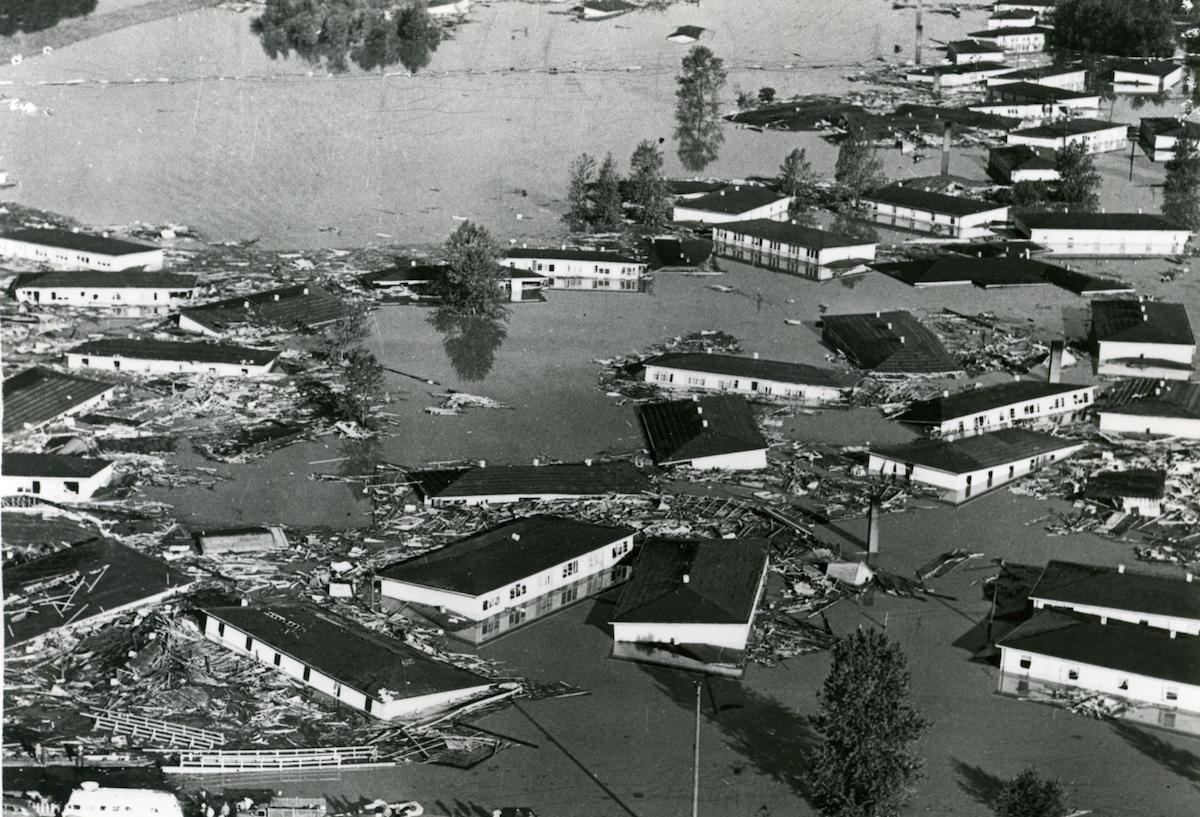
Vanport 1948

The song is about the flood that happened in Vanport City Oregon in 1948. Calling this a flood would be treating it mildly. It actually washed the town away. On Monday at 4:17 p.m. on Memorial Day 1948,  a combination of heavy rainfall and the Columbia River heavy with melted snowfall broke a portion of the dike surrounding Vanport. Floodwaters fifteen feet deep washed Vanport away.

Residents had been assured by authorities that the dikes were holding and that they would be warned in ample time to evacuate. The break caught everyone, including the authorities, by surprise. Thankfully, the swamps within Vanport absorbed the initial surge, allowing around 40 minutes for most people to escape Vanport to higher ground along Denver Avenue. Still, 15-16 (different sources) people lost their lives in the flood.

Vanport is no more. Several acres of the former city became “West Delta Park” which is now the Portland International Raceway.

The song was on the Wake of the Flood album released in 1973… but not without its problems. It came three long years after the Dead’s previous studio album, American Beauty. They did release the live  Europe 72 between the two albums. The Dead had just left Warner Bros and were without a record deal. So they did what other bands did at that time…make their own record company. This was the first album released on their new label.

Mickey Hart was not part of the Grateful Dead at this time. Mickey’s last show was 2/18/71 at the Capital Theater and he rejoined the band the last night of the “Farewell” shows at Winterland in October of ’74.

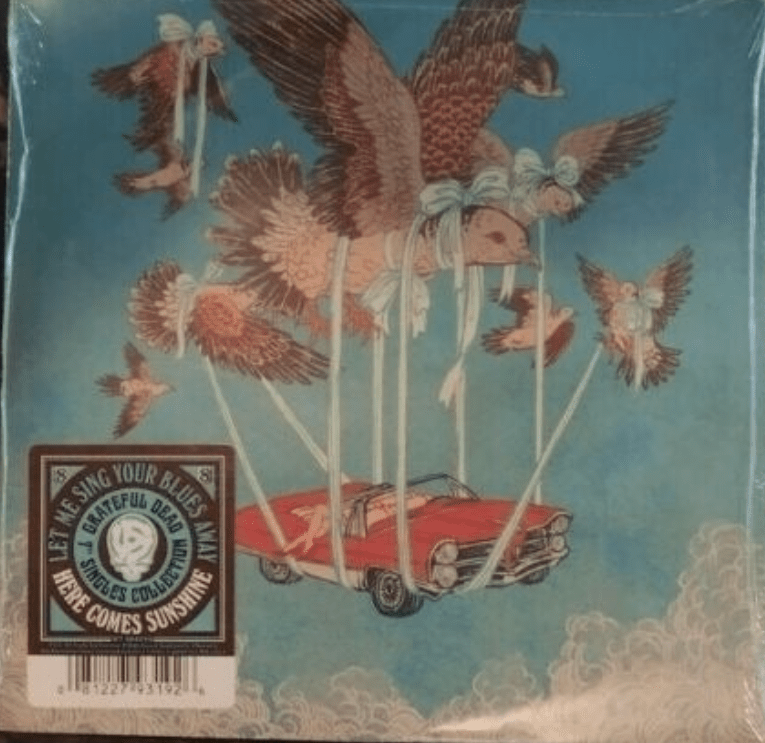
The album peaked at #18 on the Billboard Album Charts and #30 in Canada in 1973. This song was the B side to the single “Let Me Sing Your Blues Away.”

This would not be a Dead post if I didn’t give you a live version of it. 

Here Comes Sunshine

Wake of the flood, laughing water, forty-nine
Get out the pans, don’t just stand there dreaming
Get out the way, get out the way

Here comes sunshine
Here comes sunshine

Line up a long shot maybe try it two times, maybe more
Good to know you got shoes to wear, when you find the floor
Why hold out for more

Here comes sunshine
Here comes sunshine

Asking you nice, now, keep the mother rollin’
One more time, been down before
You just don’t have to go no more, no more

Here comes sunshine
Here comes sunshine

Grateful Dead – Mississippi Half-Step Uptown Toodleloo

I can imagine listening to this song floating down the river on a warm southern day. How could anyone not like that title? I first heard this song in the 80s from a friend’s brother who was a complete Dead Head.

Hello baby, I’m gone, goodbye
Half a cup of rock and rye

While Robert Hunter and Jerry Garcia were writing the song, Garcia had a problem with one particular word in this line: Cueball’s made of styrofoam
and no one’s got the time.

Robert Hunter said that Garcia argued:  “This is so uncharacteristic of your work, to put something as time-dated” or whatever that word would be “as Styrofoam into it.” I’ve never sung that song without regretting I put that line in. Jerry also didn’t like songs that had political themes to them, and in retrospect, I think this was wise because a lot of the stuff with political themes from those days sounds pretty callow these days.”

The song was a popular one in concert…It was performed over 230 times live by The Grateful Dead over the years.

The song was on the Wake of the Flood album released in 1973… but not without its problems. It came three long years after the Dead’s previous studio album, American Beauty. Now, this would be normal but back in the seventies that was a lifetime.

The Dead had just left Warner Bros and were without a record deal. Then manager  Ron Rakow talked to Garcia about starting the label and soon it was agreed. They made a decision to start their own record label like The Beatles and Stones did…except for one thing. They had no one to distribute them. Phil Lesh said: “We already owned our own sound system. Booking and travel were in-house. It seemed as if being our own record company would be worth a try. No one could see a downside.”

Rakow talked for a while about distributing records by ice cream trucks. Yes…fans would place their order through the local ice cream truck vendor and you would pick up your album with… a snowcone I guess. The voice of reason soon prevailed and they eventually got United Artists to distribute their records.

Wake of the Flood was their first studio album released on their new Grateful Dead Records. They did release two singles before that. They had problems after the release. They took a call from one distributor… the copies he’d received of Wake of the Flood sounded so bad, he said, that kids were bringing them back to the stores. The Dead office thought it was a hustle…retailers wanting records sent to them for free until he asked yet another grousing store owner to send him a copy of the supposedly flawed record. What arrived in the mail at the Dead office was a truly fake Wake of the Flood… a cover that amounted to a mimeographed photo of the artwork and an LP with music that sounded as if it had been copied from a cassette, complete with hissing noises. They’d been bootlegged.

One source says the label was told in advance by shadowy figures in Brooklyn that any release on Grateful Dead Records would be bootlegged and that they would have no choice but to go along with it. Soon after that batch, the bootlegs stopped and it was over as quick as it started. The band lost up to 90,000 because of the bootlegs.

Soon after the album’s release, Warner Bros released a greatest hits album called Skeletons in the Closet. Wake of the Flood peaked at #18 in the Billboard Album Charts and #30 in Canada in 1973.

Garcia talked about the line: I lost my boots in transit babe
A pile of smoking leather

“I was in an automobile accident in 1960 with four other guys… 90-plus miles an hour on a back road. We hit these dividers and went flying, I guess. All I know is that I was sitting in the car and there was this… disturbance… and the next thing, I was in a field, far enough away from the car that I couldn’t see it.

“The car was crumpled like a cigarette pack… and inside it were my shoes. I’d been thrown completely out of my shoes and through the windshield. One guy did die in the group. It was like losing the golden boy, the one who had the most to offer. For me it was crushing, but I had the feeling that my life had been spared to do something, to either go whole hog or not at all…That was when my life began. Before that I had been living at less than capacity. That event was the slingshot for the rest of my life. It was my second chance, and I got serious.”

Mississippi Half-Step Uptown Toodeloo

On the day that I was born
Daddy sat down and cried
I had the mark just as plain as day
which could not be denied
They say that Cain caught Abel
rolling loaded dice,
ace of spades behind his ear
and him not thinking twice

Half-step
Mississippi Uptown Toodleloo
Hello baby, I’m gone, goodbye
Half a cup of rock and rye
Farewell to you old southern sky
I’m on my way – on my way

If all you got to live for
is what you left behind
get yourself a powder charge
and seal that silver mine
I lost my boots in transit babe
A pile of smoking leather
Nailed a retread to my feet
and prayed for better weather

Half-step
Mississippi Uptown Toodleloo
Hello, baby, I’m gone, good-bye
Half a cup of rock and rye
Farewell to you old southern sky
I’m on my way – on my way

They say that when your ship comes in
the first man takes the sails
The second takes the afterdeck
The third the planks and rails
What’s the point to callin shots?
This cue ain’t straight in line
Cueball’s made of styrofoam
and no one’s got the time

Half-step
Mississippi Uptown Toodleloo
Hello baby, I’m gone, goodbye
Half a cup of rock and rye
Farewell to you old southern sky
I’m on my way – on my way

Across the Rio Grand-eo
Across the lazy river
Across the Rio Grand-eo
Across the lazy river

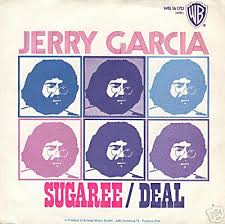
Jerry Garcia – Sugaree

I remember this song on the radio in the seventies. Of all places, it was played a lot at our local skating rink. It’s high on the list of my favorite songs. It wasn’t the best song written by Garcia and Hunter but I can listen to it at any time. Probably the first Dead…or close to a Dead song I ever heard. The song has stuck with me my entire life.

Jerry Garcia played most of the instruments on this album except drums and Dead drummer Bill Kreutzmann handled those. Sugaree was on the Garcia album released in 1972. He had teamed up with other players in the past but this was his first solo album. The song peaked at #94 on the Billboard 100 in 1972. I always liked the vague lyrics to this song. I first thought it was about death… you can take it a lot of ways.

The Grateful Dead did this live many times…Jerry Garcia and Robert Hunter wrote this song. The Dead made their reputation live. They got very little radio play and didn’t sell many albums, but they are one of the top-grossing concert acts of all time.

Like the Allman Brothers, they formed a family atmosphere with their crew and it extended to their audience. From the early Kool-Aid acid tests to later on allowing the audience to tape their shows drew their audience closer. They would later give them their own section to record in…while other bands like Led Zeppelin would send people to bust their tape recorder or head. Garcia commented: Well, my feelings are, the music is for the people…I mean after it leaves our instruments it’s of no value to us, ya know what I mean? it’s like, ya know…what good is it? So it might as well be taped, my feeling is that..and if people enjoy taping it and enjoy having the tapes to listen to, that’s real great. “

They never played the same show twice. They would take songs in different directions and Garcia has said that he couldn’t play something twice the same. He just wasn’t built like that. That made every show unique…not that every show was great. The Dead has admitted they had their share of bad ones.

On Deadheads following them around the country: “Well, it’s obviously very important to them. And more than that, it’s giving them an adventure. They have stories to tell. Like, “Remember that time we had to go all the way to Colorado and we had to hitchhike the last 400 miles because the VW broke down in Kansas.” Or something like that. Y’know what I mean? That’s giving them a whole common group of experiences which they can talk about. For a lot of people, going to Grateful Dead concerts is like bumping into a bunch of old friends.”

Bill Kreutzmann…if you get a chance read his book Deal: My Three Decades of Drumming, Dreams, and Drugs with the Grateful Dead. I covered it here a while back. It’s an education in the rock world…or the Dead world of the 60s through the 90s. If you are offended by drugs, sex, and great music…pass it by.

Robert Hunter: “Sugaree was written soon after I moved from the Garcia household to China Camp. People assume the idea was cadged from Elizabeth Cotten’s ‘Sugaree,’ but, in fact, the song was originally titled ‘Stingaree,’ which is a poisonous South Sea manta. The phrase ‘just don’t tell them that you know me’ was prompted by something said by an associate in my pre-Dead days when my destitute circumstances found me fraternizing with a gang of minor criminals. What he said, when departing, was: ‘Hold your mud and don’t mention my name.’

“Why change the title to ‘Sugaree’? Just thought it sounded better that way, made the addressee seem more hard-bitten to bear a sugar-coated name. The song, as I imagined it, is addressed to a pimp. And yes, I knew Libba’s song, and did indeed borrow the new name from her, suggested by the ‘Shake it’ refrain.”

Bill Kreutzmann Drummer for the Dead: The album, Garcia, was cut at Wally Heider Studios in July 1971 and released by Warner Brothers the following January. There are a lot of songs on there that became Grateful Dead mainstays, in addition to “Deal”—we’re talking about straight-up classics like “Sugaree,” “Loser,” and “The Wheel.” Also, “Bird Song” is on there, which, to this day, is one of my all-time favorite Dead songs and one of my absolute favorite songs to play live (along with “Dark Star” and “The Other One”).

When I want musicians I’m playing with to learn any of those songs, I give them the Garcia versions. They’re just so good. I had a really great time making that album. Dealing exclusively with Jerry was the most effortless thing in the world. I didn’t have to do anything other than be myself. And play.

Cocaine was our special guest throughout those recording sessions, but you’d never be able to tell because everything was very laid back. I have no idea how we were able to do that, because cocaine isn’t exactly known for its relaxing properties. Maybe it was just the dynamic between us that made it all so … easy.

Sugaree

When they come to take you down
When they bring that wagon round
When they come to call on you
and drag your poor body down

Just one thing I ask of you
Just one thing for me
Please forget you knew my name
My darlin Sugaree

Shake it, shake it Sugaree
Just don’t tell them that you know me

You thought you was the cool fool
Never could do no wrong
Had everything sewed up tight
How come you lay awake all night long?

Just one thing I ask of you
Just one thing for me
Please forget you knew my name
My darlin Sugaree

Shake it, shake it Sugaree
Just don’t tell them that you know me

You know in spite of all you gained
you still have to stand out in the pouring rain
One last voice is calling you
and I guess it’s time you go

Just one thing I ask of you
Just one thing for me
Please forget you knew my name
My darlin Sugaree

Shake it, shake it Sugaree
Just don’t tell them that you know me

Shake it up now, Sugaree
I’ll meet you at the Jubilee
If that Jubilee don’t come
Maybe I’ll meet you on the run

One thing I ask of you
Just one thing for me
Please forget you knew my name
my darling Sugaree

Shake it, shake it Sugaree
but don’t tell them that you know me
Shake it, shake it Sugaree
Just don’t tell ’em that you know me

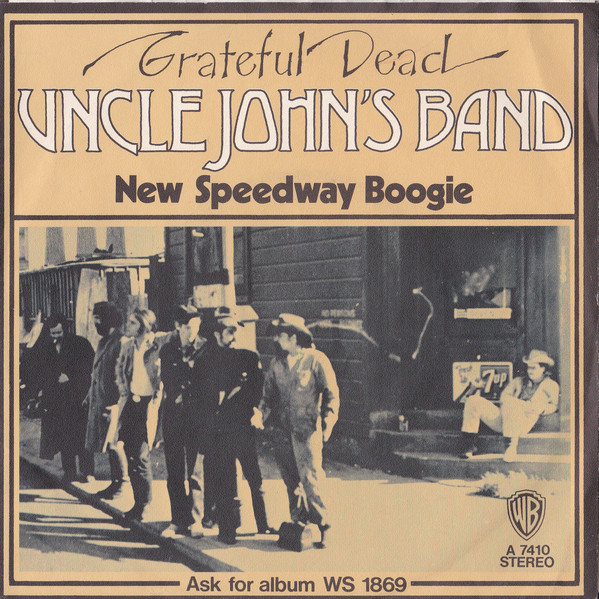
Grateful Dead – Uncle John’s Band

There are songs like Itchycoo Park, Can’t Find My Way Back Home, and this one that transports me back to a time that I’m too young to remember… but these songs make me feel like I was there.

Jerry Garcia and Robert Hunter collaborated on “Uncle John’s Band,” which was originally part of their stage set before they recorded it as a single track from their Workingman’s Dead album. It would go on to become one of their better-known songs

It’s possible that this song is about a string band called the New Lost City Ramblers (NLCR), whose John Cohen was nicknamed “Uncle John.”

For two albums the Dead tried a more roots Americana type of music that may have been inspired by the then-new Crosby, Stills, and Nash. Workingman’s Dead and American Beauty. Personally, they are my favorite albums by them though I do like some others like From The Mars Hotel. 

The song peaked at #69 in the Billboard 100. If you want to read more info on the Dead…go to https://jimadamsauthordotcom.wordpress.com/2020/04/08/g-is-for-grateful-dead/ 

Jim has over 30 Dead concerts in his past.

From Songfacts
The style is a laid-back bluegrass-folk arrangement on acoustic guitar. Vocals are in close harmony in a conscious effort to echo Cosby Stills & Nash – it worked, because CS&N covered it on their 2009 concert circuit.

Lots of Americana to touch on here – this was the first time the epithet “God Damn” had been heard in a Hot 100 hit. A “buckdancer” is “one who dances the buck-and-wing” according to The Dictionary of American Regional English. The phrase “buckdancer’s choice” is both a popular fiddle tune of Appalachia, and the title of a poetry collection by the American poet James Dickey; you’ll recognize him more when we tell you that one of his other works was turned into a little 1972 film called Deliverance.

More Americana: the line “fire and ice” references American poet Robert Frost’s poem of the same name, and the line “Don’t tread on me” is a famous phrase that first came out during the American Revolution from Britain – scope out an image of a yellow flag with a coiled, hissing snake sometime, that’s the “Gadsden flag,” later popular with the American Tea Party political movement. The line “the same story the crow told me” references Johnny Horton’s “The Same Old Tale the Crow Told Me,” which was the B-side to the better-known “Sink the Bismarck.” While that’s a British song, Horton was very much an American rockabilly artist (and he has no relation to the Horton who hears a who).

OK, who is Uncle John? That could be anybody and everybody – fan speculations run wild from the Biblical John the Baptist to Mississippi John Hurt. But maybe, like the Beatles’ Sergeant Pepper, it was just an alias made up for fun.

This was one of the Dead’s first attempts to reach beyond their little cult and take a shot at the mainstream. The single release was cut by 25 seconds from the album version. Although this plan didn’t work out with the single scoring a lukewarm #69, the album itself went on to sell well at one million copies – a first for them – and “Uncle John’s Band” became one of their more well-known songs.

Uncle John’s Band

Well the first days are the hardest days, don’t you worry any more
‘Cause when life looks like easy street, there is danger at your door
Think this through with me, let me know your mind
Wo, oh, what I want to know, is are you kind

It’s a buck dancer’s choice my friend; better take my advice
You know all the rules by now and the fire from the ice
Will you come with me? won’t you come with me
Wo, oh, what I want to know, will you come with me

Goddamn, well I declare, have you seen the like
Their wall are built of cannonballs, their motto is don’t tread on me
Come hear uncle John’s band playing to the tide
Come with me, or go alone, he’s come to take his children home

It’s the same story the crow told me; it’s the only one he knows
Like the morning sun you come and like the wind you go
Ain’t no time to hate, barely time to wait
Wo, oh, what I want to know, where does the time go

I live in a silver mine and I call it beggar’s tomb
I got me a violin and I beg you call the tune
Anybody’s choice, I can hear your voice
Wo, oh, what I want to know, how does the song go

Come hear uncle John’s band by the riverside
Got some things to talk about, here beside the rising tide

Come hear uncle John’s band playing to the tide
Come on along, or go alone, he’s come to take his children home
Wo, oh, what I want to know, how does the song go