
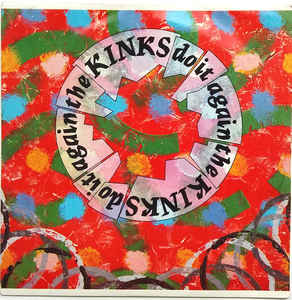
Kinks – Do It Again

Standing in the middle of nowhere
Wondering how to begin
Lost between tomorrow and yesterday
Between now and then

Great riff and rock song by the Kinks. It starts with a chord reminiscent of the A Hard Day’s Night intro.  I was in high school when it was released, and it was great to hear a guitar-driven song at that time on the radio. I remember our band following another band, and they did this song. I was jealous we didn’t get to it first. Do It Again was released in 1984 as the opening track on their album Word of Mouth. Written by lead singer Ray Davies

The band had a resurgence in the late seventies and early eighties with 3 straight albums in the top 20. They also had a top ten hit off of State of Confusion with Come Dancing. I bought my first real-time Kinks album in 1980 with Give The People What They Want

Working on their twentieth album Word of Mouth, conflicts between drummer Mick Avory and guitarist Dave Davies led to Avory’s leaving during the recording of the album. As a result, Avory played drums on just three tracks: Missing Persons, Sold Me Out, and Going Solo. The remaining tracks featured Bob Henrit on drums. Dysfunction seemed to fit this band and others like The Who and The Replacements. It made them who they were. Another song off of this album is the Dave Davies song Living On A Thin Line. The song grew in popularity when played repeatedly in The Sopranos third season episode University.

Ray Davies wrote this about the stressful working schedules the Kinks were going through. The song peaked at #41 on the Billboard 100 in 1984. I saw this line on a review of the song in Rolling Stone: The record kicks off with “Do It Again,” a tune that’s a love letter to every poor bastard out there grinding their teeth to dust in this cruel little hamster wheel of existence. I thought that fit well with this song. 

Ray Davies: The saddest day for me was when Mick left. Dave and Mick just couldn’t get along. There were terrible fights, and I got to the point where I couldn’t cope with it anymore. Push came to shove, and to avoid an argument I couldn’t face. … we were doing a track called “Good Day” and I couldn’t face having Mick and Dave in the studio, so I did it with a drum machine. Dave said he wanted to replace Mick, and … I took Mick out, and we got very, very drunk. We were in Guildford, and after about five pints of this wonderful scrumpy, Mick said if any other band offered him a tour, he wouldn’t take it, because he didn’t want to tour. And I remember him getting the train back – because he was banned from driving; it was a very bad year for Mick – and he walked to the station and disappeared into the mist.

Do It Again

Standing in the middle of nowhere
Wondering how to begin
Lost between tomorrow and yesterday
Between now and then

And now we’re back where we started
Here we go round again
Day after day I get up and I say
I better do it again

Where are all the people going
Round and round till we reach the end
One day leading to another
Get up go out do it again

Then it’s back where you started
Here we go round again
Back where you started
Come on do it again

And you think today is going to be better
Change the world and do it again
Give it all up and start all over
You say you will but you don’t know when

Then it’s back where you started
Here we go round again
Day after day I get up and I say
Come on better do it again

The days go by and you wish you were a different guy
Different friends and a new set of clothes
You make alterations and [a fact in you knows]
A new house a new car a new job a new nose
But it’s superficial and it’s only skin deep
Cause the voices in your head keep shouting in your sleep
Get back, get back

Back where you started, here we go round again
Back where you started, come on do it again

Back where you started, here we go round again
Day after day I get up and I say, do it agaiiinnn
Do it again
Day after day I get up and I say, do it again

Kinks Weeks – Apeman … onceuponatimeinthe70s.com

I’m very happy to have Colin Jackson from Once Upon A Time In The 70’s guest host my blog today. Colin Jackson and Paul Fitzpatrick who both run Once Upon A Time In The 70’s grew up in Bearsden, a northern suburb of Glasgow, Scotland. They were school friends from the age of five until in 1974, aged sixteen, Paul left school to start a career working with fashion and sportswear brandsTheir paths would not cross again for forty-four years, during which time Colin pursued a career in Banking. Their site will take you back in time…just as well as a time machine!

THE KINKS: ‘Apeman’

Should Andy Murray have been born ten years either side of when he was, he’d have been the best tennis player of his generation. As it was, despite two Olympic gold medals and three Grand Slam titles amongst goodness knows how many other achievements, he will be forever mentioned almost as an afterthought in any conversation of the greatest players of the 2000s – possibly all time.

Damn those Federer, Nadal and Djokovic fellas!

A similar fate befell The Kinks, and Ray Davies in particular. Maybe they wouldn’t have gone down in history as the best band ever, but they certainly would have benefitted from a greater appreciation.

Damn those Lennon and McCartney and Jagger and Richards fellas!

Then again, I suppose it could be argued that without the Beatles and Stones, The Kinks wouldn’t have capitalised on The British Invasion of America.

Whatever, throughout the ‘60s and ‘70s The Kinks were always playing catch-up in the popularity stakes, despite their critical acclaim and string of hits. Sticking within those two decades, the band had nineteen Top 40 hits here in the UK, including three Number 1s. Not bad on any level.

I must confess, though, that I too am guilty of overlooking them in favour of (most definitely) The Rolling Stones and (yes, probably even) The Beatles. Which is a terrible admission to make, when I take a proper look at the prolificacy of Davies’s writing.

I’d not long turned twelve years old when this single was released. My musical bias had not yet been shaped. I just liked what I liked. I had no idea of what was ‘cool’ or otherwise. It would be a year further down the line before I decided I was a fan of The Sweet and John Kongos … but there was something about ‘Apeman’ I found so appealing.

Perhaps it was the catchy hook. Or maybe it was the (now cringeworthy) faux Caribbean accent during the short, spoken word passage. Or maybe, most likely it was, the silly video of some geezer dressed up like a gorilla and following the band around a most ‘un-jungle-like’ wet and miserable (London?) park.

It certainly wouldn’t have been the lyrics – not at that age. In fact, as I’ve alluded in the past, I’m still a bit of a philistine when it comes to song lyrics.  However, even a very young ‘me’ was aware of the Cold War at that time, and the line about not wanting to die in a nuclear war did hit home.

Ray Davies had of course by this time already shown a great deal of social conscience and disdain for the forsaking of tradition. I’m sure others will cover these, but think of ‘Dead End Street,’ ‘Autumn Almanac’ and ‘The Village Green Preservation Society’ for starters. So, for him to display the utopian spirit of peace and freedom would have come as no surprise who already appreciated his work.

Davies had (has) a knack of making serious comment from entertaining, upbeat and melodic songs. Almost fifty-four years on from ‘Apeman’ peaking at #5 in the UK charts, sadly nothing much appears to have changed. Indeed, the words are perhaps even more pertinent today:

… So I’m no better than the animals sitting

In the cages in the zoo man

‘Cause compared to the flowers and the birds and the trees

I am an apeman

I think I’m so educated and I’m so civilized

‘Cause I’m a strict vegetarian

But with the over-population and inflation and starvation

And the crazy politicians

I don’t feel safe in this world no more

I don’t want to die in a nuclear war

I want to sail away to a distant shore and make like an apeman


________

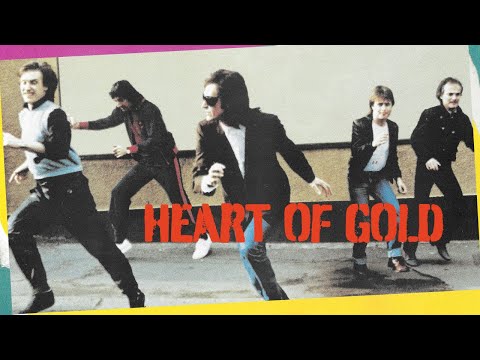
Kinks Weeks – Heart Of Gold …soundday.wordpress.com

Dave grew up in Canada, now resides in Texas, and has been passionate about music for as long as he can remember. Unfortunately, a brief foray into buying keyboards during his high school years didn’t equate to making music people were passionate about doing anything with but avoiding!  He writes a daily music blog, A Sound Day, looking at memorable music events from album releases to artist birthdays to important concerts and more. You can find Dave at https://soundday.wordpress.com.

Thanks Max, for inviting me to be a part of this “forum.” I look forward to seeing what other music fans come up with, what their reactions are to The Kinks and which songs from the band’s 25-or-so year run they choose to highlight.

It would be easier and more obvious to do the Beatles or Rolling Stones instead, but The Kinks are perhaps a more interesting choice since they’ve always been sort of on the periphery of major headline stardom and to many are an afterthought when discussing the ’60s and the British Invasion. I don’t put them on an even footing with the other two bands but the Kinks certainly deserve a bit more respect. A good chunk of their catalog is unknown to most, myself included.

My first thought when asked to write about a song of theirs was “Come Dancing”, their superb 1983 comeback hit, but that title had already been claimed. Which was actually good because it made me think a bit more and re-examine some more of their songs. Still, I knew I wanted to do something off State of Confusion, the album that put them back on hit radio after a fairly long absence, in North America at least. It was indeed the first album of theirs I bought and to date, still the only studio album – not a greatest hits sort of compilation – that I’ve had.

Though the Kinks showed up on the scene at approximately the same time as the Beatles and the Stones, they never quite matched their success and weren’t adopted nearly as much by “oldies” or “Classic Rock” radio stations. So as a kid growing up in the ’70s, I was aware of and quite liked some of their big hits – the quirky, scandalous for the times “Lola”, the rock staples like “All Day and All of The Night” and the nicely pop-py “Victoria”  but they were never at the forefront of my musical thoughts.

I noticed and liked their hard-rocking “Destroyer” in 1981; think I even bought the 45. But I really only began to appreciate their real talent with State of Confusion. I heard enough of it on radio to go out and buy it, and when I did, I found myself liking almost all the tracks and playing it end to end quite often. I really became aware of what a great lyricist Ray Davies was – how he could paint such aural pictures, and match opposing feelings like joy and sorrow, optimism and realism so well in a song. Thus, how he captured the nuances of life!

Also clear to me was that the band, like most good ones, was varied. They put together both great fist-pumping rockers and beautifully melodic pop tunes. This, ironically, annoyed their label boss Clive Davis. For some reason he thought this would cause, well a “State of Confusion” among fans and limit their appeal. Instead, I think the opposite was true. However, he wanted to market them exclusively as a hard rock act and didn’t like songs like “Come Dancing” or “Don’t Forget to Dance” since they were hardly companion pieces to Ozzy Osbourne or AC/DC for radio.

Many of their best tunes are rock; many are “pop”. But “Heart of Gold” falls somewhere in between, rather best described as “power pop” – so where better than the Power Pop Blog for it to show up!

The song tells of a young woman who is embittered and seems to have a tough demeanor, but he realizes has a “heart of gold” underneath that “tough exterior”.  In the song she was “the apple of your father’s eye” until a younger sister came along and she found “all the affection suddenly gone.”  Random, fictitious thoughts from Ray… or about someone he knew? Many think the latter.

Ray had been in a serious relationship with Chrissie Hynde for a couple of years or more at the time the song appeared. In fact, they’d just had a baby together, Natalie Hynde. Rather mirrored in the lyrics. However, all wasn’t rosy for the pair; soon after they split up and she married Jim Kerr from Simple Minds, making the song all the more poignant and an admirable expression if it was indeed about his soon-to-be ex, who certainly showed a  tough exterior in public.

Musically, I love the upbeat song and especially the jangly playing of Ray’s brother Dave, the band’s lead guitarist. Despite being contentious as anything, the two brothers were always the core and heart of The Kinks. On this one they manage to pull off a very retro-’60s sound yet keep it modern with solid production (which Ray did himself). While mirroring their ’60s heyday, it also showed a keen ear-to-the-ground awareness of the new alternative rock sounds just beginning to show up – R.E.M., The Smiths and yes, The Pretenders. It was lost on me back then, but re-listening to “Heart of Gold”, the first thing that jumped out at me is how much it sounds like a Pretenders song. It is easy in fact to imagine Chrissie singing it instead of Ray. So similar are the stylings I went to the liner notes to see if any of The Pretenders were on the song. They aren’t, but I’m betting they were in Ray’s mind when he was putting the song down on paper. Indeed, Rolling Stone noted the same, saying it “has the jangly, quasi-folk rock sound of the present hit ‘Back on the Chain Gang’” by the Pretenders.

The song wasn’t released as a single, so like many other worthy Kinks songs, it was never widely known. A shame. I’ll give the last word over to Rolling Stone again, who at the time stated “nobody but The Kinks could have made such a record in 1983 and no band deserves more to be at the top.”

Kinks – Dead End Street

There’s a crack up in the ceilingAnd the kitchen sink is leakingOut of work and got no moneyA Sunday joint of bread and honey

I’ve posted a lot by The Kinks but there are always more great songs I never covered and this is one of them. I like this one more than some of their huge hits…it’s a great song…catchy and meaningful.

Another Ray Davies song on the struggles of working-class life in Britain during the 1960s, focusing on themes of poverty, social inequality, and hopelessness. Not only in Britain in the 60s but extends to now as well all over. The title of the song says it all of being in a vicious cycle. This is just another example of Ray Davies’s brilliant songwriting. When you read the Ray Davies quotes at the bottom you will see where he was coming from.

Dead End Street was released in 1966 as a non-album single. It was quite successful peaking at #5 in the UK, #4 in New Zealand, #28 in Canada, and #73 on the Billboard 100. At that time, Ray, Dave, Pete Quaife, and Mick Avory were the Kinks. Also joining them was again…super session piano player Nicky Hopkins. It would be easier to list the songs Hopkins didn’t play on during the sixties. Quaife did not play bass on this song because of a scooter accident but John Daulton subbed for him.

Ray Davies said that Shel Talmy produced the song but he wanted more of a pop beat so they tricked Talmy. Ray Davies said:  “He finished the track and said, ‘That’s great,’ and went home. Then we pretended to leave but came back to the studio and re-recorded the song. We played it to him the next day and he said, ‘See what I mean, there’s nothing wrong with it.’ He thought we were playing him his version.”

The video of this song shows the boys dressed as undertakers and it was directed by Ray himself.

Ray Davies: I wrote it around the time I had to buy a house and I was terrified. I never wanted to own anything because my dad had never owned property. He’d inherited from his dad that he had to rent all his life. So I still have inbuilt shame of owning anything. It’s guilt.”

Ray Davies: “My whole feeling about the ’60s was that it’s not as great as everyone thinks it is. Carnaby Street, everybody looking happy, that was all a camouflage. That’s what Dead End Street was about.

Dave Davies: “A song full of character, pathos, yet containing an underlying sense of hope. Reflecting a fondness for the past but at the same time expressing a determination and yearning for change.

“Anguished voices calling to a heartless world. A world where the plight of the ordinary person mattered little. “

Dead End Street

There’s a crack up in the ceilingAnd the kitchen sink is leakingOut of work and got no moneyA Sunday joint of bread and honey

What are we living for?Two-roomed apartment on the second floorNo money coming inThe rent collector’s knocking, tryna get in

We are strictly second classWe don’t understand

Why we should be on dead end street(Dead end!) People are living on dead end street(Dead end!) I’m gonna die on dead end streetDead end street (yeah!)Dead end street (yeah!)

On a cold and frosty morningWipe my eyes and stop me yawningAnd my feet are nearly frozenBoil the tea and put some toast on

What are we living for?Two-roomed apartment on the second floorNo chance to emigrateI’m deep in debt and now it’s much too late

We both want to work so hardWe can’t get the chance

People live on dead end street(Dead end!) People are dying on dead end street(Dead end!) I’m gonna die on dead end streetDead end street (yeah!)Dead end street (yeah!)

People live on dead end street(Dead end!) People are dying on dead end street(Dead end!) I’m gonna die on dead end streetDead end street (yeah)Dead end street (yeah)

Dead end street (yeah)Head to my feet (yeah)Dead end street (yeah)Dead end street (yeah)Dead end street (yeah)

How’s it feel? (Yeah)How’s it feel? (Yeah)Dead end street (yeah)Dead end street (yeah)Dead end street (yeah)

Yeah, yeahYeah, yeahYeah, yeahYeah, yeahYeah, yeahYeah, yeahYeah, yeahYeah, yeah

Kinks – Where Have All The Good Times Gone

I haven’t had a Kinks post in quite a while so I thought I would have one today. It’s always a good day to have a Kinks song. I’ve said this before but one of my favorite concerts was The Kinks in 1983 at the Grand Ole Opry House.

Ray Davies and nostalgia go together. He often writes about his past, the past, or preserving the past as in The Village Green Preservation Society. That is one of the many reasons I always liked his writing. I think of him…or should I say I think of Bruce Springsteen as the British Ray Davies. They write about the every day way of life in their respective countries.

The band was going through a rough time in 1965. Guitarist Dave Davies and drummer Mick Avory had an on-stage fight which resulted in Avory nearly decapitating Davies with a cymbal, Dave was left unconscious in a pool of blood. Avory ran away, terrified that he had killed him.

This was thought to have led to them getting banned from touring America. The other theory was The American Federation of Musicians delisted the Kinks not because of any rowdy behavior… It was simply because the band wanted to use non-union help during a concert tour. I tend to believe the latter.

This song was the B side to Till The End of the Day. The single peaked at #8 in the UK, #36 in Canada, and #50 on the Billboard 100 in 1965. The song was also released in 1973 with the flip side of Lola. The single didn’t chart. It was originally on the album The Kink Kontroversy.

Van Halen covered this song on their 1982 album Diver Down. David Bowie also covered it on his album Pin Ups.

Ray Davies:  “We’d been rehearsing ‘Where Have All the Good Times Gone’ and our tour manager at the time, who was a lot older than us, said, ‘That’s a song a 40-year-old would write. I don’t know where you get that from.’ But I was taking inspiration from older people around me. I’d been watching them in the pubs, talking about taxes and job opportunities.”

Ray Davies: “I wanted to write a song my dad or relatives could sing, they always talked about how great it was before or during the war – I think every generation thinks that way.” “It’s got that hard edge The Kinks had, but at the same time, it’s got a reflective, poignant lyric.”

Where Have All The Good Times Gone

Well, lived my life and never stopped to worry ’bout a thing
Opened up and shouted out and never tried to sing
Wondering if I’d done wrong
Will this depression last for long?

Won’t you tell me
Where have all the good times gone?
Well, once we had an easy ride and always felt the same

Time was on our side and I had everything to gain
Let it be like yesterday
Please let me have happy days
Won’t you tell me

Where have all the good times gone?
Ma and Pa look back at all the things they used to do
Didn’t have no money and they always told the truth

Daddy didn’t have no toys
And mummy didn’t need no boys
Won’t you tell me
Where have all the good times gone?

Where have all the good times gone?
Well, yesterday was such an easy game for you to play
But let’s face it things are so much easier today
Guess you need some bringing down

And get your feet back on the ground
Won’t you tell me
Where have all the good times gone?

Kinks – Autumn Almanac

This is a very sophisticated complex pop song…the melody and the way everything connects just fit so perfectly. This was released as a non-album single in between 1967’s Something Else by the Kinks and 1968’s The Kinks Are the Village Green Preservation Society.

I love hearing this song around Autumn. Out of all the seasons, Fall is my favorite season of all. Like spring…it doesn’t last long enough. With Fall comes the relief of 95+ temps and 90 percent humidity here.

Waterloo Sunset' came to Ray Davies in a dream — FT.com

Ray has said the words were influenced by his Dad’s old drinking buddy named Charlie. Remember me saying that it was a complex song? It has around 19 different chords in it…songs written around this time had around oh… 3 to 5 chords. Comparing it to another Kinks song Dedicated Follower of Fashion… which had around 5 chords.

The best way I’ve heard this song described is by Andy Partridge (I have the entire long quote at the bottom) of XTC…he said it was like a miniature movie, basically, that unravels itself as you are listening to it...that is a perfect way of describing it.

The song was released in 1967 and it peaked at #3 in the UK, #13 in Canada, and #17 in New Zealand. At that time The Kinks were Ray Davies, Dave Davies, Pete Quaife, and Mick Avory on drums. On this recording, the in-demand session man Nicky Hopkins played the Mellotron.

Ray Davies: “The words were inspired by Charlie, my dad’s old drinking mate, who cleaned up my garden for me, sweeping up the leaves. I wrote it in early autumn, yeah, as the leaves were turning color.”

Andy Partridge of XTC on the song: It’s a miniature movie, basically, that unravels itself as you are listening to it, and it has all these little movements or scenes. And they all seem to take place in the kind of mythical cozy London that the Ealing studios always had in their films, like The Lavender Hill Mob. The song just keeps turning and changing; you see a new facet every few seconds. But there’s nothing unsettling about the fact that there are so many parts. Normally that would just be the death of a song, it would just scramble peoples brains.

The lyrics are very everyday. There’s no “calling occupants of interplanetary craft” in it. All the language in it is what you’d say over a cup of tea. It’s like a roller-coaster, but it’s not a high-speed chromium-plated space-age roller-coaster – it’s this slow creaking wooden baroque kind of roller-coaster. There are some lovely moments in it, like that sections that starts “Friday evening…..” It starts off in this mournful minor thing, and you think, “Oh dear, Friday evening, the end of something,” and then suddenly: “People get together” – it clicks into major, and becomes very optimistic. It just lifts your heart up another rung. And there’s something very plain and uplifting about [from the chorus] “yes, yes, yes,” this repetition of the affirmative.

The woodiness of “Autumn Almanac” is really appealing. Everything sounds like sticks and branches and planks. The whole song is wallpapered in dead leaves, as far as I’m concerned. The [the Kinks] touched on this same sort of thing later on, in “Shangri-La” and “Lavender Hill,” but it was more mannered, a bit more ponderous.

Damn, I wish I’d written this song. I’ll probably spend my life trying to. It’s such a huge ghost; my entire songwriting career has been trying to exorcise it.

Dave Davies: “I was playing through ‘Autumn Almanac’ [recently] and it’s a phenomenal recording. You can understand why it has lasted so long.”

Autumn Almanac

From the dew-soaked hedge creeps a crawly caterpillar
When the dawn begins to crack
It’s all part of my autumn almanac
Breeze blows leaves of a musty-colored yellow
So I sweep them in my sack
Yes, yes, yes, it’s my autumn almanac

Friday evenings, people get together
Hiding from the weather
Tea and toasted, buttered currant buns
Can’t compensate for lack of sun
Because the summer’s all gone

La-la-la-la, la-la-la-la
Oh, my poor rheumatic back
Yes, yes, yes, it’s my autumn almanac
La-la-la-la, la-la-la-la
Oh, my autumn almanac
Yes, yes, yes, it’s my autumn almanac

I like my football on a Saturday
Roast beef on Sundays, all right
I go to Blackpool for my holidays
Sit in the open sunlight

This is my street, and I’m never gonna leave it
And I’m always gonna to stay here
If I live to be ninety-nine
‘Cause all the people I meet
Seem to come from my street
And I can’t get away
Because it’s calling me (come on home)
Hear it calling me (come on home)

La-la-la-la, la-la-la-la
Oh, my autumn Armagnac
Yes, yes, yes, it’s my autumn almanac
La-la-la-la, la-la-la-la
Oh, my autumn almanac
Yes, yes, yes, yes, yes, yes, yes, yes

Bop-bop-boom-bop-bop-boom-bop-bop-boom-bop-bop-boom (whoa!)

Yes, yes

Kinks – Set Me Free

The Beatles, Who, and Stones are the most famous bands that came out of the British invasion. The Kinks should have been one of them but an American ban on touring in a big chunk of the sixties hurt their career. Instead of sounding like their American influences like the Beatles and Stones…Ray Davies didn’t hide his roots at all.

They came back strong in the seventies and eighties though. On May 17, 1983, I was able to see The Kinks in concert. Ray Davies was 39 years old and was all over the stage like a 20-year-old. That remains one of the best concerts I ever attended. It’s up there with The Who, McCartney, and Stones…in fact maybe a little better because they were still in their prime and releasing new material.

Set Me Free peaked at #23 in the Billboard 100, #2 in Canada, and #9 in the UK in 1965. Set Me Free was heard in the Ken Loach-directed Up the Junction, this marked the first appearance of a Kinks song on a film or TV soundtrack.

When you listen to their discography it’s amazing the ground they covered. There are tons of different musical styles, which the group has explored throughout their career. Starting with the pre-punk rock of You Really Got Me, acoustic anthems like Victoria, the beauty of Waterloo Sunset, the concept albums, music hall influences, hard rock, and even some new wave in the 80s.

The band seemed to be always on the brink of breaking up but they stayed together until 1996. In 2021 it was reported that the Kinks were at work in the studio once again.

Ray Davies: “the trouble is, the two remaining members — my brother Dave and Mick [Avory, the original drummer] — never got along very well. But I’ve made that work in the studio and it’s fired me up to make them play harder, and with fire.”

Dave Davies: “This has really been going on for a couple of years, we keep going backwards and listening to a lot of old stuff. Some of that is very good, and some of it needs a bit of work.”

Set Me Free

Set me free, little girl,
All you gotta do is set me free, little girl,
You know you can do it if you try,
All you gotta do is set me free, free,
Free.

Set me free, little girl,
All you gotta do is set me free, little girl,
You know you can do it if you try,
All you gotta do is set me free, free,
Free, free.

I don’t want no one,
If I can’t have you to myself,
I don’t need nobody else,
So if I can’t have you to myself,

Set me free,
Set me free.

Oh set me free, little girl,
All you gotta do is set me free, little girl,
You know you can do it if you try,
All you gotta do is set me free, free,
Free, free.

I don’t want no one,
If I can’t have you to myself,
I don’t need nobody else,
So if I can’t have you to myself,

Set me free,
Set me free.

Oh set me free, little girl,
All you gotta do is set me free, little girl,
You know you can do it if you try,
All you gotta do is set me free, free,
Free.

Set me free,
Oh, set me free