Max’s Drive-In Movie – It’s A Gift

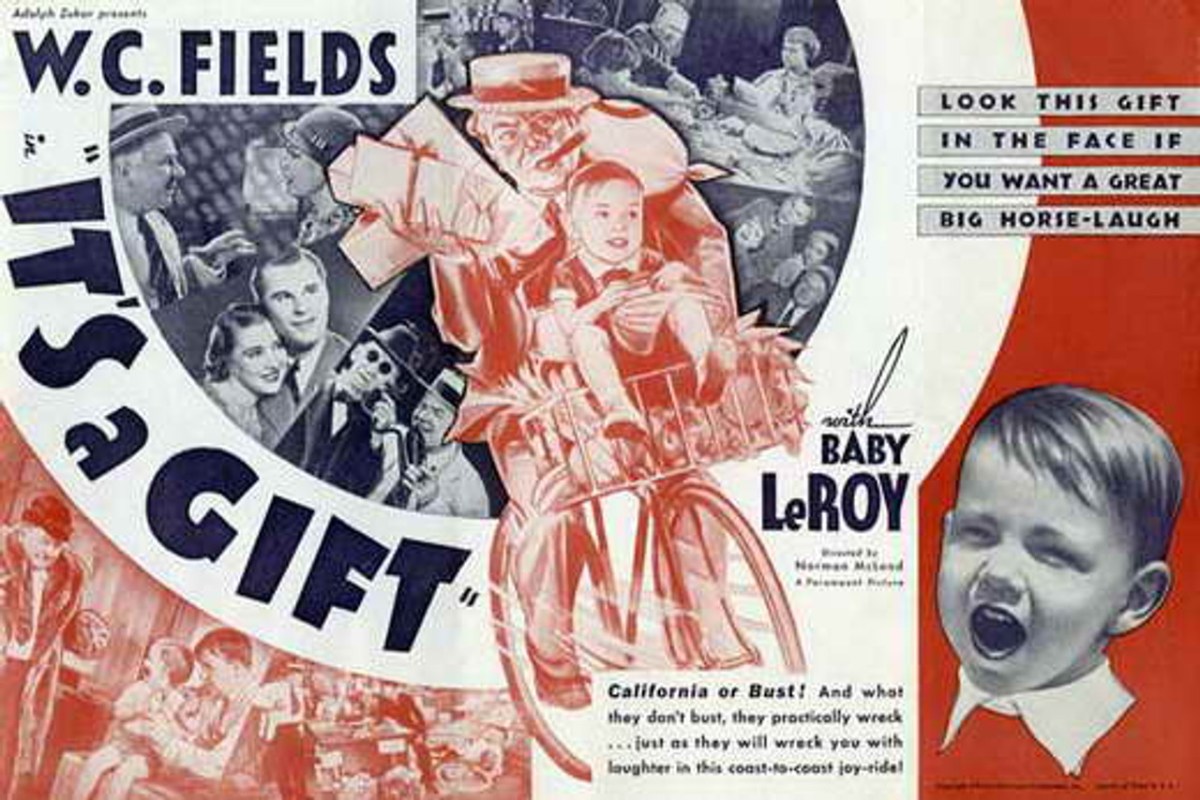
So roll down the window at Max’s Drive-In, grab some popcorn, and toast the man who proved that laughter isn’t always about joy; sometimes, it’s about pain and survival. This was the first W.C. Fields movie I ever watched, years ago, and I wasn’t disappointed. It contains no sentimentality…just one man’s pursuit of peace. In this case, an orange grove he has his eyes on. When people think of W.C. Fields, this is probably not the movie they usually think of first, but to me…it’s brilliant!

Sometimes, you don’t need romance or a difficult plot. It’s WC Fields trying to get a few minutes of peace and quiet. It’s a Gift is one of those hidden little gems, a film that’s basically one long bad day stretched from start to finish.

This film takes place in the middle of the Depression, when a grouchy grocer named Harold Bissonette (that’s “Biss-uh-NAY,” thank you very much) dreamed of escaping his nagging wife, children, and blind customers by buying himself an orange grove in California. Not a mansion, just fruit trees and some peace. But in Fields’ universe, that doesn’t happen. His wife nags, his customers interrupt his naps, and his children treat him like a piece of furniture. It’s a Gift may be ninety years old, but it still feels right.

He plays the definition of the henpecked husband, muttering under his breath. The movie is like a string of brilliant sketches stitched together by pure exasperation. That would be my definition of it. The “porch sleep scene,” where Fields tries to take a nap on his back porch as milkmen, salesmen, and children launch an invasion. The rhythm, the timing, was pure gold.

Then there’s the grocery store scene, the poor man behind the counter trying to deal with the infuriating Mr. Muckle. He is the blind and almost deaf man who wrecks everything he touches. It’s slapstick with a slight mean streak, but Fields plays it straight, and it worked. 

This was in the middle of Hollywood’s “screwball comedy” decade, when the big studios were giving audiences zany escapism to forget the Depression. Fields, though, offered something a little more grounded and darker. He wasn’t Cary Grant tripping over furniture in a tux; he was a tired grocer stepping on a roller skate at 6 a.m. 

Critics in 1934 didn’t quite know what to do with him. Some thought he was too grumpy. But audiences loved it. The film became one of Paramount’s biggest comedies that year. It’s now considered one of Fields’ great films, alongside The Bank Dick and Never Give a Sucker an Even Break.

The infamous Mr Muckle

The Front Porch Scene

Max’s Drive-In Movie – M*A*S*H

I pulled out this 1970 movie the other day and ended up enjoying it even more than I did years ago. When I first saw it back in the ’80s, I’d been expecting something different because of the television show. At first, I was confused, but the longer I watched, the more it thrilled me. If you only know MASH from television reruns with Alan Alda smirking through battlefield banter, the 1970 film that started it all might feel like a grenade lobbed into your expectations. 

Robert Altman’s MASH isn’t a gentle sitcom. It’s raw, irreverent, chaotic, and somehow all the better for it. This is the war movie for people who hate war movies. It doesn’t glorify anything. It just throws you into the blood, the absurdity, and the humor of a Mobile Army Surgical Hospital during the Korean War, but let’s be real, this is Vietnam by another name. They just couldn’t say it at the time. 

What strikes you about the movie is that it looks real. You don’t see a nice clean Army camp; you see authentic rubble, which captures the hopelessness of it all. Altman shot this film like a jazz improvised session. Overlapping dialogue, handheld cameras, and actors wandering through the frame like no one gave them a blocking direction. It feels messy because it is messy. War is messy. And MASH knows that the only way to survive it might be to laugh, so you forget where you are.

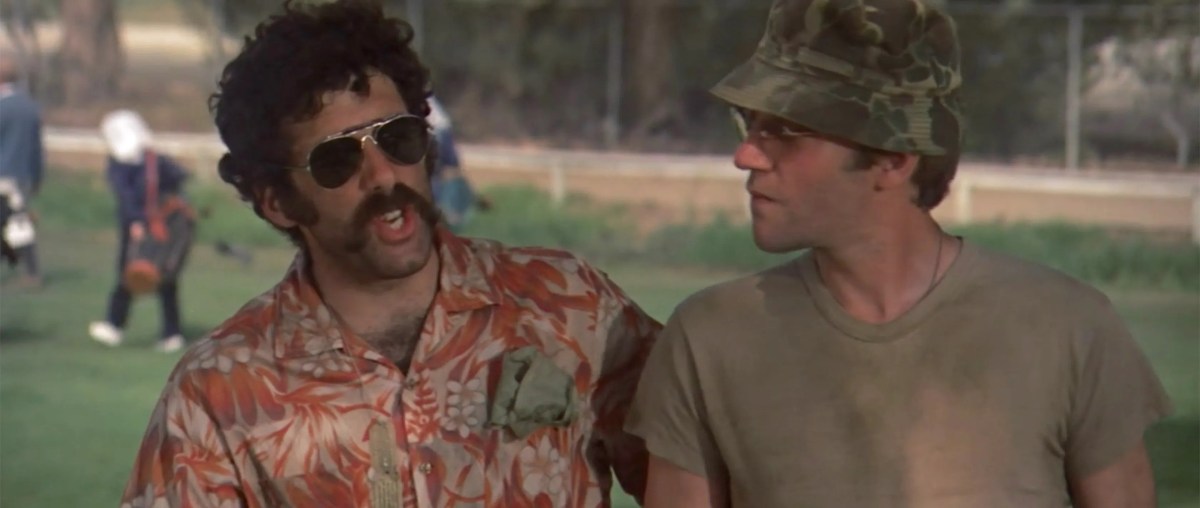
The plot? Loosely structured at best. You follow a pair of too-smart-for-their-own-good surgeons, “Hawkeye” Pierce and “Trapper” John McIntyre, as they drink, prank, operate, and generally wreak havoc behind the front lines. And when I say wreak havoc, I mean mocking authority, goading a desk jockey into a breakdown, and broadcasting a fake-suicide funeral for a lovesick dentist. 

The cast, Donald Sutherland (Hawkeye), Elliott Gould (Trapper John), Tom Skerritt (Duke), and Sally Kellerman (Hot Lips Houlihan), weren’t exactly marquee names in 1970. Allegedly, Sutherland and Gould, suspicious of Altman’s loose approach, actually tried to get him fired during production. They failed. Years later, they admitted Altman was right all along.

Altman’s rebellious methods created friction with the studio, too. He refused to follow the traditional film shooting formula. He shot scenes with actors talking over one another, dismissed explanations, and downplayed narrative story arcs. Altman called it “anti-movie making,” and it became his signature style.

And that theme song? “Suicide Is Painless.” Written by Altman’s 14-year-old son, no less. A haunting lullaby for the down-and-out, it creeps under your skin and stays there long after the credits roll. The movie was based on a novel written by former military surgeon Richard Hooker. 

  • Hotlips O’Houlihan: [referring to Hawkeye] I wonder how a degenerated person like that could have reached a position of responsibility in the Army Medical Corps!
  • Father Mulcahy: He was drafted.

Max’s Drive-In Movie – Pat Garrett and Billy The Kid

I saw this movie for the first time in the early nineties in my apartment, which I shared with a cousin. I watched it initially for Bob Dylan, but ended up loving the movie. This movie, above all else, treats silence better than any other movie I’ve seen. The characters get to breathe. No one is in a hurry, but when action happens, it makes it all the more dramatic. 

In Pat Garrett and Billy the Kid, director Sam Peckinpah trades the mythic grandeur of the Old West for something slower, lonelier, and far more tragic. This is a Western all about finality,  a farewell to freedom, friendship, and the open frontier. Pechinpah created a great movie out of this. 

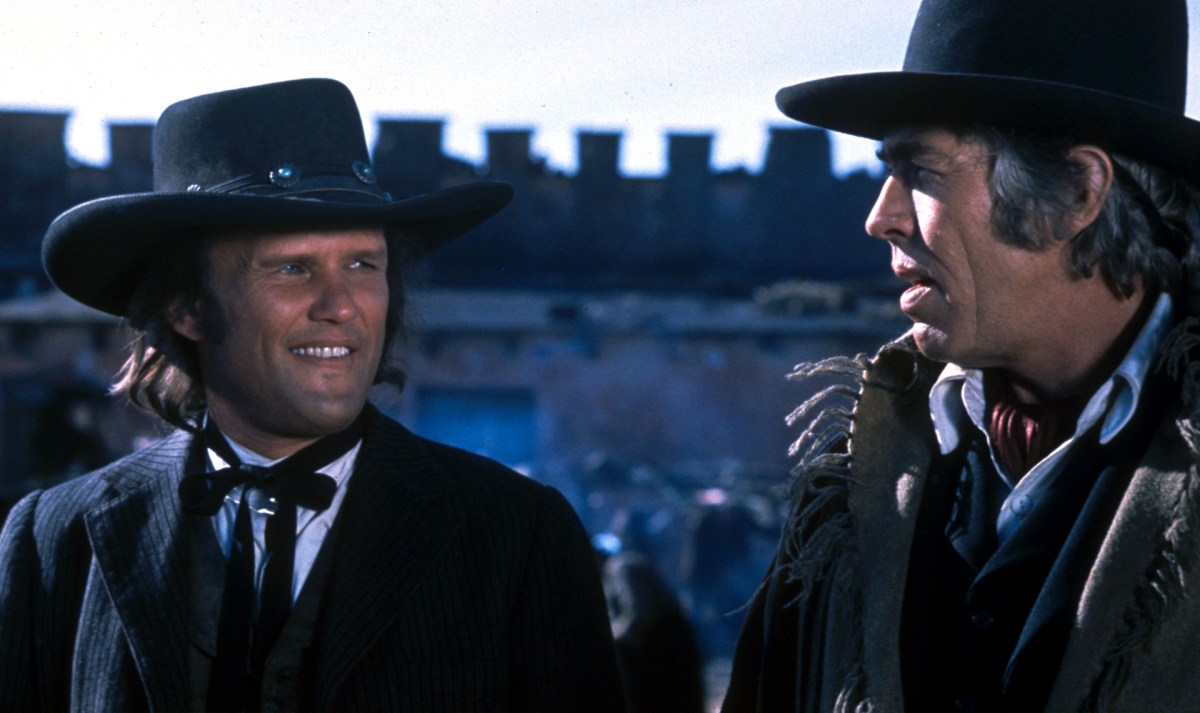
Set in 1881 New Mexico, the film dramatizes the final days of William Bonney,  better known as Billy the Kid (played by Kris Kristofferson)  as he’s hunted down by his former friend turned lawman, Pat Garrett (James Coburn). There’s no rush to the inevitable confrontation. Instead, the film moves slowly with purpose, soaking in the dusty landscapes, long silences, and uneasy glances between men who understand their roles in their vanishing world.

Coburn delivers a wonderful performance as Garrett, a man who’s made peace with compromise but not with himself. Kristofferson, younger and looser, plays Billy with charm and recklessness. Their scenes together are understated but filled with unspoken history and mutual resignation. It stands as one of the most introspective and mournful Westerns ever made. It’s not a shoot-’em-up spectacle; it’s a meditation on regret, inevitability, and the bitter cost of survival.

The studio clashed with Peckinpah and released a terrible version in 1973 that was a pale version of Peckinpah’s vision. It was jagged, choppy, and stripped of its emotional weight. Critics panned it. Audiences stayed away. Like many films ahead of their time, Pat Garrett and Billy the Kid didn’t stay buried. A bootlegged “preview print” started circulating in the 80s—rougher but far more coherent. It showed what Peckinpah had been aiming for: a slower, sadder, more deliberate tone piece about friendship, death, and the slow extinction of the outlaw soul. Critics and fans alike loved his original version.

In 2005, a “Special Edition” came out, restoring much of what had been lost (though not fully satisfying the purists). Still, it was enough to elevate the film from cult obscurity to a rightful classic. And make no mistake…it IS a classic!

I never thought about cinematography until recently, but John Coquillon did a hell of a job on this movie. It looks beautiful, and the landscapes jump out at you as you watch. 

Now let’s talk about the soundtrack by Bob Dylan. Bob Dylan was in the movie and did a good job, but it’s the soundtrack that will be remembered. This isn’t your typical Dylan record. It’s mostly instrumental, often minimalist, and was stitched together for the film. But what you get here is an eerie, atmospheric tone throughout the entire album. Let’s get this out of the way: Knockin’ on Heaven’s Door is the anchor, the standout, the one track that broke free and carved a permanent space in classic rock airwaves. It’s a song so simple it feels like it always existed. Unfortunately, it overshadows the other songs, which I like a lot. Billy 1, Turkey Chase, Bunkhouse Theme, and the rest. It’s an album I like to put on and just soak it in and relax. 

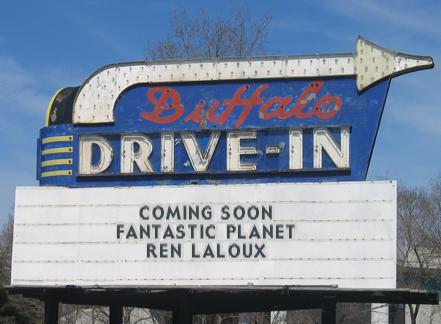
Max’s Drive-In Movie – Fantastic Planet

Fantastic Planet Header

We will take a short break from the Christmas posts. 

This is the first animation that I’ve featured on my Drive-In movie series. This is not The Flintstones, The Simpsons, or anything close to normal. I mean that as a compliment…the visual of this movie is fantastic…no pun intended. 

In 2012 I was sick with the flu and it was around midnight. I had nothing to do so I remembered a movie that a co-worker wanted me to watch. It was the 1973 movie Fantastic Planet and I was blown away. Bailey, my son, came into the room and asked me what I was watching. He started to watch and couldn’t believe the animation and what it was all about. He was 12 at the time and I was amazed as well. I’ve never seen anything like this movie before or since. I still watch it from time to time and I find things in the film I missed before. 

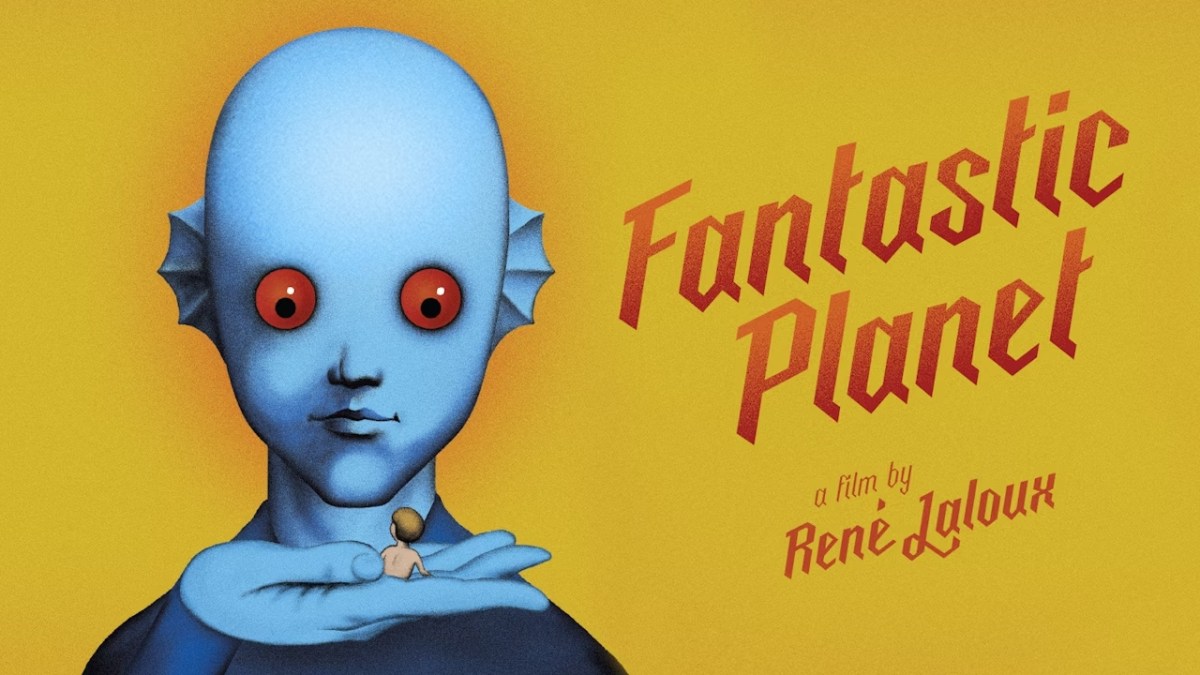
Fantastic Planet (original French title: La Planète Sauvage) is a 1973 French-Czech animated science fiction film directed by René Laloux. The film is known for its surreal, dreamlike visuals and its hidden meanings, which explore themes of oppression, freedom, and coexistence. It’s based on Stefan Wul’s 1957 novel Oms en série, the film became a cult classic, especially in the science fiction and animation communities.

I’ve read some about the making of this movie. The film uses cut-out animation (a form of stop-motion animation using flat characters, props, and backgrounds cut from materials such as paper, cards, stiff fabric, or photographs. The props would be cut out and used as puppets for stop motion. ), a labor-intensive method that gives the movie a distinct, dreamy feel. The style was heavily influenced by Roland Topor, a French artist and writer known for his surrealist work, who also co-wrote the screenplay and designed much of the film’s visual style.

It’s very hard to describe this movie or try to put it in words. You would have to watch it yourself. The full French version of the movie is at the bottom, underneath the trailer.  Unfortunately there are no english subtitles. My son Bailey now teaches classes at college for his Master’s degree, and he took this movie to show his class. He said they were amazed and lost. They wanted to know more about it, and many said they had never seen anything remotely like it before. 

If you are looking for something different…give this a try because it fits that description totally. I think you will be amazed at the animation they used. You also have a very seventies soundtrack which only heightens it to me. 

Plot

The film is set on the planet Ygam, where giant blue humanoid aliens known as Draags dominate the planet and keep human-like creatures, called Oms, as pets. Oms are treated as inferior beings, with some Draags experimenting on them or exterminating wild Oms who resist control. Then, an Om boy becomes educated, thanks to a young female Draag. This leads to an Om rebellion, which weakens the Draag control over their race. Will the Oms and the Draags find a way to coexist?

..,

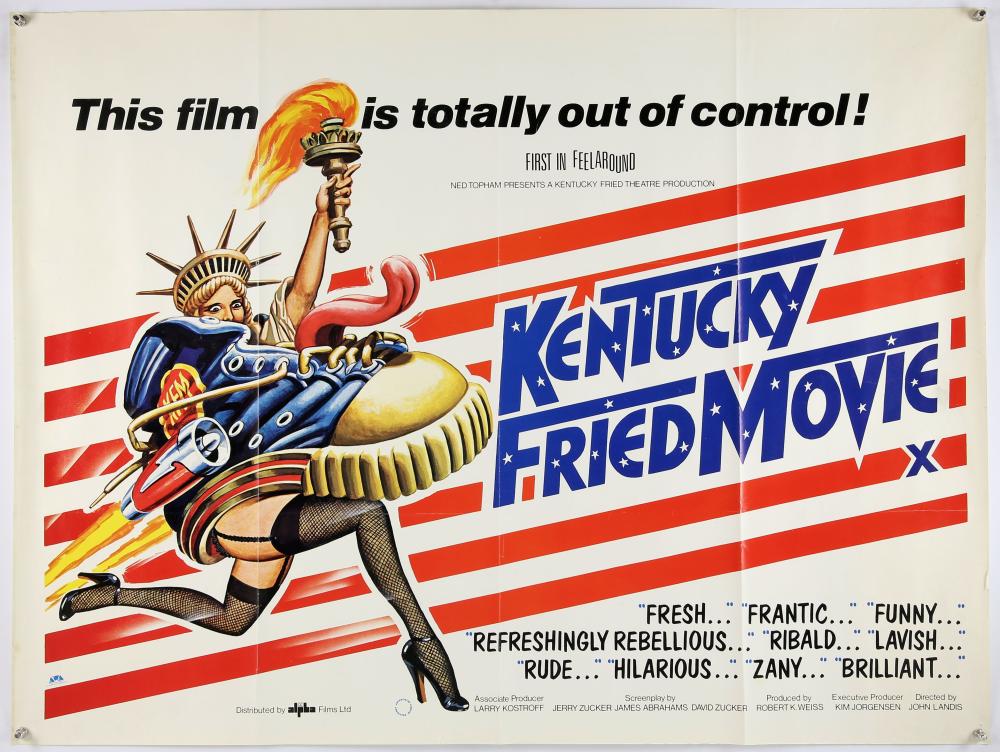
Max’s Drive-In Movie – Kentucky Fried Movie

Kentucky Fried Movie Header

The reason I thought about this movie again was I was reading a Quentin Tarantino interview and he mentioned how much he liked it. It is in his favorite movie list. I hadn’t seen it since around 2012 or so. I rewatched it and enjoyed it a lot.

I read about this movie a lot and finally got to see it in the 1980s. It’s close to a rated R Saturday Night Live episode set in a movie with no audience. They have fake newscasts, commercials, movie trailers (Catholic High School Girls In Trouble), and almost everything else. It’s 1970s skit humor very close to SNL with the first cast. Some skits work really well and some skits don’t…just like most skit-based shows. I also would compare some of the humor with Airplane! and Naked Gun. This movie does include nudity and dark humor.

The film was directed by John Landis and written by David Zucker, Jim Abrahams, and Jerry Zucker (who later created The Naked Gun series). You will see familiar faces but not well-known except for a few cameos by Donald Sutherland, Bill Bixby, and George Lazenby. Tony Dow also makes a cameo playing his old character Wally Cleaver in the skit Courtroom.

The Zucker brothers (David and Jerry) and Jim Abrahams were the creative team behind the film. They had originally been performing a live comedy show called “The Kentucky Fried Theater” in Madison, Wisconsin, in the early 1970s. The success of their live sketches inspired them to translate that format into a film. This was going on across the nation along with the National Lampoon Magazine which inspired a different kind of skit comedy than the Carol Burnett Show.

I really hate the word “dated.” This goes back to a modern movie critic saying “Vanishing Point” was dated. Hmmm, a movie set and filmed in the 1970s with a 1970s theme and style…who would have thought that? When you watch a movie like this one…you have to put yourself in that mindset of when it was made. I understand that some comedy styles change but some things are funny…and some are not… regardless of when they were made. In other words, it’s not “politically correct.”

I have seen some “first reaction” videos of this movie from young people who were watching it for the first time. They were very positive which surprised me. Of course, they gave warnings because of the darkness but liked it.

The budget was $600,000 and it made 7.1 million dollars at Drive-Ins across America. I won’t include a plot since it contains different skits.

..,

Max’s Drive-In Movie – The Shootist

When I watch this movie I marvel at the talent on the screen. John Wayne, Ron Howard, Jimmy Stewart, Lauren Bacall, Scatman Crothers, John Carradine, and more. I watched it as a teenager in the 1980s at some point. The movie was released in 1976.

I really, really like this movie a lot and have liked it from the first time I saw it. Along with Wayne, it is fun seeing Ron Howard in his role here. No, it’s not the Clint Eastwood trilogy or John Wayne’s own The Searchers but a really good film.

This film has John Wayne at the end of his long career and Ron Howard at the beginning of his adult career. This was John Wayne’s final role before he died later. Wayne was battling cancer in real life during the film’s production, adding a poignant parallel to real life.

It was directed by Don Siegel and is based on the 1975 novel by Glendon Swarthout. The movie is set in 1901 and follows the story of J.B. Books (played by Wayne), an aging and ailing gunfighter who learns he has terminal cancer. Determined to face his final days with dignity, Books seeks peace but becomes embroiled in conflicts that challenge his desire for a quiet end.

James Stewart had not made a film for five years. He agreed to play the doctor as a favor to John Wayne and his hearing was getting bad by then.

Don Siegel was a very successful director. Some of Siegel’s huge movies came with Invasion of the Body Snatchers (1956),  Coogan’s Bluff (1968), Two Mules for Sister Sara (1970), Dirty Harry (1971),  and Escape from Alcatraz (1979). Siegel was known for his direct no-nonsense directing and ability to draw performances from his actors. Clint Eastwood said he was one of his mentors.

..,

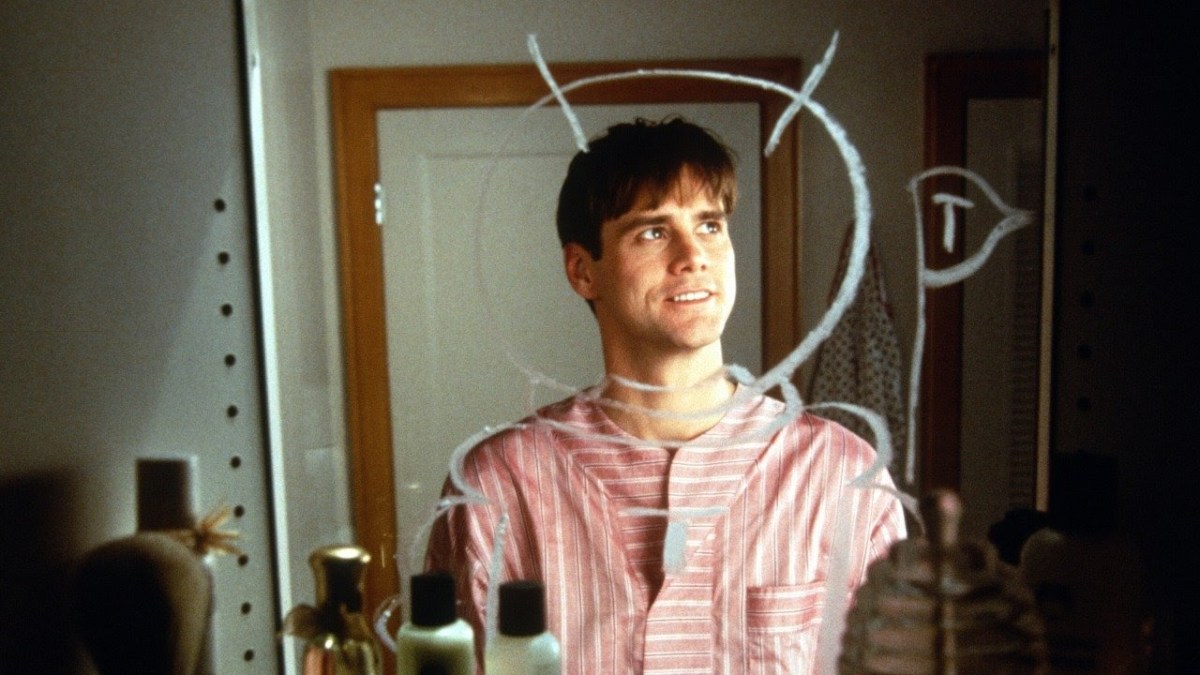
Max’s Drive-In Movie – The Truman Show

When I saw this 1998 movie I did with trepidation because of Jim Carrey. There is only so much of his comedy I can take at once but this was completely different. He did more of a serious turn in this movie and I must admit he was great. I’m not the world’s biggest Jim Carrey fan at all but this movie is brilliant.

Carey plays Truman Burbank, a man who unknowingly lives his entire life in a meticulously crafted, 24/7 reality TV show, with his every move broadcast to a global audience. I try to find themes in movies and this one explores themes of manipulation, personal freedom, commercialism, and the power of free will that wins out.

This movie was like looking into the future…a bleak near future. The  Kardashians and others followed showed “real life” (heavy sarcasm) and delivered Warhol’s 15-minute fame theory in the worst possible way. To be honest…I’m honestly amazed that this movie’s plot hasn’t been tried.

Truman Burbank lives a seemingly perfect life in Seahaven, a fictional island town somewhere that is mixed between the 1950s and the 1990s. He was unaware that his entire existence was being broadcast to millions around the world. Every person he interacts with, including his wife, best friend, and co-workers, is an actor playing a role. As Truman begins to notice inconsistencies and strange events like a stage light falling from the “sky” and his wife advertising products mid-conversation…he starts to question his reality.

The film builds towards a powerful climax as Truman embarks on a journey of self-discovery and challenges the artificial world he has been confined to, sailing across the set’s ocean (which he is scared of) in search of freedom. Funny, he wanted to see the world but didn’t know the world was watching him being born, his first step, his first kiss, his marriage, and his escape.

This is a SPOILER but the most poignant thing about the movie to me is when he decides to go to the real world and the show ends. All of those people who bought Truman merchandise and tuned in through the years applauded and said hmm… what’s on another channel? They moved on quickly without a thought or care…and hopefully, Truman did the same.

I have so many feelings about this movie. After I watched it for the first time I took a second look in the mirror and the consistent things in my life and thought hmm what if? And you know what? There IS something called The Truman Syndrome… Psychologists later identified a phenomenon called “The Truman Show Delusion” where individuals believe their lives are being staged and broadcast.

..,

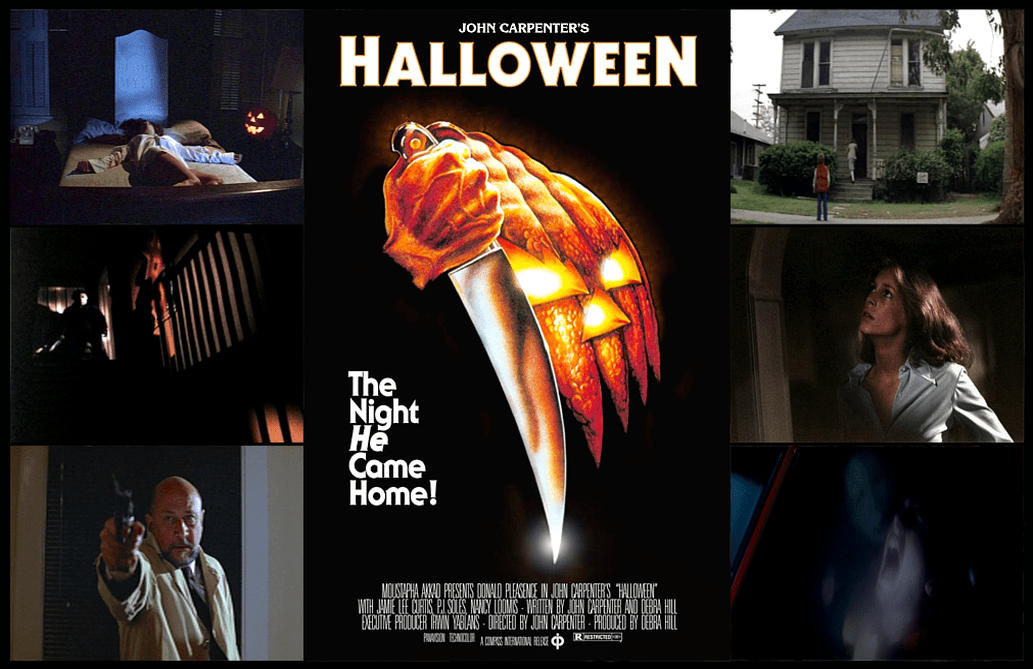
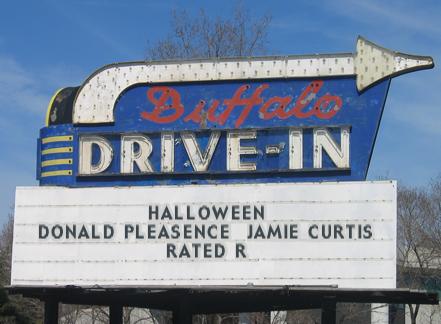
Max’s Drive-In Movie – Halloween

Halloween Header

Que that spooky piano part now. This 1978 film is a horror classic that I still enjoy watching. While I’m at it…Happy Halloween Everyone! Sometimes, sequels can ruin a franchise and it gets silly. We sometimes forget how great the original is. I’m not a fan of the no-brain slasher movies that followed this.

From the very beginning, Halloween grabs your attention with its eerie, minimalist score—also composed by Carpenter himself. The haunting piano melody sets the tone for the entire film, creating a sense of dread even before it begins. It’s one of those soundtracks that sticks with you long after the credits roll. The two main leads…Jamie Lee Curtis and Donald Pleasence do an excellent job. I’ve liked Pleasence in anything he has done.

What’s surprising about Halloween after rewatching it, is how little blood and gore is actually shown. The movie relies more on atmosphere and suspense than graphic violence, which is why it remains such an effective horror film today. Carpenter’s use of shadows, lighting, and camera angles makes everything feel off-kilter.  Halloween doesn’t go overboard with its horror… just enough to leave a sense of unease.

There are little things as well that this movie does well. Before it all starts Lauire (Jamie Lee Curtis) and Annie (Nancy Kyes) are smoking a joint in a car while Michael is following them. While this was going on…Don’t Fear The Reaper was playing on the radio faintly. Annie’s dad is the sheriff and his name is Brackett. Dr Loomis (Donald Pleasence) tells him that he and his town better be worried. Michael Myers escaped a facility and was headed toward the town where Myers lived when he killed his sister when he was a kid.

This is another movie that has been ingrained in pop culture. After this film, there was a part 2. John Carpenter did not want to make it but was sued to make it. He made sure to blow Myers up in the 2nd film and part 3 had nothing to do with Myers. Halloween II was written by Carpenter and Debra Lee…the two who wrote Halloween. He refused to direct it and he never liked it. “I had to come up with something. I think it was, perhaps, a late night fueled by alcoholic beverages, was that idea. A terrible, stupid idea! But that’s what we did.”

Rob Zombie remade the film in 2007 and a sequel with much more blood and gore. He traded mystic for the obvious, which didn’t work as well for me…but I’m glad he put a little more reason on why Michael did what he did.

Plot IMDB

The year is 1963, the night: of Halloween. Police are called to 43 Lampkin Ln. only to discover that 15-year-old Judith Myers has been stabbed to death by her 6-year-old brother, Michael. After being institutionalized for 15 years, Myers breaks out on the night before Halloween. No one knows, nor wants to find out, what will happen on October 31st, 1978, besides Myers’ psychiatrist, Dr. Loomis. He knows Michael is coming back to Haddonfield, but by the time the town realizes it, it’ll be too late for many people.

Quotes

  • Loomis: I met him, 15 years ago; I was told there was nothing left; no reason, no conscience, no understanding in even the most rudimentary sense of life or death, of good or evil, right or wrong. I met this… six-year-old child with this blank, pale, emotionless face, and… the blackest eyes – the Devil’s eyes. I spent eight years trying to reach him, and then another seven trying to keep him locked up, because I realized that what was living behind that boy’s eyes was purely and simply… evil.

_____________________________________

  • Brackett: I have a feeling that you’re way off on this.
  • Loomis: You have the wrong feeling.
  • Brackett: You’re not doing very much to prove me wrong!
  • Loomis: What more do you need?
  • Brackett: i going to take a lot more than fancy talk to keep me up all night crawling around these bushes.
  • Loomis: I-I-I watched him for fifteen years, sitting in a room, staring at a wall; not seeing the wall, looking past the wall; looking at this night, inhumanly patient, waiting for some secret, silent alarm to trigger him off. Death has come to your little town, Sheriff. Now, you can either ignore it, or you can help me to stop it.
  • Brackett: More fancy talk.

..,

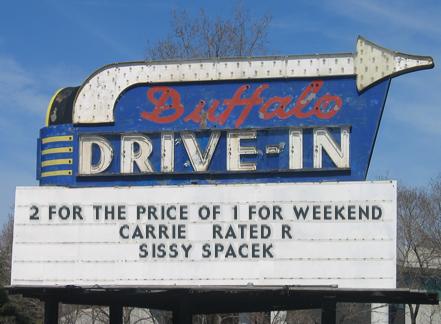
Max’s Drive-In Movie – Carrie

Carrie Header

Next to The Shining, this is my favorite King adaptation. 

Carrie is a 1976 horror film directed by Brian De Palma, based on Stephen King’s 1974 debut novel of the same name. He used many techniques in this movie that put it over the top. Split screens, slow motion, and vivid color contrast just to name a few.

It is one of the most iconic films in the horror genre and focuses on subjects like bullying, supernatural powers, and revenge. It’s so easy to relate to because in high school we have all been through embarrassing things…getting pig blood dumped on you…probably not but we can relate with Carrie. We know the good people and we have known the bad people in this movie. We also know the popular cliques and the not-so-popular cliques. The girls that were out of reach and the ones that were.

The story revolves around Carrie White, a shy and socially awkward high school girl who is mercilessly bullied by her classmates. Raised by an overbearing, fanatically religious mother, Carrie leads a lonely and repressed life. After experiencing a traumatic event at school, she discovers that she has telekinetic powers. The situation escalates when her classmates cruelly prank her at the senior prom. In a moment of intense emotion, Carrie uses her powers to take a horrifying revenge on those who tormented her.

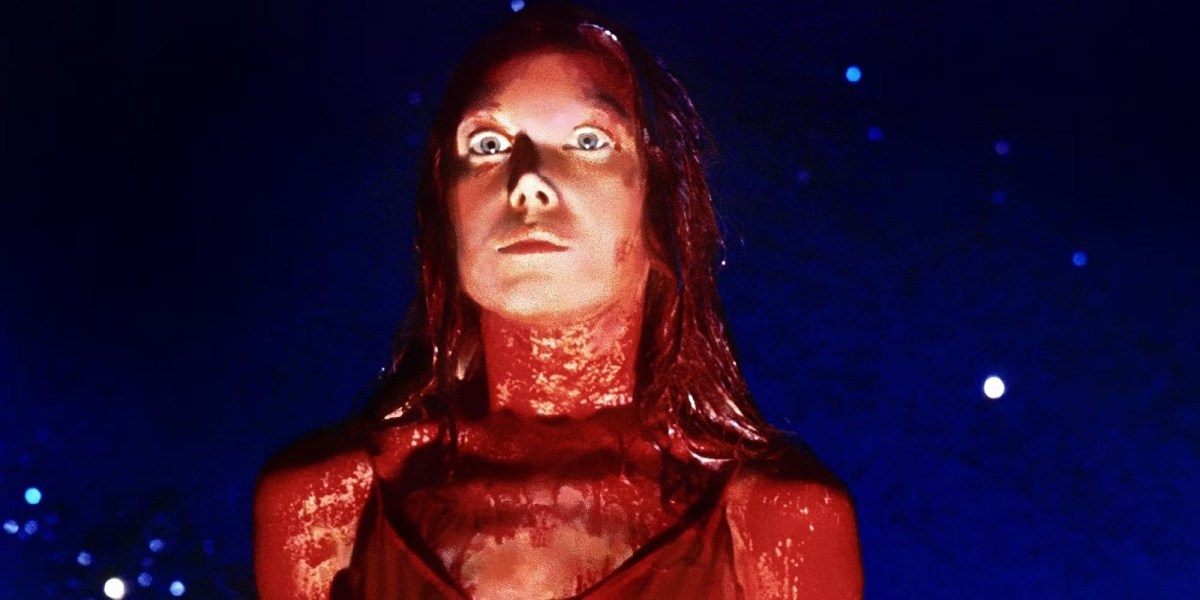
Sissy Spacek starred in this film and was perfect in the role. Piper Laurie portrayed her mother with an exaggerated, fanatically religious fervor. Laurie’s portrayal of a zealot was intentionally over-the-top, adding to the film’s tone. . The movie also launched the film careers of Nancy Allen and Amy Irving who both went on to star in many movies.

 In 1976 my class went to see Charlotte’s Web at the theater. On the wall were movie posters of Carrie. Since then I’ve always associated them with each other. As a 9-year-old, seeing a teenager covered with blood with an evil look made me want to see it. I didn’t get to see it until almost a decade later. It was worth the wait!

Both Sissy Spacek and Piper Laurie received Academy Award nominations for their performances, a rarity for the horror genre.

This story has been remade in 3 different movies. This one in 1976, 2002, and a remake in 2013. I’ve watched all of them…trust me on this…this is the best version out there at least to me. 

..,

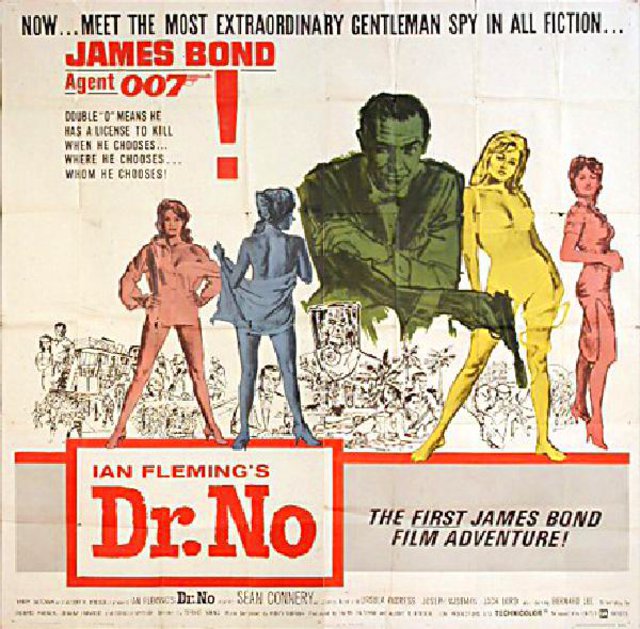
Max’s Drive-In Movie – Dr. No

Dr No

I have a different relationship with James Bond than some. I didn’t watch them as a kid but I started to watch them in my late 20s. I finally found out what all the fuss was about. I do remember seeing parts of Moonraker when it came out but it just didn’t pique my interest at 12. I recently read a review of From Russia With Love from princecranoir and would recommend everyone reading. That one may be my favorite James Bond film but this one holds a special place for me as well. My favorite always changes when I do a Bond marathon at home. I did a post a while back about my favorite Bond films…and Dr No was at the top…so it does change.

Dr. No was a commercial success, paving the way for numerous sequels and establishing the template for future Bond films. Sean Connery’s portrayal of Bond became iconic, and the film is credited with launching the spy genre in cinema. We will still be watching this in 2062.

Dr. No was the first Bond film I ever watched all the way through. Released in 1962, it introduced the world to James Bond, a suave, sophisticated British secret agent with a license to kill. Based on Ian Fleming’s novel of the same name, the film marked the first installment of one of the most successful and enduring franchises in cinematic history. Dr. No laid the foundation that would define Bond for decades—high-stakes espionage, glamorous locations, and, of course, iconic villains. There were really no gadgets in this one…that would come in the next film.

It was based on Ian Fleming’s 6th book about the Spy but the first one was adapted into a movie. Sean Connery is James Bond to me and there was no better way of kicking off a franchise than this. The film looks great in its vivid color and scenery. The bulk of the film was filmed in Jamaica in early 1962.

There is no better use of a Sunday afternoon than to spend it with James Bond and the absolutely stunning Ursula Andress. When she walked out of the water on Crab Key, it was close to everything magically turning to color in The Wizard of Oz… She was the first of many Bond girls to follow and you could not find a better first one. I was humming Under the Mango Tree for days after I saw it.

JFK, an avid Ian Fleming fan, even hosted a private screening of “Dr. No” at the White House. Legend has it he remarked, “I wish I had James Bond on my staff.” Who wouldn’t? If you haven’t seen this film, treat yourself and immerse yourself in Bond’s world; and for those who have, a rewatch is always a pleasure.

Plot (Spoilers)

The movie starts with Bond, played by Sean Connery, being sent to Jamaica to figure out why a fellow British agent went missing. Pretty mysterious, right?

When Bond gets to Jamaica, things get tense. He teams up with some local allies, like a fisherman named Quarrel and CIA agent Felix Leiter. They help him uncover clues, which eventually lead to a creepy, secretive island called Crab Key. This is where Dr. No, the villain, is hiding. He’s a super smart but evil scientist who works for a dangerous organization called SPECTRE. His plan? To mess with American space missions using some kind of high-tech radio beam. Bond realizes he needs to stop him before things get out of hand.

Bond’s adventure takes him into Dr. No’s hidden lair, where he also meets Honey Ryder (played by Ursula Andress), a woman who’s just out collecting shells but gets tangled in Bond’s mission. Together, they navigate the dangers of the island, avoiding Dr. No’s guards and traps.

In typical Bond fashion, he manages to outsmart Dr. No, destroy his base, and save the day. The movie ends with a big explosion as Bond and Honey escape. It’s classic spy action, with all the charm, gadgets, and danger you’d expect from a Bond film!

Quotes

  • Dr. No: The Americans are fools. I offered my services; they refused. So did the East. Now they can both pay for their mistake.
  • James Bond: World domination. The same old dream. Our asylums are full of people who think they’re Napoleon. Or God.

_______________________________________

  • [Honey describes how she killed the man who had hurt her]
  • Honey Ryder: I put a black widow spider underneath his mosquito net… a female, they’re the worst. It took him a whole week to die.
  • [Bond looks shocked]
  • Honey Ryder: Did I do wrong?
  • James Bond: Well, it wouldn’t do to make a habit of it.

_______________________________________

  • [explaining why she believes the legend about Crab Key’s fire-breathing dragon]
  • Honey Ryder: How well do you know about animals? Did you ever see a mongoose dance? Or, a scorpion with sunstroke sting itself to death? Or, a praying mantis eat her husband after making love?
  • James Bond: I hate to admit it, but, I haven’t.
  • Honey Ryder: Well, I have.

Original Trailer

..

Max’s Drive-In Movie -Jaws

Da-Dum, Da-Dum, Da-Dum…

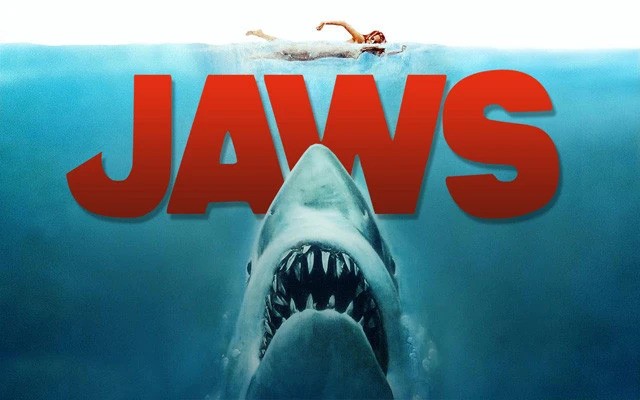
June 20, 1975, was not only the opening of this movie but it turned into a huge pop culture event of the 1970s. It’s a movie known around the world. There were T-shirts, novelty songs, and hype…but the movie lived up to it and then some. 

Why was it so great? For me, I would say that Spielberg kept it simple. Jaws is based on the 1974 novel by Peter Benchley, which was inspired by a series of shark attacks off the coast of New Jersey in 1916. Benchley’s book tells the story of a great white shark terrorizing a small coastal town, and the efforts of three men to hunt it down. 

The acting in this was excellent to me. The one that I always pick out is Robert Shaw as the character Quint. He makes himself known quickly by the fingernails down the chalkboard tactic. Shaw made that character real to me. My favorite scene was him telling the story of delivering the atomic bomb, the sinking of the USS Indianapolis, and the shark attacks that happened. His performance is probably the main reason for Jaws being one of my favorite films of all time. The speech is based on a real event. The USS Indianapolis sank in 1945, resulting in the greatest loss of life due to shark attacks in history.

Spielberg wanted Lee Marvin for Quint and Jon Voight for Hooper. Spielberg got it right for this film. Roy Scheider as Martin and newcomer Richard Dreyfuss as Matt Hooper were great. It’s the realism that Shaw added that pushed this over. 

Spielberg’s use of tension, combined with John Williams’ score proved that a horror thriller could achieve both critical and commercial success. The film won three Academy Awards (for editing, score, and sound) and remains highly regarded by critics. But perhaps its greatest legacy is even today, many people feel some fear whenever they step into the ocean.

John Williams…The man is renowned for his film scores. Along with Jaws and barely scratching the surface…he also did Star Wars, Indiana Jones, E.T., Harry Potter, and Jurassic Park, just to name a few. 

The movies Duel and Jaws were Spielberg’s first two big movies. They share a common thread. Duel features a large diesel truck that is much like Jaws on dry land. Both movies work well. 

PLOT

It’s a hot summer on Amity Island, a small community whose primary business is its beaches. When new Sheriff Martin Brody discovers the remains of a shark attack victim, his first inclination is to close the beaches to swimmers. It doesn’t sit well with Mayor Larry Vaughn and several local business people. Brody backs down to his regret of that weekend. A predator kills a young boy. The dead boy’s mother puts out a bounty on the shark, and Amity is soon swamped with amateur hunters and fishermen hoping to cash in on the reward. A local fisherman with much experience hunting sharks, Quint, offers to hunt down the creature for a hefty fee. Soon, Quint, Brody, and Matt Hooper from the Oceanographic Institute are hunting the Great White shark at sea. As Brody succinctly surmises after their first encounter with the creature, they will need a bigger boat.

QUOTES

  • Quint: [Quint first scratches the chalk board to get everyone’s attention] Y’all know me. Know how I earn a livin’. I’ll catch this bird for you, but it ain’t gonna be easy. Bad fish. Not like going down the pond chasin’ bluegills and tommycods. This shark, swallow you whole. Little shakin’, little tenderizin’, an’ down you go. And we gotta do it quick, that’ll bring back your tourists, put all your businesses on a payin’ basis. But it’s not gonna be pleasant. I value my neck a lot more than three thousand bucks, chief. I’ll find him for three, but I’ll catch him, and kill him, for ten. But you’ve gotta make up your minds. If you want to stay alive, then ante up. If you want to play it cheap, be on welfare the whole winter. I don’t want no volunteers, I don’t want no mates, there’s just too many captains on this island. $10,000 for me by myself. For that you get the head, the tail, the whole damn thing.

_______________________________________________

  • Ellen Brody: Martin hates boats. Martin hates water. Martin… Martin sits in his car when we go on the ferry to the mainland. I guess it’s a childhood thing. It’s a… there’s a clinical name for it isn’t there?
  • Brody: Drowning.

_______________________________________________

  • Brody: You’re gonna need a bigger boat.

..,

Max’s Drive-In Movie – An American Werewolf In London

An American Werewolf In London

Most of the time a comedy-horror doesn’t work but in this 1981 film, it works perfectly. I always come back to this movie. It’s not a parody…but a horror movie that happens to have funny moments. When the movie came out on VHS I bought it. It was also the first movie I bought on DVD. It has aged very well.

If you like horror movies you should like this. I would not recommend the sequel An American Werewolf in Paris…that one doesn’t stack up against the original. This one does have violence, blood, and gore and it’s very effective. The scene in the pub is worth watching the movie. I’ve never felt as uncomfortable for two people in a movie when David and Jack walked into that pub.

Two Americans (David and Jack) are traveling through Europe. They go to a pub (The Slaughtered Lamb) and it’s strongly hinted for them to stick to the main roads on their way out by the unfriendly locals…well guess what? They don’t and soon Jack is ripped to shreds and David is badly scratched by a werewolf. David wakes up in a hospital with Nurse Alex Price taking care of him. That is the nurse I would want.

David starts having horrific nightmares. In the hospital, Jack reappears to David as a decomposing corpse. He keeps telling David that he should kill himself because David will turn into a werewolf and kill others. David goes home with Alex and Jack keeps reappearing and eventually, David does turn into a werewolf.

John Landis had just finished The Blues Brothers and Animal House when he directed this. In two years he would hit again with Trading Places. Rick Baker did the special effects for this movie. The transformation is great and the wolf is perfect. It is the best transformation scene I’ve ever seen. The effects worked very well for me because it felt real.

The music is great. Bad Moon Rising, Blue Moon, and  Moondance are featured. Supposedly Max Landis, John’s son is planning to remake this movie. Personally, I don’t think it needs it. It’s hard to remake a classic.

Plot IMDB

Two American college students are on a walking tour of Britain and are attacked by a werewolf. One is killed, the other is mauled. The werewolf is killed but reverts to its human form, and the local townspeople are unwilling to acknowledge its existence. The surviving student begins to have nightmares of hunting on four feet at first but then finds that his friend and other recent victims appear to him, demanding that he commit suicide to release them from their curse, being trapped between worlds because of their unnatural deaths.

Quotes

  • Dart Player: Go. Stay on the road. Keep clear of the moors.
  • David: Yeah. Thank you.
  • Chess Player: Beware the moon, lads.

__________________________________________

  • Gerald Bringsley: [accusing David of his murder] Whereas I am a victim of your carnivorous lunar activities.

..,

Max’s Drive-In Movie – Cujo

Cujo Header

It’s getting near Halloween so I’m going to feature some more horror movies in the next two weeks…that’s my excuse anyway. I will start by saying that this is not the best Stephen King adaptation by any stretch but it’s entertaining. I think it’s thrilling and I like the director’s pacing in this one. Plus…the ability to make a Saint Bernard look convincingly menacing takes a lot of work. Also, check out a movie reviewer… my friend Bernie from Reelybernie. He is one of the best movie reviewers on WP and he is doing a Halloween series now.

As some of you know, I have had three Saint Bernards, so I like any movie with them, even if it’s evil. Cujo is not really evil; he has rabies and it’s a frightening thought. They are very strong dogs, they can pull thousands of pounds so if one was rabid you would be…to put it mildly in bad trouble. I have played wrestle each one and I couldn’t imagine if they were being serious. I watched this movie again with Martha, my current Saint, right beside me which was cool because she is the spitting image of Cujo with her marks.

Our first Saint was 175lbs with no fat on her. I did see her in action though one time. A German Shepard was coming at my wife from across the street, our dog knocked down our metal gate and ended up body-slamming the Shepard to the ground. It got up and never came back. She also wandered out on the road one day after getting out of the house. She was hit by a church bus…I thought she was dead but she got back up and barked at the bus. We did take her to a vet and she had some bruising but that was it. They are tough dogs but the most lovable lugs you would ever meet.

This 1983 movie starts with a big fun Saint Bernard chasing a rabbit…he sticks his big nose down a rabbit hole and is bitten by a bat. Cue the slow descent into a rabid madness. I’ve never read this book before but in the movie, nothing supernatural happens which is strange for a Stephen King adaptation. I’ve read where the book does have some supernatural events in it but not many. The movie just concentrates on the story.

At first, Cujo is just a regular, lovable dog who belongs to a mechanic named Joe Camber, his son, and his wife. But after the bat bite, Cujo starts acting strange and becomes more aggressive as the rabies takes over. You could tell that Joe Camber was not father or husband of the year material. His wife and son planned on a trip to her sister’s home. The movie didn’t say but I think they were leaving and never coming back.

Meanwhile, we meet the main characters, Donna Trenton (played by Dee Wallace), her husband Vic, and their young son Tad. Donna is having some personal troubles because she’s having an affair, and her marriage is falling apart. Vic, her husband, has to leave town for work, leaving Donna and Tad on their own. Dee Wallace was fantastic in this role. The critics were mixed but most gave her high marks for this movie.

One day, Donna and Tad drive out to Joe Camber’s farm to get their car fixed, but when they arrive, they discover that Cujo is no longer the friendly dog he once was. My favorite scene is where Camber’s son Brent calls for Cujo before he and his mom leave for her sister’s house…Cujo comes out of the fog growling and foaming but recognizes Brent (his owner) and slowly walks away. No one else gets that lucky.

They are now stuck at the farm and Cujo is now rabid and bloodthirsty and he quickly attacks them. Donna and Tad end up trapped in their broken-down car, with Cujo circling around them, ready to pounce. The heat inside the car is unbearable, and they can’t escape because the dog is waiting for them. 

Dee Wallace was fantastic in this film. The movie got mixed reviews but Wallace was singled out by most as doing a great job. Lewis Teague directed this movie and I have to give him credit. He didn’t try to rush it, he slowly built the tension up and it paid off at the end.

Despite the film’s portrayal of Cujo as a terrifying dog, the Saint Bernard dogs used on set were friendly and often wagged their tails during scenes where they were supposed to be menacing. To overcome this, the filmmakers had to tie down the dogs’ tails until they finished with the scene.

..,

Max’s Drive-In Movie – High Noon

When I see Gary Cooper I think of one person…and that is Lou Gehrig because he did a great job portraying him in Pride of the Yankees. Gary Cooper plays Sheriff Will Kane in this western on his wedding day. Grace Kelly plays his Quaker’s new wife and she is stunning. Katy Jurado is also great in the role of Helen Ramírez, a beautiful and successful woman. 

High Noon theater

There are other excellent Westerns like The Unforgiven, Pat Garrett and Billy the Kid, The Eastwood Trilogy, The Searchers, and Tombstone…this is right up there with them. It’s very uncluttered and doesn’t have 20 plotlines going on at once…it’s simple but exciting. I’ve watched this movie around 5 times and I always find something I didn’t before.

The Killer Frank Miller is due on the noon train and his first order of business is to kill Kaine, a man who Kane helped send to prison five years ago and swore blood vengeance at the time. The three members of his gang are waiting at the depot. Miller escaped hanging, got a long sentence, and some idiots on the parole board turned him loose.

Cooper is a man’s man in this one…a badass but a laid-back one. He refuses to run away from a fight despite having no help from the town members who say he once saved the town. He visits the bar and The church and gets nothing. He takes them on himself.

The 40s and 50s had some great character actors. One in this movie I always have liked…Thomas Mitchell, was in some Capra films, including It’s A Wonderful Life. You have other actors that you have heard of. Harry Morgan of Dragnet and M*A*S*H. Future movie stars Lloyd Bridges and Lon Chaney Jr.

Give this one a watch…it’s only 85 minutes long and Cooper just oozes goodness in many roles including this one. He is not an anti-hero but a man who stands for what is right no matter the cost. This film explores the best and worst of mankind.

The fictional Tony Soprano : Let me tell ya something. Nowadays, everybody’s gotta go to shrinks, and counselors, and go on “Sally Jessy Raphael” and talk about their problems. What happened to Gary Cooper? The strong, silent type. That was an American. He wasn’t in touch with his feelings. He just did what he had to do.

..,

Max’s Drive-In Movie – North Dallas Forty

North Dallas Forty Header

This 1979 sports movie was based on the 1973 novel of the same name by former NFL Dallas Cowboys player Peter Gent. The film offers a gritty and realistic look at pro football. It hits on the physical and emotional toll, corruption, and the commercialization of the game. You get a glimpse into 1970s football with the players, coaches, groupies, and owners. It’s listed as a comedy but it’s more a drama.

I saw this movie in the early nineties and liked it immediately. It has a very realistic feel. I’m a Nick Nolte fan and he was his normal grumpy self in this. You don’t have to be a fan to watch this movie. Seldom has the corruptive nature of professional sports been on display than here. Pro football comes across as supremely exploitative of players, with owners reflecting in the glory. The MLB was basically the same at the time as well.

It really gives an insight into what happened behind the scenes in football and it’s not pretty. Nolte plays an aging talented wide receiver who loves the game and has left himself on fields throughout the league. He hurts constantly but management is more worried about what he does in his own time than on the field.  He loves the game but not the business. The movie was not allowed to use real NFL football names. In this movie…the Cowboys are the Bulls.

Players were treated terribly by coaches, managers, and owners. They were not paid well unless they were a star player. Now they pay the players so much they take good care of them but during this era, everyone was expendable except stars and this movie shows that better than most.

Mac Davis played Seth Maxwell who was modeled after quarterback Don Meredith. Nick Nolte played Phillip Elliot who was wide receiver and author Peter Gent. The other players resemble Gent’s Cowboys of the late sixties down to the Tom Landry type of head coach. John Matuszak, a real NFL football player was in this movie as well.

After reading multiple books on the 1970s Oakland Raiders and Pittsburgh Steelers…this movie is very true to form for those years. In the end, the movie leaves you wanting more.

Plot

It’s a sports drama film based on Peter Gent’s semi-autobiographical novel. The story revolves around Phil Elliott (played by Nick Nolte), a veteran wide receiver for a fictional professional football team, the North Dallas Bulls. The movie explores the brutal realities behind professional football, including the physical pain, drug use, and pressure players endure to stay on the field.

Phil is disillusioned with the sport’s business-like nature, the corruption within the team, and the manipulation by management and coaches. His relationships with teammates, including his best friend Seth Maxwell (played by Mac Davis), highlight the personal cost of sacrificing health and integrity for success. As Phil struggles to maintain his individuality and cope with the harsh demands, he faces a moral dilemma about whether to keep playing or walk away from the game.

The film provides a gritty and realistic portrayal of the darker side of professional sports, contrasting the glamorous public image of football with the physical and emotional toll it takes on the players.

Quotes

  • Maxwell: You had better learn how to play the game, and I don’t mean just the game of football.

______________________________________

  • Coach Johnson: Douglas! The reason we drafted you was because they said you were fast and smart. At this point, I’d be delighted if you’d be at least one of those things!

..,