Rick Danko – Sip The Wine

I have had someone ask me my favorite singer from The Band. I always say that it depends on the song. They were brilliant in dividing up who would sing what. Robbie Robertson would write songs for one of their three top-notch singers. He knew exactly how to divide them up. Danko had one of the most recognizable voices of the bunch because it was so soulful and unique. 

I first heard this song in The Last Waltz. Martin Scorsese was interviewing Danko in the control room and asked him what he was doing now. He started to play this song and turned it up. It’s always stuck with me. After seeing the film this past Thanksgiving I thought I would write it up.

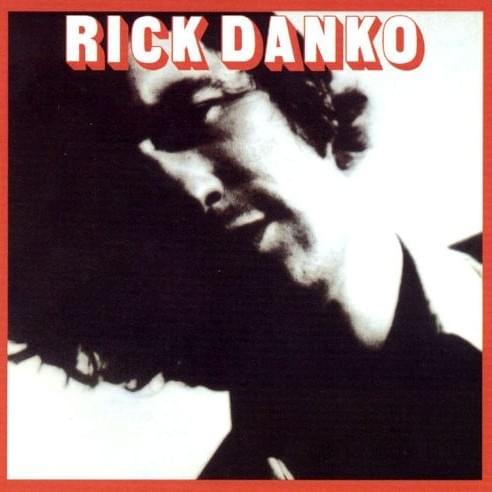
During the Last Waltz, Danko was working on a self-titled solo album. He was the first member of the band to release one. He did have some help with Eric Clapton, Ronnie Wood, Blondie Chapman, Doug Sahm, and members of The Band. An ad for the record claimed, “Once you get a taste of Rick Danko, you’ll never get enough.” Unfortunately, the album didn’t have much commercial success. This song was written by Tim Drummond and was originally called To Lay Down Beside You and it was originally recorded by Joe Simon. Ronnie Wood played the solo on this song. 

At the time the album was released in 1977, disco and punk music were dominating the airwaves. The album contains different kinds of genres but not punk and disco. 

Rick Danko: “We’ve been together for 15 or 16 years and I for one wouldn’t stop making albums with the Band. Just so long as the Band wants to continue making records, I’ll be there.” 

Sip The Wine

I want to lay down beside you
I want to hold your body close to mine
Like a grape that grows ripe in the sunshine
There comes a time when we must sip the wine

I can tell by looking you’re not mine, girl
I believe everything I told you was true
There’s a child here that wants to start livin’
Well, you know that this child will get its start
From me and you

(Close your eyes)
Now close your eyes
And don’t you think of nothing
(Let your thoughts)
Let your thoughts remain here
Inside this room
(Lay your head)
Lay your head beside me on my pillow
And I will share this night with you

(We must sip the wine)
Til it feels alright
(We must sip the wine)
Into the night
(We must sip the wine)
Together

…,

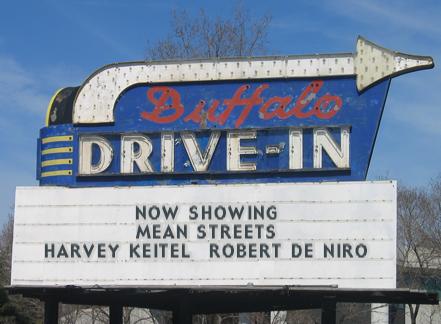
Max’s Drive-In Movie – Mean Streets

Mean Streets

I like movies that are directed and written by the same person. That is the reason I like Buster Keaton and Charlie Chaplin movies. You won’t find this much anymore unless it’s an indie movie. Movies that are written by a committee are sometimes slick and predictable. We need more movies and music like this. I talked about this last Friday in the comments with different people about The Texas Chainsaw Massacre and remembered I wrote it about this one as well.

You will hear one word in many of these reviews…and that word is gritty. The 1970s movies set in New York have grit, filth, and realism. The way these were made looks like they were made on the fly. I mean that in the best way. The characters look as if they were lifted off the streets and filmed. There is a good reason for that. It had a small budget so they couldn’t afford a union-shot movie. Many scenes were shot with natural lighting, and guerrilla filmmaking techniques were employed to save costs. They shot it in 26 days and made excellent use of a handheld camera.

This 1973 film opens with a famous monologue by Charlie, played by Keitel, which sets the tone for the character’s internal conflict. This introspective voice-over became a signature element of Scorsese’s storytelling style. Mean Streets is set in New York City’s Little Italy and follows Charlie (Harvey Keitel), a small-time hood trying to make his way in the local Mafia, and his reckless friend Johnny Boy (Robert De Niro), who owes money all over town. The film explores the struggling street life and the demands of mob life…along with a lot of guilt.

It’s directed by Martin Scorsese and I think this is one of the best movies of its kind. He would later make other mob movies that are more well-known such as Goodfellas, Casino, and The Irishman but none of them are as, here is that word again, gritty as this. Scorsese knew the vibe well, growing up in his New York City neighborhood and dealing with a formative period in his life during the early 60’s. He shot this movie with Roger Corman’s crew with 6 days of location in New York and with most of the interiors done in Los Angeles. Scorsese edited much of the movie in his bedroom. It was written by Scorsese and his childhood friend Mardik Martin. What lends to the atmosphere is many of the film’s scenes were improvised. Scorsese encouraged his actors to ad-lib their lines to create a more authentic and natural feel.

The actors were fantastic. Harvey Keitel, De Niro, Amy Robinson, Victor Argo, and many more. Keitel stands out to me in this like he does in most of the films he made. Here he balances out toughness with vulnerability. He got this part because Jon Voight had dropped out.

Let’s talk about the music a little bit here. Not many directors are as good as Scorsese at placing music in movies. In the first few minutes of this movie, you hear two Stones songs and Derek and the Dominos as he fits the scenes beautifully.

The movie is not action-packed…it’s almost like a day in the life of these characters. You can see parts of Scorsese’s later movies in this one as well. Much like you can see Pulp Fiction in Reservoir Dogs for Quentin Tarantino.

Quotes:

Voice in Charlie’s Mind: You don’t make up for your sins in church. You do it in the streets. You do it at home. The rest is bullshit, and you know it.

Charlie: You know what the Queen said? If I had balls, I’d be King.

Charlie: It’s all bullshit except the pain. The pain of hell. The burn from a lighted match increased a million times. Infinite. Now, ya don’t fuck around with the infinite. There’s no way you do that. The pain in hell has two sides. The kind you can touch with your hand; the kind you can feel in your heart… your soul, the spiritual side. And ya know… the worst of the two is the spiritual.

I saw this review about a book on mobster films that talks about this movie.

Over time, Scorsese would make “slicker, better-crafted movies,” according to authors George Anastasia and Glen Macnow in The Ultimate Book of Gangster Movies, “but the nuts and bolts of who he is and what he’s about are here.” The authors rank Mean Streets No. 14 of the Top 100 gangster movies, just behind Léon: The Professional and ahead of Reservoir Dogs. “On one level, watching Mean Streets is like finding some old film of Joe DiMaggio and Mickey Mantle and Willie Mays during their first seasons in the big leagues,” the authors wrote. “The raw talent is there. There are sparks and smoldering potential.”

The Last Waltz

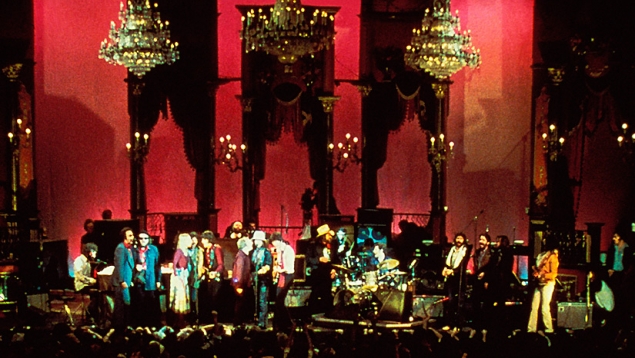
The Band on Thanksgiving in 1976 at the Fillmore West. The film starts off with THIS FILM MUST BE PLAYED LOUD! A cut to Rick Danko playing pool and then it then to the Band playing “Don’t Do It”…the last song they performed that night after hours of playing. Through the music and some interviews, their musical journey and influences are retraced.

This film is considered by many the best concert film ever made. It was directed by Martin Scorsese. I love the setting with the chandeliers that were from the movie Gone With The Wind. The quality of the picture is great because it was shot with 35-millimeter which wasn’t normally done with concerts.

Before the Band and guests hit the stage, Bill Graham, the promoter, served a Thanksgiving dinner to 5000 people that made up the audience with long tables with white tablecloths.

The Band’s musical guests included

Ronnie Hawkins, Bob Dylan, Neil Young, Dr. John, Paul Butterfield, Van Morrison (my favorite performance of a guest), Joni Mitchell, Eric Clapton and Muddy Waters

The Staple Singers and Emmylou Harris also appear but their segments were taped later on a sound stage and not at the concert.

Robbie wanted off the road earlier and that is what the Last Waltz was all about…the last concert by The Band with a lot of musical friends. He was tired of touring and also the habits the band was picking up…the drugs and drinking. Richard Manuel, in particular, was in bad shape and needed time.

The rest of the Band supposedly agreed but a few years later all of them but Robbie started to tour as The Band again. Richard Manuel ended up hanging himself in 1986. Rick Danko passed away in 1999 at the end of a tour of a heart attack attributed to years of drug and alcohol abuse. Levon Helm died of cancer in 2012.

The Band sounded great that night and it might be the best version you will ever hear of The Night They Drove Old Dixie Down.

The Last Waltz is a grand farewell to a great band and a film that I revisit at least twice a year… once always around Thanksgiving.