Moody Blues – Story in Your Eyes

Great melody in this song. One of the best rock songs of its era. I bought the album Every Good Boy Deserves Favour when I heard this song from Columbia House. I would say that this song made me a Moody Blues Fan. The Moody Blues are sometimes described as a progressive band, but unlike some progressive bands, they kept a good pop/rock sensibility…some have called them an “Art”rock band which fits much better to me. And…the bass in this song is great.

If you were stuck on the orchestral sounds of Days of Future Passed, The Story in Your Eyes might have caught you off guard…in the best way possible. The song was released in 1971 as the lead single from Every Good Boy Deserves Favour, this Justin Hayward-written song is one of the Moody Blues’ most energetic, guitar-driven tracks, proving they could rock with their harder peers.

The album title, Every Good Boy Deserves Favour comes from a mnemonic phrase used to remember the notes on the lines of the treble clef.  E, G, B, D, F, (Every Good Boy Does Fine) from bottom to top. 

The song peaked at #23 on the Billboard 100, and #7 in Canada,  in 1971.

Justin Hayward: “Despite its personal nature, ‘The Story in Your Eyes’ is also kind of about the band, We’re part of the fire that is burning, and from the ashes we can build another day.” “There’s a kind of confession in it, as we were soon about to go through a rather awkward phase.”

Justin Hayward: “The song just sprung out of my acoustic guitar one day while I was at home. I was just playing my Martin D-28…I don’t know for certain if it’s from ’55 or ’57, but it’s been with me since 1969 and the first thing that came to me was the middle-eight section. And from there, the rest of the song came together.” 

“Only a couple of weeks before entering the studio, I had done a version of it with Mike (keyboardist Mike Pinder) at his place, with just me playing the guitar and him working out the piano part for the outro. Mike then did eight or 12 tracks of Mellotron, bouncing from one machine to another. And it only sounded good when he had done it and multitracked it.” 

“When it came time for the electric guitar part, I used a Cherry Red 1963 [Gibson] ES-335 that I’ve had since 1968. The electric guitar that opens the song including feedback that’s in tune to an A note…and goes all the way through the song is the ES-335 direct into the Normal chan

nel of an AC30 Top Boost turned up full. In the solo and at the end, that’s the ES-335 again through a Marshall Reverb-Fuzz Unit.” 


Story in Your Eyes

I’ve been thinking about our fortune
And I’ve decided that we’re really not to blame
For the love that’s deep inside us now, is still the same
And the sound we make together
Is the music to the story in your eyes
It’s been shining down upon you now, I realize

Listen to the tide slowly turning
Wash all our heartaches away
We are part of the fire that is burning
And from the ashes we can build another day
But I’m frightened for your children
And the life that we are living is in vain
And the sunshine we’ve been waiting for
Will turn to rain
When the final line is over
And it’s certain that the curtain’s gonna fall
I can hide inside your sweet sweet love
Forever more

Listen to the tide slowly turning
Wash all our heartaches away
We are part of the fire that is burning
And from the ashes we can build another day
But I’m frightened for your children
And the life that we are living is in vain
And the sunshine we’ve been waiting for
Will turn to rain

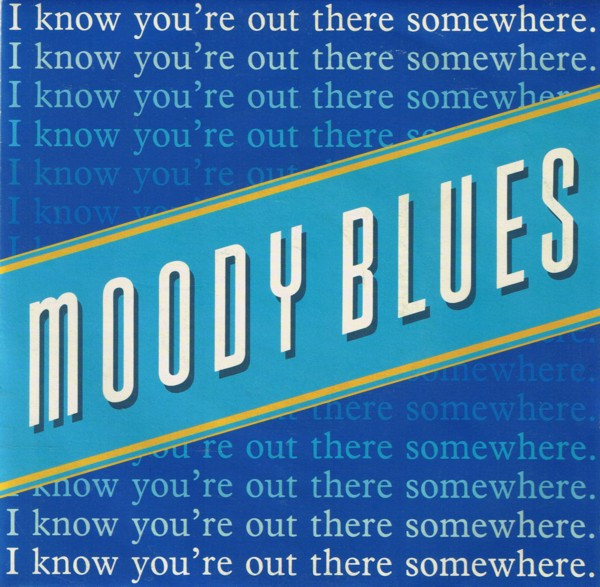
Moody Blues – I Know You’re Out There Somewhere

The Moody Blues hit big in the early 80s. I first got into them in the late 70s and I had all of their albums up to Seventh Sojourn. When Long Distance Voyager came out in 1981 a new generation of fans was made.

After I graduated in 85 I heard the single “Your Wildest Dreams” the following year and loved it. I remember the video on MTV and then a few years later in 1988 I heard this song. I could tell by the video alone it was essentially a sequel to Your Wildest Dreams. Guitarist/singer/songwriter Justin Hayward wrote both songs.

Sometimes we kick ourselves over missed opportunities and I do regret not seeing the Moodies live. I never looked at them as prog rock…they were just The Moody Blues…somewhat in a genre by themselves in some ways.

The song peaked at #30 in the Billboard 100, #52 in the UK, #15 in Canada in 1988. This was the band’s last top 40 single in the United States.

Justin Hayward: “I did the keyboard and the guitar and the LinnDrum for ‘Wildest Dreams,’ which was finished first, and for ‘I Know You’re Out There Somewhere’ I decided to use the same keyboard sound and bass sound that I’d got on a Yamaha DX7 and continue that theme. It’s identical tempo and everything.”

Justin Hayward: “I love performing it. Wherever we go, people like it. It wasn’t a massive hit, but people know it. It wasn’t a massive hit because it’s about 6 minutes long and no one did a successful edit on it. That’s probably the one that gives me the most pleasure.”

Since the two songs were connected…here they are.

I Know You’re Out There Somewhere

I know you’re out there somewhere
Somewhere, somewhere
I know I’ll find you somehow
Somehow, somehow
And somehow I’ll return again to you

The mist is lifting slowly
I can see the way ahead
And I’ve left behind the empty streets
That once inspired my life
And the strength of the emotion
Is like thunder in the air
‘Cos the promise that we made each other
Haunts me to the end

I know you’re out there somewhere
Somewhere, somewhere
I know you’re out there somewhere
Somewhere you can hear my voice
I know I’ll find you somehow
Somehow, somehow
I know I’ll find you somehow
And somehow I’ll return again to you

The secret of your beauty
And the mystery of your soul
I’ve been searching for in everyone I meet
And the times I’ve been mistaken
It’s impossible to say
And the grass is growing
Underneath our feet

I know you’re out there somewhere
Somewhere, somewhere
I know you’re out there somewhere
Somewhere you can hear my voice
I know I’ll find you somehow
Somehow, somehow
I know I’ll find you somehow
And somehow I’ll return again to you

[Interlude:]
You see I know you’re out there somewhere
O yes I know you’re out there somewhere
You see I know I’ll find you somehow
O yes I know I’ll find you somehow

the words that I remember
From my childhood still are true
That there’s none so blind
As those who will not see
And to those who lack the courage
And say it’s dangerous to try
Well they just don’t know
That love eternal will not be denied

I know you’re out there somewhere
Somewhere, somewhere
I know you’re out there somewhere
Somewhere you can hear my voice
I know I’ll find you somehow
Somehow, somehow
I know I’ll find you somehow
And somehow I’ll return again to you

Yes I know it’s going to happen
I can feel you getting near
And soon we’ll be returning
To the fountain of our youth
And if you wake up wondering
In the darkness I’ll be there
My arms will close around you
And protect you with the truth

I know you’re out there somewhere
Somewhere, somewhere
I know you’re out there somewhere
Somewhere you can hear my voice
I know I’ll find you somehow
Somehow, somehow
I know I’ll find you somehow
And somehow I’ll return again to you

Moody Blues – Tuesday Afternoon

Tuesday Afternoon was on the classic concept album Days of Future Passed which was released in 1968. This song was released as a single and was the second single from Days of Future Passed (the first being “Nights in White Satin“). It was backed with a song called “Another Morning”.

Ever since I heard the intro on Strawberry Fields I’ve loved the mellotron. This song uses the instrument. I did read where it was hard to keep running because it used a series of tape loops and you played it by a keyboard.

Mike Pinder was the keyboard player for the Moody Blues and a founding member. He used to work for a company called Streetly Electronics, which made the instrument. He was one of the few musicians who could keep the  device operational, and The Moody Blues became the first high-profile band to use it in live performances. It wasn’t always smooth… one their first American tour, the Mellotron burst open, spewing its tape out the back. After a break Pinder repaired the machine and the show continued on.

The “London Festival Orchestra”, which was the name Decca Records gave to their collection of classical musicians, played on this track. The original idea for the album was to record a rock version of a classical piece called “New World Symphony” by Dvorak.

The song peaked at #12 in the Billboard 100 and #24 in Canada in 1968.

Justin Hayward: “I sat down in a field, smoked a funny African cigarette, and that song just came out. It was a Tuesday afternoon.”

Days of Future Passed [Expanded Version]

From Songfacts

Justin Hayward had a dog named Tuesday, but the song has nothing to do with the pooch. In his Songfacts interview, Hayward explained: “It just so happened we were sitting in the field together, that’s all. But it was a Tuesday afternoon and I did smoke a joint and it was down there where I come from in the West Country and this song just came out.”

On the album, this was listed as “Forever Afternoon (Tuesday?)” at the insistence of producer Tony Clarke.

Hayward was earning a living playing music by the time he was in his late teens, so unlike most working stiffs for whom Tuesday afternoon was a time to knuckle down and get some work done, that part of the week could be quite relaxing for him. “I did think about that and about being someone who’s been lucky enough never having to do a proper job,” he told us. “I wasn’t hampered by any of that kind of stuff.”

This song uses a Mellotron. The instrument is a keyboard which triggers taped loops of a chosen instrument recorded at different pitches. It is not synthesized sound, but actual instrument recordings. In this song the recorded loops were strings. The strange and unique quality of the sound comes from the warble in the tape loops as they play back.

Tuesday Afternoon

Tuesday afternoon
I’m just beginning to see
Now I’m on my way
It doesn’t matter to me
Chasing the clouds away

Something calls to me
The trees are drawing me near
I’ve got to find out why
Those gentle voices I hear
Explain it all with a sigh

I’m looking at myself reflections of my mind
It’s just the kind of day to leave myself behind
So gently swaying through the fairyland of love
If you’ll just come with me you’ll see the beauty of
Tuesday afternoon
Tuesday afternoon

Tuesday afternoon 
I’m just beginning to see
Now I’m on my way
It doesn’t matter to me
Chasing the clouds away

Something calls to me
The trees are drawing me near
I’ve got to find out why
Those gentle voices I hear
Explain it all with a sigh

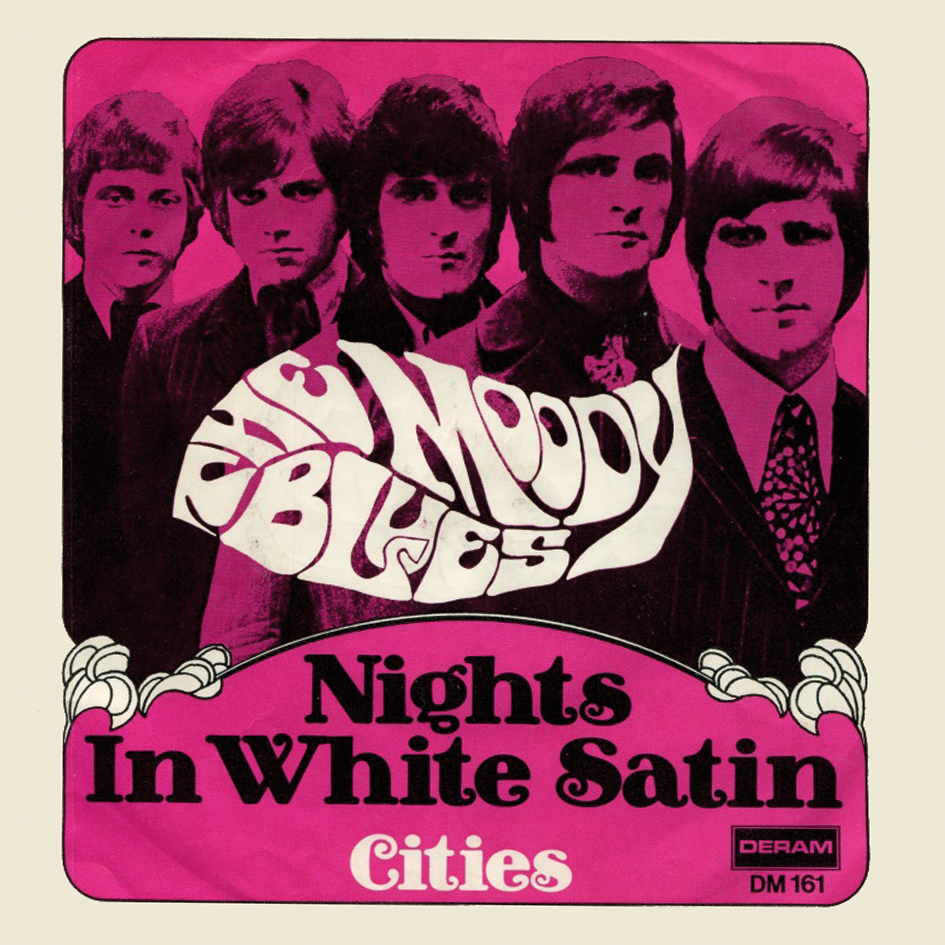
Moody Blues – Nights In White Satin

I have played this song in a club with a 4 piece band and it actually very well received. You don’t have to have the full orchestra for it to sound good…it’s that good of song. Our bass player actually recited the poem to applause. Even after peeling off the layers of music, the song stood.

Justin Hayward wrote this song after he joined the band after Denny Laine had left. It is said that he got the idea for the song after someone gave him a set of white satin sheets, and wrote it in his bed-sit at Bayswater.

The poem at the end was recorded separately. It is called Late Lament and was written by their drummer, Graeme Edge. The poem was read by keyboard player Mike Pinder. Edge wrote another poem that appeared early on the album called Morning Glory.

This song ushered in a new sound for this band who were formally more of a blues band. “Nights in White Satin” was originally released in 1967, charting at #19 in the UK, but topping out at #103 in America, where six-minute songs were a tough sell. In 1972, after songs like “Hey Jude ” and “Layla” paved the way for long, dramatic tunes (and The Moody Blues became more popular), the song was re-released in the US and became a hit, peaking at #2 in the Billboard 100 and #1 in Canada.

Justin Hayward: “I wrote our most famous song, ‘Nights in White Satin’ when I was 19. It was a series of random thoughts and was quite autobiographical. It was a very emotional time as I was at the end of one big love affair and the start of another. A lot of that came out in the song.”

From Songfacts

The Moody Blues recorded the album with The London Festival Orchestra, which never actually existed – it was the name given to the musicians put together to make the Days of Future Passed album. The orchestral parts were performed separately and edited between and around the Moody Blues parts, so the orchestra did not actually accompany the group. The original idea was for the group and orchestra to record a rock version of Dvorak’s “New World Symphony,” which their record company would use to demonstrate enhanced stereo sound technology.

Before joining The Moody Blues, a teenaged Justin Hayward signed a deal with Lonnie Donegan’s publishing company, which ended up giving Donegan the lion’s share of the royalties for this and other songs Hayward wrote at the time. Donegan was star in the ’50s, famous for his skiffle sound that influenced The Beatles and The Who. In the ’60s, he became more involved in the business side of the industry and formed his publishing company Tyler Music.

Days of Future Passed is a concept album based around different times of day. For example, “Dawn Is A Feeling” and “Tuesday Afternoon.” This song was last on the album because it represents nighttime.

Justin Hayward was inspired by Moody Blues keyboard player Mike Pinder’s composition “Dawn Is A Feeling.” Since Pinder had done “The Morning” for the concept album, Hayward tried to do “The Night.”

Fans have come up with many interpretations of this song, which is just fine with Justin Hayward, who fells that the receiver gives life to the transmission. “It’s the listeners who bring the magic and the interpretations to these songs,” he said in his 2016 Songfacts interview.

This song introduced a new sound for the band. When they formed, they were more of a blues band, and had a hit in 1965 with a cover of Bessie Banks’ “Go Now.” With the songs on Days of Future Passed, they distinguished themselves with original songs in a more psychedelic/orchestral sound.

In the UK, the song made two more chart appearances, going to #9 in 1972 and #14 in 1979.

The Dickies 1979 Punk version reached #39; the Moody Blues used to use The Dickies version sometimes when doing a sound check.

The week of December 2, 1972, this song plunged from #17 to completely out of the Hot 100, setting a record for the biggest drop out of that chart in a single week. Drastic chart disappearances became more common in the ’10s, and the Glee Cast version of “Toxic” made the fall from the #16 spot in 2010.

Talking about the experiences that inspired the lyrics to this song, Justin Hayward said: “About an audience in Glastonbury, a flat in Bayswater and the ecstasy of an hour of love.”

Among the many artists to record this song are Procol Harum, Eric Burdon, Percy Faith, Nancy Sinatra and Il Divo. When we spoke with Justin Hayward in 2013, he told us that the best cover he heard of this song was by the soul singer Bettye LaVette. “She covered ‘Nights,’ and somebody sent it to me as an MP3, a link,” he explained. “I was sitting in bed with my laptop waking up to my emails, and I clicked on this link and I burst into tears. My wife came in and she said, ‘What the hell’s the matter with you?’ And I said, ‘You’ve got to listen to this.’ She didn’t cry. But I heard the lyric for the first time. There have been hundreds, maybe thousands of covers of ‘Nights in White Satin,’ but that was the first time I heard it for real.”

The Moody Blues enjoyed a long and illustrious career that took them well into the 2010’s, and included thousands of performances, most of which featured this song. How does Justin Hayward handle the repetition? “I never lose the emotion of songs like that,” he told us. “I’m lucky enough not to have lost the emotion or the motivation, because it’s a wonderful thing to be able to share. And the audience provides the emotion around that. Because you do it in sound check and it’s fine, but when there’s an audience there, it completely transforms the experience.”

Nights In White Satin

Nights in white satin
Never reaching the end
Letters I’ve written
Never meaning to send

Beauty I’d always missed
With these eyes before
Just what the truth is
I can’t say any more

‘Cause I love you
Yes I love you
Oh how I love you

Gazing at people, some hand in hand
Just what I’m going through they can’t understand
Some try to tell me, thoughts they cannot defend
Just what you want to be, you will be in the end

And I love you
Yes I love you
Oh how I love you
Oh how I love you

Nights in white satin
Never reaching the end
Letters I’ve written
Never meaning to send

Beauty I’ve always missed
With these eyes before
Just what the truth is
I can’t say any more

‘Cause I love you
Yes I love you
Oh how I love you
Oh how I love you
‘Cause I love you
Yes I love you
Oh how I love you
Oh how I love you

Moody Blues – Your Wildest Dreams

It’s easy to relate to this song… most have someone who they felt got away and you still think about them and wonder if they think about you.

It has a great hook and it gets you right away. The Moody Blues have been described as a progressive rock band but I have never thought of them that way. Maybe because I don’t particularly like progressive rock bands. I’ve always thought the Moodies were a great pop/rock band who plays for the song like Story In Your Eyes, Question, and others. This song is more of a pop song than some of their early ones but a catchy one.

It was written by Justin Hayward and peaked at #9 in the Billboard 100, #1 in the Adult Contemporary Charts, and #2 in the Mainstream Rock Charts in1986.

Justin Hayward: “I found with ‘Wildest Dreams’ that it was a common experience for a lot of people,” he said. “I thought I was writing a frivolous sort of song. I thought ‘Wildest Dreams’ would be a throwaway thing that people wouldn’t really take much notice of lyrically. But I found out that it was a common experience and desire by a lot of people. So that was very revealing.”

From Songfacts

The Moody Blues were one of the first bands to use a Mellotron, which was a keyboard instrument that played sounds by triggering tape loops. Mike Pinder, a founding member of the band, was their Mellotron virtuoso. After Pinder’s departure in 1979, Justin Hayward began experimenting with synthesizers and became particularly fond of the Yamaha DX7, which is apparent on this track.

Tony Visconti, famous for his work with David Bowie, produced The Other Side Of Life album and encouraged the band to use some unusual instruments. “Most of ‘Wildest Dreams’ – 90% of it – is Tony Visconti, my DX7, and a guitar synth,” Justin Hayward tells us. “The piece at the beginning that sounds like a sort of Theremin, a (humming) ‘oooo ooo,’ that’s a guitar synth. All of that is. So it was just another way of exploring musical avenues. Tony Visconti was very much into that and the first person who really turned the band on to programming in a serious way. And he was very, very good at it, so I enjoyed every moment of that.”

Justin Hayward wrote the song “I Know You’re Out There Somewhere,” which appeared on the next Moody Blues album, Sur la Mer, as a sequel to this song, with the singer longing to find the girl.

For “Somewhere,” he went back to his Yamaha DX7 synthesizer and used the same keyboard and bass sounds, keeping the same tempo. This gave the songs a similar musical feel to connect them musically, and then he wrote the lyrics to continue the story.

Your Wildest Dreams

Once upon a time
Once when you were mine
I remember skies
Reflected in your eyes
I wonder where you are
I wonder if you think about me
Once upon a time
In your wildest dreams

Once the world was new
Our bodies felt the morning dew
That greets the brand new day
We couldn’t tear ourselves away
I wonder if you care
I wonder if you still remember
Once upon a time
In your wildest dreams

And when the music plays
And when the words are touched with sorrow
When the music plays
I hear the sound I had to follow
Once upon a time

Once beneath the stars
The universe was ours
Love was all we knew
And all I knew was you
I wonder if you know
I wonder if you think about it
Once upon a time
In your wildest dreams

Ah, ah, ah, ah, ah, ah

And when the music plays
And when the words are touched with sorrow
When the music plays
And when the music plays
I hear the sound I had to follow
Once upon a time

Once upon a time
Once when you were mine
I remember skies
Mirrored in your eyes
I wonder where you are
I wonder if you think about me
Once upon a time
In your wildest dreams (ah, ah, ah, ah, ah, ah)

Ah, ah, ah, ah, ah, ah