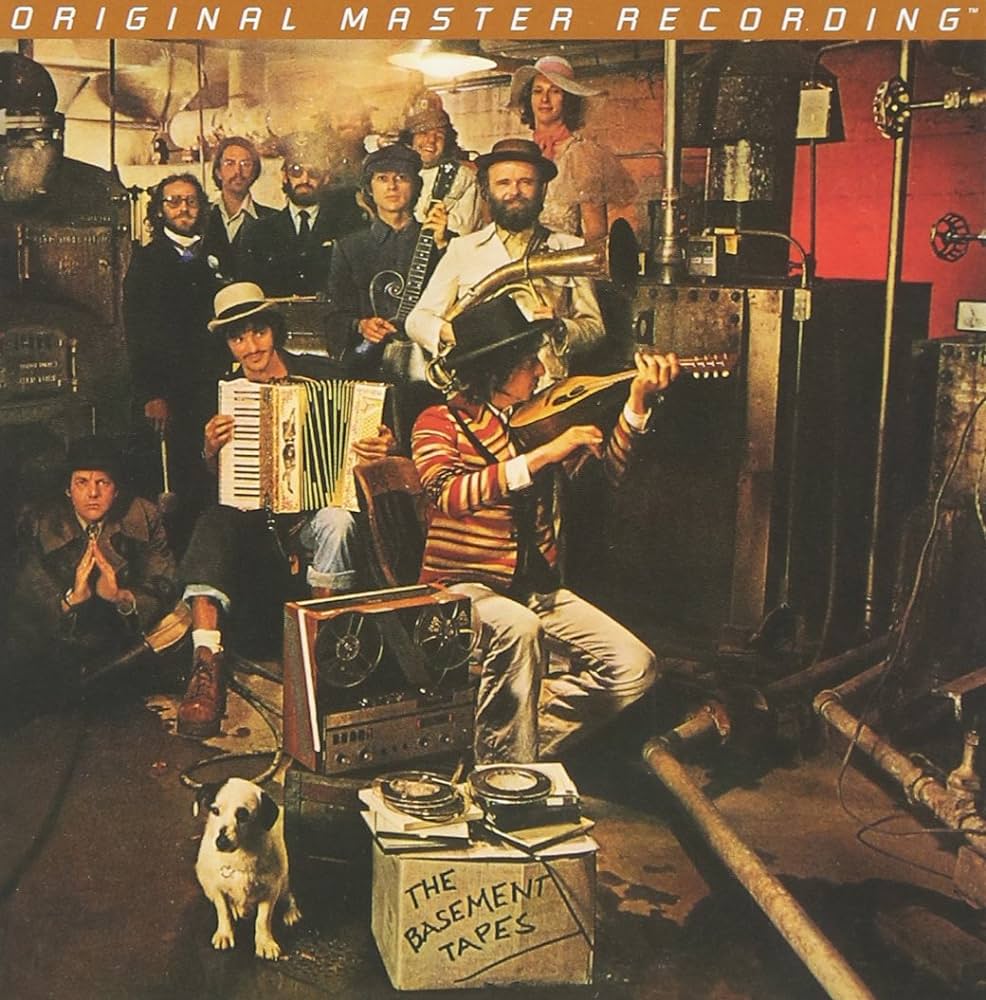
This song was on the Basement Tapes and one of my favorites on that album. When I wrote the Bessie Smith article for Lisa…I forgot all about it. CB brought it up on my Bessie Smith post the other day. I completely forgot about it.
The Basement Tapes was a collection of recordings made by Bob Dylan and The Band in 1967. These recordings took place in the basement of a house known as “Big Pink,” located in West Saugerties, New York, where members of The Band lived at the time. It was released in 1975.
The story behind The Basement Tapes is quite interesting. In 1966, Bob Dylan had been involved in a motorcycle accident and retreated from the public eye to recover. During this period, he began recording informal sessions with members of The Band, then known as The Hawks. These sessions were largely acoustic, featuring Dylan and The Band members playing a mix of original songs and cover tunes in a relaxed, informal setting. It was mostly recorded by Garth Hudson the keyboard player for The Band.
Many of these songs were bootlegged through the years and received a lot of attention. This release included songs like “The Mighty Quinn,” “I Shall Be Released,” “This Wheel’s on Fire,” and “Tears of Rage,” among others.
Robbie Robertson and Rick Danko wrote this song and it wasn’t about Bessie Smith’s life but he used her to symbolize the blues and their respect for her. It incorporates her name into a broader narrative while celebrating her.
The album peaked at #7 on the Billboard Album Charts, #15 in Canada, and #18 in New Zealand in 1975.
Bessie Smith
Bessie was more than just a friend of mine We shared the good times with the bad Now many a year has passed me by I still recall the best thing I ever had
I’m just goin’ down the road t’ see Bessie Oh, see her soon I’m just goin’ down the road t’ see Bessie Smith When I get there I wonder what she’ll do
All the crazy things I had to try Well I tried them all and then some But if you’re lucky one day you find out Where it is you’re really comin’ from
I’m just goin’ down the road t’ see Bessie Oh, see her soon I’m just goin’ down the road t’ see Bessie Smith When I get there I wonder what she’ll do
Now in my day I’ve made some foolish moves But back then, I didn’t worry ’bout a thing And now again I still wonder to myself Was it her sweet love or the way that she could sing
I’m just goin’ down the road t’ see Bessie Oh, see her soon I’m just goin’ down the road t’ see Bessie Smith When I get there I wonder what she’ll do
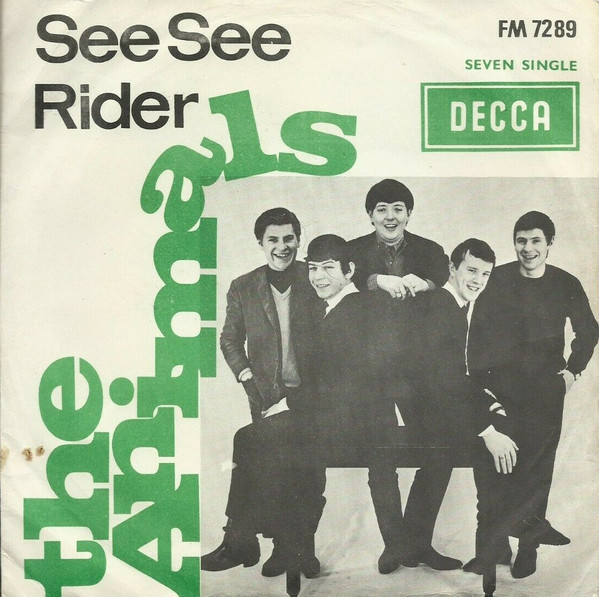
Many have covered this song and I’ve known many versions. It’s been covered over 100 times. I first knew this song by Elvis but I love the Animals version.
The biggest difference between the Animals and The Beatles, Stones, Kinks, and The Who was that the Animals didn’t write many of their early songs. They kept looking at the Brill Building for songs. In this instance, they took an old blues song and breathed new life into it, creating a powerful recording that would become emblematic of their sound.
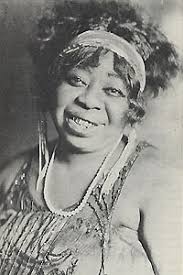
One of the earliest recorded versions of “See See Rider” was by Ma Rainey, one of the pioneering figures of blues music. Rainey’s recording, released in 1925, helped popularize the song and establish it as a blues standard. The writing credit on this song is Lena Arent and Ma Rainey.
Ma Rainey’s influence extended beyond her music… she was also a trailblazer for African American artists in the music industry. As one of the first African American women to record blues music. she was a vaudeville star in the early 1900s. In 1923, she started recording for Paramount Records. Earlier he took Bessie Smith under her wing and helped her. She was one of the first female blues artists to find a wide audience.
The C.C. Rider, also known as See See Rider or Easy Rider, is a blues cliché for the sexual partner, although originally it referred to the guitar hung on the back of the traveling bluesman. An easy rider was also known as an unfaithful boyfriend.
The song peaked at #1 in Canada and #10 on the Billboard 100 in 1966.
Over the years, “See See Rider” has been covered by many artists from various genres, including Elvis Presley, Chuck Berry, and Janis Joplin. Per Secondhandsongs… it has been covered 450 times.
See See Rider
Oh see, see see rider girl see what you’ve done Oh oh, see see rider see what you’ve done now You’ve gone away and left me and now And now the blues they come oh yes they do
Oh well I’m goin’ goin’ away baby and I won’t be back till fall Oh yes I am goin’ away baby and I won’t be back till fall If I get me a good lookin’ woman no no no I won’t be back at all oh right Now see see rider I love you yes I do and there isn’t one thing darling I would not do for you you know I want you see see I need you by my side see see rider oh keep me satisfied
Oh he had see see rider see see rider See see rider see see rider see rider See see rider you keep on a ridin’, keep on a ridin’ Here it comes baby look out Beat it all right don’t lose it now come on, come on, yeah
Here she comes she’s oh right She’s so fine she’s all mine See see come on Jenny dig a ride now, hey
Well I’m goin’, goin’ away baby and I won’t be back till fall Yes, I’m goin’, goin’ away baby and I won’t be back till fall If I find me a good lookin’ woman no no no I won’t be back at all And that’s the truth baby listen I’m goin’ all right Somebody told me somebody told me I jump catch on I leave it oh right oh right ah
I don’t want no drummer. I set the tempo… Bessie Smith
Lisa published this for me for her yearly Women’s Music March, giving you a female artist every day for March. I want to thank her for that.
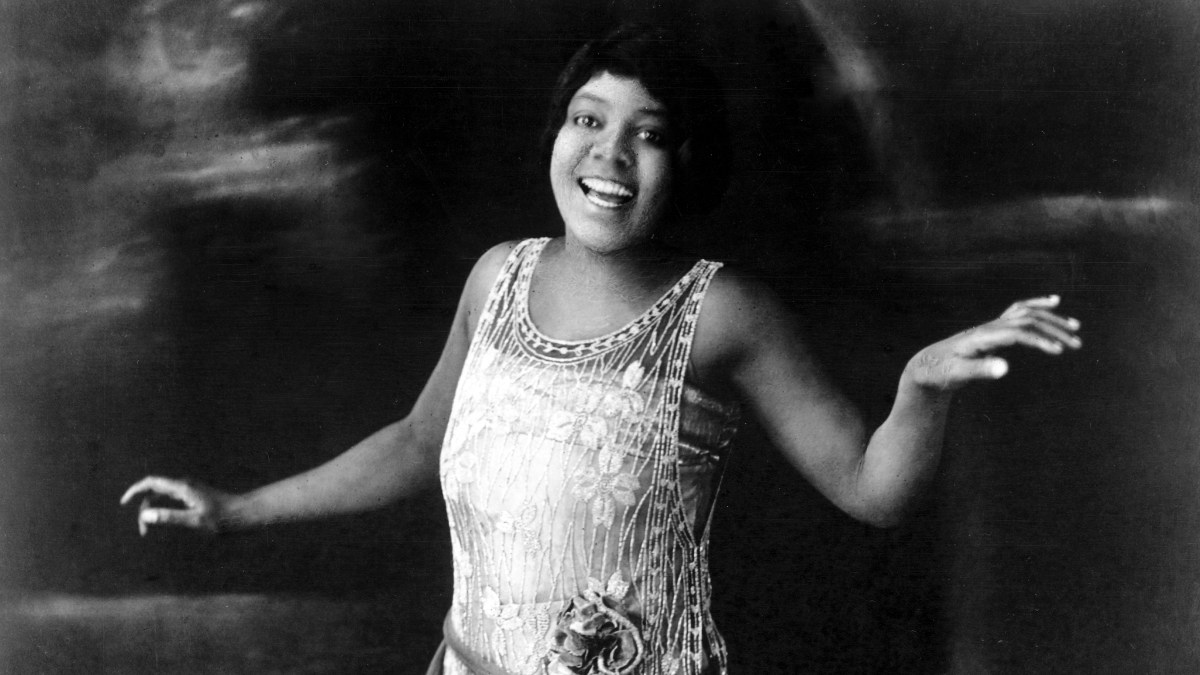
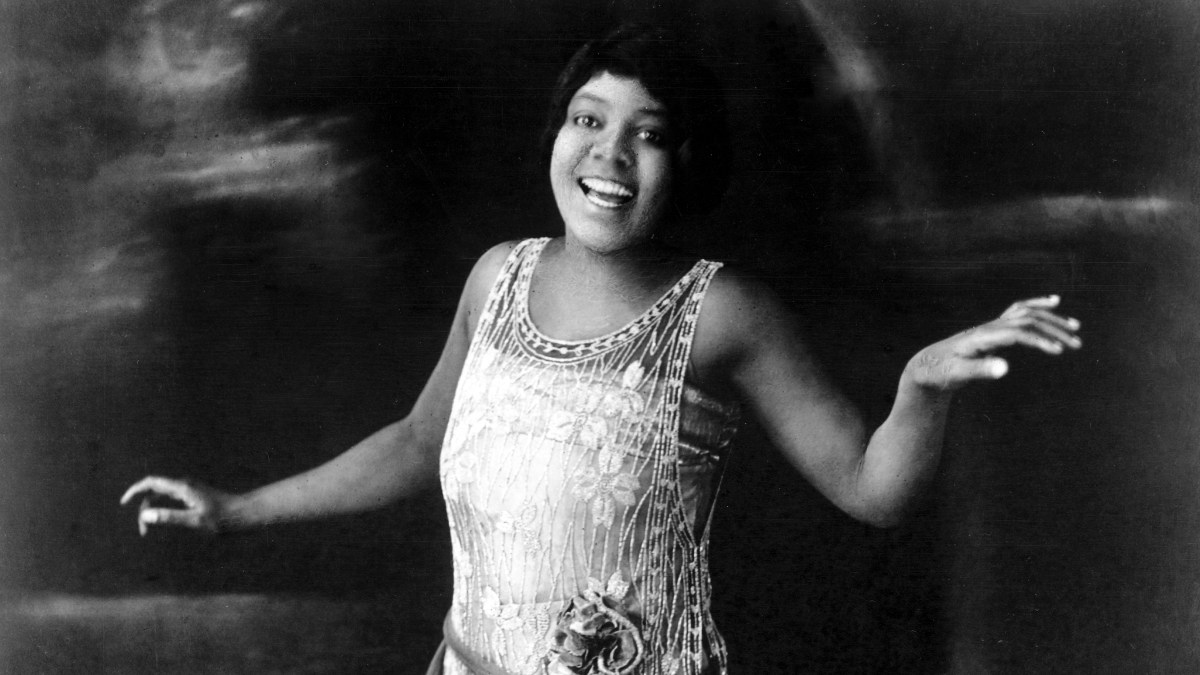
I got into Bessie Smith from listening to Janis Joplin and reading about her. Bessie’s voice sends chills up my spine…that is my litmus test. Whatever she sings…she sings it, means it, she lived it. The sound of the record and her voice is just unbeatable. Yes, we have digital now but digital could not give you this sound. If you are not familiar with her…do yourself a favor and check her out. We cannot forget the pioneers of any genre. Artists like Mahalia Jackson, Janis Joplin, and Norah Jones have all given Bessie Smith credit as their inspiration.
I can imagine Dorothy Parker, Charlie Chaplin, F. Scott Fitzgerald, and Clara Bow all listening to this in the 20s and 30s. Bessie Smith was known as the “Empress of the Blues.”
Early Life:
She was born in Chattanooga, Tennessee, on April 15, 1894. She lost her dad while she was an infant and her mom when she was 7-8 years old. She was raised by her tough older sister. They nearly starved. For money, her sister took in laundry. Bessie would start contributing.
Musical Beginnings:
To help support her orphaned siblings, Bessie began her career as a Chattanooga Street musician and singing at churches, singing in a duo with her brother Andrew to earn money to support their poor family. At age 16 she met a blues singer by the name of Ma Rainey and started to travel with the Rabbit Foot Minstrels, a variety show that toured the south and Midwest. She would send money home to her siblings and became an excellent singer. At age 24 she went solo by touring with other traveling shows. She talked tough and could get rough if you messed with her. She understood blues so well because she was living it.
Bessie signed with Columbia Records in 1923. Within 10 months of signing Smith, the Columbia label sold two million records. Over the next four years, her sales reached six million. But she sang a wider repertoire than most, in her traveling tent show, on theatrical tours, and, later, in jazz clubs. The blues made Smith the highest-paid black entertainer of her era ($2000 a week), but she was just as adept at singing show tunes and more popular Tin Pan Alley songs, which became the basis of many early jazz standards. Those record sales don’t sound as high now but remember this was in the 1920s with only a few marketing tools on hand.
She is credited with recording more than 160 songs between 1923 and 1933. Smith performed on stage throughout the southern United States and recorded with such jazz greats as Benny Goodman, Louis Armstrong, and Coleman Hawkins.
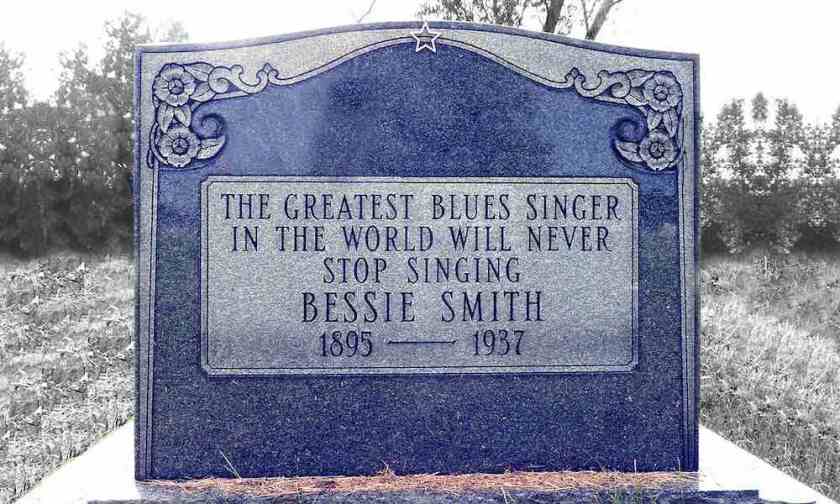
On September 26, 1937, Smith was severely injured in a car accident while traveling from a concert in Memphis to Clarksdale, Mississippi, with her companion Richard Morgan. She was taken to a hospital, where she died. More than 5,000 people attended her funeral. Her grave had no headstone. There wasmoney for a headstone apparently, but her estranged husband spent it on something or someone else.
By the time of her death, Bessie was known around the world appear with the best players of the day at theaters coast to coast. Bessie’s voice and showmanship drove her from poverty to international fame as a singer of blues tunes, many of which she wrote and co-wrote.
Discography:
This is a partial list because they did not have albums at that time. The list of everything she released would take a post by itself.
1923 – Downhearted Blues #1
1923 – Gulf Coast Blues #5
1923 – Aggravatin’ Papa #12
1923 – Baby Won’t You Please Come Home #6
1923 – T’aint Nobody’s Biz-Ness If I Do #9
1925 – The St. Louis Blues #3
1925 – Careless Love Blues #5
1925 – I Ain’t Gonna Play No Second Fiddle #8
1926 – I Ain’t Got Nobody #8
1926 – Lost Your Head Blues #5
1927 – After You’ve Gone #7
1927 – Alexander’s Ragtime Band #17
1928 – A Good Man Is Hard To Fine #13
1928 – Empty Bed Blues #20
1929 – Nobody Knows You When You’re Down and Out #15
Filmography (if any):
Saint Louis Blues 1929
Some things to share:
Janis Joplin helped buy Smith’s headstone in 1971…two weeks before her own untimely death. But the real story was the other person who helped buy the stone. That was Juanita Green… a little girl whom Smith once told to give up singing and stay in school.
Bessie Smith has been inducted into the Grammy Hall of Fame, winning posthumous awards for her 1923 single “Downhearted Blues,” 1925 single “St. Louis Blues” with Louis Armstrong, and a 1928 single “Empty Bed Blues.” Smith has also been honored with a Grammy Lifetime Achievement Award, was inducted into the Rock and Roll Hall of Fame, the Blues Hall of Fame, and the Big Band and Jazz Hall of Fame.
Once I lived the life of a millionaire Spending my money, I didn’t care I carried my friends out for a good time Buying bootleg liquor, champagne, and wine
Then I began to fall so low I didn’t have a friend and no place to go So if I ever get my hand on a dollar again I’m gonna hold on to it ’til them eagles grin
Nobody knows you When you’re down and out In my pocket, not one penny And my friends, I haven’t any
But if I ever get on my feet again Then I’ll meet my long lost friend It’s mighty strange without a doubt Nobody knows you when you’re down and out I mean, when you’re down and out
When you’re down and out, not one penny And my friends, I haven’t any and I felt so low Nobody wants me ’round their door
Without a doubt No man can use you when you’re down and out I mean, when you’re down and out
When I heard this woman sing…I was shocked. Listen to the purity of her voice…she still amazes me. We cannot forget the pioneers of any genre. Artists like Mahalia Jackson, Janis Joplin, and Norah Jones have all given Bessie Smith credit as their inspiration.
It seems like the female singers I like the most have a growl to their voices. That includes Janis Joplin, Aretha Franklin, Willie Mae Thorton, and yes Bessie Smith.
Within 10 months of signing Smith, the Columbia label sold two million records. Over the next four years, her sales reached six million. But she sang a wider repertoire than most, in her traveling tent show, on theatrical tours, and, later, in jazz clubs. The blues made Smith the highest-paid black entertainer of her era, but she was just as adept at singing show tunes and more popular Tin Pan Alley songs, which became the basis of many early jazz standards. Those record sales don’t sound as high now but remember this was in the 1920s!
This song came out in 1923 and peaked at #6 on the Billboard 100… I just looked it up…Billboard first published a chart in 1894.
Whenever I hear Bessie Smith I hear pain and greatness all at once. I’ve written about her song No One Loves You When You’re Down And Out and I’ve been revisiting her lately. This song was written by Charles Warfield and Clarence Williams in 1919. It’s been covered by Louie Prima and Frank Sinatra.
I got into Bessie Smith from listening to Janis Joplin and reading about her. Bessie’s voice sends chills up my spine…that is my litmus test. This particular song grabs me because of Smith’s voice and the recording vibe. She sings it, means it, and she damn well lived it. The sound of the record and her voice is just unbeatable. Yes, we have digital now but digital could not give you this sound.
Smith took care of her own…she moved her sister and other family to live near her in Philadelphia and supported them financially when they squandered her money.
She died from injuries in a car accident in 1937, having not recorded a song in years, more than 5,000 people attended her funeral. Her grave had no headstone. There wasmoney for a headstone apparently, but her estranged husband spent it on something or someone else.
Janis Joplin helped buy Smith’s headstone in 1971…two weeks before her own untimely death. But the real story was the other person who helped buy the stone. That was Juanita Green… a little girl whom Smith once told to give up singing and stay in school.
Louis Armstrong: “I say, ‘Look here Bessie, you got change for a hundred? And she say, ‘Sure my man.’ She raised up her dress standing and there was, like, [you know,] how a carpenter keeps his nails? Man, so much money in the apron under her skirt that killed me.”
Danny Barker a New Orleans musician: “If you have a church background, like people who came from the South as I did, you would recognize a similarity between what she was doing and what those preachers and evangelists from there did, and how they moved people … Bessie did the same thing on stage.”
Baby Won’t You Please Come Home
I’ve got the blues, I feel so lonely
I’ll give the world if I could only
Make you understand
It surely would be grand
I’m gonna telephone my baby
Ask him won’t you please come home
‘Cause when you’re gone
I’m worried all day long
Baby won’t you please come home
Baby won’t you please come home
I have tried in vain
Evermore to call your name
When you left you broke my heart
That will never make us part
Every hour in the day
You will hear me say
Baby won’t you please come home, I mean
Baby won’t you please come home
Baby won’t you please come home
‘Cause your mama’s all alone
I have tried in vain
Nevermore to call your name
When you left you broke my heart
That will never make us part
Landlord gettin’ worse
I’ve got to move May the first
Baby won’t you please come home, I need money
Baby won’t you please come home
Let’s go back…way back. Music did exist before the 50s and sometimes I like to explore it. These are the talented artists who inspired later generations that we listen to. We cannot forget the pioneers of any genre. Artists like Mahalia Jackson, Janis Joplin, and Norah Jones have all given Bessie Smith credit as their inspiration.
Whenever I hear Bessie Smith I hear pain and greatness all at once. I’ve written about her song No One Loves You When You’re Down And Out and I’ve been revisiting her lately. This song was her debut single in 1923.
I got into Bessie Smith from listening to Janis Joplin and reading about her. Bessie’s voice sends chills up my spine…that is my litmus test. This particular song grabs me because of Smith’s voice and the recording vibe. She sings it, means it, and she damn well lived it. The sound of the record and her voice is just unbeatable. Yes, we have digital now but digital could not give you this sound.
She was born in Chattanooga, Tennessee, on April 15, 1894. She lost her dad while she was an infant and her mom when she was 7-8 years old. She was raised by her tough older sister. To help support her orphaned siblings, Bessie began her career as a Chattanooga street musician, singing in a duo with her brother Andrew to earn money to support their poor family.
She is credited with recording more than 160 songs between 1923 and 1933. Smith performed on stage throughout the southern United States and recorded with such jazz greats as Benny Goodman, Louis Armstrong, and Coleman Hawkins.
Before the Great Depression, Bessie was the highest-paid black entertainer in the world, collecting as much as two thousand dollars a week to perform. She was accompanied by great musicians such as Louis Armstrong, Lonnie Johnson, and Benny Goodman.
This song was written by Alberta Hunter and Lovie Austin. The song is about a mistreated woman and had been recorded by fellow blues singer Alberta Hunter in 1922. A year later Bessie Smith sang it with pain, passion, and power as if it was her own song. The record sold more copies than any blues or jazz record had before…780,000 in the first six months after the release, #1 in the Billboard charts for 4 weeks, it helped to save Columbia from imminent bankruptcy and made Bessie a star.
They called Bessie Smith the “Empress of the Blues,” and for good reason.
Down Hearted Blues
Gee, but it’s hard to love someone
when that someone don’t love you!
I’m so disgusted, heart-broken, too;
I’ve got those down-hearted blues.
Once I was crazy ‘bout a man;
he mistreated me all the time,
The next man I get has got to promise me
to be mine, all mine!
Trouble, trouble, I’ve had it all my days,
Trouble, trouble, I’ve had it all my days,
It seems like trouble
going to follow me to my grave.
I ain’t never loved but three men in my life,
I ain’t never loved but three men in my life,
My father, my brother,
the man that wrecked my life.
It may be a week, it may be a month or two,
It may be a week, it may be a month or two,
But the day you quit me, honey,
it’s comin’ home to you.
I got the world in a jug, the stopper’s in my hand,
I got the world in a jug, the stopper’s in my hand,
I’m gonna hold it until
you meet some of my demands.
I got into Bessie Smith from listening to Janis Joplin and reading about her. Bessie’s voice sends chills up my spine…that is my litmus test. This particular song grabs me because of Smith’s voice and vibe of the recording. She sings it, means it, and she lived it. The sound of the record and her voice is just unbeatable. Yes we have digital now but digital could not give you this sound.
If you are not familiar with her…do yourself a favor and check her out.
I can imagine Dorothy Parker, F. Scott Fitzgerald, and Clara Bow all listening to this in the 20s and 30s.
This song was written by Jimmy Cox in 1923 just as the roaring twenties were taking off. There are many versions but Bessie Smith recorded hers in 1929 with a small trumpet section. It was released right before the stock market crashed and the start of the Great Depression.
Many artists (Peter, Paul and Mary, The Chad Mitchell Trio, Dave Van Ronk, Otis Redding, Popa Chubby, The Allman Brothers Band, Rod Stewart, Janis Joplin, B.B. King, Nina Simone, Sam Cooke, Bobby Womack, Katie Melua, Dutch Tilders, Steve Winwood with The Spencer Davis Group, Emmy Rossum, Leslie Odom Jr.) have covered this song but Bessie’s is my go to version.
She was born in Chattanooga, Tennessee, on April 15, 1894. She lost her dad while she was an infant and her mom when she was 7-8 years old. She was raised by her tough older sister. To help support her orphaned siblings, Bessie began her career as a Chattanooga street musician, singing in a duo with her brother Andrew to earn money to support their poor family.
She is credited with recording more than 160 songs between 1923 and 1933. Smith performed on stage throughout the southern United States and recorded with such jazz greats as Benny Goodman, Louis Armstrong, and Coleman Hawkins.
Before the Great Depression, Bessie was the highest paid black entertainer in the world, collecting as much as two thousand dollars a week to perform. She was accompanied by great musicians such as Louis Armstrong, Lonnie Johnson, and Benny Goodman.
This song was recorded New York City, May 15, 1929.
Mahalia Jackson, Janis Joplin and Norah Jones who have all given her credit as their inspiration.
On September 26, 1937, Smith was severely injured in a car accident while traveling from a concert in Memphis to Clarksdale, Mississippi, with her companion Richard Morgan. She was taken to a hospital, where she died.
By the time of her death, Bessie was known around the world appear with the best players of the day at theaters coast to coast. Bessie’s voice and showmanship drove her from poverty to international fame as a singer of blues tunes, many of which she wrote and co-wrote.
Bessie Smith has been inducted into the Grammy Hall of Fame, winning posthumous awards for her 1923 single “Downhearted Blues,” 1925 single “St. Louis Blues” with Louis Armstrong, and a 1928 single “Empty Bed Blues.” Smith has also been honored with a Grammy Lifetime Achievement Award, was inducted into the Rock and Roll Hall of Fame, the Blues Hall of Fame, and the Big Band and Jazz Hall of Fame.
Janis Joplin:“Back in Port Arthur, I’d heard some Lead Belly records, and, well, if the blues syndrome is true, I guess it’s true about me…So I began listening to blues and folk music. I bought Bessie Smith and Odetta records, and one night, I was at this party and I did an imitation of Odetta. I’d never sung before, and I came out with this huge voice.”
Nobody Knows You’re When You’re Down and Out
Once I lived the life of a millionaire Spending my money, I didn’t care I carried my friends out for a good time Bying bootleg liquor, champagne and wine
Then I began to fall so low I didn’t have a friend, and no place to go So if I ever get my hand on a dollar again I’m gonna hold on to it till them eagle’s green
Nobody knows you when you down and out In my pocket not one penny And my friends I haven’t any But If I ever get on my feet again Then I’ll meet my long lost friend It’s mighty strange, without a doubt Nobody knows you when you down and out I mean when you down and out
Mmmmmmmm…. when you’re down and out Mmmmmmmm… not one penny And my friends I haven’t any Mmmmmmmm… Well I felt so low Nobody wants me round their door Mmmmmmmm… Without a doubt, No man can use you wen you down and out I mean when you down and out




 PowerPop... An Eclectic Collection of Pop Culture