Max Picks …songs from 1972

1972

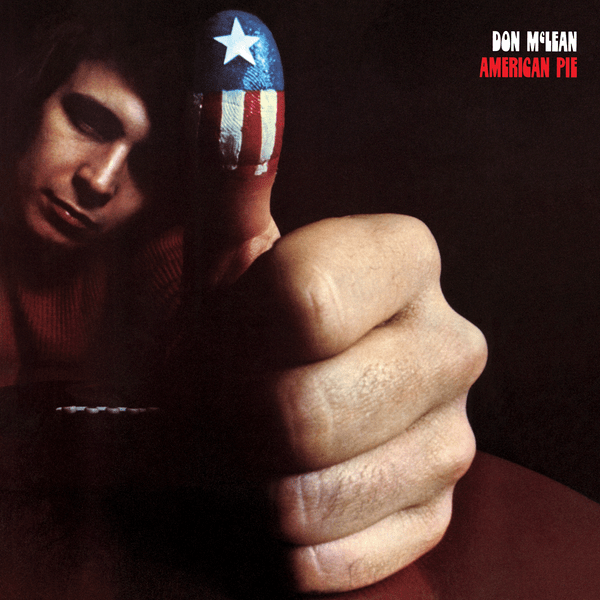
Everyone…I messed up last week. While making these, I go to Wiki’s Billboard Year-End Hot 100 Singles to go over some of the singles and then… I look at album cuts. Well, I didn’t check to see when American Pie was released…it was released in late 1971…but I would never have left that one off…ever. So forgive me…I won’t do this again…but I am leading off with it. It did its damage on the charts in 1972…so this one time I’m breaking my rule. It’s too important of a song.

American Pie… by Don Mclean. Where do I begin with this one? The song has so many references that it acts as a pop culture index itself. We do know the song was inspired by Buddy Holly’s death… What does it all mean? While being interviewed in 1991, McLean was asked for probably the 1000th time “What does the song ‘American Pie’ mean to you?,” to which he answered, “It means never having to work again for the rest of my life.” Now that is a great and honest answer by Mclean.

The holy trinity of power pop for me is…Badfinger, Big Star, and The Raspberries…those were the 70s  pioneers. Badfinger was the most successful out of the three…hit wise anyway. You can hear later bands like Cheap Trick, The Posies, Teenage Fanclub, Matthew Sweet,  and even KISS get something from each three.

This is my personal number 1 Power Pop song of all time. Baby Blue was written by Pete Ham.

He was playing in a Rock and Roll revival show in 1971 at Madison Square Gardens with other artists such as Chuck Berry, Bo Diddley, and Bobby Rydell. Ricky Nelson was releasing new music and he did not look the way he did in the 50s. He had long hair and dressed modern. He started off with some of his old songs the fans responded enthusiastically but then he played “Country Honk” a country version of the Rolling Stones “Honky Tonk Women.” That is when it went south.

Arlo Guthrie seems like the most laid-back guy in the world. His father was the great singer-songwriter, Woody Guthrie. Arlo wrote some very good songs but he didn’t write this one. The City of New Orleans was written by Steve Goodman. Steve did a great job writing this song. Its structure and imagery are fantastic.

After seeing the screenplay, Mayfield jumped into this movie project and was given complete creative freedom. He wrote the songs to suit the scenes, but he made sure they could stand on their own, telling the stories even without the visuals. “Superfly” works very well outside of the film. It was written by Curtis Mayfield. I saw this on the big screen a few years ago.

Staple Singers – I’ll Take You There

It doesn’t get better than this. I was very fortunate to see Mavis Staples in 2016 open up for Bob Dylan. She was open to the audience and told us that she dated “Bobby” back in the day and thought the world of him. It was a typical hot humid June day in Nashville at a now-defunct amphitheater. She commanded the stage and that voice filled the summer air.

Mavis Staples and Bob Dylan

Dylan and Staples first got together during the Newport Folk Festival, possibly in 1963 — though the year was not mentioned. The festival was held annually from 1959 to 1969, barring two years of inactivity in 1961 and 1962. Mavis Staples said, “We would write letters back and forth because we wouldn’t see each other until we were on a festival together. And we’d smooch!”

It has been said that Dylan proposed to Mavis back in 1963. She turned him down because she thought she was too young. Mavis Staple recently said:  “I often think about what would have happened if I’d married Bobby, though. If we’d had some little plum-crushers, how our lives would be. The kids would be singing now, and Bobby and I would be holding each other up.”

This song sounds spiritual and very close to a gospel song. There is a reason for that…it came out of a tragic event. Al Bell wrote the song. He signed the band to Stax Records and was an executive and co-owner of Stax Records. His little brother was shot and killed. After returning from the funeral he wrote this song. He said “I went out in the backyard in my father’s home. He had an old school bus there parked that was not running. I went back there and sat on the hood of that bus thinking about all that was happening. And all of a sudden, I hear this music in my head. And I heard these lyrics: ‘I know a place, ain’t nobody worried, ain’t nobody crying, and ain’t no smiling faces lying to the races, I’ll take you there.’ I heard it, and I heard the music. And it wouldn’t leave, it stayed there. kept trying to write other verses, but I couldn’t. Nothing worked – there was nothing left to say.”

It’s a beautiful song that builds hope that there is something better will be in the future. The song peaked at #1 in the Billboard 100, #20 in the UK, and #21 in Canada. The song was released in 1972 on Stax Records. It surprises me that it didn’t go much higher in the charts.

The first time I noticed who the Staple Singers were…was in the Last Waltz singing a beautiful version of The Weight. I started to look for more by them and I realized this song, which I knew from childhood, was them. That’s how some of us learn about new music…like a giant tree with roots and a lot of musical branches. With me, it started with the Beatles > Dylan > The Band > The Staple Singers. I found most of the music I like from The Beatles, Stones, and The Who. I followed their influences and what came after.

Mavis Staples:  “I sing, ‘Play it, Barry, play your piano…,’ that was Barry Beckett. Then ‘Help me, Daddy…,’ and that was my father playing the guitar. My dad plays that solo, none of that stuff was rehearsed. The only thing that was rehearsed was the verse, but all of the other stuff that I’m doing just came to me in the studio. It wasn’t written down, it all comes from what you feel. And God blessed me to be able to do that. It comes from inside me.”

Al Bell: “Mavis couldn’t get into it, she couldn’t feel it, so I stood there on the floor and tried to sing it to the guys, as they got the music and they got into it. After getting it down, later on, I came back and sat with Mavis and, after a while, she started feeling it and giving in to that rhythm. Of course, she took it to heights that only a Mavis Staples can take it. Nobody else could do it justice, and I guess it was supposed to be that way.”

“Ill Take You There”

Oh mmm I know a place
Ain’t nobody cryin’
Ain’t nobody worried
Ain’t no smilin’ faces
Mmm, no no
Lyin’ to the races
Help me, come on, come on
Somebody, help me now (I’ll take you there)
Help me, ya’all (I’ll take you there)
Help me now (I’ll take you there)
Oh! (I’ll take you there)
Oh! Oh! Mercy! (I’ll take you there)
Oh, let me take you there (I’ll take you there)
Oh-oh! Let me take you there! (I’ll take you there)
Play your, play your piano now
All right Ah do it do it
Come on now
Play on it, play on it
Daddy daddy daddy
Ooh, Lord
All right now
Baby, easy now
Now, come on, little lady
All right
Dum-dum-dum-dum
Sock it, sock it
Ah, oh, oh!
I know a place, ya’all (I’ll take you there)
Ain’t nobody cryin’ (I’ll take you there)
Ain’t nobody worried (I’ll take you there)
No smilin’ faces (I’ll take you there) 
Uh-uh (Lyin’ to the races) (I’ll take you there)
Oh, no Oh! (I’ll take you there)
Oh oh oh! (I’ll take you there)
Mercy now! (I’ll take you there)
I’m callin’ callin’ callin’ mercy (I’ll take you there)
Mercy mercy! (I’ll take you there)
Let me (I’ll take you there)
Oh oh! I’ll take you there (I’ll take you there)
Oh oh oh oh Wanna take you there! (I’ll take you there) Just take me by the hand
Let me (I’ll take you there)
Let me, let me, let me lead the way
Oh! (I’ll take you there)
Let me take you there (I’ll take you there)
Let me take you there! (I’ll take you there)
Ain’t no smilin’ faces (I’ll take you there)
Up in here, lyin’ to the races (I’ll take you there)
You oughta, you gotta gotta come let me, let me (I’ll take you there)
Take you, take you, take you over there (I’ll take you there) Ooh! Oh! Oh! All right (I’ll take you there)
Oh-oh! All right! (I’ll take you there)
Oh! Oh! (I’ll take you there)
Mmmm ah Oh! Yeah! (I’ll take you there)
Whoa! (I’ll take you there)
Let me lead the way (I’ll take you there)

Tales from the Crypt 1972

Horror + Joan Collins… It works well in this.

This is a very good Anthology horror movie. If you like seeing bad people getting their due…this is for you.

I watched this movie as a seven-year-old on television. This movie set me straight for a while…no misbehaving after watching this. It’s got a feel of the Twilight Zone set in the early 1970s with vivid green nature surrounding that only 1970’s England on film can give you.

5 strangers travel through caves and wonder how and why they all got there as they meet a Crypt Keeper. One by one each has a story that is shown.

It still works now. The stories are well written and my favorite is “Blind Alleys” about someone who could care less about the welfare of other people. Actor Patrick Magee is great in this one. He also appeared in A Clockwork Orange as the writer.

I’ve always liked Anthology horror movies and this was the first one I remember watching. Amicus Productions made many movies in this vein. I like the creepiness around many of these early 1970s horror films.

I’m posting the wiki information below about each story. 

…And All Through the House

Joanne Clayton (Joan Collins) kills her husband (Martin Boddey) on Christmas Eve. She prepares to hide his body, but hears a radio announcement stating that a homicidal maniac (Oliver MacGreevy) is on the loose. She sees the killer (who is dressed in a Santa Claus costume) outside her house, but cannot call the police without exposing her own crimes.

Believing the maniac to be Santa, Joanne’s young daughter (Chloe Franks) unlocks the door and lets him into the house, whereupon he starts to strangle Joanne to death.


Reflection of Death

Carl Maitland (Ian Hendry) abandons his family to be with Susan Blake (Angela Grant). After they drive off together, they are involved in a car accident. He wakes up in the wrecked car and attempts to hitch-hike home, but everyone he meets reacts with horror upon seeing him. Arriving at his house, he sees his wife (Susan Denny) with another man.


He knocks on the door, but she screams and slams the door. He then goes to see Susan to find out that she is blind from the accident. She says that Carl died two years ago in the crash. Glancing at a reflective tabletop, he sees he has the face of a rotted, hideous corpse and screams in horror. Carl then wakes up and finds out that it was a dream, but the moment he does, the crash occurs as previously seen.


Poetic Justice

Edward Elliott (David Markham) and his son James (Robin Phillips) are a snobbish pair who resent their neighbour, dustman Arthur Grimsdyke (Peter Cushing), who owns a number of animals and entertains children in his house. To get rid of what they see as a blight on the neighbourhood, they push Grimsdyke into a frenzy by conducting a smear campaign against him, first resulting in the removal of his beloved dogs (one of them returns to him), then persuading a member of the council to have him removed from his job, and later exploiting parents’ paranoiac fears about child molestation.


On Valentine’s Day, James sends Grimsdyke a number of poison-pen Valentines, supposedly from the neighbours, driving the old man to suicide. One year later, Grimsdyke comes back from the dead and takes revenge on James: the following morning, Edward finds his son dead with a note that says he was bad and that he had no heart—the word “heart” represented by James’s heart, torn from his body.


Wish You Were Here

Wish You Were Here (The Haunt of Fear #22, November–December 1953), a variation on W. W. Jacobs’ famed short story “The Monkey’s Paw”.

Ineffective businessman Ralph Jason (Richard Greene) is close to financial ruin. His wife Enid (Barbara Murray) discovers a Chinese figurine that says it will grant three wishes to whoever possesses it; Enid decides to wish for a fortune; surprisingly, it comes true. However, Ralph is killed, seemingly in a car crash, on the way to his lawyer’s office to collect it. The lawyer (Roy Dotrice) then advises Enid she will inherit a fortune from her deceased husband’s life insurance plan. She uses her second wish to bring him back to the way he was just before the accident, but learns that his death was due to a heart attack immediately before the crash (caused by fright when he sees the figure of “death” following him on a motorcycle).

As she uses her final wish to bring him back alive and to live forever, she discovers that he was embalmed. She tries to kill him to end his pain but because she wished him to live forever, he cannot be killed. She has now trapped him in eternal pain.


Blind Alleys

Major William Rogers (Nigel Patrick), the incompetent new director of a home for the blind made up mostly of elderly and middle-aged men, makes drastic financial cuts, reducing heat and rationing food for the residents while he lives in luxury with his German Shepherd, Shane. When Rogers ignores the pleas of resident George Carter (Patrick Magee) for help, another resident dies from the cold and a stone-faced Carter leads the others in exacting revenge. Carter and his group subdue the staff, then lock Rogers and Shane in separate rooms in the basement as they construct a maze of narrow corridors between the two rooms. Rogers and Shane are starved, leading to the dog becoming ravenous.

After two days, Rogers’ door is unlocked and he must find his way through with the lights off. He yells out in pain as Carter turns the lights on, discovering one corridor is lined with razor blades. Rogers makes it past, but finds Shane being let out from the room in front of him. He flees back towards the razors, but Carter turns the lights off and Rogers is heard screaming as the hungry dog catches up with him.

Finale

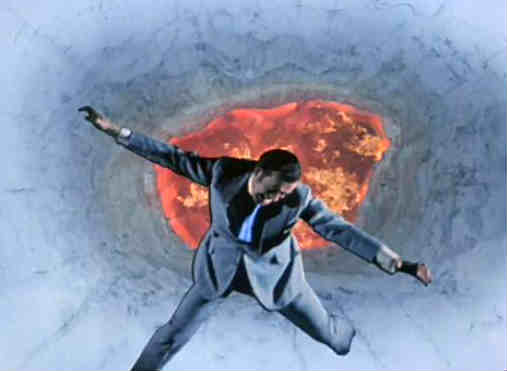
After completing the final tale, the Crypt Keeper reveals that he was not warning them of what would happen, but telling them what has already happened: they have all “died without repentance”. Clues to this twist can be spotted throughout the film, including Joanna wearing the brooch her husband had given her for Christmas just before she killed him. The door to Hell opens and Joanna, Carl, James, Ralph, and Major Rogers all enter. “And now… who is next?” asks the Crypt Keeper, turning to face the camera as he says “Perhaps you?” The scene pulls away as the entrance to the Crypt Keeper’s lair is in flames