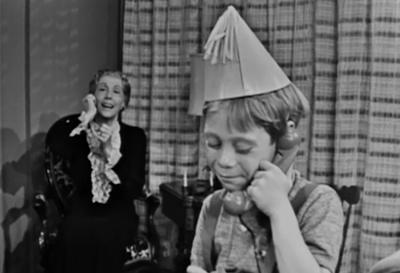
Twilight Zone – Long Distance Call

★★★★★  March 31, 1961 Season 2 Episode 22

If you want to see where we are…HERE is a list of the episodes.

This one is one of my favorites. It’s dark and it still works today.  It’s a great episode and features Bill Mumy as little Billy Bayles who just lost his grandmother or did he? The grandmother played by Lili Darvas tried to live through Billy vicariously in many ways and ignored what the mother of the child said or thought.  You can feel the tension between the grandmother and her daughter in law.

This can happen in a family and cause trouble so it made the episode much more relatable. The darkness of the episode is shocking considering the time it was made.

**SPOILERS** below

This show was really heavy.  It addressed the loss of a grandparent and two attempted suicides of a five year old boy. Not your average show in the 60s or now for that matter. Who knew a toy telephone could be so damn frightening? That was one determined grandmother…she wasn’t letting go of Billy even in the afterlife.

This episode is videotaped and it benefits from it…adding to eerie feeling.

Bill Mumy would appear in three Twilight Zones. He would later become known in the TV show Lost In Space.

This show was written by Charles Beaumont, Bill Idelson, and Rod Serling

Rod Serling’s Opening Narration: 

As must be obvious, this is a house hovered over by Mr. Death, an omnipresent player to the third and final act of every life. And it’s been said, and probably rightfully so, that what follows this life is one of the unfathomable mysteries, an area of darkness which we, the living, reserve for the dead—or so it is said. For in a moment, a child will try to cross that bridge which separates light and shadow, and, of course, he must take the only known route, that indistinct highway through the region we call The Twilight Zone.

Summary

Billy Bayles loves his Grandma Bayles and likes the present she’s given him, a toy telephone which she says will allow them to communicate forever. Grandma Bayles is ill however and soon dies but Billy claims he can speak to her on their special telephone. When he tells his parents that she wants him to join her, wherever she’s gone to, they pay no mind. When he throws himself in front of their neighbor’s car however, it all gets deadly serious.

Rod Serling’s Closing Narration:

A toy telephone, an act of faith, a set of improbable circumstances, all combine to probe a mystery, to fathom a depth, to send a facet of light into a dark after-region, to be believed or disbelieved, depending on your frame of reference. A fact or a fantasy, a substance or a shadow—but all of it very much a part of The Twilight Zone.

CAST

Rod Serling…Narrator
Philip Abbott…Chris Bayles
Lili Darvas…Grandma Bayles
Patricia Smith…Sylvia Bayles
Bill Mumy…Billy Bayles
Jenny Maxwell…Shirley
Reid Hammond…Mr. Peterson
Henry Hunter…Dr. Unger
Lew Brown…Fireman
Arch Johnson…Fireman

Twilight Zone – The Prime Mover

★★★★  March 24, 1961 Season 2 Episode 21

If you want to see where we are…HERE is a list of the episodes.

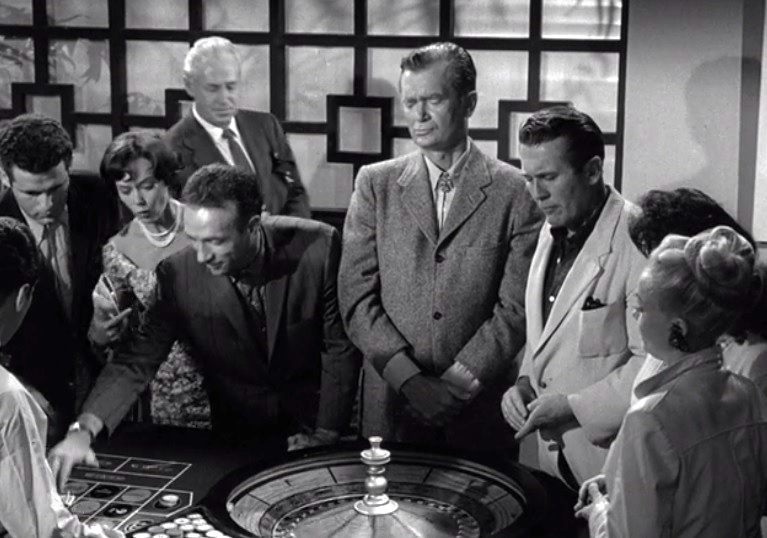
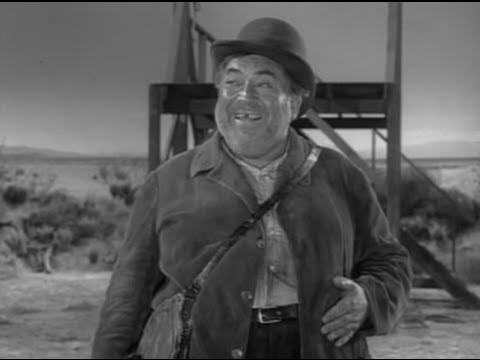
Buddy Ebsen who plays Jimbo Cobb  has always been a favorite of mine. The soon to be Beverly Hillbilly star and the original Tin Man does a great job in this Twilight Zone. It is a good episode and keep an eye out for a car crash near the start…the crash was from the movie 1958 movie Thunder Road. Buddy has a talent (Psychokinesis) of being able to move things with his mind. Jimbo has a level head unlike his greedy friend Ace Larsen.

As Rod says in the closing narration… Some people possess talent, others are possessed by it. When that happens, the talent becomes a curse…which I thought was great.

The Prime Mover was based on an unpublished story by George Clayton Johnson. Explains Johnson… Charles Beaumont could get an assignment, he needed a story, he didn’t have a story, none of his stories seemed suitable. He therefore bought from me my story. He paid me six hundred dollars for it. My name never ended up on the screen, it was an accident of production for which Buck Houghton apologized. I felt bad that my name wasn’t on it, but I thought it was a good show.

The slot machine seen at the first of the show was in the episode The Fever.

This show was written by Charles Beaumont, Rod Serling and George Clayton Johnson (uncredited)

Rod Serling’s Opening Narration: 

Portrait of a man who thinks and thereby gets things done. Mr. Jimbo Cobb might be called a prime mover, a talent which has to be seen to be believed. In just a moment he’ll show his friends, and you, how he keeps both feet on the ground, and his head in the Twilight Zone.

Summary

Ace Larson owns a roadside diner. It’s a dreary existence for him, his girlfriend Kitty Cavanaugh, and his friend and employee Jimbo Cobb. Through a serious accident just outside his diner, Ace learns for the first time that Jimbo has telekinetic powers. Ace the gambler sees an easy way to make his fortune, and the three of them set off for Las Vegas. Jimbo has little trouble making roulette balls fall on the right number or making any point with a pair of dice. Ace learns the hard way, however, that there can be too much of a good thing.

Rod Serling’s Closing Narration:

Some people possess talent, others are possessed by it. When that happens, the talent becomes a curse. Jimbo Cobb knew, right from the beginning, but before Ace Larsen learned that simple truth, he had to take a short trip – through The Twilight Zone.

CAST

Rod Serling…Narrator
Dane Clark…Ace Larsen
Buddy Ebsen…Jimbo Cobb
Jane Burgess…Sheila
Christine White…Kitty Cavanaugh
William Keene…Desk clerk
Nesdon Booth…Big Phil Nolan
Clancy Cooper…Trucker
Robert Riordan…Hotel Manager
Joe Scott…Croupier

Twilight Zone – Static

★★★1/2  March 10, 1960 Season 2 Episode 20

If you want to see where we are…HERE is a list of the episodes.

Robert Emhardt as Professor Ackerman does a great job in this. I have watched many shows with this great character actor. Dean Jagger is very good in the pivotal role of Ed Lindsay.

I’ve always liked this episode. The episode plays heavily into nostalgia and  someone stuck there. People today would probably not think of old radio shows  but it still works and with the radio it gives it a different feeling than an old tv show would. Now with Satellite radio you could live in the past with radio and it would not be strange.

When you watch something you have to keep in mind what time period it was filmed in. It relies on nostalgia a little too much but I did like the episode and it’s worth watching. This one was one of the episodes on videotape and unlike the scarier ones…this one suffers from it.

Static was based on a story by OCee Ritch (I’ve seen his name spelt OCeo and OCee), a friend of Charles Beaumont. The idea for it came from a party given by Richard Matheson attended by both Ritch and a fan of old-time radio who performed bits of radio nostalgia.

This show was written by Charles Beaumont, Oceo Ritch and Rod Serling

Rod Serling’s Opening Narration: 

No one ever saw one quite like that, because that’s a very special sort of radio. In its day, circa 1935, its type was one of the most elegant consoles on the market. Now with its fabric-covered speakers, its peculiar yellow dials, its serrated knobs, it looks quaint and a little strange. Mr. Ed Lindsay is going to find out how strange very soon when he tunes in to the Twilight Zone.

Summary

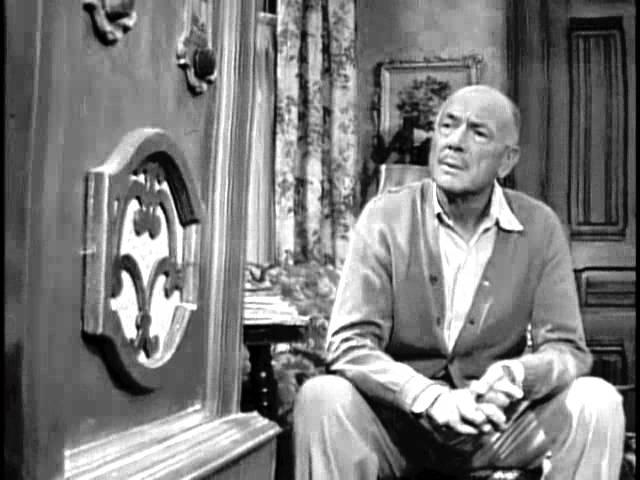
Ed Lindsay has been living in the same boarding house for over 20 years and he has become an embittered old man. He doesn’t like how the world has changed around him and his crotchety behavior has made him certainly the most disliked man there. When he turns on his old radio however, he gets music from the 1940’s on a station that, it turns out, has been off the air for 15 years. There’s a reason he hears the music however, a reason a fellow boarder reminds him of.

Rod Serling’s Closing Narration:

Around and around she goes, and where she stops nobody knows. All Ed Lindsay knows is that he desperately wanted a second chance and he finally got it, through a strange and wonderful time machine called a radio, in the Twilight Zone.

CAST

Rod Serling…Narrator
Dean Jagger…Ed Lindsay
Carmen Mathews…Vinnie
Robert Emhardt…Professor Ackerman
Arch W. Johnson…Roscoe Bragg
Alice Pearce…Mrs. Nielson
Clegg Hoyt…Shopkeeper (the “junk dealer”)
Stephen Talbot…Boy
Lillian O’Malley…Miss Meredith
Pat O’Malley…Mr. Llewellyn
Eddie Marr…Real Estate Pitchman (uncredited)
Bob Crane…the disc jockey (uncredited)
Roy Rowan…the radio announcer (uncredited)

Twilight Zone – Mr. Dingle, the Strong

★★★1/2  March 3, 1961 Season 2 Episode 19

If you want to see where we are…HERE is a list of the episodes.

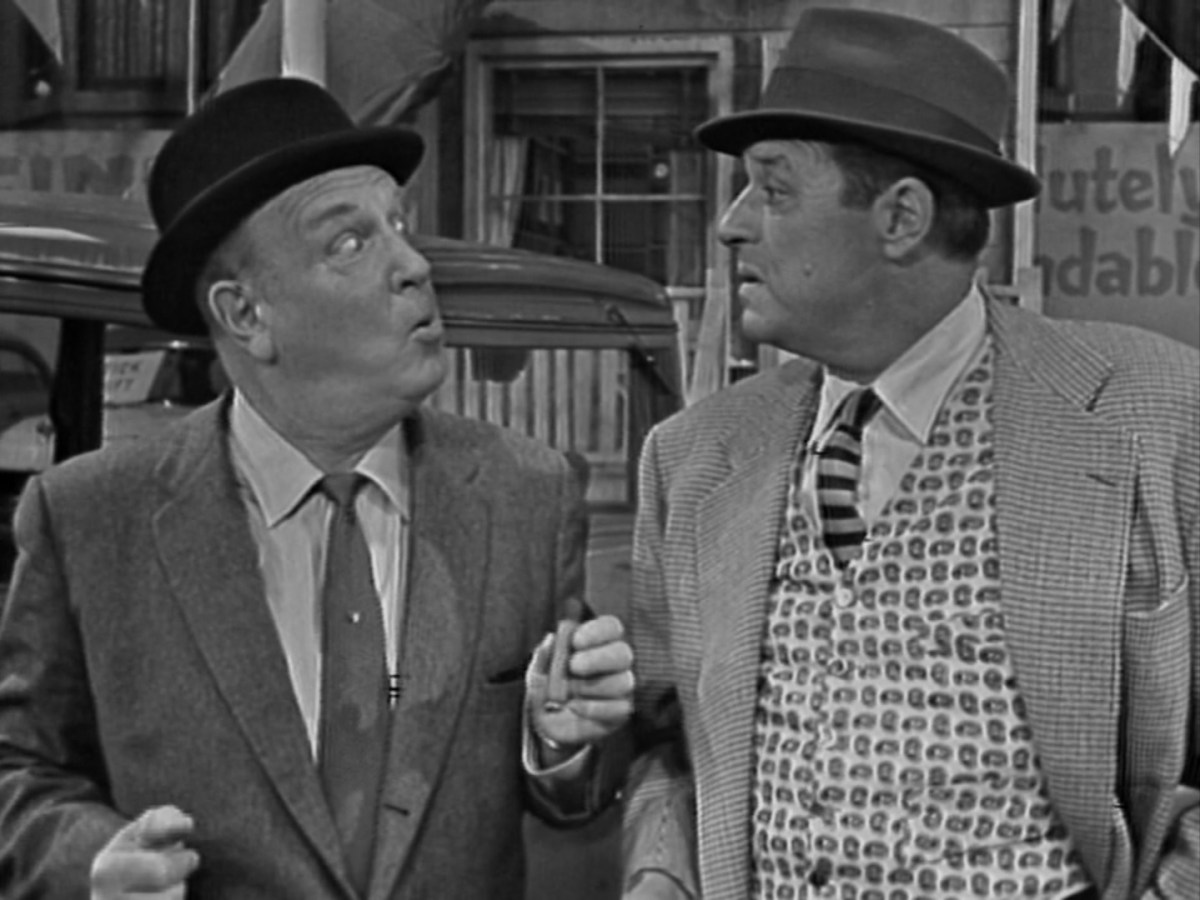
This is a comedic episode that does have humorous moments. This is another one Serling wrote about human nature. Burgess Meredith plays Luther Dingle, a vaccum salesmen, who is pretty much a human punching bag. He lets people walk over him like the character played by Don Rickles . He is given the gift of strength by aliens and is observed.  He then proceeds to over use the gift.

A year before, in an article about The Twilight Zone, a reporter had mistakenly referred to the main character of Mr. Denton on Doomsday as Mr. Dingle. Serling must have liked the name, for he created Mr. Dingle, the Strong. The casting as always is superb… it’s a very entertaining episode.

In this episode and many others like The Twilight Zone: Will the Real Martian Please Stand Up?, a majority of the actors are smoking due to the demand of one of the Twilight Zone’s sponsors, a cigarette company.

This show was written by Rod Serling

Rod Serling’s Opening Narration: 

Uniquely American institution known as the neighborhood bar. Reading left to right are Mr. Anthony O’Toole, proprietor, who waters his drinks like geraniums but who stands foursquare for peace and quiet and for booths for ladies. This is Mr. Joseph J. Callahan, an unregistered bookie, whose entire life is any sporting event with two sides and a set of odds. His idea of a meeting at the summit is any dialogue between a catcher and a pitcher with more than one man on base. And this animated citizen is every anonymous bettor who ever dropped rent money on a horse race, a prize fight, or a floating crap game, and who took out his frustrations and his insolvency on any vulnerable fellow barstool companion within arm’s and fist’s reach. And this is Mr. Luther Dingle, a vacuum cleaner salesman whose volume of business is roughly that of a valet at a hobo convention. He’s a consummate failure in almost everything but is a good listener and has a prominent jaw. And these two unseen gentlemen are visitors from outer space. They are about to alter the destiny of Luther Dingle by leaving him a legacy, the kind you can’t hardly find no more. In just a moment, a sad-faced perennial punching bag, who missed even the caboose of life’s gravy train, will take a short constitutional into that most unpredictable region that we refer to as The Twilight Zone.

Summary

Luther Dingle is a meek and mild-mannered vacuum cleaner salesman. He spends some time in a bar but always seems to be in the middle of others arguments and always seems to get the worst of it. Courtesy of visiting – but invisible – aliens, he is given great strength, some 300 times greater than that of a normal human being. Dingle becomes something of a local celebrity but just how long will his powers last?

Rod Serling’s Closing Narration:

Exit Mr. Luther Dingle, former vacuum cleaner salesman, strongest man on Earth, and now mental giant. These latter powers will very likely be eliminated before too long, but Mr. Dingle has an appeal to extraterrestrial notetakers as well as to frustrated and insolvent bet losers. Offhand, I’d say that he was in for a great deal of extremely odd periods, simply because there are so many inhabited planets who send down observers, and also because, of course, Mr. Dingle lives his life with one foot in his mouth—and the other in The Twilight Zone.

CAST

Rod Serling…Narrator
Burgess Meredith…Luther Dingle
Don Rickles…Bettor
James Westerfield…Anthony O’Toole
Edward Ryder…Callahan
James Millhollin…Abernathy
Douglas Spencer…1st Martian
Michael Fox…2nd Martian
Donald Losby…1st Venusian
Greg Irwin…2nd Venusian
Douglas Evans…Man
Phil Arnold…Man
Frank Richards…Man
Jo Ann Dixon…Woman with carriage
Jay Hector…Boy wearing white helmet
Bob Duggan…Photographer
Robert McCord…Customer

Twilight Zone – The Odyssey of Flight 33

★★★★★  February 24, 1960 Season 2 Episode 18

If you want to see where we are…HERE is a list of the episodes.

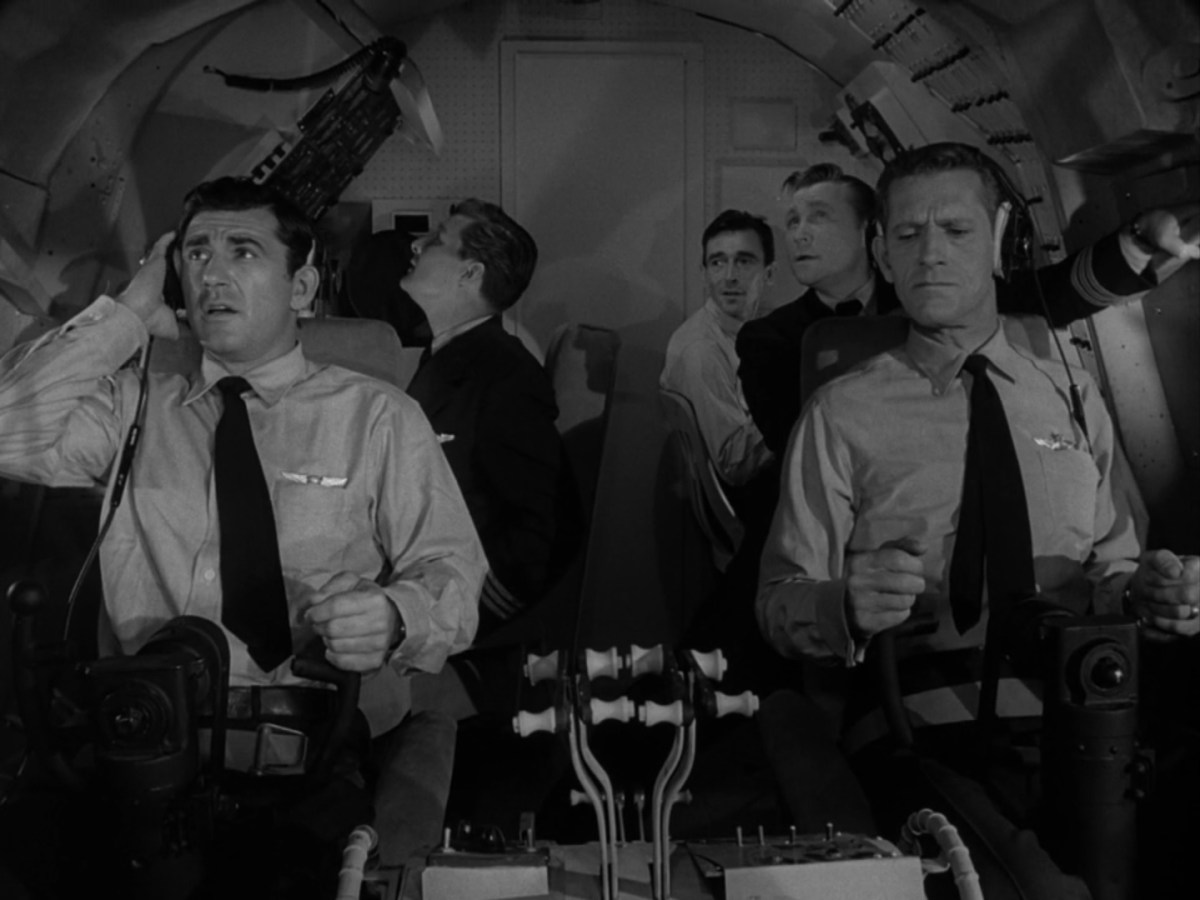
This one is one of my all time favorite Twilight Zone episodes. It is a time travel episode and this time it gives you a reason for the time travel. After picking up a freak tail wind that accelerates the plane past three thousand knots and through a shock wave, the crew of Global 33 is unable to raise anyone on the radio. Descending below the cloud cover to get a site reading, they see a Manhattan Island devoid of buildings. They are back in time but when?

Something happened to Serling to inspired him to write the episode… There was some mail on his desk at the production company, and on the top was an envelope from American Airlines, and he opened that one first. It was a brochure offering a mockup of a 707 passenger cabin to any studio that was going to film a scene. It was something they used in stewardess training and they decided to build another one. They had this one on the West Coast and they were going to rent it out or sell it. This gave Serling the idea…he even consulted with pilots to get the dialog accurate in the cockpit.

SPOILER

The most expensive piece of film ever shot for Twilight Zone was the dinosaur watching the plane go by..

This show was written by Rod Serling

Rod Serling’s Opening Narration: 

You’re riding on a jet airliner on route from London to New York. You’re at 35,000 feet atop an overcast and roughly fifty-five minutes from Idlewild Airport. But what you’ve seen occur inside the cockpit of this plane is no reflection on the aircraft or the crew. It’s a safe, well-engineered, perfectly designed machine. And the men you’ve just met are a trained, cool, highly efficient team. The problem is simply that the plane is going too fast, and there is nothing within the realm of knowledge or at least logic to explain it. Unbeknownst to passenger and crew, this airplane is heading into an uncharted region well off the beaten track of commercial travelers—it’s moving into The Twilight Zone. What you’re about to see we call “The Odyssey of Flight 33.”

Summary

Global Flight 33 is en route from London to New York in what appears to be a routine flight in a modern jetliner. Suddenly however, the jet’s speed increases to an incredible 3000 knots and they arrive in New York rather quickly. Neither the captain or his well-trained crew can explain what happened – a strange tail-wind perhaps – but they are certainly not prepared for what they find as they survey the land below them.

Rod Serling’s Closing Narration:

A Global jet airliner, en route from London to New York on an uneventful afternoon in the year 1961, but now reported overdue and missing, and by now, searched for on land, sea, and air by anguished human beings, fearful of what they’ll find. But you and I know where she is. You and I know what’s happened. So if some moment, any moment, you hear the sound of jet engines flying atop the overcast—engines that sound searching and lost—engines that sound desperate—shoot up a flare or do something. That would be Global 33 trying to get home—from The Twilight Zone.

CAST

Rod Serling … Narrator / Self – Host (uncredited)
John Anderson … Capt. ‘Skipper’ Farver
Paul Comi … 1st Officer John Craig
Sandy Kenyon … Navigator Hatch
Wayne Heffley … 2nd Officer Wyatt
Harp McGuire … Flight Engineer Purcell
Betty Garde … Passenger
Beverly Brown … Janie
Nancy Rennick … Paula
Jay Overholts … Passenger
Lester Fletcher … RAF Man
Robert McCord … Passenger (uncredited)

Twilight Zone – Twenty-Two

★★★★  February 10, 1961 Season 2 Episode 17

If you want to see where we are…HERE is a list of the episodes.

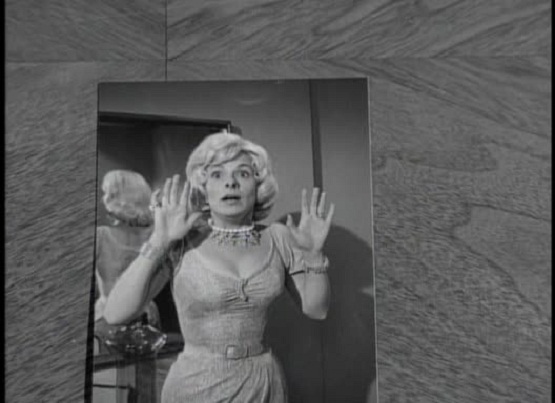
I like how diverse the Twilight Zone was from week to week. The last episode was a good comedic episode Penny For Your Thoughts…and this one is anything but comedic. I know some people who say the Twilight Zone really scares them. This one would fit that bill. It is one of the most frightening episodes of the show. This is one of the videotaped episodes that benefits from it. It gives it an eerie look that only helps the story.

Rod Serling adapted Twenty-Two from a short story in Famous Ghost Stories, edited by Bennett Cerf. In the original, an attractive young New York girl visits the Carolina plantation of some distant relatives. In adapting the story, Serling kept the basics but changed the setting from plantation to hospital and the vision from coach to morgue.

Arlene Martel (credited here as Arlene Sax) plays the nurse in the morgue who taunts Liz Powell with the “room for one more,” line. In order to make her look more sinister, they used makeup to give her a somewhat demonic look, complete with arched eyebrows.

This show was written by Rod Serling and Bennett Cerf

Rod Serling’s Opening Narration: 

This is Miss Liz Powell. She’s a professional dancer and she’s in the hospital as a result of overwork and nervous fatigue. And at this moment we have just finished walking with her in a nightmare. In a moment she’ll wake up and we’ll remain at her side. The problem here is that both Miss Powell and you will reach a point where it might be difficult to decide which is reality and which is nightmare, a problem uncommon perhaps but rather peculiar to the Twilight Zone.

Summary

Liz Powell – an exotic dancer – is suffering from exhaustion and is being treated at hospital prior to a scheduled engagement in Miami. She has a recurring nightmare where she takes the elevator down to the morgue and is invited in by an ominous-sounding nurse, who tells her, ‘room for one more’. Her doctor assures her there’s nothing wrong with her physically and she’s just overworked and tired. To Liz, the nightmare’s very real. The doctor suggests she try to break the pattern to see if she can get them to stop. The next time she has the dream, she travels down to the morgue but the dream goes off as before. With her medical issues taken care of, and her Miami engagement a day away, it’s time for Liz to leave. But it’s her nightmare over?

Rod Serling’s Closing Narration:

Miss Elizabeth Powell, professional dancer. Hospital diagnosis: acute anxiety brought on by overwork and fatigue. Prognosis: with rest and care, she’ll probably recover. But the cure to some nightmares is not to be found in known medical journals. You look for it under ‘potions for bad dreams’ – to be found in the Twilight Zone.

CAST

Rod Serling … Narrator / Self – Host (uncredited)
Barbara Nichols … Liz Powell
Jonathan Harris … The Doctor
Fredd Wayne … Barney Kamener
Arlene Martel … Nurse in Morgue (as Arline Sax)
Mary Adams … Day Nurse
Norma Connolly … Night Nurse
Wesley Lau … Airline Agent
Angus Duncan … Ticket Clerk
Carole Conn … Sax Double (uncredited)
Jay Overholts … PA Announcer (voice) (uncredited)
Joseph Sargent … Ticket Clerk (uncredited)

Twilight Zone – A Penny for Your Thoughts

★★★★1/2  February 3, 1961 Season 2 Episode 16

If you want to see where we are…HERE is a list of the episodes.

This one is a comedic episode where everything goes right. It’s well written and acted. The 2000 movie What Women Want is related to this episode. Dick York is fantastic in this episode. One of two consecutive Twilight Zone episodes to star a future Bewitched regular, the previous episode The Invaders starred Agnes Moorehead.

This was the first of George Clayton Johnsons four Twilight Zone scripts and was his lightest story, but the easy tone doesn’t detract from it. The episode is charming and funny, and it does have a point…that people do things without thinking about them and think things without having the slightest intention of doing them.

The title comes from the old English expression “A penny of your thoughts” which dates back to John Heywood’s compilation of proverbs “A Dialogue Containing the Number in Effect of all the Proverbs in the English Tongue.”

George Clayton Johnson: Rod came through with a couple of people, visitors that he had brought on, and he saw me and Lola (wife) and he stopped to introduce us to these people. And his attitude toward me was one of great respect. It wasn’t like, Tm Rod Serling and this is one of the flunkies on the set, it was more like, Look, here’s the man who wrote this absolutely wizard thing that were making right now. It really built my ego and made me feel worthwhile.

This show was written by Rod Serling and George Clayton Johnson

Rod Serling’s Opening Narration: 

Mr. Hector B. Poole, resident of the Twilight Zone. Flip a coin and keep flipping it. What are the odds? Half the time it will come up heads, half the time tails. But in one freakish chance in a million, it’ll land on its edge. Mr. Hector B. Poole, a bright human coin – on his way to the bank.

Summary

Bank clerk Hector Poole develops telepathic powers after tossing a coin to a newspaper vendor that miraculously stands on its edge. He discovers the positive and negative effects of listening in on other peoples thoughts, plans and fantasies

Rod Serling’s Closing Narration:

One time in a million, a coin will land on its edge, but all it takes to knock it over is a vagrant breeze, a vibration, or a slight blow. Hector B. Poole, a human coin, on edge for a brief time – in the Twilight Zone.

CAST

Rod Serling … Narrator / Self – Host (uncredited)
Dick York … Hector B. Poole
June Dayton … Helen Turner
Dan Tobin … E.M. Bagby
Cyril Delevanti … L.J. Smithers
Hayden Rorke … Sykes
James Nolan … Jim
Frank London … Driver
Anthony Ray … Newsboy
Patrick Waltz … Brand
Aileen Arnold … Pedestrian (uncredited)
Sig Frohlich … Pedestrian (uncredited)

Twilight Zone – The Invaders

★★★★★  January 27, 1961 Season 2 Episode 15

If you want to see where we are…HERE is a list of the episodes.

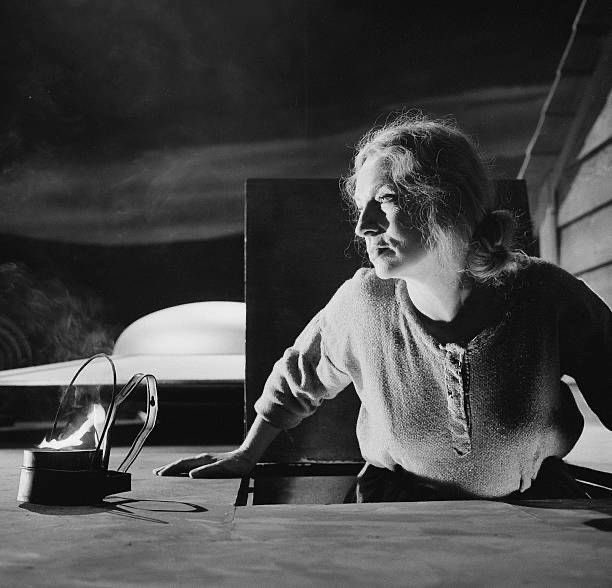
It’s so strange because of my age I remember Agnes Moorehead primarily as the Bewitched mother in law Endora. She was a great actress and was in Orson Welle’s stock company long before she was a sitcom star. She stars in this Twilight Zone and does a one woman show with a little help from special effects. I can’t say enough about her acting in this. She plays an old lonely woman and creates all of the suspense and drama to this episode. It’s worth it just to see her work at her craft.

This one is a Twilight Zone classic. The only complaint I’ve heard about this episode is that the special effects could have been a little better. The effects get the point across with no problem…so I see no problem and the episode is great.

When Agnes Moorehead learned she had no dialogue in this episode, she initially refused to do it. Rod Serling and director Douglas Heyes convinced her. Moorhead’s solo performance drew on the mime skills she had developed when, as a young actress, she studied with legendary pantomime artist Marcel Marceau in Paris.

As in other episodes, this one uses the United Planets Cruiser C57D spacecraft from Forbidden Planet , both of which were produced by MGM.

This show was written by Richard Matheson and Rod Serling

Rod Serling’s Opening Narration: 

This is one of the out-of-the-way places, the unvisited places, bleak, wasted, dying. This is a farmhouse, handmade, crude, a house without electricity or gas, a house untouched by progress. This is the woman who lives in the house, a woman who’s been alone for many years, a strong, simple woman whose only problem up until this moment has been that of acquiring enough food to eat, a woman about to face terror, which is even now coming at her from – the Twilight Zone.

Summary

An old woman who lives alone in a ramshackle farm house comes face to face with alien invaders. She hears something on her roof and then finds a flying saucer, perhaps six or seven feet across from which emerges two small robots. She fights them as best she can and eventually succeeds in destroying their ship. The nature of the invaders however is not immediately obvious however.

Rod Serling’s Closing Narration:

These are the invaders, the tiny beings from the tiny place called Earth, who would take the giant step across the sky to the question marks that sparkle and beckon from the vastness of the universe only to be imagined. The invaders…who found out that a one-way ticket to the stars beyond has the ultimate price tag…and we have just seen it entered in a ledger that covers all the transactions in the universe…a bill stamped “Paid in Full” and to be found unfiled in the Twilight Zone.

CAST

Rod Serling … Narrator / Self – Host (uncredited)
Agnes Moorehead … Woman

Twilight Zone – The Whole Truth

★★★  January 20, 1961 Season 2 Episode 14

If you want to see where we are…HERE is a list of the episodes.

This is one of the comedy episodes. Imagine if you will…a car salesman that has to tell the truth. What a great world that would be. The movie Liar, Liar was probably influenced or based on this episode. It was shot on videotape and it unfortunately is very obvious. The outside doesn’t look like outside and it resembles the look of a soap opera. This is the one videotape episode that showed all of the limitations of that format. The only thing it does do is accent the terrible cars that he has to sell.

The casting again is good. Jack Carson plays Harvey Hunnicut the prototypical cheap used car salesman. He buys an old car and the car is haunted…who ever owns it must tell the truth. The acting like always is good but the presentation and some of the plot seems forced.

John F. Kennedy was sworn in as the 35th President of the United States at the Inaugural ceremonies held in Washington the afternoon of the very day this episode originally aired.

This show was written by Rod Serling

Rod Serling’s Opening Narration: 

This, as the banner already has proclaimed, is Mr. Harvey Hunnicut, an expert on commerce and con jobs, a brash, bright, and larceny-loaded wheeler and dealer who, when the good Lord passed out a conscience, must have gone for a beer and missed out. And these are a couple of other characters in our story: a little old man and a Model A car – but not just any old man and not just any Model A. There’s something very special about the both of them. As a matter of fact, in just a few moments, they’ll give Harvey Hunnicut something that he’s never experienced before. Through the good offices of a little magic, they will unload on Mr. Hunnicut the absolute necessity to tell the truth. Exactly where they come from is conjecture, but as to where they’re heading for, this we know, because all of them – and you – are on the threshold of the Twilight Zone.

Summary

Harvey Hunnicut is the stereotypical used car salesman: a fast talker who, to put it politely, is prone to stretching the truth about the cars he sells. He buys a used car from an old gentleman paying him far less that it’s worth. After the deal, the old man tells him the car is haunted. Soon, Harvey finds that he can only tell the truth. Not only to customers but even to his wife as well. When he tries to sell the man’s car he finds the perfect customer.

Rod Serling’s Closing Narration:

Couldn’t happen, you say? Far-fetched? Way-out? Tilt-off-center? Possible. But the next time you buy an automobile, if it happens to look as if it had just gone through the Battle of the Marne, and the seller is ready to throw into the bargain one of his arms, be particularly careful in explaining to the boss about your grandmother’s funeral, when you are actually at Chavez Ravine watching the Dodgers. It’ll be a fact that you are the proud possessor of an instrument of truth – manufactured and distributed by an exclusive dealer – in The Twilight Zone.

CAST

Rod Serling … Narrator / Self – Host (uncredited)
Jack Carson … Harvey Hunnicut
Loring Smith … Honest Luther Grimbley
George Chandler … Old Man
Jack Ging … Young Man
Arte Johnson … Irv
Patrick Westwood … The Premier’s Aide
Lee Sabinson … Nikita Khrushchev
Nan Peterson … Young Woman

Twilight Zone – Back There

★★★★  January 13, 1961 Season 2 Episode 13

If you want to see where we are…HERE is a list of the episodes.

In this episode Russell Johnson makes his second appearance on The Twilight Zone. If you went back in time could you changed fixed events? We will find out in this episode. I like the time travel episodes and this one is no exception. I like the idea they built it around. This episode takes place on April 14, 1961 and April 14, 1865.

It’s not a perfect episode but a fun time travel adventure. This episode is a hard one to rate.  It just doesn’t gel like some of the others do.

The character Pete Corrigan mentions HG Wells in relation to his story The Time Machine, which had also just been made into a movie the year before this episode.

This show was written by Rod Serling

Rod Serling’s Opening Narration: 

Witness a theoretical argument, Washington, D.C., the present. Four intelligent men talking about an improbable thing like going back in time. A friendly debate revolving around a simple issue: could a human being change what has happened before? Interesting and theoretical, because who ever heard of a man going back in time? Before tonight, that is, because this is—The Twilight Zone.

Summary

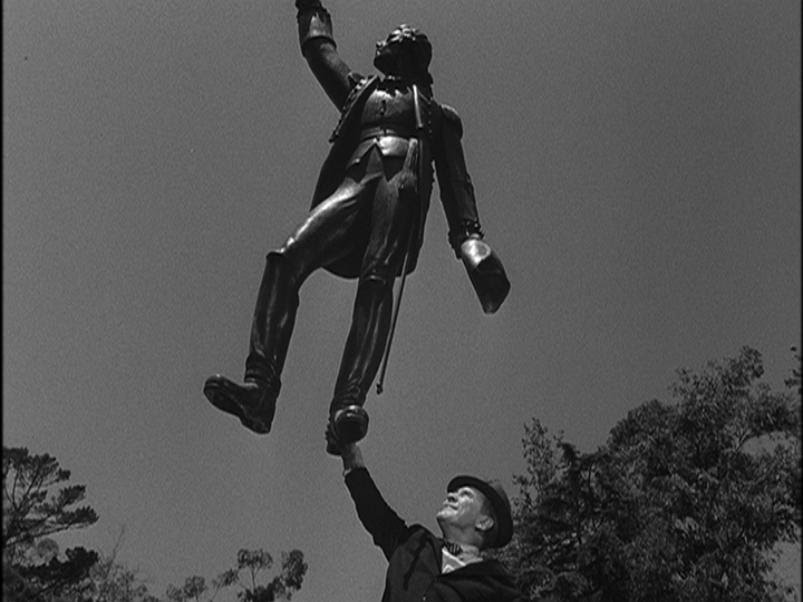
After debating with a member of his Washington club whether you could go back in time and change major events, Pete Corrigan seems to go back to April 15, 1865 the night Abraham Lincoln was assassinated. He tries his best to warn the authorities of what will happen in a few hours time but it all falls on deaf ears. One person seems interested in what he has to say, but that person may have his own reasons for his behavior.

Rod Serling’s Closing Narration:

Mr. Peter Corrigan, lately returned from a place ‘back there’, a journey into time with highly questionable results, proving on one hand that the threads of history are woven tightly, and the skein of events cannot be undone, but on the other hand, there are small fragments of tapestry that can be altered. Tonight’s thesis to be taken, as you will—in The Twilight Zone.

CAST

Rod Serling … Narrator / Self – Host (uncredited)
Russell Johnson … Pete Corrigan
Paul Hartman … Police Sergeant
Bartlett Robinson … William
John Lasell … Jonathan Wellington
Jimmy Lydon … Patrolman (as James Lydon)
Raymond Bailey … Millard
Raymond Greenleaf … Jackson
John Eldredge … Whittaker
James Gavin … Policeman
Jean Inness … Mrs. Landers
Lew Brown … Lieutenant
Carol Eve Rossen … Lieutenant’s Girl (as Carol Rossen)
Nora Marlowe … Chambermaid
Pat O’Malley … Attendant
Fred Kruger … 1865 Attendant (uncredited)

Twilight Zone – Dust

★★★★  January 6, 1961 Season 2 Episode 12

If you want to see where we are…HERE is a list of the episodes.

The characters do a good job of showing the listlessness of the town. It’s set in a miserable ghost town that doesn’t know it’s one. The townspeople have no future and they know it. Sun and dust are the only two things these people have and will ever know.

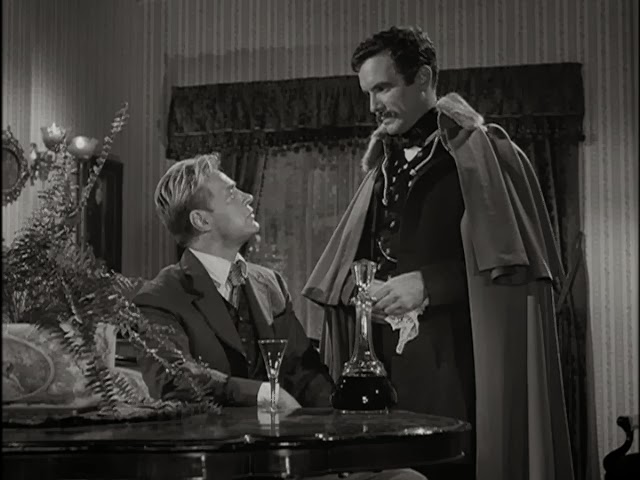
This is a powerful episode all about context. To break it down…a drunk young man (Gallegos) driving a horse and wagon accidently kills a child. Normally under Rod Serling he would be an automatic villain but in this episode the context is different. There is a gray area in this forsaken town. The twist comes suddenly and the episode is over and leaves you thinking.

The acting was superb in this… Thomas Gomez plays Peter Sykes…a despicable man. The worse kind of opportunist you can imagine.  John Larch plays the sheriff who sees things for what they are and is one of the few sympathetic characters in this episode.  He is depressed by the thought of Gallegos being hanged and believes that he does not deserve to be hanged but knows he has to do his job.

This show was written by Rod Serling

Rod Serling’s Opening Narration: 

There was a village. Built of crumbling clay and rotting wood. And it squatted ugly under a broiling sun like a sick and mangy animal wanting to die. This village had a virus, shared by its people. It was the germ of squalor, of hopelessness, of a loss of faith. With the faithless, the hopeless, the misery-laden, there is time, ample time, to engage in one of the other pursuits of men. They began to destroy themselves.

Summary

In a dusty old-western town, a man’s scheduled to be hanged, after having been found guilty of accidentally killing a child while drunk. His father begs for mercy, but the marshal, has no choice but to proceed with the sentence. Sykes, an odious salesman takes advantage of the situation by selling the desperate father ‘magic dust’, which he says will make the townsfolk take pity upon his son. Soon, the events provide for an unexpected conclusion.

Rod Serling’s Closing Narration:

It was a very small, misery-laden village. On the day of a hanging. And of little historical consequence. And if there’s any moral to it at all, let’s say that in any quest for magic, and any search for sorcery, witchery, legerdemain, first check the human heart. For inside this deep place is a wizardry that costs far more than a few pieces of gold. Tonight’s case in point – in the Twilight Zone.

CAST

Rod Serling … Narrator / Self – Host (uncredited)
Thomas Gomez … Peter Sykes
John Larch … Sheriff Koch
Vladimir Sokoloff … Gallegos
John A. Alonzo … Luís Gallegos (as John Alonso)
Paul Genge … John Canfield
Dorothy Adams … Mrs. Canfield
Duane Grey … Rogers
Jon Lormer … Man (as John Lormer)
Andrea Darvi … Estrelita Gallegos (as Andrea Margolis)
Doug Heyes Jr. … Farmer Boy (as Douglas Heyes)
Nick Borgani … Townsman (uncredited)
Alphonso DuBois … Townsman (uncredited)
Richard LaMarr … Townsman (uncredited)
Frances Lara … Townswoman (uncredited)
Robert McCord … Lawman (uncredited)
Daniel Nunez … Townsman (uncredited)
Paul Ravel … Townsman (uncredited)
Armando Rodriguez … Townsman (uncredited)
Theresa Testa … Townswoman (uncredited)
Dan White … Man #2 (uncredited)

Twilight Zone – The Night of the Meek

★★★★★  December 23, 1960 Season 2 Episode 11

If you want to see where we are…HERE is a list of the episode

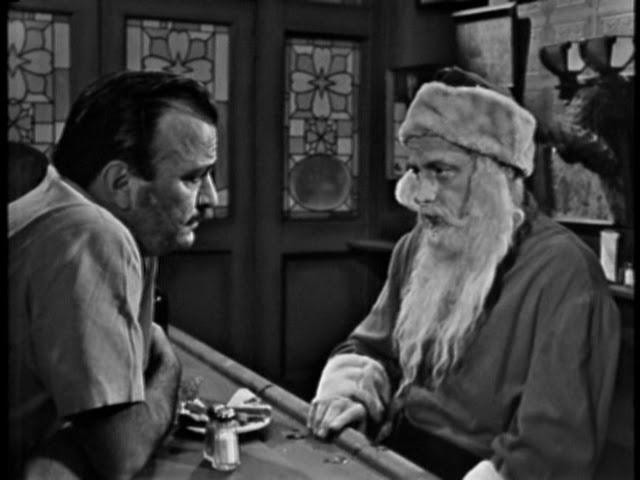
This one is a sentimental, touching, and timeless, episode of the Twilight Zone. I watch this every year around Christmas. One of the reasons Rod Serling wrote this episode is to see Art Carney play Santa Claus. This is a genuinely funny episode, with the humor feeling natural and enhancing the characters. There are no big laughs but rather many great moments.

John Fiedler plays Mr. Dundee does a great job and has good comedic moments with Robert P. Lieb who plays Flaherty. Fielder would appear on the Bob Newhart Show later on in the seventies. It was taped just three weeks before Christmas, it had a special effect on the cast and crew, and especially on the many children on the set. Production assistant Lillian Gallo later said there were more children performing on that show as extras than on the other tape shows, and she remembers their excitement and their joy. Sometimes, it was difficult for them to contain themselves during the times that you have to be quiet during the show.

One sour viewer was so enraged at the blasphemy of presenting a drunk as Santa Claus that he sent outraged letters to Serling, the network, and several newspapers.

This show was written by Rod Serling

Rod Serling’s Opening Narration: 

This is Mr. Henry Corwin, normally unemployed, who once a year takes the lead role in the uniquely popular American institution, that of the department-store Santa Claus in a road-company version of ‘The Night Before Christmas’. But in just a moment Mr. Henry Corwin, ersatz Santa Claus, will enter a strange kind of North Pole which is one part the wondrous spirit of Christmas and one part the magic that can only be found… in the Twilight Zone.

Summary

Henry Corwin is a down and outer who is normally unemployed and who definitely drinks too much. Every year he works as a department store Santa Claus. This year however, he’s spent just a little too much time in the bar and is quite drunk by the time he shows up for work. He’s fired of course and deeply regrets what he’s done. In fact, Henry has a big heart and worries not only about the children he’s disappointed at the store but about all of those children who will not get what they’ve asked for Christmas. When he comes across a large bag of gifts, everything changes for the kids and for himself as well.

Rod Serling’s Closing Narration:

A word to the wise to all the children of the twentieth century, whether their concern be pediatrics or geriatrics, whether they crawl on hands and knees and wear diapers or walk with a cane and comb their beards. There’s a wondrous magic to Christmas and there’s a special power reserved for little people. In short, there’s nothing mightier than the meek. And a Merry Christmas to each and all.

CAST

Rod Serling … Narrator / Self – Host (uncredited)
Art Carney … Henry Corwin
John Fiedler … Mr. Dundee
Robert P. Lieb … Flaherty
Val Avery … The Bartender
Meg Wyllie … Sister Florence
Kay Cousins Johnson … Irate Mother (as Kay Cousins)
Burt Mustin … Old Man
Steve Carruthers … Bar Patron (uncredited)
Andrea Darvi … Kid with Santa (uncredited)
Jimmy Garrett … Street Child (uncredited)
Larrian Gillespie … Elf (uncredited)
Jack Kenny … Man in Mission (uncredited)
Caryl Lincoln … Store Customer (uncredited)
Mathew McCue … Man in Mission (uncredited)
Frank Mills … Man in Mission (uncredited)
Mike Morelli … Man in Mission (uncredited)
Nan Peterson … Blonde in Bar (uncredited)
Ray Spiker … Man in Mission (uncredited)
Glen Walters … Store Customer (uncredited)

Twilight Zone – A Most Unusual Camera

★★★1/2  December 10, 1961 Season 2 Episode 10

If you want to see where we are…HERE is a list of the episodes.

This is a somewhat humorous episode and then it slides toward darkness. Jean Carson plays Paula Diedrich. Jean was probably best known as the gravelly voiced “fun girl” from The Andy Griffith Show. You have some small time crooks who steal what they thought was a useless camera. This camera can show 5 minutes into the future. They are none too bright but they don’t seem mean until…until there is money involved.

Personally I thought the ending was a little forced and hurried… but I did like the idea about the camera. This is one of the very few episodes that could have benefitted from a one hour format.

The inscribed plate on the front of the camera reads “Dix å la propriétaire”, which translates in English as “Ten per owner”, i.e. ten photographs per owner.

This show was written by Rod Serling

Rod Serling’s Opening Narration: 

A hotel suite that, in this instance, serves as a den of crime, the aftermath of a rather minor event to be noted on a police blotter, an insurance claim, perhaps a three-inch box on page twelve of the evening paper. Small addenda to be added to the list of the loot: a camera, a most unimposing addition to the flotsam and jetsam that it came with, hardly worth mentioning really, because cameras are cameras, some expensive, some purchasable at five-and-dime stores. But this camera, this one’s unusual because in just a moment we’ll watch it inject itself into the destinies of three people. It happens to be a fact that the pictures that it takes can only be developed in The Twilight Zone.

Summary

Married couple Chester and Paula have broken into and robbed a curio shop, hoping to sell the loot for a handsome sum of money. Unfortunately, all of it turns out to be junk or fakes. All, that is, save for a mysterious camera. When they try taking a picture, it turns out to be from five minutes into the future. Soon Paula’s brother Woodward joins them and the three decide to use the camera at a horse track to win big.

Rod Serling’s Closing Narration:

Object known as a camera, vintage uncertain, origin unknown. But for the greedy, the avaricious, the fleet of foot, who can run a four-minute mile so long as they’re chasing a fast buck, it makes believe that it’s an ally, but it isn’t at all. It’s a beckoning come-on for a quick walk around the block—in The Twilight Zone.

CAST

Rod Serling … Narrator / Self – Host (uncredited)
Fred Clark … Chester Dietrich
Jean Carson … Paula Diedrich
Adam Williams … Woodward
Marcel Hillaire … Pierre – Waiter
Franklyn Farnum … Man at Racetrack (uncredited)
Art Lewis … Racetrack Tout (uncredited)
Tony Regan … Man at Racetrack (uncredited)

Twilight Zone – The Trouble with Templeton

★★★★★  December 9, 1960 Season 2 Episode 16

If you want to see where we are…HERE is a list of the episodes.

A favorite of mine. This one is a hidden gem of an episode. Once again casting was superb in this episode. Brian Aherne as Booth Templeton was an excellent choice as a Broadway Star. The “you can’t go home again” theme is explored in the Twilight Zone more than once…to different results.

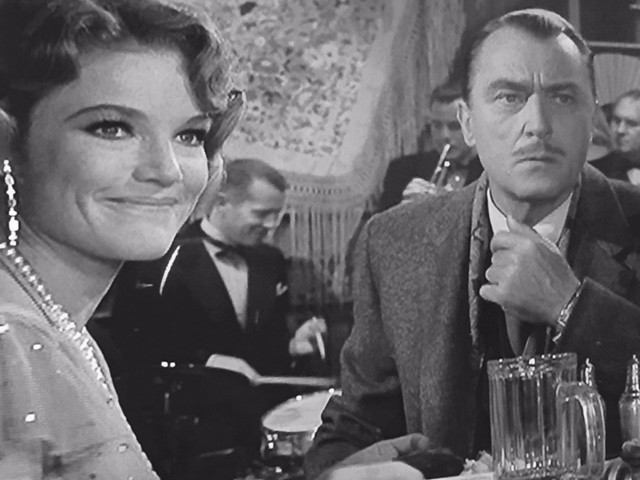
The Trouble With Templeton has in it one of the most visually beautiful scenes of the entire series. This occurs in the crowded, smoke-filled speakeasy in which Templeton leaves Laura. Without giving anything away… the camera pans across the room back to Laura. She steps forward. The expression on her face is one we have not seen before in the episode. It’s stunning and eerie at the same time. It’s one of my favorite scenes ever in a Twilight Zone. That one scene makes the episode worth it but it’s much more than that.

The Director Buzz Kulik said Brian Aherne who played Booth Templeton was a charming, wonderful, delightful, a terribly professional man, and one of the nicest people that he had ever worked with. He was very touched by what he had to do. It was very, very real to him. As for himself, Kulik admits that he too was moved by the material.

This was E. Jack Neuman’s only writing credit on the Twilight Zone.

This show was written by E. Jack Neuman and Rod Serling

Rod Serling’s Opening Narration: 

Pleased to present for your consideration, Mr. Booth Templeton; serious and successful star of over thirty Broadway plays, who is not quite all right today. Yesterday and its memories is what he wants, and yesterday is what he’ll get. Soon his years and his troubles will descend on him in an avalanche. In order not to be crushed Mr. Booth Templeton will escape from his theater and his world, and make his debut on another stage, in another world, that we call the Twilight Zone.

Summary

Booth Templeton is a renowned stage actor who has reached a stage in his personal life where he has idealized his past. In particular he has fond memories of his first wife, Laura. After a stressful encounter at the theater, he walks out of the stage door and finds himself in 1927 where he joins his wife and best friend, Barney Fluegler, for dinner. It all reminds him that his past was not as rosy as he may have remembered it

Rod Serling’s Closing Narration:

Mr. Booth Templeton, who shared with most human beings the hunger to recapture the past moments, the ones that soften with the years. But in his case, the characters of his past blocked him out and sent him back to his own time, which is where we find him now. Mr. Booth Templeton, who had a round-trip ticket – into The Twilight Zone.

CAST

Rod Serling … Narrator / Self – Host (uncredited)
Brian Aherne … Booth Templeton
Pippa Scott … Laura Templeton
Sydney Pollack … Arthur Willis
Dave Willock … Marty
King Calder … Sid Sperry
Larry J. Blake … Freddie (as Larry Blake)
David Thursby … Eddie
Charles Carlson … Barney Flueger

Twilight Zone – The Lateness of the Hour

★★★★  December 2, 1960 Season 2 Episode 8

If you want to see where we are…HERE is a list of the episodes.

Inger Stevens plays Jana…the same actress who starred in the Hitchhiker. This Twilight Zone has a different look than the previous ones…soon we will find out why. This episode is about comfort and the length man will go to get it. This plot would be later visited in the Stepford wives.

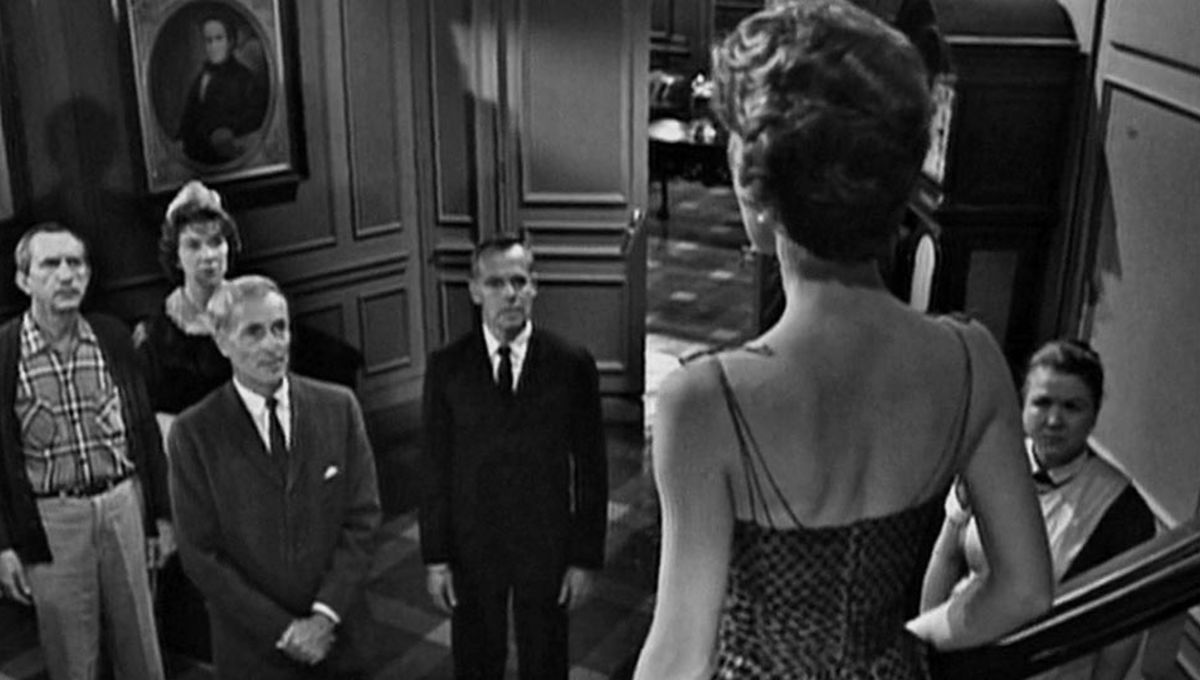
John Hoyt plays Dr. Loren who is a brilliant inventor and has perfected a robot house staff. Every need of his wife and daughter Jana is taken care of every day. His daughter Jana wants a normal life and not have everything so predictable and perfect. You can see the ending coming in this one quite easy but you do have sympathy for Jana.

The first of six The Twilight Zone episodes to be shot on video tape. The network pushed it on Serling because of the cost. This method had its limitations, though. At the time, tape was still at an extremely early stage of its development. Except for the integration of stock footage, none of the taped shows could have any exterior locations; everything had to be shot on a soundstage. Also, since tape couldn’t be edited as cleanly as film, there could be fewer different camera setups and fewer complex camera movements. Obviously, this limited the range of story possibilities. Serling wasn’t happy about this but, the network being the network, he agreed to give it a try.

The six shows were taped at CBS Television City in Los Angeles. They had no director of photography as such. Instead, a technical director sat up in a booth with the director. On the set were the actors, a lighting man, sound men, and four cameramen. The four cameras were hooked up to monitors in the booth. As taping progressed, the technical director, at the command of the director, would switch from one camera to another. Today this is standard procedure for nearly all sitcoms, but in 1960 tape was something quite innovative.

The short-lived experiment resulted in editing and quality issues, and it was ultimately scrapped. Serling did pick the episodes well that he videotaped. Some with special effects would not have worked.

The video taped shows were:

Twenty-Two
Static
The Whole Truth
The Night Of The Meek
The Lateness of the Hour
The Long Distance Call

This show was written by Rod Serling

Rod Serling’s Opening Narration: 

The residence of Dr. William Loren, which is in reality a menagerie for machines. We’re about to discover that sometimes the product of man’s talent and genius can walk amongst us untouched by the normal ravages of time. These are Dr. Loren’s robots, built to functional as well as artistic perfection. But in a moment Dr. William Loren, wife and daughter will discover that perfection is relative, that even robots have to be paid for, and very shortly will be shown exactly what is the bill.

Summary

Jana Loren is an attractive young woman who lives at home with her parents. She feels suffocated living there however, surrounded by their many servants – that are in fact human-looking robots created by her inventor father. Her parents are quite happy with the life they lead but realize that they’re going to have to do something about the rebellious Jana.

Rod Serling’s Closing Narration:

Let this be the postscript — Should you be worn out by the rigors of competing in a very competitive world, if you’re distraught from having to share your existence with the noises and neuroses of the twentieth century, if you crave serenity but want it full time and with no strings attached, get yourself a workroom in the basement, and then drop a note to Dr. and Mrs. William Loren. They’re a childless couple who made comfort a life’s work, and maybe there are a few do-it-yourself pamphlets still available… in the Twilight Zone.

CAST

Rod Serling … Narrator / Self – Host (uncredited)
Inger Stevens … Jana
John Hoyt … Dr. Loren
Irene Tedrow … Mrs. Loren
Tom Palmer … Robert
Mary Gregory … Nelda
Valley Keene … Suzanne
Doris Karnes … Gretchen
Jason Johnson … Jensen