This song is not only my favorite Christmas Carol… I think it’s up there with the best songs ever written. I hope everyone has a great Christmas/Holiday.
There are over 26,000 different versions of “Silent Night” on Spotify, meaning you could listen to a different rendition of the carol every night for 72 years.
Halfway through December 1818, the church organ in St. Nicholas in Oberndorf, 11 miles north of Salzburg in what is now Austria, broke (a popular version of the story claims that mice had eaten out the bellows). The curate, 26-year-old Josef Mohr, realized it couldn’t be repaired in time to provide music on Christmas Eve. He told his troubles to his friend, a headmaster and amateur composer named Franz Gruber, while giving him as a present a poem he had written two years earlier. Gruber was so taken by the rhythm of the poem that he set it to music, and on Christmas Eve there was music after all. Mohr played his guitar while the pair sang the song. It was the first public performance of “Stille Nacht” or as we know it “Silent Night.”
It is believed that Silent Night has been translated into over 300 languages around the world, and it is one of the most popular carols of all time.
From Songfacts
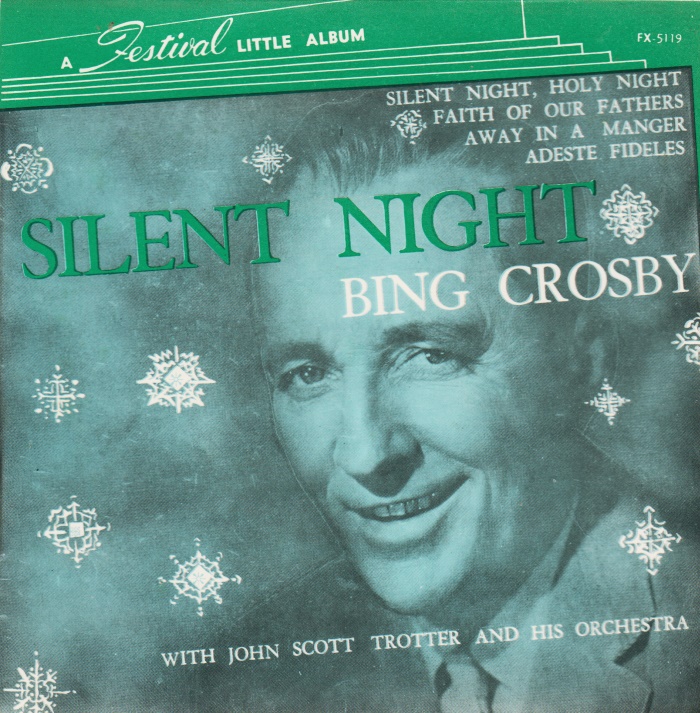
Bing Crosby’s version became his best-seller of the 1930s.
Music licensing company PPL announced in December 2010 that this carol tops the list of Britain’s “most recorded Christmas song of all time.” Said Mike Dalby, Lead Reporting Analyst at PPL: “Silent Night is a beautiful carol which encapsulates the feeling of Christmas entirely. Everyone from punk band The Dickies right through to Sinead O’Connor has recorded it, which exemplifies just how much it resonates with all different types of artists.”
According to PPL, Sinead O’Connor’s 1991 recording was the most popular version of the carol in Britain.
When the organ builder finally did show up to repair the St. Nicholas organ, he was given a copy of the “Silent Night” composition and brought it home. From there, traveling folk singers got a hold of it and began incorporating the carol into their repertoire. It didn’t make its way to America until 1839.
As the song gained traction throughout Europe, Franz Gruber composed several different orchestral arrangements. He donated all profits from the carol to local charities for children and the elderly, and eventually died penniless.
According to Steve Sullivan’s Encyclopedia of Great Popular Song Recordings, Crosby, a devout Catholic, refused to record the religious song, arguing it would be “like cashing in on the church or the Bible.” Crosby met with Father Richard Ranaghan, a priest trying to raise money for overseas missions, and decided to donate the royalties to the cause. But Ranaghan died in a car accident later that year, so the money went to several charities throughout the US and abroad.
This song lends itself to interpretation because the first four bars are all on the same chord. Jim Brickman explains: “There’s room to treat it dynamically in a different way: in the tempo, in the sounds and silences, in the time signature.”
Silent Night
Silent night, holy night.
All is calm, all is bright.
‘Round yon virgin mother and child.
Holy infant so tender and mild.
Sleep in heavenly peace,
Sleep in heavenly peace.
Silent night, holy night.
All is calm, all is bright.
‘Round yon virgin mother and child.
Holy infant so tender and mild.
Sleep in heavenly peace,
Sleep in heavenly peace.
***Since we have two Holiday Weekends coming up,This will be the last Twilight Zone until January 5, 2022…thank you***
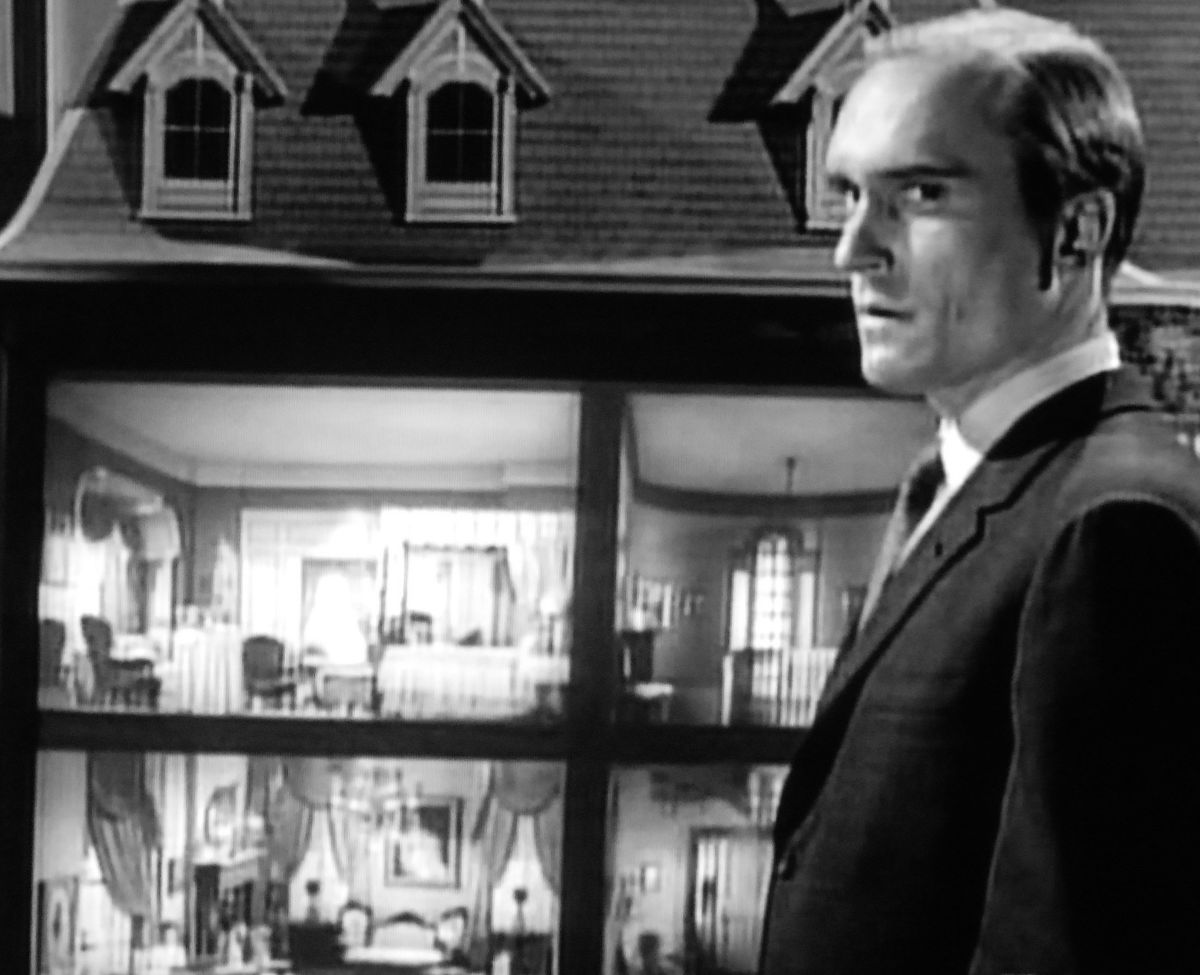
The first thing you notice is a young Robert Duvall that stars in this episode. He gives a sensitive portrayal of Charley Parkes who suffers from some sort of social anxiety. Parkes has a hard time interacting with humans but finds a doll house with a doll that he feels comfortable with. He seems to be retreating into a world of fantasy… but is he? Duvall plays it brilliantly with sensitivity.
Barbara Barrie plays Myra Russell and she would later play Barney Miller’s wife in the 1970s. Charles Beaumont’s script is thoughtful and sensitive and flows well for the most part…Duvall is a big reason.
Of all the hour-long Twilight Zone episodes, Miniature is the only one never put into syndication. The reason is that when the series was originally syndicated, Miniature was involved in a lawsuit. A script entitled The Thirteenth Mannequin had been submitted to Cayuga Productions prior to Miniature. The script concerned an old man who preferred the company of store mannequinsmannequins who ultimately come to life. The suit claimed that since both works dealt with main characters becoming involved inanimate human figures who come to life, Miniature had stolen the idea.
Ultimately, the case was dismissed, both by the initial judge and on appeal. The Thirteenth Mannequin was no ancestor of Miniature. The curious thing about this whole affair is that if any Twilight Zone episode was similar to The Thirteenth Mannequin, it was Serlings The After Hoursand that was written long before anyone at Cayuga ever heard of The Thirteenth Mannequin. Even when it was submitted, The Thirteenth Mannequin was not unique; The Twilight Zone had already explored its central idea.
Still, the damage was done. Because of the suit, Miniature was aired only once until… It was re-aired in 1984 as part of The Twilight Zone Silver Anniversary Special. For this showing, the dollhouse scenes were colorized in an early public demonstration of the then-innovative colorization process.
This show was written by Rod Serling and Charles Beaumont
Rod Serling’s Opening Narration:
To the average person, a museum is a place of knowledge, a place of beauty and truth and wonder. Some people come to study, others to contemplate, others to look for the sheer joy of looking. Charley Parkes has his own reasons. He comes to the museum to get away from the world. It isn’t really the sixty-cent cafeteria meal that has drawn him here every day, it’s the fact that here in these strange, cool halls he can be alone for a little while, really and truly alone. Anyway, that’s how it was before he got lost and wandered into the Twilight Zone.
Summary
Mousey misfit Charley Parkes finds the world unfolding before him in a museum doll house to be more real than his boring job and overbearing mother.
Rod Serling’s Closing Narration:
They never found Charley Parkes because the guard didn’t tell them what he saw in the glass case. He knew what they’d say and he knew they’d be right too because seeing is not always believing, especially if what you see happens to be an odd corner of the Twilight Zone.
CAST
Rod Serling … Narrator / Self – Host (uncredited) Robert Duvall … Charley Parkes Pert Kelton … Mrs. Parkes Barbara Barrie … Myra Russell William Windom … Dr. Wallman Lennie Weinrib … Buddy Russell John McLiam … Guard Barney Phillips … Diemel Joan Chambers … Harriet Chet Stratton … Guide Richard Angarola Richard Angarola … The Suitor Nina Roman … The Maid Claire Griswold … The Doll Norman Burton … Office Worker (uncredited) Sally Kellerman … Office Worker (uncredited) Joseph V. Perry … Office Worker (uncredited)
I like this episode….it has a backwoods eerie feel to it. The show reminded me of the 1940s and 1950s horror movies like the Wolfman but set in a rural enviroment. There is some padding but that doesn’t stop this from being a good episode. Each character portrays superstitious beliefs and they play off of that for the story. A story of how love can sometimes blind people to the consequences of their actions. This was written by Waltons creator Earl Hamner Jr.
If you noticed the date…This haunting love story originally aired on Valentine’s Day in 1963.
The stand out in this episode was Jeanette Nolan as the creepy Granny Hart. A woman not to be messed with. She has an authentic backwoods dialect that she used in a previous episode…The Hunt. She was a marvelous character actress. James Best plays Billy Ben Turner in this one. Before he was in The Dukes of Hazzard he guest starred in the Andy Griffith Show among many shows. The two leading ladies Anne Francis and Laura Devon were on the mark. Anne Francis was in another Twilight Zone….the classic “After Hours” where she played a mannequin.
From IMDB: Jeanette Nolan played Granny Hart, from whom Jess-Belle Stone obtains a love potion to win over Billy-Ben Turner. In The Twilight Zone: The Chaser (1960), Nolan’s husband John McIntire played Professor A. Daemon, from whom Roger Shackleforth obtains a love potion to win over Leila.
This show was written by Rod Serling and Earl Hamner, Jr.
Rod Serling’s Opening Narration:
The Twilight Zone has existed in many lands in many times. It has its roots in history, in something that happened long, long ago and got told about and handed down from one generation of folk to the other. In the telling the story gets added to and embroidered on, so that what might have happened in the time of the Druids is told as if it took place yesterday in the Blue Ridge Mountains. Such stories are best told by an elderly grandfather on a cold winter’s night by the fireside in the southern hills of the Twilight Zone.
Summary
After the love of her life, Billy Ben Turner, gets engaged to Ellwyn, the daughter of a rich farmer, a jealous Jess-Belle turns to a local witch to help her get him back. Granny Hart is known in the area as the person to go to for any potion you might want. Jess-Belle has no money, however, and all Granny Hart can give her is a potion that carries a high price. Jess-Belle is prepared to pay any price, and the potion she takes seems to work: as soon as Billy Ben sets eyes on her, he falls madly in love with her. When the clock strikes midnight, however, Jess-Belle is transformed and later realizes that she, too, is now a witch.
Rod Serling’s Closing Narration:
The episode did not feature a closing narration from Rod Serling. Instead, it ends with the folk song heard at the beginning:
Fair was Elly Glover, Dark was Jess-Belle. Both they loved the same man And both they loved him well.
CAST
Rod Serling … Narrator / Self – Host (uncredited) Anne Francis … Jess-Belle Stone James Best … Billy Ben Turner Laura Devon … Ellwyn Glover Jeanette Nolan … Granny Hart Virginia Gregg … Ossie Stone George Mitchell … Luther Glover Helen Kleeb … Mattie Glover Jim Boles … Obed Miller Jon Lormer … Minister
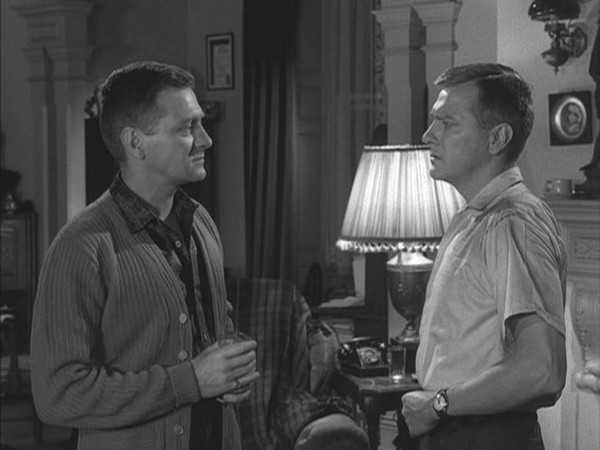
This is one of my favorite episodes of the 4th season. All three main actors bring something to the table. This one shows denial from the three main characters and the will to go on. They see a spaceship (their spaceship) has crashed and they see themselves dead. How is this possible? Are they really dead or is it just an hallucination? They spend the episode investigating different reasons as Captain Ross pushes the other two to the brink.
Jack Klugman plays Captain Ross and he is great as always and he would appear in 4 Twilight Zones. Ross Martin appears as Lt. Ted Mason and Martin would have 130 tv credits in the 60s and 70s. He was turned down in starring roles because of a heart condition and studios were afraid to take a chance on him in starring roles. He had mostly had guest appearances and was a great character actor. Fred Beir as Lt. Mike Carter had over 100 screen credits to his name.
This episode is quite creepy and the twist at the end is good…even if you guess it before hand. The hour long format works well in this episode. You get background information on each character.
The special effects were really good for this one. Included in Death Ship are a number of futuristic props, including the spaceship itself (a leftover from the movie Forbidden Planet) and an on-bridge device that scans the planets surface. Realistic paintings show the wrecked spaceship and the exterior of a house back on Earth. Also worth noting are the day and night shots of the spaceship landing and taking off.
Russ Martin who was separted from his wife and daughter: I had found that certain personal things with regard to my own daughter motivate me or drive me or move me. Years ago, I was in a class taught by Marty Ritt, who is now a brilliant director, and one of the exercises we had was to move a distance of something like eighteen feet in three steps and sit in a chair. I mean, just move, three steps and youre sitting in the chair. And I said, Tt just cant be done. He said, You give yourself something thatll make you do that.
So I pictured my daughter under certain circumstances. Now, its horrible to me even now, as I mention it but the truth is that I pictured her at a window, inside a burning building, calling to me in near panic, Daddy! Daddy! And I took those steps! It was effortless to stride the length of a mans body. It was almost as though I had been shot out of a cannon, but that was because that was meaningful to me. And I used similar circumstances involving my own daughter, in my mind, in preparation for that scene, so that when I turned and saw her my heart just broke. The joy, the joy at seeing her!
Special effects supervisor Herbert Hirschman : I supervised the construction and told them what I wanted. We built a miniature to show the ship landing and taking off. It was on a table with sand and little plants. The ship was suspended from invisible wires. And as the ship was slowing in the descent, I wanted to see the sand billowing up. It was very expensive, but I felt that it was essential to the credibility of the show. The attention to detail was well worth the effort; its a beautiful effect. It was an awful lot of fun, says Hirschman, I kept asking for more and they kept doing it.
IMDB: The story proposes that 1997 is the year that spaceships are being sent from an overpopulated Earth to find planets suitable for colonization. A similar notion was later used as one of the main premises of Lost in Space (1965), a series which starred many Twilight Zone alumni.
Of the three main actors, Jack Klugman (Captain Ross) was the only one who lived to see the actual 1997.
The spaceship E-89, is the same miniature prop that was originally created as the saucer-shaped United Planets Cruiser C-57D for the 1956 MGM science fiction classic Forbidden Planet (1956). The external set of the ship and its staircase, and the crew uniforms, are also from the same film. “The Twilight Zone” was able to make extensive use of props and costumes created for “Forbidden Planet” (including Robby The Robot) thanks to the fact that it was regularly filmed at MGM Studios, which kept all these items in storage in its prop department for many years.
This show was written by Rod Serling and Richard Matheson
Rod Serling’s Opening Narration:
Picture of the spaceship E-89, cruising above the 13th planet of star system 51, the year 1997. In a little while, supposedly, the ship will be landed and specimens taken: vegetable, mineral, and if any, animal. These will be brought back to overpopulated Earth, where technicians will evaluate them, and if everything is satisfactory, stamp their findings with the word ‘inhabitable’ and open up yet another planet for colonization. These are the things that are supposed to happen.
Picture of the crew of the spaceship E-89: Captain Ross, Lieutenant Mason, Lieutenant Carter. Three men who have just reached a place which is as far from home as they will ever be. Three men who in a matter of minutes will be plunged into the darkest nightmare reaches of the Twilight Zone.
Summary
In 1997, the spaceship E-89 arrives at the 13th planet in star system 51. Their mission is to collect plant samples to take back to an overpopulated Earth so it can be determined if the planet could be colonized. What they find however is a crashed spaceship of Earth design. Inside the ship they discover three dead crew members – but the dead are their duplicates and the crashed vessel is the E-89. The captain refuses to accept that they might be dead and explores several possibilities to explain what has happened including the theory that they may have time-traveled. The two crewmen hallucinate and come to believe they are already dead but the captain refuses to accept that and intends to prove that they are very much alive.
Rod Serling’s Closing Narration:
Picture of a man who will not see anything he does not choose to see, including his own death. A man of such indomitable will that even the two men beneath his command are not allowed to see the truth; which truth is, that they are no longer among the living, that the movements they make and the words they speak have all been made and spoken countless times before, and will be made and spoken countless times again, perhaps even unto eternity. Picture of a latter-day Flying Dutchman, sailing into the Twilight Zone.
CAST
Rod Serling … Narrator / Self – Host (uncredited) Jack Klugman…Capt. Paul Ross Ross Martin…Lt. Ted Mason Fred Beir (as Fredrick Beir)…Lt. Mike Carter Mary Webster…Ruth Mason Ross Elliott…Kramer Sara Taft…Mrs. Nolan Tammy Marihugh…Jeannie Mason
I watched this movie Monday night. It gets me in the mood for Christmas. Alastair Sim is such a pleasure to watch and he is the reason that this is my favorite interpretation of A Christmas Carol.
There have been many versions of this great story. This is the version that I like the most. The great Alastair Sim plays Ebenezer Scrooge and he is the reason I like this so much. When I think of the Scrooge… I think of him.
The movie is in black and white which turns some people off but it makes it that much better to me. They do have a color version but trust me…watch the black and white version. It gives the movie a darker feeling.
The effects they use are obviously not CGI but they get the point across well and serve the story. I like the scene where the ghost of Jacob Marley is warning Ebenezer of being greedy…the two were not on the set at the same time…it looked really good for being 1951…or anytime for that matter.
So get some eggnog or hot butter rum and sit back and watch this great movie.
From IMDB…spoilers
Ebenezer Scrooge (Alastair Sim) is a greedy businessman who thinks only of making money. For him, Christmas is, in his own words, a humbug. It has been seven years since his friend and partner, Jacob Marley (Sir Michael Hordern), died and on Christmas Eve. Marley’s ghost tells him he is to be visited during the night by three spirits. The Ghost of Christmas Past (Michael Dolan) revisits some of the main events in Scrooge’s life to date, including his unhappy childhood, his happy apprenticeship to Mr. Fezziwig (Roddy Hughes), who cared for his employees, and the end of his engagement to a pretty young woman due to a growing love of money. The Ghost of Christmas Present (Francis De Wolff) shows him how joyously is nephew Fred (Brian Worth) and his clerk, Bob Cratchit (Mervyn Johns), celebrate Christmas with those they love. The Ghost of Christmas Yet to Come (Czeslaw Konarski) shows him what he will leave behind after he is gone. Scrooge awakens on Christmas morning, a new man intent on doing good and celebrating the season with all of those around him.
I really like this one. It’s not among the best but again a really good sci-fi episode. The show has some very good character actors like Frank Overton and Barbara Baxley. A girl who loses her parents in a fire manages to escape their burning house. A couple named Harry and Cora take her in but cannot uderstand why Ilse doesn’t talk. It turns out that Ilse used telepathy with her parents…her parents were molding her to use that skill. When Harry and Cora took her to school for the first time Ilse was horrified and could not commuicate like other kids.
This episode has depth and there are a lot of moving parts. What I saw in this episode is parents who treat their children as objects to be molded rather than people with needs and rights. Its a good episode and moves quite well. It does give a back story on why Ilse’s parents were teaching her telepathic abilities.
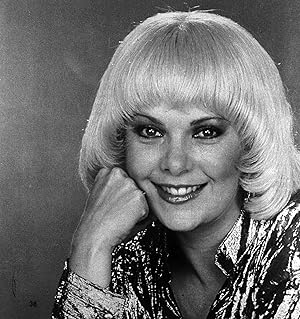
The biggest surprise to me was who played Ilse…it was an 80s sitcom actress…Ann Jillian.
From IMDB: The main street that Ilsa runs across is the same one used in The Twilight Zone: I Sing the Body Electric (1962). Located on the MGM backlot in Culver City, it was known as the “New England Street”, and is same set that was featured in the Andy Hardy movies, starring Mickey Rooney., Elvis Presley’s “Jailhouse Rock”, Frank Sinatra’s “Some Came Running” and the 1970s musical fantasy “Sgt. Pepper’s Lonely Heart’s Club Band”, starring The Bee Gees, which was the last major film shot there. Much of the MGM backlot had been demolished in 1974, and the remainder, including the New England Street, was pulled down in 1978, soon after filming wrapped on “Sgt Pepper’s”.
This show was written by Rod Serling and Richard Matheson
Rod Serling’s Opening Narration:
What you’re witnessing is the curtain-raiser to a most extraordinary play; to wit, the signing of a pact, the commencement of a project. The play itself will be performed almost entirely offstage. The final scenes are to be enacted a decade hence and with a different cast. The main character of these final scenes is Ilse, the daughter of Professor and Mrs. Nielsen, age two. At the moment she lies sleeping in her crib, unaware of the singular drama in which she is to be involved. Ten years from this moment, Ilse Nielsen is to know the desolating terror of living simultaneously in the world and in the Twilight Zone.
Summary
Sometime after World War II, a small group of people make a pact to develop their telepathic abilities as a means of communicating, foregoing any type of oral communication. One couple, the Nielsens, announce that they are migrating to a small town in the USA, German Corners, Pa. After a tragic fire at their house 10 years later, Sheriff Harry Wheeler and his wife Cora take in the only survivor, the now orphaned Ilsa Nielsen. The young girl has never learned to speak, always using telepathy to communicate with her parents. They don’t quite understand why Ilsa won’t speak to them and Cora sees her as a replacement for the daughter she lost in an accident some years ago. When they enroll Ilsa in school, her teacher is determined to make her act like all the other children.
It has been noted in a book of proven wisdom that perfect love casteth out fear. While it’s unlikely that this observation was meant to include that specific fear that follows the loss of extrasensory perception, the principle remains, as always, beautifully intact. Case in point, that of Ilse Nielsen, former resident of the Twilight Zone.
CAST
Rod Serling … Narrator / Self – Host (uncredited)
Barbara Baxley … Cora Wheeler
Frank Overton … Harry Wheeler
Irene Dailey … Miss Frank
Ann Jillian … Ilse (as Ann Jilliann)
Éva Szörényi … Frau Werner (as Eva Soreny)
Robert Boon … Holger Nielsen
Claudia Bryar … Frau Nielsen
Percy Helton … Tom Poulter
Oscar Beregi Jr. … Karl Werner (as Oscar Beregi)
Fred Aldrich … Pedestrian (uncredited)
William Challee … Rude man on porch (uncredited)
Bill Erwin Bill Erwin … Man in Flashback (uncredited)
Charles Morton … Bartender (uncredited)
Norbert Schiller … Committee member in prologue (uncredited)
Glen Walters … Pedestrian (uncredited
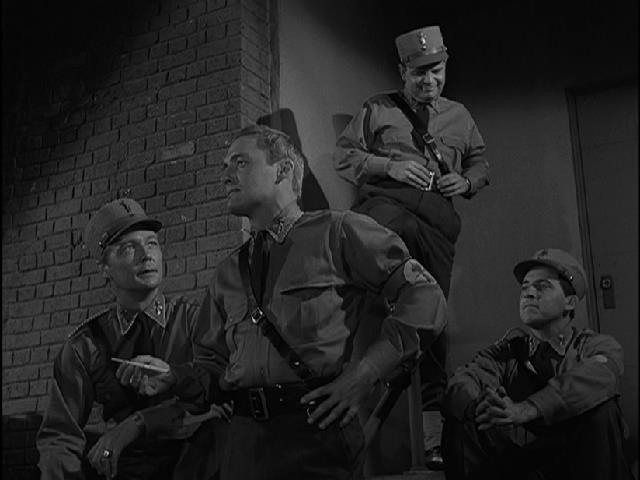
This episode is not subtle…there is no reading between the lines in this one. Serling lays it out on the table for everyone to see. Dennis Hopper plays Peter Vollmer who is a disenfranchised young man and a xenophobic would be Nazi trying to gain a following. The episode was not the best of the Twilight Zone but it packs a punch and as Serling said…it probably was the most important episode of the Twilight Zone.
Peter Vollmer is struggling to gain followers for his hate causes. He then starts getting advice from a shadowy figure who we cannot see…until later on. The advice he gets is all too familiar unfortnately…it reeks of hatred, bigotry, and ignornace. How to manipulate the situations around him to gain followers for his movement.The mystery man leads Peter along and when he is uncovered it is shocking. In 1963 WWII was still fresh in people’s minds
From IMDB….Rod Serling considered this episode, which he wrote and which examines the subject of Nazism (National Socialism), to be the most important of the series.
The episode’s director Stuart Rosenberg would later direct Dennis Hopper in the classic film Cool Hand Luke
This show was written by Rod Serling
Rod Serling’s Opening Narration:
Portrait of a bush-league Führer named Peter Vollmer, a sparse little man who feeds off his self-delusions and finds himself perpetually hungry for want of greatness in his diet. And like some goose-stepping predecessors he searches for something to explain his hunger, and to rationalize why a world passes him by without saluting. That something he looks for and finds is in a sewer. In his own twisted and distorted lexicon he calls it faith, strength, truth. But in just a moment Peter Vollmer will ply his trade on another kind of corner, a strange intersection in a shadowland called the Twilight Zone.
Summary
Peter Vollmer is the leader of a small neo-Nazi movement in a large American city. He’s having trouble getting his message across and seems to alienate people every time he opens his mouth. After a particularly bad rally, he hears a voice and sees a man standing in the shadows. He begins to advise Peter on what to say and how he can structure his message to make it more appealing to his particular audience. Peter has success but his mentor begins pushing him to extremes. There is a limit however and there is a voice of reason in the mob that seemed so willing to follow him
Rod Serling’s Closing Narration:
Where will he go next, this phantom from another time, this resurrected ghost of a previous nightmare – Chicago? Los Angeles? Miami, Florida? Vincennes, Indiana? Syracuse, New York? Anyplace, everyplace, where there’s hate, where there’s prejudice, where there’s bigotry. He’s alive. He’s alive so long as these evils exist. Remember that when he comes to your town. Remember it when you hear his voice speaking out through others. Remember it when you hear a name called, a minority attacked, any blind, unreasoning assault on a people or any human being. He’s alive because through these things we keep him alive.
CAST
Rod Serling … Narrator / Self – Host (uncredited) Dennis Hopper … Peter Vollmer Ludwig Donath … Ernst Ganz Paul Mazursky … Frank Howard Caine … Nick Barnaby Hale … Stanley Jay Adler … Gibbons Wolfe Barzell … Proprietor Bernard Fein … Heckler Curt Conway … Adolf Hitler Edward Astran … Audience Member (uncredited) Sam Bagley … Audience Member (uncredited) Chet Brandenburg … Audience Member (uncredited) Paul Bryar … Cop (uncredited) Bud Cokes … Audience Member (uncredited) Joe Evans … Audience Member (uncredited) Bobby Gilbert … Man With Cat (uncredited) Buck Harrington … Audience Member (uncredited) Ed Haskett … Audience Member (uncredited) Robert McCord … Cop (uncredited) William Meader … Brawling Townsman (uncredited) Jim Michael … Guard (uncredited) Sol Murgi … Audience Member (uncredited) William H. O’Brien … Audience Member (uncredited) Jose Portugal … Ice Cream Man (uncredited) Paul Ravel … Audience Member (uncredited) Bill Zuckert … Detective (uncredited)
One of the thought-provoking episodes of the 4th season. I like the story and the pace for the hour long format is brisk. They cover a lot of ground in this episode. Ed Nelson as Philip Redfield plays this role with passion. He is traveling through back roads and runs through a small nothing little town called Peaceful Valley.
He notices something different and the townspeople can do things that are impossible…make a dog disappear, bring that same dog back from the dead, and invisible force fields. He finds out the history of the town from the leaders and wants them to share this with the world.
If you had the technology to end poverty, sickness, and even death in cases…do you use it? If you do, you risk someone getting the technology and using it for evil things. Are humans outside of this peaceful town ready for that much power? Dorn doesn’t think so…and I don’t either.
. Al the actors do a great job. David Opatoshu as the “town” leader Dorn plays it with compassion and common sense. You will know James Doohan in a minor role…still a few years away from Scotty in Star Trek.
Watch this one…it could have been a great sci-fi movie.
The title comes from the King James Version of the 23rd Psalm in the Hebrew Bible. “Yea, though I walk through the valley of the shadow of death, I will fear no evil: for thou art with me; thy rod and thy staff they comfort me.”
This show was written by Rod Serling and Charles Beaumont
Rod Serling’s Opening Narration:
You’ve seen them. Little towns, tucked away far from the main roads. You’ve seen them, but have you thought about them? What do the people in these places do? Why do they stay? Philip Redfield never thought about them. If his dog hadn’t gone after that cat, he would have driven through Peaceful Valley and put it out of his mind forever. But he can’t do that now, because whether he knows it or not his friend’s shortcut has led him right into the capital of the Twilight Zone.
Summary
On the back roads, trying to find his way back home, reporter Philip Redfield and his dog, Rollie, stop in the small town of Peaceful Valley, for gas and food, and directions. When Rollie runs off in pursuit of a cat, a young girl points a device at the dog, and he disappears. Though her father brings Rollie back, Philip finds it all very strange. When Phillip tries to leave town, his car crashes into an invisible barrier, preventing his departure. Shaken up, the town’s mayor, Dorn, reveals their secret, and gives Philip the choice; join them or die
Rod Serling’s Closing Narration:
You’ve seen them. Little towns, tucked away far from the main roads. You’ve seen them, but have you thought about them? Have you wondered what the people do in such places, why they stay? Philip Redfield thinks about them now and he wonders, but only very late at night, when he’s between wakefulness and sleep in the Twilight Zone.
CAST
Rod Serling … Narrator / Self – Host (uncredited)
David Opatoshu … Dorn
Ed Nelson … Philip Redfield
Natalie Trundy … Ellen Marshall
Jacques Aubuchon … Connolly
Dabbs Greer … Evans
James Doohan … Father
Morgan Brittany … Girl (as Suzanne Cupito)
Henry Beckman … Townsman
Bart Burns Bart Burns … Townsman
King Calder … Townsman
Pat O’Hara Pat O’Hara … Townsman
Sandy Kenyon … The Attendant
This is the second episode in the new hour long format. This story has some added padding…a direct consequence of the hour-long format of this episode. That doesn’t mean it isn’t good. The story is creepy but they visited this theme before in the second season opener King Nine Will Not Return.
The cast is excellent. Mike Kellin plays Chief Bell who is having survivors guilt that brings to mind PTSD. You find out later that it’s more than that. Simon Oakland is Captain Beecham and gives a very realistic performance as Oakland does in whatever he is in. The most famous actor in this one…at least to my generation is Bill Bixby. He only plays a supporting role and it’s interesting to see him as a younger actor.
Basically it’s a great story but too much padding but…very watchable.
This is from IMDB…it’s a piece of trivia that is very eerie: Mike Kellin portraying the main character, Chief Bell, died 26 August 1983, the ship used for exterior shots in the episode was decommissioned 11 August 1983. Simon Oakland, who portrayed the captain, died three days later on 29 August 1983.
Also this explains why this episode drags a bit: Season four of Twilight Zone is the only one of the five seasons that ran its episodes in hour long time slots rather then the conventional half-hour format. The Thirty-Fathom Grave was written by Rod Serling before the network and producers decided to try out the series in the new lengthier format. Since the episode had already been optioned for season four it was necessary for Rod Serling to re-write and expand the episode to fit the new hour slot. Therefore several new scenes had to be added or padded to fill up time. As a result, this episode received mostly negative feedback based on its slow pace and unnecessary dialogue.
This episode would have been so much better at the original 30 minutes.
This show was written by Rod Serling
Rod Serling’s Opening Narration:
Incident one hundred miles off the coast of Guadalcanal. Time: the present. The United States naval destroyer on what has been a most uneventful cruise. In a moment, they’re going to send a man down thirty fathoms and check on a noise maker – someone or something tapping on metal. You may or may not read the results in a naval report, because Captain Beecham and his crew have just set a course that will lead this ship and everyone on it into the Twilight Zone.
Summary
As a U.S. Navy destroyer cruises near Guadalcanal in the South Pacific, its sonar detects muted but constant hammering on metal undersea. The eerie sounds emanate from a submarine on the ocean floor, apparently there since World War II. The ship’s chief boatswain’s mate becomes very nervous, having served aboard that sub – and he was its sole survivor.
Rod Serling’s Closing Narration:
Small naval engagement, the month of April, 1963. Not to be found in any historical annals. Look for this one filed under ‘H’ for haunting in the Twilight Zone.
CAST
Rod Serling … Narrator / Self – Host (uncredited)
Mike Kellin…Chief Bell
Simon Oakland…Captain Beecham
David Sheiner…Doc
John Considine…McClure
Bill Bixby…OOD
Conlan Carter…Ensign
Forrest Compton…ASW Officer
Henry Scott…Jr. OOD
Anthony D. Call…Lee Helmsman
Charles Kuenstle…Sonar Operator
Derrik Lewis…Helmsman
Vincent Baggetta…Crewman
Louie Elias…Crewman
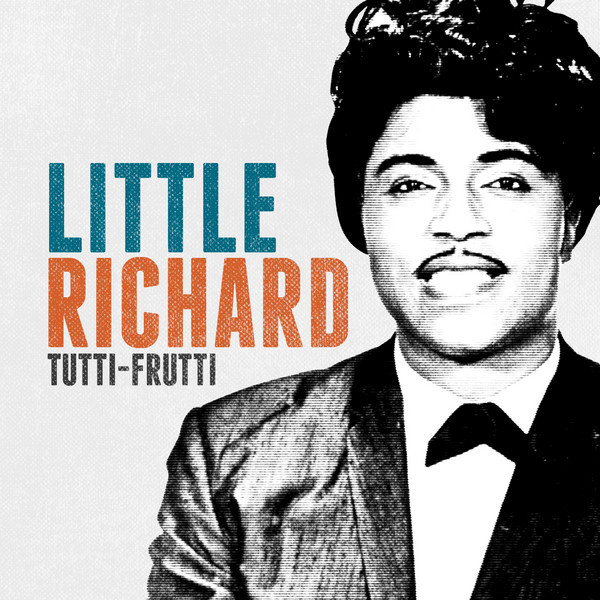
Greetings on this Sunday Morning…Pure poetry! What a voice! This song is like a shot of adrenaline. If Little Richard came out today…what kind of music would he sing?
Little Richard wrote this song in 1955 when he was working as a dishwasher at a Greyhound bus station in his hometown of Macon, Georgia.
Little Richard’s real name was Richard Wayne Penniman and was born in Macon, Georgia. He was one of twelve children… “Little Richard” was his childhood nickname, and even though he was not a little adult (almost 6 feet tall), he kept the name. His family listened to singers like Bing Crosby and Ella Fitzgerald. Richard couldn’t find any music he liked, so he created it.
This was Little Richard’s first hit, but his success was far from instant. His first recordings were in 1952 for RCA Records, and were failures. He moved to Peacock Records the next year and released some singles with the Johnny Otis Trio backing him up.
Richard’s break came when the singer Lloyd Price played a show in Macon, Georgia, and Richard, who was selling drinks at the gig, went to the dressing room and played Price “Tutti Frutti” on the piano.
The song peaked at #18 in the US, #2 in the R&B Charts, and #29 in the UK in 1955.
This song was a huge influence on many future rock stars, but it had special significance for David Bowie, as it was the first rock song he heard. Bowie’s father, who ran a London music hall, brought the record home when David was 9 years old.
Bowie said: “My heart nearly burst with excitement,” “I had heard God.”
Little Richard:“I couldn’t talk back to my boss man. He would bring all these pots back for me to wash, and one day I said, ‘I’ve got to do something to stop this man bringing back all these pots to me to wash,’ and I said, ‘Awap bop a lup bop a wop bam boom, take ’em out!’ and that’s what I meant at the time. And so I wrote ‘Tutti Frutti’ in the kitchen, I wrote ‘Good Golly Miss Molly’ in the kitchen, I wrote ‘Long Tall Sally’ in that kitchen.”
Little Richard:“My greatest achievement would have to be ‘Tutti Frutti.’ It took me out of the kitchen – I was a dishwasher at the Greyhound bus station, making $10 a week working 12 hours a day, and ‘Tutti Frutti’ was a blessin’ and a lesson. I thank God for ‘Tutti Frutti’.”
From Songfacts
Richard says that “Awap bop a lup bop a wop bam boom” was kind of his catch phrase, something he would reply to folks who asked him how he was doing.
Long before Richard recorded this, he performed it at his shows as “Tutti Frutti, Good Booty.” It was a very raucous and sexual song and was considered too suggestive for white audiences, so it was cleaned up considerably when he recorded it for Specialty Records. The chorus was changed to “Tutti Frutti, aw Rudi,” and these original lyrics were replaced:
If it’s tight, it’s alright
If it’s greasy, it makes it easy
Some sources have claimed that Richard also sang “A good God damn” instead of “a wop bam boom,” but according to the notes in the 2012 reissue of the album, Richard (who later became a minister) never took the Lord’s name in vain and never sang that lyric. Price encouraged Richard to send a tape to Specialty Records, so he sent them a demo of two songs he recorded in February 1955 with his group The Upsetters: “Baby” and “All Night Long.” Specialty owner Art Rupe was unimpressed, but Richard kept calling and sending letters.
His persistence paid off and Rupe finally sent his producer Bumps Blackwell to New Orleans, where on September 13 and 14, they recorded the nine songs that would comprise the Here’s Little Richard album. “Tutti Frutti” was released as a single and became a breakout hit, which Richard found out when the record company called him in Georgia to explain. They flew him to Hollywood and had him record follow-up singles “Long Tall Sally” and “Slippin’ and Slidin’.”
This was the last song recorded for the album, and it barely made it. The first eight tracks Richard put down were blues numbers which weren’t wowing his producer Bumps Blackwell, who took a break and brought Richard to a local bar called the Dew Drop Inn. Richard, feeling more relaxed with an audience to play for, sat down at a piano in the bar and started playing his live favorite “Tutti Frutti.” This got Blackwell’s attention, and he insisted that Richard record the song.
Of course, the original racy lyrics about “good booty” had to be replaced, and Little Richard had no particular talent for writing words that would match his melody yet mollify a white audience. This task fell to Dorothy LaBostrie, who Blackwell described as “a girl who kept hanging around the studio to sell songs.” She was on hand because Richard recorded her song “I’m Just A Lonely Guy” earlier that day. With time running out in the session, an embarrassed Richard sang her the raunchy lyrics, looking at the wall while he did so. LaBostrie left and came back with the sanitized lyrics with just 15 minutes of studio time remaining. They quickly recorded the song, getting it right on the third take with two minutes to spare. Dorothy LaBostrie earned what became a very lucrative writing credit for her efforts.
This song introduced Little Richard’s famous “Whooooo,” and also a big “Aaaaaaahhh” scream which he sings just before the tenor sax solo performed by Lee Allen. Richard’s scream had a practical purpose: to let Allen know when to start playing. They were recording on just three tracks, so overdubbing the horns wasn’t a practical option.
You can also hear Richard’s classic line in this song, “A wop bop a lu bop, a wop bam boom!” He felt you could express your emotions without singing actual words. He would also put a little something extra into the words he sang, which he called “that thing.” It was something he learned playing piano and singing in church, and it was a style that would influence the next generation of rock music.
This is one of the most famous songs of all time, making #43 on Rolling Stone magazine’s list of the 500 Greatest Songs, but it was not a huge hit, going to #2 on the R&B charts and reaching just #17 on the Hot 100.
Pat Boone fared better with his 1956 cover, taking it to #12. Boone had a long career doing sanitized covers of songs by black artists, and he also covered Richard’s “Long Tall Sally.” Many listeners at the time only knew the song through Boone, so Little Richard’s promotional materials often labeled him “Original ‘Tutti Frutti’ Man.”
Boone changed some of the lyrics, so “Boy you don’t know what she’s doing to me” became “Pretty little Susie is the girl for me.”
“The kids didn’t care – they didn’t know,” he said in a Songfacts interview. Boone went on to explain that Little Richard was grateful for the exposure, as he introduced the song to a white audience.
Like “Long Tall Sally,” this song was covered by Elvis. Little Richard once said, “Elvis may be the King of Rock and Roll, but I am the Queen.”
Little Richard did not invent the name “Tutti Frutti”; it was a popular flavor of ice cream. The phrase is Italian for “All Fruits,” and the ice cream had little bits of candied fruit mixed in. In 1938, the Jazz duo Slim Gaillard and Slam Stewart, who recorded as Slim And Slam, released a popular song called “Tutti Frutti,” which was about the ice cream. Little Richard’s was a completely different song.
Little Richard recorded this at J&M Studios in New Orleans, which was the only place to record in the city for many years. Opened in the late ’40s, Ray Charles, Sam Cooke and Jerry Lee Lewis recorded there as well. It has since become a laundromat. >>
Huey “Piano” Smith played the piano on the first eight songs during the session that produced this album, but he didn’t have time to learn “Tutti Frutti” so Richard played it himself. The drummer on the session was Earl Palmer, who later moved to Los Angeles and became one of the most prolific drummers of all time, playing on songs by the Righteous Brothers, Elvis Costello, B.B. King and hundreds of others. On this song, Palmer had no rehearsal and Richard was pounding out a rock rhythm on the piano.
Palmer later explained, “The only reason I started playing what they come to call a Rock and Roll beat was came from trying to match Richard’s right hand – with Richard pounding the piano wih all ten fingers, you couldn’t so very well go against that. I did at first – on ‘Tutti Frutti you can hear me playing a shuffle. Listening to it now, it’s easy to hear I should have been playing that rock beat.” (From Backbeat: Earl Palmer’s Story.)
Buchanan & Goodman sampled this in their 1956 novelty hit, “The Flying Saucer.”
Charles Connor, Little Richard’s drummer in the 1950s and 60s told Uncut magazine the rock ‘n’ roll star took his “Awap bop a lup bop a wop bam boom” catch phrase from his drums. “Richard called me about a month and a half before he passed, and we talked for a long time,” Connor added. “He said, ‘Charles, thanks for helping me create my style of singing.’ He called us the architects of rock and roll, but I said I was the bricklayer, laying the foundation of the rhythm for him.”
On Queen’s last tour with Freddie Mercury (in 1986), they included this song in their setlist along with another ’50s favorite, “Hello Mary Lou” by Ricky Nelson.
Tutti Frutti
Wop bop a loo bop a lop bom bom!
Tutti frutti oh rootie Tutti frutti oh rootie Tutti frutti oh rootie Tutti frutti oh rootie Tutti frutti oh rootie Wop bop a loo bop a lop ba ba!
I got a gal, named Sue, she knows just what to do I got a gal, named Sue, she knows just what to do She rock to the East, she rock to the West But she is the gal that I love best
Tutti frutti oh rootie Tutti frutti oh rootie, ooh Tutti frutti oh rootie Tutti frutti oh rootie Tutti frutti oh rootie Wop bop a loo bop a lop bom bom!
I got a gal, named Daisy, she almost drives me crazy Got a gal, named Daisy, she almost drives me crazy She knows how to love me, yes indeed Boy you don’t know what she do to me
Tutti frutti oh rootie Tutti frutti oh rootie, ooh Tutti frutti oh rootie Tutti frutti oh rootie Tutti frutti oh rootie Wop bop a loo bop!
Oh tutti frutti oh rootie Tutti frutti oh rootie ooo Tutti frutti oh rootie Tutti frutti oh rootie Tutti frutti oh rootie Wop bop a loo bop a lop bom bom!
I got a gal, named Daisy, she almost drive me crazy Got a gal, named Daisy, she almost drive me crazy She knows how to love me, yes indeed Boy you don’t know what she do to me
Tutti frutti oh rootie Tutti frutti oh rootie Tutti frutti oh rootie Tutti frutti oh rootie Tutti frutti oh rootie Wop bop a loo bop a lop bam boom!
In His Image is a great sci-fi episode that has more twists and turns than a cheap garden hose. George Grizzard plays both title characters and does a great job of going through a book of emotions. You get a shock to start out the episode and the changes keep coming at you. It explores a familiar theme in the Twilight Zone of “no one knows who I am.” The difference is this time, with the hour format, it is fully explored.
This episode is one of the best of the 4th season. It takes a little time to get accustomed to the hour long format. You need to watch the fourth season with a different frame of mind. This episode would have been almost impossible for the 30 minute format. In His Image keeps you guessing on what is going on. I would like to expand on this but I would give it away.
In His Image is exciting, suspenseful and thought-provoking. If this was to be a representative example of the hour-long shows, the series had nothing to worry about. Unfortunately, such was not the case.
First of 4th series episodes, airing from January to May 1963. These episodes were one hour in length. CBS executives decided to switch the show’s time, and for this single season, the longer timeslot allowed for hour-long episodes
This show was written by Charles Beaumont and Rod Serling
Rod Serling’s Opening Narration:
What you have just witnessed could be the end of a particularly terrifying nightmare. It isn’t – it’s the beginning. Although Alan Talbot doesn’t know it, he’s about to enter a strange new world, too incredible to be real, too real to be a dream. It’s called The Twilight Zone.
Summary
A young man grapples with an urge to kill and confusion about his origins. After a shocking scene on a subway platform he goes to his fiancé’s apartment and takes her and visit his old home town. When they get there nothing is the same and he is not known.
Rod Serling’s Closing Narration:
In a way, it can be said that Walter Ryder succeeded in his life’s ambition, even though the man he created was, after all, himself. There may be easier ways to self-improvement, but sometimes it happens that the shortest distance between two points is a crooked line – through the Twilight Zone.
CAST
Rod Serling … Narrator / Self – Host (uncredited)
George Grizzard … Alan Talbot / Walter Ryder, Jr.
Gail Kobe Gail Kobe … Jessica Connelly
Katherine Squire … The Old Woman (as Katharine Squire)
Wallace Rooney … Man
George Petrie … Driver
James Seay … Sheriff
Jamie Forster … Hotel Clerk
Sherry Granato … Girl
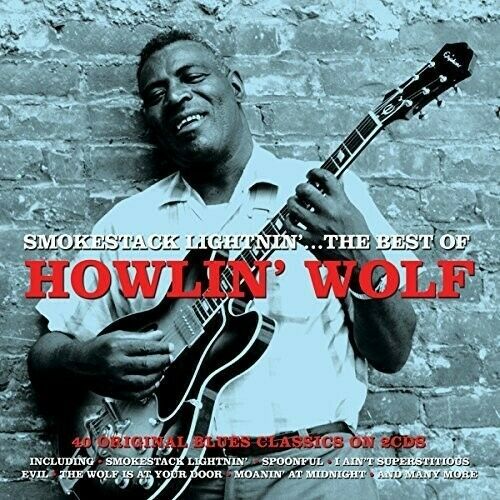
I first learned about Howlin’ Wolf after reading a Rolling Stones biography. It contained an interview that Brian Jones did in the early sixties. He founded the Stones and pushed the Stones toward the blues.
Howlin’ Wolf’s real name was Chester Burnett and he was born in 1910. He was a blues singer, guitarist, and harp player. He had a professional rivalry with fellow bluesman Muddy Waters. Waters ended up getting Wolf his first job in Chicago.
This classic song was recorded way back in 1956 at the legendary Chess studios in Chicago. Wolf is listed as the songwriter and the producers were Leonard Chess, Phil Chess, and Willie Dixon. He lives up to the Howlin’ part of his name…his voice is powerful. He has been credited as one of the first to move acoustic blues to electric guitar.
The Yardbirds (The Clapton version) covered this song and Howlin’ Wolf himself considered their version the definitive version of his song. That had to be quite an honor coming from the man himself.
After reading many of Christian’s posts…I realized I need to add some more blues into my blog…
Smokestack Lightning
Whoa, smokestack lightnin’ Shinin’ just like gold Why don’t you hear me cryin’? A-whoo-hoo, a-whoo-hoo, whoo
Whoa-oh, tell me, baby What’s the matter here? Why don’t you hear me cryin’? Whoo-hoo, whoo-hoo, whoo
Whoa-oh, tell me, baby Where did you stay last night? Why don’t you hear me cryin’? Whoo-hoo, whoo-hoo, whoo
Whoa-oh, stop your train Let a poor boy ride Why don’t you hear me cryin’? Whoo-hoo, whoo-hoo, whoo
Whoa-oh, fare-you-well Never see a you no more Why don’t you hear me cryin’? Whoo-hoo, whoo-hoo, whoo
Whoa-oh, who been here baby since I, I been gone a little bitty boy? Girl, be on A-whoo-hoo, whoo-hoo, whoo
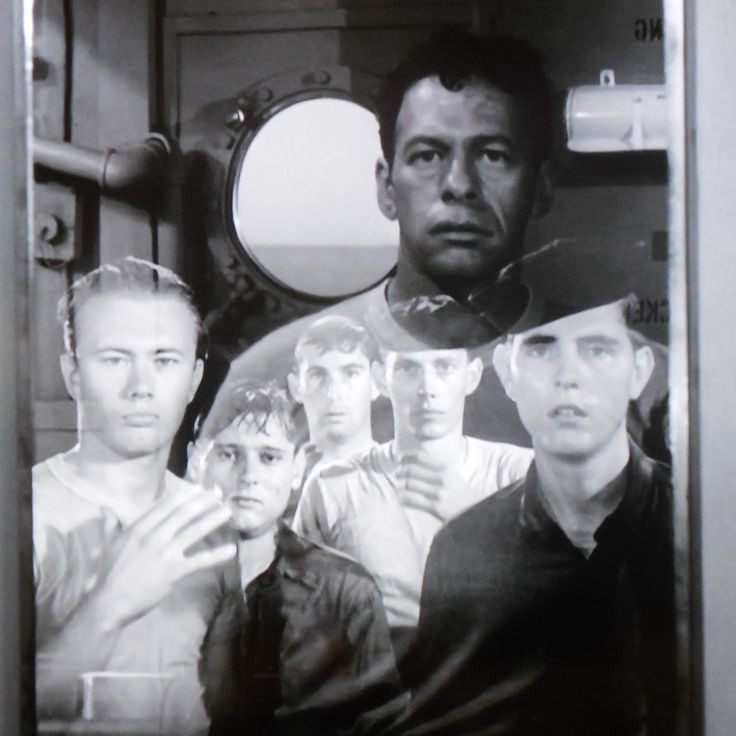
An excellent episode and a great way to close out the 3rd season. Donald Pleasence plays Professor Ellis Fowler and does an excellent job as he always does. He was only 43 years old when he played this part. Pleasance’s old age make-up is subtle and completely convincing.
Preparing to leave for Christmas vacation, Professor Fowler is informed by the Headmaster that, after fifty-one years of teaching, he is to be forcibly retired. Fowler is devastated by this news and begins to brood. He now believes his life was utterly without worth and thinks about suicide. The episode is poignant and makes you wonder how many lives we have touched without realizing it. This one made it into my earlier top 10 episodes of the Twilight Zone.
This is an episode that I think teachers will like.
Buck Houghton Producer:Pleasance was an idea of the casting directors, Id never heard of him, Boy, damn the expense; we brought him from England. He was just wonderful in it. Hes a very nice man. I have a feeling it was his first time in this country professionally, and while he was a thorough going professional with a huge experience in stage and everything else, he was a little apprehensive of this whole experience because he arrived on a given day and five days later it was all going to be over. So he had a lot to absorb. But Bob Miller is very together and gave him confidence and we were off and running.
This show was written by Rod Serling
Rod Serling’s Opening Narration:
Professor Ellis Fowler, a gentle, bookish guide to the young, who is about to discover that life still has certain surprises, and that the campus of the Rock Spring School for Boys lies on a direct path to another institution, commonly referred to as the Twilight Zone.
Summary
Professor Ellis Fowler has been teaching at the Rock Spring School for Boys for a great many years. In fact, he taught the grandfather of one of his current students. Just before Christmas however, he’s told by the headmaster that his contract will not be renewed for the new year. Despondent, he returns home convinced that his life has been wasted and decides to end it all. Before he can do so however, his is visited by some very special students from the past who give him cause to reconsider.
Rod Serling’s Closing Narration:
Professor Ellis Fowler, teacher, who discovered rather belatedly something of his own value. A very small scholastic lesson, from the campus of the Twilight Zone.
CAST
Rod Serling … Narrator / Self – Host (uncredited)
Donald Pleasence … Professor Ellis Fowler
Liam Sullivan … Headmaster
Philippa Bevans … Mrs. Landers
Tom Lowell … Artie Beechcroft
Russell Horton … Bartlett
Buddy Hart … Boy
Darryl Richard … Thompson
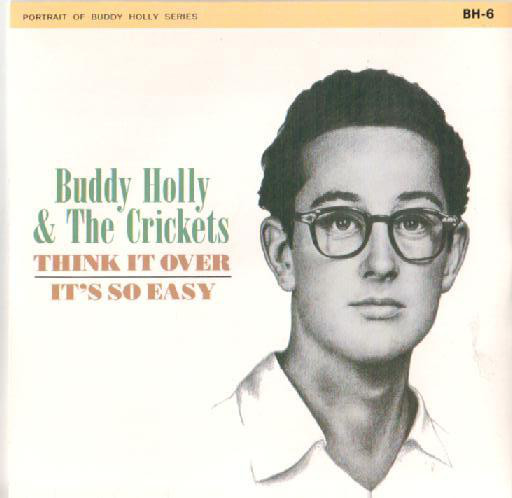
It’s been a while since I’ve posted a Buddy song…and any time is too long. He is one of the most important influences from the 50s or any era. Since I’m a Beatle fan I have to say…without Buddy the Beatles would have been different. He wrote his own songs that were part country, rock, rockabilly, and a touch of power pop with his crisp Stratacaster leading the way.
Of all the stars in the 50s I believe Buddy was the one who would have been heard from more in the sixties. His music fit what was going on and had a timeless quality about it.
This song peaked at #27 in the Billboard Hot 100, #9 in the R&B Charts, and #11 in the UK in 1958. Think It Over was written by Buddy Holly, Jerry Allison, and Norman Petty in 1958. Per Wiki… Norman Petty’s wife, played piano on this recording.
John Lennon: “He was a great and innovative musician. He was a ‘master’. His influence continues, I often wonder what his music would be like now, had he lived…”
“Buddy Holly was the first one that we were really aware of in England who could play and sing at the same time—not just strum, but actually play the licks.”
Keith Richards:“Holly passed it on via the Beatles and via The Rolling Stones … He’s in everybody”
Think It Over
Think it over, what you’ve just said Think it over in your pretty, little head Are you sure that I’m not the one? Is your love real or only fun?
You think it over Yes, think it over A lonely heart grows cold and old
Think it over and let me know Think it over, but don’t be slow Just remember all birds and bees Go by twos through life’s mysteries
You think it over Yes, think it over A lonely heart grows cold and old
Think it over and think of me Think it over and you will see A happy day when you and I Think as one and kiss the blues goodbye
You think it over Yes, think it over A lonely heart grows cold and old
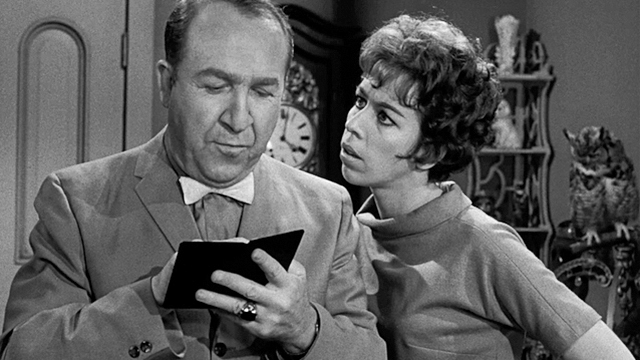
This is not a good episode. Cavender Is Coming has one redeeming quality…and her name is Carol Burnett. The episode borrows from It’s A Wonderful Lie and season one Twilight Zone episode Mr. Beavis in particular. This episode was meant to serve as a pilot, the same as Mr. Beavis did…and like Mr. Beavis it didn’t make it as a series. The episode is more like a sitcom than a Twilight Zone and it is the only TZ with a laugh track.
As the guardian angel, Jesse White does the best he can but the problem is with the writing. Carol Burnett could ony do some much also. It is one of the lowest rated episodes on IMDB and in various polls. It’s not my my lowest rated episode…that is coming in the 4th season. It does have it’s funny parts but it doesn’t feel like a Twilight Zone.
In writing Cavender Is Coming, Serling used material from Burnett’s own life for certain sequences. At the beginning of the episode, Agnes is employed as an usherette. This was actually taken from one of Burnetts personal experiences.
The first day she went to work as an usherette, the manager ran through a list of silent signals. Three fingers slapped on the wrist meant take a thirty-minute break. Opening your mouth like a fish and pointing to it meant you were thirsty. And when the manager poked his finger into the center of his palm, that meant he wanted a girl to stand in the center of the lobby to direct the patrons to the available seating.
One of the girls worked up her own signal in reply to the bosss gestures. She poured a bag of buttered popcorn on his head and told him, That means I quit.
One good thing is the original laugh track has been removed in syndication.
Buck Houghton (Producer of the Twilight Zone) on the laugh track:That was CBS’s idea, because they were in a pilot mood and they wanted to get a Jesse White thing going. I refused to go to the dubbing session with the canned laughter man there. I thought it was a dreadful idea.
This show was written by Rod Serling
Rod Serling’s Opening Narration:
Submitted for your approval, the case of one Miss Agnes Grep, put on Earth with two left feet, an overabundance of thumbs and a propensity for falling down manholes. In a moment she will be up to her jaw in miracles, wrought by apprentice angel Harmon Cavender, intent on winning his wings. And, though it’s a fact that both of them should have stayed in bed, they will tempt all the fates by moving into the cold, gray dawn of the Twilight Zone.
Summary
Inept guardian angel Harmon Cavender is given a chance to finally earn his wings by helping an unconventional big city woman, the young, awkward Agnes Grep, who has just been fired. Cavender doesn’t ask her wishes, instead he puts her in posh clothes, provides her with a fortune, and moves her uptown to a fancy Park Avenue address
Rod Serling’s Closing Narration:
A word to the wise now to any and all who might suddenly feel the presence of a cigar-smoking helpmate who takes bankbooks out of thin air. If you’re suddenly aware of any such celestial aids, it means that you’re under the beneficent care of one Harmon Cavender, guardian angel. And this message from the Twilight Zone: Lotsa luck!
CAST
Rod Serling … Narrator / Self – Host (uncredited)
Jesse White … Harmon Cavender
Carol Burnett … Agnes Grep
Howard Smith … Polk
Frank Behrens … Stout
Roy N. Sickner … Bus Driver
Sandra Gould … Woman
Donna Douglas … Woman #1
Adrienne Marden … Woman #2
Maurice Dallimore … Man






 PowerPop... An Eclectic Collection of Pop Culture