Link Wray – Link Wray …album review

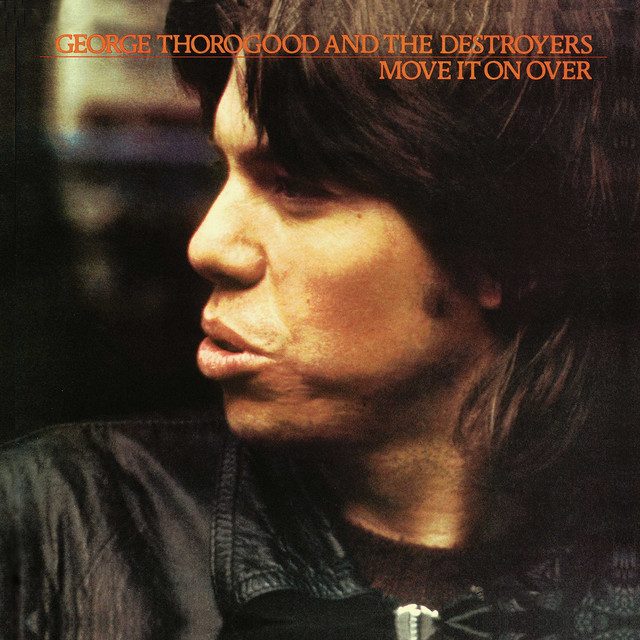
I was really taken aback when I saw this album. I played it, expecting an instrumental, and when I heard a voice, I thought it was a different singer. When I think of Link Wray, I think of Rumble and instrumentals like that. I was surprised when I found this roots album by him, recorded in 1971. I want to thank Lisa for posting something that made me think of this rare Link Wray album.

After serving in the military, Wray contracted tuberculosis and lost a lung, which made singing difficult, and doctors advised him against it. Because of his breathing difficulties, Wray began to focus more on expressive and experimental guitar playing, leading him to become known for his instrumental hits. Wray was a Native American of Shawnee descent. He grew up in North Carolina. Wray later honored his heritage in his music, with songs like Apache and Comanche.

This album was recorded in a converted chicken shack. His brother, Ray Vermon Wray, helped produce it along with Bob Feldman and Steve Verroca. Instead of power chords and a leather jacket, Link traded distortion for Americana, funk, gospel, and storytelling. It was earthy, roots-driven, and deeply personal, almost a different artist altogether from the one I thought I knew. After being freed from label pressures, Link finally made the music he grew up with: gospel from church revivals, Native American rhythms from family heritage, country blues, and Southern soul.

There were still guitars, but now they sat behind the songs instead of smashing through them. Tracks like Fire and Brimstone, Juke Box Mama, and Ice People feel like they were born out of the dirt. The grooves are loose, almost like field recordings. His voice, rarely heard on record before this, carries a soulful and weathered sound. He didn’t sound like a rock guitarist trying to sing; he sounded like a weathered preacher who happened to play guitar.

You hear old-time country on Take Me Home Jesus, boogie on God Out West, and Native rhythms driving Black River Swamp. No other rock guitarist of his generation made anything remotely like this. Only one song retains his old tone, and that’s the intro to Tail Dragger. If anything, it pointed the way decades later for artists like Los Lobos and the entire alt-country movement. If you want to hear some authentic Americana, listen to this album.

Polydor gave the album a shot, but the public wanted Link the guitar guy, not Link the backwoods Americana prophet. Sales were modest, and critics were divided. However, like many records that were too authentic for their time, it grew in legend over time. Today, many fans call the 1971 album his true masterpiece

Black River Swamp

I was born down in the countryDown where the cotton growsTurnin’ off the main highwayGoin’ down that country road

There’s a place down in the countryWhere the pine trees grow so tallWalk across that old log bridgeStretching ‘cross Black River Swamp

I can hear them bullfrogs croakingIn the blackness of the nightCalling me back to my childhoodDown here in Black River Swamp

Saw my name carved on a big oak treeDown there by the fishing holeAnd the smell of old Black RiverWhere the waters are deep and cold

I can hear the hound dogs howlin’Chasin’ that old fox where I used to roamDown there in the countryCallin’ me to Black River Swamp

I can hear them hound dogs howlin’Chasin’ that old fox where I used to roamDown there in the countryCallin’ me to Black River Swamp

I was born in the countryDown where the cotton growsTurnin’ off the main highwayGoin’ down that country road

There’s a place down in the countryWhere the pine trees grow so tallGo across that log bridgeStretching ‘cross Black River Swamp

Rank and File – Amanda Ruth

I first heard this song by the Everly Brothers in their comeback in the 1980s. It fit their style perfectly. I had assumed they wrote it, but I recently found out that Chip and Tony Kinman wrote it for their band, Rank and File. Two Brothers who started a punk band and then moved to Austin, where they transitioned to country-punk. Another performer who was a member of this band at one time was Alejandro Escovedo.

Rank and File were one of those bands that always felt born a decade too early. When most early 1980s acts were into synths, drum machines, and big production, the Kinman brothers were rewiring country music with punk and some power pop.

Chip and Tony Kinman first made music in the late 1970s with The Dils, a sharp-edged California punk band known for political lyrics, ragged guitars, and a take-no-prisoners attitude. When The Dils ran their course, the Kinmans stepped back and started exploring American roots music. They headed toward warmer tones and harmony.

In 1981, the brothers moved from California to Austin, Texas, a shift that changed everything. Austin was the hub of outlaw country, rockabilly revival, blues bars, and indie experimentation.  The perfect place for musicians who did not fit neatly into one box. They found guitarist Alejandro Escovedo, fresh out of The Nuns, another West Coast punk band. The three of them shared a love for classic country songwriting like Hank Williams, The Burrito Brothers, and the raw honesty of punk.

The band officially formed as Rank and File, a name that reflected their working-class roots and their desire to keep things grounded. They blended Telecaster twang, tight harmonies, and a pinch of punk to keep them honest.

What I love about this song is how free it feels. Listening to it today, you can hear the origins of what would become Uncle Tupelo, The Jayhawks, Old 97s, and the whole alt-country wave that swept in during the 90s. Rank and File never got the widespread attention they deserved, but Amanda Ruth remains a cool little gem.

This song was on their debut album Sundown, released in 1982.

Tony Kinman – “We’re brave, we’re not afraid to do stuff, most people are. They’re deathly afraid to do anything different. … [W]hen everybody else was talking about how stupid country music was, country music was the last thing to like, if you wore a cowboy hat you were a redneck, you know, we decided go say, ‘Yeah, we play country music, it’s fun.’

“Up in San Francisco, KUSF Wave, their magazine, did the first review Rank and File ever got, live review. They said we sucked, and then they said, ‘What are these guys trying to do, start a trend?’ Well, that’s the way it worked out, but only because we were brave enough and smart enough to do it first. That’s how you get to be influential—if you’re brave enough to do something different and you’re smart enough to do it right. Otherwise you’re just another dumb-ass band.”

Amanda Ruth

Amanda, Amanda Ruth
Amanda, Amanda Ruth

We read the paper and we pick the show,
I’d meet her there but my watch was slow
She came early and I came late
We never met
It was a hell of a date

Amanda, Amanda Ruth
Amanda, Amanda Ruth

The way we met, she was a friend of a friend,
They needed money and I had it to lend
She had five; she wanted ten.
I gave her all my money
So I got none to spend

Amanda, Amanda Ruth
Amanda, Amanda Ruth
Amanda, Amanda Ruth
Amanda, Amanda Ruth
Amanda, Amanda Ruth

She burns her biscuits and her gravy is strange,
Can’t fry a chicken in a microwave range.
Her salt’s tasty, her sugar’s sweet
No she can’t cook
But she’s got something to eat

Amanda, Amanda Ruth
Amanda, Amanda Ruth
Amanda, Amanda Ruth
Amanda, Amanda Ruth
Amanda, Amanda Ruth

Arc Angels – Arc Angels …album review

I started to listen to this album on a recommendation, and I was totally impressed. I started off with one song, but the hell with that, I went on to the complete album. Great rock and roll band with killer riffs and tones. Also, being produced by an E Street Band member doesn’t hurt either! Steven Van Zandt produced this album, and that right there is huge. Also, on keyboards, you have the Small Faces and Faces keyboard player, Ian McLagan. McLagan helped out on this recording, and he sounds great. They walk the line between rock, hard rock, blues, and even throw some funk in there in places. Great musicians on this album, and there is a reason for that.

The band formed right after the death of Stevie Ray Vaughan. Drummer Chris Layton and bassist Tommy Shannon, the backbone of Double Trouble (SRV’s backing band), found themselves without a frontman after Stevie’s passing in 1990. Instead of leaving the stage, they teamed up with two Austin guitarist-vocalists: Doyle Bramhall II and Charlie Sexton. Both were young, rising Texas guitar players with deep musical pedigrees. The name “Arc Angels” referenced the Austin Rehearsal Complex. Although the album was born out of Stevie Ray’s backing band, it sounded different and moved ahead. 

The album was recorded in Austin and at Ardent Studios in Memphis (Big Star, The Replacements), and it blended blues, alt-rock edges, and soulful songwriting. Throughout the record, Layton and Shannon play like a unit that has lived many lifetimes together, heavy but never heavy-handed. They aren’t just holding down rhythm, they’re pushing the music forward. Doyle Bramhall II, Charlie Sexton, Chris Layton, and Shannon did most of the writing, along with help from Tonio K

The opening song is Living In A Dream, and it’s bold and in your face, as the rest of the album is. The second song is Paradise Cafe, which is probably my favorite off the album. That guitar is raunchy as hell, and I love it. They did include a song they wrote in memory of their friend Vaughan called See What Tomorrow Brings. The track Good Times has some cool funk and blues to it. If you have some time, check this album ou.t. I think you will like it. The critical reaction was good for this album, but it got lost in the grunge shuffle that was going on at the time, unfortunately. 

 For anyone who loves Texas blues with bite, this is a great place to start. 

Living In A Dream

If you were mineI’d give you all the worldIf you were mineI’d take you higher girlBut you got me waitingOoh, you’re so coldIt kills me timeOoh and time is all we needBut god knows I’ve tried, I’ve triedTo get you close to me

But tonight when my eyes are closingYou’ll be with me

Just let me beAnd let me believe, you’re mineCause there’s nothin’ wrong hereI’m just livin’Livin’ in a dream

Without a signYou brought me to my kneesWithout a sign,I crossed the lineI beg for sleep

But tonight when my eyes are closin’You will be with me

Just let me beAnd let me believe, you’re mineJust let me beAnd let me believe, you’re mineCause there’s nothin’ wrong hereI’m just livin’Livin’ in a dream

Foghat – Slow Ride

This is a fun song to hear once in a while. This song was written by the group’s lead singer, David “Lonesome Dave” Peverett. Many air guitars have been played with this song. Peverett was different than most hard rock bands’ lead singers. He had a heavy blues influence that would show, and he was an excellent guitar player. This is arena rock at its finest. Listening to it as a kid, I had no idea what it meant, but it was so powerful with that guitar pumping out that rhythm.

This was released in 1975 on their album Fool for the City; it became Foghat’s signature song, the song that turned them from touring road warriors into FM radio staples. What has always fascinated me about Slow Ride is how something that simple, that groove-heavy, can hit so hard and stay so fresh nearly fifty years later.

Foghat was born out of the blues band Savoy Brown. Dave Peverett, the drummer, Roger Earl, and the bassist Tony Stevens quit that band and decided to form their own band in 1970. The band wanted to take the sound of Savoy Brown a step further and add a rock edge to its basic boogie blues.

I always liked their name, Foghat. It’s a name that sticks with you for better or worse. Foghat got their name when Peverett came up with the word while playing a Scrabble-like game with his brother. He convinced the band to go with it instead of Brandywine, and I have to agree with him. Some myths claim it is a slang term or that it meant something dirty, but the truth is simple: it was just a made-up word from Dave Peverett’s childhood.

Their bass player, Tony Stevens, quit and was replaced by their producer, Nick Jameson. Nick had played bass in his first band, so they asked him to join. They all jammed with each other for around 6 hours, and this song came out of it. Although it is credited to Peverett, it is said to be written by the entire band, with big contributions from Jameson.

This song peaked at #20 on the Billboard 100 and #14 in Canada in 1976. They were a British band that never had much success in the UK…but they did have a lot of success in America. The album peaked at #23 on the Billboard Album Charts and #85 in Canada in 1976.

Slow Ride

Woo!

Slow ride, take it easy

I’m in the mood
The rhythm is right
Move to the music
We can roll all night

Oh slow ride
Oh slow ride, take it easy
Slow ride, take it easy

Slow down, go down, got to get your lovin’ one more time
Hold me, roll me, slow ridin’ woman you’re so fine

Woo

I’m in the mood
The rhythm is right
Move to the music
We can roll all night, yeah

Oh
Slow ride, take it easy

Slow down, go down, got to get your lovin’ one more time
Hold me, roll me, slow ridin’ woman you’re so fine

Slow ride, easy, slow ride, sleazy
Slow ride, sleazy

Kolchak: The Night Stalker – The Spanish Moss Murders

December 6, 1974 Season 1 Episode 9

If you want to see where we are…HERE is a list of the episodes.

This one begins with Kolchak looking the worst I’ve seen him. He had just gone through something terrible, and we were about to find out. This episode blends Cajun folklore and good old-fashioned monster mayhem into one of the show’s best stories. This episode includes another actor whom I have always liked. Keenan Wynn starred in a lot of movies and television shows and was a wonderful character actor. In this episode, he plays Police Chief Joe ‘Mad Dog’ Siska, who is trying to stay calm…not easy around Kolchak. Chicago must have gone through many Chiefs of Police!

This time, Kolchak investigates a series of strange murders where the victims are covered in Spanish moss, crushed, and drowned far from any water. The culprit? The Père Malfait, a swamp monster from legend, a Cajun bayou boogeyman conjured up by an innocent street musician in a sleep study that takes away the ability to dream. People connected to the sleep subject (Don Mantooth) in unrelated ways are chosen as victims, so Kolchak will have to first discover who (or better, what) is killing them and figure out how to stop it.

The Père Malfait monster was played by Richard Kiel, who also played the Diablero the previous week in Bad Medicine. Producers liked him so much in both roles, they asked him to be available for a second season of the show. This one is highly thought of by The Night Stalker fans. I sound like a broken record, but again, this episode is smartly written and acted. Many times, McGavin would rewrite the scripts if he didn’t like them, and that happened a lot. He got no credit for that. That is probably the reason that no clunkers exist in this series. It also could have contributed to him asking out of his contract at the end of the season.

Kolchak starts digging, and, naturally, finds strange things. Kolchak’s journey in this episode takes him from sleep labs to recording studios,  to morgues, to warehouses, snapping photos and ticking off cops the whole way. Watching Kolchak rant his way through bureaucracy and disbelief is golden. It’s folklore meets journalism, and in Kolchak’s world, that always makes for one hell of a story.

If you want to get ahead…here is NEXT WEEK’S Episode!

If you want to get ahead…here is NEXT WEEK’S Episode!

Charlie Rich – Midnight Blues

When I was growing up, I remember watching music shows from Nashville, and I saw this white haired man constantly. That white haired guy was Charlie Rich. I never knew much about his older music, but I am really getting into it.

After a stint in the Air Force, Rich started writing his own songs and playing around Memphis, the city that ended up shaping him more than anything else. Memphis in the 1950s was a blend of blues, country, gospel, and early rock and roll, and Rich fit right into the middle. He wasn’t a purist of any genre; he was a blender, and that would become his signature for the rest of his career.

His big break came when he walked into Sun Records, though it wasn’t exactly instant stardom. Sam Phillips didn’t quite know what to do with him because Rich didn’t fit the Sun mold. He wasn’t a raw rocker like Jerry Lee Lewis, and he wasn’t a rockabilly guy like Carl Perkins. He was smoother, jazzier, more complicated.

Before he became the “Silver Fox” singing Behind Closed Doors, he was a studio guy down in Memphis, searching for the sound that matched his style. Midnight Blues, recorded in 1960 for Sun, captures that in-between phase perfectly, smoky, late-night melancholy set to a subtle shuffle.

Some singers have a pain in their voice, such as Richard Manuel of the Band. Charlie Rich’s early Sun Records is like that as well. What always blows me away with Rich is that he could sound both heartbroken and confident at the same time. This song has a little bit of everything in it. He had one of those voices that could blend into anything, from country to soul, jazz, or blues.

He would go on to have nine country number ones in the 1970s. Lonely Weekends was his first US hit. It hit #27 on Cash Box in 1960.

Midnight Blues

Midnite, you know you’re doing me wrongMidnite, doing me wrongKeeping me up all night longAll night, all night longEverytime I feel a little bit freeI hear those blues, midnite bluesCommence to calling meMidnite, why don’t you leave me aloneLeave me, leave me aloneI’m trying my best to make a happy homeHappy, happy homeEverytime I feel a little bit freeI hear those blues, midnite bluesCommence to calling meI just can’t help to feel a little bit ashamedEverytime I hear you call my nameI’m blaming you for all the bad things I’ve doneBlame you for what I’ve doneStill I will admit that every once in a while it was fun

Yeah but midnite, don’t keep me running aroundDon’t keep running aroundI made up my mind, I’m gonna settle downAh ha, settle downEverytime I feel a little bit freeI hear those blues, midnite bluesBlues, midnite bluesI hear those blues, midnite bluesCommence to calling meThat blues is a calling meMidnite blues is a calling me

Duane Eddy – Peter Gunn

I’ve always liked this song. It was originally by Henry Mancini for the Peter Gunn television show in 1958. I love instrumentals, and this is one of the best. I think the heyday of instrumentals was the fifties and sixties.

This (and many of his songs) was recorded in a Phoenix studio, which had an echo chamber that was originally a large water tank. A single speaker was placed at one end of the tank, the microphone at the other, and the guitar was piped in there. It’s hard to mimic that with a reverb stomp box.

Duane Eddy, the man who made a single twangy note sound like thunder rolling across the land. In 1959, he took Henry Mancini’s already cool Peter Gunn TV theme and turned it into something leaner and meaner. Backing him up was producer Lee Hazlewood, who knew how to turn an amplifier and that echo chamber into sonic gold. Together, they recorded this song in Phoenix, with a rhythm section that was tight and lean.

I like how Eddy arranged his songs. No big flashy solos or seeing how fast he could play, just that sound he had, never letting up. Duane Eddy laid the groundwork for surf music, spy soundtracks, and even hard rock. Everyone from The Ventures to George Harrison took notes from that tone.

The song peaked at #27 on the Billboard 100, #30 in Canada, and #6 in the UK in 1959 and 1960.

Brian Setzer – (The Legend Of) Johnny Kool

If I was gonna get movin’, now was the timeSo I packed up my bags and my Gretsch ’59

When I heard the Stray Cats in the early eighties, I thought I had it on the wrong station. It didn’t exactly fit in with Sheena Easton, Andy Gibb, Barry Manilow, or Dan Fogelberg. What I heard sounded like it came out of 1956, and I loved it. The echo, upright bass, and big Gretsch guitar were there. A 1950s revival had happened in the 1970s, and it started in the 80s with the Stray Cats, but the other rockabilly bands would not reach such high chart positions as they did. 

After the Stray Cats brought rockabilly back to radio, Setzer took a wild detour into big-band swing with the Brian Setzer Orchestra, proving that big pompadours and horn sections could coexist. This song is from his 1996 album Guitar Slinger. The song is about a rocker greaser who could out-race, out-play, and out-cool anyone in town.

Setzer has always been a guitarist storyteller, and here he channels every Gene Vincent, Eddie Cochran, and Link Wray riff he ever loved into one blast. The song kicks off with surfy reverb, blaring horns, and a beat that feels like a V8 engine coming to life (I just had to put a car reference there). Johnny Kool is the spirit of every hot-rod rebel who ever revved an engine down a road.

“The Legend Of Johnny Kool” might not have hit the charts, but it shows what makes Setzer special. He never plays rockabilly as a museum piece; he plays it like it’s still dangerous and fun…and it still is! 

(The Legend of) Johnny Kool

I had one cup of coffee and a cigaretteThen I rolled out of bed with my shirt soaking wetIf I was gonna get movin’, now was the timeSo I packed up my bags and my Gretsch ’59

It’s a hard life, loveBut when push comes to shoveIt’s the only life for Johnny, Johnny, Johnny KoolPlays his guitar and he sang like a foolDon’t let the big boys grind you down

Johnny, Johnny, Johnny KoolHe was a rebel that broke all the rulesEveryone can’t stop talkin’ aboutThe legend of Johnny Kool

It was darker than black, not a star in the skySo I revved on the engine and let that Mercury flyWith the wind blowin’ by at a 105I was trying like hell just to keep it alive

It’s a hard life, loveBut when push comes to shoveIt’s the only life for Johnny, Johnny, Johnny KoolPlayed his guitar and he sang like a foolDon’t let the big boys grind you down

Johnny, Johnny, Johnny KoolHe was a rebel that broke all the rulesEveryone can’t stop talkin’ aboutThe legend of Johnny Kool

Rumor had it now, this cat had it allHe was loud, he was wild, and he sure rocked the hallSome guy grabbed my arm and I jumped on the stageAnd I was rockin’ with a guy who was twice my age

It’s a tough life, loveBut when push comes to shoveIt’s the only life for Johnny, Johnny, Johnny KoolPlayed his guitar and he sang like a foolDon’t let the big boys grind you down

Johnny, Johnny, Johnny KoolHe was a rebel that broke all the rulesEveryone can’t stop talkin’ aboutThe legend of Johnny Kool

Johnny, Johnny, Johnny KoolHe’s a rebel, Johnny KoolHe’s a legend, Johnny KoolEverybody can’t stop talkin’ aboutThe legend of Johnny Kool

Rising Sons – Candy Man

Just found this band. What a band, Ry Cooder and Taj Mahal in the same band. It doesn’t get much better than that. Some songs sound like they were born on the back porch, passed around from player to player, gathering different fingerprints and stories along the way. This is one of those songs. This is a traditional song arranged by the Rising Sons. 

The band formed around 1964 in Los Angeles, built on the partnership between two then unknown but soon to be legendary musicians, Taj Mahal and Ry Cooder. Taj had moved west from Massachusetts after studying agriculture and getting into the folk revival. Cooder was a teenage slide guitar prodigy growing up in Santa Monica who already had a reputation as the kid who could play anything with strings. They met in the LA clubs, places like the Ash Grove and Troubadour.

They quickly became a standout act on the LA scene. They were signed to Columbia Records in 1965, which tells you how much buzz they had, but the label didn’t really understand what to do with a group that wasn’t rock, wasn’t folk, and wasn’t blues, but somehow all three. Their album was shelved for decades. This is the same problem the Goose Creek Symphony had; the label didn’t know what box to put them in. 

The real joy of their Candy Man is how it captures a moment in time right before American roots music exploded. This was before the Byrds went country, and The Band were still the Hawks backing up Bob Dylan. This short-lived 1965 band was a great one, featuring a young Taj Mahal, an even younger Ry Cooder, and future Byrds drummer Kevin Kelley (later on), who replaced Ed Cassidy, Jesse Lee Kincaid on vocals and guitar, and Gary Marker on bass. The Rising Sons didn’t last long, but recordings like this show just how special that little window was.

They recorded an album, and it was produced by Terry Melcher. The album wasn’t released, but this single was. The album was finally released in 1992. It’s blues meeting folk with a bit of country rock in there. I was reminded in the comments that this version was based on the Reverend Gary Davis version. Thank you, halffastcyclingclub and purplegoatee2684b071ed. 

I wanted to include these slang words and definitions that were given.

Salty DogIn blues songs, a “salty dog” is a slang term for a man, often an experienced sailor, who seeks a casual, non-committal sexual relationship. The phrase can also refer to a libidinous man more generally, or someone who is “salty” in the sense of being experienced, spicy, or unpredictable. 

Candy ManIn blues songs, a “Candy Man” is a term for a gigolo, ladies’ man, or dealer of drugs, often with a sexually suggestive connotation. While the literal interpretation is a seller of candy, the more common meaning in traditional blues songs refers to a charismatic and enticing man who sells a different kind of “sweet” product, like sexual favors or drugs. 

Gary Marker: “We were the problem; we had difficulties distilling our multiple musical agendas down to a product that would sell. We had no actual leader, no clear musical vision…. I think [Melcher] went out of his way to make us happy – within the scope of his knowledge. He tried just about everything he could, including the live, acoustic session that produced ‘2:10 Train.'”

Candy Man

Candy man, Candy man
Been and gone been and gone
Candy man, Candy man
Been and gone been and gone
Candy man, Candy man
Been and gone been and gone

Well, I wish I was down in New Orleans
Sitting on the candy stand
Candy gal through the candy stand
Oh yea, got stuck on the candy man
Candy gal through the candy stand
Oh yea, got stuck on the candy man
Candy gal through the candy stand
Oh yea, got stuck on the candy man

I love my candy gal
God knows I do
Little red light, little red light
Little green light, little green light
Little red light, little red light
Little green light, blue green light
Little red light, little red light
Little green light, little green light
The light’s stuck on red but when it goes to green don’t you mess with Mr. Inbetween

Went on down to the candy stand
Found my gal with the candy man
I went on down to the candy stand
Found my gal with the candy man
Took her hand from the candy man
I said I’d be her candy man now

I love my candy gal
God knows I do

Candy man Candy man
Salty dog, Salty dog
Candy man Candy man
Salty dog, Salty dog
Candy man Candy man
Salty dog, Salty dog

Well, I wish I was down in New Orleans
Sitting on the candy stand

Be Bop Deluxe – Ships In The Night

I recently read about this band, and a term came up that fits them well. “Genre Hopping,” and that phrase tells it all. This song grabbed me first because it has a power pop sound. But they combine other styles with it. Plus, some of their other music goes from hard rock, pop, blues, art rock, to prog rock in a flash. I like it when bands cover a lot of ground, and this band most certainly does.

Be-Bop Deluxe began in Wakefield, West Yorkshire, by guitarist, singer, and songwriter Bill Nelson, a musician with one foot in rock and one foot in the avant-garde. Nelson had been playing in local bands throughout the late 60s, experimenting with everything from blues to psychedelia, but he wanted something more ambitious, something that combined sharp guitar work, futuristic imagery, and sophisticated songwriting.

By 1972, Nelson formed the first version of Be-Bop Deluxe, a lineup that changed several times before the classic version solidified. Early on, the band included Ian Parkin, a friend from Nelson’s earlier groups, along with various rotating bassists and drummers. This initial formation leaned heavily on blues rock, but Nelson quickly moved past that sound and reshaped the band into something sleeker.

Their breakthrough came when Nelson recorded the independently released debut album, Axe Victim (I love the title track…the guitar is amazing), in 1974. Though it featured a very different lineup than the one that would make them famous, it established the Be-Bop Deluxe identity, a mix of glam rock, blues guitar, art rock, and guitar gymnastics, all wrapped in Nelson’s sci-fi-themed lyrics and elegant pop melodies.

This song was released in 1976 on their Sunburst Finish album. It peaked at #23 on the UK charts. The album peaked at #17 on the UK Charts as well. You can hear some XTC and other bands in this that came after Be-Bop Deluxe. Jon Leckie produced this, and he would go on to produce XTC, The Stone Roses, and Radiohead in the future.

It’s a band worth checking out because they probably have something you will like since they are so versatile.

Ships in the Night

Like a square peg in a round holeLike a harp without it’s stringsLike a sailor who sails no oceansLike a bird that has no wings

I am a desert(Without love) my light is dim(Without love) I have no treasures(Without love) I cannot win

Without love we are like ships in the nightWithout love, selling our souls down the riverSailing away and forever our pleasure is blue

Like a dream that has no dreamerLike a cloud without a skyLike a truth with no believerLike a mother without a child

I am a desert(Without love) my light is dim(Without love) I have no treasures(Without love) I can’t sit still

Without love we are like ships in the nightWithout love, selling our souls down the riverSailing away and forever our pleasure is blue

Kolchak: The Night Stalker – Bad Medicine

 November 29, 1974 Season 1 Episode 8

If you want to see where we are…HERE is a list of the episodes.

I am over halfway through this series, and I still haven’t run across a clunker. I see why IMDB has this series rated so high. This episode opens with a string of bizarre robberies where victims are found drained of life and valuables by what appears to be a high-society gentleman. The gentleman turns out to be something a lot less human and a lot more supernatural. The police think it’s a slick thief. Kolchak knows better; it’s a Manitou, a shape-shifting Native American spirit. 

The newsroom scenes are pure entertainment, Kolchak clashing with Tony Vincenzo (Simon Oakland) as he tries to explain that an ancient spirit is behind the heists. This episode captures what made the show great: the contrast between Carl’s curiosity and everyone else’s refusal to believe anything beyond the police blotter. Kolchak is always two steps ahead of the next headline.

The evil spirit is played by Richard Kiel, yes, the same actor who would later be “Jaws” in the James Bond films, and the spirit is both eerie and tragic. He’s not your typical TV creature feature villain; there’s a sense of melancholy to his transformation, as he is trapped by his curse. 

There is a chase through the hotel at the end, filled with dim lights and flickering shadows, that feels straight out of an old Universal horror flick. That’s not the first time I’ve said that about this series. Although it’s a seventies network series, they manage to keep an eerie feel to the show. 

For those who want to get ahead to next week.The Spanish Moss Murders… Click here!

Meters – Cissy Strut

I’ve been aware of this band for years, but I didn’t think I knew much about them. I started to listen, and yes, I’ve heard this and a couple of others. If you ever need to explain what “funk” feels like, you can skip any lyrics and just drop the needle on this song. These guys are New Orleans through and through. I’ve been posting songs with grooves lately. I don’t think you can beat this one.

It was recorded in 1969 for Josie Records. This song emerged from the Crescent City’s studio scene, which gave us Allen Toussaint, Lee Dorsey, and Dr. John. If you were a rock star in the seventies, you would be traveling to New Orleans to look up the Meters to get that New Orleans style. The Meters recorded with Paul McCartney, Robert Palmer, Dr John, LaBelle, Lee Dorsey, and Allen Toussaint, to name just a few.

In the mid-1960s, keyboardist Art Neville gathered three young musicians who shared his feel for rhythm: Guitarist Leo Nocentelli, bassist George Porter Jr., and drummer Joseph “Zigaboo” Modeliste. Together, they began backing artists like Lee Dorsey under the guidance of producer Allen Toussaint.

This song was their breakout song. They toured with The Rolling Stones in 1975, bringing funk to European stadiums. Their pure talent made them one of the most in-demand rhythm sections on the planet. This song has been used in many movies like Jackie Brown, Red, Legend, and many more. Their songs have been covered by The Grateful Dead, Red Hot Chili Peppers, and Widespread Panic, to name a few.

This song peaked at #23 on the Billboard 100 and #4 on the Billboard R&B Charts in 1969. Turn it up and you can hear New Orleans itself pushing through your speakers.

Ronnie Lane – Kuschty Rye

I first started to get into Ronnie Lane when I watched a documentary about him called The Passing Show back in 2018. I could not get Lane out of my head, and I started to listen to more and more. I found bloggers who felt the same way about him. Lane was the bass player, songwriter, and sometimes vocalist for The Small Faces and Faces.

I’m not super knowledgeable about Ronnie Lane yet, but I’m learning every day. His music grounds me and makes me appreciate music, roots music firmly planted. Lane was never about running down hits, and I’m so thankful for that. You won’t hear a disco Ronnie Lane record. Although he had a big hit in the UK with the song How Come, but he didn’t compromise; he did it fully in his style.

After leaving the Faces, he traded the big stages and rock stardom for caravans, campfires, big tents, and the open English countryside. You can hear that freedom in this song. After he left the Faces, he toured around the countryside with a caravan and a big tent and did concerts. He would record outside sometimes, and on some recordings, you can hear chickens, kids, and the wind.

This song was released in 1979 on the album See Me. This would be his last album. He was diagnosed with multiple sclerosis in 1976 but continued to tour with Eric Clapton and others, and in the early 80s migrated to Houston, Texas, for medical treatments. He would pass away in 1997.

I came across an artist named Des Horsfall, who released a tribute album to Ronnie Lane in 2011. Artists like Pete Townshend loved the album and said it was killer. This is from this website: One of Horsfall’s primary reasons for the original CD release of ‘The Good Gentleman’s Tonic’ was to encourage a new audience of music listeners to seek out the three original Slim Chance LPs. At the time, these had been out of print for many years and could only be sought at expensive prices through online resellers and auction websites.

Now all three are available.

Here is a live concert, and I have it starting at Kuschty Rye…but I would recommend spending an hour or so listening to the concert that was performed in 1980 on Rockpalast.

Oh, where I come from
There ain’t nobody
Nobody quite like you
Who blessed my soul, is cold on Sunday
And always evades the truth

Whose lingo comes from God knows where
And he surely knows more than I
Who also knows how mocked I am
When you call me your kuschty rye

And I say hey, honey
I hold you way up too high for me
Whoa, come on baby
I put you way up too high for me

She learned me life is sweet
And God is good
And he always will provide
She taught me all I never knew
And she taught me more besides

So I say hey, come on honey
I hold you way up too high for me
Whoa, now come on baby
I put you way up too high for me

Whose lingo comes from God knows where
And he surely knows more than I
Who also knows how mocked I am
When you call me your kuschty rye

So I say hey, hey honey
I hold you way up too high for me
Whoa, now come on baby
I put you way up too high for me

Goose Creek Symphony – Words Of Earnest

I wanted to throw something different at you today, and this is something different. As I was looking for some more roots music, I heard this and loved it. It took me a couple of listens…I haven’t stopped listening to it all week. It is roots music, no doubt, and heavy back porch bluegrass country with a tinge of rock. I love the melody, chord structure, and the dynamics they built in. It starts off as country as cornbread but switches gears with some horns, guitar breaks, and fiddle near the end. Although the country voice is there, the music is more rock structured. I’m not sure what to call it, but I’ll just call it good.

They were a very original band that blended country, rock, bluegrass, and psychedelic into something that didn’t fit anywhere. They were too twangy for the rock crowd, too trippy for Nashville, and too Kentucky-mountain raw for L.A.. When I listened to this song, I was won over.

This was the title track of their 1972 album. I’ve read reviews about this album, and some called it a masterpiece of cosmic Americana. The album should’ve been their big breakthrough, but Capitol didn’t know what to do with them since they didn’t fit neatly in a box.

Goose Creek Symphony was formed in the late 1960s by Charlie Gearheart,  a Kentucky songwriter with country and rock ‘n’ roll influences. Gearheart, whose real name was Paul “Charlie” Gearheart, had played around in bluegrass and psychedelic rock bar bands before deciding to mix the two, to let fiddles, horns, banjos, and Telecasters mix together.

He gathered a very talented bunch of musicians from Kentucky and Arizona, naming the group after a small town near his old Kentucky home: Goose Creek. Early members included Michael “Ted” Reeder on drums, Alvin Bennett, and William “Charlie” Prichard on guitar and fiddle, all guys who could swap instruments mid-song without losing the groove.

They did have a hit in 1972 with the cover of Janis Joplin’s Mercedes Benz. That was on this album as well.

Words of Earnest

Lived in the city and I lived in the wood;
Lived through the fire and I lived through the flood,
Lived through the summer when the creek went dry;
Guess I’ll keep living til the day I die,
I think I’ve done everything, In my time;
Everything I didn’t do wasn’t worth doing when I had that time, OH no

Talked to the prophets and I talked to the fool;
Even tried work and I even tried school,
Fell in love I got pushed through hate;
Even drove my car through a big steel gate,
I think I’ve done everything, In my time
Everything I didn’t do wasn’t worth doing when I had that time,

Deep in the hills of old Kentucky, Once lived a man I used to know;
He got up every morning at the crack of dawn, Earnest was his name you know
He was full of love an understanding, Never had a nickle or a dime;
Happiness is free, is what he said to me, Earnest was a friend of mine,
Friend of mine,

To many people on the same old road;
Loaded down with the same old load,
To live a good life you can’t do it that way;
Cause every day is different an it’s different every day,
Gotta do everything, in your time;
Everything you wanna do, Really worth do when I had that time, OH Yeah it is

Nobody knows when I’m lonely, Nobody knows when I’m blue;
Nobody knows when I’m happy, Nobody knows that I’m blue,
Nobody knows that I love everyone, Nobody knows that I’m fine;
Nobody ever gets in my way, Cause nobody’s on my mind

Paladins – Good Lovin

I posted a song by these guys a few years ago, and I ran across this song with Dave Gonzalez wailing away on guitar. His guitar solo in this one is jaw-dropping to me. He flips the Chuck Berry style on its ear and then does some nice chording through the end of the solo. I’m also a sucker for a standup bass. I’ve played 4, 6, and 8-string electric bass, but I’ve never played an upright bass. You can’t get that sound out of an electric bass. 

I love trios because I’ve played in a couple. They are hard; there is no room to hide. All of these musicians are great in this band. I key in on Gonzalez and the bassist Tomas Yearsley, but here Scott Campbell, the drummer, more than holds his own with almost a drum solo through the entire song. With this band, you can hear Sun Records and Chess Studios.

Back in the late ‘80s, when hair metal was MTV and polished pop dominated the radio, The Paladins were out there playing for the roots crowd. They were deep in the same rockabilly, blues, and roadhouse rock and roll that had been playing three decades earlier. This song was off their 1988 album Years Since Yesterday. They were mentioned in the same breath as The Blasters, Los Lobos, and The Fabulous Thunderbirds,  bands who stubbornly stuck by roots music, forgetting trends. 

The Paladins are from San Diego and were into rockabilly. They billed their music as Western Bop. They played a combination of rockabilly and vintage country together with a blues groove. They were founded in 1980 by guitarist Dave Gonzalez and bass player Thomas Yearsley.

Dave Gonzalez’s initial influences came from his mother, who listened to  Carl Perkins, Elvis Presley, Roy Orbison, and the Rolling Stones. He mixed this with his father’s love of country singers Buck Owens and Merle Haggard, who also made a strong impression on him. As he got older, he got into blues artists like  B.B. King, Muddy Waters, and Johnny Winter.

Dave Gonzalez and bass player Thomas Yearsley, along with current drummer Brian Fahey, are still a top attraction at clubs at the present time. They have recorded five singles, nine full-length studio records, and three live albums.

A side note for blues fans…they released a live album with Hollywood Fats in 1985. Here is a LINK to that album on YouTube…it’s great! 

Good Lovin

Well I’m dining at the station standing on the railroad tracks
Yes I’m dining at the station standing on the railroad tracks
Well I just got the news my baby is coming back
She is a sweet fine thing she looks so good to me
She’s a high stepping momma saving all her love for me

Yea she is cute when she walks she wobble all over the street
My baby is cute when she walks she wobbles all over the street
Yea I’ll be so glad when that train bring her back to me
Soon the train will be here tonight around a quarter til three
That’s when my woman brings her love to me
Hugs and kisses make my head spin around
Make my love come tumbling down

I’ll be glad in morning when the train is coming down the tracks
I’m so pleased my baby is coming back

Well I’m dining at the station standing on the railroad tracks
Yes I’m dining at the station standing on the railroad tracks
Well I just got the news my baby is coming back
Good Lovin, Good Lovin, Good Lovin, Good Lovin, Good Lovin, Good Lovin
Good Lovin,Good Lovin,Good Lovin