Power Pop fan, Baseball, Beatles, Alternative music, old movies, and tv show fan. Also anything to do with pop culture in the 60s and 70s... I'm also a songwriter, bass and guitar player. Not the slightest bit interested in politics at all.
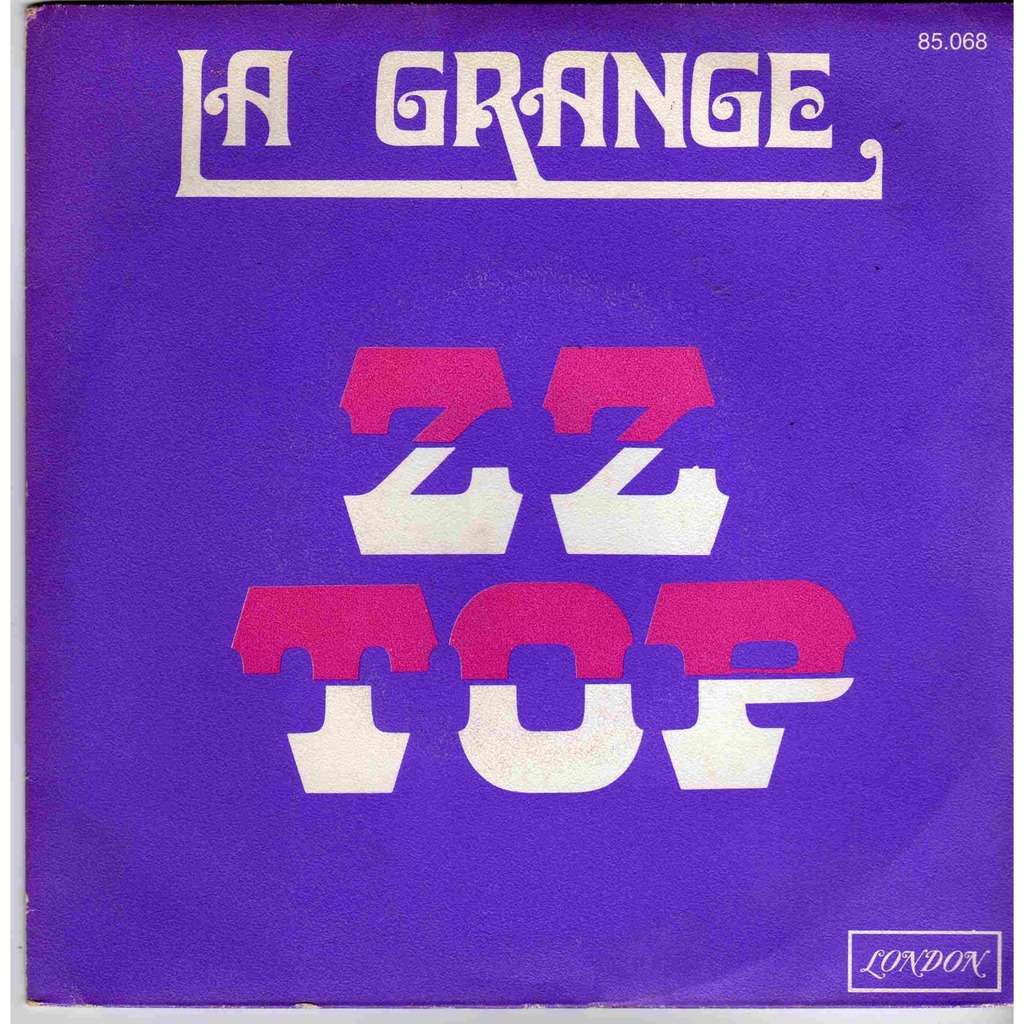
The dynamics of this song makes it. When La Grange kicks in…it kicks in with a vengeance. The song has an interesting back story.
This song is about a certain house of ill repute. It was called “The Chicken Ranch,” or Miss Edna’s Boarding House in La Grange Texas, it was probably the oldest establishment in Texas, catering to the oldest profession.
All good things must come to an end. In 1973 Marvin Zindler, a reporter from KTRK-TV in Houston decided to make a real name for himself and started bringing media attention to the Ranch. He claimed his motive for exposing the Ranch was for the Texas Department of Public Safety and local police to combat organized crime and corruption at the Ranch. Governor Dolph Briscoe was forced to close the establishment due to excessive media coverage.
A very successful musical was written about the Ranch. Edna herself had a silent role in the Broadway production which later turned into a movie, “The Best Little Whorehouse in Texas”.
A footnote to the story… Two lawyers from Houston bought the building and land and moved the main house to Dallas in 1977. It opened as The Chicken Ranch restaurant in September of 1977, with Miss Edna as the hostess. The building and furniture have since been auctioned off and the remainder of the original house has been left on the property in very poor condition. Edna later died in 2012 in Phoenix, AZ at the age 84.
The song peaked at #41 in the Billboard 100 and #34 in Canada in 1974. It was on the album Tres Hombres.
Billy Gibbons: “‘La Grange’ was one of the rites of passage for a young man. It was a cathouse, way back in the woods. The simplicity of that song was part of the magic – only two chords. And the break coming out of the solo – those notes are straight Robert Johnson. He did it as a shuffle. I just dissected the notes.”
ZZ Top bass player Dusty Hill: “Did you ever see the movie, The Best Little Whorehouse in Texas? That’s what it’s about. I went there when I was 13. A lot of boys in Texas, when it’s time to be a guy, went there and had it done. Fathers took their sons there.
You couldn’t cuss in there. You couldn’t drink. It had an air of respectability. Miss Edna wouldn’t stand for no bulls–t. That’s the woman that ran the place, and you know she didn’t look like Dolly Parton, either. I’ll tell you, she was a mean-looking woman. But oil field workers and senators would both be there. The place had been open for over 100 years, and then this a–hole decides he’s going to do an exposé and close it. And he stirred up so much s–t that it had to close.
La Grange is a little bitty town, and little towns in Texas are real conservative. But they fought against it. They didn’t want it closed, because it was like a landmark. It was on a little ranch outside of town, the Chicken Ranch. Anyway, we wrote this song and put it out, and it was out maybe three months before they closed it. It pissed me off. It was a whorehouse, but anything that lasts a hundred years, there’s got to be a reason.”
La Grange
Rumour spreadin’ ’round In that Texas town About that shack outside La Grange And you know what I’m talkin’ about Just let me know if you wanna go To that home out on the range They got a lot of nice girls
Have mercy A haw, haw, haw, haw, a haw A haw, haw, haw
Well, I hear it’s fine If you got the time And the ten to get yourself in A hmm, hmm And I hear it’s tight Most ev’ry night But now I might be mistaken Hmm, hmm, hmm
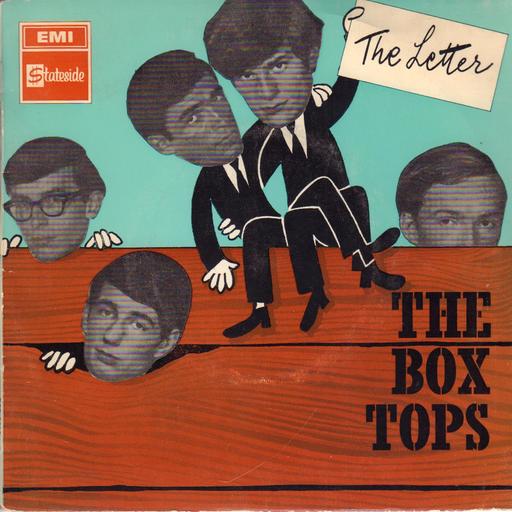
Alex Chilton was sixteen when he recorded this song for the Box Tops. The Box Tops formed in Memphis Tennessee in 1967. They would go to have seven top 40 hits. This one was their most successful single. It peaked at #1 in the Billboard 100, #1 in Canada, and #5 in the UK in 1967.
After the Box Tops, Alex Chilton would help form one of the best ever power pop bands of all time that no one ever heard of… Big Star. One of my all-time favorite bands.
Nashville songwriter Wayne Carson Thompson wrote the song after his father gave him the line, “Give me a ticket for an aeroplane.”
When the group recorded this they still did not have a name. One band member suggested…”Let’s have a contest and everybody can send in 50 cents and a box top.” Producer Dan Penn then dubbed them The Box Tops.
Rolling Stone magazine included the Box Tops original at number 372 on its list of the “500 Greatest Songs of All Time”
The band was known for this song, Cry Like A Baby, and my favorite Soul Deep.
From Songfacts
This song is about a guy who gets a letter from his former love telling him that she wants him back, and the guy wants to fly out and see her immediately.
Thompson gave the song to The Box Tops on the recommendation of his friend, Chips Moman, who ran ARS Studios and liked the sound of an unnamed band headed by then-16-year-old Alex Chilton, who auditioned for him in 1967.
Thompson played guitar on the recording. He didn’t like the singing, believing the lead vocal was too husky, and wasn’t fond of the production either. The addition of the jet sound “didn’t make sense” to him. When producer Dan Penn added the airplane sound to the recording, Wayne Carson Thompson clearly thought that Penn had lost his mind. He hadn’t – several weeks later it became one of the biggest records of the ’60s, and The Box Tops went on to score with a few other Thompson compositions, including their follow-up release, “Neon Rainbow” (#24, 1967), “Soul Deep” (a #18 hit in 1969) and “You Keep Tightening Up On Me” (their last chart hit, which peaked at #74 in 1970). A few years later, Thompson won a Grammy for cowriting the hit “Always On My Mind.”
At 1:58, the Box Tops’ version of this was the last #1 hit to be shorter than two minutes in length.
Cover versions were US hits for two other artists, The Arbors (#20 in 1969 – arrangement by Joe Scott) and Joe Cocker (#7 in 1970). Cocker’s version is a live recording featuring Leon Russell; a studio version appears on his album Mad Dogs & Englishmen.
The title is never sung in this song: his baby writes him “a letter.”
The Letter
[Chorus] Gimme a ticket for an aeroplane Ain’t got time to take a fast train Lonely days are gone, I’m a-goin’ home My baby, just-a wrote me a letter
I don’t care how much money I gotta spend Got to get back to baby again Lonely days are gone, I’m a-goin’ home My baby, just-a wrote me a letter
Well, she wrote me a letter Said she couldn’t live without me no more Listen mister, can’t you see I got to get back To my baby once-a more Anyway, yeah!
[Chorus]
Well, she wrote me a letter Said she couldn’t live without me no more Listen mister, can’t you see I got to get back To my baby once-a more Anyway, yeah!
I’ve always liked Lemmy Kilmister. He was a good bass player and very aggressive on vocals. He also gave some of the best interviews I’ve ever heard. He is best known for forming Motörhead in 1975. He joined Hawkwind in 1971.
He also was a roadie for Jimi Hendrix and went frequently to see the Beatles at the Cavern Club before they hit.
Hawkwind was a UK psychedelic heavy metal band…that often sang about science fiction. They were also called a Space Rock Band. They formed in London in 1969 as Group X. They changed their name shortly to Hawkwind Zoo and then Hawkwind. Although this was their only hit, their space-age rock albums sold consistently well throughout the ’70s.
This was by far the biggest hit for Hawkwind, peaking at #3 in the UK and getting played on the TV show Top Of The Pops. Hearing Hawkwind on BBC radio was very strange for many of their fans, as the group was far off-center and notoriously anti-establishment.
Kilmister is singing lead on this track. Lemmy wasn’t the group’s main singer…that was Bob Calvert. Calvert’s attempts to record the vocal didn’t quite make it, so Lemmy did the singing on this one.
A version of the band is still together with Dave Brock as the only original member.
From Songfacts
Hawkwind guitarist Dave Brock wrote the music to this track, and their frontman Bob Calvert composed the lyric. According to Mojo magazine September 2011, Calvert’s lyric was inspired by an Alfred Jarry short story called How To Construct A Time Machine. However, rather than writing about a “cosmic space travel machine” he made it about his new silver racing bike.
“Lemmy had a high voice but it was just very much more powerful, he had a gruffness with it, so we decided to use his vocal,” their manager Doug Smith explained. Calvert, who was hospitalized at the time for manic depression, didn’t find out that his vocal had been replaced until later. When he did, he was not pleased.
Released as a single, the song was recorded live from the Roundtree in London on February 13, 1972. The live performance had vocals by Bob Calvert, but they were replaced by Lemmy’s when the song was mixed and overdubbed at Morgan Studios.
When this song took off, the British music magazine NME put Lemmy on the cover with no sign of his bandmates. This gave the impression that he was the frontman and leader of the band, when really he rarely sang lead and had just joined the outfit.
A self-described “space rock” band from North Carolina named themselves Silver Machine after this song.
Silver Machine
I, I just took a ride in a silver machine And I’m still feeling mean
Do you want to ride See yourself going by The other side of the sky I’ve got a silver machine
It flies Sideways through time It’s an electric line To your zodiac sign
I’ve got a silver machine I’ve got a silver machine I’ve got a silver machine
It flies out of a dream It’s antiseptically clean You’re gonna know where I’ve been
Do you want to ride See yourself going by The other side of the sky I’ve got a silver machine
I said I just took a ride In a silver machine And I’m still feeling mean It flies Sideways through time It’s an electric line To your zodiac sign
I’ve got a silver machine I’ve got a silver machine I’ve got a silver machine I’ve got a silver machine I’ve got a silver machine I’ve got a silver machine I’ve got a silver machine I’ve got a silver machine I’ve got a silver machine I’ve got a silver machine
With ELO and Jeff Lynne, you knew you were getting a quality pop/rock song and it would be very catchy.
Strange Magic was written by ELO frontman Jeff Lynne, “Strange Magic” was on Electric Light Orchestra’s fifth studio album Face the Music.
By this time, the band had toned their orchestral sound to make it brighter and more radio-friendly. The strategy paid off, as this song and “Evil Woman” were both big hits.
The song peaked at #14 in the Billboard 100, #42 in Canada, and #38 in the UK in 1976. The album Face The Music peaked at #8 in the ===Billboard album charts and #35 in Canada.
Jeff wrote the song on various pianos in separate places while on tour in England with the band, presumably during the Eldorado tour.
From Songfacts
The song is about a captivating woman, but “Strange Magic” is also a good description for this song’s sonics. Compressed to a tight 3:27 for the single release (it runs 4:29 on the album), the song packs in an intriguing array of harmonies and hooks while integrating the famous ELO string section. The lyric is suitably trippy, and very repetitious, with the title appearing five times per chorus.
The weepy-sounding guitar lick is provided courtesy of Richard Tandy, who was somehow persuaded to take his hands off his various keyboards to pick up a guitar. Normally, Tandy’s array of Moog synth, clavinet, mellotron, and piano was so omnipresent that it led to the stereotype of prog-rock bands having a stack of keyboards onstage.
Some of you movie-music fans may cringe at this, but this song was also used in the 2007 stage production of Xanadu. Fear not, it was not part of the 1980 film soundtrack, although the soundtrack was the least of that film’s problems… or so we’re told.
The Pan-Pacific Auditorium in Los Angeles, California, doubled as the set of “Xanadu.”
Strange Magic
You’re sailing softly through the sun In a broken stone age dawn You fly so high
I get a strange magic Oh, what a strange magic Oh, it’s a strange magic Got a strange magic Got a strange magic
You’re walking meadows in my mind Making waves across my time Oh no, oh no
I get a strange magic Oh, what a strange magic Oh, it’s a strange magic Got a strange magic Got a strange magic
Oh, I’m never gonna be the same again Now I’ve seen the way it’s got to end Sweet dream, sweet dream
Strange magic Oh, what a strange magic Oh, it’s a strange magic Got a strange magic Got a strange magic
It’s magic, it’s magic, it’s magic Strange magic Oh, what a strange magic Oh, it’s a strange magic Got a strange magic Strange magic Oh, it’s a strange magic Oh, it’s a strange magic
Got a strange magic Strange magic Oh, what a strange magic Oh, it’s a strange magic
Got a strange magic Strange magic You know I got a strange magic Yeah I got a strange magic Strange magic
Take one listen and suddenly you are walking along Carnaby Street in Swinging London in 1967.
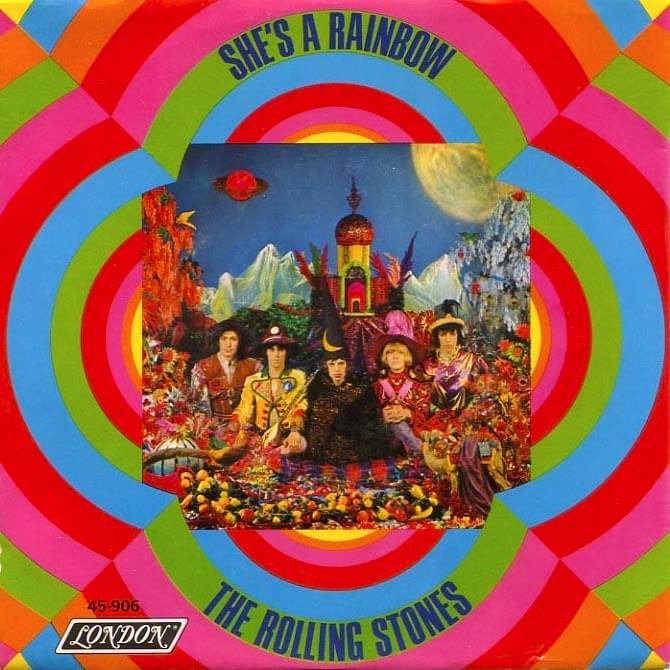
While under the influence of what was going on at the time…The Stones dipped their toe in the wild and colorful Psychedelic water. This was right after Sgt Peppers and experimentation was in the air.
The result was Their Satanic Majesties Request. I know some Stones fans that won’t mention this album but I’ve always liked it.
It didn’t suit them as well as their earlier pop and later rock and blues style but the album did have some high points.
The string section was arranged by John Paul Jones, who was doing session work two years before he joined Led Zeppelin. Nicky Hopkins also played piano on this song.
This song was written by Jagger and Richards.
She’s A Rainbow peaked at #25 in the Billboard 100 and #9 in Canada.
The song returned to Billboard’s Hot Rock Songs chart in 2018 as a result of its appearance in a commercial for the all-new Acura RDX.
Mick Jagger:There’s a lot of rubbish on Satanic Majesties. Just too much time on our hands, too many drugs, no producer to tell us, “Enough already, thank you very much, now can we just get on with this song?” Anyone let loose in the studio will produce stuff like that. There was simply too much hanging around. It’s like believing everything you do is great and not having any editing.
She’s A Rainbow
She comes in colors ev’rywhere She combs her hair She’s like a rainbow Coming, colors in the air Oh, everywhere She comes in colors
She comes in colors ev’rywhere She combs her hair She’s like a rainbow Coming, colors in the air Oh, everywhere She comes in colors
Have you seen her dressed in blue? See the sky in front of you And her face is like a sail Speck of white so fair and pale Have you seen a lady fairer?
She comes in colors ev’rywhere She combs her hair She’s like a rainbow Coming, colors in the air Oh, everywhere She comes in colors
Have you seen her all in gold? Like a queen in days of old She shoots colors all around Like a sunset going down Have you seen a lady fairer?
She comes in colors ev’rywhere She combs her hair She’s like a rainbow Coming, colors in the air Oh, everywhere She comes in colors
She’s like a rainbow Coming, colors in the air Oh, everywhere She comes in colors
Driving that train, high on cocaine Casey Jones is ready, watch your speed
As a teenager, this song blasted from the car stereo with the windows down. The rebellion had kicked in and just to sing along with “cocaine” made us all giddy…although none us would have known cocaine if it was in front of us. Great song by the Dead.
The song was on the album Workingman’s Dead released in 1970. With it’s Americana sound…it became with the American Beauty one of their most popular albums. The song was written by Jerry Garcia and Robert Hunter.
“Casey Jones” is very loosely based on the real-life happenings of the heroic engineer Casey Jones, who was the subject of the famous 1902 song “The Ballad Of Casey Jones.” It was doubtful that Jones was high on cocaine when he took over the train, and although his life was ended when he was hit by a train traveling the wrong way, he sacrificed his life so those on board could be saved.
Casey Jones was not released as a single and did not chart. It remains one of their most popular songs known by non-Dead Heads.
The Real CASEY JONES 1864-1900
American folk hero Casey Jones was born John Luther Jones on March 14, 1864, in a rural part of southeastern Missouri. He would work as an engineer on the railroad later in life.
On April 30, 1900, Jones volunteered to work a double shift to cover for a fellow engineer who was ill. He had just completed a run from Canton, Mississippi, to Memphis, Tennessee, and was now faced with the task of returning on board Engine No. 1 headed southbound.
When he pulled out of the Memphis station in the early hours of April 30, the train was running late so he hurried to make up for lost time. As the train rounded a curve near Vaughan, Mississippi, it collided with another train on the tracks, but not before Jones told his fireman to jump to safety. Jones remained on board, supposedly to try to slow the train and save his passengers, and Jones the only person to die in the accident.
Following Jones’s death, Wallace Saunders, an African-American railroad worker in Mississippi, developed a ballad about the fallen engineer that became popular with other men in the railroad yards.
Ask if the song grates his nerves when he hears it…Jerry Garcia: “Sometimes, but that’s what it’s supposed to do. It’s got a split-second little delay, which sounds very mechanical, like a typewriter almost, on the vocal, which is like a little bit jangly, and the whole thing is, I always thought it’s a pretty good musical picture of what cocaine is like. A little bit evil. And hard-edged. And also that sing-songy thing, because that’s what it is, a sing-songy thing, a little melody that gets in your head.”
Grateful Dead lyricist Robert Hunter came up with the line “Drivin’ that train, high on cocaine, Casey Jones you’d better watch your speed,” which he wrote down and put in his pocket. He didn’t think of it as part of a song until he looked at it later and decided to complete the lyrics.
When they put the song together, Hunter looked for ways to omit the word “cocaine,” which at the time was a controversial word for song lyrics (they had taken some heat for using “Goddamn” in “Uncle John’s Band”). Hunter tried some other phrases – “whipping that chain,” “lugging propane” – but couldn’t find an acceptable substitute, so Casey Jones ended up high on cocaine as originally written.
Casey Jones
Driving that train, high on cocaine Casey Jones is ready, watch your speed Trouble ahead, trouble behind And you know that notion just crossed my mind
This old engine makes it on time Leaves central station ’bout a quarter to nine Hits river junction at seventeen to At a quarter to ten you know it’s travelin’ again
Driving that train, high on cocaine Casey Jones is ready, watch your speed Trouble ahead, trouble behind And you know that notion just crossed my mind
Trouble ahead, lady in red Take my advice you’d be better off dead Switchman’s sleeping, train hundred and two is On the wrong track and headed for you
Driving that train, high on cocaine Casey Jones is ready, watch your speed Trouble ahead, trouble behind And you know that notion just crossed my mind
Trouble with you is the trouble with me Got two good eyes but you still don’t see Come round the bend, you know it’s the end The fireman screams and the engine just gleams…
On Sundays, I am going to start posting a good album cut.
When I think of forgotten great album cuts…this one is one of the first songs that come to mind. If you haven’t heard it give it a try. The song has a good riff starting out and the arrangement of the melody is a little different than some of their previous songs. I credit that to new guitarist Steve Gaines… Gaines and Van Zant wrote this song.
Give this song a try…The song takes a while to get going but the melody, guitar work, and the bass are great in this one.
Steve joined the band as a guitarist in 1976. Gaines had an immediate impact, writing or co-writing four of the eight songs on Street Survivors, which was released three days before the group’s plane crashed in Mississippi, killing Gaines, his sister Cassie (a backup singer with the group) and Van Zant.
It is my favorite Lynyrd Skynyrd song hands down. The band never played this live…the original or the new edition.
Street Survivors peaked at #5 in the Billboard Album Charts in 1977.
I Never Dreamed
My daddy told me always be strong son Don’t you ever cry You find the pretty girls, and then you love them And then you say goodbye I never dreamed that you would leave me But now you’re gone I never dreamed that I would miss you Woman won’t you come back home
I never dreamed that you could hurt me And leave me blue I’ve had a thousand, maybe more But never one like you I never dreamed I could feel so empty But now I’m down I never dreamed that I would beg you But woman I need you now
It seems to me, I took your love for granted It feels to me, this time I was wrong, so wrong Oh Lord, how I feel so lonely I said woman, won’t you come back home
I tried to do what my daddy taught me, But I think he knew Someday I would find One woman like you I never dreamed it could feel so good Lord That two could be one I never knew about sweet love So woman won’t you come back home Oh baby won’t you come back home
I don’t really consider The Allman Brothers “southern rock” but they are classified that way. They were cut above their southern brethren at the time. One hearing of At Fillmore East and any doubts go out the window.
I don’t feature many instrumentals but this one is worth it. It was used really well in the movie Field Of Dreams. This song is a great song for traveling.
Jessica is the name of Allman Brothers guitarist Dickey Betts’ daughter. He was working on this song when she crawled into the room and inspired him. Jessica Betts was born May 14, 1972 – she was one year old when her dad wrote the song.
Dickie Betts was trying to compose a song that could be played on the guitar with two fingers in the style of Django Reinhardt, a 1930s Jazz musician Betts admired who lost two fingers in a fire.
Chuck Leavell played piano on this. He was brought in after Duane Allman died to provide another lead instrument. It created a different sound, as the Allmans now had 1 piano and 1 guitar rather than 2 guitars.
Jessica was on the album Brothers and Sisters released in 1973.
The song peaked at #65 in the Billboard 100 and #35 in Canada in 1973.
From Songfacts
Betts had Jessica with Sandy Bluesky, who also inspired one of his famous Allman Borthers songs: he wrote “Blue Sky” for her. The couple were married in 1973.
This is an instrumental song that had little chart success but has endured as a staple of classic rock radio and a favorite among fans.
This is the theme song to the UK TV show Top Gear.
The Allman Brothers performed this on The Late Show with David Letterman on February 29, 1996.
A live recording was included on the album An Evening with the Allman Brothers Band: 2nd Set in 1995. This version won a Grammy Award for Best Rock Instrumental Performance.
When we spoke with Devon Allman, he offered some insight on why songs like this don’t need lyrics. “‘Flor D’Luna’ by Santana, ‘Jessica’ by the Allman Brothers – these songs don’t need words because that lead guitar is doing the talking and the singing. It’s a strong enough melody to stand on its own. Words over that wouldn’t make sense because it’s already doing the speaking.”
And there’s fire on the mountain Lightening in the air Gold in them hills and it’s waiting for me there
This morning there will be 3 southern rock songs. Two well-known and one of my favorite album cuts. I live in the south…so I don’t know if it is a self-conscious thing with me but I don’t feature much southern rock. When some of my classmates were listening to Lynyrd Skynrd, Marshall Tucker, and The Allman Brothers…my feet were stuck firmly in the UK in the 1960’s…and really they never left…I just expanded some.
Now, I see music fans that really get into this music in Germany, UK, and all over the world. It’s made me appreciate what was in my own backyard.
This song sounds older than what it is…The chorus is catchy and is southern as you can get. Since I live in the south I have been bombarded with Southern Rock but I’ve been listening to it recently and have started to enjoy more of it.
This country-rock ballad was written by George McCorkle, guitarist for the Marshall Tucker Band. Set during the California gold rush, it tells the story of a family that sets out from their home in Carolina looking to strike it rich.
The song peaked at #38 in the Billboard 100 and #81 in Canada in 1975.
Many say that Toy Caldwell was the soul of that band. He was a Marine in the 60s and served in Vietnam. After getting injured he was able to go home and started to play music with his high school friends. Toy and his brother helped start Marshall Tucker.
Toy Caldwell played steel guitar on this track, but according to McCorkle, he played it out of tune because he had just recently bought the instrument and didn’t know how to tune it properly.
Toy stayed with Marshall Tucker until he left in 1984. Contributing to him leaving was the fact that his brother… co-founder of the band and bass guitarist Tommy Caldwell, was killed at age 30 in an automobile accident on April 28, 1980. Toy’s other brother Tim Caldwell, who on March 28, 1980, one month prior to Tommy’s death, was killed at age 25 in a collision in South Carolina.
Gregg Allman: When we wanted to get away from our old ladies, we’d head on down to Grant’s Lounge, which was a great place to hang out. We saw a lot of bands, including Marshall Tucker, or Mother Tucker, as we called them. Toy Caldwell was a good friend of mine, but I wouldn’t give you a nickel for the rest of them. Toy Caldwell was Marshall Tucker—he made that band what it was.
This was The Marshall Tucker Band’s second-highest hit, the highest being “Heard It In A Love Song.” It was also one of their only two Top 40 hits.
Fire On The Mountains
Took my family away from our Carolina home Had dreams about the west and started to roam Six long months on a dust covered trail They say heaven’s at the end But so far it’s been hell
And there’s fire on the mountain Lightening in the air Gold in them hills and it’s waiting for me there
We were digging and shifting from five to five Selling everything we found just to stay alive Gold flowed free like the whiskey in the bars Sinning was the big thin Lord And Satan was the star
And there’s fire on the mountain Lightening in the air Gold in them hills and it’s waiting for me there
Dance hall girls were the evening treat Empty cartridges and blood lined the gutters of the street Men were shot down for the sake of fun Or just to hear the noise of their 44 guns
And there’s fire on the mountain Lightening in the air Gold in them hills and it’s waiting for me there
Now my widow, she weeps by my grave Tears flow free for her man she couldn’t save Shot down in cold blood by a gun that carried fame All for a useless and no good worthless claim
And there’s fire on the mountain Lightening in the air Gold in them hills and it’s waiting for me there
Fire on the mountain Lightening in the air Gold in them hills and it’s waiting for me there Waiting for me there
I felt like a pickled priest Who was being flambed
No one writes like Pete Townshend…bless him. I’ve come to really like Eminence Front but when this album came out, this is the song that I drawn to at first.
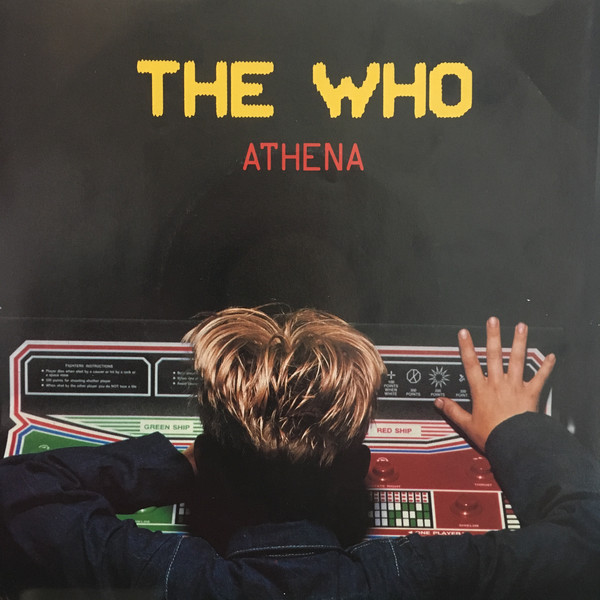
The song was written about actress Theresa Russell who Pete had a crush on that the time. He did a demo at the time called “Teresa for the Face Dances Album. She was then going with Nic Roeg. By the time The Who came to record the song for It’s Hard, Teresa Russell had wed Nic Roeg. The guitarist was nervous about publicly naming his crush so he renamed it “Athena.” What Pete’s then-wife Karen Astley felt about this we don’t know.
The song reached #28 in the Billboard 100, #5 in Canada, and #40 in the UK in 1982.
Roger Daltrey felt that concealing the subject of the song’s true identity was a mistake. “Pete was talking to me about Nick Roeg’s girlfriend and how he fancied her, and that song was written about her – but then it changed into ‘She’s a bomb’.
Roger Daltrey: I’ve got a psychological problem with it,” “It’s a great record; there’s so much energy on that thing, but I still don’t think there’s a center to that song. The fact that he changed the title in that and didn’t stick to what it was supposed to be lost its center to me.”
Pete Townshend:The song was written after I had been to see The Wall with my friend Bill Minkin and the actress Theresa Russell who was about to marry the film director Nic Roeg with whom I hoped to work on a new version of Lifehouse. I got drunk as usual, but I had taken my first line of cocaine that very evening before meeting her and decided I was in love. When I came to do the vocal on the following day I was really out of my mind with frustration and grief because she didn’t reciprocate
From Songfacts
Pete Townshend wrote this song the day after he was knocked back by American actress Theresa Russell.
The guitarist told TheWho.net how he went to see The Wall with his friend Bill Minkin and Russell. (The actress was engaged to the film director Nic Roeg with whom he was planning to work on a new version of Lifehouse.) “I got drunk as usual, but I had taken my first line of cocaine that very evening before meeting her and decided I was in love,” Townshend explained. “When I came to do the vocal on the following day [February 15, 1980] I was really out of my mind with frustration and grief because she didn’t reciprocate.”
Teresa Demo
Athena
I had no idea how much I need her In peaceful times I hold her close and I feed her My heart starts palpitating When I think my guess was wrong But I think I’ll get alone She’s just a girl She’s a bomb
Athena All I ever want to do is please her My life has been so settled And she’s the reason Just one word from her And my troubles are long gone But I think I’ll get along She’s just a girl She’s a bomb She’s a bomb Just a girl, just a girl Just a girl, just a girl Just a girl, just a girl She’s just a girl
Athena My heart felt like a shattered glass in an acid bath I felt like one of those flattened ants You find on a crazy path I’d have stopped myself to give her time She didn’t need to ask Was I a suicidal psychopath She’s just a girl She’s a bomb She’s just a girl She’s a bomb Consumed There was a beautiful white horse I saw on a dream stage He had a snake the size of a sewer pipe Livin’ in his rib cage
I felt like a pickled priest Who was being flambed You’ve got me requisitioned blondie She’s just a girl She’s a bomb I’m happy She’s a bomb I’m ecstatic Just a girl, just a girl Just a girl, just a girl Just a girl, just a girl Just a girl
Look into the face of a child Measure how long you smiled Before the mem’ry claimed How long would children remain How long could children remain
Athena You picked me up by my lapels And screamed “leave her” I felt like waking up in heaven On an empty meter And now you’re stuck With a castrated leader And I hate the creep I didn’t mean that She’s a bomb I just said it She’s a bomb Please She’s a bomb
Athena I had no idea how much I need her My life has been so settled And she’s the reason Just one word from her And my troubles are long gone Ooh but I get along She’s just a girl She’s a bomb She’s just a girl She’s a bomb
Well, this rock and roll has got to stop Junior’s head is hard as rock Now junior, behave yourself
This song was written and originally recorded by Larry Williams, a black rock singer admired by John Lennon. The song is about a rebellious kid who loves rock and roll. The Beatles chose cover songs that fit them very well.
I really like Larry’s version of this also. His version is rooted in the fifties with rhythm and blues… With Lennon’s voice, the Beatles version makes it sound like an early garage rock/punk record.
This Larry Williams song didn’t get much traction in the charts when it was released in 1959 but the British bands were listening and covering this song. The Beatles covered three of his songs on albums… Slow Down, Bad Boy, and Dizzy Miss Lizzy.
One of the very good covers The Beatles did early on. Nice guitar and Lennon’s voice comes right at you. The song was included on the American Beatles album The Beatles VI. In the UK it wasn’t on an album until the release of A Collection of Beatles Oldies in 1966. It was released in December just as the Beatles were starting on Sgt Peppers. Having an Oldies album released only 4 years after you start recording is odd but it was perfect timing because they would never sound the same again.
Bad Boy
A bad little kid moved into my neighborhood
He won’t do nothing right just sitting down and look so good
He don’t want to go to school and learn to read and write
Just sits around the house and plays the rock and roll music all night
Well, he put some tacks on teachers chair
Puts chewing gum in little girl’s hair
Man, junior, behave yourself
Buy every rock and roll book on the magazine stand
Every dime that he get is lost to the jukebox man
Well, he worries his teacher till at night she’s ready to poop
From rocking and a-rolling spinning in a hula hoop
Well, this rock and roll has got to stop
Junior’s head is hard as rock
Now junior, behave yourself
Going tell your mama you better do what she said
Get to the barber shop and get that hair cut off your head
He took your canary and he fed it to the neighbors cat
He gave the cocker spaniel a bath in mother’s laundromat
Well, mama’s head has got to stop
Junior’s head is hard as rock
Now junior, behave yourself
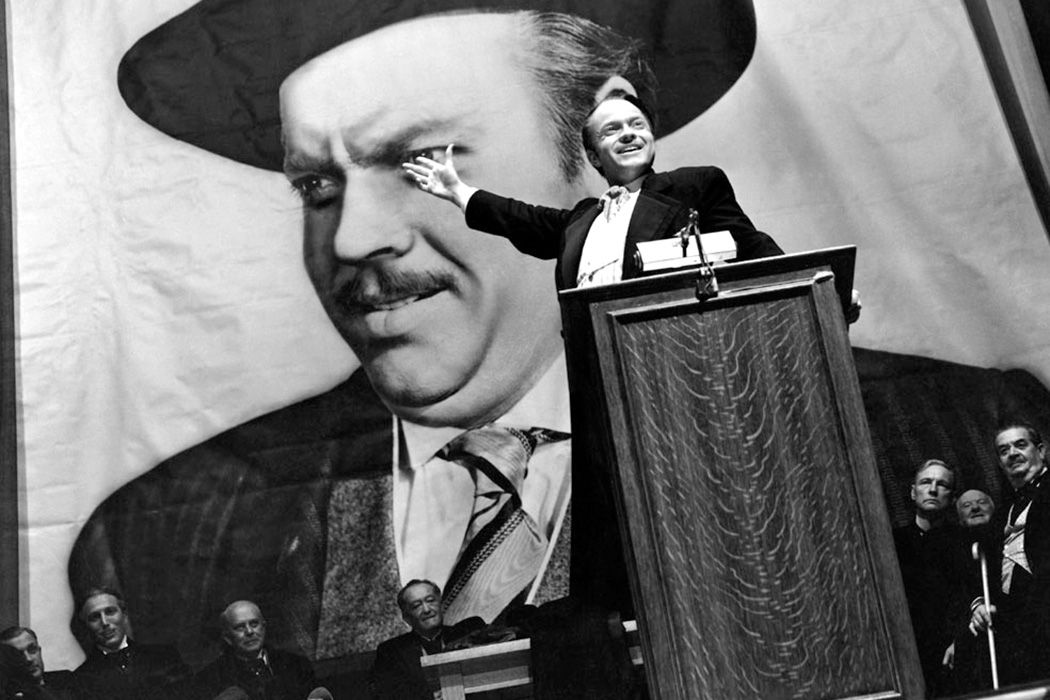
If you are reading this to hear me say “it’s overrated” then you have come to the wrong place. Some say it’s the best film ever made…I will not argue that statement. I have watched this 1941 film at least 8 times and have enjoyed it every single time. Before I watched this movie I had read all the accolades the movie received through the years. This is one of the few movies that lived up to them.
Orson Welles is the most natural actor in this movie I’ve ever seen. He IS Charles Foster Kane.
The camera work is still fantastic and holds up to this day and it’s been copied over and over. The below floor level shots and others make it a beautiful film to watch. You can see this movie’s influence in a countless number of movies that followed.
Orson based his character off of William Randolph Hearst and his mistress, actress Marion Davies. That fact brought Orson trouble that would haunt him. Hearst owned everything at that time…newspapers and businesses across the globe and had as much influence as a person could have. He didn’t care too much for this movie because it was too close for comfort. If you ever get the chance…see the documentary “The Battle Over Citizen Kane.”
He stopped advertisements in his newspapers and did everything in his power to stop and sabotage the film.
Orson made some great movies after this but never…to me reached this pinnacle again. That is really unfair because I don’t think anyone has reached this high again.
The plot? The movie, unlike other movies at the time, starts at the end. The mighty Charles Foster Kane dies but before he does he utters one last word “Rosebud” and everybody tries to find out what he meant by that. Reporters will go interview everyone in his life trying to find the answer and all the while…Kane’s story is being told. One of the lines in the movie is “I don’t think any word can explain a man’s life.” That is true but it’s what “Rosebud” represents that helps make this movie great.
The movie flows so well from beginning to end.
When the silent movie era ended…the first “talkies” were clumsy with the actors/actresses overacting with their theater training. The studios were also using bulky cameras and microphones that left the scenes stationary. This movie ended all of that. Citizen Kane changed the cinema for good. Up until this movie, we got the same old shots, stiff acting, theater makeup, and mediocre music scores… You couldn’t get by with that anymore after this movie.
Is it the best movie ever? That is subjective but for me, the answer is…yes.
Here is the cast from Wiki
Joseph Cotten as Jedediah Leland, Kane’s best friend and a reporter for The Inquirer. Cotten also appears (hidden in darkness) in the News on the March screening room.
Dorothy Comingore as Susan Alexander Kane, Kane’s mistress and second wife.
Agnes Moorehead as Mary Kane, Kane’s mother.
Ruth Warrick as Emily Monroe Norton Kane, Kane’s first wife.
Ray Collins as Jim W. Gettys, Kane’s political rival for the post of Governor of New York.
Erskine Sanford as Herbert Carter, editor of The Inquirer. Sanford also appears (hidden in darkness) in the News on the March screening room.
Everett Sloane as Mr. Bernstein, Kane’s friend and employee at The Inquirer.
William Alland as Jerry Thompson, a reporter for News on the March. Alland also voices the narrator of the News on the March newsreel.
Paul Stewart as Raymond, Kane’s butler.
George Coulouris as Walter Parks Thatcher, a banker who becomes Kane’s legal guardian.
Fortunio Bonanova as Signor Matiste, vocal coach of Susan Alexander Kane.
Gus Schilling as John, headwaiter at the El Rancho nightclub. Schilling also appears (hidden in darkness) in the News on the March screening room.[8]
Philip Van Zandt as Mr. Rawlston, News on the March producer.[8]
Georgia Backus as Bertha Anderson, an attendant at the library of Walter Parks Thatcher.[8]
Harry Shannon as Jim Kane, Kane’s father.[8]
Sonny Bupp as Charles Foster Kane III, Kane’s son.
Buddy Swan as Charles Foster Kane, age eight.
Orson Welles as Charles Foster Kane, a wealthy newspaper publisher
This winds up Money week here at channel Powerpop! I hope you enjoyed it and thanks for tuning in! There were many songs that were left off because there are so many that reference money. I’ve covered some already like Cyndi Lauper’s Money Changes Every Thing and Warren Zevon’s Lawyers, Guns and Money.
Thanks for playing along this week. Occasionally I’ll work off of a theme…but most of the time I like staying random.
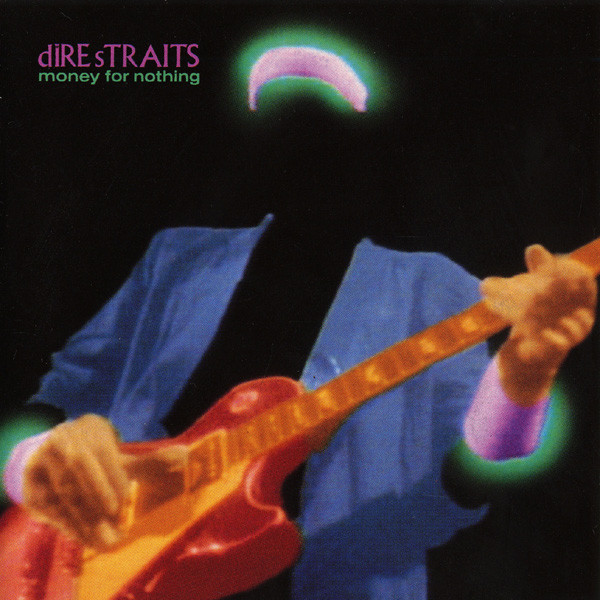
I was going to close out with Money For Nothing but…
Deke was commenting this week and brought up this song by this great Canadian Power Pop band Sloan. Between Dave and Deke I’m learning more about Canadian music. Before them, all I knew was Gordon Lightfoot, Neil Young, Rush, and The Guess Who.
The more I listen to this band the more I like them. They have hooks galore, great bass lines, and cool pop singing…to go along with a crunchy hard guitar. The song was released in 1998 and peaked at #7 in Canada.
It was on the album Navy Blues which peaked at #5 in Canada.
In a 2000 poll conducted by the music magazine Chart, the song was voted the 12th greatest Canadian song of all time.
Turn it up loud…and have a GREAT FRIDAY
Money City Maniacs
All you’ve found is another back door That no one sees a reason for At the heart of the travelling band You have to understand There’s a driving need to hit the yellow line
And the joke is when he awoke his Body was covered in coke fizz And the joke is when he awoke his Body was covered in coke fizz
Hey you You¹ve been around for a while If you’ll admit that you were wrong Then we¹ll admit that we¹re right Hey you Come on along for the ride We¹ll hit the money city if it takes us all night
And the joke is when he awoke his Body was covered in coke fizz And the joke is when he awoke his Body was covered in coke fizz
Hey you You¹ve been around for a while If you¹ll admit that you were wrong Then we¹ll admit that we¹re right Take the heart of the travelling band You¹ll never understand that All they know is the yellow line, yeah
And the joke is when he awoke his Body was covered in coke fizz And the joke is when he awoke his Body was covered in coke, yeah yeah yeah Joke is when he awoke his Body was covered in coke, yeah yeah yeah Joke is when he awoke his Body was covered in coke fizz
This was the first video played on MTV Europe. The network went on the air on August 1, 1987, six years after MTV in the US… This was back when MTV (Music Television) actually played music but now has questionable shows.
The clipped guitar sound won me over the first time I heard this.
In the US, this stayed at #1 for three weeks. It also won a Grammy in 1986 for best Best Rock Vocal Performance by a Duo or Group.
Dire Straits recorded this in Montserrat. Sting was on vacation there and came by help. Sting sings on this and helped write it…Sting and Knophler were credited as songwriters. Sting did not want a songwriting credit, but his record company did because they would have earned royalties from it. It’s been said that the line “I Want My MTV” sounded very similar to a song Sting wrote for The Police: “Don’t Stand So Close To Me.”…well the same amount of syllables anyway.
The song was banned in Canada in 2011.
One offended listener complained to the Canadian Broadcast Standards Council in 2010 about the song’s inclusion of a homosexual slur, and the CBSC ruled that the use of the gay slur breaches the national broadcast authority’s code of ethics. The CBSC ruled that the song can be played on the radio in an edited form without the slur.
The CBSC ruling panel said that even though the song has been accepted for the past 25 years it does not mean that its lyrics are acceptable today. At least two stations, CIRK FM in Edmonton and CFRQ-FM in Halifax, played the unedited version of “Money for Nothing” repeatedly for one hour out of protest.
Later in the year, the CBSC left it up to the stations to decide and the ban was lifted.
Mark has said he was writing it to show how narrow-minded people could be. He was a journalist at one time.
Mark Knopfler: “I was reporting, verbatim, what a particular guy thought about music,” he said. “I transcribed his words there and then. He was a meathead. To him being a rock star was easy, hence ‘that ain’t working.'”
“Weird Al” Yankovic parodied this for his movie UHF. The parody is called “Beverly Hillbillies (Money For Nothing).” Strait’s frontman, Mark Knopfler, OK’d the parody under one condition: Knopfler would play guitar on the song.
The song peaked at #1 in the Billboard 100, #1 in Canada, #4 in the UK, and #4 in New Zealand.
From Songfacts
This song is about rock star excess and the easy life it brings compared with real work. Mark Knopfler wrote it after overhearing delivery men in a New York department store complain about their jobs while watching MTV. He wrote the song in the store sitting at a kitchen display they had set up. Many of the lyrics were things they actually said.
The innovative video was one of the first to feature computer generated animation, which was done using an early program called Paintbox. The characters were supposed to have more detail, like buttons on their shirts, but they used up the budget and had to leave it as is. It won Best Video at the 1986 MTV Video Music Awards.
The video was directed by Steve Barron, who also directed the famous a-ha video for “Take On Me” and Thomas Dolby’s “She Blinded Me With Science.”
Mark Knopfler took the directive to write an “MTVable song” quite literally, using the network’s tagline in the lyrics. The song ended up sounding like an indictment of MTV, but Les Garland, who ran the network, made it clear that they loved the song and were flattered by it – hearing “I Want My MTV” on the radio was fantastic publicity even if there were some unfavorable implications in the lyrics.In the book I Want My MTV, various people who worked at the network explain that Dire Straits’ manager asked the network what they could do to get on the network and break through in America. Their answer was: write a hit song and let one of the top directors make a video.
Steve Barron was dispatched to do the video, and charged with the task of convincing Mark Knopfler, who hated videos, to do one that was groundbreaking. Barron says that Knopfler wasn’t into the idea, but his girlfriend – an American – was at the pitch and loved the idea. Knopfler agreed (in part because he didn’t have to appear in it), and Barron hired a UK production company called Rushes to work on it. Said Barron: “The song is damning to MTV in a way. That was an ironic video. The characters we created were made of televisions, and they were slagging off television. Videos were getting a bit boring, they needed some waking up. And MTV went nuts for it. It was like a big advertisement for them.”
The line “I want my MTV” was the basis of the cable network’s promotional campaign. They played clips of musicians saying, and often times, screaming the line between videos.
The album version runs 8:26 with an extended outro. The single was cut down to 4:38.
Mark Knopfler played a Les Paul Junior plugged into a Laney amp on this track. Producer Neil Dorfsman recalled in Sound On Sound magazine May 2006: “We were going for a ZZ Top sound, but what we ended up getting was kind of an accident.”
Twenty-five years after the song’s release it was banned from public broadcast in Canada after one person complained about it being homophobic. The original version included a description of a singer as “that little faggot with the earring and the make-up” plus two other uses of the word “faggot,” although a cleaned-up edition was made available, Oz-FM in Newfoundland played the first edition in February 2010 at 9:15 at night. The result was a single complaint and the Canadian Broadcast Standards Council ruled that the unedited version of the song was unacceptable for air play on Canadian radio stations because it “refers to sexual orientation in a derogatory way.”
Knopfler has pointed out the song was written from the viewpoint of a stupid character who thinks musicians make their “money for nothing” and his stupidity is what leads him to make ignorant statements. Speaking in late 1985 to Rolling Stone the Dire Straits songwriter expressed his feelings about people who react angrily to the song. He said: “Apart from the fact that there are stupid gay people as well as stupid other people, it suggests that maybe you have to be direct. I’m in two minds as to whether it’s a good idea to take on characters and write songs that aren’t in the first person.”
Common sense finally prevailed on August 31, 2011 when the Canadian Broadcast Standards Council put an end to the ban and allowed individual radio stations to once again decide for themselves whether to play the classic rock tune.
In 2005, the duo Deep Dish sampled this on their song “Flashing For Money,” which was based on their song “Flashdance” (not the Irene Cara song). It was the first time Dire Straits allowed one of their songs to be sampled. “Flashing For Money” was released on the B-side of Deep Dish’s single “Say Hello.”
Reel Big Fish released an album in 2007 called Monkeys For Nothin’ And The Chimps For Free. The title is a takeoff on this song.
Money For Nothing
(I want my, I want my MTV) (I want my, I want my MTV) (I want my, I want my MTV) (I want my, I want my MTV)
Now look at them yo-yo’s, that’s the way you do it You play the guitar on the MTV That ain’t workin’ that’s the way you do it Money for nothin’ and your chicks for free
Now that ain’t workin’ that’s the way you do it Lemme tell ya, them guys ain’t dumb Maybe get a blister on your little finger Maybe get a blister on your thumb
We got to install microwave ovens, custom kitchen deliveries We got to move these refrigerators, we gotta move these color TV’s
See the little faggot with the earring and the make up Yeah buddy that’s his own hair That little faggot got his own jet airplane That little faggot he’s a millionaire
We got to install microwave ovens, custom kitchen deliveries We got to move these refrigerators, we gotta move these color TV’s
We got to install microwave ovens, custom kitchen deliveries We got to move these refrigerators, we gotta move these color TV’s
I shoulda learned to play the guitar I shoulda learned to play them drums Look at that mama she got it stickin’ in the camera man We could have some-
And he’s up there, what’s that? Hawaiian noises? Bangin’ on the bongos like a chimpanzee That ain’t workin’ that’s the way you do it Get your money for nothin’, get your chicks for free
We got to install microwave ovens, custom kitchen deliveries We got to move these refrigerators, we gotta move these color TV’s
Listen here Now that ain’t workin’ that’s the way you do it You play the guitar on the MTV That ain’t workin’, that’s the way you do it Money for nothin’ and chicks for free Money for nothin’ chicks for free Money for nothin’ chicks for free Money for nothin’ chicks for free Money for nothin’ chicks for free Money for nothin’ chicks for free Money for nothin’ get your chicks for free Money for nothin’ and the chicks for free Money for nothin’ and the chicks for free
Look at that, look at that Money for nothin’ chicks for free (I want my, I want my MTV) Money for nothin’ chicks for free (I want my, I want my MTV) Money for nothin’ chicks for free (I want my, I want my MTV) Money for nothin’ chicks for free (I want my, I want my MTV) Easy, easy money for nothin’ (I want my, I want my MTV) Easy, easy chicks for free (I want my, I want my MTV) Easy, easy money for nothin’ (I want my, I want my MTV) Chicks for free (I want my, I want my MTV) That ain’t workin’
Money for nothing, chicks for free Money for nothing, chicks for free
This song came to mind first when I thought about doing songs containing songs that reference money. I couldn’t for the life of me think who did it until John told me Monday. Thanks, John. I’ve heard this used on countless shows and documentaries.
The songwriting/production duo of Kenneth Gamble and Leon Huff co-wrote this song with Anthony Jackson, who also played bass on the track. Gamble and Huff wrote many songs that helped define the Philadelphia Soul sound.
The song peaked at #9 in the Billboard 100, and #29 in Canada in 1974.
For The Love Of Money has become the modern anthem for anyone who’s hustling to make the all mighty dollar. The bass in this song is filtered with a reverse echo…that is what drew me into it. The phrase “For the Love of Money” comes from a well-known Bible verse, 1 Timothy 6:10: “For the love of money is the root of all evil: which while some coveted after, they have erred from the faith, and pierced themselves through with many sorrows.”
From Songfacts
A key contributor to the song was Joe Tarsia, who was the engineer at Sigma. He had just installed an Eventide phaser in the control room, and when Jackson started playing, Tarsia tried recording the bass (with a wah-wah pedal) through the phaser. Gamble loved the effect, which provided a unique sound that made the song stand out on the airwaves.
Tarsia added effects to the background vocals as well, creating a reverse echo where the echo precedes the vocal, something Jimmy Page did on a few Led Zeppelin tracks, including “Whole Lotta Love.”
Often misinterpreted as a song celebrating the accumulation of money, it’s actually one of the more unadorned warnings about the sordid side of the mighty dollar, pointing out the things people will do for it: cheat, lie, even steal from their mother. The song was written at a time when the songwriters Gamble and Huff were reaping the financial rewards of their success, but also reconciling it with their spiritual beliefs (Gamble had recently converted to Islam). The duo often wrote messages into their songs gleaned from their everyday conversations. On this track, they are very clear: “Don’t let money change you.”
With the chorus of “Money, money, money, money,” this has been used in many promos, TV shows and movies where greed or the pursuit of the almighty dollar are concerned.
TV shows to use the song include:
Scandal (“The Other Woman” – 2012) Hawaii Five-0 (“Kuka’awale” – 2015) CSI: Crime Scene Investigation (“Man Up” – 2011) Friends (“The One in Vegas: Part 1” – 1999) The Fresh Prince of Bel-Air (“Winner Takes Off” – 1993) Moonlighting (“Brother, Can You Spare a Blonde?” – 1985)
Movies include:
Deepwater Horizon (2016) Think Like a Man Too (2014) The Honeymooners (2005) All About the Benjamins (2002) Driven (2001) For Richer or Poorer (1997) Sister Act 2: Back in the Habit (1993) Strictly Business (1991) New Jack City (1991) Action Jackson (1988)
There is also a 2012 film called For The Love Of Money that uses the song.
Some people got to have it Some people really need it Listen to me y’all, do things, do things, do bad things with it You want to do things, do things, do things, good things with it Talk about cash money, money Talk about cash money- dollar bills, y’all
For the love of money People will steal from their mother For the love of money People will rob their own brother For the love of money People can’t even walk the street Because they never know who in the world they’re gonna beat For that lean, mean, mean green Almighty dollar, money
For the love of money People will lie, Lord, they will cheat For the love of money People don’t care who they hurt or beat For the love of money A woman will sell her precious body For a small piece of paper it carries a lot of weight Call it lean, mean, mean green
Almighty dollar
I know money is the root of all evil Do funny things to some people Give me a nickel, brother can you spare a dime Money can drive some people out of their minds
Got to have it, I really need it How many things have I heard you say Some people really need it How many things have I heard you say Got to have it, I really need it How many things have I heard you say Lay down, lay down, a woman will lay down For the love of money All for the love of money Don’t let, don’t let, don’t let money rule you For the love of money Money can change people sometimes Don’t let, don’t let, don’t let money fool you Money can fool people sometimes People! Don’t let money, don’t let money change you It will keep on changing, changing up your mind









 PowerPop... An Eclectic Collection of Pop Culture