
Tim Buckley – Buzzin’ Fly

I first heard Tim Buckley on, of all things, The Monkees television show. As a kid I remember hearing how great his voice was. I was around 7 so I had no clue who he was. Here is that clip that I saw around 1974. The first time I saw Frank Zappa was on the Monkees as well. At the end of the Monkee’s second and final season, they had almost full control and they used it as much as possible to promote artists they liked.

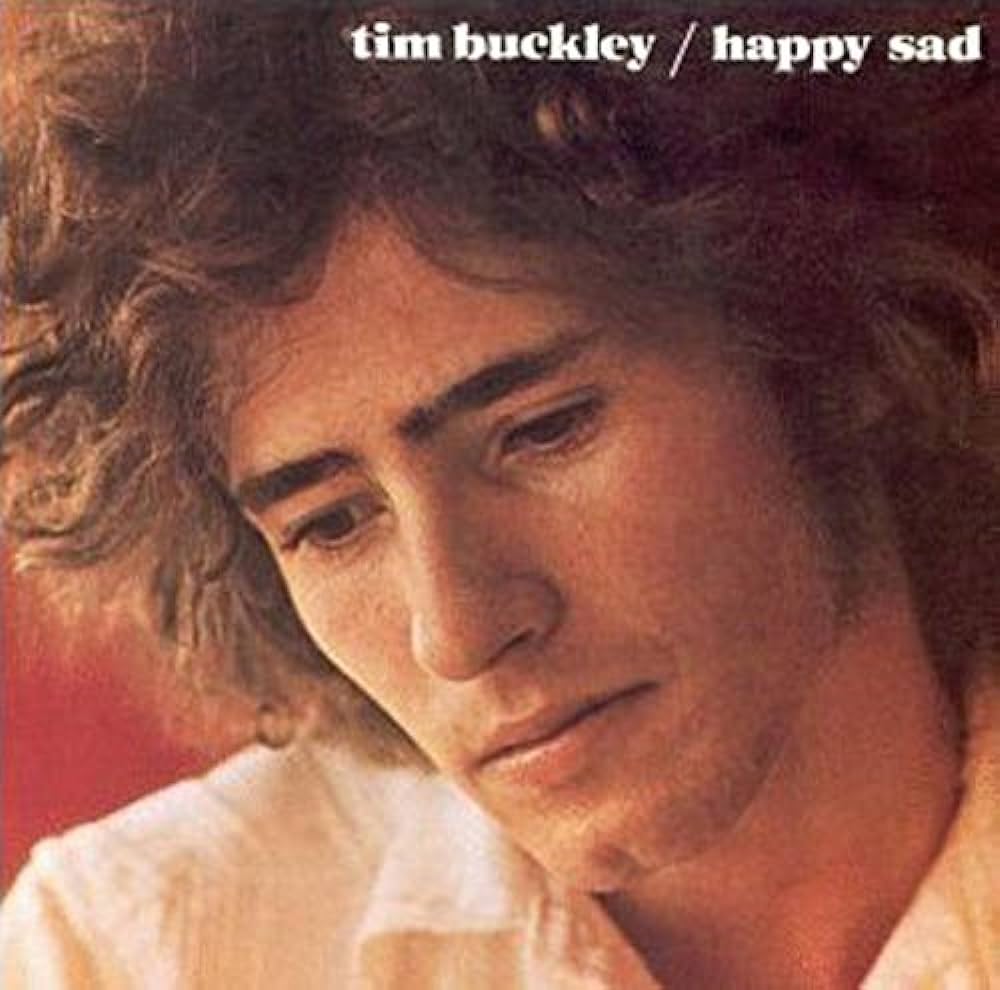
Buzzin’ Fly was released in 1969 on the Happy Sad album. On this album, he was transitioning from his earlier folk sound to a more jazz-influenced and experimental style. The album was produced by former Lovin’ Spoonful members  Zal Yanovsky and Jerry Yester.

This was released at the height of his popularity. The album peaked at #81 on the Billboard Album Charts in 1969. When he started experimenting and moving away from his folk sound it upset some of his long-time fans. After this album, his popularity decreased because he moved toward a jazz feel.

This song was written before the other songs on the album. Buzzin’ Fly was written around 1966. It was performed with his high school band Harlequin 3, with bassist Jim Fielder and later lyricist, Larry Beckett.

The song became one of the most requested songs in concert that he had at the time. Gregg Allman called Tim Buckley and wanted to do an album with him in 1975 and Buckley agreed…but the world would lose Tim Buckley after an overdose in June of 1975 at age 28.

Buzzin’ Fly

Just like a buzzin’ flyI come into your lifeNow I float awayLike honey in the sunWas it right or wrongI couldn’t sing that song anyway

Oh, but darlin’Now I rememberHow the sun shown downAnd how it warmed your prayin’ smileWhen all the love was there

You’re the one I talk aboutYou’re the one I think aboutEverywhere I goAnd sometimes honeyIn the mornin’Lord, I miss you so

That’s how I know I found a homeThat’s how I know I found a home

Oh, hear the mountains singingLord, I can hear them ringing, darlin’,Out your nameAnd tell me if you knowJust how the river flowsDown to the sea

Now I wanna knowEverything about youI wanna knowEverything about you

What makes ya smileWhat makes ya wildWhat makes ya love me this wayDarlin’ I wanna knowDarlin’ I wanna know

You’re the one I talk aboutYou’re the one I think aboutEverywhere I goAnd sometimes honeyIn the mornin’Lord, I miss you so

That’s how I know I found a homeThat’s how I know I found a home

A-walkin’ hand in handAnd all along the sandA seabird knew your nameHe knew your love was growin’Lord, I think it knows it’s flowin’Thru you and me

Ah, tell me darlin’When I should leave you,Ah, tell me darlin’I don’t want to grieve you…

Just like a buzzin’ flyI come into your lifeNow I float awayLike honey in the sunWas it right or wrongI couldn’t sing that song anyway

Oh, but darlin’Now I rememberHow the sun shown downAnd how it warmed your prayin’ smileWhen all the love was there

You’re the one I talk aboutYou’re the one I think aboutEverywhere I goAnd sometimes honeyIn the mornin’Lord, I miss you so…

Lovin’ Spoonful – Did You Ever Have to Make Up Your Mind?

I grew up with a Lovin’ Spoonful Greatest Hits album. Like The Rascals (or Young Rascals) they were primarily a singles band more known for their hits than their albums.

This song was written by John Sebastian. He said he was influenced by a pair of sisters he met at a summer camp where he was a counselor. Neither sister was interested in Sebastian, even though he taught himself the autoharp in an attempt to impress them.

The song did very well peaking at #2 on the Billboard 100, #6 in Canada, and #5  in New Zealand in 1966. A good song by the Lovin’ Spoonful who had a string of hits in the sixties. They had a short window…1966-1969 but they had 14 songs in the Billboard 100. 1 number one and 7 top ten hits.

Their songs are grounded in folk, jug music,  and blues. I don’t know if it is possible to be in a bad mood while listening to them. They are now staples on oldies radio stations.

Zal Yanovsky left in 1967 after being dissatisfied with John’s more personal songwriting and a pot conviction. John Sebastion left the group on 1968 and with him gone the hits dried up.

A fun band to listen to. You won’t hear rock operas or rocking solos but you will hear a band that sounds like they are having a good time.

They reunited once in 1979 and for their Rock and Roll Hall of Fame induction in 2000.

As the ’60s drew to a close, The Lovin’ Spoonful disbanded and Sebastian started working on a variety of projects. He wrote music for the Care Bear series, published children’s books, made harmonica instruction videos, and, wrote the theme song to the TV show Welcome Back, Kotter, which was a #1 hit.

Did You Ever Have to Make Up Your Mind?

Did you ever have to make up your mind?
And pick up on one and leave the other behind?
It’s not often easy and not often kind
Did you ever have to make up your mind?

Did you ever have to finally decide?
And say yes, to one and let the other one ride?
There’s so many changes and tears you must hide
Did you ever have to finally decide?

Sometimes there’s one with big blue eyes, cute as a bunny
With hair down to here, and plenty of money
And just when you think she’s that one in the world
Your heart gets stolen by some mousy little girl

And then you know you’d better make up your mind
And pick up on one and leave the other behind
It’s not often easy and not often kind
Did you ever have to make up your mind?

Sometimes you really dig a girl the moment you kiss her
And then you get distracted by her older sister
When in walks her father and takes you in line
And says, “Better go on home, son, and make up your mind”

Then you bet you’d better finally decide
And say yes to one and let the other one ride
There’s so many changes and tears you must hide
Did you ever have to finally decide?

Lovin’ Spoonful – Do You Believe In Magic

All it took was for me to get a greatest hits album by the Lovin’ Spoonful and I was a fan. This song was their debut single and it’s still heard today on the radio and in advertisements. The song peaked at #9 on the Billboard 100 and #3 in Canada in 1965.

They turned down a deal from Phil Spector because they didn’t want to be swallowed up under his name, that was probably a smart move. The Lovin’ Spoonful signed to a new record label called Kama Sutra. This was the first song they recorded for the label, and it was the first of a string of hits for the group

Sebastian said the autoharp intro was inspired by Martha and the Vandellas Heat Wave.  “It had an ascending chord sequence that I was fascinated with. By chance, I was playing the autoharp, experimenting with electrifying it through this big amplifier. I realized that if I turned a few of the major 7ths to minor 7ths, I would have those chords. I also wanted that groove from  ‘Buzz Buzz Buzz.'”

This was written by John Sebastian, who formed The Lovin’ Spoonful with his friend, Zal Yanovsky. Sebastian and Yanovsky were in a group called The Mugwumps and made a name for themselves playing clubs in Greenwich Village.

When the other Mugwumps – Mama Cass Elliot and Denny Doherty – moved to California and formed The Mamas And The Papas, they formed the band and Sebastian began focusing on songwriting. The Lovin’ Spoonful started playing electric instruments to get away from the folk music sound and attract a younger contemporary rock audience.

As the ’60s drew to a close, The Lovin’ Spoonful disbanded and Sebastian started working on a variety of projects. He wrote music for the Care Bear series, published children’s books, made harmonica instruction videos, and, he wrote the theme song to the TV show Welcome Back, Kotter, which was a #1 hit. Dave’s site has a post about this song. 

John Sebastian: “We were playing pretty steadily for the local people from Greenwich Village who were part of the jazz scene or part of the kind of downtown ‘in crowd.’ They were ‘finger poppers,’ guys who played chess, ‘beatniks.’ But there was this one particular night as we were playing, I looked out in the audience and saw this beautiful 16-year-old girl just dancing the night away. And I remember Zal and I just elbowed each other the entire night because to us that young girl symbolized the fact that our audience was changing, that maybe they had finally found us. I wrote ‘Do You Believe In Magic’ the next day.”

Alan Merrill who wrote I Love Rock and Roll: “This was mid-’60s. The Lovin’ Spoonful were starting, and Laura Nyro said, ‘Why don’t you audition for the Lovin’ Spoonful? Now you know how to play bass, they’re looking for a bass player. But you’d have to quit school.’ And I said, ‘I don’t want to quit school.’ So I went over to her house after school one day, and she put this record on, and it was ‘Do You Believe In Magic.’ She just looked at me and said, ‘This is what you didn’t go to do.’ And I was like, ‘Oh, s–t, it’s gonna be a #1 record. I blew it. I could have been the 14-year-old bass player in the Lovin’ Spoonful.'”

I wish I had this set…yea I would love to have it at home…the wife wouldn’t like it but I pick my battles well. And this one I would pick…and I’d take the Saint Bernard that appears also.

Do You Believe In Magic

Do you believe in magic in a young girl’s heart
How the music can free her, whenever it starts
And it’s magic, if the music is groovy
It makes you feel happy like an old-time movie
I’ll tell you about the magic, and it’ll free your soul
But it’s like trying to tell a stranger ’bout rock and roll

If you believe in magic don’t bother to choose
If it’s jug band music or rhythm and blues
Just go and listen it’ll start with a smile
It won’t wipe off your face no matter how hard you try
Your feet start tapping and you can’t seem to find
How you got there, so just blow your mind

If you believe in magic, come along with me
We’ll dance until morning ’til there’s just you and me
And maybe, if the music is right
I’ll meet you tomorrow, sort of late at night
And we’ll go dancing, baby, then you’ll see
How the magic’s in the music and the music’s in me

Yeah, do you believe in magic
Yeah, believe in the magic of a young girl’s soul
Believe in the magic of rock and roll
Believe in the magic that can set you free
Ohh, talking ’bout magic

Do you believe like I believe (Do you believe in magic)
Do you believe like I believe (Do you believe, believer)
Do you believe like I believe (Do you believe in magic)

Lovin’ Spoonful – You Didn’t Have to Be So Nice

The Lovin’ Spoonful’s songs seem so effortlessly written and performed. They were popular for a short while in the mid-sixties. They influenced many bands including The Beatles who released Good Day Sunshine as a nod to The Lovin’ Spoonful’s song Daydream.

In the 1980s I really got into this band. I purchased one of their many greatest hits. I first heard of John Sebastian in the 70s when he wrote and sang the theme song of  TV show Welcome Back Cotter called “Welcome Back” which went to #1.

They were considered by TV producers to be in a television show but they were dropped over a conflict of song publishing rights. After an audition process, the producers figured it was more trouble than they expected. For one thing, the Spoonful were writing their own music at this point, and the show was not interested in giving up the publishing rights to the songs written for the show, so it really did not make sense for either party, and the producers instead turned to open auditions for the show. The Monkees were found soon after that. 

Brian Wilson said this song influenced one of the Beach Boys’ best songs…God Only Knows. The group was only active from 1965 to 1968, which John Sebastian described as “two glorious years and a tedious one.” John Sebastian wrote the majority of their songs. He had a #1 hit as a solo artist in 1976 with “Welcome Back,” the theme song to the TV series Welcome Back, Kotter.

This song was written by John Sebastian and bassist Steve Boone.

Lovin’ Spoonful played what they called “jug band” music and like the Rascals, they were more of a singles band than an album band. In 1967 Zal Yanovsky left the band citing musical differences. In 1968 Sebastian left for a solo career and the band carried on until 1969 without a significant hit.

The song peaked at #10 in the Billboard 100 and #4 in Canada in 1965.

John Sebastian:  “We started off in a world of 45 singles, so our only game still was three minutes of heaven every time out. That was all. We thought of it as four-man Phil Spector music. We wanted it to have that big quality, but we didn’t want to hire the Wrecking Crew.”

“Our producer Eric Jacobsen understood something about this funny hybrid that we were working on,” “Things like the chimes on ‘You Didn’t Have to Be So Nice’ were our attempts at creating that kind of vibe: harmonica, slide whistles and penny whistles. I hate calling it folk-rock. They called The Byrds folk-rock and then they were too lazy to come up with something else for our band, but we weren’t really drawing from the Pete Seeger, Bob Dylan catalog. It was a time of a lot of seriousness, and a lot of fake seriousness and people talking about Important Things. And Loving Spoonful didn’t really go for that. We were just trying to entertain.”

You Didn’t Have To Be So Nice

You didn’t have to be so nice
I would have liked you anyway
If you had just looked once or twice
And gone upon your quiet way

Today I said the time was right for me to follow you
I knew I’d find you in a day or two
And it’s true

You came upon a quiet day (ooh)
You simply seemed to take your place (ooh)
I knew that it would be that way (ooh)
The minute that I saw your face (ooh)

And when we’ve had a few more days (when we’ve had a few more days)
I wonder if I’ll get to say (wonder if I’ll get to say)
You didn’t have to be so nice (be so nice)
I would have liked you anyway (would have liked)

Today I said the time was right for me to follow you
I knew I’d find you in a day or two
And it’s true

You didn’t have to be so nice (didn’t have to be so nice)
I would have liked you anyway (would have liked you anyway)
If you had just looked once or twice (once or twice)
And gone upon your quiet way (quiet way)

Lovin’ Spoonful – Summer In The City

This is one of those transport songs. It takes me to a time when I wasn’t around…the mid sixties…at least my interpretation of it.

They were a great singles band but had a short window. From 1965 to 1967 they had 7 top 10 hits. This single peaked at #1 in the Billboard 100, #1 in Canada, #11 in the UK, and #3 in New Zealand in 1966.

The song was a collaboration between John Sebastian, Steve Boone (bass player), and John Sebastian’s brother Mark. Mark was 15 years old when he wrote a poem that John used as the basis for the song – John especially liked the line that went, But at night there’s a different world.

Steve Boone came up with the middle eight, which John thought sounded like the Gershwin composition “An American in Paris,” where the orchestra implies the sound of traffic and city noises. This gave him the idea of incorporating car horns and other city ambiance into the track

Things started to fall apart due to repercussions from guitarist Zal Yanovsky and bassist Steve Boone’s 1966 pot bust in San Francisco. They were pressured into a deal where they agreed to introduce an undercover cop to partygoers in the city, one of whom got busted. A backlash ensued that damaged their reputation in the counterculture.

In 1967 Zal Yanovsky left the band citing musical differences with John Sebastian. Yanovsky would later become a  Chef in Kingston, Ontario, Canada in his restaruarnt Chez Piggy. His daughter Zoe Yanovsky took over the restaurant after Zal’s death in 2002 and still runs it.

In 1968 Sebastian left for a solo career and the band carried on until 1969 without a significant hit.

The original group (John Sebastian,  Zal Yanovsky, Joe Butler and Steve Boone) reunited briefly in the fall of 1979 for a show at the Concord Hotel in the Catskills for an appearance in the Paul Simon film One Trick Pony.

John Sebastian: “That song that came from an idea my brother Mark had, he had this great chorus, and the release was so big. I had to create some kind of tension at the front end to make it even bigger. That’s where that jagged piano part comes from.”

From Songfacts

This song contrasts what it’s like to live in a large city during the day and during the night. According to the song, it’s difficult to walk around a crowded and hot city during the day, but it’s great at night because you have plenty of opportunities to chase women. This particular city is New York, where the band formed. 

.The band was rather particular about the traffic sounds. Instead of just using what was available on the sound effects records in the studio, they found an old-school radio engineer – a guy who used to create the soundscapes for shows, so if a guy was riding a horse, you’d hear the hooves hitting the ground and the wind whistling by. This guy, whom John Sebastian referred to as a “hilarious old Jewish sound man,” came in with a huge library of street sounds, which the band went through for hours. They wanted the scene to build, so it starts softly (the horn at the beginning comes from a Volkswagen Beetle), and grows to a gridlock nightmare. To close the scene, they used a pneumatic hammer pounding away at the pavement.

This was recorded over two days: At the first session, they put down the instruments: guitar, bass, autoharp, drums, organ, electric piano and percussion. The second session was for vocals and sound effects.

The sound of car horns and traffic was the first time these sounds appeared on a hit song. A year later, Kenny Gamble and Leon Huff used the idea when they produced the Soul Survivors track “Expressway (To Your Heart).”

Appropriately, this song was released in the summer of 1966 – July 4, to be exact. It quickly climbed the chart, reaching #1 on the chart dated August 13, where it stayed for three weeks.

This is used during the looting sequence on The Simpsons episode “Poppa’s Got a Brand New Badge.”

The song served as the theme song for German art-director Wim Wenders’ first film, 1970’s Summer in the City. It plays during an incongruous scene in which the protagonist Hans is seen walking on a brutally cold day, surrounded by snow.

This was used at the beginning of the movie Die Hard: With A Vengeance. The song plays throughout the opening credits, showing different scenes of New York City until a building blows up. 

From 2006-2007, the piano portion was used in various Gatorade ads depicting the history of the sports drink, which was created in 1965.

https://www.youtube.com/watch?v=LOXkKeal2vw

Summer In The City

Hot town, summer in the city
Back of my neck getting dirty and gritty
Been down, isn’t it a pity?
Doesn’t seem to be a shadow in the city
All around, people looking half dead
Walking on the sidewalk, hotter than a match head

But at night it’s a different world
Go out and find a girl
Come on, come on and dance all night
Despite the heat it’ll be alright

And babe, don’t you know it’s a pity
That the days can’t be like the nights
In the summer, in the city

Cool town, evening in the city
Dressing so fine and looking so pretty
Cool cat, looking for a kitty
Gonna look in every corner of the city
Till I’m wheezing like a bus stop
Running up the stairs, gonna meet you on the rooftop

But at night, it’s a different world
Go out and find a girl
Come on, come on and dance all night
Despite the heat, it’ll be alright

And babe, don’t you know it’s a pity
That the days can’t be like the nights
In the summer, in the city

Hot town, summer in the city
Back of my neck getting dirty and gritty
Been down, isn’t it a pity?
Doesn’t seem to be a shadow in the city
All around, people looking half dead
Walking on the sidewalk, hotter than a match head

But at night, it’s a different world
Go out and find a girl
Come on, come on and dance all night
Despite the heat, it’ll be alright

And babe, don’t you know it’s a pity
That the days can’t be like the nights
In the summer, in the city