Great song, great music, great voice. You want funk? You want soul? You want a dirty-sounding clavinet? Step right up, Rufus has got you covered. There’s something raw and unpolished here that gives the song its character. It’s not trying to be slick. It’s lean and mean, clocking in under four minutes, and still manages to say everything it needs to say. It’s still one of my favorite AM singles of the 1970s. It would fit in today as well.
Chaka… She’s the axis this record spins on. Her voice doesn’t so much sing the lyrics; she dominates them. Stevie Wonder brought a few songs to the studio, and she stunned her bandmates by saying she didn’t like them. She was 19 and pregnant and not in the best of moods. Stevie asked her for her astrological sign, and she said Aries. He then delivered this song, which she loved.
Tony Maiden’s talkbox guitar gives it that extra wobble, while Kevin Murphy’s clavinet lays down a foundation so nasty you could mop the floor with it. This song came off the 1974 album Rags to Rufus. Stevie Wonder recorded it himself in 1973 but never released it. The song peaked at #3 on the Billboard 100 and #21 in Canada in 1974. The Talk-Box, which Frampton later used, sounds great in this song.
Rufus evolved from a group called The American Breed, who had a hit with “Bend Me, Shape Me.” They took their name from a column in Popular Mechanics magazine called “Ask Rufus,” later shortened to Rufus when Chaka Khan joined the band in 1972.
Tell Me Something Good
You ain’t got no kind of feeling inside I got something that will sure ‘nough set your stuff on fire You refuse to put anything before your pride What I got something will knock all your pride aside
Tell me something good Tell me that you love me, yeah Tell me something good Tell me that you like it, yeah
Got no time is what you’re known to say I’ll make you wish there was forty eight hours to each day The problem is you ain’t been loved like you should What I got to give will sure ‘nough do you good
Tell me something good Tell me that you love me, yeah Tell me something good Tell me that you like it, yeah
You ain’t got no kind of feeling inside I got something that will sure ‘nough set your stuff on fire You refuse to put anything before your pride What I got something will knock all your pride aside
Tell me something good (oh, yeah, yeah) Tell me that you love me, yeah Tell me something good Tell me that you like it, yeah
Tell me something good (tell me baby baby, tell me) Tell me that you love me, yeah, yeah, yeah yeah Tell me something good (oh, tell me, tell me, tell me) Tell me that you like it, yeah, yeah, don’t you like it, baby?
Of all Stevie Wonder songs…this one is at the top of the list for me.
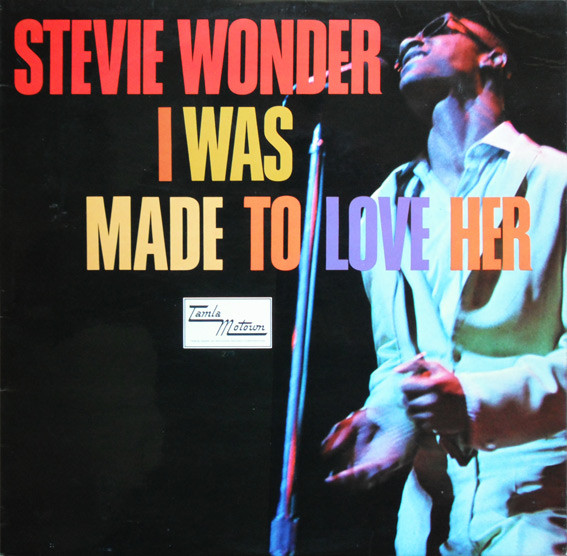
Anything Stevie does I like. Sometimes when I hear a song it takes a few times for me to like it but this one…hooked me the first time. This song peaked at #2 on the Billboard 100, #5 in Canada, and #5 in the UK Charts in 1967. The song was written by Wonder, Lula Mae Hardaway, Henry Cosby, and Sylvia Moy. Lula Mae Haraway was Stevie Wonder’s mother.
The producer was Henry Cosby. He said to get the right vocal out of Wonder he took him to a Baptist church in Detroit. He had Stevie imitate the preacher. To do that Stevie wanted people in the studio with him when he was singing it. He said he had to feel the presence of people. Cosby then went outside the studio and pulled in people from the street who were passing by.
There is some dispute on who played bass on this song…Carol Kaye or James Jamerson? Allan Slutsky who wrote Standing In The Shadows of Motown disagrees with Carol Kaye on this song. He says that James Jamerson played bass in this session. The people he contacted from Motown swear it was James Jamerson. The Holland-Dozier-Holland songwriting team said it was Jamerson, and Hank Crosby, who co-wrote it and did production on this song, signed an affidavit saying that the bass line was performed by Jamerson.
Either way…you can’t go wrong with either of those bass players.
Carol Kaye: “The first four bars were written, so that thing was pretty straight. The first bar was written to give me an indication of what they wanted the rest of the tune. And then another part I can remember was written – that triad lick was written. And I screwed that one up. (laughing) I mean, you always remember when you make a mistake on the hits. And I made plenty of mistakes, but the feel of the record was good. And that’s the main thing. So the rest, I was on my own. No problem, a lot of chromatics and just aiming for the triads and stuff.”
Stevie Wonder: “Kind of speaks of my first love to a girl named Angie, who was a very beautiful woman. Actually, she was my third girlfriend but my first love. I used to call Angie up and, like, we would talk and say, ‘I love you, I love you,’ and we’d talk and we’d both go to sleep on the phone. And this was like from Detroit to California, right? You know, mother said, ‘Boy, what you doing – get off the phone!’ Boy, I tell you, it was ridiculous.”
I Was Made To Love Her
I was born in Little Rock
Had a childhood sweetheart
We were always hand in hand
I wore hightop shoes and shirt tails
Suzy was in pig tails
I know I loved her even then
You know my papa disapproved it
My mama boo-hooed it
But I told them time and time again
“Don’t you know, I was made to love her
Built my world all around her”
Yeah, hey, hey, hey
She’s been my inspiration
Showed appreciation
For the love I gave her through the years
Like a sweet magnolia tree
My love blossomed tenderly
My life grew sweeter through the years
I know that my baby love me
My baby needs me
That’s why we made it through the years
I was made to love her
Worship and adore her
Hey, hey, hey
All through thick and thin
Our love just won’t end
‘Cause I love my baby, love my baby, ah
My baby love me
My baby needs me
And I know I ain’t going nowhere
I was knee-high to a chicken
When that love bug bit me
I had the fever with each passing year
Oh, even if the mountain tumbles
If this whole world crumbles
By her side, I’ll still be standing there
‘Cause I was made to love her
I was made to live for her, yeah, hey, hey, hey
Ah, I was made to love her
Built my world all around her
Hey, hey, hey
Ooh, baby, I was made to please her
You know Stevie ain’t gonna leave her, no
Hey, hey, hey, ooh-wee, baby
You are the sunshine of my life That’s why I’ll always be around
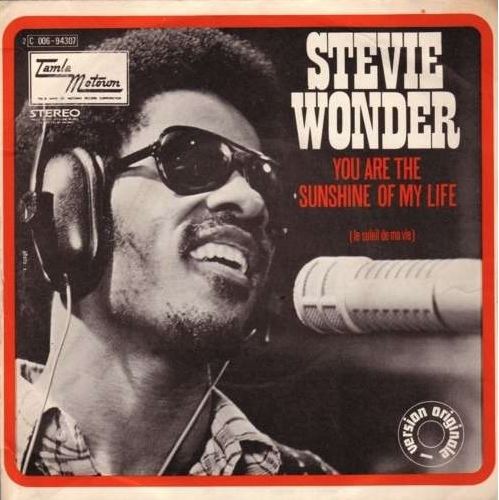
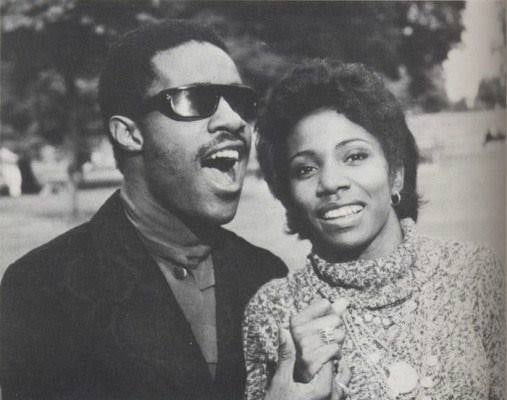
Stevie Wonder… had such a long career before he was even 18. He wrote this for his wife Syreeta Wright whom Wonder married in 1970.
Wright was from Detroit, an aspiring ballet dancer who didn’t have the money to pursue her passion and who ended up working as a receptionist at Motown in 1965. Eventually, Wright started singing on demos for Motown singers, and the label released a single of hers in 1968 under the name Rita Wright. When Diana Ross left the Supremes, Berry Gordy thought about installing Wright as her replacement but it didn’t happen.
in 1968 Syreeta Wright met Stevie Wonder. In 1969, they started dating, and they also started working together. In 1970, they got married, when Wright was 24 and Wonder was 20. By that time, they were already writing partners. Together, Wright and Wonder helped write the Spinners’ “It’s A Shame” and Wonder’s own “Signed, Sealed, Delivered I’m Yours”
In 1972 they broke up. Wonder also produced the album Syreeta…Wright’s first album. He also recorded this song that year. It was no doubt who it was about. It was on the great album Talking Book. Just as he was singing this beautiful song they were breaking up. She would go on to record more music and one song with Billy Preston. She passed away in 2004 at the age of 58.
Some sources list the couple’s divorce as happening in 1972, but Wright, who died in 2004, claimed they were married until 1975. The marriage was difficult and exacerbated by their working relationship, which Wright found stifling. “I was always living in his shadow.”
He recorded this at Electric Lady Studios in New York City. It was recorded off the cuff and his band fell right in. The album Talking Book peaked at #3 on the Billboard Album Charts, #12 in Canada,#16 in the UK in 1972.
You Are The Sunshine Of My Life peaked at #1 in the Billboard 100, #5 in Canada, #8 in New Zealand, and #7 in the UK. The first single off the album was Superstition…how is this for a follow-up!
This song won Wonder the 1973 Grammy Award for Best Male Pop Vocal Performance.
You Are The Sunshine Of My Life
You are the sunshine of my life That’s why I’ll always be around You are the apple of my eye Forever you’ll stay in my heart
I feel like this is the beginning Though I’ve loved you for a million years And if I thought our love was ending I’d find myself drowning in my own tears, whoa, oh, oh
You are the sunshine of my life, yeah That’s why I’ll always stay around, mmm, mmm, yeah, yeah You are the apple of my eye Forever you’ll stay in my heart
You must have known that I was lonely Because you came to my rescue And I know that this must be heaven How could so much love be inside of you? Whoa, whoa
You are the sunshine of my life, yeah That’s why I’ll always stay around, mmm (baby) You are the apple of my eye Forever you’ll stay in my heart, yeah
You are the sunshine of my life, baby That’s why I’ll always stay around
I love the Clavinet in this song and it is what plays the opening riff. This song has been played a lot but it still sounds just as fresh as the day it was released.
This was recorded at Electric Lady Studios, which is where Jimi Hendrix recorded. The studios stayed active after Hendrix’s death, with artists like Miles Davis and Deep Purple also recording there.
Superstition was written for Jeff Beck, as part of an agreement between Beck and Wonder. The deal was for Jeff Beck to play on the recording sessions of his upcoming album Talking Book in return for Wonder writing him a song. Beck came up with the opening drum beat which inspired Wonder to improvise along with it, resulting in Superstition. After the recording of the album, Wonder went ahead and allowed Beck to record his own version of the song and release it
Berry Gordy released Stevie Wonder’s version of the song months ahead of Jeff Beck’s version and resulted in one of his best selling singles.
The song peaked at #1 in the Billboard 100, #6 in Canada, and #11 in the UK in 1973
This was Wonder’s second #1 hit in the US. His first was with “Fingertips (Part 2)” in 1963, which he recorded as “Little” Stevie Wonder.
From Songfacts
Wonder wrote this about the dangers of believing in superstitions. Some of the bad luck superstitions he alludes to include walking under a ladder, breaking a mirror (said to bring seven years of bad luck), and the number 13.
This was intended for Jeff Beck, who was brought in to play some guitar parts on the album in exchange for a song. At one of the sessions, Stevie came up with the riff and wrote some lyrics, and they recorded a rough version of the song that day for Beck. It took Beck a while to record the song, and by the time he released it, Wonder’s version had been out for a month and was a huge hit. Beck felt shortchanged, and made some statements in the press that Wonder didn’t appreciate. In 1975, Beck released an instrumental version of Wonder’s “Cause We’ve Ended As Lovers” on his album Blow By Blow. The album was a hit and helped solidify Beck’s reputation as an elite guitarist.
When Wonder turned 21, he was no longer obligated to Motown Records, and used his clout to sign a deal with the label giving him unprecedented control of his music. He got a large share of royalties and publishing rights, and Motown was not allowed to alter the albums once they were delivered. One thing Motown did control, however, were what songs they released as singles. Knowing Jeff Beck was about to record his version, Motown head Berry Gordy made sure this was the first single and released it before Beck could get his out.
Taking a cue from Marvin Gaye, who put musician credits on his album What’s Going On, Wonder included credits on Talking Book. On this track, Stevie played Hohner clavinet, drums, and Moog bass. Two of his band members also contributed: Steve Madaio played trumpet and Trevor Lawrence played tenor saxophone.
Jeff Beck finally recorded his own version of this song in December 1972 with bass player Tim Bogert and drummer Carmine Appice. They recorded as Beck, Bogert and Appice, and while their album did well, their version of this song was hardly noticed.
At the time, Wonder would keep the studio booked so he could record when inspiration hit. Stevie’s bass player at the time, Scott Edwards, told Songfacts this was not always convenient for his band. “Because he does not have sight, he’s not controlled by daylight,” said Edwards. “So he may begin his night at midnight. Which is bad, because if they want you to come do an overdub or something, he may call you at 4 a.m. and say, ‘Come on in.'”
Several artists besides Jeff Beck have covered this. None made much of an impact until Stevie Ray Vaughan released a live version as a single in 1986 on his album Live Alive. His version is still played on Classic Rock radio, and has grown even more popular since Vaughan’s death in 1990.
This song incorporates many elements of rock music, which helped Wonder extend his appeal to a white audience. Before Talking Book was released, Stevie went on tour with The Rolling Stones, which boosted his credibility in the world of rock. When “Superstition” was released, it was warmly welcomed on the same radio stations that played The Stones, earning Wonder many new fans. It also helped Wonder move past his image as a child star.
Wonder performed this song on Sesame Street in 1973 during the show’s fourth season. It was recorded at the show’s New York studios at a time when Wonder and his band were playing lots of gigs, and they treated the Sesame Street performance just like any other, extending it to nearly 7 minutes, complete with intricate musical shifts directed by Wonder. Video of the performance shows kids and puppets having a blast on the set, but the band remained focused, since getting distracted by a monster would not be a valid excuse for missing a change.
Wonder was the biggest musical act to appear on the show to this point, and other top talent followed: Johnny Cash appeared the next year and Paul Simon showed up in Season 8. In later years, just about anyone who grew up watching the show was thrilled to appear, so they had no trouble attracting musical guests. Rather than straight performances, the songs were typically re-written to fit the theme of the show or teach a lesson: R.E.M. did “Shiny Happy People” as “Furry Happy Monsters”; The Goo Goo Dolls turned “Slide” into “Pride.”
The album was called Talking Book because wonder considered the songs akin to chapters in a book that tell a whole story. On the cover is a rare photo of Wonder without his sunglasses on.
Raven-Symoné of The Cosby Show and Disney Channel’s That’s So Raven fame, recorded this for the 2003 Disney movie The Haunted Mansion, starring Eddie Murphy. >>
Wonder appeared in Bud Light commercials that debuted during the Super Bowl in 2013 as part of the “it’s only weird if it doesn’t work” campaign, which showed superstitious fans acting compulsively in an effort to steer their teams to victory. Wonder appeared as some kind of witch doctor in New Orleans (where the game took place), asking, “are you looking for a little mojo?” He then transports our hero to the big game, where he has a voodoo doll to help his cause. The song “Superstition” plays throughout.
The song also appears in the 2018 “Trick. Treat. Win!” campaign for McDonald’s, which sell the idea that you don’t need luck to win.
Superstition
Very superstitious, writings on the wall Very superstitious, ladders bout’ to fall Thirteen month old baby, broke the lookin’ glass Seven years of bad luck, the good things in your past
When you believe in things that you don’t understand Then you suffer Superstition ain’t the way
Very superstitious, wash your face and hands Rid me of the problem, do all that you can Keep me in a daydream, keep me goin’ strong You don’t want to save me, sad is my song
When you believe in things that you don’t understand Then you suffer Superstition ain’t the way, yeh, yeh
Very superstitious, nothin’ more to say Very superstitious, the devil’s on his way Thirteen month old baby, broke the lookin’ glass Seven years of bad luck, good things in your past
When you believe in things that you don’t understand Then you suffer Superstition ain’t the way, no, no, no
Stevie Wonder in the 60s and 70s was unbeatable. Not discounting his 80s output but for me, it’s hard to beat his 70s output.
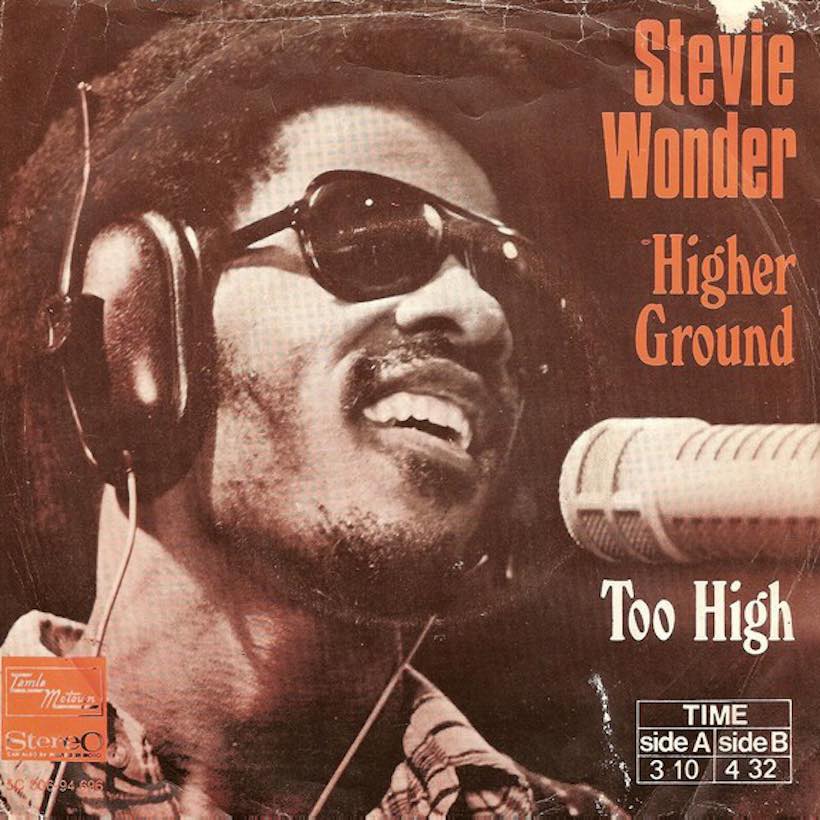
Higher Ground peaked at #4 in the Billboard 100, #29 in the UK, and #9 in Canada. The song was on the album Innervisions ($4) released in 1973. Right after the album was released Stevie was riding in a car when it collided it with a logging truck. Some logs crashed through the windshield and hit Stevie. He was in a coma for 4 days with a severe brain contusion.
Steve Wonder on the song: I would like to believe in reincarnation. I would like to believe that there is another life. I think that sometimes your consciousness can happen on this earth a second time around. For me, I wrote “Higher Ground” even before the accident. But something must have been telling me that something was going to happen to make me aware of a lot of things and to get myself together. This is like my second chance for life, to do something or to do more, and to value the fact that I am alive.
From Songfacts
The lyrics deal with getting a second chance (“So darn glad he let me try it again”) and making the most of it. Strangely, Wonder recorded it three months before he was almost killed on his way to a benefit concert in Durham, North Carolina. The car he was riding in was behind a truck carrying a load of logs, which stopped suddenly, sending a log through the windshield and hitting Wonder in the head. The accident put Wonder in a coma for four days. His road manager and good friend, Ira Tucker Jr., knew that Stevie liked to listen to music at high volume, so he tried singing this song directly into his ear. At first he got no response, but the next day, he tried again and Wonder’s fingers started moving in time with the song – the first sign that he was going to recover.
Recalling his time in the coma, Wonder said, “For a few days I was definitely in a much better spiritual place that made me aware of a lot of things that concern my life and my future and what I have to do to reach another higher ground. This is like my second chance for life, to do something or to do more and to face the fact that I am alive.”
Innervisions was released on August 3, 1973, just three days before Wonder’s accident.
Guided by a mix of Christian morality and astrological mysticism, Wonder believed he was writing a “special song” whose lyrics suggested a coming day of judgment. “I did the whole thing in three hours” he told Q magazine. It was almost as if I had to get it done. I felt something was going to happen. I didn’t know what or when, but I felt something.”
When he turned 21, Wonder renegotiated his deal with Motown Records, taking control of his recordings by forming his own production and publishing companies. Motown was very regimented in terms of what musicians and producers were used on recordings, but Stevie wanted to do most of this work himself. In 1971, he teamed with the engineers Robert Margouleff and Malcolm Cecil and began a constant cycle of recording in which he played most of the instruments himself. On this track, Wonder is the only credited musician, listed as playing Hohner clavinet, drums, and Moog bass.
In 1993 UB40 included a cover version on their Promises And Lies album that reached #45 in the US and #8 in the UK.
Wonder was a huge influence on The Red Hot Chili Peppers, who remade this with a more uptempo beat on their Mother’s Milk album. They even thank him in the lyrics by adding the phrase “You know what Stevie says.” Their version helped introduce many listeners to Wonder. >>
Wonder sang an a cappella version of this song with Alicia Keys at the Grammy Awards in 2006.
Higher Ground
People keep on learnin’ Soldiers keep on warrin’ World keep on turnin’ ‘Cause it won’t be too long
Powers keep on lyin’ While your people keep on dyin’ World keep on turnin’ ‘Cause it won’t be too long
I’m so glad that he let me try it again ‘Cause my last time on earth I lived a whole world of sin I’m so glad that I know more than I knew then Gonna keep on tryin’ Till I reach my highest ground
Lovers keep on lovin’ Believers keep on believin’ Sleepers just stop sleepin’ ‘Cause it won’t be too long Oh no
I’m so glad that he let me try it again ‘Cause my last time on earth I lived a whole world of sin I’m so glad that I know more than I knew then Gonna keep on tryin’ Till I reach my highest ground
Woo! Till I reach my highest ground No one’s gonna bring me down Oh no Till I reach my highest ground
Don’t let nobody bring you down (they’ll sho ‘nough try) God is gonna show you higher ground





 PowerPop... An Eclectic Collection of Pop Culture